RSS
 

Posts Tagged ‘Photography’

The Ultimate, Detailed History of Photography That Will Blow Your Socks Off!

04 Sep

Although everyone understands the importance of photography in our daily lives, very few know about how this seemingly magical art form developed. The following is a detailed look into the long history of photography that has lead to the cameras we know and love today. 500 BC – 1700s Beginning back in China and Greece around 500 BC, ancient philosophers Continue Reading

The post The Ultimate, Detailed History of Photography That Will Blow Your Socks Off! appeared first on Photodoto.


Photodoto

 
Comments Off on The Ultimate, Detailed History of Photography That Will Blow Your Socks Off!

Posted in Photography


Rebellious Portrait Photography That Goes Against the Grain Like You Wouldn’t Believe

03 Sep

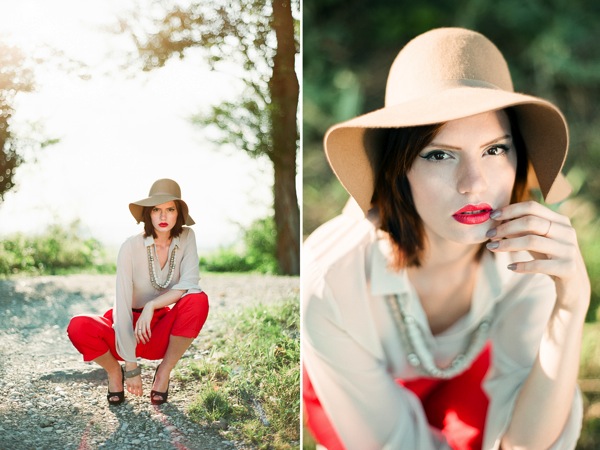
The world’s major fashion magazines are plump with advertising images of the size-zero models, with their flawless complexions and perfect bone structures. Much to the everyday girl’s dread, these images can also be found pretty much everywhere, especially in portrait photography. However, imagine for a moment if these models weren’t perfect? Would the images have a greater impact? Would people Continue Reading

The post Rebellious Portrait Photography That Goes Against the Grain Like You Wouldn’t Believe appeared first on Photodoto.


Photodoto

 
Comments Off on Rebellious Portrait Photography That Goes Against the Grain Like You Wouldn’t Believe

Posted in Photography


100 Clever Digital Photography Ideas [Book Review]

02 Sep

100 Ways to Make Good Photos GreatSometimes you need more than a guide to specifics in using a digital camera for ambitious image making. It is possible to overload your brain with info on lenses, lighting, camera controls and the rest of the tech jungle.

Sometimes it’s better to just look behind the curtain and pick up some tips on how to make good photos great. As the book says!

Author Peter Cope makes the point early in the book that during the 2012 London Olympics ‘exciting, emotional and iconic images flashed around the world …’

He observes that ‘What made these images unique and different from those that press photographers’ captured was that most came from amateur or casual photographers … grabbed shots ‘taken on a purely opportunist basis.’

Little thought went in to these ‘point and shoot’ pictures, much as they may have been enjoyed. But sometimes we need more: photos rather than snaps. Cope’s book sets out to help you not only shoot technically excellent photos but to create images that have something to say. The layout of the book is ideal for the purpose: for one thing, the size is enough to accommodate large pictures along with concise blocks of text that explain the issues.

For example, the page on red eye from flash suggests ways to avoid the dreaded issue: increase the ISO; use an external flash unit; and — last resort! — remove it in post.

Similarly, with the chapter on how to conceive great landscape photos which, after people, are possibly the most photographed subjects there are!

Cope’s tips go this way: great landscape photos should be in sharp focus from the nearest point to the most distant; follow the rules of composition closely, including the rule of thirds; use lead in lines to draw peoples’ attention to the landscape’s main subject; shoot at different times of day; watch the effect of weather on the scene; use polarising or graduated filters.

You won’t find much specific techy stuff in the book, except for a few pages on such matters as lens choice, exploiting your camera’s aperture controls, mastering ISO settings, astro photography, macro photography and then there’s a longish section on software manipulation. Most of the book is encouraging, handholding help.

The techy section also includes includes optimum ways in successfully sharpening an image, using ‘auto fixes’ such as auto enhance, auto tone and auto levels. Some will shy away from such easy fixes but, in Cope’s view, if the ‘adjustment works and delivers a great image’ — use it.

Within its pages are chapters on a whole variety of people photography, along with subtle suggestions on how to deal with human subjects. Like: shoot plenty of shots of children … they move fast! And, when shooting people at work, shoot fast! In straight portrait photography, establishing eye contact can establish a strong connection or sometimes be unsettling.

There are also whole pages devoted to ideas like ‘transplanting’ a whole sky, creating scenes that might otherwise not exist … if it were not for the magic of our old friend Photoshop!

An excellent publication that’s highly readable just as a book or as a complete reference guide.
Oh and it would make an excellent ebook that you could take with you on a shoot!

Author: P Cope.
Publisher: David & Charles.
Distributor: Capricorn Link.
Length: 144 pages.
Size: 25x19x11mm.
ISBN 1 4463 0300 9.
Price: Get a price on 100 Ways to Make Good Photos Great

Post originally from: Digital Photography Tips.

Check out our more Photography Tips at Photography Tips for Beginners, Portrait Photography Tips and Wedding Photography Tips.

100 Clever Digital Photography Ideas [Book Review]


Digital Photography School

 
Comments Off on 100 Clever Digital Photography Ideas [Book Review]

Posted in Photography


Soft Light: Weekly Photography Challenge

31 Aug

NewImageYour challenge this week is to take and share a photo on the theme of ‘Soft Light’.

Earlier in the week Andrew Gibson wrote a post on the topic of using Soft Light in a variety of types of photos to create a magic feel in your images.

Using soft light is a technique that can be used in many types of photography including portraiture, landscapes, macro and much more so you can submit any type of photo – as long as it was taking in soft light.

Note: also check out our article this week on taking natural light portraits in the shade which will also produce ‘softer’ lit portraits even on a bright day.

Once you’ve taken your ‘Soft Light’ photos, upload your best ones to your favourite photo sharing site either share a link to them even better – embed them in the comments using the our new tool to do so.

If you tag your photos on Flickr, Instagram, Twitter or other sites with Tagging tag them as #DPSSOFTLIGHT to help others find them. Linking back to this page might also help others know what you’re doing so that they can share in the fun.

Also – don’t forget to check out some of the great shots posted in last weeks Negative Space challenge – there were some great shots submitted.

Post originally from: Digital Photography Tips.

Check out our more Photography Tips at Photography Tips for Beginners, Portrait Photography Tips and Wedding Photography Tips.

Soft Light: Weekly Photography Challenge


Digital Photography School

 
Comments Off on Soft Light: Weekly Photography Challenge

Posted in Photography


103 Things I’ve Learned About Street Photography

31 Aug

By Street Photographer Eric Kim

Calcutta 2013 2

  1. A good photo asks more questions than provides answers
  2. 35mm as a focal length is generally ideal for most street photographers. 28mm is too wide (most people don’t get close enough) and 50mm is too tight.
  3. My keeper ratio : one decent shot a month, one shot I am proud of in a year.
  4. “When in doubt, click.” – Charlie Kirk
  5. When in doubt, take a step closer.
  6. You will become a better photographer by asking people what they don’t like about your shots (rather than what they like).
  7. A harsh and constructive critique is better than a pat on the back.
  8. A good photo critique needs (at least) 4 sentences online. Preferably 8 sentences or more.
  9. It isn’t the quantity of social media followers you have that matters, rather then quality of followed you have that matters.

Calcutta 2013 1

  1. Be consistent : stick with one camera, lens, film, or post processing approach to develop your style.
  2. Great photography projects generally take at least 5-10 years.
  3. Buy books, not gear.
  4. The only way money will make you happier in photography if you invest it into experiences (travel, workshops, teachers) rather than material things (cameras, lenses, gear).
  5. The best camera bag in street photography is no camera bag.
  6. “The decisive moment” is a myth. Even Henri Cartier-Bresson took at least 5 photos of scenes he found interesting and worked the scene to get the one memorable shot.
  7. Most famous photographers are only known for their 1-3 most popular images after they die. If you accomplish the same, you have done your job as a photographer.
  8. When shooting film, it is better to over expose than underexpose (film has more details in the highlights).
  9. When shooting digital, it is better to unexpose than overexpose (digital has more details in the shadows).
  10. Street photos of people just walking by billboards is boring.
  11. To become a great street photographer you must first understand what a great street photograph is. Study the masters.

Eric Kim Color 1

  1. When shooting street photography with a DSLR, micro 4/3rds, or a compact and you don’t want to worry about technical considerations, just use “P” mode at ISO 1600.
  2. Projects are more meaningful than single images.
  3. Creating a photo book is the ultimate expression of a photographer.
  4. Shoot as if each day were your last.
  5. One camera, one lens is bliss.
  6. Grain is beautiful, noise is ugly.
  7. My favorite films are Kodak Tri-X (for black and white) and Kodak Portra 400 (for color).
  8. Bokeh in street photography is overrated. Shoot at f8-16
  9. With film, your first 10,000 photos are your worst. With digital, it is more like your first 1,000,000 are your worst.
  10. The secret of a memorable street photograph : capturing emotion.
  11. A street photograph without emotion is dead.
  12. No amount of post processing will make a crappy photograph into a good photograph.
  13. Wait at least 6 months to a year before uploading your images to the Internet, to truly understand if is a good photograph or not.
  14. When it comes to editing, remember to “kill your babies.”
  15. Cheesy titles in street photographs don’t make them any better.

Calcutta 2013 11

  1. Watermarks in street photographs ruin the viewing experience for your audience.
  2. Buying a more expensive camera won’t make you a better street photographer.
  3. Shooting film will teach you more discipline in street photography (and may lead you to become a better photographer).
  4. Street photography is the most challenging genre of photography out there.
  5. A great street photograph needs strong content (what’s inside the frame) and form (composition).
  6. Shoot for yourself, not others.
  7. Spend less time on gear review sites and more time on Magnumphotos.com
  8. You can never spend too much money on photo books.
  9. You are your worst critic. Always get critique from others, they will help spot the holes in your photography.
  10. Sticking with one focal length for a long time will help you better pre visualize your shot and master framing.
  11. You are only as good as your worst (public) street photograph.
  12. Secret to good multi subject shots : don’t overlap your subjects and look for emotional gestures.
  13. How to improve your framing : don’t crop for a year.
  14. How to become a better editor : don’t upload photos to social media for a year.
  15. Try to shoot at eye level (or extremely above or below) your subjects. So crouch when taking photos of people sitting down, shorter than you, or kids. Or shoot from a very high vantage point.

Eric Kim Color 6

  1. 99% of street photographs are ruined by messy backgrounds.
  2. To get cleaner street photographs, first find a clean background and then wait for your subjects to enter the scene.
  3. If your mom likes your street photographs, your photos are probably generic and boring.
  4. Always carry a camera with you.
  5. Street photographs don’t have to have people in them (but generally are more interesting with them in it).
  6. You don’t need a Leica to shoot street photography. Be grateful for what you have and use what you got.
  7. Spend 99% of your time editing your photos (choosing your best images) and only 1% of your time post processing them.
  8. Style in street photography is a combination of having consistent equipment (camera and focal length) as well as “look” (film or post processing style) and content (the subjects you generally photograph).
  9. It is better to over shoot a scene then under shoot a scene.
  10. “Shoot from the gut, edit with the brain” – Anders Petersen
  11. It is always nice to have a shooting partner when out on the streets.
  12. “Shoot who you are.” – Bruce Gilden
  13. Taking a photo of an interesting character isn’t enough. Try to capture them in an interesting context or with a good gesture.
  14. Don’t take photos of homeless people and street performers. They rarely make good photos.
  15. Don’t worry if your photos qualify as “street photography” or not. Just aim to make meaningful and memorable images.

Eric Kim Color 2

  1. Telling the truth isn’t the job of a street photographer (it is for the photo journalist).
  2. Don’t be afraid to interact with your subjects when shooting on the streets. Not all of your photos have to be candid.
  3. You can make interesting posed street photographs. But don’t pretend to your audience that they are candid.
  4. There is no one “right” definition of street photography. Define it personally for yourself and just shoot.
  5. You often can’t control the scene when you are shooting in the streets, but you can control whether you share the image or not. Case in point : don’t make excuses for the small failures in your photos, just edit out those shots.
  6. Don’t respect the critique of other photographers unless you have seen their portfolio.
  7. Zoom lenses will prevent you from becoming a great street photographer (you will never master one focal length). Stick to primes (preferably a 35mm full frame equivalent). 28mm and 50mm are okay too (if you can use it well).
  8. A single photo can’t tell a story (it doesn’t have a beginning, middle, or an end). Only photo series or projects can do that.
  9. The photos you take are more of a reflection of yourself (than of the people you photograph).
  10. The importance of looking at great photos : you are what you eat. Fine french cuisine = great photos in books, galleries, or exhibitions. Junk food = most photos on Instagram, Flickr, Facebook (not always, but mostly).
  11. 99% of people on the Internet don’t know what a great street photograph is. Don’t always trust the comments, likes, and favorites you get from the Internet on social media sites. Rather, stick around in street photography critique groups (or private ones).
  12. You will find the best street photography opportunities in the least expected places.

Eric Kim Color 4

  1. When you see an interesting person or a scene, don’t just take one photo and move on. Aim to take at least 5 photos (or more if possible).
  2. Beware using telephoto lenses in street photography. Remember, “Creepiness is proportional to focal length.”
  3. Incorporate your own reflections and shadows in street photography. They often make interesting images (look up Lee Friedlander).
  4. Photos shot head on have more energy and drama than photos shot from the side.
  5. A brief list of great street photographers : Garry Winogrand, Lee Friedlander, Henri Cartier-Bresson, William Klein, Daido Moriyama, Diane Arbus, Weegee, Bruce Gilden, Alex Webb, Joel Meyerowitz, Martin Parr, Josef Koudelka,
  6. After taking a photo of a stranger, make it a rule to look at them, smile, and say thank you.
  7. I never regret taking photos. I always regret not taking photos.
  8. It is better to beg for forgiveness than ask for permission.
  9. Be confident while you are shooting and rarely will you have any issues. Be nervous while shooting and you will ruin into many problems.
  10. The only person you should try to impress with your photos is yourself.
  11. The benefit of getting eye contact in your photos : eyes are the windows to the soul.

Eric Kim Color 5

  1. Don’t make photos. Make connections.
  2. The best place to shoot street photography isn’t New York, Tokyo, or Paris. The best place to shoot is your backyard.
  3. See your scenes with your eyes and shoot with your heart.
  4. If you are working on a project and photographers discourage you by saying “it has been done before” ignore them. Nobody has done it like you before.
  5. Street photography is applied sociology with a camera.
  6. If you aim to get recognition for your photography you will never get it.
  7. If someone gets upset when you take their photograph, offer to email them a copy. Carrying around business cards always come in handy.
  8. Don’t just look at photos, read into them.
  9. To double your success rate in street photography, double your failure rate.
  10. The photos you decide not to show are more important than the photos you decide to show.
  11. Rather than creating photos to please your audience, find an audience that will be pleased by your photos.

Eric Kim Color 12

  1. Street photography isn’t a contest about how many followers, viewers, followers, exhibitions, books, cameras, lenses, and fame you have. There are no winners and losers. Collaborate with one another instead of competing with one another.
  2. Giving away my prints and cameras has brought me more joy than selling it for money.
  3. The friendships I have made through street photography is mode valuable than any of the photos I have ever taken.
  4. Luck is when preparation meets opportunity – Seneca. Make your own luck.

Check out more from Eric Kim at his Blog, Facebook, and Twitter.

Post originally from: Digital Photography Tips.

Check out our more Photography Tips at Photography Tips for Beginners, Portrait Photography Tips and Wedding Photography Tips.

103 Things I’ve Learned About Street Photography


Digital Photography School

 
Comments Off on 103 Things I’ve Learned About Street Photography

Posted in Photography


8 Ways to Make a Difference with Volunteer Photography

29 Aug

There is a well-known saying: “Love what you do, and you never work a day in your life.”  For professional photographers, we can imagine that, more than likely, this holds true for them.  There’s no doubt that the reason we are involved with photography, whether it be for hobby or by trade, is because it is an enjoyable activity, and Continue Reading

The post 8 Ways to Make a Difference with Volunteer Photography appeared first on Photodoto.


Photodoto

 
Comments Off on 8 Ways to Make a Difference with Volunteer Photography

Posted in Photography


Why Analog Photography (Still) Rocks!

28 Aug

by Matthias Hombauer and Karl Blümel from “The Analog Docs”.

015 The Analog Docs

We are two professional music and wedding photographers and we shoot digital when necessary. However, we clearly see the point of going back to analog like a lot of pros are doing nowadays. In this post, we would like to discuss the benefits as well as the drawbacks of film photography from our point of view. 

Since we love film, we decided to start our own project named “Analog Docs“, where we exclusively use analog medium format cameras. 

The following points are true for all analog camera systems.

001 The Analog Docs

1. The Look

Ok, let’s face it. Film shooters will tell you how much they love this special look of film. This is similar to music lovers who tell you that vinyl sounds more organic than a CD. A lot of digital shooters try to imitate this look on their digital files – but you can hardly get there. Film has an incredible colour palette and a huge dynamic range of detail in both highlights and shadows. So why imitate when you simply can shoot analog?

005 The Analog Docs

2. Film will make you a Better Photographer, Promise!

When shooting film, you are bound to know exactly what you are doing. You have to nail the exposure, how you frame the picture and how to direct the model so that he or she doesn’t have his or her eyes closed in the moment you release the shutter. Every picture costs money and believe us, you want to be sure to know your camera beforehand. Furthermore, most of the cameras have got only manual focus lenses and you need an external light meter to get the right exposure. This sounds a little bit frightening to someone who has experience only in digital photography. It’s a steep learning curve but it’s absolutely worth it.

006 The Analog Docs

3. Film is a Time Saver

When we are shooting digital, we return from a job with hundreds of pictures, which have to be sorted out and post-processed (we always shoot RAW). With film, we come back with 40 pictures and most of them are awesome. We have outsourced the developing and scanning process of our films and get them sent from our photo lab. Once you know how to handle the different films like Fuji or Kodak already in the camera, you will save a lot of time with post-production. Honestly saying, there is almost no post-processing necessary and you can spend more time on doing the things you love, too.

008 The Analog Docs

4. Film Gear is Cheap (but this Might Change in the Future)

20 years ago, a professional medium format camera was as expensive as a car. Today you can pick a Mamiya, Hasselblad or Fuji for a decent price and you’ve got an awesome camera, like the pros were/are using. For Contax cameras, this is another story. The price is skyrocketing in the second hand market, cause it is the most popular camera for wedding photographers nowadays. However, you can also acquire an old 35mm camera for a few bucks and get the whole analog experience with it. 

009 The Analog Docs

5. BOKEH Madness

BOKEH (Japanese for ‘blur’) is the way “the lens renders out-of-focus points of light”. And this seems to be the search for the Holy Grail for every portrait photographer. There are tons of articles and discussions going on in the web about which lens is the best. The bigger the aperture is, e.g. 1.2, 1.4, the narrower is the depth of field. This makes you just focus on the eyes where the eyelashes are already out of focus. The quality of BOKEH on a medium format camera looks different than a 35mm camera system. So therefore we love our medium format cameras to get this special out-of-focus look. 

010 The Analog Docs

6. Forget to search the Rumours Sites

One advantage of these old cameras is that once you bought them you don’t have to satisfy your needs to have the newest equipment for it: It’s as simple as that: There will not be new stuff released. Most of the cameras we use are 30+ years old and everything you need is available on the second hand market. And there are also a lot of reviews about the equipment in the web, which make it easier to decide which system you should get. Additionally, these cameras are built like tanks and they are of superior quality compared to the newest DSLRs.

016 The Analog Docs

Advantages:

  • the look
  • you will become a better photographer
  • film saves you time 
  • it’s still cheap (when you know what you are doing)
  • gorgeous BOKEH

Disadvantages:

  • old camera systems, sometimes no service for them
  • you have to calculate per picture
  • it takes more effort to get your pictures

017 The Analog Docs

To us as professional photographers, the advantages are still striking. We provide the best quality you can get from a camera to our clients, which is the most important point. As said in the beginning, we are also shooting digital when needed. When shooting for newspapers and magazines, the time pressure to deliver the pictures won’t always allow for the analog option. However, the best magazine photographers like Martin Schoeller or Dan Winters are still shooting film. 

Sure, there is the option of digital medium format cameras, which are gaining wide popularity in the scene. The prices are dropping but they are still in the 30 000$ range. Compared to digital, buying an analog medium format system is a no-brainer.

019 The Analog Docs

So the final question you should ask yourself is: What do I use my camera for?

If you are a sports or newspaper photographer, then shooting film might not be the best choice. But for all of you who want to shoot great portraits, landscapes or architecture and you are willing to learn more about the craft of photography, you should definitely give film a chance.

Matthias Hombauer (Ph.D.) and Karl Blümel (MD) are both professional photographers based in Vienna/Austria. They are founder of “The Analog Docs”. They also have a facebook fanpage.

Post originally from: Digital Photography Tips.

Check out our more Photography Tips at Photography Tips for Beginners, Portrait Photography Tips and Wedding Photography Tips.

Why Analog Photography (Still) Rocks!


Digital Photography School

 
Comments Off on Why Analog Photography (Still) Rocks!

Posted in Photography


10 Stupid Photography Fads You Have Not Tried Yet

26 Aug

You have probably noticed that the majority of entertaining media spreading thoughout internet can hardly be called intelligent. The more silly something looks the more refined rapture it arouses in the biomass of internet users. Visual art, the most strong way of conveying life situations and emotions, which some time ago looked like this: now looks more like this: No Continue Reading

The post 10 Stupid Photography Fads You Have Not Tried Yet appeared first on Photodoto.


Photodoto

 
Comments Off on 10 Stupid Photography Fads You Have Not Tried Yet

Posted in Photography


Do You have Photography Compulsion Syndrome?

24 Aug
photo-compulsion-dps-06

Missed the sunset but sat in the cold until I got this bird flying over. 4 shots layered in PS.

“Photography Compulsion Syndrome” – tell me if you can relate to any of the following scenarios:

  • when traveling you’ve raced around at dusk, narrowly escaping a speeding ticket, trying to find the best spot to shoot the sunset
  • you’ve skipped dinner, or left your friends having dessert, while you go outside in the rain cause there was a great shot you just had to get
  • you’ve been on regular travel tours and were constantly frustrated because they never gave you enough time at the great locations or stopped at the side of the road for the old broken down buildings or because the “light was amazing”
  • you’ve lost images due to a card failure, a lost memory card, or a hard drive problem and have cried for days
  • you’ve yelled “Stop the car I’m going to have a coronary if I don’t get this shot!” to your friend or significant other
  • you comment on the lighting in a movie and notice when they use a graduated filter on the sky to make daytime into night and your partner rolls his/her eyes at you
  • you have at least 8 photography apps on your smartphone

If you nodded your head in agreement and related to any of the above, you too may have . . .

Photography Compulsion Syndrome!

But don’t despair, there is help available!

So keep reading, and please share your photography compulsion stories in the comments below. Only by forming our own support group and sharing can we find the help we need to conquer this crippling problem.

The other way to look at this is by using the following phrase: “You know you’re a photographer when . . .”. I know you may not consider yourself a “photographer” but you do not need to be a professional to have this distinction.

It’s in the blood. You can’t help but live, breathe and sleep photography.

It’s about passion. It’s about what makes your heart beat a little bit faster.

It’s about being excited when you get that shot you’ve always wanted.
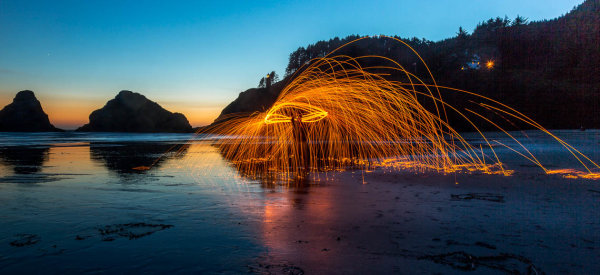
Steel wool or fire spinning, something I've always wanted to do and finally got to try it.

Steel wool or fire spinning, something I’ve always wanted to do and finally got to try it.

So if you feel all those things about photography, you ARE a photographer. Don’t listen to what anyone else says, or labels set out my society or other people. They’re just that, labels. Being a photographer is in the blood, and the more you do it, the more passionate you feel about it. I often feel privileged because I “see” the world differently than others. Honour that in yourself and just embrace it.

The Stories behind the Syndrome

Okay so truth be told all of those scenarios are real and actually happened to me. This is how they went down and any resulting images.

#1 Chasing the elusive sunset

While traveling with a friend (who is also a photographer) on Prince Edward Island in Canada, we spent the day getting great images and had planned on arriving at Confederation Bridge to photograph it at sunset. The original plan had us arriving much earlier, having dinner and then scouting a location to get the best spot for the sunset. Well, that SO didn’t happen because we had stopped practically every 3 minutes all day, and we ended up literally racing just to get there. We really did get pulled over by the police for speeding (which I do NOT advocate by the way!), pleaded our sad story, and funny enough he believed us and actually escorted us right to the bridge.  We got off with a warning and we promised not to do it again. The image I ultimately got is below. Notice the location of the sun on the horizon. If we had arrived 10 minutes later we’d have missed it completely.
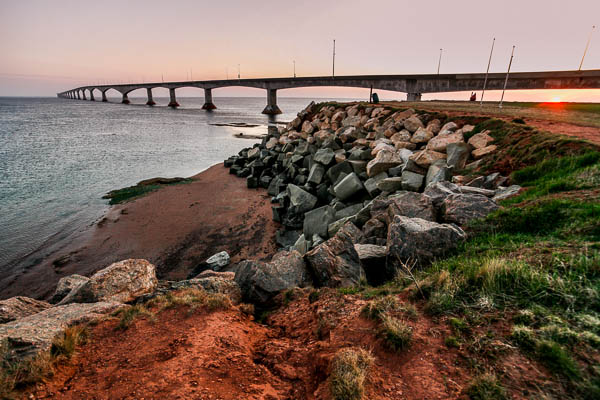
photo-compulsion-dps-01

The red earth of PEI is what I wanted to capture along with the 12.9km (8 mile) bridge at sunset.

#2 Missed meals and lost sleep

On the same trip as above a bunch of us had gone to Peggy’s Cove to see the famous lighthouse, then on to Lunenburg, NS.  It has started to rain so we went in for dinner right by the water. I quickly ate my dinner and skipped dessert and coffee to go out and shoot the streets in the rain and mist. The images I got aren’t among my favourites ever, but I think they are a bit haunting, and ghostly feeling. I would rather miss an hour of sleep, or a meal once in a while, rather than ever having to say “I wonder if”. Take the images, go the extra mile, leave no regrets behind.
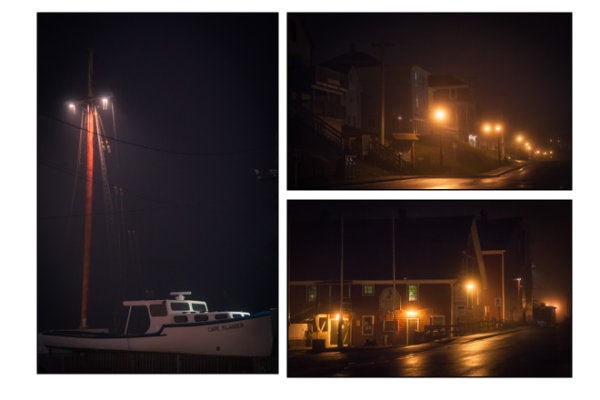
photo-compulsion-dps-02

#3 The frustration of regular travel tours

In 2011 I took a 2 week tour of Turkey. The price was so good I couldn’t pass it up. I knew going in that it wasn’t a photography tour and I anticipated being frustrated some of the time, but I had no idea how much. Practically every day by 8am we were on a bus for our next destination, only stopping at gas stations along the way. We visited most of the locations at midday, amongst the biggest crowds and worst lighting of the day, and were back at hotel for the night by 6pm.

But to top it all off, we usually had very little time at the locations to wander around on our own. One such location was at the Roman theatre in Aspendos, one of the most well preserved in the world. After talking for 10 minutes outside the gate, we were taken inside where our guide talked for another 15 minutes. Finally we were set loose for a grand total of 15 minutes to explore this gigantic structure, I pleaded for more time! Of course I raced to the top to get an overall view, and literally ran around like a mad woman. I came back to the bus sweating, out of breath, and wishing I had another hour there later in the day. This is my favourite image of the theatre. I will go back one day I vowed!
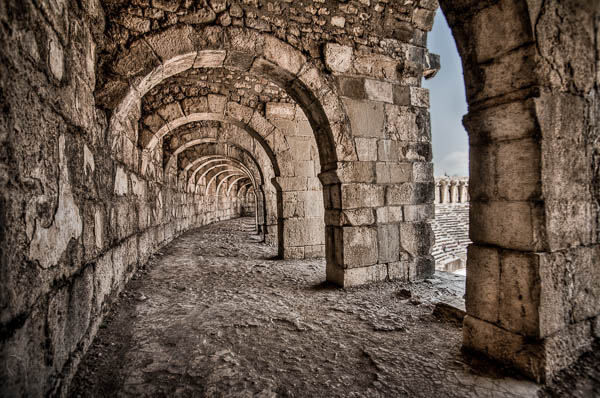
photo-compulsion-dps-03

The solution of course to this problem is to join photography oriented travel tours where priority is put on being on location for the best light of the day. Where you’re given plenty of time on your own to explore and photograph and the schedule is flexible if the group votes for more time. I lead several such photography travel tours and are working on more (Nicaragua, Mexico and Africa to name a couple possibilities), as do many other DPS writers. Check out your options. See more of my Turkey images here.

#4 Image loss to do hardware failure or stupidity (mine)

After my Turkey tour my husband flew over to meet me in Spain for a week with friends in Barcelona. We also drove to France for a few days, and through a unique little country called Andorra and a teeny tiny town called Os de Civis in Catalonia. My friend had photographed it before and her photos made me want to go there, so she took us. It was spectacular, unfortunately I have NO images to show for it.

Upon returning home I had problems downloading and kept inserting the card back into the reader, even after getting the same error message 4 times. Eventually the card failed and all the images were gone and the card unreadable. Even data recovery couldn’t get them back. I literally still want to cry when I think about the 1000+ images I lost from that trip, it was heart breaking but preventable.

LESSON – don’t do what I did! If you get an error message, listen to it! 

So I can’t show you any fabulous photos of Os de Civis, but here’s one from Barcelona that I took on an earlier card. I lost about 1/2 my images from Spain and France on a 16gb card. One advantage of smaller cards is that if you lose them, or they crash, you lose fewer images!

Guadi house in Barcelona

Guadi house, Casa Batlló in Barcelona

#5 “Stop the car I’m going to have a coronary”

I’m obsessed with light and when I see good light I want to leap from moving vehicles to capture it. On our recent trip to the Oregon coast I wanted to photograph sunset on Cannon Beach and once again we were chasing the light. There was a magical cloud hovering over a hill by the beach, tinted in pink and golden light from the setting sun. I knew it was a fleeting moment and we were blocks from the beach and anywhere to park. I literally yelled to my husband “stop the car I’m getting out now”.

I didn’t get the shot I really wanted and was disappointed that I missed the sunset on the beach. But the beach was full of people and chairs, it looked like a wedding, and I didn’t have the right location. So I got out and took a few shots and got back in the car dejected. This is the pink cloud, but it was more more vibrant 2 minutes earlier. I am my own worst critic, I’m sure you can relate. How good a time I have on a trip is directly related to the images I come home with – you?
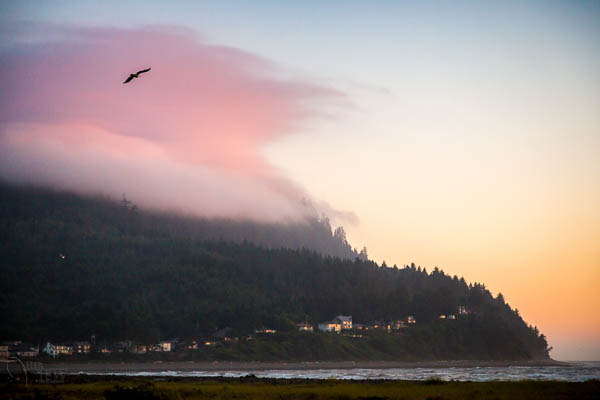
photo-compulsion-dps-05

So what do we do about this Photography Compulsion Syndrome?

Nothing! As far as I can tell it’s incurable. But it IS treatable by doing the following:

  • carrying your camera with you as often as possible so you never miss a shot, at the very least have your phone in your pocket always
  • photograph daily, the only treatment is frequent indulgence
  • look at other people’s photography, get inspired
  • share your compulsion with a friend, join a photowalk, camera club or take a workshop
  • get away from your every day scenery as often as possible, even if it just means taking a drive in the country, or visiting a neighbourhood in your own city you’ve never been to
  • share your images and stories with others with PCS, it will help relieve the anxiety

All in a little fun

I hope you realize this is all completely made up. There is no such syndrome, although it feels quite real sometimes. Are you as compulsive and compelled to take photographs as I am? Or am I completely off my rocker?

I’m just having a little fun at my own expense, and hopefully you can join in with me and share your stories. Tell me about the one(s) that got away. What image did you miss that broke your heart? Or better yet, show me the ones you’re proud of that DID work out and you went out of the way to get.

Keep on shooting!   Cheers

Darlene-1-250x130

Post originally from: Digital Photography Tips.

Check out our more Photography Tips at Photography Tips for Beginners, Portrait Photography Tips and Wedding Photography Tips.

Do You have Photography Compulsion Syndrome?


Digital Photography School
 
Comments Off on Do You have Photography Compulsion Syndrome?

Posted in Photography


Negative Space: Weekly Photography Challenge

24 Aug

This week we explored the idea of Negative Space in composing images so now it is time to put that into practice with our weekly photographic challenge.

NewImage

Your challenge is to take and share an image that uses Negative Space well.

NewImage

You can do this by taking a photo of any genre, portraits, macro, street or landscape… anything you like.

NewImage

If you’d like another tutorial on Negative Space check this one out too.

NewImage

Once you’ve taken your ’2nd Point of Interest’ photos upload your best ones to your favourite photo sharing site either share a link to them even better – embed them in the comments using the our new tool to do so.

If you tag your photos on Flickr, Instagram, Twitter or other sites with Tagging tag them as #DPSNEGATIVE to help others find them. Linking back to this page might also help others know what you’re doing so that they can share in the fun.

NewImage

Also – don’t forget to check out some of the great shots posted in last weeks Secondary Point of Interest challenge – there were some great shots submitted.

NewImage

Post originally from: Digital Photography Tips.

Check out our more Photography Tips at Photography Tips for Beginners, Portrait Photography Tips and Wedding Photography Tips.

Negative Space: Weekly Photography Challenge


Digital Photography School

 
Comments Off on Negative Space: Weekly Photography Challenge

Posted in Photography