RSS
 

Posts Tagged ‘Photography’

Anatomy of a Concert Photography Shoot

24 Feb
Concert photography Slash

Slash from Guns N’ Roses

In my last article 6 tips for budding concert photographers I explained the basics (and camera settings) of how to start your career as a concert photographer. I would like to say a big thank you for your awesome feedback and your ongoing comments on that post. It really means a lot to me and shows how many talented and hard working concert photographers are out there.

This article is a follow up, and I will go into more details about the “anatomy of a concert photography shoot“. Especially when you are new to concert photography, it can be overwhelming to stand in the photo pit all alone with your camera. The venue lights go out, the band enters the stage and you have only three songs (average 10 minutes) to get your awesome shots. Honestly, in the beginning it was also scary for me, but trust me, after you have shot some concerts you’ll feel much more comfortable in front of the stage and you’ll learn to know your camera settings by heart.

One of the points that are often undervalued is the fact that a band consists of various individuals. It is tempting to only shoot the lead singer (the key person), but this would be just one out of the whole band. There’s also a guitarist, drummer, bass player and additional musicians that are worth taking a closer look. Hence, it is more difficult to photograph the other band members, but you definitely should try to catch everyone on stage.

Let´s break it up:

The Lead Singer (The celebrity of the band)

This guy is the one whose name is often linked to the bands name such as Iggy Pop, Morrissey, David Bowie, Neil Young or Leonard Cohen.

They are the celebrities and will be shown on every VIP party and on TV. So, to photograph this person is a must have. From a concert photographers perspective, this is the easiest member to photograph. They are always at the front of the stage and get the best lighting. I always focus on the lead singer first and once I’ve got some awesome shots, I will follow up on the other band members.
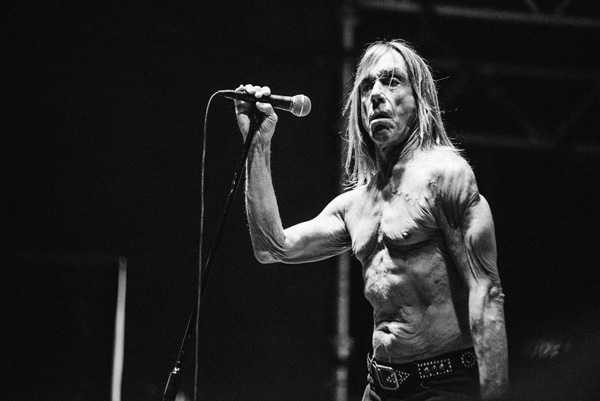
Concert photography Iggy Pop

Iggy Pop

The Guitarist and the Bass Player

Next I focus on the guitarist and bass player. Both of them are standing on one side of the stage, either behind the singer or on the same level. I’ve shot concerts where the bass player was standing in total darkness, so I won´t have a chance (even with a full frame sensor DSLR, f/1.4 lens, and ISO 6400) to get a decent picture. These are the hard times of a concert photographer and you just have to accept it sometimes. However guitarists and bass players provide great shots when you catch them e.g. posing when playing a solo or jumping around.

(See photo below of Flea from the Red Hot Chili Peppers and Slash from Guns N’ Roses top of the article)
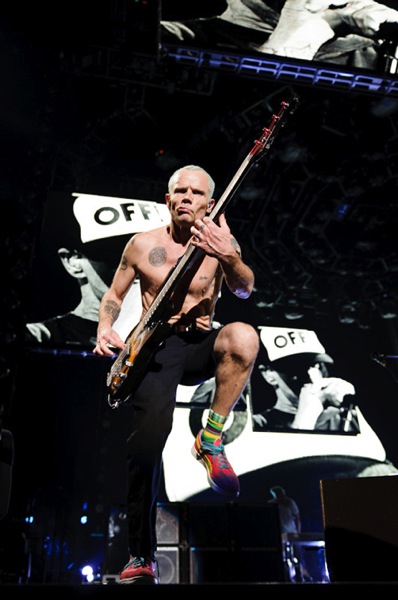
Concert photography Flea bass player

The Drummer

The drummer is the “heart“ of the band and the pulse generator. A rock band without a drummer doesn’t work, but photographers tend to ignore them in their pictures. The drummer is also the one who gets you awesome action shots if you catch them in the right moment. However, these guys are almost always in the back of the stage and therefore you need a telephoto lens like the 70-200mm to capture his presence. On bigger stages (like festivals) it can happen that the drummer is so far away, that it is not always possible to reach him with your basic lens kit. But try your best, and your efforts will be rewarded.
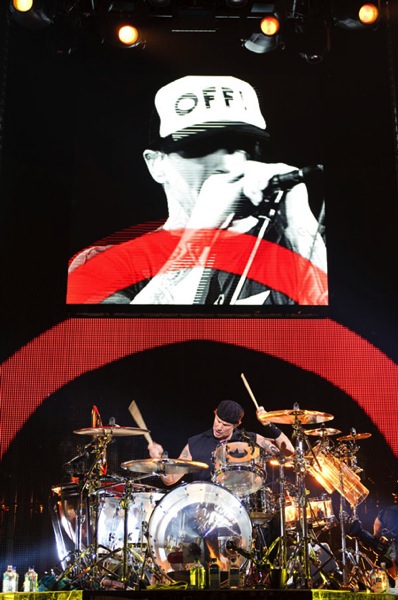
Concert photography drummer

Chad Smith, Red Hot Chili Peppers

The Band

Also try to get a picture of the entire band. Your best bet is the use an ultra wide-angle lens such as a 14mm lens. This will allow you to get the whole stage in one picture. If you are allowed to shoot the complete show (you have to ask the band first), try to get other viewpoints such as from a balcony, from the back of the venue, or on stage.
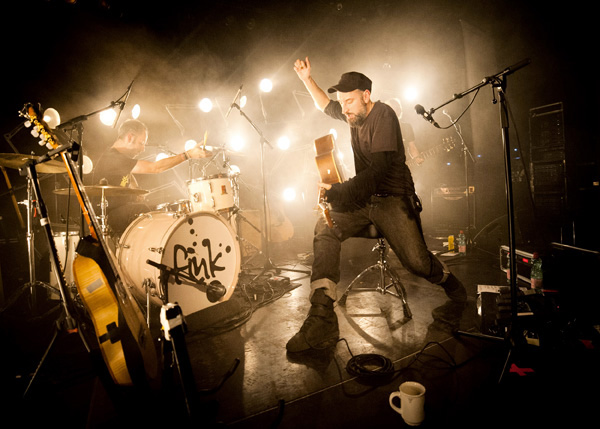
Concert photography band

Fink

The Audience

In addition, you can also take pictures of the audience. Just turn around in the photo pit and you are facing the screaming fans squeezed into the first row. This is a tricky one, because there is lack of lighting there and you need a ultra wide angle lens to capture some good action shots. Try to catch them when they are ecstatic about the band.
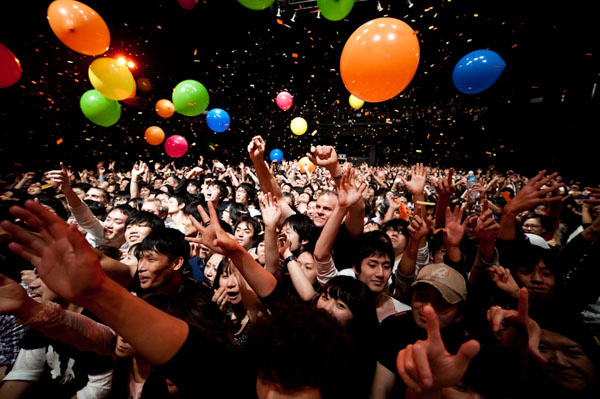
Concert photography Audience

Some general notes for you as concert photographer:

  • I always try to get the musicians with their instruments. So when I shoot the lead singer, I take care to include the microphone. When shooting the guitarist, get the guitar in the shot and the drummer needs to show his drumsticks, otherwise it looks strange when someone sits behind a huge drum kit, but you can’t actually see him playing.
  • In general I try to frame my pictures in a way that I don´t chop off guitar necks, bass bodies or keyboards. For a close shot of the drummer you need to crop the drum kit. Thats fine, just try to get a clear framing.
  • Shooting famous bands like Metallica, Iron Maiden, Red Hot Chili Peppers, they always provide good lighting on stage. It gets more difficult in smaller clubs where you are confronted with poor lighting conditions.
  • Try to get some details shots too. Shoes, tattoos, fancy stage outfits such as lamps, visuals or flags. Some bands can be very creative.

Summary:

  • Get to know your gear by heart first (camera settings, lenses)
  • Even though the lead singer is the celebrity of the band, try to also get the other band members
  • For the drummer, you often have to use a telephoto lens
  • Show the context in your pictures e.g. The singer with a microphone, drummer with drumsticks, etc.
  • Frame your pictures to avoid cropping off the instruments
  • Get pictures of the band, audience and details on stage
  • The more famous the band, the better lighting on the stage (rule of thumb)


The post Anatomy of a Concert Photography Shoot by Matthias Hombauer appeared first on Digital Photography School.


Digital Photography School

 
Comments Off on Anatomy of a Concert Photography Shoot

Posted in Photography


Weekly Photography Challenge – Winter Sports

22 Feb

If you guessed by the post earlier today of images of winter sports that the challenge this week would be the same – you’re right!

This week’s photography challenge is – winter sports!

Here’s a few more images of winter sports to get you inspired to get out into that cold and go shoot something. Don’t worry I’ll also give you some links to articles that will help you prepare for shooting outdoors in the cold.

By kmichiels

By der Knut

By Jen Rossey

By Shay Haas

By Sangudo

By Visit Greenland

Share your winter sports images!

Simply upload your shot into the comment field (look for the little camera icon in the Disqus comments section as pictured below) and they’ll get embedded for us all to see or if you’d prefer upload them to your favourite photo sharing site and leave the link to them.

Tips for shooting in inclement weather:

  • Winter Photography Tips | Bendy straws and Ziploc bags?
  • Tips to Protect your Gear in Harsh Weather Conditions
  • How to Protect your Camera in Extreme Conditions

The post Weekly Photography Challenge – Winter Sports by Darlene Hildebrandt appeared first on Digital Photography School.


Digital Photography School

 
Comments Off on Weekly Photography Challenge – Winter Sports

Posted in Photography


Women To Get A Stronger Image In Stock Photography

22 Feb

women-stock

The stock industry is about to change.

We’ve heard that before but this time the change, if it happens, will be positive, affect content rather than distribution and will give new opportunities to photographers to shoot not just more images but more interesting images.

The change is coming from Sheryl Sandberg. Facebook’s CEO has teamed up with Getty to promote a new collection of images that portray women in a more positive way. Instead of the usual clichéd stock images of women in suits, women holding babies and women laughing alone with salad, the collection will show girls on skateboards, women in the operating theatre and women planing wood. Even men get a look in with dads now shown wearing the bjorn.

The collection currently contains more than 2,500 images which will be returned alongside the usual results for relevant search terms. Buyers can also search the collection exclusively. Ten percent of the proceeds from the photos will go to LeanIn.org, Sandberg’s non-profit organization.

The aim, says Sandberg, is to change the way women and girls are portrayed in the media and to remove many of the old stereotypes that she believes hold women and girls back.

“When we see images of women and girls and men, they often fall into the stereotypes that we’re trying to overcome,” Sheryl Sandberg told The New York Times, “and you can’t be what you can’t see.”

The effect of the shift in imagery could be huge. The three most-searched keywords on Getty are “women”, “business” and “family” and yet buyers often complain they can’t find the images that portray those keywords in the way they want. Writing in The Cut last November, for example, Emily Shornick produced a slideshow of results for the keywords the publication typically needs to illustrate. “Girl power” and “feminist” returned women, often scantily clad, in boxing gloves and gripping dumbbells and power tools; “career women” stand on cliffs or climb symbolic ladders, hold folders and fall asleep on computers; a “businesswoman” is a multi-armed octopus who can hold a baby, a computer, a frying pan and an iron in her many hands. Despite the millions of images available on stock sites, few of the results produced the “feminine sass” the publication was hoping to find when it searched for “girl power.”

The aims of Getty’s new collection then are laudable. More images of women engineers and female coders in the media and in advertising can only be a good thing for encouraging girls to take up the sciences. They may even come as a relief to photographers looking for a shoot more creative than one that involves telling another model in a business suit to hold a laptop and smile.

Do Advertisers Want Strong Women?

The question, though, is whether buyers will go for these new portrayals. The Cut might be looking for sassy images of girl power but how representative is that magazine of buyers in general?

It’s possible, in fact, that despite the advances women have made in the workplace over the last few decades, art buyers have gone backwards.

In 1981, Lego’s famous ad showed a little girl holding a model made of colored bricks. That ad wasn’t just portraying the creativity that its product allowed children to enjoy. It was also suggesting that its bricks were for all children, boys and girls alike. Today’s toy marketing is much more gendered. Stores now are more likely to have pink shelves for girls and blue shelves for boys. In catalogs, girls brush princesses, pet puppies and play with dolls; boys build towers, push cars and experiment with chemistry sets.


toys-stock

That three-quarters of the more feminist images now included in Getty’s Lean In collection aren’t new suggests the company might indeed struggle to make sales. Those photos were drawn from Getty’s main collection where, presumably, they were passed over by buyers who chose instead to purchase images with traditional portrayals.

For photographers, that represents a dilemma. As keen as photographers might be to produce more positive depictions of girls and women, they have to shoot what sells not what they wish customers would buy (especially if that 10 percent donation to LeanIn.org is taken before Getty has calculated their royalties.) Restaurant owners might wish people would buy fruit juice instead of soda, but if people buy soda, they’ll continue to offer it. This wouldn’t be the first time that buyers have complained about the stereotyped nature of stock imagery even as they fill their shopping carts with it.

Getty Can Make The Market

The real strength of this initiative though is that Getty has thrown its weight behind it. The company doesn’t just supply images to a market. It also tries to influence that market. Each year, its research department issues reports on trends in the stock industry. That tells photographers what they might want to shoot if they want to increase their sales but it also tells buyers what they should be buying if they don’t want their ads to look old and out of date. Getty is influential enough to create trends as well as report on them. Current trends, the company says, include a preference for realistic body shapes and more shots of women at work.

Getty’s collaboration with Lean In is a positive move but photographers will need to be careful. It’s easy for Getty to promote a particular kind of image but if the sales of those new images fail to occur it will be the photographers who are left holding the bill for the shoots. Photographers who find that their traditional portrayals of happy salad eaters and boxing businesswomen make them profits shouldn’t have to risk their revenues to please buyers who are afraid to take risks themselves.

The best strategy will be to continue shooting images that you know can find buyers, keep an eye on the trends and the Lean In collection, and ease more positive portrayals into the shoots as you see those becoming popular.

If the stock industry is changing again, we’ll all need to manage that change carefully.


Photopreneur – Make Money Selling Your Photos

 
Comments Off on Women To Get A Stronger Image In Stock Photography

Posted in Equipment


Landscape Photography and Hyperfocal Distance

20 Feb

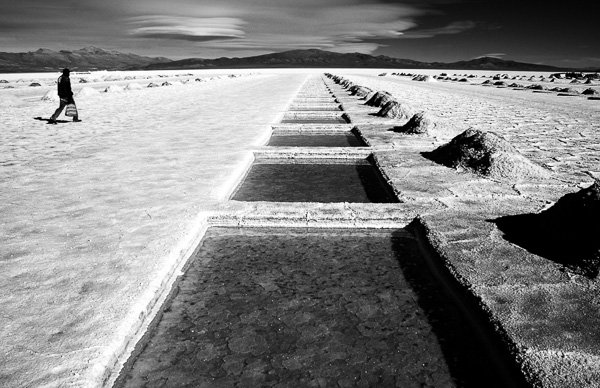
Salinas Grandes, Argentina

I can remember when autofocus was relatively new and many photographers distrusted it. Now it’s the other way around – autofocus has become so good and so ubiquitous that manual focus lenses are a rarity. It’s easy to forget that sometimes it’s better to turn it off and use manual focus instead.

A good example of this is when you use a wide-angle lens to take a landscape photo. In this situation, you probably want to record the entire scene as sharply as possible. But how do you do this when the nearest part of the scene may be only centimetres (less than an inch) from your camera?

The answer is that you need to understand depth of field and be willing to take control and decide exactly where you want to focus the lens, rather than leave it up to the camera.

What is depth of field?

Depth of field is the area either side of the point of focus that appears to be sharp. The amount of depth of field depends partly on camera settings (the focal length of the lens and the aperture) and partly upon other factors such as the size of the photo and the eye of viewer. Sharpness is subjective – what might appear to be sharp to one person may not appear so to another. Keep this point in mind as we progress through the article.

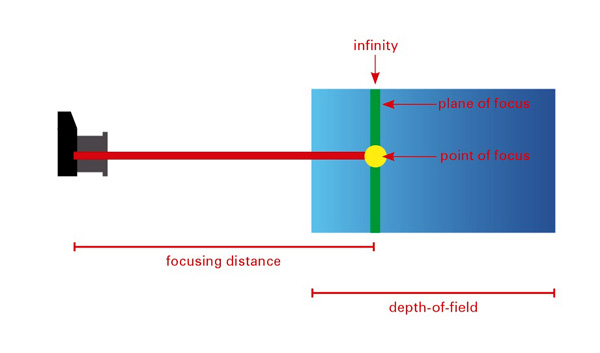
Hyperfocal distance diagram

This diagram shows the depth of field when you focus on infinity. You can see that most of the zone of sharpness (another term used to describe the areas that are in focus) extends beyond the point of focus and is effectively wasted.

Depth of field in action

The best way to understand how depth of field works is with a practical example. Imagine that you are using a 24mm lens (or a zoom lens set to 24mm) on an APS-C camera focused on a point exactly one metre (3.3′) from the camera. You want a nice sharp image so you have set the aperture to f/11 (the sharpest aperture settings on most lenses are f/8 and f/11). In this case everything between around 73cm (28.75″) and 157cm (5’1″) will be sharp.

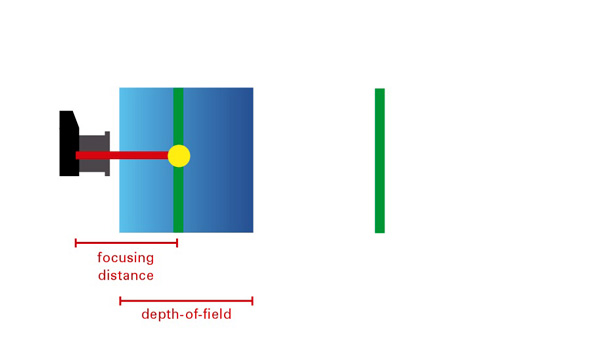
Hyperfocal distance diagram

This is what happens if you focus too closely to the camera. You will get the area around the point of focus sharp, but anything close to the horizon will not be sharp.

In reality, what is happening is that anything one metre (3.3′) from the camera (the point the lens is focused on) is sharp, and then everything either side gradually becomes less so until it reaches the point where it no longer appears to be in focus to the human eye.

Where did I get the above figures from? I used the depth of field calculator at DOF Master and selected EOS 7D as the camera. The camera is important as depth of field as affected by sensor size, as well as lens focal length and aperture.

We have already seen that focusing on infinity effectively wastes depth hyof field. You’ll get a better result using the hyperfocal distance.

What is hyperfocal distance?

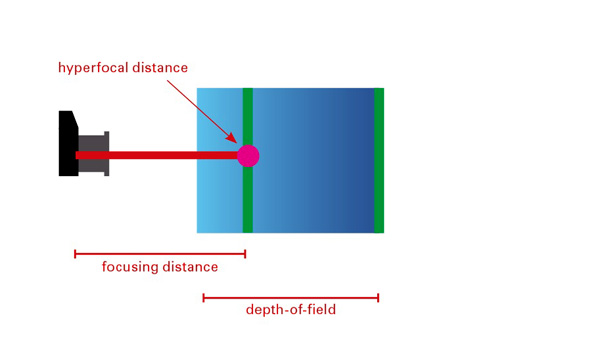
The depth of field calculator throws up another figure – the hyperfocal distance. This is the closest point at which you can focus the lens at this focal length and aperture settings, and still keep everything from the focusing point to infinity in focus.

In this example the hyperfocal distance is 2.7m (8’11″). Focus on this point and everything from 1.34 metres (4’5″) to infinity is in focus. That maximizes depth of field and helps you get the entire scene sharp.

Hyperfocal distance diagram

This diagram shows what happens when you focus on the hyperfocal distance. Depth-of-field is maximised, helping you to create a sharp image.

Note that the near focus point (1.34 metres or 4’5″) is half the hyperfocal distance of 2.7 metres (8’11″). This ratio holds true no matter the hyperfocal distance of your lens, aperture and sensor size combination.

Hyperfocal distance in action

The easiest way to use the hyperfocal distance is to print out or photocopy some hyperfocal distance tables to take with you on a shoot (the DOF Master website has tables you can print out here).

Alternatively, there are several smartphone apps that will perform the calculations for you such as these (do a search for DOF or hyperfocal distance, there are plenty of others)

  • Simple DoF
  • DOF Master
  • Tack Sharp
  • DoF Viewer
  • Digital Photo Calculator

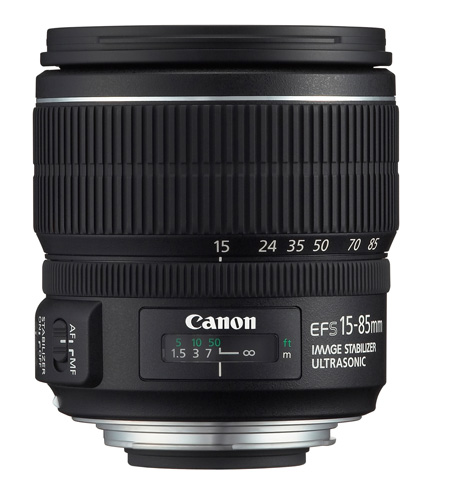
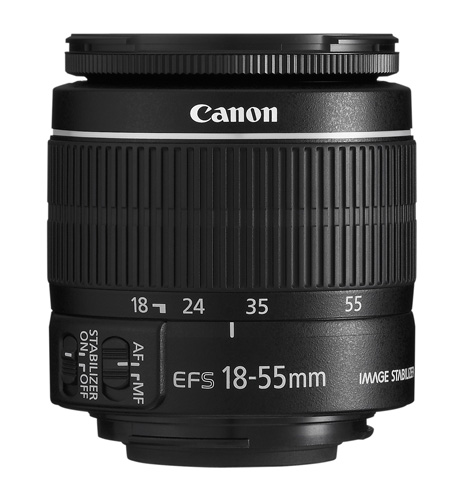
Once you have the information, you need a lens with a depth of field scale on the barrel to tell you the distance at which the lens is focused. Many lenses have these, but some don’t (including lots of kit and pancake lenses). Distance scales aren’t precise, so be prepared to work with approximate measurements.

Canon lens with distance scale

An example of a lens with a distance scale.

Canon lens without distance scale

A lens without a distance scale.

If your lens doesn’t have a distance scale, your only option is to guess the distance (or use a tape measure!). Luckily, it’s not hard to guess distances. In the above example, you would know that focussing on a point around 3 metres (approx. 10′) from the camera will maximize depth of field, so it’s not that hard to make a guess.

After you have taken a photo you can double check sharpness by playing it back on the camera’s LCD screen and enlarging it as much as you can. The usefulness of this depends on the clarity and size of your LCD screen, but you should be able to tell if the parts of the scene closest to you are unsharp. You will only really know for sure once you get home and look at the photo on your monitor, but checking the LCD screen reveals any major errors in your calculations.

Given all the variables and potential for mistakes, one way to apply hyperfocal distance is to use the calculations for one aperture setting (e.g. f/8) but set the camera to a smaller aperture (such as f/11). This gives you margin for error.

Notes on using hyperfocal distance

A couple of things to be aware of:

First, the depth of field calculations in this article are based on something called the circle of confusion. This is the maximum size at which an out of focus dot appears to be sharp to the human eye. Circles of confusion are necessary because they form the basis of depth of field calculations. Each camera and lens manufacturer makes its own judgement as to which size circle of confusion they will use for their calculations. That means the figures in depth of field calculations and hyperfocal distance tables vary according to the circle of confusion size the figures are based on.

If you didn’t understand that, don’t worry. This video explains it perfectly:

Second, you will often read that depth of field extends 1/3 in front and 2/3 behind the point being focused on. This isn’t true. Focus on something close to the camera and the split is closer to 50/50. Focus on something far away from the camera and the split may be 10/90. Advice that you should focus 1/3 of the way into the scene to maximize depth of field is well intended, but inaccurate.

More reading on this topic at Getting Landscapes Sharp: Hyperfocal Distances and Aperture Selection


Understanding Lenses ebooks

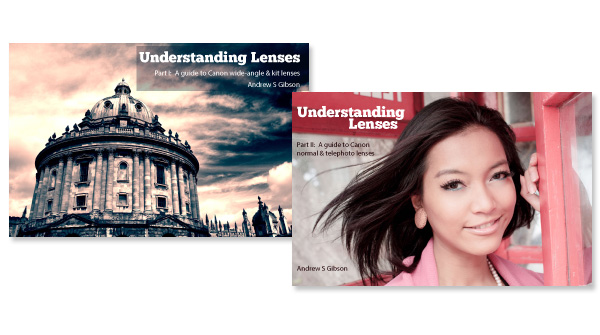
Understanding Lenses ebooksMy ebooks Understanding Lenses Part I and Understanding Lenses Part II will help Canon EOS owners decide what lenses to buy for their cameras. They are both filled with lots of tips to getting the most out of your Canon lenses. Click the links to learn more.

The post Landscape Photography and Hyperfocal Distance by Andrew S. Gibson appeared first on Digital Photography School.


Digital Photography School

 
Comments Off on Landscape Photography and Hyperfocal Distance

Posted in Photography


Getting Started in Newborn Photography

19 Feb

Newborn photography has been around in the United States for fifteen or so years, but it’s only taken hold here in the UK in the last three to four. And take hold it certainly has!

All professional photography involves a multitude of skills and newborn photography is no different, with one very important exception. It is the only area of photography that involves the photographer being completely responsible for the safety and welfare of the subject – the baby. As a newborn photographer you will hold, comfort, soothe, pose, wrap, and often even feed and clean up after your subject, even with the parents present.

Newborn photography tips 06

It is because of this difference that it is so specialized, and requires the right set of skills. Not having those skills is about more than the risk of poor images – someone’s safety is at stake.

So having decided it’s for you, you’ll have a huge number of questions. Here I aim to answer some of the biggest, and most important ones.

Newborn photography tips 02

DO I REALLY NEED TRAINING?

The short answer is yes. It doesn’t matter how skilled you are at photography, because the skills required to be safe and of a good standard as a newborn photographer are really very different than anything you have done before. If you decide to become a wedding photographer with no training, the worst that may happen is you let down a couple on their big day. As bad as that could be, no one will get hurt.

Newborns are delicate and must be handled correctly. They can suffer circulation problems, are poor at regulating their temperature, and cannot tell you when they are feeling uncomfortable, which means they are relying on you to take care of them at all times. The correct training will teach you safe handling techniques, how to spot signs of baby not being happy for many reasons, as well as general safety and other important areas.

Newborn photography tips 03

WHY DOES A SESSION TAKE SO LONG?

The average session is 3-4 hours, and you will soon realize why when you have done a couple of your own. The session is taken up by everything BUT taking photos. When I do a session my camera is in my hand for less than ten minutes the entire time. The session will involve settling, cuddling, reading baby, soothing for sleep, and gentle posing. They baby runs the show, of that there is little question, and as each baby is different, so is each session. Try to rush it and clock watch, and you’ll put yourself under huge pressure, and babies pick up on stress, which could cause you to have an unsettled baby on your hands. As a general rule, most newborn specialists will do just one session a day.

Newborn photography tips 04

WHAT IS THE BEST AGE FOR A NEWBORN SESSION?

If you have children, you may well remember that newborns sleep a lot, at least through the day, and seem able to sleep through pretty much anything too. But that changes really quickly, and by week three babies are waking more easily, and spending more time awake each day. You cannot pose a baby that is awake, so a sleeping newborn is what you need, meaning you need to aim for under two weeks, and under ten days is even better.

Sleep isn’t the only issue that dictates though. Newborns are gorgeously squishy, floppy and bendy under ten days old, which, coupled with being sound asleep, makes them perfect for gently posing into those adorable positions parents love. Much after two weeks and they begin to gain muscle tone, which means they lose the flexibility that makes such posing possible.

So that covers not doing a session too late, but you need to know why doing it too early isn’t good either. Newborns don’t usually look their best after birth, and it can take time for their faces to settle. Also, feeding needs to be established because until a baby is feeding well, he won’t sleep well. My advice would be don’t do a session under 5 days of age.

Newborn photography tips 01

HOW DO I MARKET NEWBORN PHOTOGRAPHY?

You are selling emotions. That is really the bottom line with newborns. The parents are melting with wonder and love at their new baby, and emotions are running their lives completely. If you can build a relationship with your clients that taps into their emotions, and leaves them feeling that you can truly relate to them and their baby, they will be more inclined to not only book you, but trust you.

Talk in a way that shows their baby means almost as much to you as he does them. Ask them lots of questions about their baby, and life since his arrival. New parents can talk all day about their baby, so showing he interests you will really endear you to them. Use emotive language on your site and Facebook page. Rather than saying “I like doing baby shoots” say “I simply adore capturing images of beautiful, squishy babies!”

Look after the parents when they are with you. Provide drinks and snacks, and comfortable seating. Mum will be sore and they are both likely to be exhausted.

Word of mouth is one of the best marketing tools in this genre. Mums talk, and will recommend you if they came away feeling that their baby was safe, respected and adored. The testimonials that will get you more bookings will not be the ones where mum says the pictures are good, but rather the ones where she gushes about how lovely the experience was while with you.

Newborn photography tips 05

WHAT WILL I NEED AS A BEGINNER?

Keep it simple. Training will show you the basic equipment you’ll need, like beanbag and backdrop stand, as well as a small selection of throws, hats, headbands, and wraps. The most important area for your development as a newborn photographer will be developing safe handling of the baby in your early months. The confidence in posing takes time, and that is where your focus should be, not on having all the props and the biggest selection of hats. What will set you apart as a top newborn photographer will never be the amazing set up you design – it will be how good your posing is, and how comfortable your baby looks in the images.

So in summary, I would suggest you take your time setting up as a newborn photographer. Research good training, and consider that in this area especially, you get what you pay for.

Newborn photography tips 07

For more on newborn photography and business see these articles:

  • The Ultimate Guide to Going Pro as a Photographer
  • How to Photograph Newborns
  • Newborn Photography Tips for Beginners
  • Different ways to Photograph your Baby
  • The Sensitive Side of Newborn Photography

The post Getting Started in Newborn Photography by Maddy Rogers appeared first on Digital Photography School.


Digital Photography School

 
Comments Off on Getting Started in Newborn Photography

Posted in Photography


Beyond Full Moon Photography

18 Feb

The rising full moon is a shot on many photographers’ bucket lists, but how many of us remember that the moon is even there on those other 28 days of the lunar month? Forget the moon no longer; there are many great reasons to keep shooting the moon throughout its phases.

moon, full moon, photography, how to

Better Craters and Contrast

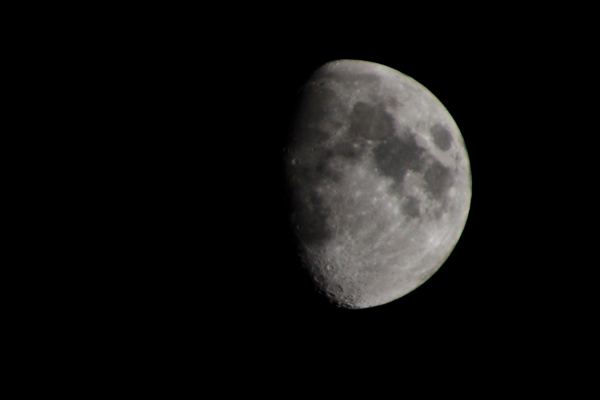
Craters are a fascinating feature of the lunar surface, and they are easier to feature when the moon is no longer full. During a full moon, an entire side of the moon is visible and reflecting the sun’s light back to us. Craters, by contrast, look better in shadow, as this less direct light highlights the differences in elevation on the surface and bring better contrast and definition. A gibbous moon (the lumpy phase between full moon and the first or last quarter when the moon looks half full) is an excellent choice for craters. Along the edge where the moon fades into blackness, you will be able to capture the deep shadows of the craters in your moon photographs.

moon, moon photography, gibbous moon, how to, craters

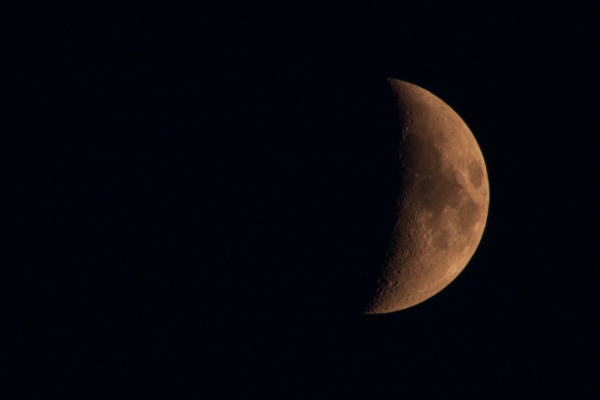
As the moon continues along its progression, it will pass from gibbous through the first quarter, and enter the crescent phase. Before the moon reaches its classic, skinny crescent shape, there are also many opportunities to capture it that emphasize the craters. Because the moon is visible at different times of day and night during different phases, you will also be able to capture the different colors of its light.

moon, moon photography, crescent moon, how to, crescent, craters

Crescents and Earthshine

The crescent moon is the phase between first or last quarter and the new moon, when the unlit side of the moon is facing the earth. The crescent shape is hugely significant in many cultures. It is often the version of the moon drawn by children, yet it can be overlooked by photographers. The crescent moon is generally visible during the daytime hours, which can make it more difficult to see and photograph successfully. But, as the crescent reaches its smallest size, you will be able to capture it setting in the early evening, against the brilliant deep blue skies that are well-suited to moon photographs.

moon, moon photography, crescent moon, how to, crescent, craters

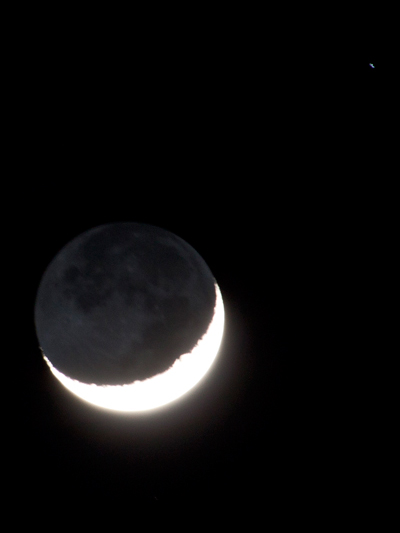
Another phenomenon to photograph with the crescent moon is known as earthshine. If you stare closely at a slim crescent moon, you should just be able to see the darkened outline of the rest of the moon’s surface. That surface is dark because it is no longer reflecting the light of the sun. The fact that you can see it at all is because that part of the surface is reflecting back light from the earth, hence the term “earthshine”.

moon, moon photography, crescent moon, how to, crescent, earthshine, star

If you want to capture a shot of the crescent moon showing earthshine, you will need to shoot in manual and significantly overexpose the image. The crescent part of the moon will become overexposed (very bright) as you bring out details within the shadowed sections of the moon, which can result in a very unique moon shot. A tripod or a camera with good high ISO performance is critical, as is a longer zoom lens. Try to keep your shutter speed below a second or two, otherwise the moon will begin to move during the exposure and blur the image.

Timing and Backgrounds for Moon Photography

A moon photographed alone, however, is simply a shot of the moon. To really make an impact with your moon photography, regardless of the phase, you need to feature an interesting foreground or background. The two critical components here are knowing the timing of moonrise or moonset, and knowing the approximate location of the moon in the sky.

The Photographers’ Ephemeris is downloadable software (free for laptops and desktops but a paid app for Apple and Android phones and tablets) that lets you view the moonrise and moonset times (as well as sunrise and sunset times) against a map, which allows you to plot out exactly where the moon will appear in the sky, depending on where you are standing. Moonrise and moonset tables and times are also easily available and searchable online. You can use the ephemeris to determine exactly when and where to stand if you wish to photograph the moon rising or setting over a specific place or landmark.

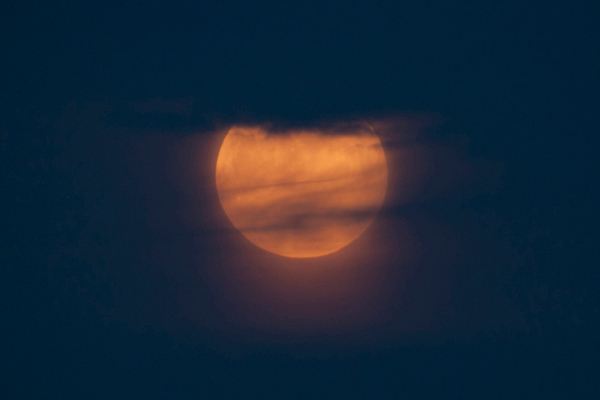
moon, moon photography, full moon, how to, Madison, Wisconsin, orange moon

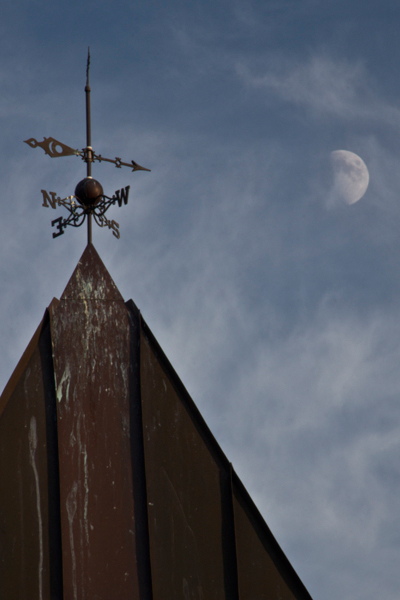
You are not limited to only shooting the moon at night. Depending on its phase and timing, you can photograph the moon during the daytime too, which makes it easier to experiment with interesting foregrounds. By walking around, moving up and down, and otherwise changing your perspective, you can ‘move’ the moon where you want it to appear in your final image. The longer the focal length that you can use, the larger you can make the moon look, relative to the other objects in the image.

moon, moon photography, full moon, how to, gibbous, half moon, photography

Variations

There are an infinite number of variations on moon photography. Do not let yourself be limited by the full moon, only shooting the moon at night, or only when it is rising or setting. Do not let clouds stop you from looking for the moon. Pay a little more attention to the moon throughout the month, and you will find many opportunities for moon photography.

moon, moon photography, full moon, how to, clouds, photography

Have you got some great shots of the moon or some addition tips? If so please share them in the comments below!

More night photography articles:

  • Moon Photography: 6 Tips for Better Moon Photos
  • The Mystery of Night Photography – 35 Images of the Night
  • How To Photograph Star Trails
  • Light Painting Part One – the Photography

The post Beyond Full Moon Photography by Katie McEnaney appeared first on Digital Photography School.


Digital Photography School

 
Comments Off on Beyond Full Moon Photography

Posted in Photography


A Quick and Easy Way to Make Money with your Photography While Having Some Fun

17 Feb

Many photographers have the dream of selling their fine art photography and seeing their prints hanging in collector’s homes. I’m sorry to burst your bubble but that is probably the most difficult way to make money. Even the biggest names in photography don’t make a living solely by selling prints. Yet, it is conceivable to make a little bit of extra cash with your pictures and here is a realistic easy way to make money with your photography.

Everyone loves a card with an old rusty bicycle! ©Valerie Jardin

Everyone loves a card with an old rusty bicycle!
©Valerie Jardin

Think Locally!

Instead of trying to reach the world at large and compete with hundreds of thousands of other talented photographers trying to sell their work, think locally!

You could spend several weekends every year sitting in a booth at an art fair only to sell enough to break even and pay for your entry fee. Yes, art fairs are good exposure, but photography is not the biggest seller and there are usually several photographers trying to sell prints at the same event. Also, those art fair weekends are valuable days for any photographer, wouldn’t you rather be out shooting than selling?

Another option is to show your work at a restaurant or a coffee shop. If you do, make sure there is an opening party to create a buzz around your work and invite everyone you can think of. Do not leave your images on display for more than a month, no one will notice them after a few weeks.

I’m going to tell you a little secret…

Years ago, when I still had a little bit of spare time, I often teamed up with two or three other artists in different media forms and organized private art parties. We combined our contact lists and invited our friends and family to attend an ‘art open house’ for a few hours. We did this several times a year. We took turns hosting the event and split the cost of the snacks and beverages. We also urged people to bring a friend along. By combining our contact lists we would reach a large number of people and always end up with a minimum of 30 to 50 attendees.

Why is it better to have 50 people coming to your open house rather than hundreds walking by your booth during an art show? The people who come to your private art open house are there for the sole purpose of checking out your work, socializing and spending money! I used to sell hundreds of dollars worth of small prints and greeting cards in just one evening, while having the best time socializing with friends and other artists.

A card for Mother's Day... ©Valerie Jardin

A card for Mother’s Day…
©Valerie Jardin

What sells?

Small ticket items! You can always have a few large, framed prints, on display for the wow factor and a possible sale or two – but small items, such as greeting cards, will sell! People are still very keen on greeting cards, especially in North America. I realize that different countries have different customs. You may think that, in this age of electronic mail, physical cards would disappear. On the contrary, e-cards and social media greetings are so common and impersonal, that receiving an actual card in the mail has become a novelty.

The advantage of selling cards is that everyone can afford them and has a use for them. Make sure you have a large variety of cards with your best images. If people can’t decide which ones to choose, they are more likely to buy all of them! Another tip: Display some as a pack wrapped with a bow, they make fun gift ideas for friends, co-workers, teachers, etc. Another tip: Offer a ‘bargain basket’ with a limited selection of discounted cards. Some people will only buy if they feel like they’re getting a good deal. Also, use this phrase as incentive “one free card if you buy ten”. It works!

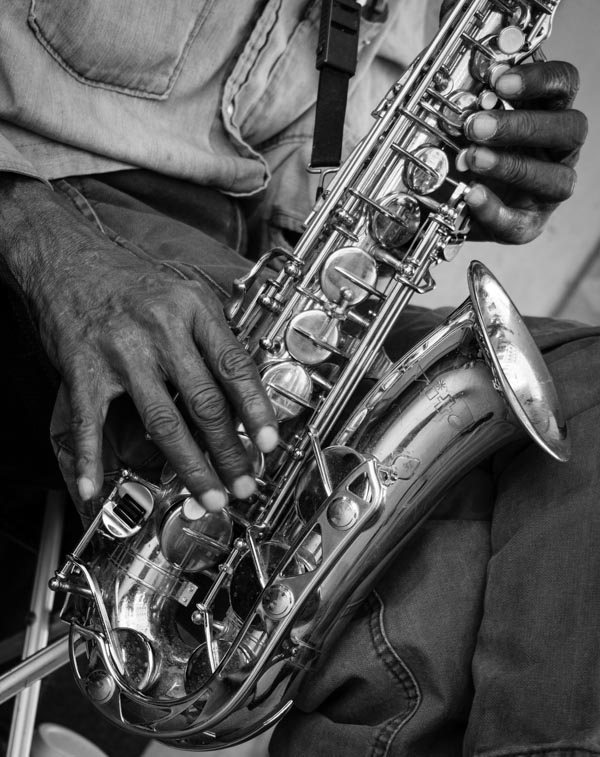
Everyone knows a musician who would enjoy receiving this card! ©Valerie Jardin

Everyone knows a musician who would enjoy receiving this card!
©Valerie Jardin

How do you make greeting cards?

It takes a little bit of time and effort to make those cards and there are several ways of doing it. You can certainly order your cards already made through a wholesaler. It’s the easiest way to proceed but also the most costly and your profit margin will suffer.

You can make your own! If you have a good quality photo printer, you can download a greeting card template and print them at home on some nice stock paper. Watch out for the high cost of the ink and figure out how much each card is going to cost in ink, paper and envelope. The goal is to make nice cards for as little as possible.

An inexpensive way to do it, but a bit more time consuming, is to affix photographs on stock paper. Pre-scored card paper with matching envelopes can be purchased in bulk quantities at a craft store for a very reasonable price.Your next step is to print your logo and contact info on the back of the cards. The tedious part is to place the photo on the front of the card with double sided permanent tape.

You can wrap each card in a clear sleeve to give them a more professional look. Or ‘go green’ and not wrap them at all. Ordering 4×6 prints online to use on your card stock is cheap, just pennies per print (usually cheaper than printing your own).

Remember, cards you buy at the store are expensive! Yours will be unique and you can easily sell them for $ 5 per card, which adds up when people buy them by the dozen or as a pack to give them as gifts… If you do it right, you can easily make a 300-400% profit on each card.  Remember, the goal is not to make a living by doing this. But you can easily make a few hundred dollars during each party, and feel pretty good about yourself!

Valerie Jardin Photography-17

There is a card for every season!
©Valerie Jardin

The fun part and the bonus for you, the photographer!

Shooting for greeting cards becomes a great photography project. Think of all the different themes you can shoot for: Christmas, Hanukkah, Father’s Day, Mother’s Day, Birthdays, Valentine’s Day, etc. All of a sudden you become a stock photographer for your own little business needs. I used to spend a few hours each week shooting just for my greeting card collection. For example, if I was out shooting for a Father’s Day theme, I would think: golf, fishing, antique cars, etc. Every self-assignment becomes a treasure hunt. It was like shooting for a stock agency. The difference was that I made a lot more money and I had a lot more fun selling those cards than I did with iStock!

This little experiment was serving a dual purpose. I was having fun and learning a lot while working on a photography project that also brought extra cash for trips or photo gear!

Another advantage is that it spreads your name around. Many times people emailed or called me to place an order after receiving one of my cards for a special occasion. Hence the importance of having your contact information on the back of each card! Today I don’t make cards anymore but, ironically, I often get requests from greeting card companies to licence my images for that purpose.

If you love photography and, if you have a little bit of spare time, there is no reason why you can’t make some extra cash selling your pictures. Good luck!

When you start shooting for your greeting card collection, opportunities will present themselves everywhere and your photo walks become fun treasure hunts with a purpose! ©Valerie Jardin

A card for the book worm? When you start shooting for your greeting card collection, opportunities will present themselves everywhere and your photo walks become fun treasure hunts with a purpose!
©Valerie Jardin

Do you have any other little tips that have worked for you to make money with your photography? If so please share in the comments below.

More articles on using your photography to make some extra cash:

  • “Photography Business Secrets” – A Review
  • 5 Things to Consider Before Starting Your Photography Business
  • Top 10 Ways to Sabotage your Professional Photography Aspirations

The post A Quick and Easy Way to Make Money with your Photography While Having Some Fun by Valerie Jardin appeared first on Digital Photography School.


Digital Photography School

 
Comments Off on A Quick and Easy Way to Make Money with your Photography While Having Some Fun

Posted in Photography


Weekly Photography Challenge – Portrait of a Child

15 Feb

Over the last couple weeks we’ve featured several articles on photographing people and doing portraits. Our newest eBook on How to Pose Portraits is a smash success – grab it here now!

The weekly challenges have also been portrait related, so to continue that theme and finish off our portrait deep dive, this week’s challenge is Portrait of a Child.

By CIFOR

Last week we had Portrait of a Man as the challenge – you can see the great submissions on that post, and some manly portraits in The Essence of Masculinity – Portraits of Men.  The previous week it was the ladies in the challenge, well ladies first you know right? See some Inspiring Portraits of Women here for ideas.

Here are a few children’s portraits to get you started:

By Ahdieh Ashrafi

By Barbara Piancastelli

By Kalani Odum

By cheriejoyful

By Marcos de Madariaga

By Alexandre Baron

By Elizabeth Donoghue

Share your Portrait of  Child images!

Whether it be a posed portrait in the studio, or a candid shot of the child in action. Show us your Portrait of  Child images in the comments below!

Simply upload your shot into the comment field (look for the little camera icon in the Disqus comments section as pictured below) and they’ll get embedded for us all to see or if you’d prefer upload them to your favourite photo sharing site and leave the link to them.

Need more tips – try these articles:

  • 7 Tips for Photographing Kids
  • Cut the Cheese: 5 Tips for Photographing Kids
  • How to go Beyond the Regular Composition Advice for Getting the Best Shots of your Kids
  • 5 Photography Rules Moms [and Dads] Can Ignore

The post Weekly Photography Challenge – Portrait of a Child by Darlene Hildebrandt appeared first on Digital Photography School.


Digital Photography School

 
Comments Off on Weekly Photography Challenge – Portrait of a Child

Posted in Photography


10 Highly Useful Photography Lessons You Can Learn Today From YouTube

14 Feb

It doesn’t matter if you are a beginner or a professional photographer: Learning and perfecting your technique will help you be a better one! Being a photographer is more than shooting and uploading pictures. As in almost any other profession, any good photographer should stay up-to-date with the market and master his skills. By searching for tutorials, you will get Continue Reading

The post 10 Highly Useful Photography Lessons You Can Learn Today From YouTube appeared first on Photodoto.


Photodoto

 
Comments Off on 10 Highly Useful Photography Lessons You Can Learn Today From YouTube

Posted in Photography


Sequence Photography Tutorial to Take Your Sports Photography to a Whole, Nother Level

12 Feb

Sequence photography is a great tool to use when you need to have a more interesting shot to use, but it’s not always easy to do – to take a flawless sequence shot you’ll need to do as much work on the day as you will in Photoshop. What you’ll need is: A tripod to steady the camera Photoshop (or Continue Reading

The post Sequence Photography Tutorial to Take Your Sports Photography to a Whole, Nother Level appeared first on Photodoto.


Photodoto

 
Comments Off on Sequence Photography Tutorial to Take Your Sports Photography to a Whole, Nother Level

Posted in Photography