RSS
 

Posts Tagged ‘Photography’

Do you pack up and leave after sunset and miss the fun of night photography?

11 Feb

There’s no question that the best light occurs during the golden hours, but does that mean that you should pack up your cameras after sunset and miss all the fun of night photography?

city-skyline-example

Absolutely not!

Fun of Night Photography

Night photography offers so many great opportunities for photographers that it’s something that shouldn’t be overlooked. In fact – I think it should be experienced by everyone.

Of course photographing at night means that you’re going to be pushing your gear to its limits. High ISOs, long shutter speeds, fast lenses, tripods, remote shutters, and patience are a must when it comes to photographing after the sun has set, but the results will be worth it.

So what is there to capture at night, and more importantly how do you go about capturing each of these subjects?

City Lights

Walking-the-city

Cities are great places to take photos any time of the day, but at night, cities come to life. Just think of Times Square in NYC or the Vegas Strip for example. Of course, not everyone’s going to have access to such iconic locations, but that doesn’t mean that your local city won’t offer you the goods.

When photographing a city you have so many options open to you; from skylines, to the simple every day things that make cities run. Things like the traffic, the people, and the objects they use to get around are a great start. This photograph of a bike, chained to a parking meter, in front of a church lit up for the night, is a great example of what can be found walking the city streets.

For more tips and examples on photographing cities at night check out these great posts:

  • Nightscapes: Photographing the City at Night
  • 41 City Skylines to Inspire You

The Night Sky

When it comes to capturing the night sky there are two basic ways that you can go about doing this. You can either show the vastness of space and showcase the number of stars in the sky, or you can capture the motion of the Earth’s rotation by creating star trails.

night-sky-photography

Night photography showing vast open sky and stars

The basic concepts for capturing both types of night sky photos are the same. You’ll need a tripod, a wide angle lens, and you’re going to be working with a large aperture in most cases.

When it comes to the shutter speed and ISO that is where things start to differ between the two types of shots. As the Earth’s rotation is what causes star trails to form, you have to limit your shutter speed in order to capture a single frame shot before this rotation creates the trailing effect.

Startrails-OneWS

Night photography capturing star trails over a long period of time

A general guideline for this is known as the 600 rule which basically states that the longest shutter speed you can use is determined by dividing 600 by your focal length corrected for 35mm. So if you’re using an 18mm lens on a 1.5x crop sensor DSLR you’d take 600 divided by 27 (18mm x 1.5 crop factor) which would mean that the longest shutter speed you can use would be about 22 seconds. To control this you’re going to need to set a rather high ISO. However, with modern DSLR cameras being as good as they are with noise these days, this is becoming less and less of an issue.

However, if you DO want to capture the star trail effect, then the object is to capture the motion that you were trying to avoid before. Often times star trail photographs are created by stacking multiple long exposures of the same scene over a long period of time. Since shutter speed is not going to be an issue here it’s much easier to use longer speeds which will result in less frames in the end. You’ll also be able to use lower ISO and smaller apertures here if you prefer.

Here are some more great posts to send you in the right direction for taking better photos of the night sky

  • Tips for Photographing Star Trails
  • How To Take Better Photos of The Stars

Light Trails

light-trails-example

Light trails are a lot of fun to photograph and can be done just about anywhere you can find a busy road.

In general any shutter speed from one second, to a few seconds, should be enough to give you the look you’re after. But it doesn’t just come down to finding a road with traffic and photographing it – make sure you’re aware of your composition as well.

light-trails-example-2

As roads make for great leading lines, try to use those to your advantage. You can either shoot from above the traffic on a bridge or a building, or your can try and get down low and shoot from a median or side walk. No matter where you’re shooting from you’re going to want to be super aware of your surroundings and never do anything that would put your life in danger – no photograph is worth getting hit by a bus over.

For more tips and examples on light trails check out these posts:

  • How to Shoot Light Trails
  • 9 Tips for Capturing the City in Motion

What else?

What else can you think of for night photography? I know I left at least one big one off this list and I did that on purpose as I have no experience in light painting – oops did I just give one away?

The post Do you pack up and leave after sunset and miss the fun of night photography? by John Davenport appeared first on Digital Photography School.


Digital Photography School

 
Comments Off on Do you pack up and leave after sunset and miss the fun of night photography?

Posted in Photography


Valentine’s Day Photography Tips to Color You Red With Passion

10 Feb

Ah, amore. That’s what Valentine’s Day is all about, at least nominally. So whether you believe in love, don’t or just think it’s something that Hallmark made up to sell more cards, one thing can’t be denied. The occasion makes for a brilliant photography opportunity. It’s true! Valentine’s Day allows for all sorts of unique and interesting photography because there’s Continue Reading

The post Valentine’s Day Photography Tips to Color You Red With Passion appeared first on Photodoto.


Photodoto

 
Comments Off on Valentine’s Day Photography Tips to Color You Red With Passion

Posted in Photography


Your Compete Guide to Outdoor Photography – Part Two

10 Feb

Continued from Part One of your guide to outdoor photography. Once you’ve arrived at a good shooting spot it’s time to begin.

Shooting mode
shooting modes outdoor photography

As outdoor photography incorporates a wide selection of genres you’ll find Manual mode will offer you the most flexible and convenient grounds for setting and changing values on the go. But Manual mode isn’t for everyone, so if you’re not feeling confident enough yet, try using a semi-manual mode. Aperture Priority is great if you want to control the depth of field of your image, for example if you want the majority of the scene to be sharp and in focus. This is helpful when you’re shooting a landscape for example, simply plump for a smaller aperture (larger number) such as f/11. However if you want to soften the area around the subject, to focus attention on one part of the scene or subject; such as the centre of a flower or the tip of a mushroom, then you’re better off using a larger aperture (smaller number) such as f/5.6.

Shutter priority is ideal for long exposure landscapes when you want to incorporate some ‘movement’ into the frame, for example clouds travelling across the sky, a river flowing down stream or tree branches swaying in the wind. Opt for a slow shutter speed here (but use a ND or polarizer filter if it’s a particularly bright day so that you don’t risk overexposing). If you want to freeze a subject on the other hand, a wild animal for instance, then dial in a fast shutter speed to avoid blur.

Shoot in RAW if your camera permits, as this will allow greater ability to perfect colours, details and exposure post-shoot.

Avoid camera shake

Using a long exposure means keeping the shutter open for a lengthy period of time, and the slightest knock during this window can result in detrimental camera shake. The first step is to use a tripod or rest your camera on something sturdy such as a wall or bench. Then with your shot composed the next step is to fire the shutter using a remote control rather than pressing the button; as even the lightest of touches can result in the camera moving. Wireless and tethered controls are available, and many contemporary cameras can be fired using a Smartphone or tablet. Alternatively you can program the self-timer to start the exposure. If it’s windy, or you are particularly heavy-handed, then set a longer timer to give the tripod and the attached camera enough time to reset to a stationery position.
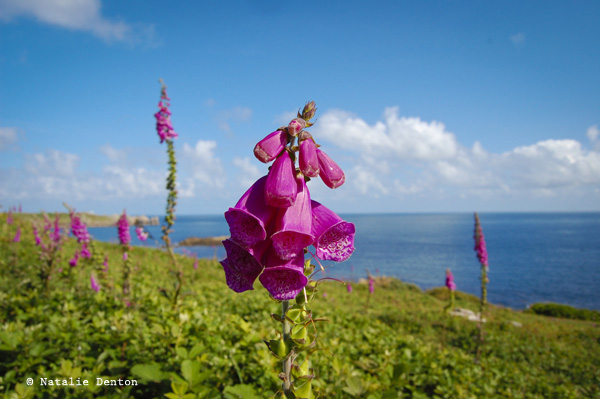
Scilly Isles pink foxglove Natalie Denton

Saving power

If you’re out for the day, or a very long period, but don’t have a spare battery, always consider ways to save power. For starters, if it’s cold out, keep the camera insulated when not in use; wrapped in a spare sweater in the bag, inside your jacket or even under your arm. Avoid using LiveView and rather than use in-camera editing wait until you return home to edit. Minimize the time you spend reviewing shots in Playback mode and use the histogram to nail exposure. It always seem tempting to delete frames on location, particularly if you’re waiting for something to appear (e.g. wildlife, sunset, stars etc) but you’re better off saving the battery for photographing. What’s more – something that seems unworthy on the camera’s LCD may offer some redeeming features on a larger computer screen.

Time of day

Sunrise and sunset can make for some truly arresting images. In order to capture the golden-flame light in all its glory you’ll need to arrive at your shooting location approximately an hour and a half before the actual event. Use half an hour to prepare your kit; attach the right lens, secure your camera on the tripod, decide on the composition, ensure the horizon is straight using the in-camera spirit level (if your camera has one) and program the desired values. If you’re using a tripod, turn the lens’ image stabilisation switch to off; and opt for a suitable ISO (ideally between ISO 200-800).

The best light is born an hour before sunrise and an hour before sunset, which is why you need to be there early – once the sun has risen or set the vibrancy of hues diminish, so enjoy the 60 minute build up with its soft caressing light, and capture the ever-changing colours of the sky and its effect on the land below. To add some extra punch to those tones try using a ‘cloudy’ white balance option for pumped up reds, oranges and yellows.

The great outdoors can offer up some wonderful subjects for night photography, and by using a long exposure the light of the moon will paint in the elements of your scene. Alternatively, if there is no moon or nearby light source, use a flashlight or even the beam from your phone. Simply compose the scene, opt for Bulb mode to keep the shutter open as long as you need, and flick the beam over the nearby subjects; such as a tree, boulder, hay bale, truck, etc. Move the beam smoothly and steadily, trying not to hold it in one place for too long. When you are finished painting with light, simply end the exposure and review the result.
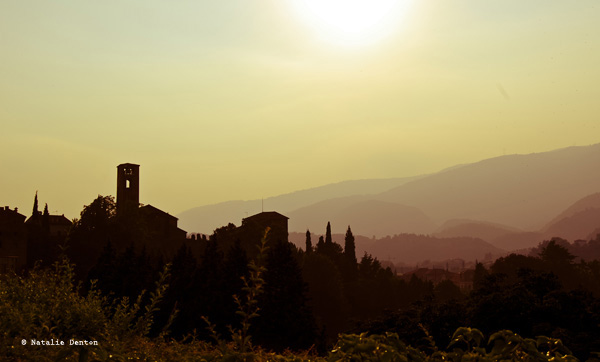
Italian sunset landscape Natalie Denton

Editing

The hard work has been done and now you’re home with a collection of charismatic captures. While many of them are probably perfect straight out the camera, there might be a few ways you can inject a little extra interest into those not quite up to scratch. Here are a few suggestions for adding the ‘great’ into your great outdoors images.

Colours

Editing suites are fantastic for turning the bland into the beautiful; and if you’ve captured your images as RAW files, there’s even more scope for success. Make sure your screen is probably calibrated so that the colours you see onscreen are presented as the same as the ones you’ve photographed.

The majority of editing software will offer an automatic colour correction tool which is great if you feel the colour values are a little off and unrealistic. Usually you will be able to click on a white area of the image and the software will use this as a reading to change the colours in the image. You can do this manually by offsetting hues. For instance, should you feel the tones are looking a little cold, then warm them up by scaling up the yellow.

If you feel your image would benefit from some vivacious colouring, ramp up the power of the hues using the suite’s saturation slider, this works well for flower meadows or landscapes of patchwork-quilt fields. Just be careful not to go too far as it can start to look unrealistic and garish. Likewise you can pull the saturation back to make an image appear more sombre or stark, ideal for winter shots for example.
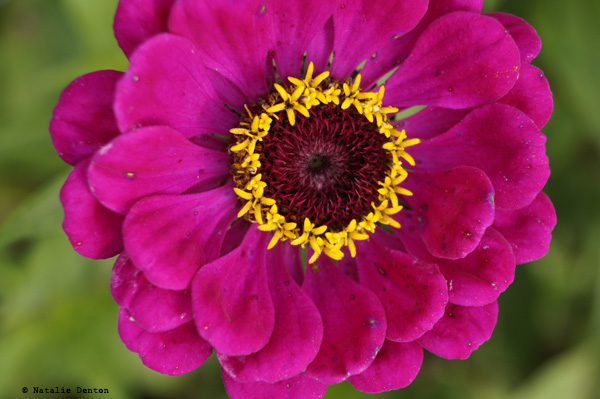
pink flower macro Natalie Denton

Blemishes

Dead pixels, lens spots and smudges can totally distract attention away from the main focus of your picture.  The good news is they are easily rectified. Many suites like Photoshop, Elements and Lightroom offer users the ability to clone out errors. In Photoshop you simply select the Clone tool, hold down Alt and click on an area you wish to copy (i.e. identical colour and shade – the more similar it is the better it will blend in). Next move the cursor to the offending spot and click again. This will cover up the spot and most people won’t be able to notice.

Noise

Most new cameras shoot to sensitivities of ISO 25,600 (or higher), with noise making an appearance as late as ISO 6400, providing better support for low-light, night and sports enthusiasts. For those who aren’t endowed with the market’s latest launches it might be wise to administer some noise reduction software if you’ve shot at high sensitivities and noise is visible. Noise-reduction software plug-ins (add-on features that can be used within your editing suite such as Noise Ninja, Topaz deNoise or Neat Image) are fantastic. After a few simple steps the noise can be muted without over-softening the main subjects within the picture.

Composition

We’ve all been there – you’ve spent ages composing the frame in the field, only to return home to find it falls flat. Composing images effectively takes time and practice or a good eye and natural talent, but there are a few ways to enhance the composition post-shoot. The first is to bring up the thirds grid while editing. Crop into the frame so that the interesting part of the frame or the main subject lies on one of the intersecting points or lines, this will get rid of unwanted negative space and force the eye onto the subject. You can also crop out areas of the frame that clutter the image, thus directing the viewer’s focus onto the important elements. Lock the aspect ratio to ensure the proportions of the image stay the same – especially if you intend to print it.
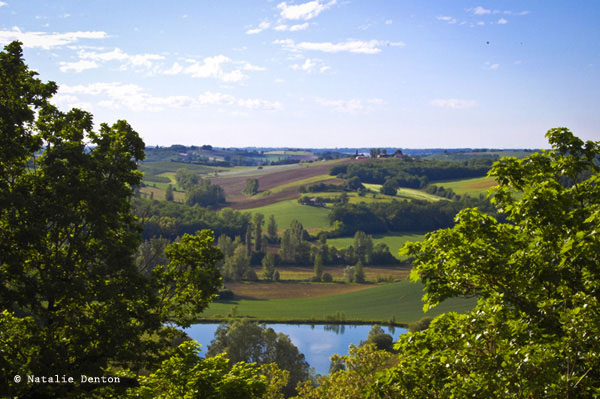
French landscape fields rural Natalie Denton

Exposure

Tools such as Photoshop’s Curves can help photographers correct slightly over or underexposed frames. Using Curves lift the line one third of the way from the top to reveal details shrouded in shadow or drag the line one third from the bottom down to bring edge back details blown out by overexposing.
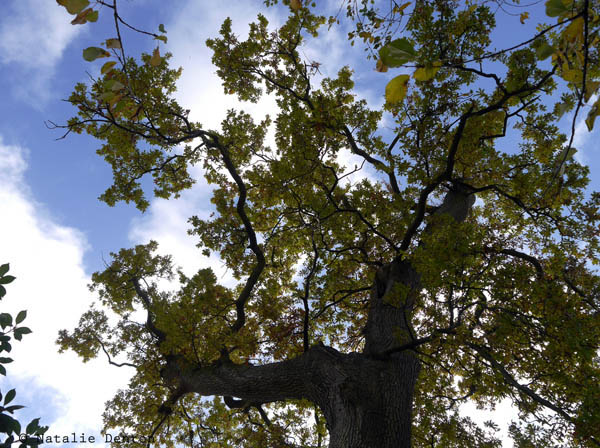
widen dynamic range correct exposure tree Natalie Denton

Black & White

Want to make your images more moody and deep? Simply desaturate them and heighten the contrast. Yes it’s as easy as that; drag the saturation slider down so that all traces of colour vanish from the frame and increase the contrast or tweak using Curves, so that the blacks are richer and the whites are brighter.
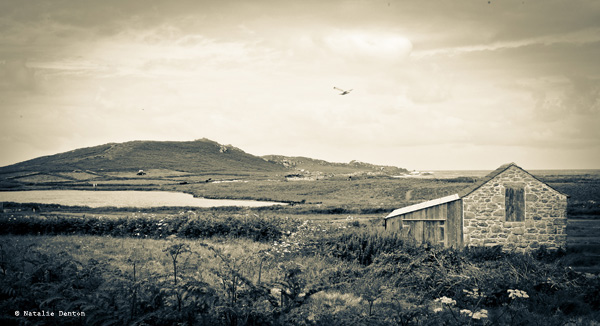
Cornish fallen down cottage Natalie Denton

Save and print

Today’s digital camera sensor’s usually pack an insane amount of megapixels, which means you can print your images at a larger size and still maintain a high resolution quality. Therefore if you want to print your outdoor scenes in all their glory, print using the resolution you shot it at. Alternatively if you intend to share your frames online – either of a social network or your own website reduce the size to 72dpi for quick and easy uploading and viewing. In Photoshop you can do this simply by heading to ‘Image’ on the Menu Bar and then ‘Image Size’ from the drop down menu and change its resolution to 72dpi (and a smaller size in pixels as well for online sharing)

Now we’ve explored the majority of considerations you need to make when pursuing outdoor photography you’ve got no excuse to give it a try. Maybe you have some tips and techniques of your own you’d like to tell us about? We’d love to see them, so please share them here for your fellow photographers to see and try!

The post Your Compete Guide to Outdoor Photography – Part Two by Natalie Denton (nee Johnson) appeared first on Digital Photography School.


Digital Photography School

 
Comments Off on Your Compete Guide to Outdoor Photography – Part Two

Posted in Photography


Your Complete Guide to Outdoor Photography – Part One

09 Feb

Outdoor photography encompasses a whole host of genres, like:  landscapes, nature, macro, wildlife and even low-light, thus it can be the perfect opportunity to try new techniques and compositions that are outside your traditional comfort zone.  So while you might have set off to capture some fascinating vistas, you might stumble upon a collection of unusual looking fungi and want to photograph that too, which is great as long as you’ve packed the right kit. The key here is preparation, because once you’re out in wild it can be a long trek home if you’ve forgotten something. Whatever you’re heading outdoors to capture, here are a few things to consider before you leave.

Guide to Outdoor Photography

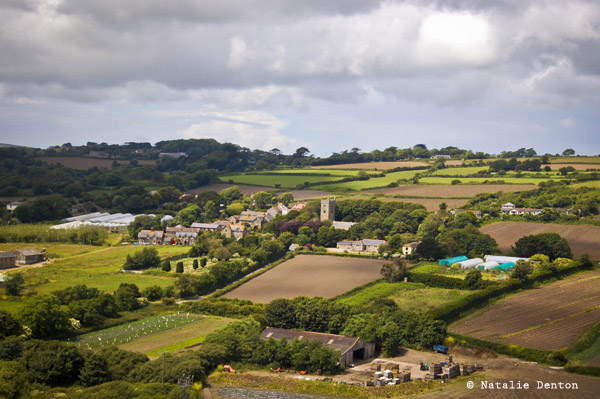
Farm landscape England rural Natalie Denton

Backpack

If you plan on packing everything, including the kitchen sink you’ll need to invest in a large, lightweight yet hard-wearing backpack, ones with Velcro padded dividers are a great choice if you’re planning on packing a selection of cameras and lenses. Ideally waterproofed ones are favourable, for obvious reasons and you’ll be thanking yourself later if you’ve bought one with soft, broad shoulder straps.

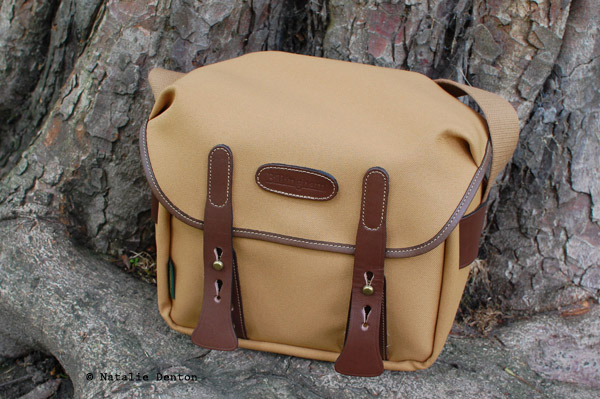
Billingham camera bag Natalie Denton

Accessories

Bags with zippable pockets will ensure you don’t lose your keys and wallet in the wilderness, but they are also great for securing smaller accessories such as memory cards; a handful ranging in capacity, a lens pen and cloth; for smudge-free glass, spare batteries or battery unit, and a selection of filters. It’s also a good idea to carry some small change with you in case you need to use a pay phone, toilets or parking.

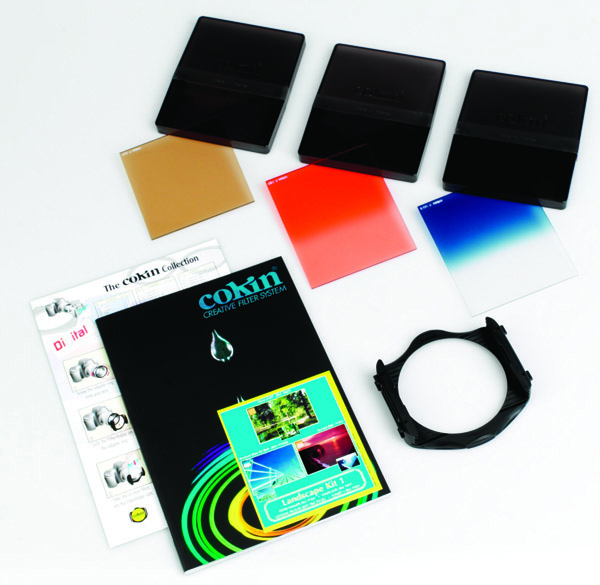
Cokin Landscape Kit filter set

Tripod

For most of the subjects that outdoor photography encompasses, a tripod will be necessary. Select a lightweight one such as one made of carbon-fibre, which is not only lighter to carry than most aluminium ones, but is much more rugged and durable. Opt for one that has a low minimum height (i.e. one where the central column doesn’t prevent you from getting down low enough to capture land-level macros).

Lenses

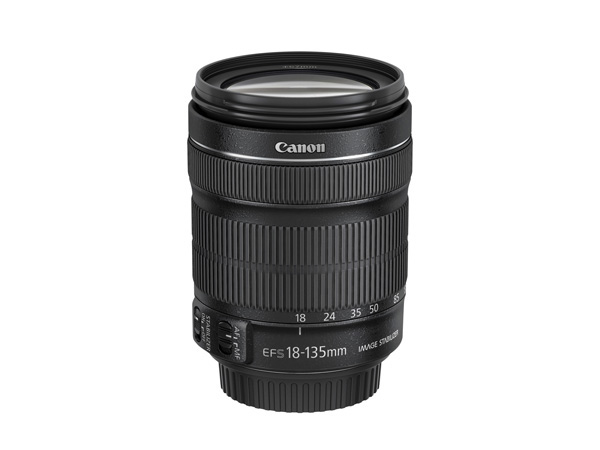
A good selection of lens covering a range of focal lengths will ensure you’re covered whatever the subject, from wide-angle focal lengths for landscapes to telephoto reaches for wildlife. If you’re budget doesn’t allow such luxury than you might want to consider a zoom lens for varying between all focal lengths, and perhaps one sharp prime lens for ensuring macros and nature subjects are captured in stunning life-like detail.

Canon LENS EF-S 18-135mm IS STM FRA w CAP 

Plastic bags

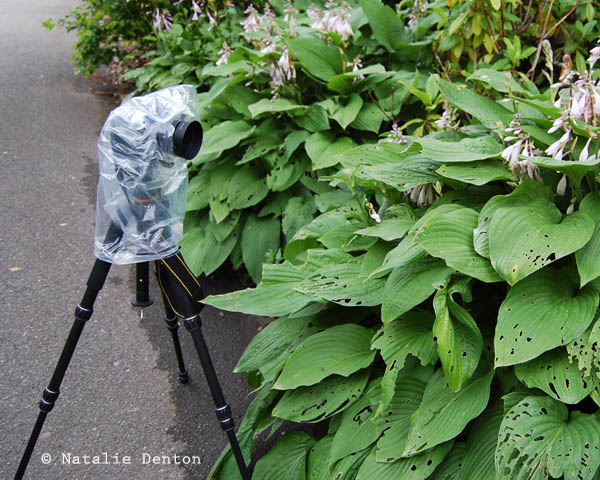
The all important plastic bag, in fact pack a couple. Never has one item been so useful to the outdoor photographer, and what’s more, they are incredible versatile, take up practically no space and most importantly – are free! If you’re caught in an unexpected downpour pull it over your camera, poke a hole in the bottom and slid the lens through the hole, then make a seal with your lens hood from the outside – et voila a waterproof camera shield. Want to lie down to get a close up of those flowers but the meadow is muddy? Lay down a line of plastic bags to stop you’re clothes getting wet and dirty. Want to shoot a long exposure landscape but the wind is blowing the tripod? Collect a few rocks or stones in your bag and attach it to the tripod’s centre column. There are 101 uses for a plastic bag, if not more!

Plastic bag for protecting camera in the rain Natalie Denton

Unless you’re a Bear Grylls (adventurer) type and are used to fending for yourself in the wild, it’s wise to take a few precautionary measures before you leave home, especially if the location you are heading to is dangerous, isolated or you are planning on going at night. These may seem like some obvious precautions, but actually it could make the difference between life and death.

Phone

iPhone 4 Apple

Ensure the battery on your phone is fully charged and to stop it draining in the cold keep it somewhere warm, like close to your body such as an inside jacket pocket. It’s a good idea to put a few helpful apps on your Smartphone too if you can such as Maps, Compass, First Aid, Find My Phone – in case you become lost or injured, plus photography relevant apps such as an app that tells you of your location’s sunset/sunrise times, one that can work out hyperfocal distances or even act as a light meter.

Tell a friend

Tell at least one person where you are going, the route you’ll be taking and when you expect to return. Perhaps offer to text or call them when you arrive at your location and also when you are on your way home again, just to put their mind at rest.

Road worthy

Double check your vehicle is topped up with gas and oil, and that the tires are correctly inflated and are in a good condition. If you are travelling some distance, or off the beaten track, it is a good idea to carry a small amount of fuel in a jerry can, to get you to the next gas station. Check the lights are working and pack a couple of spares. Keep a copy of your breakdown details just in case, but minimise the need of having to call someone out by having a spare tire and jack in your trunk.

Weather forecast

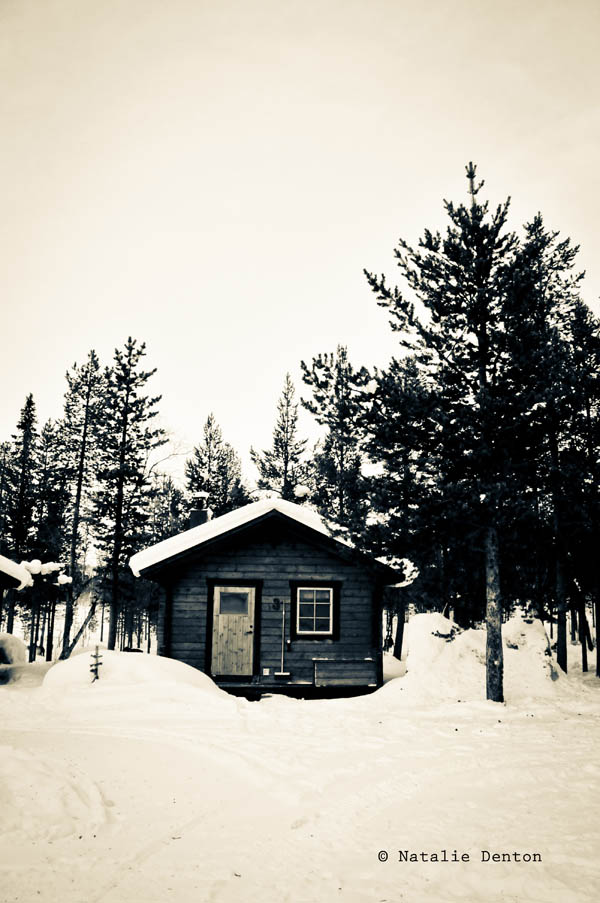
Check the weather forecast before you go to avoid adverse conditions (unless this is what you’re after) and wear/pack the appropriate clothing. Depending on the type of climate you are working in you may want to consider packing a few extra items in the trunk too, such as; a change of clothes and shoes, a blanket, spade/snow shovel, flask of hot tea/coffee, food, water, and sunscreen. A First Aid Kit and flashlight may also come in useful.

Lapland cabin snow Natalie Denton

What to wear

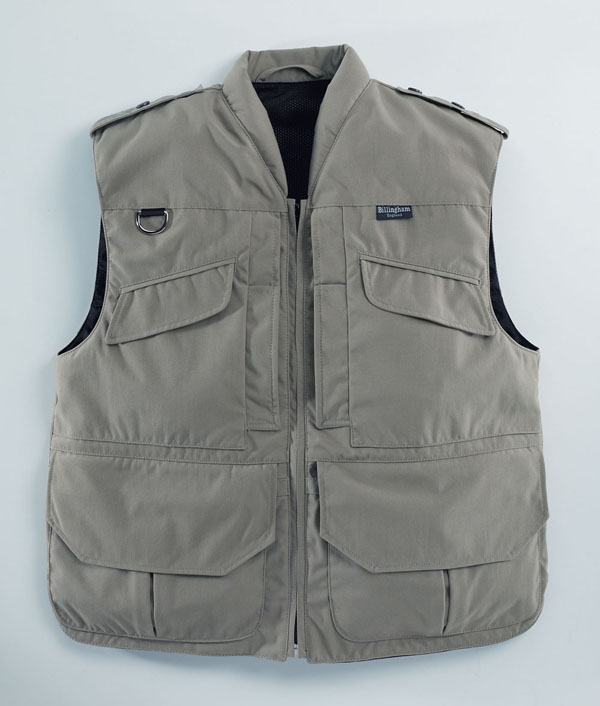
Comfort and safety is the name of the game here rather than looking like a trendsetting explorer. A pair of hard-wearing hiking boots, or shoes with ankle-support, will keep your feet and legs as comfortable as possible when trekking over long distances. Consider the weather and dress appropriately so; waterproof clothing if it’s raining, thermals and insulated clothing if it snows light, bright cottons if it’s hot. Clothing with plenty of pockets is always a bonus as they are ideal and convenient place for keeping lens caps, cards, filters and cloths at arm’s reach. A hat is surely obligatory if it’s super cold or super sunny out, so opt for an insulated woolly one, or a wide brimmed white one respectively. If you’re venturing out after dark and are near roads or highways be sure to wear reflective or bright clothing so that you stand out, warning drivers to veer round you.

Billingham photovest

Read part 2 of our complete guide for tips, tricks and techniques for shooting on location and editing advice, coming tomorrow.

The post Your Complete Guide to Outdoor Photography – Part One by Natalie Denton (nee Johnson) appeared first on Digital Photography School.


Digital Photography School

 
Comments Off on Your Complete Guide to Outdoor Photography – Part One

Posted in Photography


2014 Sony World Photography Awards finalists revealed

08 Feb

1e593807-c542-471d-9b50-2ffd6bffdd76-620x413.jpeg

The shortlist for the Sony World Photography Awards has been announced in the Professional, Open, and Youth categories. Photographers from 166 countries submitted nearly 140,000 images, the highest number of entries in the awards’ seven year history. The winners of the Open and Youth categories will be announced on March 18. Professional category winners will be announced April 30. See gallery

News: Digital Photography Review (dpreview.com)

 
Comments Off on 2014 Sony World Photography Awards finalists revealed

Posted in Uncategorized


Celebration of Light: 50 Sparkling Fireworks Photography Examples to Inspire You

07 Feb

Since fireworks were created, people all over the globe have used them to pray for happiness, ward off evil spirits, celebrate birth, death, weddings, the New Year and any other occasions. Festive fireworks are a breathtaking sight when vivid, magic colors of light are exploding in the air for a few quick moments. I believe every photographer comes up with Continue Reading

The post Celebration of Light: 50 Sparkling Fireworks Photography Examples to Inspire You appeared first on Photodoto.


Photodoto

 
Comments Off on Celebration of Light: 50 Sparkling Fireworks Photography Examples to Inspire You

Posted in Photography


Winter Photography Tips | Bendy straws and Ziploc bags?

06 Feb
© Paul Burwell Photography

Black-capped Chickadee on a snowy branch

While a lot of photographers find that winter is an excellent time to hibernate, there are really no good excuses for staying indoors and avoiding winter.  But, you do need to take steps to protect your equipment.  Here’s a few ideas to keep things safe.

WINTER PHOTOGRAPHY TIPS

One of the biggest problems for cameras in cold weather is condensation.  Condensation occurs when you bring a camera from the dry cold temperatures outdoors, to the warm and relatively moist conditions in your vehicle or home. When that warm moist air reaches the sensor on your cold camera, condensation occurs which can leave your sensor covered in spots or even damage the electronics.  The solution to this issue is to remove your memory card and battery(s) from your camera and then transfer your gear into a Ziploc type of bag and seal it in there with the cold air while you are still outside.  Now when you bring the camera gear into a warm area, the moisture can’t get to the camera to condense  on the camera’s sensor.  Once everything warms up to room temperature you can remove it from the baggy.asj-222_1z

Another issue for winter photography is battery life.  Cold is the mortal enemy of battery life and unfortunately there just isn’t a lot you can do about that.  But, what you can do is keep a spare battery or two in an inside jacket pocket, next to your body.  The warmth of your body will keep the batteries toasty warm and when the battery in your camera succumbs to the cold, all you need to do is swap it for a warm battery.  The cold battery will slowly warm and you’ll probably find it has renewed energy when called upon.

Bendy StrawAnother bit of winter annoyance comes from having your breath condensate and freeze on your camera’s viewfinder while you’re trying to focus.  The solution for this frustration  may just be the cheapest photography accessory you will ever own. Are you ready for this brilliant invention?  Okay, here it is:

You can use a bendy straw as a type of snorkel to direct your warm moist breath away from your camera’s viewfinder so that you can continue to make those great winter shots. This  tip also provides endless entertainment for anyone who happens to be watching you.  Try it, it works!

Fight back against the winter doldrums and get out there and make some great photographs! Hopefully these tips will make your winter photography sessions more tolerable!

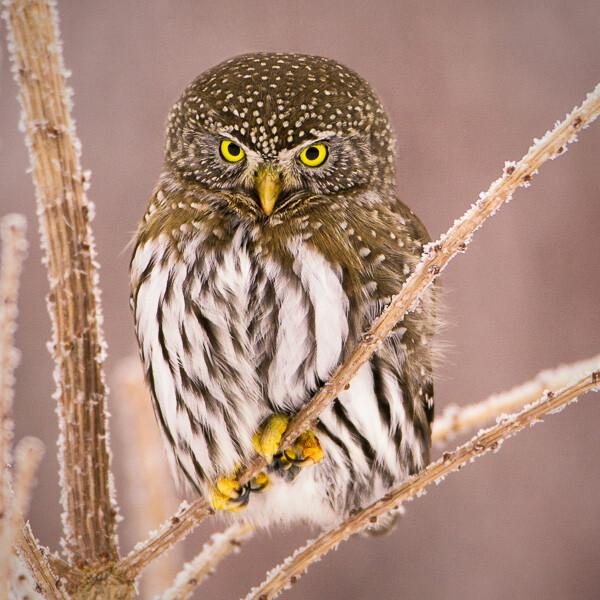
© Paul Burwell Photography

Northern Pygmy Owl on a frosty branch


Further reading on shooting on cold or inclement weather:

  • Tips to Protect your Gear in Harsh Weather Conditions
  • How to Protect your Camera in Extreme Conditions
  • 30 Foul Weather Photos for Inspiration

The post Winter Photography Tips | Bendy straws and Ziploc bags? by Paul Burwell appeared first on Digital Photography School.


Digital Photography School

 
Comments Off on Winter Photography Tips | Bendy straws and Ziploc bags?

Posted in Photography


The Definitive Guide to Destination Wedding Photography

05 Feb

Destination wedding photography is hard work but certainly has its rewards. If you can adapt quickly, can thrive on the new and different challenges, and are naturally resourceful this niche may be for you. There are some additional considerations if you are thinking about becoming a destination wedding photographer. It typically requires more planning and expertise. Because the location is Continue Reading

The post The Definitive Guide to Destination Wedding Photography appeared first on Photodoto.


Photodoto

 
Comments Off on The Definitive Guide to Destination Wedding Photography

Posted in Photography


10 Most Common Mistakes in Landscape Photography – and How to Overcome Them

04 Feb

If you’re serious about landscape photography, it won’t take you very long to realize the fundamental problem of the craft: not every landscape that catches your eye will easily translate into a compelling photograph.

When we experience a place, the smells, sounds, the warmth or chill in the air, and our own emotions combine to give us an overall impression. Our job as photographers is translate that overall impression into a photograph.

Every landscape photo needs to be carefully crafted with the final image in mind.

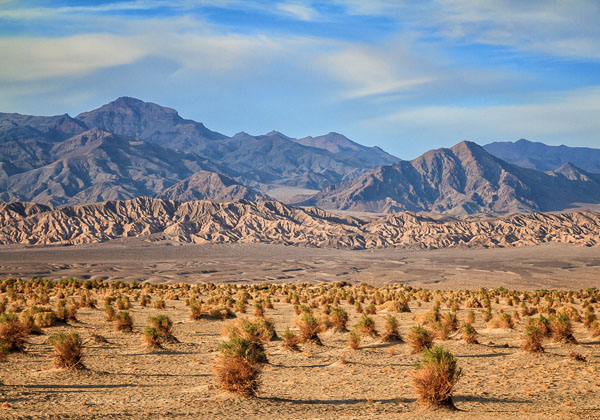
Devil's Cornfield, Death Valley National Park, California, by Anne McKinnell

There are many problems we run into along the way that can prevent our overall impression of a scene from shining through in the final image. The following are the most common traps to expect, and how you can avoid them.

1. Crooked Horizons

Most landscape photos will feature the horizon – a dead giveaway to the picture’s overall perspective. That means that if the line dividing land and sky is not perfectly straight across, the whole picture looks totally out of whack. There are a few ways to make sure your horizon squares up right:

  • Grid Overlay
    On most DSLRs (and some compact cameras), you can overlay a grid on either your viewfinder, your live view screen, or both. Align your horizon with one of these lines.
  • Electronic Horizon
    Newer, higher-end cameras often have a built-in electronic level. When turned on, it will gauge the camera’s position in space and tell you when it is evenly aligned.
  • Bubble Levels
    Some cameras have a bubble level attached and some tripods will have one as well. If you don’t have one built into your gear, you can purchase one that affixes onto the camera’s hot shoe. Just like a spirit level in construction, this will help you straighten your camera out.
  • Post-Processing
    If all else fails, every major photo editing software will feature a “straighten” tool which allows you to draw a line tracing the horizon. Using this, the program will automatically crop the image on an angle to make sure that the line is perfectly horizontal.

2. Eye-level Perspective

Most people photograph from an eye-level standing position producing photos that look as you would expect to see things if you were there. For a more interesting composition, try climbing on top of something, or getting close to the ground to achieve a different point of view.

3. Empty Skies

Without clouds, birds, or some other interesting feature, empty skies can turn out pretty flat and boring in a photo. Try to compose your picture with something interesting in the sky. If there is nothing interesting to show, raise your horizon line to the top third of the image to minimize how much space the sky occupies in the frame.

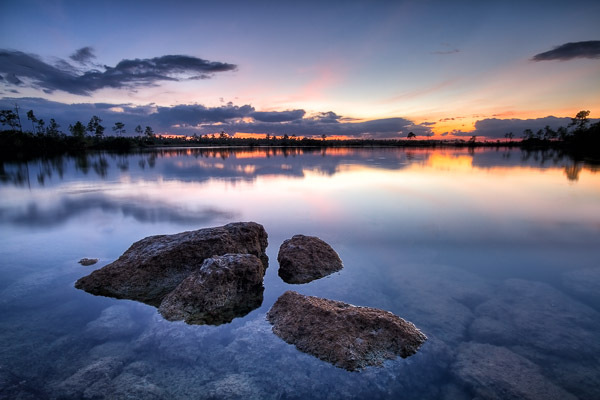
Pine Glades Lake, Everglades National Park, Florida, by Anne McKinnell

4. Hand Shake Blur

A blurry photograph loses almost all of its impact. Either use a tripod or use a fast shutter speed combined with image stabilization.

When it comes to landscapes, securing your camera onto a sturdy tripod will always yield better results. Even if you’re using short exposures, a tripod will allow you to compose your shot more precisely and lock its position into place while you shoot.

5. No Focal Point

Skies and mountains are lovely, but a picture can’t be all background. Your photo needs a focal point to hold the viewer’s interest. This can be anything – an interesting tree, a boat, a pier, a log – but no landscape photo is complete without a main subject.

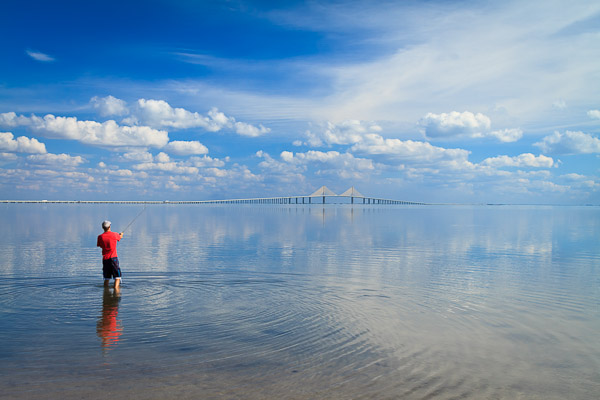
Fisherman at Fort DeSoto, Florida, by Anne McKinnell

6. Cluttered Backgrounds

The opposite also applies – be careful not to focus too much on the subject and forget about how the background comes together. Pay attention to what is behind your main subject. If the background elements don’t add to the composition remove them if possible. Be careful that you have separation between each element, and don’t let them visually blend together (ie. two or more trees merging into a greenish blob). This is especially problematic when the objects are backlit or silhouetted.

7. Poor Lighting

When you rely on the sun to light your shots, you’ll find that some days the weather just doesn’t cooperate. Grey, cloudy days will give you muted, washed-out colours and not much in the way of shadows or contrast. Extremely sunny days might do just the opposite. Carefully consider the lighting conditions on your scene before you decide how to approach it.

  • If the sun is out, position it to one side of the camera to take advantage of the shadows and textures created by sidelight.
  • If the sun is in front of the lens, your scene will be backlit and you can make some dramatic silhouettes.
  • If the sun is behind you photographing the scene will be more difficult because the direct light will make the scene appear flat. Consider changing direction.
  • If there is no sun and the sky is white, use the soft lighting conditions to make close-ups.

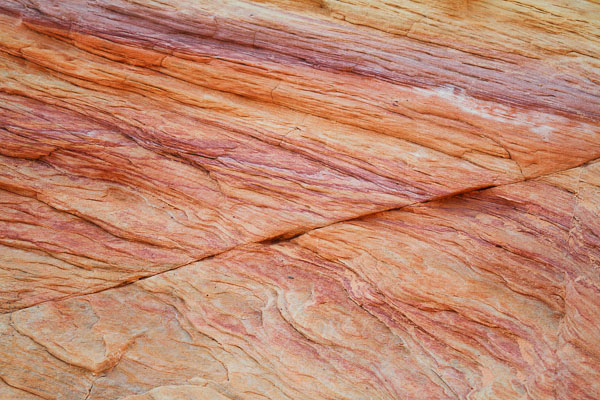
Rainbow Rock, Valley of Fire, Nevada, by Anne McKinnell

8. Underexposing

If the sky is overly bright (say, in the middle of the day), it can confuse the camera’s light meter, which will try to compensate by underexposing the rest of the image, resulting in a dark foreground. If this happens, use the exposure compensation to turn up the brightness, but not so much that the sky becomes blown out (turns white).

If you’re having this problem, try re-composing your image to include a darker area of the sky. This type of scene is a good time to use a graduated neutral density filter. These filters are dark on the top and clear on the bottom. You place it in front of your lens to darken the top half of the image and even out the exposure.

9. Hot Spots and Blown Out Highlights

It’s not just the sky that can blow out, though – a hot sun can cause glare on many surfaces. Watch your scene for bright spots caused by reflections or excess sunlight. Most cameras have a “highlight warning” viewing mode on the image preview which will show any pixels that have turned pure white. If you have blown out highlights, use the exposure compensation to reduce the exposure slightly until they are gone.

10. Lack of Dimension

Even though a photo is a two-dimensional image, a strong landscape composition gives the illusion of depth. When you’re setting up your shot, make sure to populate the frame in the foreground, mid-ground, and background.

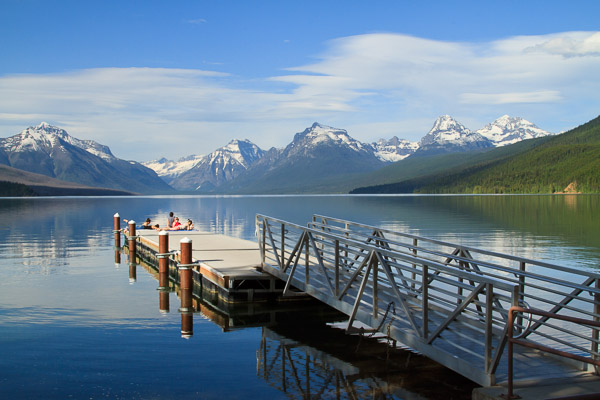
Lake McDonald, Glacier National Park, Montana, by Anne McKinnell

When you are learning photography it can be hard to critique your own work and understand how to improve. After your next photo shoot, examine your images for these problems so you can avoid them next time. Looking at each of your images with a critical eye and considering how they could be improved will quickly improve your artistic eye and make you a better photographer.

The post 10 Most Common Mistakes in Landscape Photography – and How to Overcome Them by Anne McKinnell appeared first on Digital Photography School.


Digital Photography School

 
Comments Off on 10 Most Common Mistakes in Landscape Photography – and How to Overcome Them

Posted in Photography


SmugMug Films: Pulse-pounding aerial photography

02 Feb

Smugmug.jpg

SmugMug, the online photo storage and sharing site, has an all-new video series that gives a glimpse into the lives of pro photographers and their work. It’s a behind-the-lens look at people who follow their passions in photography. SmugMug aims to highlight a different photographer every two weeks for the rest of 2014. Learn more

News: Digital Photography Review (dpreview.com)

 
Comments Off on SmugMug Films: Pulse-pounding aerial photography

Posted in Uncategorized