RSS
 

Posts Tagged ‘Photography’

Off Camera Flash for Your Travel Photography

29 Apr

The creative use of artificial light in travel photography is a powerful tool that can take your images to the next level. While there’s a myriad of information available on getting started with off camera flash, the tutorial here is tailored for you. It will give you a start using these techniques with relatively cheap and portable equipment while on the road. The tutorial will cover the basics of gear you will need, along with real world examples of different techniques you can use to make your images pop.
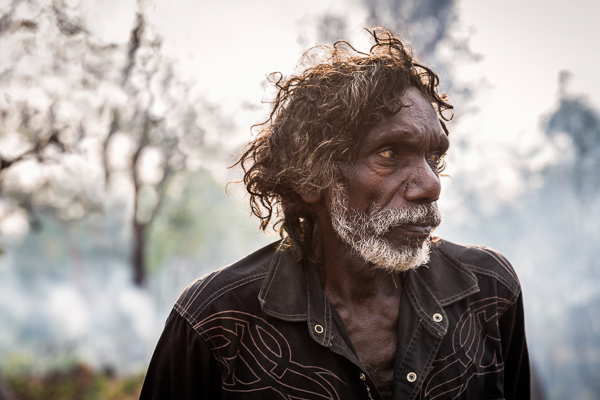
Image 4 Tom Arnhem Land

It is assumed here that you have a full understanding of how to use your camera in manual mode, and some experience with the basics of flash photography. The techniques covered here are not overly difficult, and with some practice at home you will be able to approach your next trip with a new set of options to inspire your photography.

You may know, that images shot with on camera flash do not usually produce flattering results for your subjects. Moving your flash off camera often means an investment in more gear, though it doesn’t have to be super expensive or add too much bulk to your travel kit. The resulting images you get from this investment will be well worthwhile.

For this tutorial I’ll be covering some different options for putting together a basic one light setup that can be fired off camera remotely and modified through a small softbox or umbrella. This sort of setup is a practical way to travel, especially if you are on the road for an extended period, and don’t have help lugging around more elaborate studio style setups.

There are potentially many elements to your setup, each with wide ranging options in price, bulk and results. These bits of gear can be added to virtually any DSLR with manual functions and used with any lens that suits the type of images you want to produce.

Gear for Off Camera Flash Travel Photography

1. Flash gun or speedlight

There has never been a wider amount of choice when it comes to speedlites, or flash guns on the market. From the top of the range Canon and Nikon speedlights that cost upwards of $ 500.00, to excellent third party options, it can be a difficult choice to make.

Using off camera flash is best practiced via manual control of both the flash and camera, so higher end options like TTL (Through the Lens) flash metering are not essential, though this is increasingly an option with even cheaper third party flashes.

For a long time I’ve used a Canon 430 EX II, the mid-range option in the Canon Flash line-up, and a relatively affordable bit of gear. When starting out almost any flash will do, as even the cheapest can be fired off camera, and be modified to give you great quality light.

2. Flash Triggers

Once you have decided on which flash or speedlight fits your budget, then comes the maddeningly wide array of choices available to fire your flash remotely.

Radio triggers, which can be set to fire the flash from a small unit that slides into your camera’s hot shoe, and another attached to the flash itself, are amongst the easiest and cheapest way to get started.

You might hear many professionals touting the ownership of expensive ‘Pocket Wizards’ as something of an exclusive way into the mysterious world of off camera flash. They are great products but the market has changed. Cheaper options from Yongnuo or Photix cost a fraction of the price, and will work just as well.

I’m currently using a set of Yongnuo YN-622C Triggers, which have worked perfectly through some very tough travel. These also have the option on my Canon 5D3 of adjusting the flash power through the camera menu, which is really useful, though not essential.

3. Modifier

While bare flash can produce interesting results, this ‘hard light’ is not always desirable for the type of portraits most people will be looking to produce in their travel photography.

A ‘soft light’, produced by using a flash modifier, is the more common way to shoot, as it produces more flattering results for your subjects. Again, there is an endless array of options here. A small softbox or umbrella are the easiest and most versatile ways to get shooting.

A plain white shoot through umbrella is a cheap and compact option, and throws a fairly wide soft light that can be used for a range of portrait shots. The limitation with these umbrellas is that, as a travel photographer, you will more often than not be shooting outdoors. Any kind of wind while shooting with these might have you uttering expletives at the sight of your gear tipping over or the umbrella folding itself inside out.

A more easily managed item is a small softbox. While not as compact to transport or as simple to set up, these stay sturdy and produce a great, soft light that is useful in most portrait situations. I currently use the small Photoflex Light Dome XS, which has lasted a few years now without any damage. There are many similar options, and even DIY projects that you can find online.

4. Light Stand

This is an optional piece of gear that has the potential to be a lifesaver, or just a heavy metal rod in your bag. In most situations you will be able to get somebody to hold the flash or softbox, and roping in friends and family of your subjects to help can be a great way to help people relax.

If you do decide to bring a stand with you, it’s worth spending more over the cheap generic Ebay numbers, which from experience don’t last much past being taken out of the box. The Avenger range of stands are compact and sturdy.

5. Flash Gels

CTO (Colour Temperature Orange) gels are simply bits of plastic that you can place over your flash to vary the color temperature of light that reaches your subject. Use of these, or not, is according to personal taste. Strips of this plastic are cheap and easy to purchase online, with the sample packs offered by many companies a great way to experiment. Attaching a bit of velcro to the sides of the plastic and the flash to keep the gel in place is one way to keep things simple.

6. ND filter

Another optional piece of gear. The use of ND (Neutral Density) filters with off camera flash adds another tool to your creative arsenal. Using ND filters makes it possible to add more drama to your images with underexposed backgrounds and/or shallower depths of field during the day.

I use a range of ND filters, with the Lee 3 stop Solid ND filter, mounted with the Cokin Z Pro Holder the most common choice. Again, this is not an essential part of a flash setup, and something that can be added once you are more comfortable with the basics.

Shooting Off Camera Flash Travel Photography

Once you have your setup sorted it’s worthwhile practicing to get it all working in the quickest time possible. Without treating it like a frantic pit stop, it’s really handy to be able to get everything in order as fast as you can. On the road you don’t want to monopolize somebody’s precious time more than necessary. Being confident with your gear and shooting style, helps put your subjects at ease as well.

The following examples from recent shoots are broken into two rough styles of shooting with off camera flash. The first is the technique of balancing flash with ambient (available light), producing images where the light from your flash is subtle, and blends with the background of your subject. The second is the technique of underexposing the ambient or background light, and using shallow depth of field to add more drama to your images.

The golden rule to remember with flash photography is that your aperture setting, combined with your flash power, controls the amount of artificial or flash in your photos. Your shutter speed will control the ambient, or background, light.

Technique #1 – balancing flash with ambient

Image 1 Natarajan India

Natarajan, Little Andaman Island, India

I had met this elderly gentleman a few days prior to the shot taken here. At the time of our meeting he was the oldest living man in a remote part of the Andaman Islands Chain which was devastated by the 2004 Tsunami. I wanted to take his picture for a magazine feature I was putting together. By the time I got to his place to take a few shots one evening, it was right on dark, with only dim ambient light left to work with. This was a great time to break out the flash for a simple portrait.

After setting up a small softbox and attaching the radio flash triggers to fire the flash, I first exposed for the ambient light, setting my shutter speed and ISO to ensure a sharp image. I then chose an aperture of f/4, which combined with a telephoto lens, helped throw the background out of focus.

At these settings, without the use of flash, Natarajan’s features were dark and flat. Adding in the flash, fired remotely, allowed for a better portrait by emphasizing his strong features and throwing pleasing catch lights into his eyes (the reflection of the flash in your subjects pupils).

Image 1 Natarajan

I asked my friend Stephan to hold the flash at a downwards 45 degree angle camera left, just out of frame, aimed at the left side of Natarajan’s face (see lighting diagram above). I usually start with the flash in manual mode, set to 1/16 power and work from there. If the flash is too strong you can power down or vice versa.

In this simple portrait, the flash light lends some shape to the subjects face without its use being so obvious.

Image 2 Laura Dance Festival

Laura Dance Festival, Cape York, Queensland, Australia

The picture above was taken of a young boy from the Injanoo tribal group from the far north coast of Queensland, Australia. At the bi-annual Laura Dance Festival, tribal groups gather to dance and celebrate their ancient culture with outsiders.

After shooting the dance action for a few hours I wandered off to find some kids practicing their routines, with light from the setting sun filtering through the eucalyptus trees around the camp lighting up their moves.

With a small army of enthusiastic helpers I broke out the softbox and triggers, working quickly to keep the setting sun as an element to the shot. For this image a fairly heavy CTO gel was used over the flash to give the light the look of the setting sun. It’s not exact but lends a nice warmth to the light that would have otherwise looked more out of place at this time of evening.

I asked the boy to stand with the setting sun positioned behind his head, and then exposed for the background, ambient light. I chose to shoot from a low angle, as this usually works to emphasize strength in your subjects.

The flash was again set to manual and 1/16 power, which was close to the right flash exposure for the subject. This time the flash was held by another young dancer, just over my shoulder camera right (see lighting diagram below).

Image 2 Laura

In the final image the highlights needed some recovery in post, and a slight vignette was added.

Backlighting your subjects this way (with the sun behind the subject) adds some dramatic effect, with the flash exposing a subject that would otherwise have been in near darkness without it.

Technique 2 – Underexposing with ND Filters for Dramatic Effect

Image 3 Adrian Marrinyama Mob

Adrian, The Marrinyama Mob

The image above is from a shoot in a remote part of Queensland, Australia. For part of the year the guys live a traditional lifestyle, hunting, dancing and performing tough initiations on younger boys. It was the height of summer, and I was working alone with searing desert temperatures and strong winds whipping up dust from the red earth around the camps which the group called home.

In these situations being comfortable with your gear, and confident with what you are trying to achieve is really important. A flimsy umbrella or larger modifier for the flash shots would have been difficult to manage on my own. I chose to use my ever reliable little softbox setup, mounted on a decent light stand, and worked towards creating images that I had envisaged before the shoot.

For this shot of Adrian, a slightly more advanced setup was used. I wanted a shallow depth of field and for the portrait to look dramatic. This was achieved with the help of a 3 Stop ND filter to underexpose the background while keeping a shallow depth of field a f/2.8.

Image 3 Adrian

The flash was set to full power camera left, set just out of the frame (see diagram above). The result is that the flash is more noticeable than usual, with the background underexposed and blurred nicely for effect.

The video below is from a recent shoot in remote Arnhem Land, Northern Australia. The softbox – flash – trigger setup mentioned throughout the article is shown towards the end of the footage. Again, the flash setup was used to help out during less than ideal lighting situations on this trip.

The sun filtering through the smoke of a slow burning bush fire behind Tom helped to add some drama to the image, with the flash providing the correct exposure for his face. The flash was held close to Tom, camera right, and fired at 1/16 power.

Hopefully this tutorial has given you a starting point to work from with off camera flash for your travel photography. There’s many tutorials available for every aspect of what has been mentioned here. Happy shooting.

Image 4 Tom Arnhem Land

The post Off Camera Flash for Your Travel Photography by Brook Mitchell appeared first on Digital Photography School.


Digital Photography School

 
Comments Off on Off Camera Flash for Your Travel Photography

Posted in Photography


It’s Not Travel Photography, But Photographing Travelers May Be Photography’s Next Big Thing

26 Apr

fly1
Photography: Paola Colleoni

On a trip to Paris with her best friend two years ago, Nicole Smith did what everyone does on vacation. As she and her friend stood at tourist sites, she would take out her phone, hold it at arm’s length and snap a few selfies. Sometimes the pair would buttonhole a passing stranger, hand over a camera and ask the passer-by to shoot a picture of them together. Not surprisingly, the results were, she says, always “meh.” Things changed though, when a friend in the city offered to photograph them in the style of a photojournalist as they wandered through the streets. The result wasn’t just a set of images that captured the spirit of her afternoon in a way that she could never have done alone, she says, but the beginning of a whole new business idea.

Two years later Flytographer now has professional photographers available to capture shots of vacationers as they tour the sites and sip cappuccinos in romantic cafes in 70 cities around the world.
fly2
Photography: Cadence Feeley

Customers can choose from three different kinds of shoots: thirty minutes in one location produces fifteen photos and costs $ 250; an hour in one or two locations generates 30 photos and costs $ 350; and two hours in multiple locations produce 60 photos for $ 600. The commission  earned by the photographer varies with the package but on average photographers can expect to receive 60 percent of the purchase price.

“It’s a fun, fast shoot.”

The photographers, though, only have to do the shooting. Flytographer will arrange the date, time and route of the booking, discuss the customer’s objectives and prepare a brief with all the details.

“It’s a fun, fast shoot and we usually capture the couple/family as they stroll around in a more candid, editorial-style,” says Nicole. “The photographer connects with the customer like a local friend.”

The question is how much demand there is for the attention of a professional photographer at a time when professional quality DSLRs are affordable to anyone who takes foreign travel, and when everyone is packing a camera in their pocket, complete with filters to turn even the worst of snaps into atmospheric mementos.

According to Nicole, Flytographer delivers a couple of important benefits that vacationers and travelers can’t produce alone.

The first is that everyone can be in the picture together, looking relaxed and at their best, (rather than at the end of an arm or having just rushed back into the frame.) The images are also more varied. Ask a local to shoot a picture and at best you’ll get a standard direct shot of you and you a friend standing in front of a building. At worst, you’ll get to watch a stranger running off with your iPhone or your Nikon. Flytographer’s photographers are expected to use different angles and vantage points to produce images that only a dedicated photographer can create. They’ll also be using their own equipment.

And those pictures will be high quality. They won’t be quick snaps but valued treasures that record a memorable experience.

fly3

Photography: Lauren Colchamiro

“People like ‘experiences’ vs more stuff and we are often told by our customers that their Flytographer photos were the ‘Best souvenir they’ve ever purchased,” says Nicole. “Too many people spend thousands of dollars planning a special trip only to return home in none of the photos, or if they are, someone else important is missing, or they are blurry etc. They also like that they can focus on soaking up the moment and being really present vs distracted trying to capture the moment through a camera.”

Photograph Honeymooners And Reunions

Customers tend to be couples and families but are often people making special, once-in-a-lifetime trips such as honeymooners or newly engaged couples, all-guy or all-girl vacations and multigenerational reunions. For the photographer, the shoot may sometimes have the same feel, and demand some of the same skills, as shooting a small event.

Altogether, in the year or so since the company’s launch, Flytographer has completed around 200 shoots across five continents. And the company is looking to expand, particularly in Hawaii, Orlando, Sandestin, Palm Desert, Scottsdale, Tremblant, Hong Kong and in the Caribbean, although it accepts applications from anywhere. Photographers in places with large numbers of tourists and small numbers of rival shooters will be in with a good shout of landing some useful extra work, and even photographers who travel a lot can find themselves shooting in different locations.

But you will need to impress. All of the company’s photographers are professionals with backgrounds that range from newspapers and magazines to corporate and fashion photography. Some are wedding and family photographers. Flytographer has also managed to land some adventure ski photographers who can capture shots of snowboarding clients as they fly down the slopes.

Nicole speaks with each of the photographers themselves, checks their background and makes sure that they have both solid technical skills and the ability to tell a compelling story through their shots. She also looks for people who have run their own business and understand the importance of delivering impeccable service. Applicants can apply at www.flytographer.com/join.

That Flytographer appears so far to have had little trouble either recruiting photographers or finding clients is pretty revealing. That there is plenty of demand among photographers to shoot quick, documentary-style images for fees that may work out, after travel and processing, to around $ 100 an hour, is hardly surprising. But the fact that so many people recognize that there’s a limit to what they can do with their iPhones and even their DSLRs is highly encouraging. People may think that they’re photographers but they are recognizing that quick snaps taken on phones tend to stay forever unseen on the hard drives while professionally taken images are viewed and treasured.

It’s also revealing, though, that while Nicole Smith has used professional photographers, she’s not a trained photographer herself. This was a business idea that came from a client of professional photographers. If clients can spot opportunities for photographers, why aren’t more photographers doing the same for themselves?


Photopreneur – Make Money Selling Your Photos

 
Comments Off on It’s Not Travel Photography, But Photographing Travelers May Be Photography’s Next Big Thing

Posted in Equipment


12 stunning images from Smithsonian’s photography contest

26 Apr

0151284_2_248070.jpg__1072x0_q85_subject_location-1840_1005_upscale.JPG

Smithsonian.com has announced 60 finalists for its 11th annual photo contest. More than 50,000 photographs were submitted by photographers from 132 different countries. Ten images were selected from each of six categories: The Natural World, Travel, People, Americana, Altered Images and Mobile. See gallery

News: Digital Photography Review (dpreview.com)

 
Comments Off on 12 stunning images from Smithsonian’s photography contest

Posted in Uncategorized


Weekly Photography Challenge – Pet Photography

26 Apr

By Jamie Grant

Last couple of weeks have been all about nature and the outdoors. Another part of nature is the animal kingdom. So this week’s photography challenge is to get out and photograph some pets. If you don’t have any borrow your friend’s or neighbours.

Photographing animals presents a unique set of challenges. You have a moving, possibly unwilling subject to deal with – as well as potentially tricky exposure to try and get detail in fur or feathers. Just the right light is essential, as is a delicate hand at working with your furry (or feathered, or scaled) friends.

Let’s see how creative you can get. Here’s a few ideas to get you started:

By Corrado Alisonno

By Sonny Annesley

By Sergiu Bacioiu

By Viola’s visions ????

By Sergiu Bacioiu

By Rafael Acorsi

By Paulo Brandao

By Tambako The Jaguar

By Charlie Stinchcomb

By Adam Foster

Share your pet photos!

Simply upload your shot into the comment field (look for the little camera icon in the Disqus comments section as pictured below) and they’ll get embedded for us all to see or if you’d prefer upload them to your favourite photo sharing site and leave the link to them.

Need help? How about some articles on pet photography like these:

  • Top 10 Pet Photography Tips and Techniques
  • How to get the “Money Shot” in Pet Photography
  • 5 Adorable Pet Photos [and How to Make your Shots even Cuter]

The post Weekly Photography Challenge – Pet Photography by Darlene Hildebrandt appeared first on Digital Photography School.


Digital Photography School

 
Comments Off on Weekly Photography Challenge – Pet Photography

Posted in Photography


11 Accessories for Long Exposure Photography

25 Apr

Many ways

Every so often I get an email from a blog reader asking “if there is one accessory that you would recommend for long exposure photography, what would it be?”

I wish the answer was a simple one, but of course it is not.

There are so many accessories that I carry every time I go making long exposure photographs. There are also many accessories I carry on a regular basis no matter what, and some I carry here and there depending on the location. So with that all said, here are some of my favorite items, and must have accessories for long exposure photography.

#1 Comfortable Shoes

It all starts with comfortable shoes because you will likely be standing for a while or walking around excessively. I personally wear Under Armour sneakers, that were designed for the New York City police department, because they are extremely comfortable and made for officers to be on their feet all day. They also have the traction when needed, like in sand or on wet pavement.

However, when I know that I will be photographing extremely close, if not in, water then I do not use those sneakers. At that point I switch to standard waterproof boots or just remove the sneakers and go in barefoot. Wearing non-waterproof shoes while getting your feet wet is a horrible feeling. So be mindful of your surroundings as Master Yoda says.

#2 Mobile Cable Release

A cable release is pretty much a “must have” for long exposure photography. After 30 seconds most cameras do not have the necessary shutter speeds built-in to capture the scene, through a thick neutral density filter like a 10-stop.

I’ve been surrounded by photographers who use cheap off-brand cable releases that stop working after the first use. I’ve also seen fancy intervalometers run out of batteries, making the cable release a dangling useless piece of plastic.

So my backup plan is a cable from Trigger Happy. The beauty is that it’s a thin, lightweight, cable that can easily be packed in any bag or pocket. You then connect it through the headphone jack of your phone (iPhone or Android) and have a cable release that way. Triggertrap is another amazing mobile cable release brand and many times I will switch between apps because the Trigger Happy cable works fantastic with Triggertrap as well.

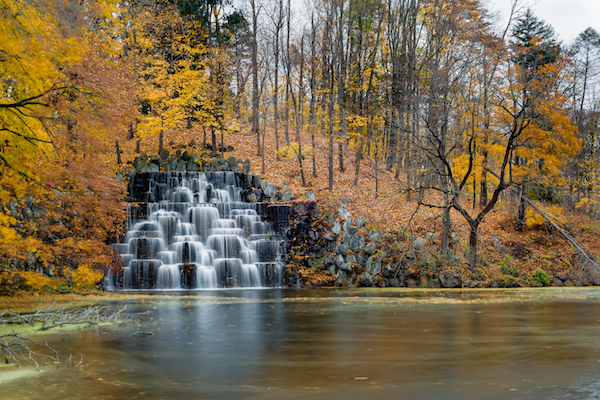
Duke waterfall

#3 Meal Bars

This is too easy to forget. You wake up super early for sunrise or head out the door just before sunset, hoping to catch that last bit of glow in a glorious long exposure. But then you get to the location and realize, “Holy smokes I didn’t eat anything.”

So this way too often overlooked meal bar idea is a must have no matter what. I even recommend this for standard exposure shooting, on photowalks, or wherever. Having at least one meal bar can boost your energy and fill that hunger craving.

#4 Water Bottle

Going along with the meal bar idea is a water bottle. Depending on where you are shooting, stores may not be an option for grabbing a quick thirst quencher. There are also those eco-conscious photographers out there (including myself) that prefer not buying a throw away water bottle.

Typically I carry a Nalgene water bottle that has a decent size loop at the top. Using a carabiner it is attached to my belt or bag so that I’m not physically carrying it, but it’s always with me.

#5 Rain Cover

A rain cover is one of those accessories that I have whether I’m photographing long exposures or anything else. I personally use the Think Tank Photo rain covers, but there are so many awesome ones out there including the OP/TECH plastic covers which I consider emergency products.

Although many modern mirrorless and DSLR cameras contain weather sealing (check your manual if you aren’t sure if yours has it or not), they are not waterproof and can still be impacted by the rain. So having the ability to throw a rain cover over your camera can help ensure that the camera lasts a very long time.

Another rain cover option is the Storm Jacket by Vortex Media.

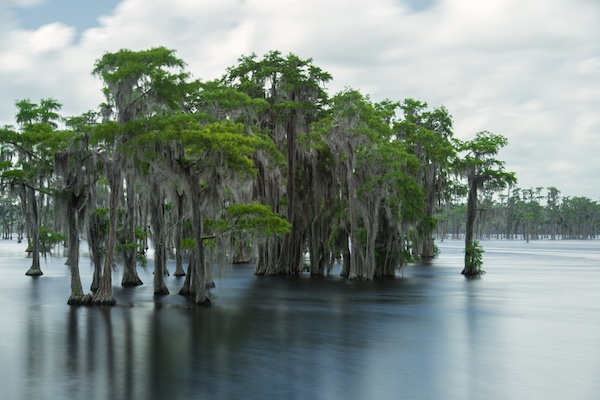
What floats georgia

#6 Lens Cloth

Going along with the rain cover is a lens cloth. If you are going between cold and warm temperatures then your camera will fog up for a bit. If it’s raining then you will likely have water droplets on your neutral density filters. So having a simple lens cloth with you is good to wipe the fog or droplets from the filters.

#7 Cold Weather Mask

Another product I keep with me during the colder seasons, is a cold weather mask. More specifically, this one from Under Armour. The reason I like this one is because it can squeeze into the same pouch as my Think Tank Photo rain cover. Additionally, the mask covers enough of my head and face to keep me warm. Of course, if it’s a super cold day like in a “polar vortex” then I would of course prepare for that in addition to the weather mask.

#8 Tripod Weight

Most tripods with a center column have a hook underneath which makes it easy to hang something weighted. Tripods without a center column usually have an option to attach a hook underneath as well.

The reason you want to weigh down your tripod is because of the extended shutter time. If you accidentally touch your tripod you could move it by accident. So weighing down the tripod can help prevent unintentional movement, thus saving your long exposure.

I’m not saying to bring a heavy weight with you. Instead I’m saying to use your camera bag. You will likely have enough gear in the bag that can make a good 5-10 lb (2.3-4.6 kg) weight. Use the tripod hook and a loop on your bag to create the weight.

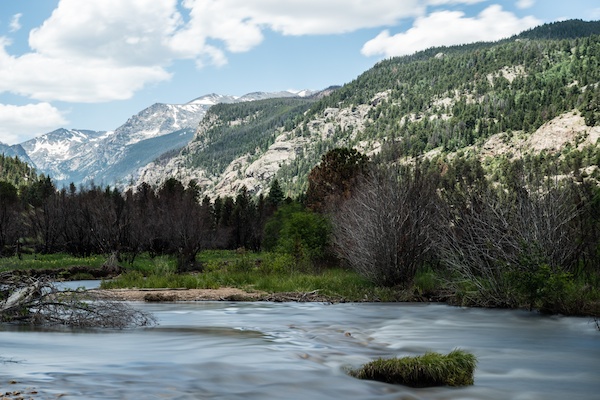
Rocky mountain national park

#9 Extra Camera Batteries

This one should be a no brainer but you’ll be surprised how many photographers forget to carry extra batteries. Always keep in mind that the longer the shutter speed, the more your battery will drain. I tend to carry three batteries with me, at a minimum. Usually one in the camera body and two extras in my bag.

#10 Red Laser Pointer

Yup, you read that right. You won’t be making a presentation while you wait for your ten minute exposure to finish. But, depending on how dark it is outside and how dark your neutral density filter is, a red laser pointer can help you find a place to focus. If you know a tree is in the distance, put the dot on the tree and focus on it.

You might be wondering why I recommend a laser point rather than a flashlight. A flashlight is also a good idea, but a laser pointer is lighter and can travel in a much further distance than the average flashlight.

#11 Mobile Battery Backup

Your mobile devices drain very fast. Especially if you are using an App like PhotoPills to calculate exposures or find the right spot for sunset. Or, if you are using your phone as a cable release as mentioned above, then your battery will drain much faster. So I highly recommend having a battery backup.

I typically carry two with me at all times. One has two USB ports, allowing me to help charge a friend’s phone also if needed. The other is the Bolt which was a Kickstarter project. I keep that one as well because it’s lightweight, small and doubles as a wall charger.

Port monmouth pillars

Bonus Tip

Before I finish up this article I want to share a shooting tip for long exposure photographs. Quite often I see photographs where the sky and water is so smooth, which is fantastic. Many times the exposures are spot on and the post processing is beautiful and tasteful. However, sometimes there is something missing from the composition. That being, a point of focus.

Long exposure photographs are some of my favorite types to make and view. However, with such smooth, ghosted and blurred subjects in the scene, not having something in focus can really make a viewer’s eye wonder.

So instead of just capturing a scene of full motion, try to include an object in perfect focus. Stop people’s eyes from wondering and give them a starting point.

Do you have any other long exposure photography tips or accessories to sure? Please do so in the comments below.

The post 11 Accessories for Long Exposure Photography by Scott Wyden Kivowitz appeared first on Digital Photography School.


Digital Photography School

 
Comments Off on 11 Accessories for Long Exposure Photography

Posted in Photography


7 Street Photography Tips and Exercises to Try This Season

24 Apr

You can currently pick up 2 eBooks on Street Photography by James on sale now at SnapnDeals!

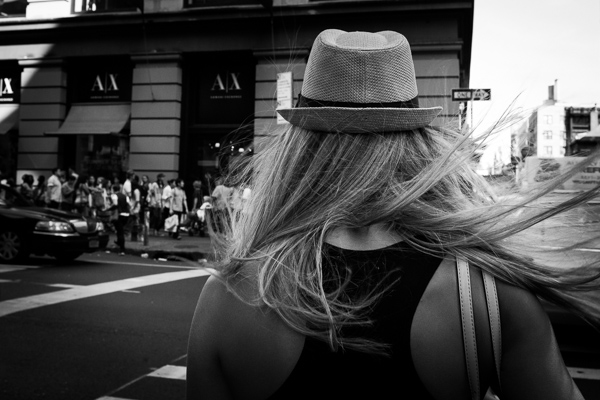
Windswept Hair, Prince and Broadway, SoHo

Windswept Hair, Prince and Broadway, SoHo

If you live near me, the birds are starting to chirp, it no longer hurts your face to walk out the door, and everyone sheds their all black winter outfits and puts on their most interesting attire.

If you live in the southern hemisphere, it’s beginning to cool off nicely. Spring and fall are the best times of the year to capture people and focus on street photography. If ever there’s a time to do it, it’s now.

So here is a list of street photography tips and exercises to get you out there shooting.

1. Linger in the same area

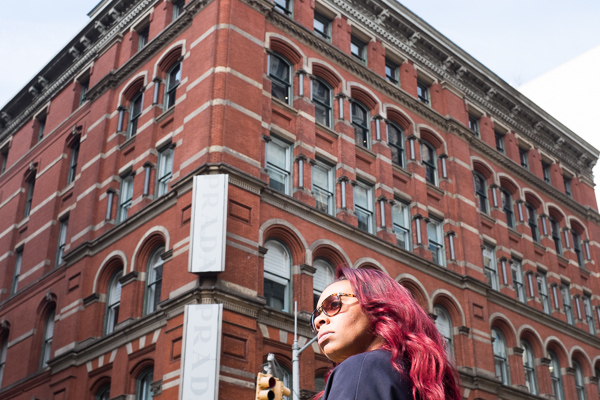
Prada Store, Prince and Broadway, SoHo

Prada Store, Prince and Broadway, SoHo

For this entire list of exercises, we are going to stick to the same general area. If you notice, all of the descriptive images in this article are from the same area of SoHo in New York City, at different times of day and in different seasons. There are so many reasons why this is a beneficial way to shoot.

The more you visit and revisit an area the more you get to know how it works and thinks, and the more you will get to know the characters. You will allow yourself to get familiar with the themes and subjects of the area. In addition, by the end of this exercise you will have a set of cohesive images that will work well when displayed together. Each image will play off the others.

From a technical and learning standpoint, there are a lot of advantages as well. It is common for people to walk around constantly while trying to find content to photograph, which is normal, but often waiting in the same spot or area for something to happen is a more effective strategy. Whether you are walking or waiting, the same amount of interesting moments will happen, and if you are waiting you will be better prepared to see them happen and capture them correctly.

As you visit the same area on multiple days, pay attention to the location of the sun in the sky and how it affects your images. Notice how the illumination of a scene and the appearance of your images change as you photograph into and away from the sun. Notice how the quality of light changes as a cloud moves over the sun and away again. Take the same shot twice at different times of day. Take advantage of the golden hours, as they are the most beautiful times to photograph, but don’t shy away from shooting in the harsh light of midday or at night.

2. Capture a strong facial expression or gesture

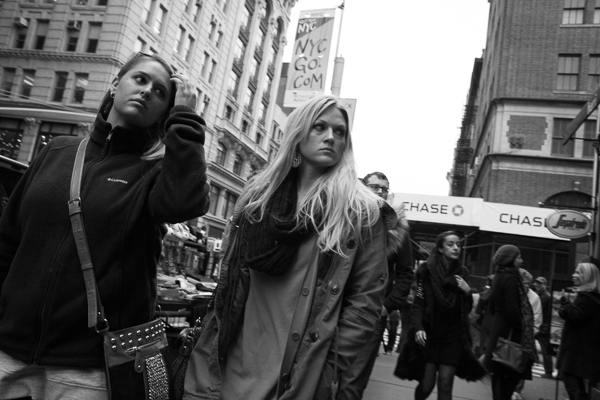
Window Glance, Broadway, SoHo

Window Glance, Broadway, SoHo

A significant percentage of the greatest street photographs have emotion to them. They make the viewer feel something. This is not by accident; it is what most likely drove the photographer to take a shot.

It is difficult to capture someone at the height of their emotion because those moments are so fast and fleeting. More importantly, if you are not actively looking for them then you will not be able to catch the moments before they disappear. Emotion does not only have to be on a subject’s face. It can be in their stride, in their posture, and in their hands.

Hint: It is much easier to capture an image like this if you pick a location and linger.

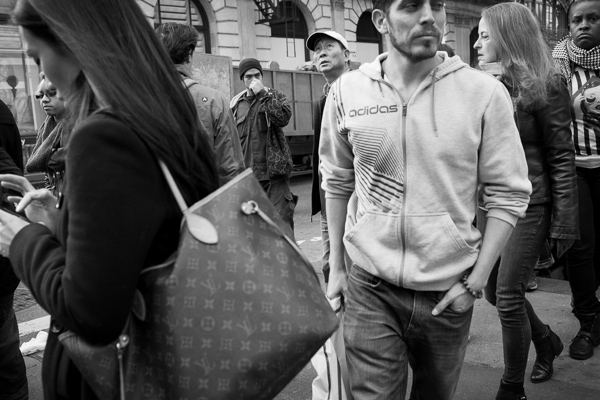
3. Capture a photo with multiple subjects

Diverse Crowd, Prince and Broadway, SoHo

Diverse Crowd, Prince and Broadway, SoHo

Create a scene that is busy with delightful things for the viewer to explore. These photographs work extremely well because, in addition to being interesting, they give our eye more to look at, and can help the photo feel more balanced when done right. These elements don’t have to be people – they can be objects, animals, signs, or pretty much anything as long as they are balanced well in the scene.

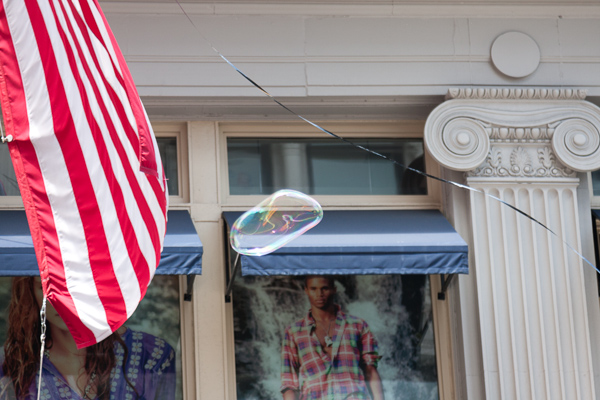
4. Capture a small detail

Bubble, SoHo

Bubble, SoHo

The opposite of the last exercise is to hone in on a small detail. Make the entire photograph about some tiny detail that alludes to a larger idea or story.

In the case of the image above, I tend to view the neighborhood of SoHo as a bubble. It has turned into a shopping mall and not much of a true neighborhood anymore. This photo is my way of alluding to that.

What’s the best strategy to finding something like this? Honestly, there isn’t one except for keeping your eyes open. This tip is similar to searching for a strong expression, in that the only way to do it well is to keep your eyes open so you can see it in the first place. You will be surprised at how many of these photographic moments pass you by when you are not actively looking for them. In addition, the more time you spend in the same area the more of these types of images will pop out at you.

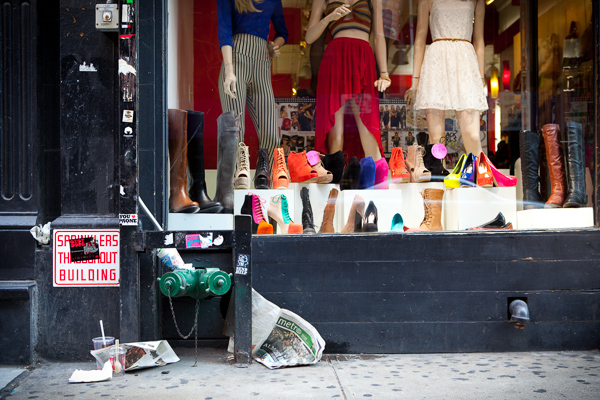
5. Take a street photograph without people

Shoe Store Display, SoHo

Shoe Store Display, SoHo

Street photography is often confused with the idea that you need candid people in the frame. This is a misconception. Street photographs are about people and culture and life, but they can just as easily be devoid of people. Some of the best and most interesting street photographs are devoid of people. Lee Friedlander was an expert at this, take a look at his work for inspiration.

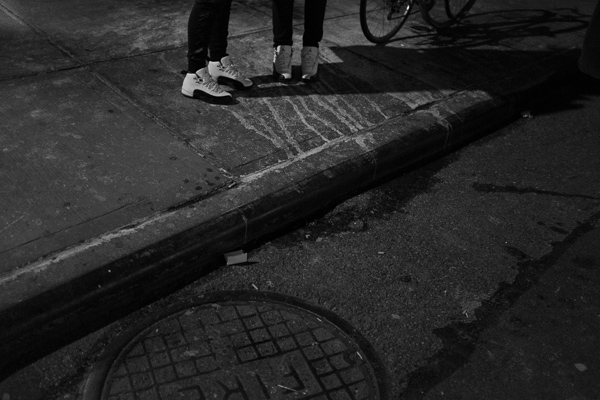
6. Photograph differently

Matching Jordans, SoHo

Matching Jordans, SoHo

If everyone is photographing in one direction, photograph in the other. The key to this type of work is to have fun and to create unique images that mean something to you. Create images where you live or work, where you hang out, and what you know best. Those will turn out to be the most unique and insightful images.

7. Think of an idea and figure out how to capture it

Vince Camuto, SoHo

Vince Camuto, SoHo

A majority of the best street photography is spontaneous, but the more time that you spend in an area the more you will begin to think about ideas to capture.  In some cases, just thinking about these ideas will make you better able to notice and capture them when they do spontaneously happen. In other situations, however, you will be able to find an area and wait for the photo you are thinking of to come along.

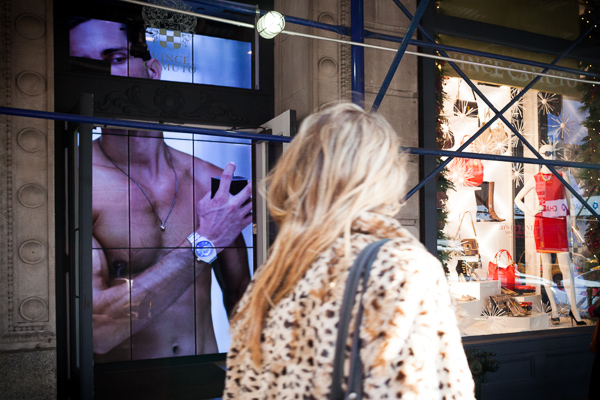
In the photo above, I wanted to create an image where it looked like a window display was beckoning to someone. The image of the naked man was on a loop from a video, so it took a some time for the right person to come and make eye contact at the right moment.

Bonus tip – take a ‘boring’ photo

Too often I hear people say, ‘I live in a boring area. Nothing happens here. I can’t do street photography.’ I think you can do street photography anywhere. Focus on step number five. You don’t need to live in the most fashionable area with the most people to do this type of work. Photograph suburban life. Photograph what it’s like to live in a sparse area.

If you live in a sparse area, create a sixteen image essay that explains your neighborhood. Give me a glimpse into what it’s like there. If done well, it can be just as fascinating and interesting as anything else, and it will be unique, which is the most important thing. Explore the work of William Eggleston, Stephen Shore, or Lee Friedlander, who all did a significant portion of their work in sparse areas.

For more street photography tips:

  • Masters of Photography: Bruce Davidson, Master of the Subway
  • In the Dark: 10 Tips for Street Night Photography
  • The Master Henri Cartier-Bresson – the Decisive Moment
  • 30 Street Photography Images to Inspire You

You can currently pick up 2 eBooks on Street Photography by James on sale now at SnapnDeals!

The post 7 Street Photography Tips and Exercises to Try This Season by James Maher appeared first on Digital Photography School.


Digital Photography School

 
Comments Off on 7 Street Photography Tips and Exercises to Try This Season

Posted in Photography


Tips to Prepare for Your First Wedding Photography Gig

24 Apr

When your photography skills reach a certain level, a family member or friend is going to ask you to shoot their wedding. They might even offer to pay you, which could be your first real gig. Score, right? You’ve made it. 😉 Of course, later when you realize the challenge ahead of you, the pride fades to anxiety, and, googling Continue Reading

The post Tips to Prepare for Your First Wedding Photography Gig appeared first on Photodoto.


Photodoto

 
Comments Off on Tips to Prepare for Your First Wedding Photography Gig

Posted in Photography


How to get Motivated to do more Photography

23 Apr

Are you one of those photographers who finds there’s a million other things that demand your attention and get in the way of pursuing your passion for photography?

You’re not alone. The work/life balance is a delicate dance and it’s easy to get sidetracked by the endless tasks of day to day life, even when things are going well. As a professional photographer you’d expect I spend a great deal of time out there shooting, but the truth is that I don’t get to shoot anywhere near as much as I’d love to.

There are a few things you can do however, that ought to help you scratch that creative itch and satisfy your photographer’s heart.

Let’s get motivated!

Landscape Photography Ebook

1 – Take your camera everywhere

Sounds like a hassle right? But you don’t need to have it on your person at all times, just leave it in the car and maybe carry a spare battery so that when inspiration strikes you’re not cursing yourself for leaving the camera at home.

2 – Stop for that shot

I’m guilty of this all the time. While driving, I often see lots of cool and interesting scenes along the road. I sometimes tell myself ”Oh, I’ll shoot it tomorrow on my way back”, but often you’ll find that this might be your only chance. Pull over, take 10 minutes and get that shot, more often than not you’ll be glad you did.

Learning Landscape Photography

3 – Butter up your spouse

If your spouse is not that into photography, you’ve no doubt had to endure a grumpy ride home after making your beloved wait in the car for an hour while you get caught up in a sunset shoot. Plan ahead and build up some brownie points with the other half so that you can cash in those chips when you need it most. Some preemptive grovelling can go a long way.

4 – Get a photography buddy

If you have a friend that loves photography, it’s much more fun to go out and shoot together or plan short little shooting trips on a semi-regular basis. Join camera clubs or meetups to find like minded souls that share your passion. You’ll feed off each others energy and maybe even have a little healthy competition.

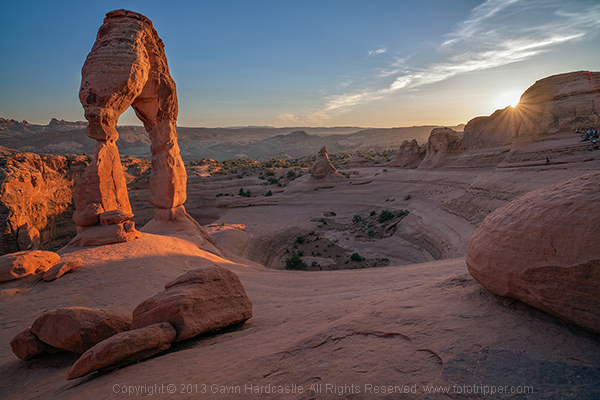
Delicate Arch Landscape, Moab, Utah

5 – Take a photo vacation

Dedicate a one to two week trip at a tremendously epic location and shoot as much as your family, friends or partner will tolerate. You can even become the official ‘trip photographer’ and if you get some great shots you’re more likley to have the family appreciate your need to do photography. Getting your loved ones ‘on side’ will give you a lot more freedom to dedicate time to your art.

6 – Rent a lens – see with new eyes

There’s nothing better than slapping a new piece of high end glass on your camera and seeing things with new eyes. If you’ve got an interesting trip planned, it doesn’t cost that much to rent a top notch lens for a weekend or a few days. It’s like getting a new camera that you already know how to use.

Antelope Canyon Landscape Photography

7 – Go running to find new locations

I’ll admit that I don’t have the patience or time for going on long hikes to discover new locations. I prefer to put on my running shoes, hit the trails and burn some calories. I can cover lots of ground in a fraction of the time it would take to hike and I’m always finding new beauty spots that I can revisit when the conditions are right. If you run daily you will also discover the best times of day for beautiful light.

8 – Follow your peers on social media

I don’t know about you, but nothing motivates me more than seeing the amazing work of my peers and thinking ‘I could have shot that’. The old adage of ‘right place, right time’ is so true in photography, so the more time you spend shooting, the more chances you’ll have at getting some amazing shots that will inspire your peers.

Landscape Photography

9 – Procrastinate and perish

I’m starting to sound like one of those awful life coaches here but seriously, procrastination will only lead to frustration. If you’re a complete beginner, it might take a while before you nail your first unbelievable shot, but when you inevitably do, it might just be the catalyst that kicks your photography into overdrive and once you’ve been bitten by that bug, there’s no turning back. Just don’t let your spouse read this.

What suggestions do you have for getting motivated to do more photography? What motivates you? Share with us some of your tips in the comments below.

Some other articles to read to get you fired up include:

  • Photography projects that make you feel alive
  • Jumpstart Your Photography: Start a 365 Project
  • 8 Photo Projects in Your Own Backyard
  • Photo Project: Why You Should Create a Photo Inspiration Corkboard

The post How to get Motivated to do more Photography by Gavin Hardcastle appeared first on Digital Photography School.


Digital Photography School

 
Comments Off on How to get Motivated to do more Photography

Posted in Photography


Finding the Time to do Photography Part 1- Business Trip to Las Vegas

23 Apr
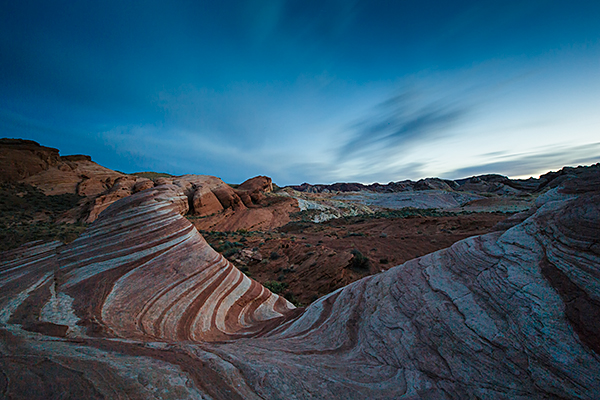
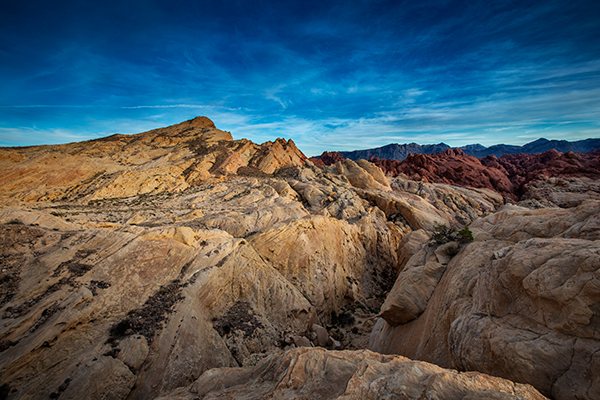
The Fire Wave at Valley of Fire State Park. 4 minutes, f/16, ISO 160. EOS 5D Mark III with EF 16-35 f/2.8L II.

The Fire Wave at Valley of Fire State Park.Exposure: ISO 160, 4 minutes, at f/16. EOS 5D Mark III with EF 16-35 f/2.8L II.

About a month ago, a question was posed on the DPS Facebook Page, “What is the number one obstacle to you taking better photos?” While some answered that they were unsure how to set exposure in Manual mode, and others thought their gear might be limiting them, the overwhelming number one answer was TIME.  In this day and age of being always on, always connected, and always on the go, it can be difficult to find time to do photography.  Like many, my day job, which isn’t as a full time photographer, keeps me busy and eats up much of my time. On weekends, I can occasionally make time but often life and family get in the way.

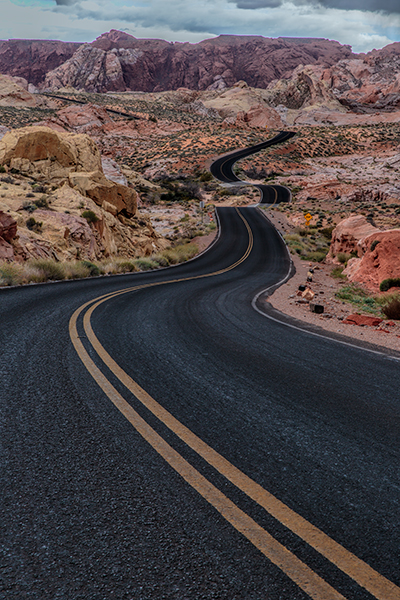
Scenic Drive in Valley of Fire. 1/10, f/16, ISO 100. EOS 5D Mark III with EF 24-70 f/2.8L II.

Scenic Drive in Valley of Fire. 1/10, f/16, ISO 100. EOS 5D Mark III with EF 24-70 f/2.8L II.

So what to do when you need a fix?  There are several things you can do. What I do is to take advantage of my job when I can. I do occasionally travel for work, and when I do, I bring my camera with me.  While I may not have an entire day, often I can find an hour at the end of the day, or I can even go shoot at night.  This was true when I went to Las Vegas recently for a trade show.  I had two days of training seminars, two days of trade show setup and four full days of trade show to work. Was I tired at the end of the day? Yes, but photography is how I relax, so it seemed only natural to eschew the neon glow of the restaurants and casinos and go grab my camera.

First of all, the day I arrived, my flight got in earlier in the afternoon.  I rented a car and headed out to Valley of Fire State Park, about 45 minutes northeast of Las Vegas. I got a mixed afternoon of clouds, which parted for a nice sunset. I then hung around for darkness and got a few night shots just to finish things off.

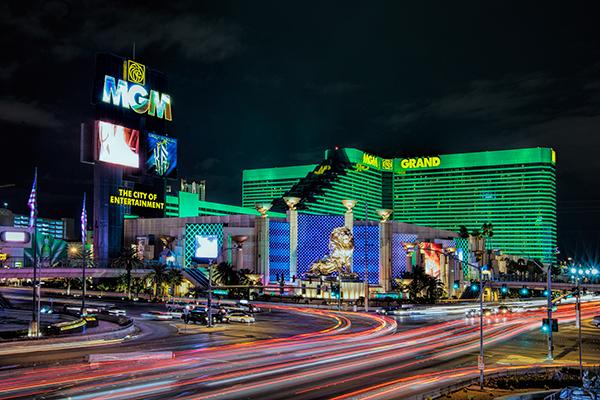
The next day, the work began, but after my work day ended, I headed out to the strip to shoot some of the neon.  The Vegas strip is an awesome place to shoot no matter what you like to shoot. Cityscapes, architecture, or people, it’s all there and it’s there every night. You need only spend an hour and you’ll get more than your fill. The beauty of it all is, Las Vegas makes its own light, so you can shoot 24-7 there.

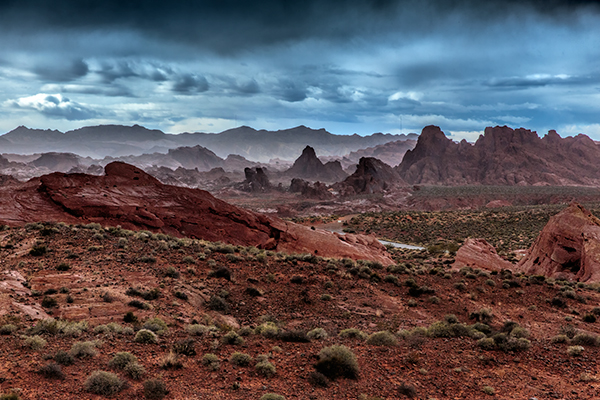
Valley of Fire Storm. 1/1000, f/8, ISO 1600. EOS 5D Mark III with EF 24-70 f/2.8L II. I managed to catch the Valley of Fire on one of the few days it rained all year.

Valley of Fire Storm. 1/1000, f/8, ISO 1600. EOS 5D Mark III with EF 24-70 f/2.8L II. I managed to catch the Valley of Fire on one of the few days it rained all year.

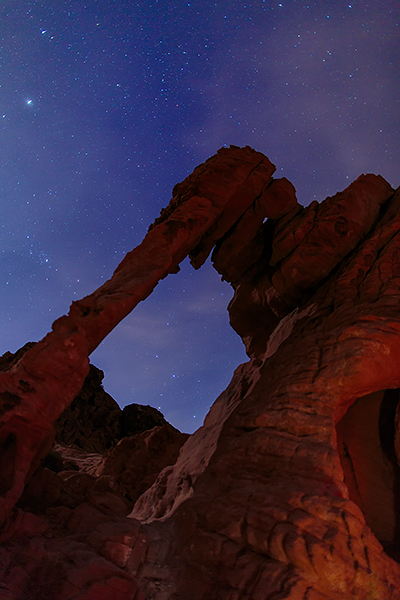
Elephant Rock, in Valley of Fire, at night. 15 seconds, f1.4, ISO 800. EF 24mm f/1.4L II.

Elephant Rock, in Valley of Fire, at night. 15 seconds, f1.4, ISO 800. EF 24mm f/1.4L II.

Get over your objections

I know what your objections will be:

  • I can’t carry everything I need.
  • I don’t have room in my luggage.
  • I’m tired after a day of work.

I’ve said all of those myself, and at times, this attitude won out. But if you have a passion for taking pictures, you’ll find a way.  I carry a small travel tripod- a Gitzo 1541T.  It fits right in my luggage.  I realize that one’s a bit pricey, but there are many other options. Try a Gorillapod. They are small, lightweight, and come in a variety of sizes to fit almost any camera. Perfect for traveling light.

Don’t want to carry a DSLR?  Get yourself a smaller setup you won’t mind carrying.  I own a Canon G16 for when I don’t want to bring my full kit. I can still shoot RAW, have full manual control, but it’ll fit on my belt.  And if you do want a DSLR? Consider minimizing your kit for travel. Pick one or two lenses that can cover most of the standard range. I always have a hard time minimizing, but when I do, I usually carry my EOS 5D Mark III with EF 16-35 f/2.8L II and EF 24-70 f/2.8L II. This is the kit used for the shot of Fire Wave, and of Scenic Drive.  I added the EF 24mm f/1.4 for night shooting. If you’re using a DSLR with an APS-C sensor, an 18-135 is an excellent choice for a do-it-all lens.

I’m not saying finding the time is easy.  Sometimes it will require sacrifice. But I have never regretted spending even a minute with my camera, even when I was tired, or pulled in many directions.  If photography is a passion for you, you make time.  I’m not saying every day.  But I do make it a point to make time to indulge my passion.  You should too. Even if it’s just a minute.  In part two, I’ll discuss ways to make time when you’re at home.

EOS 5D Mark III with EF 16-35mm f/2.8L II. 5 seconds, f/11, ISO 200.

EOS 5D Mark III with EF 16-35mm f/2.8L II. 5 seconds, f/11, ISO 200.

EOS 5D Mark III with EF 16-35mm f/2.8L II.  1/25, f/8, ISO 640.

EOS 5D Mark III with EF 16-35mm f/2.8L II. 1/25, f/8, ISO 640.

Fire Canyon. EOS 5D Mark III with EF 16-35mm f/2.8L II. 1/5, f/16, ISO 100.

Fire Canyon. EOS 5D Mark III with EF 16-35mm f/2.8L II. 1/5, f/16, ISO 100.

The post Finding the Time to do Photography Part 1- Business Trip to Las Vegas by Rick Berk appeared first on Digital Photography School.


Digital Photography School

 
Comments Off on Finding the Time to do Photography Part 1- Business Trip to Las Vegas

Posted in Photography


Improve Your Backgrounds – Improve Your Photography

22 Apr

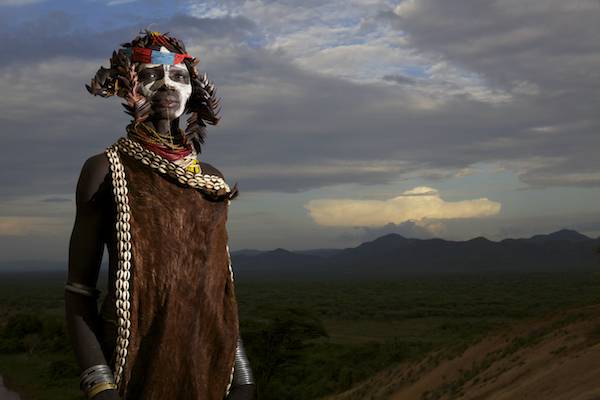
Photography-backgrounds-Omo-Valley-Piper-14

The background in your image can quickly reveal your skill level as a photographer. Learning to see past an exotic or exciting subject, to catch the details in the background, is what will distinguish you from a beginning, hobbyist photographer to an experienced professional. The background in your image immediately stands out to a trained eye. Learning just this skill can very quickly elevate and improve your photography.

Most times, the difference between a snapshot and a strong, compelling image can be as simple as one small step, slightly changing your perspective, or blurring out a background. If the photograph is about an exciting subject, then try to eliminate the background, making it about your subject. If you wish to photograph your subject in their environment check to make sure that:  the background is equally as  impressive as your subject, is part of the story, and adds value to the image.

Keep it simple for a more powerful image

Here are several examples of how one simple movement or adjustment can change an unusable image into a very powerful one. In the portrait below, the light had become too harsh to make a usable image.  I moved my subject into a hut, but then the light coming through the wood created a horrible background.

photography, distracting, background

Watch for bright, distracting spots in the background

I looked around, picked up one of the skins lying on the floor, and put it up behind the subject. This removed the distractions by making the background solid and created a powerful portrait.

photography, backgrounds

The image below on the left is beautiful, but once you look at the subject your eyes wonder up to the sky and out of the photograph. The sky is not part of the story. My subject is the story, therefore the sky is a distraction. I got a little higher and zoomed in a little closer, filling the frame with my subject, eliminating the distraction of the sky. Here the viewers eyes are drawn directly to the subject and stay there.

photography backgrounds photography background

Where is the horizon?

photography, backgrouds

Look where the horizon falls in respect to your subject

If you are going to have sky in your image, you want to make sure the horizon does not cut through the head of your subject, like the image above. To adjust and create the image below, I dropped  down about a foot lower and zoomed in slightly so the horizon line is below the subjects head, creating a stronger image.

photography backgrounds

Below is another example of keeping your subjects head above the horizon. This was a difficult shot. If my eyes had not been trained to quickly hone in on the background, the horizon could easily have cut right though his head, or been on a slant.   This would have ruined the power of this image. It is these small details that make the difference in a great shot or a snapshot.

Photography-backgrounds-Omo-Valley-Piper-Mackay-10

Create separation between subject and background

photography backgrounds

Separation between your subject and background is essential to draw the viewers eye to the subject

In the image above I was careful not to clip the toes and have the subject’s shadow in the frame, but the background around his head was distracting. I simply took a step to the left and the v-shape of the tree-line now leads the viewer directly to my subject. The man’s face is now in plain view without any distractions (image below).

photography background

Watch for bright spots

In this image I wanted to show the subjects connection with nature, but I was challenged by not being able to create a composition without the distraction of the bright sky coming through.

Photography background

Where does your eye go in this image? To the bright sky

The solution was to slightly change my angle and shoot it as a vertical (see below)

Photography backgrounds

Blur it out

photography backgrounds

The background in the image above is not bad, but since the subject is the bird it is distracting. The best way to handle this type situation is to blur the background by opening up to f/2.8 and zooming in on your subject, filling the frame. This is a much stronger image (below)

Photography backgrounds

Color can be a distraction

Photography background

When you are filling the frame with your subject always check for distracting elements in your background. In this first image (above) there is a brown line going directly across the background. Your eyes look directly at the cheetah, but then immediately pick up the break of color, distracting you as the viewer. The next two images have solid backgrounds. Your eyes go directly to the subject and stay there.

Photography backgrounds

Photography backgrounds

Great subject alone is not enough for a wow image

The image below looks more like a photograph that was taken because it was the first time the photographer saw a lion or because the photographer did not have a long enough lens. Sometimes a situation is what I call eye candy; just for looking at, and not for taking a photograph.  Just because your subject is exotic it does not mean it will make it a great photograph.

photography backgrounds

If the background does not add to the photograph or story, then remove it. Get up close and make the photograph about the subject.

photography backgrounds

Notice how much stronger this image is than the one above?

Put it into practice

The easiest way to train your eye is to practice. Get out and shoot, but before you head out, take a quick look through  a few of your existing galleries. Were you seeing what was in the background, when you clicked the shutter?

Challenge your self by going to a busy downtown tourist area and try to isolate your subjects or  visit the zoo where the backgrounds can be difficult. Download the images and view them on your monitor. Looking at them in the back of your camera is a good tool for a quick peek. But it is when are no longer in the emotion of the moment, viewing the images on your monitor, that unwanted elements will scream out at you. The more you see these mistakes on your computer, the more you will remember them behind the camera. Repeat this exercise often until what you see on the monitor is what you were seeing in the frame when you click the shutter.

Practice putting your subjects in simple clean environments first, as the sample images below.

photography backgrounds

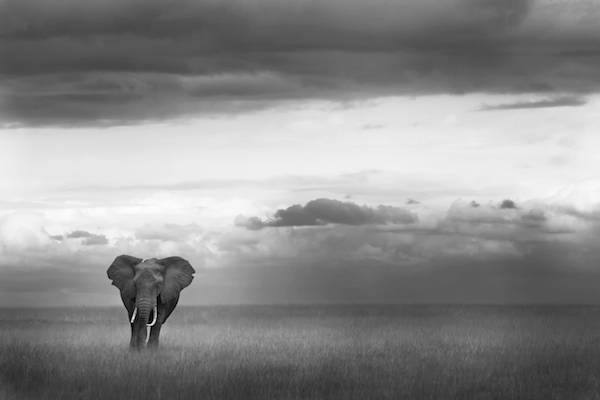
Photography-backgrounds-elphant-africa-Piper-Mackay-01

Photography-backgrounds-Omo-Valley-Piper-14

Soon you will be able to introduce a secondary subject in the background for a more complicated image. This draws the viewer to the main subject and then through the image to the discover what else is going on in the images, holding their attention in your image a lot longer.

Good Luck and enjoy the process

Photography-backgrounds-lion-africa-Piper-Mackay-02

Photography-backgrounds-Omo-Valley-Piper-Mackay-11

The post Improve Your Backgrounds – Improve Your Photography by Piper Mackay appeared first on Digital Photography School.


Digital Photography School

 
Comments Off on Improve Your Backgrounds – Improve Your Photography

Posted in Photography