RSS
 

Posts Tagged ‘Photography’

Weekly Photography Challenge – Spooky Images for Halloween

25 Oct

If you want to see some scary images head over to my earlier collection of spooky images here.

This is the week of all the spooks and goblins so I though it would be fitting to see some scary images too. What do you consider spooky or creepy? It might be a big hairy spider, or maybe a ghostly double image, or perhaps some deep shadows in a hidden alleyway. Whatever it is, it’s your turn to photograph it and show me something that will make me have the chills.

Let’s see some examples:

Delta

By Delta

Hartwig HKD

By Hartwig HKD

Kevin Dooley

By Kevin Dooley

Alice Popkorn

By Alice Popkorn

Jesse Draper

By Jesse Draper

Liz West

By liz west

You get the idea. Now it’s your turn.

Weekly Photography Challenge – Spooky Images

Try and think about this one not so literally. I’ve done some photo competition judging and something similar was the theme for one category. I saw a lot of images trying too hard to be scary. Think subtle. We don’t need to see blood and guts to be scared. Less is more. A simple, dark, moody image of a creepy looking alley or lane-way could be all that’s needed. How about doing some double exposures at night using flash to create some ghosts, or just long exposures on a busy street to catch all the moving people at night. If you have some ideas share them here, then go shoot it and share the images too.

Share your spooky photos

Simply upload your shot into the comment field (look for the little camera icon in the Disqus comments section as pictured below) and they’ll get embedded for us all to see or if you’d prefer upload them to your favourite photo sharing site and leave the link to them. Show me your best images in this week’s challenge.

Here are a few more images to scare you!

Yamabxl

By Yamabxl

JayRaz

By jayRaz

Howard Ignatius

By Howard Ignatius

Tommy Clark

By Tommy Clark

Jorge Mexicano

By Jorge Mexicano

Slworking2

By slworking2

The post Weekly Photography Challenge – Spooky Images for Halloween by Darlene Hildebrandt appeared first on Digital Photography School.


Digital Photography School

 
Comments Off on Weekly Photography Challenge – Spooky Images for Halloween

Posted in Photography


23 October, 2014 – Arches National Park – A Quick Guide To Photography

25 Oct


The National Parks in the US offer a wide variety of photographic opportunities for the landscape photographer.  There is so much to see and photograph, and all of these great parks have something unique to see.  This is the second of a continuing series of National Park Quick Guides by QT Luong.  In his previous guide QT described all the good location in Acadia National Park.  Today QT takes us to Arches National Park, which is one of the most famous parks for photographers.


The Luminous Landscape – What’s New

 
Comments Off on 23 October, 2014 – Arches National Park – A Quick Guide To Photography

Posted in News


A Common Misconception About Street Photography – Just Take Photos of People Walking

15 Oct
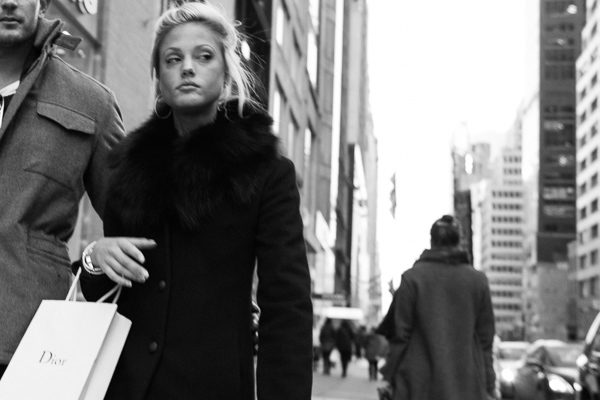
Dior, 5th Avenue.

Dior, 5th Avenue, NYC

A common misconception about street photography is that it is that it is about capturing any person that looks slightly interesting walking down the street in front of an interesting background. It’s actually about trying to capture a story, idea, or emotion through an image. While this largely can take place on the street, it can be captured anywhere.

What comes to mind when you see the term street photography? Is it a person walking down the street?

Whether or not you you have practiced street photography, I am assuming that you have come across this idea or seen images like this – a person with a blank look just walking down the street. Maybe they have some interesting clothes, beautiful hair, or the background looks interesting. But nothing is happening. There is no idea or emotion present.

Go beyond shots of people walking

Good street photography, and good photography in general, goes beyond that. Street photography is not just about capturing images of people. It is about capturing candid and natural photographs about life. There has to be something there.

My favorite street photographs make me feel like there’s something behind the curtain. Of course there needs to be something interesting and beautiful on the surface. There has to be a mix of both content and form, but behind the curtain there is some sort of idea or feeling, something that makes you think.

I can’t tell you how many boring shots I have of a person with a blank look walking down the street. We all take these kinds of images. There is a lot of spontaneity and hand-eye coordination in this type of photography and most of the time you see the potential for the shot, react to take it, but there’s just nothing there. That is normal.

Go for the expression

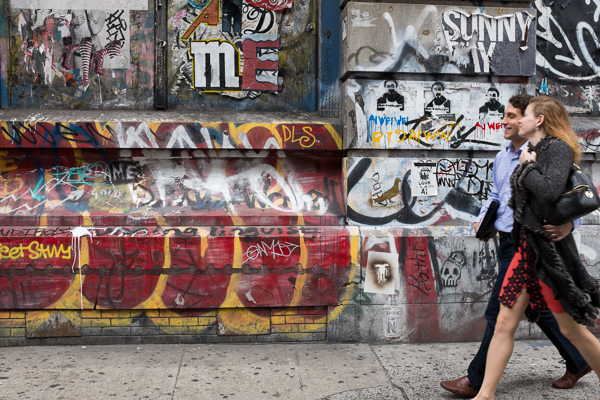
SoHo

The above image has a lot going for it. The main subject is up close and sharp, the angle is dynamic, the woman looks interesting and fashionable, the lighting is great, and the background is colorful and interesting. However, this image lacks for me what the top image has. There is no expression or emotion. It’s tough for me to feel anything under the surface of the image. Because of this I consider this image to be good but not great.

What we are looking for however, is something to be there. This could be a strong facial expression whivh is one of the first things that I look for when I’m out there doing street photography, particularly the look in someone’s eyes. Fashion, the background, the light, are all important elements of a strong photograph and you should pay attention to them, but in my opinion, a good expression can trump them all. The photograph at the top of this article is a person walking down the street, but there is so much more to the photo than that, because of her facial expression.

Watch for gestures

Gesture, SoHo

An example of gesture, SoHo. NYC

Gesture is also very important. I prefer to think of gesture as an expression with the body. Pay attention to how people carry themselves and what hints that might give us about them. A facial expression could be considered a gesture as well, but look at the hand in the top image. The way the hand is position with the sharp nails makes it look like a claw. When you mix that with the facial expression, this becomes a very frightening image, at least to me. Or take a look at the gesture of the legs above with the weight all on one leg and the other turned gracefully. You can get a sense of this person just from that body position.

Also, a street photograph does not have to have people in it. This goes beyond an urban landscape. Search for images that have the same effect as a good street photograph with a person. Search for an image that give us hints about life or makes us think or feel something, without people in the shot.

Gowanus

Gowanus, Brooklyn NYC

The more you get involved with this type of photography, the more you will notice themes and consistency in your work and hints beneath the surface of your photographs. Focus on this when editing and group similar photographs together. This all takes time to develop and the more you think about your photography in this way, the more it will improve.

What do you focus on when you do street photography? Do you have any other tips to share? Please do in the comments below.

The post A Common Misconception About Street Photography – Just Take Photos of People Walking by James Maher appeared first on Digital Photography School.


Digital Photography School

 
Comments Off on A Common Misconception About Street Photography – Just Take Photos of People Walking

Posted in Photography


PhotoShelter introduces Pinterest-like photography curation service Lattice

14 Oct

PhotoShelter has introduced a new project it has been working on called Lattice, which allows the service’s users to browse images that have been aggregated into boards. The way the service works is similar to Pinterest and will be rolling out in phases, the first of which is now available to the public. Read more

Articles: Digital Photography Review (dpreview.com)

 
Comments Off on PhotoShelter introduces Pinterest-like photography curation service Lattice

Posted in Uncategorized


5 Tips for Photography Using Natural Light Indoors

14 Oct

Indoor Portraits Using Backlight Window Light

You would probably love to have ideal lighting conditions for every shoot, especially if you are strictly an outdoor, natural light photographer. However there are many situations when the lighting is not ideal. Think winter, rain or even harsh midday sun. Sometimes you are stuck indoors, or your client wants to have a photoshoot inside their home. When used correctly, natural light indoors can be just as pleasing as outdoor lighting and can also provide opportunity for some creative portraiture with contrast, shadows, and drama. Here are some tips to get the most out of your photography using natural light shoot.

#1 Know your environment and know the light

Like any situation, do your research before you start photographing indoors. Many times the direction of the house, the position of the windows, along with the time of year plays an important part in the amount of light coming through. Is your house North-South facing or East-West? What are sunrise and sunset times where you live, or where you are going to be photographing? Does the room have a sunroof that lets in additional light? Light also changes depending on the time of day.  As light changes, so does the color of light. This directly affect the white balance (WB) of the image. If your camera has the ability to shoot in RAW use it, as white balance can then be adjusted in post-processing. If you really want to get it right in camera, experiment with the Kelvin scale.

When planning a shoot in your home, take several shots the day before to analyze what time is best for the light.  Sometimes this is not possible especially if you are going to a client’s home or photographing a venue. But this is where a little prep work goes a long way. Don’t be afraid to ask these questions or even google the venue to check it out online.

Indoor Portraits Using Window Light From the Side Angle Memorable Jaunts

#2 Know how to use window light to your advantage

One of the best sources of natural light indoors are windows. Learn how to use them to your advantage. In general, the closer you are to the window, the more light you will have to use and work with. Where you place your subject in relation to the window light will affect the image dramatically. There are three different scenarios for using window light:

  • Sidelight with the window: Here the subject is parallel or at a slight angle, to the window. Depending on the time of day and amount of light, this may yield images that have more contrast especially with midday sun streaming through the window.
  • Backlit by the window: Here the subject is sitting with their back to the window facing the photographer. You will need to meter for the subject and blowout the highlights to properly expose the image for the person. The other option is to expose for the highlights, as in the window and get an indoor silhouette. You can also use a reflector to pop light back onto the subject’s face.
  • Front lit by the window: Here the subject is directly facing the window, you are between the window and your subject. This type of lighting position produces the most even light of all the three.

Indoor Portraits Using Window Light From a Back Angle Memorable Jaunts

Indoor Portraits Using Window Light From the Front Angle Memorable Jaunts

#3 Know your settings and equipment

Remember your exposure triangle; the relationship between ISO, f-stop (aperture) and shutter speed. This plays an important role in indoor photography. Choosing a fast enough shutter speed will eliminate any camera shake if you are not using a tripod. Choosing a wide aperture (low f-stop number) will provide a shallow depth of field and blur out the background (particularly useful if there is some clutter around the house). Choosing a larger ISO provides more light; particularly useful if there isn’t much natural light coming indoors. Most of the newer DSLRs have a large range of ISO and handle high ISOs really well. Plus there are tools to help reduce noise in the image during post-processing if you want a less grainy look.

#4 Use open hallways, doors, or even the garage to emulate a situation of open shade

If for some reason you are not able to use window light to illuminate the subject (due to inaccessibility to a window ), you can use open hallways, doorways or even a garage to emulate a situation of open shade. Have the subject sit close to the edge of the doorway and face the light.

Indoor Portraits Using Open Shade From A Garage Memorable Jaunts

#5 Know when to use a reflector and a diffuser

A reflector and diffuser are great tools to use for indoor portraits. A diffuser softens the window light just like a white curtain or blinds. It is particularly useful for windows that have harsh midday sun streaming through. A reflector used in conjunction with window light, can add just the right amount of light bounce-back to dramatically improve your indoor portraits (especially for sideand backlit images).

Indoor Portraits Using Diffusers and Reflectors to bounce light back Memorable Jaunts
The next time the weather gods decide to ruin all your perfectly laid out plans to have an outdoor, natural light, photoshoot, don’t rush to reschedule your session. Try and experiment with natural light indoors and diversify your portfolio. If you want to use other forms of indoor lighting check out the article from the dPS archives on creating indoor portraits without flash.

For another dPS writer’s tips for using natural light read Melinda Smith’s Tips For Great Indoor Portraits Using Natural Light.

Do you have any other tips for using natural light indoors? Please share those and your images in the comments section.

The post 5 Tips for Photography Using Natural Light Indoors by Karthika Gupta appeared first on Digital Photography School.


Digital Photography School

 
Comments Off on 5 Tips for Photography Using Natural Light Indoors

Posted in Photography


A Beginners Guide to Seascape Photography

13 Oct
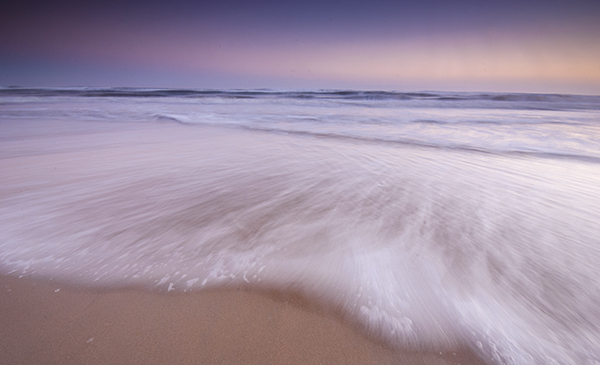
A somewhat abstract seascape scene, the movement of the water makes the image dramatic

A somewhat abstract seascape scene, the movement of the water makes the image dramatic

Seascapes are often seen as a subset of landscape photography. This is true, but I feel that seascapes have their own specific techniques that need to be thought about when you are shooting a scene. The typical sea scene could be a warm sandy beach, blue sky and some palm trees. That is generally the kind of image I try and avoid. For something more dramatic, you may want to try to shoot at sunset and try and capture something unique, rather than a typical postcard shot. When you get it right, your seascape scene should be breathtaking and exciting to look at. It should show the scene, but not look like the kind of shot that anyone could have shot. That means, you may have to scout for some unique or unusual vantage points along the coast.

Safety first please

Seascape photography can be dangerous. Very often you will be hiking over slippery and sharp rocks, the tide may be rising and the waves might be coming in closer and closer. Always be aware of your surroundings and be careful to observe what is happening around you. On more than one occasion, I have been trapped on a rocky outcrop with nothing but wild sea around me. Getting back onto dry land was a relief and an ordeal on those occasions. I have also been completely soaked by freak waves at times and almost lost my camera into the water more than once. So yes, seascape photography can be a little dangerous, but the results are well worth it. The first rule is always, safety first. If possible, go out with a fellow photographer so that there are two of you to help each other if necessary. So, with that disclaimer out of the way, here are some tips on how to set up to get some great seascape images.

Location considerations:

1. Tide

If you don’t know the tidal movements or the tidal range, it’s a good idea to find out. Most coastal towns will have a tide table or chart available, this is important information to know before you go out on your shoot. You can also simply Google “tide table for (city or town)” and all the tide times and measurements should be there. This is important because you may scout a location at low tide, only to return at high tide and find that the rock you were planning to stand on is now submerged under water. Also, the tide can affect the water movement and wave size. If it is high tide, there may not be as much water movement as you would like. It is also a good idea to chat with local photographers or fishermen to find out how the tide is moving.

The incoming tide trapped me on this rocky outcrop

The incoming tide trapped me on this rocky outcrop

2. Weather

Most coastal areas can be unpredictable from a weather perspective. A storm can roll in pretty quickly over a coastal town. Be sure to check the weather forecast for three or four hours before you plan to shoot, and an hour or two after you plan to end your shoot. Sometimes the weather and particularly the wind, can cause the conditions to become difficult to shoot in. One of my favourite apps on my iPhone is Accuweather. I use it often when I am in a location that I am unfamiliar with. It is very easy to use and has been about 90% accurate whenever I have used it.

3. Location

You need to decide where you want to shoot. Do you want to shoot from the beach, the rocks, or the elevated cliff? This will determine what kind of personal gear you will need to take with you (hiking boots, long pants, etc.) It is also a good idea to pack an extra sweater or rain jacket as it could become wet or cold very quickly. Be sure to look at where the sun will be setting. There is nothing more frustrating than being in the shadow of a headland with 80% of your scene in shade as the sun goes down. Remember to look out for channels where the sea water may run up into. These channels and gullies along a rocky coastline can be very dangerous as the water may recede when the tide is out, but as the tide comes in, they may be impossible to cross. If you cross the gulley in low tide and try to return at high tide, you may be trapped as the water could be too deep to cross over.

Magnificent light and moving water makes for a great image

4. Lighting

It is easy to forget your headlamp or flashlight when you are walking along the beach in the warm sunlight. You may be at your location until way after dark and when you decide to return, you will realize that it is pitch dark and the path back has changed because the tide has come in. Don’t forget to carry your headlamp or flashlight with you whenever you do any kind of landscape photography, but especially when you do seascape photography. I have been lost on a rocky coastal outcrop a few times and it is more than a little scary. Fortunately, I always carry my headlamp in my camera bag, no matter what, so that has helped me find my way back to the road or my car.

Photography considerations:

1. Shutter speed

Depending on the seascape scene you are shooting, you will have two choices. You can freeze the movement of the waves or you can blur the movement of the water. If you are shooting a seascape scene that includes rocks in the foreground and the water rolling over the rocks, then you may want to blur the water. This will give the water that soft silky effect and the images will look somewhat surreal. To slow things down even further you could use a neutral density filter to make the exposure time even longer. This will have the effect of really softening the water to the point that it may look misty. Depending on what your vision is for the shot, you need to decide how soft you want the water to be. To freeze the action of the water, you will need to be shooting at 1/1000th or faster. I find that freezing the action of the water is not always as dramatic as softening it. Being able to freeze the action is useful if you are shooting surfing or some other water sport.

2. Aperture

As with landscape photography, you will want to have everything from the foreground to the background in focus. That means you will need to be using an aperture of f/8 or smaller. This will also allow you to slow the shutter speed down, and get some soft water in your scene. Make sure that you focus your camera once you have decided on your scene and composition, then switch your camera to manual focus. That way, when the light begins to fade, your lens won’t be hunting to find a focus point.

Look for reflections in a seascape scene

Look for reflections in a seascape scene

3. Colour or black and white

Seascapes can work very well in black and white. You should shoot your images in colour and convert them afterwards in Photoshop or Lightroom. Both of these image editing suites have great black and white conversion tools and you will be able to make numerous adjustments to your image afterwards. If you shoot in black and white however, you can never get the colour back into the scene. You may try the image in black and white and realize it works better in colour, so be sure to keep shooting in colour.

4. Tripod

You will need a tripod to shoot seascapes effectively. You may be shooting after the sun has set and there is no way you could hold your camera still to get a great shot. Sharpness is key in a good seascape. Portions of your image will be blurred (water) but other parts of the image should be tack sharp (rocks, clouds, etc.) So be sure that everything is very sharp by using a tripod and a cable release if possible. Be aware if you set your tripod up on the sandy shoreline. As the sea comes in, it may cause your tripod to move or sink as the sand may not be firm enough to keep your tripod perfectly still. Always check your image afterwards to be sure that you have the rocks and clouds sharp.

A tripod will be necessary in low light conditions

A tripod is necessary in low light conditions

Subject matter

There are no shortage of scenes to shoot in a seascape scene. Some of the following are ideas to look out for on any beach:

  • Lighthouses – Always fun to shoot and if possible, shoot them in the early evening when the light first comes on.
  • Rocky outcrops – Moving water and rocky beaches make for great seascape images.
  • Reflections – if the tide is moving out on a flat beach, you can capture some amazing reflections of the sky on the shiny beach sand.
  • Colour of light – If you expose properly you can have a warm sky and the blue water in one image. This makes for a beautiful scene.
  • Storms – This is a little more tricky, but sometimes shooting a raging storm over the sea can make a fantastic shot.

If you live near the sea or are planning to visit the seaside, then try your hand at this genre of photography. The results can be very satisfying and you will be astounded how easy it is to produce consistently good results, once you know how. The important thing is to be sure that you are safe and aware of your surroundings at all times. Don’t be afraid to venture out to try this type of photography, it is a lot of fun and it is worth it for sure.

Good foreground interest will anchor the scene

Good foreground interest will anchor the scene

The post A Beginners Guide to Seascape Photography by Barry J Brady appeared first on Digital Photography School.


Digital Photography School

 
Comments Off on A Beginners Guide to Seascape Photography

Posted in Photography


Photography Branding: Pinterest Marketing Guide for Newbies

13 Oct

Pinterest has grabbed the attention of many social media marketers and for good reason. The image sharing site has gathered millions of fans since its debut two years ago. With Pinterest you can easily share photos you’ve found around the web and interact with people from all over the globe. I previously wrote on Photodoto about Pinterest photography boards worth Continue Reading

The post Photography Branding: Pinterest Marketing Guide for Newbies appeared first on Photodoto.


Photodoto

 
Comments Off on Photography Branding: Pinterest Marketing Guide for Newbies

Posted in Photography


Weekly Photography Challenge – Shadows

11 Oct

Early I shared an assortment of shadowy images. I love playing with light and photographing shadows is a great way to help you learn to see light, and direction of light. Here are a few more examples:

Mgstanton

By mgstanton

Life Pilgrim

By Life Pilgrim

Daniela Hartmann

By Daniela Hartmann

This week’s photography challenge is all about the shadows. So head out and look for some light that creates interesting shadows. For a shadow image to work well you need a couple of things:

  1. A hard light course like direct sun. You cannot find good shadows on an overcast or cloudy day.
  2. Light that skims the surface like the late evening or dusk kind. Look for the long shadows at the end of the day (or first thing in the morning) they will add more drama to your images.
  3. An interesting and well defined subject. For a shadow to be interesting the viewer needs to be able to identify and connect with the object producing the shadow, even if the object isn’t in the photo itself. Some things that work particularly well are trees, bicycles, people, a fence, etc.

Let’s see a few more examples that are well done:

Michael

By Michael

Angelo Domini

By Angelo Domini

Harris Hui

By Harris Hui

Broo_am (Andy B)

By Broo_am (Andy B)

Seema Krishnakumar

By Seema Krishnakumar

Grozz

By Grozz

Camil Tulcan

By Camil Tulcan

Mark Anderson

By Mark Anderson

David Rodriguez Martin

By David Rodriguez Martin

Hapal

By hapal

Magdalena Roeseler

By Magdalena Roeseler

You can see by the images above that even tiny things like a seed can produce a great shadow. Find some ordinary household objects, put them in the sun, and see what the light does to the shadow. Try rotating it or moving around it.

Another idea is to do a self portrait using your own shadow. See how creative you can get with that. Throw your shadow on a wall, do a crazy pose, or get your camera in the shadow too. Mix it up, let’s see what you got! Humor is good too!

Dustin Diaz

By Dustin Diaz

Gian?merz

By gian?merz

Claudio Cicali

By Claudio Cicali

Volodymyr Pavlyuk

By Volodymyr Pavlyuk

BMiz

By BMiz

Sherwood411

By Sherwood411

Share your images of shadows

Simply upload your shot into the comment field (look for the little camera icon in the Disqus comments section as pictured below) and they’ll get embedded for us all to see or if you’d prefer upload them to your favourite photo sharing site and leave the link to them. Show me your best images in this week’s challenge.


The post Weekly Photography Challenge – Shadows by Darlene Hildebrandt appeared first on Digital Photography School.


Digital Photography School

 
Comments Off on Weekly Photography Challenge – Shadows

Posted in Photography


How to Improve Your Photography with Storytelling Images

09 Oct

east_village_gentrification7

How many times have you had this interaction?

“This photo is beautiful!”

“Thanks!”

End of conversation.

There’s nothing wrong with this, of course. Beautiful is a great, great compliment. However, if you’ve ever wanted to have a longer conversation with a viewer about one of your photographs, then creating images with stories behind them, or around your own personal stories, can be a very important approach to try.

My favorite photography tip has always been that you should photograph what you know and what you are most interested in. This passion and knowledge will help form your photographs and improve them. Instead of only sitting back and capturing what is given to you, go out searching for a way to capture something with which you have experience.

There are three types of stories to think about: ambiguous, personal, and documentary

Ambiguous stories

The ambiguous photograph is an image with a story that is unclear. It is a photo that makes you think, where you can imagine multiple stories and arcs based on a single image. This is a very important way to think about your work. If you can create a photo with an evolving story then as it lives on your wall or the wall of a viewer, the photograph will never get old. There will always be mystery and an evolving story based on the viewpoint of the observer. It’s hard to get sick of an image like that.
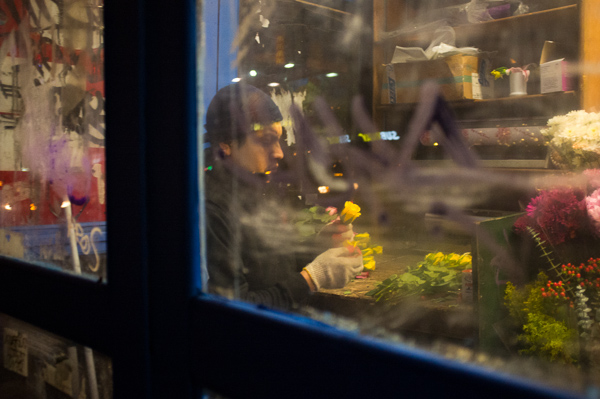
Bodega Flower Worker, 2012

Here’s an example of an ambiguous image for me. I walk by this flower stand outside of a bodega every day. I’ve always been curious about the lives of the people that work at these places. I know that some of them are immigrants looking to make a tough living in a tough city. On one of my walks home one evening, I noticed this man stopped and stared at the flower with this pained and thoughtful look. I have absolutely no idea what is going on here, but it makes me imagine a very elaborate story around what he is thinking about based on a simple look.

Personal stories

The personal story is to capture something that has happened to you. You can do this through multiple images or try to capture it within a single image. If you have a photo blog this is a great way to spice it up from just a solid stream of photographs with no commentary. When you put it on your wall, the next time someone complements you on how it looks, you can also tell the story behind the image. It’s good to create beautiful images for the sake of beauty, but it can also be fun to include images with stories. There is a place for both on your wall or on your blog.

Here is a recent example taken straight from my own blog to give you some inspiration. It is a single image that brought up a fun memory from my youth.
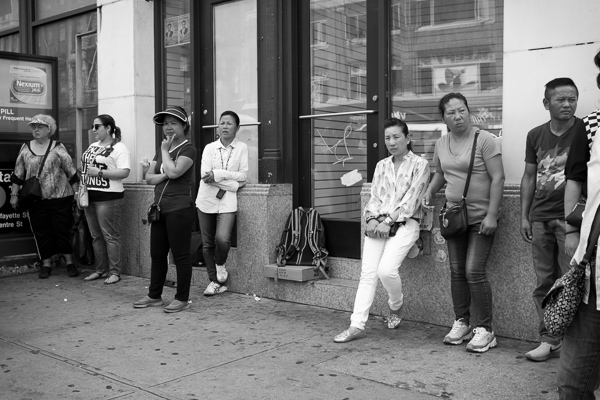
Canal Street, New York

Canal Street, New York

“Louis Vuitton? Rolex? Rolex?

These are the women on Canal Street in New York who sell fake handbags. I remember my first experience on Canal Street, the home of fake handbags. This must have been freshman or sophomore year in high school. My friend wanted to go to Canal Street to get a fake ID, so four of us took the subway down.

We were walking down the street when someone walked by whispering, ‘Fake IDs, Fake IDs?’ I mean… he picked us out pretty quickly, we must have been perfect targets. So my friend says, ‘Yeah,’ and he takes us into a Chinese restaurant. ‘This is just a front for some illegal operations’ he tells us. I was kind of nervous, but the fact that I was a passive observer with a couple other people made me just sit back and not pay too much attention to what was going on. I already had an ID.  I’ll tell the full story here one day, but making fake IDs is how I got into photography. I downloaded a very early copy of photoshop to alter a photo of an ID and fell in love with it. The rest was history.

The man sat us down at two separate tables with two of us at each table. It was here I probably should have realized something was going on. He clearly did that because the four of us together would have realized something was up.

The two guys who were getting IDs sat at the other table and I overheard the man telling them that he had to go around the back to tell them we were here and to not move or say anything. He was purposely trying to make us nervous about everything.

So he walks out. After a couple minutes we went over to their table. ‘What did he say?’ – ‘Oh, he’s coming back soon. He just had to take our money in first to make sure it’s not counterfeit.’

‘Um… I don’t think he’s coming back.’”

Louis Vuitton, Canal Street

Louis Vuitton, Canal Street

Finally, there is the documentary photograph

You can do this anywhere, but unless you are a professional documentary photographer, it will usually be more practical to create stories where you live and where you are familiar. Capture photographic stories in your community. You can even do this based on a story taken from your own life. The final manifestation of this is creating a full documentary project, but if you’ve never tried anything like this, then start smaller and create single images or small groups of images.

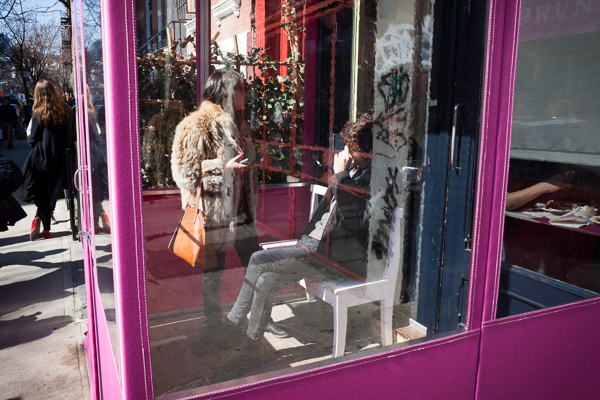
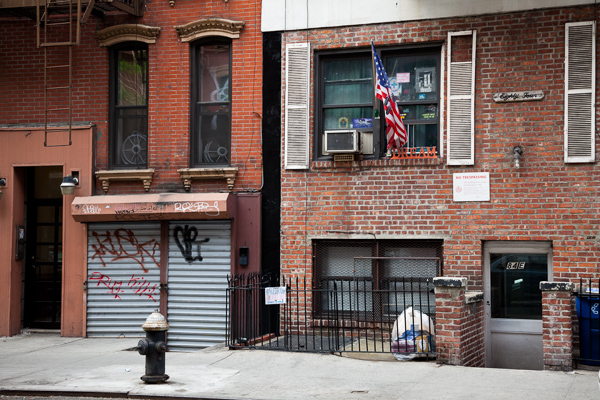
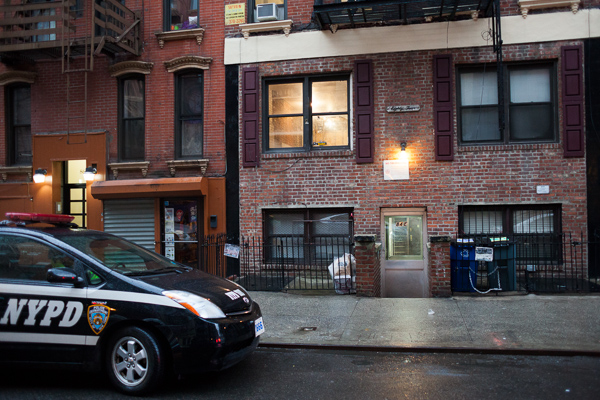
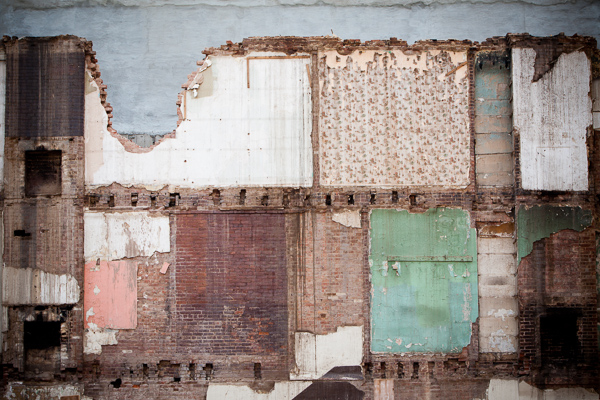
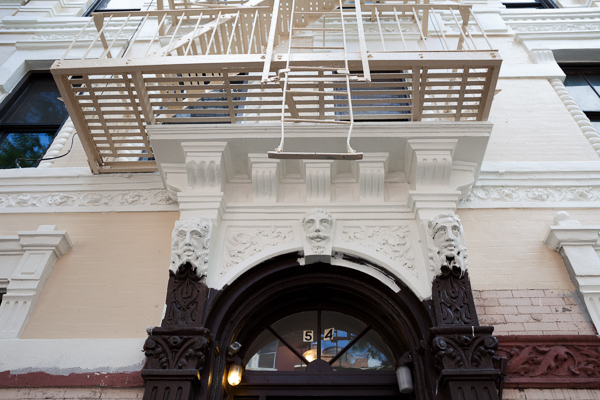
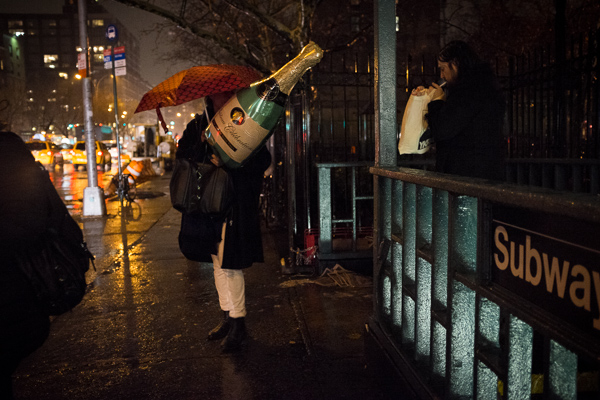
The image at the top of this article, and the following nine, are based on a project that I’ve been working on documenting the gentrification and overall change in my community, the East Village and Lower East Side neighborhoods of New York City. For a somewhat brief version of the story, the neighborhood was once a center of immigrant life in New York, with polish, Ukrainian, Italian, Jewish, Puerto Rican, and people from many other countries around the world. The neighborhood was hit extremely hard during the drug epidemic in New York in the ’80s and it became the place in Manhattan to purchase drugs. People would line up down the block to purchase heroin from drug dealers who often dropped the drugs down in cans. Building owners abandoned their buildings for squatters to take over, and some even burned their buildings down for the insurance money.

Because of all of this, the neighborhood was the cheapest place to live in the city. Musicians, artists, creatives, and many different types of people moving to New York, would go to the East Village because it was cheap and they would be able to pay the rent working a few odd jobs, spending the rest of their time on their art or whatever they wanted. The neighborhood became the birthplace of Punk Rock.

It’s a wonderful neighborhood, the one in which my grandfather and mother grew up, but more recently it has become the trendiest area of the city. Developers have attacked the neighborhood, taking over buildings and illegally strong-arming out rent-controlled and rent-stabilized tenants, many of whom had lived there for 40 or more years. Neighborhood shops, many of which have been around for decades, are disappearing rapidly being replaced by chains. The night is filled with drunk people yelling and peeing on stoops.

The story is much longer than that, but here are just a couple of images from the project that I feel gives a sense of what is happening to the neighborhood.
east_village_gentrification

east_village_gentrification8

east_village_gentrification2

east_village_gentrification9

east_village_gentrification3

east_village_gentrification4

Razed Building, East Village, 2012.

east_village_gentrification6

east_village_gentrification10

So grab a pad and brainstorm some ideas. Share any images you have taken with a good story behind them. Let’s see your stories.

The post How to Improve Your Photography with Storytelling Images by James Maher appeared first on Digital Photography School.


Digital Photography School

 
Comments Off on How to Improve Your Photography with Storytelling Images

Posted in Photography


Daily Photography Pros and Cons: is it for You?

06 Oct

All photographers have room to grow, and we all of commit to honoring that growth in different ways. One way to dedicate yourself to your photography is to commit to doing it daily. It does not matter whether your camera is a phone, a compact camera, or a top-of-the-line DSLR. Daily photography simply means picking up your camera and using it every day.

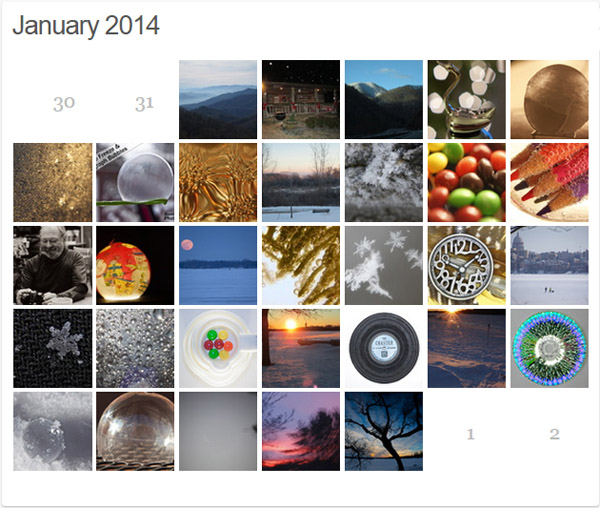
365project, daily photography

You could commit to a specific plan or subject, or keep it more open. You might share your daily photographs on a blog or with a 365 project group, or keep them private. The focus is on pushing yourself to use your camera each day and to see where that journey leads you.

The Benefits of Daily Photography

Improvement requires effort, and effort requires time and dedication. Daily photography is one avenue for committing the time and dedication necessary to improve your photography. It keeps photography in the forefront of your mind and pushes you to innovate and try new things. Personally, I can only spend so many days staring around my apartment for inspiration before I kick myself into gear and head out to find something new. Committing to daily photography got me off my couch and out into the world, far more often than I would have done otherwise.

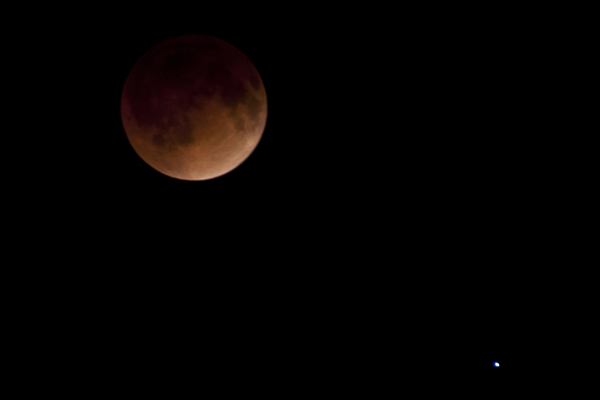
eclipse, moon photography, full moon,

Daily photography forces you to expand your repertoire. Perhaps you got hooked on photography while traveling, because you had a child, or you wanted an avenue to express yourself creatively. Daily photography will push you beyond that initial interest and help you explore new avenues and subjects.

You likely cannot travel somewhere new every day, so you may find a new appreciation for the mundane. You may have taken your umpteenth portrait of your kids, so you start seeking out the tiny details of their life, or the unposed moments. You may find the challenge of expressing yourself daily leads you to try new techniques, or a new way of processing your images. Regardless, the day-in and day-out demands of daily photography will push you to expand.

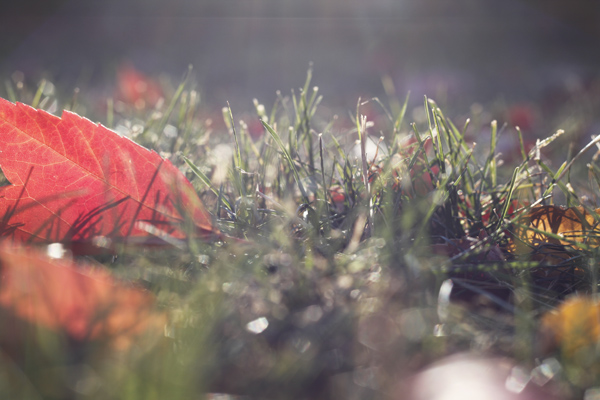
autumn, fall, autumn leaves, leaf, bokeh

Daily photography can also help you connect to the seasons and the changing rhythms of your days, weeks, and months. You may start to notice how the first signs of autumn are creeping in, and the greens of summer are fading. You may realize how much faster the light is fading, or how much later you can appreciate the sunrise. Daily photography can help center you in this moment of time.

When shared in a community, daily photography is even better. Seek out a group of like-minded (or even unlike-minded for a real push) photographers willing to give and receive feedback. Ask for a challenge, or share a risk you took in your photography. Getting real feedback (not just accolades from your Facebook feed) can lead to real growth. Sharing in a community can also offer a level of encouragement and support to keep you motivated. Read more about daily photography communities in Jumpstart Your Photography: Start a 365 Project.

The Downsides of Daily Photography

Make no mistake, daily photography is a huge commitment. You may find yourself up late, haphazardly shooting a frame or two of your shoes, or your snack before falling into bed, simply to have photographed something. You may feel like your creativity is stifled by the daily demand of coming up with something new.

candy, closeup, color, skittles

Doing daily photography can also takes its toll on your friendships and relationships. You want to be careful that every trip, every outing, every moment does not become an excuse for a photo tour, or you may find the enthusiasm of your biggest supporters lagging. You do not want your children, spouse, friends, or even pets, to come to dread your camera. Always take into consideration the feelings of others when decided what, and when to photograph.

You may find that you feel constantly behind, between the combined demands of taking photographs daily, organizing and processing those photographs, and sharing or commenting on the images of others. You may find that the “have to” feeling overpowers the love and joy of photography for you, turning a passion into more of a chore. Burning out is no way to build up your enthusiasm.

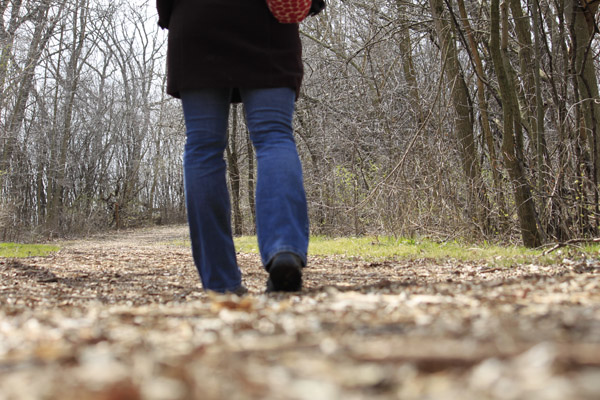
walking, selfie, self portrait

Daily Photography: Yes or No?

Personally, I started a 365 project in January of 2011, which I continued for just shy of 1200 days (you can view it here at Archaeofrog). After more than three years of daily photography, I was ready for a break. But, on the other hand, I find myself missing much of the push and creative drive I received from my project.

There are many ways to commit yourself to photography. If a 365 project sounds too intimidating consider a 52 weeks project, with a focus on taking at least one photograph each week instead of every day. Or start a shot list of styles or specific photographs that you want to capture. Make it your mission to work your way through the list when you have the time and inclination.

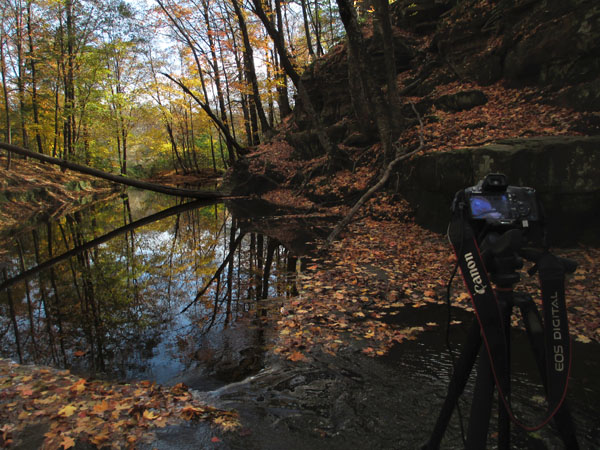
fall, autumn, photography, tripod, setup

You could plan a photography weekend or day trip. Set aside some time to visit an interesting location, invite a friend out for a photo shoot, or pencil in that upcoming full moon or meteor shower on your calendar. Find a way to make photography work for you by making time for it.

What works best for you? Are you a daily photographer, or have you ever participated in a 365 project? Share your thoughts about the benefits or downsides in the comments below.

The post Daily Photography Pros and Cons: is it for You? by Katie McEnaney appeared first on Digital Photography School.


Digital Photography School

 
Comments Off on Daily Photography Pros and Cons: is it for You?

Posted in Photography