RSS
 

Posts Tagged ‘Photography’

Weekly Challenge of Bird Photography

04 Oct

Earlier I shared an amazing bunch of photos of birds. Here’s a couple more for you:

Susan

By Susan

Farrukh

By Farrukh

Weekly photography challenge – bird photography

Now it’s your turn to go photograph some of our fine feathered friends, the birds. Keep in mind you don’t need to go farther than your own backyard to find birds, or the nearest park. If flying ones are too fast, how about a chicken? Visit a local farm to photograph some barnyard fowl.

Need some help with bird photography tips?

  • Bird Photography Tips – How to Make Your Bird Photographs Stand Out
  • Bird Photography Tips for Beginners
  • Guide to Attracting Critters to Your Garden for Backyard Wildlife Photography
  • Tips for Photographing Birds in Flight

A few more bird images to get you started:

Nigel

By nigel

Howard Ignatius

By Howard Ignatius

Doug Brown

By Doug Brown

Davejdoe

By davejdoe

Share your bird photography

Simply upload your shot into the comment field (look for the little camera icon in the Disqus comments section as pictured below) and they’ll get embedded for us all to see or if you’d prefer upload them to your favourite photo sharing site and leave the link to them. Show me your best images in this week’s challenge.

The post Weekly Challenge of Bird Photography by Darlene Hildebrandt appeared first on Digital Photography School.


Digital Photography School

 
Comments Off on Weekly Challenge of Bird Photography

Posted in Photography


3 Simple Ways to Create Stunning Eyes in Your Portrait Photography

03 Oct

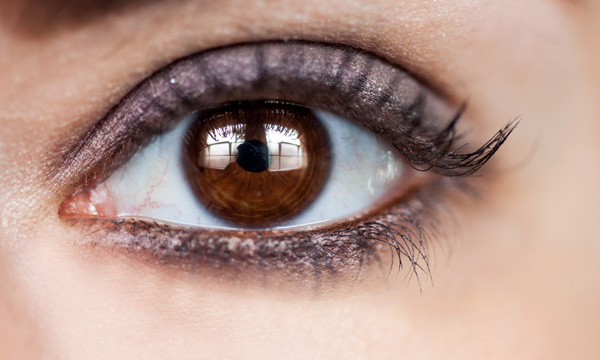
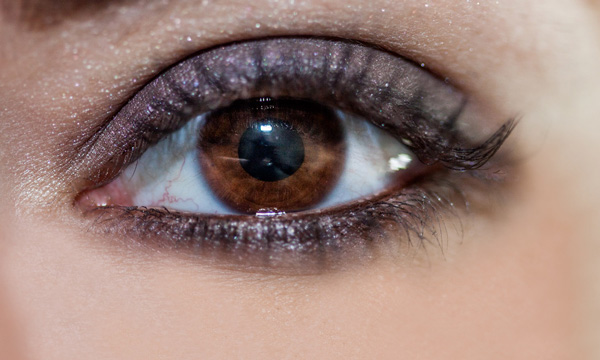
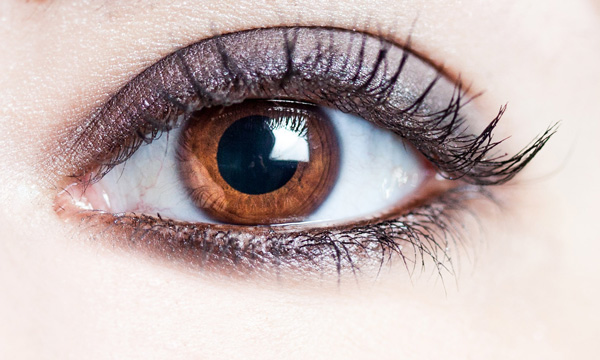
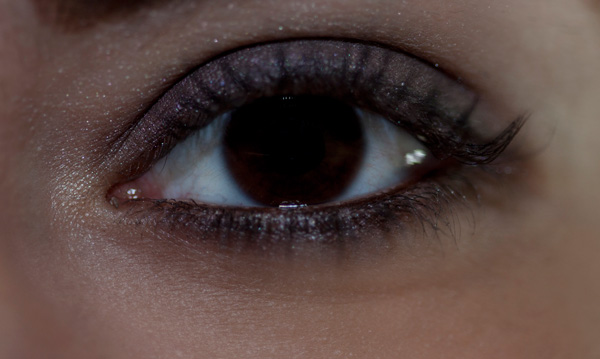
EYE MONTAGE

Image model credits, clockwise from top left: Chris Milligan/Fremantle Media, Rachael Lever, Danny Spannerz/East Brunswick Tattoos, Tiffany Diaz

“Here’s looking at you, kid.”

Reclusive Hollywood legend Marlon Brando would always close his eyes when paparazzi tried to take his photo. He knew that without his eyes open an image wasn’t worth publishing.

The eyes are the single most important feature of any portrait. Beautiful eyes can make even the dullest portrait mesmerizing. Poorly lit, out of focus eyes, or eyes that lack connection, will weaken the impact of a portrait.

Here are my three favorite techniques to make eyes really stand out in your portraits.

#1 – Light

Light makes photography. Embrace light. Admire it. Love it. But above all, know light. Know it for all you are worth, and you will know the key to photography.” – George Eastman

Eyes look best when they are lit well, with beautiful catch light. Catch lights are the reflection of a light source in the eyes. The size, shape, and brightness of your catch lights depend on the light source you use.

WindowLight

Two large, frosted windows from my studio create beautiful catch lights. Model: Bryana Karanikos

Naked Flash on camera

Diffused flash on-camera creates a slightly softer, rectangular catch light.

Med Soft off camera

Medium softbox, off-camera, positioned at 2 o’clock gives a soft, natural catch light.

ChasingLight 2250

Poorly lit eyes without catch lights look cold, and a bit creepy.

#2 – Expression

You are what you think. All that you are arises from your thoughts. With your thoughts you make your world.” – Anon.

EyesBA

In the image on the left (above), Tiffany’s eyes are cold, and she looks nervous. After I gave Tiffany a visualization exercise, her eyes appear warm, confident, and connected (right image above) Model: Tiffany Dias

How you communicate, connect, and direct your model is key to capturing a great expression in the eyes. If your model’s smile isn’t genuine, his or her eyes will appear cold and dull-looking. If your model is nervous or distracted, this too will be reflected in his or her eyes.

One technique I use to create a great expression is visualization. I ask my model, If you could be anywhere doing anything right now, where would that be? Tell me about that moment. Who is there? What does it feel like? Once they are in the moment of their visualization, their entire body language and expression changes.

#3 – Post-production

Be willing to give that extra effort that separates the winner from the one in second place.” — H. Jackson Brown Jr.

Post-production can lift your images from good to great, when it’s done well. The key to great post-production is not overdoing it. It’s easy to get excited with all the tricks and enhancements that post-production software offers. It’s addictive and much like opening a jar of Nutella – very difficult to control yourself once you’ve begun.

I try and use the overnight rule when it comes to retouching. Once I’ve worked on an image, I won’t look at it again for at least a day. I find my eyes constantly adjust to the modifications I’m making, so it’s more difficult to see when I’ve gone too far (much the same way I dressed in the ’80s).

Here’s a step-by-step technique to enhance eyes using Adobe Lightroom:

EYESBP 10

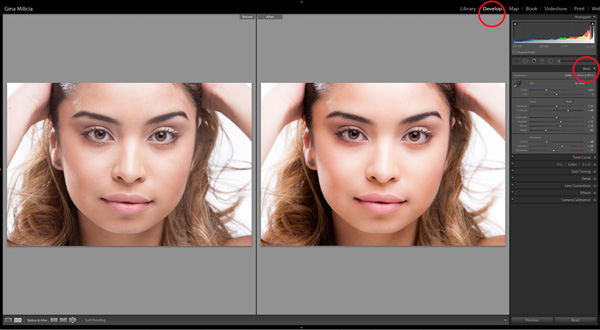
Before and after: I’ve used Lightroom to make the eyes sharper and brighter and enhanced their color.

a) Import your image into Lightroom and use the basic development panel to develop the shot. In this case, I’ve used one of my own beauty presets.

EyesBP 2

EyesBP 2B

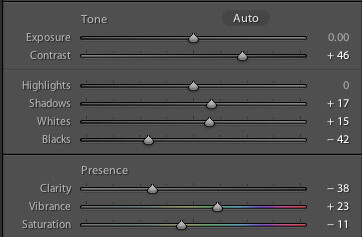
Here are the basic adjustments I’ve made for this image.

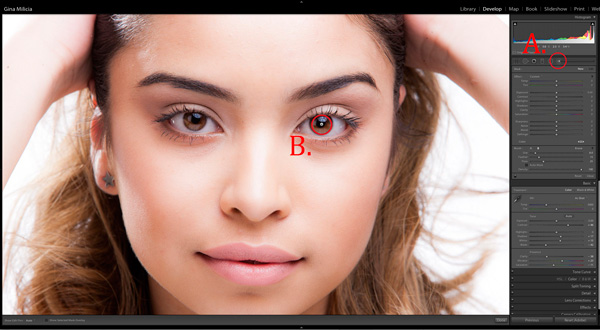
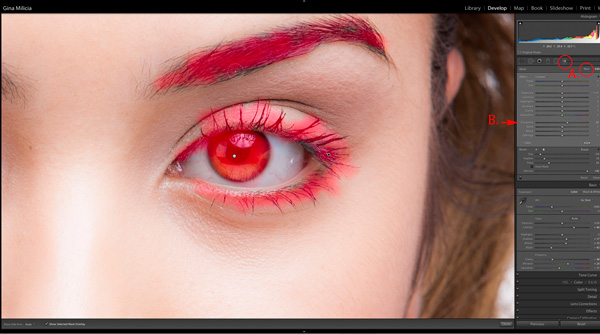
b) Zoom in to the eyes (B.) and select the adjustment brush tool (A.) You can also select the brush using keyboard shortcut K. See image above.

EyesBP 4

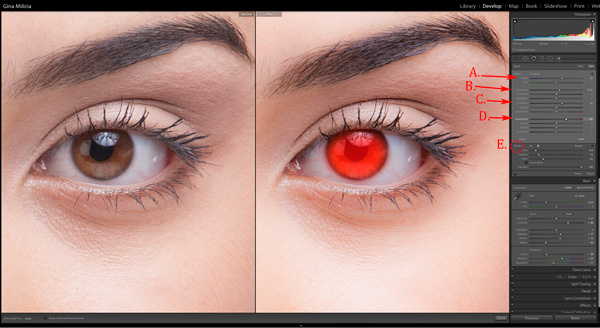
c) The next step is adjusting the eye color:

EyesBP 5

  • Increase the temperature slider (A.) to make the eyes appear warmer in tone.
  • Increase the exposure slider (B.) to brighten the iris.
  • Increase the shadow slider to bring more detail into the shadow area (C.)
  • Increase the sharpness slider to make the eyes appear more detailed.

Adjusted only the colored part (the iris) of her eye (highlighted in red) and set the brush to have a slight feather and low flow so you can build up your adjustments slowly.

d) Next, select a new adjustment brush (A.), increase the sharpness slider (B.) by +22 and paint over the colored part of the eyes, eyelashes, and eyebrows. This will really make the eyes stand out.

EyesBP 6

e) Finally, select a new adjustment brush. Set the exposure slider to -29 and increase the clarity to +10. Paint around the edge of the iris. This will darken the area slightly and give the eye more definition.

f) The final image has been imported into Adobe® Photoshop®, where I have done a basic skin retouching to remove a few small blemishes.

EyesFINAL

I’d love to hear about your techniques for enhancing eyes and see some examples.

Gina has a new dPS ebook just released – Portraits: After the Shot – check out out here!

The post 3 Simple Ways to Create Stunning Eyes in Your Portrait Photography by Gina Milicia appeared first on Digital Photography School.


Digital Photography School

 
Comments Off on 3 Simple Ways to Create Stunning Eyes in Your Portrait Photography

Posted in Photography


Five Things You Need to Know Before Starting a Pet Photography Business

02 Oct

Pet photography is a fast growing and super fun genre of photography, and it’s awesome to see so many people wanting to celebrate animals and the role they play in our lives! But how do you turn your passion for animals and photography into a thriving and successful business? What do you need to consider before setting up your business? Today I’m sharing the knowledge I’ve gathered over the last three years to help you prepare yourself for what is the best job in the world.

Image Nine

#1 Do you really love animals?

Pet photography is messy, dirty, and at times incredibly frustrating work. You need to be comfortable with being jumped on by Great Danes, pawed by pugs, and scratched by cats. You need to be happy crawling through the mud, and bending and stretching at weird angles.
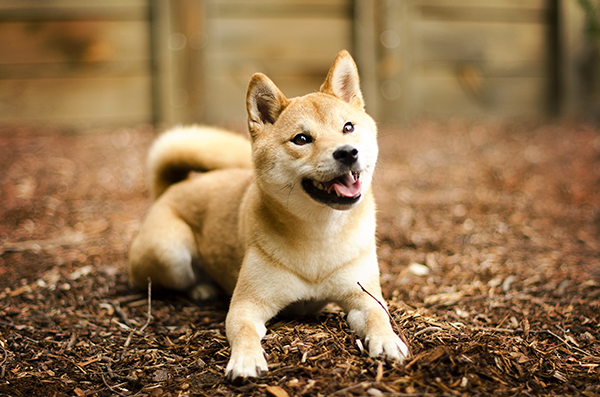
Image Six

This was shot lying on the wet ground on a freezing cold morning – but totally worth it!

You also need to be exceptionally patient. Often at the start of a shoot your subject will spend about half an hour running around like crazy, and jumping all over the place before finally calming down enough for you to photograph. You also need to accept that you will never have that much control over your subject – try telling a puppy to sit still and tilt his head 45 degrees!

At some point, your camera equipment will get covered in drool, your shoes will get peed on, and you will end up ruining several pairs of pants. So if you don’t really, truly, love animals, you are going to find the whole process miserable and give up very quickly.

#2 Is there a market for it?

I am lucky enough to live in a city (Melbourne, Australia) that has the highest rate of dog ownership in the country. People here absolutely adore their pets. There are high-end pet stores, hundreds of dog friendly cafes and parks, and so many Pet Expos that I have lost count. But that’s not always going to be the case for your area, so do your research. Some good things to find out are:

  • What’s the rate of pet ownership? Your local council is a good resource.
  • What is the general attitude towards pets? Do people see dogs as “just dogs” or are they part of the family or substitute children?
  • Are there lots of pet friendly cafes, restaurants, and parks? What are the pet shops in your area like? Do they sell just the basics or are they a bit fancier?
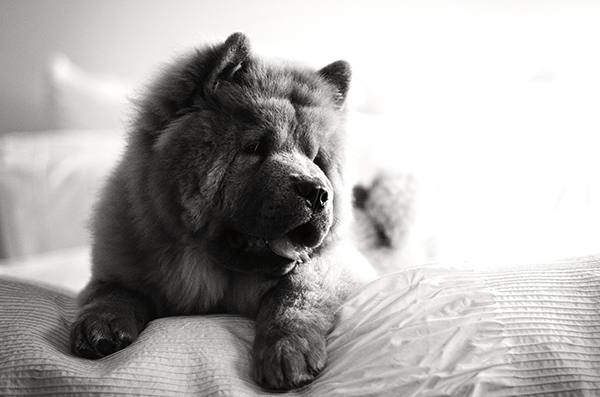
Image One

Kimbo is most definitely part of the family.

It’s also a good idea to factor in things like the amount of disposable income the average pet owner has, and the general cost of living. One really handy tip – if the area you are in isn’t particularly pet friendly, focus your marketing on areas further afield.

#3 Do you have the right equipment and know how to use it?

Pet photography is similar to sports and wedding photography in the sense that if you miss a moment, it’s not likely to be repeated. We all know that equipment doesn’t make the photographer, but at a minimum you want to have a DSLR, prime lenses that autofocus (the 50mm f/1.4 is a great place to start), a good quality zoom lens, high-speed memory cards, and an speedlight you can use off-camera if necessary.
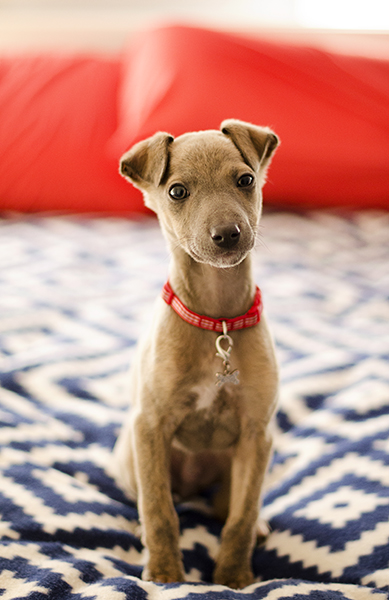
Image Two

Proof that with the right equipment, you can make it look as if a puppy is standing still.

Get to know your equipment back to front before you start charging for your work. Figure out how to change your shutter speed, aperture, and ISO without looking, and know how to change your lenses quickly. Some of the best shots come without warning, and if you’re staring at your camera wondering why something isn’t working, you’ll miss the shot.

As you know, practice makes perfect, and the only way to get really good at photographing pets and knowing your equipment is to find the most badly behaved animals you can and shoot, shoot, shoot. There’s no point in using well behaved, well trained dogs, because there are so many that aren’t. You know the friend who has a dog that jumps all over the furniture and runs in circles constantly? The friend with the cat who hates everyone? Practice with these sorts of pets and your camera will become like an extension of you before too long.

#4 What’s your style?

You know you’ve made it as a photographer when people can pick out your work from a line up. Having a distinct style is so important for setting you aside from the crowd. Here are some things to consider to help you find your style:

Are you a natural light or a studio photographer?
Do you like clean, clear backgrounds that don’t distract from the pet, or do you like contrasting backgrounds that add to the photo?
Do you like posed shots or natural?
How do you feel about styled shoots? Using props?
Do you want a soft or high contrast feel to your shots?
Do you like obvious post production or a more subtle approach?
Do you want to incorporate the pet owners in the shots?

When I started my business, I saw a gap in the market for really beautiful, shallow depth of field shots of pets. I also happen to love shooting with my lenses wide open, so that became my style. It has been refined over the years, but people hire me because they want beautiful, close up, emotive shots with a sense of warmth and humour to them. I only shoot in soft natural light, no direct sun, and I don’t do high action shots such as agility shows. I also very rarely photograph people with their pets, because it’s not my thing.
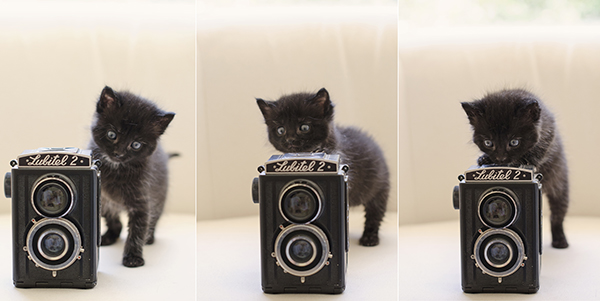
Image Four

Props can be an awesome way to bring a bit of humour to your shots.

Remember – do what you love and what feels good for you. Copying another photographer’s style is a waste of time and won’t help you grow.

#5 How are your animal handling skills and knowledge?

This is such an important thing to consider before you start your business. Safety (both yours and your subject’s) is extremely crucial. At best, you can be opened up to a law suit, at worst, you could seriously injure or kill someone’s pet.
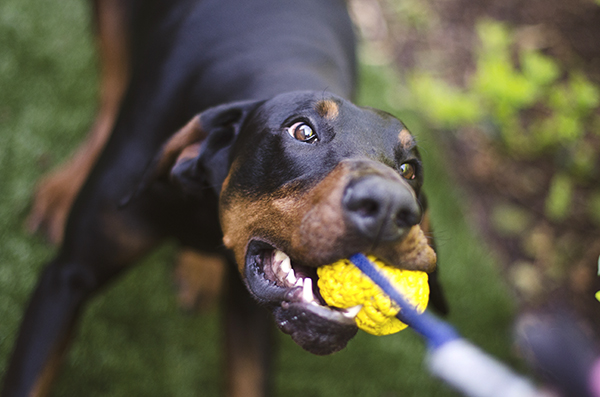
Image Eight

When you’re dealing with 40 kilos (88 pounds) of Doberman, you want to be confident with your animal handling skills.

Be honest with your skill level. For example, I have grown up and volunteered around cats my entire life, and I’m very comfortable with them. I also know their body language, signs of stress, and how to play with them properly. But I didn’t know nearly as much about dogs. I volunteered for a shelter walking dogs, taking photos, and doing general handling, which helped me a huge amount. I also did some basic dog handling courses, as well as reading up on different breeds and their personalities. I’m now at the stage where I’m 100% comfortable dealing with all breeds and sizes of dogs.

Image Three

Ellie is fourteen years old, so I was very mindful of her range of mobility. She was happiest lying on her bed, so I shot around this rather than forcing her to stand up.

Even if you grew up with dogs, it’s a great idea to read up on the different breeds and their traits. This will help you so much when you are shooting, and by knowing what makes a certain breed tick you’ll be able to produce some great pictures.
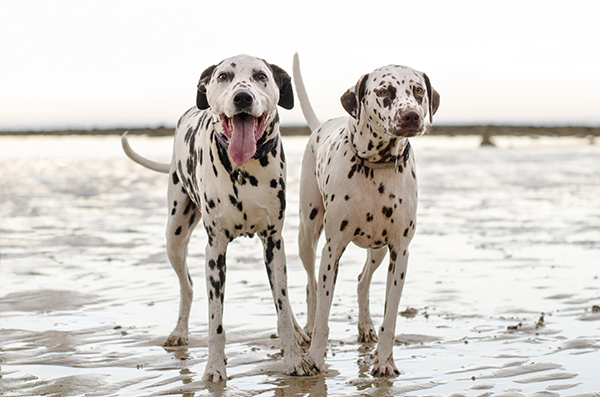
Image Five

Ralph and Gidget were on lead for this session, and the leashes were removed later in Photoshop. We had so much more fun knowing that there wouldn’t be any unforeseen accidents.

Unless you’re shooting in a fenced in, off-lead area, it’s better to be safe than sorry and keep the dog on a long lead. That way you avoid any accidents, and you can always edit leads out later in Photoshop (a big secret of pet photographers). Never, ever force a dog or cat to do something physically uncomfortable.

Lastly, one final safety tip – always talk to the owner BEFORE you start shooting. Find out as much as you can about their pet. That way, if certain things terrify or stress them, you know what to avoid. Always check for food allergies before offering treats!
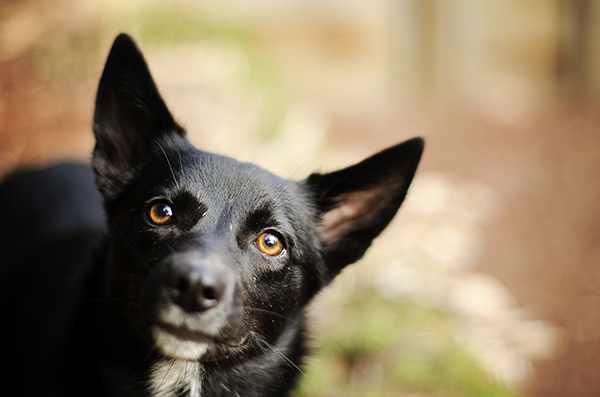
Image Seven

Did someone say treats??

I hope that this article has given you some things to consider – and most importantly, don’t forget to have fun!

The post Five Things You Need to Know Before Starting a Pet Photography Business by Erin McNulty appeared first on Digital Photography School.


Digital Photography School

 
Comments Off on Five Things You Need to Know Before Starting a Pet Photography Business

Posted in Photography


3 Ways to Combat Photography Boredom

01 Oct

Boredom is one of the most powerful and inescapable forces on this world and photography is not immune to it. A bored photographer will likely stop to photograph or start producing boring images, which in turns will bore the viewer or client, who will likely stop following or buying the photographer’s boring work. Fighting boredom is, therefore, an absolute priority.

Photo6

When you specialize in a certain kind of photography, after a while you will probably master it. You will know what lens and settings best suit the scene you have in front of you, to get this or that particular mood or effect in the final image. This is all as good as gold, don’t get me wrong, but at the same time you are also building up your comfort zone, together with your style, and producing a solid stream of consistent images.

The downside of staying too long in the comfort zone is that you may get bored; bored of the subjects you are used to photographing or bored because of lack of ideas. It is at this time, when you are looking at your portfolio and all you get is that same old same old vibe, that you need to step outside your comfort zone. Do something different, either by stepping into a new field or by changing the way you look at the subjects you are already familiar with. In one way or another, you have to bring some sparks back into your work, something that let’s you say wow once again when reviewing your own work.

I am an enthusiast urban and landscape photographer. If you are like me, chances are you have an enthusiast kit or semi-pro gear, built for the kind of photography you are interested in. Stepping outside your comfort zone and embrace a whole new photographic genre can be troublesome, both economically and for your self-esteem. Moving from landscape to portraiture, for example, may require you to buy flash guns, triggers, soft boxes and diffusors, and zoom or prime lenses that are probably not in the regular Joe’s (the landscape photographer) equipment. Then there is the self-esteem part. Chances are you will produce nothing new in the field and, if you compromise too much with the equipment, you may produce nothing more than an average portrait of a model. I think a more interesting way to step out from your comfort zone is to remain in your regular field but spice it up by adopting a different approach. This way you have the advantage of knowing the subject, and the rules to do this, before start twisting and bending them in a new and refreshing way.

Three easy ways to fight back photography boredom

Go mobile

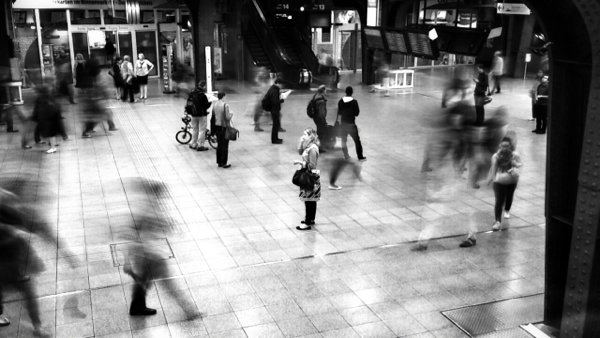
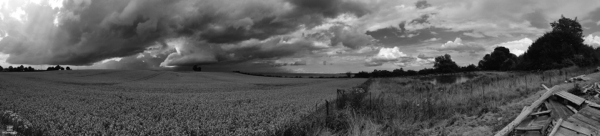
Today’s mobile phones are equipped with decent cameras the can easily compete with many point and shoot cameras, with the plus side of having tons of apps to add extra functionalities (such as: slow shutter speed, in-phone HDR, filters and effects, panorama mode, burst mode) along with the ability to edit your photos on the fly. If you have one of these devices, use it to photograph your usual subject. It is challenging because of the intrinsic limitations of camera phones with respect to DSLR or mirrorless systems, but the results can be just as rewarding. It is a bit like forcing yourself to shoot with a single prime lens (forget the zoom of a camera phone). Having quite a short (35mm equivalent) focal length (the iPhone 5 is about 31 mm equivalent) makes camera phones suitable for landscape and street or urban shooting. Of course, you can alway zoom in and out by walking farther away or toward the subject. Here some photos taken from an iPhoneography project (where photos are taken and edited exclusively on my iPhone).

Photo1

Using an app to control the shutter speed, allows you to be creative with crowded places like stations.

Photo2

Panoramas are great to capture the full drama of a storm rushing in over the countryside.

Photo3

HDR apps can extend the dynamic range of your phone’s camera.

For my mobile phone tips check out the dPS eBook: iPhone Photography or 8 of the Best Smartphone Accessories.

 Play with the invisible light

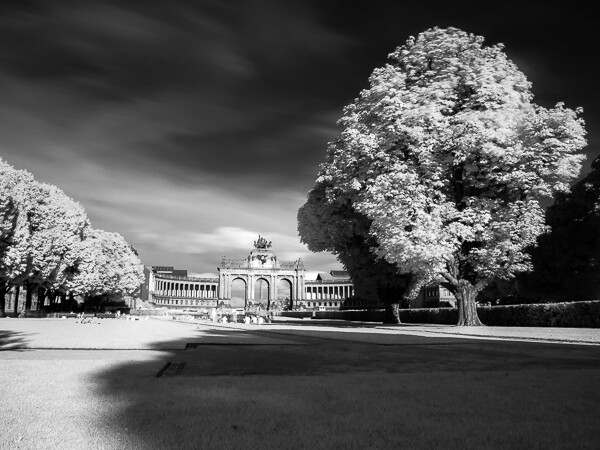
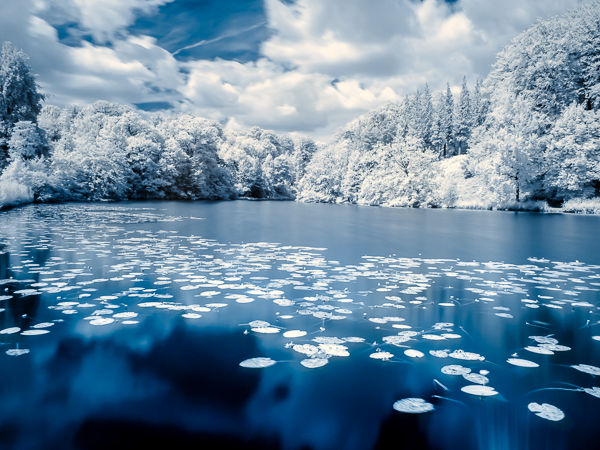
Infrared photography was a revelation for me. If you are not living or travelling in the great wilderness but are based in, say, the same-old-same-old sleepy European countryside, you can forget about all those great and dramatic scenes you love which are featured in many magazines like National Geographic. Nevertheless, if there’s something that can add a spark to an otherwise boring countryside or city garden it is to capture the scene in infrared. This because infrared light is absorbed and reflected by different subjects quite differently than visible light. For example, green grass and leaves will appear white in an infrared photograph, while clear blue sky and water will be rendered almost pitch black. The result is usually quite surprising. Your photo will likely capture the viewer’s attention and, because of the intrinsic challenges of infrared photography, will spark your enthusiasm as well. When you start with infrared photography, chances are you will photograph trees and puffy clouds, but you may soon be asking yourself; okay, what else? You will probably start to photograph other objects in infrared, like the city, or even people.

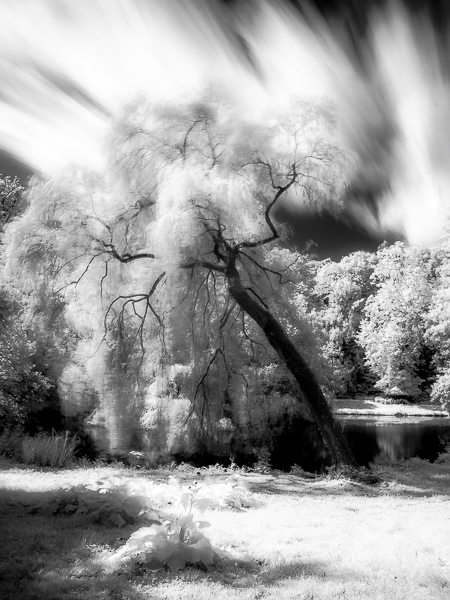
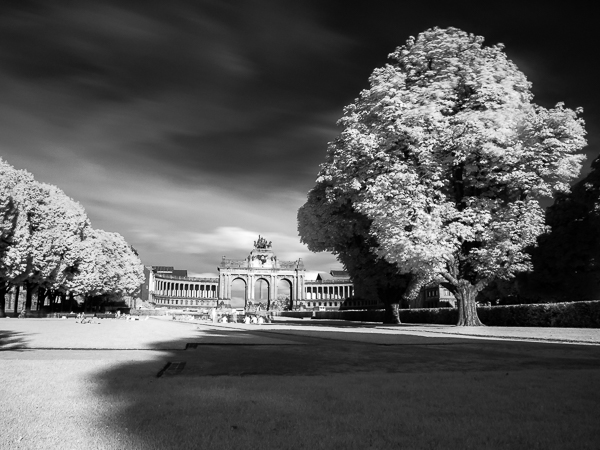
The best and cheapest way to try out infrared photography is to already have a camera that is sensitive, to some extent, to infrared light. Manufacturers place a filter right in front the sensor to cut infrared light, but if you are in luck, it will not do a perfect job. If you can see and photograph the light coming from the infrared emitter of a TV remote control, chances are you are good to go. Next, you will need an infrared filter to place in front your lens. Ideally this filter should cut all the visible light while letting only the infrared pass through. A good filter to start with is the HOYA R72, which allows also some visible red light to pass, making it easier to frame and compose your shot. One downside is that your shutter speed will be greatly reduced. Under the bright midday sun, you may need an exposure of a few seconds in order to get a properly exposed image. This means hand-held shots are not possible and a tripod is required. A welcome side effect is that a moving crowd in front your subject will be almost, or completely gone. Also, if you are dealing with trees, in particular if they are close to you, it is best to photograph with little or no wind, so as to avoid blurring them too much. All these limitations aside, great black and white and false-colour infrared scenes can still be captured with out-of-the-box cameras and with little financial investment. Here few of my best infrared photographs using my unmodified Panasonic Lumix DMC-GF2 with a HOYA R72 filter screwed on the Panasonic 14-42mm kit lens.

Photo4

False-colour infrared photography of a pond in a park near Brussels. A quite common view is turned into a very interesting winter-like scene.

Photo5

Fast moving clouds and an interesting tree can make for a great infrared image.

Photo6

Infrared photography can also be successful in the city like this image of the Triumph Arch in the Parc du Cinquantenaire, in Brussels. The moving crowd disappeared because of the long exposure emptying the scene.

For more information on shooting the processing infrared with your camera read these dPS articles:

  • How to do Surreal Digital Infrared Photography Without Expensive Gear or Camera Conversions
  • 5 Creative Ways to Process Infrared Photographs in Photoshop

Introduce distortion

With a bit higher financial investment, you could consider buying a fisheye lens (please avoid fisheye lens converters because the infrared image quality is usually poor). Invest in a real fisheye lens; the fully manual (and relatively cheap) Samyang, Rokinon, and Vivitar lenses are in my opinion, the best way to start out. They are cheap, small, super sharp, relatively fast, with a great field of view. You can set the focus around the two meter mark (6.5 feet) and never touch it again as long as you stop down (use a smaller aperture than wide opened) your lens a bit.

Fisheye lenses produce very particular images. I suggest you to read about them and research as much as possible before buying one; see if the images you can create with a fisheye lens suit your photographic taste. I have recently purchased a Samyang 7.5mm f/3.5 for my Lumix and it simply blew me away. I got this lens only a few weeks ago, but boy I love its compactness, lightness, how sharp it is, and the huge field of view (15mm equivalent on full frame) at a fraction of the price of an ultra wide angle lens. Of course, this comes at the cost of having some distortion, but if you like it and you can work it to your advantage, it is a great deal, and is a killer lens for travel photography too.

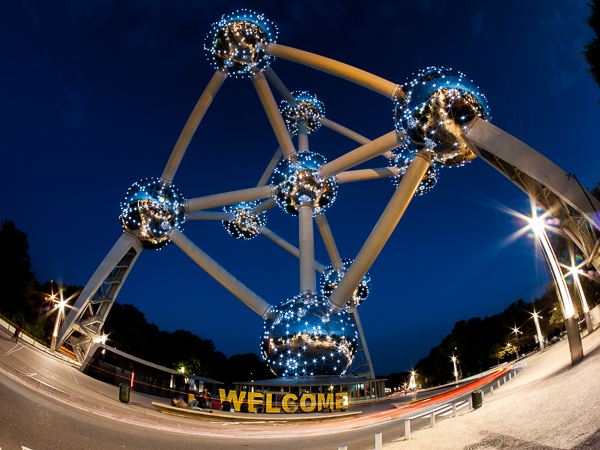
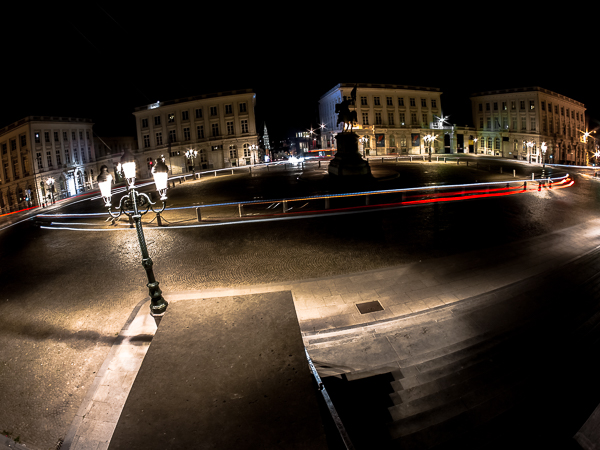
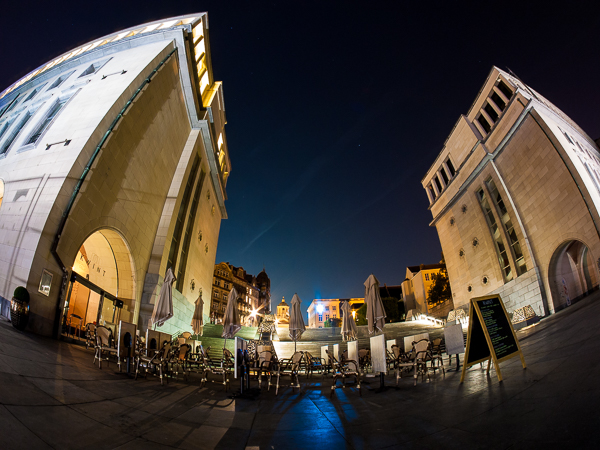
Work your fisheye lens – tilt it upward to have a concave horizon and tall buildings bending and looming over the scene. Tilt it downwards to have a convex horizon, accentuating Earth’s curvature. Keep the horizon levelled or tilt the camera to see how the scene changes. Get down low by kneeling, or up high by raising the camera on a high vantage point (yes, even mounted on your monopod held high above your head). Accentuate distortions, or reduce them keeping straight lines towards the edges or towards the centre of the frame. Notice how objects at the edges of the frame are magnified with respect to those at the centre. Mix and match those distortions to create some unconventional, striking, and definitely not boring photographs. Below are some examples from my first photo walks in Brussels (Belgium), a very touristic city with very famous and well photographed landmarks.

Photo7

The Atomium: huge monuments and landmarks can easily be squeezed into the frame and be portrayed in a quite a dynamic way.

Photo8

Frame a busy roundabout by night from a high vantage point to capture great urban merry-go-rounds.

Photo9

Thanks to the fisheye’s distortions, even an empty square becomes interesting.

Bonus tips

  • Get out during unusual times of the day (dawn and night)
  • Experiment with HDR and exposure fusion for more dramatic or gritty and punchy image
  • Go out with bad or stormy weather to take advantage of the dramatic sky

Do you have any other tips for shaking it up and combating photography boredom? Share in the comments below.

The post 3 Ways to Combat Photography Boredom by Andrea Minoia appeared first on Digital Photography School.


Digital Photography School

 
Comments Off on 3 Ways to Combat Photography Boredom

Posted in Photography


Mastering Family Photography: What You Need to Get Started

29 Sep

One thing that I shoot my fair share of is family pictures. I love the family dynamic so much… the “over primpers”, the “get me out of here’s”, the “I’ll be in the picture, but I’m going to ruin every single shot”, the “smile or I’ll beat the snot out of you later’s” and the “gee, we’ve known that we Continue Reading

The post Mastering Family Photography: What You Need to Get Started appeared first on Photodoto.


Photodoto

 
Comments Off on Mastering Family Photography: What You Need to Get Started

Posted in Photography


Street Photography Video Tips With Valerie Jardin

29 Sep

I have been a regular co-host or guest on the popular This Week in Photo podcast. Recently they launched their new website and are going to be rolling out new spin off podcasts including one by our very own dPS writer Valerie Jardin on street photography. There is also one by Doug Kaye on gear, and interviews done by the host of TWiP Frederick Van Johnson. You can check out all their shows here.

In this first teaser Valerie and Frederick chat about various things regarding street photography, and traveling with your gear.

You can see more articles on street photography here:

  • Using Humor In Street Photography
  • 7 Street Photography Tips and Exercises to Try This Season
  • How to Create Amazing Urban Landscape and Street Photography Images
  • Practical Tips To Build Your Street Photography Confidence
  • How to Approach Street Photography in 12 Easy Steps
  • 103 Things I’ve Learned About Street Photography
  • 8 Things You Should Know if You are Dating a Street Photographer

You can also check out my last appearance on TWiP when we discussed the new iPhone6 and the newest releases from Canon and Nikon.

The post Street Photography Video Tips With Valerie Jardin by Darlene Hildebrandt appeared first on Digital Photography School.


Digital Photography School

 
Comments Off on Street Photography Video Tips With Valerie Jardin

Posted in Photography


4 Ways to Add a Sense of Motion to Your Urban Photography

27 Sep

It is great to walk around a new city, or a new part of a familiar city, and just explore. You never know what will be on the next block or around the next corner. When you bring your camera along with you, you can often capture a few nice skyline photos, some interesting pictures of buildings, and perhaps some street photos of people going about their daily life.

CityMotion1 Panama

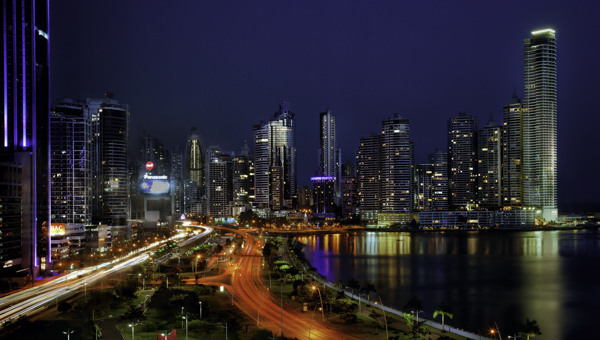
But you know what is often missing from these photos? A sense of movement, and that’s what cities are all about. Cities are not just collections of buildings. They are dynamic environments full of hustle and bustle. The trouble, of course, is that it is hard to capture this movement in a still image.

So I want to show you a few techniques for adding that sense of motion to your urban pictures – how to capture the city in motion

#1 – Add streaking headlights and taillights

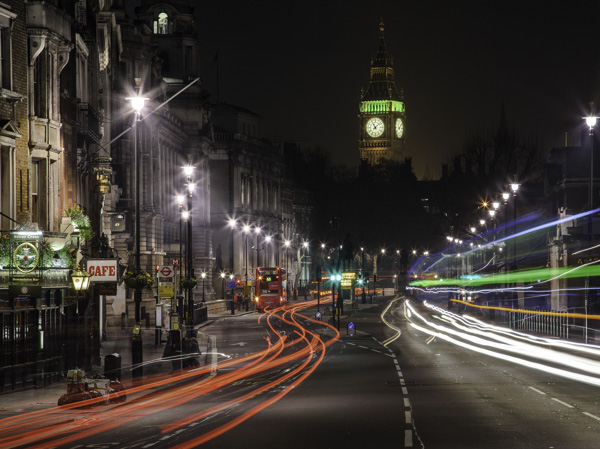
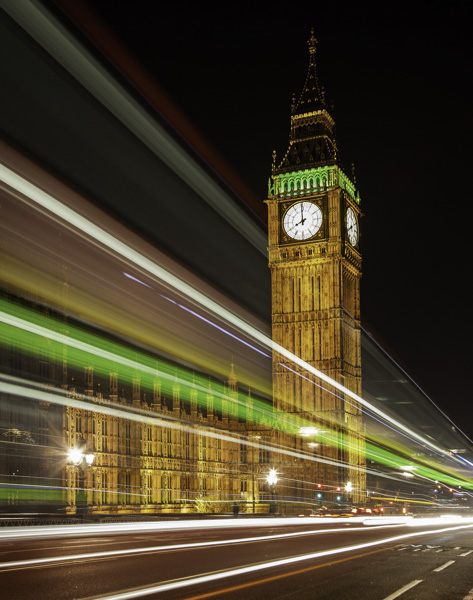
A common way you can add movement to your urban photos is by including streaking headlights and taillights. But don’t stop with capturing only the streaking lights, without regard to capturing the city. Streaking lights can work really well as an accent to a photo of your city. In other words, the streetlights don’t necessarily need to dominate the image, but rather just add a sense of movement to the overall image.

CityMotion6 Whitehall

The key to capturing this effect is to set up your shot on a tripod with a long exposure and take shots as traffic moves past you.

CityMotion4 Westminster

There are no set exposure settings because the ambient light is always different. Start with something like a 20 second exposure at f/8 and adjust from there. Try triggering the shutter just before traffic enters your frame. You will probably need to take several of these pictures to make sure you’ve got it right.

#2 – Panning

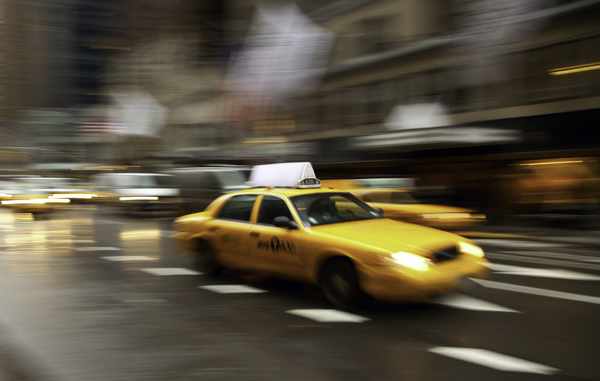
CityMotion3 NYCcab

Another great but often overlooked technique for capturing motion in the city is panning. Panning is where you follow a subject with your camera so that the subject is in focus and reasonably sharp, while the background is blurry and shows a sense of motion.

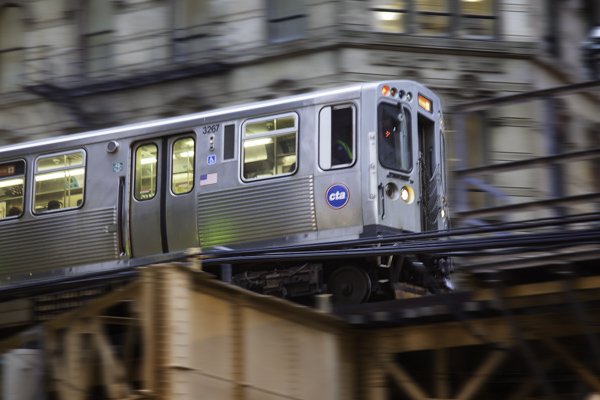
CityMotion11 ChicagoTrain

Panning is great because it doesn’t require a tripod and can’t be done at any time of day. What you do is follow a moving subject with your camera at a moderately slow shutter speed. The best shutter speed for this technique tends to be between a 1/30th and an 1/8 of a second. Since the camera is moving at the same rate as the subject, the subject should be reasonably sharp, while the background will be blurred.

You can use this technique on anything that is moving, whether it be a train, a car, or even a bicyclist or skateboarder. My favorites tend to be the iconic vehicles of the city.

When you get back to the computer, you can accentuate the effect a bit in Photoshop by sharpening your subject a little bit, while at the same time adding a slight blur to the background.

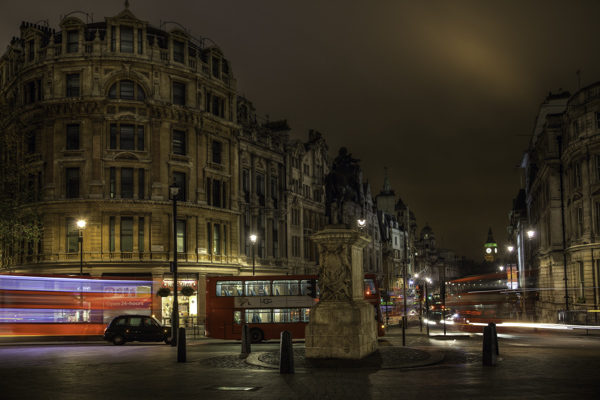
CityMotion5 Trafalgar

#3 – Capture movement of vehicles

When it comes to vehicles, don’t limit yourself to streaking taillights and headlights. It often works really well just to add a slight blur to vehicles in your frame to add a sense of movement. In fact, a lot of times this adds more of a sense of movement than just having lines streaking across the image.

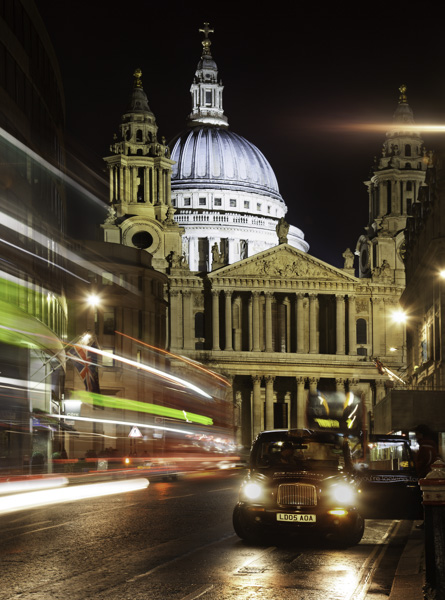
CityMotion8 Ludgate

You will want to use a tripod for these types of shots. It is important that everything be sharp except the blurred vehicle. To capture the movement, a shutter speed of just a few seconds works really well. You will probably have to take several shots to get a good one.

#4 – Capture the movement of people

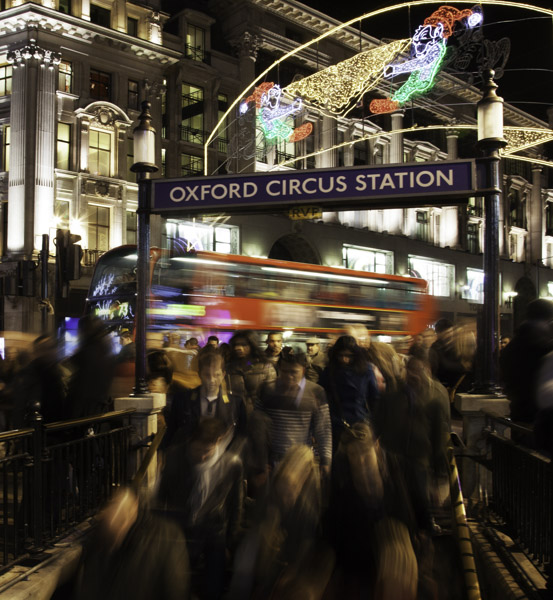
CityMotion2 OxfordCircus

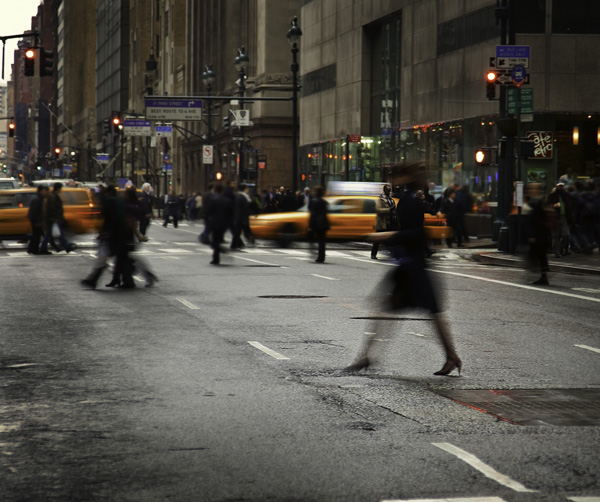
The final way to capture movement in an urban setting is by capturing people in motion. This is used much less than the other techniques, largely because it is harder. People don’t have lights that streak across the screen. In addition, you have to get closer and it is more personal. But when done well, the results can be dramatic.

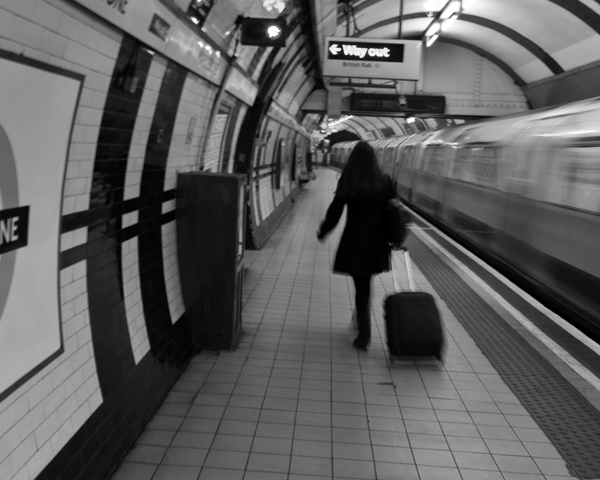
CityMotion9 Tube

The best way to go about it is to set up shop where you know people will be walking past you. Train stations, subway stations, and other places where people rush in and out, work really well for this. If you can use a tripod to keep the background sharp, do so.
The shutter speed will need to be a bit slower than what you use to capture moving vehicles because people move so much slower. Typically a shutter speed of about 1/2 to 1/10th of a second works pretty well.

This is another one you can do any time of day, any day of the year. It is a good thing to work on when conditions are not right for other photography you want to do.

CityMotion7 NYClady

Conclusion

Including movement can add a missing element to your urban and street photography. It is also something that you can get out and do on any particular day or night. Plus it requires no special gear. If you have a camera and a tripod, you are good to go.

So head out and try some of these techniques, and if you have any questions about it just leave it in the comments below.

The post 4 Ways to Add a Sense of Motion to Your Urban Photography by Jim Hamel appeared first on Digital Photography School.


Digital Photography School

 
Comments Off on 4 Ways to Add a Sense of Motion to Your Urban Photography

Posted in Photography


Weekly Photography Challenge – Starry Nights

27 Sep

Earlier today I shared a collection of starry night photos.

Photograph Fossilized UFO by Sakhr Abdullah on 500px

Fossilized UFO by Sakhr Abdullah on 500px

We have some good articles on shooting the stars and night photography here on dPS including;

  • How to Photograph the Stars
  • Photography Under the Stars
  • Down and Dirty Guide to Milky Way Photography
  • Tips for Photographing Star Trails

As you may have guessed you’re going to need these tips because it’s your turn to go out and shoot in this week’s challenge:

Starry nights

Photograph Mt Bromo Under The Stars by Elia Locardi on 500px

Mt Bromo Under The Stars by Elia Locardi on 500px

Photograph Startrails Matterhorn by Stanley Chen Xi on 500px

Startrails Matterhorn by Stanley Chen Xi on 500px

Photograph Stars 1 - Las Vegas Photographer - Ati Nagy by Ati Nagy on 500px

Stars 1 – Las Vegas Photographer – Ati Nagy by Ati Nagy on 500px

Photograph Eternal Loneliness by Stergos Skulukas on 500px

Eternal Loneliness by Stergos Skulukas on 500px

So grab your camera and tripod and get shooting!

Share your starry night images

Simply upload your shot into the comment field (look for the little camera icon in the Disqus comments section as pictured below) and they’ll get embedded for us all to see or if you’d prefer upload them to your favourite photo sharing site and leave the link to them. Show me your best images in this week’s challenge.

Share your starry night images

Simply upload your shot into the comment field (look for the little camera icon in the Disqus comments section as pictured below) and they’ll get embedded for us all to see or if you’d prefer upload them to your favourite photo sharing site and leave the link to them. Show me your best images in this week’s challenge.

The post Weekly Photography Challenge – Starry Nights by Darlene Hildebrandt appeared first on Digital Photography School.


Digital Photography School

 
Comments Off on Weekly Photography Challenge – Starry Nights

Posted in Photography


5 Psychology Studies to Make Your Photography Business More Effective

24 Sep

The vast majority of marketers are not psychologists, but they do know how to apply psychology studies to attract and engage customers. This is not some kind of special knowledge or secrets of the Mayans – it’s quite obvious things you might have never been thinking about. I’ve been putting together five psychology studies and wanting to make us better marketers Continue Reading

The post 5 Psychology Studies to Make Your Photography Business More Effective appeared first on Photodoto.


Photodoto

 
Comments Off on 5 Psychology Studies to Make Your Photography Business More Effective

Posted in Photography


The Winner of $1000 from our Essential Guide to Black and White Photography eBook Competition is….

23 Sep

NewImageRecently we launched our Essential Guide to Black and White Photography. As part of the launch we put everyone who purchased a copy into the draw to win $ 1000 in camera gear.

The winner of this competition is…. Yves Wepadjuie!

Congratulations Yves – we’ve just emailed you with details of how we’ll get you your prize and can’t wait to see what you buy!

Thanks everyone else for picking up a copy of the Essential Guide to Black and White Photography – the eBook has received some amazing feedback and we appreciate you supporting dPS with your purchase – the sale of our eBooks is how we are able to keep producing 14 free tutorials each week here on the blog!

Our Next eBook is Just Around the Corner

For those looking forward to our next eBook – you don’t have to wait too long! We’ve got another exciting one for you very soon from our best selling author – Gina Milicia!

The post The Winner of $ 1000 from our Essential Guide to Black and White Photography eBook Competition is…. by Darren Rowse appeared first on Digital Photography School.


Digital Photography School

 
Comments Off on The Winner of $1000 from our Essential Guide to Black and White Photography eBook Competition is….
Posted in Photography