Adaptalux has introduced a new portable lighting studio, likewise called Adaptalux, which is designed specifically for macro photography. The design is modular in nature, allowing photographers to ‘rebuild’ it in different ways to meet different needs. This is achieved using a core Control Pod into which Lighting Arms are plugged, with each Lighting Arm being customizable in regards to color, beam angle, brightness and diffusion. Read more
Tag: Photography
-
The Quick Guide To Corporate Photography
Businesses as well as individual business professionals have a wide range of photography needs that may need to be filled over time, and as a professional photographer, you have the opportunity to profit when you make an effort to fill these needs. There are essentially two types of corporate photography that you can focus on, and you may choose to Continue Reading
The post The Quick Guide To Corporate Photography appeared first on Photodoto.
-
The Winners of the Four NYIP Photography Courses Are . . .
The Winners of the Four NYIP Photography Courses Are…

A BIG thank you to everyone who entered our recent competition to win one of four photography courses from our friends at NYIP.
The response was amazing with over 680 entries. In fact, it was so great that the team at NYIP decided to offer a special $ 150 discount off any of their courses (details below). But first – here are the four winners of the competition (chosen by NYIP):
- Wedding Photography Course – Angela Pritchard
- Portrait Photography Course – Jenn S
- Travel Photography Course – Deonne Kahler
- Photojournalism Course – Vicki
A Message from NYIP (and a $ 150 discount)
“Congratulations to all four winners! And thank you to all the participants for your many comments. We were so excited to see how many people were interested in our new photography courses. To those who did not win, we wanted to let you know that for a limited time we are offering you the chance to save $ 150 on the NYIP Course of your choice. Learn more at www.nyip.edu. But don’t wait, because this offer is only available until Thursday, March 26th. – The NYIP Team”
Winners will be emailed with details of how to collect their prize by the team at NYIP.
Thanks to everyone for entering and to NYIP for yet again, sponsoring another wonderful competition.
The winning comments:
By Angela Pritchard – Fourteen years ago, when my husband and I tied the knot, we could not afford to hire a wedding photographer. Instead, we bought a few of those one-time use cameras and had family members take photos. Needless to say, we didn’t get any really good, memorable photos. Over the years I have gone through countless wedding photos posted on the internet and so many of them are images that I would have loved to have had to remember my wedding by. In the last few years I have actually photographed several weddings for friends and family. I make sure to photograph every single detail that I would have wanted captured for my big day. From the rings to the Borrowed, Blue, Old, and New, the dresses and the tuxes, the cake and the flowers, everything gets photographed. Photographing weddings can be very stressful but it’s that stress combined with all the photos I didn’t get for my wedding that pushes me to get the very best for the couple I’m shooting for. I would love to take the Wedding Photography course to help mold me into a better wedding photographer; to improve on the things I’m doing right and correct the things I may be doing wrong. I believe this course would help me immensely. I have my fingers crossed and I will be waiting right here in front of my computer for you to contact me to tell me that I have won. Thank you so much for considering me. And if by some strange reason I don’t win, I will still continue to make beautiful photos of the world around me.
By Jenn S. – I would love to win the Portrait Photography Course. Last year while I was pregnant with our second son, we learned that my husband had cancer. He got through treatments (and is now cancer-free!), but the cost of those treatments took a toll on our finances, and we were left with little money for me to start the photography business I had been planning on to help support our family. Through hard work, I was able to purchase some basic equipment, but because we could not afford it, everything I have learned about using my DSLR, equipment, and running a successful business has been self-taught, and I am sure that there are many gaps in my knowledge base. I would love to take the Portrait Photography Course to enhance my understanding of posing, learn how to better run my business, and so much more. I think I would really benefit from an environment where I am able to get the (professional) feedback on my work that I desperately need, and having a mentor to guide me sounds just heavenly! I also think I’d also greatly benefit from the student forum and the knowledge base my peers could provide there! Thank you so much for the opportunity to win!
By Deonne Kahler – I’d very much like to win the Travel Photography Course. I’ve been making photographs since high school, but only recently started taking it seriously, and just placed in my first competition. I’m on a mission to see every U.S. National Park, and until now I’ve been documenting those visits the best I can. I feel so strongly that it’s my job to let people know about the wonders of the parks – which include historical monuments, an easy and accessible way for all of us to learn more about this country and its past. I’m based in Taos, NM but I travel around the country with my dog Sam in my 13′ Scamp travel trailer. I’ve been winging it with my photographs up until now, but the NYIP course would push me to the next level, as I still have plenty to learn about using my Nikon D90, being more nimble with it in the field, documenting the National Park sites in a unique way (honing my voice), and translating that to books/online media where I share photos and stories about the Parks. They’re such a treasure, and with the NYIP course, i’d be much better equipped to tell their stories and get more folks involved either by simply visiting, or supporting the National Parks foundation to keep them safe from development. Thank you for the opportunity! (P.S. This is a terrific site – so much good information. Thanks for that, too.)
By Vicki – I am a Social worker in the military and Photojournalism is exactly what I’m looking for. I’m a beginner and have been doing a lot of learning on my own, but would love to have the opportunity to learn from professionals. I’m drawn to photojournalism because of my love for people and our stories and would love to improve my ability to capture these stories in my pictures. I’ve only been deployed once but hopefully will have the opportunity to travel more with my Army career and use photojournalism skills to capture my travels.
googletag.cmd.push(function() {
tablet_slots.push( googletag.defineSlot( “/1005424/_dPSv4_tab-all-article-bottom_(300×250)”, [300, 250], “pb-ad-78623” ).addService( googletag.pubads() ) ); } );googletag.cmd.push(function() {
mobile_slots.push( googletag.defineSlot( “/1005424/_dPSv4_mob-all-article-bottom_(300×250)”, [300, 250], “pb-ad-78158” ).addService( googletag.pubads() ) ); } );The post The Winners of the Four NYIP Photography Courses Are . . . by Darlene Hildebrandt appeared first on Digital Photography School.
-
5 Lessons Learned Switching from DSLR to Mirrorless for Travel Photography
Two months ago, after shooting for 10 years with Canon, I completely switched to Sony. It surprised some readers of my blog, as well as some fellow photographers. To address the issue, I published a detailed post on my blog with the reasons behind my switch. To save you time, I will summarize my reasoning, not only in one sentence but in one word: INNOVATION. I could see that, in the last two to three years, the main innovation was happening in the realm of mirrorless systems and I felt that Canon was simply an outside observer.
I considered the switch for a long time. I first waited because mirrorless systems were not up to DSLR standards to which I was accustomed. Then suddenly, about a year ago, all mirrorless manufacturers began releasing new camera models that could compete with any DSLR and, in some cases, even surpassed them.
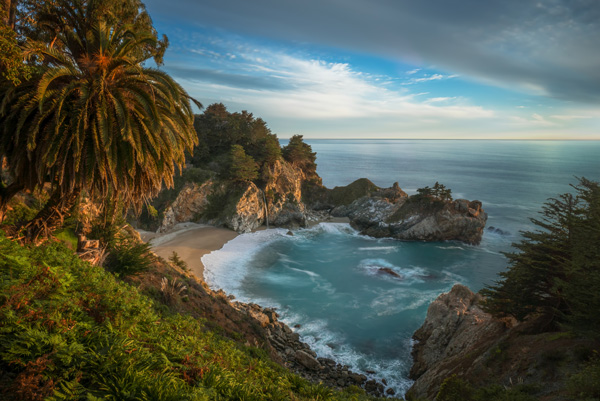
Big Sur, California – Sony A6000, Sony 10-18mm lens
That was when I decided to switch. But, it took another six to seven months to choose the right kit (camera and lenses) for my travel photography needs.
My initial choice was the Panasonic Lumix GX-7 which was the perfect camera for me feature-wise but I was not too crazy about the selection of high-end wide angle lenses.
My second choice was the full frame Sony A7 and, I almost pulled the trigger last fall. However, after holding it in my hands, the Sony A7II in combination with the newly released Zeiss 16-35mm lens was almost comparable to the DSLR in weight and size.
That was when my choice was made. Just before the Christmas holidays, I sold all of my Canon gear to prevent cold feet. Then, I ordered the Sony A6000, Sony 10-18mm f/4, and Zeiss 16-70mm f/4 in one shot. I paid $ 2000 in total. Sony lenses are always pricy but I found that the price of the complete kit was very reasonable.
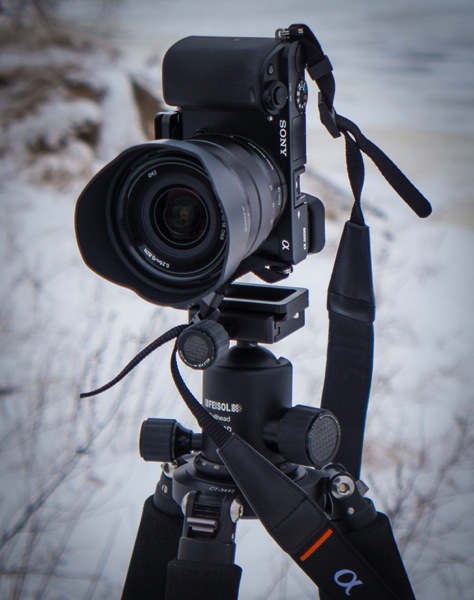
Sony A6000, Sony 10-18mm lens and Feisol Tournament Tripod
I just returned from my first photography trip of the year; I spent two weeks in Hawaii and Northern California where I exclusively shot with my brand new Sony gear.
Below are my thoughts after putting this new equipment through the real life test of travel photography. Please note, I only addressed the features of the camera which are important to me as travel photographer.
Lesson 1: Size does matter in travel photography
As a DSLR shooter, when preparing for a long and demanding sunrise/sunset hike, I always faced the same dilemma – what equipment to bring? Should I carry everything and look (and feel) like a Sherpa tackling Everest? Or should I hike light and risk missing important gear?
I do not have to compromise anymore as I can now put everything in a small camera bag and bring it with me. The Sony A6000 (344g) and the Sony 10-18mm (220g) weigh 564g (19.9oz) total. I still cannot believe that a high-quality wide angle zoom lens can weigh only 220g. I call it freedom.
Don’t get me wrong, the size and the weight were not the main reasons for my switch. I would never jeopardize quality for the sake of weight reduction but it was important consideration.
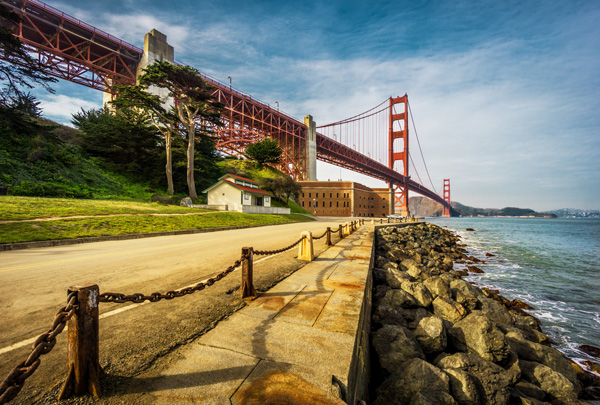
San Francisco, California – Sony A6000 with Sony 10-18mm lens
Lesson 2: Electronic Viewfinder (EVF) – a new way of looking at the scene
Somehow, in many mirrorless reviews, the EVF is presented as a negative factor and is portrayed as somewhat of a disadvantage compared to the DSLR optical viewfinder. I do not agree with that conclusion. For me, the EVF is one of the main advantages of mirrorless cameras. Finally, when I look through the viewfinder I can see what the camera’s sensor sees.
It is a very new and refreshing experience with the EVF, when you can assess the depth of field of the scene before taking the picture.
Here’s a real life scenario. Earlier I was shooting using exposure compensation -2EV and I forgot to reset it to zero. Now, when looking through the EVF, I can see right away that the exposure is wrong because the EVF picture is too dark.
When I shoot wide at 10mm, I can even see barrel distortion which realistically represents the photo I am about to take.
I often use manual focusing when shooting landscapes, which was pretty much an impossible task with the DSLR in bright conditions because of the display screen glare. Now, not only can I easily use the manual focus in any condition, I can also take advantage of Focus Peaking, an amazing feature that highlights areas that are in focus with the bright color. There is no more guess work.
In one of the reviews, I read how awful and pixelated the EVF picture becomes in dark conditions. I can confirm that it looks pretty bad but it is good enough for composing the shot and beats the DSLR where all you can see is pitch black.
For me, the EVF simplifies the process of taking pictures and makes it more predictable.
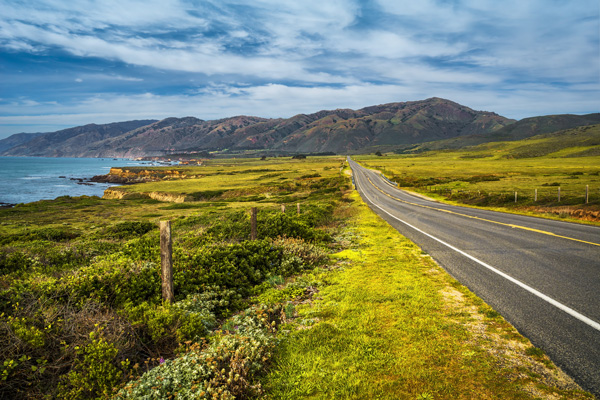
California State Route 1 – Sony A6000 with Zeiss 16-70mm lens
Lesson 3: I love the 24 megapixels sensor
During the silly megapixel war between major camera manufacturers, I decided for myself that 16Mpx was the right pixel count for my needs and I had no plans of upgrading only for that reason.
The Sony A6000 comes with 24Mpix, which I initially did not consider as an important upgrade. What I realized later, after starting to process photos, is that the 24Mpx sensor produces unbelievably clean and sharp images and, in combination with native quality lenses, it resolves an insane amount of detail. Photos look acceptable even at 100% magnification.
Although, I have to admit the higher pixel count is more taxing on my computer and I might need to upgrade it soon.
High ISO photography is not something that I do often when I travel and it was hard for me to assess low light performance of the sensor. But, what I can see based on family photos from the holidays is that ISO 3200 is still acceptable and excessive noise is easy to eliminate in Lightroom.
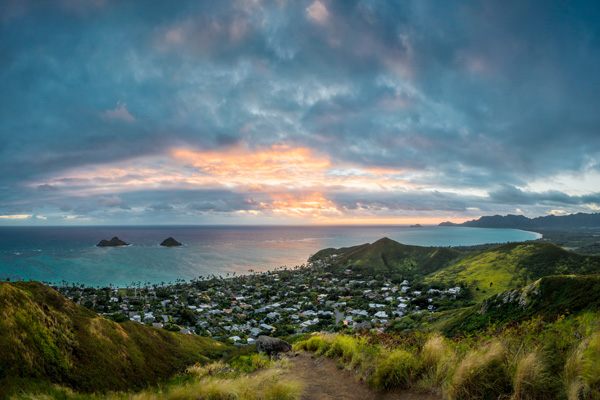
Lanikai Beach O’ahu, Hawaii – Sony A6000 with Sony 10-18mm lens
Lesson 4: 11fps is a game changer
Sports photography is somewhat of a hobby for me. The only times when I shoot sports are when professional cycling peloton comes to Montreal every September and when my daughter is playing water polo. In order to test 11fps in combination with the fastest focusing system in the industry, I went to the beach in Hawaii to photograph surfers.
I switched from RAW to JPEG, set the camera to a continuous shooting mode and enabled Object Tracking. I was amazed not only with the new experience of shooting but with the results as well. Shooting at 11fps reminded me of filming the video and then going frame by frame in the editing software, selecting the best frames. There are no missing moments. The focus was spot on, in pretty much every frame.
I can see how the Sony A6000 can be a game changer for sports and wildlife photographers.
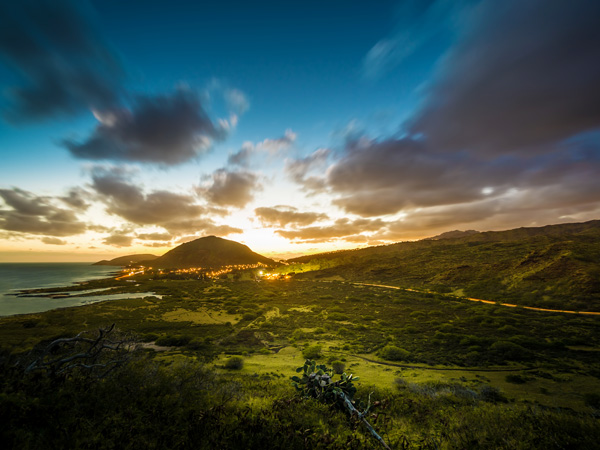
Makapu’u Point O’ahu, Hawaii – Sony A6000 with Sony 10-18mm lens
Lesson 5: Not everything is perfect in paradise
Even though my initial experience of using the Sony A6000 is very positive, there are some shortcomings and annoyances I want to address.
Battery life:
According to Sony, you can take up to 360 shots on a single battery charge and I found this number to be pretty accurate. I even managed to take close to 390 shots when shooting in bracketing mode. It is not bad at all considering the small battery size and the EVF high power consumption. However, when you are accustomed to shooting 1500 shots on a single charge with the DSLR, the difference is very obvious. Now, I carry three spare batteries with me at all times and I have to remember to keep them charged.
Bracketing:
For some inexplicable reason you can shoot five bracketed shots at 0.7EV intervals only, which makes it completely useless. In extreme lighting conditions I have to shoot two sets of bracketed shots (-2, 0, +2), offsetting them manually using exposure compensation (-1 EV). This is very annoying.
No GPS tagging:
Even though the camera has decent wireless connectivity, the GPS tagging utilizing a mobile phone is missing.
Buffer writing lock:
When a camera transfers photos from the buffer to a memory card, the system is completely locked. You cannot even preview images during the transfer.
2-Second delay shortcoming:
You cannot trigger bracketed shots using the 2-second delay functionality. I had to buy, and carry around, an unnecessary extra piece of equipment: Wireless Shutter Release ($ 10).
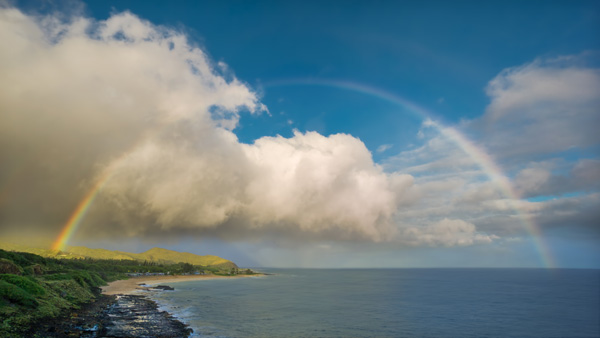
Sandy Beach, Hawaii – Sony A6000 with Sony 10-18mm lens
Conclusion
The switch from a Canon DSLR to the mirrorless Sony A6000 was less stressful and less painful than I expected. I believe that one of the main factors that made it possible was my purchase of native Sony lenses so I did not have to deal with the glass from other systems with the converters.
I am waiting for the widely rumored Sony A7000 which is supposed to be the successor of the Sony NEX-7. I hope Sony addressed the shortcomings of the A6000 and introduces new pro features like: weather sealing, built-in body stabilization, GPS tagging and advanced bracketing. I am definitely planning to get the new A7000 and keep the A6000 as a backup body.
googletag.cmd.push(function() {
tablet_slots.push( googletag.defineSlot( “/1005424/_dPSv4_tab-all-article-bottom_(300×250)”, [300, 250], “pb-ad-78623” ).addService( googletag.pubads() ) ); } );googletag.cmd.push(function() {
mobile_slots.push( googletag.defineSlot( “/1005424/_dPSv4_mob-all-article-bottom_(300×250)”, [300, 250], “pb-ad-78158” ).addService( googletag.pubads() ) ); } );The post 5 Lessons Learned Switching from DSLR to Mirrorless for Travel Photography by Viktor Elizarov appeared first on Digital Photography School.
-
Social Dance Photography Tips
Nowadays it is very popular to have social dancing as hobby; people go dancing to the themed parties, special events, and travel to the international dance congresses. So definitely the subject of social dance photography is getting more interest worldwide. Doesn’t matter what kind of dance you enjoy the most – the challenges of capturing a great dance moment are very similar.
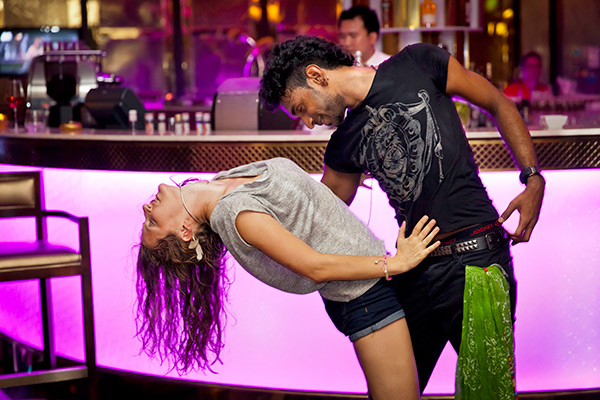
Have you ever seen dark, blurry photos, taken from a weird angle of yourself on the dance floor? I bet your answer is yes. Being a dancer myself I could relate to such matters too, which made me realize that it’s not an easy task to get great dance shots. So I started practicing.
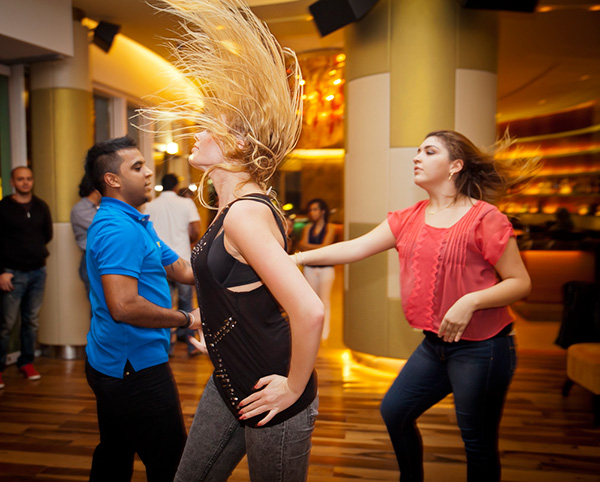
Gladly I had a lot of opportunities to do so due my active role in growing Zouk community in Abu Dhabi, capital of United Arab Emirates.
Zouk is a Brazilian dance; very sensual and addictive. It is known as the dance of the 21st century, and is becoming viral all over the world. The rhythm of Zouk gives dancers a lot of flexibility and freedom to experiment and adapt their style to the music. It offers a lot of beautiful poses for photographer to capture (head flicks, body rolls, spins, twirls, dips and various hip movements).
Let’s look at the challenges of capturing beautiful dance movements and how to overcome them:
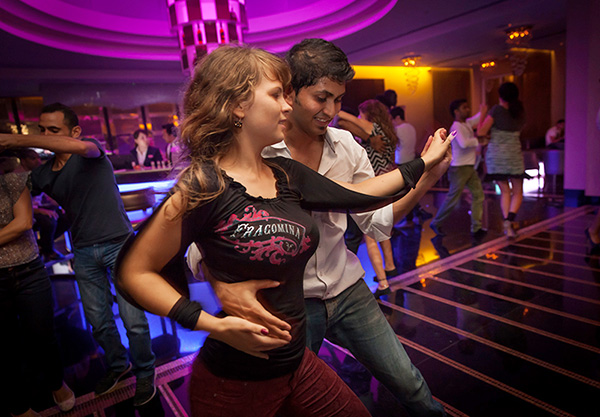
A dark environment
Social parties are usually happening in bars, restaurants, or ballrooms where the lights are dimmed. The trick is to expose for the ambient light (use a slower shutter speed, open your aperture as much as possible, increase ISO – up to 1600 worked fine with a Canon 5D Mark II), and use second curtain shutter sync for your flash. For Canon 5D Mark II users that option is located under External Speedlite control>Flash function settings>Shutter sync – check your camera’s manual if you have a different body. Not a problem if your shutter speed gets really low – you still will get last part of the frame frozen, thanks to those flash settings. You can get really creative if the ambient lights include lasers and rotating heads. By moving your camera sideways when the shutter is open you will get strikes and lines which will make your photos even more interesting. Sometimes it is hard to get focus right in a dark environment, so I usually have small pocket laser with me to light the dancers at the moment of focusing.
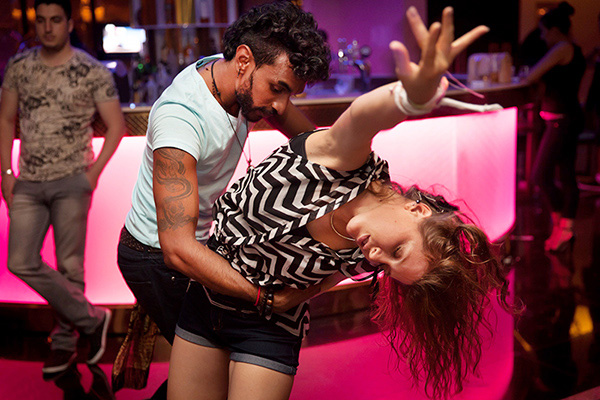
Direct flash
Often with this option you get overexposed figures of dancers and a dark, underexposed background. If possible, scout the environment before the dance event. Search for white walls and ceiling, which can work as a large soft box to reflect light, and use bounce flash instead of direct flash. Another alternative is to use a portable speedlight softbox off-camera to diffuse, and soften strong light.
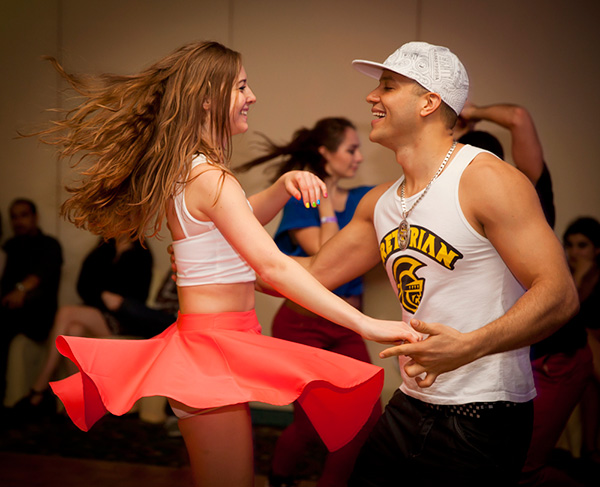
Shutter delay
Have you ever pressed the shutter release button and the slight delay gets you a photo of dancers with their backs to the camera, instead of what you imagined? Try to study movements (if you are not dancer yourself) to oversee what move comes next and press the shutter just before that so you catch the right moment. Each camera is slightly different, so test yours to understand.
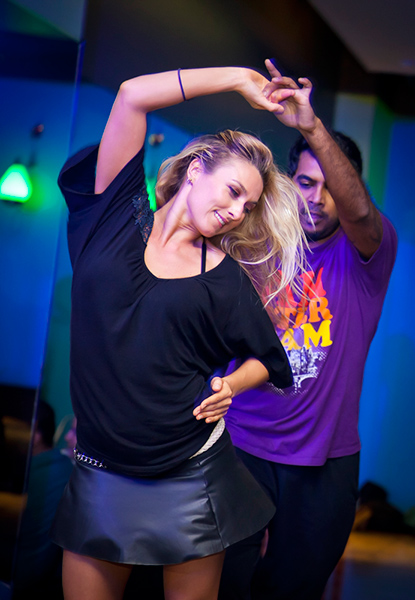
Camera angle
If your camera angle is too high the dancers’ heads will look bigger and their legs shorter – not always pretty to look at. I usually shoot at the chest level, or in some situations – waist level. Sometimes experimenting with getting really low works well too. Decide on the go what works for you – judge the available space between you and the dancers, and keep in mind how you’re using your flash (if you are bouncing it – you need some distance).
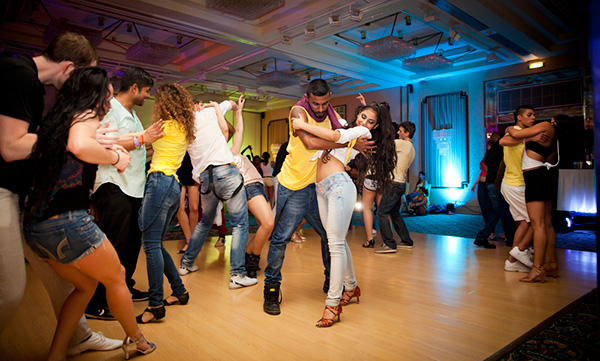
Lens choice
My favorite social dance photography lens is 24-70mm f/2.8. It serves me well most of the time, though it depends on size of the party. If the crowd is big and you would like to show that, you might switch to a wide angle lens from time to time, for example, a 16-35mm f/2.8.
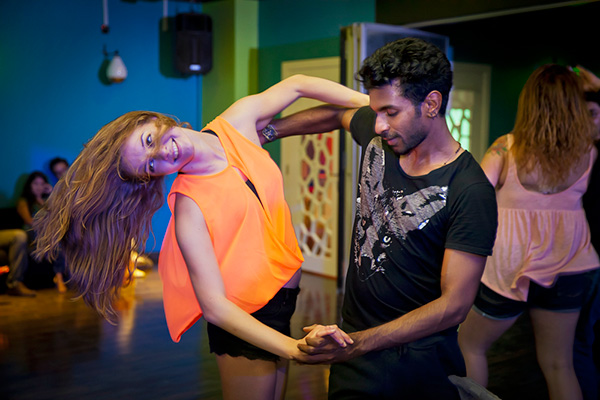
Full-body shots or close-ups?
This is up to you again, depending on dance aesthetics. One note: do not cut off hands or fingers and include a little space around the subject, so photo can breathe. Although this is very subjective, sometimes it can create a different mood when you fill the frame really tight.
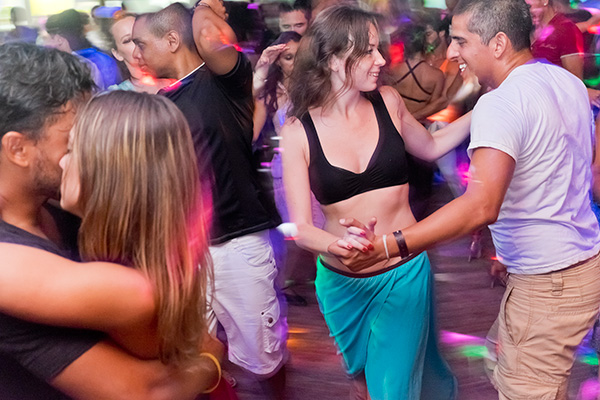
Lastly – keep practicing
Apply the general rule of photographers; the more you practice – the better shots you get!
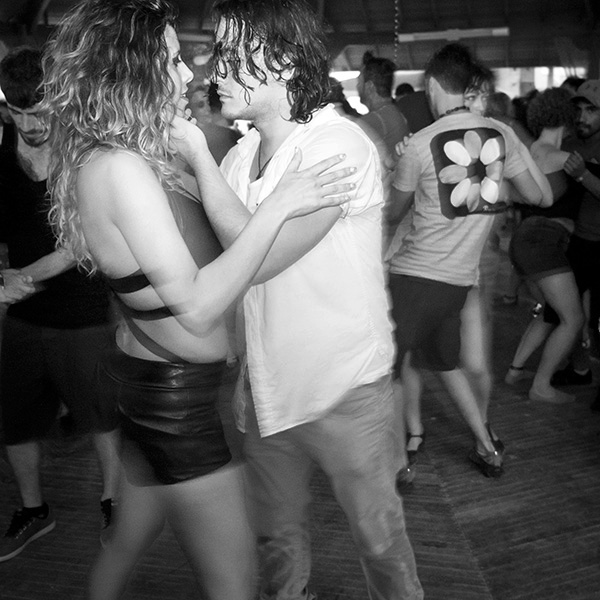
I wish you happy social dance photography; hope you will make dancers look beautiful and graceful! Catch your moments!
Please share your experiments in comments below and ask any questions there as well.
googletag.cmd.push(function() {
tablet_slots.push( googletag.defineSlot( “/1005424/_dPSv4_tab-all-article-bottom_(300×250)”, [300, 250], “pb-ad-78623” ).addService( googletag.pubads() ) ); } );googletag.cmd.push(function() {
mobile_slots.push( googletag.defineSlot( “/1005424/_dPSv4_mob-all-article-bottom_(300×250)”, [300, 250], “pb-ad-78158” ).addService( googletag.pubads() ) ); } );The post Social Dance Photography Tips by Viktoryia Vinnikava appeared first on Digital Photography School.
-
Weekly Photography Challenge – Emotions

By Brett Davies
Image which show emotions or evoke them are powerful. But what kinds of emotions can be captured or portrayed in a photograph? How about these, just to get started:
- Anger
- Sadness
- Fear
- Love
- Loneliness
- Confusion
- Pride
- Jealousy
- Fatigue
- Dispair
What others can you think of?

By Illusive Photography
![[AndreasS]](http://digital-photography-school.com/wp-content/uploads/flickr/5919301791_18af265dd3_o-600x400.jpg)
By [AndreasS]
Weekly photography challenge – emotions
Your challenge this week is to take a photo, or series of them, that pull at the emotions. It might be a person and their expression, or an inanimate object. Lighting, lens selection, and camera angle can all affect mood in an image, so choose carefully and purposefully to create emotional images.
This does not mean images of people pretending to cry or be angry – no real emotions. A baby’s giggling face when it’s tickled, the pleasure of a great meal or coffee, genuine real emotion. Include a person or not – it’s your choice.

By Jelly Dude

By Andi Campbell-Jones

By Luke Andrew Scowen

By Brett Davies
Share your emotional images here:
Simply upload your shot into the comment field (look for the little camera icon in the Disqus comments section) and they’ll get embedded for us all to see or if you’d prefer upload them to your favourite photo sharing site and leave the link to them. Show me your best images in this week’s challenge. Sometimes it takes a while for an image to appear so be patient and try not to post the same image twice.
googletag.cmd.push(function() {
tablet_slots.push( googletag.defineSlot( “/1005424/_dPSv4_tab-all-article-bottom_(300×250)”, [300, 250], “pb-ad-78623” ).addService( googletag.pubads() ) ); } );googletag.cmd.push(function() {
mobile_slots.push( googletag.defineSlot( “/1005424/_dPSv4_mob-all-article-bottom_(300×250)”, [300, 250], “pb-ad-78158” ).addService( googletag.pubads() ) ); } );The post Weekly Photography Challenge – Emotions by Darlene Hildebrandt appeared first on Digital Photography School.
-
Defrozo online photography marketing platform launches on Kickstarter
A new platform called Defrozo has launched on Kickstarter. Currently in beta, it offers photographers online services needed to market and run a photography business, including an online store through which customers can purchase prints and a website to showcase one’s own work. When it fully launches in October, Defrozo will offer free and paid subscription options. Read more
-
5 Reasons to Use Flash to Improve Your Travel Photography
When it comes to travel photography, I am all in for carrying less. However, a good flash is always within reach in my everyday camera bag. I strongly believe that a flash helps to achieve much better results in a number of situations, and here are five reasons and examples:
1) Fill the shadows

The alleyway that protects these fishing villagers from the heat in Vietnam makes it almost impossible to have a good balance between the bright sunlight on the river, and the walls of the alley. The use of flash, in a controlled way, over the foreground helps to open up the shadows and show some detail on the otherwise totally dark foreground.
2) Under-expose your background

When making portraits, it is always good to have decent separation between your main subject and the background. Granted, one of the most popular ways is to use a shallow depth of field and blur the background while keeping the principal element of your photo sharp. Another way is to intentionally under-expose your photo one or two stops, and light your subject with flash to compensate.
3) Freeze motion

If you are working with moving subjects, the use of flash will help to freeze some of the motion if you intend to do so. This depends on a number of factors, including what shutter speed you are shooting at and the length of the flash duration. But, if you notice in the example above, the flash is only being used to achieve points one and two of this article, meaning I am also underexposing the image a tad, and opening up the shadows in the main subject to bring more attention to them.
4) Dark interiors

This artisan from the Hmong minorities in North Vietnam was working his craft inside his house where no lights are available. Despite being close to a window, it was way too dark to photograph, even at high ISO. If you encounter a similar condition, the use of flash will not only make a big difference, but could also be the reason you get the shot at all.
5) Keep shooting at night
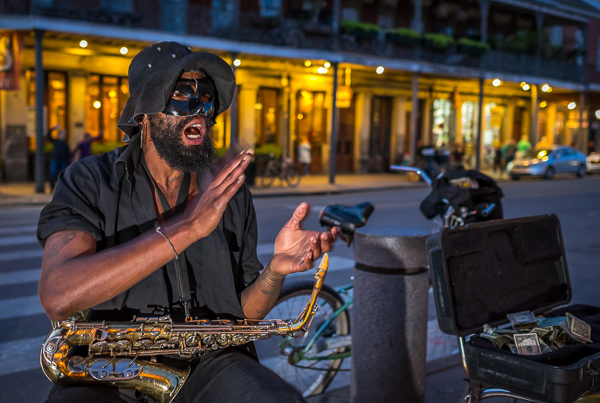
Some places are meant to be enjoyed at night. All kind of photos are possible during this time. Cityscapes and lights trails are certainly compelling propositions, but when it comes to capturing street life there is no better way than with the aid of flash. That extra pop of light will make your subjects come alive and stand out.
The key to doing this is to practice and learn how to manage and balance ratios. Every moment is different and sometimes your key light will be your flash, and other times you’ll be using it just to fill. My personal preference is to do it manually. I think you have much better control by dialling in the power of your speedlights manually, rather than letting the camera figure it out. It takes practice, but it is not difficult to master.
In terms of equipment, I really like the Yongnuo YN 560-III, the main reason is the integrated radio trigger. The units are inexpensive, but well made, which doesn’t hurt either. But as I always use it off-camera, the fact that I don’t need to attach cables or be worried about optical slaves is something that I appreciate. That radio signal goes everywhere, even behind walls, making it very easy to trigger.
What about you? Do you use any flash in your travel photos or in situations like these? Share your images and comments below.
googletag.cmd.push(function() {
tablet_slots.push( googletag.defineSlot( “/1005424/_dPSv4_tab-all-article-bottom_(300×250)”, [300, 250], “pb-ad-78623” ).addService( googletag.pubads() ) ); googletag.pubads().enableSingleRequest();
googletag.pubads().disableInitialLoad();
googletag.pubads().collapseEmptyDivs( true );
googletag.enableServices();
} );googletag.cmd.push( function() { googletag.display( ‘pb-ad-78623’ ); } );
googletag.cmd.push(function() {
mobile_slots.push( googletag.defineSlot( “/1005424/_dPSv4_mob-all-article-bottom_(300×250)”, [300, 250], “pb-ad-78158” ).addService( googletag.pubads() ) ); googletag.pubads().enableSingleRequest();
googletag.pubads().disableInitialLoad();
googletag.pubads().collapseEmptyDivs( true );
googletag.enableServices();
} );googletag.cmd.push( function() { googletag.display( ‘pb-ad-78158’ ); } );
The post 5 Reasons to Use Flash to Improve Your Travel Photography by Daniel Korzeniewski appeared first on Digital Photography School.
-
Kickstarter Project That Will Change Your Photography Career Forever (Exclusive Freebie Inside)
You might have already heard about Defrozo, a free multi-tool business app for photographers as it has been mentioned in the media quite a lot lately. Today the Defrozo Kickstarter went live, and it’s become a Staff Pick in less than 1 hour after the launch! With a working Beta, over 2000 users on board, and some quite ambitious goals, the Continue Reading
The post Kickstarter Project That Will Change Your Photography Career Forever (Exclusive Freebie Inside) appeared first on Photodoto.
-
Full Moon Photography Using The Photographer’s Ephemeris 3.0
 The latest release of The Photographer’s Ephemeris (TPE) releases even more tools to help us photographers get the shots we want. There is just too much for one article, so I am going to focus on a personal favorite subject – full moon photos.
Before handy apps like TPE, LightTrac and PhotoPills, figuring out where the moon might be on any given night took some educating. Pile on top of that the desire to know when the moon was behind, or next to, a specific feature, natural or man-made, and the calculations were beyond anyone lacking a degree in mathematics. But now, it’s all so much easier. Let me show you how I plan on getting a shot of the full moon behind Seattle’s Space Needle this May.
I’ll be using the iPad version of the app which allows for adding in a subject height. Nearly the same functionality is available with the Desktop and Android versions of the app, but the location of items may shift a little. With the desktop and Android version you will not be able to manually add in the subject height but can, using the Pythagorean theorem (and there are plenty apps for it), add in the angle you need.
Pre-planning
To get started, I have decided I want to get a shot of the full moon behind Seattle’s Space Needle. It’s a subject that lends itself well to moon photos. I had a shot in mind that I later confirmed possible after viewing Tim Durkan’s fine example from last year.
Laying out the steps before I open the app, my process will look like this:
- Find a location where I can see the Space Needle, and one which faces mainly South or West (because of hills, I know shooting to the East is hard and the moon will not appear to the North of the Needle because of being in the Northern Hemisphere).
- Plot out my location and the location of the Space Needle.
- Account for elevation change and the height of the Needle.
- Let the program do its magic.
- Record my findings and make actual plans.
Finding your location
Loading the app brings up a fairly full featured screen.
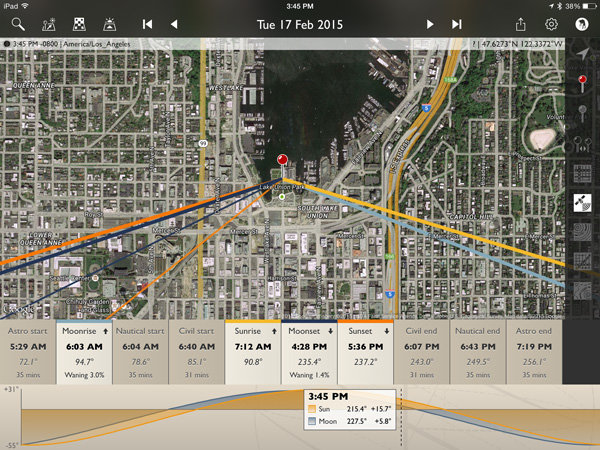
To center the map on your intended location, simply move the map around with your finger until the crosshairs are over your location. You can then tap on the inside of the crosshairs or tap the red observer pin that looks like this:
I placed the location in a park near the shore of Lake Union, a place I know with good visibility of the Needle about 3/4 of a mile away. This will give me a good apparent size relationship of moon to Needle. Many locations can be scouted by using Google Street View.
Next, mark the location of the Space Needle. TPE has a decent search feature, you can use it to quickly find many natural and man-made features around the planet. Just click on the magnifying glass in the upper left and type Space Needle.
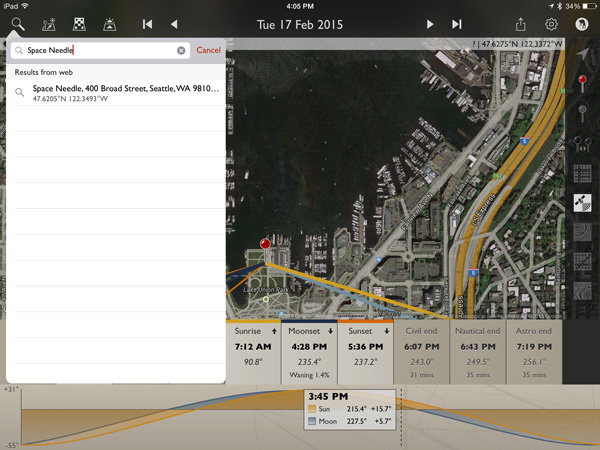
Now click the Space Needle entry itself and you’ll see three options appear.
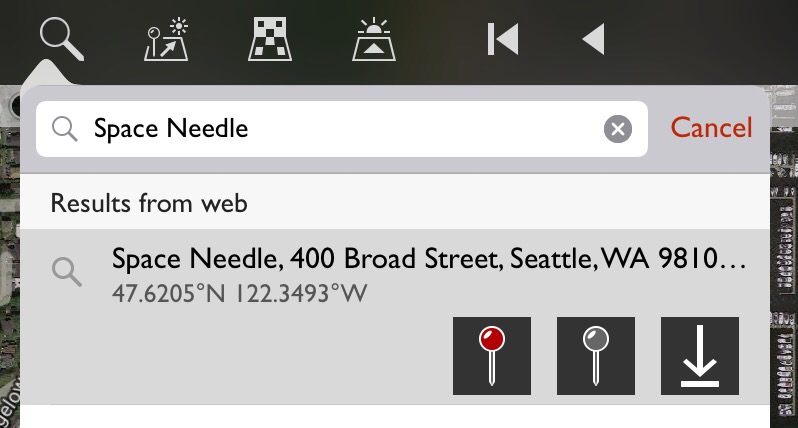
In order from left to right, these buttons allow you to: center the map on the location as your primary location, set this location as your secondary location (the item you wish to photograph), and the third is an option to save this item as a favorite, making future recall easy without searching. You will want to click on the gray map pin to set the Space Needle as the secondary location.
 Using geodetic information
To make things easier to see, click on the Google Terrain map set – an option on the right side of the screen that looks like this (image right)
Now the map is a little cleaner and after zooming out you can see the red pin where I’ll stand and the gray pin at the location of the Space Needle. Those orange and blue lines simply show location of the sun (orange) and moon (blue) when they rise, set and current location.
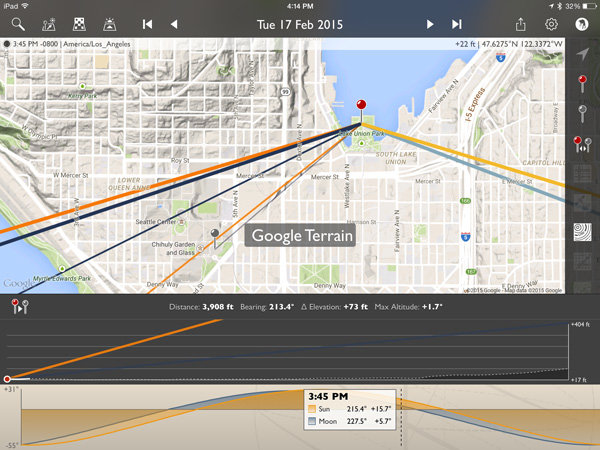
Notice that the lower display also changed? It now shows the elevation different between the two points, with distance (3,908 feet – can also be set to metric), bearing (213.4 degrees), elevation change (73 feet) and the angle at which you are looking, be it up or down (+1.7 degrees). There is also a nice plot between the points showing elevation differences.
This is great! But it only gives the elevation change at ground level. I need to add in the height of the Space Needle to position the moon properly. A quick wikipedia search tells me the Needle is 605 feet tall.
Click on the Shadow and Elevation tool at the top left of the screen, just to the right of the Search feature. Where it mentions “Secondary object height” put in 605 feet for the Space Needle.
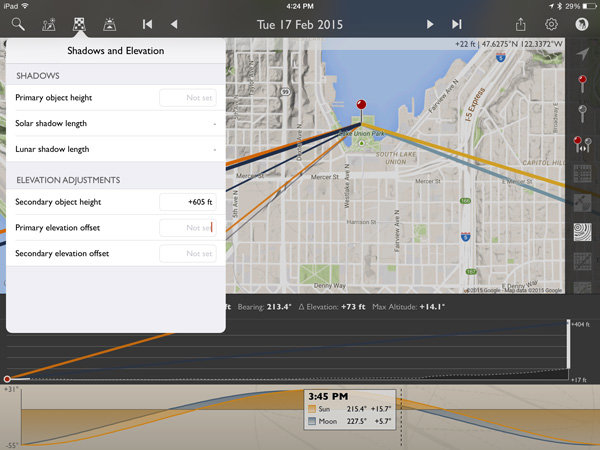
Now on the elevation plot at the bottom of the screen there is a big white bar, representing the height of the Space Needle, on the far right. Perfect!
Magic time
Now let’s have TPE do the heavy lifting and tell us when the moon will be perfectly behind the Space Needle, place the event on our calendar and go find other things to shoot!
Click on the Visual Search button, it is the one immediately to the right of the Search button on the top left. You will get a drop down that with all kinds of information. Click on the word “Moon” at the top and then “Full” and your screen will look like this:
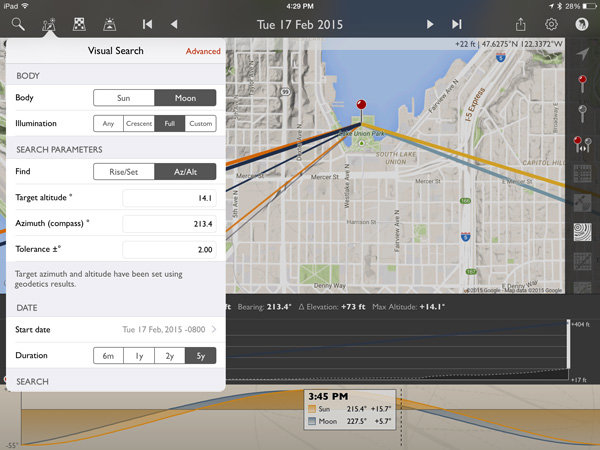
The app has filled in the target altitude (14.1 degrees), compass azimuth or bearing (213.4 degrees), and tolerance (2 degrees) for us!
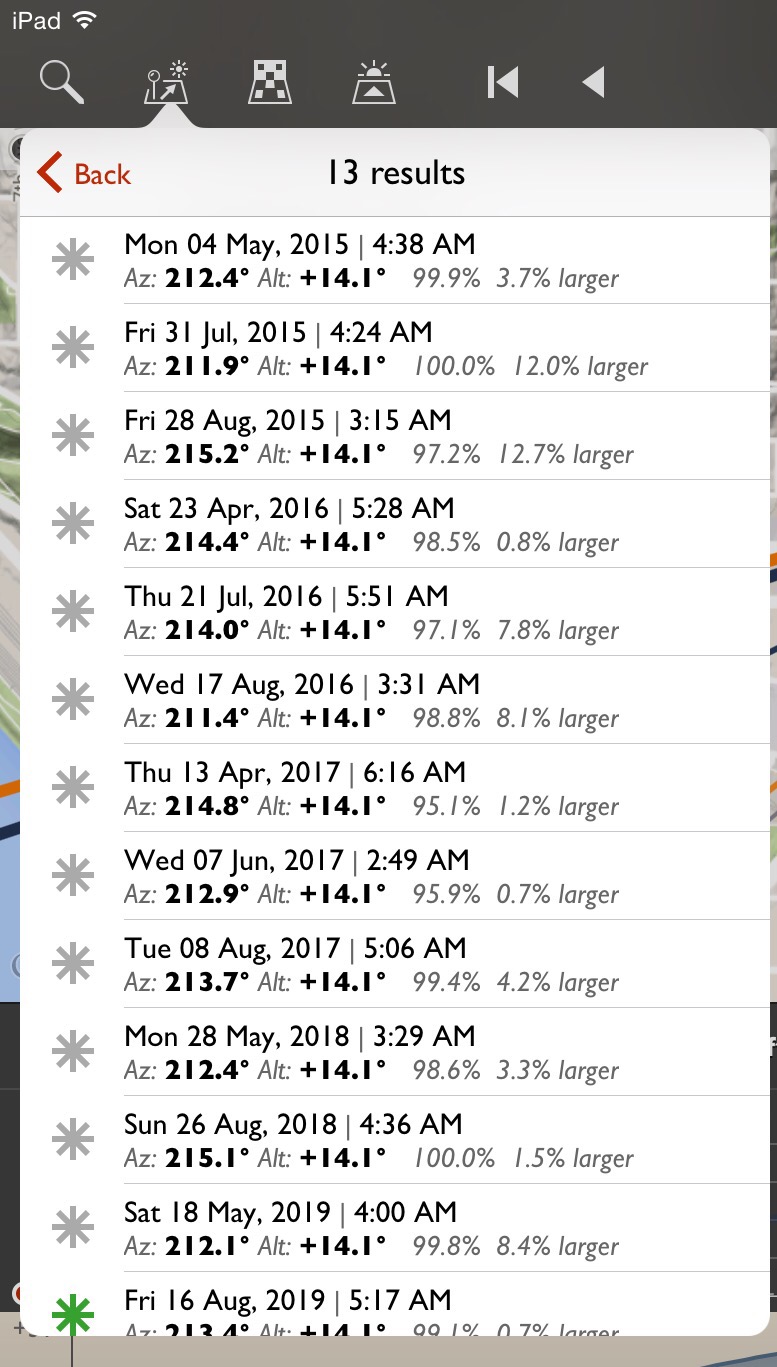
For a first run, to get a full moon centered over the top of the Space Needle, click on the Duration you would like (I picked 5 years in this example) and then Perform Search. You will see a list of results that look like this:
Saving results
What does all that mumbo-jumbo mean? Quite simply, those are all the dates and times (and exact location of the full moon and how full it will be) that fall within a two degree margin of our requested position. You will notice the one at the bottom for August 16, 2019 has a green asterisk; this simply means the moon will be within .5 degrees of the request.
Clicking on the top item for May 4th, 2015 will make the map mimic the conditions at that exact time. Double tap the elevation profile at the bottom and it will show the Altitude Profile where you can see the full height of the Space Needle on the right (tall white bar) and the level of the moon in dotted blue.
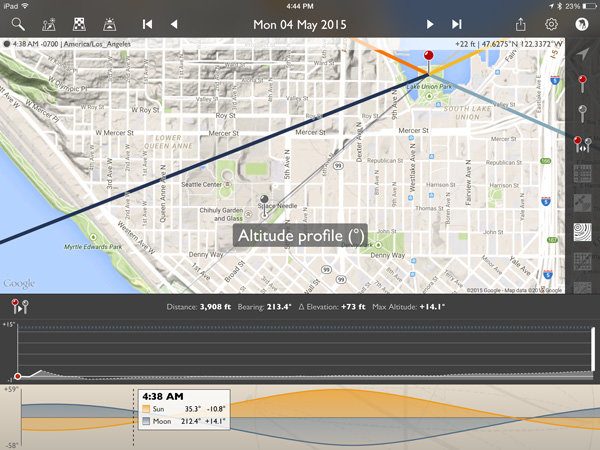
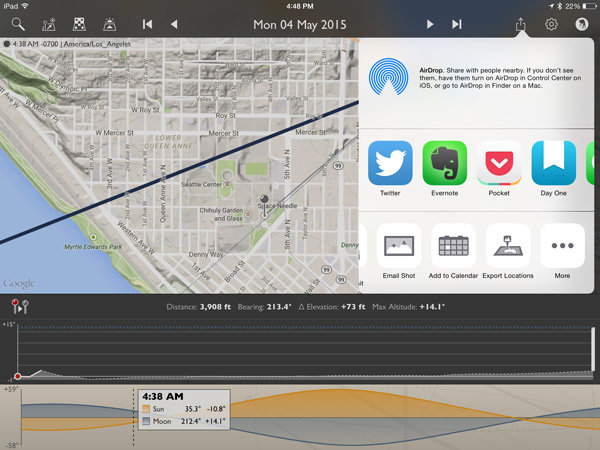
All lined up! We’re now ready to save this information on our calendar or send it to a friend if we like. Click the share button on the upper right and you will see the option for adding to calendar as well as messaging, emailing, etc.
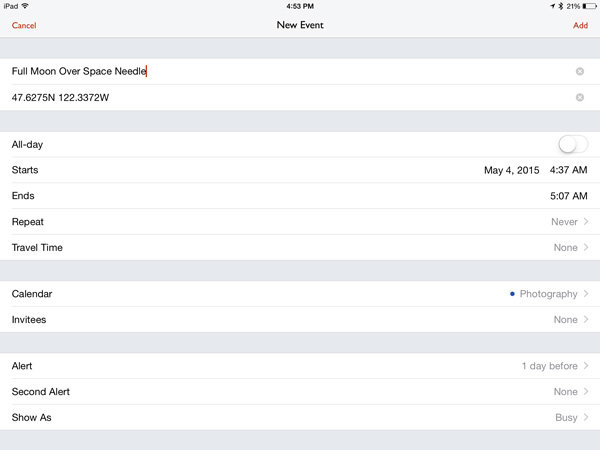
Here’s the calendar add-item screen.
The location is set to the Primary Location in the app. You may want to adjust the time so you arrive early, as it defaults to the exact moment pictured in the app.
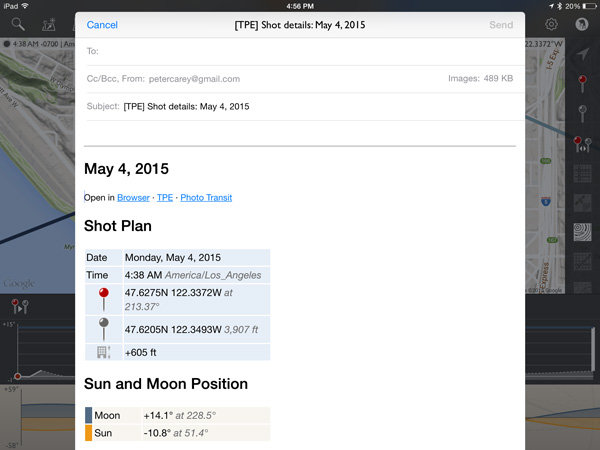
The email option includes all the pertinent information to share the details with a friend. It will attach a map and the recipient can open the information in the TPE (if they have it) or on the web browser version.
Conclusion
I left a lot of information out of this article because TPE simply has too many options to describe here. At its most basic though, it is excellent for placing the moon over various subjects.
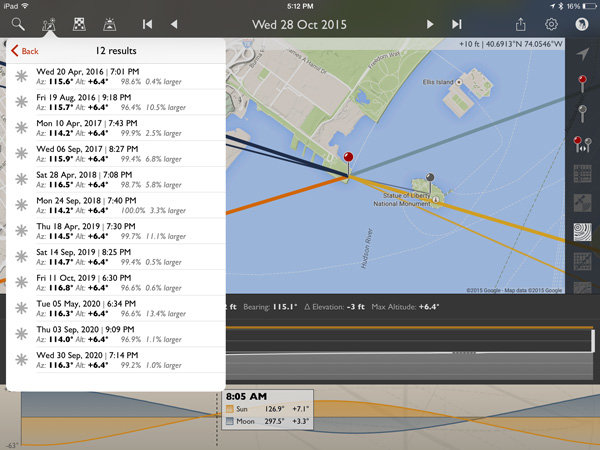
How about a full moon over the Statue of Liberty?
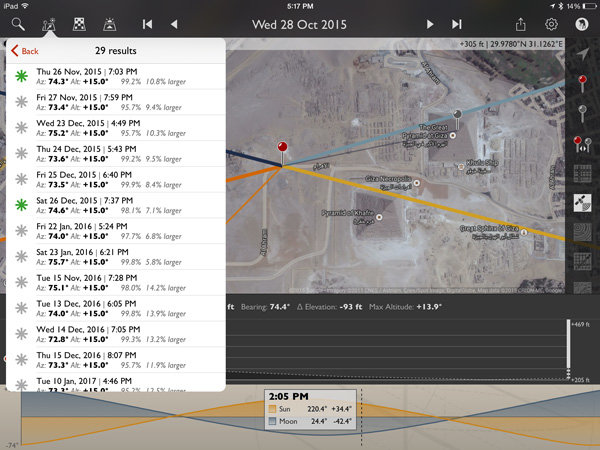
Or the Great Pyramid of Giza?
All it takes is a quick Wikipedia search for an object’s height and about two minutes in TPE to plan that moon shot you have been dreaming of!
For those wishing to explore further, TPE’s documentation is fairly complete and worth the read to unlock a wealth of photo planning power.
How can you use this tool in your photography?
googletag.cmd.push(function() {
tablet_slots.push( googletag.defineSlot( “/1005424/_dPSv4_tab-all-article-bottom_(300×250)”, [300, 250], “pb-ad-78623” ).addService( googletag.pubads() ) ); googletag.pubads().enableSingleRequest();
googletag.pubads().disableInitialLoad();
googletag.pubads().collapseEmptyDivs( true );
googletag.enableServices();
} );googletag.cmd.push( function() { googletag.display( ‘pb-ad-78623’ ); } );
googletag.cmd.push(function() {
mobile_slots.push( googletag.defineSlot( “/1005424/_dPSv4_mob-all-article-bottom_(300×250)”, [300, 250], “pb-ad-78158” ).addService( googletag.pubads() ) ); googletag.pubads().enableSingleRequest();
googletag.pubads().disableInitialLoad();
googletag.pubads().collapseEmptyDivs( true );
googletag.enableServices();
} );googletag.cmd.push( function() { googletag.display( ‘pb-ad-78158’ ); } );
The post Full Moon Photography Using The Photographer’s Ephemeris 3.0 by Peter West Carey appeared first on Digital Photography School.