RSS
 

Posts Tagged ‘Photography’

How to Use a Wide-Angle Lens for People Photography

06 Apr

Wide-angle lenses are indispensable in travel photography. When I organize photo tours, I find that each and every trip has a storytelling component. Almost always, we as photographers, strive to not only describe a situation, but tell a tale, and when it’s about people, we want to tell the audience the story of the hero in the center of it. We want to draw the viewer in so far that they can sense it, breathing the very scents of the scene.

How to use wide angle H Fisch 1050

There is an ideal tool for this type of need; the wide-angle lens that normally ranges (on a full frame camera) from about 21mm to 35mm. It has a variety of advantages; you can get close to people, evoke a sense of immersion in the viewer, and get people and objects in focus with minimal effort.

I normally use FUJI X cameras which have APS-C sized sensors. As this sensor is smaller than full frame, if you want to translate the focal length of the lens from full frame (a size of sensor similar to that of 35mm film cameras), you will have to multiply it by 1.5 times. Thus an 18mm lens on full frame is LIKE a 27mm lens on a cropped sensor (18 x 1.5 = 27).

In this article, when I refer to a focal length, for example 24mm, I am referring to the length on full frame. A focal length of 24mm on a full frame camera will act like a 36mm on the Fuji ASP-C sensor.
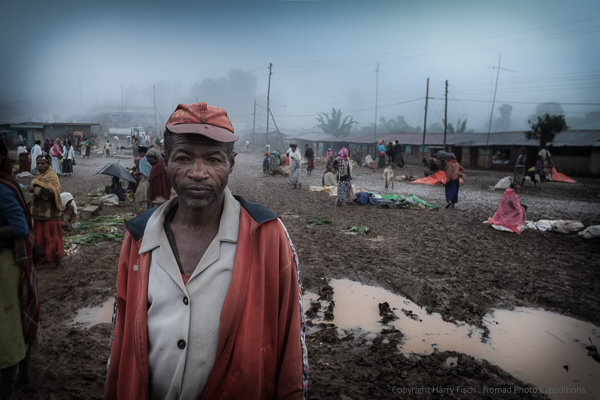
How to use wide angle H Fisch 8638

The difficulty inherent in the wide-angle lens is that it forces you to be very conscious of the distortions it produces. When photographing people, it also requires you to get close to the subject, which can be uncomfortable for most amateurs.

If you are looking for the dream location to take the wide-angle lens for a spin, it’s India, specifically Benares. It’s a scenario full of detail, with dramatic first planes of foregrounds, colorful seconds, smells, activity, and noise. It’s a great big beautiful mess, and there are always extraordinarily attractive people to photograph.

With wide-angle, the typical range goes from 21mm to 35mm, although some photographers use up to 18mm when photographing people. The famous photo agency Reuters published its best photos of 2013, and if you read the blurb under each, you’ll see that 80% of them were taken with a 24mm wide-angle lens. With a quality prime 24mm lens, the distortion of the outside lines is not as much of an issue.

How to use wide angle H Fisch 9541

Between the photo tours I organize in India, Ethiopia, Thailand, and Cuba (among other places), I recognize that I have a special predilection for Varanasi. By what I can see in the data from my Adobe Lightroom software, is that 73% of the photos I take are done with a 18mm lens. I also use – despite the fact that it requires a lot of skill when dealing with people as subjects – a Zeiss 12mm, which is the equivalent of an 18mm on APS-C format.

It isn’t only that wide-angle lenses open the shot more, the viewer gets more information inside the frame, and the wide-angle lens allows for a much more natural view (it is argued among experts as to whether a 28mm or a 35mm is the most natural point of view).
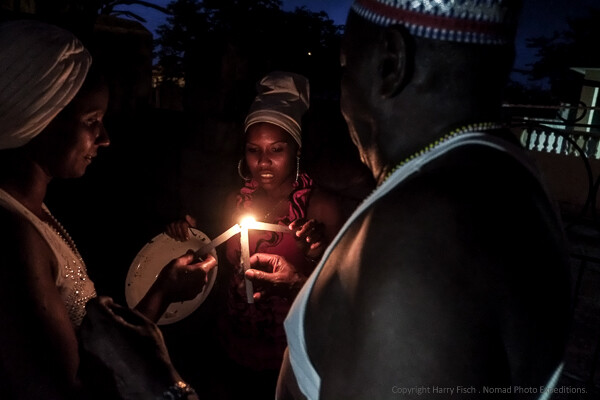
How to use wide angle H Fisch 2159

Wide-angle has a series of advantages, but – as aforementioned – not without also presenting an inconvenience; it does have a great tendency to deform the outlines, like on images of people. Also, it does require a specific and honed technique to get the best photos from it. In the majority of cases you have to get close to the subject in order to get dramatic results, as well as getting a notable depth of field, and this is something that creates yet more issues for photographers who are not accustomed to getting up close and personal with people.

Now, let’s take a look at some of the characteristics of the wide-angle lens.

Wide-angle lens characteristics

Distortion of the point of view

A 24mm lens, if it is not used properly, will deform outlines and produce exaggerations. If the lens is not good quality, you will see a curvature in some parts of the photo instead of straight lines. In some type of photography this exaggeration of the lines is considered a creative argument and can add a dreamy look to a picture. This works fine from time to time, specially if you do not over do it.

How to use wide angle H Fisch 1054

The best approach to this possible issue is to be aware of the horizontal position of your camera and avoid, as much as possible, tilting it up or down. Having the camera on an horizontal plane parallel to the ground helps.

Distortion of the vertical axis

It is important to take your time situating the camera critically with respect to the vertical axis. This is why whenever I use a wide-angle lens I change my position (camera height) with respect to ground level. Using a wide-angle lens 50cm (19.7″) off the ground isn’t the same as being one meter (39″), or one meter eighty high (5.9 feet). I normally try a few levels to find the position that will give me the best angle, though I recognize that with practice you can understand this process before actually having to go through trial and error.

How to use wide angle H Fisch 3867

I am always very aware of at least one vertical line in a picture taken with a wide lens. It can be a street corner, a mast, a raised arm. The vertical reference can many times be the anchor, the basic reference of the picture, the nail of the whole image. The best way to ruin a good picture is to show a bent mast where the viewer clearly expects, and knows, that it should be straight and distortion has been created by your position taking the picture. On many modern cameras you can set your viewfinder to display a grid. This will allow you to see through the display and organize the lines of the whole set with the vertical and horizontal references that are visible.

High and low angle

How to use wide angle H Fisch 8064

A high camera angle consists of taking in the subject or the scene from top to bottom, situated on high ground from the objects you want to photograph. When using a low angle, you would be taking a photo from bottom to top from a point below what you want to photograph. As well as getting a more original point of view, a lot of times it is used as a technique to augment the distortion and highlight different parts of the subject. Honestly, I would use it with a lot of caution, here’s why:

If you have seen the movies of Orson Wells you will remember the scenes which evoke feelings of dreaminess – or sometimes nightmares. Wells loved to use the emphatic form made by shooting from a high angle far above the subject, and the low angle doing just the opposite. Anyone who has seen his movies knows perfectly how much distortion it produced, as he used it to create very specific environments. If you use extreme high and low angles, you will get this effect as well.

Depth of field, getting everything in focus

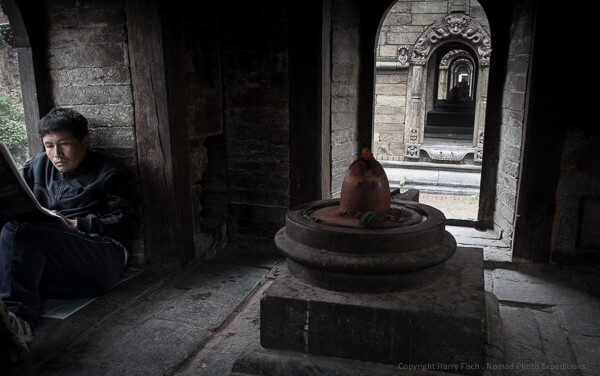
Depth of field is important if you want everything in focus. With an 18mm lens it’s difficult to get a photo that has shallow depth of field or less of the scene in focus. With an aperture of f/5.6, it will keep practically everything in focus from a distance of one meter (3.3 feet) to infinity. This makes it interesting and convenient if you want to take pictures without even focusing.
How to use wide angle H Fisch 6098

A lot of street photographers shoot this way – focus at two meters (6.6 feet) with an aperture of f/5.6. From there, you already know that if you keep a set distance from the subject, everything will be reasonably in focus. This can save you lots of time in situations were you do not have much time to focus properly or you find that your automatic focus behaves erratically.

The originality of the plane and of the frame

With an extreme wide-angle lens, once your eye is trained, you can offer a rather original vision of reality. In real life we do not see wider than 50mm. Going beyond this, 28mm, 24mm, 21mm, 18mmm, creates a kind of unreal feeling. Lines exaggerate their proximity or separation, the foreground seems tremendous (large) in relation to the background. The relative size of objects differs from what we normally sense. If we add to all this the depth of field characteristic and the possible distortions, we do have a creative weapon that should be used with great care! As much as we are surprised by an original point of view, we get bored by seeing to many wide-angle lens distortions.

How to use wide angle H Fisch

Proximity to the subject

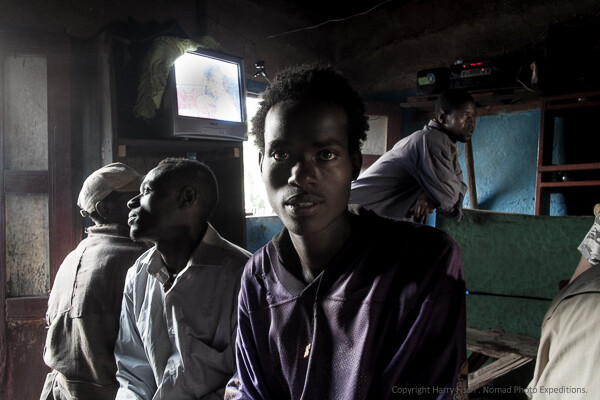
This will give the viewer a strong feeling of being there, of immersion into the scene. In possibly half of the photographs that I take with a wide-angle lens, the distance to the subject is less than two meters (6.6 feet). In documentary style photography – not necessarily photographing landscapes – a wide-angle lens rewards closeness with a subject, as it results in a rather impressive image. Great photographs are done with a 18mm lens and have been made from a distance of less than one meter (3.3 feet) from the subject. This is typically done by getting the subject in the third of the frame and allowing the viewer to observe what is happening at the second plane. You should be specially aware of the way your lens behaves; the nearer the subject to the edge of the frame, the bigger optical distortion you will get. Also remember what has been said about the way to hold your camera to avoid distortion; vertical and horizontal axes as well as the tilting issue.
How to use wide angle H Fisch 0669

Many photographers feel uncomfortable getting this close. But, if you like photographing people, a wide-angle is an essential tool. The best you can do is get used to getting close to people, with a friendly manner and a smile.

Landscape photographers do not always follow this proximity suggestion. Their use of the wide-angle is aimed more at obtaining an impressive depth of field, many times a spectacular symmetry and… searched distortion! You will see hundreds of pictures taken with a 15mm were the clouds follow a very characteristic pattern created by the distortion of the lens.

googletag.cmd.push(function() {
tablet_slots.push( googletag.defineSlot( “/1005424/_dPSv4_tab-all-article-bottom_(300×250)”, [300, 250], “pb-ad-78623” ).addService( googletag.pubads() ) ); } );

googletag.cmd.push(function() {
mobile_slots.push( googletag.defineSlot( “/1005424/_dPSv4_mob-all-article-bottom_(300×250)”, [300, 250], “pb-ad-78158” ).addService( googletag.pubads() ) ); } );

The post How to Use a Wide-Angle Lens for People Photography by Harry Fisch appeared first on Digital Photography School.

Digital Photography School

 
Comments Off on How to Use a Wide-Angle Lens for People Photography

Posted in Photography


Macro Photography Tips – Video Tutorials

06 Apr

This time of year is a great time to get out and find some macro photography subjects. So I dug around and found a few videos to help get you started if you want to try it.

Macro Photography by Matt Granger

First up is a lesson by Matt Granger as he teaches Tina (a new photographer) how to do macro photography. Follow along with her and try it yourself as they go through using a long zoom lens, hand held, natural light, adding flash, and using a tripod.

Getting sharper images

The second video is from Alessandro Zocchi he gives you a few tips to help you get sharper macro images.

Focus stacking

Lastly Peter Bargh covers a more advanced technique, focus stacking, which involves taking multiple shots focused at different points, and merging them later.

You can find the software he mentioned here:

  • Combine ZM
  • Helicon Focus

You can also use Phototoshop if you have it. Read: How to Focus-Stack Macro Images using Photoshop for more on that technique.  Check It’s a Small World – the World of Macro Photography if you need some subject ideas.

Have fun!

googletag.cmd.push(function() {
tablet_slots.push( googletag.defineSlot( “/1005424/_dPSv4_tab-all-article-bottom_(300×250)”, [300, 250], “pb-ad-78623” ).addService( googletag.pubads() ) ); } );

googletag.cmd.push(function() {
mobile_slots.push( googletag.defineSlot( “/1005424/_dPSv4_mob-all-article-bottom_(300×250)”, [300, 250], “pb-ad-78158” ).addService( googletag.pubads() ) ); } );

The post Macro Photography Tips – Video Tutorials by Darlene Hildebrandt appeared first on Digital Photography School.


Digital Photography School

 
Comments Off on Macro Photography Tips – Video Tutorials

Posted in Photography


10 Low-Cost Marketing Strategies for Your Photography Business

05 Apr

Marketing-logosWhether you already have clientele or are looking to build a client list, marketing is a never-ending task for photographers. You’ve already focused in on a target market (or two), but where to start? Are you unsure of how to get things started with a shoestring budget? Here are 10 low-cost marketing strategies for your photography business:
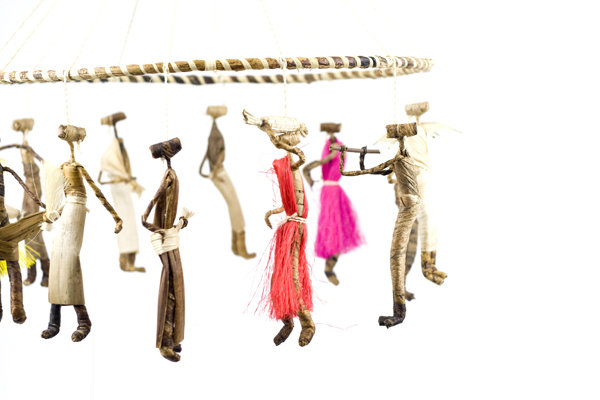
1. Get out of the house

This biggest thing you can do to spread your name is to be out there. Finding events and activities where your target market may be is key. Meetup.com has a huge selection of groups that host events, many for no cost. While it can be overwhelming, and may take some trial and error, there are loads of opportunities on that site. Your local Chamber of Commerce also has events that are open to the public and offer networking time. They are ideal if you’re looking to connect with local small businesses that may need your services. If your target market is within a certain profession, you can look into professional organizations in your area. Most professions have local and national chapters that meet regularly, and most of these groups welcome guest speakers. Offer to speak to their members about what you do, and how it relates to their work. It’s a perfect opportunity to put yourself in front of potential clients at no cost but your preparation time.

2. Get charitable

Is there a cause that is close to your heart? How can your photo skills help them out? Maybe a local animal shelter could use professional photos of the animals to help them get adopted quickly. Maybe there is an organization that helps the homeless find work, and those folks could use headshots. Make it something that resonates with your cause, or with your target clientele.

Donated Product Photography for African Refugee Business Owners

Donated product photography for African refugee business owners

3. Tell your friends and family

Often just telling people what you’re enthusiastic about will also get them excited and make them want to help you. By just letting people you know what you’re working on, and what you have planned, they will often make suggestions or give you leads. There’s no need to do a sales pitch to them; just tell them about your life and what you have going on.

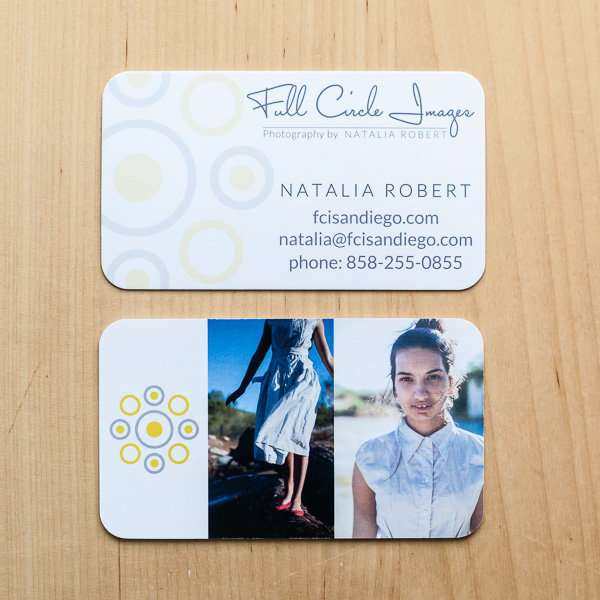
4. Put a photo on your business cards and hand them out to EVERYONE

We all have some sort of business card, so why not put a photo on there that will make people notice? It will give them something to “ooh and aah” over when they first get your card, and it will be a memorable card that they’ll recall easily.

Color photos on back side of business card

Color photos on back side of business card

5. Seek out opportunities and ask for a chance

If you want to shoot large events, check local calendars or your convention center for what’s going on in your area. Contact these organizations and see if they have photography coverage booked. Sometimes all it takes is asking. Have you participated in a great event and want to be involved as a photographer? Ask them! Having someone help that has already been involved in the event will be a big bonus for them.

6. Become a source

Write articles. Start a blog. Use Meetup.com to start a group and lead photo walks or workshops. Use social media to follow folks you admire, and connect with them. Interaction is key. If they post something of interest to you, thank them for it or ask a follow-up question. If you have a link (not necessarily your own) that relates to something they are speaking about, be a resource for them and share the link. By doing so, you build credibility and create a professional relationship, and will therefore be someone that comes to mind for future needs.

Marketing-tags2

7. Make sure you love the work that you’re sharing

Passion is contagious and palpable. If you’re excited, others will get excited and will be more willing to help out in any way they can. It’s that simple.

8. Offer a free session to a strategic friend or family

The key word here is strategic. If you give away services that you would normally charge for, be sure that there is a reason for giving it away. For example, if you are looking to do more family portraits, offer a session to a well-connected friend with kids. Be sure that it’s someone who is active on social media so that they will share your work if they like it. Also, be sure to ask for a testimonial for your website.

A free sample session for marketing to families

A free sample session for marketing to families

9. Collaborate

Strategic partnerships are much better when you create something cool together that you can show off. Maybe you organize a styled wedding shoot with other wedding vendors (and then you can submit images for features in local wedding publications). For kids, maybe you put together an elaborate cake smash session with folks that do cakes, kids clothing, party decor. Not only do you have something beautiful to show from your collaboration, but these fellow vendors will be a great source for referrals as well.

Strategic collaboration with a food stylist and wine brand

Strategic collaboration with a food stylist and wine brand

10. Incentives

You may have heard of giving incentives for referrals or to new clients, but how about giving incentives to your existing client base? If you do family sessions, you can send an email offering a small discount for booking their following year’s portrait session early. If you have wedding clients, touch base with them on their first anniversary, and then again at milestones to offer a discount for booking with you for updated portraits. If you’ve worked with a local business before, contact them periodically and offer a small discount to book for new product shots, new headshots, or photos of their new location. Be sure to put an expiration date on these discounts to encourage folks to book early.

One thing to keep in mind with any marketing tactic is that it will most likely not provide instant results, so you need to be patient and consistent. Only you can determine when it’s time to give up, and move on to something that will be a better fit for your business, but patience and consistency will help yield results.

What marketing strategies have you made that had great results? Do you have other ideas for free or low-cost marketing? Please share in the comments below.

googletag.cmd.push(function() {
tablet_slots.push( googletag.defineSlot( “/1005424/_dPSv4_tab-all-article-bottom_(300×250)”, [300, 250], “pb-ad-78623” ).addService( googletag.pubads() ) ); } );

googletag.cmd.push(function() {
mobile_slots.push( googletag.defineSlot( “/1005424/_dPSv4_mob-all-article-bottom_(300×250)”, [300, 250], “pb-ad-78158” ).addService( googletag.pubads() ) ); } );

The post 10 Low-Cost Marketing Strategies for Your Photography Business by Natalia Robert appeared first on Digital Photography School.


Digital Photography School

 
Comments Off on 10 Low-Cost Marketing Strategies for Your Photography Business

Posted in Photography


Weekly Photography Challenge – Complementary Colors

04 Apr

This week I thought we’d do another photography challenge based on color, but not just one color – complementary or opposite ones like the images shared earlier here.

Pichenettes

By pichenettes

Complementary color appear opposite on the color wheel. Find them in the example above. Use them in the challenge this week.

Weekly Photography Challenge – Complementary Colors

Your job is to find and photograph things with complementary or opposite colors. Many pairs of them occur in the natural world if you just look around. If you can’t find any, make your own. Here are a few more examples:

Shålaco

By Shålaco

Margaret Almon

By Margaret Almon

Andy Farnsworth

By Andy Farnsworth

Eileen McFall

By Eileen McFall

Distant Hill Gardens

By Distant Hill Gardens

Jeyp.

By jeyp.

Kate Ter Haar

By Kate Ter Haar

HIM LEE

By HIM LEE

Bogdan Suditu

By Bogdan Suditu

Michael Wallace

By Michael Wallace

Surajram Kumaravel

By Surajram Kumaravel

Share your complementary images here:

Simply upload your shot into the comment field (look for the little camera icon in the Disqus comments section) and they’ll get embedded for us all to see or if you’d prefer upload them to your favourite photo sharing site and leave the link to them. Show me your best images in this week’s challenge. Sometimes it takes a while for an image to appear so be patient and try not to post the same image twice.

googletag.cmd.push(function() {
tablet_slots.push( googletag.defineSlot( “/1005424/_dPSv4_tab-all-article-bottom_(300×250)”, [300, 250], “pb-ad-78623” ).addService( googletag.pubads() ) ); } );

googletag.cmd.push(function() {
mobile_slots.push( googletag.defineSlot( “/1005424/_dPSv4_mob-all-article-bottom_(300×250)”, [300, 250], “pb-ad-78158” ).addService( googletag.pubads() ) ); } );

The post Weekly Photography Challenge – Complementary Colors by Darlene Hildebrandt appeared first on Digital Photography School.


Digital Photography School

 
Comments Off on Weekly Photography Challenge – Complementary Colors

Posted in Photography


Constructive Photography Critique: How to Give and Receive with Grace

02 Apr

I’ve been in a funk lately. Just a little……off. Like I often hear other people do, I blamed it on the weather and assumed it would pass. A month later and it still hadn’t budged. This wasn’t the snow or the cold, yet completely normal, temperatures—it wasn’t even my kids who have been relatively low maintenance lately (all things considered).

There was only one thing left to do before I took complete stock of my life and started looking into some serious therapy or, dare I even consider, enroll in a yoga class, and that was to bug my husband about it: “What’s wrooooong with me? Why am I sooooooooo cranky? Why don’t you tell me I’m pretty and feed me cookies anymore?” His reply was: a) “I do tell you you’re pretty and you know where we keep the cookies”, and b) “well, you’ve taken some pretty harsh blows lately.”

lynseymattingly5

He was right. I have had more than a lions share of un-constructive criticism tossed my way these last few months. I consider myself to be fairly good at rolling with the punches. I accepted a long time ago that not everyone is going to like me; no matter how badly I want to invite them over to my house and tell them they are pretty and feed them cookies and convince them to. And not everyone is going to like my photography. I can deal with those things—I really can.

Like many of you, I saw early on that photography strikes so many chords with people, it’s very easy to get an internet debate going between total strangers about whether a random image is good or not. Whether or not it’s strong, if it’s beautiful, and the one that people seem to get hung-up on the most – if it’s correct or not. I have never heard talk of someone using the wrong paint strokes on a canvas. I’ve never walked into a debate over a songwriter using the wrong chords on his original music. I’ve never watched the internet get excited about the exact one proper way to throw pottery. But photography…photography is different with its mathematical magic and scientific reasoning. Photography is the one art that seems to have that one perfect right way.

lynseymattingly2

We will never all agree on that one right way though. It wasn’t long ago I was reading about a photography trend of the “in-between-shots”, which it turns out, I had been doing for years, I just had been calling them “out of focus shots.” So if even focus is subjective, how can we possibly come together on all the other pieces of our craft? We can’t. What we can do however, is be better for our peers and ourselves by being open to other viewpoints, and being better critics and brave receivers. This comes by giving and receiving constructive feedback, emphasis on the constructive part.

Kind criticisms can be helpful—both offering them to other photographers and being willing to hear them ourselves. I know the internet is never going to be a place where I can post an image and expect nothing but rainbows and sugarcanes of encouragement and praise to come my way, but I have to believe it can be better than what I have personally seen lately.

lynseymattingly8

Here are three questions I ask myself each time I get feedback, whether requested or not:

1) Am I really wanting other people’s opinions of this image?

Am I really? Because the truth is that there are some images we don’t need feedback on. Either they are just very special to us, are personal, or our client loved them, and for whatever reason, we don’t feel the need to hear what a friend or stranger may have to say about them.

If you find yourself in this situation where unrequested feedback has fallen in your lap over a photo you don’t need or want feedback for, move on. It’s not your job to validate the comment or engage in debate if you didn’t request it. They said what they needed to say, and what a wonderful gift you gave them of allowing them the space to say it.

If however, you have found yourself receiving feedback you asked for and decided that you actually don’t want, be honest! There is nothing wrong with saying, “I guess I wasn’t as ready to hear feedback as I thought I was.” There is no shame in not being interested in criticism, or in thinking others would enjoy your work more.

lynseymattingly3

2) Is it helpful?

One of the most frustrating things about photography is that there are no redos. You can reshoot anything until kingdom come, but it won’t be the exact moment it was before. So, while nitpicking over a single image, all things considered, will not likely help that photograph, hearing feedback about things in general can possibly help you the next time. Can you take what they are saying and apply it? Can you rework the image in post-production to be stronger? Is there a lesson somewhere to be had in the feedback you are getting?

“You asked for it, you got it!” moments can sometimes be humbling. Remember—it’s not a reflection of you, your character, or your very soul. For as passionate as we can be about photography, for as much as we live and breathe it, criticism is just words on a page or in the air, about a piece of paper or part of a screen that somehow came from your camera. These words cannot eat you, or make you spontaneously combust, even though sometimes it can feel that way.

lynseymattingly6

3) Is it really about my image?

Some people just need to share their opinion. I get that—I have a tendency to be an over-sharer myself. In this time of social media, we over-sharers forget that not everyone cares what we had for breakfast. Not everyone is interested in knowing that when I’m stressed, I get whiny and want to be fed cookies.

Really look at the feedback you received. If it feels off, or truly doesn’t make sense or seem helpful in any way, consider that it’s not about you. The feedback you received is maybe related to a battle you know nothing about, that somehow got caught-up in the vortex of sequences and ended up under your image because it needed a place to land.

I’m not a big fan of people saying, “it’s not personal, it’s business.” This “business” has taken from my personal life every chance it got. Photography has made me friends and taken my sleep. It’s taught me about beauty and kept me away from my family. You bet it’s personal! But that’s exactly the thing—the image is personal. It gets to be as personal as you want. The feedback however? That’s just business.

lynseymattingly4

A photographic community only works if people participate. There was a time when I was desperate for feedback of my work—a time when I truly wanted to learn and needed people more experienced to be willing to share their knowledge and skills with me. What power we are giving people when we ask for this! If I could do anything, besides teach the world to sing in perfect harmony, I would create a kinder internet. An internet that remains the most helpful source in the world, something that brings us all together, but isn’t so darn mean. I believe with all my unicorn believing ways that this is possible, and that being kind is the first step to being a respected member of any community. Giving constructive criticism is almost as hard as receiving it.

Here are three questions I ask myself before I offer feedback to another photographer:

1) Is it helpful?

It does no good for me to simply tell someone “nice image”. While a pat on the back is always great, enough of them and you’ll just push the person right over. If someone has truly asked for thoughts or a response to their image, is what I am about to tell them helpful? Can they use it going forward? Could it be taken as condescending or hurtful, or am I showing the proper respect? Just because someone asked for my opinion (or the opinion of the internet at large), doesn’t mean I have to be rude about it. Remember that it does take a bit of courage to share your very personal work with the world and though unspoken, I think a photographic community works best when the rule is – to above all else be kind.

lynseymattingly9

2) Is it balanced?

Does my comment also offer encouragement along with any negative elements I’ve mentioned? Have I pointed out something that was done well, so it’s clear that I invested more than a brief second before I spoke my thoughts for the world to see? I can hear some of you now saying, “it’s not my job to tell them it’s good—they wanted honesty!” To you I say, honesty can still be kind. You don’t have to reassure anyone or lie about your feelings to be honest. One of my all-time favorite quotes:

“Be an encourager. The world has plenty of critics already.” – Dave Willis

lynseymattingly7

3) Am I okay with this being the only thing someone has ever heard me say?

When you comment on the internet, it is usually read by people you don’t even know. Possibly hundreds or thousands of them. The world does not know that I try my hardest to be a decent human being, but sometimes my mouth gets away from me. The world doesn’t know that my passion can sometimes come across as overbearing. The person requesting feedback doesn’t likely even know who I am. So if what I am about to offer is the only thing anyone could ever attach to my name, am I okay with that? Have I been fair? Have I been helpful? Have I been kind? I would rather be completely forgotten than permanently attached to a unnecessary comment that I wrote in haste or worse yet, an unhelpful comment that I wrote out of spite.

lynseymattingly10

Do you leave comments on images? Do you post your images and ask for feedback? What are your thoughts?

googletag.cmd.push(function() {
tablet_slots.push( googletag.defineSlot( “/1005424/_dPSv4_tab-all-article-bottom_(300×250)”, [300, 250], “pb-ad-78623” ).addService( googletag.pubads() ) ); } );

googletag.cmd.push(function() {
mobile_slots.push( googletag.defineSlot( “/1005424/_dPSv4_mob-all-article-bottom_(300×250)”, [300, 250], “pb-ad-78158” ).addService( googletag.pubads() ) ); } );

The post Constructive Photography Critique: How to Give and Receive with Grace by Lynsey Mattingly appeared first on Digital Photography School.


Digital Photography School

 
Comments Off on Constructive Photography Critique: How to Give and Receive with Grace

Posted in Photography


The Importance of Capturing Gesture and Emotion in Street Photography

31 Mar
Sometimes an expression can cut you like a knife.

Sometimes an expression can cut you like a knife.

One of the most fascinating things about street photography is that it can be so hard to pinpoint the reasons why one photograph works and another does not.

A good street photograph can be sharp or it can be blurry; it can be in contrasty light or in soft and even light; it can be an energetic scene with layers of people or it can be a quiet shot with nobody in it. It gets further complicated when you start to think about the ideas, moods, and feelings that your images suggest.

Despite this lack of certainty, I believe there are two things that will always improve a candid photograph, and that is a gesture in a subject’s body or an emotion captured on a subject’s face. Both of these elements have the power to be the defining reason that a photograph is great. They can be the basis for an entire image.

When I refer to emotion, I am talking about the look in a person’s face, in their eyes, in their mouth, in their eyebrows, or even in their nose. When I refer to gesture, I am talking about a movement, a stance, an elegance, or any position of a subject’s body that is suggestive in some way.

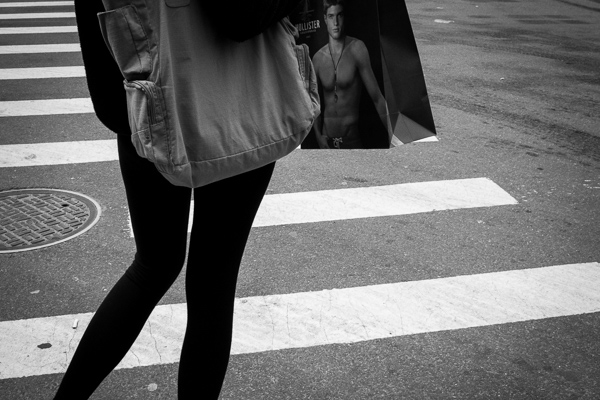
This image would not have worked without the elegant and suggestive stance in the legs.

This image would not have worked without the elegant and suggestive stance in the legs.

It can be misunderstood that doing street photography well is solely about photographing people that seem to pop out at you in some obvious someway. Maybe this is through a unique fashion or an interesting facial feature. The result is that you see images of people deemed interesting for some reason that don’t seem to be actually doing or thinking anything – they are expressionless and neutral in stride.

Instead of photographing with only the intention of capturing interesting people, try to take this idea further and locate interesting emotions and gestures in all different types of people. I don’t believe that you can differentiate who is more worthy of a photograph based solely on someone’s facial features or clothing. Your most ‘uninteresting’ person aesthetically can give you the best photograph of your life with a single powerful expression. So many compelling moments lie within these expressions and gestures.

So the next time you’re out photographing, pay attention to what you think a person is feeling and work from there out.

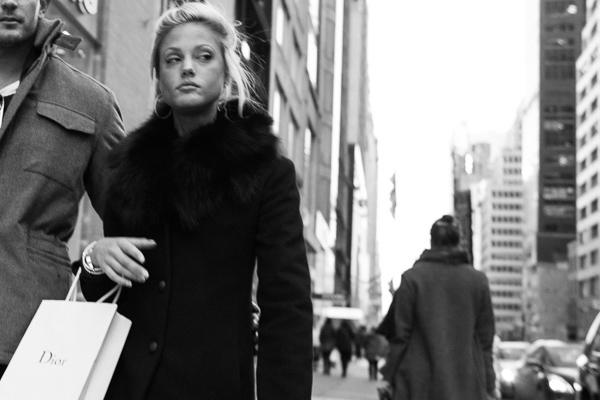
NY is filled with nervous people. This image tells the story of the city more than any image of a skyscraper can.

New York is made up of nervous people. To me this image tells the story of the city more than any image of a skyscraper can.

For more street photography tips try these articles:

  • There is No Bad Light for Street Photography
  • 7 Tips for a More Anonymous Approach to Street Photography
  • How to Create Amazing Urban Landscape and Street Photography Images
  • Practical Tips To Build Your Street Photography Confidence

googletag.cmd.push(function() {
tablet_slots.push( googletag.defineSlot( “/1005424/_dPSv4_tab-all-article-bottom_(300×250)”, [300, 250], “pb-ad-78623” ).addService( googletag.pubads() ) ); } );

googletag.cmd.push(function() {
mobile_slots.push( googletag.defineSlot( “/1005424/_dPSv4_mob-all-article-bottom_(300×250)”, [300, 250], “pb-ad-78158” ).addService( googletag.pubads() ) ); } );

The post The Importance of Capturing Gesture and Emotion in Street Photography by James Maher appeared first on Digital Photography School.


Digital Photography School

 
Comments Off on The Importance of Capturing Gesture and Emotion in Street Photography

Posted in Photography


Street Photography: Easy To Learn, Impossible To Master

30 Mar

Of all the different fields of photography, street photography might be the most difficult. However, it’s also an area that many aspiring photographers jump into first. Street photography almost seems like the reason photography was created for in the first place. Unlike taking photos in a studio, shooting landscapes or working with models, street photography entails a bit of chaos. Continue Reading

The post Street Photography: Easy To Learn, Impossible To Master appeared first on Photodoto.


Photodoto

 
Comments Off on Street Photography: Easy To Learn, Impossible To Master

Posted in Photography


5 Tips for Doing Candid Wedding Photography

30 Mar

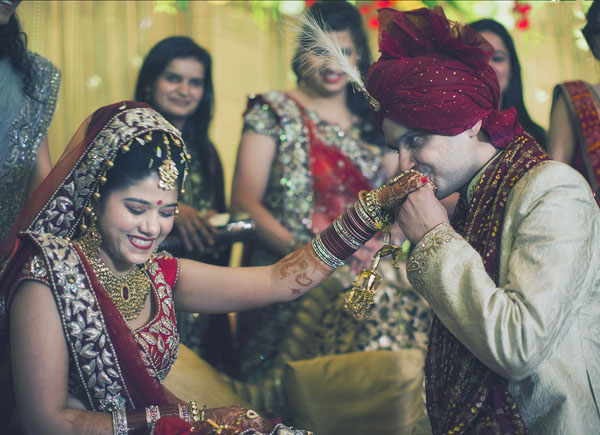
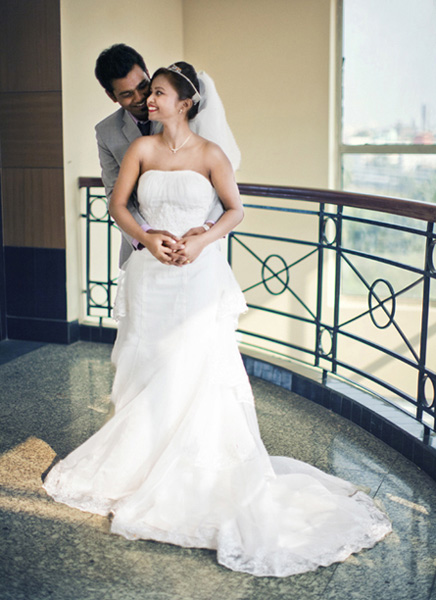
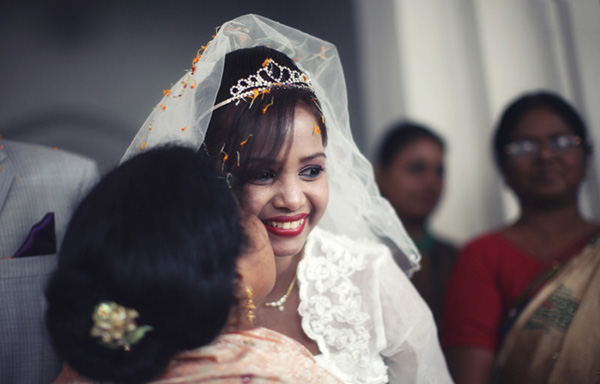
Weddings have changed drastically in the past few years. Couples want more from a wedding these days, they don’t want the traditional, normal photography anymore. They frequently ask for documentary or candid wedding photography because it captures the emotions of not only the couple, but also the guests enjoying themselves without lining them up in front of the camera.

IMG 0072

But, candid photography is so much more than just pointing your camera at people and shooting away to glory. You, as a photographer, need to know and understand the finer nuances involved in candid wedding photography; you need to know how to get good candid shots without people noticing you. Here are five tips to shoot a wedding in a lovely, unobtrusive and candid way which would make the entire task much easier for you.

1. Always be ready

The prime tip for candid wedding photography which I can give is, to be always ready. By that, I mean you must always keep an eye out for moments, and keep that camera ready. Your camera needs to be in your hands and ready to shoot at a moment’s notice. You must set the camera according to the light conditions (settings like the aperture, shutter speed, ISO, white balance, etc.) so that you don’t need to fiddle around with the settings while things happen in front of you. (IMG_7211)

IMG 7211

2. Know your equipment

I cannot tell you how many times I’ve seen photographers miss the shot while they are trying to change the camera settings. You must know the equipment that you are using, inside out. It helps to gauge the light conditions and set the camera accordingly, so that you don’t miss the events that would warrant a picture. It might very well be helpful to have a smaller camera handy, in addition to that big bulky DSLR, just incase.

IMG 6243

3. Use a telephoto zoom lens

Candid photography is all about taking pictures of the bride, groom, guests, etc., from a distance without them noticing you. Nothing will be more helpful in achieving this than a fairly long telephoto zoom lens. I regularly use lenses like a 100mm, 70-200mm or even a 100-400mm when I need to capture those emotions, those candid moments. You can, of course, use any lens you want (something like a 50mm could be helpful too!). But, since candid photography is all about being unobtrusive and capturing those emotions in a natural way, I would suggest using a zoom lens. What it essentially does is helps maintain the intimacy of the picture being taken, which is so important in wedding photography.

IMG 7210

4. Do not use flash

One sure-fire way of getting people to notice you is to use a flash (whether it be the onboard one, or an external flash gun). Not only this, light from a flash can be so unflattering and boring, to put it simply. If there is a dearth of light, you as a photographer need to find other ways to brighten up the scene that you are photographing, either by opening up the aperture, increasing the ISO, slowing up the shutter (to an acceptable range), etc. I understand that by increasing the ISO a little too much, you might include a fair bit of noise into the picture, but the idea is to capture the moment, and there are times when noise is actually a good thing.

IMG 2346

5. Foresee or plan ahead

As a candid wedding photographer, it is your job to foresee what is going to happen, or at least take your best calculated guess. If possible, I’d suggest you visit the location before the wedding so that you can scout out some good locations for taking pictures. If you are unable to go visit the location beforehand, then at least reach the venue well before the function is to start. That way you can scout out not only some great locations to take pictures from, but you can perhaps even scope out the main rooms that will be used for the wedding and the reception. A little bit of planning goes a long way in getting some great shots.

I hope these top five tips will help you the next time you are out photographing a wedding in a candid, documentary style.

googletag.cmd.push(function() {
tablet_slots.push( googletag.defineSlot( “/1005424/_dPSv4_tab-all-article-bottom_(300×250)”, [300, 250], “pb-ad-78623” ).addService( googletag.pubads() ) ); } );

googletag.cmd.push(function() {
mobile_slots.push( googletag.defineSlot( “/1005424/_dPSv4_mob-all-article-bottom_(300×250)”, [300, 250], “pb-ad-78158” ).addService( googletag.pubads() ) ); } );

The post 5 Tips for Doing Candid Wedding Photography by Bobby Roy appeared first on Digital Photography School.


Digital Photography School

 
Comments Off on 5 Tips for Doing Candid Wedding Photography

Posted in Photography


5 Simple Yet Clever Ways to Impress Your Photography Clients

30 Mar

While a satisfied client is the fuel for further sales and word of mouth, an excited client is the jet engine for your marketing. Unfortunately, many photographers don’t know how to turn regular customers into fans.

In this article you’ll find five simple, time-proven techniques of impressing your photography clients and building a long-lasting relationship from an ordinary photo shoot.

1. Be Professional

01 be professional
Image by niekverlaan

You should portray a professional image of yourself right from the beginning. This doesn’t necessarily involve spending hundreds of dollars on premium graphic design services and printed materials. In today’s world we have to deal with poor customer service too often, so being quick with your replies to client requests is an old yet very effective way to impress people.

Another factor contributing to your professional image is your website. It’s the first thing your clients see when they find you on the Internet, so it’s critically important to keep your site accessible and up-to-date. Don’t forget to update your portfolio and copyright information and make sure your website is mobile-friendly. Update information on your site regularly along with the copyright, share some personal stuff on your blog and “about me” page to show that you’re an open and available person, share your interests to make potential clients feel closer to you even before you meet.

Also, take care of your outfits and your entire appearance. No matter what type of photo shoot you’re heading to, make sure you’re dressed appropriately as it will directly affect whether or not you’ll get future jobs from this shoot. A rule of thumb is to avoid busy and loud clothing in favor of smooth colors and neutral style. Consider your own comfort, but probably more importantly, make your clients feel comfortable with you walking around.

2. Be Helpful, Be an Authority

02 be authority

Image by tpsdave

Give your clients an additional reason to book your service by providing exclusive, helpful information. It can be a blog post on how to dress for different types of photo sessions, or you could organize a workshop for moms on how to take great snaps of their children using a smartphone or a pocket camera. The idea is to figure out your clients’ possible knowledge gaps and fill them.

Not only is this a great way to strengthen relationships with your current customers, but it can also help you establish the reputation of being an experienced, leading professional which works as a charm for attracting qualified leads.

3. Get Creative with Bonuses

Every business is interested in long-term relationships with their customers, and photographers should be no exception. Your loyal clients help you find new client, but what do they get in return? Develop a loyalty program for your customer base. An exclusive discount or a free mini-session just for using your services will definitely leave an impact.

03 give bonuses
Image by GLady

Another neat way to please your loyal audience with an unsolicited bonus is creating a personalized product for them. For instance, with Defrozo you can create custom downloadable client galleries for free. The albums look great on both desktop and mobile screens, and can be built within a couple of minutes. The developers of Defrozo also promise full-featured websites for clients available later this year as the project raises funds on Kickstarter. You could also create a sweet, short video showing some backstage moments using Magisto.

Remember that bonuses don’t have to be monetary. It’s attention and a personal approach that will impress people.

4. Be the guy/girl next door

In other words, get to know what interests you have in common and use this info to customize your approach to the needs of your clients.

Fortunately you can make use of social networks. Not all of your clients will use them or share a lot of their personal details, but you can still get to know people you work with better by simply following their social media updates.

04 be the guy next door
Image by Alejandro Escamilla

Another great way to connect with your clients on a personal level can be seen on the website of well-known wedding photographers Justin and Mary Marantz. They simply listed things they like presented as icons accompanied by funny comments on their About page. That’s the information that turns a “leading destination photographer” into a “guy/girl next door” that understands you in a way no other photographer does, and therefore, can be entrusted to photograph one of the most special days of your life. Genius, huh?

5. Follow Up

Following up is important. When done right, it helps you reinforce relationships with your current clients. Besides, it’s a sure way for you to be recommended more often.

05 follow up
Image by Ginger Quip

It’s not uncommon to send your clients a printed Thank You card, along with a photobook or image pack from their session. You could go further and send them an extra print about a month after. Break the mould of typical follow-up messages that are only sent when a business wants to sell something and only include a note that would remind your client about the fun time you had during the photo shoot. It can work great as a feedback request too.

If sending a physical gift does not fit your budget at the moment, writing a detailed blog post about a specific client’s session is a decent alternative. It won’t cost you a penny, but sincere words shared publicly won’t leave them cold, for sure.

Summary

It’s sincerity, passion for what you do, and commitment to quality that motivates people to stick around forever. Is that what you can say about your business approach? Congrats, then, you’ve got that wow-factor to impress your clients. Remember that when creating your next marketing campaign and it will work like a charm.

What’s your number-one marketing tactic you use to impress your clients? Share with the community by leaving a comment below!

googletag.cmd.push(function() {
tablet_slots.push( googletag.defineSlot( “/1005424/_dPSv4_tab-all-article-bottom_(300×250)”, [300, 250], “pb-ad-78623” ).addService( googletag.pubads() ) ); } );

googletag.cmd.push(function() {
mobile_slots.push( googletag.defineSlot( “/1005424/_dPSv4_mob-all-article-bottom_(300×250)”, [300, 250], “pb-ad-78158” ).addService( googletag.pubads() ) ); } );

The post 5 Simple Yet Clever Ways to Impress Your Photography Clients by Julia May appeared first on Digital Photography School.


Digital Photography School

 
Comments Off on 5 Simple Yet Clever Ways to Impress Your Photography Clients

Posted in Photography


Weekly Photography Challenge – Shoot the Moon

28 Mar
Luz Adriana Villa

By Luz Adriana Villa

The image above and these other 25 images of the moon might give you a hint as to your challenge this week.

Night sky photography can be challenging and a lot of fun. Now’s the time to get out and try photographing the moon if you haven’t already.

We have several articles on the topic here on dPS if you need assistance:

  • 20 Dos and Don’ts for Shooting the Moon
  • Beyond Full Moon Photography
  • Moon Photography: 6 Tips for Better Moon Photos
  • Moon Photography Made Simple
Sam Javanrouh

By Sam Javanrouh

@lbyper

By @lbyper

Christian Ronnel

By Christian Ronnel

Dylan Toh

By Dylan Toh

Share your shoot the moon images here:

Simply upload your shot into the comment field (look for the little camera icon in the Disqus comments section) and they’ll get embedded for us all to see or if you’d prefer upload them to your favourite photo sharing site and leave the link to them. Show me your best images in this week’s challenge. Sometimes it takes a while for an image to appear so be patient and try not to post the same image twice.

googletag.cmd.push(function() {
tablet_slots.push( googletag.defineSlot( “/1005424/_dPSv4_tab-all-article-bottom_(300×250)”, [300, 250], “pb-ad-78623” ).addService( googletag.pubads() ) ); } );

googletag.cmd.push(function() {
mobile_slots.push( googletag.defineSlot( “/1005424/_dPSv4_mob-all-article-bottom_(300×250)”, [300, 250], “pb-ad-78158” ).addService( googletag.pubads() ) ); } );

The post Weekly Photography Challenge – Shoot the Moon by Darlene Hildebrandt appeared first on Digital Photography School.


Digital Photography School

 
Comments Off on Weekly Photography Challenge – Shoot the Moon

Posted in Photography