RSS
 

Posts Tagged ‘Photography’

Weekly Photography Challenge – Street Photography

06 Jun

In this previous post I shared a bunch of street photography images. But not just any old random ones. They are images that were taken all around the world, but yet still have a common thread, a connection. They included:

  • Photographers shooting other photographers
  • Subways, taxis and transportation
  • Markets and vendors
  • And buskers or street musicians
Fabrizio Maestroni

By Fabrizio Maestroni

Weekly Photography Challenge – Street Photography

Now the challenge is over to you. Go do some street photography, and if you want to take the challenge up a notch then try to work with the themes mentioned above. See if you can add to the body of work in those categories and let’s see how far and wide dPS readers reach. When you post you photo please tell us where it was taken.

Ben Fredericson (xjrlokix)

By Ben Fredericson (xjrlokix)

Alex

By Alex

Abhilash C

By Abhilash C

Luca

By Luca

Share your images below:

Simply upload your shot into the comment field (look for the little camera icon in the Disqus comments section) and they’ll get embedded for us all to see or if you’d prefer upload them to your favourite photo sharing site and leave the link to them. Show me your best images in this week’s challenge. Sometimes it takes a while for an image to appear so be patient and try not to post the same image twice.

If you need some tips for street photography try these:

  • There is no bad light for street photography
  • 7 Tips for a More Anonymous Approach to Street Photography
  • Using Humor In Street Photography
  • Practical Tips To Build Your Street Photography Confidence

googletag.cmd.push(function() {
tablet_slots.push( googletag.defineSlot( “/1005424/_dPSv4_tab-all-article-bottom_(300×250)”, [300, 250], “pb-ad-78623” ).addService( googletag.pubads() ) ); } );

googletag.cmd.push(function() {
mobile_slots.push( googletag.defineSlot( “/1005424/_dPSv4_mob-all-article-bottom_(300×250)”, [300, 250], “pb-ad-78158” ).addService( googletag.pubads() ) ); } );

The post Weekly Photography Challenge – Street Photography by Darlene Hildebrandt appeared first on Digital Photography School.


Digital Photography School

 
Comments Off on Weekly Photography Challenge – Street Photography

Posted in Photography


39 Street Photography Images That Have Common Threads

05 Jun

Street photography is a popular genre which many photographers enjoy, just for the sake of doing photography. You can find many articles on it here on dPS. Let’s look at a few street photography images from around the world and see if we can’t find similarities, as well as differences between them all.

I got carried away selecting images for this collection because I found the inter-connections intriguing and it inspired me. I hope you can see it too.

Photographers shooting other photographers

Photograph Working the Scene by Shamas Malik on 500px
Working the Scene by Shamas Malik on 500px

Photograph He is nikon photographer. How long have you been doing photography? by Zachary Voo on 500px He is nikon photographer. How long have you been doing photography? by Zachary Voo on 500px

Photograph The spy by Alexander Dragunov on 500px
The spy by Alexander Dragunov on 500px

Photograph Strike Back by Vichaya Pop on 500px Strike Back by Vichaya Pop on 500px

Photograph Violinist And Photographer by Juha Roisko on 500px
Violinist And Photographer by Juha Roisko on 500px

Photograph fellow photographer by Nico Ouburg on 500px fellow photographer by Nico Ouburg on 500px

Photograph spring frame... by Konstantin Vodolazov on 500px
spring frame… by Konstantin Vodolazov on 500px

Subways, taxis, and transportation


Photograph Don't Forget to Smile by Liz Leeb on 500px
Don’t Forget to Smile by Liz Leeb on 500px

Photograph Subway In Lisboa by Damien Dohmen on 500px

Subway In Lisboa by Damien Dohmen on 500px

Photograph Munich Subway in Yelow by Darío Sastre on 500px
Munich Subway in Yelow by Darío Sastre on 500px

Photograph Waiting by Fabio Vittorelli on 500px

Waiting by Fabio Vittorelli on 500px

Photograph some day, the man of your dreams... by laurent aublé on 500px
some day, the man of your dreams… by laurent aublé on 500px

Photograph Youth by Olga Bekker on 500px

Youth by Olga Bekker on 500px

Photograph Taxi by Steffen Richter on 500px
Taxi by Steffen Richter on 500px

Photograph Paris Taxi by Manuel Orero on 500px

Paris Taxi by Manuel Orero on 500px

Photograph Trinidad Cuba - The Green Taxi by John Barclay on 500px
Trinidad Cuba – The Green Taxi by John Barclay on 500px

Photograph tuk tuk by Eo NaYa on 500px

tuk tuk by Eo NaYa on 500px

Photograph Tuk Tuk by Drew Hopper on 500px
Tuk Tuk by Drew Hopper on 500px

Photograph Pedicab by Kent Atwell on 500px

Pedicab by Kent Atwell on 500px

Photograph rickshaw by avenish jain on 500px
rickshaw by avenish jain on 500px

Markets and vendors

Photograph Enlightened Colours by Daniel Bosma on 500px

Enlightened Colours by Daniel Bosma on 500px

Photograph Under the Bridge by Michael Steverson on 500px
Under the Bridge by Michael Steverson on 500px

Photograph Crab Steam ! by Mardy Suong Photography on 500px

Crab Steam ! by Mardy Suong Photography on 500px

Photograph Ducky by Michael Steverson on 500px
Ducky by Michael Steverson on 500px

Photograph Date Seller by William Selviz on 500px

Date Seller by William Selviz on 500px

Photograph Scottish Cheeseshop /Monger by Benedikt D-rner on 500px
Scottish Cheeseshop /Monger by Benedikt D-rner on 500px

Photograph Morning time by Dikye Darling on 500px

Morning time by Dikye Darling on 500px

Photograph market by Omid Farrokh on 500px
market by Omid Farrokh on 500px

Photograph Taladromhub , Samutsongkham , Thailand by Atipan Khantalee (Thailand) on 500px

Taladromhub , Samutsongkham , Thailand by Atipan Khantalee (Thailand) on 500px

Photograph A Piece of Lokbaintan by Fauzan Maududdin on 500px
A Piece of Lokbaintan by Fauzan Maududdin on 500px

Buskers or musicians

Photograph sax player by Daniel Antunes on 500px

sax player by Daniel Antunes on 500px

Photograph The Accordionist by Joanna Lemanska on 500px
The Accordionist by Joanna Lemanska on 500px

Photograph Musicians  by Gazali © on 500px

Musicians by Gazali © on 500px

Photograph The street musician by Alina Voitkov? on 500px
The street musician by Alina Voitkov? on 500px

Photograph Clarinetist by Hai Hua on 500px

Clarinetist by Hai Hua on 500px

Photograph The Moroccan Street Crooner by Blindman shooting on 500px
The Moroccan Street Crooner by Blindman shooting on 500px

Photograph Prague by Eduardo González on 500px

Prague by Eduardo González on 500px

Photograph Busker by Marc Apers on 500px
Busker by Marc Apers on 500px

Photograph Street Musician in Cienfuegos by Nevzat Gökmen on 500px

Street Musician in Cienfuegos by Nevzat Gökmen on 500px

googletag.cmd.push(function() {
tablet_slots.push( googletag.defineSlot( “/1005424/_dPSv4_tab-all-article-bottom_(300×250)”, [300, 250], “pb-ad-78623” ).addService( googletag.pubads() ) ); } );

googletag.cmd.push(function() {
mobile_slots.push( googletag.defineSlot( “/1005424/_dPSv4_mob-all-article-bottom_(300×250)”, [300, 250], “pb-ad-78158” ).addService( googletag.pubads() ) ); } );

The post 39 Street Photography Images That Have Common Threads by Darlene Hildebrandt appeared first on Digital Photography School.


Digital Photography School

 
Comments Off on 39 Street Photography Images That Have Common Threads

Posted in Photography


7 Steps to Create Street Photography Silhouettes

05 Jun

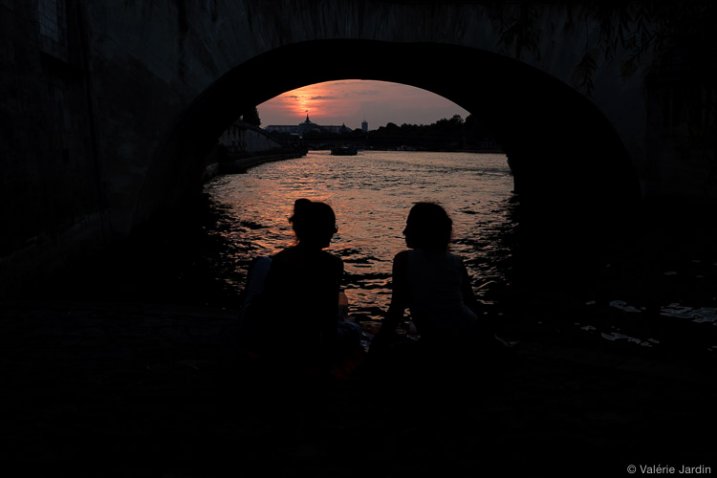
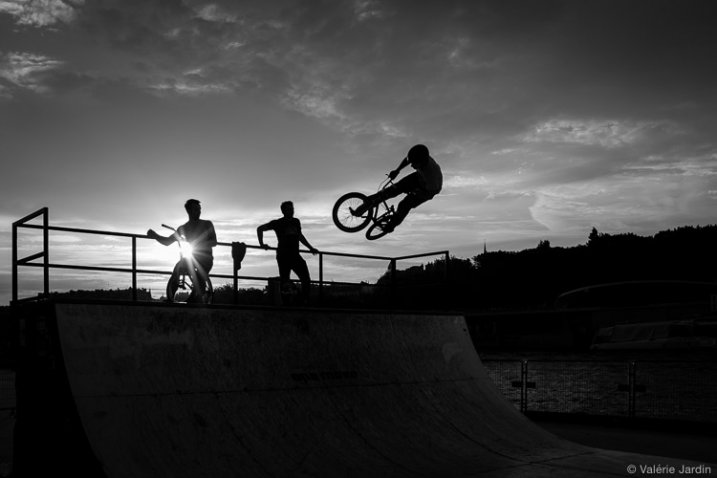
For the street photographer, shooting a perfect silhouette is a very gratifying moment. Just like anything else in street photography, not every subject makes for an interesting silhouette photograph. Here are a few tips to help you capture an interesting silhouette on your next photo walk.

Some elements, such as bicycles, make for more interesting silhouettes.

Some elements, such as bicycles, make for more interesting silhouettes.

1. Set your camera for success

To shoot a silhouette you have to take control of your camera first. Your flash needs to be turned off. Ideally your exposure is set for the highlights (background). If you set your exposure on your subject, your camera will try to expose your subject properly. The result would reveal too much detail in the subject and blow out the highlights in the background. Exposing for the highlights is easily done if your camera is set to spot metering. You can also use average metering and trick your camera by stopping down your exposure compensation so that your subject remains dark.

Focussing can be tricky. You can spot meter for the highlights and manually focus on your subject. Or, if you shoot in Aperture Priority, set your aperture to a large number (small aperture) to allow for most of the scene to be in focus (large depth of field)

It is important not to blow out the highlights in sunrise and sunset silhouettes.

It is important not to blow out the highlights in sunrise and sunset silhouettes.

2. Don’t be afraid to blow out the highlights

Okay, I just told you to expose properly to avoid blowing out the highlights. That is certainly a good thing to keep in mind if you are shooting against the sunset, sunrise or the moon light for example. The rest of the time, unless the details in the background add to your story, you’re better off blowing out the highlights and going for a more dramatic effect. Your silhouette will stand out more on a white and unobtrusive background.

Details in the background should not distract from your silhouette.

Details in the background should not distract from your silhouette.

3. Learn to recognize a good silhouette

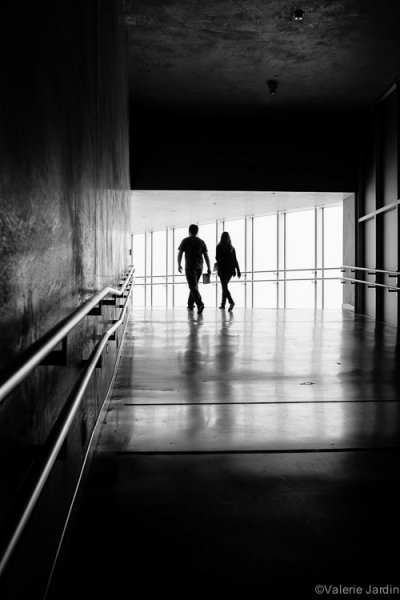
Now you know the basic technique to shoot a silhouette, that was the easy part. The most important piece is to be able to see a potentially strong subject, so be discerning!  Many elements come into play. The body being well defined is important, you should be able to recognize the shape right away. If the subject is facing you or his/her back is turned to you, there should be space between the arms and the body, the legs should be well defined as well. If you are photographing a person looking sideways, the features of their face should be quite clear.

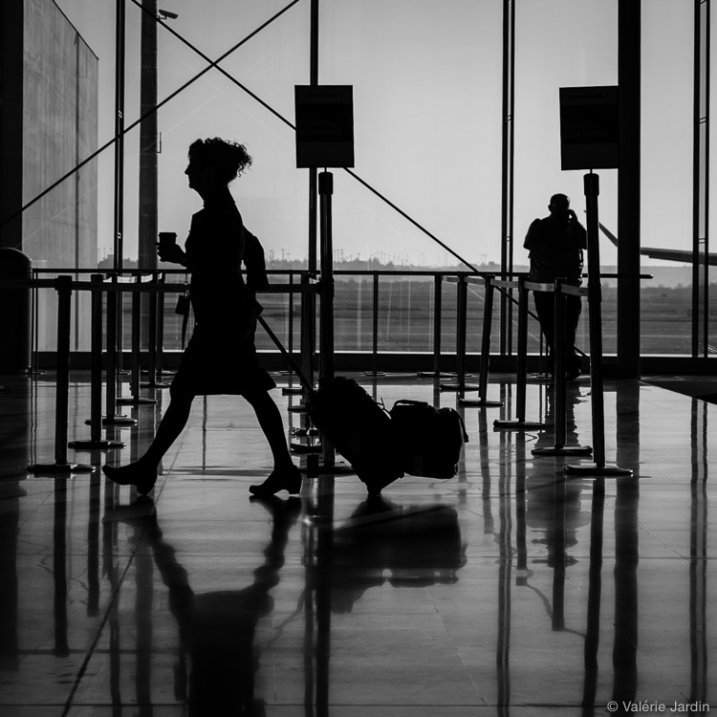
Capturing the right gesture or step is a key element in a successful silhouette in street photography.

Capturing the right gesture or step is a key element for a successful silhouette in street photography.

4. Avoid obstructions

Avoid obstructions in front of, and behind your subject. Timing is important. Silhouettes of posts or other obstructions can ruin the shot. Position yourself accordingly for the best possible shot.

Timing is everything, especially in a cluttered environment.

Timing is everything, especially in a cluttered environment.

5. Try some added effects

A sunburst can be an added bonus to a silhouette photograph, and a welcome added challenge for you, the photographer.

Add to the challenge with a sunburst effect.

Add to the challenge with a sunburst effect.

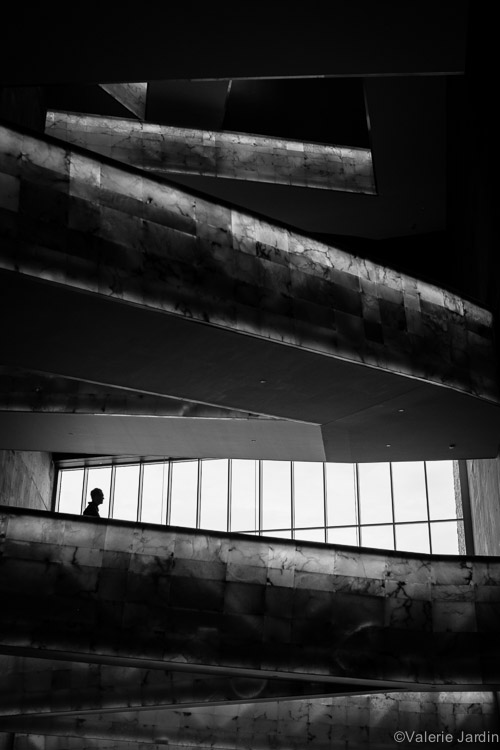
6. Try a minimalist approach

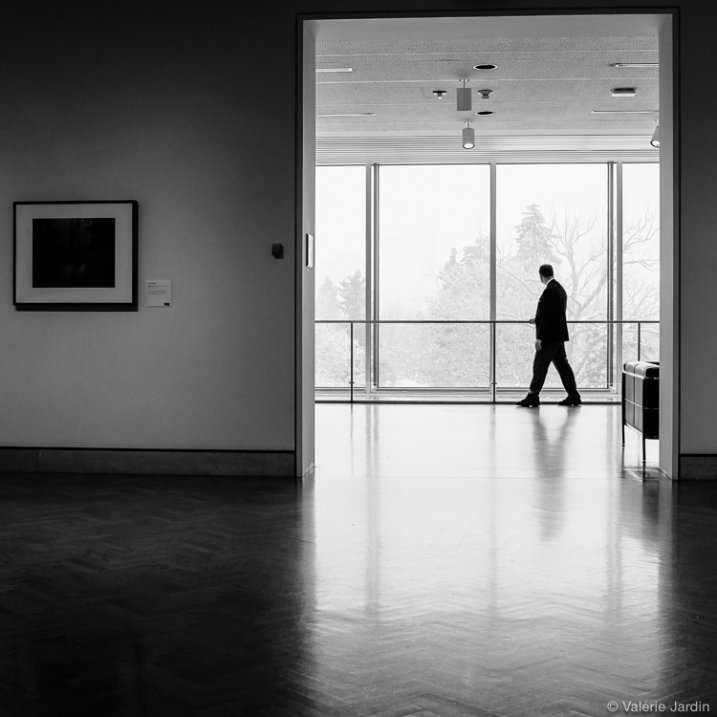
Find an interesting architecture or urban landscape and wait for someone to enter your frame. Even small, the human element becomes the focal point.

A minimalist approach to photographing a silhouette can make for a strong image.

A minimalist approach to photographing a silhouette can make for a strong image.

7. Tweak in post-processing

If you use Lightroom, you can easily tweak your photograph by using the contrast, highlights, shadows and black sliders for the final touches and the look you envision.

Now grab your camera and hit the streets!

googletag.cmd.push(function() {
tablet_slots.push( googletag.defineSlot( “/1005424/_dPSv4_tab-all-article-bottom_(300×250)”, [300, 250], “pb-ad-78623” ).addService( googletag.pubads() ) ); } );

googletag.cmd.push(function() {
mobile_slots.push( googletag.defineSlot( “/1005424/_dPSv4_mob-all-article-bottom_(300×250)”, [300, 250], “pb-ad-78158” ).addService( googletag.pubads() ) ); } );

The post 7 Steps to Create Street Photography Silhouettes by Valerie Jardin appeared first on Digital Photography School.


Digital Photography School

 
Comments Off on 7 Steps to Create Street Photography Silhouettes

Posted in Photography


3 Downsides to Scouting New Photography Locations Online

05 Jun

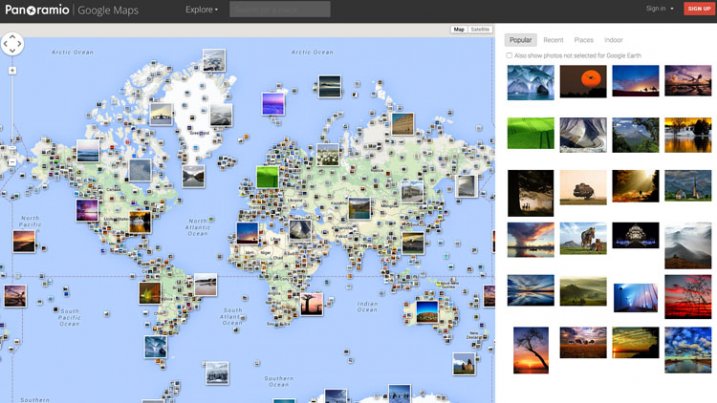
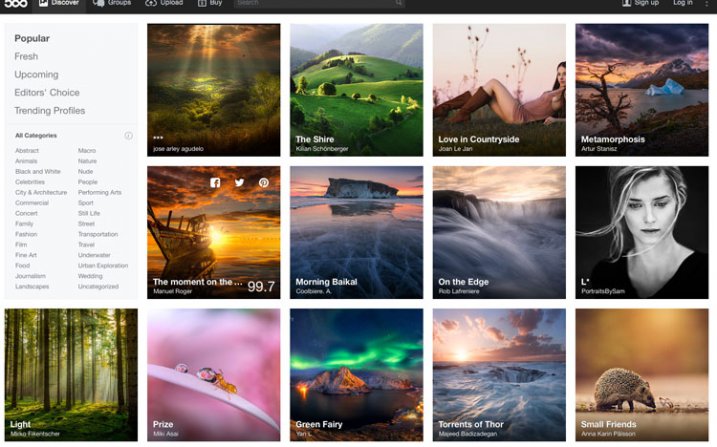
Do you scout for potential photography locations online through sites like Flickr, Panoramio or 500px?

Of course you do! It’s easy, you get hundreds of photographs to look at of any given location, and you might even get some great ideas that you hadn’t thought about for subject matter or composition. So why am I asking you this question?

Well here’s another question for you…

Have you ever thought about the downsides of online photo scouting?

I’m going to venture a guess that it probably hasn’t even crossed your mind before today. What downsides could there possibility be with these rich resources, filled with information about where, and how a photograph was taken? Read on to find out.

1. You’re seeing hundreds, if not thousands of photographs

scouting-photos

When it comes to sites like Flickr or Panoramio, or even apps like Stuck on Earth (which pulls its photographs from these sites) you’re able to see many years worth of photographs taken by dozens, if not hundreds, or even thousands of photographers. At first glance this might seem like a great resource, and to some extent it is, but there’s also a downside – namely you might get lost trying to mimic and forget to create.

Because you’re able to see so many photographs of a given location you may become so focused on a specific angle or idea from these photographs, that you forget to look for your own unique way to express the scene in question – and as a result your image may lose some originality.

2. The things a photo can’t tell you

A photograph on a website will give you some great ideas and insight into a location, but at the same time, it doesn’t tell you a lot of important things too. For example, you’ll have no idea how many attempts it took the photographer to find the right lighting conditions. You won’t know much about how difficult the location is to reach, or if that particular image required camping out to achieve the desired result.

3. You’re drawn to the best photography

scouting-photo

Not only are you naturally going to be drawn to the best photography on these sites, but they tend to push the best photography higher in searches and ranking, making it even more likely that’s what you’re going to see. Again, on the surface this might sound like a great thing because you’re able to see all the great possibilities that a given location has to offer – but there may be a downside here as well.

Think about this… how likely is it that these great photographs you’re seeing are from people who have visited a location just once? Most great photographs are planned, iterated upon, and purposefully shot. When you find a photograph on a site like this you’re looking at the best of the best, and as a result you’re seeing the best possible lighting conditions a scene might offer, which might not occur while your there.

In an article I’ve previously written for DPS titled Start feeling GOOD about YOUR photography I noted that it’s important that you don’t compare your work to someone else’s. This is particularly true for those who have more experience behind a camera than you, as it will only lead to disappointment.

I think that this advice can be extended to scouting for locations and inspiration as well. Setting the bar too high will only lead to stress and anxiety if you’re unable to produce results that live up to your expectations. This experience could leave you disappointed about your trip to a fantastic location – which had you gone in blind, may not have happened.

Final thoughts

I don’t want you to completely write off these resources, after all they do provide you with great inspiration and ideas. This isn’t an article designed to get you to stop using these sites, or even this technique for finding locations, but rather, to use it smarter. I hope this has given you something to think about. Please feel free to share your own thoughts in the comments section below.

googletag.cmd.push(function() {
tablet_slots.push( googletag.defineSlot( “/1005424/_dPSv4_tab-all-article-bottom_(300×250)”, [300, 250], “pb-ad-78623” ).addService( googletag.pubads() ) ); } );

googletag.cmd.push(function() {
mobile_slots.push( googletag.defineSlot( “/1005424/_dPSv4_mob-all-article-bottom_(300×250)”, [300, 250], “pb-ad-78158” ).addService( googletag.pubads() ) ); } );

The post 3 Downsides to Scouting New Photography Locations Online by John Davenport appeared first on Digital Photography School.


Digital Photography School

 
Comments Off on 3 Downsides to Scouting New Photography Locations Online

Posted in Photography


4 Photography “Tricks” That Should Be Quietly Retired

04 Jun

If you’ve ever felt the temptation to “improve” some of your photos with some special tricks, then you’re not alone. Many people with a passing interest in photography employ all manner of “extras” to give their photo some added visual interest. Most of these tricks, however, are ham-fisted affectations that can not only ruin your photos, but mark you as Continue Reading

The post 4 Photography “Tricks” That Should Be Quietly Retired appeared first on Photodoto.


Photodoto

 
Comments Off on 4 Photography “Tricks” That Should Be Quietly Retired

Posted in Photography


Utilising Meerkat and Periscope for Your Photography Business

02 Jun

In this article we’re going to talk about Periscope and Meerkat apps and how a photographer can benefit from these services. Use technologies of the future to grow your business! What are Meerkat and Periscope Meerkat is a live video streaming app. It’s available on iOs and Android. Meerkat links directly to Twitter profiles, which lets people stream a live Continue Reading

The post Utilising Meerkat and Periscope for Your Photography Business appeared first on Photodoto.


Photodoto

 
Comments Off on Utilising Meerkat and Periscope for Your Photography Business

Posted in Photography


Quick Tips for Getting Into Stock Photography

01 Jun

Getting accepted as a stock photographer can be a difficult and frustrating process. Especially when your best photos get rejected by photo reviewers. After helping many photographers trying to become accepted as Shutterstock contributors, I have discovered how the process can instead become a fun and educational experience.

Stockphoto1

Why become a stock photographer?

Stockphoto3

Earning money on your digital photography work is a great way to earn an extra income. But it is often not the main motivation for why many people try to become contributors. Being accepted, and being able to call yourself a stock photographer, means something. Similar to how many people develop their skills so they one day can become a professional in their field, being able to call yourself a stock photographer will for many mean more than saying you’re a professional photographer.

When someone presents themselves as a professional photographer, people tend to have different views of what that means. Some associate a professional photographer with someone that makes high quality photos. Others may think of the person they hired to photograph their wedding. Or perhaps someone that has their photos sold in a gallery. Some may think a professional photographer is only someone that has a diploma, or someone that works full-time and earns their main income from their photography.

Being able to say you’re a stock photographer says something about the level you have reached. Why? Because the stock photography industry is well known for its high quality requirements.

Furthermore, the best part of being a stock photographer is knowing your work is being purchased, appreciated, and used all around the world. With modern tools like Google image Search, you can back trace and find were and how your most popular photos are being used.

Stockphoto4

Are you qualified?

If you know how to make a manual exposure, get the focusing correct and have a good eye for correct white balance, you’re most likely qualified to become a stock photographer.

Expect to get rejected

It might take a few attempts. But once you’re accepted, as many existing stock photographers can testify, it made them an even better photographer. A rejection of your initial submission might feel like a disappointment at first. But take advantage of the feedback and suggestions provided. Your initial submission will most likely be more strictly evaluated than the general submissions you’ll make in the future after getting accepted.

Stockphoto7

Find the motivation to learn

Try to see your first submission as a homework assignment for reading the stock agency’s submission guidelines. Like any course or workshop, your first homework assignment is not expected to be flawless. There will most likely be room for improvement. With this attitude, learning about stock photography can be an educational, fun, and even motivating experience.

The first batch of photos is the hardest

For example, when signing up to one of the most popular stock photography sites like Shutterstock, you are asked to submit 10 samples of your best work. Seven of these must pass the strict inspection of their reviewers. But if rejected, you’re provided with great feedback to help you improve your photography.

Stockphoto5

It gets easier after getting accepted

As any existing stock photographer can testify, your initial batch of submitted work is much more strictly evaluated than the general submissions you will make in the future after getting accepted.

You’re closer to getting accepted than you might think

A submission that is not approved is often not completely rejected either. Many rejected photos can have only one minor issue that can sometimes even be fixed with a little editing. Even though it may feel like your entire batch of submitted work was rejected, you might only be a few adjustments away from getting accepted.

Stockphoto2

Try again. Many existing stock photographers did.

Many existing stock photographers did not get accepted on their first attempt. For every initial submission that is not approved, take good use of the feedback that is required. See it as a free portfolio review from experts in the field. Be inquisitive, study the material and try again!

googletag.cmd.push(function() {
tablet_slots.push( googletag.defineSlot( “/1005424/_dPSv4_tab-all-article-bottom_(300×250)”, [300, 250], “pb-ad-78623” ).addService( googletag.pubads() ) ); } );

googletag.cmd.push(function() {
mobile_slots.push( googletag.defineSlot( “/1005424/_dPSv4_mob-all-article-bottom_(300×250)”, [300, 250], “pb-ad-78158” ).addService( googletag.pubads() ) ); } );

The post Quick Tips for Getting Into Stock Photography by Kjell Leknes appeared first on Digital Photography School.


Digital Photography School

 
Comments Off on Quick Tips for Getting Into Stock Photography

Posted in Photography


The Future of Photography Websites – Understanding and Adapting to Trends Continued

31 May

In an earlier article (The Future of Photography Websites – Understanding and Adapting to Trends) on this topic, you can read about a couple of major trends in the web-design industry (as they relate to photo websites). Here’s a quick review:

  • The huge number of new websites being built and ways to rise above the noise including: Choosing a photography niche (specializing); Differentiating yourself as a photographer; Using quality platforms and website templates; Simplifying and prioritizing elements on your site; Understanding and focusing on your target audience.
  • New website performance standards and their effect on browsing habits: Why and how to make your website faster; Editing down your content and creating a smooth browsing experience; Having clear website navigation.

Now we’re going to continue exploring many other important aspects you should take into consideration when building your photography website (whether it’s an online portfolio, a stock website, or centred around a photo blog). All combined, these notes should give you a more clear picture of how to build your photography website and steer towards a more successful photo business.

3. Mobile devices are omnipresent and powerful

This is fairly obvious to see in the world around us, but what implications does it have on photography websites?

a. The old adage: stop using flash on your site

No need for me to dwell on this, but it’s hard to write an article on photography websites without mentioning Flash, and with good reason. I hope you’re in the position to skip this paragraph, but if you’re still using Flash, continue reading and consider making some changes soon.

Besides the well-known SEO limitations, Flash websites are slower, not compatible with Apple devices, harder to update, and can be almost entirely replaced today using modern HTML5, CSS3 and Javascript components (and surely surpassed in many aspects).

b. Make your website mobile-friendly (responsive)

Many photographers are reporting that almost half of their website traffic comes from mobile users (smartphones and tablets), and we can expect this number to rise further.

So you can no longer afford not to have a mobile-friendly website. Google confirmed this by announcing they will now penalize non mobile-friendly sites. While this is just one of the many factors Google uses to rank websites, it’s a strong signal to take note of this issue.

This is especially important for photography websites where users interact with the site more (using slideshows, doing searches, buying images etc.) Slideshows and static images (along with the entire layout, of course) should automatically resize and adapt to any screen size.

Example 7a responsive

To emphasize the importance of a mobile-friendly browsing experience, Google provides a free testing tool for your site and rewards responsive websites in mobile search results:

Example 7b mobile friendly badge

c. Once again, make your website fast

You can read about website performance in the first article, however, it’s worth mentioning here again. The load times of a website are even more important to mobile users (with mobile networks being somewhat slower and less reliable than home broadband connections).

4. Content-consumption rates are increasing (a lot)

Not only are more users coming online (and using more devices than ever before), but they’re also consuming a lot more content. This should come as no surprise, and it’s worth considering for its web-design implications. Since users want more content, here are some ways to help them out:

a. Make your site easily shareable

That means leveraging social media buttons on your website (even when you don’t have your own profiles on those specific social media sites), making it easy for people to recommend your images and pages.

Example 8 social shares

Don’t neglect tweaking your site to display pretty permalinks: a page URL like this www.johndoe.com/?p=789 is much uglier than something like www.johndoe.com/gallery/great-description-here/. Besides the SEO implications, pretty permalinks are also important for people sharing your content: if a URL is more inviting, it will naturally get more shares and visits.

b. Keep the content fresh
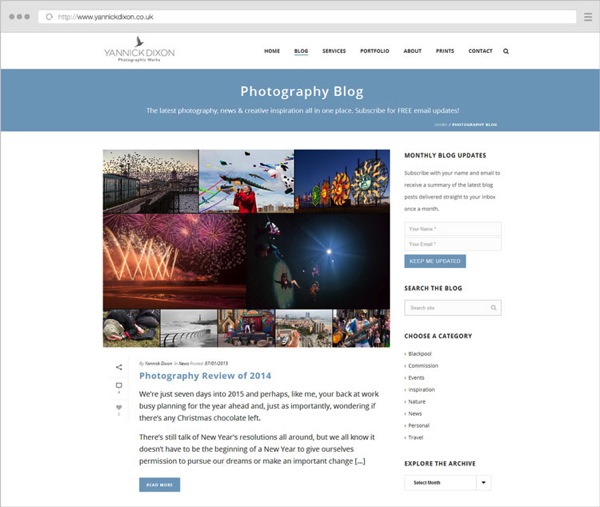
Example 9 yannickdixon blog

While everybody knows that blogs should frequently be updated, you need to refresh the rest of your website once in a while too.

  • Make sure your contact information is up to date.
  • Have some featured galleries on the homepage? Change or rotate them from time to time.
  • Have a slideshow? Rearrange some of its images, or add new ones. Returning visitors will notice that.
  • Recently worked on a project or received an award? Make sure it’s there on your site.
  • Consider keeping a Recently Updated gallery or section on your site’s homepage, depending on your layout.
  • Schedule and do such a site review regularly.

You’re not making a good impression if your site is becoming stale after months of inactivity, and let’s not even talk about Google (who values fresh content as much as users do).

c. Consider offering an email newsletter

Email marketing is becoming huge these days. While everybody hates inbox clutter, getting unique and valuable content via email is always good. This is especially important if you have a photography blog. Sure, people can come to your site to check for new content (or subscribe to an RSS feed), but sending them content directly via email can be very effective.

Example 10 kenkaminesky newsletter

The people who subscribe to your mailing list are already targeted; they’re interested in your content to start with,
and want to see more of it. You can look into tools like MailChimp (free for up to 2000 subscribers) and follow their best practices for creating, and managing your mailing list.

5. People are searching more, not just exploring

Remember we mentioned impatience. With things happening so fast online, people expect to be able to search for content if they can’t find what they’re looking for in a few clicks. It comes down (again) to how you organize your site structure (and having clear site navigation), but it’s also about providing metadata and search options where appropriate:

a. Don’t ignore text content

Okay, you have a photography site, so it’s supposed to be image-heavy and visually impressive. The homepage is sometimes a good place to do that, but throughout the site, you need to also have quality text content to provide context.
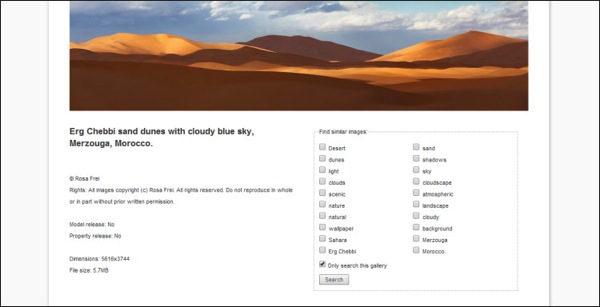
Example 11 rosafrei metadata

We’re not even attacking this point from an SEO perspective. It’s important to your users that you describe every piece of content you have:

  • What are these images about? (IPTC captions and keywords displayed on the page).
  • What is this entire gallery about? (Gallery descriptions).
  • What is this page about? (On-page intro paragraphs, SEO titles and meta descriptions to help users when seeing search results).
  • What is this blog post about? (Text inside blog posts too, not just one image per post).
  • What is this entire site about? (Titles and descriptions once again, text on the About page, text on other pages describing your work/services).

b. Allow (and track) image searches on your site

Once again, this comes down to properly captioning and keywording your images, along with having an easy-to-find search functionality. This entire process is time-consuming, for sure, but you’ll reap the benefits in the long run. How you add all this searchable image IPTC metadata is also important and shouldn’t be taken lightly. Nobody will do a search on your site for “DSC0023”, so you need to provide real value to users that need to search, by describing your images for:

  • Abstract meanings.
  • Scientific names where appropriate.
  • Actual persons/locations/objects depicted in them< ./li>
  • More creative captions describing your process, experience, gear, etc.
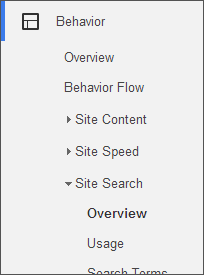
Example 12 analytics site search

You can obviously write unlimited keywords for your images (sometimes overdoing it with all the possible synonyms), but it’s usually recommended to go for 10-20 keywords per image depending on the type of photography you do.

Once images are on your site and people are searching for them, be sure to also track those searches in Google Analytics to learn more about popular search queries (informing you about content demands). There are exceptions to this: simple portfolio websites (with just a small selection of best-of images) don’t really need a search functionality. For larger stock archives or anybody selling prints/licenses though, it’s a must.

If you have a popular blog on your site, a blog search option also comes in handy. Just make sure it doesn’t get into a fight for attention with the image search box – they need to be clearly separated. Choose whichever is most important to make prominent (like having an image search box in the header throughout the site, and a discreet blog search option in the blog sidebar only).

6. Search engines are looking at user satisfaction as a huge ranking factor

There’s obviously a huge buzz around SEO and how to rank higher for certain keywords. Google is always one step ahead, continually changing their algorithms to prevent any dishonest or spammy tactics. How do they do that? They constantly figure out how people make browsing choices, and turn those into ranking factors.

When writing SEO titles and meta descriptions, think about how they would look in search results, how to best encourage users to give you their clicks. Don’t just stuff them with keywords for Google’s sake.
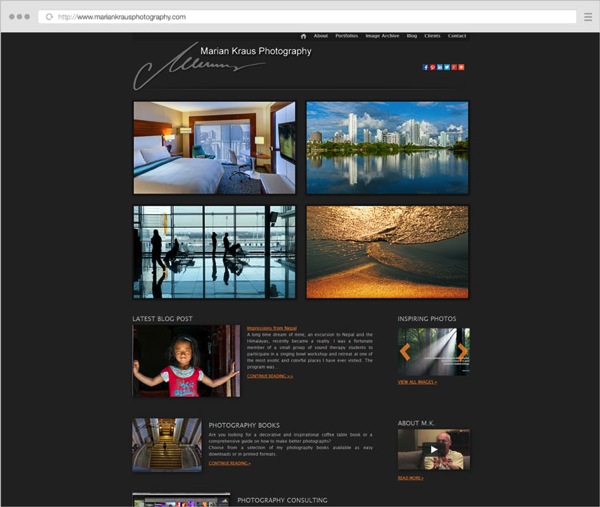
Example 13 mariankraus

For every main page on your website, ask yourself:

  • What do people come to this page for?
  • Can users quickly find the information they’re after?
  • What would you want to see on this page if you came here for the first time?
  • Where should visitors go to after viewing this page?
  • What elements on the page are probably not useful to people?

This change in mindset is the one thing that can set you apart and differentiate your photo website. Sure, there are many SEO-specific actions you need to take care of, but you should always go above and beyond in providing value to people. Do that, and it will be impossible not to rank well in search engines.

7. Social media websites come and go

You probably can no longer build a successful business without some sort of social media presence. But you would be taking too many risks to only setup camp there, without building your own website. Social media companies can always get sold or shut down (acquisitions, natural life cycles, new competitors etc.), so you don’t really own your profiles there.

Whereas a website is an asset you can control, that you have copyright over. You’re interested in buying instead of just renting online real-estate. Social media sites are excellent marketing hubs, and they’ll always be there to drive business forward in one shape or another. But building your strong personal website should be the core of your focus.

With this in mind, it’s obviously important to leverage all the social media tools you have (by placing profile links and sharing buttons on your site). Use them as much as you want, just don’t rely solely on them, it’s more important to build your own online presence.

8. Web platforms and tools are maturing, and eCommerce is exploding

A lot of photographers these days are looking for hybrid solutions instead of having multiple separate sites. They want a place where they can blog, and showcase and sell their photos if they want. So it makes sense that some platforms are starting to offer that, and the days of having separate portfolio and blog sites are coming to an end.

Current established companies (like PhotoShelter or SmugMug) are getting strong competition from WordPress plugins like NextGen Gallery (with its Pro version) or WooCommerce (with its new Photography extension).

Example 14 scenicnh products

If you want to start selling prints/products, now is a good time. Since online sales keep growing, it’s natural to see many photographers shift (at least partially) from services to products, basically trying to build a passive income from their photography business. They do that through books, prints, courses, workshops, etc.

9. Design aesthetics are changing

Change is the only constant. I won’t recommend you use any particular flat design elements, any colors or layouts because those are just like fashion trends. They come and go.

What is here to stay is simplicity. I can’t imagine a time when having a cluttered header area (with 10-12 menu items, six social media links, a search box and a subscribe box, all crowded together) will be in fashion. A clean website is not about using big fonts or a lot of white. It’s about prioritizing your business goals and the elements on your site.

Applying this mindset to the number of galleries you feature on your homepage or the products and services you offer is important. When visitors have fewer and more clear choices to make, they have a better browsing experience and are more likely to trust your website and keep coming back for more.

Example 15 sebastienmerion

Conclusion

Along with part one of this article, this was an overview of the important web-design trends you should be aware of as a photographer.

Constant improvement is the only way to be successful with an online photography business. You know this to be true for your photo technique and composition skills (since you’re reading this on dPS, after all). The mindset can be applied to your online presence as well; it’s a continuous effort to get better and adapt to the industry.

Success does not depend on cool slideshows and flat designs. Sure, you have to make your photography website beautiful, and, therefore comply with the latest web design fashion trends sometimes, but not at the expense of helpfulness and clarity.

googletag.cmd.push(function() {
tablet_slots.push( googletag.defineSlot( “/1005424/_dPSv4_tab-all-article-bottom_(300×250)”, [300, 250], “pb-ad-78623” ).addService( googletag.pubads() ) ); } );

googletag.cmd.push(function() {
mobile_slots.push( googletag.defineSlot( “/1005424/_dPSv4_mob-all-article-bottom_(300×250)”, [300, 250], “pb-ad-78158” ).addService( googletag.pubads() ) ); } );

The post The Future of Photography Websites – Understanding and Adapting to Trends Continued by Alex Vita appeared first on Digital Photography School.


Digital Photography School

 
Comments Off on The Future of Photography Websites – Understanding and Adapting to Trends Continued

Posted in Photography


Weekly Photography Challenge – Still Life

30 May

In this set of images I rounded up some imaginative images of objects, non-living things. Things don’t always have to appear as they really are in photos. Light, the right lens selection and angle of view can create an image of an everyday, seemingly ordinary object, and make it look interesting.

~lzee~by~the~Sea~is~not~really~all~here~

By ~lzee~by~the~Sea~is~not~really~all~here~

So your goal this week is to find some inanimate objects to photograph – in an interesting way. Use your imagination and creativity. How can you bring this ordinary thing to life? What camera settings or techniques can you use? What is the best lighting? You can use natural light, or flash, it’s up to you.

Weekly Photography Challenge – Still Life

Julie Falk

By Julie Falk

Pascal Bovet

By Pascal Bovet

Dhilung Kirat

By Dhilung Kirat

Dave Gray

By Dave Gray

Harry (Howard) Potts

By Harry (Howard) Potts

MelisaTG

By MelisaTG

Chimpr

By Chimpr

Look around your house, see what you can find just sitting around that might make a good subject. Don’t be afraid to place it where you want, or even take it outside on location. Use a reflector to add light, or add off-camera flash for more dynamic lighting. The possibilities are unlimited and your subject has all the patience in the world – so experiment and have fun with it.

Share your images below:

Simply upload your shot into the comment field (look for the little camera icon in the Disqus comments section) and they’ll get embedded for us all to see or if you’d prefer upload them to your favourite photo sharing site and leave the link to them. Show me your best images in this week’s challenge. Sometimes it takes a while for an image to appear so be patient and try not to post the same image twice.

Zoltán Vörös

By Zoltán Vörös

Lorenzoclick

By Lorenzoclick

Jeff Slinker

By Jeff Slinker

SomeDriftwood

By SomeDriftwood

Ben Seidelman

By Ben Seidelman

googletag.cmd.push(function() {
tablet_slots.push( googletag.defineSlot( “/1005424/_dPSv4_tab-all-article-bottom_(300×250)”, [300, 250], “pb-ad-78623” ).addService( googletag.pubads() ) ); } );

googletag.cmd.push(function() {
mobile_slots.push( googletag.defineSlot( “/1005424/_dPSv4_mob-all-article-bottom_(300×250)”, [300, 250], “pb-ad-78158” ).addService( googletag.pubads() ) ); } );

The post Weekly Photography Challenge – Still Life by Darlene Hildebrandt appeared first on Digital Photography School.


Digital Photography School

 
Comments Off on Weekly Photography Challenge – Still Life

Posted in Photography


Understanding Light for Better Portrait Photography

29 May

A solid understanding of light can make you stand out from an average photographer. In fact, in portrait photography, light is even more important than the subject and location. This is because without the proper use of light, you can ruin the shot, even with the best looking subject, at the most awesome location in the world!

In this article, I’m going to break down the understanding of Light for you into six simple terms. Once you understand and apply these concepts, you will immediately notice the improvement of quality in your portrait photographs.

The six principles of light are: intensity, dynamic range, direction, diffusion, White Balance and reflection.

1) Intensity of Light

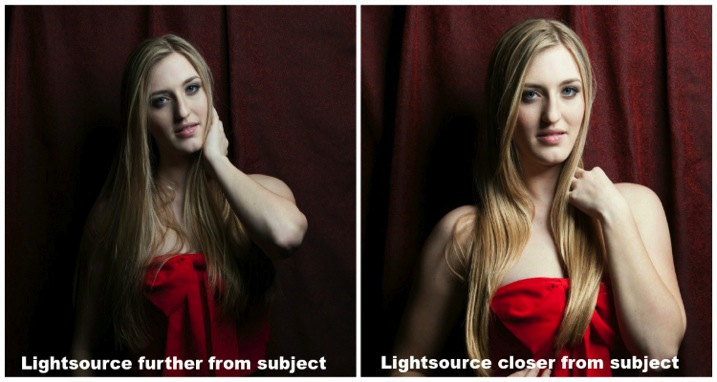
Intensity of light resized

Intensity is the brightness level of light and it brightens up your subject. For both natural light and studio light, you can modify the light source to change the intensity. I’ll cover the basics of light modifiers later, but the most important fact about intensity is that the distance between the light source and your subject has a massive impact on the intensity of light.

This is also known as the Inverse Square Law.

It is an equation that dictates the intensity of light produce at a given distance. It states that the intensity of light changes in inverse proportion (one over that number) to the square of the distance from the source. Meaning:

  • At one foot it is 1 over the square of one or 1/1 or 100%
  • At two feet it is 1 over the square of 2 (2×2) or ¼ or 25%.

In plain English, that means if you double the distance from one to two feet, the light intensity will decrease by 75%. On the other hand, if you bring the light source closer from two feet to one foot the intensity of light is going to increase by four times.

With the knowledge of inverse square law, you will be able to determine the placement of your subject for better portrait photography.

2) Dynamic Range

Dynamic range and stops have a very close relationship. Dynamic range is the difference between the lightest and darkest tones of an image, and a stop is the measurement of this range. Since a stop measures light in representation of numbers, what’s the relationship between the two?

The difference of one stop of light means the light is twice (or half) as intense. Human eyes can detect roughly 10-14 stops of light, while a DSLR camera can only detect around 8-10. With that said, your camera sees a lot less than your eyes. Dynamic range issues occur when this range goes beyond what the camera can record in details. These areas come out as pure white or pure black in the photograph.

Generally, most people tend to avoid pure white and black in portrait photography unless it is for artistic reasons. Otherwise, it may look like as if you exposed the picture incorrectly.

Dynamic range resized

3) Direction of Light

The position of your light source is very important because it determines how light hits your subject. It has a great affect on the quality of your photograph and a few small inches of light misplacement could bring your shot down to a snapshot.

A common question people always ask is, “Why do I need to worry about the direction of light when the subject is properly exposed?” Everyone has different opinions, but my point of view is that this is how you create mood, define shadows, and shows depth to your subject.

The biggest thing to avoid in portraits is flat images (which is created by lighting your subject directly from your camera angle). Reach into your wallet now and grab your driver’s license. That is an example of a flat image. The picture is either too bright or too dark; there is no shadow on your face (or a very harsh one) because the flash was pointed straight at you; and the worst thing is you probably look 10 years older! Without saying any further, I am almost certain that it is one of the worst pictures of yourself.

So what are some ways to light your subjects? Below are two of the most common ways:

Split Lighting – This direction of light divides the face equally in half so one side is in shadow while the other is toward the light. You can simply place the light source 90 degree to the left or right of your subject. If you are using natural light, just ask your subject to turn to such an angle. It creates a very deep dramatic shadow that casts strong moods for your subject. It is great for artistic type portrait shots.

James Willamor

By James Willamor

Loop Lighting – Perhaps the most common lighting method for portraits. Simply place the light source about 45 degrees to your subject. The shadow it casts is going to show nice depth; this method is great for single portraits. Make sure you place the light just slightly above eye level to make the best of this lighting style.

Dragos Jianu

By Dragos Jianu

There is no right or wrong direction of light in portrait photography. They are more personal preference, mixed with different style and purpose. The main thing is that you make your subject look good in front of the camera.

4) Diffusion of Light

Diffusion relates to hardness and softness of light. It also determines the intensity of the shadow. As a general rule, the bigger the light source and the closer it is to the subject, the softer the light.

When photographers talk about hard light, it means there is a rapid falloff between bright and dark areas in the photograph creating harsh, sharp-edged shadows. As such, the photograph doesn’t look as appealing to the viewer.
An example of hard light would be taking picture under a bright sunny day or when you overexpose studio light photographing your subject. Generally, hard light is not something you should be looking for in portrait photography unless for artistic reasons.

Diffusion of light resized

As you might have guessed, opposite hard light, there is soft light. This kind of light has mild falloff between bright and dark areas in a photograph. The light is evenly spread and it looks like it wraps around the subject.
An example of soft light would be taking pictures under an overcast day or using studio light with modifiers. The portrait looks more pleasing to the viewer and the photograph does not show much contrast.

5) White balance

White balance is the color temperature of your camera’s setting. Matching the right color temperature in the environment you are shooting is very important. This is how you remove an unrealistic colorcast, so that your photograph represents true color that you see in real life.

Depending on your camera model, you should have a different white balance presets to choose from: Tungsten, Fluorescent, Daylight, Flash, Indoor, Cloudy, Shade, Custom (PRE), and Kelvin (K).

As the photographer you need to make sure white appears white and not yellow/orange on the hot end, and blue/green on the cold end on the Kelvin scale.

If you shoot RAW, you can modify the white balance during post-processing of your images. This can also be changed easily in Adobe Lightroom or Photoshop. By the way, this is one of the reasons why it is important to shoot RAW instead of JPEG.

6) Reflection of light

Light has one very distinct behaviour; it travels in straight lines. Which means no matter whether you are using natural light or studio light, it is only going to travel in one direction until it reaches a surface.

Once the light reaches a surface it reflects off at the same angle it hits. The amount of light being reflected is going to be determined by the color and texture of the surface.

So why is reflection of light important for portrait photography?

Once you understand light behaviour you can then modify it to control how much light you want for your subject. For example, if you want soft light and you have no other equipment, you can bounce light off a wall. As mentioned before the larger the light source the softer the light, you can now control both the direction and intensity of light for your portrait photographs by doing so.

Reflection of light resized

Another common way to modify light is using a softbox such as a brolly box (umbrella softbox). This is a type of softbox where the external flash is placed inside of it. When the flash fires, light bounces all around inside the box until it exits out the white diffuser on the front. If you have an assistant to hold the brolly box you now have a portable light source producing soft light everywhere you go. This is a must-have for portrait photography.

I hope by breaking down the understanding of light into six categories they are going to be able to level up your skills as a portrait photographer. Be sure to practice as much as you can, but most importantly, enjoy this process and have fun in photography.

googletag.cmd.push(function() {
tablet_slots.push( googletag.defineSlot( “/1005424/_dPSv4_tab-all-article-bottom_(300×250)”, [300, 250], “pb-ad-78623” ).addService( googletag.pubads() ) ); } );

googletag.cmd.push(function() {
mobile_slots.push( googletag.defineSlot( “/1005424/_dPSv4_mob-all-article-bottom_(300×250)”, [300, 250], “pb-ad-78158” ).addService( googletag.pubads() ) ); } );

The post Understanding Light for Better Portrait Photography by Gary Lun appeared first on Digital Photography School.


Digital Photography School

 
Comments Off on Understanding Light for Better Portrait Photography

Posted in Photography