RSS
 

Posts Tagged ‘Photography’

Tips for Depth of Field Control in Macro Photography

01 Sep

Depth of field is the amount of distance between the nearest and farthest objects that appear in acceptably sharp focus in a photograph, it varies depending on camera type, aperture and focusing distance. If you are into photography you probably already know this and how critical it is when you photograph in macro distances.

01

This image was done with a 100mm macro lens with a life-size converter attached, at a distance of 4 inches to the object to achieve this type of magnification. The Depth of Field you see here is impossible to achieve, as there is no way to have the whole ring in focus with this focal length and this distance to the object.

Here are a couple of test shots to show a comparison between an f/8 and an f/32 exposure of this image:

02

In this particular image f/8 would give you a very shallow Depth of Field, so if you would like to have more then f/32 would seem to be a better choice, right? But if you take a closer look, you will realize it is just not that easy.

03

The magnified image shows you that f/8 has shallow Depth of Field but, because it represents the sweet spot of this lens, it gives you great detail in the focused areas. On the other hand f/32 gives you more Depth of Field, but it lacks detail overall.

This lack of detail is due to diffraction, that is the slight bending of light as it passes around the edge of an object giving the photographed image a soft focus effect. So, sharp focus and deep Depth of Field are impossible to achieve in this image due to optical limitations.

A great work-around for these limitations is Focus Stacking (also known as Focal Plane Merging, Z-Stacking or Focus Blending), which combines images photographed with different focus distances into one final image with a greater Depth of Field.

This technique is only possible if the camera, and all the elements on the image are perfectly still, so the use of a steady tripod is really important.

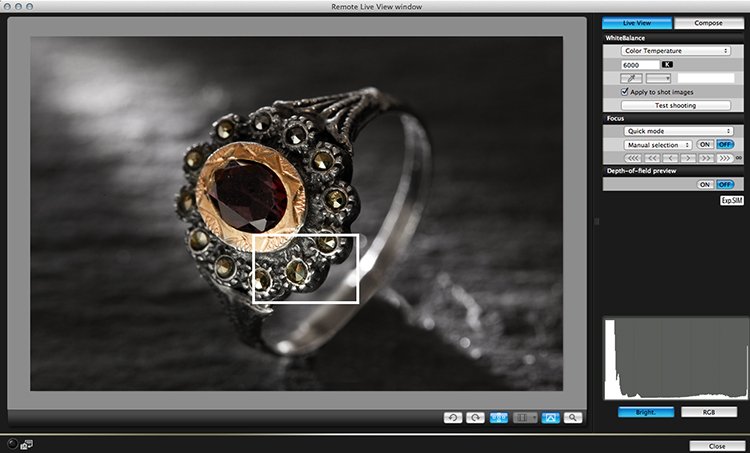
Another important factor is to shoot, and focus without touching the camera. In this particular image the camera was tethered with a computer and a remote shooting app was used to focus the image.

04

The best way to capture these images is to start by focusing on the closest area first, then keep shooting, making sure you cover all the focusing length (move focus farther away from the camera with each successive shot). Just use the controls of your remote trigger and app to fine-tune the focus for each shot.

The final number of shots depends on how detailed you want your image to be, but keep in mind that the more images you have, the harder it will be to process later on. This particular image was made with a merge of 21 images.

05

After the images are captured it’s time to process them. There are a lot of software options on the market for focus stacking; this image was edited with Adobe Photoshop CC. Here are the steps:

  1. Open Photoshop, go on File > Scripts > Load files into a stack
  2. Select all the pictures and turn on “attempt to automatically align layers”
  3. Select all your files in the layer panel on the right side
  4. Go to edit > Auto-Blend Layers and select “stack Images”

You will end up with a stack of layers with associated masks that look something like this:

06

Each layer mask reveals the best of each focused part of the image, and they can also be manually adjusted for more controlled results. The final images are usually very impressive and allow you to achieve effects that would be impossible to reach any other way.

googletag.cmd.push(function() {
tablet_slots.push( googletag.defineSlot( “/1005424/_dPSv4_tab-all-article-bottom_(300×250)”, [300, 250], “pb-ad-78623” ).addService( googletag.pubads() ) ); } );

googletag.cmd.push(function() {
mobile_slots.push( googletag.defineSlot( “/1005424/_dPSv4_mob-all-article-bottom_(300×250)”, [300, 250], “pb-ad-78158” ).addService( googletag.pubads() ) ); } );

The post Tips for Depth of Field Control in Macro Photography by Ivo Guimaraes appeared first on Digital Photography School.


Digital Photography School

 
Comments Off on Tips for Depth of Field Control in Macro Photography

Posted in Photography


How to Build Relationships in Photography

01 Sep

What’s the most important thing to maintain in any business? Confidence, market knowledge, technology? Sure, keep any one of those at the top of your list. But there’s also something else. Perhaps the most sought after and powerful asset you can ever hope to have when it comes to making yourself successful is – strong relationships.

JD Hancock

By JD Hancock

That’s right, good relationships with those who you are seeking to do business with is the most most crucial aspect of any type of business venture. This is especially true when you become a photographer. No matter what kind: landscape, commercial, portrait, wedding, lunar, Martian. It is the cultivation of relationships with other people that will make or break you in this industry – and make no mistake, it is an industry.

Gentlemen and ladies, before we begin, take a moment to congratulate yourselves on an accomplishment that is at the very least extraordinary. We, as photographers, are the jockeys of an art that has been melded with a science. We possess the skill to take time, hold it in our sometimes shaky hands, and pass it on to our clients to be forever held. We don’t just capture light, or moments, or events – we capture memory. Memories, that without us there to tend, would surely shift out of sight, and out of mind.

Amanda Tipton

By amanda tipton

Now, back to what we’re here to discuss – why relationships are so important in photography. Thank goodness you’ve found this article on dPS if you don’t already know the answer to that question. The purpose of this writing is not to give you any ironclad formula of success. In fact, I feel I should remind you that you will most likely meet with more failure than success if you plan to become a photographer of any magnitude. It is our failures that teach us, that enable us to move forward, not our successes. So, if you’ve got the guts, keep reading.

We are nothing on our own. True, I often make photographs that I never show (or intend) to show to anyone other than myself. I keep some places where I go to photograph secret, and return to them sometimes even without a camera. This is all well and good. Honestly, I usually advise such exercises because they often spark more creative thinking down the road. In this case, what I mean is that we cannot realistically be successful as photographers without the support of other people.

Portrait photographers need subjects to sit. Wedding photographers need brides and grooms to direct their cameras. Epic landscapes pass from dawn to dusk in extraordinary light without a camera to capture them and put them on walls. What I’m saying here is that we cannot reach our own potential, both artistically and commercially, without some type of audience.

Thomas Hawk

By Thomas Hawk

How do you get that audience? Well, that’s the difficult part of the photographic equation. The answer, fortunately, is fairly simple. Here are four steps to ensure you are doing your best to cultivate and maintain the relationships that will help you build and grow a career as a photographer.

STEP ONE: Be nice

When dealing with the public, and make no mistake, you WILL inherently have to deal the public, be sure to ALWAYS be polite. Even in the face of the most insulting and anger conjuring client – you must always be polite. Smile, be firm, and always remain true to yourself and your personal policies, but always be polite. This is where most new (and even experienced) photographers run into trouble. Overt politeness can go a long way in maintaining and building relationships with those who are willing to exchange money for your services. Learn to accept that you will have conflict, and that not everyone will like or appreciate your work. When you come to the realization that you don’t need to meet hostility with more hostility, you will be able to remain much calmer and relaxed. Remember, you are better at everything when you are relaxed and focused.

Roberlan Borges

By Roberlan Borges

STEP TWO: Be humble

Just as you will certainly run into those people who test your patience and civility, you will also encounter those who think you hung the moon. The bride who just can’t stop complimenting your work, or the Facebook friend that likes and comments on every single image you post. This is an unexpected accompaniment of being a well-liked photo maker. Train yourself to take a compliment with grace. Say thank you and don’t play out the situation more than it needs to be played. The key here is to stay humble. Of course, in the back of your mind you know when you make an exceptional image, or pull off a one in a million shot. That doesn’t mean that you have to be boastful or even worse, brag about your prowess. Take it from me, no client wants to deal with a photographer who is pompous or inflexible – well, most clients.

Tanakawho

By tanakawho

STEP THREE: Be honest

Hopefully, we all follow some ethical subscription be it in life or in our careers. As photographers, we must know what we can and cannot do, and in turn be honest about those facts. If your client requests you to cover a wedding and you don’t physically have the speedlights or lens to cover it, be honest. Never promise what you you can’t deliver, and most definitely don’t accept compensation for a job you’re not qualified to perform. Granted, the only way to learn is by doing. By all means, stretch your photographic legs and push the boundaries of your skills. However, always be mindful of your weaknesses, and when it comes down to it, you’ll know your limitations. Always be sure to let your employer be aware of what you can do. It will go a long way in building a lasting business relationship. That leads us to step four.

Thinkpublic

By thinkpublic

STEP FOUR: Be willing to step outside your comfort zone

This is perhaps the most difficult part to decipher as a fresh new photographer. When do you draw the line between expanding your skill and having no idea about what you’re doing? This can be troubling, yes. It can also be absolutely exciting. The bottom line, be willing to step outside of your comfort zone for your client. If it’s something you simply cannot do (and you will know), refer to the honesty principle above. That being said, most likely you are your own worst critic, and you can do more than you ever dreamed. So don’t be afraid to try something new. Your client will remember you as the photographer who was honest with them about your abilities, and communicated your willingness to try something unique.

The Shopping Sherpa

By The Shopping Sherpa

It’s tough to start out in a new field. It’s extremely tough to be a new photo maker in a market saturated with photographers. Get the best gear you can afford. Learn as much as you can. Do as much as you can. At the same time, don’t forget that you are a provider in an industry that caters to the wants of others. As such, your success is dependant on the good graces of those with whom you do business. Be honest, humble, and competent. Be bold, but never be reckless. Build relationships with your clients based on mutual understanding, and I guarantee you be a more satisfied, and dare I say a more successful photographer.

googletag.cmd.push(function() {
tablet_slots.push( googletag.defineSlot( “/1005424/_dPSv4_tab-all-article-bottom_(300×250)”, [300, 250], “pb-ad-78623” ).addService( googletag.pubads() ) ); } );

googletag.cmd.push(function() {
mobile_slots.push( googletag.defineSlot( “/1005424/_dPSv4_mob-all-article-bottom_(300×250)”, [300, 250], “pb-ad-78158” ).addService( googletag.pubads() ) ); } );

The post How to Build Relationships in Photography by Adam Welch appeared first on Digital Photography School.


Digital Photography School

 
Comments Off on How to Build Relationships in Photography

Posted in Photography


Weekly Photography Challenge – Fish

29 Aug

Photographing seemingly unattractive objects like fish can be difficult – or maybe just a challenge.

EPi.Longo

By ePi.Longo

Weekly Photography Challenge – Fish

A hard photo subject can help you grow as a photographer, push you out of your comfort zone. So now’s a great time to practice. Find a fish (at the market, store, dead or alive – whatever you can come up with) and try photographing it to make a compelling image.

J J

By J J

Jason Mrachina

By Jason Mrachina

Zoe

By Zoe

Share your images below:

Simply upload your shot into the comment field (look for the little camera icon in the Disqus comments section) and they’ll get embedded for us all to see or if you’d prefer upload them to your favourite photo sharing site and leave the link to them. Show me your best images in this week’s challenge. Sometimes it takes a while for an image to appear so be patient and try not to post the same image twice.

Matt

By Matt

Jacob  Spinks

By Jacob Spinks

googletag.cmd.push(function() {
tablet_slots.push( googletag.defineSlot( “/1005424/_dPSv4_tab-all-article-bottom_(300×250)”, [300, 250], “pb-ad-78623” ).addService( googletag.pubads() ) ); } );

googletag.cmd.push(function() {
mobile_slots.push( googletag.defineSlot( “/1005424/_dPSv4_mob-all-article-bottom_(300×250)”, [300, 250], “pb-ad-78158” ).addService( googletag.pubads() ) ); } );

The post Weekly Photography Challenge – Fish by Darlene Hildebrandt appeared first on Digital Photography School.


Digital Photography School

 
Comments Off on Weekly Photography Challenge – Fish

Posted in Photography


NASA employs 150-year-old photography technique to measure shock waves from supersonic flight

28 Aug

NASA has turned to a process devised in 1864 to help it measure shockwaves created by supersonic aircraft flight. The method, schlieren photography, was invented by German scientist August Toepler to observe the effect of objects moving through transparent media, such as water or air. Read more

Articles: Digital Photography Review (dpreview.com)

 
Comments Off on NASA employs 150-year-old photography technique to measure shock waves from supersonic flight

Posted in Uncategorized


10 Common Mistakes in Long Exposure photography

27 Aug

On all the 2015 Workshop I held here in Italy, I introduced a little game, where at the end of the workshop the attendees had to write down on a paper three mistakes that they used to make before taking the workshop. So I decided to collect all these lessons learned papers and make a list of the 10 most common errors in long exposure photography so you can learn from this also:

FG 1

Mistake #1 – Vibration reduction system is set to ON

There are some lovely technologies that can help get much sharper images minimizing the blur caused by camera shake, which are extremely useful in low-light conditions where slow shutter speeds are required. Every brand calls this technology something different, but the aim is the same. They can be lens-based (like for Nikon and Canon cameras) or camera-based (like for Sony, Olympus and Pentax cameras), but at the end the result is that this vibration reduction can give you the same image quality up to four shutter speed stops slower than usual.

They use some movement sensors to detect motion and try to compensate for it by moving an element group in the lens, or on the sensor itself.

The point is that if the camera is on a sturdy tripod (and if you are shooting a long exposure, your camera is definitely on a tripod!), you shouldn’t expect any vibration. You may know this, but your camera doesn’t, so even if there is no movement, it can happen that this anti-vibration system tries to compensate anyway moving a lens group (or the sensor), and this will actually result in an introduction of a vibration (and blur) instead of a removal.

So, if your camera is on a sturdy tripod, turn the anti vibration system to OFF!
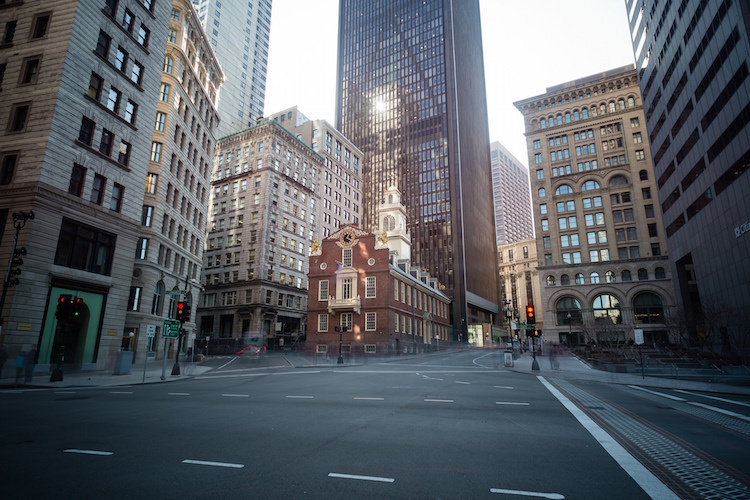
FG 2

Mistake #2 – Forgetting to use Mirror Lock-up

In a DSRL camera, light travels through the lens and is sent to the viewfinder by a mirror. When you press the shutter button, the mirror flips up so that the light goes directly onto the image sensor. This movement introduces a small vibration that will cause slight blurring in the photo.

To avoid this vibration, you can activate the Mirror Lock-up function in your camera. After its activation, the first time you press the shutter button, your camera will lift the mirror; the second time it will open the shutter. If you wait a couple of seconds between the first and the second press, you will avoid the vibration!

Yes, if you have a mirrorless camera, you can skip this advice!

Mistake #3 – Not using a GND filter because they are expensive

In some situation (in places where there is not a big difference in the exposure between different areas of the scene), just a Neutral Density filter can allow you to get the desired result. However, in many situation the light condition require the use of a Graduated Neutral Density filter to balance the exposure.

If you are using a screw-on ND filter, you may believe that the only chance you have is to try to apply a GND filter in post-production – but you’d be wrong!

FG 3

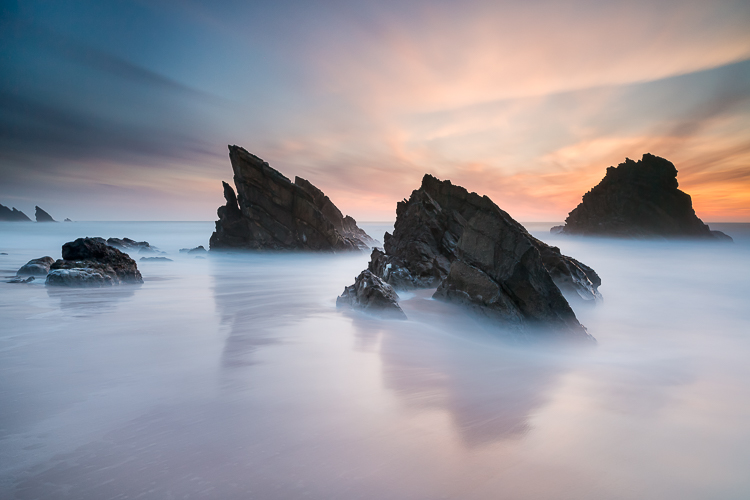
You can just hold the filter with your hand in front of the lens. For a shot with a shutter speed up to few seconds, your only problem will be the correct alignment of the filter. For shots which are minutes long, even if your hand is not perfectly still, the final result will be more than great – try it if you don’t believe me. The holder is required if you want to use multiple filters together (or when you start having cramps in your hand).

Mistake #4 – Setting the aperture to f/22 to increase the exposure time

The rule was simple: if you decrease the aperture, you increase the exposure time.

With this rule in mind, you may think that you can transform your 30 second exposure to a two minute exposure just moving from f/11 to f/22. Theoretically, you’re right. Unfortunately there is a physical phenomenon called optical diffraction that above f/16 is enough intense to ruin the sharpness of your image.

If you are already at f/11 and you need a slower shutter speed, decrease ISO if possible or use a stronger filter.

FG 4

Mistake #5 – Forgetting to adjust the ISO

ISO can be a powerful ally in a long exposure. Sometimes you forget the possibility of changing the ISO setting, and you only play with filters and aperture. Remember that every camera has a range of ISO where the output quality is almost the same. In high-end cameras this range is usually between ISO 50 and 200.

This means that you have two stops to play with, and in a long exposure shoot, two stops mean minutes of exposure.

Mistake #6 – Shooting like you’re in a studio

FG 5

When you shoot pictures at home or comfortably seated in a studio, no external agent can affect the quality of your image. But if you are perched on a rock in front of the sea, on a beautiful stormy day, quite soon your filters will be completely wet.

Remember to fill your bag with cleaning cloths. A a thin layer of water on your outer filter will result in a high diffraction, and this will irremediably ruin your image. Never underestimate nature, even on a sunny day, the weather conditions can change very quickly.

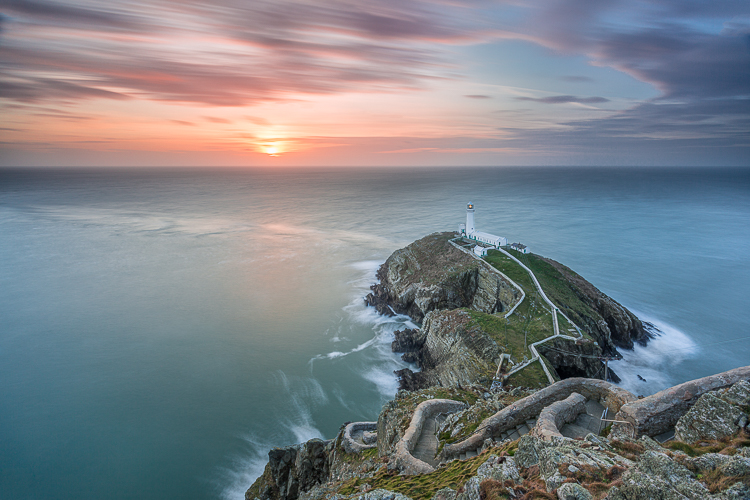
Mistake #7 – Choosing a low quality filter

Every time you add a filter in front of your lens, you inevitably decrease the overall quality of the optical system. Yes, some well-known filter brands are quite expensive, but do you believe it is worth puttting a 5$ filter in front of a camera of thousand dollars? No, it isn’t – so focus on quality: fewer filters but better! You don’t need the whole set of density ranges for ND and GND filters. Try to understand which filters you will probably use more often, then remember that you have ISO and Aperture to play with to cover the gap between. Finally, remember that a lot of good quality filters are available at incredibly affordable prices. Check in advance for filter reviews on internet.
FG 7

Mistake #8 – Underestimating the wind

When you take a long exposure shoot, you camera is exposed to possible external vibration agents for minutes. Even a wind gust of a few seconds can ruin your image. Invest on a sturdy tripod, and then set it firmly on the ground. If needed, hook an additional weight to the tripod to make it even sturdier and solid.

Avoid using the tripod’s central column too – if you raise it up, you raise the center of gravity of the system and it will be less stable.

Mistake #9 – Not covering the viewfinder

You took a three minute exposure, and the preview is full of strange purple lines and halos. Why?

It is because light, like water, loves to find a way – always.

FG 9

Your camera is intended to allow light through only from the hole in your lens, but unfortunately there are some other accesses that can potentially harm your images.

The most common of them is the viewfinder. To avoid infiltration of light from it, cover it after composing the image. If your camera is not provided with a cap, you can even use some black tape. If you forgot the black tape, use a chewing gum. The typical result of viewfinder infiltration is a strange purple halo. Yes, if you have a mirrorless camera, you are also free of this issue!

If you use slot-it filter system, another possible source is the gap between one filter to another (this is one of the reason why many photographers love screw-on filters). In this case, the best solution is to cover that gap with black tape. The typical result of filter infiltration is a vertical purple line on the opposite side of the sun.

Finally, if you use a tilt-shift lens, or a lens adaptor, you may have an infiltration from the lens body. The best way to avoid this is to cover the lens with a black neck warmer.

Mistake #10 – Believing the filter vendor

FG 8

When you buy a six stop ND filter, you expect that it has exactly the optical density to get a six stop reduction. Unfortunately, you are wrong. In my life I never found a filter with the exact intensity stated by the manufacturer. Of course, the difference usually is minimal, but remember that even ½ stop of difference, in a long exposure means minutes of error.

To avoid errors when you are on field, test it in advance by following these steps:

  • Choose a room in your home, turn on the lights and close the windows (you need a place where the lighting is perfectly constant).
  • Mount your camera on a tripod and take a photo of the room until you get a shot with a good histogram. Note down all the parameters (ISO/Aperture/Shutter speed) of the shot.
  • Mount the ND filter and compensate the shutter speed obtained before, according to the f-stop reduction introduced by the filter.
  • Take a picture with the ND filter.
  • Look at the histogram of the photo taken with the filter, and compare it to one taken without. If they are approximately superimposable (exactly the same), the filter intensity stated by the manufacturer is accurate. If the new histogram has shifted to the left, your filter has an intensity greater than that the one declared; if it is moved to the right, it has a lower intensity.
  • If the two histograms are not superimposable, take another shoot changing the shutter speed to obtain a histogram approximately similar to the one of the picture without the filter.

FG 6When you have found the exact optical density, build your own shutter speed conversion table. Another possibility is the PhotoPills app for your iPhone, the only one that allows you to convert the shutter speed for non-standard f-stop reductions.

That’s the ten mistakes to avoid when doing long exposure photography. Have you got any others you’ve made and learned along the way you’d like to share? Please do so in the comments below.

googletag.cmd.push(function() {
tablet_slots.push( googletag.defineSlot( “/1005424/_dPSv4_tab-all-article-bottom_(300×250)”, [300, 250], “pb-ad-78623” ).addService( googletag.pubads() ) ); } );

googletag.cmd.push(function() {
mobile_slots.push( googletag.defineSlot( “/1005424/_dPSv4_mob-all-article-bottom_(300×250)”, [300, 250], “pb-ad-78158” ).addService( googletag.pubads() ) ); } );

The post 10 Common Mistakes in Long Exposure photography by Francesco Gola appeared first on Digital Photography School.


Digital Photography School

 
Comments Off on 10 Common Mistakes in Long Exposure photography

Posted in Photography


How to Use Figure to Ground Art Theory in Photography

27 Aug
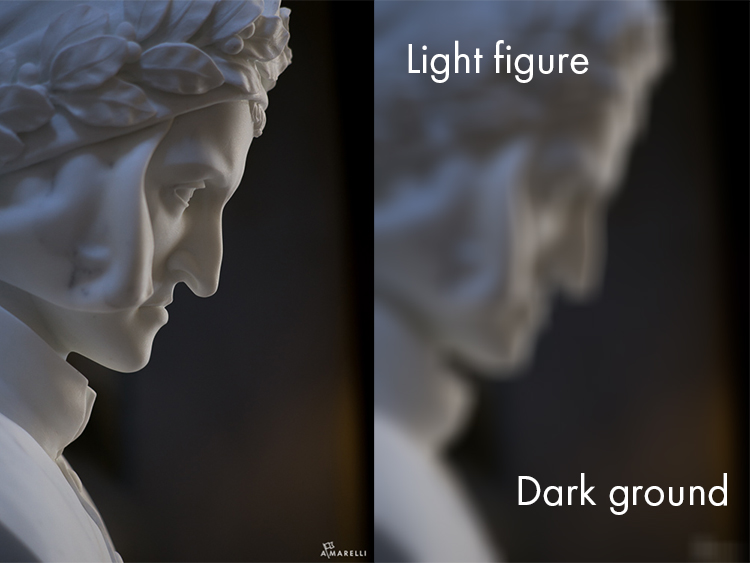
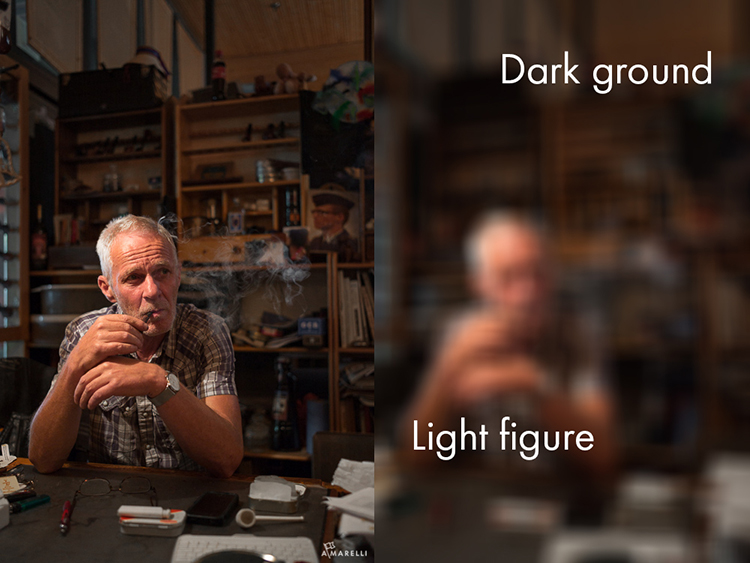
1 Light figure on a dark ground

Light figure on a dark ground, Florence, Italy © Adam Marelli

What is figure to ground?

Why can you recognize an amazing photograph but struggle to produce one? Sure there are better cameras, advanced lighting techniques, and endless theories on composition, but very often the root of the problem lies in a simple concept that is often missed. In three words, we can sum up almost every cover of Vogue, National Geographic, and the New York Times – Figure to ground.

What is this term, what does it mean, and where does it come from? Figure to ground is one of the most important, and easily overlooked concepts, in photography. It’s not a rule, it’s not a law – it is a tool, and a very powerful tool at that. Once you learn it, it will become a part of every picture you take, no matter what type of camera you use.

If you were ever curious to see masterful use of figure to ground, try revisiting the photographers you already love like Steve McCurry, Richard Avedon, or Henri Cartier-Bresson. They all use it, some more elegantly than others. Figure to ground acts like an anchor in a photograph, holding the viewer’s eye inside the frame.

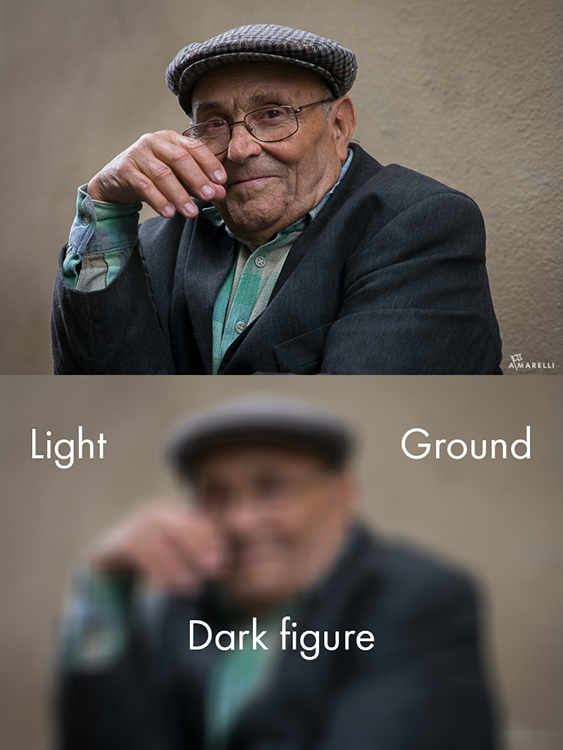
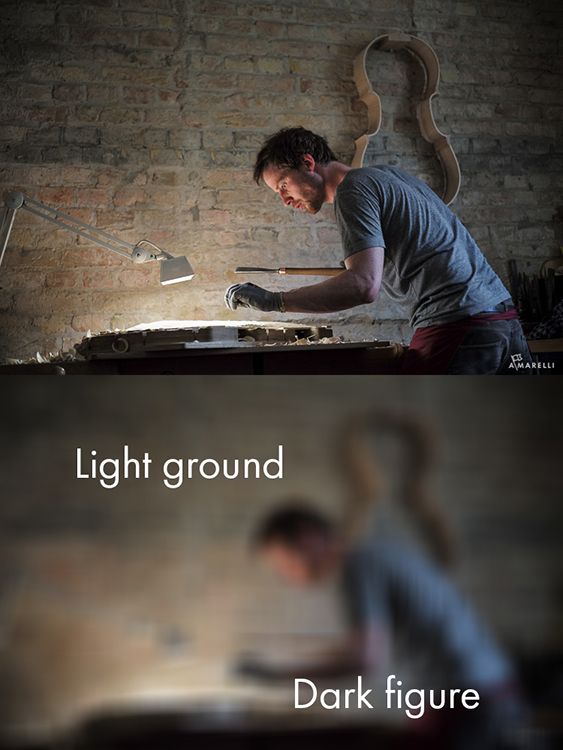
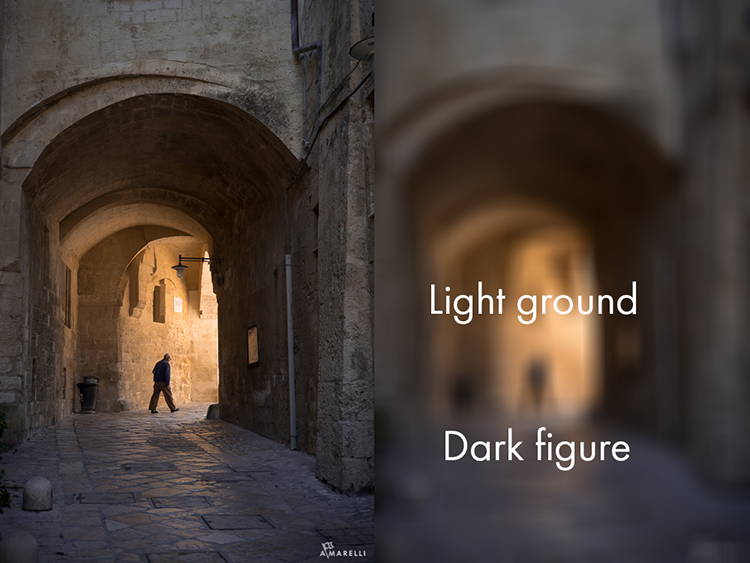
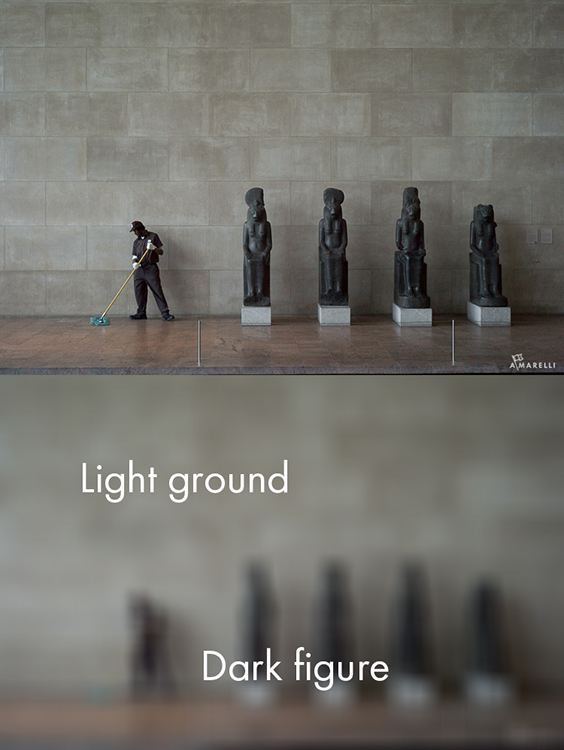
2 Dark figure on a light ground

Dark figure on a light ground, Florence, Italy © Adam Marelli

It goes by many names

Figure to ground has a multitude of names; subject to background, figure separation, foreground to background, and the list goes on. To simplify, figure to ground is the most descriptive and easiest to say, which is why artists have favored it for centuries.

3 Light figure on dark ground

Light figure on dark ground, Berlin, Germany © Adam Marelli

A starting point

When it comes to describing visual tools in the written language, firm definitions are always a problem. Consider the following definition a starting point, not an immovable scientific definition.

Figure to ground is the visual relationship between objects and the space they occupy. We live in a 3D world, but your photographs are a 2D translation. When the third dimension of depth disappears, you end up with a problem that has plagued artists since they started scrawling on cave walls, how do you create a picture of the 3D world with only two dimensions?

Figure to ground allows your brain to determine shapes, sizes, distance and other optical illusions that exist in photography (it also applies to drawing, painting, and other 2D arts, but for this article the focus is on photography and how you can use it successfully).

4 Dark figure on a light ground

Dark figure on a light ground. Berlin, Germany © Adam Marelli

Where did it come from?

The idea of figure to ground comes from drawing and painting. It forms the basic grammar of the visual language. Think about it, how can you see a shape on a piece of paper? It is visible because it is a black line on a white page. Seems obvious right, but what is that phenomenon called? It is called figure to ground. Imagine if we wrote in white ink on white paper – everything would be invisible.

The same thing applies to photographs. In order for your photograph to be legible, we must be able to see the object against the background. Artists have worked with this concept for centuries and developed elegant solutions to figure to ground as a deliberate, but subtle, technique for making pictures.

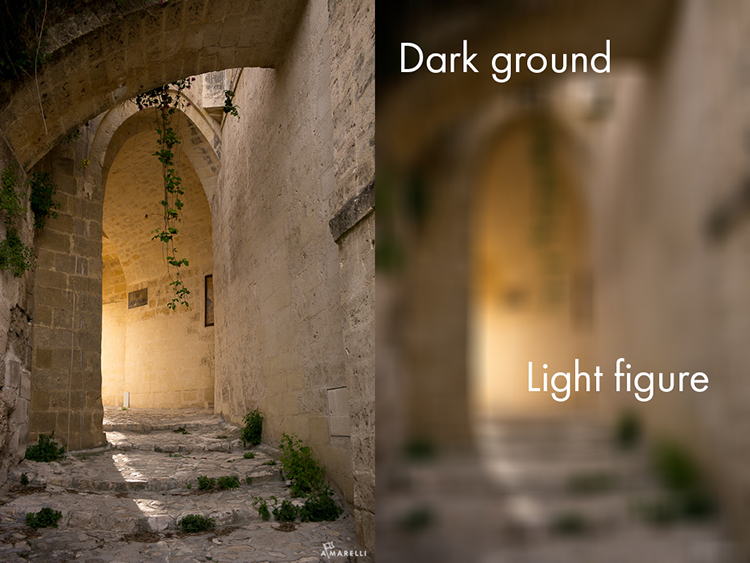
5 Light figure on a dark ground

Light figure on a dark ground, Matera, Italy © Adam Marelli

How to practice it

The first step in practicing figure to ground is to condition your eye by looking at good examples. If you want to be a great photographer, study master painters and how they use figure to ground. You can do this on the internet, in a book, or at a museum. Pick the one that is easiest for you.

TECHNIQUE 1: The Book

Pick up a book on a famous Renaissance artist, like DaVinci, Raphael, or Michelangelo. Setting aside whether you like their work or not, the way to use art to your advantage is to master the tools of successful artists, and apply them with your own unique touch. Lay a piece of tracing paper over the page and be sure to cover the whole picture. Can you still see the subject? If yes, there is good figure to ground. If the subject seems to disappear into the background then no, the figure to ground is weak.

TECHNIQUE 2: The Museum

If you wear glasses, this will be even easier. Go to a museum and find a painting. Following DaVinci’s advice on viewing distance, stand three times the height of the painting away from it (example: if the painting is five feet tall, stand 15 feet away). Now squint at the painting until it is all blurry, or simply remove your glasses. Can you still make out the major shapes in the painting. If yes, there is good figure to ground. If the subject seems to disappear into the background then no, the figure to ground is weak.

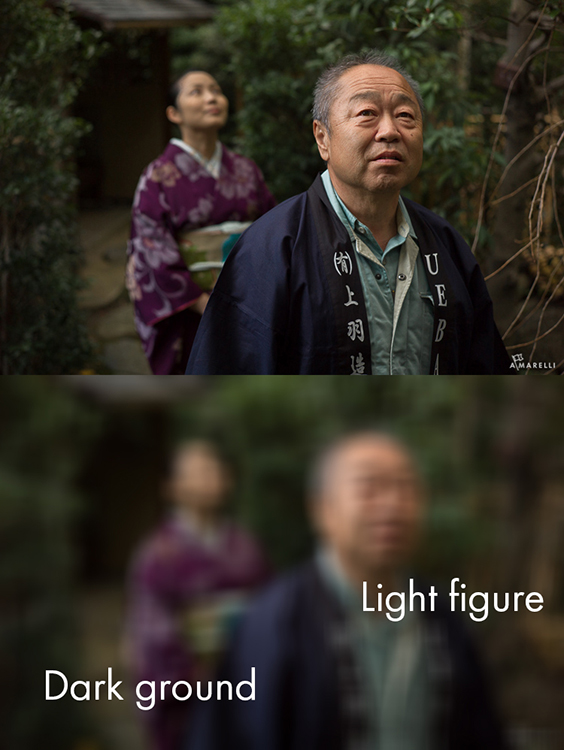
6 Light figure on a dark ground

Light figure on a dark ground. Kyoto, Japan © Adam Marelli-8

TECHNIQUE 3: The Computer

If you prefer to use technology, here is a technique you can do in Shotoshop. Pull a picture into Photoshop. Select Filter > Box Blur > set the pixels at 15 pts. You will end up with a blurry version of the picture. Can you still make out the major shapes in the painting? If yes, there is good figure to ground. If the subject seems to disappear into the background then no, the figure to ground is weak.

TECHNIQUE 4: Your Photography

Try any of the techniques above with your own photographs. If there is not strong figure to ground in your picture, play closer attention to the backgrounds when you shoot.

Camouflage

What if you never learn figure to ground, what will happen? Will it be impossible for you to ever make a good picture? No, of course not. But when you understand why some pictures work better than others, and what tools to use at the right time, you will enjoy photography much more. It relieves the anxiety of, “Will I get the shot?”. When you have a toolbox full of resources, it becomes easier to create consistently powerful pictures.

If you would like to know what the opposite of figure to ground is, look no further than camouflage. Camouflage is designed to obscure objects in space. It is the direct opposite of figure to ground. If the goal is to blend in, then use camouflage – if the goal is to pop out, use figure to ground. It is your choice.

7 Dark figure on a light ground

Dark figure on a light ground. Matera, Italy © Adam Marelli

Tools are not rules

Photography is an artistic expression. It might be your break from everyday life, the pressures of work, or the hidden talent you want to explore. Whatever role photography plays for you, the idea to take away is that photography is not a rule book. BUT – and this is a big BUT, there are tools involved. You can use a tool the way it was intended and achieve amazing things, or you can spend your life using a chisel as a fork and wonder why eating is so painful.

Think of your photography like a toolbox; it might have a hammer, a chisel, a screwdriver and a wrench. You might use more than one tool at a time, and all tools will not be used for every job. Your role as the photographer is to know how to use each tool at the appropriate time to reach the desired effect. Otherwise you might end up hammering screws and painting nails.

8 Dark figure on a light ground

Dark figure on a light ground. NYC, USA © Adam Marelli

Developing subtlety

Where do you go from here? Here’s an assignment that will be very helpful:

1. Find 20 examples of figure to ground in paintings
2. Find 20 examples of figure to ground in photography
3. Go take 10 pictures of light figures on a dark ground
4. Go take 10 pictures of dark figures on a light ground

Once you practice this enough it will become like a reflex. Please share your comments and images below.

googletag.cmd.push(function() {
tablet_slots.push( googletag.defineSlot( “/1005424/_dPSv4_tab-all-article-bottom_(300×250)”, [300, 250], “pb-ad-78623” ).addService( googletag.pubads() ) ); } );

googletag.cmd.push(function() {
mobile_slots.push( googletag.defineSlot( “/1005424/_dPSv4_mob-all-article-bottom_(300×250)”, [300, 250], “pb-ad-78158” ).addService( googletag.pubads() ) ); } );

The post How to Use Figure to Ground Art Theory in Photography by Adam Marelli appeared first on Digital Photography School.


Digital Photography School

 
Comments Off on How to Use Figure to Ground Art Theory in Photography

Posted in Photography


Bringing Photography to the Homeless

26 Aug

Being creative is often considered a luxury. However, the folks at Café Art are taking steps to make art accessible for everyone.

Back in July, they handed out 100 dispo cams to homeless individuals around London. Allowing many of them a much needed creative outlet and the opportunity to be featured in a calendar being put together via Kickstater.

Check out a few of the photos and stories here. Contribute to the Kickstarter and receive your own calendar or original print. Proceeds go toward the artists, production costs and donations to offset the ecological impact of printing and shipping the calendars.

Wow. Café Art seriously knows how to be the good in this world.

Photo by 16 Year Old, Ellen Rostant


© Erin for Photojojo, 2015. |
Permalink |
No comment |
Add to
to the Homeless”>del.icio.us

Post tags:


Photojojo

 
Comments Off on Bringing Photography to the Homeless

Posted in Equipment


How to Improve Your Chances of Winning a Photography Contest

23 Aug

My name is Andrew Suryono and I’m an amateur travel photographer. When you read the title, you may feel funny that an amateur photographer like me is writing this article. “Shouldn’t winning a photography contest be reserved only for the professionals?” you may ask.

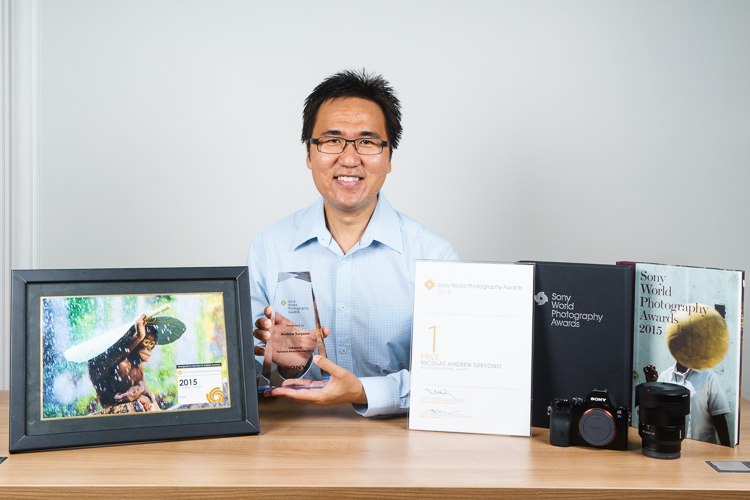
Well, speaking from my experience, the answer is no. I’m one of many amateur photographers in the world that have won photography contests. This year is special for me because I won first place in the world’s largest photography competition, the Sony World Photography Award (Indonesia National Category).

Image 1 andrew suryono trophy

I’m writing this article to share my experience and give my personal tips to you on how to increase your chance in winning a photography competition. Yes, YOU can win in a photography contest!

Why enter photo contests?

Before we start though, let’s look at some of the benefits of joining a photo contest.

Get exposure

The first benefit of joining a photography competition is you can get exposure for your work quickly. The bigger the photography competition, the quicker and the more exposure you’ll get. By submitting your photos to a contest, you give easy access to people all over the world to view your work. If you’re struggling to get people to look at your photography website or portfolio, try joining a photography competition.

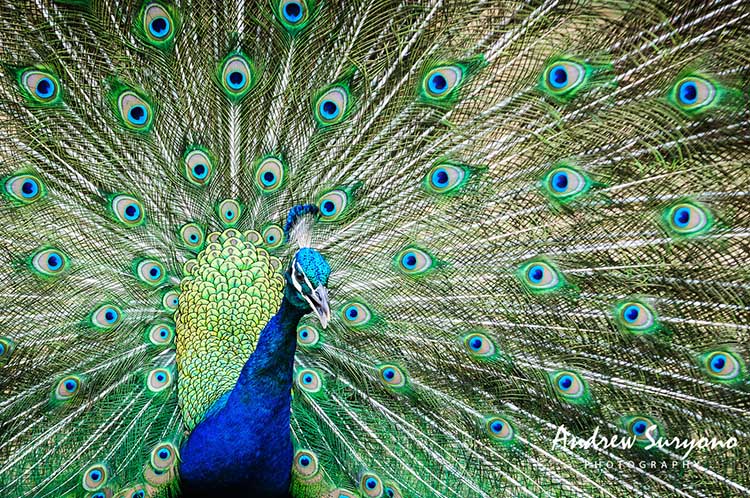
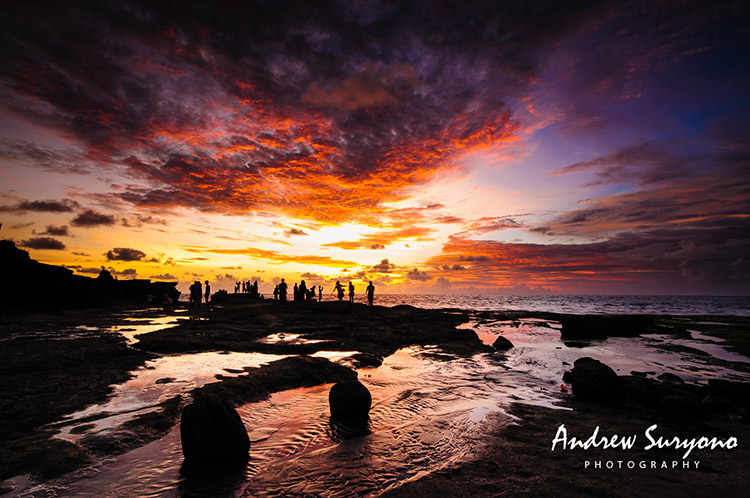
andrewsuryono-peacock

This image appeared in Bryan Peterson’s newsletter

Market your work

By giving yourself lots of exposure, you also increase your chance to market your work. If people are interested in your work, they might contact you to buy some prints or strike licensing deals. After joining several photo competitions, I got contacted by many people who wanted to do licensing deals for books, magazines, greeting cards and many other things. To my surprise, my work not only attracted small publishers, but also big ones like National Geographic.

You really never know who is looking at and interested in your work!

Measure your work against others

A photo competition is a good way to measure your work against other photographers’ work. You’ll have a chance to look at other their images and see how your works compares. It’s important that you don’t judge your work too harshly when you do this. See what you
find interesting from other people’s work, like how they use of composition or color, and learn from it.

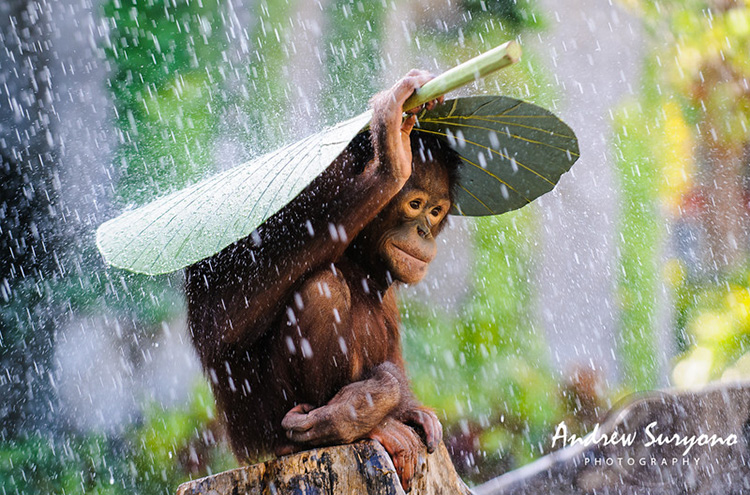
Image 2 andrew suryono orangutan in the rain

Winning image!

Make new friends

Finally, a photo competition is a good way to make new friends and connections. Through photo competitions, I’ve gotten many like-minded friends who I enjoy speaking to, and sharing my work with regularly. We even went on to create a private Facebook group where we share our work to get each other’s feedback, helpful online tips that we find, and many more.

Are you already feeling excited? Great!

How to increase your chances of winning

Now that you know all the benefits of joining a photo competition, let’s look at some ways to increase your chance of winning one.

The first and the most important thing that you should do before joining a photo contest is spend some time to know the rules inside out. Here are some things that you should pay attention to:

Copyright ownership

I decide whether I enter a photo contest or not based on this information alone. Make sure you retain full rights and ownership of your photos before joining in any contests. Personally, I would avoid any photo contests that want me to give any rights to them. I want to keep all rights to myself and they must ask me for permission if they want to use my photos for anything.

Appeared in Bryan Peterson's newsletter

Appeared in Bryan Peterson’s newsletter

Image dimensions

Pay attention to the image dimension that they require you to submit. Typically, a lot of photo contests are bombarded with image submissions
from all over the world, so they only require you to submit a small resolution version of your image. Make sure to resize your image according to their specification. Some photo contests are so strict that they’ll immediately disqualify your image if it’s not submitted according to their specifications.

Submission deadline

This is pretty explanatory, but still worth mentioning. Make sure you pay attention to the submission deadline. Photo contests won’t let you
submit images once the deadline has passed. Mark your calendar and set reminders!

Research

After you’re done going through all the contests’ rules and regulations, it’s time to do some research. You’ll need to research and study previous winners’ work, and the judges’ work if you want to increase your chance of winning in the competition.

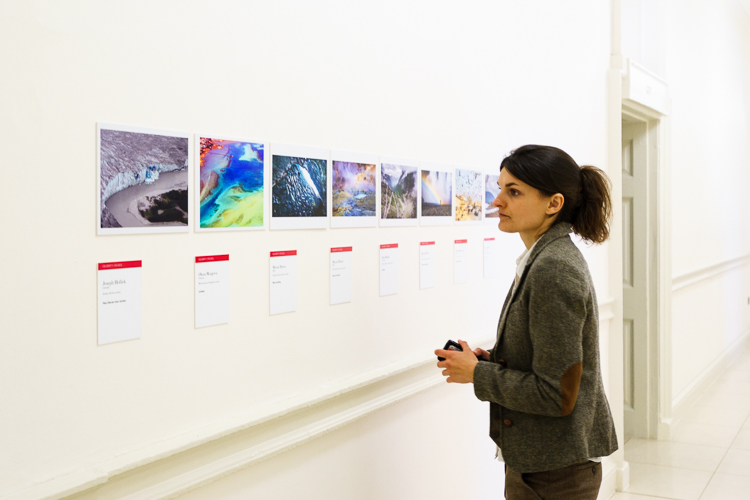
Image 3 study judges work

By looking through the previous winners’ work, you’ll get a sense of how they won the contest. Pay attention to the composition, color and most importantly the message that they’re conveying through their photos. Pay close attention to their post-processing work, and look at how it strengthen their images.

Photography contests are judged by humans. It’s subjective by nature. By looking at the judges’ work, you’ll get a sense of their style and what kind of works they like to see. For example, if you find that most judges in the contest love strong black and white images, you’d better think twice about sending images with bright, saturated, and punchy colors.

Image selection

After you’re done with your research on the previous winners and the judges’ work, you’ll need to select images for submission based on your findings.

Go through your portfolio of images and see which images stand a chance of winning the competition. Be very selective with your own work. I know it’s hard criticizing and selecting your own work, but doing this will dramatically increase your chance of winning a photo contest.

Pick photos that you personally think are better than the previous winners’ photos, match with the judges’ style, and strongly show
your unique photography style. Then, submit your images, cross your fingers, and wait for good things to happen!

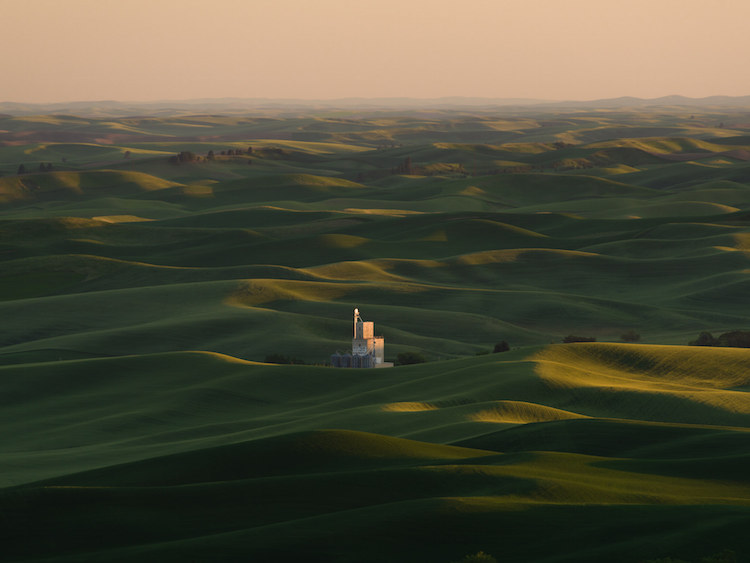
Image 4 andrew suryono pictures trophy

Remember that I can’t guarantee you win will any photo competition, but at the very least, I have given you some tips that you can use to increase your chances.

Don’t get discouraged if you submit an image and it doesn’t win. Remember that a photography competition is always subjective by nature. If one image doesn’t win in one competition, it doesn’t mean it won’t win in another. Also, there are also plenty of benefits that you can get by joining a photo contest, even though you didn’t win it.

Follow the guidelines above, enter as many photography contests as you possibly can, and hopefully you get to win in some of them. It’s a number’s game!

Keep shooting and don’t forget to have fun!

googletag.cmd.push(function() {
tablet_slots.push( googletag.defineSlot( “/1005424/_dPSv4_tab-all-article-bottom_(300×250)”, [300, 250], “pb-ad-78623” ).addService( googletag.pubads() ) ); } );

googletag.cmd.push(function() {
mobile_slots.push( googletag.defineSlot( “/1005424/_dPSv4_mob-all-article-bottom_(300×250)”, [300, 250], “pb-ad-78158” ).addService( googletag.pubads() ) ); } );

The post How to Improve Your Chances of Winning a Photography Contest by Andrew Suryono appeared first on Digital Photography School.


Digital Photography School

 
Comments Off on How to Improve Your Chances of Winning a Photography Contest

Posted in Photography


Weekly Photography Challenge – Machines

22 Aug

Earlier today I rounded up a collection of images of powerful machines here. Unless you live in a remote village far from civilization – chances are that machines are part of daily life in your area.

Photograph One more cup of coffee by Yahav  on 500px

One more cup of coffee by Yahav on 500px

It could be a coffee machine in your kitchen or favorite barista shop, or a tractor in a field. Maybe there are cranes at a construction site on your way to work.

Photograph Fordson Major - Overstrand by Simon Wrigglesworth on 500px

Fordson Major – Overstrand by Simon Wrigglesworth on 500px

Weekly photography challenge – machines

Look around they’re everywhere, and it’s your job to find them and photography them this week.

Photograph Harley davidson by ???????  ??????? on 500px

Harley davidson by ??????? ??????? on 500px

Photograph Foggy Sunrise by Richard Gottardo on 500px

Foggy Sunrise by Richard Gottardo on 500px

Photograph sewing machine by Ritam Paul Chowdhury on 500px

sewing machine by Ritam Paul Chowdhury on 500px

Photograph Retired sewing machine by JongYoung Kim on 500px

Retired sewing machine by JongYoung Kim on 500px

Share your images below:

Simply upload your shot into the comment field (look for the little camera icon in the Disqus comments section) and they’ll get embedded for us all to see or if you’d prefer upload them to your favourite photo sharing site and leave the link to them. Show me your best images in this week’s challenge. Sometimes it takes a while for an image to appear so be patient and try not to post the same image twice.

googletag.cmd.push(function() {
tablet_slots.push( googletag.defineSlot( “/1005424/_dPSv4_tab-all-article-bottom_(300×250)”, [300, 250], “pb-ad-78623” ).addService( googletag.pubads() ) ); } );

googletag.cmd.push(function() {
mobile_slots.push( googletag.defineSlot( “/1005424/_dPSv4_mob-all-article-bottom_(300×250)”, [300, 250], “pb-ad-78158” ).addService( googletag.pubads() ) ); } );

The post Weekly Photography Challenge – Machines by Darlene Hildebrandt appeared first on Digital Photography School.


Digital Photography School
 
Comments Off on Weekly Photography Challenge – Machines

Posted in Photography


5 Ways to Avoid Problems and Conquer Summer Photography

20 Aug

I’m a big fan of summer. In fact, I dislike winter greatly, and my favorite season is spring. But summer is probably number two on my favorite season list. Summer is great because it’s not cold. But it can also be so hot that you may walk a couple steps during a hot and humid day and return drenched in sweat.

Not cool, sun – not cool.

15_June_05_NxNW2015__DSC5091.dng

But in all seriousness, summer can be fantastic for photography because you can literally go out anytime with shorts and a t-shirt. In a way that’s liberating. In the winter you’re wearing layers upon layers; in the spring you may be wearing rain gear more often than not.

With this all said, I want to share some things to avoid during summer, and ways to conquer those avoidances. With these tips, you can improve your summer photographs.

1. Carry Less

Quite often photographers carry so much gear when they’re out making photographs. But how much of that is really necessary?

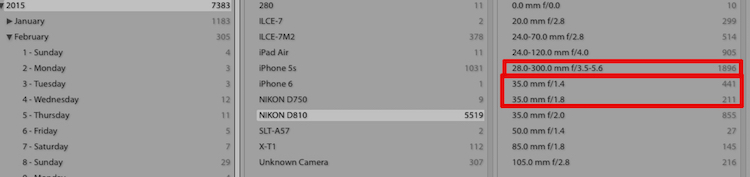
Look at your Lightroom catalog by using the Metadata Library Filter. Filter by the past year or two, and see what lenses you use the most. You can also dig in deeper by using the Lightroom Dashboard website to determine your most common focal lengths.

Lightroom Metadata

The Lightroom Library Filter for Metadata

Once you know which lenses you use the most, stick with those.

For example, as I’m writing this I have my bag packed for a huge photowalk tomorrow in New York City. I’m only bringing my 35mm lens for most of the walk and the 28-300mm lens for distance. I could bring others, but why? I know from experience that I don’t need others for this type of event (photowalk).

Carrying less means a lighter camera bag, which means less struggle in the heat.

2. Wear Less

I mentioned in the intro that in the summer you can wear less. On hot summer days I am outside photographing in shorts and a t-shirt. I might keep a Scottevest jacket with me (rolled in a ball in my bag) just in case it rains.

I won’t be wearing flip-flop,s because those are horrible for standing or walking on for extended periods of time. But I will be wearing low-top sneakers made for walking. But before my sneakers are on, I will also have socks designed for hot temperatures, and walking. Arch support is extremely important, and in the summer if you don’t have proper sizing or support then your feet will feel it.

Don’t forget a hat as well. The hot summer sun can easily cause sunburn. Usually I wear a simple hat, but if I’m traveling I keep my Tilley hat with me, which covers my ears and neck at the same time as my head.

Tilley Hat

Me in my Tilley hat. Photo by Joseph Hoetzl

The hat’s brim is also very soft and flexible, so it doesn’t get in the way when you hold your camera up to your eye.

3. Squint Less

With the sun comes harsh light, strong light, and blinding light. The last thing you want is for photographs of people squinting. My suggestion for this problem is to avoid photographing in the direct sunlight, and instead, find a shaded area as there you still get a lot of light, but it’s diffused.

portrait-direct-sunlight

The other option is to still photograph in direct sunlight, but to add your own diffusion. Lastolite and many other companies make products perfect for that job.

portrait-shade

On your side of things (the photographer), wear sunglasses, and remove them as needed when looking through your camera’s viewfinder or at the LCD.

4. Go Sunless

The summer is an amazing season to photograph during sunrise or sunset. Don’t plan a photo session during the strongest sunlight, like noon. Instead wait until sunset like 7:00 or 8:00 P.M. The sunset can make a great backdrop, and can produce really fun golden light.

If you are photographing portraits, then bring a reflector or flash to add some fill-light on your subjects.

5. Let Less Light Into Your Camera

The last tip is to let less light into your camera using neutral density filters. Sometimes the sun is just so harsh that your can’t get your camera’s settings where you want. By using a neutral density filter you can extend the shutter speed for landscape photos or moving objects, even in harsh sunlight.

For portraits neutral density filters enable apertures like f/2.8 even in direct sunlight, because the filter is blocking light.

Neutral Density - Long Exposure Mid Day

A long exposure made just around noon on a hot day, made possible by using neutral density filters.

I have now shared five ways for improving your summer photographs. Remember that if you are comfortable, then your photographs will improve. If you are overheated, then that worry, stress and discomfort will come through in your work.

So get comfy and enjoy the rest of the summer weather.

googletag.cmd.push(function() {
tablet_slots.push( googletag.defineSlot( “/1005424/_dPSv4_tab-all-article-bottom_(300×250)”, [300, 250], “pb-ad-78623” ).addService( googletag.pubads() ) ); } );

googletag.cmd.push(function() {
mobile_slots.push( googletag.defineSlot( “/1005424/_dPSv4_mob-all-article-bottom_(300×250)”, [300, 250], “pb-ad-78158” ).addService( googletag.pubads() ) ); } );

The post 5 Ways to Avoid Problems and Conquer Summer Photography by Scott Wyden Kivowitz appeared first on Digital Photography School.


Digital Photography School

 
Comments Off on 5 Ways to Avoid Problems and Conquer Summer Photography

Posted in Photography