RSS
 

Posts Tagged ‘Photography’

Why Semi-automatic Mode is the Best Choice for Wildlife Photography

14 Aug

There is a mindset that a lot of photographers seem to have around anything but manual mode is cheating. Not only does this frustrate me as a statement, but it’s just bad advice, that hinders the photographic progress of others. I would argue that there’s no cheating in photography, and that using your camera in fully manual modes actually makes it harder to achieve the photo you’re looking for – so let’s take a look at why semi-automatic modes are a good choice for wildlife photography.

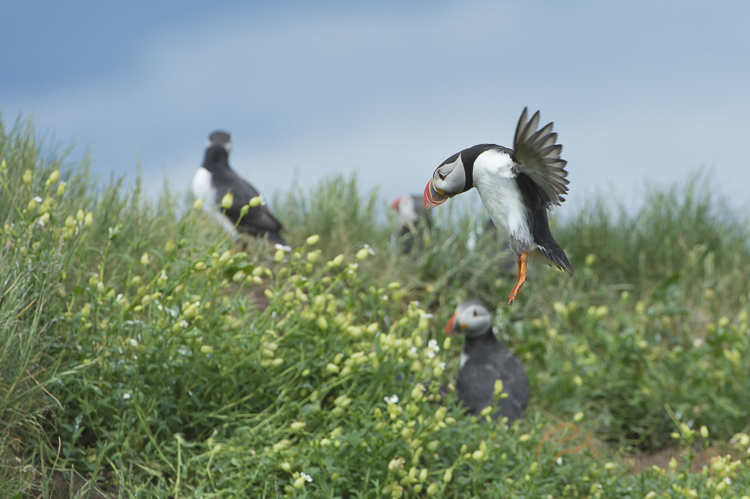
Tracking this puffin in flight, I'd never be able to change the settings quick enough if I was in full manual mode.

Tracking this puffin in flight, I’d never be able to change the settings quick enough if I was in full manual mode.

Now I’d never recommend anyone use full automatic modes. They are a pain in the backside, to be frank. The camera focuses wherever it sees fit, seemingly changing its mind on a day to day basis. The setting are often wrong, since you have no bearing over how the exposure triangle is balanced (other than a little bit of exposure compensation). For wildlife photographers, this is a pretty poor choice of mode.

However, what I do recommend is that you run with a semi-automatic mode. Because with wildlife, everything is so unpredictable that there is little chance you can spin the wheels, and react to changing conditions fast enough in manual mode. Picture this: you’re photographing an eagle swooping down from the sky to catch a fish from the water. It’s moving through many different ambient light conditions, from looking up towards the sky, all the way down to the water, and away again. You can’t accurately change the settings quick enough.

semi-automatic modes

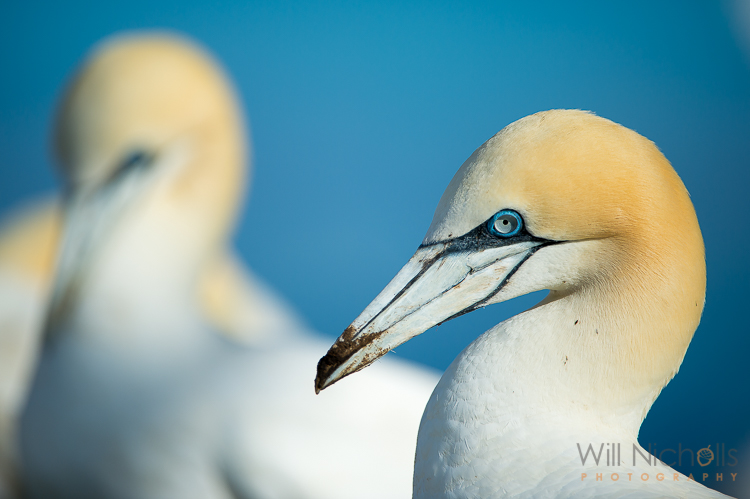
Northern Gannet

So what can you do? Use a semi-automatic mode. It’s definitely not cheating, and is a choice favoured by almost all wildlife photographers in the industry. It’s not to say that we can’t run the camera in manual mode – and that’s definitely something you should learn to do – but rather that there is no point putting such a simple task as adjusting the shutter speed, in the way of you composing a stunning wildlife image.

Choosing a semi-automatic mode

There are a few choices you can make here when it comes to semi-auto modes. Let’s take a look at the best choices.

Aperture Priority Mode

This is my personal favourite. Aperture priority mode allows you to set the aperture you require, leaving the camera to adjust the shutter speed automatically, in order to balance the exposure. You can increase your ISO should the light become a limiting factor, letting the camera increase the shutter speed as a result. But you still have total control really, because all you need to do is adjust your exposure compensation to fine-tune the resulting photo.

DSC_2260

Exposure compensation allows you to retain control and properly expose a photo, even in a partly automatic mode.

A wide aperture often favours wildlife photographs, as it allows for a nice, soft bokeh, that isolates the subject from the background. This is what often gives a wildlife image a sense of quality, although I am a big believer in breaking the rules and actually including the background in your shots. For this reason, aperture priority often makes sense as you are able to control the setting that can make or break a photo.

Shutter Priority Mode

This is definitely not the mode you want to be in, if you’re going to involved in wildlife photography. Chances are you’ll be setting your shutter speed high – and probably too high at that. Wildlife is most active at dawn and dusk, and while you may find it relatively easy to see, it is surprising how little light is available to the camera, especially if you’re shooting with a lens slower than f/2.8. With a shutter speed dialed down, the camera only has so far it can go in increasing the aperture before the photo starts to become underexposed. Conversely, with aperture priority mode there is no real limit to how fast or slow the shutter speed can go – the worst thing that may happen is you get a blurred image, although this can sometimes come off artistically.

Note: Stay away from shutter priority mode for wildlife photography!

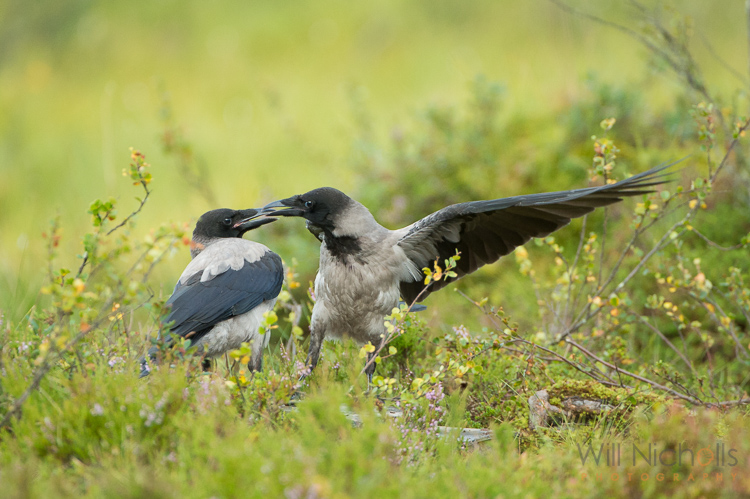
Two hooded crows engaged in a scrap.

Two hooded crows engaged in a scrap.

Manual Mode with Auto ISO

This is a popular choice amongst wildlife photographers too, although I have yet to use it myself. By sticking the camera into manual mode, but leaving the ISO set to automatic, you retain control over both aperture and shutter speed, allowing the camera to adjust the ISO to balance the exposure. Personally, I like to have control over the ISO, as I feel this can ruin an image.

This mode does allow you to ensure you have the desired aperture and shutter speed for proper effect, but consequently you may not notice that your ISO is increasing quickly as light conditions drop. The worst thing to find is a photo that looks fantastic on your camera’s LCD, until you return to your studio and find it is peppered with digital noise.

Even so, getting into a good habit of checking the ISO settings periodically during a shoot, will mean this is no longer a problem. With experience you’ll learn what the limits tend to be for certain ambient conditions, before the ISO gets ramped up.

semi-automatic modes

You still have full control in semi-automatic modes, allowing you to achieve more unusual images.

You also still retain the ability to use exposure compensation while ISO is set to auto. This allows you to fine-tune the exposure, just like with aperture and shutter priority modes.

So which mode should you use?

Now we’ve looked at three different semi-automatic modes you’re probably wondering which you should go for? Well, you know what I think about shutter priority mode. Other than that, it’s essentially up to you. If you want to be entirely confident in your aperture and shutter speed, then opt for manual with auto ISO.

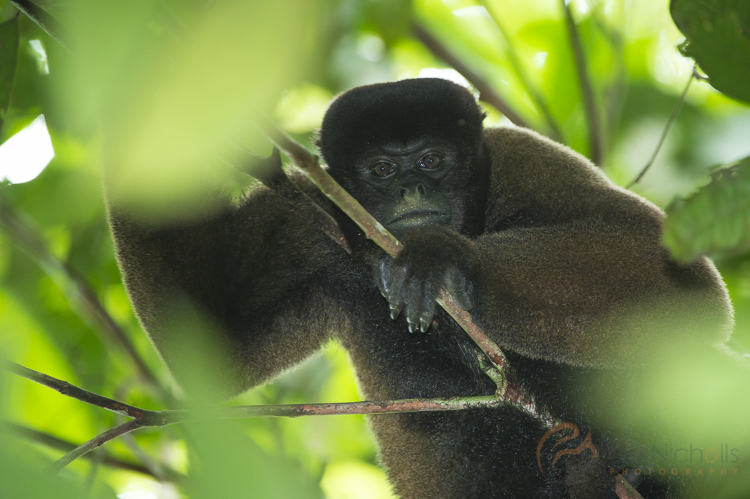
Thanks to a semi-automatic mode, I was ready for action when this woolly monkey surprised me in the Amazon rainforest. Manually mode would have rendered my efforts useless in such a fleeting moment.

Thanks to a semi-automatic mode, I was ready for action when this woolly monkey surprised me in the Amazon rainforest. Manual mode would have rendered my efforts useless in such a fleeting moment.

If, like me, you find the prospect of an unacceptably high ISO speed creeping up on you, then stick to aperture priority mode. Professionals use both modes, and either can result in great success with the right photographer behind it. It’s just getting used to the mode of choice, and playing to the relative advantages each one brings with it.

You’re going to feel the limitations of either mode as light drops, but I always say that a slightly blurred image (or risk of one from a slow shutter speed) is better than a photo rendered unusable thanks to digital noise.

googletag.cmd.push(function() {
tablet_slots.push( googletag.defineSlot( “/1005424/_dPSv4_tab-all-article-bottom_(300×250)”, [300, 250], “pb-ad-78623” ).addService( googletag.pubads() ) ); } );

googletag.cmd.push(function() {
mobile_slots.push( googletag.defineSlot( “/1005424/_dPSv4_mob-all-article-bottom_(300×250)”, [300, 250], “pb-ad-78158” ).addService( googletag.pubads() ) ); } );

The post Why Semi-automatic Mode is the Best Choice for Wildlife Photography by Will Nicholls appeared first on Digital Photography School.


Digital Photography School

 
Comments Off on Why Semi-automatic Mode is the Best Choice for Wildlife Photography

Posted in Photography


How to Shoot Real Estate Photography Using Natural Light

14 Aug

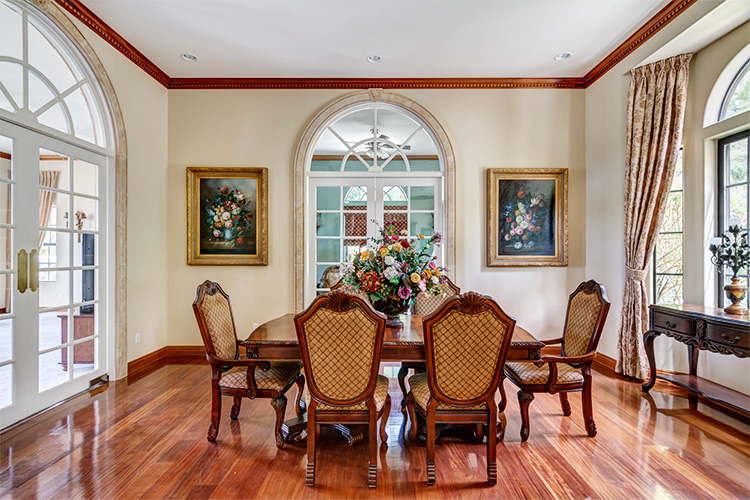
There’s something about the way sunlight illuminates a room. The light pours over surfaces, metal fixtures gleam, wood detail shines, and the edges of furniture upholstery glows. Natural shadows produced by different objects convey a sense of depth. A naturally-lit image gives you a feel for what it would be like to see the space in person.

1 dining

The following will give you a basic understanding of equipment needs, how to manage contrast and mixed lighting in a room, and HDR shooting techniques to get you started doing real estate photography using natural light.

Equipment

Shooting with natural light has the benefit of a short equipment list. A camera, tripod, and wide angle lens is all you need.

  • Camera: A DSLR with auto-bracketing will increase your shooting speed and ease.
  • Tripod: Your tripod should be sturdy enough that your camera will stay put if you need to manually adjust camera settings, while shooting a series of bracketed images.
  • Wide Angle Lens (with lens hood): For cropped sensor cameras, the Tokina 11-16mm is a fantastic choice for real estate photography. The Canon 10-22mm is also a great option. You’ll be able to handle just about any real estate shooting situation with either of these aspherical lenses. For full frame cameras you’ll want a lens in the 16-35mm range. A lens hood is necessary to prevent lens flare.
  • Not required, but definitely a bonus: Circular Polarizer. In addition to deepening blue skies, a circular polarizer can be very helpful in reducing glare on windows, foliage and pool surfaces.

Sunlight on the exterior

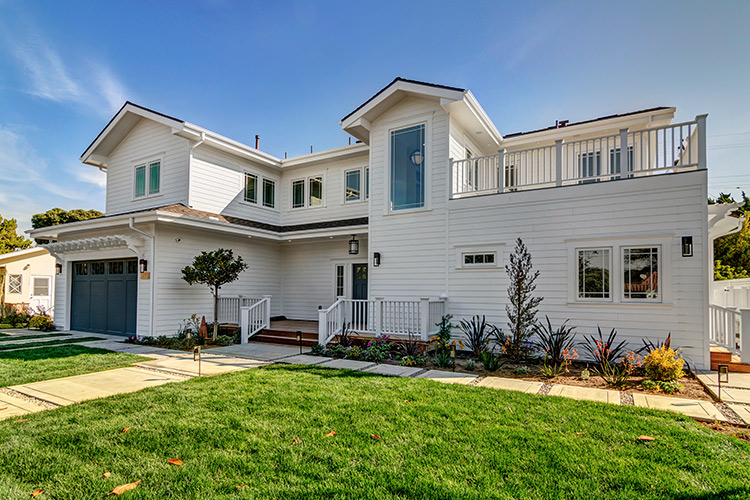
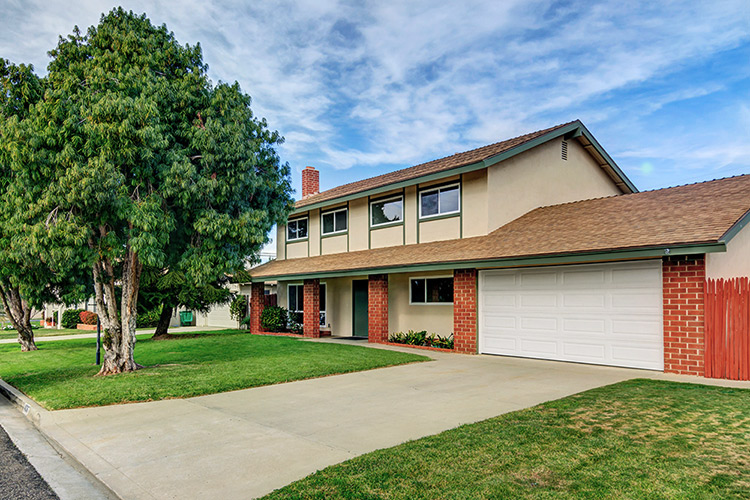
A sunny day is the best canvas for your exterior shots. Try to schedule your shoot during a time of day when the sun will be shining on the front of the house. Ask your client (or check Google Maps) to see which direction the house faces. You want capture the front exterior in its best light, as it’s almost always used as the featured image for the property’s listing.

2 exterior sun darlene

If it’s not possible to shoot the exterior in sunlight, don’t fret. Shooting HDR (explained later on) will help perk up a shady exterior.

851 Cabrillo Ave 05 Exterior print

4036 Baldwin Lane 01 ExteriorFront

Camera position within a room

There’s usually one ideal spot in a room, to position your camera to showcase the best angle. A room’s best angle usually shows:

  1. As much of the room as possible.
  2. The most aesthetically pleasing furniture and/or architectural elements.

For the natural light photographer, finding that spot depends on two things: available space, and window brightness.

Most importantly, you need to pick a space you can physically occupy. For smaller houses and rooms, quite often your only choice is the doorway, as it is likely to be the only spot where you can fit behind the tripod, and still squeeze enough of the room into your shot. Capturing three walls in your shot will give the viewer a better idea of the size and space of the room.

Rooms large enough to offer more than one shooting location often have windows lacking shades or blinds. Pick a spot in which extremely bright windows are angled more than 45 degrees away from center of your lens’ field of view. Doing so will help you avoid a high-contrast shooting situations and potential lens flare, which will in turn reduce your time spent in post-production.

4 side light

The shooting location for this image placed the bright window at a 90-degree angle to the lens, minimizing contrast, as well as producing a pleasantly side-lit scene. An out of frame kitchen window, provided supplemental light from the right.

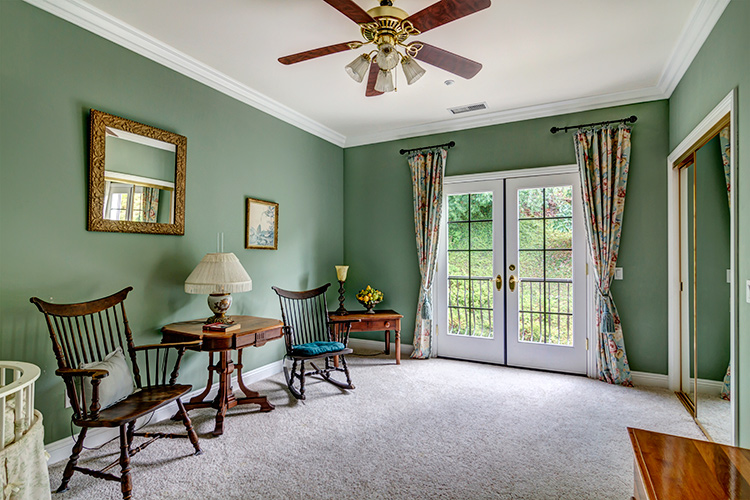
5 low contrast window

This room’s patio doors looked directly onto a foliage-covered hillside, resulting in a reduced contrast between interior and exterior, and less work required in post-production.

Working with windows

The windows in smaller rooms, such as bedrooms and bathrooms (in which your shooting position is limited) usually have blinds or shades. If the windows are bright, consider closing them at least partially, to reduce contrast between the interior and exterior – especially if the view outside is not an additional selling point for the house. This cuts down on the overall contrast of the scene, while still illuminating the room. It also prevents direct light from hitting your lens, minimizing flare and ghosting.

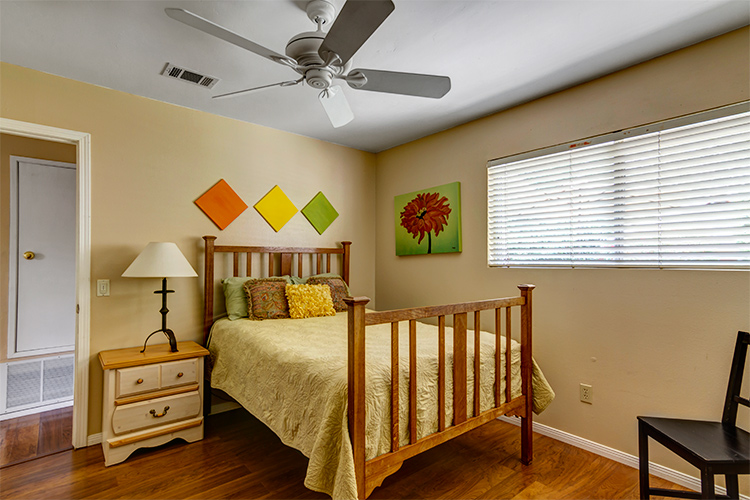
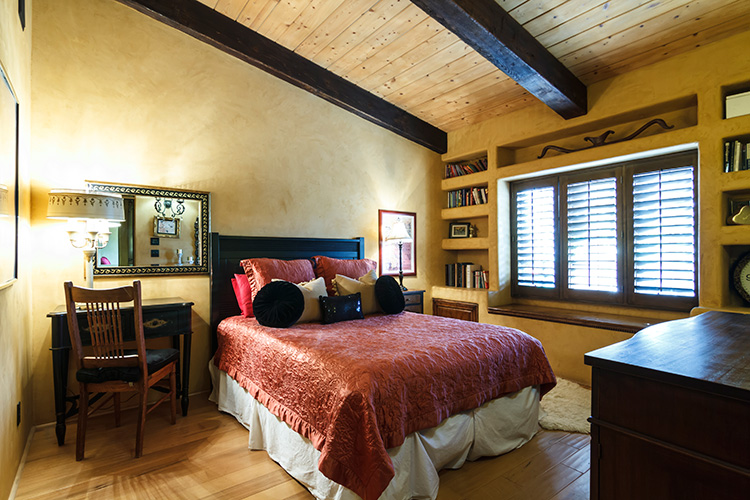
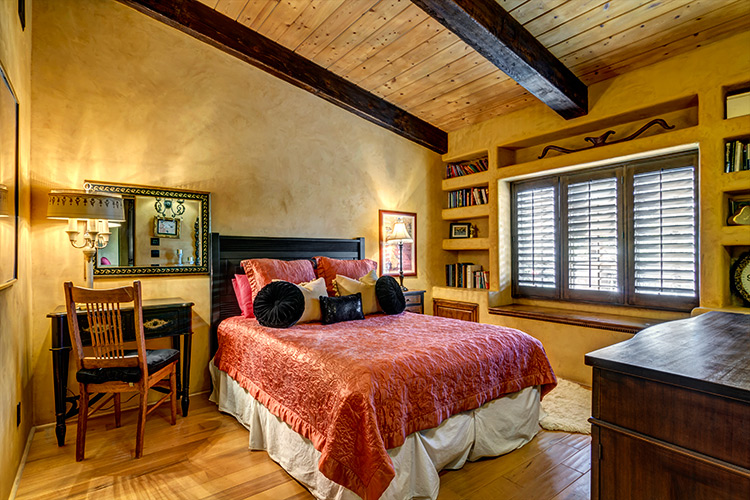
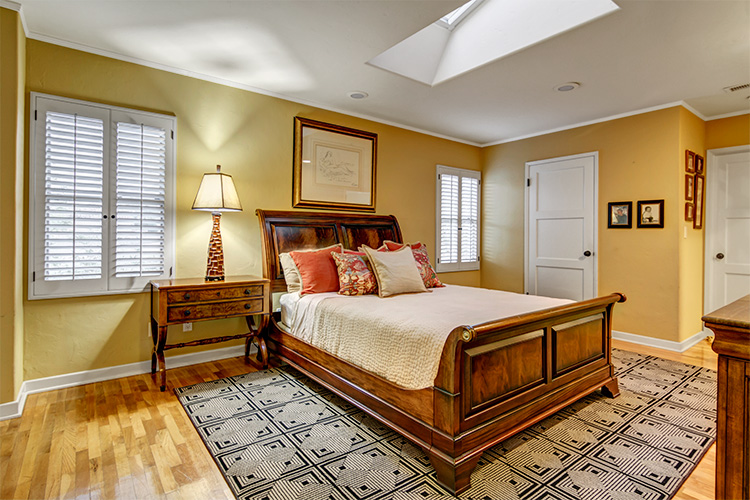
6 bed shades

Blinds are angled at 45 degree to cut down on scene contrast.

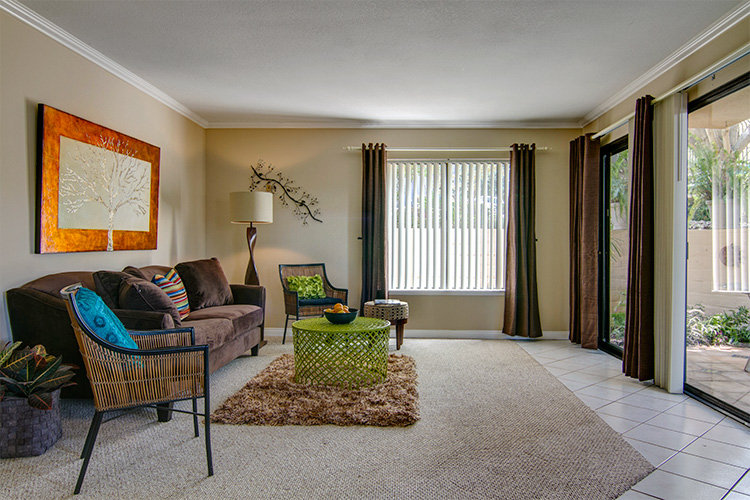
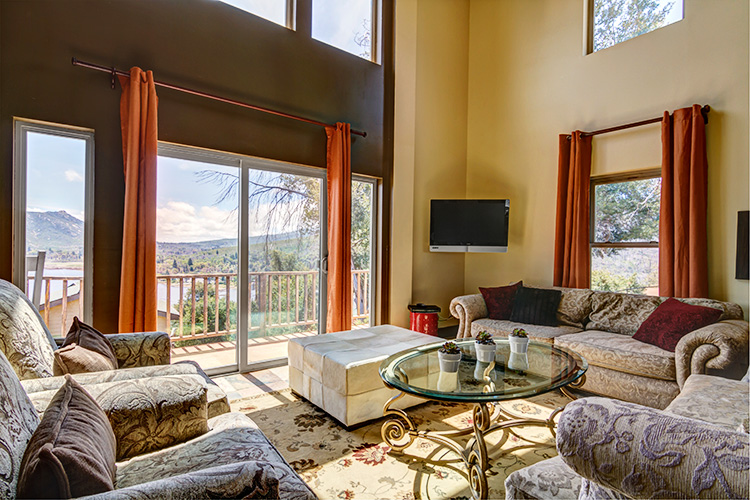
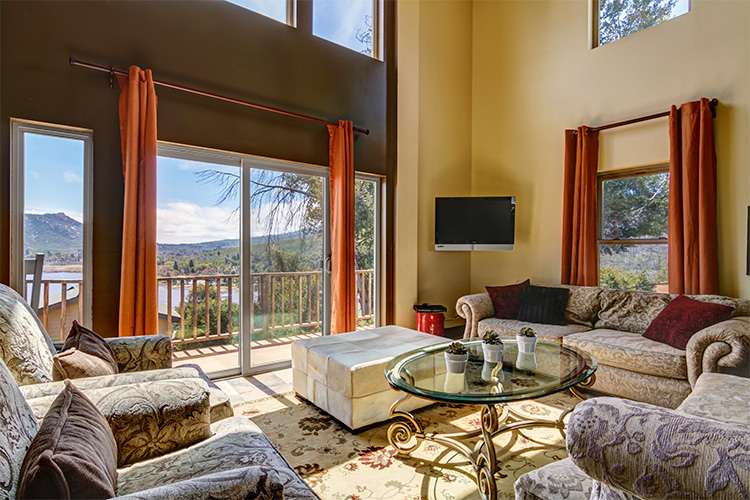
7 living partial

Blinds on the brightest window are partially closed, whereas the patio door blinds were left open.

Shooting HDR

Natural light can create beautiful images, but they do require some extra work in post-production. Rarely can a single exposure handle the range of contrast produced by an interior space with windows. HDR techniques will help remedy shadowy corners and bright windows, properly exposing all parts of the space.

8 bed no hdr

From a single exposure.

9 bed hdr

HDR composite created with nice bracketed images.

To create an HDR image, you’ll need to shoot a series of bracketed images. Tiny rooms without any windows, such as washrooms and closets, usually require three images bracketed by 1-1.5 stops. In most rooms 5-7 images will do the trick. High-contrast spaces containing bright interior lighting and/or windows, may require nine bracketed images. For rooms with exterior views, sometimes HDR programs have difficulty rendering the contrast, no matter how many bracketed images you shoot, and the composite starts to look unnatural.

In general, it’s difficult to achieve a natural look within an image that contains a room with a view. For finer control over this interior/exterior blending process, consider shooting an image to expose for the view out the window, then using Photoshop to mask the view into the HDR composite image of the room.

10 view hdr

HDR composite image.

11 view hdr+extra image
HDR composite with an additional image exposed for the view masked into the windows with Photoshop (above). Even though the change is subtle, the potentially distracting overexposed window scene is now closer to proper levels, making it easier for the viewer’s eye to move from the interior to exterior, and back again.

Mixed lighting inside

One of the difficulties of working with natural light, is dealing with mixed lighting situations. If enough light is coming in through the windows, you can choose to leave interior lights off, resulting in a single daylight color temperature throughout the image. Leaving interior lights off works especially well when window light is sufficiently illuminating the room, the light fixtures themselves aren’t in the frame, and the palette of the room is mostly white.

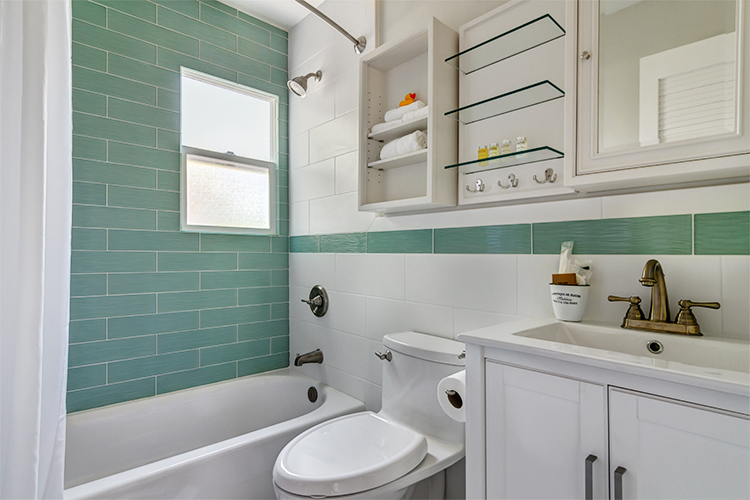
12 bath sunlight only

Lights off in this bathroom resulted in a fresh and clean look.

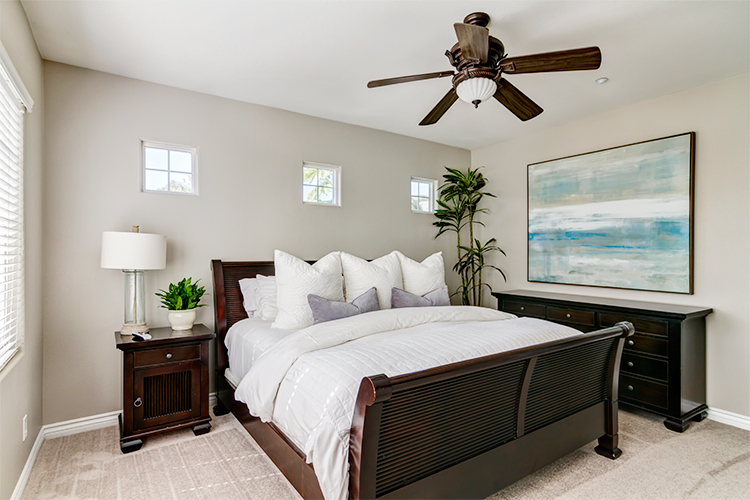
13 bed sunlight only

The window light was so abundant in this bedroom that turning the interior lights on could have arguably made the scene look unnatural.

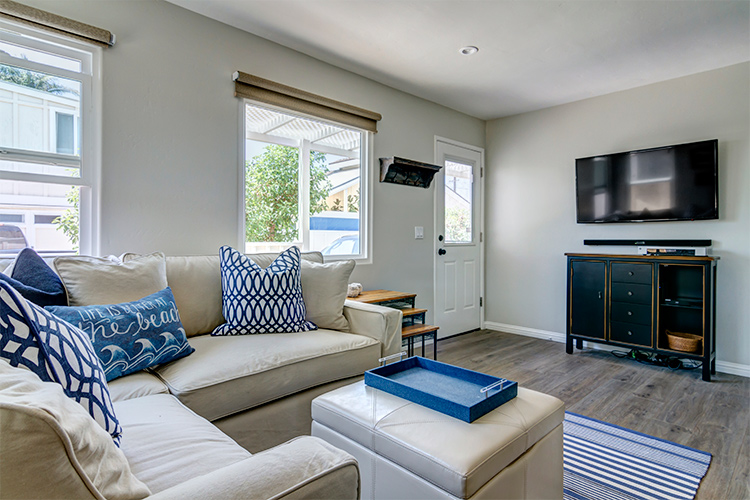
14 living sunlight only

The interior lights were kept off to avoid mixing tungsten with daylight for this shot. Turning them on wouldn’t have added much illumination, as the sunlight was quite bright on its own.

If the room isn’t bathed in sunlight, or contains light fixtures like pendants or chandeliers that should be on display, make sure to turn them on. You’ll end up with multiple color casts that will require correction later, but there’s a point at which simplifying the lighting just to speed up post-production, starts to undermine the ambiance of the room.

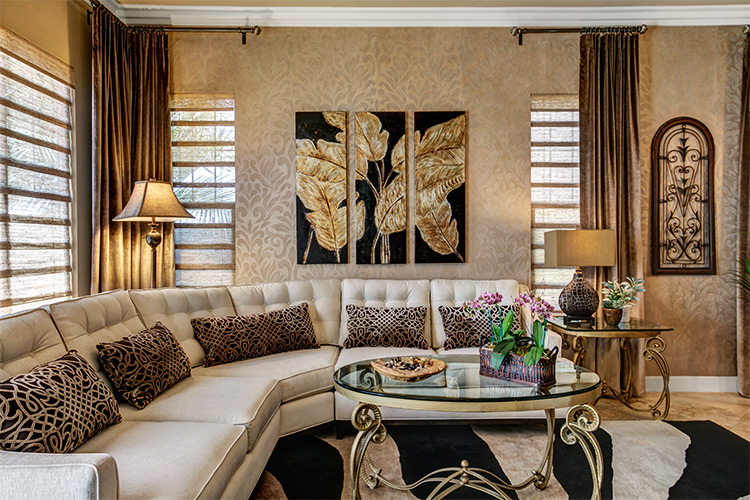
15 living mixed

Mixed lighting in the living room above, and the bedroom below, required a significant amount of color correction in production, but resulted in more inviting and warmer looking spaces.

16 bedroom mixed

You can reduce your color correcting time by masking in the lights, the same way you would the view outside a window. Shoot the room with the lights off, then with the lights on. Create two HDR composites of each lighting situation, then mask in the illuminated lights. This works well with fixtures that don’t provide much illumination but should be seen turned on.

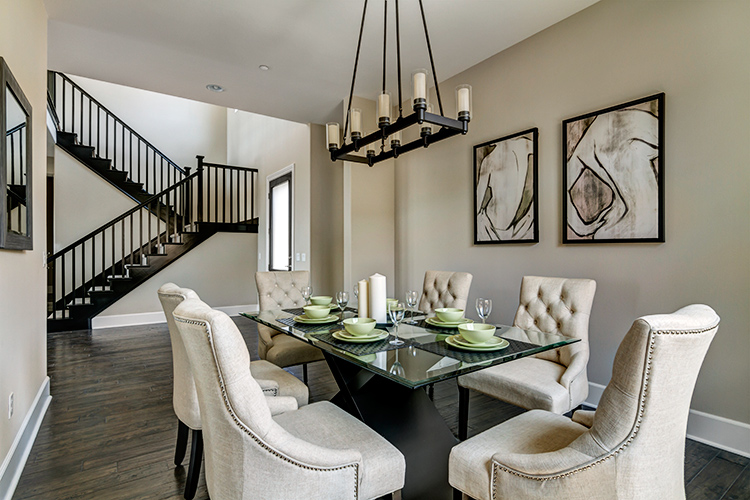
17 dining chandelier off

HDR composite with chandelier off.

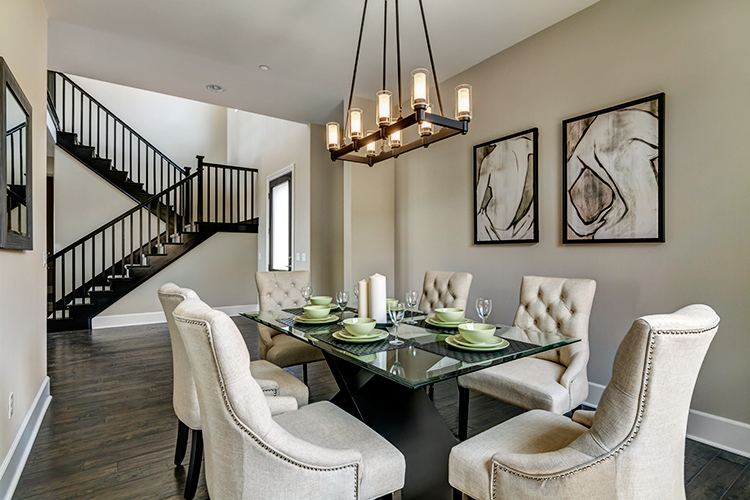
18 dining chandelier on

HDR composite with the illuminated chandelier masked in with Photoshop.

Conclusion

Shooting real estate with only sunlight and interior lighting lends a beautiful, natural aesthetic to your images. When setting out, remember:

  • A wide angle lens is a must-have, along with camera and tripod.
  • Shoot the exterior bathed in sunlight, if possible.
  • Avoid shooting directly into extremely bright windows.
  • Adjust shades and blinds to control contrast within a room.
  • Decide how to deal with mixed lighting, and shoot different variations to give yourself plenty of options in post-production later.

Please post your questions and share your real estate photos in the comments below.

googletag.cmd.push(function() {
tablet_slots.push( googletag.defineSlot( “/1005424/_dPSv4_tab-all-article-bottom_(300×250)”, [300, 250], “pb-ad-78623” ).addService( googletag.pubads() ) ); } );

googletag.cmd.push(function() {
mobile_slots.push( googletag.defineSlot( “/1005424/_dPSv4_mob-all-article-bottom_(300×250)”, [300, 250], “pb-ad-78158” ).addService( googletag.pubads() ) ); } );

The post How to Shoot Real Estate Photography Using Natural Light by Lauren Schroeder appeared first on Digital Photography School.


Digital Photography School

 
Comments Off on How to Shoot Real Estate Photography Using Natural Light

Posted in Photography


The good, the bad and the ugly of aerial photography – part 2: aircrafts

13 Aug
My favorite image from the Holuhraun volcanic eruption, Iceland. Not only did I shoot multiple versions, I also asked the pilot to fly as slowly as possible and to return to this angle repeatedly so I could make sure I have the composition just right. This was easily done with the helicopter.

In the previous article I talked about some of the advantages of aerial photography. Now we’ll talk about some logistics, starting with the aircraft. There are two main options here: a light airplane or a helicopter. Yes, you can shoot from a hot air balloon but that’s not really an option in most places, plus it’s far less maneuverable, so I’ll gently disregard it. Also, while drones are taking the world of aerial photography by storm, the considerations discussed in this series don’t really relate to them, and so I won’t be talking about them at all.

It will probably come as no surprise when I say that a helicopter is the better way to go, by far. It might cost a bit (or a lot) more, but the advantages it offers make for a very different, vastly superior experience. 

Perhaps the greatest advantage is that some helicopters allow the doors to be opened or even completely removed for the flight

A helicopter is a flexible craft: it can fly slower than a plane or even hover in place, which gives you much more time to shoot a desired composition. But that’s not all: perhaps the greatest advantage is that some helicopters allow the doors to be opened or even completely removed for the flight. Once the door is off, you have a huge field of view, and wide-angle shooting is possible. You need to be careful not to have the rotor in the shot, but that can generally be avoided when pointing the camera downward.

The huge field of view also means that you have the option to try the same shot more than once should the first try fail, and you can shoot different angles of the same subject even after you’ve moved ahead. That’s a critical advantage which can make the difference between getting a shot and losing it.

Huge icebergs finally released from Kangia Fjord after floating there for years. Can you spot the (fairly large) boat?

Disko Bay, Greenland.

The most common helicopter for aerial photography is the Robinson R44. It’s a small helicopter fit for a pilot plus three passengers, and you can take both doors off in a minute, which is crucially important for getting crisp images without reflections or aberrations (if the pilot refuses to take the door off don’t even bother). Its small size also makes it relatively cheap to fly and maintain (emphasis on relatively).

What’s considered cheap? Well, one of my R44 flights cost me $ 850 (around €760) an hour, the other €1500 (around $ 1670) an hour. It really depends on where you fly, and costs worldwide can vary even more than that in both directions, but primarily upward. In places where a small, cheap helicopter isn’t available, costs can rise quite ludicrously. For example, I’ve recently gotten a quote of $ 4200 an hour for a larger heli in a place whose name I won’t mention. That’s $ 70 a minute. Yes, my reaction was similar to yours.

In the image below you can see a wide-angle shot of the dunes of Sossusvlei, Namibia, taken from an R44 helicopter with the doors taken off. It’s quite striking to see these intricate dunes from this angle, and the helicopter allowed me to take a very wide shot and include the entire dune, which is a huge advantage.

Shooting from a light plane is different. You usually shoot from an open window, and that’s in the best case scenario: about a year ago I did a photography flight in Greenland in which I had the dubious pleasure of shooting through a 15cm hatch in the front window. This means that shooting-angle selection was extremely limited (forget about ultra-wide lenses), and that once you pass a good shooting angle, the shot is gone unless you circle back. This disadvantage is emphasized by the faster movement speed, which frankly gives you a feeling of anxiety to be ready and shoot before it’s all gone.

To sum it up, though cheaper than a helicopter, a light plane with a small hatch (as opposed to a large window) is very limited in shooting angles, supplies less opportunities to get the right shot, and as a result yields much less keepers when the flight is done. I’d seriously reconsider before ever doing it again.

A Cessna with a large window you can open is a very different story. Shooting is much more comfortable and angle choice much less limiting. If you lean back (careful not to push against the poor pilot! I know I did that a few times…), no wind interferes with your lens and stability is quite good. I shot from such a Cessna in the Lofoten Islands and the experience was wonderful. 

Kjerkfjord, surrounded by mountains struck by beautiful pink light. Shot from a Cessna during sunset on my Lofoten Islands workshop this January.

In the next article I’ll discuss technicalities and parameter selection for aerial photography.


Erez Marom is a professional nature photographer, photography guide and traveler based in Israel. You can follow Erez’s work on Instagram, Facebook and 500px, and subscribe to his mailing list for updates.

If you’d like to experience and shoot some of the most fascinating landscapes on earth with Erez as your guide, you’re welcome to take a look at his unique photography workshops around the world:

Land of Ice – Southern Iceland
Winter Paradise – Northern Iceland
Northern Spirits – The Lofoten Islands
Giants of the Andes and Fitz Roy Hiking Annex – Patagonia
Tales of Arctic Nights – Greenland

More in This Series:

The good, the bad and the ugly of aerial photography – Part 1: Why shoot aerials?

Selected articles by Erez Marom:

  • Behind the Shot: Dark Matter
  • Mountain Magic: Shooting in the Lofoten Islands
  • Behind the Shot: Nautilus
  • Behind the Shot: Lost in Space
  • Behind the Shot: Spot the Shark
  • Quick Look: The Art of the Unforeground
  • Whatever it Doesn’t Take
  • Winds of Change: Shooting changing landscapes
  • On the Importance of Naming Images
  • Parallelism in Landscape Photography

Articles: Digital Photography Review (dpreview.com)

 
Comments Off on The good, the bad and the ugly of aerial photography – part 2: aircrafts

Posted in Uncategorized


Weekly Photography Challenge – Wide Angle

13 Aug

Shooting with a wide angle can be challenging – to create an image that is engaging and has a good focal point. Check out these examples.

Magnus Wrenninge

By Magnus Wrenninge

Aotaro

By aotaro

Weekly Photography Challenge – Wide Angle

Here is some help for you if you need ideas:

  • Wide Angle Versus Telephoto Lenses for Beautiful Landscape Photography
  • How to Use a Wide-angle Lens with Wildlife for a New Perspective
  • How to Create Compelling Wide-Angle Portraits Using One Off-Camera Flash
  • 10 Tips for Photographing Wide-Angle Landscapes
  • How to Use a Wide-Angle Lens for People Photography
Lee

By lee

Mariusz Kluzniak

By mariusz kluzniak

Giuseppe Milo

By Giuseppe Milo

Share your images below:

Simply upload your shot into the comment field (look for the little camera icon in the Disqus comments section) and they’ll get embedded for us all to see or if you’d prefer upload them to your favourite photo sharing site and leave the link to them. Show me your best images in this week’s challenge. Sometimes it takes a while for an image to appear so be patient and try not to post the same image twice.

Share in the dPS Facebook Group

You can also share your images on the dPS Facebook group as the challenge is posted there each week as well.

googletag.cmd.push(function() {
tablet_slots.push( googletag.defineSlot( “/1005424/_dPSv4_tab-all-article-bottom_(300×250)”, [300, 250], “pb-ad-78623” ).addService( googletag.pubads() ) ); } );

googletag.cmd.push(function() {
mobile_slots.push( googletag.defineSlot( “/1005424/_dPSv4_mob-all-article-bottom_(300×250)”, [300, 250], “pb-ad-78158” ).addService( googletag.pubads() ) ); } );

The post Weekly Photography Challenge – Wide Angle by Darlene Hildebrandt appeared first on Digital Photography School.


Digital Photography School

 
Comments Off on Weekly Photography Challenge – Wide Angle

Posted in Photography


How to Be Different and Make Your Photography More Unique

12 Aug

When starting on the path of learning photography, it is common for some to already have an idea about what their work is supposed to look like. They admire and look at the work of photographers and want to be able to do similar work themselves. While this is an important part of the learning process, the best photographers all eventually go off in their own direction, and creatively it’s very important to think in this way. You want your work to ultimately be different. Here are some steps to help you figure out how to go against the grain and make your photography more unique.

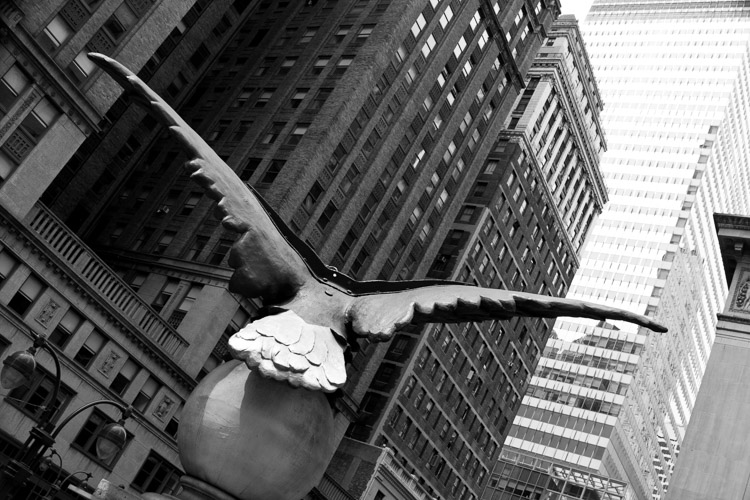
Soaring, 42nd Street, NYC

Soaring, 42nd Street, NYC.

1. Put your own spin on things you’ve learned

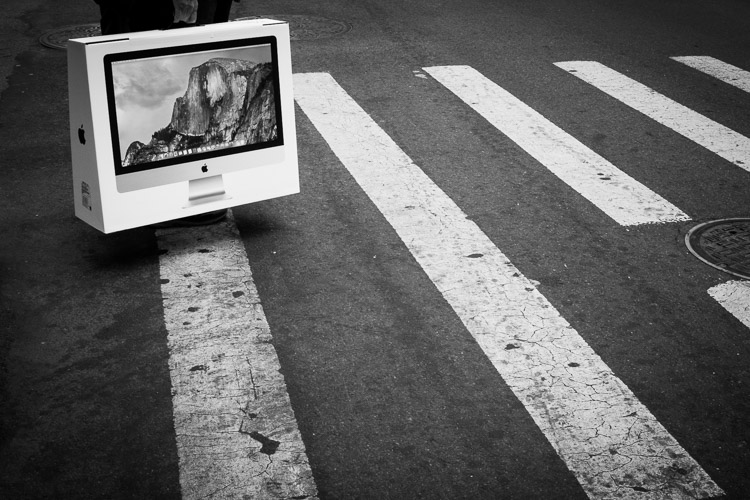
Yosemite, Broadway, New York.

Yosemite, Broadway, New York.

You cannot go against the grain if you don’t first understand the traditional techniques of photography. Take all of the photographers that you admire and teach yourself how to do what they did. Take the best aspects from all of them, whether it be content matter, lighting, exposure, overall look, or other technical skills, and integrate them into your own work. Become a hybrid of them all.

These photographers came before you for a reason, and it’s a luxury to be able to learn from them. You can still go in your own direction, however, you first need to create the foundation to be able to do that in the right way.

2. Don’t be afraid of people not liking your work

It is normal to feel like you need to cater to everyone’s interests. Obviously, you want to create work that a group of people enjoy, but try not to think about that at the beginning. No matter what you do, someone is not going to like your work, and probably more than a few people.

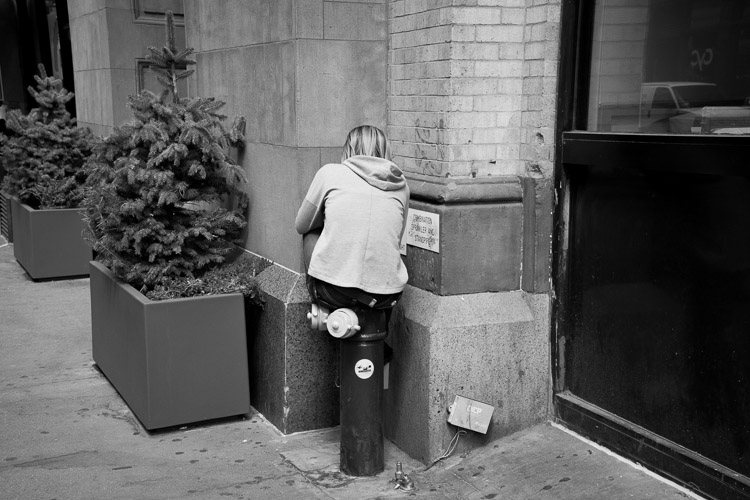
New York.

New York.

The problem with chasing likes, is that you end up playing the game of popularity. You look at what photography succeeds the most on social media websites, at what gains the most wows, and it’s easy to think that it is the best photography, and that is what you need to do as well. However, what you are really doing is conforming to work that has already been done before many times. You end up creating work so common that it is a dime a dozen. The most popular looks right now are the ones that are the easiest to achieve, with a medium amount of technical proficiency. You can do better.

There is no need to photograph for the purpose of getting likes. Seek out critiques and understand how people feel about your work, but your first aim should be to create work that means something to you. If you take everything else out of the equation, which of your images do you like the best? What has the most meaning behind it for you? This is often not a logical feeling. Rationally, you might think that a certain image is your best, but your gut may give a hint at something else.

Follow your gut. Follow your instincts. Search through your archive, and find work that you’re afraid of showing. That is usually the best stuff. Put it front and center, and develop the ideas of that work further.

3. Take some technical risks

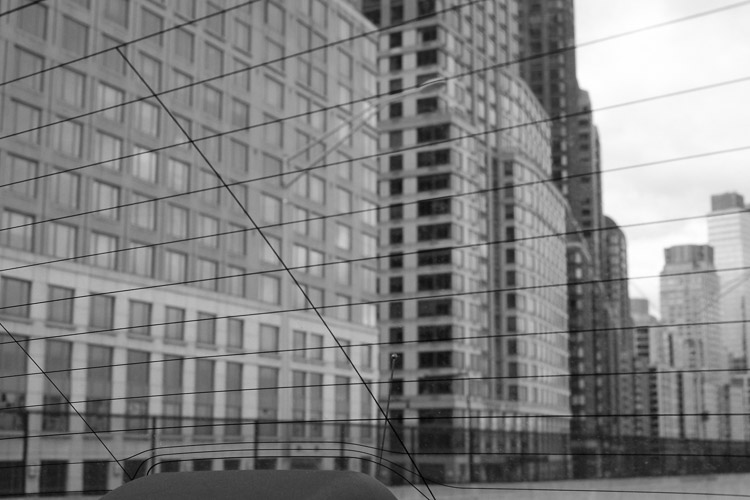
Trump Towers, New York.

Trump Towers, New York.

Try out as many alternatives to the traditional way of doing things as you can. Shoot in bad light, experiment with blurry photos, or create weird and off-kilter compositions. Make bright or dark images. Embrace imperfection and ambiguity. Not everything has to be beautiful.

Shoot in a more spontaneous way and follow your gut. Go to places that you normally wouldn’t explore, and take images. Shoot during your daily life. Force yourself to go to the most mundane place you can think of, and figure out how to create an interesting photograph there.

4. Think about, and create, exactly what you like

Intimate work is what makes great art. Think about ideas and subjects that you are passionate about, and explore them. Create nuanced work, and don’t be afraid if people don’t understand it right away. They probably won’t at first. Particularly if you are showing your work on the Internet, people scan so quickly, and they usually respond to what pops out at them in the most obvious way. Nuanced, thoughtful, and intimate work might not catch their eye right away. Experiment with this type of work and forget about how people might react to it.

Sample Sale, SoHo, New York.

Sample Sale, SoHo, New York.

What are you interested in? Maybe it is nature, sports, politics, identity, community, Pokemon, or a particular place nearby. Create a story. It literally could be anything. Think about what you are most interested in, no matter how ridiculous it may seem, and see if you can figure out a way to combine that with photography.

Next, create a series based on your idea. This type of work displays extremely well in a series format, because you can cover more ground, tell more of a story, and people will take the time to go through it. It will be easier for them to understand the idea more as they explore, whereas their brain will often glaze over or miss the idea in a single image.

5. Educate people

There is a common misconception that you need to let art speak for itself. This is very true on one level, because great art will allow people to ponder, and to interpret it in different ways, without anything pushing that. However, people will often need to be grounded at some level, to let them start to understand the work and delve deeper into it in the first place. Then they can more effectively explore, and get lost in the work and their thoughts about it.

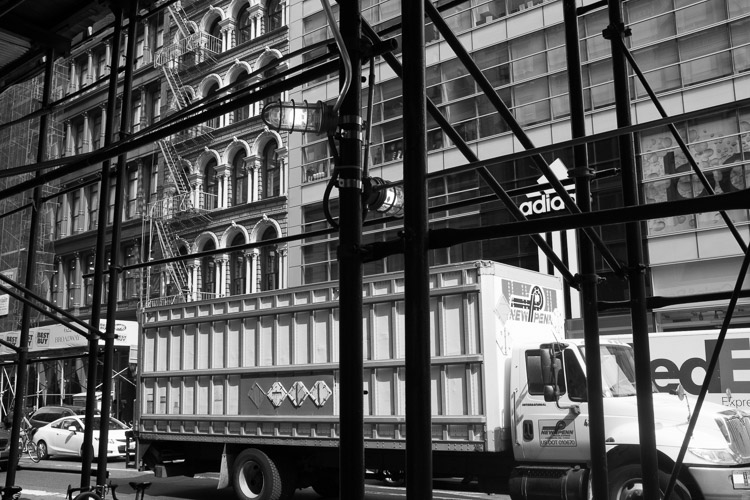
Broadway, New York.

Broadway, New York.

Writing about your work is important, because a good introduction will set people on the path to gaining pleasure from the work, without you having to say too much about it. Hold some information back of course. No need to over-share.

The bottom line

Going against the grain means you can do your photography in any way that you please, and you don’t even have to take the advice here. This is just to get you started thinking uniquely and experimenting, and as the photography quote goes, “If everyone is looking one way, look the other way.”

googletag.cmd.push(function() {
tablet_slots.push( googletag.defineSlot( “/1005424/_dPSv4_tab-all-article-bottom_(300×250)”, [300, 250], “pb-ad-78623” ).addService( googletag.pubads() ) ); } );

googletag.cmd.push(function() {
mobile_slots.push( googletag.defineSlot( “/1005424/_dPSv4_mob-all-article-bottom_(300×250)”, [300, 250], “pb-ad-78158” ).addService( googletag.pubads() ) ); } );

The post How to Be Different and Make Your Photography More Unique by James Maher appeared first on Digital Photography School.


Digital Photography School

 
Comments Off on How to Be Different and Make Your Photography More Unique

Posted in Photography


5 Ways Travel Can Inspire Your Wedding Photography

09 Aug

If you’ve shot a wedding you’ve likely had that moment where some obscure family tradition threw you off balance, you struggled to attach the right lens in time, and missed that once-in-a-lifetime shot. You can shoot a thousand weddings, but without knowing what to look for, you just might miss the biggest moments of the couple’s wedding day. But, if Continue Reading

The post 5 Ways Travel Can Inspire Your Wedding Photography appeared first on Photodoto.


Photodoto

 
Comments Off on 5 Ways Travel Can Inspire Your Wedding Photography

Posted in Photography


10 Things Nobody Tells Photography Newbies

08 Aug

Every time you read an article or a book, a blog post, or a tutorial, there is always something new to learn about photography. Technology is always moving forward, software being improved, new features and functionality released. Someone has a new technique or tip to share. So many things to learn, yet it is one of the joys of photography as well. Your boundaries are in many ways limitless, it is an artform you can take and develop and make it your own.

Still there were many things on my journey that had to be learned the hard way, as is often the case. There are some fundamental things it took a while to understand, mostly because no one shared these nuggets of information. Maybe they just thought it was so obvious, that everyone would figure it out?

Hopefully these tips from my experiences will help you in your photography journey.

1. Photography is hard to learn

SHILL Article1 buskers

Your camera is a marvel of modern technology and science, with lots of buttons and dials, and all sorts of fancy features. To have control over how it creates your images, you need to learn how to use it with some level of skill. Then there is the art side of the equation; composition, framing, mood, telling a story. So, many new concepts and ideas to learn, both technical and creative.

Dropping $ 3500 on a fancy new DLSR and lens doesn’t make you a capable photographer, any more than buying a set of chef knives makes you a Michelin starred chef. Your camera is a tool, which needs thousands of hours of time invested into learning how to use it. If you aren’t prepared to read books, watch videos, and go out again and again to shoot, then your rate of improvement will be minimal.

2. Photography is an expensive exercise

It starts with the really expensive bits, the camera body and the lens. Before long you will want more lenses. A camera bag is necessary to carry it all. A tripod to hold it still. Filters for long exposure shots. Wireless remotes, flash or other lighting gear, the list goes on. There is always something new and shiny to spend money on.

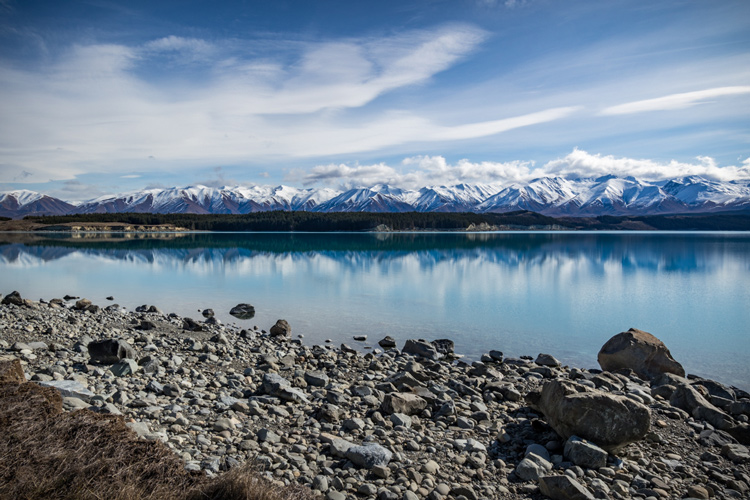
SHILL Article1 lake pukaki

Don’t forget things like decent footwear and outdoor clothes. Gas and accommodation costs for travelling locally, plus fees to get into parks also need to be accounted for. Travelling overseas is a luxury for many people. Don’t forget insurance too. It all adds up to a lot of money.

3. Camera gear is heavy

Good quality lenses are full of optical quality glass, and as a result they can be quite heavy. By the time you have two or three of them, and a DLSR body and other accessories, your kit can easily weigh 5kg (11 lbs.) or more. The more gear you have, the more you have to carry with you. This is one of the reasons the four thirds (mirrorless) technology is becoming so popular, the cameras (and lenses) are much smaller, and therefore lighter.

4. Having the right gear matters

Long lenses are necessary for wildlife and bird photography. Special gear is needed for astrophotography. For that super close-up shot, a macro lens (or filters) are a must. Studio portrait work means soft-boxes and professional lighting gear. Tripods, filters, wireless remotes etc., it all makes a difference, and having the right gear for the job is important.

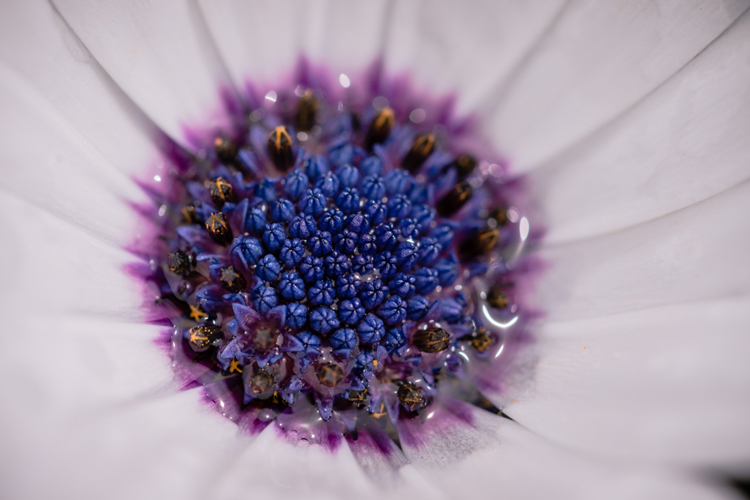
SHILL Article1 daisy macro

5. Gear doesn’t matter at all

Composition, framing, creative or artistic imagery, all elements that you, the photographer, bring to the image. It could be shot with your phone or the latest DSLR on the market, but without the creative input, your image may be missing that critical ingredient. Being in the right place at the right time (e.g. sunrise or sunset) or travelling to exotic locations, climbing a mountain, driving for hours to be in just the right spot, these are all things you have to do to capture the image.

Sunrise

Sunrise

Climb a mountain

Climb a mountain

6. It takes a long time to get competent

When you first get your camera gear it’s exciting and fun, so you take lots of pictures. Eventually you may get frustrated at how your images look, compared to those seen online, and one of two things will happen. The most likely outcome is that you give up because it’s too hard. The alternative option is you work even harder at learning your craft, you read more books, maybe join a club, or attend some workshops.

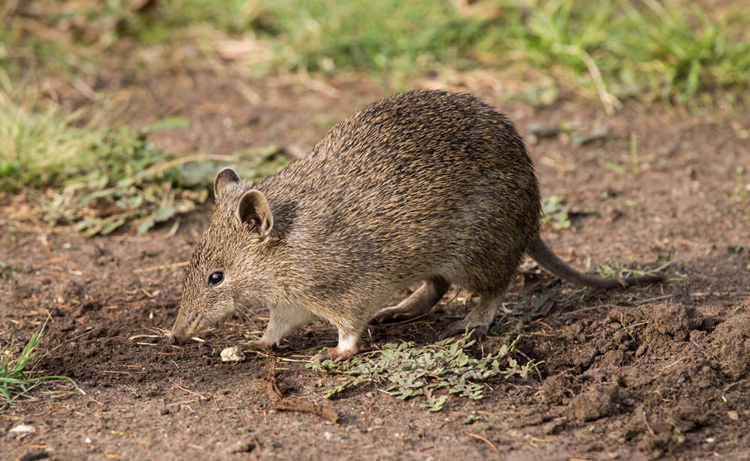
SHILL Article1 bandicoot

Someone clever (quote attributed to Malcolm Gladwell) worked out that it takes 10,000 hours of effort to master a new skill. Ten thousand hours! That’s over a whole year! You have to fit that in around work, sleep, and time with friends or family. That means it could take you years to get good at this.

7. Social Media is not your friend

When you first start sharing your images, your friends and family will like them. That’s because they like you and want good things for you. Getting likes is an instant form of gratification that can be addictive.

The problem with social media is that most of the people viewing your images are not photographers. They cannot give you useful technical advice or critique on your images, the kind to help you improve. If all you want is to get the most likes, then that will have an impact on how you learn and grow as a photographer.

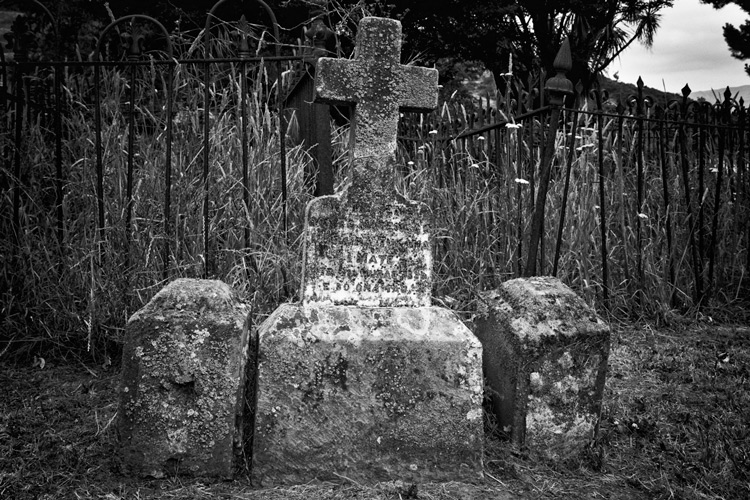
SHILL Article1 cemetary

There are groups and forums online, full of photographers who are often willing to give feedback. But accepting criticism is not something most people are comfortable with, and it can be really challenging. Some people are nicer about it than others too, so you might have to spend some time finding a place that you feel comfortable.

8. If you want a sunrise, you have to get up before the sun does

Yeah it’s easy to read it and nod your head, and go, “Sure, I can do that”. It’s a different story at 4am when your bed is nice and warm, but outside it’s cold and dark. Plus you might have already gotten up 10 times in the last couple of months to go shoot, and none of those mornings paid off.

Want to travel to exotic destinations? You have to save up to be able to afford it, take time off work, maybe travel with non-photographers and have to make some compromises when you travel. That incredible shot in a remote location means you have to hike in, carrying your camera gear, a tent, food, and everything else as well.

Exotic destinations

Exotic destinations

Photography requires a lot of commitment to your craft, learning it, and then going to the places you need, to capture the images you want.

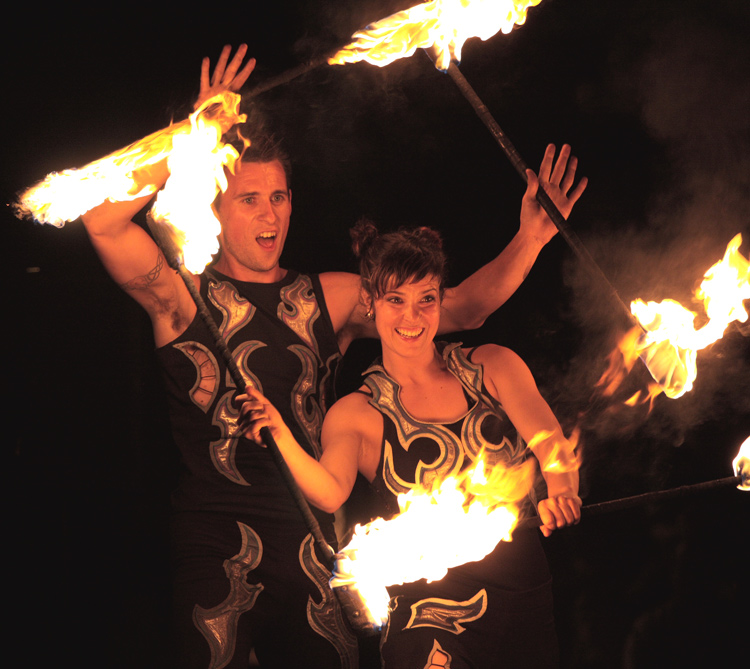
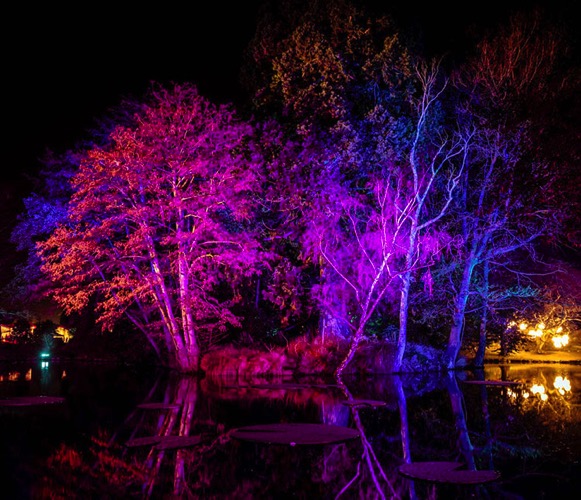
SHILL Article1 CHCH Lightshow

9. Post-processing is just another tool

Little is more divisive in the photography world than the question of post-processing. If you shoot in RAW then it’s necessary to edit the files with some form of software. There are many options available – Photoshop, Lightroom, OnOne, DXO, and the list goes on. Some people prefer the “get it right in camera” and shoot JPG approach instead.

If you do choose to shoot RAW and want to edit your images, that means learning to use the software. Like everything in photography, it isn’t quick or easy to figure out, but once you do learn it, the value it brings to working on your images is valuable. It’s not necessary to spend hours on every image either, with some handy presets or actions, it might only take a couple of minutes for most of them.

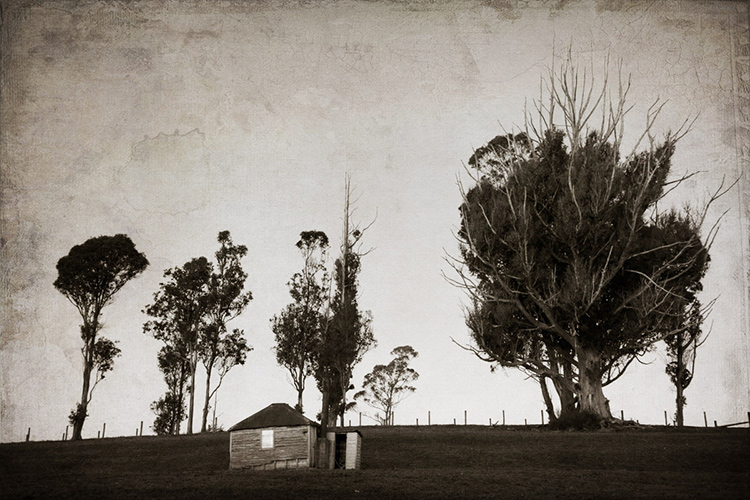
SHILL Article1 old farm hut

10. Are you a follower of fashion?

There are noticeable trends and styles in photography, which are in fashion at any given point in time. Astrophotography, long exposure, HDR, silky waterfalls, light painting, and other special effects are all styles seen a lot at the moment. By all means learn from them, there will be valuable skills to obtain, but be careful to keep within aesthetically pleasing limits.

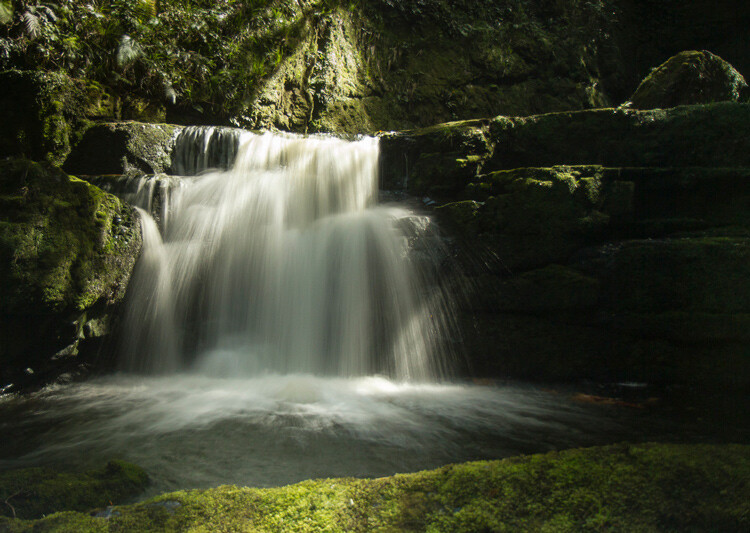
Long exposure

Long exposure

It can be easy to do the same as everyone else, which limits your ability to learn and express yourself. Do you want to travel to an amazing location and stand at the usual viewpoint and capture the same image already taken by thousands of other photographers? If you have time, and there are options for other viewpoints, and it’s safe for you to explore them, consider doing so.

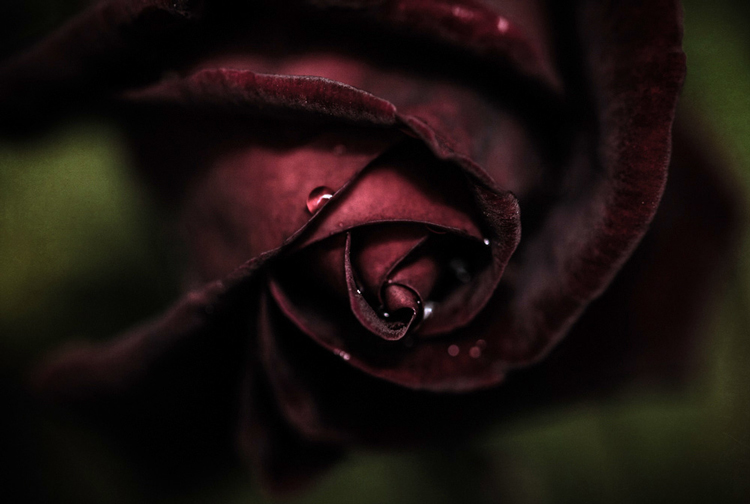
SHILL Article1 dark red rose

Don’t be afraid to try something different, and whatever you do, make sure it gives you images that you are happy to have in your portfolio.

Summary

Some of this will seem perfectly obvious, and some of it you may well disagree with. There may be some uncomfortable ideas in here, or some other things you would have included instead – feel free to share your thoughts in the comment below, as others may well agree with you.

The one thing you can be sure of is that learning anything new is hard work, and the longer you do it, the more there is to learn. There is one more secret to share with you though. If you do the work and keep learning and pushing yourself, it does get better. Once you master the basics and understand your tools, you have a whole new opportunity to have fun and try creative things, experiment with the really cool concepts.

One last final tip – Everybody starts at exactly the same place – at the beginning.

googletag.cmd.push(function() {
tablet_slots.push( googletag.defineSlot( “/1005424/_dPSv4_tab-all-article-bottom_(300×250)”, [300, 250], “pb-ad-78623” ).addService( googletag.pubads() ) ); } );

googletag.cmd.push(function() {
mobile_slots.push( googletag.defineSlot( “/1005424/_dPSv4_mob-all-article-bottom_(300×250)”, [300, 250], “pb-ad-78158” ).addService( googletag.pubads() ) ); } );

The post 10 Things Nobody Tells Photography Newbies by Stacey Hill appeared first on Digital Photography School.


Digital Photography School

 
Comments Off on 10 Things Nobody Tells Photography Newbies

Posted in Photography


19 tips for better live music photography

06 Aug

Tips for better live music photos

There is no one-size-fits-all approach to shooting live music. Depending on the genre of music, the size of the venue, the quality of the house lighting, the rowdiness of the crowd and any photographic regulations imposed by the band or venue, your approach to getting the shot can vary greatly.

It is for all these reasons I find live music photography irresistible; no matter how much you prep, you simply never know what the rock and roll gods will throw at you. And the combination of difficult lighting, fast moving musicians and a mass of people competing for sight lines makes getting the shot all that more sweet. Especially when your shot conveys the pure, unfiltered energy of a live performance.

I’ve been shooting live for about seven years, in both stadiums and basements, dive bars and dance halls (I currently run a site called NWSoundExchange.com, which seeks to visualize Seattle’s DIY music culture), and I’ve picked up on some general tips and principles that help me feel a little more prepared each time I walk into a new venue. Some of these tips come from advice given to me by more seasoned music photographers I’ve bumped into over the years, like Mick Rock, others come from shooting hundreds of shows and learning from my own mistakes.

Of course, these tips alone won’t guarantee you the next cover of Rolling Stone. After all, excelling at live music photography requires on-the-fly thinking and problem solving, creativity, as well a mastery of photographic principles. But hopefully these tips will at the very least inspire you to bring a camera long to the next concert you attend.

By the way, the most important tip of all for shooting rock and roll is this: showing up with your camera to the show is half the battle. If you can make it that far, well, the rest should be pretty easy.

Do your homework

The Screaming Females are a very high-energy band. The lead singer/guitarist Marissa is known for her epic guitar solos. Knowing this going in gave me the foresight to position myself directly in front of her. 

I’m not trying to sound like your mother, but seriously, do your homework before shooting a show! Fifteen minutes spent watching Youtube videos can clue you in to how a band sets up on stage and who in the band you might want to keep your camera pointed at. This way, when you arrive at the venue, you can position yourself perfectly to get the most high-energy images.

Leave the extra gear at home

This image was shot during a very crowded and rowdy show in the basement of a dive bar. Bringing only one camera rig and an extra lens (kept in my pocket) meant I did not have to worry about stashing my bag anywhere and could easily move around within the crowd to make my shots.

Roll light! Being able to move around is crucial for getting good shoots. Also no one likes the guy in the crowd wearing the massive camera backpack.

I used to shoot live music with far too much gear: two bodies, a flash and a few extra lenses. These days I keep it much more simple: a full-frame camera, 35mm F2 lens and a flash. I do occasionally bring a wider or more telephoto lens, depending on where I’m shooting. But at the end of the day, the less I’m worried about switching gear, the more I’m tuned into the music that is happening in front of me.

If you must use a flash, bounce it

Shooting a show under a highway underpass was a unique experience. This was a show where I had no choice but to use a flash. Still, I used it sparingly, waiting for the most decisive of moments to pop a frame.

No matter what, I always go into a concert planning on shooting available light only. Of course this can be wholly impractical if the venue you’re shooting in is literally beneath a highway overpass with no light of any kind. It’s in situations like these that I’ll bring out the on-camera strobe.

Flashes should always be used sparingly in a live music environment. The whole point of a concert is for the crowd to experience and enjoy the music happening in front of them, and constant pops of bright light can detract from that enjoyment. Don’t make the concert about you. Be there to document the experience, not take away from it.

I also bounce my flash off the ceiling whenever possible. This results in the light falling back down on your subjects nicely. If you shoot direct flash, not only will you blind your subjects, but the lighting will look much less natural.

Fast glass is your friend

This images was shot at ISO 12,800 1/500 sec at F2.2 using the Nikon 35mm F2 D lens.

Zooms are great, but they are often not fast enough for shooting live music without flash (which should always be your goal going into a concert). Many photographers show up to concerts with a full-frame camera and a 24-70mm F2.8 lens, which can be fine. But I prefer to use primes with faster apertures. I’m not talking expensive glass, but rather lenses like Canon and Nikon’s 50mm F1.8.

When shooting using only the venue’s lights, my ISO is usually cranked all the way to 12,800 (I shoot with a D750) and my shutter speed hovers around 1/200 – 1/320 sec, the slowest speed I feel comfortable using in such an environment. This gives me little wiggle room for a slow aperture. Thankfully, the Nikon 50mm F1.8 D is pretty sharp by F2 and even better by F2.2. The point is, given the choice, always opt to bring along your fastest glass. Also don’t forget to micro adjust your lenses!

Avoid eye level composition

This image would probably have been a total snooze-fest had it been shot at eye-level.

Shooting images at eye-level is lazy and boring. So get super low, get high up; if you have an articulating screen, put it to use! But whatever you do, avoid eye-level. Your composition will thank you.

Try to shoot in full manual

This one is not set in stone, but generally speaking, you’ll learn more and have a better understanding of light and how you camera works if you shoot in full manual mode. Shutter Priority and Aperture Priority can both be useful in some live music shooting scenarios, but if you’re serious about getting better, keep it on the big ‘M’.

Whenever I walk into a new venue, I always try to guess and dial in the exposure without looking at my camera’s meter (advice given to me by a good friend). The more I do this, the better I’ve gotten at ‘reading a room’s light.’ Try it yourself! You’ll probably find that over time your intuition about exposure will improve.

Know when to use AF-C, AF-S (and know your camera’s AF system)

Focusing and recomposing using AF-S can be a good method to achieve creative compositions, just as long as the subject doesn’t move too much from the time you acquire focus to the time you take the shot. Of course, this image was taken using a manual focus lens. 

Continuous autofocus is generally your best bet for live music photography. It goes without saying that if you’re shooting a moving subject, AF-C makes more sense than AF-S. However, there are times when switching to AF-S can be useful, especially when trying to get creative with a composition.

When shooting live music in a dark environment, even the best cameras will likely struggle with subject tracking, meaning you are left with either using AF-C and keeping your focus point over the subject (which restricts your composition) or focusing and recomposing (if the subject is not changing depth from the camera). The latter is a method best used when the subject is relatively still.

Also, many modern cameras have central AF points with increased sensitivity for low light and low contrast scenarios. Knowing whether or not this is the case with your own cameras is definitely worth investigating.

Photograph the crowd

Live music is about more than just the band on stage.

Don’t forget to turn around and snap some photos of the crowd. An image that conveys the flavor of the environment and the energy of the crowd is a great addition to any set of live music photographs.

I’ve found the best time to turn around and get this shot is toward the end of any high-energy song, but not after. This ensures those in the frame are still sucked into the music, allowing you to go largely unnoticed. The last thing you want is folks staring at the camera like a deer in the headlight. One person blatantly acknowledging the camera can ruin the overall feel of a good crowd shot.

Look for interesting light

We already talked about how you should avoid using a flash whenever possible. Assuming you’ve followed that advice, you’ll largely be at the mercy of the venue lighting, which is not necessarily a bad thing!

Look for interesting beams of light and reflections to incorporate into your image. Using the venue lighting creatively can help you to better convey the mood of the performance. Also, be sure to be patient. One of the advantages of not shooting with a flash is that you can fire as many frames as you like, without bothering anyone. This means you can experiment to your heart’s delight.

In general, the rule of thumb with gelled lighting is this: avoid shooting skin tones lit by red lights as they tend to blow out all detail (unless you’re planning to convert to b/w in post). Wait instead for the lighting to switch to any other hue before taking a shot.

Find the details

A cowboy hat at a punk show?

Most live music imagery revolves around one of two subjects: the band and/or the crowd. Obviously, making photographs of said subjects is what shooting rock and roll photography is all about, but don’t forget to look for interesting or unusual details in and around the venue.

Even the most subtle details, like a pair of bare feet on stage, or a strangely out-of-place man in a cowboy hat, can add a new layer of intrigue to a set of already interesting live music photographs.

Be ready for the action

The last thing you want to do is get caught fumbling with controls when something epic is happening. I’ve certainly been there, missing excellent shots because I was too busy staring at my camera settings. It’s a terrible feeling.

To avoid this, try your best to be very in tuned to what is happening in front of you at all times. Change settings with your eye to the finder and only look at the back of you camera in between sets. Oh, and above all, don’t chimp during a set!

Keep one eye open

Shooting with both eyes open allows you to better predict when something visually interesting might occur.

This one also goes along with the previous point. Practice keeping both eyes open at all times when shooting live music. Better yet, try to keep your non-shooting eye honed in on the drummer. I’ve found that if you’re in tune with the drummer, you can often use their body language to predict when something interesting might happen.

Try the ‘pop and drag’

It can be a bit cliche, but it can also convey a band’s energy really well if executed correctly.

The old ‘pop and drag’ goes a little something like this: Mount a flash on your camera and point it at the ceiling, drop your shutter speed down to somewhere between 1/15 and 1/50 sec, while keeping your ISO reasonably high (it’s OK to stop down a little using this method). The general idea is to ‘pop’ the light from the flash, which bounces off the ceiling and falls back down on the band that you’re photographing while ‘dragging’ your shutter. Because of your slow shutter speed, the flash won’t completely freeze your subjects, causing blurring and glow.

The most important thing to remember when trying the ‘pop and drag’ is to experiment with your settings. Depending on the height of the ceiling and color of the ceiling, your flash output may vary greatly. If you’d like to use this method, I advise getting to the venue early to dial in your settings before anyone arrives.

Back up from the band, use the crowd

This one is pretty simple: While it makes sense to try and shoot a show as close to the band as possible, its also nice to change up your perspective and pull back a little. Moving back will allow you to get more creative with your framing. It also can help to convey the energy of the room better.

It’s OK to underexpose (shoot Raw)

I often underexpose by two stops to get a faster shutter speed, then push in post.

This one is dependent on the camera you are shooting, but Raw files from most modern full-frame cameras can hold up just fine being pushed a stop or two in post (much further if you’re converting to b/w). When you’re shooting in an environment where your settings are maxed out but your images are still too dark despite being at the maximum native ISO, it van be very reassuring knowing you can still push two stops when you get home.

Just make sure you’re shooting Raw.

Use creative aides

Everyone knows star filters are played out, which is why just about no one uses them. All the more reason to pick one up and make photos that look a little different. Just don’t rely on creative aides as a crutch!

Everyone’s a photographer these days, and rock and roll photos are a dime a dozen. So if you’re serious about setting your images apart from others, what do you do? Try experimenting with creative aides, like gels, star filters, prisms etc. to give your shots a slightly different look.

Star filters have not been cool for a very long time, but used selectively, they can be really effective. Take a look through this article, how many star filter photos can you find? More than you realized now that you’re looking for them? The point is, being subtle is important when employing creative aides. Don’t be a one-trick-pony and don’t rely on them too much. But used selectively, they can give some really cool results.

Shoot with heart, edit with brain

This phrase is my religion when it comes to shooting live music.

What exactly does this mean? For me it means, go to the show, have fun, be polite, dance and take photos without overthinking. Let the music envelope you, feel the energy, interact with the crowd, chat with the band, be a part of what’s happening. Doing so will allow you to subconsciously be more connected to the whole situation. Also, don’t be afraid to shoot ‘too much, ‘ (so long as you aren’t using a flash).

I used to be upset with myself when I came home from a show with 1000 images to shuffle through. But as I’ve gotten better at editing, I’ve gotten better at quickly pin-pointing the good stuff from the bad after the fact. And at the end of the day, if you got one killer image from a show, but shot 100 or 10000 images, no one will know but you.

B/W is your friend when editing

This image looked terrible in color. A conversion to black and white saved it.

B/W is the little yellow pill of the music photography world. A quick conversion can turn a noisy, ugly image into something much more attractive. Or, in the case of the image above, in which most of the detail in Dave’s face was blown out due to bad colored lighting, a quick conversion turned an ugly duckling into a tattooed rock and roll swan.

Have fun and be nice to everyone

When shooting a show it is important to remember that you are very unimportant in the grand scheme of the event. Please, please don’t be that photographer ruining everyone’s good time by constantly popping flashes and blocking people’s view of the band.

Live music is a lot of fun. Photography is a lot of fun. When combined, well, you get the point. At the end of the day, don’t take away from that inherent fun. Be polite to everyone in the crowd, ask before you step in front of someone to take a shot and don’t stand in their way too long. Use your flash sparingly. Don’t bring a massive bag and definitely do not wear a bag while shooting in the crowd. Respect gets respect and the golden rule certainly applies to live music photography.

Add your tips below!

Got a solid tip for live music photography? Please share it in the comments below!

Articles: Digital Photography Review (dpreview.com)
 
Comments Off on 19 tips for better live music photography

Posted in Uncategorized


Weekly Photography Challenge – Roads

06 Aug

Paths and roadways make great photographic subjects. This is your chance to go find some and photograph them.

Moyan Brenn

By Moyan Brenn

Weekly Photography Challenge – Roads

What draws you to a road to photograph it? Look deeper than just the road. Check out the scenery around the road, where does it lead, what’s in the distance? How can you photograph the road to make it interesting?

How about a low camera angle? Or a motorbike or car on the road? This week it’s your challenge to photograph roads.

HD_Vision

By HD_Vision

CONCAVO WHEELS

By CONCAVO WHEELS

Murat Livaneli

By Murat Livaneli

Share your images below:

Simply upload your shot into the comment field (look for the little camera icon in the Disqus comments section) and they’ll get embedded for us all to see or if you’d prefer upload them to your favourite photo sharing site and leave the link to them. Show me your best images in this week’s challenge. Sometimes it takes a while for an image to appear so be patient and try not to post the same image twice.
Share in the dPS Facebook Group

You can also share your images on the dPS Facebook group as the challenge is posted there each week as well.

Geoffrey Froment

By Geoffrey Froment

Billy Woodford

By Billy Woodford

Taylor Robinson

By Taylor Robinson

Kevin Dooley

By Kevin Dooley

googletag.cmd.push(function() {
tablet_slots.push( googletag.defineSlot( “/1005424/_dPSv4_tab-all-article-bottom_(300×250)”, [300, 250], “pb-ad-78623” ).addService( googletag.pubads() ) ); } );

googletag.cmd.push(function() {
mobile_slots.push( googletag.defineSlot( “/1005424/_dPSv4_mob-all-article-bottom_(300×250)”, [300, 250], “pb-ad-78158” ).addService( googletag.pubads() ) ); } );

The post Weekly Photography Challenge – Roads by Darlene Hildebrandt appeared first on Digital Photography School.


Digital Photography School

 
Comments Off on Weekly Photography Challenge – Roads

Posted in Photography


5 Ways Travel Can Inspire Your Wedding Photography

04 Aug

If you’ve shot a wedding you’ve likely had that moment where some obscure family tradition threw you off balance, you struggled to attach the right lens in time, and missed that once-in-a-lifetime shot. You can shoot a thousand weddings, but without knowing what to look for, you just might miss the biggest moments of the couple’s wedding day. But, if Continue Reading

The post 5 Ways Travel Can Inspire Your Wedding Photography appeared first on Photodoto.


Photodoto

 
Comments Off on 5 Ways Travel Can Inspire Your Wedding Photography

Posted in Photography