RSS
 

Posts Tagged ‘Photography’

The Ultimate Guide to Street Photography

27 Oct


Download “The Ultimate Guide to Street Photography”

We respect your email privacy

// Special handling for facebook iOS since it cannot open new windows
(function() {
if (navigator.userAgent.indexOf(‘FBIOS’) !== -1 || navigator.userAgent.indexOf(‘Twitter for iPhone’) !== -1) {
document.getElementById(‘af-form-241780858’).parentElement.removeAttribute(‘target’);
}
})();

In this extensive article, I will help you understand more about street photography, how to do it, and all the things you need to think about including equipment, ethics, and even legalities. This is the ultimate guide to street photography to help get you started in this genre of photography.
the-ultimate-guide

OUTLINE

  1. What is street photography?
  2. Ethics and overcoming your fear.
  3. The law and street photography.
  4. A few of the most important tips to get you started.
  5. Equipment.
  6. Camera settings.
  7. Composition and light.
  8. Advanced tips.
  9. Content and concepts of street photography.
  10. Editing.
  11. Master street photographer research.

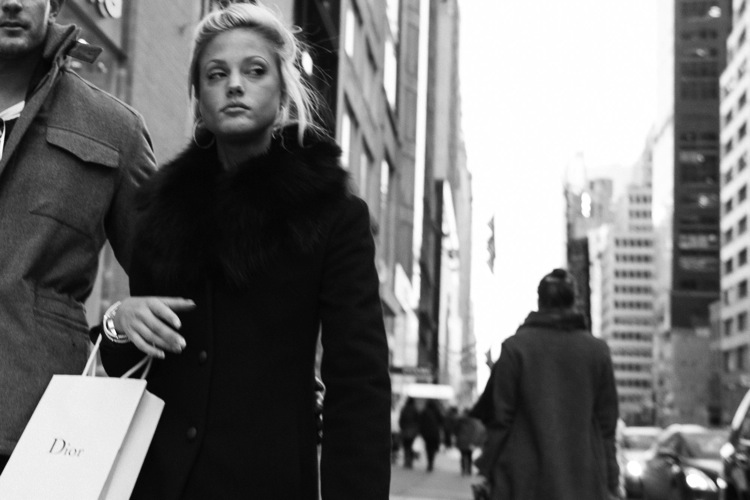
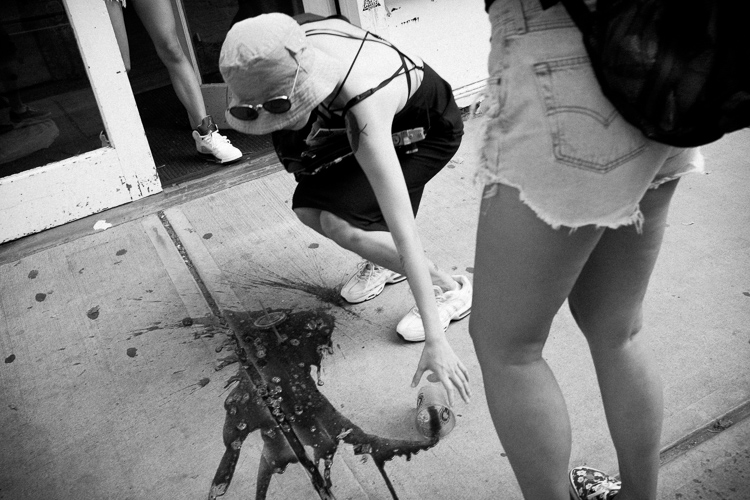
1 dior 5th avenue nyc

1. WHAT IS STREET PHOTOGRAPHY?

Street photography is an inherently clunky term, and because of this, there are many street photographers that dislike it. They consider themselves photographers, plain and simple.

The first image that typically comes to mind for the term street photography, is an image of a stranger just walking down the street in a city like New York, London, or Tokyo. This is a huge part of street photography of course, but it is only one part, and it can cause confusion over the true meaning of what street photography really is all about, and how it can be done.

Street photography is candid photography of life and human nature. It is a way for us to show our surroundings, and how we as photographers relate to them. We are filtering what we see, to find the moments that intrigue us, and to then share them with others. It’s like daydreaming with a camera.
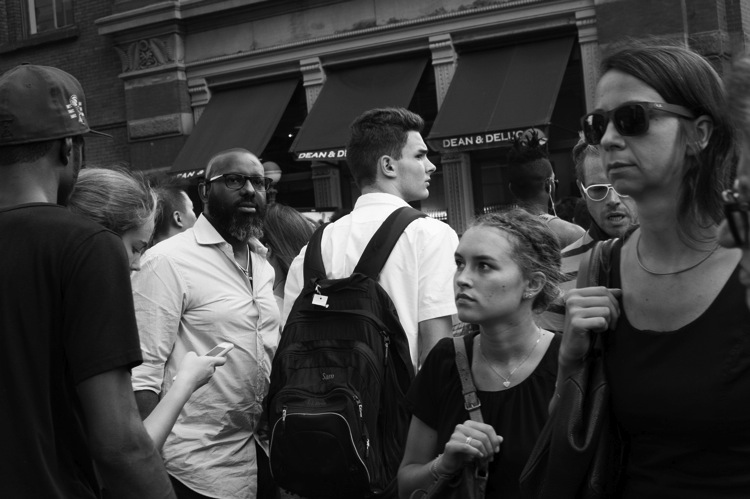
2 prince and broadway

People do not need to be present for an image to be considered a street photograph. The photograph does not need to be taken in a city, or in a busy market. It can be taken anywhere and can portray nearly anything, as long as it isn’t posed or manipulated. It can be shot at a family barbecue, or in the middle of 5th Avenue in New York City.

While many may consider the term clunky, there is an elegant side to it as well; that I think is often missed. The street is the most public and accessible of places. Street photography is the most public and accessible form of photography. Anyone can do it. You do not need an expensive camera. You do not need a big studio, professional lighting, or beautiful models. We all have the same content out there, and it’s up to us to figure out how to capture that and bring it home.

In addition, while technical quality is always important to every form of photography, it is not celebrated in street photography in quite the same way. A nature or landscape image needs to be sharp. It usually needs to be able to be printed at large sizes with great technical quality. In these genres, you can pick the perfect location, frame it the perfect way, choose the perfect equipment and settings, and continue to come back until you get the perfect lighting.
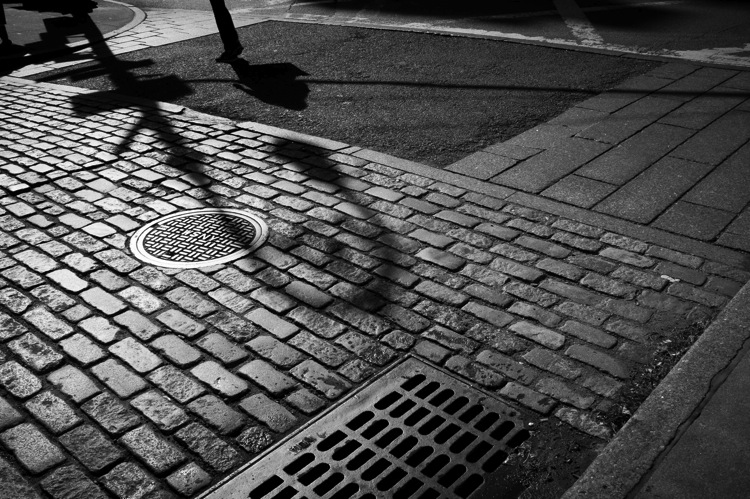
Cobblestone

With street photography, on the other hand, the best image of your life can pop right in front of you on the way to get your morning coffee. This spontaneity is what’s celebrated. That is why grainy images, slightly off-kilter framing a-la Garry Winogrand, or imperfect focus will not always ruin a street photograph. Sometimes they will, and we must aim for technical mastery, but other times they can add to the realness of the moment. Sometimes these deficiencies may actually improve the image.

But these are decisions that can’t be taught. Many of them are spontaneous and instinctive. That is why you can’t buy or read your way into mastery of street photography. You are on the same plane as every other photographer. The only thing standing between you and them is the time spent out there paying your dues, waiting for those intriguing moments to occur, and improving your ability to notice and bring them back with you.

2. ETHICS AND OVERCOMING YOUR FEAR

Let’s not sugarcoat this – street photography is an intrusive form of photography, and sometimes it can be creepy to the subjects. Photographing people candidly usually means that you do not have their permission beforehand.
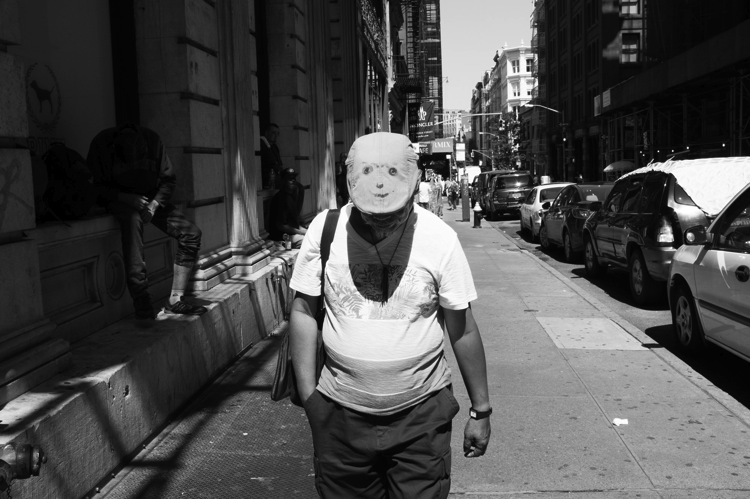
3 smiley face soho

This is something that you will have to come to terms with to do street photography. For every image you capture, no matter how beautiful or interesting, there is the chance that the subject may not like seeing it. Some will, but there are some that will not.

This is the moral cost of doing this type of photography. Most of us do this because we like people, and we like exploring, and capturing culture. The camera is just a way to bring back moments that we see and enjoy. These images have value – both current, and historical value. When you look at images from the 1920s, 1950s, 1970s, or even from fifteen years ago, what are the most interesting images? Usually, it’s the ones that people and culture. These are the photographs that so many find fascinating because there is a lot of cultural value to them.

Fear is one of the toughest obstacles to overcome for beginners, and these moral quandaries can make it even tougher. The main idea to keep in mind is that getting caught does not have to be that bad.
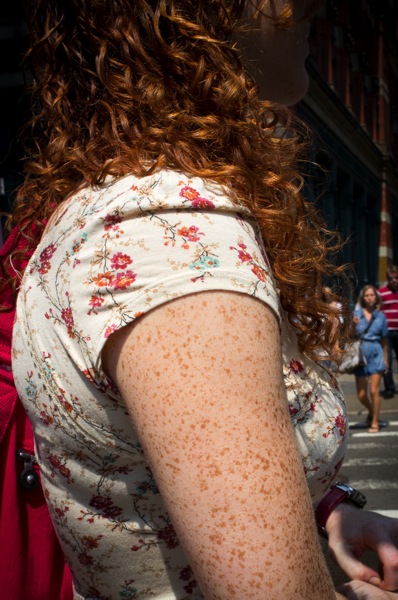
4 shades of red

Think about the first time that a comedian bombs on stage, and how important it is to get that out of the way for the first time so that they no longer have to worry about it. Similarly, it’s an important moment when you speak to someone, after having taken his or her candid photograph for the first time.

Keep in mind that when done right, this will usually happen infrequently. But, you want to be confident, and comfortable in what you will say if someone asks you what you are doing. I will say that I am a photographer who is doing a project capturing the culture and people of New York, and I thought they looked fabulous (flattery is key). If they ask further, I will explain more and tell them that I did not mean to make them uncomfortable and that I’m happy to delete the image if they prefer. Only twice, have I ever had to delete a photograph when the person asked me nicely. Those are pretty good odds.

You do not need to delete the photograph of course; that’s a decision you need to make for yourself. I do this type of photography because I like people, and if they seem truly uncomfortable in the moment, then I have decided to delete the images for their benefit and my conscience.
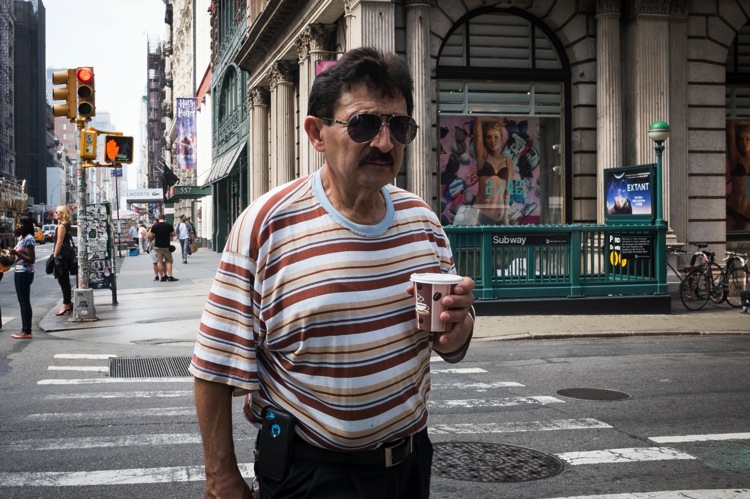
Joe soho

If someone catches you, own up to it. Do not be combative. Even if it is in your legal right, you do not need to use that as your argument. You don’t need to argue at all. Make sure to keep a smile on your face no matter what.

Stealth is obviously good for street photography, since if every single person noticed you taking their photo, it would just make things immensely time-consuming and difficult. However, keep in mind that the stealthier you try to act, the weirder you can actually look. Sometimes, being obvious and taking photos in a direct way can be the least confrontational strategy. The more obvious you look, the less people will think that you could possibly be doing anything wrong. If so, why be so obvious?

Finally, consider starting somewhere busy, such as at a fair or a market. If you are just learning, go where there are a lot of people, so that you will be less noticeable. This is a great way to get over the initial hump, and as you improve, you can then maneuver to completely different places.

3. THE LAW AND STREET PHOTOGRAPHY
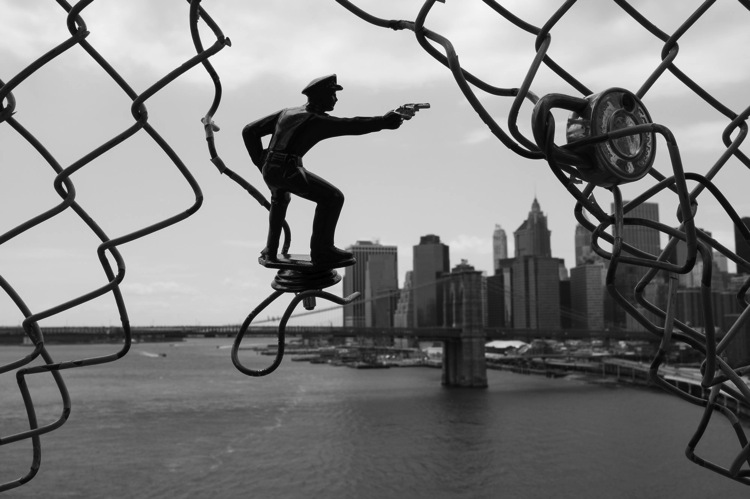
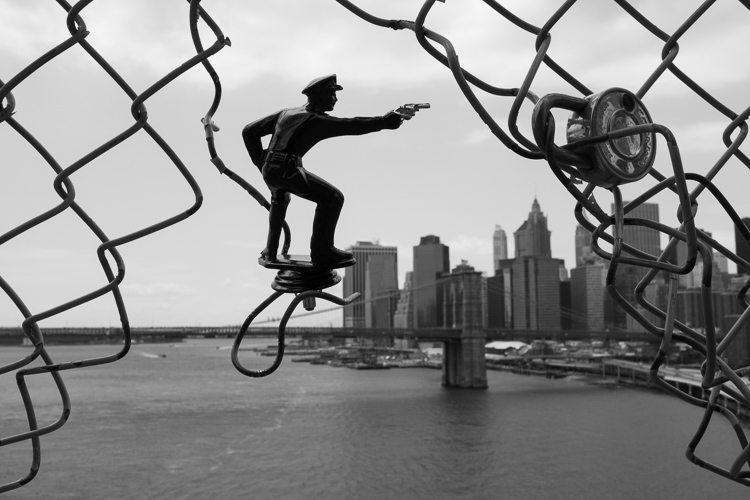
5 police manhattan and brooklyn bridges

Disclaimer: Regarding the law and street photography, do your own research into your local laws, as I am not an expert in this matter. Do not hold me (or dPS) accountable for what is said here, but these are just my own beliefs, based on my research. Do your own due diligence, and get familiar with the laws in your area, or places where you travel.

All countries have different laws, and street photography without permission is illegal in some places. Some make it impossible to do street photography at all, while in other areas photographers may decide to ignore the laws. In some countries, street photographers will continue to take candid images, but only images where the person’s face is unrecognizable.

In the U.S. and U.K., there is no right to privacy in public. This means that you can legally take photographs of anyone in a public place. On private property, that right goes away, but many street photographers choose to ignore that and do not differentiate.
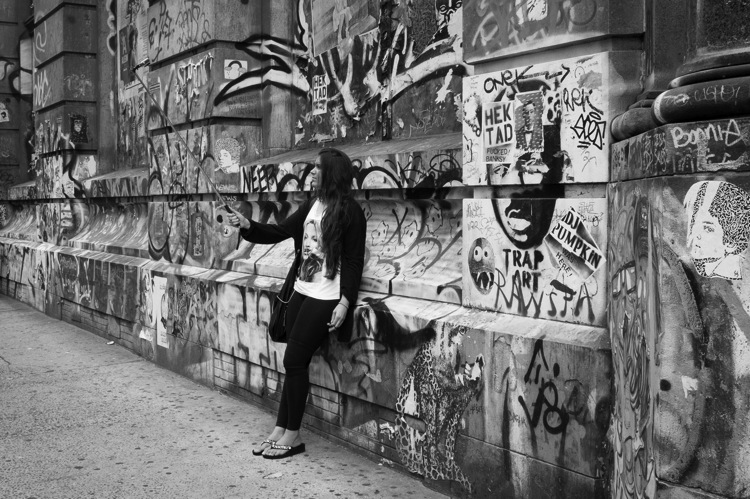
Graffiti selfie

Note: the very definition of that term, public place, may vary from one country to the next – but generally includes things such as’ parks, sidewalks, roads, outdoor common areas of office buildings, and other similar places. Most indoor locations would be considered private spaces such as; shops, churches, schools, and office buildings.

You can use photographs taken in public places for artistic purposes, without the need for a model release. This means you can sell them as fine art prints, or as illustrations for books or cards. However, you cannot use these images for commercial or advertising purposes without a model release of any person in the image. You cannot use the image to promote a product, and you cannot use it in any way that may insinuate something against the person that is untrue.

Legal rights aside, it can also be smart to research an area that you are traveling to so that you can find out what practicing street photography is like there. In some places, it is much easier to do this type of photography, while in others people may be much more confrontational. One of the reasons that New York is a great mecca for street photography is because the people are very used to seeing cameras.
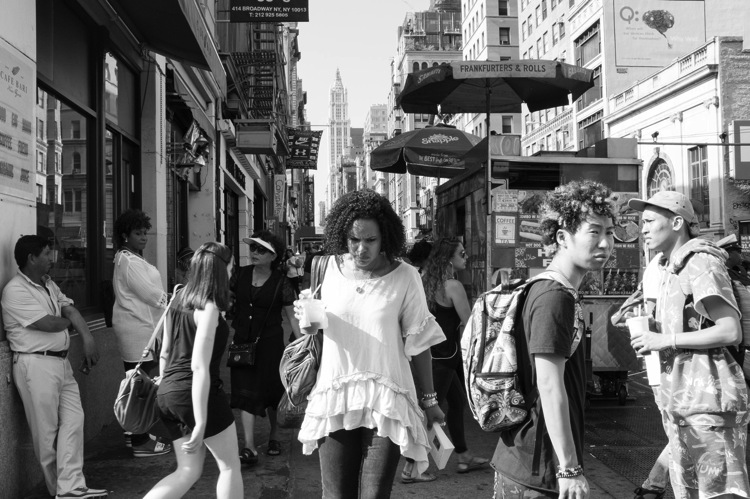
6 canal street

You also want to assess people before you decide to take a photograph of them. It’s usually not worth it to photograph anyone who looks very angry, or who might have some mental disability. Use your judgment, and if your gut says no, then wait for the next one. There are a lot of opportunities out there.

4. A FEW OF THE MOST IMPORTANT TIPS TO GET YOU STARTED

We will cover more technical concepts regarding street photography later on, but I want to start you off with a few of the most important tips to consider when you walk out the door. These are the ones that I think can help you out the most.

The best tip I can possibly give you is to find a good spot and just wait there. If you only shoot while you are walking, you will come across many wonderful locations, but will only give yourself a brief moment to capture the right image there. Instead, find the right location, and then just wait for the right moment to happen. By hanging out in one area, you will be able to funnel more of your attention towards observing, and your coordination with your camera will be faster. Finally, people will be entering your personal space instead of you entering their space. It makes a big difference to capturing good shots, in a way that is comfortable for both parties.
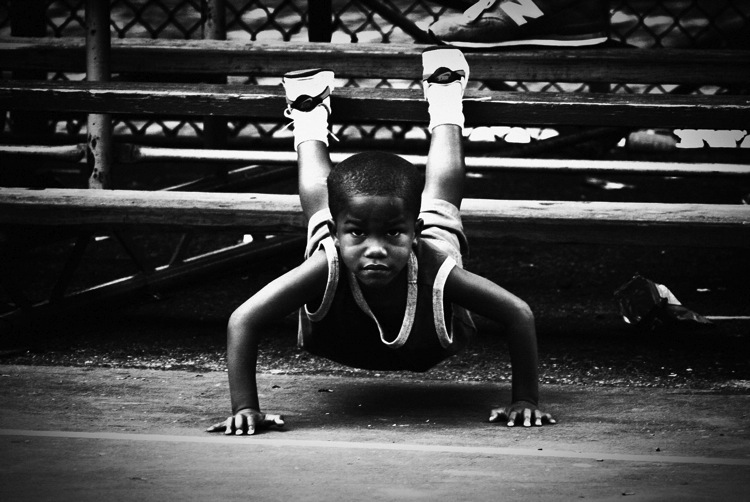
7 pushups rucker park

The next very simple tip refers to the camera snap, which is something that most photographers do instinctually. Try it, and take a photo. The second you take a photograph; you will likely immediately move the camera away from your eye slightly. This is what tips off people, to the fact that you have taken their photo. Instead, after you capture an image, hold the camera there until the subject leaves your scene. It will lead the person to think that you were just photographing the background and that they were in the way, or will confuse them enough to leave you alone.

Next, consider photographing within your everyday life, near where you live. It’s a common misconception to think that you can only do street photography well in the most interesting of areas, or that you will get better photographs if you travel to New York. That is not true. The best photographers can take good images anywhere, and it doesn’t have to be a highly populated area for you to be able to take interesting images. In fact, it may give you an advantage, because you do not have as much competition.

I want to take this point further and have you try an exercise. Think about the least interesting areas, near where you live to photograph. Go there and force yourself to figure out how to take good photographs.

5. EQUIPMENT
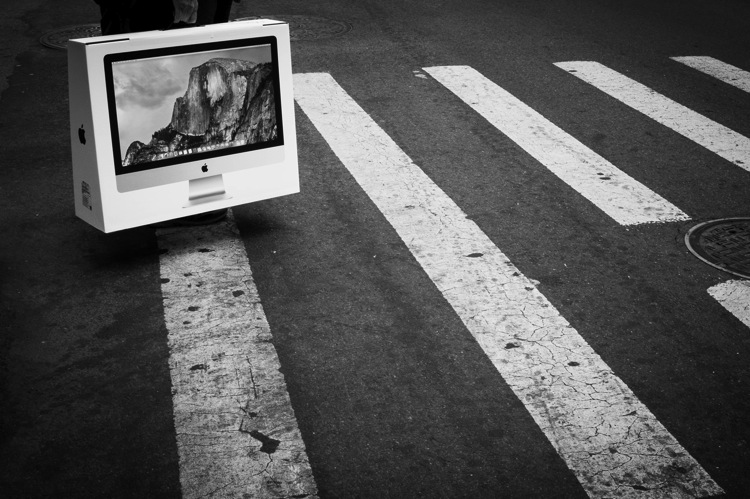
8 yosemite soho

You can do street photography well, with really any type of camera. You can do it with an SLR and a long zoom lens, and you can do it well with a camera phone.

However, different equipment will have different advantages. A zoom lens will give you more obvious opportunities at different distances but will be heavier, more noticeable, and more cumbersome. A prime lens will constrict you to images at a specific distance from the camera, but will also be light, freeing, and fun to use.

Traveling light will give you a lot more flexibility. Mirrorless, micro four thirds cameras, or even a camera phone, will allow you to take images more easily, in places where a large camera would stand out too much. They are lighter and thus more fun to shoot with, which will allow you to enjoy photography in situations where you normally wouldn’t take your SLR.

Prime lenses, while constricting you to a specific focal length, will actually give you a big advantage. You will begin to see the world more intuitively with that focal length, and while the limitation will stop you from being able to capture certain shots, you will become even better at capturing images within the constraints of that focal length. Because of this, you will become quicker, and more spontaneous with your camera.

6. CAMERA SETTINGS
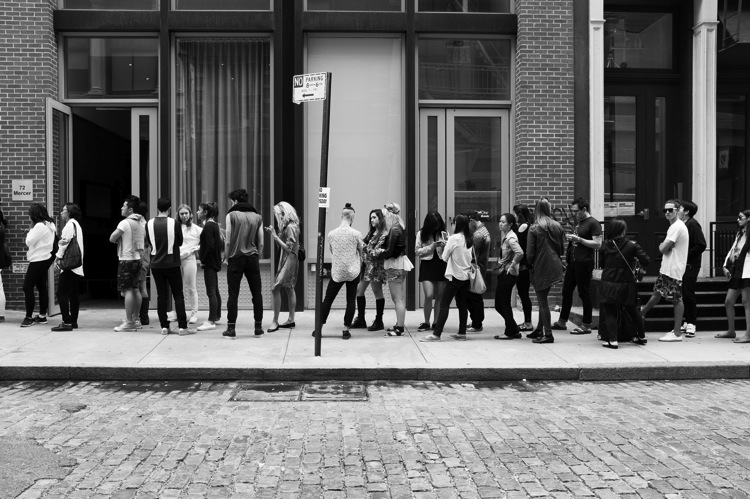
9 sample sale

Many photographers shoot in completely different ways for street photography. There is no correct way, but there are some factors to consider. Also, if you have photographed in the same manner for a long time, I would consider being open to trying other ways of shooting to get out of your comfort zone. It can be good to switch things up every once in awhile.

Some photographers choose to have a lot of bokeh in all of their images. This is a fine way to shoot, but you also have to consider that in the fast moving genre of candid photography, if you are photographing at f/2.8 and you miss the focus slightly, you will probably ruin the shot. It will be tougher to capture images with multiple subjects at different depths shooting wide opened. By choosing to blur the surroundings; you will also remove some of the context and background from the image, which can take away some of the meaning or storytelling.

For these reasons, I usually try to shoot with as much depth of field as possible. I find that with the variety of situations that you can come across suddenly in street photography, this strategy allows you to succeed more often than not.
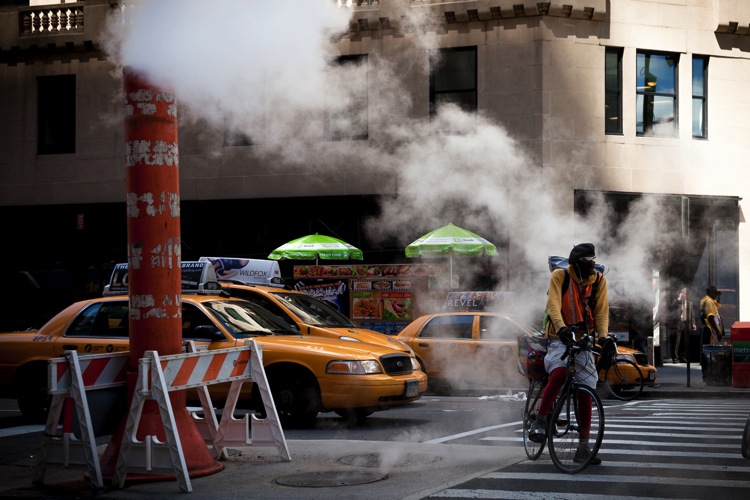
10 bike messenger

It is important to pay strict attention to your shutter speed, much more than you would for genres of photography where your subject is not moving. You need a fast shutter speed to freeze the motion of people. I prefer to use 1/250th in the shade and 1/400 or 1/500th in direct sunlight. In darker situations, I will go to 1/160th and sometimes 1/125th.

Now imagine that you are trying to squeeze as much depth of field as possible out of your camera. What is the ideal way to set up your camera to achieve this? The first thing to do is to set your ISO. You should not be afraid to raise your ISO up to high numbers. Grain (or noise if you prefer) is good here. Test your camera out to see how it looks at high ISOs, not just on the monitor, but in different sized prints. With newer cameras, you can easily go to ISO 1600, 3200, and for some even 6400.

With a digital camera on the more advanced of the spectrum (e.g. the Fuji X100 line), I will typically set my camera at ISO 400 in sunlight, 800 in light shade, 1600 in dark shade, 3200 at dusk, and 6400 at night. With entry-level digital cameras, I would probably cut a stop out of that, so 3200 at night, 1600 at dusk, and so on.
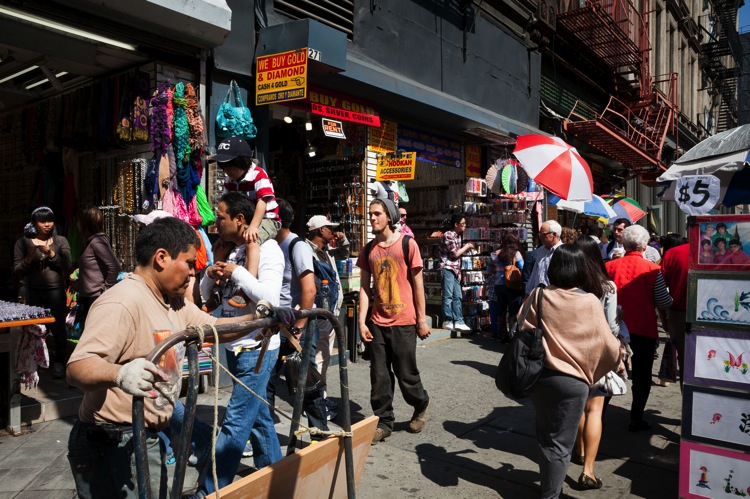
11 canal street

The reason for a higher ISO is that it will allow you to have both a fast shutter speed to freeze motion and a smaller (higher numbered like f/8 or f/11) aperture, so that there is as much depth of field as possible in the image.

Finally, I will set my camera to shutter priority mode. You can shoot manual, but I prefer shutter priority because you will often be shooting into the sun one moment, and away from it the next, so the necessary settings will be completely different. I prefer not to have to change my settings every time I turn my body. In consistent lighting situations, indoors, or at night, I will go to manual mode, and for the photos where I want a very shallow depth of field, I will shoot on aperture priority at a low number (like f/2.8), and choose a much lower ISO.

7. COMPOSITION AND LIGHT
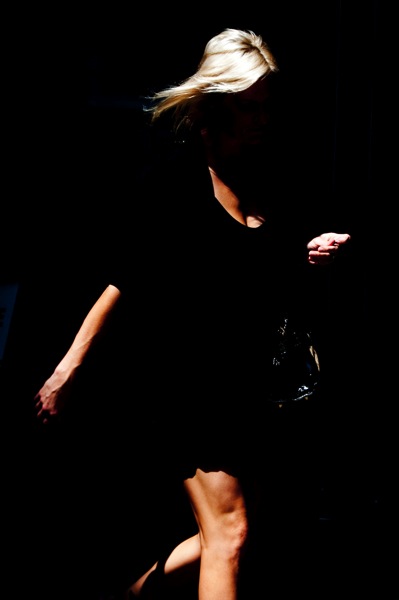
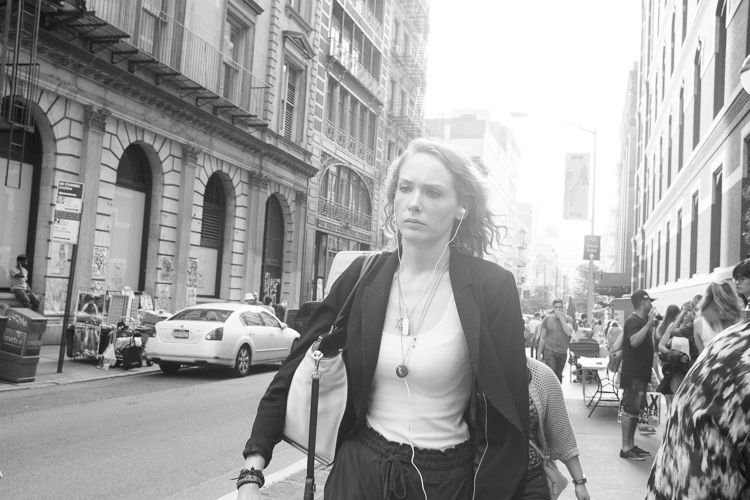
12 blonde soho

Composition for street photography works the same way that it does for every other genre, but there are a few things that I want you to consider. Compose your street photographs the same way that you would compose your landscape images. Assess the scene and arrange all of the elements together. Instead of a tree here and a mountain there, you might place a fire hydrant here and a ladder there. Every element counts just as much as they do in a traditional landscape, no matter what it is, and the best street photographers have a way of bringing everything together in just the right way.

Sometimes, the subject alone is all that counts, and you will want to frame it, or blur the background away, forgetting about everything else. But that’s only sometimes. A lot of photographers will shoot this way 100% of the time, especially when first starting out, but that’s a mistake. Try to see beyond the main subject, and see if you can combine it with other elements to create a more complex scene. Can you create relationships between subjects to add new meaning to an image? Whether or not you decide to make the surroundings prominent, you always need to be aware of them. I would prefer that you intentionally decide to not include elements of the background, rather than to not notice them at all.
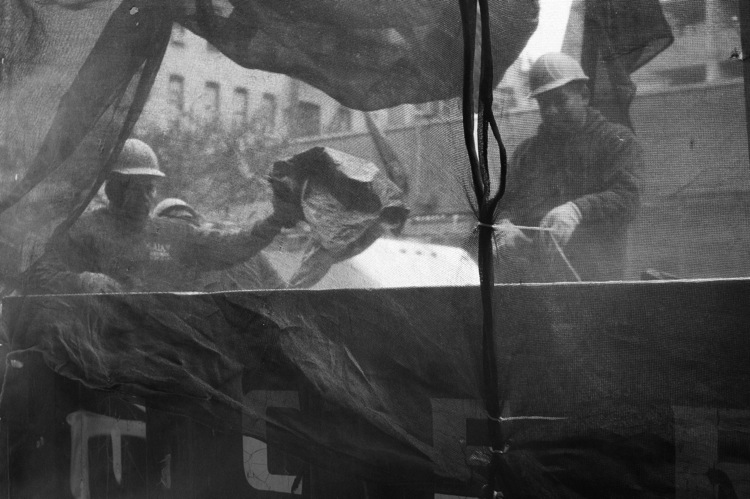
Construction workers

You always want to keep an eye out for your main light sources. How does the light hit your subject, and where is it located in relationship to that subject? How is it hitting the background? What color is the light, and are there multiple light sources? These are ideas that you will usually pay attention to for every type of photography, but it is important to understand for street photography that there is no best time or lighting. The harsh midday light will be just as beautiful and interesting as the warm, even dawn or dusk light. Since you are at the whim of your environment, it is very important to be able to see and maneuver yourself to get the most out of the light in any location. The beauty of street photography, though, is that it will teach you how to work with light very quickly.

Some photographers will use a portable flash to illuminate their subjects and separate them from the background. This can create a great look, but also keep in mind that flashing a stranger in the face can be very confrontational. Also, when the flash is too strong, it can take away from the feeling of reality in the photograph, which is a look that some photographers desire, so it is a decision you will have to make. A surreal look might be something that you are going for, and in that case, a flash could be a big asset.

8. ADVANCED TIPS
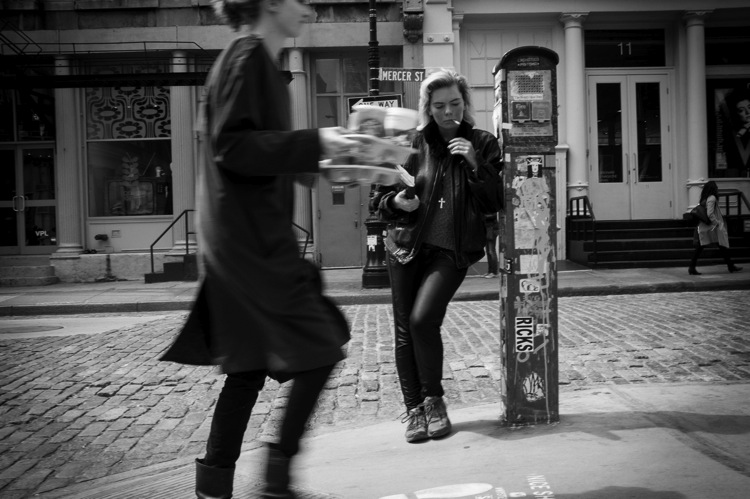
13 youth soho

Facial expressions and gestures

When capturing images of people, photographing them just walking down the street, or standing in place, is not enough. To take your image to the next level, that person needs to have a strong facial expression or gesture in their body.

As humans, we feel what another person is feeling, through their facial expressions. When you’re out shooting, one of the first things you should be doing is paying attention to people’s eyes and the expressions they show. Similarly, you can see subtle cues from a person’s body, so keep an eye out for how a person may be expressing themselves through their body, hands, legs, and feet.
Imperfection

The beauty of street photography is often in its imperfections. You do not need to try and make a photograph perfect in every way. Strong grain (or digital noise), an image that is slightly askew, an element that is slightly in the way, or imperfect lighting, are all examples of what can make an image feel real. While any of these things have the ability to ruin a photo, sometimes they can get in the way just enough to make it feel like a natural moment. So while you should always aim for technical mastery, realize that imperfections can be beneficial, and even necessary.
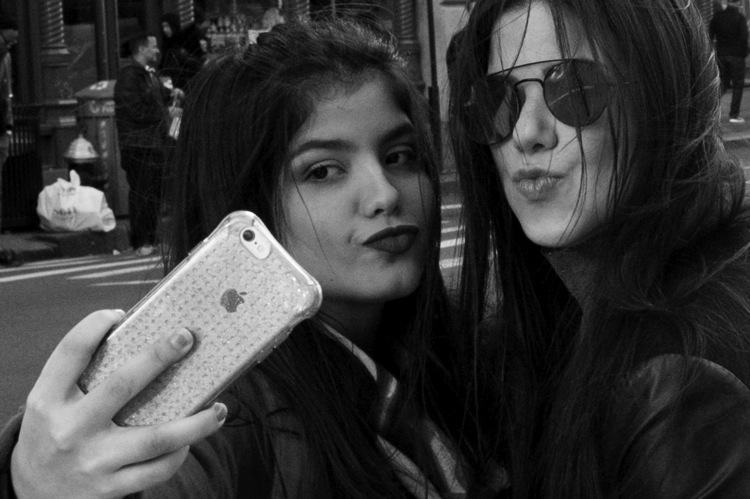
14 selfie soho

Zone Focusing

Zone focusing is simple to learn, fairly difficult to master, and agonizing to explain in writing (it’s much easier to just show someone how to do it). Basically, zone focusing is the strategy of turning your autofocus off and using manual focus. When done well, it can allow you to capture consistently sharper images in a variety of situations.

The goal is to pre-focus your camera to a certain distance. I typically choose between eight and 10 feet away, which is the most common distance where I like to capture my subjects. Then, when subjects enter the range that you are pre-focused for, you can click the shutter without having to waste any time focusing. The fraction of a second that it will save, and the added freedom this allows, will take you a long way.

I usually only zone focus at 35mm and wider, although sometimes I will do it up to 50mm on bright days. The reason for this is because the further you zoom in, the more accurate you have to be with your focus to get your subject sharp. It becomes very difficult to zone focus over 50mm.
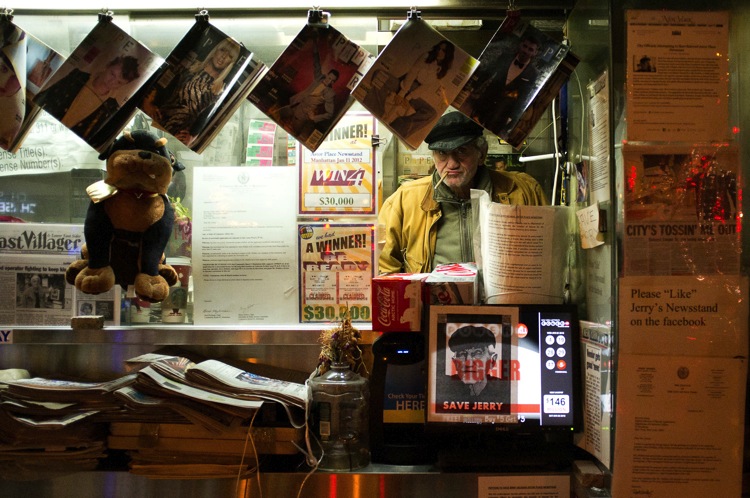
Jerry delakas astor newsman

Zone focusing is very easy to screw up at first. If you do not gauge the distance correctly, you can easily miss the focus entirely. It is much easier to start off in bright sunlight, because with a 35mm or wider focal length, and an aperture of f/11 to f/16, there will be a huge depth of field. So if you miss the focus by a bit, your important subjects will still be sharp.

You can, and should learn to zone focus in darker situations, and at apertures up to f/2. It’s much more difficult, though, so take your time getting there, but it’s very possible and it just takes practice. When zone focusing at shallower apertures, you can even learn to move the focus ring without looking, so if you are focused at 10 feet and a subject appears five feet away, you can move the focus instinctively to that distance without even looking (this is how sports shooters did it before autofocus existed). This is the pinnacle of skill with zone focusing and takes a lot of practice, but it is very possible to learn to do well.

9. CONTENT AND CONCEPTS OF STREET PHOTOGRAPHY
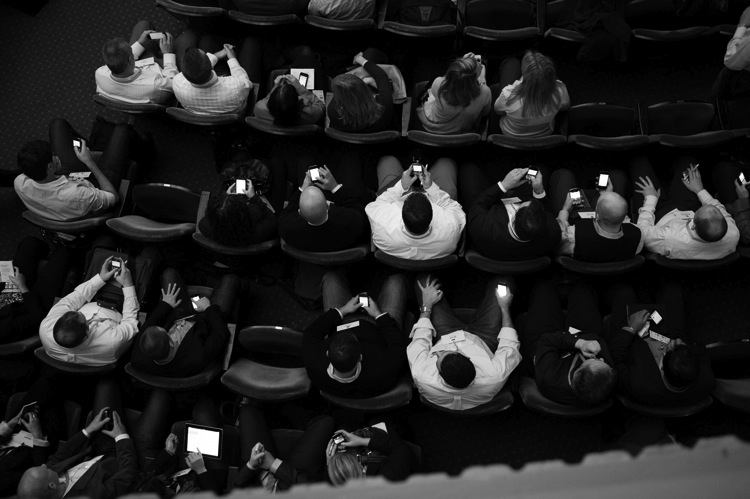
15 cellphones

The toughest step in all of this is to figure out what it is that you actually want to capture and create. What do you want your photographs to be of, and what do you want them to look like?

If you look at the works of any great street photographer who has done it for long enough, there will be many consistencies in their work. Maybe these consistencies last throughout their entire lifetime, or maybe it changes in different bodies of work, but they are there and should be studied to help you find your own.

The longer you shoot, the more you will begin to understand what you are drawn to. You will begin to see types of photographs that you are attracted to, and you will begin to seek them out when you are photographing. Think about what you are trying to portray with your photography. Occasionally, you will have big ideas right away, but often it will take a lot of time for these ideas to grow and develop naturally.

Sequencing is also important to many photographers. While it is not a necessary aspect of street photography, it is a way to place unrelated images together, to create a larger narrative. This is why the book has become, in my opinion, the best way to show street photography. Each image takes on even more importance and meaning when surrounding by other photos. There is a lot of power in how you decide to display your work.

10. EDITING
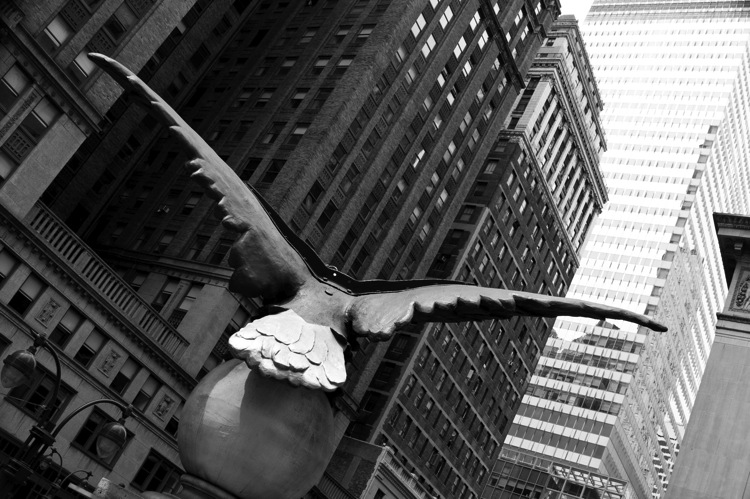
16 soaring eagle grand central

Editing is half of the battle for becoming a good street photographer. When you are out photographing, it is best to be spontaneous and to get lost in the moment, but editing is when you begin to really think about your work in a larger setting. It is where you can explore themes and ideas as they start to pop up in your photography. It is when you can combine similar images to create a larger story. It is where you can develop a style in both look and content. Because of all of this, the time that you put in editing will then help you when you are out shooting. You will notice more because you will have a better idea of what you are looking for, and this will make you a much better photographer.

Consider using Lightroom’s star rating and collection system to organize your best work, and to put photographs with similar themes together. Find consistencies in your work, and images that play well off each other, and create collections for them. Constantly tinker, add, remove photos, and change the order in these collections.

Technically, when editing your work it is important to consider how vital realism is to the genre. Yes, many photographers celebrate the surreal and the extraordinary moment, but they do this only if those moments actually happened. Street photography obsesses over realism, and a made up moment is not a true street photograph. Similarly, an image that is over-edited, so as to make it look fake, will kill the spirit of street photography. The image does not have to be perfect. You do not have to have every detail in the shadows and highlights. While you should do enough post-production to make it look right, always take a step back and consider whether or not you’ve overcooked it.

11. MASTER STREET PHOTOGRAPHER RESEARCH
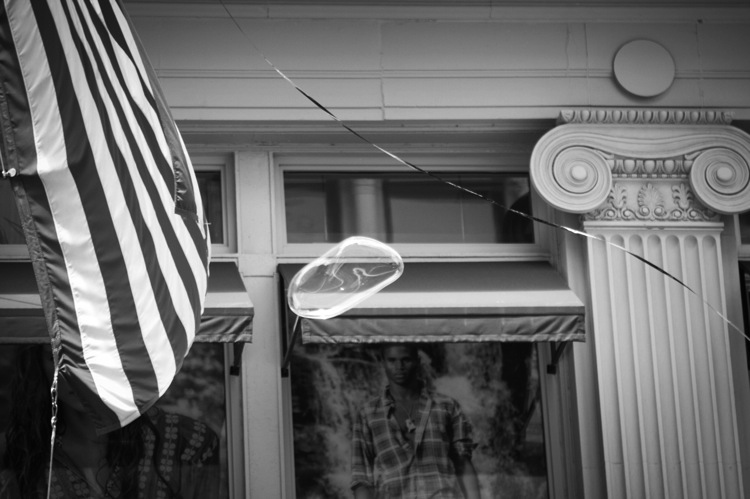
17 bubble soho

The final step is to research the work of other street photographers. This is something that you should start from the very beginning to gain inspiration and to understand more about what you are capable of achieving in this genre. Consider the work of photographers who shoot in a variety of locations, including big city, rural, and suburban. Purchase books on a consistent basis, as learning from the book format is still very important. There are many affordable street photography books, to go alongside the expensive ones.

Take special notice to the street photographers whose work you do not like at first. Many people will immediately disregard a photographer at first glance, without delving deeper. The issue with street photographs is that they are often different and weird, and it can be impossible to truly get a sense of what a photographer is trying to portray by seeing just a few photographs. Read about the history and location of the photographer, look through as much of their portfolio as you can, and then try to figure out what they were trying to say. Sometimes you will find yourself with a completely new appreciation for the photographer, and see things in their work that went right over your head with your first look.
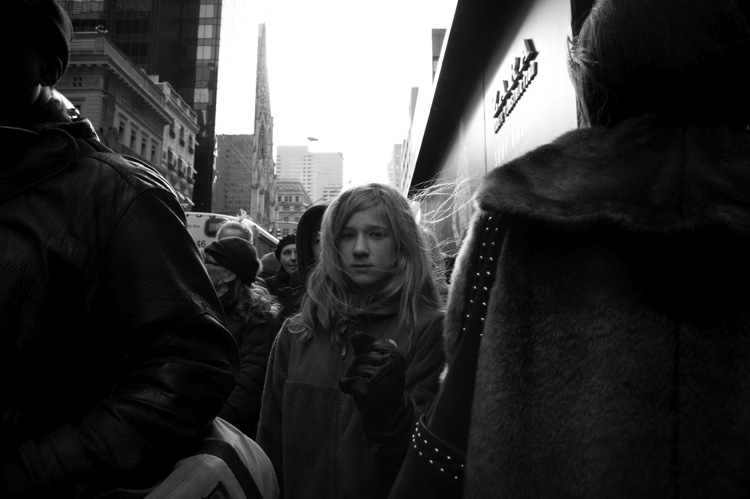
18 mona 5th

Here is a list of photographers to start off with for your research. It is not an exhaustive list, but it will help get you going:

  • Henri Cartier-Bresson
  • Garry Winogrand
  • Robert Frank
  • Helen Levitt
  • Lee Friedlander
  • William Eggleston
  • Walker Evans
  • Daid? Moriyama
  • Martin Parr
  • Elliot Erwitt
  • Joel Meyerowitz
  • Mary Ellen Mark
  • Bruce Davidson
  • Saul Leiter
  • Trent Parke
  • Alex Webb
  • Vivian Maier
  • Bruce Gilden

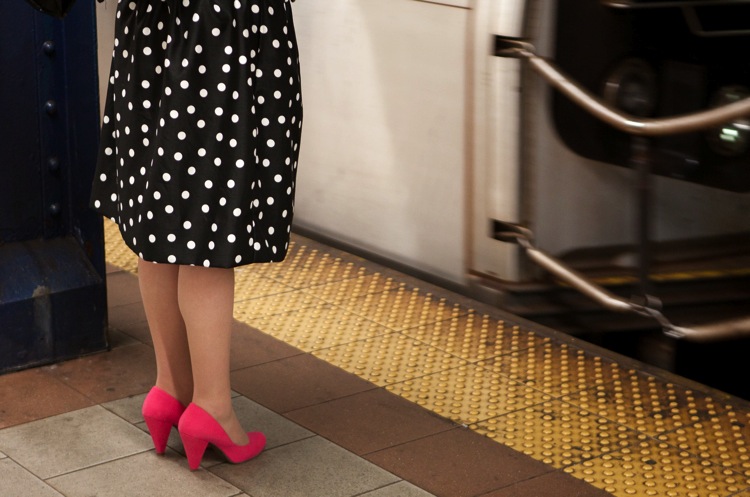
19 polka dots and pink shoes

I hope this ultimate guide to street photography has answered some of your questions about this genre of the craft. If you have any others that haven’t been answered or have some comments to add, please do so below.

Now go out and photograph as frequently as possible, and have fun with it.


Download “The Ultimate Guide to Street Photography”

We respect your email privacy

// Special handling for facebook iOS since it cannot open new windows
(function() {
if (navigator.userAgent.indexOf(‘FBIOS’) !== -1 || navigator.userAgent.indexOf(‘Twitter for iPhone’) !== -1) {
document.getElementById(‘af-form-241780858’).parentElement.removeAttribute(‘target’);
}
})();

googletag.cmd.push(function() {
tablet_slots.push( googletag.defineSlot( “/1005424/_dPSv4_tab-all-article-bottom_(300×250)”, [300, 250], “pb-ad-78623” ).addService( googletag.pubads() ) ); } );

googletag.cmd.push(function() {
mobile_slots.push( googletag.defineSlot( “/1005424/_dPSv4_mob-all-article-bottom_(300×250)”, [300, 250], “pb-ad-78158” ).addService( googletag.pubads() ) ); } );

The post The Ultimate Guide to Street Photography by James Maher appeared first on Digital Photography School.


Digital Photography School

 
Comments Off on The Ultimate Guide to Street Photography

Posted in Photography


Weekly Photography Challenge – Pink

26 Oct

We do a lot of weekly challenges around colors but we haven’t done one on pink yet on my watch! So I thought it was time.

June Yarham

By June Yarham

Weekly Photography Challenge – Pink

Pink is a color many people associate with femininity and girls or girly stuff. Most commonly we think of pink flowers when we talk about this color, but what else can you find that’s pink?

Get out there this week and seek some pink items. It might be a flower, bubblegum, a rosy sunset, or even a cocktail or pair of sneakers. Use your powers of observation and look for this less common color. I bet you’ll start seeing it everyone once you start looking.

Andrew Reding

By Andrew Reding

Rachel

By Rachel

Nerissa's Ring

By nerissa’s ring

Thomas Hawk

By Thomas Hawk

Share your images below:

Simply upload your shot into the comment field (look for the little camera icon in the Disqus comments section) and they’ll get embedded for us all to see or if you’d prefer, upload them to your favorite photo-sharing site and leave the link to them. Show me your best images in this week’s challenge. Sometimes it takes a while for an image to appear so be patient and try not to post the same image twice.

Share in the dPS Facebook Group

You can also share your images on the dPS Facebook group as the challenge is posted there each week as well.

googletag.cmd.push(function() {
tablet_slots.push( googletag.defineSlot( “/1005424/_dPSv4_tab-all-article-bottom_(300×250)”, [300, 250], “pb-ad-78623” ).addService( googletag.pubads() ) ); } );

googletag.cmd.push(function() {
mobile_slots.push( googletag.defineSlot( “/1005424/_dPSv4_mob-all-article-bottom_(300×250)”, [300, 250], “pb-ad-78158” ).addService( googletag.pubads() ) ); } );

The post Weekly Photography Challenge – Pink by Darlene Hildebrandt appeared first on Digital Photography School.


Digital Photography School

 
Comments Off on Weekly Photography Challenge – Pink

Posted in Photography


Swedish court rules drone photography is surveillance and requires a permit

25 Oct

Sweden’s Supreme Administrative Court has issued a ruling that classifies drone photography as surveillance, thus meaning operators of drones with cameras would need to obtain a surveillance license – an unlikely case for members of the public. Swedish drone owners are understandably upset with the ruling, stating that it will effectively kill an entire industry. Local media outlets also find it troubling, since no exceptions are made for journalistic applications.

UAS Sweden, an organization of Swedish drone operators, plans to try to convince lawmakers that the decision is an overreaction that will have a tremendous negative impact on their industry. Either way, the policy will likely be difficult to enforce. Swedish newspaper Aftonbladet points out that local police seem unlikely to prioritize any reports of suspected unauthorized surveillance. 

Articles: Digital Photography Review (dpreview.com)

 
Comments Off on Swedish court rules drone photography is surveillance and requires a permit

Posted in Uncategorized


10 Non-Technical Ways to Improve Your Street Photography

18 Oct

The technical side of street photography is incredibly important to master, because if you do not understand your camera, then you will not be able to do the tips in this article well. You want to be able to know your camera so well that you forget it is even there.

However, it is the non-technical tips, thinking beyond the camera, that can help you to improve to the next level. So here are 10 of my favorite tips to help improve your street photography.

1. Be spontaneous

5th Ave, New York Street Photography

While out shooting, I hear photographers all too commonly worry about cutting people’s legs off in the photo, not composing it right, or skewing the photograph by accident. Of course, these are technical issues to keep in mind when you review your work later. They can be important, but wasting your energy thinking about this nitpicky stuff while shooting can kill your ability to notice and capture those quick and wonderful moments that constantly appear.

Try to turn the analytical side of your brain off when you’re out photographing. Enjoy the process, and spend your time seeking out your subjects and looking at the light. Allow some spontaneity and chance in how you compose and shoot your photographs. Let your instincts take over. The more you train these instincts, the better they will become. William Eggleston only takes one photograph of every scene that he comes across. While you don’t have to go that far, many photographers do the opposite, try to ease any tension when you’re out there shooting and let your instincts guide you.

Garry Winogrand skewed more of his photographs than not, and everyone cuts off peoples legs constantly, but none of these factors alone have ever ruined a great photograph. By shooting more spontaneously you might miss a few shots, but the good ones will be even that much better.

2. Slow down and look

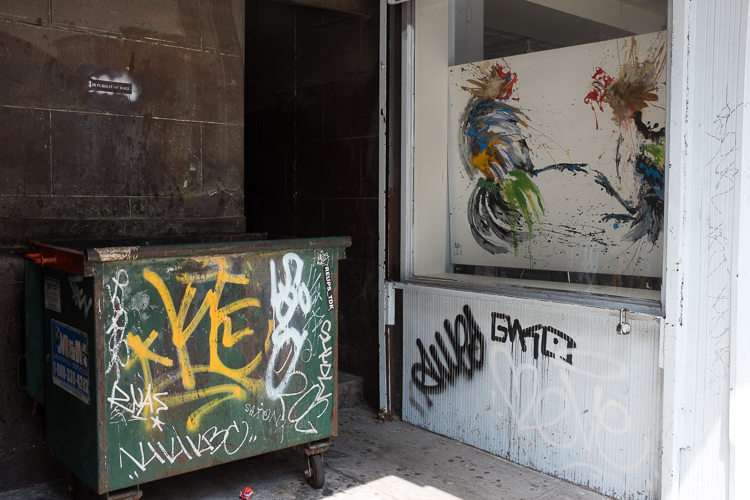
Graffiti and Gallery, 14th Street.

There is no need for a brisk pace when out photographing. Doing this will hurt your ability to notice your surroundings. Many people will come across an area and completely disregard it and move on to the next spot before they give it a proper chance. They just keep moving on and hoping for that magical location. But magical locations usually don’t swoop down on you like that. All of the places that you immediately disregard have a good photograph somewhere, maybe even a great one, you just need to find it. Those elusive photographs can be more interesting than the ones that immediately pop out at you.

Instead of spending your energy walking, spend it looking. Go high, get low, look left, and look right. The more you might disregarding an area, the more you have to ask yourself why you feel that way, and the more you should push yourself to try and get a good photograph there.

3. Do not be afraid of taking bad photographs

Smoke, Prince Street, SoHo

Photographing this way will yield many bad photographs, and it will also yield incredibly interesting ones that many people will not understand. But try to not let this affect how you photograph and how you feel when you are out shooting. Do it for yourself.

The bad photographs come constantly, but it is important that you spontaneously take them, because it means you are getting yourself ready for the moments when those incredible images will briefly appear before you. Shooting the bad ones will help you to better notice the good ones, and those bad photographs are just practice for those rare and elusive moments that you do not want to miss.

4. Notice the light

Smoke, Grand Central Terminal

The more you slow down, the more aware you will become of your surroundings. This will help you to better understand and work with light. Light dictates how the scene will look in the camera, so you need to pay attention to its strength, the locations of the light sources and how they hit your subjects, the color of the light, and any contrasty areas with significant differences between the shadows and highlights.

Light is not necessarily the first thing you should notice, though. The subject needs to be the first thing that catches your eye, but you should always be aware of the light when entering a new location. If you are aware of the light, then you can work with it in a spontaneous way as well.

5. Notice people from afar

Sailboat, Manhattan Bridge.

While street photography is not only about capturing people, candid photographs of people are at the heart of street photography. When you slow down and pay attention to your surroundings, you will now find yourself with the ability to pay more attention to everyone walking around you, along with their interactions. Try to go beyond just noticing people as they cross your immediate path. Try to look farther away to see people who might be interesting. The earlier that you notice them, the easier it will be to get the shot when you both intersect.

Really watch people. In street photography, your eyes are the true viewfinder, and the better you do at locating your subjects before you look through the viewfinder, the better your photography will be.

6. How will your work age?

Prince and Broadway, SoHo.

Try not to take anything for granted. We all wish we could go back 50 years in time to photograph for a day. If we were able to do that, everything we saw would look so foreign and interesting to us, but back then they were just going about business as usual. They thought about their surroundings in they way that we think about ours today.

Think about how the photographs you take today will look in 50 years. What do we take for granted that people in the future will love? What will go out of style, what will seem weird and foreign, and will everyone still be staring at a mini handheld computer while walking down the street? These are not the types of photographs that most people take, and so they will stand out much more in the future.

7. Be consistent

SoHo, New York Street Photography

Consistency is the real key. Street photography is such a difficult skill to master, and it’s easy to get rusty if you don’t do it often enough. Try to figure out a way to integrate a consistent shooting schedule. Maybe it’s a half day once a week, maybe it’s 30 minutes a day during your lunch break or after work, or maybe it’s in 10 minute increments constantly throughout your day.

Keeping some level of consistency will not only get you better photographs because you are giving yourself more of a chance to come across them, but you will improve much more consistently. Over time, your style and what you like to photograph will begin to emerge as well.

8. Use the camera as a key

cop_manhattan_bridge

The beauty of a camera is that it acts as a key to new experiences. It forces you to go out at times when you would normally be watching TV. It makes you photograph at night, in the rain, in a snowstorm, and in the worst weather. It makes you want to explore places that you would normally be too tentative to try to get access to. When people see you with a camera, many of them will understand and let you do things that they would otherwise be suspicious of. Use that to your advantage. Try to get access to areas that you would normally not take the effort to see.

In addition, a camera is a key to making new friends. This does not only apply to other photography enthusiasts. People love cameras, so use yours to break the ice. Take a portrait. Make some new friends and get yourself into new situations to photograph. This access will help to improve your photography in profound ways.

9. Expression, gesture, and emotion

Prince Street, New York Street Photography

Photography is about bringing out some sort of emotion in a viewer. Capturing expressions or gestures in people are extremely important ways to achieve this. The look in someone’s eyes or the stance that they hold can create a powerful feeling and make or break a picture.

The surface is so important to a photograph, but so is what lies beneath it. Try to see what might be hiding or hinted at under the surface of your photos. Questions will keep the person interested in the image over the longterm. You do not need to give them the answers. They will come up with some themselves.

10. Photography books

Look for inspiration outside of your own work. Purchase books from the masters to read through at night. This will give you more ideas about what you can possibly achieve when you are out there shooting. Try to find books with all different styles to shake you up a bit, such as one from Garry Winogrand and another from William Eggleston.

Over to you

Do you follow any of these ideas? Or maybe you have some other suggestions that have worked for you. Please share your thoughts in the comments below.

googletag.cmd.push(function() {
tablet_slots.push( googletag.defineSlot( “/1005424/_dPSv4_tab-all-article-bottom_(300×250)”, [300, 250], “pb-ad-78623” ).addService( googletag.pubads() ) ); } );

googletag.cmd.push(function() {
mobile_slots.push( googletag.defineSlot( “/1005424/_dPSv4_mob-all-article-bottom_(300×250)”, [300, 250], “pb-ad-78158” ).addService( googletag.pubads() ) ); } );

The post 10 Non-Technical Ways to Improve Your Street Photography by James Maher appeared first on Digital Photography School.


Digital Photography School

 
Comments Off on 10 Non-Technical Ways to Improve Your Street Photography

Posted in Photography


The Cheapest and Easiest Lightbox Macro Photography

18 Oct

Have you ever done macro photography? If you have, there is little doubt that your first experiences with it were magnificent. What a cool aspect of photography! If you haven’t, give it a go and experience the world up close and super personal. Some photographers go crazy about it and although I have taken my fair share of macro photos, and have even purchased a dedicated lens for macro photography, I don’t want to spend wads of cash on a photographic style that is not my main niche. That doesn’t mean I don’t strive for the best photos I can get, it just means I need to be a little more creative.

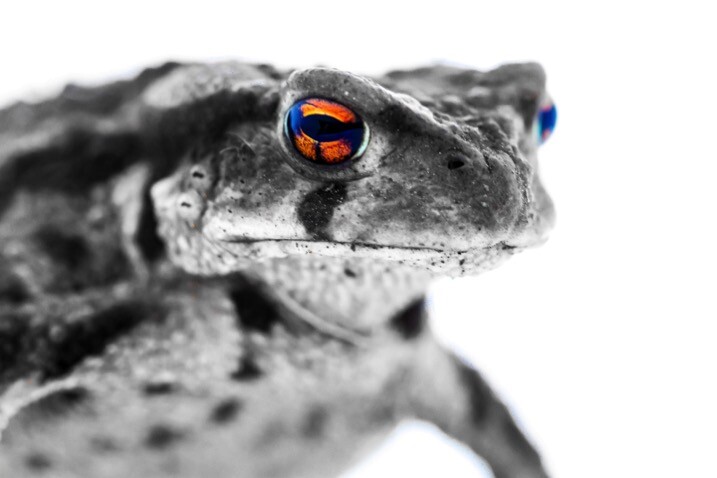
Lightbox macro photography 001 toad

A toad I stumbled upon on a mountain trail.

There are so many gadgets and gizmos that you can buy to help modify light such as flashes, soft boxes, reflectors, etc. Attachments like slide rails can also help you image stack in post-processing. However, I use macro photography simply as a change of pace and to help me keep honing my skills. So, I would like to share a very simple trick that I use that you can to without having to spend a penny. So what is it? Well, let’s first look at an important concept about macro photography so you will get the best results when you are experimenting based on this tutorial.

Lightbox macro photography 002 fuzzy

Depth of field

The first tip and technique that we need to think about before I reveal my simple method, is depth of field (DoF). Generally, in macro photography, you will be really close to your subject, especially if you use a designated macro lens. If you use a telephoto lens with an extension tube, you may not be as close but due to the focal length you will still have a very narrow depth of field.

So to keep in true macro fashion your best option to increase your depth of field is to increase the f-stop. Thus you will need plenty of light. For my trick, the sun is all you will need. No need to spend any money. If you want to brush up on all the parameters that go into depth of field then please check out this articles: Depth of Field and the Importance Distance to Subject Plays.

The trick is – a white paper bag

So what is the trick? Well, it is a large white paper bag. The best ones I’ve found are the shopping bags that you get from mid-range clothing stores which are made of fairly thin white paper. Yep, that is it, a white paper bag and you have your own lightbox or white box.

Jeffrey Beall

By Jeffrey Beall


A smaller sack would work too, but obviously, that limits the size of what can be placed inside. Fold your bag up and out the door you go to find, critters, animals, flowers and fauna, or beach treasures.

The white paper is translucent so light will permeate the bag and create a white-box, also known as a lightbox. If you shoot when there is strong sunlight, there will be enough light to give you shadows. And because the light source (the paper bag) is so close to the subject the shadows are extra soft and very pleasing. Thus, you can create fantastic results with something you may already have in your cupboard or closet.

Lightbox macro photography 003 spider

Working with small critters

The second tip is about the bugs, butterflies or animals that you choose to place in your bag. The anxiety of a living creature is most likely going to be high after you capture them and stick them into a foreign environment. For the sake of the creature, let it calm down. Place it in your paper bag, close it and let the creature calm down for a minute or two.

This will also give you time to get your camera in the proper shooting mode and adjust the settings. From a photography standpoint, giving your subject time to become calm will allow it to slow down or even become still. Thus you will have a good opportunity to get crisp, clear and clean shots. Remember to kindly capture and release any living thing back into their habitat.

Lightbox macro photography 004 green

Use exposure compensation

The third tip is another technical one and is about exposure compensation. The bag is white so you need to increase your exposure compensation by a minimum of a plus half a stop to get the best results so that the white bag will appear white.

Remember your camera does not have a brain and will automatically adjust your exposure to 18% grey. The goal is to achieve a nice clean white background, so you need to increase your exposure compensation. If you’re in manual mode make sure that you have adjusted your settings to overexpose your photo (plus side). Even if you completely overexpose parts of the white bag, as long as your subject is properly exposed you will be okay.

The goal is a white background with subtle shadows from the subject. If you need to refresh your understanding of exposure compensation you can check out the following: How to Use Exposure Compensation to Take Control of Your Exposure.

Lightbox macro photography 005 overhead

Other uses for the bag

This cheap and easy lightbox can be used for all kinds of subjects. Even for product photography if you are in a pinch. It works best in strong, full sun, so the light can penetrate the paper and let you keep your ISO settings low.

Lightbox macro photography 06

Lightbox macro photography 08

Lightbox macro photography 07

Lightbox macro photography 02

The only subjects that this method really doesn’t work for are white subjects (e.g. sun bleached seashells).

Your turn

Now you have few excuses but to get out into the field and get some cool new photos. Please share your white bag photos below along with your comments or question.

googletag.cmd.push(function() {
tablet_slots.push( googletag.defineSlot( “/1005424/_dPSv4_tab-all-article-bottom_(300×250)”, [300, 250], “pb-ad-78623” ).addService( googletag.pubads() ) ); } );

googletag.cmd.push(function() {
mobile_slots.push( googletag.defineSlot( “/1005424/_dPSv4_mob-all-article-bottom_(300×250)”, [300, 250], “pb-ad-78158” ).addService( googletag.pubads() ) ); } );

The post The Cheapest and Easiest Lightbox Macro Photography by Branson Quenzer appeared first on Digital Photography School.


Digital Photography School

 
Comments Off on The Cheapest and Easiest Lightbox Macro Photography

Posted in Photography


Weekly Photography Challenge – School Days

17 Oct

Many of us had a love-hate relationship with going to school as kids. There are fun parts, and not so fun parts for each person. But there are some things that we always think of fondly, no matter where you went to school or your age. Here are some images of school days to get you thinking.

Todd Petrie

By Todd Petrie

Weekly Photography Challenge – School Days

This week it’s your job to head back to school. Find something school related for the theme this week whether it be a school bus, old desk, classroom, or playground. Photograph it using all the usual rules of good composition and lighting.

Barbara Mazz

By Barbara Mazz

Rae Allen

By Rae Allen

Saku Takakusaki

By Saku Takakusaki

Todd Petrie

By Todd Petrie

Patrizia

By Patrizia

Share your images below:

Simply upload your shot into the comment field (look for the little camera icon in the Disqus comments section) and they’ll get embedded for us all to see or if you’d prefer, upload them to your favorite photo-sharing site and leave the link to them. Show me your best images in this week’s challenge. Sometimes it takes a while for an image to appear so be patient and try not to post the same image twice.

Naosuke Ii

By naosuke ii

Amanda Tipton

By amanda tipton

Share in the dPS Facebook Group

You can also share your images on the dPS Facebook group as the challenge is posted there each week as well.

googletag.cmd.push(function() {
tablet_slots.push( googletag.defineSlot( “/1005424/_dPSv4_tab-all-article-bottom_(300×250)”, [300, 250], “pb-ad-78623” ).addService( googletag.pubads() ) ); } );

googletag.cmd.push(function() {
mobile_slots.push( googletag.defineSlot( “/1005424/_dPSv4_mob-all-article-bottom_(300×250)”, [300, 250], “pb-ad-78158” ).addService( googletag.pubads() ) ); } );

The post Weekly Photography Challenge – School Days by Darlene Hildebrandt appeared first on Digital Photography School.

Digital Photography School

 
Comments Off on Weekly Photography Challenge – School Days

Posted in Photography


Tips for Getting Started Doing Event Photography

17 Oct

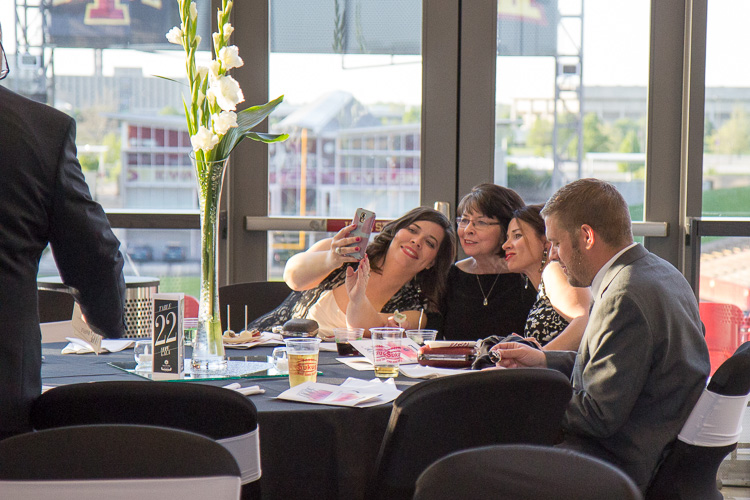
Have you ever wanted to be a fly on the wall? To see the behind-the-scenes of amazing events and activities? To meet influential or interesting people? If so, candid event photography may be the thing for you!

While wedding photography is technically event photography, that is not our focus here. There’s just something different about wedding photography. It’s more pressure, higher stakes, more intensity. In this article we are going to focus more on other types of events – social, corporate, family, religious, and others, that can broaden your experience (and line your pocketbook!).

Getting Started

event photography tips 1

Unless you are an event planner or have an “in” already, sometimes it can be a little hard to break into event photography. You are probably going to have to volunteer for a few events to get started.

Are you or any of your immediate family members part of an organization or club? This can be absolutely anything – PTA for your child/grandchild’s school, a community fraternal organization, a slow-pitch softball team, your place of worship. Do they have any big events that they feature regularly or annually? Ask if they would like some free event photography. The good thing about doing free photography is that it lets you practice and hone your skills without feeling like you’re wasting someone’s money if your photos aren’t perfect.

Communication is Key

Before the event, work with the event coordinator in advance. A phone call, or thorough email, is usually sufficient, but you may also want to meet in person. You’ll want to ask some key questions, if they don’t have the information readily available such as:

  • “Is there an itinerary for the program? Can I receive a copy in advance?” If you’re anything like me, you’re a planner. You want to know in advance exactly what is going to happen, and ideally, where. That way, you can make sure that you’re lined up to catch the keynote speaker or the moment when an honoree receives their award. This isn’t just a matter of convenience for you, it helps you make sure that you are able to provide the shots that will help the group remember their event (or, if appropriate, to market it for the future!).

event photography tips 2

Who to photograph

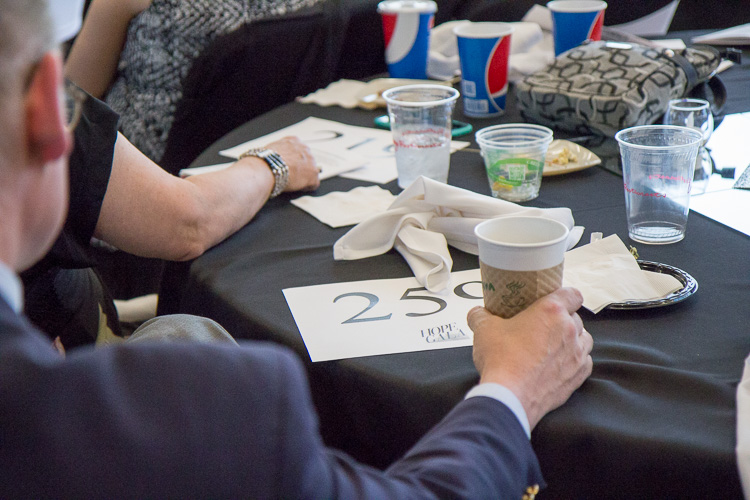
  • “Who are the key people I should photograph?” Unless you’re a seasoned veteran of the event you’re photographing, you might not know who the big players are. I recently photographed a big charity gala for the biggest hospital in the area . Some of the attendees were CEOs of companies, coaches of Big 12 sports teams, mayors, and councilpersons. By receiving the names of the key attendees in advance, you can do a Google Image search for them (yeah, I know it sounds super-creepy) so that you can recognize them on-site.
  • “Who or what should I avoid photographing, if anything?” Nobody really wants to get into a situation where the person being photographed becomes belligerent or aggressive. You also don’t want to photograph a moment that is supremely personal if that is not desired. There are many events where you don’t need to ask this question, but keep it on the list for more personal events (such as family or religious ones). Don’t be paparazzi!

event photography tips 3

event photography tips 4

What to photograph

  • “How many/what kind of pictures would you ideally like?” I try to provide as many photos as possible to my clients because everyone’s tastes vary so widely. However, this can be really overwhelming for some people who are under time constraints, or who really only want photos of a certain portion of the event. Figure out their ideal amount and try to stick to it.
  • “Is it okay if I use any of these photos in my business advertisements or on my web page in the future?” It can essentially be free advertising if you can use these photos to demonstrate your abilities.
  • “When are you setting up for the event? May I stop by early for some test photographs?” Unless you want to take every flash, diffuser, and lens you own, you want to get a feel for the venue in advance. It’s ideal if you can get some test shots using the same lighting (whether it’s natural or artificial) and see how they come out. This will not only help you decide what gear to bring, but it also saves you time on the day of the event. Having to readjust your camera settings to accommodate the environment, get your ISO correct, decide on a lens, etc., all take time. This will make you look more professional and prepared.

Work the Crowd – Tastefully

This next bit may not be appropriate for more solemn and serious occasions. For most, however, your foot is officially in the door. Be friendly and professional, make appropriate jokes or comments to appear personable and fun. Keep the attention off of you, but interact kindly with everyone you meet.

Having a camera in your hand instantly makes people more prone to smile around you, so use that goodwill to make them laugh. This will also allow you to get natural, fun shots that will please both the client and the subject of the photo. This will often lead to people either asking for your business card or asking the event organizer for your information. Make sure to keep a stack of business cards on hand, and give a few to the event organizer if they are comfortable with that.

event photography tips 5

After the event, don’t hesitate to ask the organizer if you can use them a a reference, or if they might be wiling to write you a review. You’re doing them a service, potentially for free. It’s not uncommon or inappropriate to ask for an honest review of your services.

Details, Details, Details

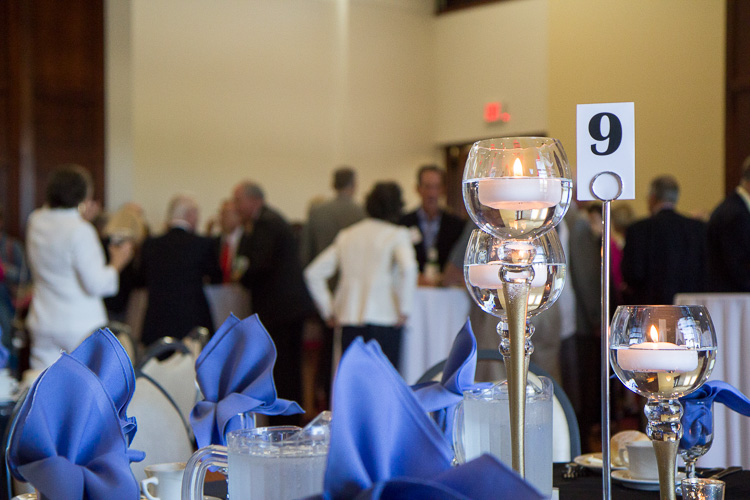
Whether you’re photographing a political dinner, a church bazaar, a birthday party, or an awards event, someone put a great deal of thought and time into making that event unique and special. Someone spent hours thinking aboutcenterpiecess and the dessert table, about the table layout, registration table, the serving stations and other details. In many instances, the people who planned the event are also in charge of hiring the photographers now and in the future, so it doesn’t hurt to get on their good side!

To do so, get good quality shots of the small things that went into the event to make it special. Programs, food, signage, the little things. These shots are good for remembering all of the wonderful details that were so special to them on that day, and they can also make good marketing (for a company, religious entity, charity organization, or similar) in the future. Getting them these shots gives them lots of options – this makes you more helpful and versatile, as they’re getting more bang for their buck. This ultimately makes you more marketable!

event photography tips 6

event photography tips 7

event photography tips 8

While You’re At It…

For some events, they want to get the feel of the event from the attendee’s eyes. These can be tricky to do, you may have to photograph tactfully over someone’s shoulder, or through an open door. These types of photos, however, can be used to promote events in the future, especially if they do not actually feature the faces of anyone. It’s always important to get shots of the attendees for the event, but you can also get some of these shots that are not related to a specific date and time. This gives the organization (if applicable) options if the attendees do not want their faces being used as advertisements.

event photography tips 9

event photography tips 10

Make It Artsy… But Not TOO Artsy

One of the biggest mistakes that I see in some candid event photography is that there is little artistic focus or composition to the photos. Yes, there will be times you’re ultimately just getting crowd shots, and those ARE important. In those instances, make sure you’re using the appropriate aperture and focal length to get everyone in focus who needs to be.

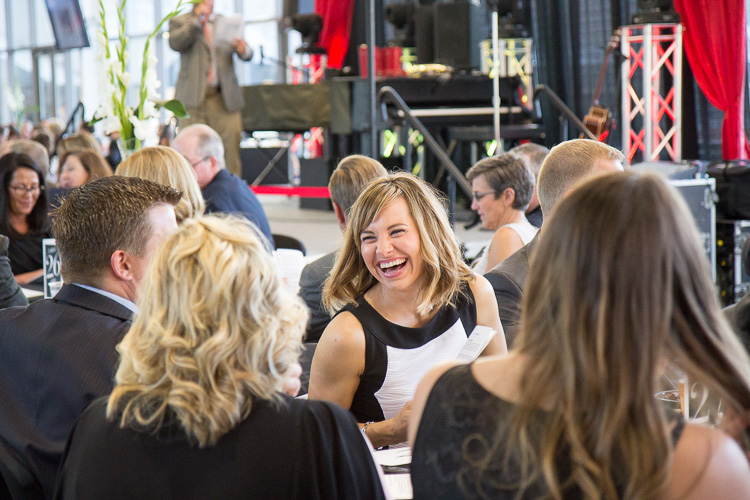
Try and catch an interesting moment, or a moment when the crowd is focused on something , when someone is the center of the crowd’s attention. This composes your photo more and draws the viewer’s eye. For shots of smaller groups, couples, or solo shots, use a wider aperture and an appropriate focal length to get more artistic portraits. Attendees like to see more personal, beautiful photos of themselves. People are predisposed to stopping and smiling for the camera, so you will end up with some staged shots. But also get images of people in mid-conversation, or engaging in activities.

Pic 11

You can also use a wider aperture to up your artistic factor. Is there a beautiful centrepiece that is blocking your shot of a crowd on the other side of the room? Focus on it with an f/2.8 or f/4 aperture so that your crowd in the background is slightly blurred. This will make for some interesting variety in your shots.

Pic 12

Not Too Flashy

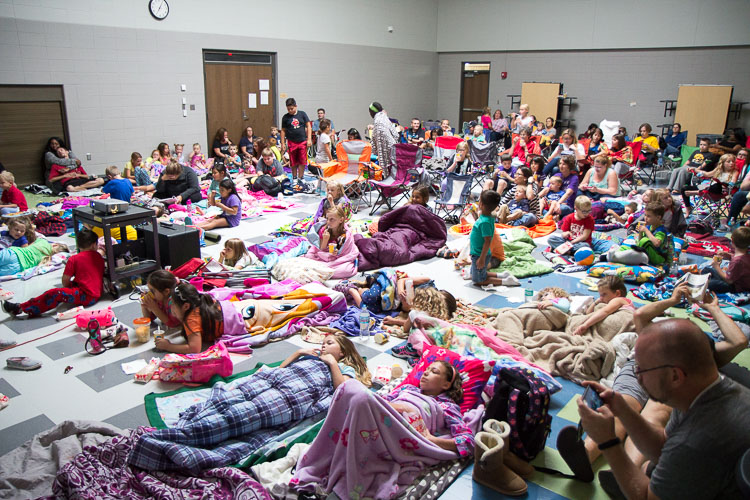
Just imagine that you are in the crowd at a movie night sponsored by the PTA. The lights have been dimmed, your eyes adjusted for the screen, and then someone’s camera flash pops right in your eyes. This exact same situation can occur at almost any event. A flash can distract from the event and disrupt not only the audience, but a potential performer or speaker. While it is usually absolutely appropriate to use a flash for group and/or staged photos to get proper lighting, it is often ideal to simply adjust your camera settings to make the available lighting work for candid photos.

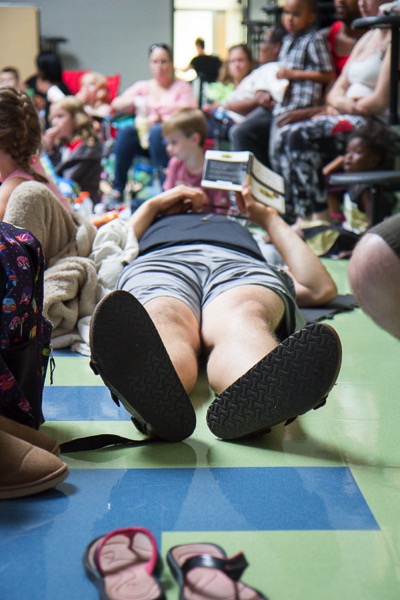
The photos below were taken at a PTA movie night just like the one I described. It was in the cafeteria of a local elementary school, with no artificial lighting other than the projector screen, and some natural light coming in through a skylight. I adjusted my ISO to 800 to accommodate for the limited light, and opened my aperture to f/2.8. Even at that, I had a shutter speed around 1/25 or 1/15 pretty consistently. If I needed to capture action (which was very limited in this sort of event), I bumped my ISO up to 1600 to accommodate it. These adjustments allowed the families to watch the film without disruption as I photographed.

Pic 13

Pic 14

Picking the Best Shots

The first time I photographed an event was at my church, and I realized during editing how much people yawn and pick their noses when they think nobody’s looking!

For a multiple-hour event, you will likely get an abundance of photos. On your first pass through, obviously weed out any photos that are fuzzy or have poor technical skills. Since these photos will represent your abilities, you want to make sure to highlight the best of them.

I always take a second and third pass through, however. Hopefully the event organizer gave you a rough idea of how many photos he or she wanted. So go through and remove any photos that are boring, or that paints the subjects in a bad light (such as picking their nose). If you still have a surplus, narrow it down on the next pass through to weed out ones with weak composition, or ones that don’t tell the story of the event well. I will then edit the remaining photos (rather than editing hundreds that I will just throw away), and export them. I usually give them another look at that time to make sure there isn’t anything I missed in my editing software.

Pic 15

I personally use Lightroom for editing event photography. Unless it is a statement photograph or a photo to be used for advertisement, I try to do very spare editing. These photos are not likely to be hung on someone’s wall in a large size, so you usually do not need to worry about editing out stray hairs or specks of lint. Basic adjustments for exposure and contrast, white balance, and occasionally a conversion to black and white are often sufficient.

Pic 16

Ready to Roll

You’re now ready to deliver your photos to your client. Be sure to provide your contact information and business cards for the future. If they indicated that you could share the photos on your website or business pages, make sure to feature them to show your amazing prowess as an event photographer.

Do you do events? If you have any other tips please share them in the comments below.

googletag.cmd.push(function() {
tablet_slots.push( googletag.defineSlot( “/1005424/_dPSv4_tab-all-article-bottom_(300×250)”, [300, 250], “pb-ad-78623” ).addService( googletag.pubads() ) ); } );

googletag.cmd.push(function() {
mobile_slots.push( googletag.defineSlot( “/1005424/_dPSv4_mob-all-article-bottom_(300×250)”, [300, 250], “pb-ad-78158” ).addService( googletag.pubads() ) ); } );

The post Tips for Getting Started Doing Event Photography by Angie DeWaard appeared first on Digital Photography School.

Digital Photography School

 
Comments Off on Tips for Getting Started Doing Event Photography

Posted in Photography


Lenses and photo trips offered for top prize in Zeiss Photography Awards

12 Oct
Tamina-Florentine Zuch won the 2016 ZEISS Photography Award with a project about the railway system in India

German lens manufacturer Zeiss has put up a top prize that includes €12,000 of its lenses and €3000 towards a photographic excursion for the winner of the 2017 Zeiss Photography Award. In its second year, the award is made in conjunction with the World Photography Organization and is presented as a part of the Sony World Photography Awards program. Entrants are required to submit a collection of five to ten related images on the theme of ‘Seeing Beyond – Meaningful Places’ for a chance to win the single prize.

The competition opens today and will close on 7th February 2017, with the winner being announced on the 14th March. The prize winner will be taken to London to the WPO awards ceremony in April and the winning series of images will form a part of the Sony World Photography Awards exhibition held at Somerset House in that city.

For more information visit the Zeiss website.

Press release:

ZEISS Photography Award 2017

Pushing the limits of creativity.
The ZEISS Photography Award is a highly prestigious international photo competition run jointly by ZEISS and the World Photography Organisation (WPO). “Our lenses enable photographers to achieve superior imaging quality, and the ZEISS Photography Award is an expression of our dedication to premium-quality photography,” says Dr. Winfried Scherle, Executive Vice President and Head of the Consumer Optics business group at ZEISS.

The motto “Seeing beyond – meaningful places” will also be used for the 2017 competition and accorded greater artistic significance. Photographers therefore have the chance to use their creative flair to lend unique places a special meaning and express this through their medium.

The goal is to push the limits of creativity and grow as photographers. They could be places with a particular historical or future value, or perhaps places that exude adventure, the wonders of nature or depict a journey to a faraway place.

“The lenses are mere tools – the real value of the images is down to the photographers and their flair for creativity.”
Dr. Winfried Scherle

Submissions
All those who wish to take part in the ZEISS Photography Award 2017 are invited to submit a series of 5 to 10 photos complete with descriptions. Entries can be submitted between 11 October 2016 and 7 February 2017. The jury is looking for photos that reflect different perspectives as well as free interpretations of the terms “meaning” and “place.”

Further information on the submissions for 2017 can be found here.

Jury
All entries will come under scrutiny from a jury composed of leading lights from the world of photography. The jury for the ZEISS Photography Award 2017 comprises 3 members. Their goal is to assess the photographic skill and artistic flair of the participants.

  • Claire Richardson, Lonely Planet
  • Sarah Toplis, The Space, WPO Academy Member
  • Jürgen Schadeberg Dr.(h.c.), Photographer, WPO Academy Member

Prize
At the end of the submission phase, a shortlist of photographers vying for the ZEISS Photography Award 2017 will be published and a winner will be selected. Inclusion on the shortlist is a great honor in itself. The winner will be announced on 14 March 2017.

The winner of the ZEISS Photography Award 2017 will receive ZEISS camera lenses of their own choosing to a value of €12,000, as well as €3,000 to put towards a photo trip. He/she will attend a gala dinner in London on 20 April 2017 and their photos will be showcased at the Sony World Photography Award Exhibition at Somerset House in London. All flight and hotel expenses for the gala dinner in London will be covered. The winner will also get the chance to work with ZEISS on an individual basis.
Key dates

All the important dates for the ZEISS Photography Award 2017 are listed below:

11 October 2016 : Competition open for submissions
7 February 2017: Competition closed for submissions
28 February 2017: Shortlist published
14 March 2017: Winner announced
20 April 2017: Gala dinner in London
21 April to 7 May 2017: Winner’s photos exhibited at Somerset House in London

Further information is available on the website of the World Photography Organization

Articles: Digital Photography Review (dpreview.com)

 
Comments Off on Lenses and photo trips offered for top prize in Zeiss Photography Awards

Posted in Uncategorized


12 Sources Where You Can Make Money in Photography

11 Oct

It can be a daunting task when you first start looking for ways to make money in the photography world or find photography jobs. On one hand, there seems to be, and are, many different avenues you can take to achieve an income, but on the other hand, each of these avenues can be difficult to break into.

I created this list to help focus you on your path to finding the right way to achieve income through your work. Take your skill level, your location, your situation, your short-term goals, and your longterm goals all into account and choose the strategies that you think will be most effective. Hit those strategies hard. There is no need to waste your valuable time on the other stuff.

1. Friends, colleagues, and family

Band Photography

Band photography

There are few photographers that I know who did not gain their first photography jobs through friends and family. Your friends, colleagues, and family already know you and your work ethic (which I hope is strong). They trust you and will be willing to recommend you. Some will even hire you. Everyone needs photography in some way and people often want to work with a person they know. Let that person be you.

Think about how your network can help propel you where you want to go. Who might they know who can help your career? Ask for an introduction. If you want to do business or law firm portraits, ask your friends who work for those type of companies to put you in touch with the person who hires photographers. In addition, influential people (connectors) can be a big boon to your business. Reach out to any of these people that you might know or seek out an introduction from a friend who might know them.

Send out an official announcement about your business. Create a mailing list, and send out a professional looking email that talks about your services and how you can help people. It’s one thing to talk in passing to your friends and family about it, but it’s another to be official and explain how you can help them or the people they know while showing your accompanying work.

2. Assisting and internships

Business Portrait

Business portraiture

Besides your personal network, assisting and internships are the other primary way that you can effectively break into the photography business. Be prepared to make coffee and sweep floors (tip: if you learn to make good, strong coffee, everyone on a photo shoot will love you). Doing this will allow you to learn about how a true photography business runs quicker than at any photo school. It will give you a nuanced insight that you cannot get in any other way.

If you assist a portrait photographer, you will learn about lighting really well because you will be in charge of setting up the lights. If you assist for a wedding photographer, you will likely be a second shooter. In that role, you will gain invaluable wedding experience without the risk of shooting a wedding for the first time without any support.

It will allow you to build a new network around you. The photographers you work for will pass along jobs that they cannot do. You will make friends with the other assistants and you can help each other out in the future when you all start shooting on your own. The relationships and skill building that happens in these environments is invaluable.

3. People that need photographs for their wall

Canvas Print

Canvas wall print

If you are aiming to sell your photographs, you can market directly to businesses, restaurants, local galleries, everyday people, collectors, and your network. You can be a go-to person for gifts. However, keep in mind that this is a very hard way to make money. It can take years of dedicated work to build up and you will need to actively market yourself.

Studying marketing and selling is important for anything you do on this list, but particularly if you are aiming to sell your work. Most photographers choose other ways to make a majority of their income at first while building up a print sales business over time.

4. Local businesses

Business Portrait

Business portraiture

You know the needs of your local businesses well, and most likely you already know the people who own them. Figure out what they might need, whether it’s business portraits, shots of their food or products, event or conference photography, or work for their walls. Approach them with a plan in mind, and ask to set up a meeting to discuss your ideas and how they can benefit.

Better yet, if you know anyone that works for the business or has a relationship with someone who does, ask for an introduction first. Introductions will give you a huge advantage.

5. Couples, weddings, and engagement photography

Engagement Photography

Engagement photography

Wedding photography is a big business for photographers. It takes a lot of time to get good and is very hard to do well, but it is one of the best ways to make a good living at photography. If you are aiming to start off with wedding photography, I suggest trying to at least work as a second shooter for a while to gain a portfolio and skills.

But there are other ways you can take advantage of this as well. You do not have to be a wedding photographer to be an engagement photographer. Couples and family photography is a very viable business wherever you live and engagements are a big part of that, whether or not you are a wedding photographer. Learn the best locations in your area to photograph and market to families and newlyweds. This may also be a good first-step to transition into the wedding world.

6. Travelers

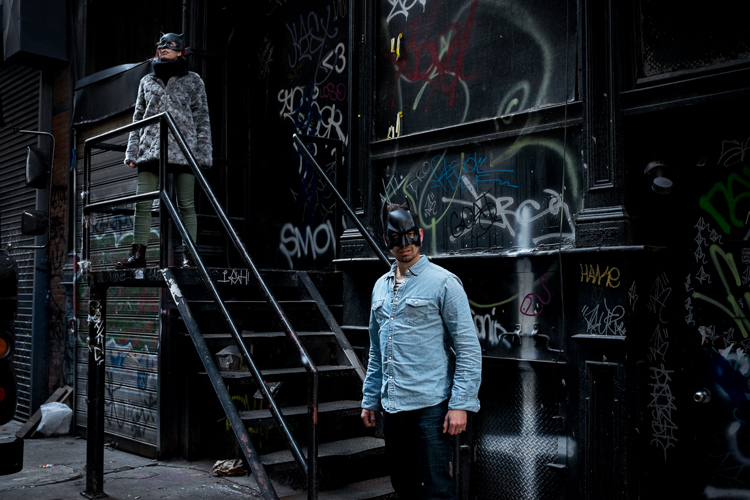
batman_couple

Tourists from a workshop

If you are in an area that gets any sort of tourism, you can become a photography tour and workshop leader. Learn about all the best locations in the area and the best times to photograph them. Learn some history too. Just because you are running a photography tour does not mean that history isn’t important. People should be able to get to know more about what they are photographing. They want to learn that stuff. Market yourself through hotels, tourism companies, local tourism boards, and Google.

7. Actors, artists, and students

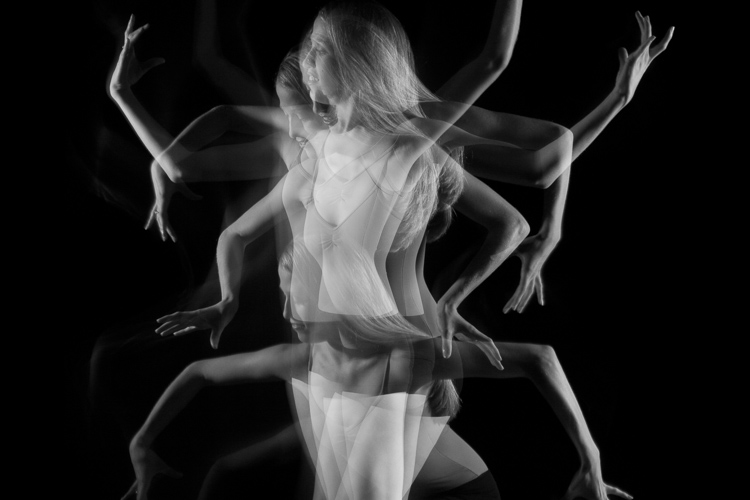
Dancer

Dancer

There is a whole photography sub-industry that caters to creatives and students. These genres do not usually pay as much as working with business firms, but they can as you improve and move up. Go advertise where these people hang out. Find a connection at your local schools. Learn which of your friends have high school age children that need photos taken, then begin to work with their network of friends. Try to get into acting or art schools.

8. Conferences and events

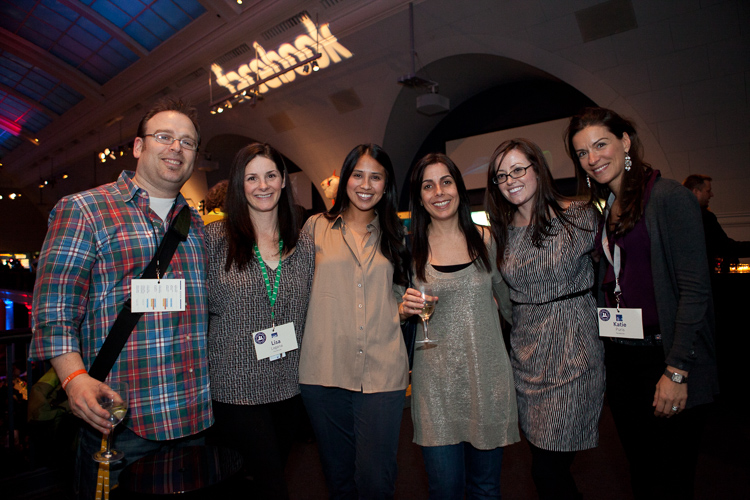
Conference and Event Photography

Business Conference

Event photography is another way that photographers can start making money right away. Event photography is on the easier and less stressful end of the photography spectrum, as long as you are okay with the socializing. There is not as much pressure involved as shooting a wedding, and the technical skills are not as difficult to master as other forms of photography. Learn to use your camera, your flash, how to shoot in low light, and how to get people to smile in photos and you’ll be good to go.

9. Trade and art shows – networking events

Trade Show

Trade event

Seek out all of the trade shows whose members you think you might be able to work with. Whether it’s a business related show or a local tourism event, many of the attendants will need your services. Meet people, get to know them, don’t come on too strong, and let them know that you’re there if they ever need your services. The more you attend these different events, the more people will recognize and get to know you. Just this exposure can be very valuable in the long run.

In addition, many areas have arts and crafts fairs and shows. This is a great way to get your work seen by your community. It’s a lot of work, so plan carefully and try not to go overboard at first. Do your research coming in, and use the time at the show not only to sell your work but to get to know people in your community. Even if someone is not ready to buy your work, it doesn’t mean that they will not want to in the future or for a gift. Get to know them, and see if they want to sign up for your mailing list, so you can keep your work in front of them in the future.

10. Organic: Google and social media

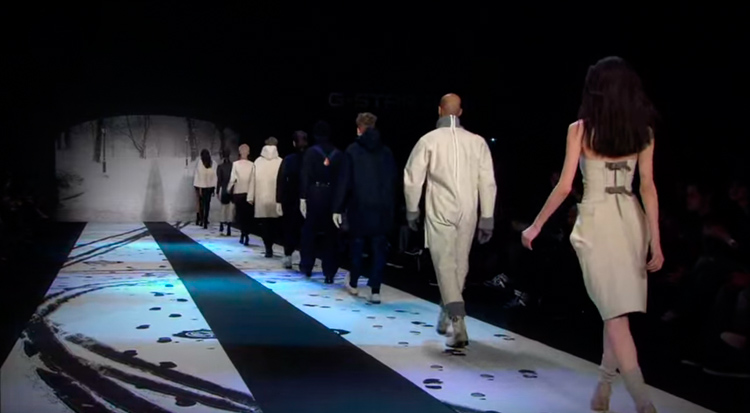
GStar Fashion Show

An image used as a fashion show backdrop

Due to all the competition, ranking highly in Google is tougher than it used to be. But with some focus and time, it is very doable. Learning how to rank higher in Google involves too much information to do the topic justice here, but you should follow resources and websites such as problogger.com (our own Darren Rowse’s other site), which will help you learn to make more of your living through the internet. You will need a website of course. Also keep in mind that besides a variety of unique factors, Internet links are the lifeblood of ranking highly in Google, so it is necessary to figure out how to get other people to link to your site and mention your work.

In addition to your email list, build a Facebook business page and an Instagram page to grow your following. This will help you keep your work in front of people so that they will remember you the next time they need your services.

11. Local internet marketing

Business Portrait

Business photography

You can market your work to all types of business on the internet. However, local websites can be the most important. Local news sites, blogs, or wherever your community hangs out on the internet are important to become a part of.

Think about how you might be able to work with these websites or be of value to them. If you join certain communities, you do not want to go crazy marketing to them. Join the community, be a valuable member, answer questions and offer advice, and just get to know people. That’s how you market in these situations. If you do this the right way, they will like and trust you and will want to work with you in the future.

12. Other photographers

There is so much competition between photographers that it can get incredibly frustrating. Other photographers share the same passions that you do, and they are going through the same trials and tribulations. Seek out the good ones and become friends with them. Offer to help them if they need. Pass along jobs if you can’t fulfill one. Grow together.

Over time, you will surround yourself with an invaluable community and you will all be stronger together. The photographers who feel too competitive to give you the time of day will then not have the advantages that the rest of you do.

Conclusion

Making money in photography can be challenging and hard especially when you’re getting started. These tips should give you some ideas to move forward with in your photography career. If you have any other ideas that have worked for you please share them in the comments below.

googletag.cmd.push(function() {
tablet_slots.push( googletag.defineSlot( “/1005424/_dPSv4_tab-all-article-bottom_(300×250)”, [300, 250], “pb-ad-78623” ).addService( googletag.pubads() ) ); } );

googletag.cmd.push(function() {
mobile_slots.push( googletag.defineSlot( “/1005424/_dPSv4_mob-all-article-bottom_(300×250)”, [300, 250], “pb-ad-78158” ).addService( googletag.pubads() ) ); } );

The post 12 Sources Where You Can Make Money in Photography by James Maher appeared first on Digital Photography School.
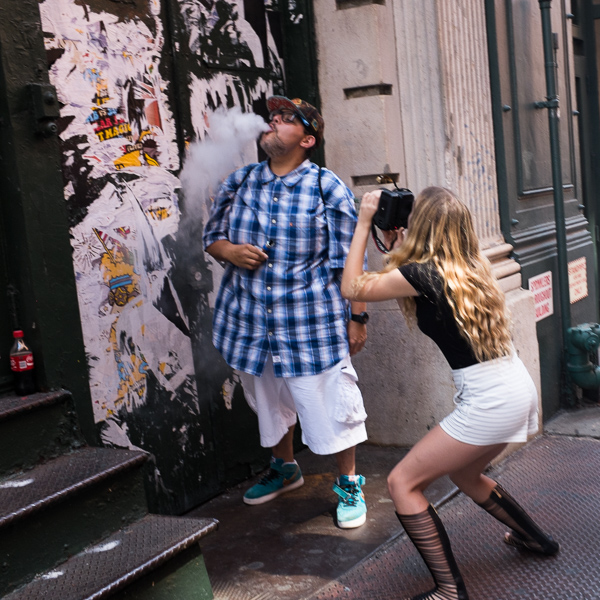

Digital Photography School

 
Comments Off on 12 Sources Where You Can Make Money in Photography

Posted in Photography


10 Tips for Better Interior Photography

10 Oct

Whether it’s because of a love of seeing what other people do with their homes, or because we’ve got a friend in real estate, loads of us are turning to real estate photography. Of course anyone can run around and shoot a house in a few minutes. It may be useable, but better images command a better price for a house, either for sale or rental. So what can you do to make your interior photography stand out from the others?

Well, quite a lot actually. Some of it just boils down to a basic understanding of what an interior shot requires. Great angles, straight walls, and even light make a massive difference to the shot. We’re not talking about high end, multi-light setups with tilt shift lenses here, just getting better shots.

#1 – Use a tripod

Tips for better interior photography 1

You can nip around and shoot handheld, but for many houses, you may need longer exposures. High ISO will just introduce too much noise, so a tripod is the best option. It does slow you down, but it also makes you concentrate on the shot more. You can use the time to check around the frame for stray cables, or clutter, and create the composition before you hit the shutter button. A few of the other tips benefit from using a tripod as well.

#2 – Use Live View

I shoot with a Fuji X-T10, so everything is live view, either by screen or by electronic viewfinder. Most cameras have a Live View option (if your camera has a video mode you likely have Live View), meaning you can see the shot before you take it. It’s even better if the camera has a tilt screen.

Tips for better interior photography 2

#3 – Go wide

Shooting wide can make the room look great, though you need to be careful that you don’t over do it. Sitting tight into one corner while you try to get the other three corners in just looks wrong. Don’t do it. Anything in the 16-24mm range on full frame (or the crop equivalent which equates to 10-16mm approx.) is great. You also don’t need to show everything. Our eyes and brain will fill in gaps, so half a cabinet and the pillows section of a bed work fine in a photo. I use the Samyang 12mm lens (check prices for that lens on Amazon or B&H Photo) for my wide interior work.

Tips for better interior photography 3a

Tips for better interior photography 3b

#4 – Shot one or two point perspectives

There are standard views you can shoot. A 1-point perspective is shooting so the sensor plane is parallel to a wall. It shows the side wall leading into the back wall and helps set a scene. A 2-point perspective is where you’re shooting into a corner. The corner doesn’t need to be centered in the frame, but don’t try and show three walls.

Tips for better interior photography 4a

Tips for better interior photography 4b

#5 – Shoot from mid-room height

We can’t all afford a tilt-shift lens to keep perspective in check, so it’s a really good idea to shoot with the camera at or slightly above mid-room height. This means you can keep the camera aimed out straight to keep the walls vertical. While the perspective distortion you get can be corrected in post-production, it’s much easier to get it right in camera. This is another reason to use a tripod as well.

#6 – Use a bubble level

Most cameras have an electronic level, but not all. Even then, some only work for the horizon line, and don’t show tilt. There’s also a question of tolerance too. I find a little hotshoe bubble level to work great, and you see exactly when the camera is level, both side to side and up and down. The latter is essential to keep the walls looking straight.

Tips for better interior photography 6

#7 – Bracket, bracket, bracket

When shooting interiors, there’s often a huge range of light in a room. From the light outside to the darkest corners of a room. Often it’s more than your camera can capture in one shot. Bracketing is your friend here. This means you’re taking a normal exposure, a shot 2 stops underexposed, and one 2 stops overexposed. Lightroom’s Merge to HDR function can be used to combine the shots for more editing leeway. You can also opt to use more shots (4 stops under and overexposed if you want even more latitude) for example, when you want to show the view outside a window.

Tips for better interior photography 7

#8 – Use fill flash

Another way to bring down the dynamic range is to use bounced flash to fill in the shadows. By aiming your flash at the ceiling and walls behind you, you can lessen the shadows in the area in front of you. It’s possible to do this on-camera, but it works well off-camera too. You can even just hold the flash in your hand pointed at the ceiling.

You’ll need a radio trigger for the flash, or a system with built-in triggers like the Cactus RF-60 (price on Amazon and B&H Photo) and V6ii trigger. See the difference in the towels and the near part of the bed in these photos? That’s what fill flash does. It’s subtle, but lifts the light in the room.

Tips for better interior photography 8a

Tips for better interior photography 8b

#9 – Go vertical for magazines

With so much interior work viewed on the web, there’s been a shift towards horizontal images in the interior photography world. But print magazines are still out there, and if you want your work published, you’ll need to shoot verticals for single magazine pages. Verticals usually mean letting the eye fill in gaps, so make use of composition to show hints of the room.

Tips for better interior photography 9

#10 – Post-processing magic

Get as much right in-camera as possible, but do edit your Raw files to bring out their best. When post-processing in a program like Lightroom, you should bring the Highlights down and open up the Shadows. Next bring the Blacks down to ensure that the contrast lost from opening up the Shadows doesn’t impact the image too much. A little Clarity can also help. Find a Lens Profile in Lens Corrections to correct for distortions. Use Lightroom’s Upright tool to fix perspective issues in the image that can happen.

Tips for better interior photography 10

Conclusion

Hopefully you’ve found these tips helpful for getting started doing interior photography. If you have any others to share please do so in the comments below.

googletag.cmd.push(function() {
tablet_slots.push( googletag.defineSlot( “/1005424/_dPSv4_tab-all-article-bottom_(300×250)”, [300, 250], “pb-ad-78623” ).addService( googletag.pubads() ) ); } );

googletag.cmd.push(function() {
mobile_slots.push( googletag.defineSlot( “/1005424/_dPSv4_mob-all-article-bottom_(300×250)”, [300, 250], “pb-ad-78158” ).addService( googletag.pubads() ) ); } );

The post 10 Tips for Better Interior Photography by Sean McCormack appeared first on Digital Photography School.
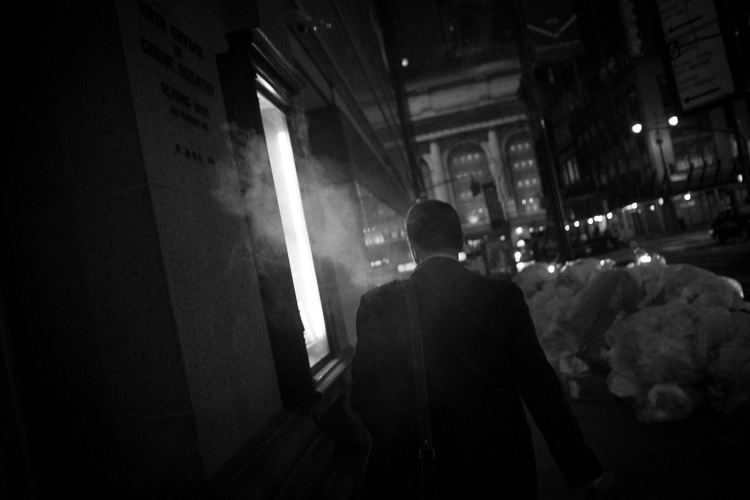

Digital Photography School

 
Comments Off on 10 Tips for Better Interior Photography

Posted in Photography