RSS
 

Posts Tagged ‘Photography’

How to Price Photography Products and Services for Profit

05 Dec

Think pricing your photography is overwhelming? You’re not alone. If there’s one question that every photographer struggles with time and time again, it’s how to price their products and services.

  • How should you price your photos?
  • What products should you offer?
  • How do you make sure your prices are high enough to make a profit, but not so high that you drive away business?

https://www.pexels.com/photo/coffee-creative-notebook-office-64776/ price your photography

No matter how hard you’ve worked to develop your client base, if you don’t have a consistent and effective pricing model in place, you’ll find yourself treading water. Luckily, it doesn’t have to be hard to come up with a pricing system to help you reach your goals.

To figure out what you’ll need to make annually to run a successful photography business, we’re going to break your expenses down into two important sections: the cost of doing business (CODB) and cost of goods (COGs). Then we’ll explore session and product fees to determine how you can price for profit and success.

Considerations

When it comes to pricing, there is no one size fits all solution, so be sure to tailor your prices to fit your specific needs. Before we get started on pricing in detail, here are a few considerations you’ll want to keep in mind throughout the process.

Target market

Your pricing should be reflective of your target market. If you’re targeting high-income families in a wealthy area, your prices will be much steeper than if you were targeting budget buyers with more modest incomes. There’s truly no wrong target market. It’s all about defining your goals and knowing your niche.

How to Price Photography Products and Services for Profit

Location

Consider your location. Do you live in an area with a high population or a smaller area with a narrower potential client base? Also, consider your local competition. While you should never construct your pricing based solely off of what your competitors are offering, you don’t want your prices to be drastically off base. Get a feel for what’s selling in your area and for how much, and use that as a baseline. Then adjust according to the specific needs of your business, which we’ll discuss in more detail below.

Niche

Although there is no set rule about which fields of photography charge more or less, it’s helpful to consider your niche or genre when coming up with a pricing list.

For example, if you’re a wedding photographer, consider all of the work that goes into shooting and editing a wedding. Chances are you’ll be there for at least four hours, and that’s a very conservative estimation; many wedding photographers provide around eight hours of coverage on the big day. That’s why wedding photography packages can run upwards of $ 5,000 in some markets. Other niches are less exhaustive and time-consuming, so prices tend to be somewhat more conservative.

How to Price Photography Products and Services for Profit

Measuring your cost of doing business (CODB)

Your cost of doing business refers to any non-reimbursable costs directly associated with running your business. These costs include internet fees, telephone, advertising, software, equipment purchase and maintenance, office supplies, etc. (this list is not exhaustive, think of everything you pay monthly whether or not you have any paying jobs). Calculating your CODB can seem overwhelming at first – especially to those of us who aren’t mathematicians – but it is an absolutely essential part of developing a realistic and profitable pricing model.

Math time! Don’t run away just yet, it’s simpler than it looks. Your CODB is the result of an equation. It is determined by adding up your annual expenses plus your desired salary, then dividing by the number of billable days (think of this as the number of shoots) for that year.

For example, if I have $ 30,000 in annual expenses and I want to pay myself a $ 45,000 salary, I know need to bring in $ 75,000 per year. If I plan to do 2 photo shoots per week for 48 weeks (accounting for four weeks of vacation), I’ll be looking at 96 photo shoots per year. $ 70,000 divided by 96 is about $ 781. This is the average amount I need to make in income per shoot, through session fees and products. Here it is broken up for easier reading:

  • Annual non-reimbursable expenses: $ 30,000
  • Plus salary desired: $ 45,000
  • $ Equals: 75,000 in total annual expenses
  • Weeks worked: 48
  • Times 2 Shoots per week
  • Equals: 96 shoots per year (needed)
  • $ 75,000 ÷ 96
  • Equal: $ 781 per shoot/job

How to Price Photography Products and Services for Profit

Sound complicated? It doesn’t have to be. The National Press Photographers Association offers a free CODB calculator to help you figure out your annual CODB. Keep in mind that the numbers they’ve plugged in are estimates only. Yours will vary.

If the annual calculator seems overwhelming, try breaking it down by month. Many people find it helpful to break it down by month instead of looking at annual expenses. Digital Photography School offers a free monthly CODB worksheet that can be used for calculating CODB by month. Add in your own numbers and categories as necessary.

Your numbers don’t have to be exact but try to make them as accurate as possible. Once you have an idea of what your CODB will be, you can use this number to determine what you’ll need to charge to keep your business running and pay yourself a suitable salary.

Measuring your cost of goods (COGS)

Anne

By Anne

Think that the cost of goods just refers to the cost of the prints you sell? Think again. If you want to price for success in the photography business, you need to factor in both materials and time.

As defined on Investopedia, the cost of goods consists of; the direct costs attributable to the production of the goods sold by a company… including the cost of the materials used in creating the good along with the direct labor costs used to produce the good.”

Sean MacEntee

By Sean MacEntee

This means that you need to factor in your time and labor on top of your material costs. Calculating material costs is simple, but figuring out your time can be a little more challenging. You need to account for all the time that goes into a client session, from the first phone call to the moment they receive their products. A typical workflow will look something like this:

  • Initial inquiry or phone call
  • Pre-session consultation (in person or by phone)
  • Session (time spent shooting)
  • Editing photos
  • Reviewing photos with client
  • Ordering prints/products
  • Inspecting prints/products
  • Packaging prints/products
  • Delivering or shipping prints/products

Estimate the average amount of time you spend on each of these pieces of the puzzle. Many photographers figure in this time to be covered by their session fee, which we’ll dive into in the next section.

What am I charging for?

How to Price Photography Products and Services for Profit

The session fee

Sometimes referred to as a creative fee, the session fee is typically due in full prior to the session (this helps ensure you don’t have no-shows). This fee covers your time and creative talent as a photographer. By determining the amount of time you usually spend per shoot (as discussed in the previous paragraph), you can establish a base session fee.

First, determine how much you want to make per hour. A simple way to calculate this is to divide your desired salary by the number of weeks you plan to work and the number of hours you will work each week. For example, from our numbers above:

  • $ 45,000 per year desired salary
  • ÷ 48 working weeks
  • ÷ 40 hours/week
  • About $ 25/hour

Keep in mind this is adjustable based on your own perceived value. If you plan to make more per year, your hourly rate will go up.

Then, multiply your cost per hour by the average number of hours you expect to spend on each client. For example, if you plan to spend an average of five hours on a single client from start to finish at $ 25/hour, your session fee is calculated as follows:

  • 5 hours
  • x $ 25/hour for your time
  • $ 125 per session (not including products, which we’ll discuss shortly.)

This is a fairly average price for a 1-hour photo shoot in most markets. Remember, this fee is in place to reserve your time and creative talent.

How to Price Photography Products and Services for Profit

Prints and products

Your prints and products should be priced according to the amount of money you need to bring in per shoot after your session fee. In keeping with the example above, let’s say we need to bring in $ 781 per shoot. The session fee will cover $ 125 of this, so you need to sell an average of $ 656 ($ 781 minus $ 125) per shoot in products.

What products will you be selling?

To start, figure out what products you’ll be offering to your clients. Don’t worry about including everything if you’re just starting out. There’s plenty of time to expand your product line as you grow. Typical photographer product lines include:

  • Prints in a range of sizes from 4 x 6″ to 30 x 40″
  • Framed prints
  • Canvases or gallery wraps
  • Albums
  • Digital files

What do I charge for these products?

To figure out what to charge for each item, you’ll want to add your marked up hard costs to your labor costs. We’ll use an 8×10 print as an example.

How to Price Photography Products and Services for Profit

1. Determine hard costs

First, figure out what the print will cost to order from your lab. Add this cost to your other hard costs, like shipping and packaging materials. For example:

  • Print cost: $ 3.50
  • Shipping cost: $ 5.00
  • Cost of your packaging materials: $ 5.00
  • Total: $ 13.50 hard costs

2. Mark up your hard costs

Next, it’s time to figure out your product markup. A commonly recommended markup for photography products is 2.85. So in this case: $ 13.50 x 2.85 equals total: $ 38.48 marked up hard costs for that 8×10.

3. Calculate your labor time

Then figure in the labor time for each item, being sure to include time for post-processing, ordering, inspecting and packaging. For example:

  • 10 minutes for post-processing
  • 2 minutes to place order with your lab
  • 3 minutes unpacking and inspecting photos
  • 5 minutes packaging for delivery
  • 5 minutes scheduling a pickup time or dropping off at the post office (If you meet with your clients in person this may be a longer meeting, so account for that too).
  • Total: 25 minutes labor time

If we’re calculating your time at $ 25/hour (as discussed in the above example dealing with session fees), the cost of labor for 25 minutes is about $ 10.50.

Image3

4. Add marked up hard costs to labor time

  • $ 38.48 hard costs
  • $ 10.50 in labor costs
  • Total: $ 48.98 rounded to the nearest 0 or 5 and you’ll end up with a retail price of $ 50.00 for an 8×10.

This is a typical price for many photographers. Adjust accordingly based on the considerations we discussed in the beginning; your target market, location, and niche.

If your target market is a high-income community in a location where your niche is highly in demand, you can adjust for higher prices – try a 3.5x markup or even higher. But if your target market is a bit more budget-conscious, consider sticking with a 2x markup instead of 2.85x. Just be prepared to do a higher volume of work in order to reach your desired income.

Follow this process with each item on your product list, being sure to account for the extra time it takes for items like albums. As always, keep in mind that these numbers will vary depending on your hard costs and time spent processing and packaging each order.

Conclusion

Taking the time to establish an effective pricing model will put you well on your way to creating a successful and profitable photography business. We know it’s not as fun as getting out in the field and shooting, but you’ll find it’s a necessary part of taking your photography business (and profits) to the next level.

googletag.cmd.push(function() {
tablet_slots.push( googletag.defineSlot( “/1005424/_dPSv4_tab-all-article-bottom_(300×250)”, [300, 250], “pb-ad-78623” ).addService( googletag.pubads() ) ); } );

googletag.cmd.push(function() {
mobile_slots.push( googletag.defineSlot( “/1005424/_dPSv4_mob-all-article-bottom_(300×250)”, [300, 250], “pb-ad-78158” ).addService( googletag.pubads() ) ); } );

The post How to Price Photography Products and Services for Profit by Chelsea Lothrop appeared first on Digital Photography School.


Digital Photography School

 
Comments Off on How to Price Photography Products and Services for Profit

Posted in Photography


The dPS Ultimate Guide to Landscape Photography

01 Dec


Download “The Ultimate Guide to Landscape Photography”

We respect your email privacy

Introduction

Landscape photography is one of the most challenging and most rewarding hobbies a person can have. One of the things I like most about it is that there is always more to learn. It keeps our brains active! Between learning about what type of gear you need, how to use it, understanding light and composition, and learning to process your photos, you will quickly come to the realization that making a striking landscape photograph involves a number of essential ingredients.

Note: this is one of the most comprehensive articles we’ve written – get a free downloadable copy to print and/or refer to later above.
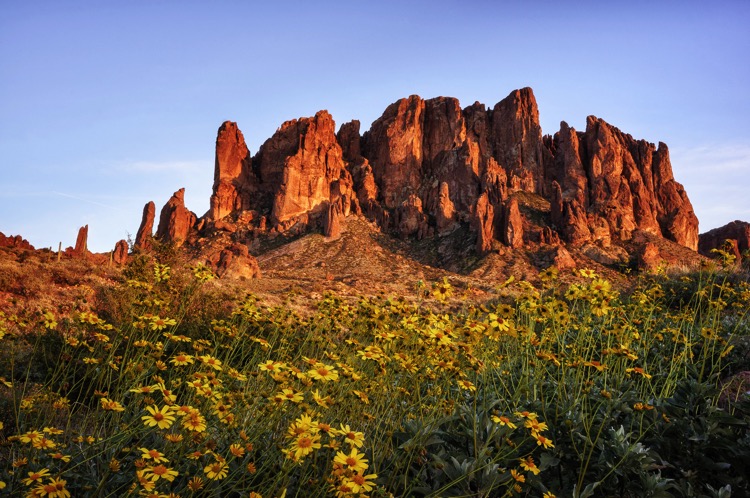
DPS ultimate landscape photography guide 12

The goal of this guide is to touch on each of these essential ingredients because you need to know a little about each one before you’ll start making the quality of images you are after.

My journey in landscape photography began 25 years ago, and since then I’ve constantly thought about what makes a truly great landscape image. I hope that you will take what I have learned over the past 25 years and use it to jump start your own journey in photography and start making striking images you are proud of.

Gear Essentials

I want to emphasize that gear is not the most important factor in landscape photography. The other chapters outlined in this guide are all more important when it comes to making striking images. However, you do need some gear, and it can be hard to make the right choices when you are just getting started. This chapter will help you understand the most important things to look for when buying your gear.
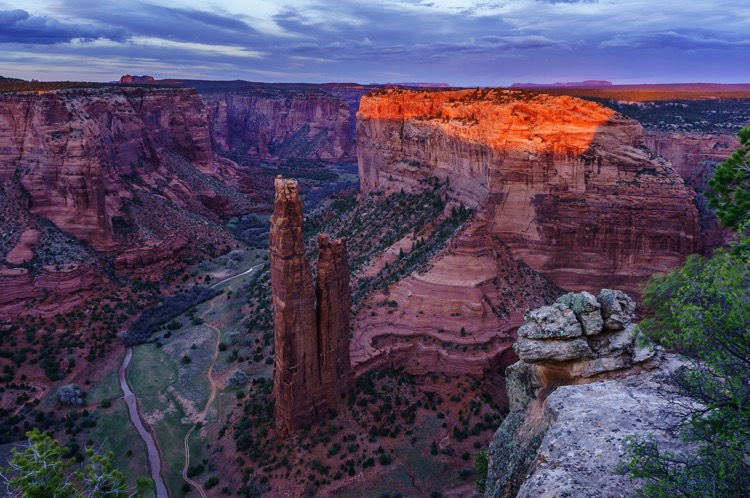
DPS ultimate landscape photography guide 14

Your Camera

There are three basic categories of digital cameras: point-and-shoot; digital single lens reflex (DSLR); and mirrorless.

Point and shoot cameras are the small digital cameras that most people start with. These cameras do not have interchangeable lenses, and they have tiny sensors that have limited image quality. Point-and-shoots are used for making snapshots. If you are getting serious about your photography, you’ll want a camera that has a bigger sensor for better image quality, manual functions, and one that accepts a variety of different lenses.

DSLRs are the most popular type of camera for landscape photography for a number of reasons. They allow you to shoot in RAW format for maximum data capture (more about that later). They have a variety of shooting modes including fully manual. DSLRs have large sensors and you can use a huge variety of lenses with them.

DPS ultimate landscape photography guide 08 DPS ultimate landscape photography guide 09

Mirrorless cameras are relatively new technology. They have all the same features as a DSLR, but they don’t have the internal mechanism that includes the mirror, which is why the camera bodies are smaller and lighter. However, they are not cheaper! But if weight and size are important factors to you, you may want to check out a mirrorless system.

Sensor size

When it comes to image quality, the only thing you should concern yourself with is sensor size. Megapixels are not nearly as important as sensor size.

The largest sensor is known as a Full frame because it is the same size as a 35mm film negative. You’ll pay the highest price for a system with a full frame sensor, whether it is a DSLR or mirrorless system.

Sensor sizes smaller than full frame are known as Cropped (or Crop) Sensors. The largest cropped sensor is an APS size. You’ll find a wide variety of cameras with these types of sensors at a more affordable price.
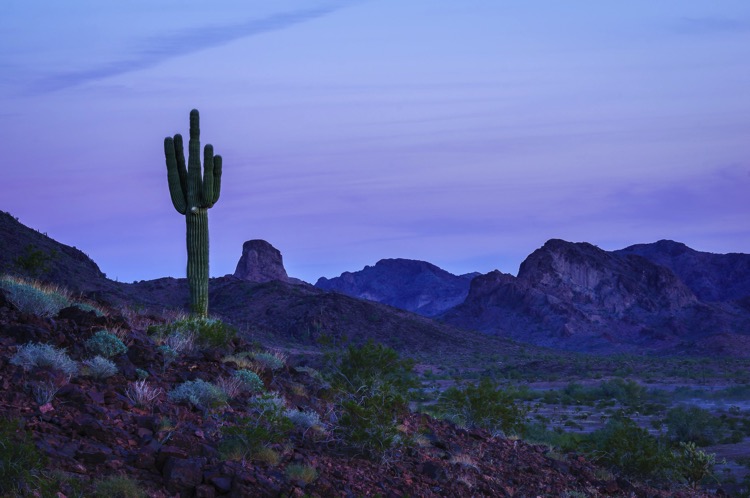
DPS ultimate landscape photography guide 10

The next smaller size is the four-thirds sensor. There are actually quite a number of sensor sizes in between the three I have mentioned, but these are the most common. Sensors smaller than these three are what you find in point-and-shoots and mobile phone cameras.

Personally, I use a mirrorless camera with an APS sensor for my landscape photography because the weight of the kit makes a huge difference for me when carrying my gear on long hikes.

I recommend that when you are choosing a camera, you pick the sensor size you can afford, then choose the camera that feels good in your hands and has a menu system that makes sense to you. These days, all of the DSLR and mirrorless cameras available are capable of making great images so don’t worry about whether Canon, Nikon, Sony or another brand is better. They are all good.

Lenses

DPS ultimate landscape photography guide 11 DPS ultimate landscape photography guide 17

Once you have your camera picked out, you’ll want to pick a few quality lenses that give you good focal range from wide-angle, which puts everything in your field of view into the frame, to telephoto, which will allow you to zoom in to something in the distance.

Lens choice is important because your photograph is influenced much more by your lens than by your camera. Sharpness, contrast, depth of focus, clarity, and detail are all determined almost exclusively by the glass (lens). It forms the image, while the camera simply captures it.

While it may seem absurd to spend more on a lens than on the camera itself, most photographers agree that they would always prefer to have a less expensive camera with a quality lens, rather than the other way around. And because lenses don’t depreciate in price as quickly, the investment is far more worthwhile.
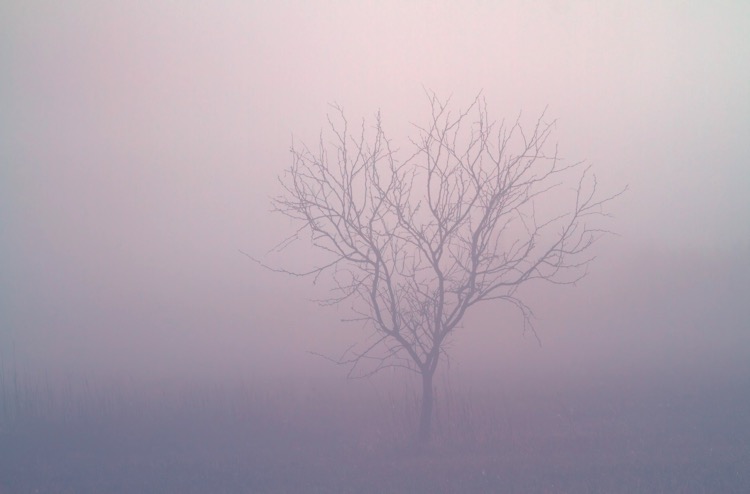
DPS ultimate landscape photography guide 13

Prime versus zoom lenses

Lenses come in two forms; prime and zoom. A prime lens has one fixed focal length, such as 35mm. A zoom lens has a focal range, such as 18-55mm. Prime lenses are often slightly sharper than zoom lenses. However, zoom lenses are much more versatile and allow you to carry fewer lenses in your bag.

I recommend that you start out with three zoom lenses that cover a focal range from 10mm to 200mm for maximum versatility. These are the three that I use for my landscape photography:

  • Wide Angle Zoom 10-18mm
  • Regular Zoom 18-55mm
  • Telephoto 55-210mm

DPS ultimate landscape photography guide 15

Tripod

For landscape photography, a tripod is an essential piece of gear. When you have lots of light, you might get away with hand holding your camera. But if you want to make images in low light situations such as sunrise or twilight, you’ll need a tripod so that you can use longer shutter speeds.

This is the purchase where everyone seems to make the same mistake. Buy cheap, buy twice. Most landscape techniques require long shutter speeds – sometimes very long. A bargain bin tripod is not strong enough to hold your camera steady with a telephoto lens on it. It’s not strong enough if there is any wind. It’s a waste of money. On the other hand, if you purchase a sturdy, well-built tripod from a reputable brand it can last you a lifetime.

Make sure you check the load capacity of your tripod and ensure it can handle your camera with its longest (heaviest) lens attached. Expect to spend as much money on your tripod as you did on your camera.

Filters

Many landscape photographers also carry filters, which can help you enhance your images. The two most commonly used are a Polarizing Filter and a Neutral Density (ND) filter. Graduated ND filters can be helpful as well, but become tricky to use if you do not have a clean, straight horizon.

  • Circular polarizing filter – This is an essential piece of equipment when photographing water to allow you to remove reflections and glare from the water’s surface and allow you to see through the water to any interesting rocks underneath.  It can also help enhance the richness of a clear blue sky, or remove reflections from windows and other shiny surfaces in urban settings.
  • Neutral density (ND) filter – If you decide to shoot a long exposure and it happens to be the middle of the day when there is a lot of light, you will need this gray-tinted piece of glass placed in front of your lens. It blocks some of the light from hitting your sensor, allowing you to use a slower shutter speed. These are sold in varying strengths, and can be stacked for different levels of light absorption.

Make sure to get the right filter size for your lenses. Better yet buy one for your biggest lens (look inside your lens cap for the filter size) and step down rings to your smaller ones.

Recommended Camera Settings
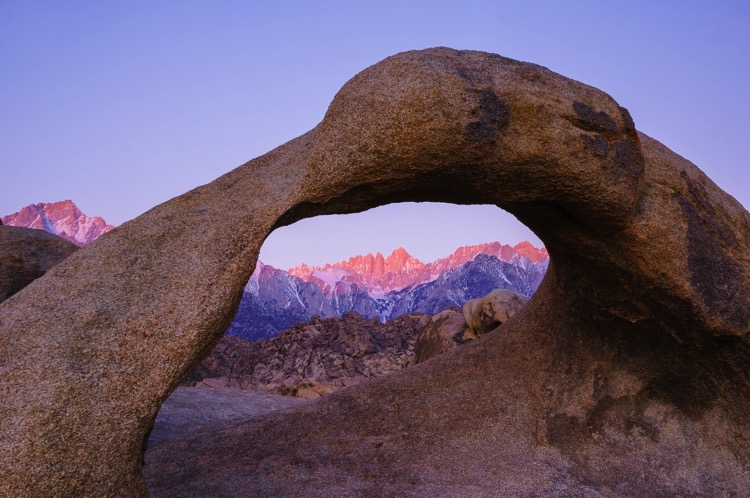
DPS ultimate landscape photography guide 19

Shooting in RAW

Most people are used to shooting pictures that come out as JPG (jay-peg) files since this is the default setting on most cameras. JPG is a compressed format meaning that some of the data the camera captures is discarded to make a smaller file size. Raw format, on the other hand, is completely uncompressed with no information thrown away.

What results from this is a digital negative – a large file that can only be accessed through Adobe Camera Raw, Lightroom, Photoshop and other compatible image editing software products. We’ll talk more about processing your photos later, but start off by capturing a RAW file so you have more information to work with when you process your photos.

Shooting Mode

Your camera will likely have a mode dial on the top where you can choose your shooting mode from one of the following; auto; aperture priority; shutter priority; program; or manual. For landscape photography, I highly recommend shooting in aperture priority mode, likely marked on your camera’s mode dial as “A” or “Av”.
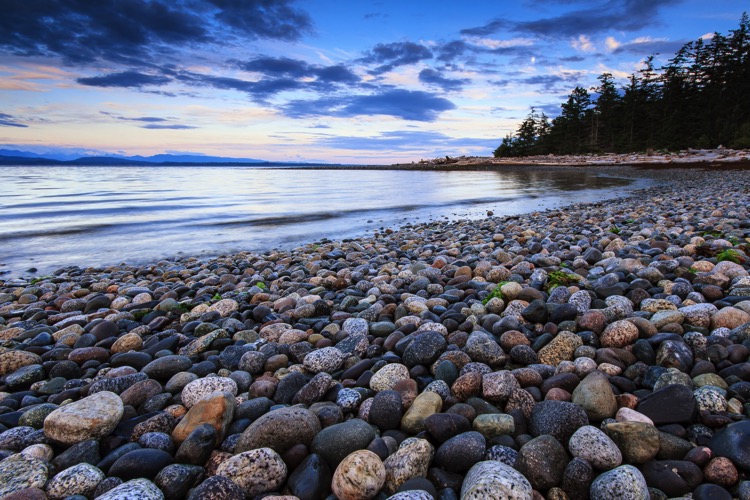
DPS ultimate landscape photography guide 30

The reason for using aperture priority is because aperture controls the depth of field in your image – the amount of the scene (in your image) that will be in focus. Generally, for grand landscapes, you will want everything from the foreground to the background sharp, so you’ll pick an aperture like f/11 or f/18. But sometimes, you might want only your subject to be sharp and everything else to be blurred and out of focus. For this, you might pick f/4 or f/5.6.

More information about how aperture affects depth of field is coming up in the chapter on exposure below.

Using aperture priority shooting mode allows you to make this choice based on your artistic vision and the camera will choose the corresponding shutter speed to give you a good exposure.

Metering Mode
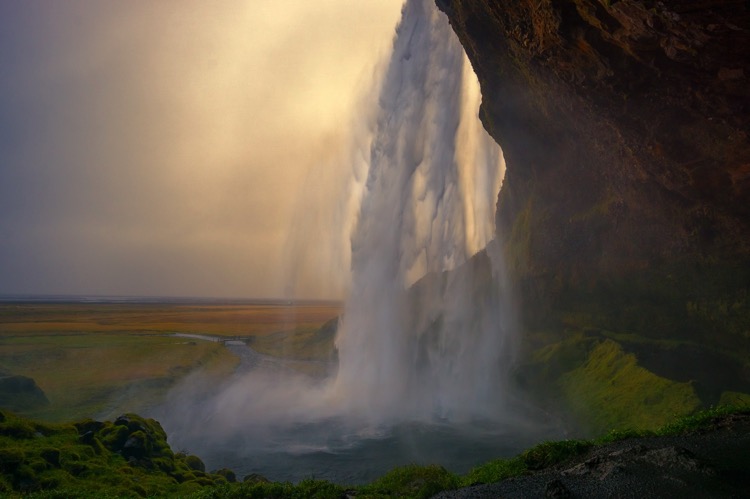
DPS ultimate landscape photography guide 27

Evaluative or Average metering is the most common metering mode to use in landscape photography because the camera reads the light information from the entire frame. This is your best bet most of the time when the highlights and shadows are spread relatively evenly throughout the scene.

However, if there are very dark blacks or very bright whites, this can throw your camera’s meter off. In this case, you might want to switch to Spot Metering. Using Spot Metering, your camera will take its reading based on one single spot in the frame, which you choose. Choose the most important part of the image, likely the main subject, and let the rest of the scene fall where it may.

Note: Just a word of caution. Make sure you are familiar with how your camera meter works and how to do Spot Metering before you attempt this. Remember, your camera meter will always try to measure for medium or 18% gray. Therefore, if you meter off something that is black or really light in tone, your camera will compensate and try and make it gray. So you will need to adjust accordingly by using Exposure Compensation. 
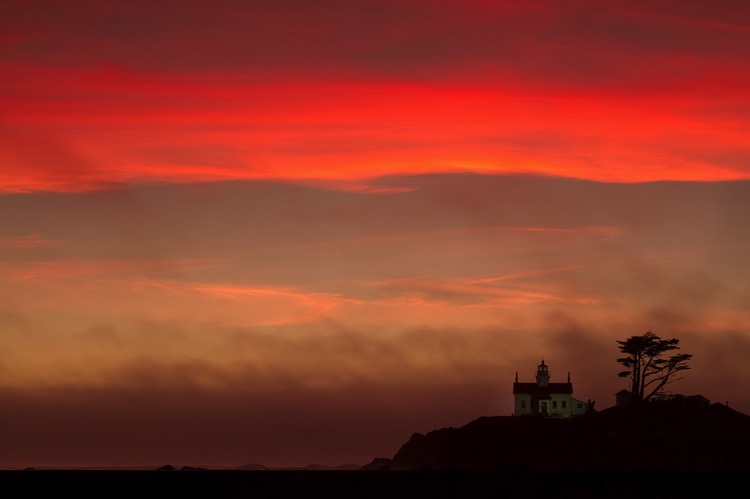
DPS ultimate landscape photography guide 22

Focus Mode

Your camera likely has at least four focus modes, they are; single shot autofocus; automatic autofocus; continuous autofocus; and full manual focus. If you have good eyes and focusing comes easy to you, use manual focus. For the rest of us, one of the autofocus modes is better.

For landscape photography, single shot autofocus is the best option because it will focus the camera once (and lock on) when the shutter button is pressed halfway down. The other focus modes are good when you have something moving in the frame that you want to lock on to, as you would with wildlife photography.

Location Scouting

Now that you have your equipment sorted out, you’re ready to do some shooting! But how do you find those specific spots where you can make images with impact?
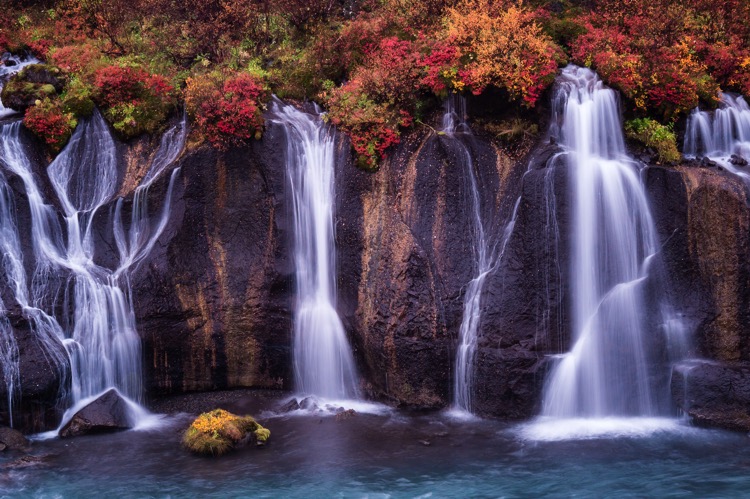
DPS ultimate landscape photography guide 26

The first step is to research the location to get a good overview of the place and see what kinds of scenes are on the menu. These days, my favorite tool for doing this type of research is Pinterest. Keyword searches on Pinterest will bring up loads of photos of any given location. You can create a Pinterest board, which is like a virtual scrapbook, where you can collect these images in one place for future reference.

The next step is to map out the specific locations you have chosen so you know how to get there on the ground. You can look on Google Maps or pick up a hard copy map at a visitor center.

Next, visit the location in person and have a walk around looking for good compositions. I like to do this during midday when I’m not likely to be photographing due to the bright, harsh, light. Finding your spot during the day means you will know exactly where to go and you’ll be ready during the limited hours on the edges of the day when the light is just right.
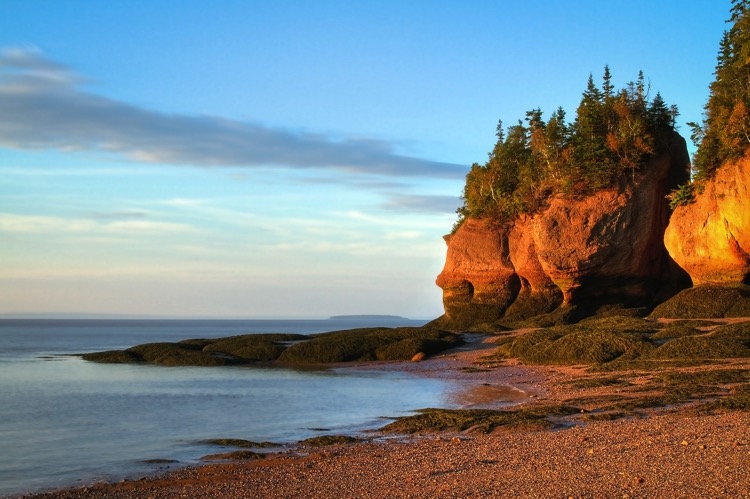
DPS ultimate landscape photography guide 28

Helpful apps

Speaking of good light, the final tool you can use in your location scouting is something that will tell you sunrise and sunset times, when moonrise and moonset occur, and the direction that those things will take place. This will help you immensely when thinking about the direction the light will be coming from on the edges of the day.

My favorite tool for this part of my research is an app called The Photographer’s Ephemeris. You can use it on your desktop or mobile device. It will tell you exactly what is happening in the celestial sky at a particular time. So if you want to get a photo of the full moon rising behind a bridge, you can find out when the full moon is, exactly when it will rise, its position in the sky and then it will calculate where you have to be to get the point of view you want.
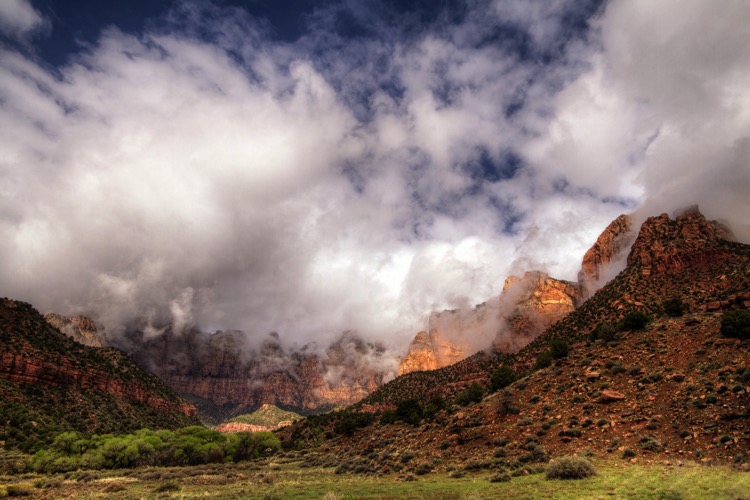
DPS ultimate landscape photography guide 36

Making the Most of Natural Light

Understanding natural light is a critical aspect of landscape photography. Even when you’ve done everything else right, if the light isn’t right for your scene, your photos are not going to look their best. That is not to say there is such a thing as “good light” and “bad light”. You just have to know what to do with various types of lighting situations.

Remember, you can change the direction of light simply by moving around your subject. Or, you can photograph subjects that are in the shade.
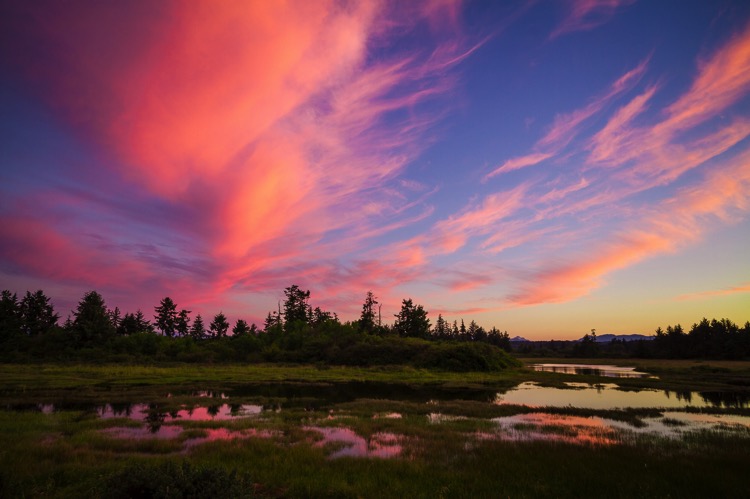
DPS ultimate landscape photography guide 20

Sidelight

Sidelighting occurs when light hits your subject on one side casting a shadow on the other. It is often thought to be the most pleasing type of light for landscape photography because the contrast between light and dark emphasizes texture and shape.

If you have a round object with light hitting it on the side, it will have a shadow on the other, and the gradation of light will emphasize the round shape. Similarly, subjects with textures will have shadows that serve to emphasize the texture. Without the shadows, the texture will be more difficult to convey in an image.
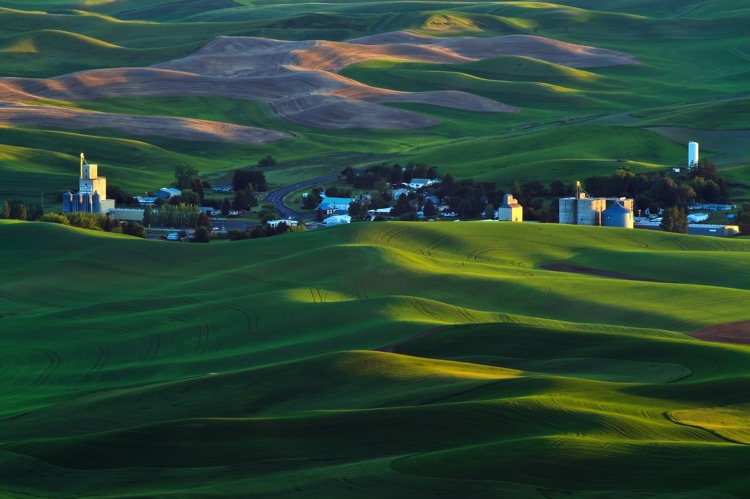
Ultimate landscape photography guide 01

In this photograph from the Palouse region in Washington, sidelight emphasizes the curves in the hillside.

Backlight

Backlight occurs when the light source is directly in front of you, hitting your subject from behind. It is a bit more difficult to create a good exposure in these kinds of high contrast situations, though.

Backlighting is wonderful when your subject is somewhat transparent, like the petals of a flower for instance, because it will make your subject appear to have an inner glow (image below left). This is especially effective when you have a dark background. In this situation, make sure you meter on your subject and allow the rest of the image to fall into shadow.

Ultimate landscape photography guide 02 Ultimate landscape photography guide 03

Backlighting is also useful when you have a subject with a great shape that you can make into a silhouette (image above right). To do this, meter on the sky portion of your frame so the sky will have a proper exposure and your subject will go completely black.

When you have backlight and you want to meter on a specific portion of the frame, this is a good time to use spot metering instead of evaluative metering mode. It’s a little bit more difficult but well worth the effort for the dramatic images you can create using this method.

Front Light

Front light occurs when the sun is behind you hitting your subject directly in front of you. This is my least favorite type of light because it is often intense and unforgiving causing a scene with a lack of texture and depth.

However, used at the right time it can be the best kind of light! When the sun is low in the sky, such as at sunrise and sunset, the light is not so harsh and it can cast a golden glow on your subject, especially when your subject is tall such as a mountain or a cityscape. The golden light will fall on the tallest part of the scene, casting its golden glow, while the rest of the scene remains in shadow creating a dramatic shot.
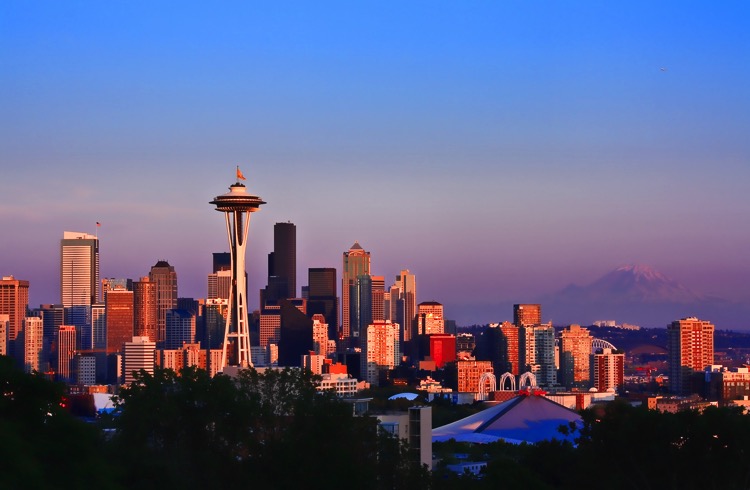
Ultimate landscape photography guide 04

Diffused Light

Diffused light happens on an overcast day or when your subject is in the shade. Under this type of light, your subject will have soft pastel colors and soft or no shadows. You will not get the same sense of shape and texture that you would under different types of lighting situations. As well, your scene will have very low contrast.

However, this is the best type of light for creating soft, gentle images. For example, flowers and colorful scenes work especially well under diffused light.
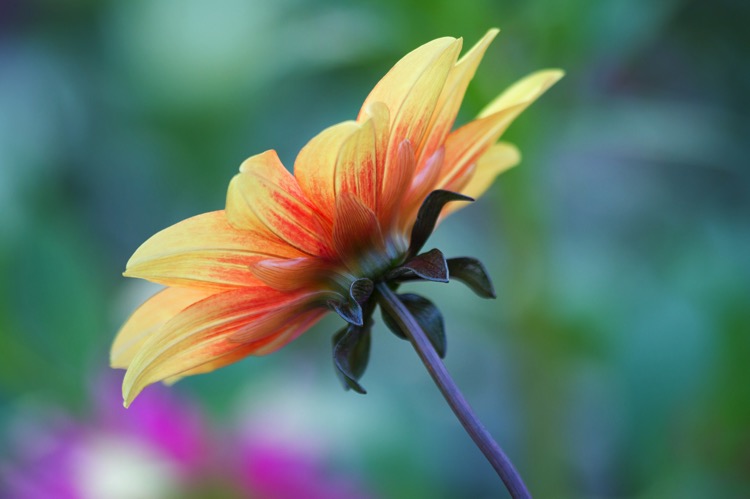
Ultimate landscape photography guide 05

But remember, when you have a bright overcast sky, it is best to exclude it from the frame and get in closer to your subject.

Getting a Good Exposure

Getting a good exposure means using a balanced aperture, shutter speed, and ISO so that you don’t have any areas of the frame that are too bright (known as blown out highlights). The problem is that if you have blown out highlights, there is nothing you can do in post processing to fix it. It will forever be a white spot. You may also want to make sure that you don’t have any areas that are too dark unless solid blacks are what you are after as in the example of creating a silhouette.

When you make an image, you can see the areas of light and dark using your camera’s histogram. Using a histogram is easy! It is simply a graph with the darks on the left and the brights or white on the right.
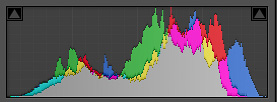
Ultimate landscape photography guide histogram good

All you really need to do is make sure there is not a spike on the right edge of the graph. If it spikes before the edge, that’s okay. You only need to be concerned if the spike touches the right edge. If your image is too bright, you can use your camera’s exposure compensation to reduce the brightness.

The Aperture is Key in Landscape Photography

So, how do you get the right exposure balance? For landscape photography, we are usually most interested in aperture because it affects the depth of field of the photo, so let’s start with selecting the correct aperture for the scene.

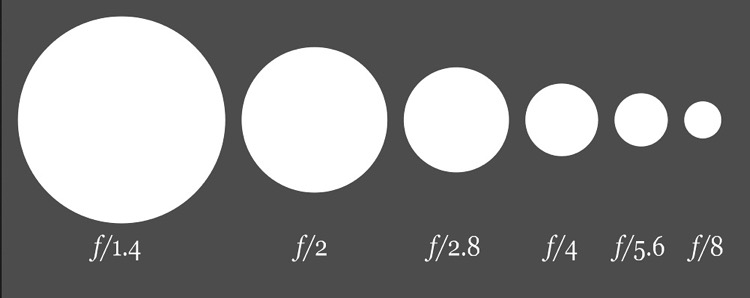
Aperture is the variable opening through which light travels to your camera’s sensor and its size is expressed in f-stops.

The smaller the f-stop number, the larger the opening. That’s kind of confusing, isn’t it? It’s because the f-stop number is actually a ratio. But I don’t want to get into too much mathematics here, just remember it’s like a fraction and 1/2 is bigger than 1/8 so f/2 is bigger than f/8.
Ultimate landscape photography guide aperture

The larger the opening the more shallow the depth of field. In other words, the amount of your scene that will be sharp, measuring from the object you focused on, is smaller.

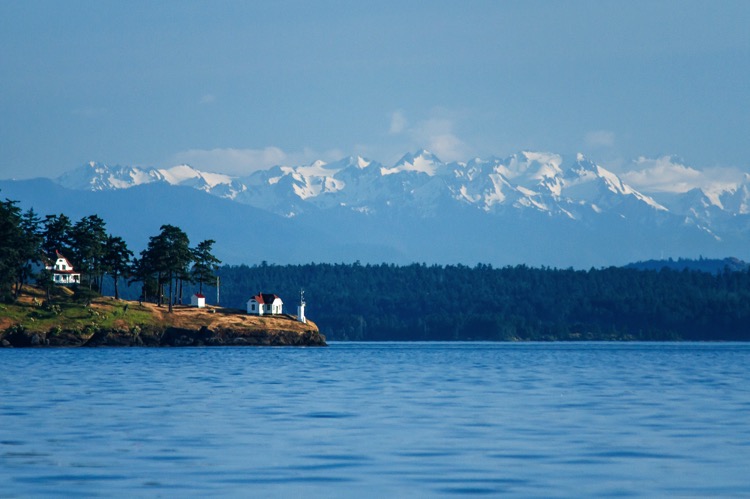
Here are three images that illustrate the effect of aperture on the depth of field.
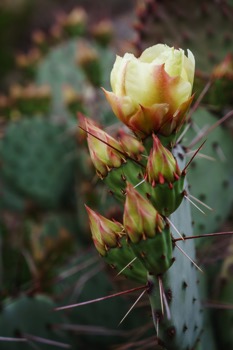
Ultimate landscape photography guide aperture f4point5Aperture: f/4.5 Ultimate landscape photography guide aperture f11Aperture: f/11 Ultimate landscape photography guide aperture f29Aperture: f/29

Once you have the aperture selected, the other two factors in exposure are ISO and shutter speed. ISO is the sensitivity of your sensor to light. A low ISO is good when you have lots of light. A high ISO might be necessary if you are shooting hand-held in low light situations. However, increasing the ISO causes noise in your image, so for landscape photography, we usually use the lowest ISO and if we need more light we reduce the shutter speed and use a tripod.

When you are in the field, set your ISO to 100. This is usually the lowest setting on most cameras. Then set your camera to aperture priority shooting mode and set the aperture you want for the depth of field you desire in the image. Then, the camera will calculate the appropriate shutter speed to create a balanced exposure. Remember to keep your eye on what that shutter is, because if it is any slower than about 1/100th of a second, you’ll need to use your tripod.

Composition Tips
DPS ultimate landscape photography guide 33

When you are just getting started in landscape photography, it can be hard to know what to include the frame to make a compelling composition. In this chapter, I’ll show a few different types of compositions to help get you started so you know what to look for in the field.

Of course, there are many more composition options than these to explore, and some that you’ll discover on your own through experimentation. But this will give you a starting place on which to base your own vision in photography.

Rule of Thirds

The rule of thirds is probably the most well-known “rule” in photography. I like to think of it as more of a guideline. As you grow in your photography, you’ll probably start to break these rules and come up with your own unique ways of composing images. But you have to understand the rule before you can break it.

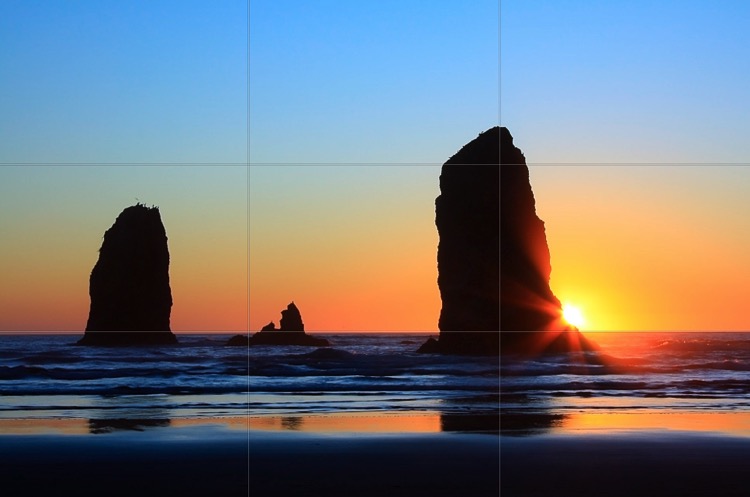
Using the rule of thirds, the frame is divided into three vertical and three horizontal sections, like a tic-tac-toe game. The idea is that your main subject should fall on one of the lines in order to create a dynamic and interesting composition. Locating your subject on the intersection of two lines is ideal.
Ultimate landscape photography guide rule of thirds

A centered horizon gives equal importance (visual weight) to both the sky and land portions of your image, and the viewer is left with no direction where to look. For example, by placing the horizon along the bottom third line, you will give more visual weight to the sky area and direct the viewer’s eye to that area. A higher horizon placement will have the viewer’s eye going to the bottom of the image where there is more emphasis.

Symmetry

Symmetry is the exact opposite of the rule of thirds. A symmetrical composition has the center of the subject exactly in the middle of the frame with equal weight on either side. The two sides of the image are often a mirror image of each other. This works especially well with subjects that are naturally symmetrical like plants or architecture.

Another way to use symmetry is to put a shoreline in the center of the frame, especially when you have a reflection to balance out the image.
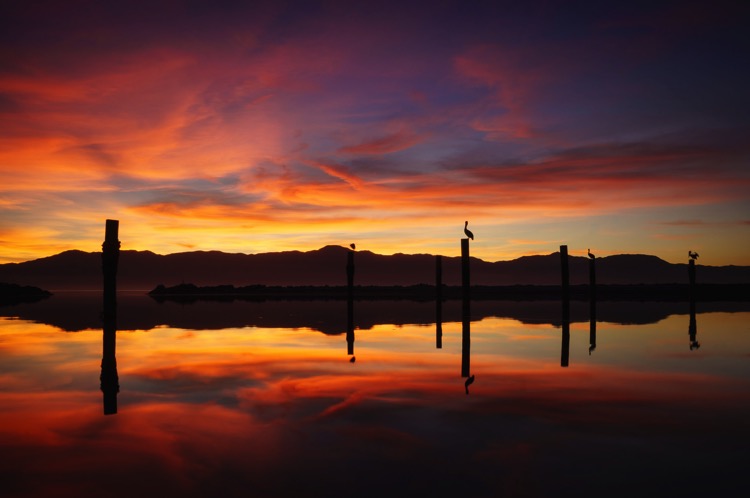
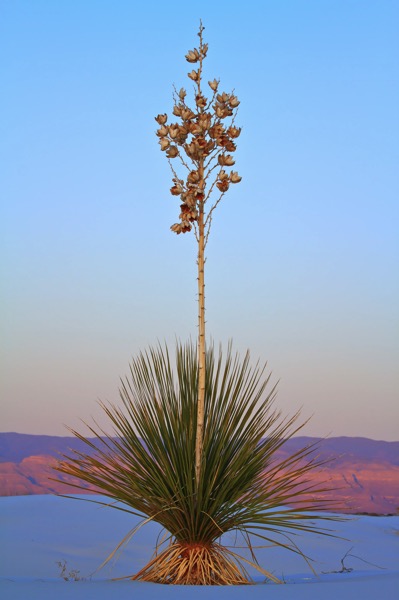
Ultimate landscape photography guide 06

DPS ultimate landscape photography guide 29

Leading Lines

Another effective type of composition uses leading lines to draw the viewer’s eye to the main subject. The lines can be man-made such as roads, fences, or bridges, or they can be natural elements such as rivers, shorelines or rocks.

Usually, the lines start from the bottom of the frame and move upward and inward to draw the eye into the image, connecting the foreground and background, and often leading to the main subject.

In the field, when you find a subject you want to work with, take a look around and see what lines you can use in your composition that would lead up to the subject creating depth and perspective in your image.
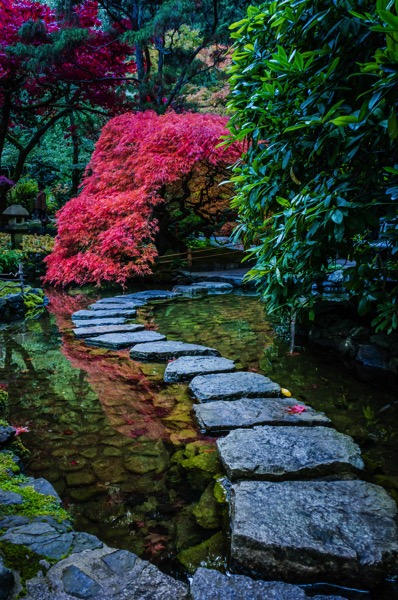
Ultimate landscape photography guide 07

Processing Your Photos

Processing your photos is an important part of digital photography. In the old film days, the lab technicians who processed the negatives and printed made a lot of decisions about color and contrast that affected the final outcome. These days, that job has become yours. If you find that your photos look gray and dull, it’s probably because you haven’t processed them.

When you shoot in RAW format, as mentioned earlier, you have collected the highest amount of data you can which will help you when it comes to processing. You’ll need to use Adobe Camera Raw, either on its own or within Lightroom, Photoshop or other Raw compatible software.

I recommend that you go with Lightroom. Not only does Lightroom include Adobe Camera Raw for processing your photos, but it also provides an excellent way to keep your photos organized and accessible. I do all of my basic processing in Lightroom and only use Photoshop if I want to do something unusual with my image.

Note: check out the dPS course Lightroom Mastery here.
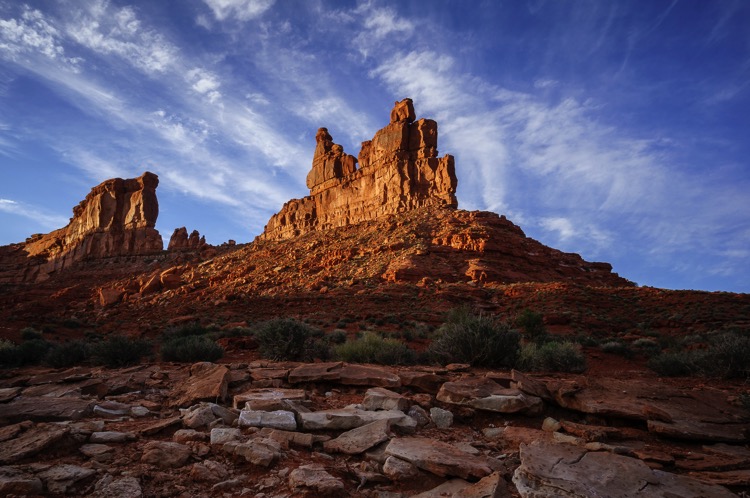
DPS ultimate landscape photography guide 37

Using the sliders in Adobe Camera Raw, you can make subtle adjustments that will have a huge impact on the end product. For most of my images, I make adjustments to the following settings:

  • White Balance
  • Contrast
  • Vibrance and Saturation
  • Sharpening
  • Noise Reduction
  • Cropping

A little processing can go a long way. With solid ingredients like good composition and effective use of light, a little processing can turn a good image into a great one.

Taking it to the Next Level

If you want to take your landscape photography to the next level, beyond just snapshots and postcard-like images here are a few places to start, and links to articles on this topic in more depth.

Add a Foreground Element

One of the biggest hurdles in photography is the fact that our majestic three-dimensional scene is rendered into a mere two-dimensional image, and the physical depth that we experience in real life is lost. To resurrect this spacious feeling, we can create the illusion of depth where there is none, by using strong elements in the foreground.

Read more about how to add a foreground element to your images here: How to Use Foreground to Create Depth in Your Images.
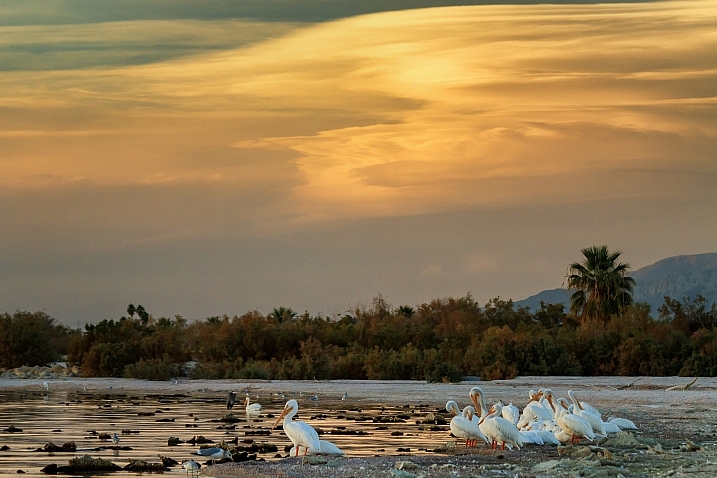
Ultimate landscape guidebook foreground

Use Shadows to add Depth to Your Images

In music, they say the spaces between the notes are just as important as the notes themselves. Similarly, in photography, it is the spaces that are not in the light that can add impact to an image. Shadows help tell a story and enhance the mood and visual power of a photograph. In fact, they can be so interesting, that they “overshadow” the subject itself!

By focusing your attention on the shadows, you can create beautiful compositions full of contrast, form, and minimalist simplicity. An object and its shadow will strengthen each other. Sometimes you might even want to cut the object out entirely, and play with capturing only the interesting shadows that are cast by it.

Read more about how to use shadows in your images here: Add Impact to Your Photos by Including Shadows.

Summary

DPS ultimate landscape photography guide 32 DPS ultimate landscape photography guide 25

Landscape photography can be a fun and rewarding endeavor. Use these tips as a starting point for your journey and continue exploring this wonderful world and all it has to offer and share your images with others to enjoy as well.

Remember, photography is a journey, so continue to learn and grow as a photographer. Look back on your work from a year ago and see how far you’ve come. Then think about what you can learn and master next. Have fun, and enjoy the ride.


Download “The Ultimate Guide to Landscape Photography”

We respect your email privacy

googletag.cmd.push(function() {
tablet_slots.push( googletag.defineSlot( “/1005424/_dPSv4_tab-all-article-bottom_(300×250)”, [300, 250], “pb-ad-78623” ).addService( googletag.pubads() ) ); } );

googletag.cmd.push(function() {
mobile_slots.push( googletag.defineSlot( “/1005424/_dPSv4_mob-all-article-bottom_(300×250)”, [300, 250], “pb-ad-78158” ).addService( googletag.pubads() ) ); } );

The post The dPS Ultimate Guide to Landscape Photography by Anne McKinnell appeared first on Digital Photography School.


Digital Photography School

 
Comments Off on The dPS Ultimate Guide to Landscape Photography

Posted in Photography


Weekly Photography Challenge – Bicycles

29 Nov

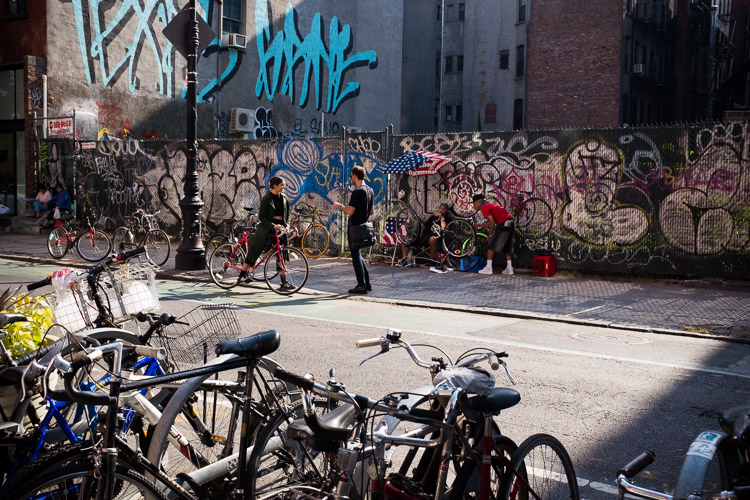
We already saw some other photographers’ images of bikes here.

Martin Fisch

By Martin Fisch

·júbilo·haku·

By ·júbilo·haku·

Weekly Photography Challenge – Bicycles

Now it’s your turn. There are bikes everywhere in all different shapes, sizes, and colors. Go find some interesting ones and photograph them. Think outside the box of the usual shots, go macro, shoot a shadow, process it in black and white.

Thomas Hawk

By Thomas Hawk

Robert Couse-Baker

By Robert Couse-Baker

R. Nial Bradshaw

By r. nial bradshaw

Share your images below:

Simply upload your shot into the comment field (look for the little camera icon in the Disqus comments section) and they’ll get embedded for us all to see or if you’d prefer, upload them to your favorite photo-sharing site and leave the link to them. Show me your best images in this week’s challenge. Sometimes it takes a while for an image to appear so be patient and try not to post the same image twice.

Share in the dPS Facebook Group

You can also share your images on the dPS Facebook group as the challenge is posted there each week as well.

googletag.cmd.push(function() {
tablet_slots.push( googletag.defineSlot( “/1005424/_dPSv4_tab-all-article-bottom_(300×250)”, [300, 250], “pb-ad-78623” ).addService( googletag.pubads() ) ); } );

googletag.cmd.push(function() {
mobile_slots.push( googletag.defineSlot( “/1005424/_dPSv4_mob-all-article-bottom_(300×250)”, [300, 250], “pb-ad-78158” ).addService( googletag.pubads() ) ); } );

The post Weekly Photography Challenge – Bicycles by Darlene Hildebrandt appeared first on Digital Photography School.


Digital Photography School
 
Comments Off on Weekly Photography Challenge – Bicycles

Posted in Photography


The good, the bad and the ugly of aerial photography – part 3: equipment

26 Nov

In previous articles I’ve discussed the advantages of aerial photography and shooting from a helicopter as opposed to shooting from a light plane. But are there any special considerations with regard to equipment when shooting from the air?

Since we’ve already established that it’s the superior choice (at least in my opinion), let’s concentrate on the helicopter first. An open door gives the photographer a vast range of angle options, and selecting the equipment can be difficult at first. You can find many good compositions with ultra-wide angles all the way to telephoto lenses.

From my personal experience, the majority of my shots were taken with the wider end of a 24-70mm lens, i.e. If you only take one camera body (and don’t plan to switch lenses on the helicopter), take either a 24-70 or an ultra-wide such as a 16-35. Remember that an ultra-wide might come in handy at times, but when a need for longer focal length comes, it might lack the reach.

Naturally, lens selection also depends on the subject: if you know you’ll be shooting grand landscapes, use a wider focal length. If you’re interested in capturing detail or if you’re limited in your ability to get close to the subject, use a longer lens.

From high up, you don’t always need an ultra-wide lens to capture grand landscapes. This image was shot at 46mm.

Sussusvlei, Namibia

I highly recommend taking 2 camera bodies to an aerial shoot. If you do that, you can use another lens without switching it in midair, which can be complicated, not to mention extremely dangerous in case it goes flying out of the open door or window. The extra lens can be an ultra-wide but I personally prefer a telephoto. With a longer lens you can really delve into the fine detail of your subject, which might be hidden when shooting from the ground, and capture unique perspectives and interesting compositions.

My favorite telephoto lens is the Canon 70-300mm F4-5.6L IS, and I found myself shooting on the long end of the zoom quite a bit. The main advantage for me is that even though you’re flying hundreds of meters above the landscape, you can really get close and intimate with it when using a long lens.

When shooting from a plane, my recommendation is a 24-70 and a telephoto. Anything wider will capture parts of the plane, such as a wing or an engine, most of the time, which renders it almost useless.

At 176mm focal length, the Telephoto lens gave me a chance to capture the details on the erupting lava. Flying any closer was impossible since the air above the lava flow was so warm it made the helicopter tremble.

Holuhraun, Iceland

Once on the helicopter, you will most likely fasten the camera straps to a dedicated part in the seat belt. While this keeps the equipment from falling from the heli, you might finds straps getting tangled after going back and forth between camera bodies, which could in turn cause you to miss good shots. Try to be aware of this, and always make sure the straps are disentangled when time comes to shoot. The entanglement problem is also the reason that while it is possible to take 3 bodies, it’s not recommended.

Space in a light plane can be tight, so often you’ll only use one body. I would use a 24-70mm in that case. 

Greenland

Forget about using square filters, or anything else that can fly off and hit one of the rotors. It might feel calm inside, but try to take your hand out of the cabin and you’ll feel the enormous wind strength out there. There’s no reason to risk your life, and with today’s high-DR cameras you can compensate for global contrast when post processing the image. A polarizer is also a bad idea, as it can substantially darken the image and require a slower shutter speed or higher ISO.

Even high global contrast can be balanced with today’s high-DR sensors.
The Lofoten Islands,

Arctic Norway

One last thing to mention regarding gear is clothing. It can get cold up there, and while I was able to wear a t-shirt when shooting aerials in Namibia, in the Arctic I needed full thermal gear – the most important items were the hat and gloves. There were times my hands were totally devoid of all sensation and I had to stop shooting due to the cold. Be ready for this and try to use gloves that protect your hands from cold winds while allowing you to operate the camera.

In the next article in this series, I’ll talk about technique and parameters for aerial photography.


Erez Marom is a professional nature photographer, photography guide and traveler based in Israel. You can follow Erez’s work on Instagram, Facebook and 500px, and subscribe to his mailing list for updates.

If you’d like to experience and shoot some of the most fascinating landscapes on earth with Erez as your guide, you’re welcome to take a look at his unique photography workshops around the world:

Land of Ice – Southern Iceland
Winter Paradise – Northern Iceland
Northern Spirits – The Lofoten Islands
Giants of the Andes and Fitz Roy Hiking Annex – Patagonia
Tales of Arctic Nights – Greenland
Saga of the Seas and The Far Reaches Annex – The Faroe Islands
Desert Storm – Namibia

More in This Series:

  • The good, the bad and the ugly of aerial photography – Part 1: Why shoot aerials?
  • The good, the bad and the ugly of aerial photography – Part 2: Aircraft

Selected Articles by Erez Marom:

  • Parallelism in Landscape Photography
  • Behind the Shot: Dark Matter
  • Mountain Magic: Shooting in the Lofoten Islands
  • Behind the Shot: Nautilus
  • Behind the Shot: Lost in Space
  • Behind the Shot: Spot the Shark
  • Quick Look: The Art of the Unforeground
  • Whatever it Doesn’t Take
  • Winds of Change: Shooting changing landscapes
  • On the Importance of Naming Images

Articles: Digital Photography Review (dpreview.com)

 
Comments Off on The good, the bad and the ugly of aerial photography – part 3: equipment

Posted in Uncategorized


Weekly Photography Challenge – Fire

24 Nov

First, check out these stunning images of fire!

Now if that hasn’t got you melting already, how about this one?

Neil Howard

By Neil Howard

Weekly Photography Challenge – Fire

Fire comes in many forms:

  • Campfire
  • Bonfire
  • Match flame
  • Candles
  • Sparklers
  • Volcano
  • Forest fire (not a good thing!)
  • Fire spinning (if you attempt this please take the proper precautions and read this first)
  • Fire poi and other fire spinning type artists
  • Fire breathing dragons (if you find one let me know!)
  • A lighter
  • Burner on a gas stove
  • A torch or welder’s flame (make sure to use welder’s goggle to view and shoot with if you do this!)
Dwiforr

By dwiforr

So your challenge this week is to SAFELY find and photograph some fire. It could be as simple as a few sparklers from the dollar store, or more elaborate. But please put your safety, and the safety of the people and properties around you first. Only do what is safe.

Share your images below:

Simply upload your shot into the comment field (look for the little camera icon in the Disqus comments section) and they’ll get embedded for us all to see or if you’d prefer, upload them to your favorite photo-sharing site and leave the link to them. Show me your best images in this week’s challenge. Sometimes it takes a while for an image to appear so be patient and try not to post the same image twice.

Share in the dPS Facebook Group

You can also share your images on the dPS Facebook group as the challenge is posted there each week as well.

Lisa Ouellette

By Lisa Ouellette

Nan Palmero

By Nan Palmero

Paul Hudson

By Paul Hudson

Aotaro

By aotaro

googletag.cmd.push(function() {
tablet_slots.push( googletag.defineSlot( “/1005424/_dPSv4_tab-all-article-bottom_(300×250)”, [300, 250], “pb-ad-78623” ).addService( googletag.pubads() ) ); } );

googletag.cmd.push(function() {
mobile_slots.push( googletag.defineSlot( “/1005424/_dPSv4_mob-all-article-bottom_(300×250)”, [300, 250], “pb-ad-78158” ).addService( googletag.pubads() ) ); } );

The post Weekly Photography Challenge – Fire by Darlene Hildebrandt appeared first on Digital Photography School.


Digital Photography School
 
Comments Off on Weekly Photography Challenge – Fire

Posted in Photography


8 Advanced Street Photography Tips to Get You to the Next Level

23 Nov

In photography, teaching and learning can only get you so far. At some point, you will get to a skill level where it’s up to you to put in the time and effort to continue improving. However, dedication and self-learning aside, here are some advanced street photography tips that I think can help you significantly improve your skill level in this area.

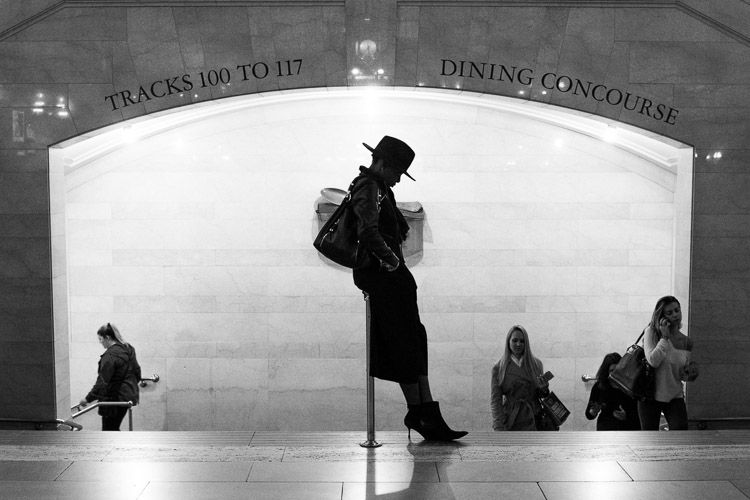
Grand Central Woman, NYC

1. Use your eyes instead of the viewfinder

When photographing, it is very common for people to look straight into the viewfinder and forget about the world around them, but this can make street photography tougher. Your vision through the viewfinder is hindered significantly, and that can hurt your ability to capture spontaneous moments. You need to see everything that is happening around you. This will help you to anticipate the special moments that are about to occur in front of your camera.

Your eyes are the real viewfinder, and you will be able to notice much more if you use them. Scan the area and look for subjects that are both near and far. Wait until you notice something with your eyes, then put your viewfinder to your eye to capture the moment. If you start with your head in the viewfinder, by the time the moment happens, your ability to notice it will be a half-second too slow.

2. Embrace spontaneity

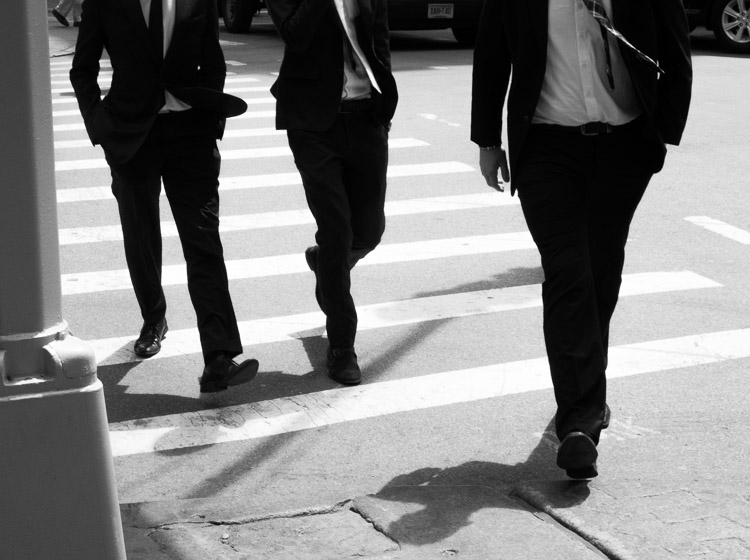
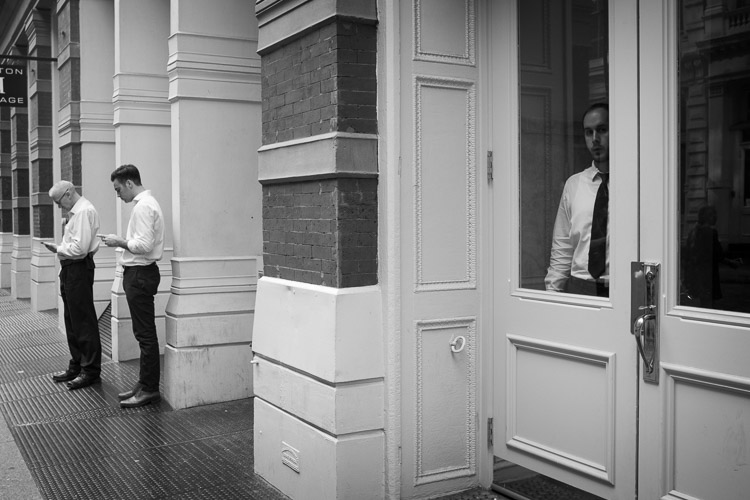
Suits, SoHo, NYC

This was one of the early tips that Garry Winogrand received in his photography education that set him on a path to become one of the most renowned photographers of all time. You should certainly spend a lot of time thinking about your work and what you like to shoot, but when you are out there going through the motions, embrace your gut feelings. Instead of worrying about every little detail and thinking about if you are doing a good job or not, put that all aside and have fun.

There is no need to worry about what other people will think. If you feel like there might be a chance for a good photograph, then go for it, no matter how weird the image may be. Don’t let your brain talk you out of it. That gut feeling exists for a reason, so use it to your advantage. If you use your instincts and shoot confidently, that will show in your photographs. They will feel more real and more you. Of course, you will probably take more bad photographs as well, but the good ones will be that much better. Trust your gut.

Keep in mind that some people may take this suggestion too far and machine-gun fire their camera every time they have an inkling that there’s a good photograph. That’s taking this tip too far. Turn off continuous shooting and make sure that you are able to recognize and capture tha moment with a shot or two.

3. Think about how your photos are going to age

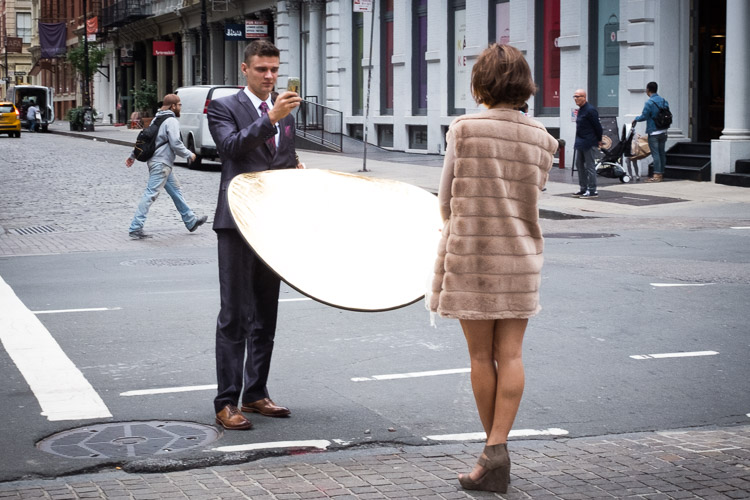
Cellphone Fashion Shoot, Soho, NYC.

It is important to think about your work in a historical context. Think about classic photographs and what makes them special. Simple old photographs of window displays and fashions look incredible, but those photographs might have seemed very ordinary back then. If you could go back in time to photograph, what you might see as interesting then would probably be much different than what most photographers were shooting at that time.

What about your life and area is going to be interesting in the future? What is going to change? Are people still going to be staring at their cell phones every second with huge headphones on and completely disconnected from reality? Who knows, maybe?

Try not to take anything for granted, and if you notice yourself disregarding something, then think about why you feel that way. Occasionally, these situations can make the best photographs.

4. Create themes and consistency in your photography

Cellphones, Greene Street, SoHo, New York

The more you shoot, the more you will notice that you are attracted to certain types of photographs. Find these consistencies when you are editing and embrace them. Over time, these ideas can blossom into full-fledged projects and books.

Group these images together into collections, and think about the type of photographs that you would like to add to them. Then the next time you come across a moment that fits into that category, you will be quick to notice and capture it. Each individual photograph is a piece of art, but a collection of photographs is its own work of art. Play with the order of your photographs and the meaning that comes out with different sequences of them.

Consistency does not mean that you can’t photograph different types of subject matter or in both color and black and white. You can be very diverse in how you shoot, and you can change and evolve as you go along, but you can still group these consistencies into projects that fit well together.

5. Repetition

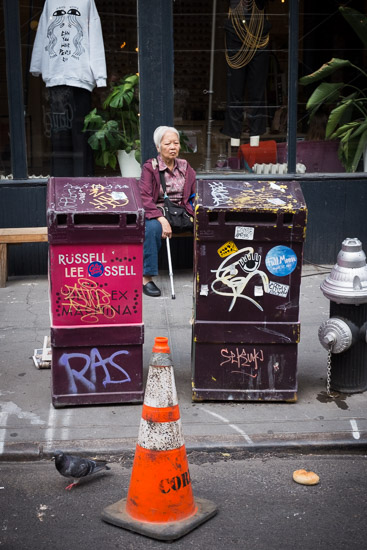
Lower East Side, New York.

The real key to improving your photography is through repetition. It is necessary to photograph frequently to keep your eyes sharp and your hand-eye coordination ready. Your instincts will improve. The more often you do it, the better you will be. Keep the rust away. Even the best photographers need to continually photograph to keep their skills up.

The more you learn to enjoy the act of photographing, the easier it will be to walk out the door to shoot more. Photography shouldn’t be about feeling inspired or uninspired. You do not need to feel inspired to photograph if you enjoy the act of walking. Create a plan for how often you will photograph, just like the gym, and stick to it. Over time, it will become routine and your enjoyment for it will continue to grow.

There is no need to worry about coming back with good photographs. That is going to happen, and you shouldn’t feel sad if you didn’t get anything good in a session. The good photographs will come, but if you feel frustrated too often, then that will affect how you photograph. Just enjoy the process of being out in the world doing something you love. The more you enjoy that, the better you will be.

6. Photograph where you live

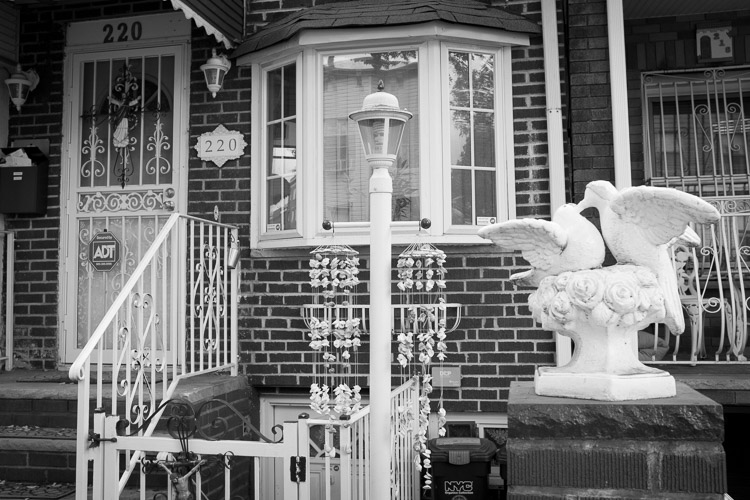
Brooklyn Home, NYC.

No matter where you live, whether it’s in the middle of a big city or in a small suburb, use that as a backdrop for a project. That is the area that you frequent the most, and know the best. Go to places that you think would be incredibly boring for photographs and figure out how to get a good photograph there. Don’t take things for granted. Absolutely anything can make a good and beautiful photograph. All it takes is dedication.

7. Emotion and gesture

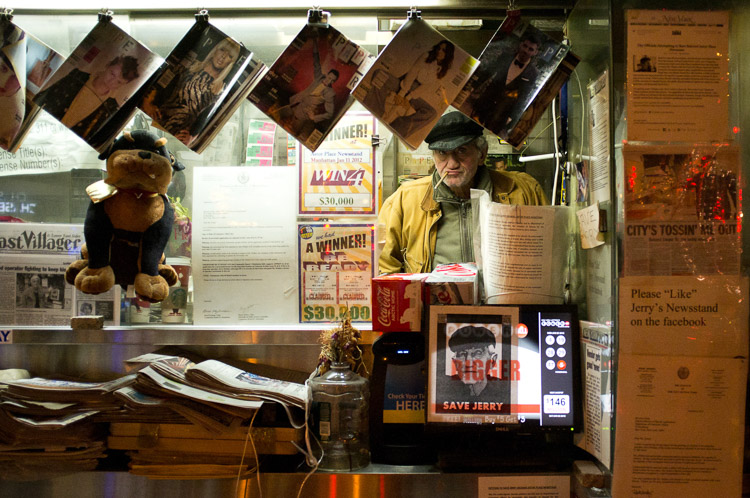
Jerry Delakas, Astor Place Newsman.

As photographers, our job is to pass on an idea or an emotion to the viewers of our work. How you do that is something for you to figure out. Search for feeling and emotion when you are shooting. Aim to create evocative photographs.

If you are photographing people, it is important to capture them when they are portraying an emotion. This can be shown in a facial expression, what they are doing, or the gesture of their body. Sometimes, you will capture a unique looking person with no emotion or gesture and that will ruin the photograph. Other times, you will capture someone that you did not think would be a good subject, but the emotion shown on their face make the entire photograph. When you photograph people, this emotion is vital to focus on.

8. Zone focusing

Lower East Side, New York City

Zone focusing is the toughest technical skill to learn in street photography, but it is very important to learn. At first, you will screw up a lot of photographs, but over time it becomes a more accurate way of obtaining sharp photographs.

Zone focusing works particularly well in busy areas, but it can be used any time once you get good at it. I tend to zone focus 60% of the time and autofocus the rest. If your subject isn’t moving and you have time to autofocus, it is always good to do that as it will guarantee perfect focus. But the rest of the time zone focusing can be the way to go.

What is zone focusing and how is it done?

This strategy of zone focusing is basically just using manual focus your camera and guessing the distance to subjects. Because of this, you will need a distance meter on either your lens or in your camera. You then want to turn your camera (or lens) to manual focus. Set the focus at a certain distance away from the camera. I prefer 8-10 feet, although I will do a smaller distance if I’m in a really busy area where people are closer together. Next, figure out how far that distance is away from your camera, and now you know that everything at that distance away from you will be sharp.

Zone focusing can be done well at very large apertures, even f/2, but it becomes much more difficult to do well. This focusing strategy works much better with apertures of f/16, f/11, and f/8 and a wide-angle lens such as 35mm. That will ensure there is a large depth of field in your image (make sure to also raise your ISO to achieve this and still keep an adequately fast shutter speed). Thus, there will be a significant area both in front and behind of the spot that you are focused on that will all be in sharp focus. This helps for situations where you miscalculate the distance when the perfect moment happens and it’s not exactly where are focused, and when you have multiple subjects at different distances that you want to be relatively sharp.

This is why it is always good to start off zone focusing in bright sunlight with a wide-angle lens. This will allow you to shoot at f/11 or f/16 so that a lot of your image will be sharp and you will barely have to worry. Set your focus to 8 or 10 feet away and pay attention to your subjects more than your focusing. It is a very freeing feeling, and the extra time you save not having to focus will aid you in catching those spontaneous and instantaneous moments that appear before you.

Conclusion

If you want even more street photography tips, check out: The Ultimate Guide to Street Photography (you can even download it as a PDF).

What things to you practice to up your street photography game? Please share your comments and images in the section below.


If you’d like to learn more about Street Photography, then please check out my ebook The Essentials of Street Photography.

googletag.cmd.push(function() {
tablet_slots.push( googletag.defineSlot( “/1005424/_dPSv4_tab-all-article-bottom_(300×250)”, [300, 250], “pb-ad-78623” ).addService( googletag.pubads() ) ); } );

googletag.cmd.push(function() {
mobile_slots.push( googletag.defineSlot( “/1005424/_dPSv4_mob-all-article-bottom_(300×250)”, [300, 250], “pb-ad-78158” ).addService( googletag.pubads() ) ); } );

The post 8 Advanced Street Photography Tips to Get You to the Next Level by James Maher appeared first on Digital Photography School.


Digital Photography School

 
Comments Off on 8 Advanced Street Photography Tips to Get You to the Next Level

Posted in Photography


DIY Photography Hacks and Accessories You Can Make at Home

22 Nov

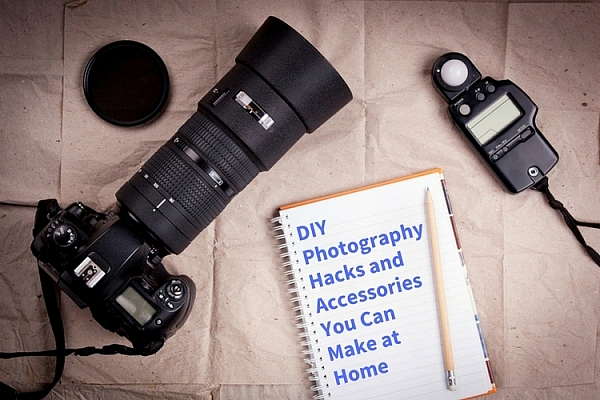
Everyone loves buying new gear, but not the bills that go with it. So why not try making some of your own accessories? Here are three videos that will give you some ideas for DIY photography hacks you can make at home.

some-diy-photography-hacks-and-accessories-you-can-make-at-home

This first one is from the guys over at COOPH (Cooperative of Photography). They present for you:

9 Easy Tricks and Hacks to Up Your DIY Photography Game

I won’t give it all away, you have to watch the video. But they make some pretty cool stuff including a bokeh wall, a shower curtain diffuser, and a pinhole camera.

6 DIY Filters from Sony

Sony brings us six ways to make DIY filters to soften and shape the light. These are fun!

And finally, . . .

7 Tricks everyone with a camera should know

googletag.cmd.push(function() {
tablet_slots.push( googletag.defineSlot( “/1005424/_dPSv4_tab-all-article-bottom_(300×250)”, [300, 250], “pb-ad-78623” ).addService( googletag.pubads() ) ); } );

googletag.cmd.push(function() {
mobile_slots.push( googletag.defineSlot( “/1005424/_dPSv4_mob-all-article-bottom_(300×250)”, [300, 250], “pb-ad-78158” ).addService( googletag.pubads() ) ); } );

The post DIY Photography Hacks and Accessories You Can Make at Home by Darlene Hildebrandt appeared first on Digital Photography School.


Digital Photography School

 
Comments Off on DIY Photography Hacks and Accessories You Can Make at Home

Posted in Photography


Weekly Photography Challenge – Architecture

16 Nov

Earlier I shared 27 images of architecture. Check them out and then get ready to find some of your own to shoot.

Farrukh

By Farrukh

Weekly Photography Challenge – Architecture

If you need some tips for shooting architecture, check out these articles:

  • Tips for Different Approaches to Architecture Photography
  • How to Create Stunning Architecture Photography by Painting with Light
  • 8 Quick Tips to Improve Your Photos of Architectural Details
  • The Most Under-Valued Editing Tool for Architectural Photos
  • 6 Tips to Take Your Architecture Photography to the Next Level
Frank Friedrichs

By Frank Friedrichs

* Polly *

By * Polly *

Miroslav Petrasko

By Miroslav Petrasko

Share your images below:

Simply upload your shot into the comment field (look for the little camera icon in the Disqus comments section) and they’ll get embedded for us all to see or if you’d prefer, upload them to your favorite photo-sharing site and leave the link to them. Show me your best images in this week’s challenge. Sometimes it takes a while for an image to appear so be patient and try not to post the same image twice.

Share in the dPS Facebook Group

You can also share your images on the dPS Facebook group as the challenge is posted there each week as well.

Jean-François Gornet

By Jean-François Gornet

Marc Cornelis

By marc cornelis

Never House

By Never House

googletag.cmd.push(function() {
tablet_slots.push( googletag.defineSlot( “/1005424/_dPSv4_tab-all-article-bottom_(300×250)”, [300, 250], “pb-ad-78623” ).addService( googletag.pubads() ) ); } );

googletag.cmd.push(function() {
mobile_slots.push( googletag.defineSlot( “/1005424/_dPSv4_mob-all-article-bottom_(300×250)”, [300, 250], “pb-ad-78158” ).addService( googletag.pubads() ) ); } );

The post Weekly Photography Challenge – Architecture by Darlene Hildebrandt appeared first on Digital Photography School.


Digital Photography School

 
Comments Off on Weekly Photography Challenge – Architecture

Posted in Photography


How to Improve Your Photography by Shooting Behind the Scenes of a Short Film Shoot

15 Nov

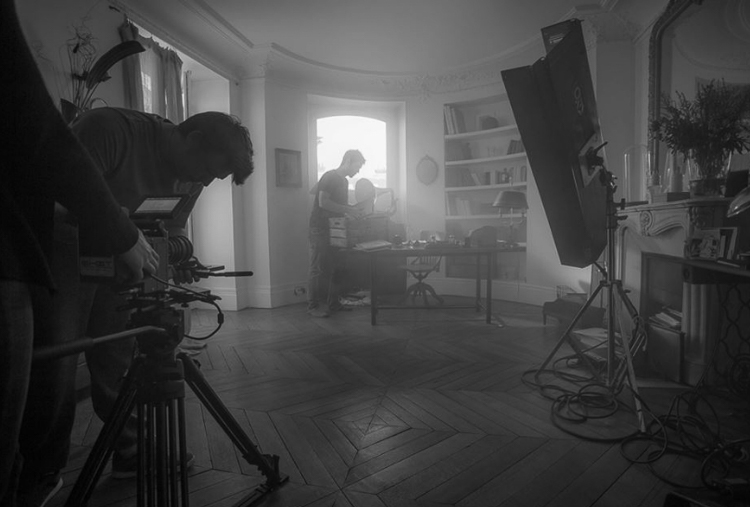
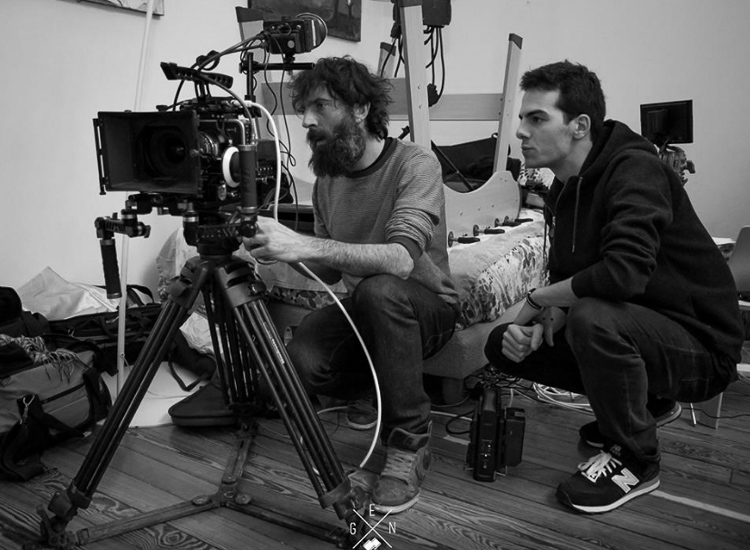
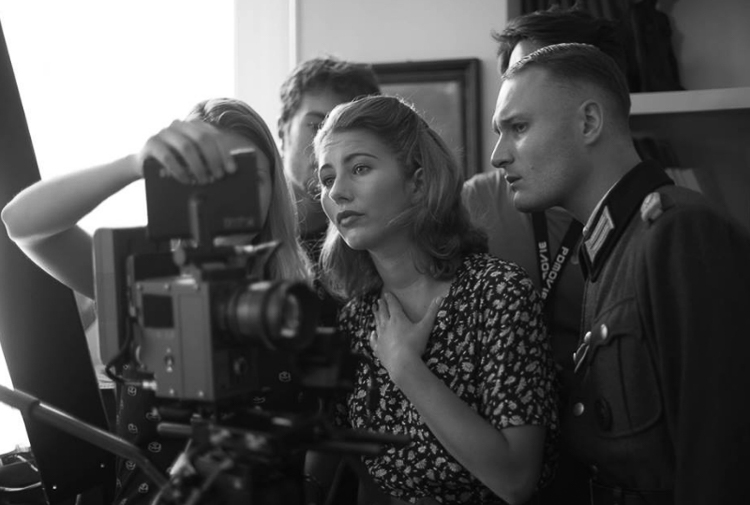
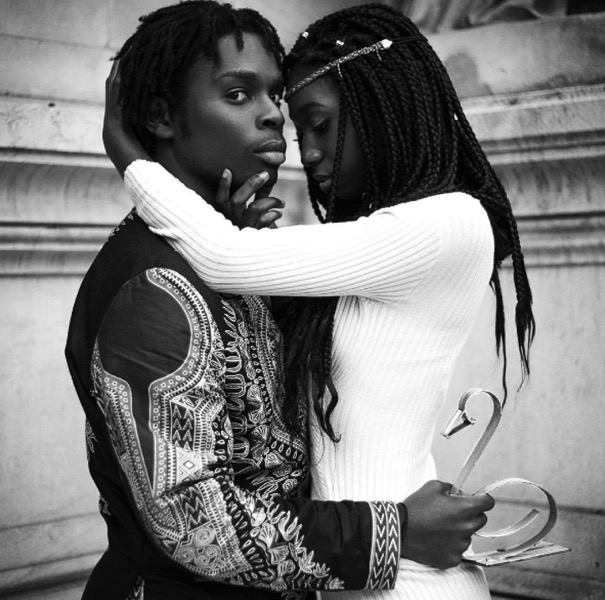
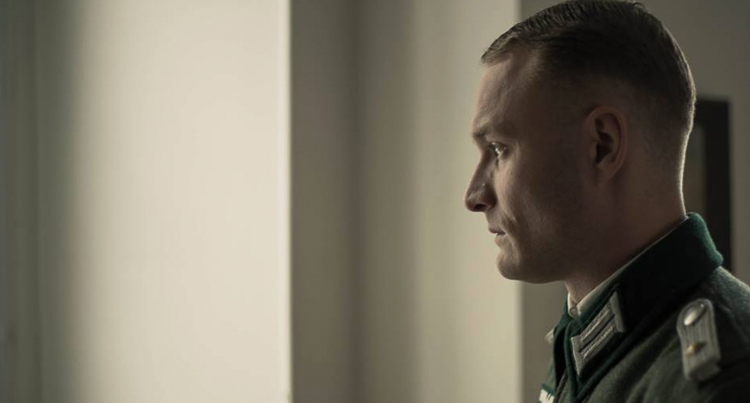
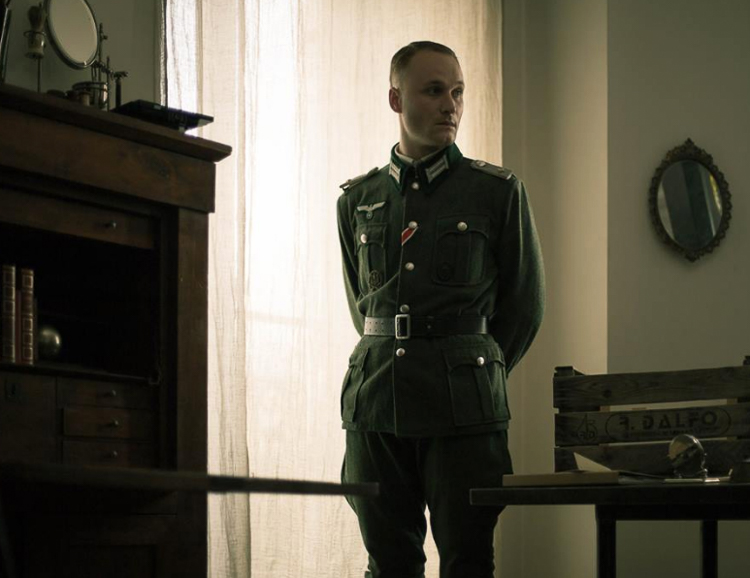
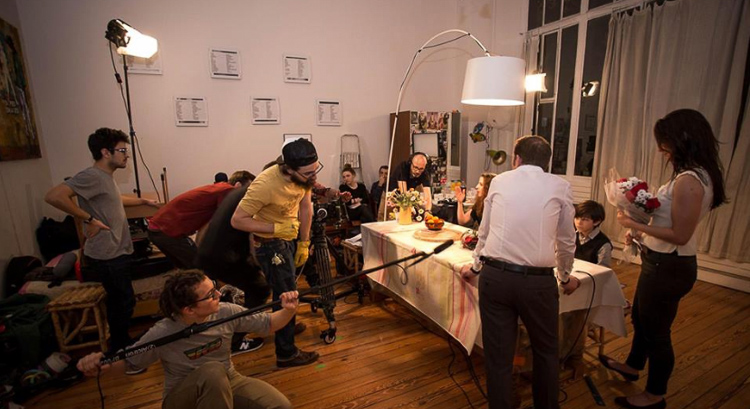
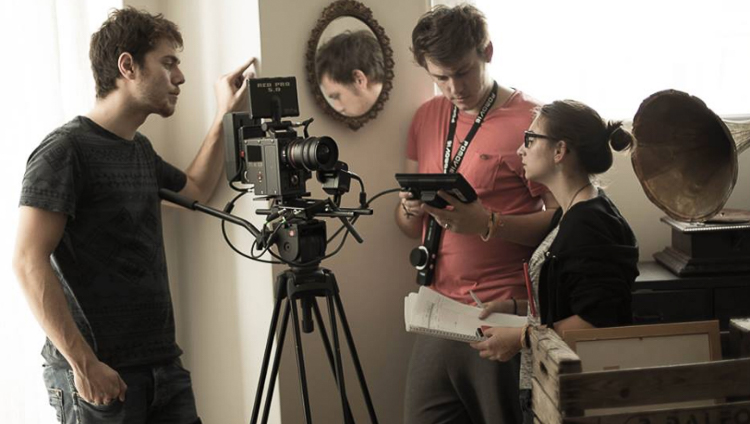
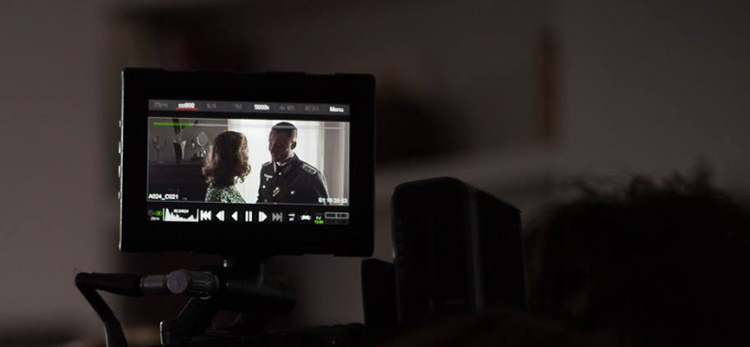
For any creative photographer, shooting behind the scenes of a short film sounds like a boring idea. That’s what I thought until my friend called me to shoot for one of his school projects (he is in a film school and had to shoot three sequences). I wasn’t going to refuse so I showed up that day and little did I know, I ended up learning so many things and got to meet a lot of people. The best part is that I took some of the best images since I first picked up my camera.

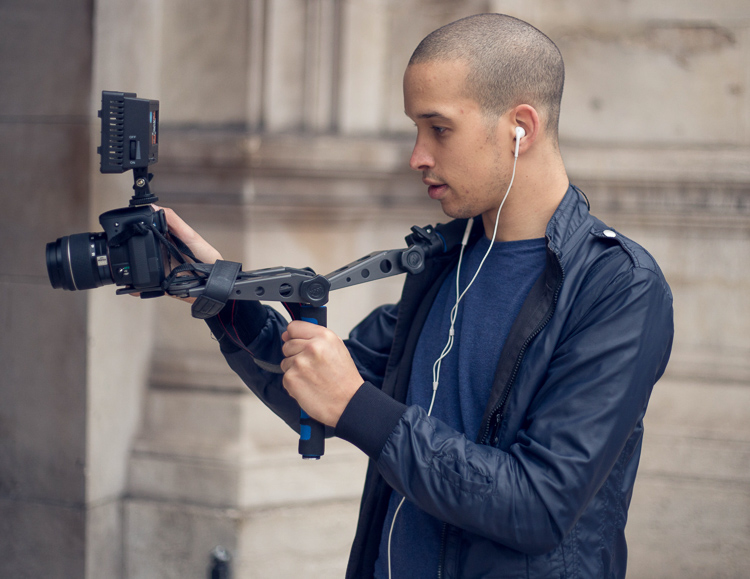
Article bts short film

Here are some reasons why you should consider shooting behind the scenes images and how it can benefit your photography:

#1 – It’s an opportunity for a photoshoot

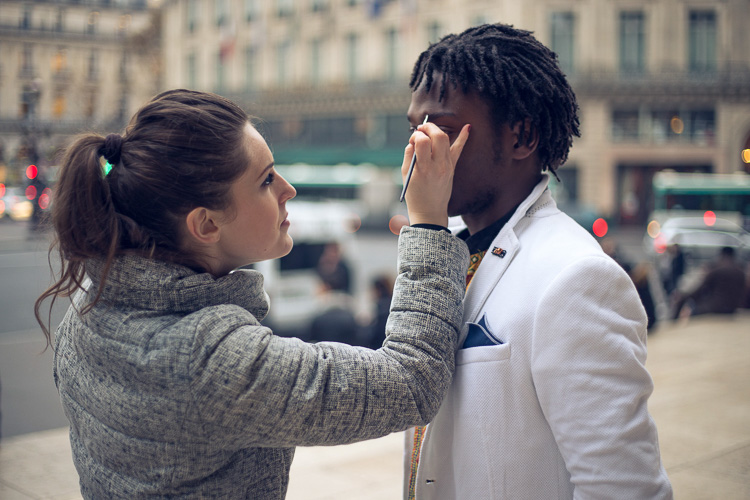
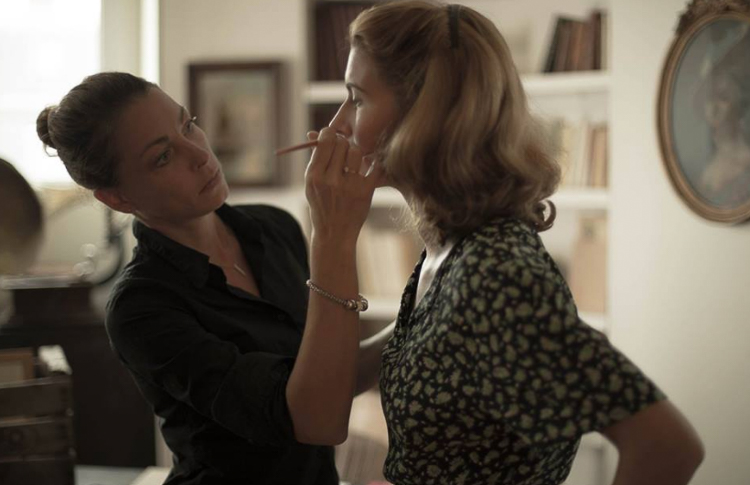
During a shoot for a short film, most of the actors are used to modeling and aren’t afraid of a camera. There is a director of photography who works on the lighting, and there is a make-up artist (of course there are more people on set who take care of the sound, costumes, assistant, etc.). A short film is basically a photo shoot but instead of taking images, people act and they are being filmed.

Actors have their costumes, they have had their hair and make-up done, and the director of photography just did the entire lighting for you. You have to see it as an advantage because they spend weeks planning and you’re just here to take beautiful photos with perfect conditions. I took my most beautiful images during short films and I would not have had been able to reproduce the scenes, costumes, and ambience on my own.

Article bts short film1

Article bts short film9

Even if you don’t really like the theme or would rather plan a photoshoot on your own, trying other people’s ideas can also put you out of your comfort zone and help you progress.

#2 – You’re surrounded with creatives

Working with other creatives has helped me so much. The best thing is the shared interest and not wanting to disappoint. Working with people who want to create gives you an extra boost and it pushes you to do your best. Most people on a film crew need these images. Looking at all the work they put into creating their projects, whether it’s for auditions to find the perfect actors, negotiating to borrow super expensive filming equipment, let’s not forget the make-up artists who stay on set all day, and all the detailed planning of the sequences. You can’t really disappoint with average images, so you automatically try to get stunner shots.

Article bts short film12

article-bts-short-film6

It’s quite difficult because you can only take images after the scenes when the actors are briefed by the film director. So they’re not actually posing for you, you just have to walk around without attracting any attention to get some nice images. Do not take any images when the video camera is rolling. The sound of your shutter can throw a whole scene away, and trust me you do not want to be in that situation. Just patiently wait for the director to say cut and then you can start taking your images.

Article bts short film13

When an actor is not included in a scene, you can kindly ask them to pose for you. Most of them need portraits for their website or their portfolios so they will most likely say yes. If they say no, just tell them that if they change their minds, you’re always fine with taking portraits.

Article bts short film3

Article bts short film5

#3 – You may get to work with these people on future projects

A whole day of filming can take up to eight hours or more. You’re going to meet a lot of people (depending on the size of the crew) and you will have a lot of time to get to know everyone. I would highly recommend socializing during the breaks over a cup of coffee and getting to know everyone. Most of them have the same passion as you, whether it’s the assistant or the sound team, you can speak about previous or future projects, have tech discussions about camera gear, you name it.

The actors are the most talkative, especially when they have a few hours without any scenes. Tell them about your photography. If you like their profile ask them if they would like to have a photoshoot with you in the coming weeks. The make-up artists are also great contacts to have, take their business card and contact them for your next photo shoot if you need someone for make-up and hair.

Article bts short film8

One make-up artist I met had a little girl who wanted to start modeling. We met a couple weeks later and I photographed her daughter. I ended up having a solid image that went directly into my portfolio.

Get your images ready to show them quickly

One tip I can give is to work on the images as soon as possible. Once these people see your images they will start spreading the word to other people in their school or entourage, share your images on social media, etc. (that is of course if you had good results). You will probably end up being Facebook friends with most of the crew and you can keep in contact that way.

Article bts short film2

Article bts short film11

Most of them will post on Facebook or directly contact you if they need a photographer. Once you do a good job, they will most likely call you back. Their friends will start calling you then you will meet other actors and make-up artists, and increase your contacts even more.

#4 – You will learn a lot of technical things

Most film crews use a lot of advanced equipment. By watching them set up everything, you will learn a lot about cameras, the choice of lenses, framing, lighting, sound, communication with actors, team work, tracking shots, and organization. Even if you’re passive in this process, open your eyes and try to absorb as much information as you can.

Article bts short film7

Article bts short film4

Most directors of photography will use different lighting techniques with some hair light, key light, harsh light, soft light, back-light with different modifiers. Pay attention to their work and try to replicate what you see later at home, you can also take images of the light set up to know exactly how each light is placed on set.

Conclusion

Those are just a few ways you can benefit from shooting behind the scenes on a film set. If you’ve had the experience of doing this, please share your thoughts and images in the comments below.

googletag.cmd.push(function() {
tablet_slots.push( googletag.defineSlot( “/1005424/_dPSv4_tab-all-article-bottom_(300×250)”, [300, 250], “pb-ad-78623” ).addService( googletag.pubads() ) ); } );

googletag.cmd.push(function() {
mobile_slots.push( googletag.defineSlot( “/1005424/_dPSv4_mob-all-article-bottom_(300×250)”, [300, 250], “pb-ad-78158” ).addService( googletag.pubads() ) ); } );

The post How to Improve Your Photography by Shooting Behind the Scenes of a Short Film Shoot by Yacine Bessekhouad appeared first on Digital Photography School.


Digital Photography School
 
Comments Off on How to Improve Your Photography by Shooting Behind the Scenes of a Short Film Shoot

Posted in Photography


5 Quick Tips to Help You Make a Fashion Photography Shoot Like a Pro

15 Nov

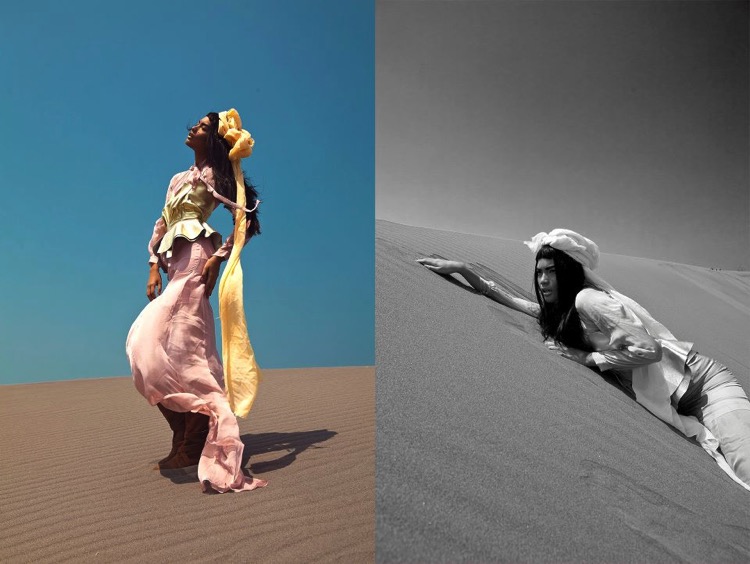
It might be the fabulous pages of magazines or it might just be that urge to create something chic. Either way, we are now living in this digital era where fashionable shoots are just around the corner. Hashtag #OOTD (outfit of the day). But that’s where the similarity ends. Planning and executing a fashion photography shoot takes more than that.

Fashion shoot photography

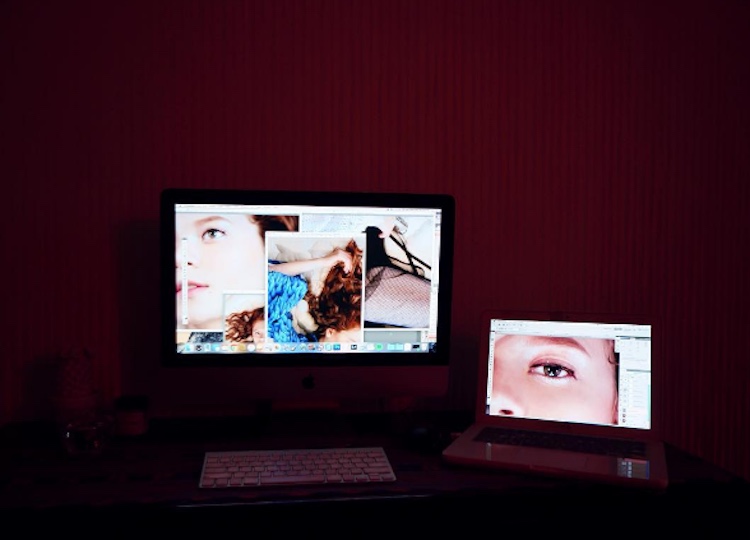
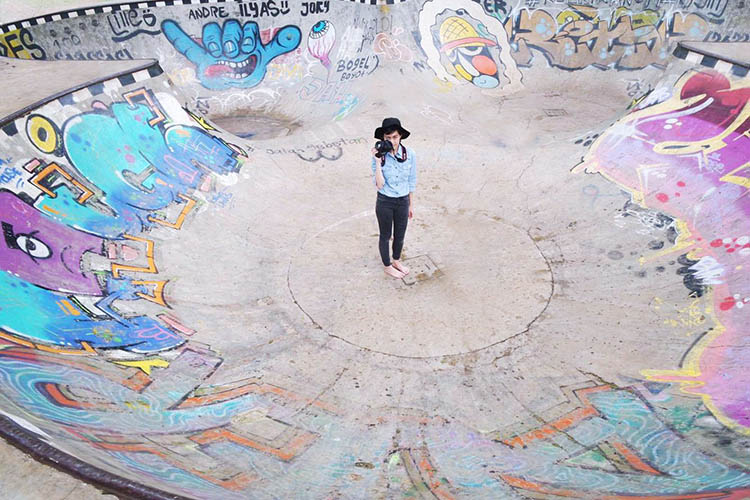
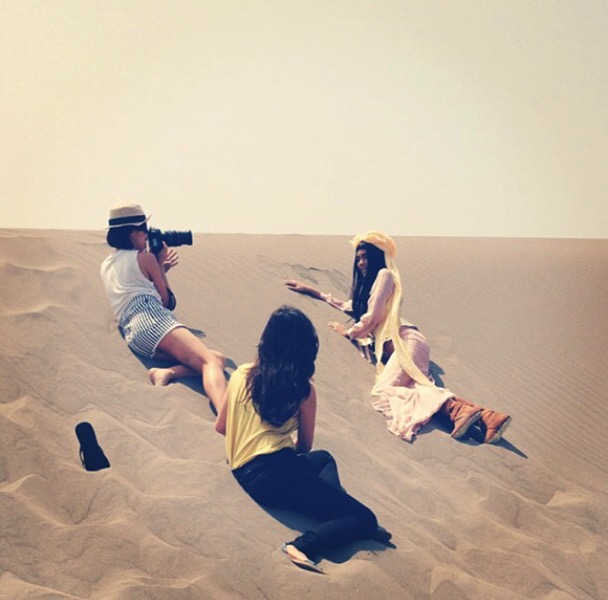
I hate to break it to you, but placing all your good looking friends in front of your camera, and purchasing the latest mirrorless technology probably won’t make you the next Guy Bourdin. From my personal story as a fashion photographer for over five years now, your biggest learning experience comes from learning through your own team, fellow creatives, photographers, stylists, models, and make-up artists. So, here are some tips I’ve learned through my years of trials and tribulations on how to produce a fashion shoot like a pro.

1. Inspirations 101

“Nothing of me is original. I am the combined effort of everyone I’ve ever known.” or so the saying goes. Nowadays, let’s challenge the concept of people stating there’s no such thing as originality anymore. Is that true? But truthfully, the best ideas may not be the first ones.

Find Inspiration fashion shoot

Creativity is a limitless concept. You can always start developing your ideas by sourcing inspirations from practically anywhere. When you start noticing the littlest things in your life, it will do wonders as your source of inspiration. This is fundamental because it is the ground work before every shoot. To develop a concept that is strong and authentically yours is the key to the next step of creating the perfect frame in a fashion photo shoot.

Find Inspiration fashion shoot 2

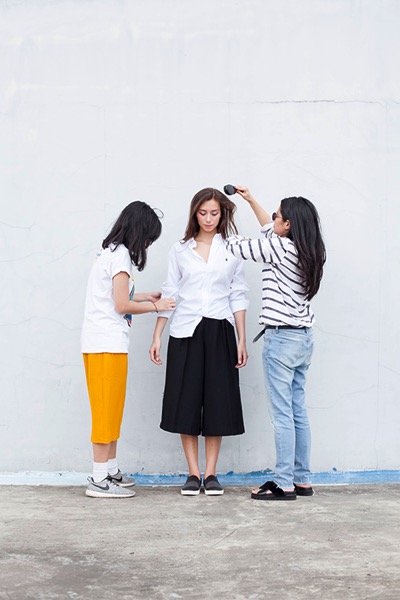
2. Team Work is Everything

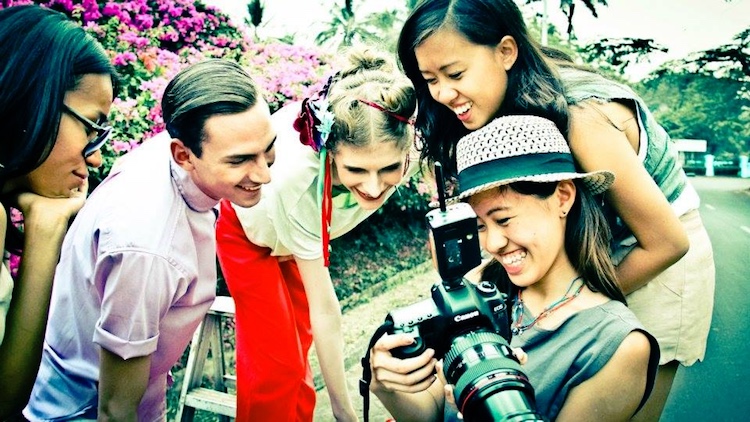
Create your perfect squad. When you meet someone you are comfortable working with, continue to develop a great relationship with them. Because at the end of the day, the perfect frame is not just in the hands of the photographer. Everyone needs to be equally involved and the greater the chemistry ultimately leads to the perfect picture.

Make sure you succeed in getting everyone on the team on the same page, from the vision for the shoot to work ethics. A solid team of creatives that gel well together is really ideal because in the end, it’s all about teamwork.

Team Work fashion shoot 02

Team Work fashion shooot

3. The Look

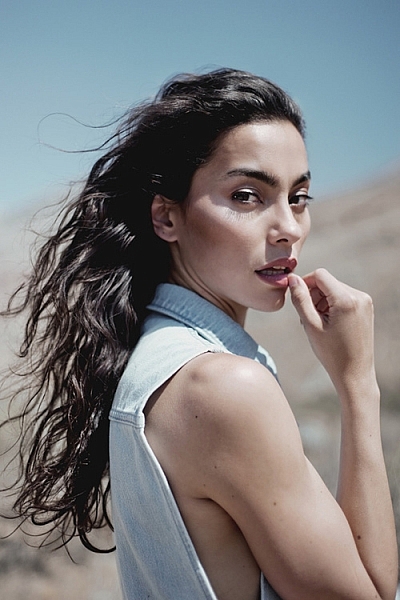
A fashion shoot is never complete without the right model. You need to find a model who has the right look for the concept. Whether it’s height, hair color, skin tone, eye shape, etc. Bonus points if you get to know the model first beforehand. Good chemistry between the photographer and model is also very important to create a comfortable shooting environment.

When you are shooting, there’s only the photographer, the model, and a camera. Putting on a music that’s enjoyable to everyone can also help the model get into character.

result-fashion-shoot

4. Scouting Locations

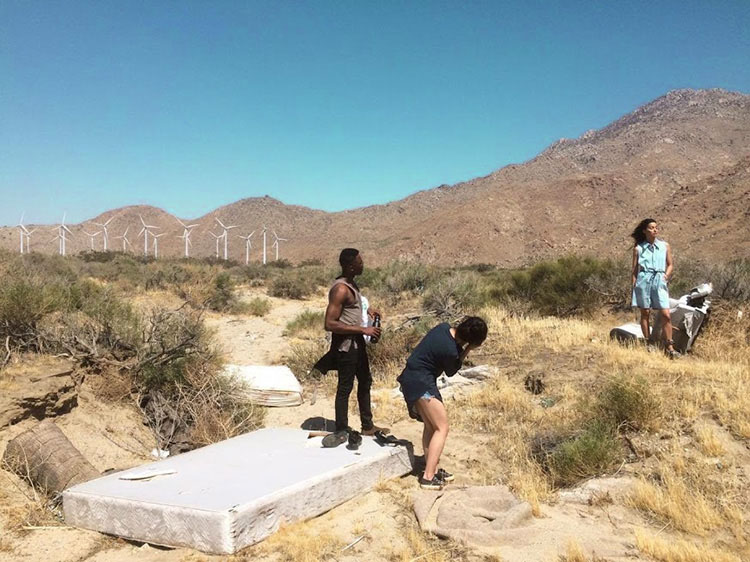
Outdoors or indoors, it’s crucial to prepare everything beforehand. You don’t want to be stressed out on the big day right? When it comes to studios, the physical environment has to be a positive working environment. Think about how much space you need, equipment, facilities, etc. An outdoor fashion shoot are tad trickier. Always double check if you need to have permission beforehand if it is a private area, and always, always check the weather! The sun can be your best friend or your enemy in this case.

Location Scout fashion shoot

Locations Locations fashion photography

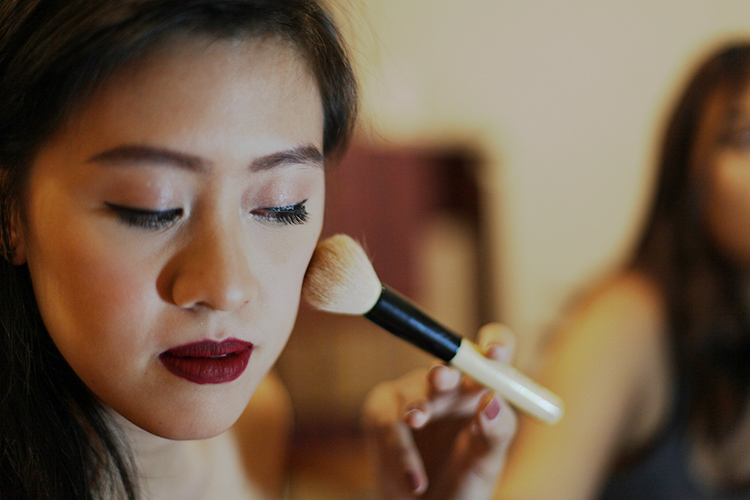
5. Hair, Makeup and Wardrobe

This is where the good team work really shows. I personally think it is important to get everyone on the same page for the vision and mood of the shoot. Also, don’t be afraid to voice your opinion if something can be altered. Such as the hair is too big, the model needs more mascara, the button’s falling off, etc. Don’t be afraid to speak up, it’s team work after all.

Make Up fashion photos

Hair Make Up fashion shoot

Lastly, never forget to have fun! It’s always a blessing to be able to work passionately. Enjoy your ride along the way, stay curious, and bring positive vibes. Good luck.

Please share your fashion photography tips and photos in the comments below.

googletag.cmd.push(function() {
tablet_slots.push( googletag.defineSlot( “/1005424/_dPSv4_tab-all-article-bottom_(300×250)”, [300, 250], “pb-ad-78623” ).addService( googletag.pubads() ) ); } );

googletag.cmd.push(function() {
mobile_slots.push( googletag.defineSlot( “/1005424/_dPSv4_mob-all-article-bottom_(300×250)”, [300, 250], “pb-ad-78158” ).addService( googletag.pubads() ) ); } );

The post 5 Quick Tips to Help You Make a Fashion Photography Shoot Like a Pro by Sally Ann and Emily May appeared first on Digital Photography School.


Digital Photography School
 
Comments Off on 5 Quick Tips to Help You Make a Fashion Photography Shoot Like a Pro

Posted in Photography