RSS
 

Posts Tagged ‘Photography’

All dressed up: the photography of Emily Dickey and Dustin LeFevre

04 Feb

All dressed up: the photography of Emily Dickey and Dustin LeFevre

Utah Badlands, Utah

Emily Dickey and Dustin LeFevre are landscape photographers who seek out remote locations. A couple of years ago, they started to complement their standard landscape images with something a little different – portraits of themselves in formalwear, adding a human element and a dramatic sense of scale to their work. And it’s no coincidence that Dickey wears a wedding dress in some of their images: the couple got married last summer.

Putting images of this nature together is no easy task, and a great deal of work goes into each image presented here. Find out how they do it by clicking through the Q&A above.

To see more of their work check out Emily’s Instagram, Dustin’s Instagram and their website.

The ‘selfie’ has become all the rage in landscape photography as of late and you two have definitely taken that to a new level. What inspired you to work on such an ambitious project?

Vestrahorn, Iceland

We were planning a trip to Iceland and saw elopement photos that had been taken there and thought they were stunning. After seeing them, we decided that we wanted a good picture or two of us dressed up while we were visiting. Since we weren’t bringing a portrait photographer along with us, we thought we could try to do it ourselves.

We found a location, set up the camera and took a few shots. We managed to get a decent photo and now whenever we go on a photo trip, we tend to pack some formals so we can get unique portrait shots in some beautiful locations.

How much planning goes into shooting these types of portraits in such remote locations? What are some of the challenges that you face?

Factory Butte, Utah

We usually will have visited a location a few times before deciding that we want to bring our formals along with us. If it’s a new location, we will research whether it’s a sunrise or sunset location and try to show up early enough to find a good composition. Some locations require us to pack our clothing with us and hike in a few miles. We usually have to find a spot to change, to fix our hair after hiking, etc. Wearing a dress is a challenge in most of the places we shoot in. It can be tricky to walk around in and it can be cold and uncomfortable.

Posing is the most difficult challenge because there isn’t anyone there to direct us and sometimes (most of the time) we don’t nail it and have to try again. It can be frustrating running back and forth to the camera to see if we got a decent shot. It’s also difficult giving up the good light to portraits rather than landscape photography. Since our passion is landscape photography, we usually hurry through our portrait shots, grab our cameras and tripods and frantically run around in our formal wear trying to get a landscape shot as well.

What gear do you use to ‘get the shot’?

The Wave, Arizona

We use a Nikon D810 for most of our shots and a Gitzo GT1541 tripod with Really Right Stuff BH-40 Ball head. We use a RFN-4s Wireless Remote Shutter Release when we can but the range can be a limiting factor.

If we are too far away from the camera, we have to set the in-camera intervalometer to take a photo every few seconds.

Do you work with natural light on location, or do you bring other pieces of equipment (such as reflectors and flashes) to get the results that you’re looking for?

Rock Tsunami, Utah

We are both big believers in natural light and all our selfies were done without additional lighting equipment. Shooting with a D810 allows us to use the incredible DR that the camera offers to emphasize the natural light present in the scene through post processing.

What’s your favorite portrait that you’ve taken so far? How did you go about getting that shot?

The Wave, Arizona

Our favorite portrait of us was taken at The Wave, Arizona. Conditions couldn’t have been better. The temperature was just right, the sky had dark, dramatic clouds all morning and there was a slight breeze. We hiked up to the top of a butte right above the famous Wave formation. Dustin told me to lean back as he held my arm and the wind caught my dress. The pose ended up looking like figurines on top of a wedding cake, so we like to call the photo ‘Cake Toppers.’

It was very hard to try and look relaxed as I was leaning backwards over what would be a very steep fall. Another random visitor there was videoing us, just waiting to catch the moment.

What’s the toughest location that you’ve ever shot in?

Grand County, Utah. After a trying hike and challenging shoot the previous day, Dustin set up his camera and surprised Emily by asking her to marry him.

We decided to hike up on a butte in the desert and planned to spend the night there, so we had our backpacking gear and our formal clothing with us. We hiked up late in the afternoon on Memorial Day so it was quite hot and there was no shade. Even though it’s a fairly short hike, it was a very long hour to make it to the top. We finally made it to our location and a few minutes later, the wind started howling. There wasn’t a place for us to pitch our tent with the wind. Finally, the wind died down and we took some formals.

Do you have any big portrait locations planned for 2017?

Avenue of the Giants, CA

We haven’t planned anything specifically, but we are planning a trip to Oregon later this year and we will be bringing our formals along with us. The wedding dress is still in good condition, so I’m thinking we might have to find a fun way to destroy it.

Who or what inspires you to continue shooting?

White Pocket, Arizona

Instagram is a great community where we are constantly finding inspiration from fellow photographers. We have met so many good friends and talented photographers online, too.

Do you have any tips for aspiring landscape and/or portrait photographers?

Vestrahorn, Iceland

Inspiration can come from anywhere and strike at any time. Don’t get hung up on what other photographers/artists have or have not done. Almost all of us have started out by trying to emulate photographers that we admire and there is nothing wrong with that. It’s a great way to learn.

If you limit yourself to what has not already been done, you are allowing yourself to be influenced by others, almost as much as copying them. You will develop your own ‘voice’ over time, through practice. Lots of practice.
Articles: Digital Photography Review (dpreview.com)

 
Comments Off on All dressed up: the photography of Emily Dickey and Dustin LeFevre

Posted in Uncategorized


How to Use Graduated Neutral Density Filters for Landscape Photography

01 Feb

Since the camera was invented, we have tried to copy one of the greatest wonders of our body; the human eye. Unfortunately, despite being over 100 years since the first time that we captured light, we are still far from overcoming Mother Nature.

Why? Because in the visible spectrum your eye sees much better than your camera.

How to Use Graduated Neutral Density Filters for Landscape Photography

Dynamic Range

The parameter that describes this behavior is called Dynamic Range. This basically defines the difference between the minimum and maximum value of brightness that a device (like your eye or the sensor of your camera) is able to record. In the real world, Dynamic Range defines the ability of your camera to see details in very dark areas and very clear (bright) areas of the scene.

If you’re wondering how much more your eye sees, the answer is staggering. Your eyes have about twice as much range that they can see and capture.

How to Use Graduated Neutral Density Filters for Landscape Photography

The problem

That’s why when you look at a marvelous sunset with your eyes you’re able to see all the details in the scene (in both the sky and the land). But as soon as you try to capture it with your camera, you’ll get an overexposed sky or a underexposed foreground. The Dynamic Range of your camera is only able to capture detail in one of those areas so you have to choose.

But if even the best cameras have a Dynamic Range which is only half that of the human eye. So how can we hope to shoot a beautiful sunset or a wonderful sunrise and capture all the marvelous details?

There are different methods to overcome this problem, but my favorite is the use of Graduated Neutral Density filters (GND).

graduated neutral density filters

What is a Graduated Neutral Density Filter?

A Graduated Neutral Density Filter is one made of two distinct parts; a completely transparent area, and a darker section. By setting the darkest part of the filter to correspond with the brightest portion of the scene, you can reduce the exposure difference (dynamic range) in the frame.

To reduce the exposure difference is to reduce the dynamic range of the scene, and thus allow your camera to simultaneously capture detail in both bright and dark areas of the scene. Basically, to make an analogy, GND filters are like a kind of sunglasses for your camera.

Types of GND filters

Graduated Neutral Density Filters are typically distinguished by the type of transition that exists between the transparent and dark areas of the filter. For this reason, we can identify three families of GNDs:

  1. Hard-edge filters, which are characterized by a clear boundary (it’s obvious where one begins and the other ends) between the transparent and dark areas. They are therefore used when the separation between the bright and dark areas of your scene is very defined, such as the horizon at sea.
  2. Soft-edge filters are characterized by a soft transition (they change from light to dark more gradually) and are therefore used when the transition between light and dark areas is not so clear. A classic example is a shot in a mountainous area.
  3. Reverse filters, which are nothing more than hard-edge GNDs with the dark area that fades away the more you move from the line of separation to the upper border of the filter (meaning it’s darker in the middle than on the edge). Basically, they were invented to better manage sunrises and sunsets, where the light is more intense on the horizon line (middle). If you love seascapes like me, this filter will be one of your best friends forever!

How to Use Graduated Neutral Density Filters for Landscape Photography

Which to buy?

Another distinction is between filters is the construction material. Higher quality filters are made of optical glass. Putting an inexpensive resin filter in front of a lens worth hundreds (or thousands) of dollars is not a great idea.

Finally, GND filters are distinguished by graduation, or their ability to block light through the darkest area. Essentially how dark they are at the extreme. Normally in landscape photography, this difference is between one and four stops during sunset and sunrise, depending on weather conditions. This is the reason why you will find these gradations almost exclusively on the market.

Shop for Graduated Neutral Density filters on Amazon.com or on B&H Photo Video’s site (they ship worldwide).

How to use a GND filter in the field

The use of GND filters in the field is very simple; try to take exposure readings in the darkest and in the brightest areas of the scene (usually the sky). The exposure difference will indicate the intensity of the filter to be used. Let’s assume that the light meter reading for the sky is 1/250th, and the one for the rocks in the foreground is 1/30th. The difference between those readings is three stops (250th > 125th > 60th > 30th), so to balance the exposure you must use a 0.9 (3-stop) GND.

At this point, just mount the filter with its dark side over the brightest part of the scene. This is why a GND screw-in filter does not make sense. You would not have the possibility to align the dark area in accordance with the scene as well as a drop-in style filter.

How to Use Graduated Neutral Density Filters for Landscape Photography

To avoid having to hold the filter with your hands (that could be a problem if you are going to use them together with other filters) you can buy a holder, that once mounted in front of your lens will do the job for you. There are many valid solutions on the market, but the best one (in my opinion) is the V5 Pro Holder by NiSi filters. This is the only one that lets you simultaneously install three different filters and a polarizer without any vignetting issues (as wide as 16mm on full frame cameras).

At this point, the limited Dynamic Range of your image will be just a bad memory!

How to Use Graduated Neutral Density Filters for Landscape Photography

googletag.cmd.push(function() {
tablet_slots.push( googletag.defineSlot( “/1005424/_dPSv4_tab-all-article-bottom_(300×250)”, [300, 250], “pb-ad-78623” ).addService( googletag.pubads() ) ); } );

googletag.cmd.push(function() {
mobile_slots.push( googletag.defineSlot( “/1005424/_dPSv4_mob-all-article-bottom_(300×250)”, [300, 250], “pb-ad-78158” ).addService( googletag.pubads() ) ); } );

The post How to Use Graduated Neutral Density Filters for Landscape Photography by Francesco Gola appeared first on Digital Photography School.


Digital Photography School

 
Comments Off on How to Use Graduated Neutral Density Filters for Landscape Photography

Posted in Photography


Weekly Photography Challenge – Frozen

29 Jan

The first thing I want you to do to get ready this week is to have a look at these 24 Frozen Images to get you ready for a spine-chilling challenge!

Weekly Photography Challenge – Frozen

If you live in a northern part of the globe this should be easy for you. Find something frozen, just look around for:

  • Icicles
  • Snow
  • Frost
  • Snowflakes if you want to go ultra macro!

By wiredforlego

By LASZLO ILYES

By Susanne Nilsson

Even if you do not live in the northern parts of the world you can participate in this challenge. Think outside the box what else is frozen? How about:

  • Ice cubes
  • Popsicles
  • Ice skating rink
  • Ice cream!

You could even freeze something inside an ice cube and photograph that! How about a flower or slice of cucumber? Get inventive.

By Barta IV

By Derek Key

By m01229

Share your images below:

Simply upload your shot into the comment field (look for the little camera icon in the Disqus comments section) and they’ll get embedded for us all to see or if you’d prefer, upload them to your favorite photo-sharing site and leave the link to them. Show me your best images in this week’s challenge. Sometimes it takes a while for an image to appear so be patient and try not to post the same image twice.

Share in the dPS Facebook Group

You can also share your images on the dPS Facebook group as the challenge is posted there each week as well.

googletag.cmd.push(function() {
tablet_slots.push( googletag.defineSlot( “/1005424/_dPSv4_tab-all-article-bottom_(300×250)”, [300, 250], “pb-ad-78623” ).addService( googletag.pubads() ) ); } );

googletag.cmd.push(function() {
mobile_slots.push( googletag.defineSlot( “/1005424/_dPSv4_mob-all-article-bottom_(300×250)”, [300, 250], “pb-ad-78158” ).addService( googletag.pubads() ) ); } );

The post Weekly Photography Challenge – Frozen by Darlene Hildebrandt appeared first on Digital Photography School.


Digital Photography School

 
Comments Off on Weekly Photography Challenge – Frozen

Posted in Photography


Comedy Pet Photography Awards open for entries

28 Jan

$ (document).ready(function() { SampleGalleryV2({“containerId”:”embeddedSampleGallery_6652878511″,”galleryId”:”6652878511″,”isEmbeddedWidget”:true,”standalone”:false,”selectedImageIndex”:0,”startInCommentsView”:false,”isMobile”:false}) });

Looking to kickstart your pet’s career as an internet sensation? The organizers behind the Comedy Wildlife Awards have a new competition that’s a little closer to home. Entries are now being accepted for the inaugural Comedy Pet Photography Awards, and the winner will be awarded £2000 for their funniest photo of a domestic animal. Photos can be submitted online through May 31st. 

The competition is presented with the Animal Welfare Society, and entries will be judged by a panel of nature and wildlife photographers. The terms and conditions lay out all guidelines for qualifying entries, and they’re refreshingly written in plain and simple English.

Press release

COMEDY PET PHOTOGRAPHY COMPETITION LAUNCHED 

Tuesday 24th January

For Immediate Release

  • Inaugural Comedy Pets Photography Award has been launched following success of Comedy Wildlife Photography Awards
  • Launched by renowned nature and wildlife photographers Paul Joynson-Hicks MBE and Tom Sullam, who will be joined on the judging panel by Countryfile’s Kate Humble and TV Vet Emma Milne.
  • The winner of the funniest pet photo will win a £2,000 cash prize 

The team behind the hilarious Comedy Wildlife Photography Awards have launched a new competition to find the funniest photos of pets from across the globe. The Comedy Pet Photography Awards are calling on pet-lovers the world over to enter snaps of their comical pets to be in the running to win a £2,000 cash prize, a Think Tank camera bag and £100 gift voucher from Wex Photographic.

The competition is free and open to people of all ages and nationalities, as well as pets of all shapes and sizes. However, to ensure no pets are harmed or distressed in the quest for the perfect photograph, strict guidelines have been put in place which all entrants must follow. 

The competition is being supported by the Animal Welfare Society, a charity directed by vets and vet nurses which uses veterinary knowledge to improve the welfare of all animals.

Entries can be submitted online and the closing date is 31st May. The photographs will then by judged by an illustrious panel which include Countryfile’s Kate Humble, photographic editor Adam Storey and vet extraordinaire Emma Milne.

Paul Joynson-Hicks MBE, wildlife photographer and Co-Founder of the awards, commented:

“Following the immense success of the Comedy Wildlife Photography Awards, we wanted to launch a competition that people at home could take part in too.

“These awards are designed to celebrate those furry friends who play such important roles in our lives. Whether it be dogs, cats, lizards, horses or llamas, we want to see the funniest photos of pets from across the globe. 

“Of course, as with all our work, there is a more serious message at the heart of it. Whilst we’re all looking forward to giggling at grinning pooches and guffawing at goofy hamsters, this is also a chance to promote the importance of pet and animal welfare. By raising the profile of pets across the globe, we want to draw attention to the need for proper treatment and care when it comes to our animals.” 

All the details about entering the awards can be found at www.comedypetphotos.com. The only question that remains is, who is the world’s funniest pet?

Articles: Digital Photography Review (dpreview.com)

 
Comments Off on Comedy Pet Photography Awards open for entries

Posted in Uncategorized


Applying color theory to landscape photography

27 Jan
This is Albert Biestadt’s painting entitled ‘Among the Sierra Nevada’ from 1868. As you can see he employed the use of what we now call color theory to create a color harmony in his painting.

Color Theory can be an extremely complex subject, especially if you start looking at the mathematics and physics behind the theory itself. On a more aesthetic level it’s an integral part of what can make an image of a landscape pleasing to the eye. Composition, subject and light all play a considerable roll in landscape photography, but color, and more importantly the idea of color theory, helps to weave all of those elements together to form a successful image. 

The most commonly utilized types of color harmonies are analogous, monochromatic, complementary, split complementary, triadic and quadratic. These color harmonies are essentially different combinations of groups of colors that work well with with one another, or for lack of a better word, are harmonious in their visual representation. 

Painters such as Albert Beirstadt, who is best known for his renditions of the American West during the mid to late 1800s, utilized what we now call color theory extensively in his paintings of breathtaking landscapes. In the above painting entitled ‘Among the Sierra Nevada’ Beirstadt utilized a triadic color harmony to add balance to the scene.

In the modern era of landscape photography, the same principles that Beirstadt utilized in the 1800s, can be applied to the way we compose images today. Consider the example below taken from Ted Gore’s blog post on the subject. As you can see, the color balance that he strikes in this image helps to solidify an already strong composition with excellent leading lines by guiding your eye through the scene through the use of the colors present in the image.

In this graphic, Ted has outlined the use of the Triadic Color Harmony present in this image taken along the Napali coastline on the island of Kauai, HI.

The Triadic Color Harmony present in the above image combines three groups of colors that are equally spaced from each other on the color wheel. The greens, yellows/oranges and blues all work to add balance to the overall scene and to create a very well composed final product that is pleasing to the eye. This is just one example of the several provided by Ted in his blog post. 

To find out more on the subject please give his blog post a read as we think that it does an excellent job explaining how color harmonies work and how they can be utilized effectively in modern landscape photography.

If you want to dive even further into the science behind color theory, give Dave Morrow’s blog post a read as well.

Articles: Digital Photography Review (dpreview.com)

 
Comments Off on Applying color theory to landscape photography

Posted in Uncategorized


Landscape shooter Lisa Bettany shares her story of healing through photography

27 Jan


$ (document).ready(function() { SampleGalleryV2({“containerId”:”embeddedSampleGallery_7608234858″,”galleryId”:”7608234858″,”isEmbeddedWidget”:true,”standalone”:false,”selectedImageIndex”:0,”startInCommentsView”:false,”isMobile”:false}) });

Lisa Bettany is a renowned landscape photographer whose career began as she was recovering from a traumatic injury. Born in Canada, she was a competitive figure skater until the age of 21 when she suffered a back injury while skating. Years into her recovery it was still extremely difficult to walk and sit up, but when she acquired a camera things started to change for the better. One day at a time she ventured farther and farther from home, increasing each trip minute by minute, growing stronger and learning the art of photography. For her, learning photography was very much a journey from darkness into light, and nothing has slowed her down since then.

You can read the inspiring account of how her career started and the success she’s achieved as a pro photographer over on Resource Travel. You can also take a look at a few of her images above.

Has photography helped you achieve things that previously seemed impossible? Tell us in the comments below.


Articles: Digital Photography Review (dpreview.com)

 
Comments Off on Landscape shooter Lisa Bettany shares her story of healing through photography

Posted in Uncategorized


How to Conquer the Biggest Fear in Street Photography

26 Jan

As a street photographer you may have had fear sometimes taking photos on the street. All of us who spend time in the streets shooting know that not everyone likes when you take photos of them. When photographing strangers, our biggest fear is of people noticing that we are taking photos of them or people complaining about being in the frame.

How to Conquer the Biggest Fear in Street Photography

The biggest fear in street photography

Every time this thought hits your mind, just realize that there’s nothing to be afraid of. I’d say that 99% of the fear and anxiety taking photos of strangers comes from inside you, not from the outside. You need to deal with your fears and know that the biggest problem you could have is someone calling the police (which doesn’t happen really often, at least it’s never happened to me). In most of the countries taking photos on the street is allowed and you don’t need permission. Always check the regulations of the country or the province where you are shooting.

If you want to photograph kids I’d recommend always asking for the permission of the parents. In a lot countries you can get in trouble really easily for taking photos of minors without permission. If you want to check in which countries you need consent to take photos, please check this link: Countries that need consent.

Requests to delete the photos

How to Conquer the Biggest Fear in Street Photography

From my personal experience I have to say that sometimes it’s tricky to take shoots of strangers. Some people have come to me asking to delete the photos in front of them. You don’t necessarily need to do that. As per the law in Canada (British Columbia) I can take photos in public places as much as I like. If I want to publish them it’s different story, but you can take photos without having to be worried about getting in trouble. When people ask me to delete their pictures I do it, not because I’m afraid of them because I don’t want to start arguing with someone and lose time that I could be shooting, and out of respect for that person.

Advice to help you be invisible

Since I started shooting I’ve changed my technique a lot. With time you’ll get better and you will feel more confident asking for permission or framing your photo to get an interesting composition.

I have tried different tips and techniques that you can find on the internet, most of them from Eric Kim (one of the biggest street photographers of our time) and from other photographers like Bruce Gilden, among others.

How to Conquer the Biggest Fear in Street Photography

Here is a list of different things people do and my opinion about each of them.

The shooting from the hip technique

You’ll find that this way of taking photos helps you at the beginning but it won’t take you really long if all the photos you do are like this. You need to frame your photo and think about what you want in your frame, otherwise you’ll end up just being lucky.

Shooting from the hip doesn’t allow you to decide, you are just finding something interesting and trying to get lucky pressing the shutter. Let’s be honest, if you want to get good photos don’t do this. Street photography isn’t easy, so you need to be confident and earn the photo. Last but not least it looks pretty shady having your camera on your chest and pressing the shutter when you see something.

How to Conquer the Biggest Fear in Street Photography

Here is my advice to avoid shooting from the hip to give you a better result. What you can do is walk with your camera around like you are shooting a video, people will think that you are just a tourist and won’t care that much what you are doing.

Dress code

There isn’t a proper dress code for street photography, but I will recommend you to dress according to the style of shooting you are gonna be doing. If you go to poor neighbourhoods don’t dress fancy. I often dress with damaged or old clothing to fit in more in that kind of environment.

In case you are shooting in the middle of the city my recommendation would be always dark clothes rather than brighter ones. People won’t notice you that much, and if you want to capture candid moments that’s what you need to blend in more.

Camera and equipment go as light as possible

How to Conquer the Biggest Fear in Street Photography camera gear

In terms of camera equipment, you should always go as light as possible. The less you carry the more freedom you will have when you’re shooting. In my case, I bought my first camera about a year ago (Nikon D7200) and even tho I love the camera I realized after a short amount of time that I couldn’t take the camera around. It was too heavy and too noticeable.

When you are shooting street photography you want to be as invisible as possible, that’s why months later I decided to buy another camera (Ricoh GR II). The advantage of this camera is the fact that it’s super small and I can carry it around all the time. Now I take photos every day, and that helps have no regrets when I see something that I want to shoot.

My personal experience

How to Conquer the Biggest Fear in Street Photography

Since I started I haven’t had a lot of problems. A bunch of people said no when asking for permission but many others said yes. Sometimes people will yell at you for taking photos and others will try to run away from you, but the more shots you take more confident you’ll feel.

I’ve experienced more problems taking photos of rich people than poor people. Which is funny to me, people who have less are seemingly willing to give more than those who have everything.

Rough neighborhood

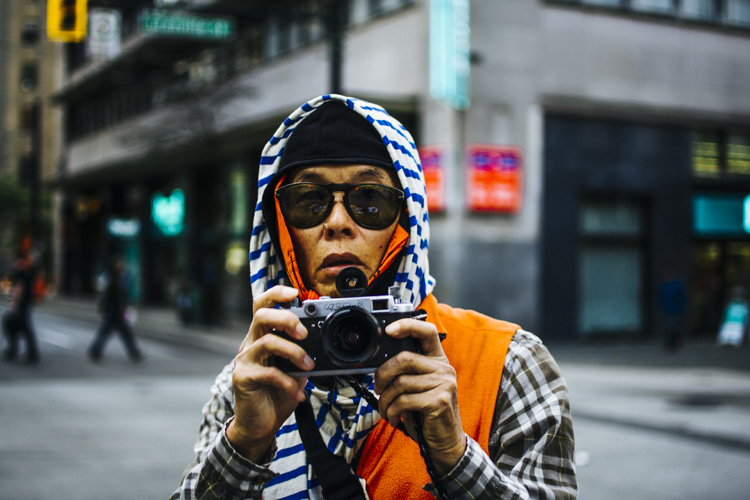
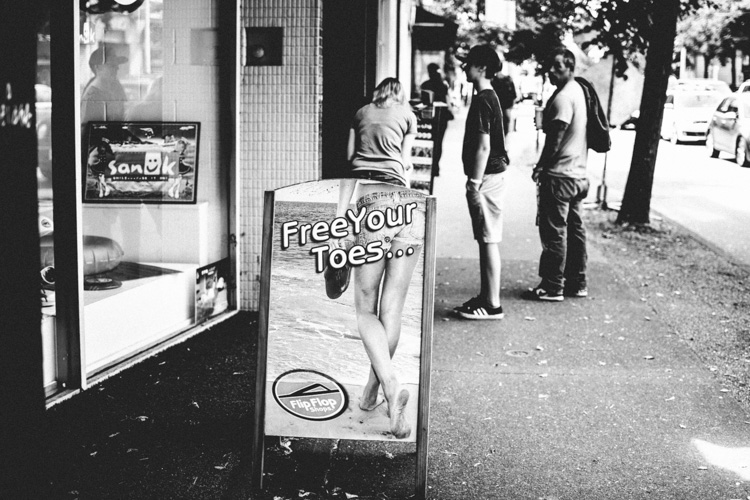
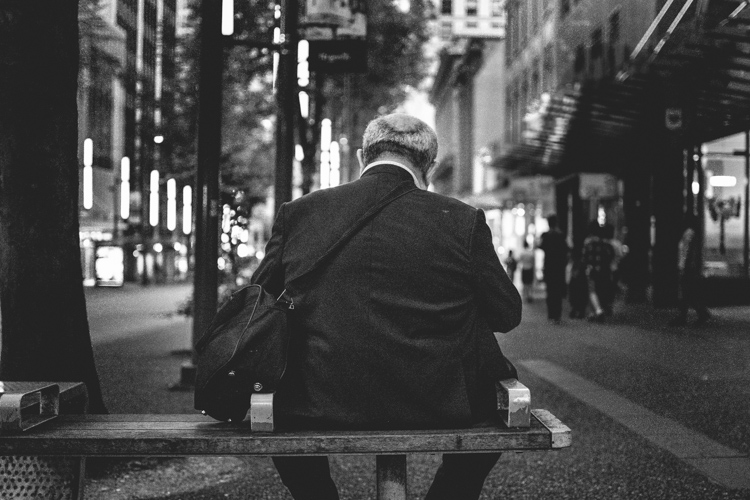
As a photographer based in Vancouver, I find my inspiration in neighbourhoods like Vancouver East Side which is known for their problems with poverty and drug abuse in some zones. Hastings Street is the part of Vancouver East Side that interests me the most. There is where I take most of my portraits and where I get to talk and share some moments with the people.

How to Conquer the Biggest Fear in Street Photography confidence

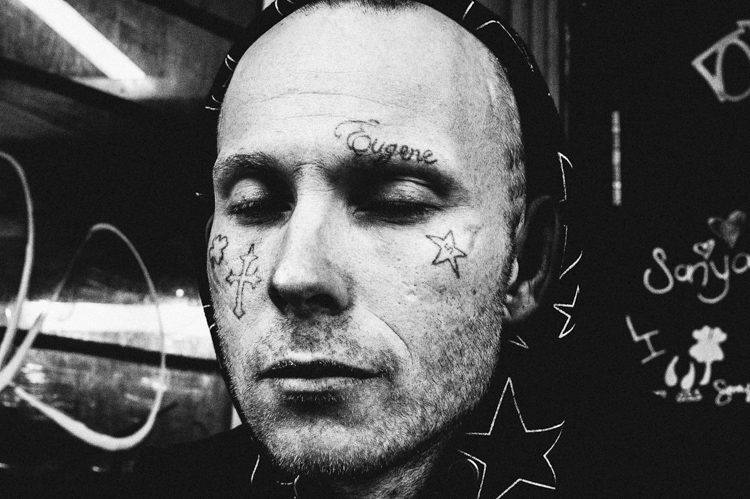
In the image above you can see my portrait of a man with tattoos on his face. When I saw him I was by myself and I wished to take his photo. I won’t lie to you I was afraid. Taking photos of people doing drugs or in bad situations is not easy. I get too close emotionally sometimes and feel bad for taking photos of them, like I am stealing something from people who have nothing. But in these cases you need to be strong and see photography not as a weapon but as a way to capture something beautiful and exciting to you. Back to the point, I saw this man and I hesitated taking the picture or not, but eventualy I did.

I asked him, “Excuse me, I really like the tattoos on your face and I would like to take your portrait, do you mind?”. (Always compliment your subject, it gives you a reason for taking the photo.) The man looked at me seriously and said, “Just one, do it fast because I’m mad.” So I took the photo as fast as I could and after thanking him I left and continued taking photos of other people.

Be brave but also be safe

How to Conquer the Biggest Fear in Street Photography

In most cases when you are in areas where is not always safe you don’t want to take a long time taking the photo so I switched to automatic and just took one frame. The outcome was great from my point of view but it is not always like that. Rushing is not always a friend of success, but in some cases you don’t have an option.

Many times some of the tough guys you see if you get closer and ask them for a photo you realize how easy is to take photos of them.

Note from the editor: Always put your own safety first and if you feel it would be dangerous or unsafe to take a photo then do not do so.

My point with this article is to help you realize it’s okay to take photos of strangers in street photography. Think about Robert Frank, Bruce Gilden, or Henri Cartier-Bresson. They didn’t hesitate when the shot showed up in front of them, the question is, would you?

googletag.cmd.push(function() {
tablet_slots.push( googletag.defineSlot( “/1005424/_dPSv4_tab-all-article-bottom_(300×250)”, [300, 250], “pb-ad-78623” ).addService( googletag.pubads() ) ); } );

googletag.cmd.push(function() {
mobile_slots.push( googletag.defineSlot( “/1005424/_dPSv4_mob-all-article-bottom_(300×250)”, [300, 250], “pb-ad-78158” ).addService( googletag.pubads() ) ); } );

The post How to Conquer the Biggest Fear in Street Photography by Camil Adell appeared first on Digital Photography School.


Digital Photography School

 
Comments Off on How to Conquer the Biggest Fear in Street Photography

Posted in Photography


3 Things I Wish I Knew When I Started Photography

26 Jan

There are a some lessons that we all learn the hard way. Trial and error, though equally arduous, are still the two most ingraining teachers any of us will ever have. We often learn more from our failures than our successes. But like Newton tells us, at times we move forward only by hefting ourselves onto the shoulders of giants.

Boldness learn

More than anything, I wish I would have learned a few things sooner. There are so many lessons that would have benefitted me if I had only understood them on the front end of my trip into the photographic unknown.

So, in the spirit of solidarity I will share three things I wish someone would have told me when I started photography. Perhaps there were those who tried but for whatever reason I either couldn’t or wouldn’t understand. Hopefully these hard fought teachings will help you move forward and give you the mentality you need to start creating better images. Here they are in no particular order.

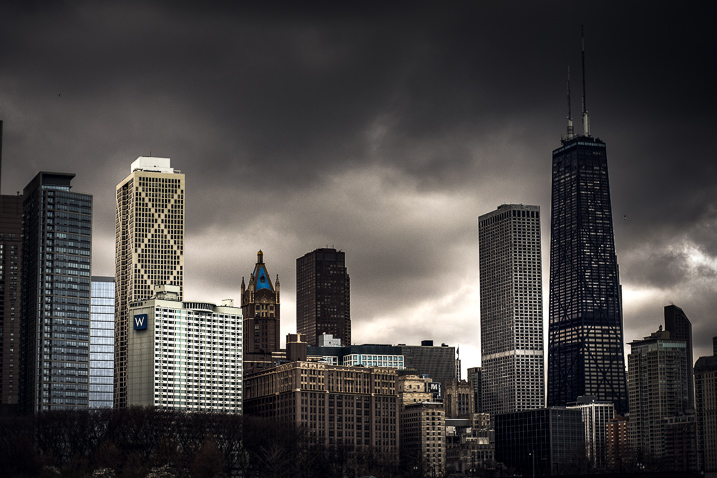
Learning chicago

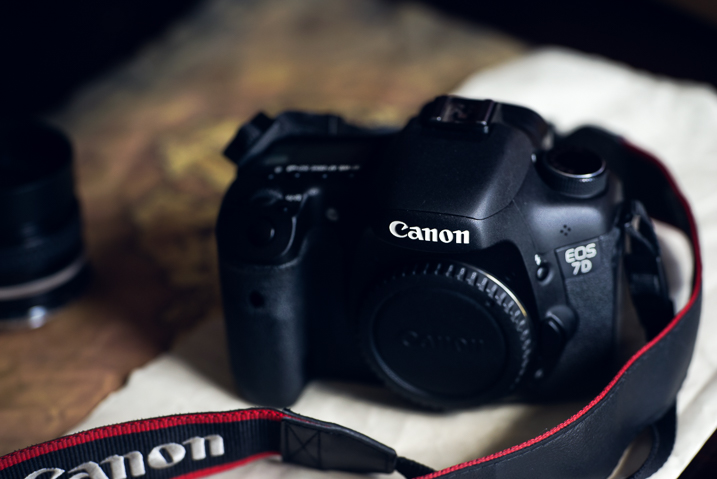
The type of camera I would need

This is a dodgy subject that plagues many who are just starting out, or those who want to get more serious about their photography. I began my journey shooting a 35mm Nikon N65 with a 18-55mm kit lens that I bought when I was 18 years old. It was my first real camera. The late teenager version of me saved his money and paid $ 265 for it but I still felt as though I needed a better camera in order to make better images. That was 15 years ago.

Even then I was under the impression that I would need a “professional camera” in order to be a professional photographer. If you had asked me then, I wouldn’t have been able to even tell you what a “professional camera” actually was.

Camera types

What I wish someone had told me was that the best camera doesn’t exist. The only thing that truly matters is the knowledge to use whatever camera is in your hands to the utmost of its (and your) ability. True, times have changed and imaging technology has advanced alarmingly fast. Some people now earn a living with only the cameras in their smartphones.

The thing to always remember is that most cameras are capable of producing images of astonishing quality when coupled with a proficient user. Whatever camera you might currently have is likely more than enough. Allow your skills to mature and you will know when it’s time to upgrade.

Photography create

What post-processing is – and what it is not

Before you begin scrolling in horror at the very mention of post-processing let me assure you that this in not a dreaded commentary on what may or may not be considered “Photoshopping.” Instead, we’re going to talk about some misconceptions I had when first beginning to process my images.

I was under the impression that “getting it right in the camera” was an all encompassing mentality that meant nothing needed to be done after the moment of capture other than showing the image to the world. That is not necessarily true.

What I wish someone had told me was that all photographs, even analog (film), virtually always benefit from some extent of work after the image has been made. The quote which changed my thinking towards post-processing came from none other than Ansel Adams himself:

“The negative is the equivalent of the composer’s score, and the print the performance.”

Journey photography

The point Ansel was making is that yes you always want to strive to achieve the best exposure you possibly can in-camera so that you have a more complete representation of the scene in order to manifest a final photograph intermingled with your own creativity. Post-processing is not something to be avoided but rather embraced as a logical second step towards achieving your visualization regardless of what that visualization may be.

Perfection is unattainable

That’s right. No photograph is perfect and very few photographs are ever elevated to the level of fine art, whatever that means. This was an illusion that burdened me during my early days while learning to create photographs. I had an enormous misunderstanding about what actually went into the production of an image both creatively and technically.

One thing that I did know, was that my photographs looked nothing like some of the wonderful images I saw online or in photo magazines. I became discouraged, all the while feeling as if I was doing something completely wrong.

Perfection unattainable

What I wish someone had told me was that even if you labor in photography for the rest of your life, you will never snap a perfect frame. Your photographs will certainly become stronger as you hone your technique and acquire more capable gear, yes. But don’t think that you will ever reach a day when you can say, “Ah, now I’m perfect. All my photographs will be flawless from here on out.” That day will never come.

The craft of photography is a practice in personal evolution. It is a journey of constant learning. So take a breath, relax, and enjoy the process for the beautifully weird trip that it is.

Conclusion

These are just a few of things that I wish someone had told me when I first began making photographs. Do you have any lessons you have learned that could help others? List them in the comments below!

googletag.cmd.push(function() {
tablet_slots.push( googletag.defineSlot( “/1005424/_dPSv4_tab-all-article-bottom_(300×250)”, [300, 250], “pb-ad-78623” ).addService( googletag.pubads() ) ); } );

googletag.cmd.push(function() {
mobile_slots.push( googletag.defineSlot( “/1005424/_dPSv4_mob-all-article-bottom_(300×250)”, [300, 250], “pb-ad-78158” ).addService( googletag.pubads() ) ); } );

The post 3 Things I Wish I Knew When I Started Photography by Adam Welch appeared first on Digital Photography School.


Digital Photography School

 
Comments Off on 3 Things I Wish I Knew When I Started Photography

Posted in Photography


7 Vital Tips to Improve Your Candid Street Photography

21 Jan

If people watching is in your nature, you owe it to yourself to try some street photography. It can be addicting, and the fleeting moments you can capture will be one of a kind. It is a genre of photography similar to fishing. The more you enjoy the process, and the more you cast your reel out there (is this correct fishing terminology?), the more you will catch.

Time and experience trump everything due to the difficulty, and while perseverance is the only way to do street photography well, there are some important tips and strategies that can set you off in the right direction. Here are some of my favorites.

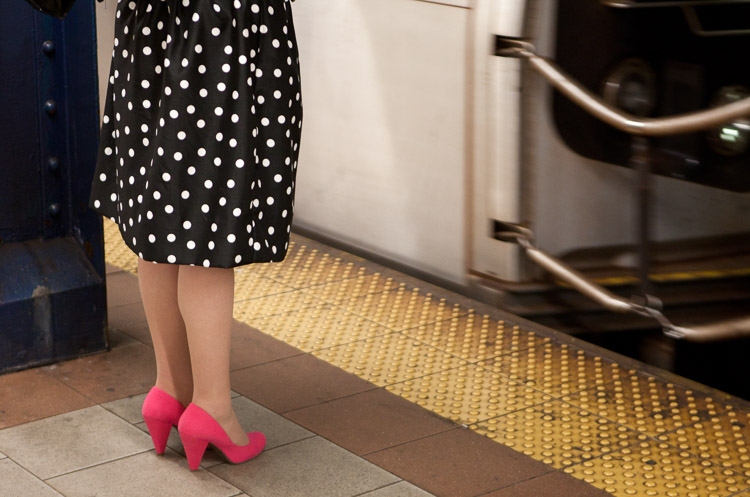
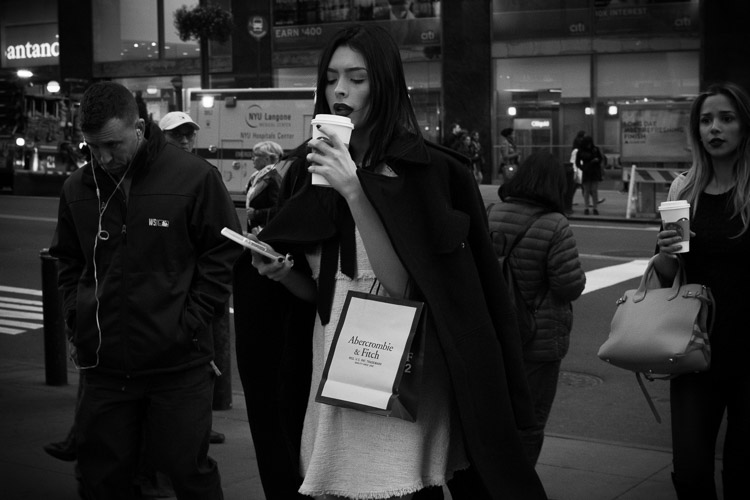
7 Vital Tips to Improve Your Candid Street Photography Polka Dots and Pink Shoes, Subway, 2012.

1. Travel light and with minimal gear

Many of you will have a DSLR and a mid-range zoom lens. While it is fine to shoot street photography with this equipment and many do (and even more start out this way), lightening your load will make a huge difference. You will have more energy, your coordination will be better, and you will be faster and more willing to explore. You will also be able to photograph in situations where you would not want to bring a large camera.

Not only are micro-4/3rds and mirrorless camera systems lighter, but they look less intimidating to the people you are photographing. If you have a DSLR, consider using a 35 or 50mm prime, or a pancake lens for these reasons. Fortunately, you do not need the fastest versions of these lenses, so it will not be quite as expensive. A 35mm f/2 is usually about half the size of a 35mm f/1.4, and Canon’s 50mm f/1.8 is both small and only $ 125.

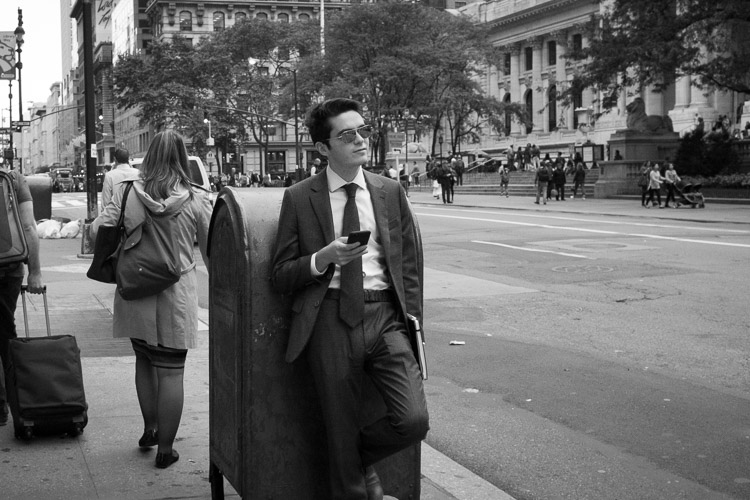
7 Vital Tips to Improve Your Candid Street Photography Greene Street, New York Street Photography

Prime lenses

Prime lenses will restrict you to a specific focal length, but this limitation can actually be quite freeing. By sticking to a focal length such as 35mm or 50mm (the two favorite lenses for most street photographers), you will learn to see how the lens sees.

You may miss out on certain moments by not having a zoom, but at the same time, you will be able to capture more quality images within the ideal distance for the lens that you are using. You will be quicker and more spontaneous with your camera. You will even start to think more about your perspective and framing without having the luxury of the zoom, and as the old saying goes, you will begin to zoom with your feet.

2. Raise your ISO

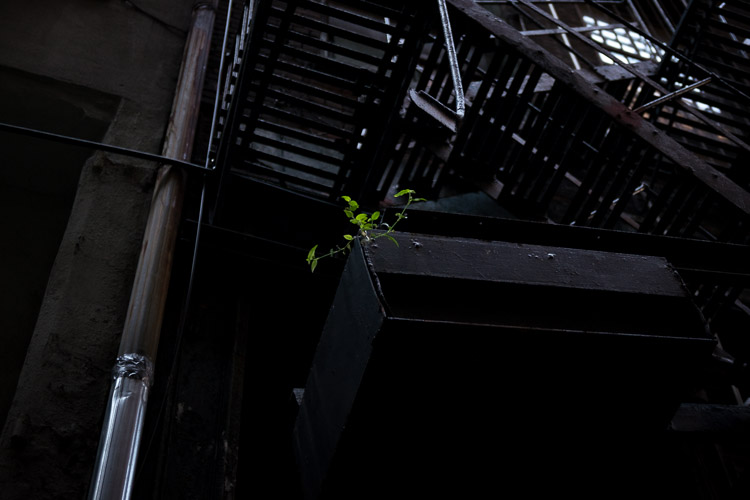
7 Vital Tips to Improve Your Candid Street Photography SoHo, New York Street Photography

It used to be taught that you always needed to use as low an ISO as possible. This is because the early digital cameras were terrible at high ISOs, particularly over 400. Luckily, new digital cameras blow the old ones out of the water in terms of high ISO ability. You can now shoot at ISOs of 1600 and 3200 with beautiful looking grain/noise, but the stigma of using high ISOs still exists.

For street photography, I will typically shoot at ISO 400 in sunlight, 800 in light shade, 1600 in dark shade, 3200 at dusk, and 6400 at night. With an entry level or less advanced camera, I would go down one stop in ISO, i.e. ISO 200 in sunlight and up to 3200 at night.

Benefits of high ISO

This gives us a huge advantage. Being able to raise our ISOs this high not only allows us to shoot handheld in dark situations, but it also allows us to simultaneously shoot with a faster shutter speed to freeze motion and a small aperture to maximize the depth of field.

Some photographers prefer a shallow depth of field, but in the fast moving world of candid photography, I prefer a large depth of field for a few reasons. First, if you miss the focus on your subject, they can still turn out sharp. If you are photographing at f/2.8 on the other hand, your image will be ruined if you miss the focus. Next, since context is very important in street photography, if you have multiple subjects at different depths or important background elements, it will allow everything in the frame to be relatively sharp.

I prefer to shoot at 1/250th of a second to guarantee that there is no motion blur in my subjects, although I will go to 1/160th or 1/125th in the darkest of situations. In bright light, I will shoot at 1/320th or 1/400th of a second. A high ISO is what allows me to shoot with these speeds, no matter what the lighting is like.

3. Pick a spot and wait

7 Vital Tips to Improve Your Candid Street Photography Broadway, New York Street Photography

Street photography and going for a walk go hand in hand. Sometimes you just want to take your camera and explore on a nice day. However, by constantly walking, you might be doing yourself a disservice. Instead, try to find some promising locations on the way and linger there for a while as you wait for something to happen.

Picking one spot does a few things. First, it allows you to combine a good location with an interesting moment. If you find a quality location and just take a quick photo and move on, you’re killing so much of the potential. By waiting, you give yourself more time for that magical moment to happen. It’s when the right location merges with the interesting moment, that a great photograph appears.

It’s when the right location merges with the interesting moment, that a great photograph appears.

You will also be faster at noticing your surroundings and quicker with your camera because you will be focused on looking around instead of walking. In addition, people will be coming into your scene and entering your space instead of you entering their space, so it makes the whole practice of street photography easier and less confrontational.

Camera snap

A small but important tip that goes hand in hand with this idea has to do with the camera snap. The camera snap is the quick, instinctive removal of the camera from their eye that photographers do immediately after clicking the shutter. It is the motion that tips your subjects off to the fact that you just took a photo.

By picking a spot and waiting for a subject, you can be as candid as possible. Just put the camera to your eye, take the image, and keep it there as the subject leaves your scene. This will make it seems like you were just photographing the background and waiting for them to get out of the way.

4. Know what to say if someone stops you

7 Vital Tips to Improve Your Candid Street Photography

No matter how you approach it, there is an inherent creep factor to street photography. Some of your subjects will understand and be flattered, while others will think you are the weirdest person on the planet. If you like to photograph your surroundings and culture, people are a big part of that. Including them in what you capture can be a big part of telling the story of your surroundings, and there is nothing wrong with it.

While tough situations are rare, particularly if you handle yourself in the right way, knowing what to say ahead of time is very important. If someone asks if you took their photo, own up to it and tell them what you were doing. Talk to them and explain why you found them interesting. This will flatter some people, but others will still not understand. I always keep a business card with me and offer to send the photograph if someone emails me for one.

Keep your cool

Always keep a smile on your face. If someone seems angry for any reason, there is no need to get defensive or angry back. You don’t have to explain that it’s in your legal right (depending on where you are photographing of course) unless it comes to that. That’s not the best thing to bring up right away because it can make people even angrier.

Instead, figure out how to diffuse the situation and tell them that you did not mean to make them uncomfortable. I’ve offered to delete a couple of photos over the years when I felt it was necessary. The ability to diffuse a situation is very important, even though I have only had one or two uncomfortable situations over a 15 year period of frequent shooting.

5. It’s not just about people

7 Vital Tips to Improve Your Candid Street Photography

It is a common thought that street photography is only about capturing people walking down the street, on a beach, or in public. That’s just not the case. Street photography is about candid photography of life and culture. While that can and should include people sometimes, other times it can be about nearly anything else. Capture daily scenes and backgrounds that you find to be interesting.

They can be weird images. Capture something unique. You do not always have to take the prettiest or most epically beautiful photograph. Capture something that makes someone think or that throws them off balance. Capture images for yourself, and ones that you know some people will not understand or like right away. It is not your job to please everyone. It’s your job to take a good photograph.

Be spontaneous and go for it

Be spontaneous. With other forms of photography, you can be a perfectionist about every detail. While it is also important to think this way for street photography, so many of these decisions are made in a split second. Let yourself go and be spontaneous with what you capture. Whenever you feel there is potential for a strong image, even if you aren’t sure, go for it. Many will fail, but some of those moments will end up being the best photos you have ever taken.

Go somewhere that you think will make it tough to capture an interesting photograph. Sometimes you will find that you will be able to capture unique content in areas that others would think of as quiet or boring. There are good photographs everywhere and the best photographers have a way of finding them anywhere.

6. Group your photos while editing

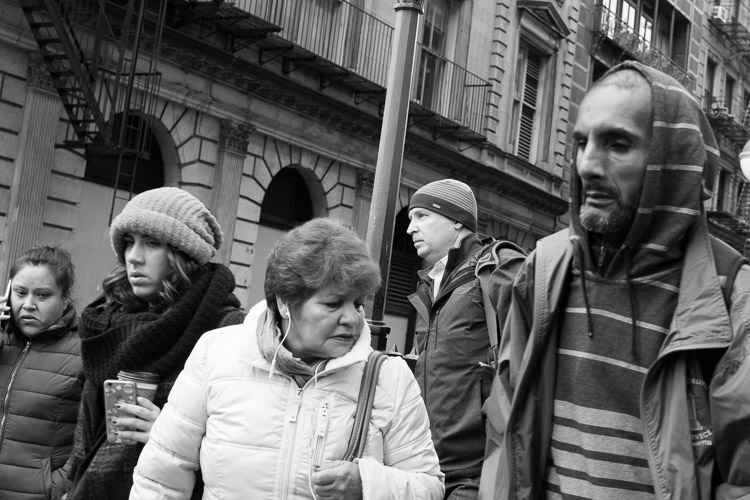
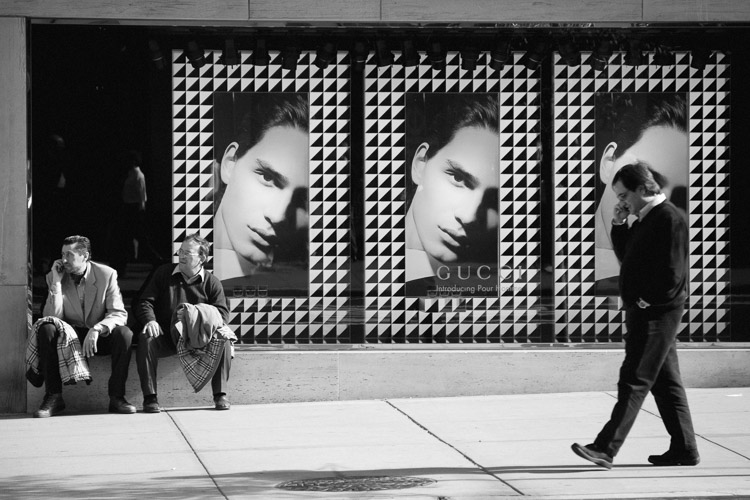
7 Vital Tips to Improve Your Candid Street Photography - Three Men, Gucci, New York Street Photography

This is not a tip that all street photographers adhere to. Some like each of their photographs to live on their own. However, many prefer to group their work by feeling, ideas, or themes. For some, the book is the ultimate form of display for street photography.

Group your photos based on feel and sequence them into a loosely based narrative of some sort. Come back often and add to and take away from it. Over time, you will notice that ideas will grow organically. It will help inform you about what to capture when you are out there. These ideas will develop as you grow as a photographer.

Before you think about putting together a book, purchase a simple cork board for your office wall and fill it with 4×6 and 5×7 images. Constantly print and replace them to create a cohesive wall of images. It is a lot of fun and a great way to view your work and your progress.

7. Explore the work of other photographers

7 Vital Tips to Improve Your Candid Street Photography

This is such a simple tip but it is immensely important. In your free time, look up the work of all types of street photographers and study their portfolios. Explore the content, the technique, and the styles that you like. Watch videos of these photographers in action to see how they approach the street. Go to gallery shows and look at real life prints to train your eye. This will give you a range of ideas for what to capture the next time you are out shooting.

The fascinating thing about street photography is that while the content is the same for all of us, what we each come back with is completely different. Studying the styles of different photographers will help inform what is possible for you to create.

It is inspiring and fun to do. Start a photography book collection or even purchase a couple prints for your walls. The more you surround yourself with it, the better you will become, the more ideas you will have, and the more inspired you will be.

Some photographers to start out with are Henri Cartier-Bresson, Garry Winogrand, Robert Frank, Helen Levitt, Lee Friedlander, William Eggleston, Walker Evans, Daido Moriyama, Martin Parr, Elliot Erwitt, Joel Meyerowitz, Mary Ellen Mark, Bruce Davidson, Saul Leiter, Trent Parke, Alex Webb, Vivian Maier, and Bruce Gilden.

Conclusion

Now go out there and have some fun. The biggest tip is that the more time you spend shooting, the better images you will come back with. So shoot with some regularity and do it in the way that you find the most fun so you will continue to practice.
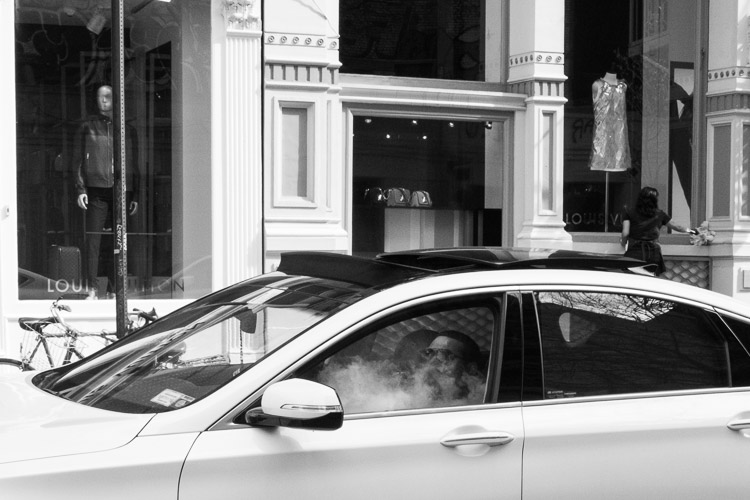

If you’d like to learn more about Street Photography, then please check out my ebook The Essentials of Street Photography.

googletag.cmd.push(function() {
tablet_slots.push( googletag.defineSlot( “/1005424/_dPSv4_tab-all-article-bottom_(300×250)”, [300, 250], “pb-ad-78623” ).addService( googletag.pubads() ) ); } );

googletag.cmd.push(function() {
mobile_slots.push( googletag.defineSlot( “/1005424/_dPSv4_mob-all-article-bottom_(300×250)”, [300, 250], “pb-ad-78158” ).addService( googletag.pubads() ) ); } );

The post 7 Vital Tips to Improve Your Candid Street Photography by James Maher appeared first on Digital Photography School.


Digital Photography School

 
Comments Off on 7 Vital Tips to Improve Your Candid Street Photography

Posted in Photography


PhotoSpots uses Google Maps to pinpoint photography hotspots

13 Jan

When you’re traveling, it’s always a good idea to scope out shooting locations ahead of time. Here to help is a newly launched online service called PhotoSpots. With PhotoSpots, photographers can find so-called ‘photography hotspots’ highlighted around the globe using Google Maps and the image hosting website 500px. The service was created by photographer Mike Wong, who recently detailed his creation on Reddit.

‘I thought that it would be interesting to see where and when other photographers were taking photos,’ Wong explained in his Reddit post, ‘so I decided to create a small website that shows exactly that.’ The photography hotspots are presented as a heat map, with red areas representing heavily photographed regions. A bar beneath the map shows thumbnails for images taken in a particular region and uploaded to 500px.

Clicking PhotoSpots’ menu icon opens a slider that filters photos by month, while hovering over a specific photo thumbnail reveals the precise location it was taken via the map. “I’m also planning to make a filter for categories (e.g. nature, cities etc.) to make it more personalizable,’ said Wong, though he didn’t provide a timeframe for when that feature will be added.

Via: PetaPixel

Articles: Digital Photography Review (dpreview.com)

 
Comments Off on PhotoSpots uses Google Maps to pinpoint photography hotspots

Posted in Uncategorized