RSS
 

Posts Tagged ‘Photography’

Positano, Italy will start charging $1,150 fee for commercial photography, $2,300 for video

04 Nov
Photo by JeCCo (CC-BY-4.0)

The picturesque seaside Italian city of Positano will soon begin charging photographers a substantial €1,000 (~$ 1,150 USD) fee if they plan to shoot photos for commercial purposes. Videographers, meanwhile, will have to pay €2,000 (~$ 2,300 USD) for commercial work, and Positano authorities are also banning drone use in the city, eliminating aerial projects altogether.

Due to its unique position, Positano attracts a large number of photographers, some working for brands or otherwise capturing content for commercial reasons. According to city mayor Michele De Lucia, per the Italian publication Repubblica, Positano isn’t enacting this fee as a way to make money, but instead to deter the photography sets that can disrupt pedestrians and result in “discomforts and bickering.”

It also lends the city an element of control over who gets to shoot there—”not everyone must be able to tie their own brand to Positano,” explains De Lucia.

Anyone taking photos or recording video for non-commercial purposes is exempt from the fee. The city will also allow photographers and videographers to work in certain circumstances without paying the fee, including for documentaries, TV shows, newspapers, and magazines.

The regulation states that anyone planning to photograph or record will need to submit a request at least 30 days ahead of time to get permission. Requests submitted late will require a 50% surcharge. As far as photography goes, the regulation uses the phrase ‘advertising shooting,’ indicating the fee in primarily targeted at brands and advertising agencies.

Articles: Digital Photography Review (dpreview.com)

 
Comments Off on Positano, Italy will start charging $1,150 fee for commercial photography, $2,300 for video

Posted in Uncategorized


Video Tips for Better Food Photography

03 Nov

Food photography has become more and more popular. In fact, many restaurants complain that their patrons don’t eat the food before it starts to get cold because they’re too busy taking photos of it for Instagram and Facebook.

Whatever you’re eating, and wherever you’re sharing your food photos – here are some tips to help you take better, more appetizing food shots.

#1 – Lighting tips with Andrew Scrivani

In this video, you will get some really good tips for creating good lighting for food photography. Then see how he applies it in an example photo shoot.

#2 – 5 tips for better food photography composition

Composition is just as important in food photography as lighting. In this video, see 5 different ways to do food composition. Notice his first tip is to use a tripod!

#3 – Tips from a food blogger

Food blogger and author, Izy, has some really practical tips you can use for your food photography in this short video.

Learn about:

  • Light: Using natural light for food and diffusion
  • Camera angles: Which are the best for food
  • Styling: Tips for props and how to make the photo interesting
  • Camera settings: What are the optimal settings for food and why
  • Editing: Why you want to shoot raw file format

Give those a try when you’re doing your next food photography shoot.

The post Video Tips for Better Food Photography by Darlene Hildebrandt appeared first on Digital Photography School.


Digital Photography School

 
Comments Off on Video Tips for Better Food Photography

Posted in Photography


How to Show a Sense of Scale in Your Photography

02 Nov

Picture this: You’re standing in front of an awe-inspiring natural wonder, a giant mountain or an extraordinary monument. Eagerly, you raise your camera to your eye and *click* you snap a shot.

There, on the LCD screen on the back of your camera, you see that all the majesty of the scene has disappeared.

How to Show a Sense of Scale in Your Photography

A photo of Skogafoss waterfall in Iceland, taken to show the scale and majesty of the scene.

In its transition from reality to the screen on your camera, your subject has lost its grandeur and sense of scale – there’s no true representation of how impressive the scene is. Has this happened to you?

Photography works with only two dimensions, for the most part. The world, on the other hand, is viewed in three dimensions. Missing that extra dimension can be a big deal.

Without giving a bit of thought to your composition, you can lose a lot of the sense of scale – making even the most remarkable subject matter look completely unremarkable on camera.

Understanding lens distortion

A camera doesn’t necessarily see the same thing our eyes do. Depending on your type of lens, and how much zoom you are using, there can be quite a difference between the image and reality.

Wide-angle lenses can make a real mess of perspective, making objects close to the camera seem significantly bigger than ones farther off. This can be used to your advantage for creative shots, but it will completely ruin the sense of scale.

How to Show a Sense of Scale in Your Photography - gnome

From up close and seen with a wide-angle lens of 17mm, this gigantic-looking gnome looms over the fence it is sitting on.

A gnome photographed from a distance to show how lens distortion influences scale

A gnome photographed from a distance to show how lens distortion influences scale.

A gnome telephoto - How to Show a Sense of Scale in Your Photography

At a focal length of 55mm, the sense of scale is restored and we can see that the gnome is actually quite small compared to the fence.

The more you zoom in (use a longer focal length), the less distorted your object will appear. Unfortunately, if you are taking pictures of large buildings or natural wonders, this has fairly limited application. It isn’t always possible to jog several hundred meters down the road in order to have room to zoom into 200mm when photography a tall building.

If we want to get the entire object in the frame, we’ll need to make some compromises with lens distortion, which leads us to our next trick for properly showing scale.

Provide a reference

So how can we tell if something is big?

Well, it’s not usually a problem in real life to know if an object is big or not. But in photography, we don’t always have the same opportunity to glance around and get a sense of proportion. This bothersome little detail can mean that even a huge, incredible wonder in real life can look insignificant.

How to Show a Sense of Scale in Your Photography

A photo of a mountain, with a reference point of a village below to show scale.

So how can we make sure that immense size is properly appreciated? Provide a familiar reference point to define scale. By including people or common objects in a scene, the viewer can quickly understand the scale.

Skip giving that reference point and your mighty mountains could just as well be macro shots of pebbles, for all your viewer knows.

An image showing the scale of the Gullfoss waterfall - How to Show a Sense of Scale in Your Photography

This is the incredible Gullfoss in Iceland, but without a clear point of reference, we don’t have a strong idea of its scale.

Image showing hikers on the Gullfoss waterfall - How to Show a Sense of Scale in Your Photography

Use of a longer lens helps us to see that those tiny specks on the rock are actually hikers – and helps us to understand that this waterfall is massive!

Showing Distance

How can we tell if something is far away?

Again, it isn’t difficult to recognize distance in real life. Once again, two-dimensional pictures have a habit of looking extremely flat without paying a bit of attention to what is included in the frame.

Well, for starters, you can use depth-of-field to provide a sense of depth. When the background drops off into a blur, it helps the viewer to more easily recognize distance.

Depth-of-field refers to the amount of area that is in focus in a picture. You can make sure that the background falls out of focus by using one or combining multiple of the following methods:

  • Selecting a wide lens aperture
  • Zooming in on your subject
  • By having a significant distance to the background behind your subject
How to Show a Sense of Scale in Your Photography

A man exploring the mountain photographed to show a narrow depth of field.

But you’ll need to do more than just shoot with a wide aperture if you want a mountain range to look imposing.

Another good technique you can use is to layer your background elements. This is easiest to recognize with mountains.

A man taking a photograph in a mountain range - How to Show a Sense of Scale in Your Photography

Including the whole scene

Sometimes showing the true scale of a scene requires a bit of give and take – you need to make a few compromises.

Zooming in and capturing expressions or the human element can cause you to lose the sense of scale. On the other hand, zooming out can cause your image to lose any interaction or interest.

A man sitting in the rocks on the edge of a mountain - How to Show a Sense of Scale in Your Photography

The hiker is sitting on the edge of a cliff – but without zooming back the viewer has no idea how big the drop is.

The best way to account for this is to simply be aware of it as you set up your shot. Balance the objects in the frame and decide what is the priority and purpose of the shot. If you want to show the scale of a scene, you probably won’t be able to take a tight shot that shows reactions or emotions.

A hiker in the mountains, photographed to show the scale of the cliffs - How to Show a Sense of Scale in Your Photography

By pulling back a bit, we can see the entire cliff – but now we can’t see the hiker’s expression!

Changing up your perspective

Sometimes capturing the majesty of a scene requires a creative perspective. Many photographers forget to explore the potential that comes from mixing up the camera’s point of view.

Taking a low shot can help add emphasis or might to a scene.

 How to Show a Sense of Scale in Your Photography

A low angle shot of a waterfall, showing its grandeur

Using a drone to cruise overhead and look down over an area can also be a fun way to show scale. The bird’s eye view perspective can be used to discover new angles of looking at otherwise familiar landscapes.

How to Show a Sense of Scale in Your Photography

Drone – image by dPS author Suzi Pratt.

Using Lines

Lines have always been an important element of any composition. They give an image a sense of movement and can direct the viewer’s eye around a shot, especially when they all tend towards a single vanishing point on the horizon.

A group of hikers photographed using leading lines to show distance - How to Show a Sense of Scale in Your Photography

The strong lines in this image help us to understand the size of this mountain trip.

Using leading lines is also a way to provide a sense of depth and show distance. You get a quick comparison of the distance between objects in the frame, giving you a quick point of reference to work with for the rest of the picture.

Recognizing and using natural lines in a scene is a surefire way to create a dynamic and interesting composition.

A deliberate approach to photography

By having the different techniques that can be used to show a sense of scale top of mind when you are out exploring with your camera, you can increase your chance of coming back with some real keepers.

It’s a common complaint of beginner or casual photographers that they can’t quite seem to make their pictures look as impressive as real life. But with a bit of practice, you can shoot pictures that leave your audience in awe!

The post How to Show a Sense of Scale in Your Photography by Frank Myrland appeared first on Digital Photography School.


Digital Photography School

 
Comments Off on How to Show a Sense of Scale in Your Photography

Posted in Photography


How to do a Photography Alphabet Project

30 Oct

Do you remember the ransom notes left behind by kidnappers and villains in movies? The notes made up of different letters cut out of magazines? My first encounter with the concept of a ransom note was while watching a movie called Baby’s Day Out. The 1994 movie, aimed at kids, tells the story of a toddler kidnapped by three crooks disguised as photographers (funny, huh?). The kidnappers then leave a ransom note constructed from letters cut from magazines. Now, don’t get me wrong. I’m not encouraging kidnapping here, or any criminality for that matter. But this project does involve building up a photographic library of text, for artistic purposes only!

How to do a Photography Alphabet Project

Now, don’t get me wrong. I’m not encouraging kidnapping here, or any criminality for that matter. But this project does involve building up a photographic library of text, for artistic purposes only!

We encounter so much written language these days that it is often overlooked as a photographic subject. Written language in any environment is made up of an endless combination of fonts, colors, shapes, and applications. Of course, there are random text generators online, but automated programs won’t add anything to your photographic practice.

By scoping out letters in the field you’ll train your photographic senses to seek out unusual subjects, an invaluable skill for any photographer. By concentrating on an unusual yet familiar subject, you can build up an interesting and varied typographic library. It’s a great way to view the world through the written word.

How to do a Photography Alphabet Project

How to do a Photography Alphabet Project

Some history of the alphabet

The first true alphabet was created roughly four thousand years ago in the land of Canaan. The alphabet, containing between 20-32 individual letters, didn’t contain any vowels so people had to guess what vowel sound followed each consonant based on what the word looked like. Despite this, the system worked and ended up replacing the complex system of Egyptian hieroglyphs.

The new alphabet meant that people didn’t need to memorize thousands of different symbols, allowing more people to communicate through the written word. The Greeks added vowels to the alphabet – creating the first alphabet with a letter to represent every sound in a language. From there, the alphabet spread to Italy where it evolved into the Latin alphabet. The English alphabet evolved after the Romans took the Latin language to Anglo-Saxons England, who amalgamated the Latin and runic alphabet.

Some letters are harder to find than others. For the letter Y, I had to get a bit more creative – borrowing the registration from an aircraft overhead.

What you will need

One of the great things about this project is that it doesn’t require any special equipment. You can simply grab your camera and you are good to go! However, there are a few items that you can pack to make your trip a little easier.

Bring along a folded piece of paper and a pen to take a tally of the letters you photograph. This way you won’t have to constantly scroll through the photos you have taken previously to check if you’ve stocked up on a particular letter. This is also useful when tracking numbers or upper and lower-case letters you’ve photographed. To separate the tally of each letter more easily, I use a highlighter. That way you won’t get mixed up or add a mark under the wrong letter.

Scouting for letters

How to do a Photography Alphabet Project

A rusty bus zone sign makes for an unusual addition to your alphabet stockpile.

How to do a Photography Alphabet Project

Like many subjects, once you start looking for something, you become attuned to the sight of it. This honing-in on detail is an invaluable skill for photographers, who often have to decipher both the detail and greater landscape simultaneously.

For starters, try collecting letters to make up a phrase. Then go on to building the whole alphabet. The more variety the better. As an extra challenge, try photographing a different source for each letter or add numbers to the mix.

I found plenty of material from traffic and warning signs alone. You may notice that many signs are made up of eye-catching colors. Red and yellow shades draw attention, so they are commonly used for warnings. By incorporating these bright colors into your collage, you’ll create a very attractive composition. You could even photograph the labels on tins and packets of food. Though if you’re doing this in a supermarket or grocer, be sure to check with the manager first.

Signage, graffiti, names etched into concrete, there is an endless supply of letters for you to photograph. Post your results in the comments below and nobody gets hurt!

The post How to do a Photography Alphabet Project by Megan Kennedy appeared first on Digital Photography School.


Digital Photography School

 
Comments Off on How to do a Photography Alphabet Project

Posted in Photography


Weekly Photography Challenge – Sunrise Sunset

28 Oct

Shooting the sunset or sunrise is a great way to come back with spectacular images. This week it’s time to get out there at dawn or dusk and make some magic.

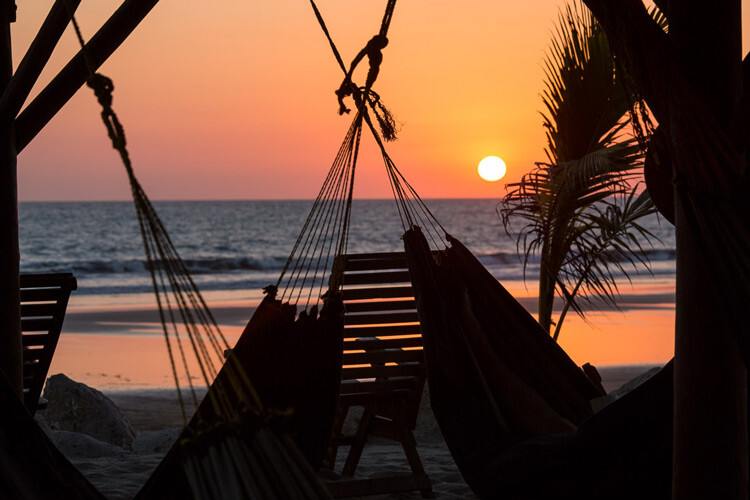
Sunset in Nicaragua.

If you need some tips to help you on this one you can find a good video here and links to several articles on shooting the sunrise and sunset.

Remember you don’t have to have the sun in your photo to make it an effective shot. Use the nice soft directional light at these times of day to your advantage.

Sunrise in the beach in a fishing village in Nicaragua. I used the soft warm light to show the subject – this young girl taking home a fish for her efforts helping the fishermen on the boats coming in.

Another Nicaraguan sunset. Add an interesting subject in front of your sunset for a more dramatic photo.

Weekly Photography Challenge – Sunrise Sunset

Simply upload your shot into the comment field (look for the little camera icon in the Disqus comments section) and they’ll get embedded for us all to see or if you’d prefer, upload them to your favorite photo-sharing site and leave the link to them. Show me your best images in this week’s challenge. Sometimes it takes a while for an image to appear so be patient and try not to post the same image twice.

Share in the dPS Facebook Group

You can also share your images on the dPS Facebook group as the challenge is posted there each week as well.

The post Weekly Photography Challenge – Sunrise Sunset by Darlene Hildebrandt appeared first on Digital Photography School.


Digital Photography School

 
Comments Off on Weekly Photography Challenge – Sunrise Sunset

Posted in Photography


4 Tips for Beginners to Food Photography

27 Oct

Food photography is everywhere – restaurants, bars, advertisements, shop windows, billboards, blogs, menus, books – the list is endless. Interestingly enough, when done right these images not only catch your attention but may have an impact long after you’ve seen them.

4 Tips for Approaching Food Photography

The work that goes into food photography is no small feat and usually starts with a story. Is it something you are trying to sell? Is it food you created and want to convey that it is your best recipe yet? Does your food story have a cultural side or is it a moody, artistic piece? Food photography is a vast intricate topic, but if you are just starting out, here are a few things to keep in mind:

1) Light to accent the food’s character

Controlling light can elevate your food photography easily as it helps you take charge of your end result. A good starting place to set up is near a window with lots of natural light – a look that is often simulated when shooting food in a studio – with light skimming across at an angle.

4 Tips for Approaching Food Photography

This scene evokes feelings of food just made and laid out, waiting to be consumed. No matter what light source you use, keep the subject in mind and modify the light if needed. Modifications can be as simple as changing color temperatures to be more flattering or diffusing your light.

Back or side lighting usually works well for food, so try them both and see what works best for your subject.

2) Textures and Layers

While textures and layers are two different aspects of food photography, they sometimes have a symbiotic relationship.

Textures are an easy way to add personality and character to your image and layering helps you tell the story. Textures range from using your work surfaces, contrasts in the food itself or even by bringing in a prop or two.

4 Tips for Approaching Food Photography

Your composition can benefit from layering elements in the photo that portrays your food – props and ingredients for example. Further, introduce textures and layers by using contrasting backgrounds on your work surfaces, e.g., a metal baking tray on a tiled counter top or wooden table.

By building up layers you give the final image interest and depth. You want the food to look delicious and interesting, not lifeless or unappetizing.

4 Tips for Approaching Food Photography

A nice rule is to keep layering and styling your subject until you want to eat it.

3) The power of neutral backgrounds

Keeping the previous tips in mind, a good starting place is a neutral background to build on. It can be plain or even textured, but when you start neutral you can create many different looks with a few simple changes.

Use the food and layers to introduce color, shapes, lines and more texture. The background is not intended to be the main focus but is used to add interest and enhance your final image.

4 Tips for Approaching Food Photography

If you are creating food image for stock photography, you will see many images done on solid white or black backgrounds. This is done intentionally so that the food is the focus and not the storytelling element.

4 Tips for Approaching Food Photography

4) All about the angles

The most recommended angles for food photography are directly above, straight on, or at a forty-five degree/three-quarter angle (can vary slightly). Determine how close you want to get to the food. Do you want to show something specific or an entire scene?

Keep the subject in mind – some food looks very good close-up, while others benefit from the environment and story.

4 Tips for Approaching Food Photography

Bonus Tip

When you start doing food photography, it will not take you long to realize that it is not as easy as it looks. Many food photographers use a food stylist to help them materialize their vision, as styling is a skill in its own right.

If you are just starting out, by all means, experiment. But if you can use a food stylist, there is a great deal you can learn from the way they work and develop your own style and technique.

Conclusion

4 Tips for Approaching Food Photography

Food photography is an extremely satisfying genre because of all the attention to detail it requires. It is an expansive topic with many tips and tricks needed to create that perfect delectable shot. These are just a few to consider as you start your journey. Feel free to share any tips you have come across or used in this delicious genre in the comments below.

Check out some of our food photography video tutorials tips as well.

The post 4 Tips for Beginners to Food Photography by Nisha Ramroop appeared first on Digital Photography School.


Digital Photography School

 
Comments Off on 4 Tips for Beginners to Food Photography

Posted in Photography


4 Tips for Low Light Photography During the Winter

26 Oct

With fall here and winter fast approaching as well, the sun sets earlier in the day and most of us will be confined to shooting indoors. Whether you are shooting during the day or in the evening after the sunset, adapting and embracing shooting in low light will be beneficial to help you continue working on your photography skills and other personal photo projects.

If you are like me and work all day and come home in the evening to pick up your camera, you may be further limited to shooting right around sunset or utilizing artificial light sources only.

Low light indoors winter 10

There was a time not long ago when I used to hate photographing my kids in low light. I was nervous about increasing the ISO and adding noise in my images or worried about reducing the shutter speed and causing camera shake. But slowly over time, I started to get used to working with various light sources around me creatively and utilizing them in my images.

If you are new to shooting in low light, here are some simple tips that could be helpful without the fear of shooting indoors in low light or using artificial light.

1. Shoot wide open and/or use a slow shutter speed

Although this may not be the best solution all the time with multiple people in the image indoors; but shooting wide open (as much as your camera allows) helps you get more light in the image. Making sure your focal points are aligned on the subject where they need to be, this could help you with that low light shooting you are struggling with.

Low light indoors winter 1

Low light indoors winter 2

Another option would be to consider using a slow shutter speed. A shutter speed of 1/200th or slower to 1/100th doesn’t always produce camera shake when handheld and lets more light in as well. There’s always the option of using a tripod, however, keep in mind that this may not be feasible when photographing kids in action.

Low light indoors winter 3

2. Crank up that ISO and embrace noise

Having a camera with low light capabilities sounds great. However, if you are on a budget and need to work with what you have, consider cranking up your ISO as high as you can after adjusting your shutter speed and aperture.

Consider embracing the noise or grain produced and using it in your images creatively. Converting an image to black and white during post-processing also helps hide any yellow light indoors you may have from artificial sources after hours.

Low light indoors winter 4

Low light indoors winter 5

Low light indoors winter 6

Low light indoors winter 7

Consider using alternate artificial light sources such as an iPad light, refrigerator light, desk lamp, etc., for extra creativity.

Low light indoors winter 8

Low light indoors winter 9

3. Find pockets of light

Open up windows, blinds, and curtains. Pockets of light and shadows add to the drama and create depth.

Once you get home from work in the evening, look around to find any little pockets of light that you can use. This may be right around the golden hour (one hour prior to sunset) and you will find some amazing light peeking through the windows if you time it just right. Utilizing this light will produce some amazing shadows and you can create some moody images as well.

Low light indoors winter 11

Low light indoors winter 12

Low light indoors winter 13

4. Dust off your flash and practice using it

When all else fails and I need to turn my lights on after hours, I rely on my Yongnuo flash unit and simply bounce it off the nearby walls. A lot of times I hear from other photographers (who limit themselves from shooting indoors during evening hours) that using flash is really complicated. I set my flash unit on ETTL and power it accordingly to get more or less light in the image based on how many artificial light sources I have turned on in the room.

Low light indoors winter 14

Low light indoors winter 15

Conclusion

In conclusion, all of the tips above are not always an either/or situation. Most of them can be used together such as combining a slow shutter speed along with increasing the ISO while shooting in a pocket of light with the blinds open when you really have those corner rooms with less light!

While doing the above and balancing your exposure creatively, you can create moody images with some drama. In summary, shooting in low light or the use of artificial light doesn’t have to be that intimidating. Give it a trying show us what you come up with in the comments below.

The post 4 Tips for Low Light Photography During the Winter by Jyotsna Bhamidipati appeared first on Digital Photography School.


Digital Photography School

 
Comments Off on 4 Tips for Low Light Photography During the Winter

Posted in Photography


12 Tips for Better Nighttime Event Photography

25 Oct

There’s no way around it: doing nighttime event photography is tricky. Festivals, ceremonies, parties, and parades involve fast action, difficult lighting conditions, and hectic environments. It’s no wonder that first attempts at nighttime event photography often result in blurry and unusable images. Fear not – this article will help you get up to speed.

12 Tips for Better Nighttime Event Photography

1.  Know the pros and cons of different lens types

Instead of telling you, “use a fixed focal length lens with a wide aperture,” I want you to maintain an open mind to zoom lenses. Prime lenses are my first choice for shooting nighttime events where I’m free to move and get close to my subjects. However, for events where I’m confined to the audience or press section, I need the ability to zoom, frame, and isolate subjects without moving all that much.

In this article, the example images are a 50/50 mix of fixed focal length and zoom lenses. Through this, you’ll see what is possible with each type. Although zoom lenses with wide apertures (i.e., a Nikon 24-70mm f/2.8) are often said to be ideal for nighttime events, they are extremely expensive pieces of equipment.

12 Tips for Better Nighttime Event Photography

A scene from the Keelung Ghost Festival parade on September 4th, 2017 – Taiwan. This is a solid example of a nighttime event for which I chose a zoom lens over a prime. I was shooting from the press sectionthe edge of a wide boulevard on the action side of the crowd barrierand I could only move from side to side, not towards the action. Therefore, the ability to frame shots using a zoom lens was crucial to me.

2. Focus on the interplay of shutter speed, aperture, and ISO

Because creating a correct exposure is a balancing act between various settings, the next step is to focus on the interplay between shutter speed, aperture, and ISO. Generally, you want your nighttime event images to be sharp; therefore, make a fast shutter speed your priority.

With a prime lens, select a wide aperture (try f/2.8) and increase the ISO until your test shots register a shutter speed of 1/125th or preferably higher. Shooting wide open (i.e., f/1.4 or f/1.8) will result in slow autofocusing and you missing your shot. Go higher to avoid these problems.

With a zoom lens, select the widest available aperture available (i.e., f/4.0) and crank the ISO up high. I usually select ISO 3200 and fire off some test shots of a moving subject. Using these settings in aperture priority mode, I was able to achieve a shutter speed of 1/640th for the image below.

12 Tips for Better Nighttime Event Photography

A costumed performer dressed as a Chinese god runs straight towards me – Keelung, Taiwan. 1/640th | f/4.0 | ISO 3200 | Canon 24-105mm f/4 L.

3. Utilize available light

For my style of travel photography, I rarely use a flash; I prefer the results from utilizing available light. It takes a great deal of skill to use a flash in a way that compliments your images rather than detracts from them. Therefore, I recommend saving it for a later, more advanced stage of your photography journey.

12 Tips for Better Nighttime Event Photography

Pirouetting gypsy-style dancers amaze the crowd – Keelung, Taiwan. 1/250th | f/4.0 | ISO 3200 | Canon 24-105mm f/4 L. I waited until these dancers were beneath a spotlight to utilize this light source and achieve a faster shutter speed.

4. Get close to the action

Get as close as possible without disturbing the event’s participants. For the image below, I was in Manipur, a remote Indian state on the border with Myanmar. I sat cross-legged just as the boys opposite me were doing, which was fine until the real fighting began. This martial arts demonstration took place after dark in a poorly lit pagoda. It was hard enough to focus my eyes, let alone my camera. I had to push my ISO to the limits, even though I was using a prime lens.

The ancient Manipuri martial art of Thang Ta. This was the most challenging lighting condition I have ever shot in.  1/80th | f/1.4 | ISO 25,600 | Sigma 35mm 1.4 Art. You read that right – ISO 25,600! Note the noise.

5. Ask your subjects to move

At nighttime events, I am always on the lookout for well-lit spots. I want a place with bright artificial light that I can utilize to increase my shutter speed. Once I’ve found both the spot and my willing portrait subject, I ask them if they would be kind enough to step into the light. This is the best method for capturing beautiful portraits at nighttime events without a flash.

12 Tips for Better Nighttime Event Photography

Girl of the Meitei ethnic group at the Lai Haraoba festival – Manipur. The temple where the festival was taking place was dimly lit; however, one corner had the light I was looking for. She agreed to move, which allowed me to achieve a shutter speed of 1/200th.

6. Use continuous shooting mode

Once you have nailed your settings in combination with the available light, I recommend that you set your camera to continuous shooting mode. Take a look at the image below. I took five similar shots within fractions of a second of each other, and could then select the image with the best composition, facial expressions, and lighting when I was back at home.

Children’s rollerblade display team at the Ghost Festival parade – Keelung, Taiwan. 1/250th | f/4.0 | ISO 3200 | Canon 24-105mm f/4 L

7. Observe, anticipate, and shoot

Another technique is to spend time observing the event. Look for patterns in movement and people that would make the best subjects. Try to compose the shot you want to take in your head. Next, get into position and select your settings. Anticipate what is likely to happen and be ready when it does. Finally, shoot away.

12 Tips for Better Nighttime Event Photography

Ladies performing a dance for the Lai Haraoba festival – Manipur, India. The dance involved moving slowly in a circle for one hour or longer. I was able to observe full rotations, anticipate exactly where to stand for the best view and light, and then shoot when the ladies came back around.

8. Frame using the environment and set the scene with the background

This is a valuable technique for increasing the visual interest and storytelling elements in your nighttime event shots. Be on the lookout for environmental features, which could also take the form of other people, to frame your shots. Take a look at the example below.

The younger Manipuri ladies watched their elders’ intricate hand movements to check if their own were correct. To communicate this detail, I framed the shot from behind the two oldest women and used their heads to frame the younger ladies looking back at them.

9. Move and use your feet

Your legs are your zoom when you’re using a fixed focal length lens. Throw yourself into the action. Crouch, climb and run your way to finding interesting angles and available light. In the image below, I left my seated position among the crowd, stood below the stage looking up at the priest, and composed the shot.

12 Tips for Better Nighttime Event Photography

Hindu priest performing the Ganga Aarti ceremony – Varanasi, India. 1/125th | f/1.4 | ISO 1250 | Sigma 35mm 1.4 Art

10. Interact with your subjects

Get the attention of your subjects and make eye contact before raising your camera. I remember waving, smiling, and shouting “Ni hao!” to the performer in the image below, which led to a series of interactions and photo opportunities.

12 Tips for Better Nighttime Event Photography

A performer at the September 4th Ghost Festival parade in Keelung, Taiwan interacted with me directly after I initiated contact. 1/125th | f/4.0 | ISO 3200 | Canon 24-105mm f/4 L

11. People expect to be photographed. Don’t hold back.

This isn’t street photography. The protagonists and guests at your event, particularly festivals and parades, probably expect to be photographed. An exception to this would be religious ceremonies, which require extra sensitivity on your part. Ask permission from someone in charge, and if someone asks you not to photograph them you should absolutely respect their wishes.

12 Tips for Better Nighttime Event Photography

Taiwanese lady marching with members of her organization in the Keelung parade. 1/400th | f/4.0 | ISO 3200 | Canon 24-105mm f/4 L

12. Research your location ahead of time

Finally, pick an event ahead of time and research it. Consider attending on two different nights with two different sets of objectives. This is what I did when I attended the Ganga Aarti ceremony in Varanasi, India. The first night, I used a 35mm prime lens and focused on close-up action shots and portraits. The second night, I shot the ceremony from a boat on the Ganges using a 24-105mm zoom lens.

12 Tips for Better Nighttime Event Photography

Walking across tightly-packed boats on the Ganges, this boy used his thumb to brush colored powder onto the forehead of anyone with 10 rupees to offer – Varanasi, India. 1/50th | f/4.0 | ISO 3200 | Canon 24-105mm f/4 L. Note the lower shutter speed, which ended up not really mattering. Through spot metering off the flames and utilizing available light, I was able to come away with not only a usable image but also one of my favorite shots from two months in India.

Conclusion

Put these 12 tips for better nighttime event photography into practice soon. Why not look in your local newspaper and check for events that you could attend this week? Don’t forget to share your comments and images below.

The post 12 Tips for Better Nighttime Event Photography by Ben McKechnie appeared first on Digital Photography School.


Digital Photography School

 
Comments Off on 12 Tips for Better Nighttime Event Photography

Posted in Photography


The Winners of the Three NYIP Photography Courses Are . . .

25 Oct

The winners of the four NYIP photography courses are…

A BIG thank you to everyone who entered our recent competition to win one of three photography courses from our friends at NYIP.

The response was wonderful. In fact, it was so wonderful that the team at NYIP decided to offer a special 20% discount off any of their courses (details below). But first – here are the three winners of the competition for Fundamentals of Digital Photography Course – worth $ 749 (winners chosen by NYIP):

  • ETricco
  • Felicia Giberson
  • SD Art Teacher

A Message from NYIP (and a 20% discount)

“Congratulations to all three winners! And thank you to all the participants for your many comments. We were so excited to see how many people were interested in our Fundamentals of Digital Photography Course. To those who did not win, we wanted to let you know that for a limited time we are offering you the chance to save 20% on the NYIP Course of your choice. Learn more at www.nyip.edu. Simply use the code NY20 at sign-up. But don’t wait, because this offer is only available until November 8th EST – The NYIP Team”

  • Winners will be emailed with details of how to collect their prize by the team at NYIP.
  • Thanks to everyone for entering and to NYIP for yet again, sponsoring another wonderful competition.

Photo by NYIP Student Photographer, Finnur Tomasson

The winning comments:

By ETricco – This course seems to be just what I am looking for. I have dreams of getting into some sort of photography-related field (most often when the 3 1/2 walls of my cubicle feel like they’re closing in on me and I need to find a more fulfilling career ASAP), but how do you start?? They are probably pipe dreams, but I figure at the very least I would like to master the skills. I use manual settings all the time and end up with decent pictures, but they are the production of lots of shots and just testing out different settings to see what works. I want to move on from this try-and-see method to a more calculated, intent technique. Anyone can take a beautiful photo of something beautiful, but I want to gain the skills to take something ugly or ordinary and capture it in a beautiful frame- and to be able to do that consistently, knowing exactly how to go about it and why. I’ve been reading up on ISO and aperture and shutter speed and have a basic grasp of what they are and how they work together, but I can’t yet look at something and know what my settings should be. I think if I had the framework this course provides instead of the piecemeal learning I’ve been doing, pulling together tips and facts from different articles and forums I find, it would really pull everything together; moreover, I think I would also be a source of motivation, because I love learning but trying to teach myself on my own is often overwhelming and disheartening. Lastly, I love that this course can be done at my own pace, so it can fit into my already hectic life and I can really get the most out of it. Please pick me and rescue me from my Office Space nightmare!

By Felicia Giberson – NYIP to me is a place that cares about their students by helping them to become better photographers. Being able to be mentored by a professional photographer would be absolutely amazing. I never seem to be completely satisfied with my pictures and to be able to have a professional guide me and give me one on one feedback is priceless. I have been learning for over a year now and seem to have hit a roadblock in the way that my pictures are coming out. My focus, composition, and exposure always seem to be off and while I can fix exposure and composition in the computer I cannot fix the focus. I would be so excited to have someone be able to give me pointers to use so that I can correct this and other issues I am having. Watching videos online and reading articles only helps so much. I would love to have the chance to get that perfect final image in my photos that I see in my mind and I believe that the New York Institute of Photography can do that.

By SD Art Teacher – How could I use an NYIP course, oh let me count the ways…
First, I am a high school art teacher from a rural school in South Dakota. And I have been given a wonderful opportunity this spring to teach a photography class. (I have only been asking for this opportunity for about 10 years or so), but anyways, I have finally been granted my wish.

This brings me to my first problem. The last time I took a photography class we used this stuff called film and we had to edit, develop and process it in a room, called a “Darkroom” ironically. Hopefully these still exist, but no matter what, this is where I learned. Now not to make myself sound THAT old, I have owned a DSLR camera for about 10 years now. I just have never officially taken a class. I am very proud to be a self-taught photographer. But I think I am in over my head with this teaching photography thing.

NYIP could help me in so many ways because while I think I know composition, lighting and editing, I also know that I might NOT know everything. Usually this is hard for me to admit. But when it comes to photography, which is at the lower end of my knowledge pool, I would be grateful for any assistance I can get. I am especially interested in learning the editing phase of the class. I know enough about editing programs to basically be dangerous, but I am very nervous about teaching tips and tricks to high school students who are depending on me for every step of the process.

While I am nervous, I am also very excited to be teaching a photography class. I also think I am in a great position to not only use the knowledge I will learn from NYIP but to pass it on to future photographers who will learn the true art of photography. I hope to inspire them to find a passion in taking photos and learning to edit them so that they look like they have been created by professionals. My students might not become professional photographers but through my journey I hope to help them find their own adventure and love for photography. Who knows, they might even be inspired to pick up their own NYIP class in the future.

Thank you all again.

You can learn more about NYIP HERE

Disclaimer: NYIP is a paid partner of dPS.

The post The Winners of the Three NYIP Photography Courses Are . . . by Darlene Hildebrandt appeared first on Digital Photography School.


Digital Photography School

 
Comments Off on The Winners of the Three NYIP Photography Courses Are . . .

Posted in Photography


Choosing the Correct ND Filter for Your Desired Long Exposure Photography Effects

25 Oct

Long exposure photography has quickly grown to become one of my favorite styles of photography and it’s quite clear by looking through the images I’ve captured the last few years. More and more images use a shutter speed slower than half a second and it’s further between the handheld shots.

Which ND Filter to use?

One of the reasons I’ve grown to become such a big fan of long exposure photography is that it opens so many doors. You’re much less limited in your work and you have endless of options when it comes to how you want your image to look. However, it’s exactly this benefit which also becomes a challenge for many: how do you choose the right shutter speed and ND Filter? 

Choosing the Correct ND Filter for Long Exposure Photography Effects

I don’t believe that there’s one correct shutter speed or filter when it comes to landscape photography. A big part of the creative process is to do what you prefer and go for the look you want to achieve. However, if you want to be able to achieve the look you want, you’ll also need to know how to get there and that’s why it’s important to understand how each of the different ND filters will affect your image.

In this article, we’ll look at how each of three different (three, six and 10-stop) ND filters will affect your image and in what scenarios they are each most beneficial.

3-Stop ND Filter

If you’re familiar with Neutral Density filters you may already know that a 3-stop filter won’t have a huge impact during brighter hours. Compared to the six and 10-stop filters, the 3-stop is not particularly dark and it won’t allow you to use those extremely slow shutter speeds of several minutes.

That being said, the 3sStop ND Filter remains one of my personal favorites. I particularly enjoy working with it when photographing waves from a low perspective.

Choosing the Correct ND Filter for Long Exposure Photography Effects

The picture above was taken a couple hours after sunrise but due to the sun’s low position on the Arctic sky, it still wasn’t daytime-bright outside. However, without using a filter, the shutter speed would have been too quick to capture the motion I wanted in the water. So I knew that a 3-stop ND filter would do the job. Using it allowed me to lengthen the exposure time to 1/3rd of a second, which was just enough the get some motion in the rushing waves and to achieve the look that I wanted for this shot.

Had I used a 6-stop ND filter instead, the image would look quite different since the longer shutter speed would blur the water and lose the texture that I was aiming for.

6-Stop ND Filter

As the name indicates, a 6-stop ND filter lets you lengthen the exposure time by six stops (not six times – six stops is 2x2x2x2x2x2 = 64 times). If you’re already using a relatively slow shutter speed due to the sun’s low position in the sky, this means that you can achieve a very slow shutter speed when using this filter.

Choosing the Correct ND Filter for Long Exposure Photography Effects

For the image above, I used a 6-stop ND filter to blur the water and create an overall softer feel to the scene. Using the filter allowed me to lengthen the exposure time to 15 seconds, which was just enough to blur the water and create some motion in the sky. As you can see, however, the iceberg in the foreground is already blurring out when using a 15-second shutter speed.

Had I instead used a 10-stop ND filter and an exposure time of a few minutes, all the ice would be blurry due to them constantly moving. On the other hand, a 3-stop ND filter wouldn’t have allowed me to slow down the shutter speed enough to blur the water and I wouldn’t be able to achieve the look I wanted.

10-Stop ND Filter

The 10-stop ND filter is perhaps the most popular filter for many who are just getting started with long exposure photography. The effect is extremely visible and the images created with it can grab attention right away. Even though there are darker filters available (such as a 16 and 20-stop), the 10-stop filter is often what people think of when talking about long exposure photography.

Choosing the Correct ND Filter for Long Exposure Photography Effects

The image above is a typical example of how a 10-stop ND filter can create a surreal look to the image. With the filter placed in front of my lens, I was able to use a shutter speed of four minutes to completely blur the lake and get a soft, dramatic look in the sky as the clouds were dragged out.

While it does require some more planning and patience than the other two filters, it is also the one that has the biggest visual impact straight out of the camera.

Choosing the Right One

As I mentioned earlier in this article, there isn’t necessarily one correct filter that you should use. Instead, you should be aware of how the different filters will affect your image and then choose the one which will get you closest to your envisioned image.

Choosing the Correct ND Filter for Long Exposure Photography Effects

Conclusion

Long exposure photography opens many doors and gives you several new creative elements to work with. As with anything else, a big part of this technique is trial and error but as you continue learning you’ll also begin seeing what you need to do in order to capture the images you want.


If you want to learn more about Long Exposure Photography I’ve shared everything I know in my eBook The Ultimate Guide to Long Exposure Photography. This eBook is for those who are ready to take their images to the next level and expand their creative vision.

The post Choosing the Correct ND Filter for Your Desired Long Exposure Photography Effects by Christian Hoiberg appeared first on Digital Photography School.


Digital Photography School

 
Comments Off on Choosing the Correct ND Filter for Your Desired Long Exposure Photography Effects

Posted in Photography