RSS
 

Posts Tagged ‘Photography’

The dPS Ultimate Guide to Fine Art Photography

30 Nov

Daring to be Different

One of the contentious topics in the world of photography these days seems to be what exactly is fine art photography. Ultimately it is what the photographer deems it to be, but in the world of art, there is a lot more to it. If you want to get recognition as an artist that uses the medium of photography, then there are certain expectations of what your body of work should be like and how you go about executing it.

Galleries and collectors are not going to collect work or invest in art when there isn’t a lot of consistency within that body of work. One fine art image is not enough to make you a fine art photographer. The work needs to be done with intention, with a direction, and have a consistency over all the images. A style is developed that is recognizable in all the images.

It is important to look at other famous artists, not just photographers, but painters and sculptures, to see how their work has evolved. See how you can do something similar with your photography. Photography is no different to those other mediums and the same definitions that apply to them are also applicable to fine art photography.

Who can be a fine art photographer?

01 leannecole fine art photography

A long exposure that was taken during the day, but the light in the image has been manipulated to make it look like it was taken at a different time.

Anyone can be a fine art photographer; there are no hard and fast rules about it. Though it does demand a fair amount of dedication. There are no rules or special qualifications that a person needs to follow or have before they call themselves a fine art photographer.

Some of the things that help define a fine art photographer

Perhaps the best way to describe how you can be a fine art photographer is to look at how they work. There is a lot more to it than simply creating beautiful images. We can all do that, but an artist works towards something. Their work is done with intention, and they have a direction they are following. Finally, there is a consistency to their work. Let’s take a look at each of these points individually.

Intention

Often when you go out to take photos, you pick a place because you think you might get nice images at that location. That is most likely never going to be a problem for you. But if you want to be considered more of a fine art photographer then you need to go to places that you know will help you create images that will further your work, and build your portfolio. There has to be some intention behind why you photograph things.

2420 leannecole fine art photography

The cityscape that has some differences, but it is quite effective and if I was short of images for an exhibition this one would be included.

For example, a fine art portrait photographer who does images of people in certain scenes, like dark moody beach scenes, is not going to go and take photos of a baby in a park. Well, they might for a friend, but they wouldn’t include that work in their portfolio.

Artists are always trying to take photos that work with what they already have. They go out with the intention of photographing subjects that follow the direction of their work.

Direction

This is a lot like intention, but it means the photographer has direction. If they are taking photos somewhere, they are being directed by their previous work. This helps them to get images that will continue to follow that style.

06 leannecole fine art photography

Before processing.

07 leannecole fine art photography

After processing to give it my signature style.

Consistency

For the same reasons as intention, that same portrait photographer is not going to photograph a baby because it won’t give their workflow any consistency. For a fine art photographer, you need to have work that is fairly consistent and looks like it all belongs together.

That doesn’t mean it has to be the same subject all the time, it can also be a similar processing style. All the images are processed in a similar way so they look consistent when a gallery or investor is looking at the portfolio.

The more consistent you are the more galleries and investors will be interested in your work.

Consistency is important and making sure the images all have the same feel and look is important in creating a body of work.

This is definitely the case. I asked the curator for Stills Gallery in Sydney, Josephine Skinner, about how important it is that there be consistency in a body of work. This is what she had to say:

It’s very important. If an artist were contacting us, I would hope to view a resolved body of work, both conceptually and materially. Of course, we’re used to working with artists as they develop new work for an exhibition, but a cold submission won’t pique my interest unless you establish your capacity to deliver.

What is a body of work and how do you create it?

A body of work is where you have several pieces that show the consistency and intention that was spoken about earlier. When you have a body of work it should have a similar style and look as though one person created it all.

The subject matter should be all the same or very similar. There needs to be a number of images in the body of work so you can have an exhibition. The actual amount will depend on where you are exhibiting and how many are needed.

This is a selection of my work, notice the similar processing style, subject matter, and mood across all the images.

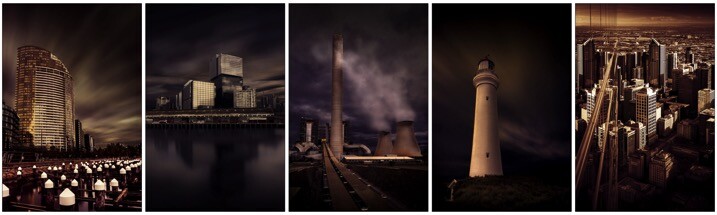
Contact sheet 02

Contact sheet 01

Artist Statement

Whether you want to believe it or not, an artist statement is very important. It doesn’t have to be an essay, but putting what you are trying to achieve with your photography down on paper is a great way to help with those areas that we just discussed; intention, direction, and consistency.

When writing one you want to be clear about why you are doing what you are doing. What is important about it and why you have chosen the medium of photography?

Here is what Josephine had to say about artist statements:

An artist statement is helpful: be brief, clear and use accessible language.

Some statements can waffle on and not make much sense. It is good to sound professional, but it should be concise and leave the audience of your work with a very clear understanding of what you are trying to achieve.

This image was taken with the intention of being able to change the mood and make it look different.

03 leannecole fine art photography

The final image. Many aspects were changed so this image would look like it was taken at night with just one light shining.

Look at some fine art photographers that are practicing now

Have you ever been told that if you want to be a good writer that you should study and read the writing of those in the same field? The same can be said for fine art.

If you want to be an artist then you should study and look at the work of other great artists, in this case, fine art photographers. Though, you should include a wide range of artists as photographers can also learn a lot from painters, drawers, printmakers, and sculptors.

08 leannecole fine art photography

This image of the 12 Apostles doesn’t really belong with most of the work, but it still has the same. The light has been manipulated, so it almost belongs. But, the different subject matter would make mean it would probably not be included in an exhibition.

You really need to look at what your work is and find similar photographers. There is such a large number of photographers working at the moment, that it’s hard for me to tell you who to study. But here is a list of a few fine art photographers to give you a starting point.

  • Julia Anna Gospordarou
  • Bill Henson
  • Tracey Moffat
  • Cindy Sherman
  • Brook Shaden – artist statement and gallery of work.
  • Andreas Gursky
  • Joel Grimes
  • Art Wolfe
  • Annie Leibovitz

What is an Artist CV?

15 leannecole fine art photography

A cityscape image before processing.

16 leannecole fine art photography

The final image showing how the light has been changed to create this look.

This is very similar to a work CV (curriculum vitae) or resume. But instead of listing all the jobs you have had, you list everything that galleries and other people in the art world might want to know about you.

They usually start with your education, where you have studied and when. Then you list what solo exhibitions you have had if you have had any. The goal is to end up with a massive list of those. Then you follow those with the group exhibitions in which you have been involved. Then you might add what prizes you have won.

Finally, comes a list of places where your work has been published. For example, if you have had work published in a magazine. You can also include collections and in this section, you will mention if you have sold work to important places like a major public gallery, for instance.

09 leannecole fine art photography

Another image that has the same look and processing, but doesn’t belong. It does belong more than the image of the 12 Apostles though.

Every time you approach a gallery you will be asked for your Artist’s CV. If you don’t have one, it is time to start working on it. They are usually one page.

Here is a link to my CV as an example.

Do you need to study Fine Art at a Tertiary Level?

The simple answer to this is no, you don’t have to study at a tertiary level to be a fine art photographer. But the long answer is that if you do, you will gain a greater understanding of the many aspects of being an artist. The really good places also give you studio space and impose the need to work in that space like a professional artist would.

10 leannecole fine art photography

Another one of the power stations, that could work, but wouldn’t be included in an exhibition.

There are so many other things you learn as well, for example, how to develop your style or your body of work. Or, how to create the consistency we talked about earlier. You begin to understand how the gallery system operates and how to approach them. Often you are given opportunities to exhibit your work so you can get an idea of what it is like. These can help you to get a start on your artist’s CV.

The lecturers are usually artists themselves, so they can guide and mentor you. They understand what you are going through and their advice can be invaluable.

Getting a Bachelor of Fine Art is never a bad thing. Many other artists and galleries will take you more seriously because you have shown a commitment to your practice.

12 leannecole fine art photography

This one is a little different, but it still fits the artist statement.

Where to study it if you so choose

There are places all around the world and where you study will depend on where you live, the cost, and if you are accepted. Look at other artists and see where they studied. Do your research to find out what is available near you. Find out how many graduates of that institution have had successful careers when they finished.

Not all art schools are equal. Some have very good reputations, while others will get you the degree, but not necessarily the prestige. For example, in Melbourne, you can get a Fine Arts Degree from many places, but two are more sought after, University of Melbourne, Faculty VCA, and RMIT University. People take more notice if you have attended and graduated from those schools.

14 leannecole fine art photography

This image appears as though it would work, but since the rest of the images are more cityscapes and not close-ups of anything, it would not be included. If more similar images were made, I may have to reconsider that decision.

Keep in mind that this type of degree will not lead to a paying job, and you are being trained to be an artist. It is expected that you will work at it full-time when you finish. Of course, most artists end up doing other jobs to supplement their income until they are making enough from their art. Though this appears to only happen for a few. Nearly all teach or have other jobs to pay the bills.

I had a lecturer once that told us if we were still doing art and exhibiting our work 10 years after graduation we would make money from it. Unknown if this is true, but it is a nice sentiment.

Visit galleries and see what others exhibit

2220 leannecole fine art photography

This was taken near a marina, but it is too different and I couldn’t make it look like the other images, so it would never be included in an exhibition.

To get a great understanding of what fine art photography is one of the best things you can do is visit art galleries, both public and commercial. You can see how the artist works, look at the consistency and also how the work all looks when it’s put together in an exhibition.

Look for commercial galleries that are exhibiting photography works, or better still find ones that specialize in fine art photography. If you can’t visit them in person, then look on the internet. They all have websites and usually show the works of the artists they represent.

Study the work and the artist. If you find some whose work you really like, pay a lot more attention to them. Find out what motivates the artist, look at their artist CV, and see if you can find an artist statement. That will really help you to understand their intention, direction, and the consistency.

Public galleries often have some of their collection online, but you are usually required to go and look. Don’t be disappointed if the photography section if very small, other artworks often get more wall space. You can look for galleries that specialize in photography, for example in Victoria, Australia there is a place called Centre for Contemporary Photography and that is all they show. It’s a great way to see what other photographers are doing.

18 leannecole fine art photography

Like the ocean image, this has the same look and feel, but the subject matter doesn’t match.

Here are a few others:

  • International Center of Photography in New York City
  • A Gallery for Fine Photography in New Orleans – they carry prints by many famous and iconic photographers including Ansel Adams, Julia Margaret Cameron, Henri Cartier-Bresson, W. Eugene Smith, Edward Steichen, Elliott Erwitt, and many others.
  • Center for Creative Photography in Tucson, Arizona. They house a large collection of photography archives including many of Ansel Adams original negatives.
  • Maison Européenne de la Photographie in Paris dedicated entirely to photography.
  • Torch Gallery in Amsterdam
  • Galleria Carla Sozzani in Milan
  • Magnum Photos and Gallery – they represent several iconic photographers’ work and have a gallery in Paris, as well as events in many cities worldwide and a great online gallery for viewing.
  • The Photographers’ Gallery in London, England.
  • Camera Work in Berlin.

Study about all art, its history and what is happening now

Part of being an artist is keeping yourself informed. As previously stated, you should be going to galleries and seeing other exhibitions. It is so important to read and study other artists. It can help you understand what their lives were like and what drove them to create their art.

It is also good to keep up to date with what is happening in the world of art. Who is winning awards, what work is really popular right now, and how you could fit in. Look at who is being exhibited and which galleries are showing their work.

Look at painters, sculptures, and other mediums

Don’t limit your photography study to just photographers. You should also look at painters, sculptures, printmakers, and drawers. You can learn a lot from them as well.

Rembrandt lighting is a type of lighting pattern that portrait photographers strive to create. It involves a triangular spot of light on the cheek of the portrait subject. Photographers have been trying to replicate that style for years, but it came from a painter – Rembrandt.

13 leannecole fine art photography

The image is similar, but it probably wouldn’t be included in an exhibition. It doesn’t quite fit.

In some ways, painters were our earliest photographers as they tried to paint what they saw. Looking at their work is very important. You can learn a lot about subject-matter and more importantly, about composition. For those artists, the composition was key and they would have spent a great deal of time working on that element of their craft. Study how they put their paintings together and learn.

Sculptors create compositions and often work conceptually. If you are interested in conceptual photography then looking at how these artists work can help you find direction. See what lengths they go to in creating their sculptures.

Living an artist’s life and what that means

There is a myth that many creatives were “suffering artists”. That to be an artist you had to be in some kind of struggle. The other myth is about being the “starving artist”, so if you are going to be an artist you have to also be very poor.

An image that would be part of the body of work. It follows the theme of the rest of the images.

The first is a myth, you don’t have to be on some internal struggle to be an artist. It has been said that you have to go through disasters in your own life in order to help you create masterpieces. It isn’t true, of course. Very normal people create the most amazing artworks. There is a lot more to it than some emotional suffering.

In the past, many artists were starving. Even in today’s world, making money as an artist is incredibly hard. There are more people wanting to be artists than there are people wanting to buy the work. The reference to starving was more to do with making no money and not having enough to buy food.

The reality is that most artists live very normal lives. They often work part-time jobs to survive and live in ordinary houses. They are often very normal people. There are some eccentric artists, but they are more the exception to the rule. Many have studios and workspaces, and every free moment they get, they work in their art practice.

11 leannecole fine art photography

A cityscape that would work in an exhibition, it has the same feeling as the others.

Exhibiting your work

There are various different kinds of galleries and if you want to exhibit your work then you need to start studying them. Find out which ones are the best for you to approach first of the several different types (large public and private).
First, you need to find out what the galleries are looking for. Once again, Josephine has some advice for those wanting to approach galleries:

The first piece of advice I would have is to do proper research into which galleries you approach and be selective with those you do. We get submissions from painters, for instance, who haven’t even looked on our website to find out we exhibit photomedia and video. In the process of narrowing it down, bear in mind that if a gallery has an emphasis on photomedia that doesn’t mean that all forms of photography will fit with their broader aesthetic and focus. Also, be conscious that each artist brings something unique to a gallery so diversity is desired – they probably won’t want someone whose practice mirrors an existing represented artist. Lastly, each gallery has a different policy for receiving submissions, so a good idea is to call and ask what they prefer. Don’t just show up and expect to sit down with the Director!

17 leannecole fine art photography

A cityscape taken from an observation deck. While it is a cityscape it also would not be included. It really does not have the same look at the others.

That is great advice and a good idea for all artists. Do your research and study the galleries you are interested in to see if they are a good fit for you. You can also ask questions to see what they have to say. They will often be more than happy to talk to you about what type of work they are looking for, and how to submit your work.

Josephine has provided some information on how they find new artists:

Our focus is contemporary photomedia and video, so we tend to look at art prizes that are often interdisciplinary, such as the Hatched Graduate exhibition at PICA, and keep an eye on what’s happening in ARI (Artist Run Initiatives) spaces. These platforms provide an initial filter because the work has already undergone a process of competitive selection. Galleries with a more traditional or commercial aesthetic would probably look elsewhere.

Most galleries will have information and guidelines about how to send in proposals for exhibitions; you need to follow those closely. They get a lot of submissions and if you don’t do what they ask then you could be eliminated straight away. Do everything you can to get them to look at your artwork.

Preparing your work to exhibit

2320 leannecole fine art photography

The subject matter fits with much of what the fine art work is about, but it’s the wrong colors and sends a different message than the others.

Having an exhibition of their work is the ultimate goal for most artists. It is where they develop a name and reputation. If you want that too, then you have to make sure your work is good enough to show.

There are so many decisions to be made before you do a show. You have to decide who will print your work and how it will be printed. Part of the reason for exhibiting is to sell your work and if it doesn’t look good then people won’t buy it.

Before the work is sent to be printed you need to make sure that there aren’t any defects in the images. When they are blown up, sensor spots or other unwanted items in your scenes will be enlarged as well. They could end up standing out so much that they take over the image. Magnify the image on your computer (view at 100% or 1:1 size) and look very closely for any mistakes or faults.

20 leannecole fine art photography

Work in an exhibition.

19 leannecole fine art photography

Work that is packaged and ready to be sent to an exhibition.

Find a professional printer who will work with you. Look for one that you can rely on, and who knows their business. They should be able to help you figure out the best way to present your work. There are so many options for photographs these days. You can do canvas prints, put images on fine art paper, and even have them on metal, which is very popular right now.
Then you are faced with the option of framing or not. Most galleries will answer that question for you.

Read my article: How to Prepare a Photography Exhibit of Your Work for more on this topic.

Editioning your work

This is not compulsory, but one thing that many photographers do is edition their work. This means they will only sell a certain number of that image or a limited edition. The artist sets the edition to what they think they might sell.

2520 leannecole fine art photography

A cityscape that is very similar to many I do, but I wouldn’t include this image as it doesn’t have the impact that many of the others do.

For many artists starting out, the number of editions is usually small, around 10 or 20. The more successful an artist becomes, the more expensive the images get, and often the edition number increases as. Some will do editions of up to 200 photos.

For most of us though, especially starting out, it isn’t necessary to do editions. You may only sell one or two copies of an image. As sales pick up and you begin to make a name for yourself it is good to consider putting out editions of your work.

If you die your work will double in price

This is probably the biggest myth out there about fine art photography and art in general. While it is true that when some artists die their work becomes a lot more valuable, it isn’t the same for everyone. If the artist had a successful career and was being collected by a lot of people then there is some truth in this.

2120 leannecole fine art photography

Image with similar colors and a long exposure, but it is not an image I would include in an exhibition.

When they die their work gains in value because it becomes rare. As no new work will be produced, all of their previous work becomes more valuable. That’s all there is, a finite amount, so it will increase in value.

For most artists, our death will only matter to those around us and our artwork will only increase in sentimental value. It’s sad, but you dying likely isn’t going to cause an increase in the value of your work.

Being a fine art photographer

There are many steps you can take that will make you a fine art photographer. There are many different paths and it is up to you to decide which ones you will take. In the end, being an artist is about doing work with intention, having a direction and working consistently.

2620 leannecole fine art photography

This would very definitely be included. The light has been changed and it works with the artist statement.

Artists usually exhibit their work with the idea of gaining a reputation so collectors will purchase it. This, in turn, leads to their work increasing in value and they can sell more. Being an artist is a noble profession and one that dates back hundreds of years, who doesn’t want to belong to that group?

The post The dPS Ultimate Guide to Fine Art Photography by Leanne Cole appeared first on Digital Photography School.


Digital Photography School

 
Comments Off on The dPS Ultimate Guide to Fine Art Photography

Posted in Photography


4 Tips for Better Nightscape Photography

29 Nov

4 Tips for Better Nightscape Photography

A nightscape is a representation of any place or scene at night. If you are venturing into this area of photography, you will quickly realize that there are some other things to consider along with getting your exposure right. Here are a few tips to help you.

1. Settings and Gear

Shooting nightscapes is a very cool way to teach yourself shooting in low-light conditions. The location and conditions will vary your settings, but there are a few things you can keep in mind. For example, digital noise is detected easily in darker areas. So, while newer cameras are handling noise better, it is a good practice to keep your ISO setting as low as possible.

4 Tips for Better Nightscape Photography
Since light is at a premium at night, it is a good time as any to work with more open apertures (smaller f-number), to let in more light. At night, sometimes your background details are lost anyway, so there are few added benefits of having a large depth of field. Star effects are a nice exception to this (created when shooting point light sources with a smaller aperture like f/11).

It’s also a great time to experiment with longer shutter speeds. During the day, keeping your shutter open means you need to add filters to cut the light. At night you need to add light and can use shutter speed to be more creative.

4 Tips for Better Nightscape Photography

Before you frown on High Dynamic Range (HDR) images, consider what value it adds. Bracketing is a good way to deal with the very contrasty reality of night photography.

Note: Long exposures also add noise as your sensor heats up (known as thermal noise). This makes it a good time to check that Long Exposure Noise Reduction box on your camera menu.

2. Location Scouting

As with other genres of photography, your location is important. Start with a plan of what you want to capture. Maybe it’s the city at night, that elusive Milky Way; exciting light trails left by cars or some sort of nightlife action. While some of these coexist, most times they are independent of each other and require their own unique conditions.

4 Tips for Better Nightscape Photography

Since photography means thinking about your light source(s) at all time, night photography needs added consideration for obvious reasons. What are the light sources in your location? Is it a street lamp, the moon, building lights, traffic or do you have to walk into the scene with your own light (light painting)?

When shooting landscape images at night, you could get there before nightfall and observe how the light changes. If you do not have the luxury of time, there are phone apps that help you figure out the light direction of your location. Scouting for a location can be as simple as a google search, someone’s recommendation or making an actual trip to understand the environment. Familiarizing yourself with your destination in advance gives you a photographic advantage and even keeps you safer.

Bonus Tip: Water can be an asset to night photography especially where there are light reflections.

4 Tips for Better Nightscape Photography

3. Moonwatching

The moon is a fascinating subject. Since it is a light source, you need to take it into consideration when scouting and planning your nightscape shots.

If it is your subject, then you may want it at its peak for drama (full moon, supermoon, or harvest moon) and shoot on a clear night to capture as much detail as possible. After you have worked out the correct exposure for shooting the moon, try composing it into a scene.

4 Tips for Better Nightscape Photography
On the other hand, if you are shooting other celestial objects (e.g. the Milky Way, meteors, or star trails), it might be preferable if the moon is barely there or not so dominant (new moon to the first quarter). Like sunrise and tides, there are many apps that can help you figure out moon phases and direction in relation to your location.

4 Tips for Better Nightscape Photography

4. Other Environmental Notes

Condition your gear!

Since temperatures usually drop at night, you need to be aware of moving your camera from warmer to colder conditions (the reverse is also true). Any seasoned night photographer can attest that “lens fog” is a nuisance as it blocks/cuts the light passing through your lens. Lens hoods help a little with reducing moisture build-up on your glass.

So another bonus of arriving at your location a little earlier is giving your gear time to acclimate to your shooting conditions.

4 Tips for Better Nightscape Photography

Walk with a flashlight

A flashlight is an asset for several reasons. You can use it to ensure proper footing for yourself or your tripod. It also helps when you need to make changes to your camera settings (knowing your controls off-hand is very useful in the dark).

More than these practical uses, it can play a part in your night photography as well. Use it to light paint areas in your image or even create a light spot to help with focusing.

4 Tips for Better Nightscape Photography

Conclusion

Night photography provides a great learning environment and gives you the opportunity to play around with your settings. Depends on what you are shooting, your available light is not changing quickly (if at all) and this gives you more time to experiment and get it right. You can take advantage of less traffic around or use it to your advantage (shooting nightlife).

Be safe while you’re out there and scout beforehand if possible. If you are an avid night photographer, share with us some of your night photography tips in the comments below.

The post 4 Tips for Better Nightscape Photography by Nisha Ramroop appeared first on Digital Photography School.


Digital Photography School

 
Comments Off on 4 Tips for Better Nightscape Photography

Posted in Photography


Why Photography is Beneficial for Your Mental Wellness

27 Nov

I initially took up photography for one simple reason – I couldn’t draw. My 16-year-old self reasoned that photography must be pretty easy. Just point the camera and shoot, right? But as I worked away in the high school darkroom, I realized how powerful the camera is for artistic output. And as I built up my own photographic practice, I got to see another side of photography too, its therapeutic qualities.

It tasks photographers with the opportunity to truly see an environment, making the most out of any situation. Photography requires adaptability and focus, driving photographers to chase that elusive perfect shot. This is why many people find photography so effective for cultivating good mental health.

Why Photography is Beneficial for Your Mental Wellness

There is a unique satisfaction in executing a photograph you are happy with.

Mental health is a vast topic. It plucks external experiences and mashes them with physiology indiscriminately. Personally, I feel like photography isn’t just about cameras and photos, but consistency. Something I can fall back on when times get tough. Often I find that photography can be the difference between a good or a bad day – that’s pretty powerful stuff.

Here are a few ways that I’ve found photography to be beneficial for my own mental wellness.

Motivation

From the earliest stages of photographic study, the camera trains the eye to seek out detail and opportunity. Whether you notice it or not, chances are you’ll quickly begin to see the world through the perimeter of the viewfinder – camera in hand or not. A photographer’s process is often cyclical – seeking out subjects will drive you to document them photographically. And to photograph those subjects adequately, you’ll need a discerning eye. One feeds the other and motivation fuels both.

I’m a bit of an aviation nerd, so taking photographs of something I love always picks me up emotionally.

But the relationship between photography and motivation can be tenuous. Sticking with photography in better times creates a sense of stability in harder periods. Chasing the elusive “perfect shot” and the afterglow of a photo session slowly starts to become a necessity – instilling resilience.

We photographers are lucky in that we have a self-contained tool to reach out to. Photography opens an inexhaustible amount of doors, providing opportunities to explore, travel, experiment and grow experience. It also helps form relationships with different places and subjects, leading to tangible locations that are a haven for low days. A valuable self-care technique.

People on the outside may not understand a photographer’s inner workings or mental well being, but even the smallest of accomplishment spills over to a new day, easing the complex difficulties experienced in a low. Photography has many benefits and it all comes down to taking a camera in your hands.

Why Photography is Beneficial for Your Mental Wellness

Photography can take you to amazing places.

Mindfulness

Mindfulness can be an important fixture in mental health. Usually, you’d think of yoga or meditation when discussing it. But it’s no different for photographers.

This is a time to take stock of your mental landscape. It encourages a state of attentiveness to your surroundings and your own thinking. Whenever you bring awareness to your own senses, you are being deliberately mindful. It’s almost like hitting a reset button for a moment, taking a breath, and paying attention to your sensory experience.

Mindfulness has been found to reduce stress and rumination, working memory, focus, and self-insight.

Why Photography is Beneficial for Your Mental Wellness

Photography isn’t just like mindfulness, it is mindfulness. Photography requires a deep focus on all of the body’s sensory input to seek out photographic subjects. It prioritizes the actions involved in photography first – avoiding some sort of sensory overload.

This deep sense of a photographer’s surroundings transforms a moment into a carefully considered image, even in a split second And it all comes together to form one fluid moment, with each click of the shutter activated with purpose and reason. As Don McCullin, documentary and war photographer said,

“Photography for me is not looking, it’s feeling. If you can’t feel what you are looking at, then you’re never going to get others to feel anything when they look at your pictures”.

Why Photography is Beneficial for Your Mental Wellness

Green is the color our eyes are most sensitive to. Seeking out nature, even in an urban environment can cultivate mental well being.

Perspective

From it’s earliest incarnations, photography has shaped our understanding of the world. Eadweard Muybridge is known for his photography of the Mid West. But he shifted his focus to a more scientific endeavor when Leland Stanford, a race-horse owner asked that he could study the dynamics of a horse’s gallop.

Muybridge had been tasked with breaking down what the eye could not. Up until Muybridge’s efforts, most artists painted horses at a trot with one foot always on the ground. But Myubridge’s use of photography revealed the horse’s gait was performed with all the feet in the air over the course of each stride. His method was one of the early uses of perspective in photography, revealing the scientific potential of the camera.

Why Photography is Beneficial for Your Mental Wellness

Taking advantage of an interesting perspective is a valuable form of-self expression.

Why Photography is Beneficial for Your Mental Wellness

Photography can reveal beauty with a simple change in perspective. The mental gymnastics required to form an unusual image slowly becomes second nature, aiding with racing thoughts and anxiety.

Photographers make use of both mental and physical perspective to re-imagine the world. Sometimes a new perspective is physical, or it reflects the inner machinations of a photographer’s process. Inspiration can hit at any time – that’s why I try to keep a camera with me as much as possible.

Thinking, planning, investigating, scouring. Photographers make use of personal experience to convey a new way of digesting a scene, both deliberately and on purpose. The result is an unusual insight into a subject. This genuine approach can reveal a greater faith in your own photography. But it also encourages relationships between a viewer and the photographer.

This contentedness cultivates awareness, thoughtfulness, and insight. This sharing of ideas is also cathartic and mentally beneficial – a  problem shared is a problem halved.

Conclusion

Why Photography is Beneficial for Your Mental Wellness

Photography leaves your mark on the world.

Artists have always translated art from the mental manifestations of the artist. Photography cultivates thought, inspiration, awareness, and focus. Your photography reflects your own experience – creating new perspectives and connections with people. Art can flip perspective upside -down.

Buy honing in on your own experiences, you can cultivate a mindfulness in your practice that flows into the heights of creativity and eases some of the burdens of mental lows.

The post Why Photography is Beneficial for Your Mental Wellness by Megan Kennedy appeared first on Digital Photography School.


Digital Photography School

 
Comments Off on Why Photography is Beneficial for Your Mental Wellness

Posted in Photography


Weekly Photography Challenge – Backlighting

25 Nov

Light is the key to photography – without it, we’d be pretty hard pressed to make any images at all. They are also many kinds of light – hard light, soft light, front light, side light, overhead lighting and one that I use often to add more drama to my images – backlighting.

Backlighting can be used to create dramatic shadows.

Weekly Photography Challenge – Backlighting

This one is pretty straightforward. Find a subject where the light is behind them – voila you have backlighting. While that part is easy, make sure you get a good exposure. If you want a silhouette, underexpose the subject a little. If you want the subject properly exposed you might want to increase exposure a little.

Here are some tips and ideas:

  • Using Backlight in Nature Photography
  • Three Types of Light: Diffused, Backlight and Reflected – What are They and When to use Them
  • How to Create Backlight or Hairlight outdoors with Natural Light
  • Rediscovering Backlit Subjects

Foliage and flowers make great subjects for backlighting.

More use of shadows and backlighting.

Any translucent objects look great with backlighting – it enhances their colors.

Simply upload your shot into the comment field (look for the little camera icon in the Disqus comments section) and they’ll get embedded for us all to see or if you’d prefer, upload them to your favorite photo-sharing site and leave the link to them. Show me your best images in this week’s challenge. Sometimes it takes a while for an image to appear so be patient and try not to post the same image twice.

Share in the dPS Facebook Group

You can also share your images with the dPS Facebook group as the challenge is posted there each week as well.

The post Weekly Photography Challenge – Backlighting by Darlene Hildebrandt appeared first on Digital Photography School.


Digital Photography School

 
Comments Off on Weekly Photography Challenge – Backlighting

Posted in Photography


Why Lightroom Keywords and Star Ratings are Important for Your Photography Workflow

23 Nov

Lightroom has long been the “go-to” program for organizing images and has come into its own as an editing powerhouse as well. If you haven’t been using Lightroom for organizing your images, you are missing a big part of the digital photography pie. The secret to your organization success in Lightroom is using keywords and star ratings effectively.

Why Lightroom KeyWords and Star Ratings are Important for Your Photography Workflow

That doesn’t mean that you need to keyword every last image you import into Lightroom. But you can label batches of images and then eventually cull down the keywords to easily find your best images. With over 30,000 images in my Lightroom catalog, I’m pretty happy about being able to find an image in a matter of seconds with the use of this simple system. It’s well-suited for beginners and combines keywords and star ratings.

Set up a consistent naming system for your folders and images

For example, a file name could be; “Iceland_2015_03”.

Many people name their folders by date or location. I prefer location, then date, as it’s much easier for me to remember that way. Whatever naming system you use, just be sure that it’s consistent, and makes sense to you. If you decide “Location_Year_Month” is the best way for you to set it up, make sure that every folder is done the same way.

For example, these folder titles could fall into the Iceland_2015_03 category. Don’t make the mistake of creating random titles like this: Winter 2015, Iceland 2015, Iceland March 2015, Reykjavik 03_2015.

When you first import your images into Lightroom, you can rename the whole set of images, or rename them after import. It is much faster and easier to rename them upon import. Follow the import prompts and enter as much information as you can when you first are bringing images into Lightroom. It will save you loads of time later on.

keywords upon Lightroom Import - Why Lightroom Keywords and Star Ratings are Important for Your Photography Workflow

I usually keep the original file number of the image assigned in-camera and then add the location or another identifying label to the front end of the name. You can batch rename and keyword a series of images in the import module. You don’t have to keyword each image individually, but keyword in batches to make it easier.

My other secret tool is the star rating tool. When the images are first imported, I cull through the images quickly and add a one-star rating to the images that I would like to come back and edit. At this point, I don’t try and add any more stars than just a simple one-star.

Use the Paint Can Tool in Develop

Another easy way to add ratings to an image after import is to use the “Paint Can tool”. With this tool, you can set a parameter (like a star rating, keyword, or set of keywords) to “spray” on to an image or a collection of images. If you would like to “spray” a star to your favorite images, this is a fast way to do it.

The Paint Can tool is located on the bottom left of the grid view and it looks like a spray can. Click on it and you will see a selective panel, choose “rating”. After you select “rating”, on the right side of that panel is a series of dots. Click on one of those dots, and it will turn into a star.

Why Lightroom KeyWords and Star Ratings are Important for Your Photography Workflow

Paint Can Tool

Then you can quickly go through your images in the grid view and “spray” a one-star rating on all of the images that you like. At this point, don’t apply any more than a rating.

If something really merits a better star rating, go back and review the images again. Once you do your second pass of the images, set the spray can to a 2-star rating. Then repeat the same method for those images that you might like to go in and apply Lightroom adjustments.

Paint-Tool-Label

You can also use it to paint in a color label, flat, metadata or any of these things.

Reserve the 3-star ratings for those images that you might use for an article or blog post and the 4-star ratings are only reserved for the best of the best which you would put in your portfolio. Keep your star ratings consistent, so you know that if an image has a 4-star rating, that it reflects your best work.

Now that you have set up the keywords and star ratings to your images, you have the ability to search or filter images in your catalog. In the Filter Bar in the Grid View, choose the Text option and the drop down box to select keywords, and start entering specific keywords.

Using the Spray Can tool to add metadata

The Spray Can tool can be used for a variety of options to add information to your images. You can “spray” not only star ratings but keywords, metadata information, labels, presets, or assign target collection images.

The next option is to add a series of keywords to your images. We already know that the files you are importing will be from Iceland. Use that as the keyword that applies to all of these images. Then consider where you were on your trip to Iceland. Are your images from the North Coast or the South Coast? Do you have pictures from Reykjavik? Do you have images from Vik? Who is in the images?

The idea here is to start out broad and then narrow your focus. Perhaps your whole shoot is from Iceland. Perhaps another broad category would be winter, ice, or arctic.

Select the Spray Can tool and go to the drop-down menu to the right of the icon. Select “keyword” and enter the word or words you would like to apply. “Spray” your series of images that are from the North Coast and apply that keyword. Change your keyword, and then spray your series of images that are from the South Coast. Continue to narrow down your focus. Then spray just those images from the South Coast that were taken in Vik and so on.

What Keywords Should You Use?

The keywords you should apply will depend on what you would like to use your images for in the future. Are you submitting to a stock agency? Are these images for personal use only? When will you use the images?

The best plan for creating keywords would be to apply basic information that will remind you about the subject, in order to help with locating images later. Start your keywording upon import and use the broadest subject that will apply to all of the images, and then narrow down your keyword focus.

Once you have started to create keywords, Lightroom will suggest keywords that might work with the current set of images in the Keywording panel. The suggested keywords help you to create cohesive words that can be used on multiple sets of images.

Notice at the bottom of the Keywording panel, there is an area with keyword sets. Lightroom automatically gives you some presets to use in this module. Click on the keyword set for “outdoor photography” and see the keywords that are suggested. If there are keywords you would rather use, right-click on the down arrow of the keyword set and you will see the option to “edit set” where you can add and remove words from that set.

The list of keywords from the preset will come up and you can add or subtract those keywords that apply to your images. Then, when you are keywording a certain genre of photography, you can select your keyword set of “outdoor photography” or “portrait photography” and rapidly choose from those sets of keywords. This will also prevent you from creating multiple keywords that mean the same thing. This is useful when you are using specific keywords to search for an image.

Use the Filter Bar to find images

Why Lightroom KeyWords and Star Ratings are Important for Your Photography Workflow

Then you will see Lightroom begin to sort images based on the keywords you entered. You can then add another dimension to the search, and a star rating.

This is when you can go back into your Lightroom catalog of 30,000 pictures to find the 4-star rated image in “Iceland” that has a keyword “Eagle Rock”, and find it in a second. Then you’ll see how great this system works. You can also limit your search to specific folders or collections when those are selected in the left-hand column of the Library Module.

Have you tried to organize your images in Lightroom? What kind of naming system works for you? What kind of challenges are you experiencing? Feel free to share your comments below.

The post Why Lightroom Keywords and Star Ratings are Important for Your Photography Workflow by Holly Higbee-Jansen appeared first on Digital Photography School.


Digital Photography School

 
Comments Off on Why Lightroom Keywords and Star Ratings are Important for Your Photography Workflow

Posted in Photography


Tips for Aerial Photography from Small Planes and Drones

20 Nov

At its heart, good photography is about showing people views of the world they would not otherwise see. That might be; places your viewers have not visited, impossible ways of seeing to the human eye such as long exposures and night photography, but most often this novelty comes in the form of a different perspective. Even familiar scenes and objects can make compelling photographic subjects if we are willing to explore them from new angles.

Tips for Aerial Photography from Small Planes and Drones

Aerial photography is one of my favorite ways to provide that novel perspective. I’m fortunate to spend a lot of time in small planes. My life in Alaska is full of flights in bush planes to remote places in the state. While only occasionally do I fly specifically to make aerial images, I find simply going to and from different locations provides ample opportunity.

The second way I frequently use to access an aerial perspective is by flying drones. While both techniques get me the elevation I want, the photographic experience is very, very different. The two methods, planes and drones, require very different ways of thinking about image-making.

Tips for Aerial Photography from Small Planes and Drones

Here are a few tips to improve your aerial photography images, whether you are shooting from a plane or using a remote drone.

Airplanes

While big passenger jets are great for getting us from one place to another quickly, they are lousy photography platforms. Sure, I’ve made some images from jet windows, but they inevitably follow the same formula. There’s an airplane wing in the foreground with some sunset or mountain beyond. It gets old. Plus the perpetually fogged or scratched windows will destroy your image quality. Except for the occasional phone snap, I rarely bother with it anymore.

Small, single-engine planes, however, are a different story and can be an amazing platform for creative aerial photography.

Tips for Aerial Photography from Small Planes and Drones

Sharpness

Attaining a sharp image is a major challenge because airplanes are vibration-filled nightmares. Here are four things to help you improve sharpness:

  1. Use a fast shutter speed. I like anything over 1/1000th of a second.
  2. Don’t brace your lens or arms on the plane. Hold your camera and elbows free of the window. If you touch the plane, the vibrations will be transmitted straight into your camera. I tuck my arms against my sides and hold the lens an inch or so away from the window glass.
  3. Focus at infinity. I often shoot manual focus from the air and pre-set my focus point to infinity. Everything you are seeing from the air will be in focus when the lens is set to infinity, so don’t even bother with autofocus.
  4. Shoot wide open. The depth of field is not a problem from a 1000 or meters from your subject. So a take advantage of the extra shutter speed provided by your fastest f-stop.

Lens Choices

Tips for Aerial Photography from Small Planes and Drones

When flying 100+ mph at low altitude, the landscape passes very quickly. If you don’t act quickly, you’ll miss the shot. That’s why I like zoom lenses for aerial photography. I can quickly compose with different focal lengths, without having to change lenses or cameras. I favor a wide to moderate zoom. A 24-105mm or similar lens is about right.

Communication

Usually, in a small plane, you’ll be in direct communication with your pilot, who might be willing to help you out with your photography. When I’m flying over something interesting, but a wing or strut is in the way, I’ll often simply ask the pilot to tip a wing one way or another. Pilots are often happy to accommodate you.

Tips for Aerial Photography from Small Planes and Drones

You can also ask them to make slight turns, or even circle if there is something particularly compelling. If you’ve chartered a flight for photographic purposes, feel free to ask for what you want.

I recommend talking to your pilot ahead of your trip to discuss what kind of images you want, and how he or she might be able to help you. If it is a photography-specific flight, you may even be able to remove windows or doors from the plane.

Tips for Aerial Photography from Small Planes and Drones

Remember your pilot is the final judge of what is acceptable in terms of safety and time. If they say they can’t do something, they can’t. Don’t push them into something with which they aren’t comfortable.

Composition

There are almost as many ways to shoot from an airplane as there are from the ground so any discussion of composition runs the risk of leading us deep into the photographic weeds. However, the general rules of landscape photography still apply. Remember depth, foregrounds, and the way lines connect the image.

Tips for Aerial Photography from Small Planes and Drones

Some shots from the air could be details of the landscape below, but more often they will be sweeping landscapes. I like to place elements in the frame that guide the eye through; a river, a mountain valley, or a highlight like a lake or patch of colorful ground.

The altitude at which you are flying will also dictate your options. When making aerial images of mountain environments (my usual subject) I prefer the plane to be below the level of the surrounding peaks. This perspective still provides a sense of grandeur, while maintaining the unique aerial perspective. Ask your pilot if you can fly lower or higher, and they may be able to help you out if conditions are safe.

Tips for Aerial Photography from Small Planes and Drones

Drones

Flying a remote copter or drone is a very different experience from being up high yourself. There are advantages, but also some drawbacks.

First the drawbacks. Most consumer grade drones limit you to one focal length. Without the ability to zoom or change lenses, most drone shots tend to have the same wide-angle look. To change the scene, you’ve got to move the drone. Drones also have limited ranges, elevation capabilities, and at times, limiting regulations.

Tips for Aerial Photography from Small Planes and Drones

Some locations, like national parks in the United States (and many other countries) are off-limits for drones. Range limitations also mean that you have to get yourself close to your desired subject. So if you want to make images of some remote, or difficult to access location, you’ll still have to do it on the ground.

The advantages, however, are many. Cost is a big one. For the price of a couple hours charter of a small plane, you can buy a decent drone, literally. Flexibility is another. If you want to go make some aerial photos, you simply do it, no waiting around for a pilot or plane charter. If the light is right, you just go fly.

The biggest advantage for me, though, is composition flexibility. You can create an image from a few meters off the ground, to a couple hundred. You can also spend the time necessary to get the composition right. The drone sits still when you want it to, or you can adjust to your heart’s desire.

Composition

I like to fly my drone fairly low. I find the combination of altitude and wide angle lenses make everything look less dramatic and smaller if I’m flying too high. 20-30 meters off the ground is probably my favorite height, but of course, it varies on where I’m flying and the image I’m creating.

Remember to take advantage of the many camera angles drones allow. Shooting straight down is almost impossible from a plane. But with a drone, it’s as easy as angling your camera.

Playing with lines and patterns is a drone specialty, so take advantage of the way the world looks from above. Play with dividing your images into parts using the natural variations in the landscape. Trees from above, for example, create a starburst pattern, not a typical way humans see a forest!

Tips for Aerial Photography from Small Planes and Drones

The flexibility provided by drones is extraordinary. Don’t be afraid to experiment with aerial images of places a plane could never fly.

Drone Warning

Follow the rules! Flying a drone in a dangerous area like around airports, or at the scene of an emergency is not only irresponsible it can be life-threatening. Be aware of the laws surrounding drones, and fly only in areas where it is allowed, and at permitted elevations.

Lastly, be respectful of others. Don’t fly over private property if you don’t have permission, and be aware of how your flight is impacting the experience of others. Simply put, don’t be a jerk.

Tips for Aerial Photography from Small Planes and Drones

Conclusion

Aerial photography is a gateway to new ways of seeing. Whether you are shooting from the passenger seat of a Cessna or from your phone screen using a drone, there are abundant opportunities to make new and exciting images. Explore it and share with me what you make!

The post Tips for Aerial Photography from Small Planes and Drones by David Shaw appeared first on Digital Photography School.


Digital Photography School

 
Comments Off on Tips for Aerial Photography from Small Planes and Drones

Posted in Photography


Full Frame or APS-C for Wildlife Photography – Which is Best?

20 Nov

Choosing between a full frame or cropped sensor camera for wildlife photography can be a tough decision. Both options offer their own benefits, so choosing between the two can cause quite the headache. Lots of photographers have their opinions, but choosing what’s right for your own use will largely come down to your personal style of shooting. So let’s break it down.

FX full frame and APS-C - Full Frame or APS-C for Wildlife Photography - Which is Best?

The Basics

Most modern camera companies use either full frame or APS-C (crop) type sensors in their DSLR (and mirrorless) cameras. The former is often classed as the professional standard, with the sensor size being a close replica to that of a 35mm film negative.

APS-C on the other hand, is roughly two thirds the size of a full frame sensor, resulting in the field of view being multiplied by a factor of 1.5-1.6x that of a standard full frame model. These sensors feature mostly in the lower tiered offerings by camera companies, with the chips being less expensive to produce.

Full Frame or APS-C for Wildlife Photography - Which is Best?

Working with APS-C means you can travel lighter.

Crop Factor

For APS-C models one of the largest benefits for wildlife photographers is that of the additional crop factor. The 1.5-1.6x magnification of your optics can be hugely beneficial when working out in the field, trying to photograph small birds or distant wildlife.

The crop factor also allows you to get a similar angle of view with a far smaller lens, helping to reduce the gear you need to carry while still giving you great telephoto reach. This is something a lot of photographers find as a huge benefit, as they can minimize the size and weight of the gear they need to carry out into the field.

For example, a 70-200mm lens on a 1.5x crop-factor body gives you the equivalent of a 105-300mm lens. A perfect compact wildlife setup.

APS-c cameras crop factor can be a great benefit for wildlife photography - Full Frame or APS-C for Wildlife Photography - Which is Best?

APS-C cameras crop factor can be a great benefit for wildlife photography.

ISO Sensitivity

One of the large benefits of a full frame camera is that of better image quality when shooting at high ISO. The larger sensor means in the individual pixels (and light sensitive photo sites) are larger than those on an APS-C type camera. This means as a general rule they are more sensitive to light, allowing cleaner noise-free images at high ISO settings, something that is fabulous when trying to work and photograph wildlife in low light conditions.

Now with modern sensor advances, APS-C models of the past few years have come up leaps and bounds in terms of ISO performance – easily being useable to ISO 6,400. But, if low light usability is key for the subjects you’re working with, a full frame camera is still king.

Full Frame or APS-C for Wildlife Photography - Which is Best?

APS-C cameras can still make great results at a high ISO.

Depth of Field

When comparing that of full frame sensors with APS-C models, one extra thing to consider is the depth of field characteristics and how areas are rendered out of focus.

With the smaller sensor in APS-C models, they give the effect of having a larger depth of field at equivalent apertures when compared to a full frame camera. This means that if you are going after images that render clean bokeh and have a very restricted depth of field to isolate and direct your viewer’s attention to your subject, a full frame model will be better suited.

Full Frame or APS-C for Wildlife Photography - Which is Best?

Full frame cameras are great for shallow depth of field effects.

Of course, if you do a large amount of macro work and want to maximize the depth then an APS-C camera might be right up your alley.

Resolution

In the past few years, technology has advanced in resolution steadily, with cameras being introduced that have high 36-42 megapixel sensors. For the most part, ultra high-res sensors have been used in the realms of advertising and commercial photography for years. But of course, now having been brought into DSLRs they offer photographers more flexibility.

The high resolutions models are mainly full frame sensors, as packing huge numbers of pixels onto small sensors can heavily impact their quality. The FX models that have high resolution offer a unique advantage, as they make the most of the benefits of full frame models, yet offer the ability to crop heavily to replicate the crop factor of those advanced APS-C DSLRs.

Often a disadvantage is that these high-resolution cameras are slower in terms of frames per second, due to internal data writing limitations. But this is advancing all the time, especially with new forms of storage media offering faster write times.


Full Frame or APS-C for Wildlife Photography - Which is Best?

High megapixel full frame cameras offer great all-around performance.

The full frame camera with a high-resolution sensor can be somewhat of a perfect compromise for those wanting the ISO performance and bokeh rendering benefits of full frame, combined with the ability to crop. Providing, of course, that they aren’t to hung up on needing blazing fast frame per second shooting rates.

Cost

One factor that always plays a part when looking to buy new gear is that of cost. Full frame bodies by their nature are more expensive, with the chips inside being harder to engineer and more expensive to produce. APS-C cameras are often found at lower price points, but this depends on the body design and extra features such as speed, construction, and technologies implemented.

Some full spec APS-C cameras are significantly more expensive than full frame models due to the advanced autofocus features, frame rates, and build quality.

So what to choose?

For wildlife photography, it largely depends on your target subjects.

If you love photographing birds and small creatures, a high-end APS-C body that combines the crop factor with speed will serve you well. The crop factor is also a huge benefit if you want to get a longer telephoto reach without having to shell out for ultra-expensive super telephoto lenses. Meaning you can have a small set up that offers a good compromise for most situations.

If you want to truly get the best performance and quality, full frame models are where to look. The high-resolution sensors and excellent low light performance make for great image quality. However, of course, you’ll also need to invest in the best optics to make the most of them.

These are both costly and a large burden to carry around. However, if you want the best quality imaginable that’s what it takes. For those starting out investing, an APS-C model would be my recommendation. Save your funds to buy decent quality lenses, as these will largely make more of a difference to your images than a single stop of ISO or a slightly higher resolution sensor.

The post Full Frame or APS-C for Wildlife Photography – Which is Best? by Tom Mason appeared first on Digital Photography School.


Digital Photography School

 
Comments Off on Full Frame or APS-C for Wildlife Photography – Which is Best?

Posted in Photography


Photography gifts for every budget

19 Nov

Shopping for a photographer? Whether you are one yourself or not, chances are you could use some ideas. From stocking stuffers on up, we’ve got some photography gift suggestions for every budget.

2017 Holiday Gift Guide: Under $ 50

2017 Holiday Gift Guide: $ 50-200

2017 Holiday Gift Guide: Over $ 200

Articles: Digital Photography Review (dpreview.com)

 
Comments Off on Photography gifts for every budget

Posted in Uncategorized


Is the future of beginner photography a bright orange camera with no buttons?

18 Nov

Traditional camera manufacturers fail beginner photographers over and over.

They’ll gladly sell you a camera with a kit lens, but they’ve struggled to help beginners with any of the challenges that come after taking it out of the box.

It’s not for lack of trying; every manufacturer has some form of beginner-friendly mode that will tell you how to open the aperture wider for sharp subjects with blurry backgrounds. But when you put a slow kit lens on a typical entry-level camera, you quickly find that there’s more to it than just opening or closing the aperture.

Only the viewfinder, shutter button and diopter are exposed – no LCD, no dials, everything else is off limits. It’s truly a point-and-shoot.

And as your memory cards fill up with photos, you realize there’s so much more to photography than just pointing a nice camera at a subject – from composition to editing to how the heck do I get these off my camera and on to my phone so I can share them? It ends up being a frustrating experience, and that nice new camera ends up on a shelf at home.

I recently paid a visit to a little boutique on University Avenue in Palo Alto that’s taking a radical approach to bringing photography to beginners.

Relonch doesn’t sell anything you can walk out of the store with, and it’s not a hardware company. Their ‘Photo Club’ lends out its Relonch 291 camera free of charge. Specifically, it’s a Samsung NX camera stitched up inside a brightly colored leather case. Only the viewfinder, shutter button and diopter are exposed – no LCD, no dials, everything else is off limits.

I know, I know, to a seasoned photographer, this is a vision of hell. But for a beginner who doesn’t really want those things, it’s kind of genius.

Here’s how it works: you reserve the camera in advance and borrow it for, say, the length of a vacation. The camera uses a 4G data connection to automatically send a preview of each photo taken to a companion app. The previews are just that – they’re screenshot-proof because they’re sepia-toned and watermarked. You select the photos you want to keep at a $ 1 each. At that point they’re sent to the cloud for processing, and back to your app where they’re yours to keep.

Interestingly, instead of a kit zoom Relonch 291 comes with a fast prime attached. And you aren’t just handed a camera when you walk in the door – you also get a crash course in photographic composition.

Nobody at Best Buy ever made a cup of Cuban espresso for someone buying their first DSLR.

During this lesson there’s no mention of shutter speeds or f-stops because there’s no need – the camera handles all of that. Instead, it focuses on getting the user to try different composition techniques that take advantage of the shallow depth of field afforded by the lens and larger sensor.

Yuri Motin, a Relonch co-founder, takes me through the introductory session that a typical customer gets when first picking up a camera. And let me tell you, it is a rare customer experience. Nobody at Best Buy ever made a cup of Cuban espresso for someone buying their first DSLR.

Relonch automatically processes Raw images, making adjustments to exposure, white balance, sharpening and so on. This is a photo Yuri took of me with one of the cameras. Bless the facial-recognition-skin-smoothing algorithm that produced this image.

A little cafe setup at the camera club allows you to try focus-and-recompose to put either your subject or the coffee in front of them in focus. Another scenario I’m guided through is using the handle of a suitcase to frame Yuri in the background, pretending to charge his phone while sitting on the floor. It’s a common scene to anyone in an airport, but an opportunity for a candid portrait that many beginning photographers would overlook.

I didn’t frame this exactly how Yuri told me to but he gave me a passing grade anyway.

Relonch has cleverly addressed many of the pains beginning photographers feel. Sending the images to your smartphone happens automatically. Curation is built in – instead of coming home with hundreds of photos, you have only your favorites. The fast prime lens offers much shallower depth-of-field than your typical slow kit zoom, and the composition lesson helps first time photographers use it to their advantage.

And then there’s the look of the thing – the brightly colored leather case gives the camera a dual purpose as a fashionable accessory. It’s not a look everyone will want to sport, but if you ask me it’s miles ahead of any attempt by Canon or Nikon to dress up an entry-level DSLR.

Relonch announced its 291 camera just under a year ago, and at that point planned to loan cameras at a rate of $ 100 per month, with the same image editing process baked in. There was a catch, though – only your best photos were delivered to your mobile device, and they didn’t arrive until the next day.

In the end, Relonch launched with a pricing plan that’s easier to stomach, and the service is now aimed clearly at travelers. And that’s a pretty smart move, because I hear this line a lot:

“I’m going to [insert exotic location here] and want to take better photos than my phone takes, what camera should I buy?”

That answer is getting more and more expensive, because the difference between what your phone and a $ 500 camera can do is rapidly shrinking. Paying by the photo rather than sinking a grand into a camera system you may or may not continue to use after the trip sounds like a fair value proposition.

And it’s also true that these days people, especially ‘The Youths’, seem perfectly happy to pay a little bit at a time for something they don’t own, rather than invest a lot of money up front to own it. Not all that long ago it seemed unfathomable to pay a fee every month to access your music collection, or drive a car you don’t own and pay by the hour. But the Spotify-ing, Zipcar-ing generation is happily embracing a life owning less.

Paying by the photo rather than sinking a grand into a camera system you may or may not continue to use after the trip sounds like a fair value proposition

Still, there’s another hurdle in the way. Relonch’s business model may have partially been made possible by the smartphone, but it’s a double-edged sword: smartphone cameras might just become good enough to render it unnecessary.

Yuri isn’t worried about that. When I ask him what Relonch thinks of the rise of bokeh imitating Portrait Modes, he says they welcome more beautiful photos in the world. He doesn’t see the smartphone as a competitor, because he believes that once they try it, Relonch’s members prefer the participatory experience of taking photographs with a traditional camera, with a viewfinder. And with curation built into the experience, Relonch’s customers end up with photos they want to revisit again and again.

But does that audience really exist? I’m less convinced. While that may be true for a small portion of the photo-taking population, camera makers know all too well that there are plenty of people whose desire to carry less stuff around overrides the appeal of using a dedicated camera, no matter how much better it is. If Relonch is counting on growing its business they’ll have to tap into a market that seems to be happily retreating to their increasingly capable smartphones.

Relonch might not in the end survive the rise of smartphone photography, but it seems to me that they’re onto something. You certainly can’t beat the smartphone by insisting that every camera user learn the intricacies of exposure and post-processing to get the results they want. Smartphones – and to an extent Relonch – meet these consumers partway and do the rest of the leg work.

It’s time to pay attention, traditional camera manufacturers of the world.

Articles: Digital Photography Review (dpreview.com)

 
Comments Off on Is the future of beginner photography a bright orange camera with no buttons?

Posted in Uncategorized


Weekly Photography Challenge – Blue Hour

18 Nov

Blue hour is the time of day after sunset (and just before sunrise) when the sky still has some color it and it’s not pure black. This is the number one tip for shooting night photography – don’t shoot at night! If you want a dark, deep blue sky – shoot at blue hour.

This is a bonus – you don’t have to stay up all night getting shots for this week’s challenge. Just catch the blue hour and you’re good to go.

Blue hour in New York City.

If you need some help:

  • Video Tutorials and Tips for Shooting Blue Hour
  • 5 Quick Tips for Better Blue Hour Photography
  • New Photographer’s Guide to Blue Hour
  • Recommended Gear for Doing Long Exposure Photography at Twilight and Dusk
  • Do you pack up and leave after sunset and miss the fun of night photography?
  • How to do Long Exposure Photography and Light Trails at Night

Weekly Photography Challenge – Blue Hour

Simply upload your shot into the comment field (look for the little camera icon in the Disqus comments section) and they’ll get embedded for us all to see or if you’d prefer, upload them to your favorite photo-sharing site and leave the link to them. Show me your best images in this week’s challenge. Sometimes it takes a while for an image to appear so be patient and try not to post the same image twice.

Blue hour in Rome, Italy.

San Francisco – the complementary colors of blue hour make for stunning compositions. Use it to your advantage.

Share in the dPS Facebook Group

You can also share your images on the dPS Facebook group as the challenge is posted there each week as well.

The post Weekly Photography Challenge – Blue Hour by Darlene Hildebrandt appeared first on Digital Photography School.


Digital Photography School

 
Comments Off on Weekly Photography Challenge – Blue Hour

Posted in Photography