RSS
 

Posts Tagged ‘Photography’

5 Tips for Better Winter Landscape Photography

15 Dec

Born and raised in Norway, my opinion might be slightly biased but winter is my favorite season for photography.  Sure, it’s a cold and harsh season but there are so many opportunities to capture beautiful winter landscape images both during the day and night.

I haven’t always been a fan of winter photography, though. In fact, it took me several years after purchasing my first camera before I brought it with me on skiing and hiking trips. Needless to say, it didn’t take many trips before I was hooked and began looking forward to next winter. I quickly realized that photographing during winter is in many ways different than any other season.

There are several new challenges you need to handle and, quite often, everything is white. How do you handle that? Here are five tips to capture better winter landscape images.

5 Tips for Better Winter Landscape Photography

1 – Look for Color Contrast

After a few days of heavy snowfall, the landscape here in Norway is completely white. White trees, white lakes, white mountains and normally a white sky. When everything is white, it’s quite challenging to find a focal element as nothing really stands out.

During days like this, you should be searching for elements of color that stand out in the otherwise white landscape. Here’s an example of a house captured the morning after a heavy snowfall.

5 Tips for Better Winter Landscape Photography

The red cabin is what makes this picture interesting. Without it, the scene lacks a focal element and the viewer’s eyes have no place to rest.

I find red to be a particularly pleasing color in situations like this but search for any dominant color. Perhaps there’s an autumn leaf laying on top of a thin layer of snow, or maybe it’s a few skiers wearing red jackets. Just find a dominant color in the otherwise white landscape and use that as your focal element.

2 – Bright is Better than Dark

When you’re not able to find a colorful focal element that stands out in the frame, overexpose your image. If it’s snowing and there’s no contrast in the sky, winter images can often benefit from being a stop or two brighter. Just avoid clipping the highlights.

5 Tips for Better Winter Landscape Photography

This isn’t something I always do but whenever it’s a whiteout I tend to lean that direction. The slightly overexposed image enhances the whiteout and helps convey just how cold you were when taking the picture, yet it still shows a sense of calmness.

3 – Choose a Cold White Balance

You can either choose White Balance in camera or in post-processing if you’re photographing Raw, a cool color balance is often the most suitable for winter scenes.

Unless it’s a colorful sunset, there’s no reason to use a warm White Balance. Snow is white and the shadows are cool. Using a cold White Balance will help enhance the winter mood while keeping the image more realistic.

5 Tips for Better Winter Landscape Photography

4 – Photograph During Bluehour

Winter is a season with lots of opportunities throughout the entire day; even a sunny winter day is worth taking your camera out for. However, during the last years, I’ve begun to appreciate the blue hour more and more.

The moments before the sun rises or after it sets creates a magical, soft light in the winter landscape, especially near the mountains. This is a time where you should be out with your camera. Even if it’s freezing cold and you’d rather stay at home underneath a blanket, you’re doing yourself a favor by going out with the camera at this time of day.

5 Tips for Better Winter Landscape Photography

If I was only able to choose one time of the day to go photographing during winter it would be the blue hour (well, night-time and aurora chasing might be preferred…)

5 – Bring Extra Batteries and Keep Them Warm!

The last tip is perhaps the most important when it comes to photographing cold climates in general – bring extra batteries. Batteries drain much quicker in winter and if you’re like me and use Live View for most shots, you need to bring at least a few extra batteries – just in case.

I tend to keep at least one spare battery in an inner pocket of my jacket to keep it from draining or failing in the cold temperature. I’ve also found that doing so will result in the battery lasting longer when you do start using it.

5 Tips for Better Winter Landscape Photography

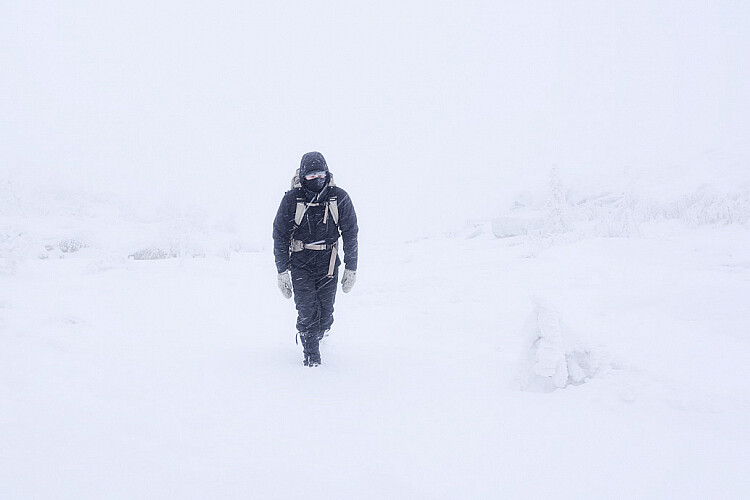
A self-portrait I took on a hike in rough conditions last winter

Lastly, related to keeping the batteries warm, you need to stay warm as well. Always be prepared and rather bring a layer too many than too few. You always want to have the opportunity to dress down, especially if you’re going on a hike.

Over to you

Do you get winter weather where you live? Get out and take some winter landscape shots and share them in the comments below. We’d love to see them.

The post 5 Tips for Better Winter Landscape Photography by Christian Hoiberg appeared first on Digital Photography School.


Digital Photography School

 
Comments Off on 5 Tips for Better Winter Landscape Photography

Posted in Photography


19 inspiring entries from the Sony World Photography Awards

13 Dec

19 of the best entries from the Sony World Photography Awards

The Sony World Photography Awards—one of the largest annual competitions in the world of photography—is just a month away from closing its entries. To remind photographers of this deadline (and just maybe brag a little bit about the quality of the entries they’ve received so far—World Press Photo has released a teaser of 19 stunning entries submitted to the competition so far.

From perfectly composed black-and-white street portraits, to spectacular wildlife images, to landscape photos that’ll rev up your wanderlust, there’s a little something for everyone in this Holiday teaser.

Scroll through the slideshow to see them all for yourself. And if you’re planning to submit your own entry, you can do so for free right here. Just remember: the submission deadline for the Open, Youth, and National Award competitions is January 4th, 2018, and the deadline for the Professional – Best Series of Works competition is January 11th, 2018.

Press Release

New images released to mark one month until deadline of 2018 Sony World Photography Awards

December 5, 2017 – Photographers worldwide have just one month left to enter the 11th edition of the Sony World Photography Awards. To mark this deadline, the World Photography Organisation, the creators of the Awards, today releases a new selection of entries from the Open competition. Submitted by photographers from around the world, the images cover a wide variety of topics, from stunning aerial landscapes to intimate portraits and animals in the wild.

The internationally acclaimed Sony World Photography Awards are one of the most important fixtures on the worldwide photographic calendar, with many of its shortlisted and winning photographers gaining global exposure and recognition. Last year’s Photographer of the Year, Frederik Buyckx (Belgium) said, “Being named Photographer of the Year has given me more exposure than I could ever have imagined. It has opened doors but, just as importantly, the awards has also encouraged me to keep on working on my personal projects.”

Past shortlisted photographer Simon Butterworth (UK) said “It’s impossible to overstate the importance of this achievement to my career, the global coverage was amazing, in fact, interest in my work as a direct result of the awards continues to this day.”

All entries to the Awards are free at www.worldphoto.org/swpa

Deadlines and Jury

The 2018 judges have been tasked to reward the very best contemporary photography from the past year across the following competitions:

Open – best single image
Youth – photographers aged 12-19, best single image
National Award – best single image taken by a local photographer from 60+ countries Deadline: January 4, 2018

Professional – best series of works
Deadline: January 11, 2018

The juries are chaired by Mike Trow, Picture Editor, British Vogue (Professional competition) and Zelda Cheatle, Curator (Open, Youth competitions and National Awards). Full details about the 2018 jury can be found at www.worldphoto.org/sony-world-photography-awards/2018- judges

Key dates

The shortlist for all competitions of the Awards will be announced on February 28, 2018. The Open and National Awards winners will be announced March 20, 2018. The Photographer of the Year and the Professional category winners will be announced April 19, 2018.

Prizes and exhibition

Prizes include $ 25,000 (USD) for the Photographer of the Year and $ 5,000 (USD) for the overall Open competition winner. All category winners will receive the latest Sony Digital Imaging equipment and Professional category winners are flown to London to attend the Sony World Photography Awards dinner on Thursday April 19, 2018.

The Awards’ winning and shortlisted images will once again be exhibited at Somerset House, London. Running April 20 – May 6 2018, the exhibition will also include exclusive new works by the recipient of the Outstanding Contribution to Photography Award, to be announced in January 2018. Previous recipients include Martin Parr (2017), RongRong&inri (2016), Elliot Erwitt (2015) and Mary Ellen Mark (2014)

19 of the best entries from the Sony World Photography Awards

Back to the future by Sung Lok Cheung | Image © Sung Lok Cheung, Hong Kong (China), Entry, Open, Portraiture (Open competition), 2018 Sony World Photography Awards


The photo was taken at TeamLab, Dance! Art Exibition, Shenzhen, China, in a venue called the Crystal Universe. The light illusion is an artwork that uses an accumulation of light points to create a sculptural body.

By this time, I had been waiting with my friend for the right composition to happen. I saw a little girl in a red dress running around. I kept on waiting and waiting expecting that she would come to the perfect spot. Luckily she ran out again by the channel. I found it is so called “The Decisive Moment”. I couldn’t wait to press the shutter, when the lighting was perfectly right, to create a beautiful moment. It looked like the girl was crossing a time tunnel.

That is why I put “Back to the Future “ as the title of my photo. I was inspired by the idea that opportunities are to be left to those who are well prepared. Or, to put it another way, that good preparation is the way to become successful. By pressing the shutter at the right moment, an amazing photo was finally realised.

19 of the best entries from the Sony World Photography Awards

Life in Macau by António Leong | Image © António Leong, Portugal, Entry, Open, Street Photography (Open competition), 2018 Sony World Photography Awards


Macau is probably better known as a gambling city near Hong Kong, but very few know that it is the most densely populated city in the world—over 18,000 people packed in a km square. High rise residential buildings are everywhere in town. How many stories are in each Kilometer cube?

19 of the best entries from the Sony World Photography Awards

African Mystery by Matthieu Rivart | Image © Matthieu Rivart, France, Entry, Open, Wildlife (Open competition), 2018 Sony World Photography Awards


The photo was taken during my last trip in Kalahari (Kgalagadi Park, South Africa), last September. The Kalahari lions are famous for their black mane.

After a long drive through the park, I came across two of them, sharing a springbok kill. A violent fight took place between the two to get the best pieces. They ultimately headed towards the nearby waterhole, where they got a rest during the sunset, which gave me the perfect opportunity to capture their legendary beauty.

19 of the best entries from the Sony World Photography Awards

Morning Glory by Huibo Hou | Image © Huibo Hou, United States of America, Entry, Open, Landscape & Nature (2018 Open competition), 2018 Sony World Photography Awards


Morning glory hot spring in Winter, Yellowstone National Park, USA

19 of the best entries from the Sony World Photography Awards

The Horns at sunrise by Vincent Chen | Image © Vincent Chen, China, Entry, Open, Landscape & Nature (2018 Open competition), 2018 Sony World Photography Awards


I took this photo in Torres del Paine National Park in Chile’s Patagonia region in Feb 2017.

I came to this secluded viewpoint in early morning and was fortunate to get pretty amazing weather. The sunshine shone onto the famous Cuernos del Paine peaks—they looked magnificent and incredible.

19 of the best entries from the Sony World Photography Awards

On White by Chris MacDonald | Image © Chris MacDonald , Canada, Entry, Open, Wildlife (Open competition), 2018 Sony World Photography Awards


A red fox stands in the snow. I was out for a hike in the early January snow when I cam across a set of fox tracks. I followed them around a curve and found this fox standing in a clearing. I got down to my knees quickly to try not to scare him off and started taking pictures.

As some of the heavy snow fell of the trees, he paused and turn to see what was making the noise. I have photographed this fox over many years. His nose is so distinctive it helps to identify him. By getting low, it gave me the snow in the background to create the isolated effect of white.

19 of the best entries from the Sony World Photography Awards

Untitled by Oliver San Juan | Image © Oliver San Juan, Philippines, Entry, Open, Street Photography (Open competition), 2018 Sony World Photography Awards


This photo was taken somewhere in the famous Divisoria Market of Manila, and shows 3 generations of men.

First is a kid that seems to be playing, the middle-aged man in the center seems to be thinking of something deeply, while the last man sits very relaxed while reading a newspaper. It is like an evolution from being a playful kid to a relaxed, worry-free old man.

19 of the best entries from the Sony World Photography Awards

Newspaper… by Martin Schubert | Image © Martin Schubert, Czech Republic, Entry, Open, Street Photography (Open competition), 2018 Sony World Photography Awards


I was waiting on a tram in Prague, and this man was sat eating a snack. First, I photographed the scene from another angle, but when I noticed the poster behind him I moved fast to the right place and shot this picture. After 30 seconds he stood up and left.

19 of the best entries from the Sony World Photography Awards

Little Indian by Virgilio Liberaton | Image © Virgilio Liberato, Philippines, Entry, Open, Portraiture (Open competition), 2018 Sony World Photography Awards


The photo is taken around March or February 2017, when its still cold here in Kuwait. Its a park we shoot in actually here in Kuwait, where its not allowed to shoot at any park or location unless you have permits—let’s just say I’m a run and gun photographer.

The park is named Green Island. It’s near the seaside and not too many photos were taken there because you need to pay to get into the park. It was a little bit cold at that time, so not too many people were going to the park. The model is wearing a Native American headdress because we can’t bring extra people on that shoot, and its also not allowed for that headdress to be seen here in Kuwait.

This scene was just timing. We had finished our shoot, and while going home I found the spot that would be great for her: a bush that she could pass through, but only a little space so I imagined letting her pass by and calling to her. In the instant I captured her eyes, its hard for her because of small thorns of the bushes.

So thats how I got her photo. Paying attention at the last minute helped me find that great spot, which I didn’t see when we came to the location.

19 of the best entries from the Sony World Photography Awards

Nattfari, Húsavík by Matteo Redaelli | Image © Matteo Redaelli, Italy, Entry, Open, Travel (Open competition), 2018 Sony World Photography Awards


Whale watching is a wonderful experience to enjoy if you travel across Iceland. This boat, Náttfari, is a traditional Icelandic wooden boat sailing the most of the year around Skjalfandi Bay, where you can enjoy this majestic and unique experience of whale watching.

The afternoon I took this picture was really unexpected because the morning the weather was truly better. That is the fun part of Iceland. I feel joyful when a normal morning suddenly transforms into an unusual afternoon. That was exactly what happened during this day.

I remember that it was very cold but at the same time so nice because was unexpected such a lot of snow around Skjalfandi Bay on Náttfari. Knowing that the Bay was surrounded by humpbacks whales was another point for the wonderful experience it was. I love to travel and share my time with nice people as the crew was on Náttfari for the time I was there for a scientific project.

19 of the best entries from the Sony World Photography Awards

Lunch Break by Omer Faidi | Image © Omer Faidi, Turkey, Entry, Open, Street Photography (Open competition), 2018 Sony World Photography Awards


At lunchtime in my office, I went out to the balcony and when I saw the workers at the construction site next door, I said “wow!” I went back inside to get my camera and shot them from the 6th floor. They were looking very peaceful and natural.

I returned shortly after, and the moment had passed.

19 of the best entries from the Sony World Photography Awards

Jump by Milo Angelo Ramella | Image © Milo Angelo Ramella, Italy, Entry, Open, Wildlife (Open competition), 2018 Sony World Photography Awards


Jump: A snowy owl flies, alarmed by the call of another female.

19 of the best entries from the Sony World Photography Awards

Wanma Pentium by Shen Jianfeng | Image © Shen Jianfeng, China, Entry, Open, Travel (Open competition), 2018 Sony World Photography Awards


My image was taken in July 2017, in the grassland grazing area of Wulangbu Dam in Inner Mongolia, China.

19 of the best entries from the Sony World Photography Awards

The Big Meringue by Placido Faranda | Image © Placido Faranda, Italy, Entry, Open, Landscape & Nature (2018 Open competition), 2018 Sony World Photography Awards


Scala dei Turchi (The Turkish Steps) is a white cliff in Realmonte (Sicily), made of a soft limestone and a blinding white marlstone. Natural erosion has created steps on the cliff face, making it look soft and sinuous, like a Big Meringue covered with sprinkles (the people sitting and walking on it).

The origin of the name “Turkish Steps” is intriguing. While there is a big resemblance to Pamukkale (Turkey), the designation of “Turkish” was given centuries ago by local people, for the frequent raids carried by Turkish pirates on this area. Legend says they would find a shelter for their boats behind this rocky formation, and then climb the “steps” of the cliff and raid the villages.

Today, Scala dei Turchi is a wonderful spot for viewing the sunset, as the bright white marl turns into a strong orange. Only after shooting this image, while watching it on a bigger screen, did I notice the newlywed couple in the frame kissing for their wedding photoshoot. Exactly at the edge of the cliff.

19 of the best entries from the Sony World Photography Awards

K means kite by Krzysztof ?wik | Image © Krzysztof ?wik, Poland, Entry, Open, Street Photography (Open competition), 2018 Sony World Photography Awards


The kite competition on the Marseille beach. France.

19 of the best entries from the Sony World Photography Awards

Papuma by Haryadi Bakri | Image © Haryadi Bakri, Indonesia, Entry, Open, Enhanced (Open competition), 2018 Sony World Photography Awards


The picture of Papuma taken on 8 October 2017 on my 7 day trip to Bromo Mountain, then to Papuma Beach at East Java, Indonesia.

It was my first time visiting Papuma beach, at Jember City. I arrived at midnight from the Surabaya night train after finishing my 3-night trip hunting star trails at Bromo mountain.

Papuma Beach is not actually at the city, but far on the southern tip of the coastline. I had to return to to beach 3 times in a day just to make sure I had the right location for capturing the clouds and the stars at night—sadly, it was very cloudy at night, so I’m combining the star trails from Bromo mountain.

That’s it, but before combining, I made sure the south pole in the picture is in the right position as the real location. No doubt, this is the image that I wanted to create.

19 of the best entries from the Sony World Photography Awards

The child and the reindeer by Pehuen Grotti | Image © Pehuen Grotti, France, Entry, Open, Travel (Open competition), 2018 Sony World Photography Awards


Every morning, all the reindeer are released so they can graze all day, and at night they all come back themselves. Here we can see one of the Tsataan children taking care of his reindeer before the cold night comes.

19 of the best entries from the Sony World Photography Awards

Golden Happy Hour by Hans Gunnar Aslaksen | Image © Hans Gunnar Aslaksen, Norway, Entry, Open, Landscape & Nature (2018 Open competition), 2018 Sony World Photography Awards


This image was taken in October in a small bay in Larvik, southern Norway. Larvik is a small town south of Oslo.

The location for this image is not far from where I live. It is kind of a secret gem that few people know about. I discovered the place and its potential on a local hike I did. I have been here several times under different weather conditions. This location is quite tricky as it needs perfect waves to work. That means that they cant be to big or else you and the camera will get soaked. But calm water will not add enough interest and dynamic to the image.

This specific evening the waves where just perfect. Just big enough to wash over the stones and not to big so I could get a low angle with the camera. The setting sun was also in a perfect position—the low sun was not obstructed by clouds and it lit up the rocks in the bay beautifully.

I knew that the sun would set in just half an hour, so I had to work fast and find the best composition. The light just got better and better and I knew that I had a chance to capture something special. I tried to anchor the shot with the beautiful stones in the foreground and experimented with different shutter speeds to create interesting movement in the waves. I tried to make every element lead up to the sunstar for a strong composition. I am very pleased that also the clouds acts as leading lines towards the setting sun.

19 of the best entries from the Sony World Photography Awards

Frazzled by Zhayynn James | Image © Zhayynn James, India, Entry, Open, Wildlife (Open competition), 2018 Sony World Photography Awards


A handsome alpha male Lion-tailed Macaque keeps a wary eye on the rest of his troop after a drink of water. They are one of the most endangered primate species in the world and are highly endemic to the Western Ghats of South India.

Their species is fragmented across the Western Ghats in pockets and their future, much like this male’s mane, looks frazzled.

Articles: Digital Photography Review (dpreview.com)

 
Comments Off on 19 inspiring entries from the Sony World Photography Awards

Posted in Uncategorized


Review of the Breakthrough Photography X4 CPL Circular Polarizing Filter

13 Dec

Make no mistake, this is, in fact, a review of the X4 Circular Polarizer from Breakthrough Photography. That being said, the entire subject requires a little bit of photographic geekiness in order to grasp the full understanding of the product being reviewed. So, if you absolutely don’t want to add any more brain wrinkles feel free to skip the next couple of paragraphs. If you do skip…shame on you.

Geeky stuff about polarizers

Polarizers – we’ve all heard of them and the majority of us photographers have used them extensively from one time or another. How do they work? And more importantly, how do you know when you’ve found a good one?

These are all great questions and oddly enough these things aren’t always well known by even some experienced shooters. Polarizers are just filters. These filters work to sift out polarized light which commonly occurs in our photographs from reflections and glare. The noticeable byproduct of this filtration is the reduction of said reflections and glare as well as the deepening of colors and most noticeably, the darkening of the sky.

Review of the Breakthrough Photography X4 CPL Circular Polarizing Filter

Polarizers come in two flavors: linear and circular. It’s somewhat of a weird concept as all polarizers are in fact linear…but not all linear polarizers are circular. That might sound slightly cryptic but that is not the intention.

At their most basic definition, the way polarizers work is to filter our non-linear rays of light. Circular polarizers further enhance this effect by adding what’s called a quarter-wave plate to the camera side of the linear polarizer. The quarter wave plate serves to essentially convert the incoming light into a helix and the polarization effect can then be dialed-in to whatever degree is needed. This is of great benefit because the majority of SLR and DSLR cameras are sensitive to polarization and linear polarized light can cause internal camera metering to malfunction.

The X4 CPL Circular Polarizing Filter

Now that you’ve had a crash course in how circular polarizers work, it’s time to talk about the X4 CPL Circular Polarizing Filter by Breakthrough Photography. This will be my fourth time evaluating filters by the folks at Breakthrough. With each piece of gear I have been consistently impressed with the build and optical quality to such an extent to where I find it difficult to list any faults. The X4 CPL is no different.

Breakthrough Photography currently markets this polarizer as being the “world’s most advanced circular polarizer” so I put the X4 CPL Circular Polarizing Filter to the test to see just how this claim holds up in real-world shooting.

Build Quality

The construction of theX4 CPL Circular Polarizing Filter is blackened brass, much like their line of X4 ND filters. The filter housing is robust and feels extremely sturdy. Deep traction grooves are cut around the bezel and provide for a solid grip even with gloved or wet hands.

Review of the Breakthrough Photography X4 CPL Circular Polarizing Filter

An interesting property of brass is that unlike other metals such as aluminum it is non-galling. This means that it is less likely to bind and become stuck when stacking multiple filters. The filter bezel turns quite smoothly when engaging or disengaging the polarization effect.

The optical element is made from SCHOTT Superwhite B270® optical glass. Each side of the glass is then treated with eight layers of Breakthrough Photography’s proprietary nanotec® and MRC (multi-resistant coatings) optical coatings which cause dirt and moisture to essentially slide right off of the glass itself.

X4 CPL Circular Polarizing Filter

Overall, the build quality of theX4 CPL Circular Polarizing Filter is exceptional and it looks great to boot. The company also backs the filter with a 25-year guarantee.

Optical Performance

Of course, the real question about the X4 CPL concerns its optical quality, which in turn will greatly impact the final quality of your finished photographs. When it comes to photography filters, the sharpness, vignetting, and color cast, are the three main points of interest for most photographers.

While it’s great to talk about all these points actual test images speak louder than words. So have a look at the sample images as you read my thoughts on the results and judge for yourself.

Sharpness

In terms of sharpness, the X4 CPL exceeds all expectations. No image degradation was observed even at the maximum strength filtration.

X4 CPL Circular Polarizing Filter

To left is the image without the X4 CPL applied. The image at the right is with the X4 CPL. Both zoomed to 1:1 for comparison.

Images remained crisp and detail was not lost due to the addition of the filter.

Color Cast and Vignetting

A common problem seen with polarizers and most filters, in general, is the unwanted color casting sometimes encountered. The color cast happens due to the coloration of the optical glass and often worsens in lower quality filter systems.

X4 CPL Circular Polarizing Filter

An image with a high color cast from an ND filter. Low-quality polarizers can carry the same effects.

The images produced by the X4 CPL seem to be completely free of this discoloration just as they are advertised. No discernible color cast was observed in any of the test images I made using the filter.

X4 CPL Circular Polarizing Filter

The same is true for vignetting. Darkening of the corners of the photos was not observed even at the strongest filtration setting.

X4 CPL Circular Polarizing Filter

Final Thoughts on the X4 CPL

There’s a certain feeling of uneasy optimism which begins to surface whenever I come across gear which does not seem to have any obvious weak points.”Have I missed something? Is this really that good?”

Having reviewed multiple pieces of kit from Breakthrough Photography I can say that they have consistently produced insanely high-quality photographic gear that is innovative, sturdy, and relatively cost-effective. I use quite a few of their filters in my own personal photography work and have put them into environments from Death Valley to the coast of the Atlantic Ocean and everywhere in between (or least it seems).

The X4 CPL has thus far given no reason for me to believe that its quality would not serve any serious photographer’s needs for years to come. The build quality is heavy-duty and the image quality, especially sharpness, is outstanding. It retails for $ 129-159 USD (depending on filter size) at the time of this review. Find out more details about the X4 CPL here, or shop Amazon for the size you need here.

Rating 5/5 stars – my first ever! 

The post Review of the Breakthrough Photography X4 CPL Circular Polarizing Filter by Adam Welch appeared first on Digital Photography School.


Digital Photography School

 
Comments Off on Review of the Breakthrough Photography X4 CPL Circular Polarizing Filter

Posted in Photography


Our favorite finalists from the Comedy Wildlife Photography Awards 2017

13 Dec

$ (document).ready(function() { SampleGalleryV2({“containerId”:”embeddedSampleGallery_0618474546″,”galleryId”:”0618474546″,”isEmbeddedWidget”:true,”selectedImageIndex”:0,”isMobile”:false}) });

Later this week, on December 14th, the Comedy Wildlife Photography Awards will reveal the winning photos for 2017, each chosen from a pool of 40 finalists revealed earlier this month. The 40 images showcase fun and funny scenes captured by wildlife photographers around the globe: singing elephant seals, a laughing mouse, macaques on a motorbike, and more.

More than 3,500 images were submitted to the competition this year.

The Comedy Wildlife Photography Awards goes by the tagline “conservation through competition,” providing photographers with an lighthearted contest through which they can share fun photos of wildlife while helping raise conservation awareness.

You can see our favorite finalists in the gallery above, then head over to the contest’s website to see all 40, view a gallery of last year’s wildlife comedy finalists, or check out the 2015 and 2016 winners.

Articles: Digital Photography Review (dpreview.com)

 
Comments Off on Our favorite finalists from the Comedy Wildlife Photography Awards 2017

Posted in Uncategorized


Google launches three mobile photography ‘Appsperiments’

13 Dec

Google today launched the first three installments in a series of experimental photography apps that the company calls ‘appsperiments’. The apps build on a range of technologies that are currently under development at Google, including: object recognition, person segmentation, stylization algorithms or efficient image encoding and decoding technologies.

Storyboard – Android only

The Storyboard app is currently available for Android and converts videos into single-page comic layouts. After shooting a video the app automatically selects interesting video frames, creates a layout, and applies one of six visual styles to the imagery.

And since privacy is a big concern with anything ‘intelligent’ like this: all of this happens on-device, without sending any data to the cloud.

Selfissimo! – iOS and Android

Selfissimo! is available for iOS devices and Android. Once you activate the app, it automatically captures a black-and-white selfie each time you strike a pose. The app encourages you to pose and captures a photo whenever you stop moving.

You end the ‘photoshoot’ by tapping on the screen, and can then review a ‘contact sheet’ to save your favorite images.

Scrubbies – iOS only

Scrubbies is an iOS app and allows you to adjust the playback speed and direction of videos, as well as create looping clips. The idea is to shoot a video using the app and then ‘remix’ it by ‘scratching’ on the screen like a DJ would do with vinyl.

Scrubbing with one finger plays the video. Scrubbing with two fingers captures the playback so you can save or share it.


If you try one or more of these so-called appsperiments, you can send your feedback to Google via in-app feedback links. More information about each of these creations is available on the Google Research Blog.

Articles: Digital Photography Review (dpreview.com)

 
Comments Off on Google launches three mobile photography ‘Appsperiments’

Posted in Uncategorized


Quick Video Tutorial – 8 DIY Photography Hacks for the Kitchen

09 Dec

Here is another fun video from the team over at COOPH. This time they’re playing with ordinary household items found in your kitchen.

Here are 8 DIY photography hacks you can do at home

Watch as they play with some eggs, kitchen utensils, have fun with a cheese grater, make a DIY softbox for a flash, play with reflective surfaces, flour, and some fruit!

Get cracking (pun intended) and see what you can come up with trying these tips out.

The post Quick Video Tutorial – 8 DIY Photography Hacks for the Kitchen by Darlene Hildebrandt appeared first on Digital Photography School.


Digital Photography School

 
Comments Off on Quick Video Tutorial – 8 DIY Photography Hacks for the Kitchen

Posted in Photography


Weekly Photography Challenge – Wide-Angle

09 Dec

Different lenses produce a different look and effect in your images. Wide-angle lenses add depth and dimension to your images and give them a sense of three-dimensionality. They can be used to add humor and add interest as well. But, you must use a wide-angle lens properly.

Weekly Photography Challenge – Wide-Angle

The key to using a wide-angle lens is to get close to your subject. Really close! Not so close that you can’t focus, but close enough to make the subject appear larger than real life.

  • Wide Angle Versus Telephoto Lenses for Beautiful Landscape Photography
  • How to Use a Wide-angle Lens with Wildlife for a New Perspective
  • How to Use a Wide-Angle Lens for People Photography
  • 6 Reasons to Love Ultra-Wide Lenses

Simply upload your shot into the comment field (look for the little camera icon in the Disqus comments section) and they’ll get embedded for us all to see or if you’d prefer, upload them to your favorite photo-sharing site and leave the link to them. Show me your best images in this week’s challenge. Sometimes it takes a while for an image to appear so be patient and try not to post the same image twice.

Share in the dPS Facebook Group

You can also share your images in the dPS Facebook group as the challenge is posted there each week as well.

The post Weekly Photography Challenge – Wide-Angle by Darlene Hildebrandt appeared first on Digital Photography School.


Digital Photography School

 
Comments Off on Weekly Photography Challenge – Wide-Angle

Posted in Photography


How to Choose Your First Camera Drone and Skyrocket Your Photography

06 Dec

Maybe you are in love with photography and in the process of turning it into a passion. You might be a professional photographer who’s always searching to improve, or you might just like capturing those beautiful trips like no other. If you’re in any of these categories, you might want to consider buying yourself a drone.

How to pick your first camera drone

This guide is all you need to help you make a choice. I have experimented with most of the drones on the market so you don’t have to.

How useful is a drone for photography?

I think you already imagine how cool it could be to reach those places you always wanted. No more climbing trees for great panoramas. And best of all, you can literally fly your camera wherever you like (within the law, of course).

Drone picture through the wood

Bonus: You’ll be able to take unbelievable videos as well.

Maybe, you always thought taking pictures is where you’ll stop, but don’t tell me you’ve never been fascinated by one of those cool drone videos on YouTube.

The great thing about a drone is that most of the time, it comes with an included gimbal that stabilizes the image perfectly. That feat alone makes both video and photography easy to do and cinematic almost straight away.

Will you be able to afford it?

Drones

Gone are the days where only blockbuster movies had the budget to record and shoot photos from the air. Today, thanks to less expensive technology and increasing popularity of quad-copters, almost everyone can afford a drone. And the results are absolutely fascinating.

These are my general recommendations when it comes to pricing for a good camera drone:

  • If it’s a drone that comes with a camera, you will need to spend over $ 400 if you want to have image stabilization.
  • You can also pick a cheaper drone with GPS and stabilization that comes with no camera. That might be a good option if you already have a GoPro or action-camera and a tight budget.
  • If you want a beginner drone just to learn how to fly, don’t spend more than $ 50.

How to pick your first camera drone

So you decided to get into drones and skyrocket your photography/videography. I have created an infographic explaining the main things you should look for in a camera drone. Now you have two paths you can choose from:

  1. Get a small beginner drone (under $ 50) to learn the basics of piloting it, and only after that buy a more expensive one.
  2. Get a more expensive drone with GPS, which is stable enough when flying and can return to home automatically if you mess up.

What are the best inexpensive beginner drones?

Beginner drone

Ways you can go about buying your first beginner drone:

  • Get two or more VERY cheap drones (at $ 15 each) and simply learn the basics of flying in the house, while having a backup.
  • Get one cheap beginner drone (around $ 50), that usually comes with a low-quality camera (I don’t recommend this because it’s nothing like the more expensive ones).
  • Choose a cheap beginner drone and the more expensive one at the same time, if you want to just try it a few times and then jump into the action.

Here are my top beginner drones you can start with:

  • JJRC H36 – A super resilient drone that works great inside. This is what I would recommend any friend. About $ 18.99 on Amazon
  • Cheerson CX-10 – A very small drone that’s around $ 20 and can do flips. About $ 18.99 on Amazon.
  • Hubsan x4 – A very sturdy and well-made drone with a camera. About $ 32 on Amazon.

What are my top choices for a camera drone?

This is my top three list of recommendations I have for different types of consumers, ranging from $ 500 to $ 1500 USD.

Top 3 camera drones

I’ll underline the main features you should look for in each drone, while also spotting the drawbacks of each.

#1 – DJI Mavic Pro Platinum – My overall winner

This quad-copter is one of the most popular right now, for some really good reasons. The DJI Mavic Pro Platinum is the newer version of the Mavic, but it is quieter and has a longer battery life. This is why I would recommend it.

Dji mavic

I’d recommend it to anyone from travel enthusiast to the professional photographer and so on. It has its limitations, but for the price of about $ 1000, here’s why it rocks:

  • It comes with a stellar gimbal (a motorized system that stabilizes the camera while in the air).
  • Has a 4K camera with a fixed aperture of f/2.2 – This makes it pretty good even in low light conditions.
  • You can take amazing photos in 12mp resolution.
  • It’s foldable – This makes it the most portable high-quality camera on my list, and pretty much on the market. You can simply take it in a small bag and go on your vacation, no problem.
  • Long range – it can go up to 7 km in perfect conditions, which is more than enough for anyone.
  • Long battery life – it promises about 30 minutes of flight time, but in real life conditions, 26 minutes is more likely.
  • Has great GPS and return to home features.
  • Has front sensors for detecting obstacles and stopping in time.

Dji mavic folded front sensors

Disadvantages: Can’t really think of anything. It’s amazing for the price.

#2 – Xiaomi MI 4K drone – The cheapest, yet still amazing

Xiaomi drone

The Xiaomi MI 4K drone costs about $ 500 and comes with all you need for great photo/video results.

  • Just as the Mavic before, it comes with an amazing gimbal and camera attached to it, in order to keep the image steady in the air.
  • Again, you can shoot 4K photos (12.4 mp) and video or go lower in resolution so you can record in more frames, and do slow-motion.
  • The range is over 3 km, which is absolutely fantastic.
  • Battery life is said to be 27 minutes, but in real life, I got a maximum of 24.
  • It comes with very good GPS and returns to home when the battery is low and also when the signal is lost (just like the Mavic)

Xiaomi drone camera

Disadvantages of the Xiaomi 4k drone

  • It’s not nearly as portable as the Mavic.
  • It is louder.
  • It doesn’t have the front facing sensors to stop before impact that the Mavic does.

Consider how much these drawbacks mean to you when you take into account the super cheap price. Don’t get fooled thinking a smaller price means lower quality. Xiaomi, just like DJI, is a Chinese company with a focus on creating high-quality hardware, that’s impressive even by western standards.

#3 – DJI Phantom 4 Professional – the pro choice at a small price

You have probably heard of drones like Phantom 3 or 4 by now, and they were all amazing, but the DJI Phantom 4 Professional is on the next level.

Phantom4pro

If the DJI Mavic Pro Platinum is not enough for you in terms of camera capability and you want more professional freedom in your work, this is the best way to go.

Here’s what this $ 1500 drone comes with:

  • The 4K camera we’ve been used to has a 1-inch sensor now. This means nighttime photos will be considerably better and less noisy compared to any of the previous drones.
  • The 20mp sensor also delivers amazing quality photos and video.
  • It can shoot 4K in 60fps and Full HD in 120FPS and comes with a mechanical shutter (just like your DSLR), so you get a smooth video image and no rolling shutter effect.
  • It’s super secure with obstacle sensing in 5 directions: 2 front sensing cameras, 2 side infrared detectors, Sonar and cameras on the bottom (to land precisely), And even one in the back!
  • Just like the Mavic Pro Platinum, it comes with 30-minute flight time, 3-axis gimbal stabilization and 7 km range (but, this time, it’s dual-band transmission, so the signal is more secure).

What are a few disadvantages: It’s bulky and loud. It can’t fold up, so if you want to take it on vacation, it will be harder to carry.

Scenery1

I recommend this drone for the more professional bunch of people, who want to use it more intensely for professional projects and don’t mind the bigger form size. This drone is great for people who want to have more control over their images, and it’s perfect if you want to shoot at high ISO in lower light.

Over to you

I only gave you three choices because I believe these are the best of each price category. So, depending on your budget, you can confidently choose one of these, as there’s simply no competition on the market right now.

Don’t forget to fly safe and check the regulation in your area!

Scenery2

The post How to Choose Your First Camera Drone and Skyrocket Your Photography by Paul Archer appeared first on Digital Photography School.


Digital Photography School

 
Comments Off on How to Choose Your First Camera Drone and Skyrocket Your Photography

Posted in Photography


How to Avoid Being Overwhelmed When Learning Photography

03 Dec

Likely, you are working hard to improve your photography. You are trying to master all the settings on your camera, trying to control things like depth of field while trying to improve your focus and the sharpness of your photos. And then there are all those rules of composition to think about as well. That is a lot to remember, and it can be overwhelming. Frankly, it is enough to make you nostalgic for the good old days when you put your camera in Auto mode and fired off snapshots.

How to Avoid Being Overwhelmed When Learning Photography

Before you revert to that, however, let’s take a look at a few ways you can avoid that feeling of overwhelm, and continue to grow as a photographer.

#1 – Use Swing Keys

First, you can take a page from other areas of life that subject people to being overwhelmed. Perhaps no activity involves a feeling of overwhelm for the beginner more so than golf. When you are learning a golf swing, it is not uncommon for there to be 12 to 15 different thoughts going through your mind. If you try to do them all at once, the result is inevitably a disaster.

Therefore it is common to hear golfers talk about “swing keys.” This is about limiting your thoughts to one thing that you want to do in that particular swing. The physical nature of the swing key will vary from golfer to golfer. For one it might be to keep the wrist straight, for another, it might be to follow through. It just depends on their swing and weaknesses. It just gives the golfer something to think about to improve their swings and also keeps them from being overwhelmed.

Works for photography as well

I find this a useful analogy for photographers as well. When you are out in the field getting ready to shoot, you may have a thousand different thoughts going through your head. You might be worried about the overall exposure level, setting the right depth of field, avoiding digital noise, watching the focus point, keeping the picture sharp, placing the subject in the right part of the frame, creating an interesting foreground, looking for leading lines, trying to create some emotion, and so on. All this can lead to overload. Having one or two swing keys in your mind can help add some clarity.

How to Avoid Being Overwhelmed When Learning Photography

Personally, I am always thinking about the foreground. Doing so helps me keep my thoughts together. It also specifically addresses issues of focus, depth of field, subject, and overall composition. For you, it might be something different. It doesn’t matter what it is – and it can evolve over time – just try to simplify things. Remember that often the best photos are the simplest. Further, as we’ll see in a moment, you can add more things later.

Create a Checklist

Another way to keep from worrying about all the things you want to accomplish is to create a checklist. When I was starting out, I found that I would get home from a shoot and kick myself for all the things I forgot to do. I would look at a series of shots I took and wonder why I didn’t bracket some of them, or zoom in on something, or add a neutral density filter in a certain spot, and so on.

Having a checklist will keep you from forgetting these things. At the same time, it will allow you to relax and not worry about missing anything when you are in the field. The checklist can be as simple or elaborate as you want. It can be a folded up sheet of paper or a laminated page – it doesn’t matter. Once you have gotten the shots you want, just consult your checklist and make sure you didn’t overlook anything.

How to Avoid Being Overwhelmed When Learning Photography

Having a checklist can remind you to do things like adding a shot using a neutral density filter.

Use a Building Process

Another way to keep from being overwhelmed is to avoid attempting to do too much at once. Instead, use a building process to create your pictures step-by-step. You’ll be amazed at how simple photography can be when you use this process.

What do I mean by that? Let’s start with an example of a dramatically lit portrait. Trying to create the whole thing in one shot could result in failure and frustration. Therefore, break the final picture down into steps. You might start with a few shots that get the background lighting correct. Once you have that right, then add your flash or strobe, but even then don’t try to control or shape the light yet. Spend a few shots getting the quantity of light the way you want it, and only then move the light off to the side and start working on shape and directions.

In this way, you’ll find that what seems overwhelming at first, actually becomes pretty simple. I have been to enough photography workshops and seminars to confidently state that many masters of photography work this way.

How to Avoid Being Overwhelmed When Learning Photography

In night sky photos, I find it works best to start by just getting the sky right and then worrying about the foreground elements later.

Build a landscape the same way

It works in other contexts as well. A landscaper photographer might find a great background and work on setting that part of their shot up before they start looking for a foreground. Once they have built that part of the picture they might look for additional aspects to use as a subject or center of interest. After that, they might wait for something to happen to add interest to the picture. As a result, the final picture looks very complicated, but it was built step-by-step.

In fact, the famous street photographer Henri Cartier-Bresson worked this way. You may know him as the master of the “decisive moment,” but he was always building to that moment. He would find a great spot to use as a background, set everything up, and then wait for something to happen. That way when the decisive moment happened he was ready for it and created an overall wonderful picture. It didn’t just come together in an instant as it might otherwise appear.

The point of all this is to show you that if you start simple, you can avoid being overwhelmed. Once you have established one building block of your picture, add another one. This will not only improve your pictures but will result in you having more fun – and certainly fewer feelings of being overwhelmed – while you are doing it.

Ideas for How to Avoid Overwhelm When Doing Photography

This started as a simple shot of a barn. We added lights as we went. The white streamers were ultimately lit by a person with a flashlight.

Take Advantage of Digital Technology

Finally, as you take your photos, keep one thing in your mind.  Remember the magic of digital photography is that you get to take as many exposures as you want and it costs nothing. There should not be any pressure!

Not only that, but you are getting instant feedback on what you just did via your LCD screen. You can just delete the bad ones (and we all have bad ones) and move on. No one is going to look at your SD card and judge you on the pictures that don’t work out. They’ll only see the ones you show them.

Ideas for How to Avoid Overwhelm When Doing Photography

Similarly, don’t worry about any sort of “hit rate.” Frankly, if you end up with a high hit rate, that probably just means you need to take additional pictures and experiment more.

A Never Ending Quest

Done correctly, photography always involves learning and experimentation. Therefore, while I have aimed these comments at those just starting out, these things really apply to everybody. The feeling of overwhelm never really goes away.

Once you master the controls on your camera you will add other elements to your pictures. Ultimately, you have to find your own way to relax and keep everything fun. Hopefully, these tips will help a little in that regard though.

The post How to Avoid Being Overwhelmed When Learning Photography by Jim Hamel appeared first on Digital Photography School.


Digital Photography School

 
Comments Off on How to Avoid Being Overwhelmed When Learning Photography

Posted in Photography


Weekly Photography Challenge – Framing

02 Dec

There are many ways to compose or images and many different elements you can use for effective composition. Framing is one such element of composition that can be very powerful for leading the viewer’s eye when done well.

Eastman Kodak House (the home of George Eastman who founded Kodak) framed by the trees in the front garden.

Weekly Photography Challenge – Framing

Framing isn’t just about finding an archway, window, or doorway to shoot through though. You need to have a strong and interesting subject inside the frame. An empty parking lot framed with a stunning doorway is still a boring, empty parking lot.


Here some tips if you need help with your framing:

  • How to Use Framing in an Urban Environment
  • Tips for Framing your Images to Tell a More Compelling Story
  • How to Use Framing to Create a Sense of Scale
  • Tips for Using Natural Framing to Improve Your Composition
  • How to Use Framing for More Effective Compositions

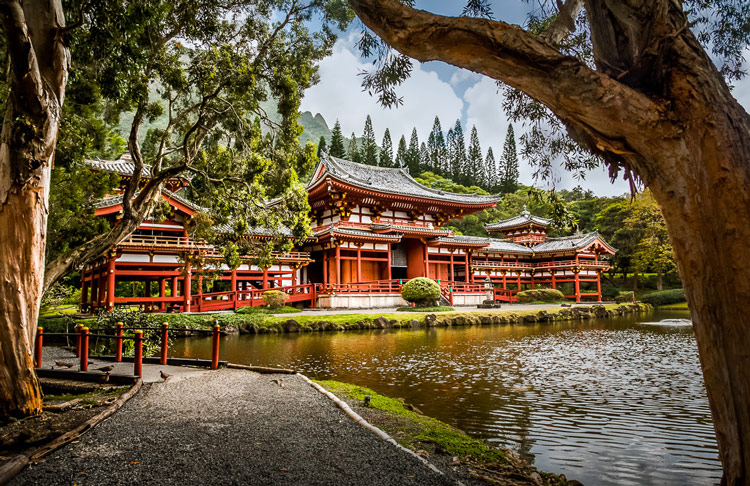
I shot this Japanese style pagoda closer up, but it was lacking something. So after walking down the path, I turned around and shot it again, this time using the large trees as framing elements.

Simply upload your shot into the comment field (look for the little camera icon in the Disqus comments section) and they’ll get embedded for us all to see or if you’d prefer, upload them to your favorite photo-sharing site and leave the link to them. Show me your best images in this week’s challenge. Sometimes it takes a while for an image to appear so be patient and try not to post the same image twice.

Share in the dPS Facebook Group

You can also share your images in the dPS Facebook group as the challenge is posted there each week as well.

The post Weekly Photography Challenge – Framing by Darlene Hildebrandt appeared first on Digital Photography School.


Digital Photography School

 
Comments Off on Weekly Photography Challenge – Framing

Posted in Photography