RSS
 

Posts Tagged ‘Photography’

5 Lessons I Learned by Doing Still Life Photography

22 Dec

Still life is a particular style of photography that slowly lured me into its clutches. The gateway drug was, of course, food photography, and before I knew it, my weekends were spent combing secondhand shops for props and buying up linen in all different shades.

5 Lessons I Learned by Doing Still Life Photography

The popularity of Instagram has given rise to images of every different kind of food, drink, dessert, cake, and cocktail. You name it, someone is shooting it, adding a filter and posting online before they even taste it. Except for the one thing it really shows, is how hard it is to compose and take a good still life image, especially with a cell phone. There are a lot of really awful shots out there. Someone even made a hilarious video about the effort needed to get a good shot.

Of all of the techniques I have learned in my photography journey, none has taught me as much as doing still life work.

5 Lessons I Learned by Doing Still Life Photography

My first venture into still life – an Easter challenge that needed your hands in the image. This was before I had a wireless remote.

 #1 – Slow Down, Breathe and Take Your Time

You need three things for a good still life shot – light, good composition and a subject. Pretty much the same as for any photographic image really. But one of the best things about still life is you can take as much time as you like. Usually shot inside with some control over the conditions and with a static subject, this gives you the freedom to be really present and experiment.

As seen in the video link above, the composition is a key element. Do you shoot the subject isolated? Will props help you tell more of a story? Is there a particular mood you are going for? How can you achieve that?

5 Lessons I Learned by Doing Still Life Photography

I bought these gerberas and shot them every day for a week until they were past their best. Each flower had its own distinct shape and character that needed time to bring out its best

What angle is most effective? Close-up or include more environment? Will flat lay (overhead) or side on be best?

Because you have more control over the conditions you can allow a lot of time and shoot the same subject in many different ways in one shoot. You may come out with one great shot or several good ones. It will certainly teach you a lot about how difficult it is to get a good shot.

5 Lessons I Learned by Doing Still Life Photography

My studio is my spare bedroom, one window, and a fold away craft table. Of course, a cat getting in the way!

2 – Composition is Key

Being a nature and landscape photographer originally, I am used to shooting things on a big scale. Lots of pretty mountains, lakes or sea, cloud-filled skies, and so on. A handy foreground element like a rock or driftwood or tussock is included for scale and to ground the image.

So when I tried to shoot much smaller things up close it was a bit of a shock to find how difficult it was to compose those images well.

5 Lessons I Learned by Doing Still Life Photography

One black background, one silver spoon, and some raspberries.

It is interesting to learn how a subtle difference in angle can affect the outcome of the image. How close or far away your camera is can completely change the balance of the subject within the frame. How scale becomes really important and a tool to be leveraged for the most effective images.

I spent hours taking so many shots, discarding nearly all of them over and over again until I figured out my problem. Complexity. I made the rookie mistake of trying to include too many elements, which threw off the balance of the composition. It was crowded and messy and the subject was overpowered by all the extra stuff I was shoving in the frame.

5 Lessons I Learned by Doing Still Life Photography

A black background, a silver spoon, and some raspberries. Taken at a different angle, closer up, more intimate and inviting. Subtle differences.

This is where lesson one really started to make sense. By taking the time to slow down, breathe and see my subject, see the possibilities, feel the story it was trying to tell me, I shot a lot less, but my keeper rate vastly improved.

The trick was keeping it simple and strong.

3 –  See the Possibilities

This step naturally emerges after steps one and two. Once you take time to be in the moment with your subject, position it within the lighting you have, turn it this way and that, then it will show you its best side.

If you give yourself and your subject time to get to know each other, then its secrets will be revealed. It might be an onion, or it could even be a portrait, the same rule applies. If you take the time to get to know your subject, you begin to see different possibilities. Perhaps this background over here is less cluttered, maybe this plate enhances the natural color better, that rustic board gives a great farmhouse appeal.

5 Lessons I Learned by Doing Still Life Photography

Be the garlic clove! Feel the garlic clove! Hear its story.

I know, it sounds a bit zen and probably a bit corny, but it doesn’t make it any less true. Yes, you can take two seconds to position a shiny red apple and shoot it and have a perfectly acceptable image.

But what else might you end up with if you took 20 minutes, positioning the apple at different angles, on different surfaces? Maybe you cut it open or take a big bite out of it? Pose it with a glass of cider? Maybe you have a handful that looks great arranged in a decorative bowl?

5 Lessons I Learned by Doing Still Life Photography

The focus of this shot is the funny squiggle of butter on the bagel, but the story is Sunday Morning Brunch. Yes, it was delicious too!

Unless you give yourself time to relax and let the possibilities make themselves known to you, rather than focussing on one outcome, taking that shot and moving on, you will miss out on lots of opportunities. Plus you limit your chances to learn and grow as well.

I failed consistently when starting out with still life photography and it was really frustrating, but it made me work even harder. Once I did get it, the quality of my work improved faster than expected, which was a nice bonus.

4 –  Go Abstract

It is easier to shoot something whole and give it obvious context so that the viewer doesn’t have to think about what they are seeing.

But how much more intriguing would your work become if the viewer did have to take some time to think about what they were seeing? Where it teased at the edge of their consciousness that they should know what the object is but couldn’t quite figure it out? What if your image stuck with them and niggled away in the back of their mind? Where they actually remember it out of the many hundreds of images seen that day scrolling past on their phone?

5 Lessons I Learned by Doing Still Life Photography

A metal bench in the city but taken side on and obvious context removed with the focus on the lines and the circles instead.

Don’t be afraid to go abstract. To shoot something in a way that hides its original shape, form, or purpose. Be as obscure as you like so long as it’s interesting and arresting. Obscurity for the sake of it may put people off rather than engaging them.

5 Lessons I Learned by Doing Still Life Photography

A piece of glacier iceberg taken up close from a boat to capture the intense blue color and the texture of the bubbles froze within the ice.

Again taking the time to look at your subject, seeing its possibilities and angles, and being creative all apply here. This tip you can easily take out into the world. There are many small intricate elements adorning the world if you take time to see them, interesting shapes revealed when you hide the obvious context. The devil is in the details, have fun finding them.

5 Lessons I Learned by Doing Still Life Photography

A wonderful art deco stairwell.

5 – Props

Props are an essential part of still life photography. They set the scene, the color tone, the mood and the feel of the image you are creating. Learning to prop and style a shot well was the hardest thing for me about still life. It’s difficult to do well without enough options to work with.

This doesn’t mean you need hundreds of dishes and bowls and towels and fabric and cutlery (though it’s easy to end up with them). But a few carefully chosen options that give you flexibility are a good choice.

5 Lessons I Learned by Doing Still Life Photography

Most of my still life prop collection. Enough variety to be useful and flexible.

This is not the only style of photography that benefits from props: portraits, engagement, wedding, children, pets, and family photography all benefit from the use of props. Anytime you have people in your image, having something for them to interact with can help engage them better.

What about the color and style of clothing they are wearing? Hair color or style? Makeup? Shoes? How much fun can be had just with a brightly colored umbrella?

5 Lessons I Learned by Doing Still Life Photography

A model dressed as Red Riding Hood, wearing a bright red velvet hooded cloak and faux medieval outfit. Shot at an old estate using a broken wooden gate as a prop.

These are all elements that can enhance or cause distractions in your image. What is the story you are telling? What mood are you trying to evoke? Therefore what style or color clothing is going to work best? This is something to think about and discuss with any clients in advance.

Conclusion

Before I started shooting still life photography I used to be in too much of a hurry. I would settle for the obvious shot and leave frustrated because it was boring, predictable and not different enough. Now I take time to prepare properly and give myself plenty of time to shoot. Looking for creative options and being prepared to experiment is fun and exciting.

Now I shoot a lot less, but the quality of my work has improved and I know when I have achieved a keeper shot. My ability to compose and style an image has improved. Including other elements to tell a story has added depth and nuance to my images that was previously lacking.

5 Lessons I Learned by Doing Still Life Photography

The good thing is that these benefits apply to almost any form of photography, some more than others, obviously. Do you just want a quick snap or do you want to engage your viewer fully? What is the story you are trying to tell? What emotion do you want to share? How can you connect with the viewer and make your image stand out from the Instagram or Facebook crowd? What sets your work apart from the millions of images posted online every day?

It does actually matter how much work and thought you put into crafting your image. Like any new skill, it will take time to learn. I challenge you to give it a go for a few months and then compare your new work to your older stuff and see the difference.

The post 5 Lessons I Learned by Doing Still Life Photography by Stacey Hill appeared first on Digital Photography School.


Digital Photography School

 
Comments Off on 5 Lessons I Learned by Doing Still Life Photography

Posted in Photography


10 simple DIY gifts for the photography lovers in your life

21 Dec

Christmas is nearly upon us, stores are overcrowded, and inventory is running low. The solution? A DIY gift that is both unique and easy to make! And thanks to the team at Cooperative of Photography (COOPH), you’ve got a ready-made tutorial that will show you how to do just that.

The video highlights 10 simple DIY gifts anyone can make for the photographers and photo lovers in their life. Projects include transforming a Rubik’s cube into a photo cube, a DIY candle holder, unique photo hanger, and lots more. Check out the full video above.

Articles: Digital Photography Review (dpreview.com)

 
Comments Off on 10 simple DIY gifts for the photography lovers in your life

Posted in Uncategorized


Annie Leibovitz teaches photography in new MasterClass

20 Dec

MasterClass has announced the launch of a new course from master photographer Annie Leibovitz. The course is composed of 14 video lessons from Leibovitz herself, as well as a workbook with things like lesson recaps, resources and assignments. As part of the MasterClass, Leibovitz will offer office hours via video and participate in Q&A with students.

This is the first time Leibovitz has offered an online course, which is priced at $ 90 for just the course itself or under an all-access pass for all MasterClass courses at $ 180/year. Class lessons include topics like “Working With Light,” “Portrait Photography,” “Working With Your Subject,” and “Creating Concepts,” among others.

The MasterClass introductory lesson will introduce students to Leibovitz and her more than 40 years as a photographer. Over the course of her career, Leibovitz has established herself as one of the world’s most iconic photographers, her work having appeared in many notable publications, including Rolling Stone and Vanity. She has received numerous honors throughout her career, including a Library of Congress “Living Legend” designation, an International Center of Photography Lifetime Achievement Award, and more.

More information about the Annie Leibovitz MasterClass is available here.

Articles: Digital Photography Review (dpreview.com)

 
Comments Off on Annie Leibovitz teaches photography in new MasterClass

Posted in Uncategorized


Struggling owl takes home top prize in 2017 Comedy Wildlife Photography Awards

19 Dec

$ (document).ready(function() { SampleGalleryV2({“containerId”:”embeddedSampleGallery_9371092915″,”galleryId”:”9371092915″,”isEmbeddedWidget”:true,”selectedImageIndex”:0,”isMobile”:false}) });

After showing off 40 chuckle-inducing finalists early last week, the 2017 Comedy Wildlife Photography Awards have revealed their overall winners in each category. The results were unveiled last Thursday, but a Monday evening seems like the best possible time to share some photos that’ll make you smile.

The overall winner is a photo of an owl struggling to stay on a branch, part of a sequence of four shots by photographer Tibor Kercz that he aptly titled “Help.” Meanwhile, the category prizes—On the Land, In the Air, and Under the Sea—went to Andrea Zampatti, John Threlfall, and Troy Mayne, respectively. You can see all 7 winning photos in the gallery above.

Of course, these 7 are far from the only images worth a laugh. So in addition to naming its winners, the CWPAs also named 10 Highly Commended images, which we’ve included in the gallery below. You’re welcome…

$ (document).ready(function() { SampleGalleryV2({“containerId”:”embeddedSampleGallery_6267236120″,”galleryId”:”6267236120″,”isEmbeddedWidget”:true,”selectedImageIndex”:0,”isMobile”:false}) });

In addition to making us smile once a year, The Comedy Wildlife Photography Awards also works with The Born Free Foundation, which “works locally, nationally and internationally to end wild animal cruelty and suffering, and protect threatened wildlife.” To that end, they’ve put together a photo book of comical photos submitted to the CWPAs over the years, which helps to raise funds for the Foundation.

If you like what you see above, consider purchasing the book and supporting the Foundation. And if you want to learn more about the Comedy Wildlife Photography Awards head over to the CWPA website where you’ll find all of the finalists and winners from the past three years—a little inspiration for your entry to next year’s competition, perhaps?

Articles: Digital Photography Review (dpreview.com)

 
Comments Off on Struggling owl takes home top prize in 2017 Comedy Wildlife Photography Awards

Posted in Uncategorized


How to Use Natural Light for Macro Photography

19 Dec

I have to admit that the sun is one of those things in life that intrigues and fascinates me. When I was a kid I remember laying on the floor looking at the sky, watching the sun changing its position during the day and casting different types of shadows and reflections.

Natural light is the term we use in photography to refer the light of the sun. This, as opposed to artificial light that is usually created by the transformation of electricity into light through the use of light bulbs.

Even though natural light has the sun as a starting point, it can look very different depending on many factors. Time of the day, the season of the year, weather conditions and various other circumstances may influence the way sunlight reaches the earth and can be captured in a photograph.

As photographers, it is our job to understand the way it works and make the best out of it. In this article, we will explore the way natural light works and how to apply it in macro photography work. Let’s start with the basics.

Quality of Light

Quality of light is a term usually used by photographers to refer to the “hardness” or “softness” of a light source.

This quality is determined by the way a given light source produces the transitions between the highlights and shadows.
Soft light produces smooth transitions, while hard light produces abrupt transitions between the tonal areas, therefore giving the image less or more contrast.

The basic principle is: The larger the light source, the softer the light.

This means that sunlight gets softer closer to sunrise and sunset and harder closer to midday, due to the changes of distance between the sun and the earth during the day (and the angle at which it enters the atmosphere).

Lighting macro photography 01

Left: Image photographed at sunrise. Right: Image photographed at midday.

Direction of Light

The direction of light refers to the position of the light relative to the subject. This positioning determines the width of the shadows it casts creating the sense of texture and shape.

The basic principle is: Shadows fall to the opposite side of where the light is located.

Frontal lighting has a flattening effect on most subjects as it casts the shadows on their back, removing the three-dimensional effect.

Side lighting accentuates the texture of the subject as it casts side shadows creating the sense of dimension and volume.

Backlighting creates an outlining effect on the subject separating it from the background, making it more dominant.

Lighting macro photography 02

Color and Contrast

The color of light, or white balance, and contrast in natural light is mainly affected by two factors:

#1 – Time of day affects the position of the sun. The closer the sun is to the horizon, the less contrast and warmer is the light. This phenomenon happens mainly because sunlight has to cross more atmosphere which gives less contrast and filters the blue light resulting in a yellowish tonal effect. Closer to high noon the higher the contrast and less color variation it has because the sun is further away from the horizon.

#2 – Weather which affects contrast and color of light mainly by the presence of clouds which act like a huge diffuser resulting in less contrast and a blue color cast.

Lighting macro photography 03

Diffused and Reflected Light

Even though you cannot control sunlight, it doesn’t mean you cannot modify it to suit your needs.

Diffused light is achieved by sending a beam of light thru a semi-transparent surface resulting in lower contrast and feathered edge shadows.

Reflected light is achieved by bouncing the incident light off a reflecting surface onto the subject resulting in a change of direction and intensity of the light.

Lighting macro photography 04

Tools

Basic tools like reflectors and diffusers are fundamental resources for natural light photography. Even though there are a lot of macro photography dedicated gear options available, if you don’t want to spend your hard earned money on them, you can just build your own with things you probably already have around the house.

Tracing or baking paper and aluminum foil are great materials for building custom diffusers and reflectors. Just cut them to the size and shape that best suits your needs.

Lighting macro photography 05

Light diffusion materials range from nylon to translucent paper, plastic or acrylic. Here is a good example of a macro shot of a quarter dollar coin with direct side natural light and with tracing paper sheet diffuser.

Lighting macro photography 06

Left: Direct sunlight from the side. Right: Diffused sunlight from the side.

In this particular situation, the diffuser acted as a light softener and a reflector creating the highlights that give volume to the coin engraving.

Adding more light

Even though sunlight is only one light spot it is easy to simulate additional spots with reflectors. Take a look at this example of an old pocket watch photographed with side natural sunlight.

Lighting macro photography 07

Even though the light on the watch’s face is good, the rest just fades to black, making it flat. Another light spot would really help to get the right image volume. So we will add a mirror reflection on the opposite side of the main light for better definition of the object.

Lighting macro photography 08

And here is the final image

Lighting macro photography 09

That small spot reflection from the mirror on the left side of the image was enough to create the right volume, and give the image depth and ambiance.

These kinds of reflections can be created with different types of materials. A mirror like the one used in this image gives a narrow and intense reflection. While materials like aluminum foil create a broader reflection that can be scattered if you crumple the foil making it reflect light in different directions.

White surfaces like cardboard are also good reflection materials, giving a softer and less contrasted reflection than aluminum foil.

Background Separation

In photography, there are many factors that can influence background separation; focal length, aperture, distance between the subject and its background and lighting.

But because macro photography is such a specific subject that happens in a very small area, all these factors become critical as every small change translates to a big difference in the captured image. Because of the highly enlarged capture area, it becomes very difficult to use a camera handheld. A tripod and a shutter release cable are a must have for macro photographers.

The “Boogie Man” in the macro photography world is without a doubt the depth of field. In most macro circumstances the focus area is so shallow that a minimal change in the distance to the subject or aperture results in failure. This shallow depth of field can also be used as an advantage point to create background separation.

Both of these images were photographed in the same position with a 100mm macro lens. The difference here is the depth of field created by different apertures.

Lighting macro photography 10

Left: f/32. Right: f/11.

The image on the left gets confused and overcrowded with information. While the image on the right gets separation between the main focus subject and the background making it simpler and more appealing to the eye.

Another way to get background separation is to use the position of the light to create separation.

Lighting macro photography 11

This image was done using a simple and monochromatic background and backlighting which creates overexposure in the background, making the main subject stand out.

Mixing Natural Light with Flash

Sometimes natural light just isn’t enough for the image you want to create. Mixing natural light with flash is not an easy job, as flash usually overpowers natural light, giving the image an artificial look.

However, mixing the right amount of these too light sources can give some interesting results.

Lighting macro photography 12

This image was created with the use of a ring flash that created the specular highlights in the water drops, and a longer shutter speed that allowed the background to capture some natural light.

This result could only be achieved by the mix of these two light sources. Using only natural light would result in dull water drops without the flash sparkle, and artificial light background if only the ring flash had been used.

Mixing Natural Light with LEDs

In the past few years, LED light has become a valuable resource for photographers that want to use continuous light but don’t want to deal with incandescent or fluorescent bulbs and all their associated problems.

LEDs are very energy efficient as they convert about 80% of the energy they use into light, while incandescent only converts about 20%. They also don’t generate much heat and are available in many colors.

Lighting macro photography 13

This image was created with the mix of natural morning light shining through a window, and a simple and inexpensive cool white LED pocket flashlight.

The overall look was created by the use of a light painting technique with a 2-second exposure. Moving the flashlight on the top of the table created the texture and blue cast, while the diffused backlight from the window illuminated the food.

Final Thoughts

I guess light in photography is not what you start with, but what you make out of it. Once you know the rules, you can adapt yourself to what you’ve got and transform a bad lighting situation into great images.

Don’t be afraid to experiment, as trial and error is the best way to success. Use and abuse natural light, after all, it is free and is for sure different every day!

The post How to Use Natural Light for Macro Photography by Ivo Guimaraes appeared first on Digital Photography School.


Digital Photography School

 
Comments Off on How to Use Natural Light for Macro Photography

Posted in Photography


Putting the Fine Art into Travel Photography

18 Dec

“Fine Art” when it comes to travel photography is not an often used term and few photographers define themselves as “fine art travel photographers”. Genre definitions in photography can be highly subjective, and the fine art line can be very fine indeed. For me as a travel shooter, the fine art approach is just a natural extension of who I am and how I see and share the world through my images.

Vietnam is one of my favorite places to photograph, not only because of its remarkable aesthetic qualities but because of my great fondness for its people. And so when asked talk about my photography through the fine art lens, using Vietnam as the focal point was an easy choice to make.

Putting the Fine Art into Travel Photography - Vietnam rice terraces

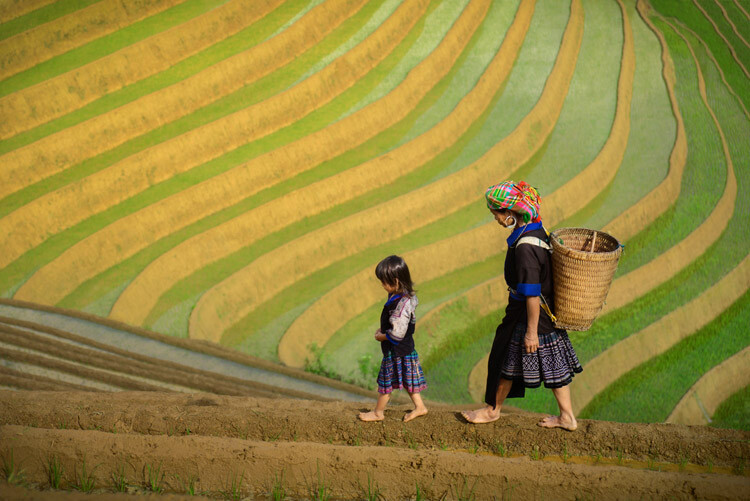
Flower H’mong mother and daughter walking a rice terrace berm in Mu Cang Chai, northern Vietnam. Exposure settings: f/4, 1/2000th, ISO 400, 70mm lens.

fishermen resting on Boats - Putting the Fine Art into Travel Photography

Fishermen resting. Shot from a bridge near Lang Co Bay. Exposure settings: f/8, 1/320th, ISO 800, 56mm lens.

The Fine Art of Travel Photography – People and Landscapes

Fine art photography, at least the way I see it, is about focusing on a specific style or look that reoccurs in every image with a goal to create aesthetically pleasing and engaging work.

Fine art travel photography implies that each travel-themed photo is of a very high artistic standard with consistent consideration to an effective composition, use of tonal range (lights and darks), and a balanced or focused color scheme throughout the photo.

Personally, I use natural light, and again, approach a photo to be a work of art. The goal is to create a visually striking image that looks similar to what a painter might have created, while still also looking completely like a photograph.

Fishermen in Halong Bay - Putting the Fine Art into Travel Photography

Fishing amidst the thousands of karst limestone formations of fabled Ha Long Bay. Exposure settings: f/9, 1/200th, ISO 800, 35mm lens.

Fishermen Ballet - Putting the Fine Art into Travel Photography

Four fishermen raise their nets on the Perfume River in Hue, central coastal Vietnam. Exposure settings: f/11, 1/160th, ISO 800, 30mm lens.

Showcase the people and culture

I aim to do this while still faithfully representing a country’s culture, with the goal to accurately, if ideally, portray the personality and lives of the people within the photos. I have always been most interested in the artistic side of travel photography, and less so in the traditional or documentary approach.

That said, I can see myself taking on more singularly focused projects in the future, where I can apply my artistic sense to the challenges of documentary storytelling within the travel space.

Vietnamese Monk - Putting the Fine Art into Travel Photography

A Khmer-Vietnamese monk daydreams at his monastery window in the Meklong Delta region. Exposure settings: f/4, 1/125th, ISO 640, 40mm lens.

Set your intention of making art

Although it may seem obvious, I think it’s critically important when adopting the fine art style to have the intention of making art throughout the process – from preparation to post-production. I take this mindset into the field and shoot a variety of subjects in various ways.

Portraiture is my first love, but I also enjoy landscape, wildlife, and cultural documentary photography. The purpose is to showcase scenes of life and culture for others to observe and enjoy. And of course I enjoy it as well, or I wouldn’t be doing it!

Playing in the River - Putting the Fine Art into Travel Photography

Ladies from the Cham ethnic group in Phan Rang having their own water festival. Exposure settings: f/36, 1/15th, ISO 400, 90mm lens.

Lady in Conical Hat - Putting the Fine Art into Travel Photography

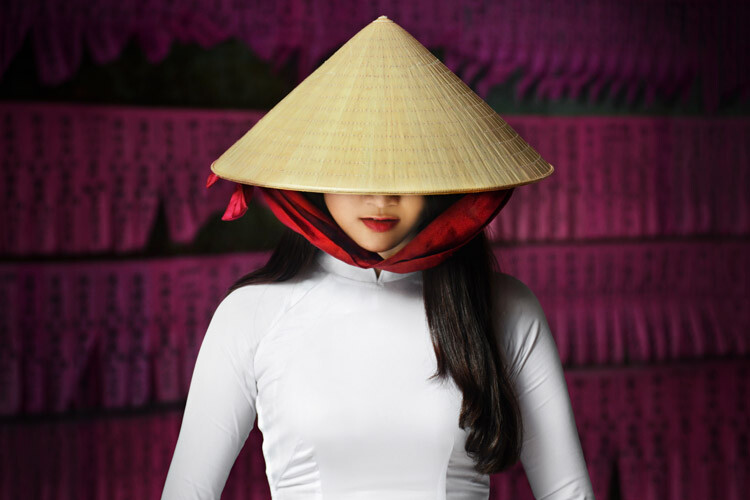
Vietnamese lady wearing the traditional white “Ao Dai” and Non La (conical hat), Saigon. Exposure settings: f/4, 1/125th, ISO 640, 70mm lens.

Have a vision and shoot with a purpose

In each work, I try to have a vision and understand what the photo will be about and how it will look in my mind before I take it. There is nothing in the frame that shouldn’t be there – everything included serves a purpose.

I also like to look for patterns in the scenes and feature these in the composition. Careful composition allows for clean backgrounds, no unnecessary distractions from the subject, and a clear focal point that is immediately identifiable against a complementary background that helps to tell the story or set the mood for the piece.

Below is some insight into how I approached photographing some of my favorite Vietnam images taken over the last few years.

Forever in Love

Forever in Love - Putting the Fine Art into Travel Photography

“Forever in Love” – A loving couple in Hoi An share a moment of joy and happiness together in their garden as the sun sets. At the time of photography, they had been married for 66 years. Exposure settings: f/7.1, 1/200th, ISO 500, 50mm lens.

I met a fellow travel photographer who now resides in Vietnam, Réhahn Croquevielle, and he generously invited to show me around his hometown of Hoi An. I was lucky to meet a lovely old couple who live in his village. When I met them they were smiling widely and happy be photographed by us.

To take this photo, I first observed the direction of light. Then I made sure to position them in front of the setting sunlight so their faces would be bright and the details on their skin well exposed.

I also had to consider the background and overall scene, and I found an area near one of their vegetable patches which was clean (consistent colors and even patterns without clutter) while also providing context and a backstory for the couple. So I asked them to sit there. They found this all very funny and were laughing constantly as we kept the mood light and fun, which I think is important to help make subjects enjoy a portrait session.

Interesting subject matter is the most important element to a successful photograph, in my opinion, followed by good composition and lighting. But a background that complements and doesn’t distract from the focal point is also crucial for a powerful photograph, and perhaps too often overlooked.

Playing in a Sea of Fishing Nets

Playing in a Sea of Fishing Nets - Playing in a Sea of Fishing Nets

A happy boy playing in a blue sea of fishing nets in the Mekong Delta region of southern Vietnam. Exposure settings: f/8, 1/250th, ISO 500, 24mm lens.

I was in search of a workshop where fishing nets are made by hand in the Mekong Delta region of Vietnam. When I arrived, I noticed a boy and his friends were curious about my presence and wanted to meet me and help out if they could. They led me to the net weaving shop, which was a large open-ended structure with a corrugated tin roof.

Inside were seated ladies spread about busily creating these nets. I was immediately struck by the blue color and knew it would be very photogenic, but it was important to get the right light to make them come to life. I noticed all the ladies were in shaded, darker areas where the light wasn’t strong enough. There was an area that was close to an opening in the rooftop, under a natural skylight. I saw that the light was good there, but without a human subject the photo wouldn’t be so interesting.

Since I had created a rapport with the boy and his friends and they were still hanging around, I encouraged them to play in the fishing nets. Demonstrating myself, I ran and jumped into the nets, making everyone laugh, and the kids started to do the same themselves. I captured this photo knowing that the frame had to be filled with the blue fishing nets to bring attention to the boy. It’s his genuine smile and action that makes this photo all the more interesting and enjoyable to view.

Patterns on the Streets of Hanoi

Patterns on the Streets of Hanoi - Putting the Fine Art into Travel Photography

A busy street scene in Hanoi photographed from a bridge on a rainy morning. Exposure settings: f/14, 1/40th, ISO 1250, 35mm lens.

It was raining one morning that I was to be exploring the city of Hanoi, which could have been considered a problem for photography. I went to the Long Bien Bridge after visiting a nearby market and observed the traffic passing by underneath me. I saw the potential for a really interesting pattern of cyclists with the high volume of motorbike traffic and the occasional bicycle. The rain had stopped, but the wet roads were creating reflections which would ultimately be beneficial and make for more dynamic lighting in the picture.

I waited a long time and photographed many combinations and patterns of commuters. I felt it was important to have an interesting focal point that was different from the rest of the scene. That was either going to be a person walking across the road or riding a bicycle amongst the sea of cars and other traffic.

I decided to use a slightly slower shutter speed to blur the traffic and capture the human subject sharper than the surroundings. It took a lot of patience and time on the bridge to finally capture an interesting pattern. It was fun to find the art in simple, everyday life.

Old Man with a Lute

Old Man with Lute - Putting the Fine Art into Travel Photography

Exposure settings: f/4, 1/160th, ISO 1000, 70mm lens.

I met this old man in the small idyllic village of Ninh Binh where he was walking by a lake. When he learned that I would like to make his portrait, he invited me into his home close by. We drank some tea and I spent some time together with his family.

Before I photograph someone, I always look around the scene and try to find the right place where I will take their picture, depending on the lighting and the background. I noticed near a window there was strong natural light coming into his otherwise dark home, and I placed a chair in this spot for him to sit. There was enough light on the man to not require a tripod in this position.

I noticed an old lute hanging on the wall. I found out that it was his and he could play, so I asked if he could show me. As he played, I took some pictures, but I noticed that the light would be stronger on his face, which is the main focal point if he were looking out the window. The breeze from the window blew his beard gently to one side, creating some movement in this portrait of an interesting, old and very friendly Vietnamese man who I was privileged to meet and photograph.

Here are a few more example images of my fine art travel photography.

Fisherman at Sunrise

Girl with Blue Eyes

Lady with Fan

Mekong Breakfast

Running and Playing

Salt Harvesters


The post Putting the Fine Art into Travel Photography by David Lazar appeared first on Digital Photography School.


Digital Photography School

 
Comments Off on Putting the Fine Art into Travel Photography

Posted in Photography


5 Tips for Doing Portrait Photography in Busy Locations

18 Dec

I live in London and it’s a pretty big city with an array of location choices when it comes to portrait photography. There are beautiful parks, many are vast and rolling, dotted around the city; you almost feel like the country is never more than an hour away. There are canals and rivers with boats and ships within easy reach. There are hilltops offering astounding views of the rising skyline and various parts of the city. And of course, there’s architecture that’s so impressive weaving itself across the city, the fabric of London life with a culturally diverse population traversing the criss-cross of alleys and roads. It’s a fast and busy place.

Some of my couples prefer such busy locations that remind them of the hustle and bustle of the place or of icons and landmarks that they love. Here are 5 tips for you on how to photograph a portrait while walking through a busy city. Embrace the buzz of activity, the age-old structures and new glass skyscrapers that loom over you as you go about your daily business of life, work, and play.

#1 Scout out the location and look for pockets of photo spots

5 Tips for Doing Portrait Photography in Busy Locations

Communicate with your portrait clients and give them some location ideas and options from which they can choose. Get them involved in the process as this helps them get excited, look forward to the photoshoot and own it too!

This is also a good opportunity to discuss outfits, as clothing is really important to the overall look and feel of the images. For this photoshoot, we had an area in mind, but with two very different locations in terms of ambiance and style.

Originally the couple wanted an old ruined church which has stunning walls and old architecture and some greenery. This also gave a really cozy country feel, soft light, and almost enchanting ambiance. However, they had already decided on their outfits and had bought them specifically. I felt that these outfits would work better in a fun city walk photoshoot rather than the old church ruins.

5 Tips for Doing Portrait Photography in Busy Locations

Match the location to the subjects

Just a stone’s throw away was the Leadenhall Market. It is built-up, old, colorful, busy and with a very city-feel, yet smart too. I suggested to them this would be the perfect location and after thinking about it they agreed. The forecast was also rainy and the market is a covered area so that was a good option for shelter.

The main idea was to walk the streets in this part of town and find pockets of photo spots that appealed to them. I know the area well as I shoot quite a few weddings in the city, so I was able to lead them to areas where I thought there were interesting spots to make portraits.

It’s a nice experience walking the streets, being part of the everyday goings-on, the mundane and the special alike.

5 Tips for Doing Portrait Photography in Busy Locations

We were also specifically on the lookout for British icons and landmarks as the couple was visiting from America. So we asked Waterstones, a British book retailer if we could take some pictures inside. They agreed. This leads me on nicely to my next tip…

#2 Incorporate icons and landmarks

We chose boutique shops and food stops that were traditional and well-known in the area and used their shop windows as backdrops. Incidentally, the guy’s name is Tom and we passed this quaint Bar called Old Tom’s Bar – just a perfect location for him.

It’s important that you know a little about what your couple likes so you keep your eyes peeled for anything that appeals to them. In this case, Tom is English and he likes his beer so we stopped by the Tavern for a drink!

5 Tips for Doing Portrait Photography in Busy Locations

5 Tips for Doing Portrait Photography in Busy Locations5 Tips for Doing Portrait Photography in Busy Locations

Get permission

There are places where it would be wise for you to ask permission first before going in for some photos. Usually, the shopkeepers are helpful and allow you to do so if you are quiet, non-disruptive and quick. However, others refuse and that is perfectly fine – don’t take it personally.

In the market, there was a lady shining shoes. She had a traditional shoe-shine set-up which would have been perfect for some photos, but she refused consent so we didn’t push. Other places are public and open and you can take snaps, just like any tourist would, to your heart’s content. The spot on the left is one such place. The photo on the right was taken from across the road, a fair distance to the building as permission is needed if you go too close!

5 Tips for Doing Portrait Photography in Busy Locations

#3 Leverage the busy-ness

There is just no getting away from people on crowded, busy streets. Often, it’s a waiting and asking game. You either wait for people to walk past and clear your space, or you ask them to move away. Again, politely and with great gratitude, if they happily oblige.

You can leverage this busy-ness by incorporating motion into your images such as this one below. It could take several attempts to get it right as this can be a very difficult setup with no planning ahead or anticipation of what is to come.

Of course, if things don’t go to plan in shots such as this, there is always Photoshop!

5 Tips for Doing Portrait Photography in Busy Locations

Adding motion with a long exposure and blurred moving objects can add a sense of the hustle and bustle of the city to your images.

#4 Do something fun and quirky

Keep the photoshoot lighthearted and fun by finding some unusual spots and asking your couple to do some quirky things if they are open to that. Like this image below standing in between the huge exhaust installations with the BEL-AIR sign in the background pretending to get blown away! Don’t forget to capture some safe, normal shots too like the one below it, just in case.

5 Tips for Doing Portrait Photography in Busy Locations

5 Tips for Doing Portrait Photography in Busy Locations

We found this old chapel with sculptures (below) and thought it would be funny if they copied the poses of the sculptures as another quirky shot. This turned out to be one of their favorite spots from the day too.

The photoshoot is more than just taking pictures, it is an experience as well, so aim to make it easy and fun.

5 Tips for Doing Portrait Photography in Busy Locations

#5 End on a high note

As you are shooting, don’t forget to include “indicators” in your conversations as to how far you are into your photoshoot, what other plans you may have in terms of location or shots such as individuals, action, walking away, etc. Tell them how far along you are into your plan, if you are are already nearing the end of the shoot, whether this is this your last location and your last shots, and when it’s a wrap.

Couples appreciate knowing where the markers are in the photoshoot. Some people just cannot handle more than half an hour so markers and indicators help them through it. Others like long photoshoots that could well run beyond the agreed duration and you need to keep tabs on your time so these markers work well for you too. As much as possible though, do not look at your watch!!!

Lastly, end on a high note with lots of laughter if possible. If you achieve this, it greatly helps in reinforcing good photoshoot memories so that there will be a “next time” for another photoshoot with you! Your couple will look back at this day and remember good vibes, not so much the other trying parts like the weather, how cold it was, the hassle of waiting for people to get out of the way, and so forth. When you show your couples their image gallery, end with happy photos too! And that’s a wrap!!

5 Tips for Doing Portrait Photography in Busy Locations

5 Tips for Doing Portrait Photography in Busy Locations

I hope you enjoyed this little article and do share any tips you may have which have not been covered above!

The post 5 Tips for Doing Portrait Photography in Busy Locations by Lily Sawyer appeared first on Digital Photography School.


Digital Photography School

 
Comments Off on 5 Tips for Doing Portrait Photography in Busy Locations

Posted in Photography


Weekly Photography Challenge – Black and White Portraits

16 Dec

There is something very appealing about the simplicity of a portrait in black in white. It becomes less about the setting, background and environment and more about the person being photographed.

This week we want to see what you can do to create your best black and white portraits. Here are some articles to help if you need assistance:

  • How to Create Good Black and White Portraits
  • 5 More Tips for Making Better Black and White Portraits
  • 3 Simple Steps to Craft Better Black and White Photos
  • Avoid These 5 Common Mistakes in Black and White Photography
  • A Guide to Black and White Conversion in Photoshop
  • A Guide to Black and White Conversion in Lightroom

Weekly Photography Challenge – Black and White Portrait

Simply upload your shot into the comment field (look for the little camera icon in the Disqus comments section) and they’ll get embedded for us all to see or if you’d prefer, upload them to your favorite photo-sharing site and leave the link to them. Show me your best images in this week’s challenge. Sometimes it takes a while for an image to appear so be patient and try not to post the same image twice.

Share in the dPS Facebook Group

You can also share your images in the dPS Facebook group as the challenge is posted there each week as well.

The post Weekly Photography Challenge – Black and White Portraits by Darlene Hildebrandt appeared first on Digital Photography School.


Digital Photography School

 
Comments Off on Weekly Photography Challenge – Black and White Portraits

Posted in Photography


Video: Travel Photography Tips – Shoot with a Purpose

15 Dec

The challenge with travel photography is that you may not get back to a location again anytime soon. So many photographers try and squeeze out as many photos as possible. The issue is lack of attention to detail and having any intentions or purpose before shooting.

What do you want your image to show?

Waiting for the right gesture, or even right subject to enter your scene is critical.

In this image shot in Trinidad, Cuba I found some amazing light skimming across the cobblestone streets. But it lacked something.

By waiting for a subject, the couple, to enter the scene it is more of a complete story.

In this video, photographer Mitchell gives you some great examples of how to shoot lots of images but end up with better results than just rapid-fire shooting.

The key points mentioned in the video are:

  • It’s not about shooting as many images as possible, but to shoot as many as possible with a purpose and intent.
  • Don’t settle for one or two shots from each scene. Get out of the mindset of needing to get the perfect shot in as few frames as possible. It’s not a contest.
  • Don’t spray and pray. Have an idea of what you want to capture.
  • Explore different framings and camera settings.
  • See how the light changes from different angles.
  • Experiment with different perspectives.

Another example

Here you can see some shots I took of two men deep in conversation in Cienfuegos, Cuba. But it still wasn’t quite what I wanted. The first (upper left) was too busy. The second (right) was more focused on the med but lacked context of the busy street scene. The third (lower left) shot from across is getting closer. 

Finally with the addition of the cyclist I had the shot I had envisioned. It shows context, has layers of activity, and interest. To me, it really speaks about daily life in a Cuban city. 

Do you photograph with purpose? Slow down and think about each frame you shoot. Be intentional.

And come home with great photos!

The post Video: Travel Photography Tips – Shoot with a Purpose by Darlene Hildebrandt appeared first on Digital Photography School.


Digital Photography School

 
Comments Off on Video: Travel Photography Tips – Shoot with a Purpose

Posted in Photography


DEAL: 87% off 44 Photography Training Cards for your Camera Bag

15 Dec

Have you ever gone out to shoot, but forgotten a technique you recently learned?

We don’t all have a photographic memory, so having a compact reference guide at hand can help you recall what you learnt.

That’s why the folks over at Photzy made these 44 printable Photography Training Cards called “Snap Cards”.

And as part of our Christmas Deals, they’re offering them to dPS readers for just $ 29. Normally $ 220, for the next 48hrs you can get these reference cards for 87% off.

Practical Training that Will Improve Your Photography

A few of the cards include:

  • Aperture Explained
  • Shutter Speed Explained
  • ISO Explained
  • Shooting Modes Explained
  • DSLR Terminology
  • Depth of Field Explained
  • Exposure Compensation Explained
  • Mastering Backlighting Explained
  • Shooting in Low Light Explained
  • Tips on Photographing Night Scenes
  • Composition Psychology
  • How to Pose Groups of people
  • Working with Natural Light

And So Much More!

Money Back Guarantee

There are 44 colour coded lessons in 9 main photography areas. Photzy offers a 100% money back guarantee, so there’s no risk in trying them out to see if they’re right for you.

Available for 48 Hours Only

Available for just 48hrs, grab them here while you can.

Bonus Partner Offer

This year as part of our 12 days of Christmas we have some extra special bonus offers from some great partners. For example – buy any dPS Christmas Deal and get $ 40 off ON1 Photo RAW 2018 today!

Christmas Deals:
Bonus Offers

Bonus Offers

Brought to you by

ON1
Athentec Perfectly Clear
KelbyOne
New York Institute of Photography

The post DEAL: 87% off 44 Photography Training Cards for your Camera Bag by Darren Rowse appeared first on Digital Photography School.


Digital Photography School

 
Comments Off on DEAL: 87% off 44 Photography Training Cards for your Camera Bag

Posted in Photography