RSS
 

Posts Tagged ‘Photographing’

Sigma blog posts tips for photographing 4th of July fireworks

04 Jul

fireworks.jpg

Sigma has posted an informative article on its blog by photographer Jack Howard, sharing tips on how to photograph fireworks. The article comes just in time for the 4th of July celebrations in the USA, but is equally relevant to various festivals, year-wide, all over the world. Tips include obvious pointers like making sure you have a good, sturdy tripod, but also more detailed advice about how to set up your camera’s exposure and focus modes, as well as how to trigger exposures. Click through for a link to the article at blog.sigmaphoto.com.

News: Digital Photography Review (dpreview.com)

 
Comments Off on Sigma blog posts tips for photographing 4th of July fireworks

Posted in Uncategorized


11 Tips for Photographing Senior Portraits

25 Jun

A Guest Contribution by Meghan Newsom.

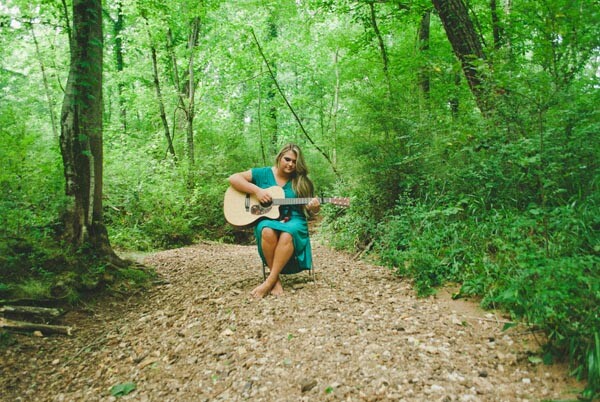
When it comes to planning for sessions, seniors are some of my favorite people to work with. Don’t get me wrong, I love families, children, engaged couples and wedding ceremonies.. but seniors are close to the top of my list.
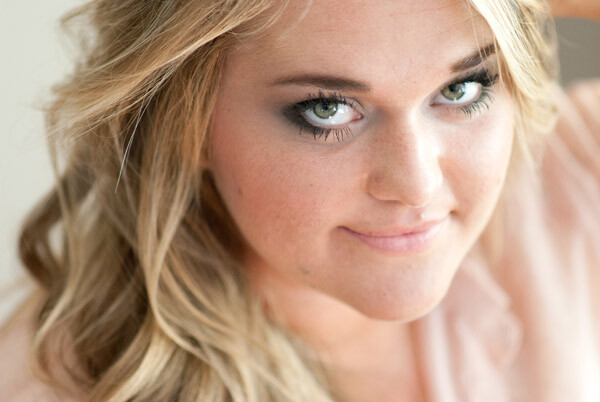
Dps1Ashleyedited21

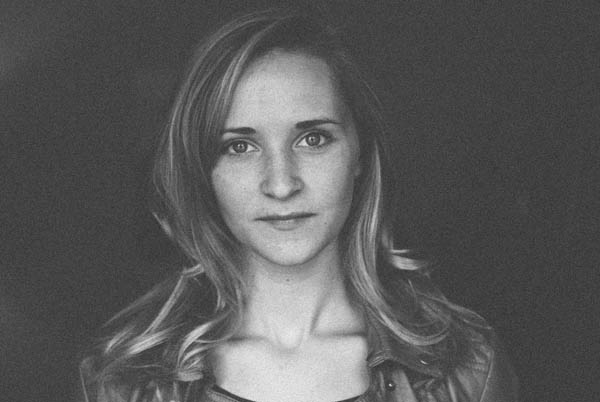
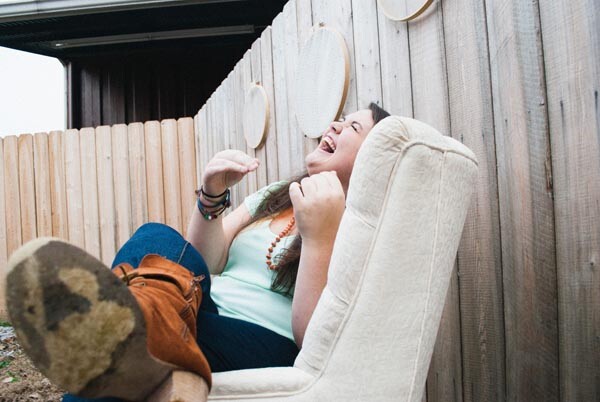
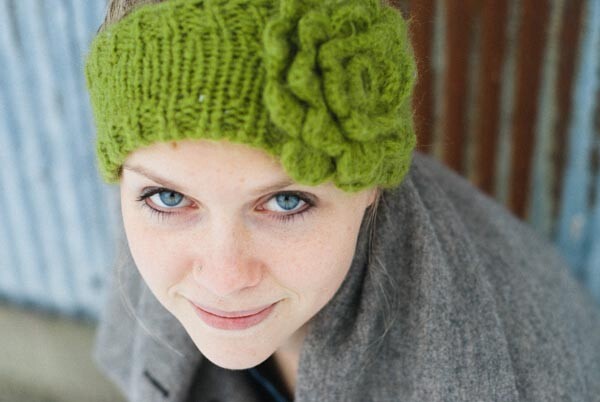
Why, you may ask? It’s simple: seniors are excited to model, seniors are some of my best marketing tools, and seniors know what they want. They also have a great sense of style, which translates well in their photographs.

When a high school senior books a session with me, I do several things right from the start to help them know I am excited about working with them. I also do my best to get to know them so I can tailor their shoot to fit them perfectly. I find that if you do these things, your session will not only run smoothly, but you will have a client who LOVES to refer you to their friends.
Dps2Ashleyedited52

Before the Shoot

1. First things first, let them know how excited you are to work with them. Since seniors are all about social media, I tweet about how excited I am to work with them and plan their session a few days after they book with me.

2. Next, I send each senior I book a tailored questionnaire so I can get to know them better. Some of these questions found in their questionnaire include:

  • What are some of your favorite features about yourself?
  • What do you want to remember most about this time in your life?
  • Are there any specific locations you have in mind for your shoot?
  • How would you spend your ideal Saturday?
  • How would you describe your personal style?

3. Even though seniors are on top of the latest styles, they often need help when it comes to deciding what to wear to their session. So, a week before their session I send them a link to a pinterest board I have created to help give them specific ideas of what to bring with them. This small act not only helps your client, but it will also help you achieve the look you want in your own portfolio.
Dps3edittaryn17

Dps4elamgirls2012christmas112

At the Shoot

The morning of the session, I contact my client to make sure they know what time and where we are meeting up. I make sure they have their outfits picked out, and give them one more opportunity to ask me any questions they see fit.

During the session I do several things to make the couple of hours I have with them memorable and stress free (and fun!!) for my senior client. You can do this too by doing the following things:

1. Seniors are at an awesome stage in their lives, they have their whole future ahead of them. Talk with them, ask them questions, find out what their plans for the future are. Encourage them and invest in them while you are with them. They will feel appreciated, valued, and will feel confident hearing assuring words from an adult that isn’t their parent.

2. Most seniors have never been in front of a professional photographer other than the cheesy pictures their parents had them take when they were younger. Make them feel comfortable. Praise them when they look good in front of the camera. I love to turn my camera around and show them some little peaks of how well they are doing. THEY LOVE THIS! It will encourage them to keep up the good work, and will give them confidence in their appearance.

3. Posing. You may have some go-to poses you use for your seniors. But since each person is uniquely different, you need to have several tricks up your sleeve. Enter my i-phone. Recently I have been taking screen shots of poses I am inspired them and putting them into albums on my i phone. When I hit a rut, I whip out my phone and look at my posing guides. At first I thought this was like “cheating” during a shoot, but my seniors LOVE IT! They think it is so cool that I thought of them enough before hand to plan for their poses during their session. Again, this makes them feel valued. I have a great Pinterest board to help you out if your stuck in a rut.

4. Props. I love to bring small props for my seniors to hold or sit on during their session. This could mean an old folding chair, a cute beach hat, an old quilt.. or even some books. Some people feel really awkward in front of the camera at first, so these little props give them something to do with their hands while they are adjusting to your presence.
Dps5katie44

After the Shoot

After their session, you can keep up the “hype” by doing several things:

1. The following day post a “teaser” or “sneak peak” photo from their session onto facebook. This is another reason why I love seniors. They will share that teaser with all of their friends through social media, which means more publicity for you and your business!

2. The following week, after I have edited all of their images, I will send ten images to them through PASS. They will also share these images through facebook, and it will give them a great idea of why they should purchase a disc with ALL of their high-resolution images from me.

3. As soon as I have all of their images edited, I will order a custom book for my seniors and send it to them along with a really appealing package. The package includes a hand written note, business cards, and other little goodies I sneak in for them. They always love how personal I make these for each of them (another great reason so send them a questionnaire and get to know them well during the session!)

4. After they have their images, blog all about their session, including images they haven’t seen in the ten I sent them. This blog post will also be shared through social medial to their friends and family (more free advertising!).
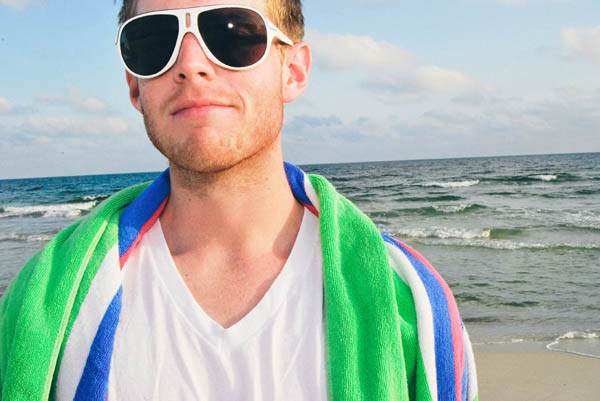
Dps6kirk8

In post processing senior photos, always remember that you are photographing for their parents as much as you are your senior client. I keep “fad” type editing out of the equation because I know ten years from now their parents will want a solid (not overly processed) image on their wall.

Instead of using “fad” editing techniques, I always let the style speak through the locations I choose. You can easily do this by choosing old brick buildings, abandoned farm houses, fields of cotton etc. The seniors love this, and their parents will appreciate the timelessness of the photographs they receive.
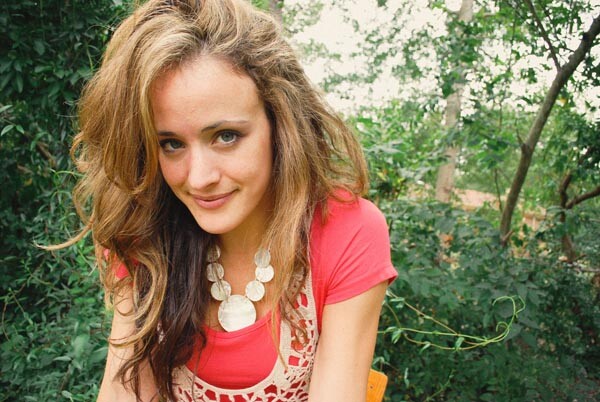
Dps7kamieditedw

It is not hard to rock a session with your seniors, it just takes some extra things to go above and beyond so they know you appreciate them and want to know them. All of those extra things will make your client feel special, and will translate into those coveted word of mouth referrals for you and your growing business!

Meghan Newsom is a lifestyle and wedding photographer located in Northern Alabama. When she’s not writing for her lifestyle blog, cooking up gluten free recipes, or taking pictures, you can find her exploring outside with her husband and pup.

Post originally from: Digital Photography Tips.

Check out our more Photography Tips at Photography Tips for Beginners, Portrait Photography Tips and Wedding Photography Tips.

11 Tips for Photographing Senior Portraits


Digital Photography School

 
Comments Off on 11 Tips for Photographing Senior Portraits

Posted in Photography


Wired.com shares tips on photographing the Supermoon

22 Jun

supermoon_2.jpg

This Sunday, June 23rd, the moon will be closer to earth than at any point during the year. It just so happens that on Sunday the moon will be full, too, creating what is commonly known as a ‘Supermoon’ which if there are no clouds in the way, will appear larger and brighter than normal. A great opportunity for some backyward astrophotography, in other words. Wired.com’s Raw File blog has published a short article containing tips for capturing this Sunday’s Supermoon in all its glory. Click through for extracts and a link to the full article. 

News: Digital Photography Review (dpreview.com)

 
Comments Off on Wired.com shares tips on photographing the Supermoon

Posted in Uncategorized


Posing Guide for Photographing Women: 7 More Poses to Get You 21 Different Photos [Part II]

21 Jun

A post by Kaspars Grinvalds from Posing App.

If you haven’t read the first article in this series, I would kindly recommend you to start with Posing Guide for Photographing Women: 7 Poses to Get You 21 Different Photos – Part I where we started with 7 standing poses.

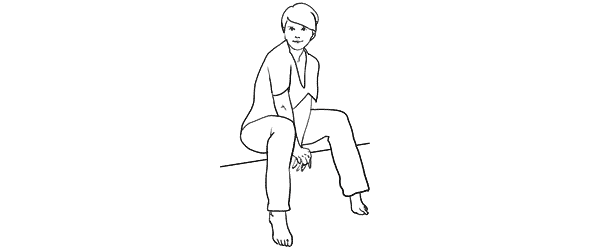
Let’s continue this time with 7 sitting poses for female subjects and their possible variations in order to get at least three different shots for each pose.

Pose 1

Pose1

Nice and simple pose to start with. Ask your model to sit comfortably with knees placed together. One hand relaxed on the knees while the other hand placed near the neck. And remind her to straighten the spine.

7poses2 1

Photo 1 – This basic starting point provides you with many different choices to continue with. But in the very beginning you may want to just test different shooting angles and heights and check what works best for your model.

Photo 2 – After I got the first shot similar to the sample, I asked the model to lower both arms and rest them on the knees.

Photo 3 – And finally I returned to the initial pose and took a close-up portrait shot.

Pose 2

Pose2

Another easy pose with hands placed together between the legs. Notice that arms should not be completely straightened, rather slightly bend at the elbows. Also in the sample pose it is illustrated that toes should be straightened in order to raise the knees slightly up.

7poses2 2

Photo 4 – The model easily recreated the sample pose and we could move on with some variations.

Photo 5 – This shot is exactly the same pose just taken from a side. Minor change but already different result.

Photo 6 – And again one more close-up portrait shot but this time the model is looking down her own body.

Pose 3

Pose3

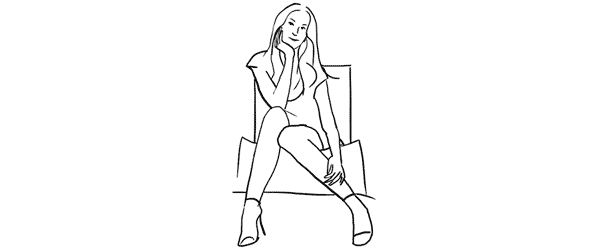
Another very simple pose with one leg crossed over the other. And I have to say here that including the legs in the frame can be challenging because it doesn’t work with all body types. If your model is curvy, consider framing closer comps (for example as in photos with the previous pose).

7poses2 3

Photo 7 – My model was with slim body type, nice legs and stylish shoes, so I chose to go for a full height frame.

Photo 8 – In exactly the same manner as with the previous sample I simply took this shot from a different angle. The model didn’t change anything, just turned her head to the camera.

Photo 9 – After that we repeated the already tested posture with one hand close to the neck. This hand movement is a very nice variation and works in many posing scenarios.

Pose 4

Pose4

This pose however is even more demanding than the previous one because it is all about the legs and thus there is no point of cropping them out. And nice shoes are a must.

7poses2 4

Photo 10 – Recreating it isn’t hard as the pose is fun and creates nice and playful mood to the photo.

Photo 11 – Here the model is looking down and kind of fixes her shoe. Very subtle changes but completely different photo.

Photo 12 – And once again the same pose but taken from a side creates one more variation.

Pose 5

Pose5

Simple and easy pose for the model sitting on the ground. And to my mind, in contrast to the previous on the chair poses, sitting on the ground works better barefoot.

7poses2 5

Photo 13 – The pose is kind of very natural and is easy to recreate. And as a result the model looks really relaxed.

Photo 14 – After recreating the initial pose, different hand placement options are available. Here for example the model raised them and connected on the knee.

Photo 15 – Only two minor adjustments to the initial pose were made here. Putting one hand up in the hair and slightly curving upper body part to the side. This also lowers the raised knee. The result is another friendly and natural looking pose.

Pose 6

Pose6

Another easy sitting on the ground pose. Very suitable for different close-up portrait shots.

7poses2 6

Photo 16 – While sitting in the initial pose try making two different versions with only the front arm and then with both arms raised on the knees. Both versions works well.

Photo 17 – A slight hand placement variation. This variation works very well for tight crops.

Photo 18 – And don’t be afraid to be spontaneous from time to time. This photo was just an improvisation on the go while sitting in the initial pose.

Pose 7

Pose7

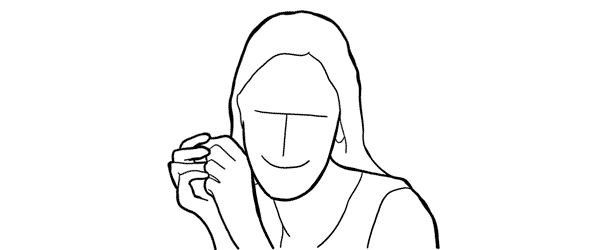
And finally I purposely chose also one simple portrait pose for the sitting samples. Despite the fact that only face is visible in the frame, it’s more comfortable for the model to recreate it while being seated.

7poses2 7

Photo 19 – Here I tried to illustrate the previous statement and showed the sitting position. You may visualize how it would work cropped only around the face.

Photo 20 – Keeping the “portrait with hands around the face” concept in mind, try different variations by moving hands around and making different head tilts.

Photo 21 – In order to achieve the most natural postures in the image ask the model to really move hands around. In this particular example she moved her hand through her hair and I made several shots and afterwards chose the best hand position.

So, this was a process of using 7 sample poses as the starting point to create 21 different photos. I encourage you to try this approach to posing your subjects in a similar workflow and most probably you will find your own and even better ways to achieve some great results.

All of these illustrations and many more posing samples are available on Posing App for your mobile devices.

Kaspars Grinvalds is a photographer working and living in Riga, Latvia. He is the author of Posing App where more poses and tips about people photography are available.

Post originally from: Digital Photography Tips.

Check out our more Photography Tips at Photography Tips for Beginners, Portrait Photography Tips and Wedding Photography Tips.

Posing Guide for Photographing Women: 7 More Poses to Get You 21 Different Photos [Part II]


Digital Photography School

 
Comments Off on Posing Guide for Photographing Women: 7 More Poses to Get You 21 Different Photos [Part II]

Posted in Photography


Killer Tips for Photographing the Moon That You Can’t Pass Up

17 Jun

The moon has long been a source of deep fascination for mankind. As long as anyone can remember, human beings have stared up into its source of light in the pitch black of night and wondered about it. Some have even gone a bit batty thanks to the moon’s effects (at least, some would have you believe). But hardcore photographers Continue Reading

The post Killer Tips for Photographing the Moon That You Can’t Pass Up appeared first on Photodoto.


Photodoto

 
Comments Off on Killer Tips for Photographing the Moon That You Can’t Pass Up

Posted in Photography


7 Tips for Photographing Newborns without Becoming Clichéd, Derivative or Boring

11 Jun

by Lynsey Peterson.

When I first started doing professional photography, newborn babies were the coveted prize. An adorable sleeping creature that would look cute no matter what? Sign me up! Let’s put that baby in a stockpot! In a basket! Wait! –A headband that looks like a flower! In a field of flowers! With butterflies! And maybe a big gift box bow!

Then I realized that Anne Geddes is the landlord of that entire market. And that it’s rare for a portrait client to actually want a picture of their baby in a stockpot. What people do want is a picture of their baby, that looks like their baby. Because in about 5 minutes their baby isn’t going to look like this anymore.

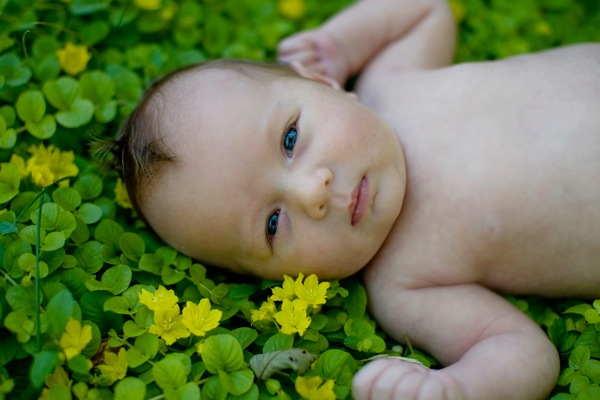
BABY1

Set the Scene

In an ideal situation, you are photographing a newborn that is less than two weeks old (when they tend to be more “mold-able”), in the morning (when they tend to be a more willing participant), just after being fed (when they tend to be a little more tolerant), and in a warm room (where they tend to be a little more comfortable).

Having everything ready to go before shooting a single shot is taken will serve you well: various blankets for background and warmth, cloth diapers for when someone pees on you (let’s hope it’s the baby), any clothing you plan to use and back-ups of every possible thing. I prefer minimal clothing on newborns, but this is just personal preference. Amble natural light is important because even if you do usually shoot flash, it’s often disruptive enough to wake a newborn and rule number one in photography, parenting, and life is: Never wake a sleeping baby. If there is anything I’ve learned, it’s that.

Be prepared to work fast because babies can be ticking time bombs, but slowly because they are delicate ticking time bombs. You are methodical. You are confident. You are patient. You are the baby whisperer. Because we are speaking in ideals. And if you’re me and we are still speaking in ideals, you also have on your cute jeans and are having a great hair day. Because, why not?

BABY2

Find the Purpose

Photographing newborns is one of the few times I make a point of asking clients what they are planning on doing with the end result. Often it’s for use in a baby announcement or just as “baby pictures” documenting this time. But if it’s going to end-up as a 24″x36″ canvas above a fireplace, I want to know beforehand. Or if I’m going to need negative space to create an announcement card, I’d rather shoot with that in mind then trying to backtrack later in post.

Another thing to think about is the ratio of images of the baby alone and the baby with parents or siblings; there is no right or wrong answer here but knowing what you or your client is wanting in advance is key. Newborn shoots are not (usually) guided by a free-spirited toddler and therefore require more of a plan from you than shoots with older children. And you never know when a baby will decide that pictures are just not what he wants to do today and let’s you know this in a very unsubtle and loud way.
  
BABY3

It’s all about the Baby

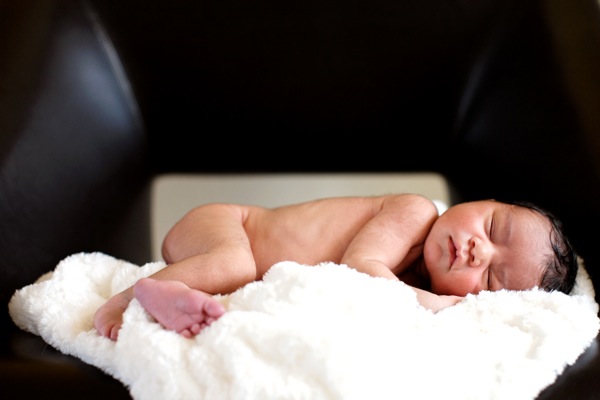
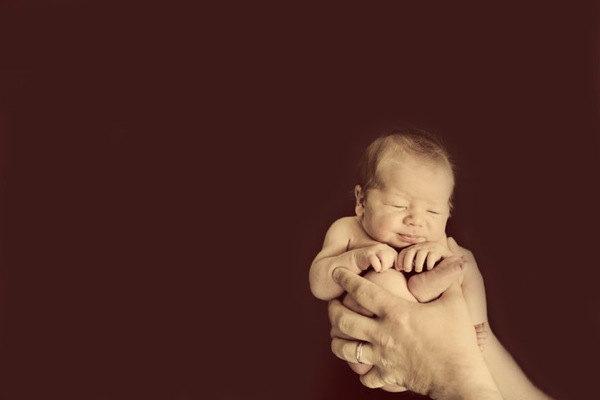
The only thing I always bring to a newborn shoot is a large piece of black cloth. I have had it for nearly a decade and more babies have peed on it than I wish to think about. I have hung it on walls and used it on floors and beds as a back-drop. I use it every single time because it simplifies everything and allows the focus to be completely on the baby. Lots of photographers do a version of a black background of some sort and I’ve found that there is no need to get fancy.

Many photographers use a velvet, but mine is about 2 yards of a stretchy thick cloth that I bought at a fabric store for ten dollars. It washes well (luckily) and the light sheen of it makes editing out any wrinkles in post extremely easy. I carry thumbtacks and painters tape to hang it with if I need to and it’s thick enough to hang over about anything and not have backlight shine through. I cannot stress having a way to simplify a newborn shoot enough. If a black background isn’t your style, find what is that will clean-up everything and let the newborn to be the focus, and allow it to become your key piece for baby photography.

BABY4 1

It’s in the Details

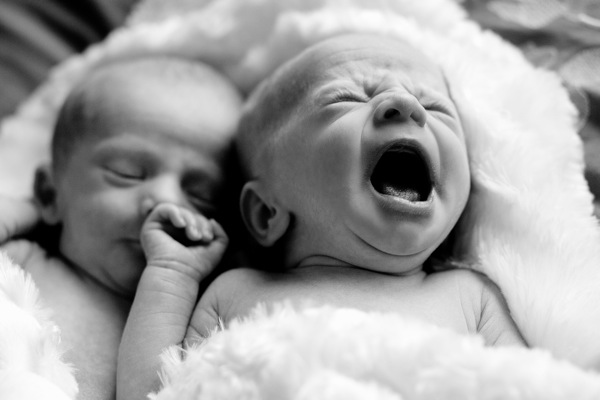
And why shouldn’t it be? Baby details are sorta amazing. I mean have you seen a baby toe recently? Talk about something I’d like to dip in butter and call a snack. We have all seen baby parts photographed in the same boring ways: wedding rings on toes, close-ups of belly buttons and umbilical cords (ew), tops of bald heads in big grown-up hands. I am guilty of doing every one of these, multiple times over. I now see that the shots that will stand the test of time will be very simple close-ups that highlight just how small newborns are: tiny hands holding a parent’s finger, brand new feet that have yet to see wear, yawns and other adorable expressions that only look adorable on a baby.

BABY5

As Cute as they are Awkward

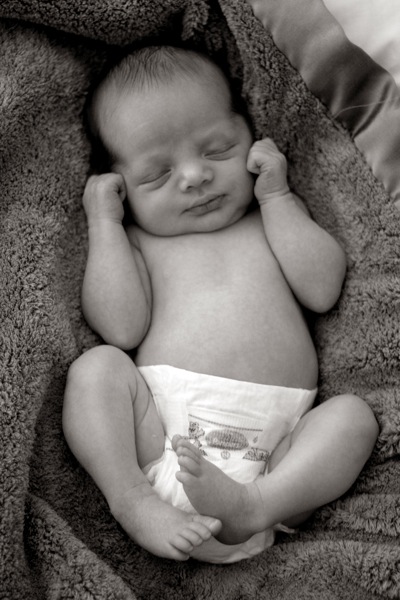
Oh sure, we all know they are adorable, but what are you supposed to do with them? They are flimsy and tiny and often naked. This is where I think we get into trouble and put them in baskets and stockpots. Because we can. Instead of creating scenes, it’s better to just think of “positions”. Babies can only do about two positions unassisted—laying down this way or that way. Work with that.

They may just lay there, but the beauty in this is that they often let you adjust them however you want. Tuck legs up under bodies, pull flailing arms into blankets, curl them up into someone’s hands. The baby is the star of this show and is plenty cute to pull off this role without a big supporting cast of props. A key to getting the position you want and having it stay that way long enough to get the shot you want is to keep your hands on the baby longer than needed after positioning them.

Think of it as long hug—you don’t need that extra ten seconds at the end, but it feels nice. Get the baby settled and then stay there for a bit longer. The warmth of your hands and the consistency and reassurance is often exactly what the baby needs to “hold” the position you are seeking.

BABY6 1

Got Extra Arms? Use them

I like to include siblings as often as I can, no matter the age. This gets tricky because the very definition of tricky is a two year old holding a newborn while exhausted parents watch the situation go down. Enough pillows and promises of lollipops though will get you a shot or two and a little variation in the final images. Interaction is the name of the game here—look for whatever the emotion is that’s happening and play on it. If it’s pride, comment on it to instill confidence and document a sweet moment in sibling history. If it’s indifference, engage the older child so they forget there is even a new addition in the photograph and are happy to be your star for a moment.

BABY7

Stop Worrying

I love a good worry and consider myself to be quite good at it. But as jobs go, photographing newborns is about as close to shooting fish in a barrel as you are likely to get. It’s easy to feel the pressure given that babies are so fragile and grow every single second. The truth is any picture you take of a newborn is a gift. Just as any time spent getting to photograph a newborn. I don’t get sappy often, but newborn babies are pretty special. Enjoy it.

Especially if the newborn belongs to someone else and you get to walk out of there without a crying baby and go home to a bed where you’re permitted to sleep through the night.

Check out more of Lynsey Peterson’s work on her website.

Post originally from: Digital Photography Tips.

Check out our more Photography Tips at Photography Tips for Beginners, Portrait Photography Tips and Wedding Photography Tips.

7 Tips for Photographing Newborns without Becoming Clichéd, Derivative or Boring


Digital Photography School

 
Comments Off on 7 Tips for Photographing Newborns without Becoming Clichéd, Derivative or Boring

Posted in Photography


Unposed Posing: A few Tried and True Tips for Photographing Families in Natural and Fun Ways

03 Jun

by Lynsey Peterson.

Pose

verb: to present oneself insincerely
noun: a deliberate pretense or exaggerated display

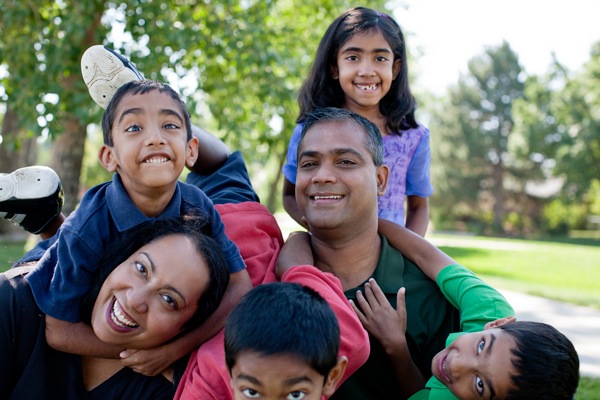
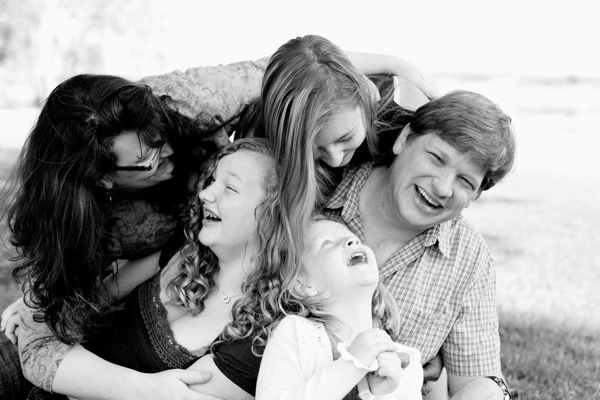
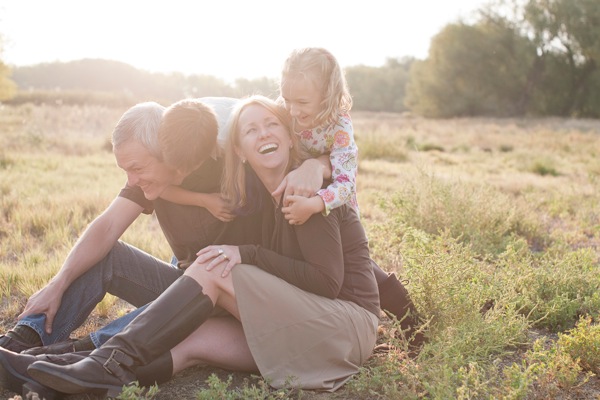
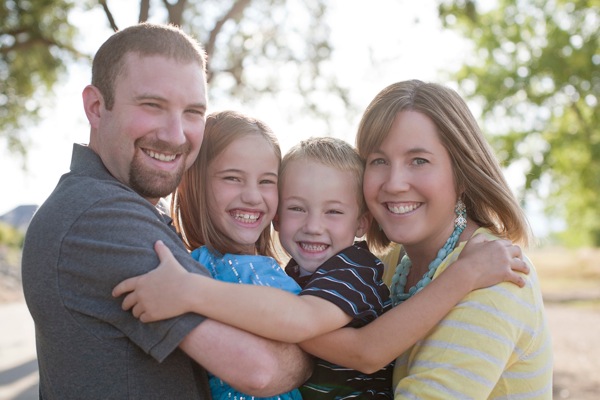
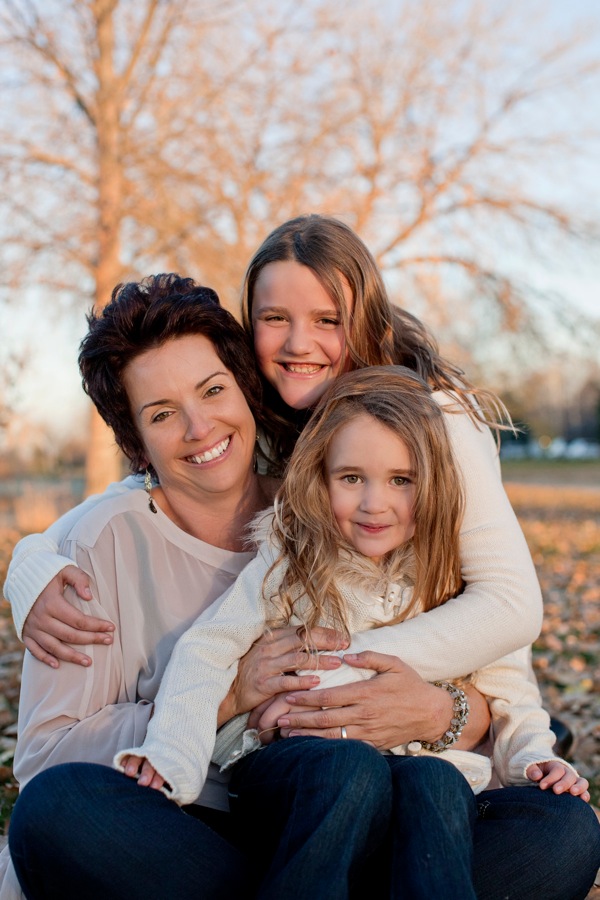
I’m not a fan of posed portraits. I’m not even a fan of the word. Insincere exaggerated pretense is not how I want my images to look. I want honest responses, full-body laughter, and spills of emotion. A posed portrait maybe has a place in this world, but I am banking on my client’s children and my own children wanting to look back at pictures from their childhood and see their real reactions and meaningful expressions. You can’t get that in a pose. But you can get it in a set-up.

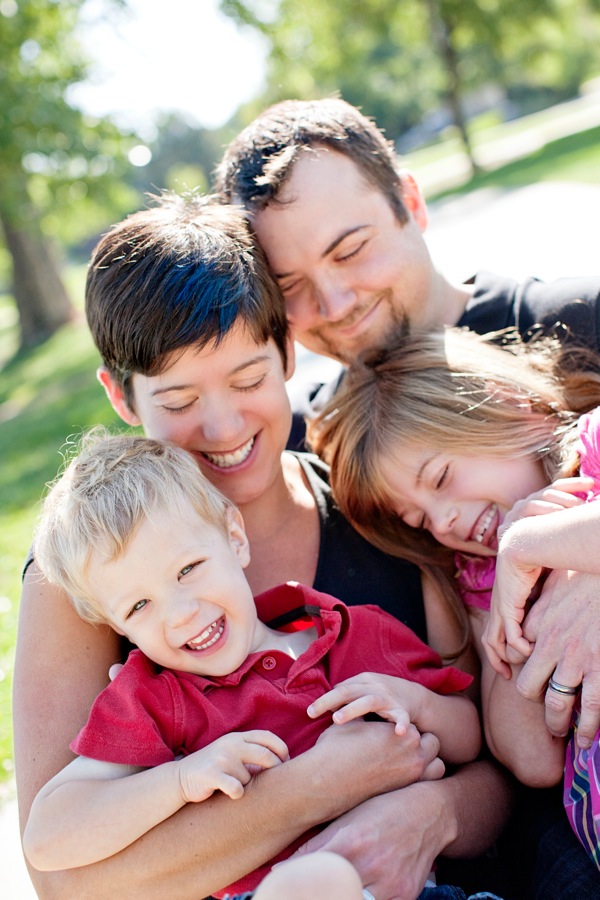
I use a couple tried and true set-ups every time I do a family shoot. I used to worry that all of my work would start looking the same and I would be known as the photographer that always takes pictures that look like this or that and nothing more. What I have realized though is when the ingredients are different, the end result never looks the same. Families bring their own energy to a shoot and even if I do the same “pose”, if I do it well and give it my all, it will never look the same as another family doing the same thing. To best illustrate this I am showing three different families doing the very same set-up.

Secrets don’t make Friends

SECRETS1 1

SECRETS2 1

SECRETS3  

But they do make for good pictures. The Set-Up: ask anyone in the picture to tell anyone else a secret. Honestly it doesn’t matter who because often it isn’t the secret shot itself that you are going for, but rather the reaction of said secret. Every once in a while I get a kiddo that doesn’t understand what a secret is or how to do it and when this happens I just tell them to lick their brother/sister/moms ear. Which would totally gross me out personally, but usually gets met with fits of hysterical laughter and there ain’t nothing bad about photographing that instead.

Line ‘Em Up

LINE1 1

LINE2

LINE3 1[LINE1]

Like crows on a clothesline. The Set-Up: with a younger family, I get away with asking everyone to hold hands. Once kids get a little older, I just have everyone get on the same level. This takes on a different direction every time: a running contest, a stadium-style wave, a monkey swing. The goal is always interaction. And if that isn’t happening on it’s own, I find it’s never a bad idea to bust into song. Everyone likes a serenade. 

Surprise Attack

SURPRISE1 1

SURPRISE2 1

SURPRISE3 1

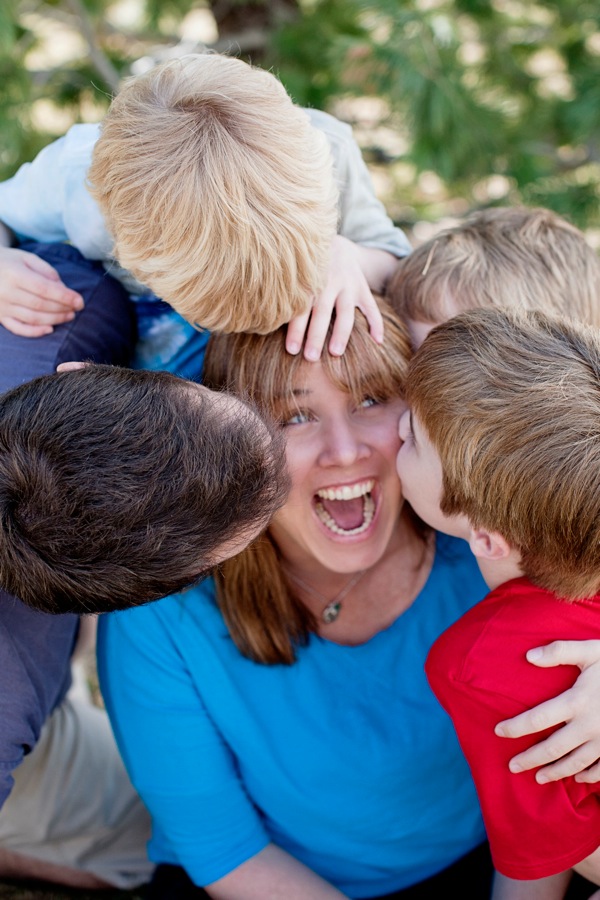
Kids take great delight in getting to run up behind their unknowing big people and surprise hug/tackle them. The Set-Up: if kids are too young to understand this or too old for it to work without being awkward, reverse it and have parents do the sneak attack. I usually save this for the end of a shoot because sometimes it can get a little crazy. Though my photography business has still never caused an emergency room visit. That I know of.

Kid Sandwich

SANDWICH1 1

SANDWICH2 1

SANDWICH3 1

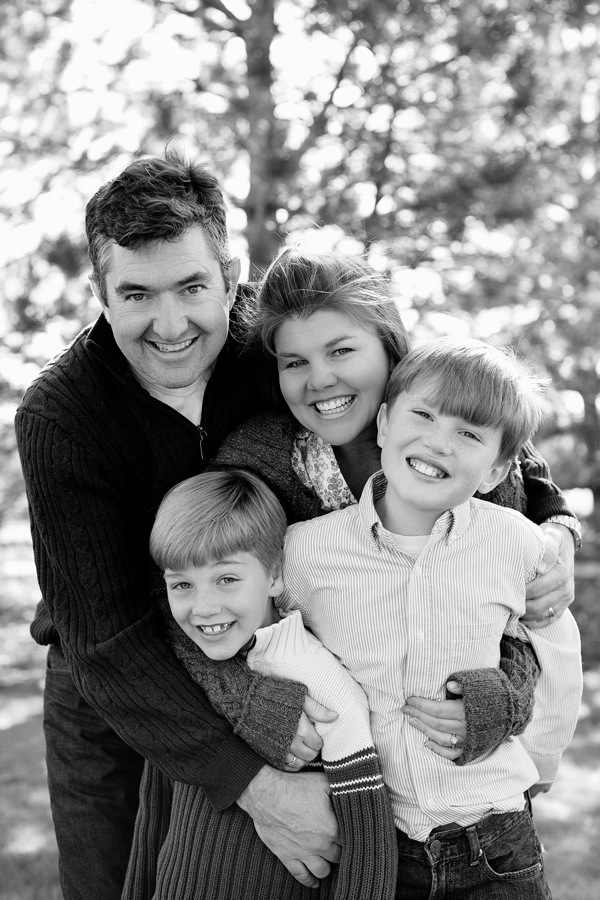
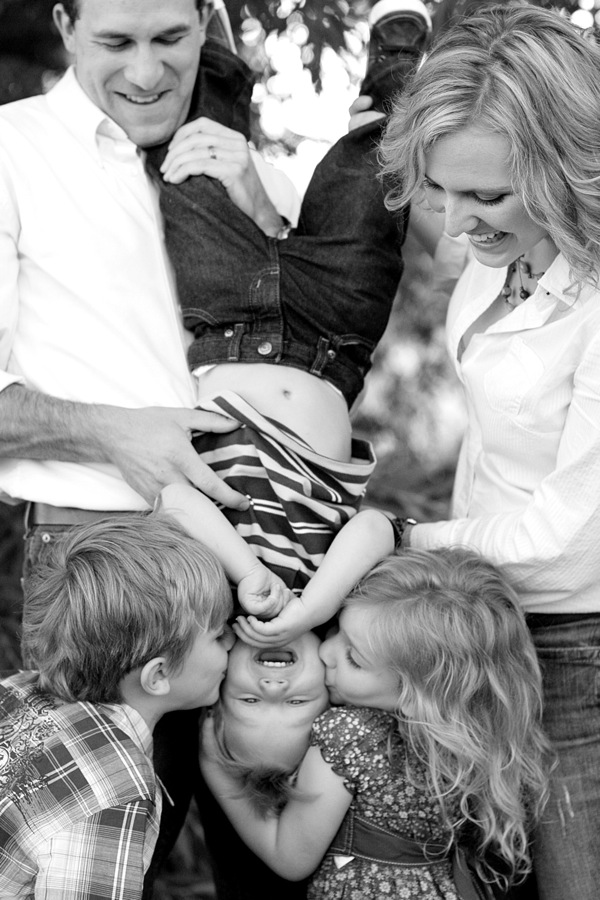
Grown-ups are bread, kids are peanut butter and jelly. Or, pickles and prosciutto. (I’ve photographed some very sophisticated young folks.) The Set-Up: Depending on size and age of kids, have parents bookend the little people and either pick-up kids and smash everyone together, or just get low enough to make it work. If there are more kids than adults, this can get really funny but it’s quick. Be ready and consider being a bit lower than you usually would, as the pull of gravity is heavy here because the kids likely are too.

Giant Hug

HUG1 1

HUG2 1

HUG3 1

Now is probably a good time to mention that I get laughed at a lot. Usually 95% of what I ask people to do for photos is met with a sweet but certain: “I absolutely will not do that.” I just ignore that. Because they always do in the end. No one has ever flat-out refused and told me no when it comes down to it. Which may be something I should factor into my personal relationship issues, but that’s a different article. The Set-Up: This typically works best when you ask a grown-up to have REALLY BIG ARMS and hug everyone at the same time. Sometimes this requires encouragement and you have to think of yourself as a little hugging cheerleader. When I have to do this, I am just grateful that there is no one videoing my crazy hand motions and the way my voice gets squeaky.

Randomness

RANDOM1 1

RANDOM2

RANDOM3

My goal for each shoot is to do something random that I have never done before. When doing this, don’t over think it. It will work or it won’t; those are the only two options. If it works, great! You have a new idea. If it doesn’t work, great!

Now you know to never try that again and hopefully no one was sent to the emergency room in the process. The Set-Up: This is a good time to really shoot for the moon, knowing that it’s nothing more than a bonus. It honestly could be anything. Be brave and ask for something new—you’ll know pretty quickly if it’s going to work and there is nothing wrong with it not working—just know to move on.

These ideas, as with any type of lifestyle photography posing are about the reaction, not the concept itself. Shooting digitally allows us the ability to shoot constantly; keep the expectation open and allow the moment to play for itself. And have a funny song in your back pocket just in case.

Check out more of Lynsey Peterson’s work on her website.

Post originally from: Digital Photography Tips.

Check out our more Photography Tips at Photography Tips for Beginners, Portrait Photography Tips and Wedding Photography Tips.

Unposed Posing: A few Tried and True Tips for Photographing Families in Natural and Fun Ways


Digital Photography School
 
Comments Off on Unposed Posing: A few Tried and True Tips for Photographing Families in Natural and Fun Ways

Posted in Photography


Travel Photography ~ Think Outside The Postcard When Photographing Famous Landmarks

21 Apr

How many of you have found yourselves in front of an iconic landmark and felt discouraged because every possible shot had already been made by thousands of tourists before you? You are on the trip of a lifetime. Your goal is certainly not to bring back pictures that look like the postcards at the souvenir shop.

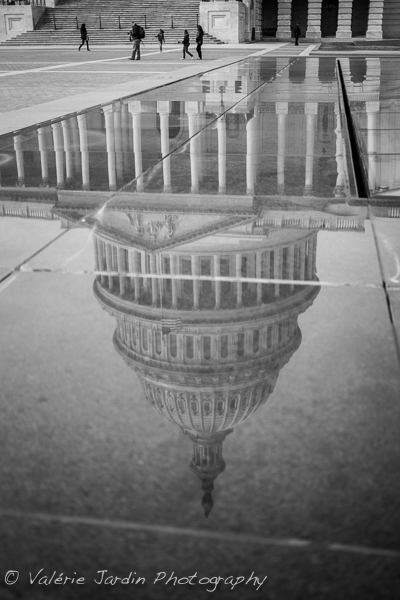
Photographing a reflection of a famous landmark such as the US Capitol in DC was a good way to avoid the cliché shot that every other tourist snaps daily. Adding the human element adds a sense of scale.

Photographing a reflection of a famous landmark such as the US Capitol in DC was a good way to avoid the cliché shot that every other tourist snaps daily. Adding the human element adds a sense of scale.

Here are a few tips to ‘think outside the postcard’ when you photograph a famous landmark:

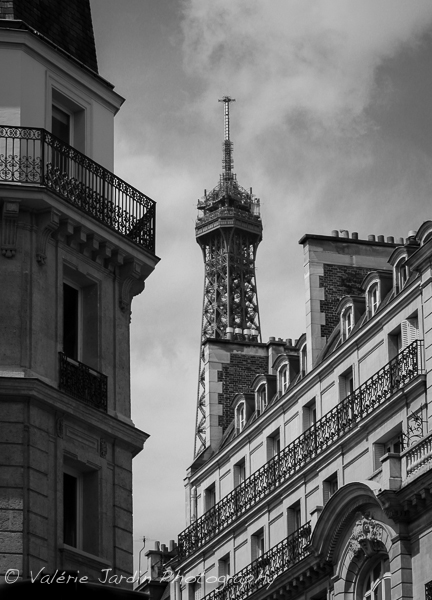
Get the cliché shot out of the way. You won’t feel right unless you do. So go ahead and photograph the Eiffel Tower the way you see it in your head when you close your eyes. Got the shot? Okay, now think of different ways you could photograph it and create your OWN iconic images of the same subject. Frame it with trees, look for its reflection in a window or a puddle, include it with the local architecture, shoot it as a silhouette, etc. The sky is the limit, you just have to train yourself to look for those unconventional frames.

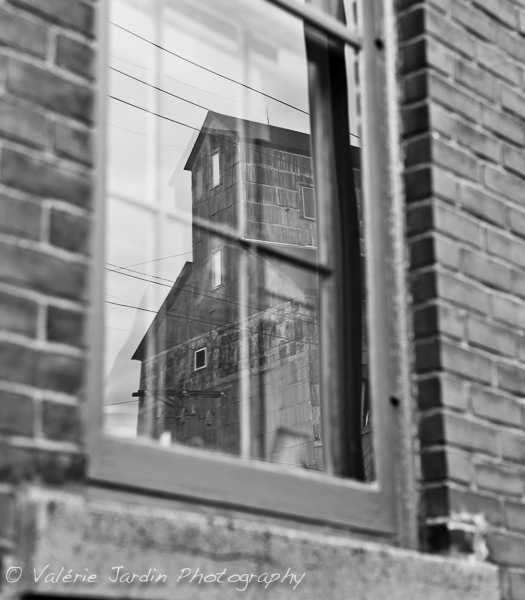
Afraid that you are going to miss other opportunities while you are looking for different ways to see? Practice at home! Every town has its own iconic landmark, even yours. It may not be a grandiose building, but it doesn’t matter. Whether it is the local historic grain elevator, or the statue of a famous local politician, go out with your camera and see it for the first time again. Work your scene and find a creative way to frame it.

Don’t forget to include people in your frame. They add interest, life and movement to your images. They also add a sense of scale which works well when photographing massive buildings.

This simple exercise will change the way you see photographically. The more you practice, the quicker you will spot those interesting shots when you visit a new place. Your pictures will never be boring again!

Practice at home!  This historic grain elevator may not be grand but it is one of the landmarks in a small river town near my home.

Practice at home! This historic grain elevator may not be grand but it is one of the landmarks in a small river town near my home.

Think of a different way to photograph a famous landmark by including local architecture in the foreground for example.

Think of a different way to photograph a famous landmark by including local architecture in the foreground for example.

Post originally from: Digital Photography Tips.

Check out our more Photography Tips at Photography Tips for Beginners, Portrait Photography Tips and Wedding Photography Tips.

Travel Photography ~ Think Outside The Postcard When Photographing Famous Landmarks


Digital Photography School

 
Comments Off on Travel Photography ~ Think Outside The Postcard When Photographing Famous Landmarks

Posted in Photography


7 Tips for Photographing at the Zoo

27 Feb

Zoos … love ‘em or hate ‘em?

I think it depends on the zoo. I much prefer open range zoos where the animals have tons of space to roam around and live almost as they would in the wild. I can’t stand to see animals in cages especially when they pace back and forth in frustration. But zoos do play an essential role in conservation and education.

When it comes to photographing at the zoo it’s easy to get distracted by the sheer joy of seeing the animals and forget everything we have learned about photography. Try to remember that all the rules of good composition still apply such as balance, the rule of thirds and, most importantly, no cluttered (or unnatural looking) backgrounds.

Here are some tips for your next zoo visit:

1. Choose the right zoo

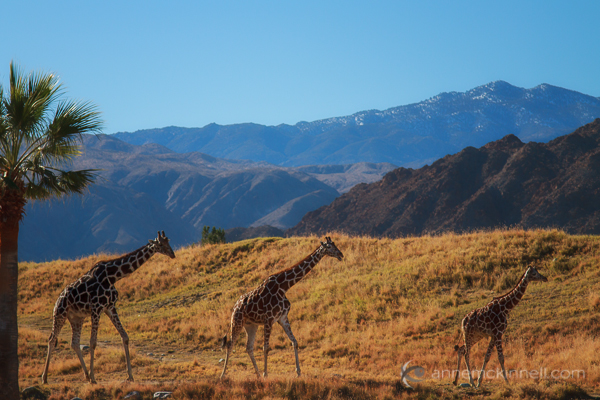
The type of zoo you choose makes all the difference to your photography (and to the animals). Zoos with large open areas for the animals to roam tend to make better photographs because the images look more natural when you cannot see any fences.

Giraffes by Anne McKinnell

Giraffes at The Living Desert, Palm Springs, California.

2. Wait for a special moment

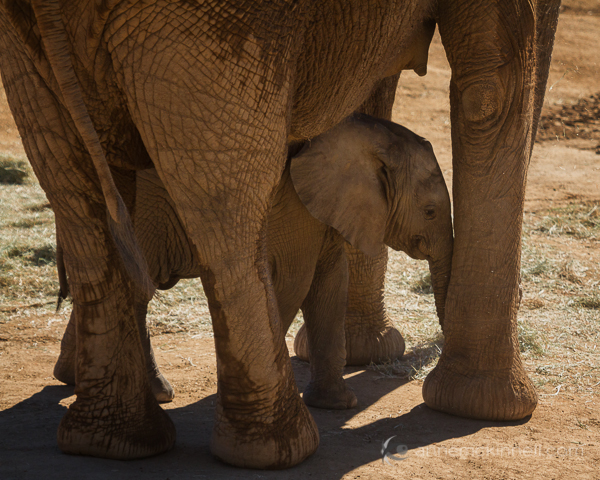
When the animals are right there in front of you don’t just snap away because you can. When you have this opportunity to be so close to them try to be patient and wait for a special moment to make a unique image.

Baby Elephant by Anne McKinnell

Baby Elephant at the San Diego Safari Park, California.

3. Dealing with fences and rails

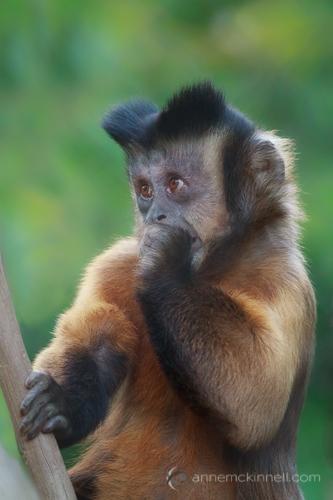
Tufted Capuchin by Anne McKinnell

Tufted Capuchin at the San Diego Zoo, California.

If you are at the kind of zoo with fences, you can use a wide aperture to reduce the depth of field which should make any fences out-of-focus.

This is easier to achieve if there is greater distance between the animal and the fence.

It is also easier to make the fence disappear if it does not have direct light on it. Find a portion of the fence that is in the shade if it is in front of or behind your subject.

When I made this image of a monkey there was netting both between me and the monkey and behind the monkey. With a 400mm lens at f/5.6 only the monkey is in focus.

4. When to go

If it’s a hot day the animals will often be in the shade where they are more difficult to photograph. Try to go as soon as the zoo opens in the morning when it’s cooler and the animals are more active. You will find fewer people and more animals in the morning.

Overcast days are great for the zoo! Just keep the sky out of your image and enjoy the soft light with no harsh shadows.

If it is a bright sunny day you can use a polarizing filter to remove glare from the animal’s skin or fur.

5. Don’t forget the butterfly zoo

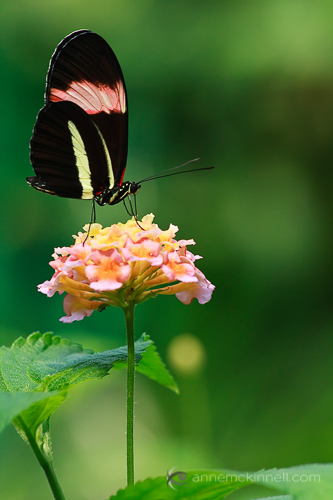
Butterfly by Anne McKinnell.

Butterfly at Butterfly Gardens, Victoria, British Columbia.

One of my favourite types of zoo is a butterfly zoo.

One thing to remember about a butterfly zoo is that they are very hot inside. If you live in a cold country like I do and you visit in winter remember that your lens will need to make the transition to the warmer climate. When your lens is exposed to the warm humid air condensation will form and it might take awhile for it to go away.

One way to deal with this is to go in the restroom and put your lens under the warm air from the hand dryer for awhile to warm it up before you go inside.

Another option is to put your camera and lens in a ziplock bag before you enter and then let it acclimate inside the bag. It will take about 20 minutes before you will be able to take your camera out of the bag without condensation appearing. I prefer the hand dryer method!

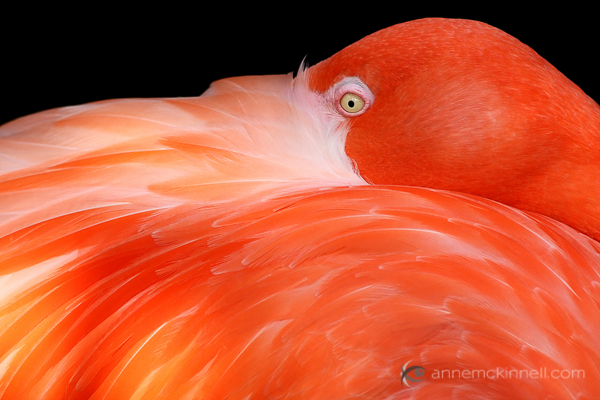
Butterfly zoos tend to have beautiful light and often there are more than just butterflies. At Butterfly Gardens in Victoria, British Columbia, there are a number of birds as well and the light does wonders for the colour of the flamingos.

Caribbean Flamingo by Anne McKinnell

Caribbean Flamingo at Butterfly Gardens in Victoria, British Columbia.

6. Equipment

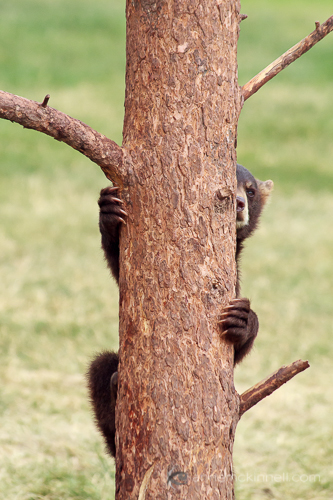
Baby Bear by Anne McKinnell

Baby Bear at Bear Country, Rapid City, South Dakota.

You probably won’t need a huge lens because you can usually get fairly close to the animals in a zoo. I find most of my zoo images have a focal length between 100mm and 300mm.

As far as a tripod goes, I think this is one occasion when it’s perfectly okay leave your tripod at home.

The animals are moving so you are going to need a fast shutter speed anyway. Use at least 1/500 second shutter speed and image stabilization.

When I go to a zoo I usually take my camera with only one lens and a polarizing filter. That’s it! It makes it much easier to move around to get the right angle and you’ll have less to carry on a long hot day.

7. Focus

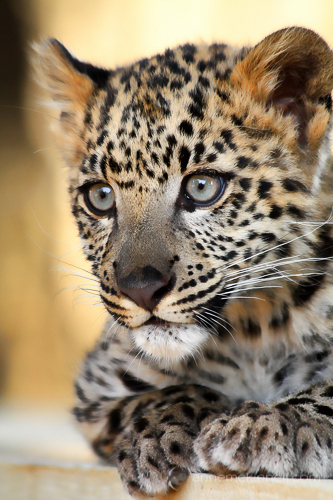
Snow Leopard Kitten by Anne McKinnell.

Snow Leopard Kitten at Westcoast Game Park, Bandon, Oregon.

Always focus on the eyes.

When you are using a shallow depth of field to remove background distractions part of your animal may be out-of-focus too.

That’s okay as long as the eyes are in focus.

In this image I made of a snow leopard kitten, with a 300mm lens and an aperture of f/5.6, only the nose and eyes are sharp.

Zoos provide both opportunities and challenges for photographers. I hope these tips help you make better images during your next zoo visit.

Post originally from: Digital Photography Tips.

Check out our more Photography Tips at Photography Tips for Beginners, Portrait Photography Tips and Wedding Photography Tips.

7 Tips for Photographing at the Zoo


Digital Photography School
 
Comments Off on 7 Tips for Photographing at the Zoo

Posted in Photography


Seeing vs. Photographing the Moon: The Moon Illusion

20 Feb
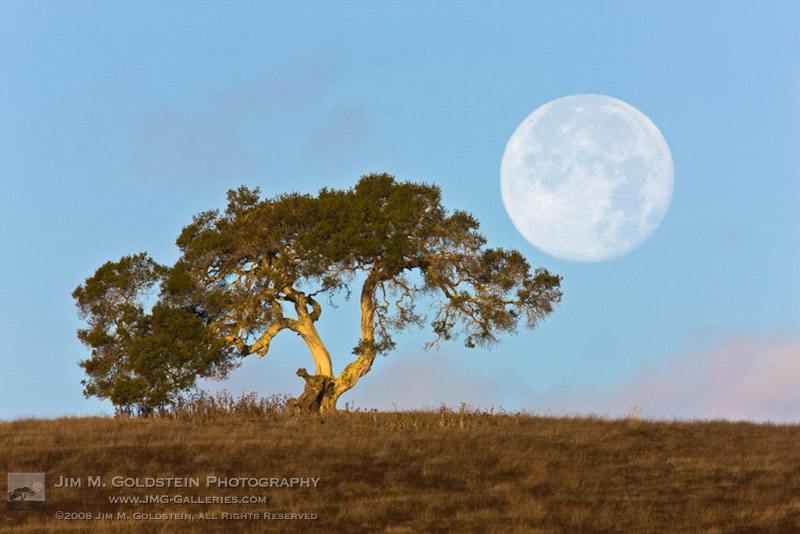
Perigee Moon & California Oak

Perigee Moon & California Oak near the Monterey coast, California

One of the more intriguing visual phenomenon is seeing a giant moon on the horizon. One might think that there is some physical explanation as to why the moon is larger when low on the horizon, but its actually a visual illusion where your brain is playing a trick on you. This illusion is aptly called the “Moon Illusion“. This illusion is incredibly well explained in the following video:

So how do people capture a super large moon in their photographs?
There are a few ways:
1) Use a large telephoto lens to photograph the moon so that it fills a larger portion of the frame
2) Add the moon to a scene using the in-camera technique of double-exposures
3) Use a Photoshop or other image editing software to composite two images together.

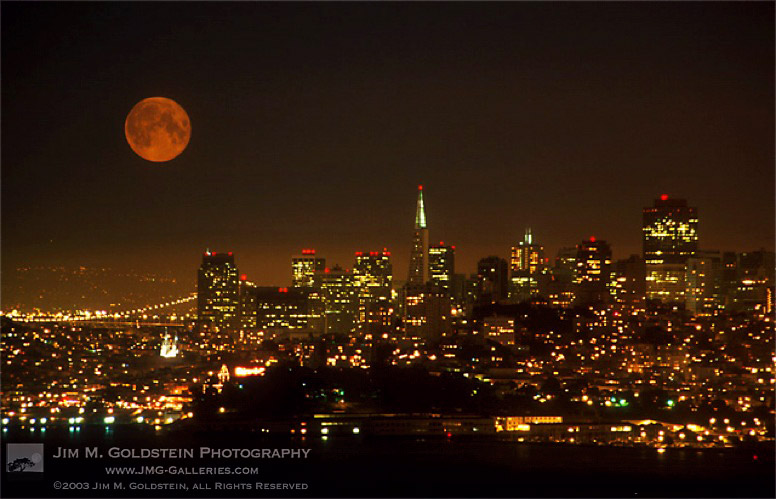
No one way is right or wrong as the end result pursued is at the creative discretion of the photographer. Still some people can get confused between real and altered photos to display large moonscapes. The photo at the top of this post was taken with  a 600mm lens and 1.4x teleconverter for a net focal length of 840mm. The photo below was taken with a 70-300mm lens employing my film cameras double-exposure functionality.

San Francisco Moonrise

Photoshop clearly can provide the fastest path to high impact photos, but not always the most natural rendition. A perfect example of this is comparing the two images of a moon above a Los Angeles skyscraper taken at 105mm. Moon photo composite made with Photoshop versus a straight 105mm photo of the moon. Clearly the first image has had some artistic license applied while the second is a straight representation of what a 105mm lens can capture.

All in all photographing the moon can be incredibly challenging and fun. How you represent the scene you see with your naked eye is up to you, but take into account the “Moon Illusion” when creating your final photo. It might just explain why what you see in your photo doesn’t match up to your memory of the scene.

Copyright Jim M. Goldstein, All Rights Reserved

Seeing vs. Photographing the Moon: The Moon Illusion

The post Seeing vs. Photographing the Moon: The Moon Illusion appeared first on JMG-Galleries – Landscape, Nature & Travel Photography.


JMG-Galleries – Landscape, Nature & Travel Photography

 
Comments Off on Seeing vs. Photographing the Moon: The Moon Illusion

Posted in Equipment