RSS
 

Posts Tagged ‘Photographing’

Tips for Photographing Star Trails

03 Dec

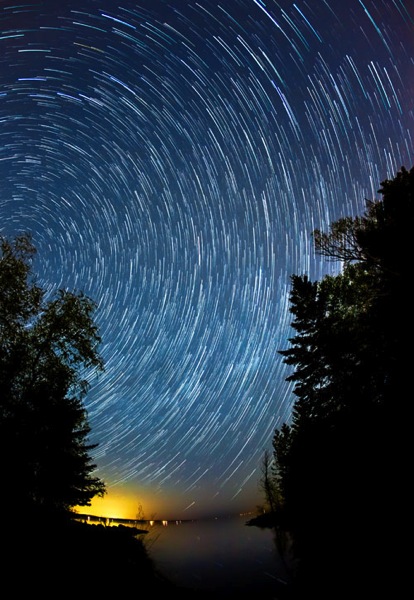
Photography is a fantastic tool to explore the world around you, especially in ways normally invisible to our eyes. Landscapes at night often reveal untold treasures in the sky, and the stars can be made to swirl around like a dream. The process for photographing the movement of the stars isn’t nearly as difficult as it once was; star trails can be easily captured by any camera with a wired shutter release cable!

Enjoy these tips for photographing star trails at night! 
Star trail open

Composition comes first

There are a few things to consider when making a star trail image; the first is composition. As with any good landscape photograph, you should be able to visually navigate through the image. A foreground element is very helpful, and having water in the scene is a bonus – the stars can reflect off the surface of the water. The image shouldn’t only be about the stars, but how they interact with the landscape.

You should try to shoot with the widest lens you have. This offers more stars to fill the night sky, and also a greater potential to have the North Star somewhere in the frame. Most of my star trail images are photographed with a fisheye lens, because of the 180 degree field of view. The wider the field of view, the more star trails your image can contain.

As the Earth spins around its axis, the North Star is the only star that doesn’t move (much). All of the other stars appear to spinning around this central location, which can add a visual anchor point in your composition. If you’re not familiar with the exact position of the North Star, simply set your camera to bulb mode and take an extra-long exposure in the neighbourhood of 4-5 minutes. This should give enough of a “spin” so the stars to help you pinpoint the center of the celestial circle.

Camera settings

The goal for your final image however, requires a different exposure. Start with the following, set on manual mode:

  • Shutter speed: 30 seconds
  • Aperture: F/3.5
  • ISO: 3200

Take a test shot and see what you get. If the exposure is too bright, decrease the ISO or choose a smaller aperture (higher F-number). If the image is too dark, try increasing the ISO to compensate. Always leave the shutter speed at 30 seconds. When you get an exposure that looks good on the back of your camera, you’re set. Just make sure the camera is set to continuous shooting mode with long-exposure noise reduction turned OFF.

Also be sure to set the camera or lens to manual focus. The focus can’t shift from one image to the next, so dial it in manually. I find that focusing on distant light sources using Live View allows for the best depth of field while still keeping the stars sharp. Foreground objects may appear blurry, so going the “extra mile” would be to focus on the foreground and focus-stack the landscape.

With a wired remote shutter release, press and lock the shutter control. When one exposure ends, the next one will automatically begin. Let the camera continue this way for roughly an hour, and stop it whenever you’re ready to leave. If you left the camera for one hour, it should have recorded 120 separate 30-second exposures. These images can then be combined very easily in Photoshop.

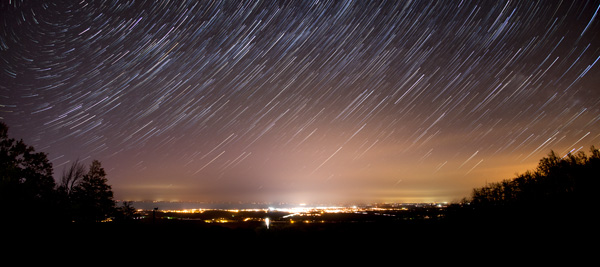
Forgot your remote shutter release, or haven’t purchased one yet? I’ve found myself ready to make a star trail image and digging around in my camera bag offered me no cable release – it was somewhere at home, far far away. In a rare moment of creativity, I grabbed some tape (always keep some Gaffer’s tape in your camera bag!) and a small pebble from the ground. Simply taping the pebble over the camera’s shutter button with enough force to fully depress the shutter, the camera happily clicked away until the tape was removed. The below image was created this this “rock and tape” trick.
Rock tape trick

Post-processing workflow

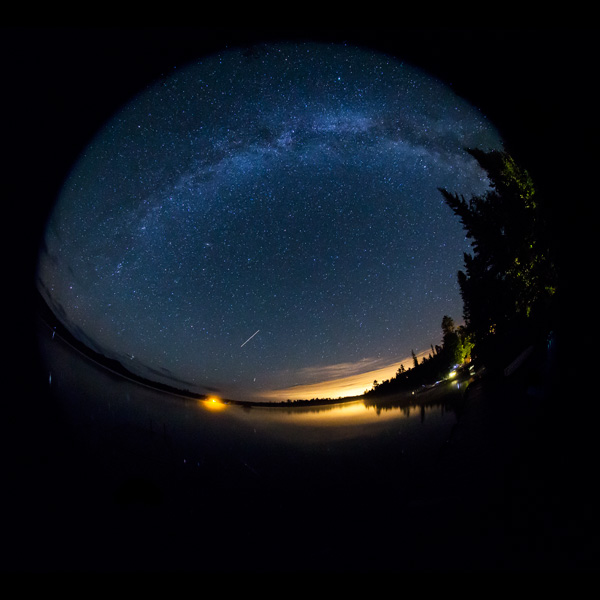
Combining 120 images may seem like a daunting task, but the process is fairly straightforward – start by editing one image. In Adobe Lightroom, edit your image to your liking. Common adjustments would usually include shadows and whites, white balance, clarity, and noise reduction.
Single frame

Make this one frame as perfect as you can make it, and copy the development settings. Right-click on the image in Lightroom and choose “Settings > Copy Settings” and make sure all of the settings you’ve adjusted are selected.

You’ll need to paste these settings across the entire range of images. To do this, select all of the images you want to use in the filmstrip, and right-click on any of the selected thumbnails in the filmstrip. Now, choose “Develop Settings > Paste Settings” and your adjustments will appear on all of your images.

Alternate method to paste settings

There are a few ways inside Lightroom to copy and paste develop settings. Another way, which is particularly helpful when sharing settings over many images, is to use the “sync” feature. To do a Sync make sure the image you’ve worked on it selected in the filmstrip and visible on screen. Do a “select all” by holding “command+a” on a Mac or control+a on PC. That will select all the images in the folder. Next click the “sync” button in the lower right of the develop side panel. Choose all the settings you adjusted (as above) and click “synchronize”.

Putting them all together in Photoshop

You now need to send all of the images over to Photoshop in a single layer. With all of the frames still selected, right-click on any image and choose “Edit In > Open as Layers in Photoshop” and wait. This will take some time as Photoshop loads each frame into the same workspace as layers.

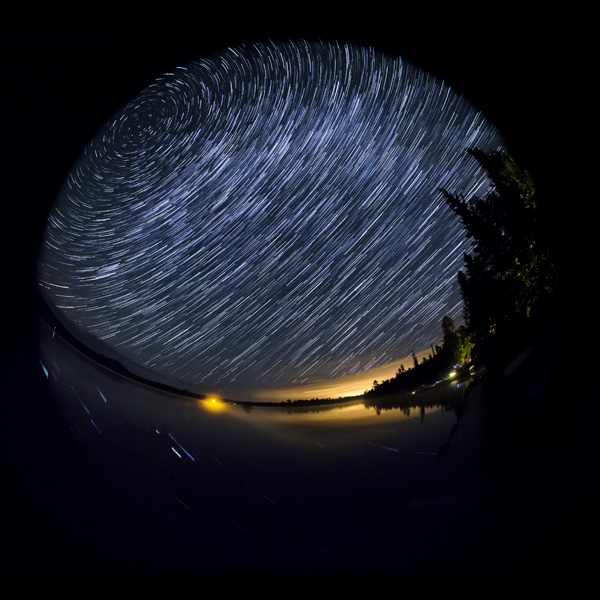
When all of the layers are finished loading, the next step is simple for users of Photoshop CS6 and beyond. Simply select all of the layers in the layers panel, and switch the blending mode from “normal” to “lighten”. Voila! The path of the stars through the sky will be revealed. This blending mode works by comparing pixels of all layers and displaying the brightest pixel. If the landscape remains static, there won’t be any change there, avoiding the additive effects of light pollution. The stars are moving, and as their position in the image changes the new location will contain brighter pixels.
Stacked frames

For users of Photoshop CS5 or previous, this can still be done but it will take some time. You cannot select multiple layers and change the blending mode on them all at once, it must be done one at a time.

When you’re done, flatten the image and save it. Continue to edit as you see fit, but the star trail is complete!

An alternative to Photoshop

Another option if you do not use Lightroom or Photoshop is to use a free program call StarStaX. It’s easy to use, just drop your images in and it does all the magic for you, AND even fills in the tiny gaps between each of the exposures.

Post originally from: Digital Photography Tips.

Check out our more Photography Tips at Photography Tips for Beginners, Portrait Photography Tips and Wedding Photography Tips.

Tips for Photographing Star Trails

The post Tips for Photographing Star Trails by Don Komarechka appeared first on Digital Photography School.
Digital Photography School

 
Comments Off on Tips for Photographing Star Trails

Posted in Photography


Nightscapes: Photographing the City at Night

18 Nov

By Joseph Eckert

Eckert_NightScape_1.jpg

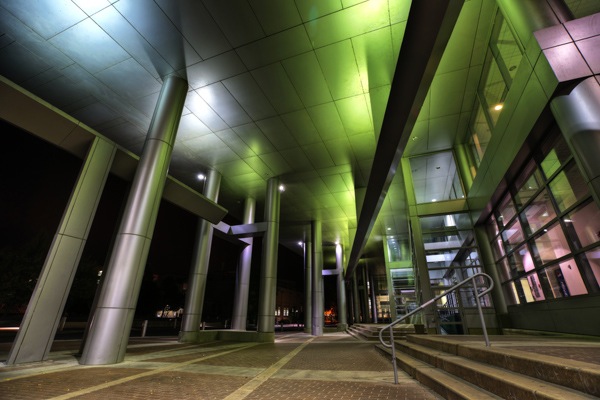
The idea of taking photographs at night can be counterintuitive to the novice photographer. After all, photography is an art, a craft, a technology that is wholly built on light. Film or digital, it doesn’t matter: we need light to make a photograph—it is as simple as that.

Night, of course, by very definition lacks the pervasive light of day, and therefore doesn’t seem like a good time for photography. In the broadest sense, this intuitive understanding of light and its importance to photography is absolutely correct. Night does represent a more challenging time to take pictures, because we lack all those wonderful photons barreling down from the sun and reflecting off everything interesting and into our waiting lenses.

However, note that I said “challenging” but not “impossible.” Indeed, nighttime photography is not only possible; it is wonderfully ripe for creative expression and can help you create genuinely unique looks in your work.

The Night in General

Eckert_NightScape_2.jpg

Take a moment, tonight, or whenever you have a chance, and go outside into the darkness long after the sun has gone down. Really open your eyes and observe, noting all the differences, all the unique things that set night apart from day. It is as simple as the lack of sunlight, but infinitely more complex than that breezy statement would suggest.

Pay attention to the way the shadows have deepened and pooled, how colors are muted or rendered differently by the artificial light of streetlamps or the exposed bulb on your backyard porch. Notice how things feel, how significant just changing the time of day can be. That old oak tree that seems so friendly and comforting in the day can turn into a gnarled, malevolent specter at night. Or a car that during the day is simple and boring might become a gleaming chariot in the darkness. The possibilities are endless.

The City at Night

Eckert_NightScape_3.jpg

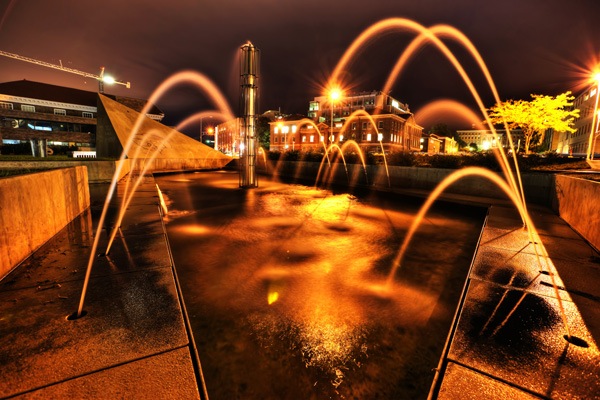
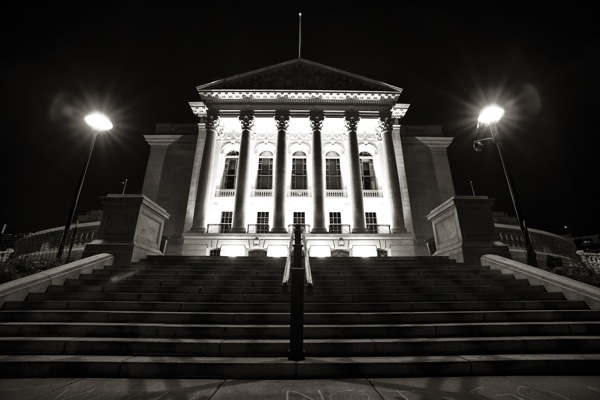
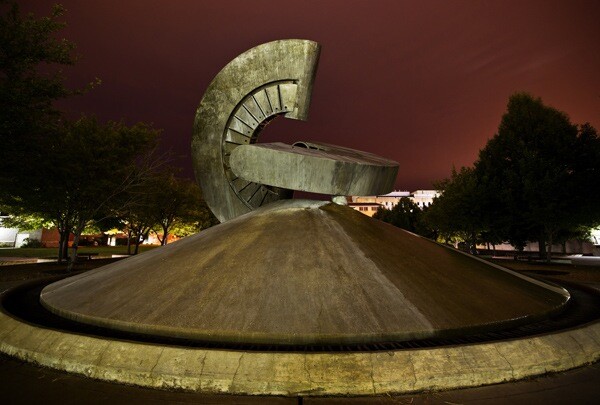
Cities are wonderful engines of creative possibility for the nighttime photographer. We lose the sunlight, but we gain thousands (or millions) of individual points of artificial light of every different color and tonal quality. We can (literally and figuratively) view our city in an entirely new light. The old and staid can become fascinating again as the changes in lighting shift the shadows and alter the textures and wring out, or completely change, the colors.

And all these bright points of artificial light give our cameras something to gather and turn into a photograph.

Great. So…What Do I Do?

Eckert_NightScape_4.jpg

I’m going to try to distill my experiences from my nighttime cityscape photography outings into a series of recommendations, aimed at giving you the best possible chance to get that shot, the one you really want, full of color and deep shadows and crazy lighting that showcases your city in a whole new way.

Bring the Right Gear

I’m not going to categorically deny that you can take great nightscapes with a compact digital camera. I will say that using a point and shoot is going to make getting that fantastic image of your dreams a lot harder.

I recommend the following:

• Tripod, sturdy but lightweight enough for you to carry around easily
• DSLR
• Remote shutter release
• Relatively fast wide angle lens (the wide angle part is optional, but what I recommend to get the most dramatic shots of the architecture and streets of your city)
• Lens hood (to reduce lens flare from outside-the-frame light sources)

Note that I didn’t say “flashlight.” This article assumes you are in the city, which, barring unforeseen power outages, should have light enough for you to see by and make your way around. That may vary by city, however, so bring a flashlight if you feel you’ll need one, or if you plan on doing “light painting” with it.

Know the Gear You Brought

Things will be dark. It’s nighttime. So make sure you know how to operate your DSLR in minimum light and with little fuss. If your camera has the ability, make use of custom modes to have your settings in place and ready to go ahead of time. Also be able to fit your remote shutter cable onto your camera, and your camera onto your tripod, in the dark (and both of those back off again).

Going further, try to get to know your lens(es) and your camera with regard to how they behave in low light. Some DSLRs are better at autofocusing in dim light than others; you may need to manually focus for best results if the AF ends up endlessly searching (alternatively, point the camera the moon or some other distant light, let AF put the focus at infinity, recompose and shoot). DSLRs will also vary a great deal on how well they handle high ISO values and/or very long exposures (in terms of the level of noise in the resultant image). If you are looking to capture fast action in freeze-frame in a nighttime shot, you will inevitably need a high ISO level and probably a very wide aperture lens. Remember, a tripod can hold your camera solid and in place, but it has no effect on the movement of the subject matter.

This brings us to:

Know What You Want

Are you looking for a freeze-frame in the darkness? This is going to be tough – a technologically demanding task for your camera. You’ll have to set the ISO quite high and have a “fast” lens (one with a wide aperture, as noted above, like f/2.8 or f/1.7, etc). The result will necessarily have a very shallow depth of focus with potentially a lot of noise – things to keep in mind as you are shooting. You will also need a high ISO and fast aperture if you are trying to shoot handheld (without a tripod), something that is very possible, especially with newer, less noisy digital cameras, but be prepared to have do noise reduction in post!

If, instead, as is more commonly done, you want to create light trails from passing cars or use long exposures to really capture the fantastically different nighttime lighting, you can get away with using much lower ISO (e.g. 100) and a smaller aperture (f/8, for example) to enlarge your depth of field and minimize the ISO-induced noise. This will mean, commensurately, a longer exposure time: the shutter will remain open longer, letting those light trails form and also filling the frame with more detail as more photons are gathered by the imaging sensor. Bear in mind, however, that most DSLRs have an automatic shutter time cutoff of 30 seconds, so if you need longer to get a proper exposure you’ll need to know how to use the Bulb mode on your camera (where the shutter speed is determined by how long you hold down the shutter release button). In either case, you will need a tripod, because the exposure time will be much too long to keep still when hand-holding.

Also, keep in mind a fact of all digital sensors (so far): the longer the shutter is open, the more noise creeps up, regardless of ISO setting. To combat this you can set your camera to apply in-camera noise reduction. Many DSLRs do this automatically on longer exposures, and usually the time it takes to apply the NR is equivalent to however long the shutter was open. This is important to remember when you are out and about, because it means your camera is unusable for however long the NR is being applied.

Know Your City

Every city is different, in layout, points of interest, people and the overall character, and all of those elements (except the layout) change, sometimes drastically, when night falls.

You should be at least decently knowledgeable about the city you are attempting to shoot in before you make an excursion at night – or, at least, be with someone who does know. Big cities present nearly endless opportunities for architectural and artistic delights, delights that change and morph and become radically different when no longer lit by the sun, but by artificial lights. However, big cities can also be more dangerous, particularly at night, and especially for a photographer who is lugging around two to ten thousand dollars (or more) worth of equipment with them.

Therefore, for reasons of safety and for practicality, get to know your city before you tromp out with DSLRs hanging around your necks, tripods in hand and release shutter cables dangling. Go out in the day and get to know the streets and where the interesting buildings and parks and monuments and statues are; go out at night, without your camera, and see how all of those things look in the light of night.

Then, when you do take all your equipment out for the shoot, make sure to keep your eyes open. Be cognizant of your surroundings. Walk confidently, even assertively, so as not to be pegged as a tourist, mark or target for potential predators. Work in a group, or at least go with one other person who can watch your back, even if that other person is not a fellow photographer.

Or, do as I often do: go at times when most of the rest of the city is asleep. There are such times, even in those big cities that “never sleep.” When? I’ve found early—and I mean really early—Sunday mornings are the quietest possible times to tramp around the downtown. At 3:30 or 4:00 AM, after bar-close but well before sunrise (for most of the year), the night is just as dark and the light just as good—unless you are trying to shoot nightlife and people and cars, rather than architecture and light and shadow.

Shooting in the early morning also lets you capture a series that progresses from a pure black sky (or one with the moon and stars) to one of deepening purples and blues as the sun begins to rise, and finally gives you a chance to partake in the Magic Hour of sunrise itself. Yep, it means an early morning on a Sunday, but it’s the best time to go out if you want to encounter as few people as possible.

Know the Weather

Another important consideration in nightscape photography is the weather.

Cities at night can look absolutely amazing after a downpour has left the roads wet and gleaming with columns of reflected light. Snow can render a city almost post-apocalyptic at night, blanketing everything and colored by the lights of storefronts and parking lamps. But rain and snow, as they are coming down, are not great for cameras or lenses (or photographers, for that matter) if you aren’t probably prepared.

So be aware of what the skies are doing, and plan ahead. If it’s going to rain, bring waterproof clothing for you and protection for your camera. Watch the weather reports on the night you want to go out and see if you can time it so you hit the streets just after the rain has stopped, so you capture all the magical wetness without it fouling up your camera or lens. If it’s snowing, be prepared for the cold and, again, protect your gear.

Conclusion

Eckert_NightScape_5.jpg

Nighttime cityscape photography can be a fantastic avenue for creative expression, and a way to make your images pop with unique feeling and life. The light and the shadow behave differently without the sun overhead, and the world, as a result, changes in tone and mood and expression. Streets turn black and shiny and are broken by orange circles of light from streetlamps. Shadows pool in alleys and the corners of buildings, and are stretched into new, looming figures and shapes by the bright light from a gas station or convenience store.

As a photographer, out at night in the city, the most important thing to remember is to stay safe. After that, keep your eyes open and your imagination working, and go after those amazing low-light shots. Try new things, bend and break the rules, have fun, and let the magic flow.

You might be surprised just how much you like what you come home with.See more of Joseph Eckert’s work his website.

Post originally from: Digital Photography Tips.

Check out our more Photography Tips at Photography Tips for Beginners, Portrait Photography Tips and Wedding Photography Tips.

Nightscapes: Photographing the City at Night

The post Nightscapes: Photographing the City at Night by Guest Contributor appeared first on Digital Photography School.

Digital Photography School

 
Comments Off on Nightscapes: Photographing the City at Night

Posted in Photography


Photographing the World’s Most Secluded Tribes: Before they Pass Away

17 Nov

Got 12 minutes? Check out this TED talk by photographer Jimmy Nelson who tells the story behind his amazing project ‘Before they Pass Away‘. A project where Jimmy sets out to photograph 35 of the world’s most secluded tribes.

In this video Jimmy shares 3 lessons (through story) that he’s learned through meeting and photographing these tribes.

Learn more about Jimmy’s project and meet the tribes he photographed at his website and grab a copy of his book of the same name to see the amazing images he’s created.

Post originally from: Digital Photography Tips.

Check out our more Photography Tips at Photography Tips for Beginners, Portrait Photography Tips and Wedding Photography Tips.

Photographing the World’s Most Secluded Tribes: Before they Pass Away

The post Photographing the World’s Most Secluded Tribes: Before they Pass Away by Darren Rowse appeared first on Digital Photography School.

Digital Photography School

 
Comments Off on Photographing the World’s Most Secluded Tribes: Before they Pass Away

Posted in Photography


A Day At The Beach: Photographing Seaside Landscapes

29 Oct
Photographing Seaside Landscapes

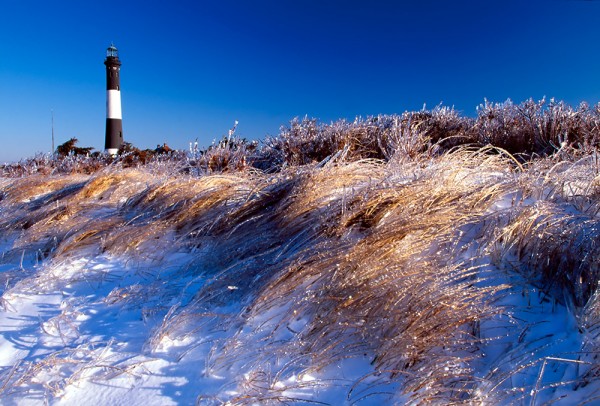
This shot was taken just after a January snow storm. The ice glistening on the dune grass made for an excellent foreground while the lighthouse towered in the background. A polarizer was used to help darken the sky. Taken with the EOS 5D Mark II and EF 16-35mm f/2.8L II. ISO 100, 1/250 at f/16.

Living on the east coast of the United States, I have easy access to any number of beaches to use as subjects for my photographic purposes. While many of these beaches may not be as dramatic as those on the west coast, they offer many photographic opportunities and shouldn’t be overlooked.  Most people think of the beach as being a summer destination, but I’ve found it to be an excellent location all year round for a variety of reasons.

Photographing Seaside Landscapes

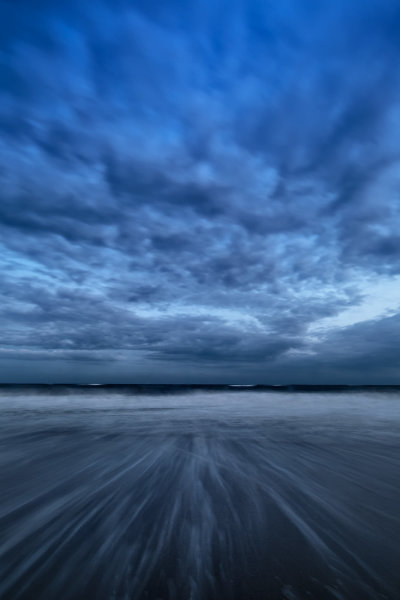
Dramatic skies and rushing water can make even the simplest composition interesting. I used a low point of view and a slower shutter speed to capture the water rushing straight at the camera, ready to grab the tripod if the water knocked the tripod over. The clouds eliminated any bright sunlight and created an almost monochromatic image.  EOS 5D Mark III with EF 14mm f/2.8L II. Exposure was 8 seconds, f/20, ISO 100.

Photographing Seaside Landscapes poses a number of problems for the photographer. There’s wind, sand, and water to contend with, and keep out of your equipment.  There are some precautions you can take to minimize the chances of disaster striking. 

First, I usually spread a blanket out and put my camera bag down on that. It helps prevent sand from getting the seams of the bag, and it also lets the flap of my backpack rest somewhere other than sand.  I speak from experience when I say that resting that lid on the sand and then flipping it up to close it is a good way to get sand inside the bag.

The next issue is the water. Obviously, the most basic rule is to keep your bag as far away from the water as possible. Pay attention to the tides and watch that the waves aren’t coming closer to where you’ve stashed your gear. But that’s only half the issue. Generally when I’m at the beach, water is at the very least a major part of what I’m shooting.  I tend to take a few chances here.  I like low angles, and dramatic shots.  That tends to put my camera right in harm’s way.  If I’m not on a tripod, I ensure that the strap is always around my neck to keep it from falling.  If I’m on a tripod, I tend to keep my hand ready at all times to grab it and move if a big wave comes. If it helps you feel more secure, you can always use a rain cape to protect from splash, or if submersion may be possible, an underwater housing might be called for.  I don’t personally use any of these items and just use a lot of care when near the water, but I have heard many horror stories of cameras that went swimming.

Sunrise and sunset are my favorite times for the soft warm light they provide.  I use graduated neutral density  filters when they are called for, depending on the light, as well as standard neutral density filters to help control my shutter speed to determine how I render water.

I find myself going back to the same beaches over and over. By their nature, they change often, as weather erodes them, tides build them back up, and secrets beneath the sand are revealed.  Often after a storm is the best time, as the combination of wind and rain will create patterns in the sand and pools of water which create beautiful reflections.

Where do you find yourself visiting over and over to fulfill your photographic urges?

Photographing Seaside Landscapes

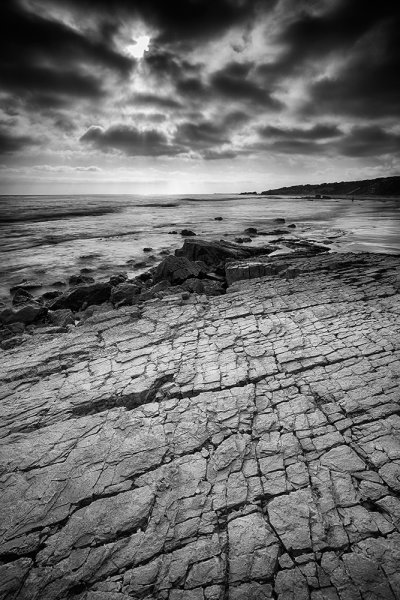
This shot is actually a west coast beach- Pelican Point in Laguna, California. A 4 stop ND grad was used to darken the sky. The foreground is a large rock with a beautiful pattern of cracks for interest. EOS 5D Mark III with EF 16-35mm f/2.8L II. 1 second at f/16, ISO 400.

Photographing Seaside Landscapes

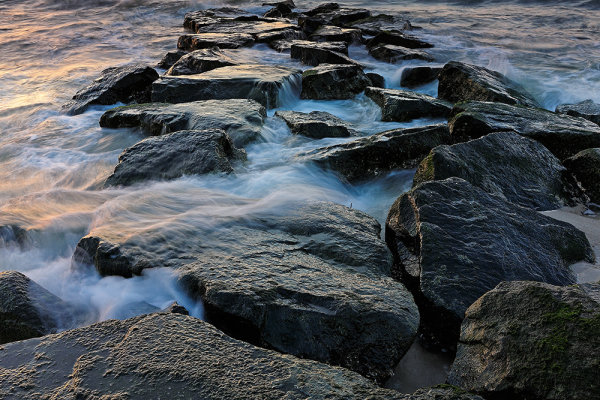
This shot was taken at sunrise, as the tide was coming in. Water continually washed over the jetty, and the light playing on the water and rocks captured my interest. EOS-1D X with EF 16-35mm f/2.8L II. Exposure was .4 seconds at f/16, ISO 100. A 3 stop neutral density filter was also used.

Have you had any success with Photographing Seaside Landscapes? Share your images and tips in comments below.

Post originally from: Digital Photography Tips.

Check out our more Photography Tips at Photography Tips for Beginners, Portrait Photography Tips and Wedding Photography Tips.

A Day At The Beach: Photographing Seaside Landscapes

The post A Day At The Beach: Photographing Seaside Landscapes by Rick Berk appeared first on Digital Photography School.

Digital Photography School

 
Comments Off on A Day At The Beach: Photographing Seaside Landscapes

Posted in Photography


Your Essential Guide to Photographing Cats and Dogs: Snapn Paws

22 Oct

Do you have a cat or a dog in your life?

SnapnPaws coverIf so, we’ve just released a great pet photography guide on our
sister site snapnguides.com you’ll definitely want to check out.

It is called Sanpn Paws and it’s all about creating adorable photos of your furry little friends.

As an Early Bird special… it’s just $ 7 for a limited time!

Pet photography presents the photographer with a load of wonderful opportunities and some real challenges.

On the one hand pets are not self-conscious and can be really playful – but on the other hand they are not always known for taking direction well and can take a lot of patience to work with.

This mini-guide will equip you to work through the challenges and create some beautiful images.

It will teach you to:

  • pose your pets to show them off at their best
  • position yourself and leverage backgrounds
  • choosing locations
  • use the right camera and gear
  • shoot moving subjects
  • make the most of light – both indoor and outdoor with natural and artificial light
  • get your pets attention

Snapn Paws is designed to be a quick read that gets straight to the point and present you with actionable information that you can apply straight away.

While it’s focused on photographing cats and dogs, there’s no
reason you can’t apply what you’ll learn to other pets as well.

About the Author

Snapn Paws is written and beautifully illustrated by Erin McNulty. Erin’s twin passions of photography and animals made her the perfect author for this eBook and makes her a wonderful pet photographer (it is her business).

Erin has been featured in in numerous magazines, newspapers and TV-shows for her pet photography and you may have even seen some of them on the packaging of pet food in your supermarkets.

She’s a great teacher and her images in the book will give you loads of inspiration.

Grab Your Copy Today and Save 33%

As an early bird special you can grab your copy of Snapn Paws today for just $ 7.

Get yours here today and start taking beautiful shots of your cats and dogs.

Post originally from: Digital Photography Tips.

Check out our more Photography Tips at Photography Tips for Beginners, Portrait Photography Tips and Wedding Photography Tips.

Your Essential Guide to Photographing Cats and Dogs: Snapn Paws

The post Your Essential Guide to Photographing Cats and Dogs: Snapn Paws by Darren Rowse appeared first on Digital Photography School.

Digital Photography School

 
Comments Off on Your Essential Guide to Photographing Cats and Dogs: Snapn Paws

Posted in Photography


30 September, 2013 – Photographing From The Heart

01 Oct

We are happy to publish an article by Steve Gosling today on Photographing From The Heart.  Steve is a good friend and I have had the opportunity to work with Steve at several workshops.  His approach to seeing and capturing the image is truly from the heart.  If you get the chance to shoot with Steve you’ll enjoy a new way of seeing and you’ll smile a lot as he is truly one of those unique and unforgettable individuals.  We hope you enjoy his article.


"Having been to Antarctica with Michael and Kevin, I would say after having traveled the world and shot nearly my entire life as an exhibiting photographer,  it was one of my highlights in my life and I talk about it, all the time.  The images and experience of seeing something visionary and nearly extinct from the world, to see and experience the wildlife and scenery that does not fear humans is amazing.  The images I shot there won me two Smithsonian awards and nearly 18 other international awards". – Tim Wolcott

 Find Out More Now
These Expeditions Will Sell Out Quickly. They Always Do


The Luminous Landscape – What’s New

 
Comments Off on 30 September, 2013 – Photographing From The Heart

Posted in News


Photographing Fall Foliage

24 Sep

Fall colours can be very different from place to place. Some areas will have a very short colour-changing season of a week or less, while elsewhere it can last nearly a month. Every location will produce different colours, depending on the type of flora and other factors such as climate and soil.

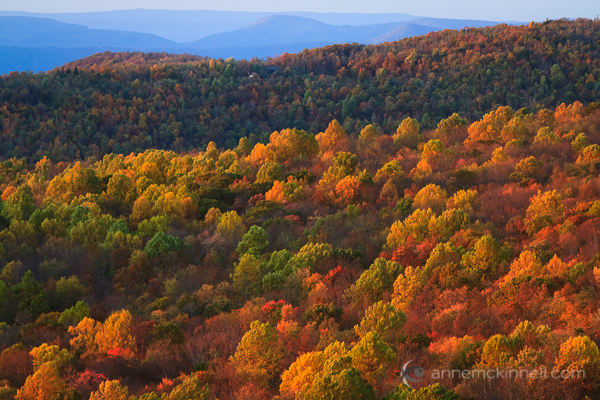
The hillsides of New England, which attract thousands of photographers every year, are famous for their dappled assortment of species producing different shades, ranging between reds and greens.

Shenandoah National Park, Virginia, by Anne McKinnell

The Sierra Mountains of California and Nevada, on the other hand, are known for their vast yellow forests of Aspen and Birch.

Do some research into your area to find out when the leaves are expected to change so you can make the most of this opportunity. A quick Google search will help you find the best areas for autumn foliage in your vicinity.

If you’re planning a photo expedition, you can use services such as Flickr and Panoramio to see what different areas look like at different times of the season, simply by searching tags for the time and place you’re considering.

Whatever the Weather

No matter how the weather behaves when you go out shooting, you can get great shots in any type of light. If it’s sunny, you have plenty of light to work with, but you may get harsh shadows and glare that can diminish the colours. To conquer this, try using a polarizing filter, changing your angle of view, or shooting when the sun is low in the sky.

If the sky is white, simply leave it out of the composition. The soft light of a white sky day is perfect for photographing the smaller details which will be free of bright areas and harsh shadows.

Fall in New Hampshire by Anne McKinnell

A rainy day might seem like a wash-out, but water actually brings out colour like nothing else. The best time to shoot is right after it stops raining, especially as the sun peaks through the clouds to illuminate the saturated landscape.

If there’s a sudden cold snap, you might find some frost forming on your foliage. If you brave the cold, you can capture some amazing textures, particularly in the early morning when the air is crisp.

Techniques

Backlight

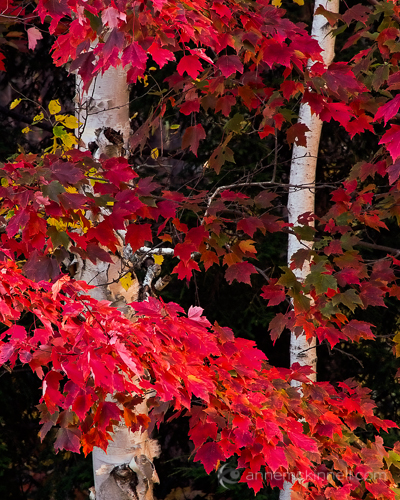
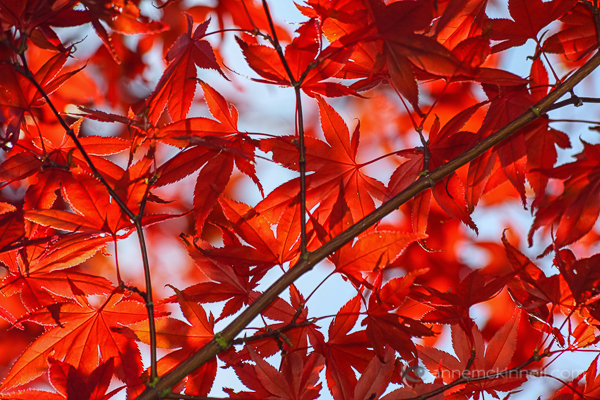
If you position a leaf between your camera and the sun, the back lighting will illuminate it all the way through making it appear to glow and revealing the details of the veins. If the sky is visible between the leaves, try it on the blue sky day for a beautiful colour contrast.

Backlit Maple by Anne McKinnell

Reflections

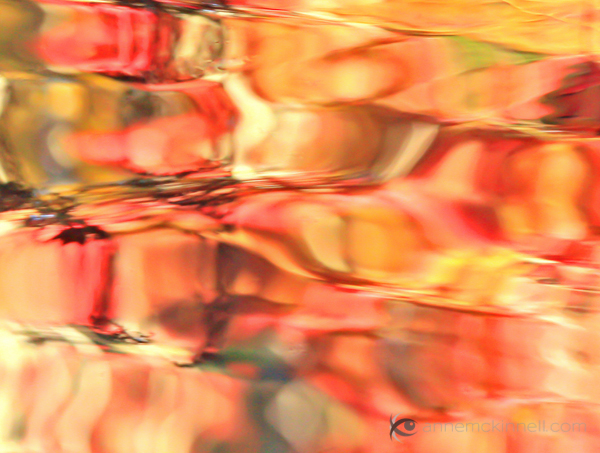
Photographing leaves can be especially difficult on a windy day. On these occasions I try to find reflections of the fall colours and create a more abstract image.

Fall Reflections by Anne McKinnell

Perspective

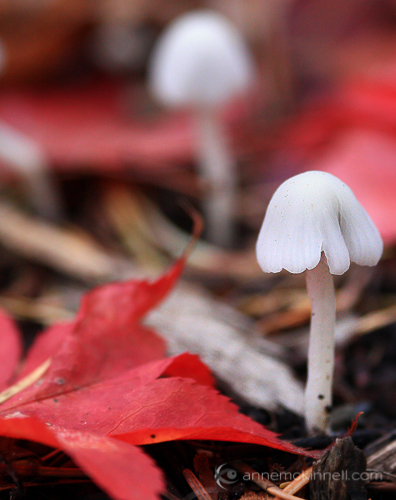
Leaves that have fallen on the ground are excellent subjects. Try getting a squirrel’s point of view for a unique perspective.

Mushroom and Maple Leaf by Anne McKinnell

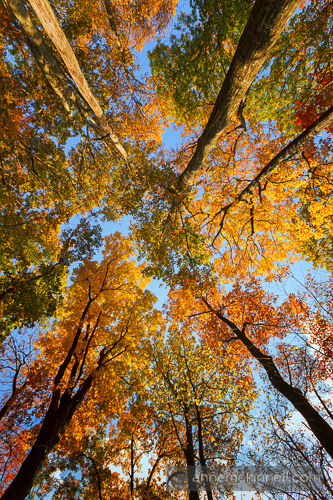
Try looking straight up into the trees to emphasize their tallness and magnificence.

Fall Trees by Anne McKinnell

Waterfalls

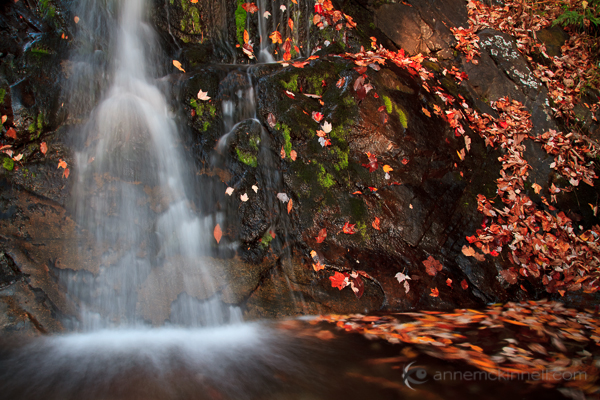
Combining the beautiful colours of the fall leaves with a silky smooth waterfall can be magical. Try using a long exposure to blur the water as it cascades past the fallen leaves.

Fallingwater Cascades, Virginia, by Anne McKinnell

Close-ups

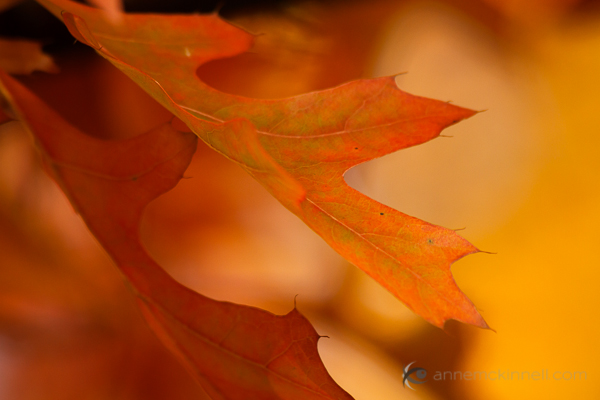
A simple, minimalist composition can be just as evocative of the season as a complex scene. Try getting close to a single leaf and using a wide aperture, like f/2.8 or f/4 to achieve a shallow depth of field that isolates fine details.

Autumn Oak Leaves by Anne McKinnell

Camera Settings

  • Depth of Field: Decide how much of the picture you want to be in focus, and use your aperture to control the depth of field.
  • Underexpose: To deepen the tones and make the colours stand out more, underexpose your image slightly. The easiest way to do this is to locate your exposure compensation (+/-) button and dial it down somewhere between -0.5EV and -1.0EV.
  • White balance: If you’re photographing during the golden hours (just before sunset or just after sunrise), you probably don’t want your camera’s auto white balance to eliminate the light’s yellow-orange tone, which is exactly what it will try to do. However, if you set your white balance to “daylight”, your pictures will retain the sun’s warm glow. Try different settings in any given lighting situation to find the best colour balance. It is particularly important to get this right if you’re shooting JPEG files, but if you use RAW format, the white balance can be perfected in post-production.

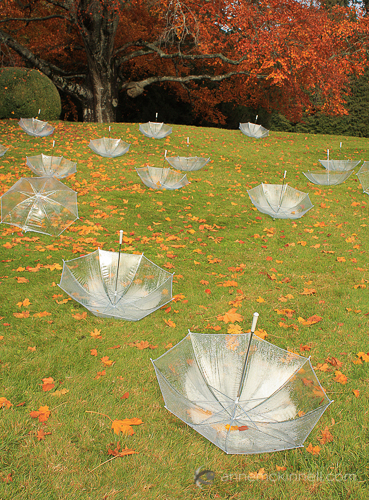
Fall Umbrellas by Anne McKinnell

Composition

When we find a great autumn location full of dramatic colours, it can be easy to become overwhelmed by the colour and forget everything else. Fall colours don’t create a good landscape photo on their own, they simply add an element of colour. The composition should be strong even when turned black and white, so remember your basic rules of landscape composition: create a focal point, and use lines, shapes, and forms to create balance and harmony.

To create images that stand out from the rest, compose them with thought and purpose, and never be afraid to try a different angle.

Post originally from: Digital Photography Tips.

Check out our more Photography Tips at Photography Tips for Beginners, Portrait Photography Tips and Wedding Photography Tips.

Photographing Fall Foliage


Digital Photography School

 
Comments Off on Photographing Fall Foliage

Posted in Photography


7 Tips for Photographing Paddlers

24 Sep

I would like to remind you this old post, How Did you Shoot It? with some updates and revisions. It was written two years ago as part of ProBlogger’s group writing project – “How to …” I hope that these tips are still useful. They represent quite well my own approach to paddling photography.


After posting the above picture, “Paddling in Clouds”, I’ve got several questions: How did you do it? And, I had troubles to provide a reasonable answer since the shot was technically really trivial.

Finally, I figured out that it is more about seeing pictures than about shooting and wrote these more general comments.

1. Look and See

Learn to see pictures. You do not need a camera to practice it. I am often “shooting” without camera, especially, when driving: that would be a good picture, this old barn would look great at sunrise, that dust devil at a horizon can be seen only through polarized glasses.

I believe that looking at photographs in magazines, books and calendars also help to develop your seeing capability. I am checking all new photography books arriving to my university library and browsing most of photography magazines in a local bookstore.

There are several good books on the art of seeing. Freeman Patterson comes to my mind first. Recently, I spent a lot of time with Photographer Eye by Michael Freeman.

2. Have a Camera

A photographer is shooting pictures, not a camera, but you should have your camera ready. “Ready” means not only accessible. You should be familiar with your camera settings and operations. Learn what camera settings are working for your paddling photography. It may be difficult to figure out camera features when sitting in a tippy kayak and waves are splashing.

Compact waterproof digital cameras like Pentax Optio “W” or Olympus Stylus “SW” revolutionized my kayak photography. I can shoot pictures I was not able to execute before, e.g., with a partially submerged camera. I am ready to sacrifice some camera features or to some extend a picture quality for convenience and accessibility of these tiny camera for paddling environment.

3. Be Aware of Light

The best light for outdoor photography is when the sun is low, i.e., around sunrise and sunset. I know that I can expect interesting light at the end of my afternoon paddling workout. If the sunset is not very exciting I can shoot water reflections or a tree silhouette.

Ironically, on paddling trips, we are often passing the best scenery in the middle of day, when the light is harsh and unpleasant. I am still shooting some snapshots for documentary purposes. My primary motivation to start paddling fast kayaks was to get in time to my shooting spots. All that racing craziness came later …

4. Point (compose) and Shoot

Do not be afraid to shoot without viewfinder. Well, you don’t have one in Pentax Optio. And, the LCD display is often difficult to read in a bright sun. It shouldn’t stop you from shooting. Use some creative angles as far as you can extend your arm. Remember, you can put this camera under water next to you kayak. The lack of a viewfinder is perhaps the main reason preventing some photographers from buying this camera, but I think that this a reasonable compromise in the camera of this size.

I didn’t have a clear view of the camera display when shooting my “Paddling in Clouds” picture. I was just trying to keep a paddle diagonally in my frame.

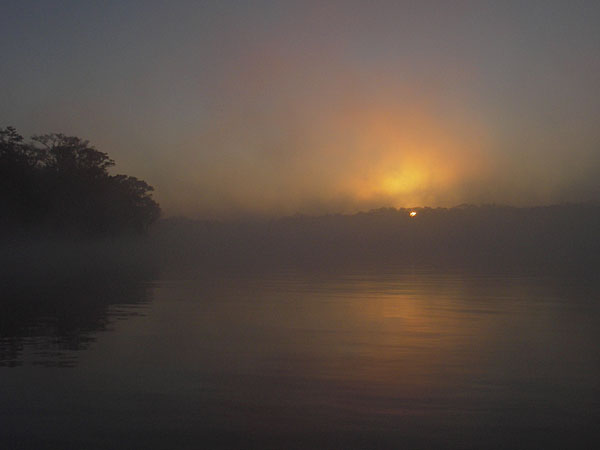
foggy sunrise over Suwannee River, Florida

5. Shoot Multiple Frames

Shooting pictures with a digital camera is cheap. You do not need to worry about film cost. You can always erase the picture and shoot again unless you are after some action shots. So, do not be afraid to experiment and shoot even if you do not see the image in your LCD monitor. Shoot some extra frames. It is helpful to have an adequate memory card.

I shot about 30 frames trying to catch a sky reflection in water and in my paddle. However, I would show not more than 3 or 4 from those 30 frames.

6. Practice

The more you shoot the better you should get. I have shot similar pictures before including reflections and a paddle.

Review your pictures on the camera LCD if possible. Check the histogram. Analyze your shots after paddling on a computer screen. You have all information about camera setting included in each digital image file. Try to figure out what worked and what not. Learn from mistakes.

7. Have Fun

I don’t consider myself a professional photographer. When paddling I am shooting what I like just for fun. Documenting my paddling trips and races is still fun. I feel free to experiment.

The great Alfred Stieglitz was an amateur photographer too. Anyway, the photography is not a profession…

Sometimes I sell a picture to a magazine or donate to a book cover. A year ago, I started to sell my pictures through microstock agencies. I am just taking more often my DSLR camera and a tripod for paddling.

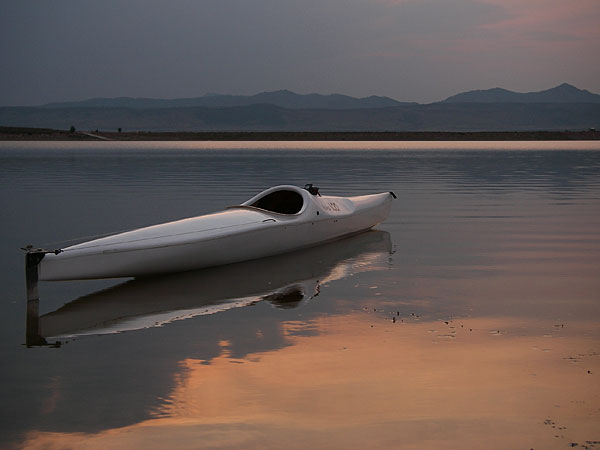
Related posts:kayaking Colorado - Douglas Lake

  • Use Your Paddle to Stabilize Camera
  • No Viewfinder? 10 Tips on Shooting Pictures without Viewfinder
  • Pentax Optio WP/WPi – 10 Tips on Paddling and Shooting
  • Can Pentax Optio waterproof cameras be used in the water?
  • Pentax Optio W10 as a Helmet Cam – Inline Skating along the Poudre
  • Shooting movies with Pentax Optio WP and W10 and Sisson Nucleus 100 kayak


paddling with a camera

 
Comments Off on 7 Tips for Photographing Paddlers

Posted in Photography


Architecture: Photographing Exterior Details

18 Sep

Between shooting for clients, teaching my kids photography class, family obligations, and all of the non-photography activities essential to running a photography business, Life has a way of not letting me shoot just for me very often. So, when I do get a chance to get out and shoot for myself, I find that I gravitate to architectural subjects. I live pretty close to a busy downtown area with a lot of history, so there’s never any shortage of interesting buildings to photograph. Much has been written about the technical aspects of architectural photography. Everything from perspective-correcting tilt-shift lenses to reflection-reducing polarizing filters have been suggested by some of the best in the business for capturing compelling images of buildings big and small. Don’t fall into the trap, though, of thinking that you need lots of expensive accessories to take interesting architectural photos.

Architectural photography, like every other genre, has its share of cliches, and I’ve probably shot them all.  Skylines? Check.  Laying down on the sidewalk and shooting straight up the side of the city’s tallest building? Check. So, if you believe (as I mostly do) that there is no such thing as an original idea, how do you capture something original and unique? Step #1 is to not care whether somebody else has taken a similar photo before you. If it’s original to you and you like it, then go with it. Print it big and hang it proudly. But if  you’re still looking for an original, unique perspective, start concentrating less on the big picture and more on the details.

detroit-architecture

Older buildings like these in Detroit offer a wide variety of textural and structural components to photograph.

You’ve heard the old line about the whole being greater than the sum of its parts. It’s the theory that something grand and impressive can result from the combination of less significant components. What you may not have heard is that the opposite can be just as true. Depending on your lens, vantage point, available lighting, and a host of other variables, it is entirely possible– if not likely– that an entire building would appear so small in the frame that whatever drew you to it in the first place could be lost and overlooked in the actual photo. Also, light that might be perfect for windows, doorways, and other details could be completely unsuitable for capturing the detail and character of the building as a whole.

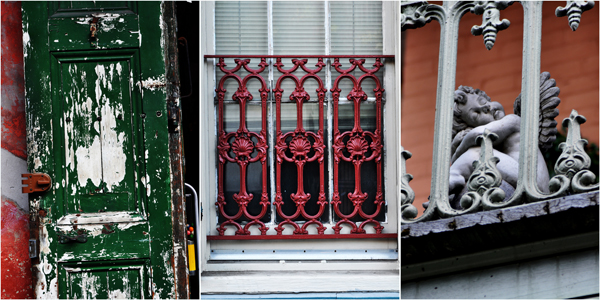
french-quarter-architecture

The French Quarter in New Orleans is a treasure trove of distinct architectural elements.

As photographers, we strive to put our personal stamp on every image. Every picture tells a story. Architects are no different, imprinting style, history, and textures into their work.  They are easy to find. Just take a step back and look for the parts that make up the whole. As with any other type of photography, concentrate on angles, composition, and lighting. As far as selecting the right lens?  Just like photographing portraits, landscapes, food, or any other subject, your ideal focal length is going to depend on the size of the subject and your proximity to it. If, for instance, you are photographing gargoyles several stories above the ground, a long zoom of at least 200-300 mm is a must. On the other hand, if you are photographing a doorway, you’ll definitely need a wide angle of 28mm or wider.

Atlanta-Doorways

Three of my favorite Atlanta doorways. Going for bigger details will require a wide angle lens.

Beware of some of the common pitfalls. Even though you are not photographing the entire building, you still have to be careful about tilting your camera back too far and causing distortion. When you tilt back to look up at a building through your camera, the bottom of the sensor is closer to the building that the top of the sensor, resulting in an image where the top of the building looks considerably more narrow than the bottom. While you won’t encounter this issue too often while photographing details, you still need to be aware of it. Also watch out for reflections in windows and glass doors. Sometimes, slightly shifting your angle so you are not shooting at a direct 90-degree angle to the glass can correct the problem (and keep your own reflection out of the photos).

One last note on safety and choosing your buildings carefully. In this post-9/11 world–particularly in the United States– there are security issues to be considered. If you are photographing a government building, for example, do not be surprised to find yourself in a discussion with armed security guards within moments of taking your shot. While you are legally and technically allowed to take photos of public buildings from public vantage points, this does not always apply to federal office buildings, courthouses, and banks. Be polite. Don’t argue. If asked for your ID, provide it. Be prepared to delete the images on the spot. I’ve run into this issue a few times with non-governmental buildings also. I was once photographing the office building where I practiced law in another life, when I was approached by two very large men who were demanding to know what I was doing. I was not doing anything illegal or even anything for which they had the right to detain or question me. In these situations you have to ask yourself just how important that photo of the archway over the door really is. In my case, they pushed so I pushed back. They threatened to call the police, so I sat down on a bench and politely told them I’d wait. Everything worked out fine in the end, but it probably wasn’t my smartest move. Do as I say, not as I do.

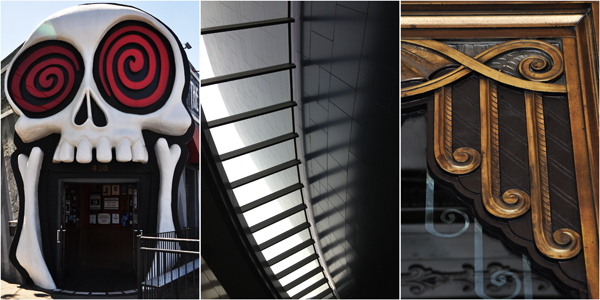
atlanta-architecture

A few of the elements outside my old office building. Details above the first couple of floors will require a zoom lens

Photographing architecture can be a great way to hone your skills in a low-pressure setting.  You can experiment with composition and natural light without worrying about your subject getting bored and walking out on you. Take advantage of the opportunity to push your creativity and grow as a photographer.

Post originally from: Digital Photography Tips.

Check out our more Photography Tips at Photography Tips for Beginners, Portrait Photography Tips and Wedding Photography Tips.

Architecture: Photographing Exterior Details


Digital Photography School

 
Comments Off on Architecture: Photographing Exterior Details

Posted in Photography


7 Tips for Photographing Kids

05 Sep

kids-photography-tips-dps-10

Notice something about the title of the article? It doesn’t say how to take “portraits” of kids! Kids, especially those five and under, pretty much dictate how the photography session is going to unfold, and it usually involves moving. Fast! Over the years my style has evolved from format portraiture with medium format film camera (which is NOT conducive to movement) to 35mm, and finally to digital. Digital allows much more freedom of motion and with a few tips you should be on your way to some great photos of kids. 

THE SEVEN TIPS :

  • have patience
  • be ready
  • get down to their level
  • using natural light or flash
  • choose your focus mode carefully
  • be a goofball
  • let them run the session, don’t try and control it

#1 HAVE PATIENCE

When photographing kids sometimes you get a whole lot of nothing for a while, or they may be shy to start, or play coy. Even kids that know you may decide they don’t want you to take their picture and say so. My three year old niece did just that when I spent the day photographing her. “Don’t take my picture Auntie!” she said as soon as I pointed the camera at her. She’s a regular ham for the camera usually and I knew she’d warm up. Eventually she was giving me “the wave” that you see below which sort of means “don’t take my picture but I’m going to act like I’m the star anyway just in case you do”.

So if you get this kind of behaviour don’t rush or force it. Just keep hanging out with them, play and interact and eventually they’ll come around. A couple hours later she was telling me to take her photo.  kids-photography-tips-dps-14

#2 BE READY

This is almost a given, but be ready for anything with kids! Expect the unexpected and be ready to shoot it. One of the things I say to my students is that photography is about being in the right place, at the right time, with the right lens on – there’s a lot of truth to that! So learn to anticipate what might happen, and where you need to be to capture it. Have the right lens on and make sure your settings are all good. Be ready technically, and in all other aspects. Be ready to move fast if this happens:

Oh yes she did!

Oh yes she did!

I fired off two shots and then she fired right at me with the water gun and I had to turn to protect the camera. I however, took a direct hit in the backside. Luckily it was a nice warm day and it was refreshing. I got the shot, saved the camera from drowning and had a lot of fun with her.

Here’s another of my nephew at the same age. My sister was watering the flowers, nobody knew he was going to do this. Be ready!

kids-photography-tips-dps-04

Part of being ready also means to stop looking at the images on the back of your camera! If you are looking there you are missing something happening live. You can review them later, so stop chimping! 

We set her up with the streamers but being ready meant making sure I get it all in the frame and capture it when she throws it in the air.

We set her up with the streamers. So being ready here meant making sure I got it all in the frame and captured it when she threw it up in the air.

#3 GET DOWN ON THEIR LEVEL

When you photograph little ones doing so from an adult perspective makes them look even smaller. Getting down to their level puts you more on equal ground. Get in the mud or sandbox with them, don’t stand over top looking down. Crawl around on the floor and play trucks.

Get down to their level literally, and figuratively. You nee also to get skilled at holding your camera and playing, coloring, or any number of other interactive things with the child.

kids-photography-tips-dps-06

We tied the dinosaurs together, I had to hold them sometimes while I was shooting.

 #4 USING NATURAL LIGHT AND FLASH

“When should I use flash?” is a common question I get in my photography classes. My answer to that is two part:

  1. if there isn’t enough light, add flash
  2. if the light isn’t “good”

Part one, not enough light, is fairly obvious. It’s too dark if you have the aperture on the lens as wide open as it goes, and you are still getting a shutter speed that’s slower than your lens focal length (see Tips for getting Sharper images for more info on that). It helps to use a lens with a large aperture either an f/2.8 zoom lens (but they’re pricey) or even better an f/1.8 prime lens like the handy little 50mm f/1.8 or 85mm f/1.8.

But what about part two, what is “good light”? How do you know if you have bad light? 

That part is a bit subjective but tough lighting situations like backlighting, or strong overhead light would be some times where you might want to add flash to balance out the light or overpower the natural light entirely. I tend to use flash to supplement natural light whenever possible, and to try and correct the lighting where necessary. Notice the image above – there is NO flash used for that image. The light coming from the windows in the living room on the right provided a nice soft directional light on his face. Selecting a large aperture allowed me to use that light.

Now look at the image below. Can you tell if there was flash used or not?

kids-photography-tips-dps-07

Flash was used here, bounced off the ceiling but aimed slightly back.

Flash was used for the image above because the windows behind him were leaving his face in deep shadow. So I used a flash bounced off the ceiling, angled slightly behind me. Avoid direct flash whenever possible as it flattens out the subject and produces harsh shadows. Bouncing off walls and ceilings is ideal if you can do so. In this case I aim my flash backwards slightly as well so the result isn’t light coming straight down on him and making dark eyes. I use this technique a lot at events, even with 15-20′ high ceilings.

#5 CHOOSE YOUR FOCUS MODE CAREFULLY

Capturing moving subjects of any kind requires the right camera settings, practice and trial and error. Most cameras have different Focus Modes – read your manual to find out more. Select the one for continuous or tracking focus. What that means is the camera does not lock focus when you push the shutter button halfway down. Instead it “tracks” any moving objects as they come nearer and farther away from you. If you hold the shutter button down the camera continues to look for focus and if the object is moving towards you some cameras actually anticipate their speed and prefocus in front of them so when you press the shutter fully your image is sharp. There are too many camera brands and models and each are different and offer different choices, so I can’t tell you what to choose. Just know that when shooting moving objects you want the tracking option.

You may also want to shoot in burst or high speed shooting mode. That’s when you press the shutter all the way down and hold it, the camera takes multiple images until you let go or the camera can’t hold any more information. Most SLRs have this feature but vary in the frames per second rate they are capable of shooting. Even three frames per second will give you more options than just shooting a single frame at a time.

This was shot using the tracking focus mode - on my Canon that's called Servo

This was shot using the tracking focus mode – on my Canon that’s called Servo

Another example using focus tracking. I keep the camera pointed at him and the button partly pressed and it follows him with focus.

Another example using focus tracking. I keep the camera pointed at him and the button partly pressed and it follows him with focus. Make sure to get out of the way of errand water sprays during water fights!

#6 BE A GOOFBALL

I’ve often been told that I’m good with kids during sessions because I get silly with them. I make fart noises and silly faces. I play with puppets with them. I get down in the sand and play. Too often we adults worry about our dignity and how we “look” – throw all that out the window and get over yourself and let go a little, Give yourself permission to be a GOOFBALL for a little while. Who knows you might actually have some fun!

The image below happened because we were blowing raspberries at each other and having a face making competition of sorts. He won, but I got the shot! He was also soaking wet from running through the hose several times and the read dye in his hair was running down his forehead, which just adds to the image!

kids-photography-tips-dps-05

#7 LET THE CHILD RUN THE SESSON

Really, you will never be in control anyway so why not relinquish it right from the start and call a spade a spade. The child is in charge and will run the session, so the sooner you accept that the more fun you’ll both have. Here’s a few DOs and DON’Ts.

  • DON’T try and make them do anything
  • DON’T get upset with them if they don’t follow your plan
  • DON’T, for heaven’s sake yell at them, especially if they are your kids or family. That will only serve to make them hate getting photos done and they will make it even harder next time. That only leaves the child feeling like they’ve been bad and you frustrated.
  • DO go with the flow. Take whatever happens and go with it.
  • DO be ready. See #2 above!
  • DO approach it from a perspective of having fun, not one of getting the best photos. The second is a product of the first.
kids-photography-tips-dps-16

You must test the chalk to make sure it writes don’t you know! So serious.

I was literally putting my bag in my car to leave, camera all packed away when the sidewalk art began and the light was so perfect. So out came the camera again! This image follows pretty much all the points above: be ready, get down on their level, use the natural light when it’s good, play with them.

I just can’t resist good light! I have a slight case of Photography Compulsion Syndrome, perhaps you suffer from it too?

ACTION PLAN

If you photograph kids or have some of your own, go out and practice using these tips and tell me how you did. Do you have any additional tips you’d like to add, please share in the comments below.

Now get out there and go do some photography! Happy shooting.

Cheers, Darlene

Post originally from: Digital Photography Tips.

Check out our more Photography Tips at Photography Tips for Beginners, Portrait Photography Tips and Wedding Photography Tips.

7 Tips for Photographing Kids


Digital Photography School

 
Comments Off on 7 Tips for Photographing Kids

Posted in Photography