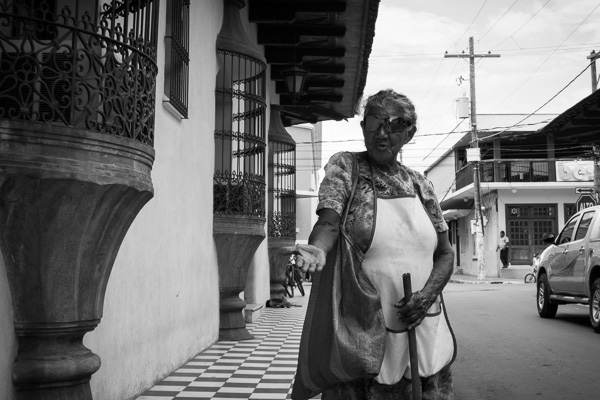
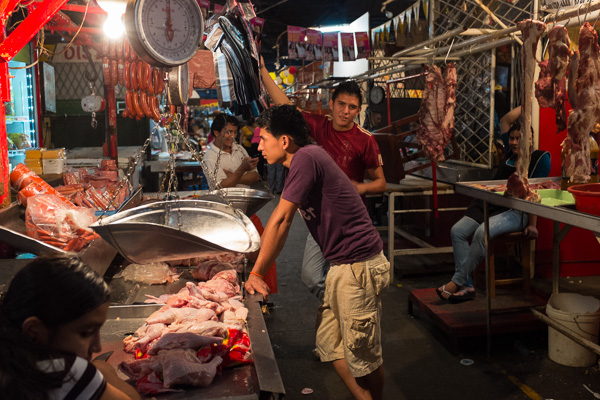
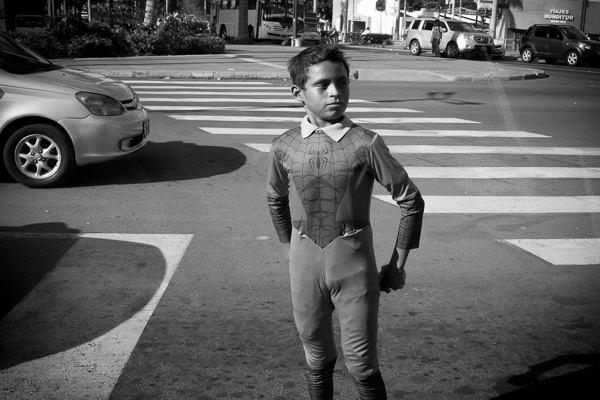
RSS
 

Posts Tagged ‘Photographing’

Tips for Photographing Birds in Flight

20 May

This article introduces some key concepts to photographing birds in flight. One of the most necessary ingredients is patience; you may often photograph an entire day and not get one usable image. In most cases there is some luck involved to being in the right place at the right time. Hopefully this article will provide some information to help you improve your luck.
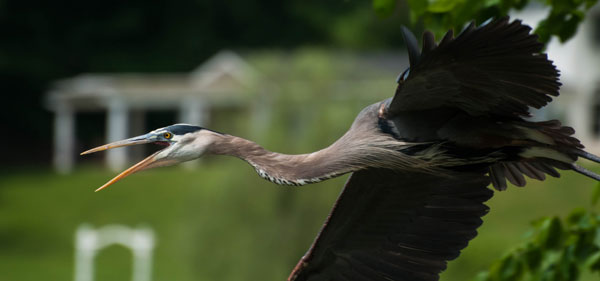
heron3

Choosing a Location

Let’s begin with choosing the best location for your birds in flight shoot. Near rivers or lakes are great locations, because of the abundant food sources for the birds. Find a position on a hill that will put you at eye level with the birds.  Check out the position of the sun, because you should not be shooting into it. Light coming from behind you or from the left or the right of your position is preferred. Also, birds will generally take off and land into the wind, so knowing the wind direction of your location will help you predict the flight direction of the birds you are photographing.
canadians

Lighting

Good lighting plays an important part in successful birds in flight photography. As in any other kind of outdoor photography, the golden light of morning and evening are best; however, because you are shooting at birds in the sky, these times can be extended and still have nice lighting on your subject.

Make Yourself Invisible

Some birds will not venture near a human presence, so you need to make yourself the least visible as possible.  In some cases it might be as simple as not wearing brightly colored clothing, but avid bird photographers may also want to set up some kind of blind. These can be purchased inexpensively from most hunting stores. Also, sitting will make you less noticeable to the birds than if you are standing.

Study Your Subject

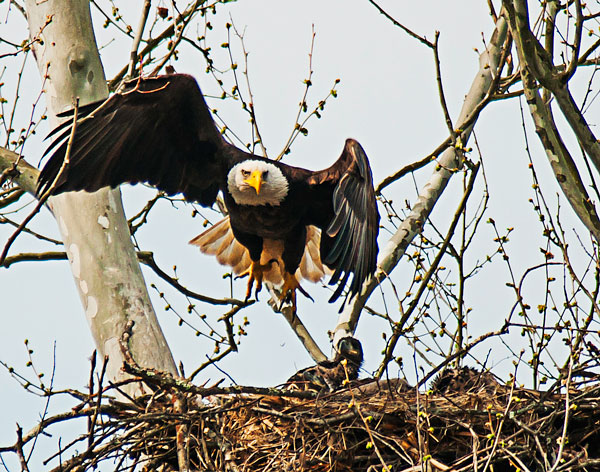
Study the birds you enjoy photographing to learn their habits. This can help you predict their movements. For instance, many birds, especially the larger species like herons or eagles, will relieve themselves just before they fly. Knowing this can help you be ready to shoot when they take off.

fall-heron

Lens

Choosing your lens can be a challenge so be advised that you should use the fastest and largest mm lens you can afford. For your best chance at a great shot, you would want at least a 300mm lens, but a 500mm to 600mm prime lens is preferable. Unfortunately, these lenses don’t come cheap.

Tripods

A great tripod head for birds in flight, especially if you are using a large lens, is the Gimbal head. It balances your camera and lens and requires very little force to pan left and right, and up and down. A less expensive option is a Pan head, which also allows for movement in all directions on two different axes. The more common Ball head can be used with effect for birds in flight photography, but is not a very stable solution for very large lenses.
sparrows

Exposure

When you consider setting up your camera to shoot birds in flight, keep in mind how  the “exposure triangle” of shutter speed, aperture, and ISO each play an important part in the getting the perfect exposure.

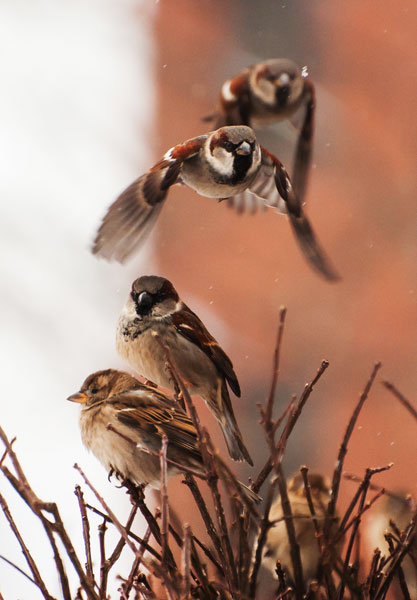
  • Shutter speed – You need the shutter speed to be fast enough to “freeze” the bird’s wings in your photo. While small birds’ wings may flap approximately 40 beats per second, larger birds like herons and eagles flap around 2 beats per second. Many species of duck are fairly fast flappers at around 5 to 10 beats per second. So the question remains, how fast should you set your shutter speed to freeze the wing motion? Go for at least 1/1000th of a second to 1/2000th of a second. Even faster is better, if possible!
  • Aperture – In order to gain as much depth of field as possible, you want to use the smallest aperture possible. Select your F-Stop (the aperture number) based on your lens’s sweet spot (where your lens focuses most clearly), probably around f/8.
  • ISO – You want to keep your ISO setting as low as possible to avoid digital noise (graininess) in your photos, although most of the latest models of digital SLR cameras these days do a decent job with higher ISO allowing very little noise.

heron2

So how do you bring all three elements of your exposure triangle together to find the best exposure? You may consider simply using your camera’s Shutter Priority Mode feature in which you set the shutter speed and the camera sets the aperture (and ISO on some models) but try this alternative method.

  1. Set your camera on Aperture Priority
  2. Set your aperture to f/8 (the sweet spot) to capture the sharpest image for your lens
  3. Next, using your camera’s light meter, check the exposures in the space you hope to photograph your birds in flight. You will probably find that you have some areas that are darker than others.
  4. Using the exposure you get in the darkest area, adjust your ISO to bring your shutter speed up to at least 1/1000. It follows that when your bird flies by and you are panning your camera into a lighter area, your shutter speed will increase to above 1/1000, and when your subject is in the darker area your exposure will still be appropriate.

Now, one final step to tweak your exposure. Have you ever noticed how when photographing birds in flight your image will seem dark and missing detail, especially to those dark feathers? To bring out more detail in those dark areas, change your EV (exposure compensation) setting to +0.3 to add a little more light. Depending on the lighting, you may need to add more. On the other hand, what if you are photographing a white bird, perhaps a swan? The white bird’s image will tend to get “blown out”, also missing  detail, so adjust your EV value to -1.0 to -2.0 to pick up the detail in those white feathered birds. (If you are thinking your background will be underexposed, well, yes, it will be, but you are photographing the swan, not the background.)

Focusing

To keep your flying bird in focus, set your camera’s focusing mode to continuous focus. In this mode, as long as you have the shutter button depressed halfway and are focused on the bird, the camera will continuously focus with the movement of the bird. Canon calls this function “Al Servo”, while Nikon calls it “Continuous Servo” or AF-C. Also both Nikon and Cannon will allow expanding your focal points to look at adjacent points for movement to help you keep the moving subject in focus. Nikon also offers two additional options of Auto Focus – Area Modes that might work for birds in flight. Its 51-point Dynamic Area Auto Focus and 3D Tracking Mode will both search at all 51 focal points looking for the movement of your subject, though these methods may be a little too slow in focusing.
eagle-nest

Composition

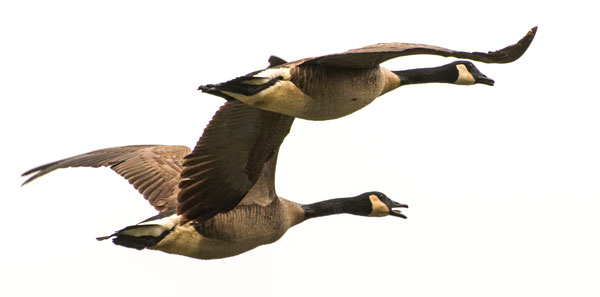
Composition can sometimes be the most difficult aspect of photographing birds in flight. Not only are you occupied with keeping your bird in sharp focus, you are also trying to make a pleasing composition. All the rules of composition applying to any photo remain valid here. You always want to have more space in front of the bird than behind; a good rule is to have a least two to three times the space in front of the bird. One practice that helps maintain this space is to place your focus point in the center and try to keep it on the bird’s eye. This method works really well on large beaked birds like the heron. While most birds in flight images are just one bird, look for those occasions where you may capture two or three birds for a great image.

gull

Technique

As the bird is flying toward you, quickly get your focus lock. When the subject is close and in the position you like, fire away and keep panning even after you have stopped shooting. This follow-through motion will keep your last image in focus better than an abrupt stop. While panning as the bird flies by, you want to match your panning speed to that of the bird, and depending on your shutter speed, this will help keep the bird in focus while the background may be blurred.

It’s a wildlife photography principle that you want to keep the bird’s eye in focus and sharp. If you are handholding your camera, try to keep your left hand under the barrel of your lens and your elbows close to your body, as this will help you maneuver the camera as steadily as possible. If you are standing, keep your legs spread out to give you a good sturdy base. If you are planning to hold your location and position for a time, using a tripod is recommended to help keep you steady, especially if you are using a very heavy lens.

duck

So stay alert, and look for opportunities to capture great birds in flight images. It will take lots of practice to get that perfect image, but when you do you will be hooked.

Have you tried bird photography before? Want more bird tips, try these:

  • 10 Incredible Bird Photography Tips for Beginners
  • A Turn of the Head – Creating More Compelling Bird Portraits
  • An Introduction to Bird photography


The post Tips for Photographing Birds in Flight by Bruce Wunderlich appeared first on Digital Photography School.


Digital Photography School

 
Comments Off on Tips for Photographing Birds in Flight

Posted in Photography


It’s Not Travel Photography, But Photographing Travelers May Be Photography’s Next Big Thing

26 Apr

fly1
Photography: Paola Colleoni

On a trip to Paris with her best friend two years ago, Nicole Smith did what everyone does on vacation. As she and her friend stood at tourist sites, she would take out her phone, hold it at arm’s length and snap a few selfies. Sometimes the pair would buttonhole a passing stranger, hand over a camera and ask the passer-by to shoot a picture of them together. Not surprisingly, the results were, she says, always “meh.” Things changed though, when a friend in the city offered to photograph them in the style of a photojournalist as they wandered through the streets. The result wasn’t just a set of images that captured the spirit of her afternoon in a way that she could never have done alone, she says, but the beginning of a whole new business idea.

Two years later Flytographer now has professional photographers available to capture shots of vacationers as they tour the sites and sip cappuccinos in romantic cafes in 70 cities around the world.
fly2
Photography: Cadence Feeley

Customers can choose from three different kinds of shoots: thirty minutes in one location produces fifteen photos and costs $ 250; an hour in one or two locations generates 30 photos and costs $ 350; and two hours in multiple locations produce 60 photos for $ 600. The commission  earned by the photographer varies with the package but on average photographers can expect to receive 60 percent of the purchase price.

“It’s a fun, fast shoot.”

The photographers, though, only have to do the shooting. Flytographer will arrange the date, time and route of the booking, discuss the customer’s objectives and prepare a brief with all the details.

“It’s a fun, fast shoot and we usually capture the couple/family as they stroll around in a more candid, editorial-style,” says Nicole. “The photographer connects with the customer like a local friend.”

The question is how much demand there is for the attention of a professional photographer at a time when professional quality DSLRs are affordable to anyone who takes foreign travel, and when everyone is packing a camera in their pocket, complete with filters to turn even the worst of snaps into atmospheric mementos.

According to Nicole, Flytographer delivers a couple of important benefits that vacationers and travelers can’t produce alone.

The first is that everyone can be in the picture together, looking relaxed and at their best, (rather than at the end of an arm or having just rushed back into the frame.) The images are also more varied. Ask a local to shoot a picture and at best you’ll get a standard direct shot of you and you a friend standing in front of a building. At worst, you’ll get to watch a stranger running off with your iPhone or your Nikon. Flytographer’s photographers are expected to use different angles and vantage points to produce images that only a dedicated photographer can create. They’ll also be using their own equipment.

And those pictures will be high quality. They won’t be quick snaps but valued treasures that record a memorable experience.

fly3

Photography: Lauren Colchamiro

“People like ‘experiences’ vs more stuff and we are often told by our customers that their Flytographer photos were the ‘Best souvenir they’ve ever purchased,” says Nicole. “Too many people spend thousands of dollars planning a special trip only to return home in none of the photos, or if they are, someone else important is missing, or they are blurry etc. They also like that they can focus on soaking up the moment and being really present vs distracted trying to capture the moment through a camera.”

Photograph Honeymooners And Reunions

Customers tend to be couples and families but are often people making special, once-in-a-lifetime trips such as honeymooners or newly engaged couples, all-guy or all-girl vacations and multigenerational reunions. For the photographer, the shoot may sometimes have the same feel, and demand some of the same skills, as shooting a small event.

Altogether, in the year or so since the company’s launch, Flytographer has completed around 200 shoots across five continents. And the company is looking to expand, particularly in Hawaii, Orlando, Sandestin, Palm Desert, Scottsdale, Tremblant, Hong Kong and in the Caribbean, although it accepts applications from anywhere. Photographers in places with large numbers of tourists and small numbers of rival shooters will be in with a good shout of landing some useful extra work, and even photographers who travel a lot can find themselves shooting in different locations.

But you will need to impress. All of the company’s photographers are professionals with backgrounds that range from newspapers and magazines to corporate and fashion photography. Some are wedding and family photographers. Flytographer has also managed to land some adventure ski photographers who can capture shots of snowboarding clients as they fly down the slopes.

Nicole speaks with each of the photographers themselves, checks their background and makes sure that they have both solid technical skills and the ability to tell a compelling story through their shots. She also looks for people who have run their own business and understand the importance of delivering impeccable service. Applicants can apply at www.flytographer.com/join.

That Flytographer appears so far to have had little trouble either recruiting photographers or finding clients is pretty revealing. That there is plenty of demand among photographers to shoot quick, documentary-style images for fees that may work out, after travel and processing, to around $ 100 an hour, is hardly surprising. But the fact that so many people recognize that there’s a limit to what they can do with their iPhones and even their DSLRs is highly encouraging. People may think that they’re photographers but they are recognizing that quick snaps taken on phones tend to stay forever unseen on the hard drives while professionally taken images are viewed and treasured.

It’s also revealing, though, that while Nicole Smith has used professional photographers, she’s not a trained photographer herself. This was a business idea that came from a client of professional photographers. If clients can spot opportunities for photographers, why aren’t more photographers doing the same for themselves?


Photopreneur – Make Money Selling Your Photos

 
Comments Off on It’s Not Travel Photography, But Photographing Travelers May Be Photography’s Next Big Thing

Posted in Equipment


Tips for Photographing Auto Racing

31 Mar

“Racing is life. Anything that happens before or after is just waiting.” – to quote Michael Delaney (played by Steve McQueen) in the movie ‘LeMans’. You don’t have to be a race car driver to feel the adrenaline rush that is auto racing. Being a photographer, and being part of the action can also be very exciting and a lot of fun.

There are a number of different types of racing such as sports cars, stock cars, rally cars, open wheel cars and even your local short track cars that might race on dirt or asphalt. Each type will have different tracks with their own level of accessibility for you to take photos. Nothing beats having unlimited access and if you can get a press pass, that is definitely the way to go. But if you don’t have that option available what can you do?

Fig 1

PANNING

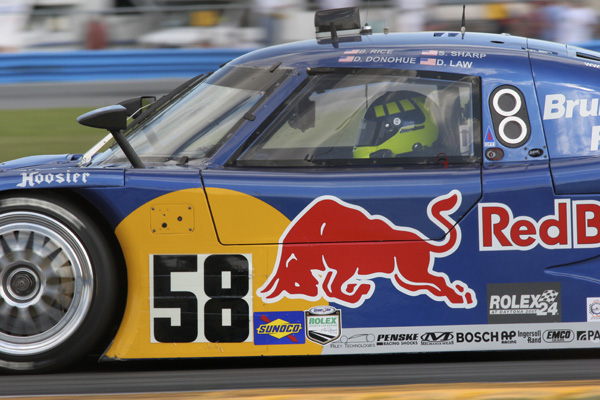
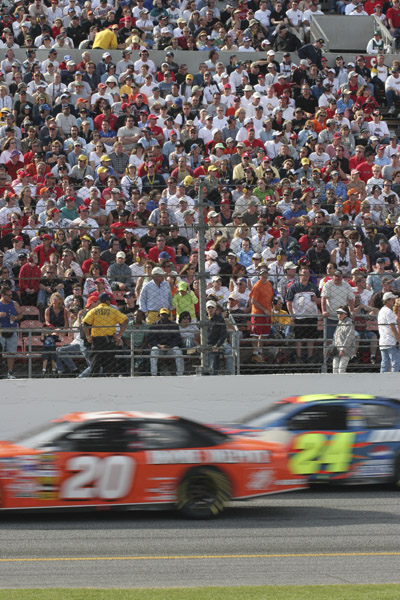
Road courses offer opportunities to get great action photos without having any special access. The images above was taken from the same vantage point of all spectators. By using a short ladder, I was able take this image over the fence instead of trying to look through it. A 300mm lens was enough to more than fill the frame, so an extreme telephoto lens was not required to get this photo.

I also used the technique known as panning. Panning with the car allowed the focus to stay on the main subject, but by slowing the shutter speed down enough you are still able to get the feeling of speed. You will need to find the right balance between aperture, shutter speed and ISO. If the shutter speed is too fast the car will look like it’s just stopped on the track. If it’s too slow then everything could be blurred. You want to slow your shutter speed down until the lettering on the tires just transforms into a nice short blur. Photograph a few laps at different speeds and then check them on your camera’s LCD screen until you get the right effect that you’re looking for.

Next, take notice of your aperture because this will determine your depth of field. Depth of field is typically less with a telephoto lens than it is with a wide angle. Adjusting your aperture will require a corresponding adjustment of the ISO to compensate and keep your exposure accurate. A depth of field that is too shallow may make it difficult to obtain a critical focus, so again take a look at a few practice images and make sure that your focus looks good to you (zoom in to 100% on your screen to be sure).

PREFOCUS

Autofocus is still sometimes unpredictable and it may lock onto a subject in the foreground or background just as you are about to take the shot. By switching to manual focus you can prefocus a location on the track and just wait for the cars (or motorcycles) to come to you. Once there, a simple click of the shutter and you’ve captured your racer in focus. There’s always an ideal racing line on any track so more than likely all racers will speed through at that same location unless they’re passing or being passed.

BLUR

Fig 2

This photo (image above) shows that sometimes you need to look around, notice your surroundings and try something a little different. By focusing on the spectators you can allow the cars to become a blur and emphasize their action on the track. Try different shutter speeds until you get the effect that you desire. This technique can be used for daytime or nighttime racing. A neutral density or gradual filter was not used for this image, but one could be used to increase the blur.

TRIPOD or MONOPOD?

Tripods and monopods are helpful to stabilize the action and help give you a sharper image. If you don’t want to use them there’s a formula for hand holding a camera with a long lens and it is as follows:

The shutter speed should be equal to or greater (faster) than the focal length of the lens (eg., 200mm lens = 1/200th shutter speed or faster) to avoid camera movement as you take your photo.

If you have a zoom lens like a 75-300 then this rule would apply at the longer focal length (1/300th of a second or faster). Don’t forget to add in the crop factor if this applies to your camera’s sensor also. With cameras that have stabilization systems either in the lens or camera body you can typically bend this rule by a couple of stops, but the tripod and monopod are still there to help when you need them. They are definitely preferable when using a super telephoto that you may be carrying around all day. I prefer a monopod because they are lightweight and easy to move around with, but you will need to find what works best for you with a little trial and error.

TWO CAMERAS

Photographing auto racing does require a certain amount of photographic equipment. We would all like to have the best that’s available, but most times that is not the case. Get the best equipment that you can afford and learn to make the best with what you have. If you can, carry a second camera with you so that you’re ready for that unexpected shot. Keep a telephoto lens on one camera and a shorter lens on the other. Being prepared for the unexpected to happen is when you’re going to get that great action photo.

ANGLE OF VIEW

Fig 3

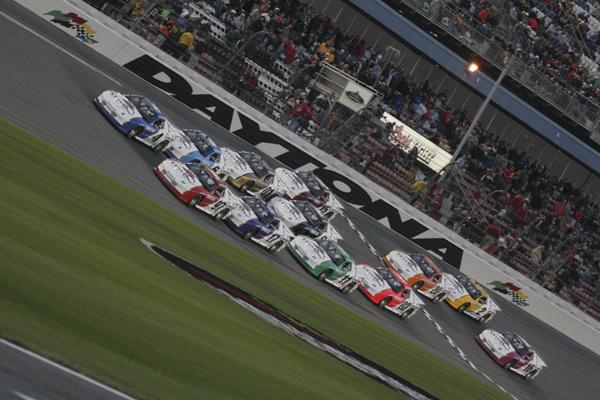
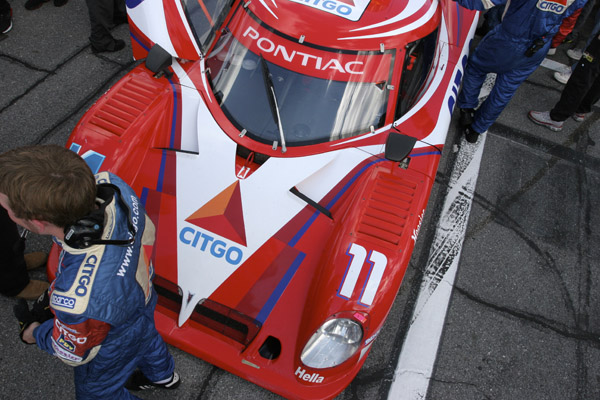
Be on the lookout for creative images. If you see a crowd of photographers in one location – try looking for an angle of view that they haven’t seen. You can hold the camera at a 45 degree angle and take photos with cars going across the screen diagonally to emphasize speed (see image above). Try taking photos from a low angle or a high angle. You can attach your camera to a monopod with a remote release and capture a high angle such as this car being rolled out to the starting grid (image below). Even though there are crowds of people around, this car is isolated and not something that you see everyday.

Fig 4

PIT STOPS

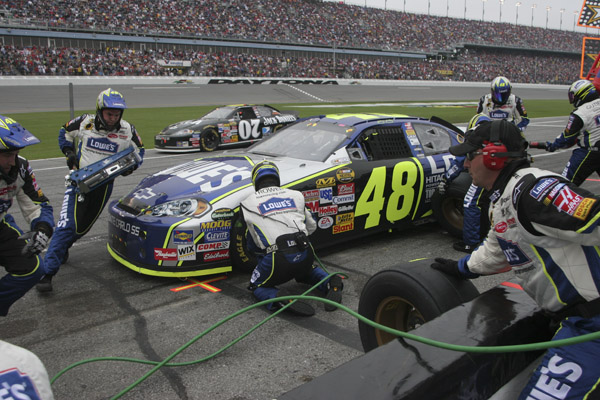
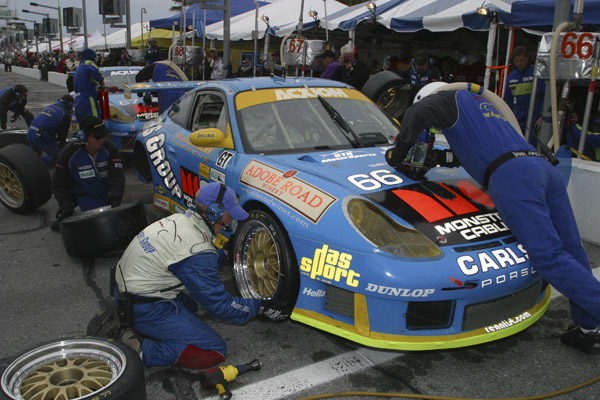
Pit stops are some of my favorite things to photograph because there is always a lot of action! You can get a lot of great images with a relatively inexpensive wide angle such as this image (below) taken with a 20-35mm lens. Some race tracks will allow you to purchase a pit pass, or a press pass will gain you access to pit road. If you do obtain access to photograph pit stops maintain your ‘situational awareness’. Be aware that every one of the pit crew members around you has a job to do and you don’t want to get in their way while they’re doing it. There is the potential for serious injury for you and crew members. So pick the moment that you want to get in there, take your images and step back so that they can do their job.

Fig 5

Some forms of racing allow photographers over the pit road wall to photograph pit stop action as long as you wear a firesuit. This type of access, in my opinion, is the ultimate and you are able to move around the car taking images that few photographers get to take (like the image below). If you are able to gain this type of access you also need to be aware of cars (or motorcycles) entering and exiting their pits.

Fig 6

IN SUMMARY – ACTION PLAN

Photographing auto racing can be challenging but a lot of fun. Take the best photos you can from the areas that you have access to and buy a pit pass to get closer to the action. The camera equipment required can be expensive, but learn to work with what you have, and upgrade your equipment when you can. There are also numerous rental companies available now and you may want to consider renting equipment to try before you buy. Good luck and good racing!

If you have racing photos that you’d like to share with others here please add them in the comments.

The post Tips for Photographing Auto Racing by Jim Wise appeared first on Digital Photography School.


Digital Photography School

 
Comments Off on Tips for Photographing Auto Racing

Posted in Photography


Photographing bubbles, one bubble at a time

29 Mar

16.Bubble_Landscapes.jpg

British photographer Richard Heeks has made a project of taking something ordinary – soap bubbles – and making them extraordinary. Some of his images capture the exact moment when a bubble bursts, while others reflect the environment around with interesting color. One of his bubbles even looks like the ‘Death Star’ from the Star Wars trilogy. To get the photos, he took thousands of shots, gradually learning how light, weather, aperture and shutter speeds affect the final image. See gallery

News: Digital Photography Review (dpreview.com)

 
Comments Off on Photographing bubbles, one bubble at a time

Posted in Uncategorized


The Story of Photographing my First Wedding also Likely my Last

20 Mar

There’s really no question that wedding photography is one of the most common forms of professional photography and if you’ve recently become the owner of a DSLR odds are sooner or later someone you know might ask you to photograph their wedding. Though this might be a tempting offer, I want you to think long and hard before saying yes, because photographing a wedding is a lot more than pointing a camera and capturing the moments. To help drive home this point I’m telling a bit of a story today.

weddingalt

My story is about why, even though photographing this wedding was the best experience of my photography life, I more than likely won’t be photographing another wedding anytime soon.

I don’t want you to think that I’m here to tell you that it’s a bad idea to get into wedding photography, or even that my first (and last) time as a wedding photographer was a bad experience. Neither of these are the case – in fact I quite enjoyed photographing this wedding, but there are some things that I learned about myself which would make me hesitate if I were asked to do it again.

SneakPeak1

First some background

Like most new photographers these days I created a website, set up a Facebook page, and started sharing my photos on a daily basis. Over time I noticed that my page was growing with not only my immediate friends, but friends of friends, and even people I didn’t know – I guess you could say I started attracting a following.

After a couple of years of sharing landscape and wildlife shots from around the New England area, one of my sister’s friends reached out to me and asked if I’d photograph her wedding.

My first instinct was to say “I’m not a wedding photographer – why are you asking me?”. So I sort of brushed it off as a random thing, but she insisted that she liked my style and wanted to work with someone she knew and trusted. If there’s anything to my credit – I’ve always been a hard worker. So, as this post requires that I photograph a wedding, you probably won’t be surprised to hear that I eventually did commit to the job.

Months of preparation

And I mean months!

The bride-to-be was extremely organized and prepared, having everything booked months in advance – in fact – the photographer was one of her last jobs to tackle. After accepting the job I had nearly a full year to learn as much as I could about photographing weddings and that’s exactly what I did. This three part series here on dPS: Wedding Photography 101 (Part 1), Wedding Photography 101 (Part 2), Wedding Photography 101 (Part 3) should be on every prospective wedding photographer’s reading list. But a quick search for “wedding photography” on dPS will yield dozens of other great reads.

SneakPeak5

However, all the reading that I was doing, really couldn’t prepare me for the real thing. Emotions, stress, time crunch, uncontrollable problems, and anything else that you can pack into the ten hour day – you simply can’t read that, so I enlisted the help of a professional. I reached out to a local photographer, who worked closely with a friend of mine, and he was kind enough to allow me to shadow him, and even second shoot for him on a couple of occasions.

This experience gave me a huge boost of confidence going into the event, and I highly recommend reaching out to your own local wedding photographers prior to photographing a wedding on your own for the first time. The experience is priceless.

The final bit of preparation was gear related – I was being paid for this shoot and as a landscape/wildlife photographer my ultra-wide angle and telephoto zooms were not ideal for the task at hand. So I spent a little of the money that I was paid for the wedding to rent a second camera (you can never be too prepared) and a 24-70mm f/2.8 lens which would be my workhorse for the night.

The wedding was a success

Due to my preparation and my commitment to wanting to provide the best possible photographs that my ability would allow, I’d say the wedding was a success. The bride and groom got photos that they will enjoy for the rest of their lives and I learned more than I could ever have imagined in a very short amount of time.

SneakPeak4

The day of the wedding I was at my wits end, running on pretty much pure adrenaline at that point. I had a list of ‘must have shots’ which I was able to check off throughout the day and night. It’s hard to imagine that the event lasted as long as it did, as it all went by so quickly, with barely a break for food or drink. All said and done, I left the reception after the last dance feeling confident that I had done the best that I could. So why never again?

Why I won’t photograph another wedding

There’s no question that this was a valuable experience. I learned more about myself as a photographer photographing this wedding than I had in the nearly 3 years of photographing landscapes, but I’d also learned that it wasn’t for me. I enjoy the peace and quite of nature and the ability to go back to the same location to fine tune the shot over a period of time and lighting conditions. Weddings are a one shot deal – you get the light you get – you get the weather you get, and you get one shot to make it happen.

You have to be a people person – something I am not. Going around to get various people that I didn’t know together for photographs was hard enough when there were actually a handful of people that I did know at this wedding (sister’s friend remember?). I don’t think that I could do this on my own, without help, and without a lot more practice. So I urge anyone who’s thinking about photographing a wedding to not take it lightly. It’s an important day for a lot of people – not just the bride and groom – but their parents, extended family, and friends will want to remember this day as well so you MUST get it right.

The moral of this story is that wedding photography can be a very rewarding experience, but you have got to put the work into it. If you are thinking to yourself that it will be an easy job – think again. Oh and please – don’t ever do this for free – being paid to shoot this wedding was what motivated me to find help, rent gear, drive to their location and process hundreds of photos – the experience was a bonus.

Some stats from the wedding

  • hours shot from start to finish on the day – 10 hours
  • number of images shot total – 1500
  • number of images given to the couple – 500
  • how long it took to edit it – approximately 5-6 hours
  • number of hours estimated spent preparing: time with other photographer, etc –  Dozens and dozens of hours of prep time between reading articles and spending time with this mentor photographer I would say easily 50 hours or more went into the prep.

Equipment used to shoot the wedding

  • camera bodies:  rental D600 and my own D7000 as backup
  • lenses:  rented the 24-70 f/2.8 (pretty much used for the entire event) also had my 55-300mm Nikon & 11-16mm Tokina, and a 50mm prime on my D7000 for odds and ends shots
  • flash:  Nikon SB700
  • light modifiers like umbrellas or reflectors – none
  • tripod:  had my Manfrotto 190XBPRO with me but rarely used it
  • other:  nothing else, But Jim (my mentor of sorts) told me that if I were to get into this that it’s a good idea to stock up on things like needles, various threads, safety pins, tape, Advil, Aspirin, Tylenol, scissors, and so much other stuff – not really for you, but you’ll be the hero of the wedding if you pull something the bride needs out of your magic bag of tricks

Editors note: 

Having done somewhere in the neighbourhood of 250 weddings in my time, I can concur that everything John has said is absolutely true, and some of the same advice I give people considering doing one for the first time. Being prepared is the number one thing I can say also. I remember wanting to throw up the entire first year I did weddings, the pressure is THAT intense. These are people’s memories and not something to take lightly. I too, like John’s mentor did carry such an emergency kit and can tell you I’ve used deodorant, men’s black socks, nylons, clear nail polish to stop runs in nylons, safety pins, After Bite for bug bites, Visine, allergy meds, Stain remover (get the stick, takes grease right out of a wedding gown), nail glue, bug spray, sunscreen,  and more. John gives great advice from his experience – heed it well.

The post The Story of Photographing my First Wedding also Likely my Last by John Davenport appeared first on Digital Photography School.

Digital Photography School

 
Comments Off on The Story of Photographing my First Wedding also Likely my Last

Posted in Photography


Tips for Photographing Snow

16 Mar

Some of may still be in the throws of some nasty weather that Mother Nature can surprise us with like an early spring snow storm. Assuming of course it’s not completely freezing, why not get out there and do some winter photography!

In this short video you will get 8 tips for photographing snow; things like proper exposure, capturing falling flakes, what lens to use, and white balance.

Need more help with winter or snow photography?

  • Winter Photography Tips | Bendy straws and Ziploc bags?
  • Tips to Protect your Gear in Harsh Weather Conditions
  • 5 Uncommon Snow Photography Tips That Can Transform Your Winter Scenes.

The post Tips for Photographing Snow by Darlene Hildebrandt appeared first on Digital Photography School.

Digital Photography School

 
Comments Off on Tips for Photographing Snow

Posted in Photography


Tips for Photographing Popular Tourist Destinations

13 Mar

As photographers, we often note that one way to make interesting images that are different from the norm is to get our camera to out-of-the-way places that haven’t been flooded with photographers. But what about those times when you’re heading somewhere that has been photographed millions of times already? Is it possible to create interesting photos of tourist destinations? Can you create something intriguing if you’re headed to the Eiffel Tower, Golden Gate Bridge, Great Wall of China or Mount Rushmore?

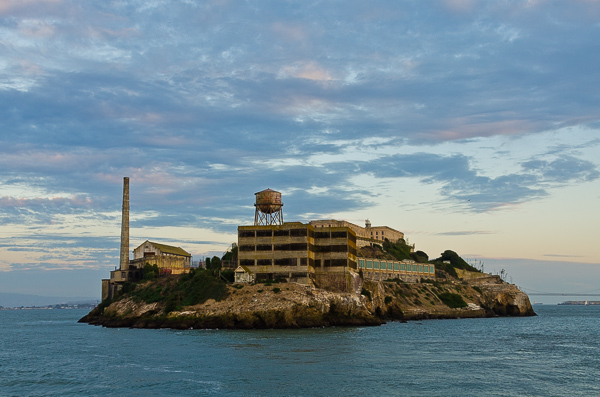
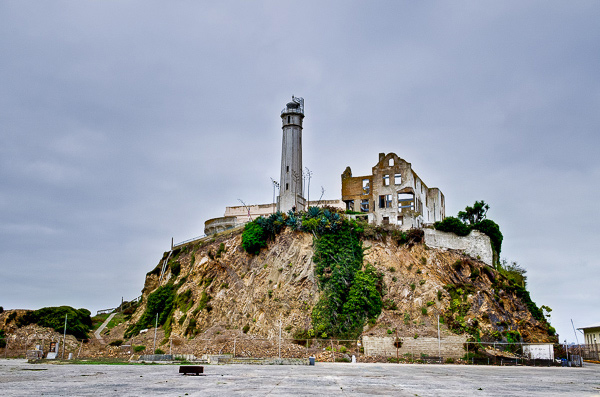
I say yes. Let’s consider how you can make an interesting photo, or series of photos, at a famous location. Let’s look at an example from Alcatraz Island, the former prison that’s now a tourist destination in the San Francisco Bay.

Ahockley alcatraz 1

#1 First, cover the usual

Although we want to make photographs that go above and beyond the usual tourist snapshots, that doesn’t mean you’ll want to ignore those vantage points entirely. You’re at the location and you’ve probably seen the postcard photo a hundred times, but this might be your first time there with your camera.

If you’re going to Alcatraz, sure, take a photo of the island from the boat (see image above). It’s not the most interesting composition, but it provides a sense of location. Everyone else has done it, so why shouldn’t you?

#2 The Usual… with a twist

Try to mix it up a bit. How about that usual shot but with some sort of twist? Is there an element you could add to the composition for context? How about:

  • A photo of your ticket stub, with the date of the visit, in front of the tourist destination?
  • Intentionally including huge crowds in your photo instead of fighting with them?
  • Photos of other photographers as they make photos?

What would the usual shot look like if you got there before everyone else? Could a lack of people improve your shot? Do some research and see if there are any early entry or behind-the-scenes options.

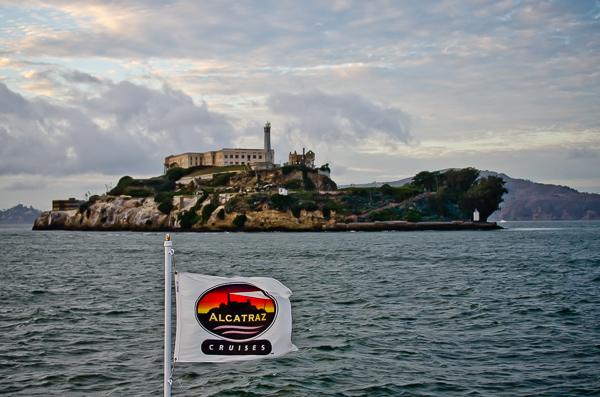
At Alcatraz, you could take a photo from the boat, including the flag at the bow indicating your destination.

Ahockley alcatraz 2

#3 Turn around and look behind you

I’ve made many photographs simply by turning around and looking in the opposite direction to where everyone else is pointing their cameras. Could you get an interesting photo of the Marin Headlands while most folks photograph the Golden Gate Bridge from the north? As someone is photographing a sunset over the Pacific Ocean, what if you turned around to see what the golden light is doing to the scene at your back?

In this case, most everyone else was looking the opposite direction and photographing the San Francisco cityscape.

ahockley-alcatraz-3b

#4 Look for details

Capture the big-picture (pun intended) images. Get one with the whole Golden Gate Bridge in the frame. Go wide and ensure you have a photo of the full height and breadth of the Arc de Triomphe.

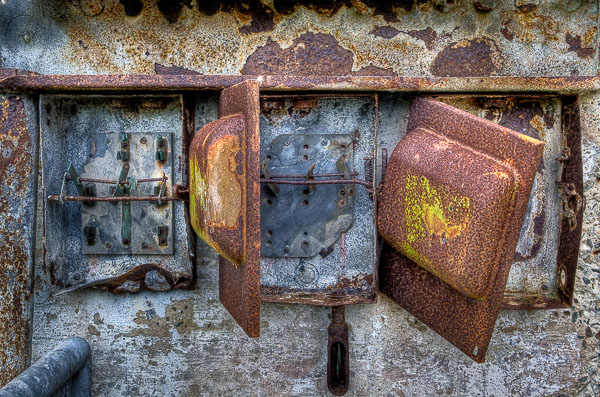
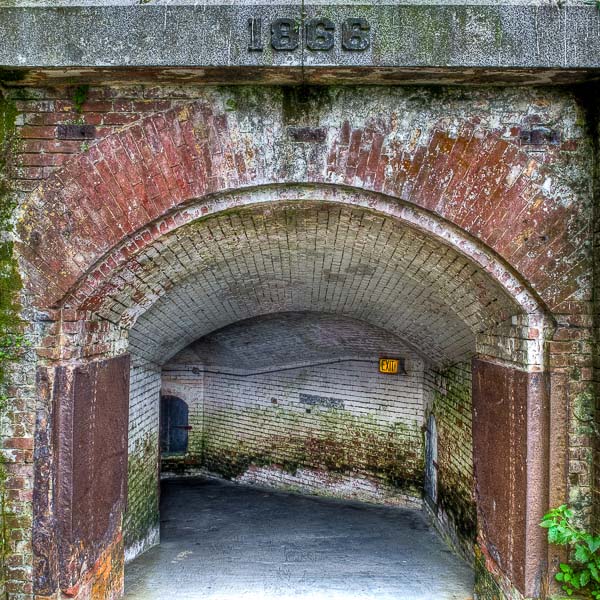
After you’ve done that, look for details. Instead of all of Lady Liberty (Statue of Liberty), how about a zoomed-in shot of just the tip of her torch? Take a look around at signs. What stories do they tell? Is there something old and worn out that helps tell the story of the location? Is there something fresh and new?

Ahockley alcatraz 4

Whether you use a zoom lens or just “zoom with your feet” and walk closer, get up close. Photographing a ship in port? Get a shot of the rope wrapped around the cleat at the dock. Hiking to a waterfall? Fill the frame with the area where the water hits the rocks, and get a photo of the trailhead sign as well.

Ahockley alcatraz 5

Each of these detail shots will help you as you get ready to use your images to…

#5 Present a story

You came, you saw, you photographed. What next? Go above and beyond the average tourist by creating an interesting presentation for your images.

After I visited Alcatraz a few times, I made a Blurb book, that’s one idea. Perhaps you would like to print three or four of the best images and display them together on your wall, that’s another. Lightroom’s print module allows you to create a nice album, which can be a fun way to display the images even if the only “printing” that you do is to create a PDF. If you’re going to share the images online, consider how you might present them in an organized gallery rather than just a haphazard fashion.

One of the reasons that good wedding photographers can charge a premium price for their services is not just that make good images, but also that they present those images in a nice fashion. You can do the same. After you’ve returned from your trip or photo expedition, think about how to wrap everything together into a nice storytelling package. Your friends, family, and others who enjoy your images will thank you.

Your turn

Do you have any additional tips for photographing popular tourist locations? Have you visited one recently that you’d like to share? Please do so on the comments section below.

Try these tips for more travel photography ideas:

  • How to Capture the Essence of a Place – Travel Photography Tips
  • Transcending Travel – a dPS ebook
  • 6 Tips for Photographing People When Travelling
  • 5 Ways to Create Detail Photos

The post Tips for Photographing Popular Tourist Destinations by Aaron Hockley appeared first on Digital Photography School.

Digital Photography School

 
Comments Off on Tips for Photographing Popular Tourist Destinations

Posted in Photography


10 February. 2014 – Photographing The Arctic

11 Feb


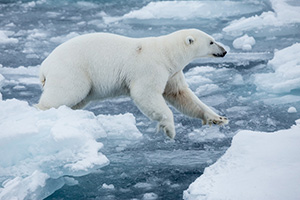
This July Peter Cox, Kevin Raber along with Morten Jørgensen will lead two small ship tours to the Arctic region around Svalbard, Norway.  This is a very unique workshop as it is a small ship trip with 11 participants on each trip.  This area is known as Land Of The Polar Bear.  We will be photographing landscapes, wildlife and polar bears.  Ten years ago Iceland was hardly a blip on the radar for photographers.  That was until Luminous-landscape did some workshops there.  We feel that Svalbard is the new Iceland.  This is your chance to be one of the first to explore this region and come back with some amazing images.  The small ship we will use is ideally suited to photograph polar bears in this region since it has a main deck close to the waterline.  To get a better idea of what you can expect from a trip like this, read Peter Cox’s article Photographing In The Arctic – Svalbard 2013.  This is a trip log from a trip we did this past August.  And when you are ready to sign up for this year’s trip you can find out more information HERE.

Are you planning on attending this year’s WPPI Trade Show and Convention in Las Vegas March 3-5?  If so drop us an email.  Kevin and Chris will be there reporting on the show and it would be great to meet soemwhere and say hi.


The Luminous Landscape – What’s New

 
Comments Off on 10 February. 2014 – Photographing The Arctic

Posted in News


The Rewards of Photographing People When You Travel

27 Jan

One of the most rewarding aspects of photography is that you can use the camera to connect with complete strangers, especially when you travel.

Unless you are heading to the wilderness, the scenery alone is only a part of any trip.  The people and culture you encounter is the other part.  A travel album feels much more complete when you include images of both scenery and people.  Or even better, images that combine the scenery and the locals.

asking

Maybe it’s a portrait of a seller at a local market, or an interesting person that you pass while walking down the street, or even your tour guide.

Not everybody will be happy to allow you to photograph them.  In the market in Managua shown in the above and below photos, every other person I asked said no to a portrait, but they still said no kindly.  Even though I didn’t speak the language, a little nod of the camera and a smile would let the person know that I wanted to photograph them.
That feeling you get when they give you permission to take their portrait, is worth almost as much as the photo itself. It is a powerful connection that will provide some of your favorite moments while traveling, and perhaps you’ll make a new friend.

Managua Market, The Rewards of Photographing People When You Travel
Whenever I travel, I try to capture three different types of images.  I try to mix together photographs of the scenery, (whether it be nature or architecture) portraits of people, and candid photographs of people and daily life.  I don’t always succeed at all of these, but I try.

So here are a few tips to help you capture better portraits when you travel.

Be respectful and careful of the local culture and laws

In certain countries, candid photography or even portraits of people are either not allowed or are looked down upon, while in other places, people are more likely to react with excitement.  Different countries and cultures have different views on this type of photography, so make sure to do your research or ask someone with experience.
Always use judgement when photographing people.  It’s not too hard to tell someone that does not like having their picture taken.

Managua Market, The Rewards of Photographing People When You Travel

Get close and focus on the subject’s eyes

By far, the most important rule when taking a portrait of a person’s face is that their eyes are sharp.  Focus directly on their face, or their eyes if you are close up.  It is not good if their ear is sharper than their eye.
And get close.  The portrait doesn’t need to be of their whole body.  Try some portraits with just the face and upper torso.

Soho Skater, The Rewards of Photography People When You Travel

Managua Market, The Rewards of Photographing People When You Travel

Pick a background and wait there

This works for both portraits and candid shots.  You’re going to come across interesting people spontaneously in your travels, but when you have some time, find an interesting background and wait for an interesting person.  Either capture the candid shot or ask them for a portrait, or both.

chicken_stall

Take your time

If someone gives you permission to take their portrait, you owe it to them to create the best portrait that you can. Taking a quick shot, saying thank you, and scurrying away nervously is a waste of time for both of you.

Don’t take too long, but make sure your settings are correct, the background, and angle of the subject to the main light source is ideal (and if it’s not, tell them where they should move), and that you are composing correctly.  The first compositional aspects that I try to figure out are whether I want to create a vertical or horizontal portrait and how close I want to get.

market

Expression and posture

When you first meet someone and instantly have to take their picture, getting them to give a strong, natural expression is just not always possible. Even if you are nervous and have no clue what you’re doing, try to act like you know what you’re doing.  The more confident you seem, the better they’ll feel.

Soho Portrait, The Rewards of Photographing People When You Travel

First tell them where they should stand.  Some people will be naturals, but many will look for some direction from you and will be uncomfortable until they get it.  Telling them where to stand, and to do so in a natural posture that feels comfortable to them is a way to make them more relaxed.  Otherwise, a lot of people will just stand stiffly, while waiting for some direction.

Throw out a positive word or two.  A simple, “That looks great” will mean a world of difference in making them comfortable, because they will think they are doing something right.  Even ask them to make up a pose for you!  A portrait is a collaboration.

A good trick to use when you don’t like their expression or they seem uncomfortable is to have them move over a step or two and reposition.  It’s something simple that can break them out of an uncomfortable posture or expression and have them start all over again.

And if they smile, tell them not to!  Natural smiles are good, but a forced smile can kill a portrait.

Start with one person

The biggest problem I encounter is that people who love the idea of capturing people when they travel still don’t follow through on it.  They seem to carry the feeling that they might be doing something wrong, or they might anger someone, or even more likely they simply don’t feel comfortable with approaching someone.

jugglerMany don’t seem to ever get over the initial hump of capturing that first portrait on a trip.  That’s unfortunate, because once you get past that, you’ll be hooked.

You probably know this already, but many people enjoy having their photo taken.  A significant percentage of people will be flattered when you ask.  A camera is a great connector between people.  Almost everyone knows what it is.

So start with one person.  The next time you are out there, just tell yourself that you will capture one portrait of a stranger over the course of the day.  All it takes to start is one.


Read some other articles on travel and people photography here:

  • How to Capture the Essence of a Place – Travel Photography Tips
  • Terrified of Street Photography? So Am I! Here’s How I Do It
  • Transcending Travel – a dPS ebook

The post The Rewards of Photographing People When You Travel by James Maher appeared first on Digital Photography School.

Digital Photography School

 
Comments Off on The Rewards of Photographing People When You Travel

Posted in Photography


Merry Christmas for All Paddling and Photographing Friends

25 Dec
Merry Christmas for All Paddling and Photographing Friends

Merry Christmas for All Paddling and Photographing Friends


paddling with a camera

 
Comments Off on Merry Christmas for All Paddling and Photographing Friends

Posted in Photography