RSS
 

Posts Tagged ‘Photographing’

How to Get the Most Out of Photographing at Golden Hour

09 Apr

The infamous golden hour is a photographer’s dream. That one key period of time that could make even the most stringent artist swoon with inspiration. The sun will dance across your viewfinder, and an endless array of possibilities will present themselves. Regardless of whether your photographic style is vibrant, monochrome, gentle, or contrasted, the golden hour will grant you the ultimate canvas upon which to paint your vision.

So, what is golden hour exactly?

golden hour

The golden hours include the first hour after sunrise and the last hour of light before sunset. Predicting this short window of time depends upon your geographical location and the current season. What makes this lighting situation so ideal for photography is the sun’s positioning relative to what you are photographing.

Due to the sun beginning its speedy rise or setting in the sky, the light source is now closer in relation to your subject. It is also going through more of the earth’s atmosphere at this low angle. When this occurs, soft diffused light is produced.

Generally speaking, soft light is considered the best canvas for a photographer. It does not create harsh shadows and tends to be very dynamic-range-friendly, as your images will not feature harsh shadows or blown-out highlights. The golden hour casts a warm color temperature as well, which can be enhanced upon or corrected via post-processing. This warm color cast lends itself to being a flattering illumination upon any subject of your choosing.

golden hour portrait

Five key lighting situations at golden hour

Any type of photography, from portraits to landscapes to action, can benefit from the use of the golden hour. There are five key lighting situations you can create during this time:

Front-Lighting

This is when your subject faces the sun directly. During the golden hour, this lighting gives a very warm feel to images. Because the sun is not directly above them, in many cases, your subject will not have to suffer the intensely bright light and need to squint. This lighting situation is very easy to photograph in and will make a lasting impression.

golden hour front-lighting

An example of front-lighting at golden hour.

Back-Lighting

Back-lighting occurs when the sun is behind your subject. During the golden hour, this lighting situation creates a soft, warm, hazy, glowing effect. Be sure to expose for your subject’s proper tones, and enjoy the masterpiece that you create.

Golden hour back lighting.

An example of back-lighting.

Rim Lighting:

Rim lighting is when the sun is positioned in such a way to create a halo around your subject. This halo is especially prevalent when placed against a dark background. The sun doesn’t need to be directly behind your subject to achieve this effect, though, as long as the background is dark. You will have to move around to find the sweet spot to achieve this effect, but a good way to start is by shooting from a lower camera angle.

golden hour - rim lighting

Sun Flare

A sun flare occurs when light hits your lens. Different lenses render different types of flares, so this effect is very fun to try with different types of equipment. To achieve a flare, just move your lens around until you see the light hit it through the viewfinder.

During the golden hour, the sun is at its optimal height for this exact outcome. A simple way to achieve a flare is to move your camera and lens so that your subject is only partially covering the sun. Move around (sometimes you only need to move an inch or two left or right) to find the angle that best creates a sun flare. Another way to achieve a flare is to position your lens and camera so the sun is just out of the frame.

Read more on sun flares: How to Photograph Sun Flares: 14 Tips for Beginners

Golden hour sun flare

An example of a sun flare.

golden hour

A different type of sun flare.

Silhouette

A silhouette is created when your subject is completely black without detail, against a bright background. When the sun is near the end of the golden hour, it becomes fairly easy to achieve a silhouette. Photograph your subject directly against the light, and add some contrast in post-processing.

Golden hour silhouette.

An example of a silhouette at golden hour.

There are several tips to truly take advantage of the golden hour. Here are a few to help you:

1. Observe the sky the day before

The best way to figure out when the golden hour will be at its peak is by observation! Peek out of the window the day before your photo session, and see how the sun moves and how the light changes. This will allow you to get a better idea of what the lighting situation will be like on the day of your shoot.

golden hour

2. Plan your photo session around golden hour

No one wants to feel stressed, anxious or rushed when doing photography, so be sure to plan well ahead of time! It is a good idea to begin setting up for your photo session an hour before the golden hour. That way you have plenty of time to ensure that your subject and equipment are ready for that perfect moment.

Golden hour portrait

Anani Inaru with Trinket photographed at golden hour.

3. Watch out for clouds!

Depending on the level of cloud coverage in the sky, your golden hour can change (or not appear at all!). Clouds can enhance the brilliant sunrise or sunset, or they can block your view.

golden hour

4. Set your White Balance to Cloudy

By changing your White Balance setting, you ensure that the images you produce hold true to the colors you want to appear. This allows you to get the warm look the golden hour is famous for – choose Cloudy or Shade to add even more warmth and golden hues to your images.

golden hour

5. Shoot with a wide aperture

How the light dances during this brilliant hour can make for an incredible bokeh (the aesthetic quality of the out-of-focus parts of a photograph). The dazzling yellows, reds, oranges, and golds make a rather exceptional backdrop.

Golden hour

Golden hour bokeh.

6. Keep photographing, because the light will change every couple of minutes!

The sun moves faster than you may expect, so keep shooting and don’t stop! Every position of the sun will create a brand new image for you to take.

golden hour

7. Try different angles and positions.

The sun flares, colors, and intensity of the light in your image are all affected by how you angle your lens. Experiment and try as many different positions as humanly possible! The best way to get the absolute most out of the golden hour is to take advantage of how easy it is to manipulate this unique lighting situation.

golden hour

8. Underexpose a bit to add more vibrancy

You can always lighten up your subject(s) in post-processing, but it is harder to darken an overexposed image. Underexpose just a bit to bring out the beautiful vibrancy of the sunset or sunrise.

Golden hour

9. Explore the use of HDR

Photograph multiple exposures and then layer them on top of one another in post-processing, and see how many incredible lighting details you can achieve. Read more on HDR: Step by Step How to Use HDR Merge in Lightroom

HDR golden hour

10. Play with post-processing

What colors can you bring out in your image? Use post-processing to really enhance the colors that you capture. You will be surprised at what colors you can see when the sky has a few clouds in it.

Conclusion

The golden hour is full of limitless possibilities, and no two photographs will look the same. Experimentation is key, explore the light. How do you use golden hour for your photography? Share your thoughts and images below.

The post How to Get the Most Out of Photographing at Golden Hour by Anabel DFlux appeared first on Digital Photography School.

Digital Photography School

 
Comments Off on How to Get the Most Out of Photographing at Golden Hour

Posted in Photography


5 Tips for Photographing Water

23 Mar

Water is a beautiful subject to photograph. It can be as dramatic as a waterfall, predictable as a fountain, vast like the ocean, or just a winding exciting river. Whatever the source, it can be a point of interest in your image or an element of your composition. If you are enchanted with photography water, here are a few tips you can use to improve your final image.

5 Tips for Photographing Water

1. Capture Motion

Firstly, think about what you want to convey and how to add that characteristic to the shot. This may be as simple as choosing the right shutter speed. A fast shutter speed freezes motion and works well for crashing waves to show the activity of an ocean. Sometimes when using faster shutter speeds, your camera may indicate that you are getting insufficient light – this is where adjusting your ISO can come in handy. When using shutter speeds of 1/500th and above, timing is key for spectacular shots.

On the opposite side of fast shutter captures are long exposures. If you want to show greater motion or get that silken effect, slowing down your shutter speed gives you that cool effect. A few key things; aim for an exposure between 0.5 and 10 seconds which means that your camera needs to be absolutely still (a tripod is a definite, you can also use a shutter release cable/remote if possible). Dusk and dawn are great times for long exposures but there is no need to limit yourself to these times of day if you have a neutral density filter (discussed lower down in this post).

Bonus Tip: Getting closer to the water makes the blurring effect of moving water more noticeable.

2. Mirror Mirror

Water is a natural mirror. Seek out reflections and classify them. Is the reflection enhancing your image or distracting from it? In the latter case, move around a bit to eliminate reflections where possible or return to your location when the sun is at a different angle. A polarizing filter can help eliminate some of the reflections and give you nice contrast (rotate the filter and check out what’s possible).

Reflections can also add to an image and are used a lot where water is calm and still. That being said, ripples can also be interesting as they add texture and effect. There are also abstract reflections that look great in moving water such as the lights of a cityscape.

With reflections you can go for a symmetrical composition or not, depending on what you want to portray. You can even just shoot the water reflection and not the subject itself; the possibilities are endless.

3. Filter it

Using a polarizer was mentioned above, but it is worth a second thought as it is quite a useful tool to have in the field when photographing water. In addition to removing reflections (when they’re not wanted), a polarizer is very helpful in cutting out glare. By eliminating glare, it helps bring out any color details of the water and what lies below the surface.

Neutral Density (ND) filters are quite useful for creating long exposures during the day as they give you better control over your exposure. They do this by stopping/restricting light from reaching your camera sensor, thus allowing you to leave your camera with a higher aperture for a longer amount of time.

Note: ND filters do not affect the color in your photo in anyway, while the same cannot be said for a polarizer filter.

4. Underexpose when photographing water

Perfect exposure in-camera is your ideal goal. When water is your subject though, too many highlights can make it look white and it is difficult to recover the details in large areas that are blown out or clipped. If water is the dominant subject in your frame, it will benefit you to underexpose by 1/3 to 1/2 a stop.

Bonus Tip: Shooting waterfalls in overcast conditions is something many landscape photographers would recommend. There is no direct sunlight on the water itself.

5. Get your feet wet

If you can get into the water safely with your tripod, it’s a perspective worth trying. Use extra caution when setting up on slippery rocks and be aware of your surroundings. Make sure your equipment is insured, and you’re all set to try something different.

If this is not an option for you, grab a zoom lens for some close up details. It is worth the time to experiment with unusual angles.

Conclusion

Water is indeed a fascinating subject and with so many ways to capture it, why not give it a try? Are you drawn to the dreamy motion of long exposures, or do you find yourself caught up in a reflection? What other fun tip would you share to help improve other’s water photography?

The post 5 Tips for Photographing Water by Nisha Ramroop appeared first on Digital Photography School.


Digital Photography School

 
Comments Off on 5 Tips for Photographing Water

Posted in Photography


Richard Cooke shares stories from a career photographing fast cars and RAF jets

17 Mar

Richard Cooke, an action photographer whose portfolio includes innovative air-to-air shots of RAF jets, has launched a weekly video series telling the stories behind some of his most daring shoots. In the first episode, he explains how his first job photographing a Jaguar squadron in the air came to be, what the preparation was like, and what happened when he accidentally tripped the Jaguar’s air brake on his first flight.

Up to five episodes currently, the series is a fascinating first-hand account of all the trouble that goes on behind the scenes of some truly incredible images. Take a look at the first episode here, and head to YouTube to subscribe and see the full series.

Articles: Digital Photography Review (dpreview.com)

 
Comments Off on Richard Cooke shares stories from a career photographing fast cars and RAF jets

Posted in Uncategorized


9 Ways to Ensure You Get Sharp Images When Photographing People

09 Mar

If you are struggling with soft or blurry images, you are not alone. Many photographers have difficulty with getting crisp, clear, in-focus images. This is especially true when taking pictures of people. It can be done, though, if you take the right steps. Try out these nine tips to make sure you get sharp images when you are photographing people. With a little practice, you should start seeing results right away.

9 Ways to Ensure You Get Sharp Images When Photographing People

1. Shutter Speed

If you set your shutter speed too slow, chances are that your images are not going to be as sharp as you want them to be. Make sure to set your shutter speed at least the same speed as the focal length of your lens. To be extra sure, you could even double it.

For example, if you are shooting with a 35mm lens, make sure your shutter speed is set to 1/35th (doubled – 1/70th) or faster. If you are shooting with an 85mm lens, set the shutter speed to 1/90th (double to 1/170th) or faster.

9 Ways to Ensure You Get Sharp Images When Photographing People

Shutter speed 1/1640th of a second.

2. Steady Hands

To hold your camera steady, firmly plant your hands on your camera and make sure that you are not shaking, even slightly. Ideally, a tripod could eliminate the possibility of this, but if you are shooting handheld, make sure to keep things as steady as you can. Even the slightest movement could cause your photo to become out of focus.

9 Ways to Ensure You Get Sharp Images When Photographing People - Shot hand held

Shot handheld.

3. Set Your Focal Point

There are a few ways to set your focus, but one great way is to set your focal point to the center focal point on your camera and focus in on the person you want to photograph. You can change the points around, but generally, the center one will give you the clearest focus.

9 Ways to Ensure You Get Sharp Images When Photographing People - Shot with center focal point

Shot with the camera set to the center focal point.

4. Look at the Eyes

If you are taking a photo of just one person, set your focus on their eyes. The eyes are generally what will stand out in a great portrait, so making sure that they are in focus is key. Remember those focal points? Make sure that center one is lined up right on their eye.

9 Ways to Ensure You Get Sharp Images When Photographing People - Focus on the eyes

Note: if the person is posed slightly sideways, always focus on the eye closest to the camera.

5. Pose Them

If you are taking a photo with more than one person or a family, the way you pose them can affect the sharpness and focus. An easy pose which helps to make sure the focus will stay sharp is lining them up. Keep everyone on the same plane (equidistant from the lens). This will be helpful especially if you are still learning manual shooting mode, and working with your aperture. When you pose a group of people for a picture and they are in multiple lines, or if you have some closer to the camera, while others are farther away, this could make it more difficult to get everyone in sharp focus.

9 Ways to Ensure You Get Sharp Images When Photographing People - Posed in a line

6. Setting Your Aperture

The wider you set your aperture, the greater the chance there may be some parts of the image that are out of focus. Remember how you’re going to pose them? When you pose the people in a line on the same plane, you can keep your aperture wider and lower the risk for a blurry photo. It is also easier to shoot with a wider aperture if you are just photographing one individual.

9 Ways to Ensure You Get Sharp Images When Photographing People - Aperture 2.2

Shot at aperture f/2.2

7. Focus on the Person Closest to You

If there are many people in your photo, set the focal point on the person closest to you. Ideally, this person will also be in the center of the group. This will help to make sure that they are in focus as well as any people in the photo that are behind them. Then, adjust your aperture to make sure all group members will be in focus.

8. Choose Your Lens

Not all lenses are created the same and some are better at capturing sharp images than others. It’s not necessarily always the most expensive lenses either. A good starter lens that has great focus and won’t break your bank account is the 50mm f/1.8. A few other great lenses that generally produce sharp photos and aren’t as pricey are the 85mm f/1.8 or the 50mm f/1.4.

9 Ways to Ensure You Get Sharp Images When Photographing People - Shot with 50mm f/1.4

Shot with a 50mm f/1.4 lens.

9. Clean Your Gear

If you’ve tried all these steps and you are still experiencing soft, blurry pictures, it may be time to clean your equipment. If it’s been awhile (or if you’ve never had it cleaned), take your camera and lenses into a local camera shop you trust and have them clean your gear for you. Hopefully, that will make a big different in the sharpness of your images.

Now you try it. Next time you go out to photo shoot, think about these steps and carefully plan to get sharp images. Don’t just assume it’s automatically going to happen. With practice you will get it, so keep trying.

The post 9 Ways to Ensure You Get Sharp Images When Photographing People by Emily Supiot appeared first on Digital Photography School.


Digital Photography School

 
Comments Off on 9 Ways to Ensure You Get Sharp Images When Photographing People

Posted in Photography


Tips for Photographing Your Own Kids

28 Feb

Are you one of those parents whose kids were born being comfortable in front of the camera? Are your kids complete naturals with no stage fright or anger management issues when you yell, “Look at me…for the last time…please look at me and don’t close your eyes”? If so, then just skip this article and move on to the next one that probably teaches some amazing tips and tricks on night photography, or posing or Lightroom tricks.

But, if you are like me, a camera obsessed parent whose children sprint at what seems like a-mile-a-minute when they see you, camera in-hand, and a determined look on your face, coming towards them to snap a frame, then keep reading. I have a few tips and tricks to help you maintain your sanity and snap a few Kodak moments of your pride and joy that you can “oohhh” and “ahhh” at for years to come! In other words, top for photographing your own kids.

Tips for Photographing Your Own Kids

Is this a family portrait you can relate to?? Imperfect timing + Imperfect expression = Perfect Family Photo

Note: Some of the images in this article are not edited and some are technically flawed – they are simply used to drive home the tips shared below. The images that I print of my family are edited to my particular style. You will find a lot of rules broken here but I am okay with these as my focus was not on photographic perfection but on capturing the moment.

Know when to click and when to back off

This one is a game changer in your relationship with your kids and your camera. Yes, the very definition of being a parent is that we are insanely in love with our kids and want to freeze every moment of their childhood, teen, and adult lives forever in our brain and forever in photographs. I mean, what parent doesn’t want to whip out images of their babies years later at their wedding. Not as a means of embarrassing them but as a way to cherish all the fun times they have had in their parent-child relationship.

googletag.cmd.push(function() {
ruleset_slots.push( googletag.defineSlot( “/1005424/_dPSv5topic-rhs(300×250)”, [300, 250], “pb-ad-0” ).addService( googletag.pubads() ) ); } );

But sometimes, just sometimes, it is completely okay to skip that insane urge to freeze the frame and instead BE in the moment. I still remember many of my children’s “firsts”. Even though I may not have photographs to prove it, I have my memories that I have documented in their journals and talked about with them. I am okay with neither of us remembering these things decades later because I know that every day we create new memories that simply replace some of the old ones.

Tips for Photographing Your Own Kids

I tried for a good 20 minutes to try and get both of them to look at the camera and smile at the same time…but alas, this was the best I could get. But this is one of the most precious memories because a few months after this was taken, I lost my mom to cancer. So this grandmother-grandson memory is priceless…in all its flaws lies its perfection!

Embrace the chaos

This one is a little hard to digest because as photographers we tend to be perfectionists. The lighting has to be right, the styling has to be perfect, and the angle and composition has to be one of the allowed rules. You know, all those things that we learn in Photography 101, Photography 201 and perhaps even Photography 301!

But guess what, all of that doesn’t quite matter when you have all of three seconds to take the shot. Most of the time that my family is together is in the evening hours. When the night is fading and I am only left with either using the overhead florescent light or pop on an off-camera flash, neither of which I really like. But sometimes it is okay to break the rules and just go with the flow. Yes, every frame here will not be PERFECT and more than likely, it will break all the rules of the photography but

googletag.cmd.push(function() {
ruleset_slots.push( googletag.defineSlot( “/1005424/_dPSv5topic-rhs(300×250)”, [300, 250], “pb-ad-1” ).addService( googletag.pubads() ) ); } );

But sometimes it is okay to break the rules and just go with the flow. Yes, every frame here will not be PERFECT and more than likely, it will break all the rules of the photography but that’s okay. It may be more important to capture that fleeting moment than to be technically correct.

Tips for Photographing Your Own Kids

The first Lego car that he completed all on his own. I was just an observer and had one shot. The light was terrible, his clothes were completely mismatched, but it was a moment I wanted to cherish forever.

Tips for Photographing Your Own Kids

Another moment that means nothing to him but everything to me. My boys just hanging out doing their thing – reading and napping!

Tips for Photographing Your Own Kids

A creative lighting exercise gone wrong – thanks to a sleepy and nervous dog who was scared of the shutter clicking!

Follow their lead

This one is a little harder to experience especially if you have little ones. Right now, my kids are at the age where they are opinionated on what, where, and how they want to be photographed.

My son plays soccer and insists I take pictures of his games every weekend. My daughter, who is an equestrian rider, wants several hundred shots of her horse – from every angle, covering every detail. But I have found that if I oblige their photography wants, they are more likely to listen to me when the tables turn (a.k.a a little bribery never hurts). Besides like any parent, I know that these moments are just as precious as their traditional portraits even if they are blurry because I missed focus when he was kicking the ball or when she rides her favorite horse.

Besides like any parent, I know that these moments are just as precious as more traditional portraits – even if they are blurry because I missed focus when he was kicking the ball or when she rides her favorite horse.

Tips for Photographing Your Own Kids

A technically flawed image (out of focus) for my daughter. A shot of her favorite horse and her favorite instructor.

Tips for Photographing Your Own Kids

Something a little bit more my cup of tea – an action shot that makes me hold my breath every time she jumps!

Tips for Photographing Your Own Kids

This was the highlight of my son’s soccer game…for me and for him!

Hand over the reins

googletag.cmd.push(function() {
ruleset_slots.push( googletag.defineSlot( “/1005424/_dPSv5topic-rhs(300×250)”, [300, 250], “pb-ad-2” ).addService( googletag.pubads() ) ); } );

A few years back there was a beautiful article that was written for moms who were also photographers. This really hit home to a lot of us moms. It encouraged moms who are generally behind the camera to be brave and exist in photographs with their kids, for their kids. It is absolutely acceptable if your hair is not perfect, you are in your sweat pants, and have no makeup on. Being present in photographs is more important than taking several hundred photos where you are nowhere to be found.

Since that day, I take the photos that I want but also hand over the camera to my husband or a stranger who volunteers to take our picture. Sometimes I even use the remote trigger so I can be a part of my kids’ childhood just as much as their dad, especially on important occasions like family vacations and birthdays.

Tips for Photographing Your Own Kids

The MUST have photo of any birthday party. Heads chopped off, goofy faces and partial cake – thanks to a helpful, willing volunteer! But I am with my child and that makes me happy!

Tips for Photographing Your Own Kids

Because out of focus photos are so very artistic! For a clearer picture, try switching to Auto mode and then handing the camera over to a willing helper!

Tips for Photographing Your Own Kids

The magic of a remote trigger! Our family in our element!

What are some tips and tricks that work when you photograph your own children? When all else fails, perhaps chocolate and candy are the way to go, for adults and kids alike! Please sure your tips and photos in the comment section below.

googletag.cmd.push(function() {
ruleset_slots.push( googletag.defineSlot( “/1005424/_dPSv5topic-rhs(300×250)”, [300, 250], “pb-ad-3” ).addService( googletag.pubads() ) ); } );

The post Tips for Photographing Your Own Kids by Karthika Gupta appeared first on Digital Photography School.


Digital Photography School

 
Comments Off on Tips for Photographing Your Own Kids

Posted in Photography


Photographing Weddings With Natural and Available Light

14 Feb

As photographers, light is our raw material. It doesn’t really matter what we are trying to say or capture in an image – if we don’t have light we don’t have a picture! Light has to be the prime consideration and the quality, direction, color temperature, source, quantity (as well as a host of other variable factors) of the light Continue Reading

The post Photographing Weddings With Natural and Available Light appeared first on Photodoto.


Photodoto

 
Comments Off on Photographing Weddings With Natural and Available Light

Posted in Photography


5 Easy Tips for Photographing Babies Outdoors

10 Oct

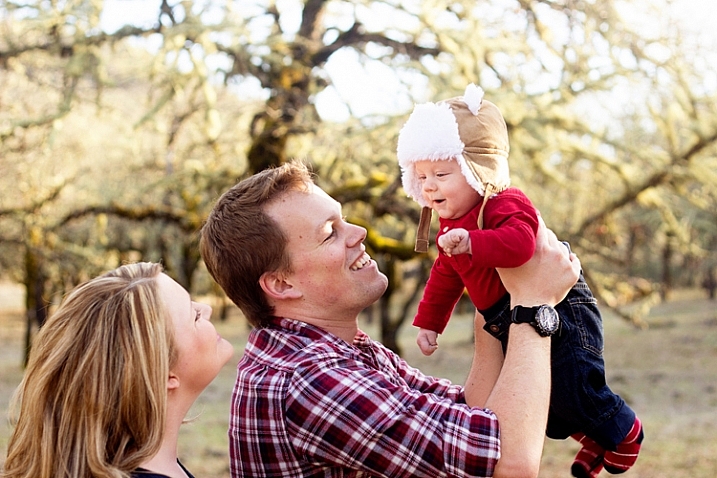
When it comes to photographing babies under two years old (and newborns), most people immediately think of studios with elaborate backdrops and lots of available headbands, hats, and props. There’s nothing wrong with that type of photography for children, but if you don’t have access to a studio space of your own, you have to get a little creative.

outdoor-newborns

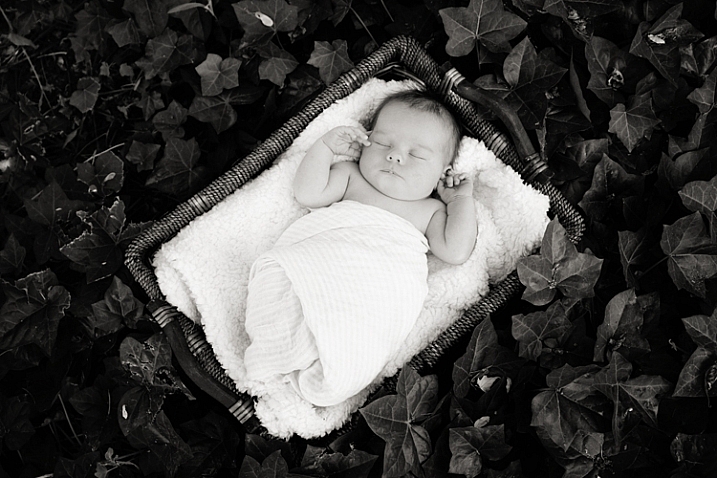
More and more, I’m discovering that I love to photograph both newborns and young babies outdoors. Yes, I often take even 5-10 day old little babies outside for at least part of their session. If you’d like to give it a try as well, here are five simple tips to help get you started while also keeping the little guys and gals safe.

1. Settle them inside

photographing-newborns-outs

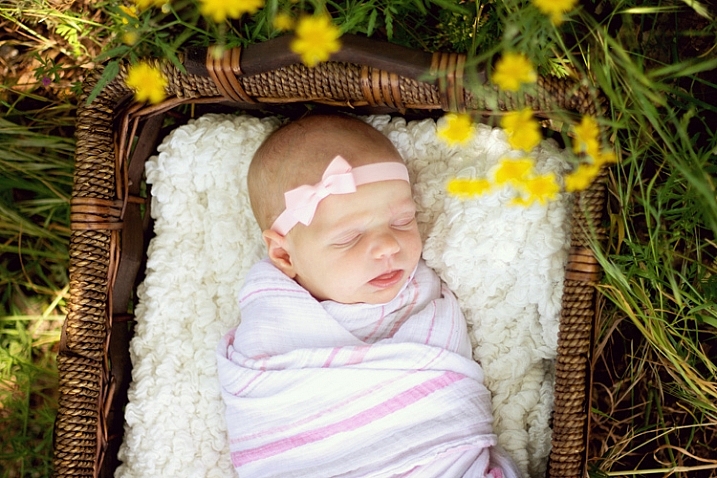
When it comes to newborns, you’ll find that they settle best when they’re very warm. This means that if you want to photograph a baby outdoors, you will typically be more successful if you begin indoors. Inside, swaddle the baby up tightly. Keep in mind that babies like to be warm, so you may want to leave them in pyjamas under the swaddle. Then rock them while playing white noise or making sushing sounds until they are nice and sleepy. Next, lay the baby in a basket or bowl that has been lined with a fluffy blanket and let them settle. Once the baby has settled in, carry the whole thing outdoors.

newborn-photos-outside

Sometimes, photographing babies outdoors can be a bit of a race against time, as any big gust of wind or loud noise can startle them awake. For best success, scout out a location that’s close to the house before you begin. Also, even in the most ideal situations, there are times when a baby just won’t stay settled outdoors. If you experience that, don’t sweat it, just move on.

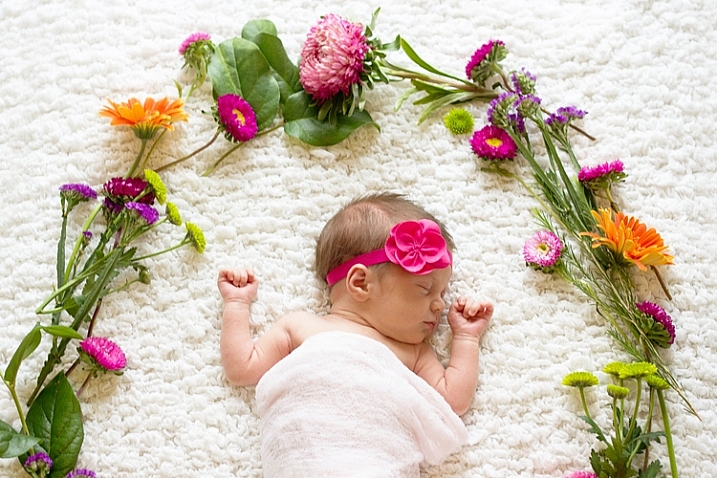
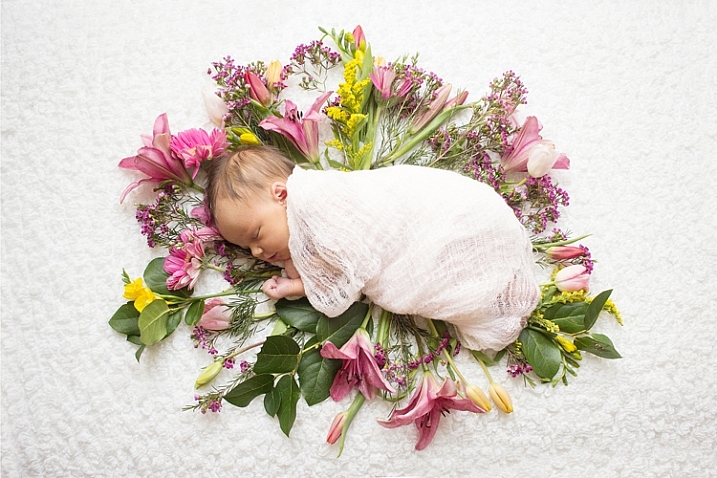
Recently, I tried to take a baby outdoors on several occasions, and each time she woke up crying before I could get even a single shot. So with permission, I cut a few flowers and brought them inside, and photographed the baby inside with the flowers instead (see photo above). Just be flexible. If you can’t bring the newborn outside, consider ways to bring the outdoors in.

2. Have someone hold them

newborn-session-outdoors

If you primarily shoot on location, you’ll find that not all families have a great space for family portraits indoors. Sometimes the physical shape or size of the room isn’t particularly conducive to a group portrait, or the decor doesn’t quite match the desired aesthetic. Sometimes families just have beautiful outdoor spaces that I love to showcase.

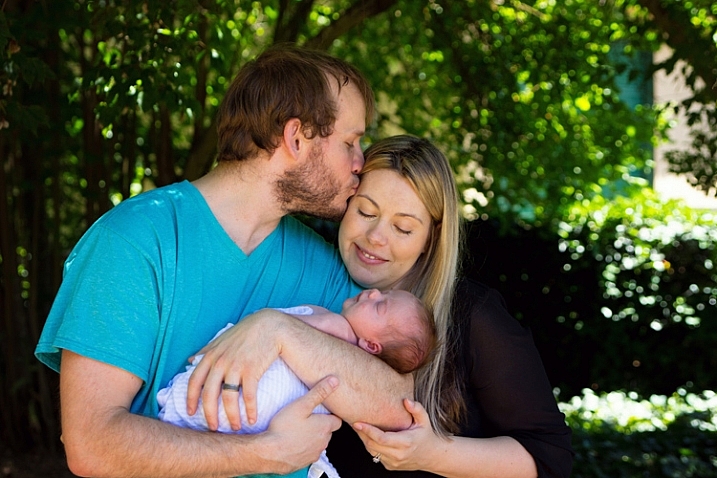
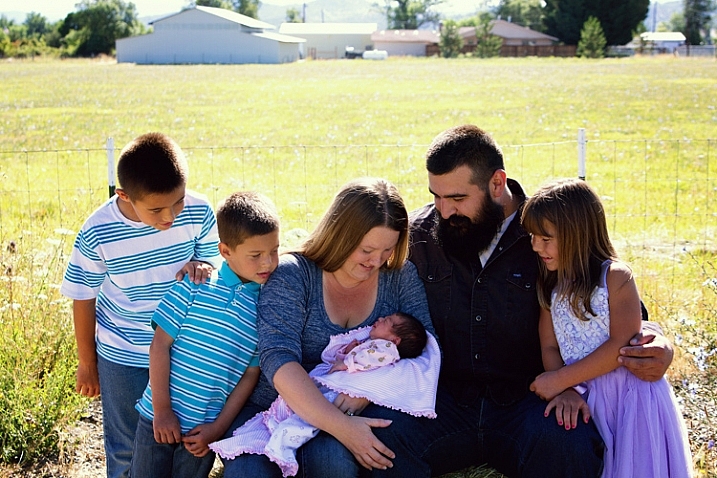
Regardless of the scenario, I often find myself asking mom or dad to hold the baby during a few family portraits outdoors. Particularly if the family has expressed an interest in “lifestyle” or “candid” images, as nature can tend to feel less stuffy and conservative than an indoor studio setup.

outdoor-newborn-session

Even if you experience a baby that won’t settle outdoors in a basket or bowl, keep in mind that being held in mom or dad’s arms may be an entirely different story. Sometimes babies just want to be held. Don’t be afraid to experiment with both scenarios until you discover what works best for each individual baby and family.

3. Shade them appropriately

outdoor-newborn

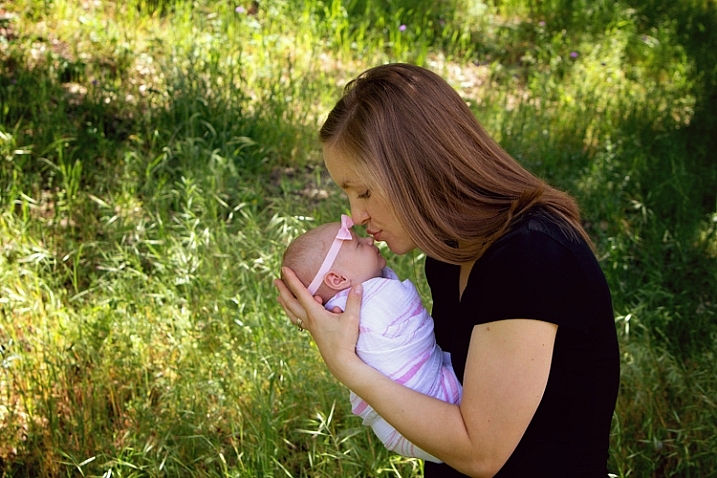
Whether you’re placing a baby in some vessel or having a parent hold them outdoors, it is really important to make sure that they’re shaded appropriately. Both newborns and older babies have very sensitive skin, and the last thing you want is for them to get a sunburn for the sake of some photos (it’s also better light for portraits). If you’re not able to find shade naturally available, some alternative options are a large umbrella (patio or beach umbrellas work well), or even a reflector held directly overhead.

When dealing with dappled light through trees, I sometimes position mom or dad strategically just out of frame so that they block any light that may fall on baby’s face or body.

4. Try to contain walkers and crawlers

photograph-babies-outdoors

When it comes to photographing older babies outdoors, there’s a sweet spot between sitting babies and crawling babies when outdoor photography is easiest. That said, you won’t always be working with the ideal developmental stage because all babies hit those stages at different ages. So, it’s best to be prepared with a few tricks up your sleeve to make photographing walkers and crawlers a little bit easier.

photograph-babies-outside-3

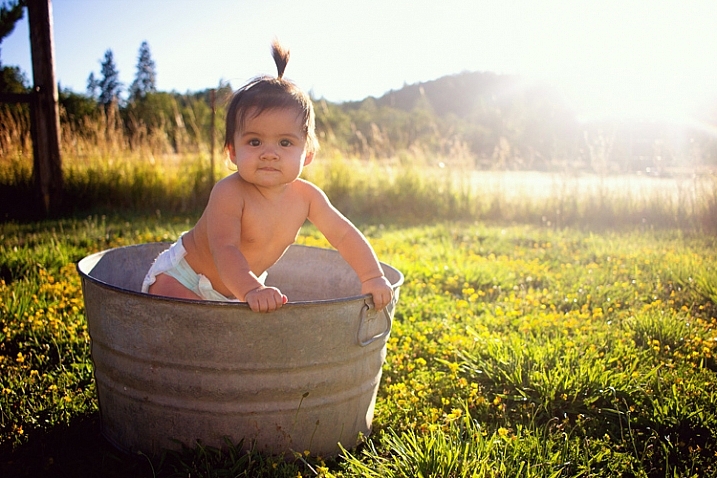
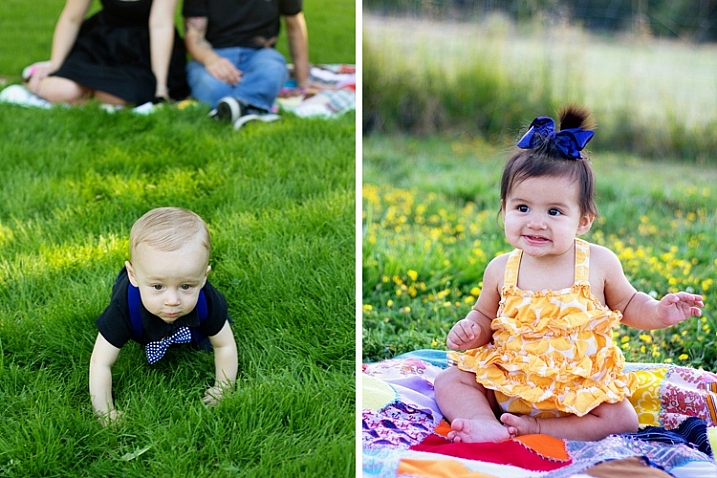
I usually start by laying a quilt or blanket down on the ground. Some babies will not crawl off the blanket because they hate how the grass feels on their bare hands and feet. This is typically not a solution that lasts for the duration of the session without causing frustration, but can sometimes buy you a few stationary minutes. Other than the blanket trick, I have used galvanized wash tubs, old crates, toddler sized chairs, and wagons, to help contain older babies outdoors.

When using any of these props, please be safe. Use a spotter if necessary to prevent tumbles, and don’t be afraid to use composite images (combine two shots) if needed so that someone can have a hand on the baby at all times.

5. If you can’t contain them, entertain them

photograph-babies-outside

If sitters, walkers, and crawlers aren’t happy being contained, your next best bet is to just roll with it. Don’t push things, or you’ll likely to end up with a baby in tears, and nobody wants that at a photo session.

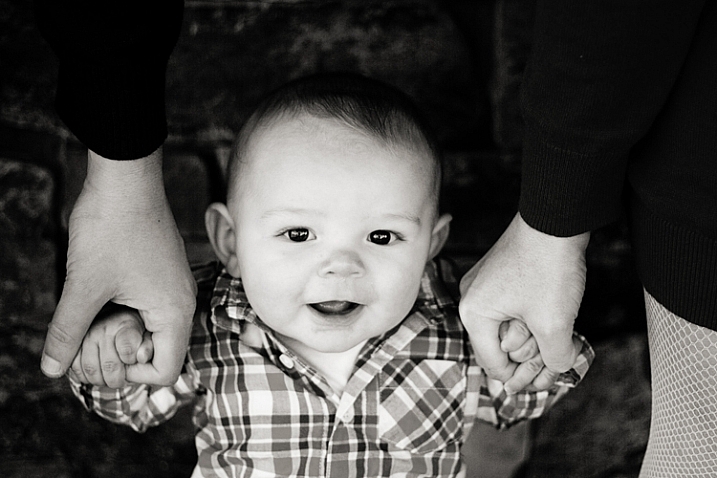
At the first signs of frustration, transition to games or activities that will entertain the baby, then keep taking pictures. Many babies and early walkers love to hold hands and stand or walk, so let them. Have mom or dad pick up the baby overhead and play airplane. Play a game of chase. You’ll be surprised at the opportunities for candid images of the family having fun together, as well as the number of opportunities for images that have a portrait feel to them as well.

photograph-babies-outdoors-

Do you have any other tips for photographing newborns or young babies outdoors? If so, please chime in the comments below.

googletag.cmd.push(function() {
tablet_slots.push( googletag.defineSlot( “/1005424/_dPSv4_tab-all-article-bottom_(300×250)”, [300, 250], “pb-ad-78623” ).addService( googletag.pubads() ) ); } );

googletag.cmd.push(function() {
mobile_slots.push( googletag.defineSlot( “/1005424/_dPSv4_mob-all-article-bottom_(300×250)”, [300, 250], “pb-ad-78158” ).addService( googletag.pubads() ) ); } );

The post 5 Easy Tips for Photographing Babies Outdoors by Meredith Clark appeared first on Digital Photography School.


Digital Photography School

 
Comments Off on 5 Easy Tips for Photographing Babies Outdoors

Posted in Photography


Abandoned America: Photographing a forgotten history

02 Oct

$ (document).ready(function() { SampleGalleryV2({“containerId”:”embeddedSampleGallery_0949592309″,”galleryId”:”0949592309″,”isEmbeddedWidget”:true,”standalone”:false,”selectedImageIndex”:0,”startInCommentsView”:false,”isMobile”:false}) });

Photographing abandoned spaces has gained a reputation to some as a voyeuristic act, with little respect paid to the subject or its history. But for Matthew Christopher, it’s much more than ‘ruin porn.’ He runs Abandoned America, and his interest in photographing abandoned structures started a decade ago with an asylum in Philadelphia. Working at mental health facilities, he calls exploring Philadelphia State Hospital a life-changing experience. He picked up photography and started keeping a record of the places he visited at Abandoned America.

He tells Resource Travel ‘If there was one thing I’d hope to achieve, I suppose it would be encouraging people to see abandoned spaces not as eyesores but as the treasures they sometimes are.’ He’s also aware of the often sad stories behind the buildings he enters, and encourages those looking to follow in his footsteps to do two things: ‘be careful and be respectful… just because these places are abandoned, doesn’t mean that nobody cares about them or that it’s OK to loot or vandalize them. Leave them as you found them.’ 

You can read the full interview with Christopher over at Resource Travel and see more of his images.

Articles: Digital Photography Review (dpreview.com)

 
Comments Off on Abandoned America: Photographing a forgotten history

Posted in Uncategorized


Tips for Photographing Wedding Decor Details

26 Aug

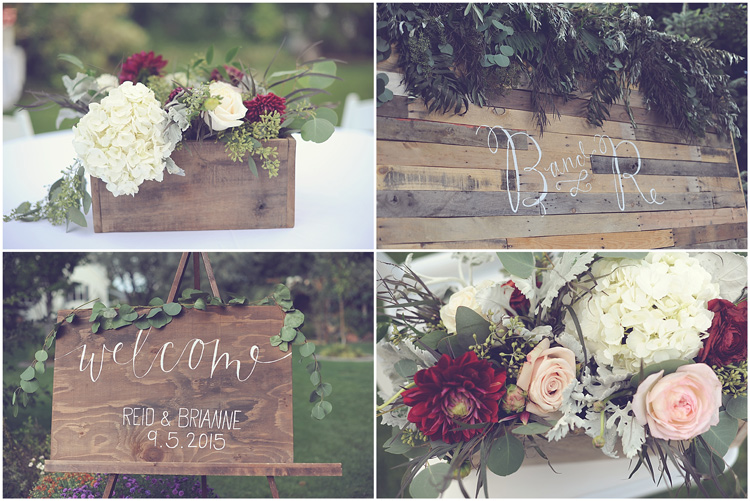
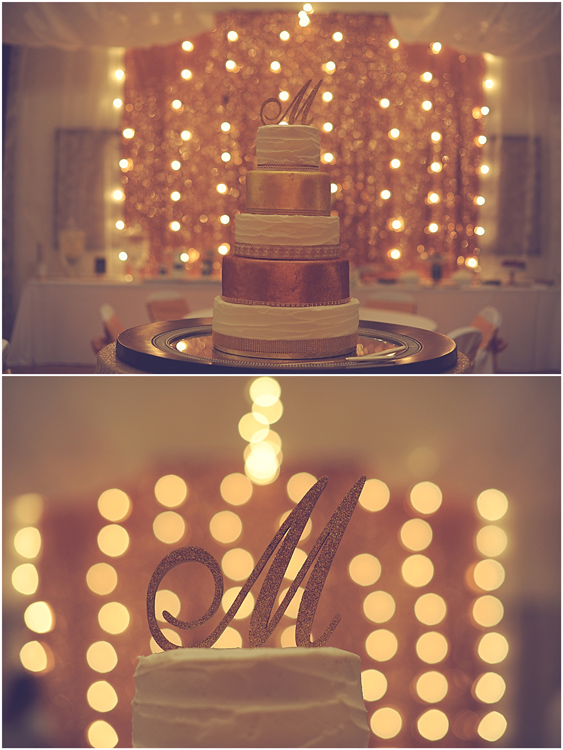
Wouldn’t we all love to be the photographer for lavish, perfectly detailed weddings? It’s discouraging sometimes to follow the work of famous wedding photographers and feel like we’ll never measure up. The truth is that for most of us, we’re photographing weddings of average everyday people, who can’t afford those over-the-top perfect weddings.

700

That doesn’t mean that the wedding we’re photographing is any less special, or any less important. The bride and groom have put so much time, effort, and thought into every detail of their wedding. Even if their budget is a fraction of some of those perfect weddings, they’ve most likely spent what amounts to a small fortune for them.

When I am hired to photograph a wedding, I want to treat each wedding as if it were the glamorous wedding of royalty. Whether you are the hired wedding photographer, or just a friend of the bride with a camera, I have a few hints to help you photograph the decor details of any wedding, and make it look like everything the bride and groom hoped it would be.

698

Get There Early

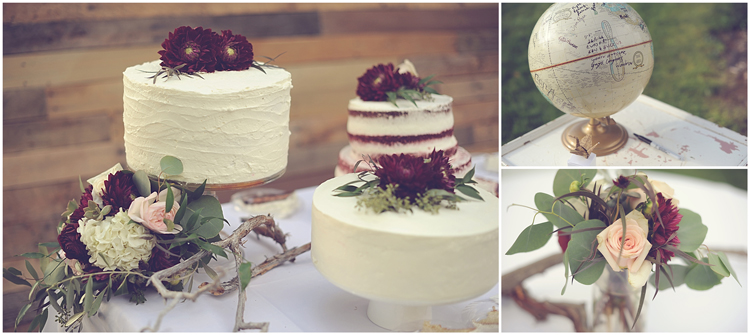
Arrive at the wedding or reception about half hour before it’s supposed to start. You will most likely have a small window of time where the decorations will be finished, but the guests have not arrived yet. You can photograph details with the guests there, but it’s harder to get clean photos without people in them, and sometimes the decorations have been moved or ruined later in the day. There are some things that you’ll need to photograph later, like if you want to show guest signatures on the guest book (or globe!), but try to get most of the details shots before the guests arrive.

696

Arrange the Details

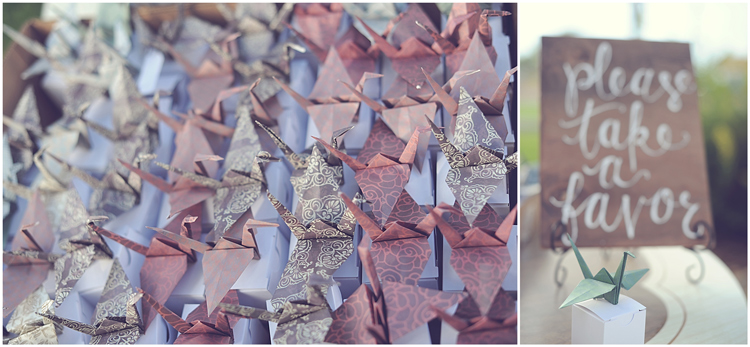
Sometimes you can move things around a little bit to get more of the story of the wedding theme. In the photo above I wanted to capture the mass amounts of origami cranes that the bride and groom had folded themselves, but I also wanted to pull one out to photograph with the sign telling the guests to “please take a favor”. Often I will open a favor box to photograph the contents inside, artfully arranged.

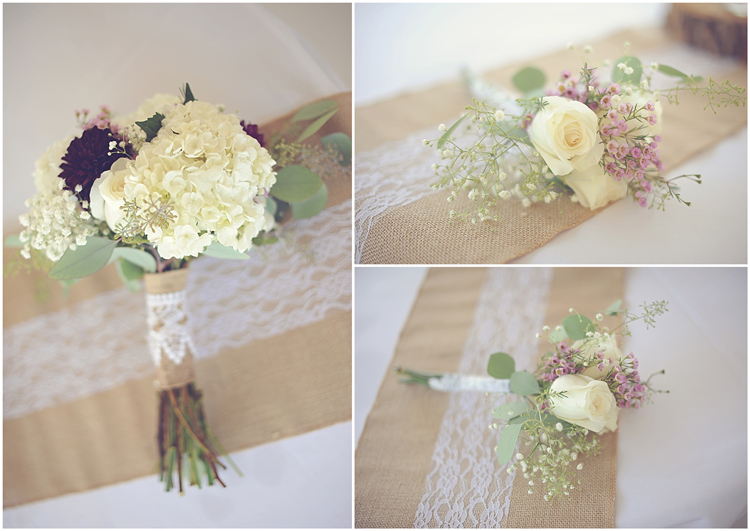
Sometimes you can photograph a centerpiece arrangement better if it’s moved slightly closer. You can borrow the bride’s bouquet if she has set it down for a bit (ask first), or borrow one of the bridesmaid’s bouquets to photograph. As long as you don’t do anything that can’t quickly be put back into place, you’ll be fine. Make sure to return everything how you found it when you’re done capturing that particular detail.

697

Shoot Wide Open

I like to photograph most wedding details with my lens almost wide open (with my aperture set between f/1.4 and f/2, usually). This can give the photograph more of an artistic feel, and help the focus be on exactly what you are photographing. If the wedding doesn’t have a lot of fancy details, or attention to perfection, you may want to blur out a lot of background.

I use a 50mm 1.4 lens, or an 85mm 1.4 lens, but most prime lenses will do. Be especially careful that your focus is exactly where you want it to be, and hold very steady. Your focus has to be tack sharp, or the whole thing will just look like a blurry mess. Shooting wide open is, of course, a matter of style and preference, and some may like an entirely different look.

Find Different Angles

I will often stand on a chair to get the angle I want when I’m photographing details. (This is where it’s definitely better to get there before the guests!) You have to get creative with your angles, so your photos don’t look like every other guest’s pics. (This is especially important if you are the hired photographer.) Pay attention to what you can see in the background, where the light is coming from, and which parts are the most important. Even a slightly different angle can transform a photo from “meh” to “wow”, so try lots of different angles to see which one looks the best.

693

Work With Difficult Lighting

Many weddings and receptions are held indoors, and sometimes they’ve created a specific mood with low lights. This can be a challenge as a photographer, but it’s completely doable. I prefer not to use flash, because I very much prefer the look of no flash in this instance, so I’ll be sharing how I work in dim lighting without flash.

Remember how we are shooting wide open? Not only does this give us an artistic look, but it really helps when there isn’t much light. Sometimes I’ll photograph an entire reception with my aperture at f/1.4 to let in as much light as possible. You will also need to crank up your ISO; keep going higher until you can shoot with a shutter speed that can safely be handheld (for me, that’s about 1/80th, but you may have a steadier hand and be able to go even slower than that). You may have quite a bit of noise in your photos when your ISO is that high, but I like that look, especially when there’s a moody low-light ambience.

In a pinch, if the lighting is extremely low, try shooting in RAW, underexposing to allow your shutter speed to be as fast as you need it to be, and then bringing the exposure up in post-processing.

694

Photograph Everything

It’s guaranteed that there was a lot of thought, time, and money put into creating the bride and groom’s perfect wedding and reception. I want to capture every detail for them, because although all of the food and flowers will be gone a few days after the wedding, my photos will be there forever.

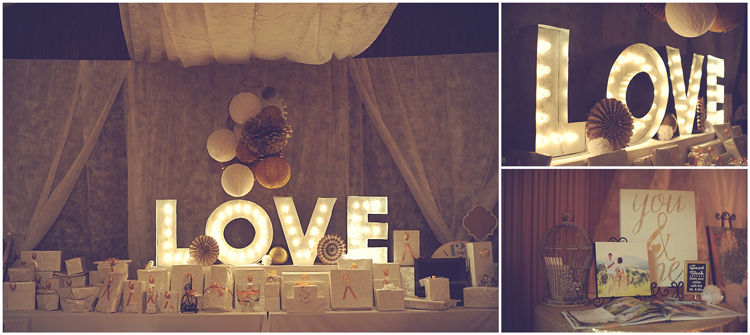
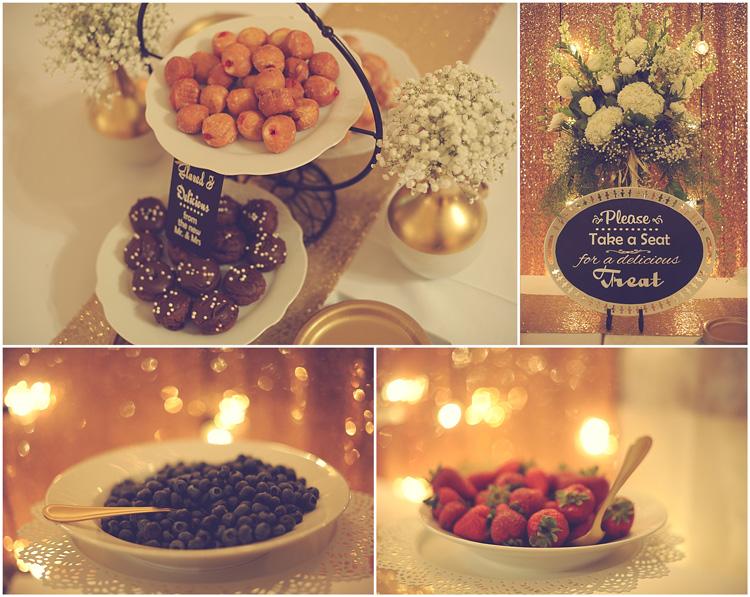
So I recommend that you photograph the food, the drinks, the centerpieces, the flowers, the favors, the guest book, and every single decor grouping around the room. It might seem silly to photograph a bowl of blueberries, but it will be so much fun for them to look back through the photos later, and remember all the little details of their wedding. If they want to make a book out of the photos, pretty detail photos can make the book have the same feel as the whole wedding did, and they really add to a collage. When in doubt, just take the photo. If their centerpieces are all the same, I’ll just photograph one of them, but if they are all different, I photograph most, or all of them.

695

Get the Whole Picture AND the Close-ups

As you can see with the above photo, you can photograph the exact same thing, but get a whole different feel by stepping back, then getting in really close, focusing on one little detail. Get the surrounding setting, and then focus in on the parts that make it special.

If there’s a decor grouping in a corner, I’ll photograph the whole thing, and then pick parts of it to get in close. I’ll do the same thing with the centerpieces, floral arrangements, cake, food table, etc. This is a great way to really tell the story, and make your photos a lot more interesting.

Edit the Wedding Consistently

Make sure that all the photos from the same wedding or reception are edited consistently. My weddings each look different from each other, because every wedding is a different lighting and coloring situation, but each wedding is consistent with itself.

Batch editing can help with keeping things consistent, or using the same actions or presets on every photo can help too. Do not edit one photo with a “vintage” action, one photo with bright colors, and another matte. This will make them look unprofessional, and make it hard to put together a book or collage of their big day.

699

As you photograph any wedding or reception, remember that every little detail is important to the bride and the groom. They thought everything through from top to bottom, start to finish. Even if it’s not a picture perfect wedding, it still represents what they love, and everything is important to them. Help them remember their special day with photos that will last long after the last crumb of cake is eaten, and the final flower is withered.

googletag.cmd.push(function() {
tablet_slots.push( googletag.defineSlot( “/1005424/_dPSv4_tab-all-article-bottom_(300×250)”, [300, 250], “pb-ad-78623” ).addService( googletag.pubads() ) ); } );

googletag.cmd.push(function() {
mobile_slots.push( googletag.defineSlot( “/1005424/_dPSv4_mob-all-article-bottom_(300×250)”, [300, 250], “pb-ad-78158” ).addService( googletag.pubads() ) ); } );

The post Tips for Photographing Wedding Decor Details by Melinda Smith appeared first on Digital Photography School.


Digital Photography School

 
Comments Off on Tips for Photographing Wedding Decor Details

Posted in Photography


Photographing People: To do Styled Portraits or Not?

25 Aug

When I was a senior in high school, there was one local photographer that nearly everyone went to for their portraits. Part of her process included each person bringing in a bag of clothing to model for her. She would then help select the outfits that would ultimately be worn for the portraits. She also gave specific instructions for hair, makeup, and grooming. Quite often, the photographer hired a makeup artist to be present for the portraits – in effect she was doing styled portraits.

styled portraits two girls

The end result was portraiture that was extremely consistent in style. Even to this day, I can look through my high school yearbook, and pick out exactly whose portraits were taken by that particular photographer. Parents loved her because her output was high-quality, consistent, and you knew exactly what you were getting aesthetically when you booked a session. Essentially, the photographer was offering what has since become known as a “styled session”.

Similar to debating how much (or how little) to post-process images, whether or not to style sessions when photographing people is hotly debated. Let me make one thing very clear – the point of this article is not to take an ultimate stance as to whether or not you should style your own sessions. Rather, this article will discuss circumstances in which it may be beneficial to style sessions, as well as some of the possible disadvantages. Hopefully, this will also start some discussion about what works well for you.

styled portraits newborns

A styled newborn session. I provided the blanket, flowers, and newborn wrap.

Styled Portraits – Definition

In general, a styled session can be defined as being any time the photographer selects the clothing, hair, location/backdrop, and props for a particular session. In other words, the photographer has control and decision making power in all aspects of the session, and controls the end aesthetic look or style of the session.

Pros to Styled Portrait Sessions

  • As the photographer, you have complete control over all the sessions with your name on them.
  • It’s easy to create a signature style or look to your photography.
  • Clients (paid or unpaid) know exactly what to expect when they book a session with you.
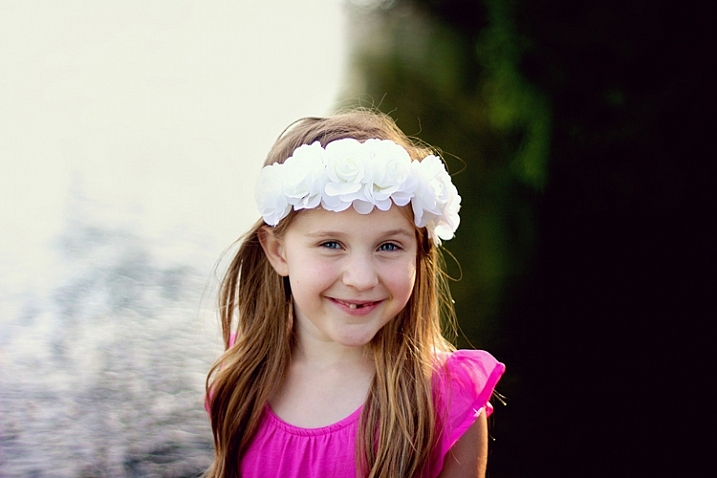
styled portraits - A styled child portrait session.

A styled child portrait session. I selected the dress, flower crown, location, and lightly curled her hair.

Circumstances That Lend Well to Styling

In my experience, some types of photography lend themselves to styling more than others. For example, newborn photography is one genre of photography in which the clients often have a desired aesthetic that may be difficult (though not impossible) to capture organically in the client’s home. Many times, newborn photographers have a studio setup with all their blankets, posing bags, and backdrops. If they shoot on location, they often bring blankets, hats, headbands, and various other props to style the sessions to fit their individual style of photography.

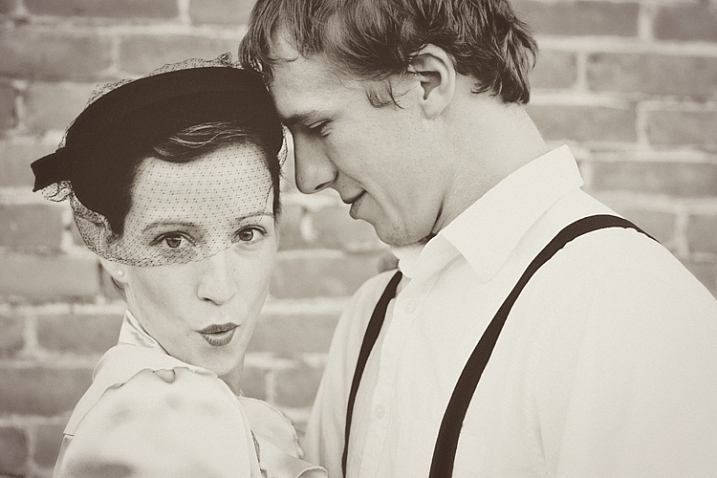
styled portraits couples

An image from a styled session with a 1940s theme. I provided the hat, and helped select the makeup and outfits to fit within the theme.

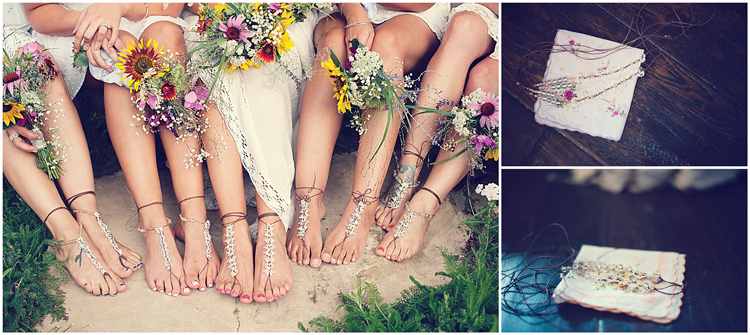
Another instance in which photographers may elect to offer a styled session is when they’re trying to break into a new genre of photography. For example, it’s not uncommon for a photographer looking to break into the wedding business, to hold a styled bridal session in order to create images to use for advertising. The photographer will arrange for various vendors to provide a wedding dress, flowers, a cake, furniture, and other prop items for the purpose of photographing, as if it were an actual wedding. This allows the photographer (and other vendors) a way for their work to be seen via social media and similar venues, before they’ve even booked their first wedding. It’s also a good opportunity to try something new and push yourself in a relatively low-risk scenario.

A third instance in which styling can be appropriate is when you’re trying to create (or recreate) a specific artistic vision. If you’ve been tasked with photographing a 1920s themed engagement session, or one based on a particular book, painting, or movie, then providing a styled session may be the best way to ensure an end product that is consistent with the desired aesthetic.

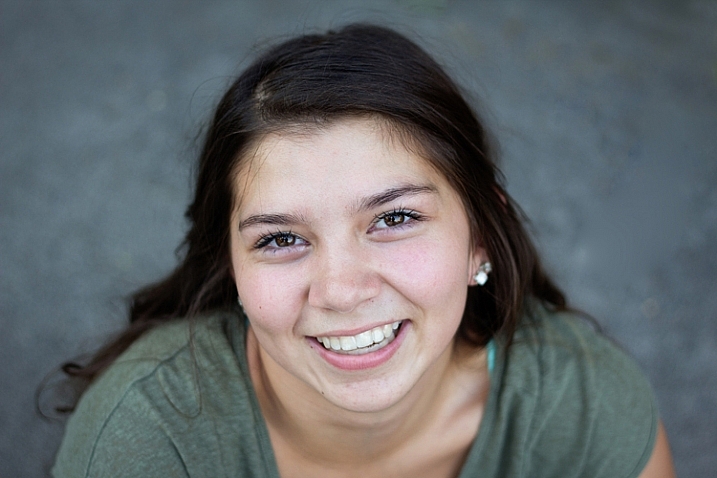
A senior portrait session that was not styled.

A senior portrait session that was not styled.

Cons to Styling Sessions

On the other hand, going back to the initial example of the senior portrait photographer, the drawback to selecting that one photographer was that the end portraits all looked basically the same, and in some cases, the portraits looked very little like what the person looked like in real life. This anecdote perfectly captures two of the potential drawbacks to offering styled sessions:

  • Sessions can tend to look very similar to one another.
  • Sessions do not always adequately capture the person’s or family’s personality.

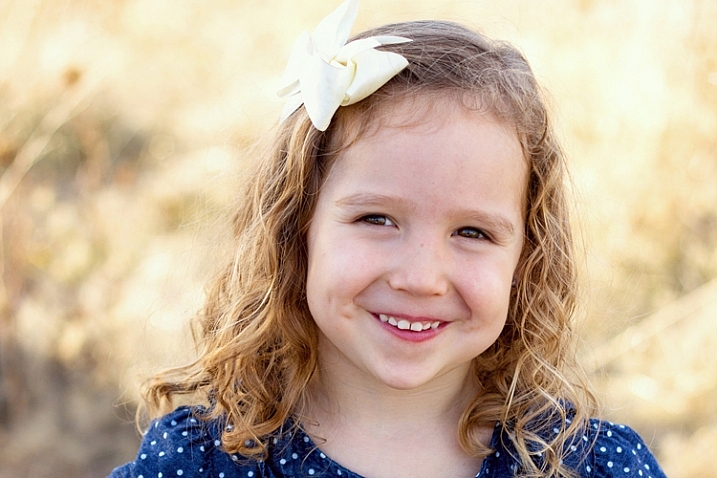
Child portrait session that was not styled.

Circumstances That May Not Lend Well to Styling

Although children can be photographed well in any scenario, I prefer not to photograph kids in styled sessions. In my own experience, when I try to style children’s sessions I can become so focused on the outfits, props, and the look of the session, that I can easily overlook capturing the genuine emotion and personality of the child, which is really where my passion lies.

I don’t have this same issue with newborns, engagements, senior portraits, or other types of people photography, but have noticed it particularly when photographing children. As with any genre of photography, there are no absolutes – I’ve seen styled children’s sessions that are unique to each child, and absolutely do capture their personalities, but in my personal practice, I’ve found that my preference is not to style children’s sessions.

style-not-style-8

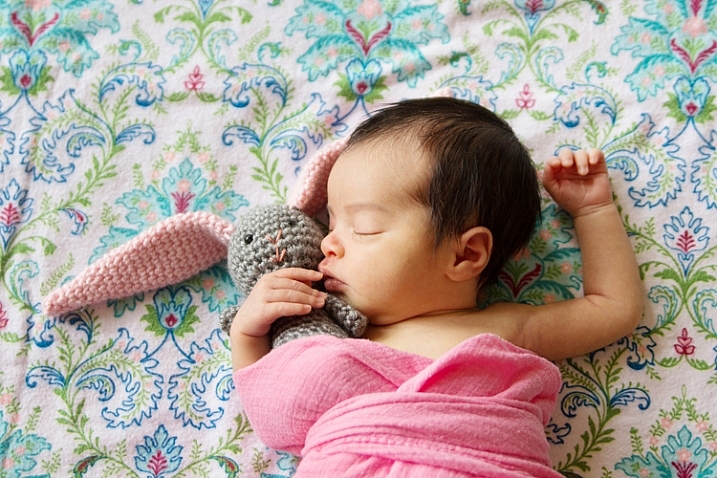
An newborn photo that was not styled – I used their own blanket, swaddle, and knit rabbit.

When I’m talking with clients prior to a session, if I hear them say the words “candid” or “lifestyle”, it’s a good indicator for me that they probably aren’t interested in a styled session. There’s definitely a range of what people are really asking for when they use those terms in regards of photography, but regardless of where they fall on that particular spectrum, they are probably not looking for images in which every aspect has been carefully curated. This is where knowing your client – whether they’re paid or unpaid – and understanding their needs, is absolutely key to a successful portrait.

Meeting in the Middle

Most often I find that clients really want something in between a styled session and photojournalism. These clients want me to capture the best version of themselves and their lives, which requires a bit of guidance, but not necessarily styling.

They may need some guidance regarding what to wear, but they don’t want or need me to select their outfit for them. They may need me to suggest moving a group of bottles and pacifiers visible on the coffee table during a newborn session, but they don’t need or want me to bring a box of books and succulents to completely stage their home. There’s a balance between the two ends of the spectrum that seems to meet the needs of most of my clients, while also allowing me to have some creative control as the photographer.

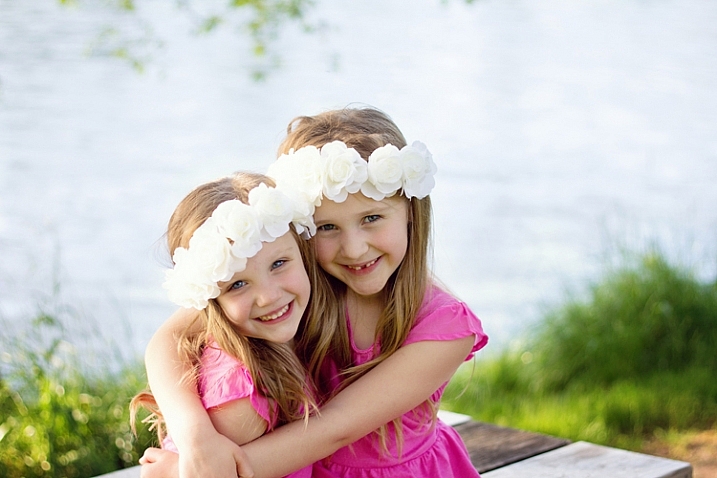
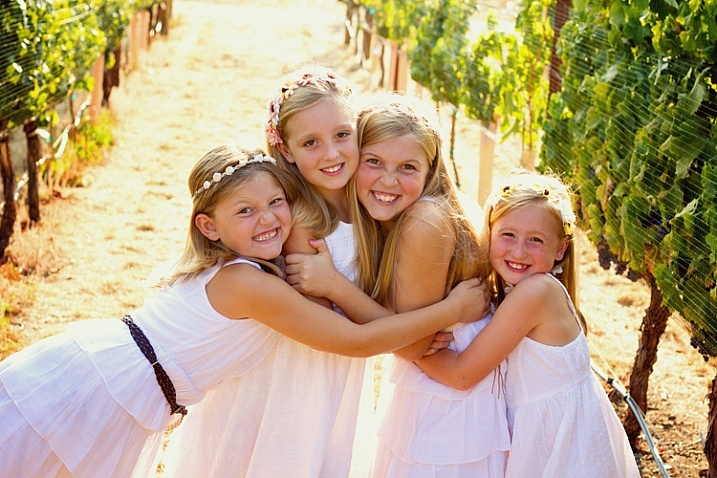
styled portraits

For this session, we talked about having each girl wear a white dress and a flower crown, but their moms ultimately selected both the dresses and the crowns. This is an example of “meet in the middle” styling.

Just like any area of photography, there’s a range of beliefs and practices in regards to styling sessions. Some photographers elect to exclusively style sessions, because it gives them the most control over the final image. Other photographers prefer to take more of a photojournalism approach and capture their clients exactly as they show up. Still others land somewhere in the middle.

What about you? Do you offer styled sessions, a photojournalism approach, or are you somewhere in between? What works well for you? Please share your thoughts in the comments below.

googletag.cmd.push(function() {
tablet_slots.push( googletag.defineSlot( “/1005424/_dPSv4_tab-all-article-bottom_(300×250)”, [300, 250], “pb-ad-78623” ).addService( googletag.pubads() ) ); } );

googletag.cmd.push(function() {
mobile_slots.push( googletag.defineSlot( “/1005424/_dPSv4_mob-all-article-bottom_(300×250)”, [300, 250], “pb-ad-78158” ).addService( googletag.pubads() ) ); } );

The post Photographing People: To do Styled Portraits or Not? by Meredith Clark appeared first on Digital Photography School.


Digital Photography School

 
Comments Off on Photographing People: To do Styled Portraits or Not?

Posted in Photography