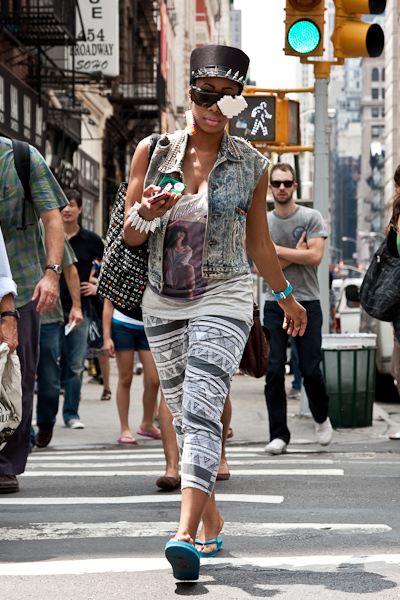
 New York is a diverse city with gorgeous old architecture and sleek new skyscrapers, iconic landmarks of all types, hidden surprises around every corner, and a diversity of residents and visitors that is unrivaled. The energy, speed, and creativity that occurs on the streets every single day makes it a playground for all types of photographers.
While Manhattan is probably the most photographed place in the world, we’re not going to talk as much about photographing places like the Empire State Building, the Statue of Liberty, or the Flatiron Building. No trip to New York is complete without visiting these landmarks, but there is so much more than that. This article is about delving a little deeper, seeing its most beautiful corners, and capturing the true essence of the city.
And before we go any further, remember that there are so many camera equipment rental shops, such as Foto Care, Calumet, Adorama, or CSI. So while you’re here, rent that lens or camera that you’ve always wanted for a week, rent a tripod, or even rent a Leica!
Best Buildings, Unknown Landmarks, and Best Views.
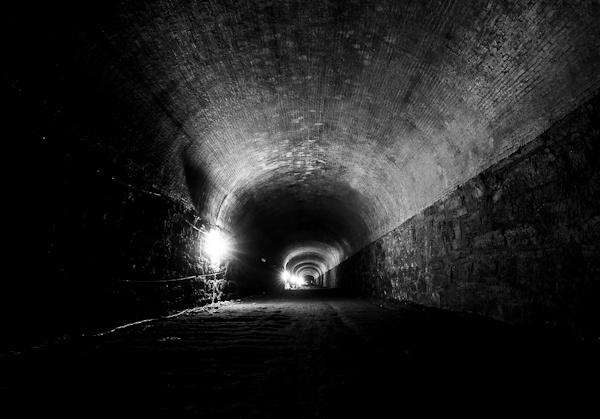
The oldest subway tunnel in the world.
Running under Atlantic Avenue in Brooklyn is the oldest subway tunnel in the world, dating back to 1844. The tunnel was sealed up in 1861 and forgotten about it until a 19-year-old engineering student named Bob Diamond found it in 1980 after a year of searching. Diamond gave tours of the tunnel for 30 years through a manhole cover in the street, but they were unfortunately stopped recently by the Department of Transportation. However, there is a legal fight to get them re-opened, so hopefully they will resume soon. The tunnel has 17-foot ceilings and is a half-mile long and an old locomotive is even reported to be hidden behind the far, closed-off wall. Check here for more information about the tunnel and tours.
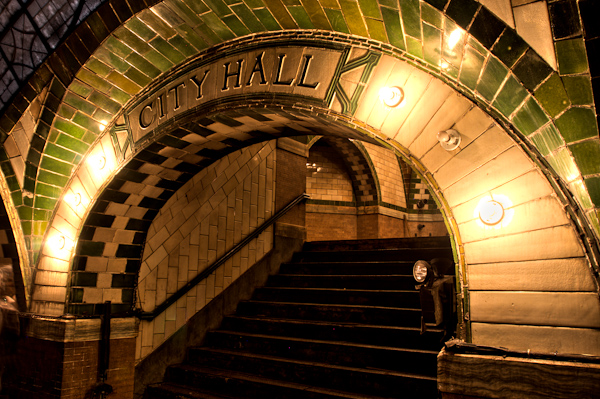
The Unused City Hall Subway Station
Another underground tour, run by the New York Transit Museum, visits the old and gorgeous, unused City Hall subway station, once the crown jewel of the MTA. Tours are infrequent and you must be a member of the Museum, however, there is an easy trick to see it on the 6-train. At the end of the line, the 6-train still passes this station to change directions and you can see it through the windows of the subway cars. Stay on the 6-train at its last stop (Brooklyn Bridge-City Hall) and look out the side of the train where the doors close. Get in one of the middle cars and pay attention because it passes quickly. You may want to do it twice since many people miss it the first time around. And don’t worry about staying on the train past its last stop as it was recently made legal by the city to do this.
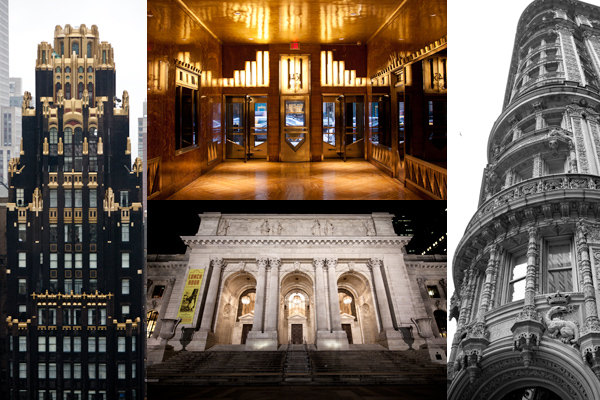
American Standard Building, Chrysler Building Lobby, NY Public Library, Alwyn Court
Here are a few of my favorite buildings that you might not know about. On 42nd Street, next to Bryant Park you can see both the New York Public Library and the American Standard (Radiator) Building, which is now a hotel but was originally built for the American Radiator and Standard Sanitary Company in 1924. Nearby, you can do some street photography in Grand Central and a couple blocks away is the entrance to the Chrysler Building, which has the most magnificent art deco lobby in the city. It is covered in murals and is a must see. And the most ornate building in the city, a block south of Central Park on 7th avenue, is the Alwyn Court.

One of the views from the James Hotel rooftop bar.
You also can’t travel to New York without seeing a few cityscapes and there are so many spots. Of course there’s Top of the Rock and the Empire State Building but there are also a lot of rooftop bars with incredible views. Two of my favorites are at The James Hotel and Ink48. There’s nothing better than capturing a cityscape and having a drink at the same time. In addition, if you visit the Metropolitan Museum of Art, then make sure to visit the rooftop during the warmer months, which has one of the best views of the Central Park.
The Brooklyn Bridge and Brooklyn Bridge Park have incredible views of lower Manhattan, especially at night. And the Water Taxis will give you an great view as well if it’s warm enough to stand outside. Walk the Brooklyn Bridge, explore the park, and then take the water taxi back.
And finally, a place that I love to walk, but is a little out of the way, is the Manhattan Bridge, which has incredible views of the Brooklyn Bridge. Walk it and then walk back as there’s not much on the other side.
Best Areas for Street Photography
You can’t visit New York without trying some street photography. The people are the most important, creative, and interesting aspect of the city. Capture the life and fashion on the streets and you will photograph the true essence of the city. Here are a few of my favorite spots.

Lady in Red, 5th Avenue.
The corner of 57th and 5th is one of the most iconic corners in Manhattan. At any given moment you will have a mix of very fashionable New Yorkers, both the wealthy and the everyday people and workers, and the interesting tourists from all over the world. This wide avenue also has incredible light throughout the day so use it to your advantage. Walk south on 5th Avenue, stopping at interesting corners and people watching until you get to the 42nd street, Bryant Park area. This stretch of Manhattan is one that is constantly captured by the famous New York Times fashion street photographer Bill Cunningham, so who knows, you might run into him as well.
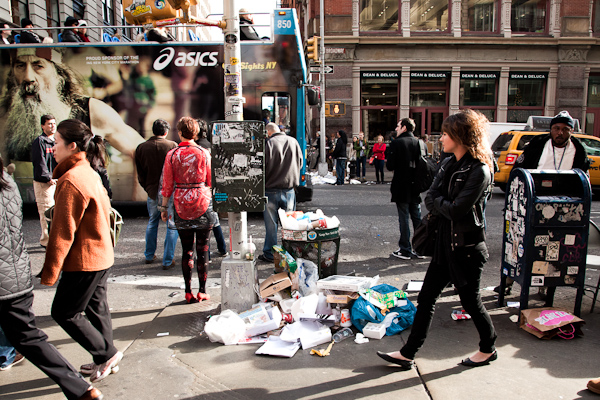
Corner of Prince and Broadway.
SoHo is probably my favorite area for capturing people. You can venture anywhere and find interesting people and hidden corners, but the best corner is Prince and Broadway, right by the N R subway stop. The stretch of Broadway between this corner and Canal Street is my favorite. Also, for planning sake, remember that the Prince street corner is only 4 short blocks from Lombardi’s pizza.
The corner of Broadway and Canal (home of the fake purses) brings us to Chinatown, which is always bustling with people no matter the day or time. Travel southeast and make sure to see Doyers Street, nicknamed the “Bloody Angle” and seen in many movies and tv shows. Also nearby is Columbus Park, which is always filled with tables of old Chinese men and women gambling and playing music. It is such a fun place to be and capture. And while you are there, don’t forget to stop for some soup dumplings and fried dumplings at Joe’s Shanghai.
Cutting through the middle of Chinatown is the Bowery, one of the most amazing streets in the city and filled with so much diversity. The Bowery, quickly becoming a fashionable place to be, was once one of the most down and out streets in Manhattan. It was also the birthplace of Punk Rock and you can see the old CBGBs (now a John Varvatos store). Visit the photographer Jay Maisel’s stunning bank building and graffiti mecca on Bowery and Spring and walk until you end up on my other favorite street, St. Marks (8th Street), a main thoroughfare of the East Village.
Finally, we can’t forget the mecca of street photography, which is the New York Subway system. Set your camera on 1/200th of a second and ISO 3200 and make sure to take the subway everywhere. Stations such as Times Square and Grand Central are filled with people at almost any time of day. For some inspiration, check out the work of Bruce Davidson – and keep in mind that the subways are a lot less scary looking than when he did his work.
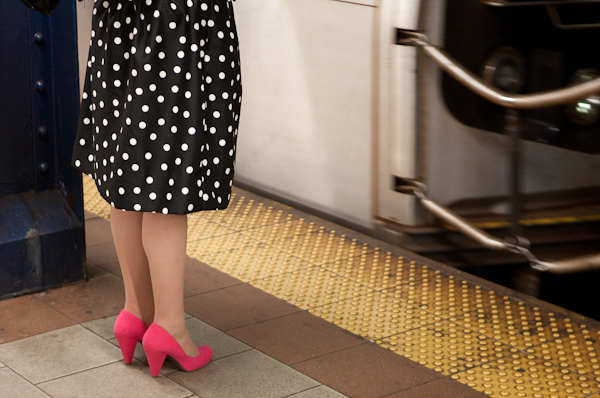
N-R Subway Train, Polka Dots and Pink Shoes
A Photo Tour of Central Park South
(To best follow this advice, download the “Central Park” app for your smartphone, which will provide you with a map with points of interest, along with your location.)
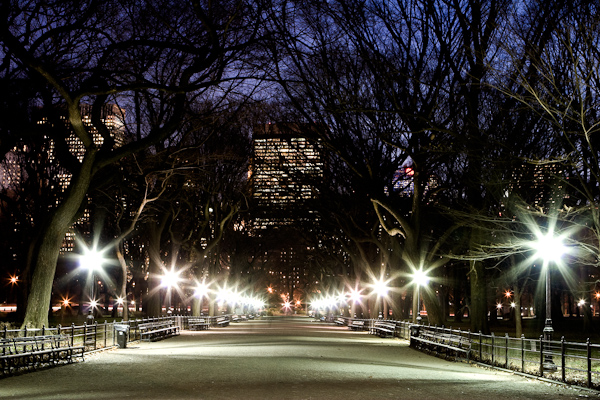
Poets Walk at Dusk.
Enter the Park by the Plaza Hotel at 59th Street and 5th and walk and explore the area of the Pond and Gapstow Bridge. The view of Gapstow Bridge with the Plaza behind it is an iconic view of the city. Walk north until you come upon Literary Walk (Poets’ Walk). There is nothing like the view here at dusk, so consider coming back when the sun is setting. Walk north until you arrive at Bethesda Terrace, which has a beautiful view of the Lake. To your right will be the boat rental area, so rent a rowboat, which is my favorite thing to do in the city. Travel under Bow Bridge, bring some sandwiches for a picnic on the boat, and spend an hour exploring the lake and it’s many hidden areas. You will most likely see a few couples getting engaged.
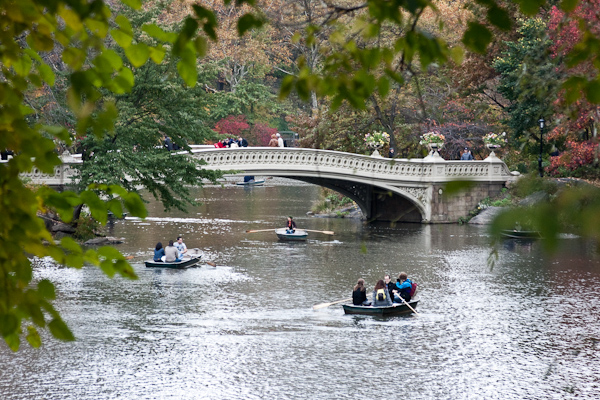
Rowboats and Bow Bridge.
After you return the boat, walk west to Bow Bridge, cross it and head back east around the Lake to the “Central Park Point.” Then walk all the way to the eastern edge of the park and head south to Dene Shelter, which has a stunning view of Central Park south. If you have kids, nearby is also the zoo, home to the Penguins of Madagascar.
Favorite Photography Museums and Galleries
The Modern Museum of Art (MOMA) on 53rd street has an unrivaled photography section with hundreds and hundreds of diverse and classic works. It is my favorite place to view photography in the city and it is constantly being updated and changed.
Three of my other favorites are the ICP Museum on 43rd and 6th (http://www.icp.org/museum), the Leica Gallery on Broadway and Bond Street (http://us.leica-camera.com/culture/galleries/gallery_new_york/) and the Howard Greenberg Gallery (http://www.howardgreenberg.com/) on East 57th Street. While the HG gallery has much more than photography, it has an amazing photography collection.
If you’re a fan of the photography of Jacob Riis, visit the Tenement Museum on the Lower East Side and transport yourself back in time to see what living in an old tenement was like. After, visit the fantastic Tenement Museum Bookstore and then go for a walk and enjoy the gorgeous tenement exteriors and fire escapes in the neighborhood. Stop at the nearby Katz’ Delicatessen or Russ & Daughters for lunch.
And while this technically doesn’t count as a museum, it might as well be. The Strand Bookstore on Broadway and 12th street is the best bookstore I’ve ever been to and it has by far the best photography book section that I’ve ever seen. To say it has everything is an understatement. I know time is often of the essence when visiting the city, but if you are a fan of photography, the Strand is a must see and has the same weight as any photo exhibit.
Brooklyn
This article is focused mostly on Manhattan, yet Brooklyn is a borough that needs to be seen and explored. It deserves its own article and there are incredible locations for photography.
Quickly, a few things to see are the waterfront (with amazing views of Manhattan), the area of DUMBO, Get lost in Prospect Park and see the nearby Brooklyn Museum and Botanic Gardens, and visit Coney Island. And if you are a fan of Brownstones, then Brooklyn is the place to be. Go brownstone touring through the neighborhoods of Park Slope, Fort Greene, Brooklyn Heights, Prospect Heights, and Cobble Hill.
Photographing at Night
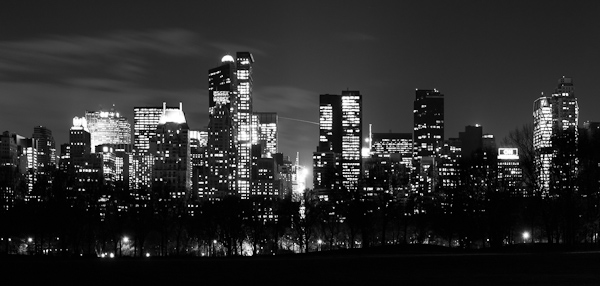
Central Park South.
A final thought. If ever there was a fact about photographing New York, it’s this – while the city may look beautiful during the day, there is nothing that comes close to capturing it at night. When I meet people or give tours for visitors I try to stress this, but I feel like many people don’t take advantage of it. I suggest that when you plan your trip, schedule one night of the trip to explore at night. Do something easier on the legs during the day, grab a quick dinner from a hole in the wall pizza place, and go for a very long walk. Central Park is generally very safe at night as long as you stick to the well travelled areas and stay south of Bow Bridge. Even if you don’t you’ll be fine, but better to be somewhat careful. You will be surprised with how crowded the park is at night during the warmer months. Other areas that are amazing at night are anywhere in Midtown, the Brooklyn Bridge, anywhere along 5th Avenue, SoHo, Chinatown, and the East Village.
Hope to see you soon!
Post originally from: Digital Photography Tips.
Check out our more Photography Tips at Photography Tips for Beginners, Portrait Photography Tips and Wedding Photography Tips.
A Photographic Tour of New York

Digital Photography School
 In my experience, personal printing is a declining art. Walk through any retail photo dept and you’ll see hordes of people sitting at digital print stations pumping out bundles of 6×4 inch prints from their precious memory sticks and CDs.


You must be logged in to post a comment.