RSS
 

Posts Tagged ‘Photographic’

24 Frames Per Second: Finding Photographic Inspiration From Cinema

25 Jul

I don’t believe that, as a photographer, it didn’t occur to me for quite some time to look to movies for inspiration and lessons I could use in my own art. But as I’ve grown as a consumer of movies and art, I’ve learned to look more closely at the choices filmmakers have selected in order to convey information to Continue Reading

The post 24 Frames Per Second: Finding Photographic Inspiration From Cinema appeared first on Photodoto.


Photodoto

 
Comments Off on 24 Frames Per Second: Finding Photographic Inspiration From Cinema

Posted in Photography


The Advantages of Renting Photographic Gear Before you Buy

22 Apr

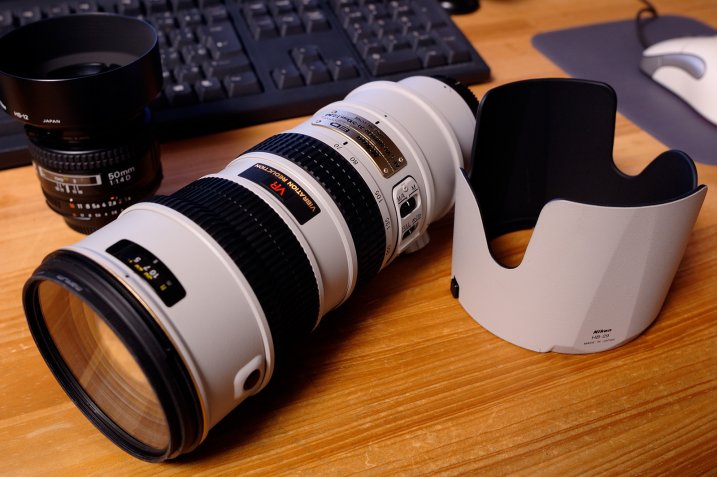
We have all heard the expression “The gear does not make the photo. The photographer makes the photo.” That being said, the gear does certainly help in perfecting the art of photography.

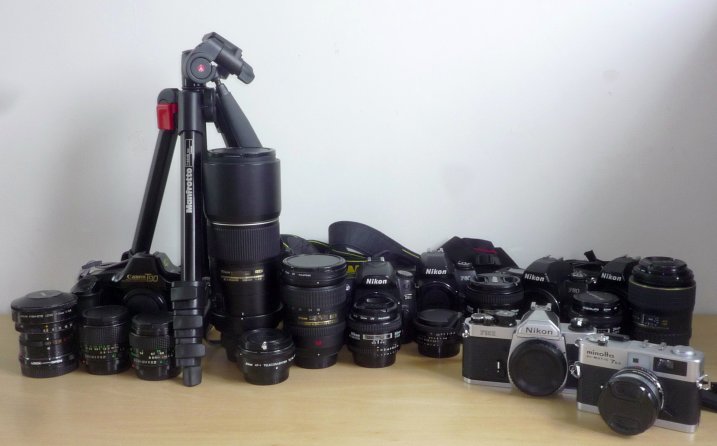
If you are a professional photographer or even a serious amateur, you know that photography is quite an expensive profession/hobby. Good equipment can be expensive and by the time you build your day-to-day gear bag, it can set you back several thousands of dollars. Just when you think you have the perfect setup,  you hear about the latest camera or a faster lens than what you have just being released for pre-order. Gear lust is very real among photographers!

Kenichi Nobusue

By kenichi nobusue

This is where renting gear or even borrowing becomes a viable option for many professional as well as serious amateurs.

Benefits of renting photo gear

There are several advantages to renting photographic equipment.

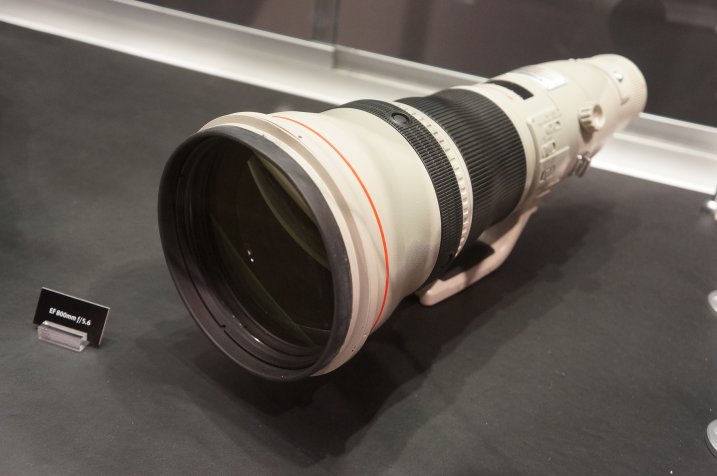
  • The cost of renting is typically much lower than cost of buying the gear. This becomes more relevant if it is not something you are going to use too often (like a mega telephoto lens, fish-eye, or tilt-shift lens).

    Jon Fingas

    By Jon Fingas

  • Ability to try out the equipment and see if it suits your style of photography. Once you know you like a piece of gear, you can make the investment and know you’re making the right choice.
  • Using a rental as a backup system for assignments especially events like weddings or concerts.
  • Traveling light and having gear shipped directly to your hotel is an option many photographers mention as a plus for renting. This also eliminates travel-related anxiety around lost luggage and excess baggage charges.
  • Using a rental when your main gear is out for repair. This let’s you keep working while you wait for repairs to be completed.
  • Eliminating buyer’s remorse. It is true that not every piece of gear works for everyone. Often times we buy gear because a certain photographer that we admire has the same equipment, only to be disappointed that our pictures are no where like theirs.

Renting – online versus local stores

Richard Fisher

By Richard Fisher

There are many different options for renting photographic gear. You can do so from local stores in your area or online vendors. In the US, big camera chain stores like CalumetPhotographic and AdoramaRentals sell as well as rent photo gear. CalumetPhoto, one of the local camera retailers in my area, also has local stores where you can go to pick up and drop off rental equipment. They tend to have a wide variety of equipment but definitely recommend reserving gear, especially if you want it for a specific event like weddings, to ensure you get what you want.

There are online stores like Borrowlens and Lensprotogo that also offer a wide variety of lens, cameras and other equipment for rent. You order online and have the gear shipped to your home or location of your choice. Once you are done, you ship it back to them. There is definitely more flexibility in renting gear online but there is the added cost of shipping and insurance, as well as a slight risk that the gear might not arrive in time (any unforeseen circumstances like extreme weather).

Benefits of borrowing photo gear

Giyu (Velvia)

By Giyu (Velvia)

Sometimes you get lucky and have other photographer friends who let you borrow their equipment for a photoshoot, or just to test out – definitely one of the more cost effective ways of trying out photographic gear. However, for those of us who don’t have such awesome friends, there is another method of renting temporary gear that is starting to become popular.

Online companies like CameraLends provide access to a lending community where you can rent cameras directly from local photographers and film makers. On the CameraLends website, they offer a peer-to-peer lending community for photographers and videographers. Owners post unused gear to rent out to other photographers and you can rent gear directly from local photographers, faster and cheaper than traditional means. But this service is somewhat dependent on the market you are in. Not every market will have every piece of equipment available for rent.

Screen Shot 2015-04-15 at 10.51.13 AM

Regardless of what method you choose to borrow or rent camera equipment, definitely try out gear before you make the investment to purchase it. The last thing you want to happen is buying equipment you think you want or need, only to find that it is really not benefiting your particular style of photography.

googletag.cmd.push(function() {
tablet_slots.push( googletag.defineSlot( “/1005424/_dPSv4_tab-all-article-bottom_(300×250)”, [300, 250], “pb-ad-78623” ).addService( googletag.pubads() ) ); } );

googletag.cmd.push(function() {
mobile_slots.push( googletag.defineSlot( “/1005424/_dPSv4_mob-all-article-bottom_(300×250)”, [300, 250], “pb-ad-78158” ).addService( googletag.pubads() ) ); } );

The post The Advantages of Renting Photographic Gear Before you Buy by Karthika Gupta appeared first on Digital Photography School.


Digital Photography School

 
Comments Off on The Advantages of Renting Photographic Gear Before you Buy

Posted in Photography


Portrait of a City: 31 Photographic Street Art Murals

06 Apr

[ By Steph in Art & Street Art & Graffiti. ]

wrinkles of the city main

Residents of cities like Tokyo, Havana and Los Angeles see their own faces blown up to monumental proportions and pasted onto all sorts of urban surfaces when photography, street art and architecture come together. These 31 images from artists working all over the world cover the humorous and the poignant, bringing photography to the most unexpected places.

2 Girls Building in Melbourne by Samantha Everton
photographic murals 2girls 1

photographic murals 2girls 2

photographic murals 2girls 3

A fine art image by Australian photographer Samantha Everton spans the entire facade of the ‘2 Girls Building’ in Melbourne by KUD Architects. The concrete of the building is printed with a wallpaper texture and where it cuts away, the photo (printed on glass) is revealed. The image becomes three dimensional in the form of the three-story lamp mounted to the outside of the structure, mimicking the one in the original photo.

Inside Out Project by JR in Tokyo

photographic murals JR Tokyo 2

photographic murals JR Tokyo 1

The most well-known street artist working with photographic imagery is JR, who creates collages of portraits of residents in each of the cities in which he works. Based in Paris, the artist pastes up gigantic images of faces on buildings, bridges, rooftops and trains all over the world and gets in his subjects’ faces with a 28mm lens to capture unguarded expressions. The work pictured here is part of the Inside Out Project, which welcomes people to submit their own black and white photographic portraits to be exhibited in their own communities.

Humorous Photographic Images by Mentalgassi

photo murals mentalgassi 4

photo murals mentalgassi 3

photo murals mentalgassi 2

photo murals mentalgassi 5

photo murals mentalgassi 1

mentalgassi 6

mentalgassi 7

Trash cans mounted to poles become backpacks, ‘metal heads’ appear on domed recycling bins and faces appear to be squashed in windows as artist trio Mentalgassi bring their photographic imagery to the streets. The anonymous young Berlin artists met at school and became interested in how new media techniques could be applied to three-dimensional objects.

Next Page – Click Below to Read More:
Portrait Of A City 31 Photographic Street Art Murals

Share on Facebook


[ By Steph in Art & Street Art & Graffiti. ]

[ WebUrbanist | Archives | Galleries | Privacy | TOS ]


WebUrbanist

 
Comments Off on Portrait of a City: 31 Photographic Street Art Murals

Posted in Creativity


How To Create Photographic Illusion With Motion Blur Photography

20 Feb

Motion blur photography gives an illusion of speed and motion. Apart from taking pictures of objects in motion like in the case of capturing sports related events, or movements of animals like a running deer, motion blur photography also helps add dramatization to stand still photos. It helps focus on aspects and highlights the importance of certain movements. It is Continue Reading

The post How To Create Photographic Illusion With Motion Blur Photography appeared first on Photodoto.


Photodoto

 
Comments Off on How To Create Photographic Illusion With Motion Blur Photography

Posted in Photography


Royal Photographic Society announces medals touring exhibition for International Members’ Biennial competition

01 Feb

The results of the Royal Photographic Society’s International Member’s competition have been announced after judges selected 100 images for a touring exhibition from almost 3300 entries. The competition, which is held every other year, attracted RPS members from 16 countries, and was won by UK photographer Steve Jones for his shot, Joie de Vivre, of a young and prancing Lustitano stallion on a French stud farm. See winners

Articles: Digital Photography Review (dpreview.com)

 
Comments Off on Royal Photographic Society announces medals touring exhibition for International Members’ Biennial competition

Posted in Uncategorized


Mastering The Photographic Workflow

28 Jan

Alana Tyler Slutsky shares with the readers of FashionPhotographyBlog.com, the processes she goes through in her workflow. After revealing her tips for working with agency models, Alana explains that there are two types of workflow that photographers should pay attention to. In this article she will be discussing the photographic workflow process.  The stage is yours Alana!   

Mastering The Photographic Workflow

Having establish a workflow system that works for you means that you’ll be more efficient. Once you have a set routine you’re less likely to forget something or mess something up. Rather, you’ll find yourself almost on autopilot and able to get through things much more quickly.


I used to be a mess when it came to organizing my files and keeping things clean and precise. I was a workflow nightmare! But over time I’ve recognized the importance of workflow now have everything impeccably organized. What is a workflow? A sequence of steps, or a routine, that creates a sense of flow to your typical workload.


There are two types of workflow we’re going to look at here, Photographic Workflow and Digital Workflow.  Technically all of this just falls into workflow, but I’ve broken it down into two different categories to make it less overwhelming.


Photographic Workflow


Basically this entails everything that happens with your camera before you get to a computer (or if you’re working with film, before you bring the film into the darkroom). My typical photographic workflow goes as follows:


– Check File Format, Size and Color Output (you only really have to do this once depending on how you shoot.)

– Set to Auto/Manual/Aperture Priority/Whatever (Manual for life!)

– Set ISO

– Set Aperture and Shutter Speed

– Check Focus

– Shoot!


Checking File Format and Size:


Typically with cameras you can chose what file format to take pictures in. On Canon and Nikon you have two options: JPEG and RAW (Canon: CR2, Nikon: NEF). What’s the difference?


JPEG files are compressed files.  The sensor on your camera captures a scene then packs all that it sees into one nice, neat little file.
RAW files are uncompressed.  They are significantly larger files that JPEG’s because they take everything that the sensor sees and packages it into one file which then has to be converted to open.  This can be done through software that comes with your camera or a RAW converter (Photoshop has one that can be installed.)


You can also choose the size in which your camera captures an image. While I prefer to shoot full res RAW files, that is purely because of the nature of what I shoot. Someone who is shooting an event may prefer to work in JPEG because their work requires less retouching, faster capture time and more images to be captured. Because of the sheer size of a RAW file, you can’t capture nearly as many images on one CF/SD card as you can if you’re shooting JPEG (Why?  Remember… JPEG’s are compressed!)


Setting Color Output:


With Canon and Nikon cameras there are two color output, Adobe RGB 1998 or sRGB. What’s the difference?


Adobe RGB 1998 is a “larger” color space.  Essentially a color space, or “gamut,” is a range of colors that can either be seen by a camera/computer or printed by a printer.  Being that Adobe RGB 1998 is a “larger” color space, means that it contains more colors than other color spaces, such as sRGB.  Adobe RGB is becoming a common gamut to print in.
sRGB is a smaller, more condensed color space.  It’s best when an image is being used for web or something that will be viewed on a screen, rather than in print.  A good way to think of it is screenRGB.


General rule of thumb is to always start with your images in the largest color space you have access to and then convert them into a smaller color space later on.


– Alana


Did you find Alana’s post useful? Please leave your comments below in the comment section. We would like to know what you thought about this post. If you enjoyed this article, do stay tuned as Alana has another post just around the corner on FashionPhotograhyBlog.comIf you want to know about shooting with models from agencies, check our post on Tips For Working With Agency Models.


IMAGE SOURCE: 

Feature image & images 1: courtesy of Alana Tyler Slutsky.


Fashion Photography Blog
 
Comments Off on Mastering The Photographic Workflow

Posted in Uncategorized


New service Mylio offers to synchronize your photographic life

29 Oct

Mylio, a subscription-based photo organization and storage program, is making a debut at this year’s PhotoPlus Expo in New York. Created by MyLO, a Bellevue, Washington-based company, Mylio offers cross-device access to a user’s collection of photos, without them having to change their storage structure. We’ve taken it for a test drive – find out our impressions and find out about the new service. Read more

Articles: Digital Photography Review (dpreview.com)

 
Comments Off on New service Mylio offers to synchronize your photographic life

Posted in Uncategorized


20 October, 2014 – About Photographic Competitions

25 Oct


Every now and then Alain Briot contributes an article that starts good discussions in the forum.  Today’s article About Print Competitions will be just that kind of article.  In his last article Alain did a very good essay about Critiquing Photographs.  Now he takes us into the area of judging prints entered into competitions.  Alain covers just about all aspects one could think of when it comes to judging prints in competitions.  For many photographers this is a part of learning as well as recognition.  You decide after reading the article. In my own experience over many years I have found it interesting to see how images are judged.  I also wonder many times how judges would react to some of the classics of photography. In many ways that images are judged, they would never had received an honorable mention in todays competitions.  This is a very enlightening essay and thank you Alain for this.

Our good friend Thomas Knoll the inventor of Photoshop recently shared his images as a slide show at The Adobe Max 2014 program.  Thomas is a very fine photographer and we thought you might want to see his excellent photography. Enjoy his 9 minute slide show HERE

We still have a few spots open on our first and second Antarctica Trips.  Take a look at the instructor line up and give some serious consideration in joining us for this amazing adventure.  If you have any questions contact Kevin Raber.  You can learn more about these two trips HERE. 


The Luminous Landscape – What’s New

 
Comments Off on 20 October, 2014 – About Photographic Competitions

Posted in News


Archive from the world’s oldest photographic society to go on show

19 Jul

London’s Science Museum is to host a major exhibition of prints and artifacts from the collection of the Royal Photographic Society, including prints and experimental cameras made by William Fox Talbot in the 1820s. Masters of Light: Treasures from the Royal Photographic Society Collection will display over 200 items from the archives of a collection that was started in 1853, and it will be held on the site of one of the UK’s first ever photographic exhibitions. Take a look at some of the historic work that will be on display. See gallery

Articles: Digital Photography Review (dpreview.com)

 
Comments Off on Archive from the world’s oldest photographic society to go on show

Posted in Uncategorized


The Importance of Having a Photographic Style

07 Jul

Every art form that we as humans enjoy all have a common thread: They all have differing styles that set each apart and make them unique. Photography is no different. Our art form has countless styles, forms and genres for us to explore. But why is it necessary for us to understand style? The simple answer is having a well–defined style allows Continue Reading

The post The Importance of Having a Photographic Style appeared first on Photodoto.


Photodoto

 
Comments Off on The Importance of Having a Photographic Style

Posted in Photography