RSS
 

Posts Tagged ‘Photographer’

Take this Picture of the Day Project to Practice and Help You Grow as a Photographer

26 Jun
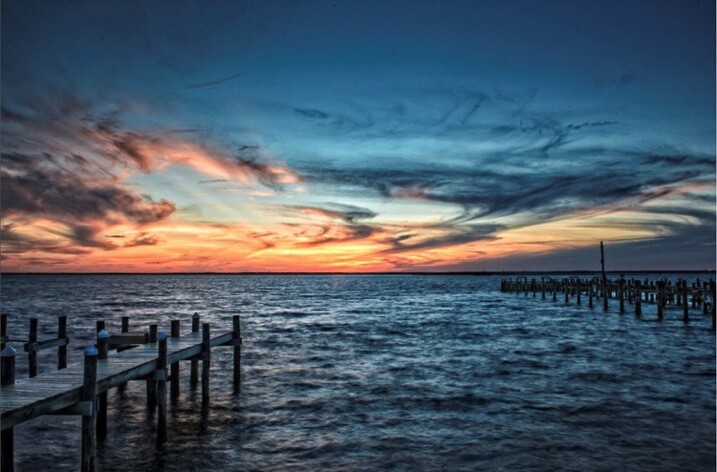
Sunset

Sunset on Long Beach Island (NJ)

I watched the future football Hall of Fame quarterbacks practicing on the sidelines just before the Super Bowl. Although they had thrown the football perhaps millions of times before, they were practicing their throwing before the big game. They believe in the old (but true) saying, “Practice makes perfect.”

It’s important for us as photographers to continually practice our skills as well. Although we may have pressed the shutter button a million times, we need to be sure that we are always “ready for the big game”. Like the Super Bowl quarterbacks, it is important that we keep practicing our skills; whether we are professionals, aspiring professionals, or enthusiasts.

Why Practice?

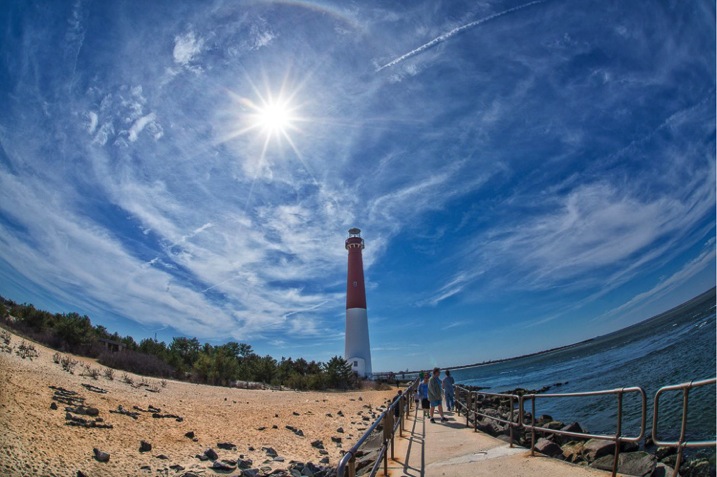
Old Barney

Old Barney lighthouse in Barnegat Light, NJ

Although practice does not make perfect (we can practice doing things the wrong way), it does make our techniques more natural, and more permanent. For example, using back-button focus on my camera the first time seemed strange to me, but after practicing it over and over, it become an automatic technique that I use without even thinking about it. It’s a challenge to try turning off your brightly lit LED display on your camera once the theatre is darkened, but with practice it’s an automatic, and easy process.

Practice not only gives us a chance to make our shooting techniques more automatic, it gives us a chance to try new techniques. Practice gives us an opportunity to learn new poses, try a new lenses, or try a new post-processing technique to enhance our photographs before we use them in a client shoot. As a photographer, learning never stops; practice is a good way to try out things with no pressure or fear of failure.

Maybe I’ll Practice Tomorrow

Unless we are full time photographers or we have the luxury of having the time to shoot whenever we want, finding time to practice can be a challenge. Life is busy; there are so many things that need to be done that we are sometimes tempted to say, “Maybe I’ll practice tomorrow.” Sometime we need motivation to force us to make the effort, despite other things that may get in the way, to practice our photography techniques.

Picture of the Day

Clyde

If someone asked me what the biggest thing was that has helped me to improve my photography skills, I would have to say that it was my commitment to what I call the Picture of the Day. A little more than a year ago I started trading photographs that I took with my sister who is a photography enthusiast. Very quickly that practice spread to other family members and friends. Today, I send a new photograph to more than a hundred people every morning. The list continues to grow. But it’s not the number of people that receive the Picture of the Day that is the motivator, it’s the commitment to taking, and sending the picture, that benefits me as a photographer.

Even though my photography business focuses mainly on people (weddings, portraits and events); my Picture of the Day photos may include people, animals, architecture and landscapes. People that receive my Picture of the Day have commented that opening my morning email is like opening a box of chocolates because “you never know what you’re going to get”. Sometimes my pictures are not meant to be works of art, but rather just funny, like the shot of my dog Clyde (above), sitting by the dinner table with his sunglasses on, waiting for dinner. The zoo is always a great place to take pictures, so I make that part of my list of places to shoot.

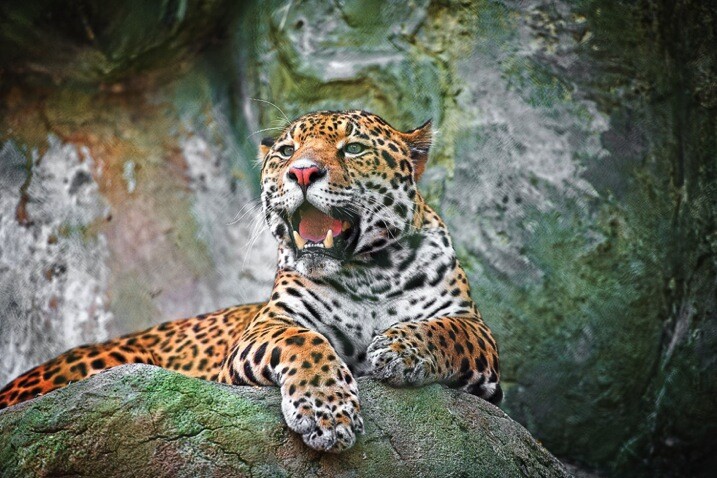
Jaguar

Jaguar at the Elmwood Park Zoo (Norristown, PA)

Admittedly, I shoot most days, but not every day. I make time during the week to practice shooting; I am committed to take that time despite everything else. I have my camera with me most of the time, and many of my shots are unplanned. I stockpile the shots so that I always have a reserve of pictures to use for my morning emails.

How has the Picture of the Day Helped Me?

My commitment to the Picture of the Day has helped me to grow as a photographer more than anything, including the following:

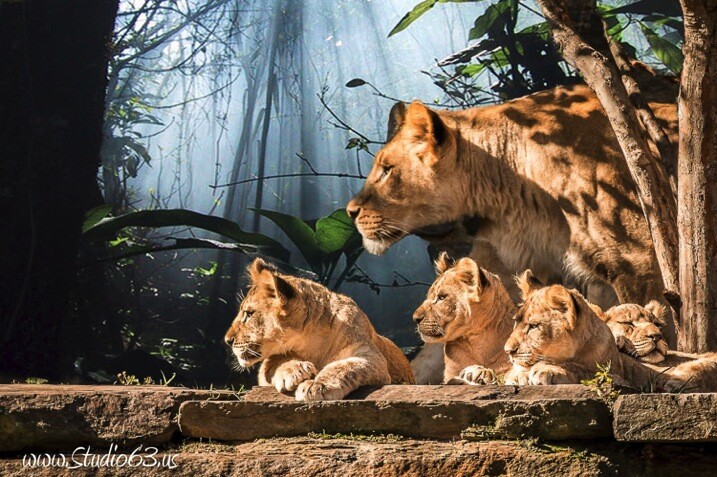
Kids and Mom

Four month old lion cubs with mom (Philadelphia Zoo)

  • Knowing that I need a new picture every day motivates me to get out and shoot, even if I am not shooting the things that my business is focused on.
  • Knowing that my Picture of the Day needs to be different than all of those that I previously sent out, motivates me to try new techniques and to look at things more creatively. That has helped me to start thinking out-of-the-box and has greatly expanded my composure skills for when I am shooting weddings or portraits for clients.
  • Shooting for the Picture of the Day has given me the opportunity to try and to practice with new lenses and filters, so that when the time comes to use them in a business shoot, I am ready.
  • My Picture of the Day has enabled my business to grow, as people that receive my email every morning are reminded that I am in the photography business. I can’t think of a more effective, less costly marketing tool.
  • Lastly, shooting for my Picture of the Day has been just plain fun!!!

Make the Commitment Today

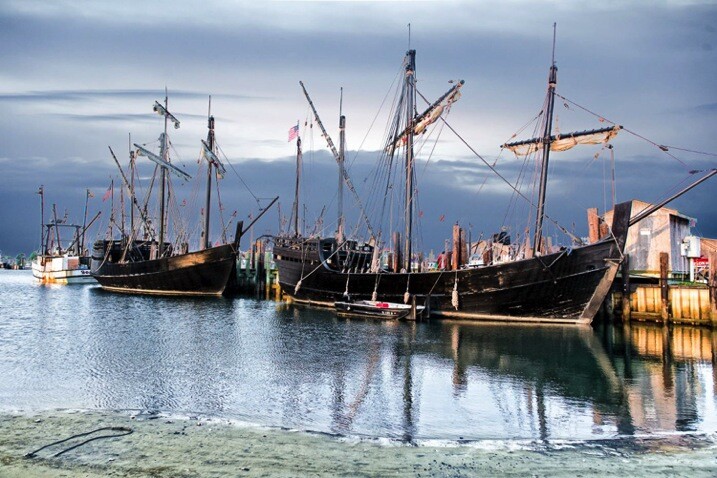
Nina and Pinta

Nina and Pinta replicas at visit to Viking Village (Barnegat Light, NJ)

If you are not just a picture snapper, but rather, serious about photography – make the commitment to start your own Picture of the Day project today. Like mine, it can start small and grow over time (I had only one person on my list initially.) I sometimes post my Picture of the Day on my personal Facebook page which adds more visibility to my work. This visibility also adds to my list of people that subscribe to my Picture of the Day.

How do you practice your photography?

googletag.cmd.push(function() {
tablet_slots.push( googletag.defineSlot( “/1005424/_dPSv4_tab-all-article-bottom_(300×250)”, [300, 250], “pb-ad-78623” ).addService( googletag.pubads() ) ); } );

googletag.cmd.push(function() {
mobile_slots.push( googletag.defineSlot( “/1005424/_dPSv4_mob-all-article-bottom_(300×250)”, [300, 250], “pb-ad-78158” ).addService( googletag.pubads() ) ); } );

The post Take this Picture of the Day Project to Practice and Help You Grow as a Photographer by Frank Slezak appeared first on Digital Photography School.


Digital Photography School

 
Comments Off on Take this Picture of the Day Project to Practice and Help You Grow as a Photographer

Posted in Photography


A commerical photographer accuses Taylor Swift of being a hypocrite, Swift’s management company responds

25 Jun

In case you missed it, Taylor Swift, one of the most successful commercial pop stars of all time, recently penned an angry Tumblr post aimed at the soon-to-be-launched streaming service Apple Music. She called for Apple to respect the rights of creatives. However, commercial photographer Jason Sheldon found this statement to be more than a little hypocritical. Read more

Articles: Digital Photography Review (dpreview.com)

 
Comments Off on A commerical photographer accuses Taylor Swift of being a hypocrite, Swift’s management company responds

Posted in Uncategorized


12 Steps to Becoming a Good Photographer

10 Jun

The true key to growing as a photographer is to dedicate and immerse yourself in it on a consistent basis. Passion and enjoyment are key to becoming great at your craft.

That beings said, there are many things to consider in order to progress through this journey as effectively as possible. If I were to start all over again, these are the stepping stones that I would have preferred to have taken, beginning with the technical and ending with the conceptual.
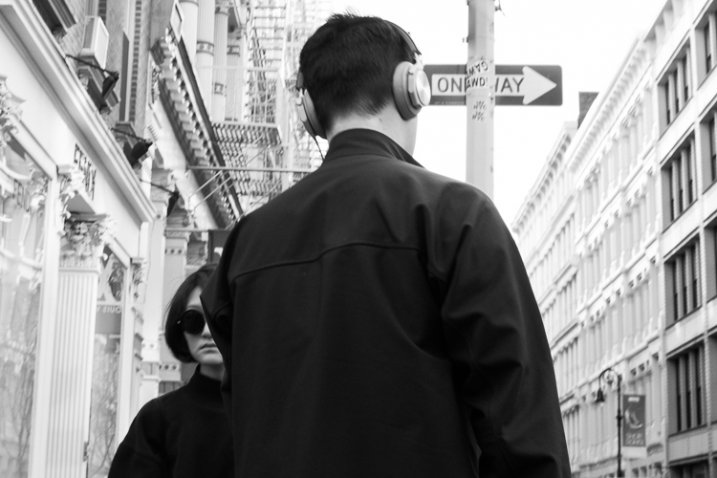
SoHo, NYC.

Part 1: Learning the Technical

1. Look at Light

When you start out in photography, it seems obvious to say that learning to use your camera is the logical first step. However, thinking this way can actually confuse you. The camera is just a tool that has the ability to record light.

When you walk out the door to photograph, the first thing you should think about is light, and not the camera. What time of day is it? How strong is the light and what direction is it coming from? Is it sunny or cloudy? Is the light soft or contrasty? Is the sun in front of, or behind you? Where are the artificial light sources and what colors do they give off?

This is the first thing that a seasoned photographer will look for every time they begin to shoot, and constantly be aware of while they are shooting. They do this for a reason. The light will affect how they shoot and the settings that they use. Even a slight change in direction to your light source can completely change how an image will look. You can’t learn how to use your camera correctly if you do not first understand the light.

2. Learn Your Camera Settings
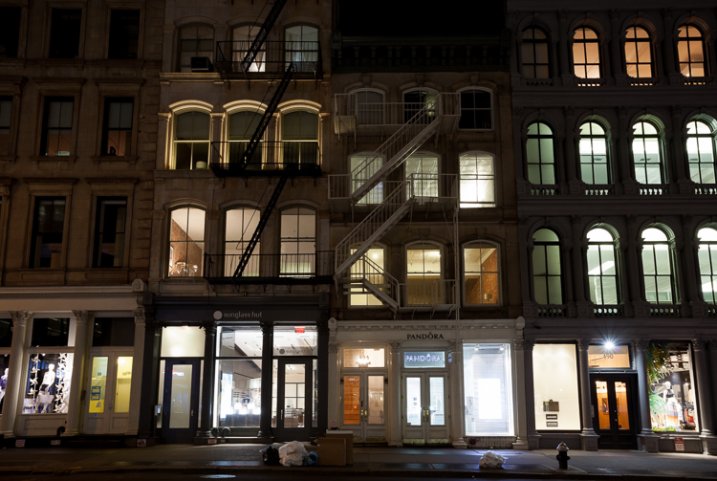
SoHo at Night, NYC.

SoHo at Night, NYC.

Once you evaluate the light and environment, and figure out how you want the image to look, that is when you want to think about camera settings. For instance, do you want as much of the image as possible to be sharp, or do you want a lot of bokeh in the background? Do you want to zoom in and have a compressed look to the image or would you rather use a normal or wide angle lens? Do you want it to be a high-key shot, or on the darker side?

That is when you change your settings to achieve the desired effect. It sounds like a lot of work just to take a single photo, and it is. However, if you start out shooting this way, eventually it will become second nature. It is just like learning a basketball shot or a golf swing. Doing it the correct way might feel unnatural and weird at first, but eventually it will come naturally and quickly, and you will be much better off for having spent time at the beginning to focus on it.

Take your camera off Auto and experiment with either shutter priority, aperture priority, or manual mode. Some photographers take pride in shooting manual, and sometimes it makes sense to shoot that way, but manual is no better than shutter or aperture priority modes, and in many situations it can be a worse way to shoot. It all depends on the situation.

Experiment with different zooms on your lens, with different apertures and shutter speeds, and experiment with different ISOs to see how the digital grain (noise) looks. Do not be afraid to raise your ISO when you do not have a tripod. Go back to look at your photos in Lightroom, zoom in to the details, and look at the settings to see how they altered the way your images look.

3. Composition and Form
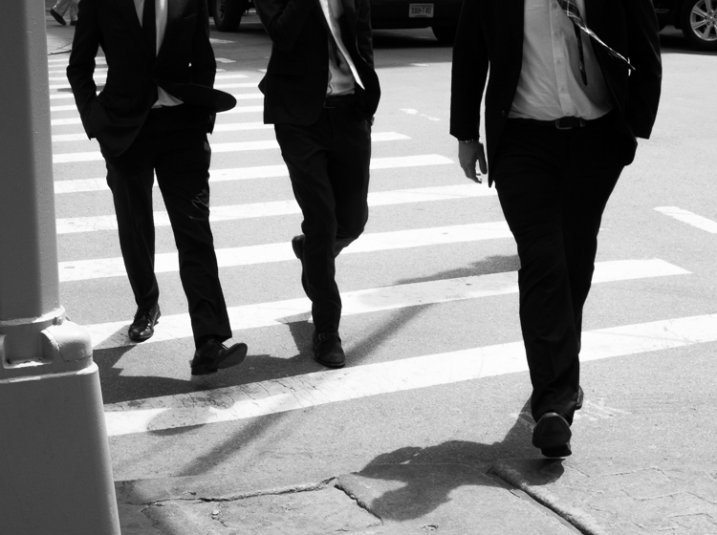
Three Men, SoHo, NYC.

Three Men, SoHo, NYC.

Now is the time to think about composition. Some newer photographers tend to have a bad habit – they look up, see something interesting, then they photograph it quickly and move on. Yes, sometimes you’re on the move and this is the only way to shoot, but take some time to compose your image in the best possible way. The difference between a snapshot and a work of art is thought. If you see an interesting scene, you need to think about how to best capture it. Where is the best place to stand? Can I include other elements into the scene to create a more complex composition?

I prefer to think about composition in this way – if I made a larger print, put it on my wall, and a friend came over and saw it for the first time, where would their eyes begin and how would they move through the image? How would it feel to them? Where are the lines in the image? What is the relationship of the main subject to the background? Is rule of thirds better here or is it better to center the main subject? Are there interesting shapes in the image? Do the edges of the image look good and keep the viewers eyes from moving out of the composition? Is there a foreground, middleground, and background in the image and does the image even need that?

The difference between a decent image and a great image could be moving a foot to the left. This is another idea that can seem overwhelming at first, but will come to you more naturally the more you pay attention to it.

4. Color
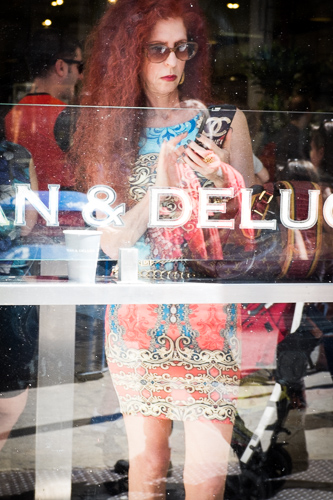
Dean & Deluca, SoHo, NYC.

Dean & Deluca, SoHo, NYC.

Color (or lack there of) is a very important element of photography. Look at a color wheel and study how the colors work together. What do different colors represent? Do the colors add to the image or detract from it? I enjoy creating both black and white, and color images, and this is one of the first questions I think about when I am editing.

What is the color quality of the light? Is it cool or warm, is there a color cast, and does that add or detract from the image?

In addition to thinking about color while shooting, you will find yourself significantly improving your ability with color while you are editing. Play around with color temperature to see if you like an image warmer or cooler. Desaturate it, or add a little saturation, to see how it feels. How does changing the contrast affect the colors?

For doing quality color work, make sure that you have a good monitor that has been recently color corrected. All your work will be for naught if your monitor shows colors that are different from the file and final print.

5. Learn Lightroom

Editing is vitally important to developing your vision and becoming a good photographer. I suggest using Lightroom, as it is the industry standard and it works well for so many photographers. Photograph in RAW to get the most flexibility and quality in your images and explore all of the RAW development settings. Try to recreate the looks of other photographers to get a feel for how their editing was done.

Be diligent about organizing your archive. A little time spent each time you upload images will save you so much time in the future. Star your good images (Lightroom allows 1 through 5 stars) so they are easy to find, and create collections based on ideas that you grow over time. Viewing your work in this organized fashion will help you develop your skills much faster than if you have a messy archive.

6. Print

Maybe my views are rooted in the past and nobody is going to print in the future, but I do not feel like an image is truly complete until it has been printed and framed. That is the final step to all of this, and it is a great feeling to put an image on your wall.

Photography Inspiration Corkboard

36×48 inch Corkboard

But there is another aspect to why you should print. It is one thing to see how your images look on a monitor, but it is a completely different experience to see them in their final, printed form. This will allow you to see how the light, the color, and your camera settings all affected the final image. You will learn a lot about how to shoot, from the art of printing. Try different papers, and view your prints under different lights.

My favorite printer is the Epson 3880, but you do not need to do the printing yourself. Create a relationship with a local printer, or one of the reputable companies online, and have them made for you. If you do not print frequently, it can be much more affordable to have your prints made for you than making them yourself. But, don’t forget that doing the printing yourself can be very fun and satisfying, and it gives you the ability to make slight changes and see how they look right away.

Try creating a photography corkboard. I have a 36×48 inch board next to my workstation and I swear by it. Fill it up with 5x7s and 4x6s and constantly change it. See how the images play off each other, which images last, and which you lose interest in. Use this as a playground for your prints.

Part 2: Developing Your Photographic Voice and Style
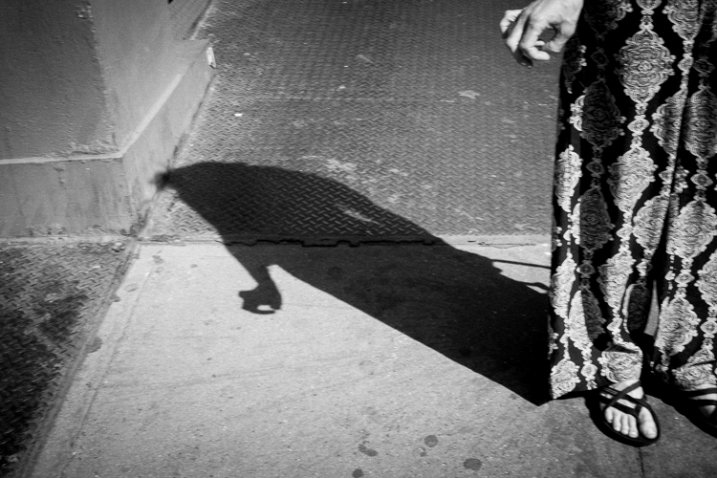
Nerves, SoHo, NYC.

Nerves, SoHo, NYC.

Once you have gotten this far you are in a very good spot. Technically, you know what you are doing, your prints look beautiful, and they are well composed. But what’s next?

The next step is to figure out how to take unique and interesting photographs. It is now time to spend more effort thinking about what it is that resonates with you in photography, and what makes an image stand out in your mind.

7. Photograph!

This is so simple, but it is the key to everything and needs to be said. So many people only take their cameras out on trips or vacations. They go to places that are specifically for photographing, such as mountain ranges, zoos, gardens, safaris, cute towns, or cities with great architecture. While this is great to do, push yourself further than that. Take some photographs during the course of your everyday life. Even use a cellphone when you are unable to take your main camera with you.

The best photographers can take great photographs in the most ordinary of places. Practice this. Go out, anywhere, or specifically go out to someplace that you think will be terrible for photography, and figure out how to take an interesting photograph there. This practice will help you so much in your development. You can understand light and camera settings cold, but if you are not out photographing in a variety of situations on a somewhat consistent basis, then you are selling yourself short as a photographer.

8. Galleries, Photo Books, and Reading
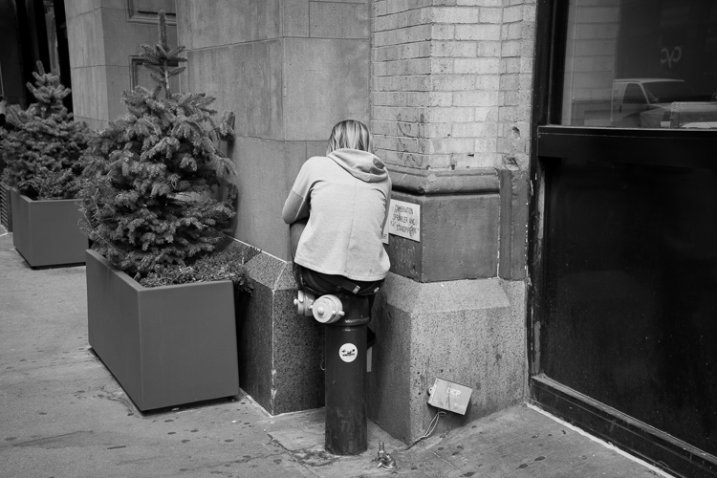
Disconnected, NYC.

Disconnected, NYC.

One of the best ways to develop your own voice and style is to look at the work of others. Go to galleries, purchase photography books, and study the images of great photographers. The internet is a great place to view photography, but it is so easy to get lost. Galleries and books are curated for a reason. Study the images, think about how they were done, and figure out the context behind them. Sometimes images will hit you whether or not you know the context behind them, but other times it can be important to learn about the photographer and the history that are behind the image. This will add another layer to your appreciation.

Try out the different styles of photographers that you like. Try to shoot like them to learn how they did it and why. Pick and choose your favorite elements from different photographers and merge them to create your own style.

Purchase some prints. I’ve heard this a few too many times (sorry for the gender stereotyping) but it’s usually a wife saying something to me like, “I’d love to get this for our wall, but if my husband sees me buying the work of another photographer, he’ll kill me!” The average home has a lot of walls; enough for many artists.

Yes, there is something satisfying about seeing an image, then going and figuring out how to create it for yourself, but it is really important to appreciate the works of others. Buy prints from other photographers to display along with books. Immerse yourself in the works of others to create your own inspiration.

Finally, one of my favorite ways to gain inspiration is to read about things unrelated to photography. Learn about where and what you are shooting. Read poetry, read current events, read anything. This practice is about growing your voice outside of photography; the two are related.
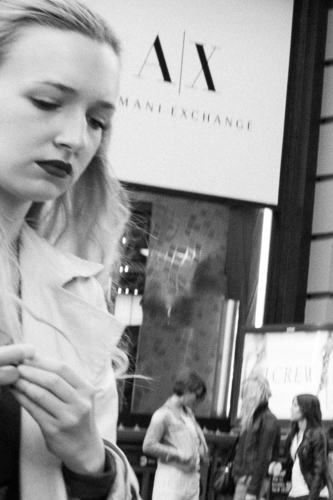
Nerves, SoHo, NYC.

Nerves, SoHo, NYC.

9. Keep Coming Back

Pick an area or a subject and immerse yourself in it. Go back to the same place at different times, in different light, and keep photographing it. This is very important for your growth since it will allow you to learn the area or subject like the back of your hand. Your images will take on more depth. There are photographers who have spent 40 years photographing in the same area.

10. Curate a small group of photographers and friends to show your work

The internet is an amazing place for sharing your work and learning about photography. However, it is also a very impersonal place. Everyone sees thousands of images a day from hundreds of people. While it’s definitely possible, it can be tough to get a proper critique and evaluation of your work over the internet.

Find a few people and put together a group to show physical images to every once in awhile. You ultimately want to shoot for yourself, but seeing how others relate to your images is important for your growth. The more they get used to your work and your style, the better comments and thoughts they will have for you.

These people do not have to be photographers. They can be friends, creatives, even significant others. A good tough critique from your partner can be very valuable. It can sometimes be tough to hear at first, but figure out how they really feel about an image. Your partner will know you well enough to be honest and not hold back, and that will be good for you to hear. Figure out what they like, and what they don’t like.

11. Put together an edit of similar images

One of the most beautiful aspects of Lightroom is that it allows you to create collections of images outside of your normal file structure. Start to group and sequence your images that relate to each other. Begin to turn them into a project. You can see how the images in this post relate to each other. This was done over time, not all at once. You can, and should, think about projects from the very beginning and go out to photograph them, but often projects and ideas will come about naturally during the process of daily shooting.

Doing this will help you notice these moments when photographing in the future and over time you will develop ideas organically into beautiful projects.

12. Develop a voice in your photography
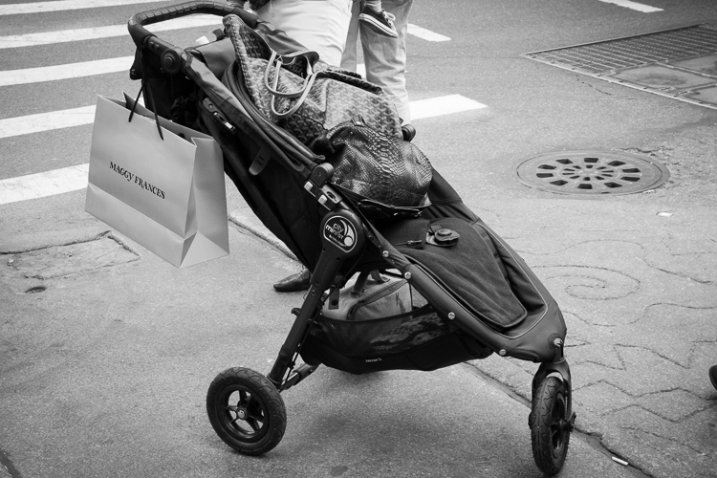
Stroller, SoHo, NYC.

Stroller, SoHo, NYC.

If you have done the rest of these steps, your voice and style will develop organically over time. Think about it, and pay attention to it as you progress, but do not force it. Let it come to you over time. You can learn to use your camera quickly, but you cannot become a good photographer overnight. Take your time and try to improve a little bit each day and you will make huge strides over the course of a few years.

Have you followed these steps? Do you have any others you’d add as part of the learning and growth process? Please share in the comments below.

googletag.cmd.push(function() {
tablet_slots.push( googletag.defineSlot( “/1005424/_dPSv4_tab-all-article-bottom_(300×250)”, [300, 250], “pb-ad-78623” ).addService( googletag.pubads() ) ); } );

googletag.cmd.push(function() {
mobile_slots.push( googletag.defineSlot( “/1005424/_dPSv4_mob-all-article-bottom_(300×250)”, [300, 250], “pb-ad-78158” ).addService( googletag.pubads() ) ); } );

The post 12 Steps to Becoming a Good Photographer by James Maher appeared first on Digital Photography School.


Digital Photography School
 
Comments Off on 12 Steps to Becoming a Good Photographer

Posted in Photography


Photographer creates picture of 100-man orchestra… with the same person playing each instrument

06 Jun

An Oslo musician and photographer has created a photo stitched together using 400 images, showing an entire orchestra with every instrument played by the same person. Violinist Alexander Light created the 200MP picture by shooting percussionist Heming ValebjØrg in every seat on a stage while he played the appropriate instrument for that position. Read more

Articles: Digital Photography Review (dpreview.com)

 
Comments Off on Photographer creates picture of 100-man orchestra… with the same person playing each instrument

Posted in Uncategorized


Marwell Wildlife Photographer of the Year contest now accepting entries

06 Jun

The sixth Marwell Wildlife Photographer of the Year competition is now accepting entries. This is an annual contest open to wildlife photographers residing in the UK, with a top prize that includes an eight day photography trip in Estonia via Wildlife Worldwide (valued at £1,795/$ 2,740). Read more

Articles: Digital Photography Review (dpreview.com)

 
Comments Off on Marwell Wildlife Photographer of the Year contest now accepting entries

Posted in Uncategorized


Shortlisted images from Environmental Photographer of the Year 2015 to go on display

04 Jun

London’s Royal Geographical Society is set to play host to an exhibition of the shortlisted entries of the 2015 Environmental Photographer of the Year competition. The exhibition, which opens for three weeks on June 22nd, will feature 111 of the best images as selected by the competition’s five judges. The ultimate winners will be announced at a ceremony on 25th June. Read more

Articles: Digital Photography Review (dpreview.com)

 
Comments Off on Shortlisted images from Environmental Photographer of the Year 2015 to go on display

Posted in Uncategorized


6 Reasons to Become a Nature Photographer

15 May

#1 An Ever-Changing Subject

Nature photography never gets boring. Whether it be wildlife or landscape photography you are interested in, there is always a new angle you can introduce to your photos.

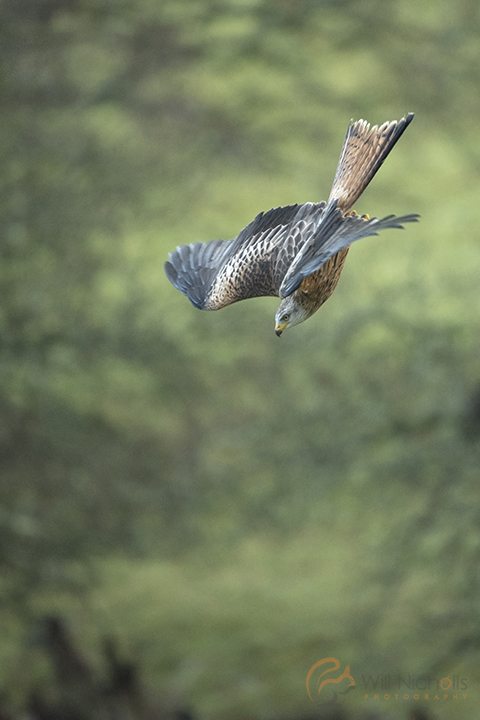
Kite Dive

For landscape photography, the weather is never exactly the same – clouds make unique formations, and the way sun rays cast over the scene in front of you are always very special.

If you take photos of wildlife, then you will be forever capturing moments that will never be repeated. Take the example of two birds fighting on a branch: you will never get a photo of the exact same birds, with the exact same body and wing positions, in exactly the same backdrop. You have an opportunity to record something truly unique.

#2 Be At One With Nature

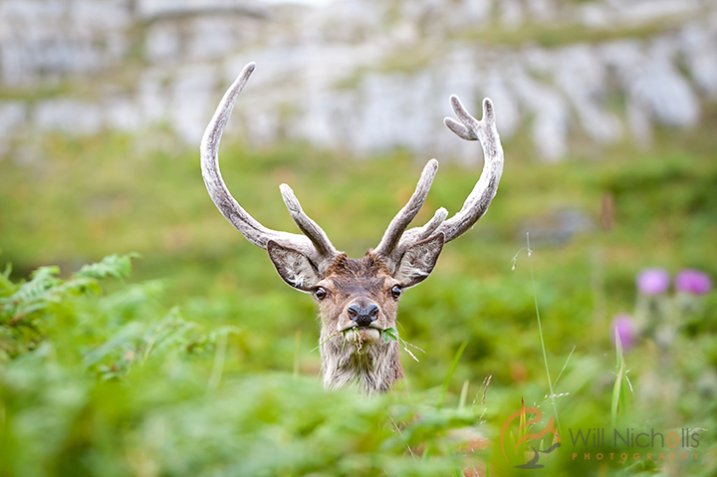
Red Deer Head

There’s no better excuse for getting outside than feeding your thirst for nature photography. Nowadays a lot of people spend too much time indoors, and going outside is extremely beneficial for your wellbeing – that’s for both your health and enjoyment. If you’ve caught the photography bug then getting into the outdoors with your camera becomes something you really enjoy doing.

#3 It’s Easily Accessible

Nature is everywhere – you don’t need to look far to find a beautiful scene or a bird that is willing to come to a bird feeder. You don’t have to book a studio and a model to take photos; just go outside and start clicking that shutter.

Even for those who live in cities, there is wildlife everywhere – you may just not know it yet. At night, deer and foxes come into suburban areas and make for interesting photographs. Venture out into the countryside and you will find rolling hills and endless photographic opportunities.

#4 It’s Relaxing

Nature photography is extremely therapeutic if you can reap enjoyment from it. If you have had a stressful week, heading out to be alone with your camera and the natural world can be a great way to wind down and forget any troubles.

starssmall

#5 Everyone Loves Nature

Most people admire nature in some form. Whether that be appreciating a dramatic, serene landscape or the glint in a swooping eagle’s eye, your photos are going to be appreciated by a wide audience. If you are looking to share something that people can connect with, nature photography is a great way to do this.

When done correctly, nature photos will transport the viewer into your shoes, allowing them to imagine the scene as if they were there with you. Providing this window into the natural world to those who may not be able to access it themselves is a great thing to do.

#6 Raising the Profile of the Environment

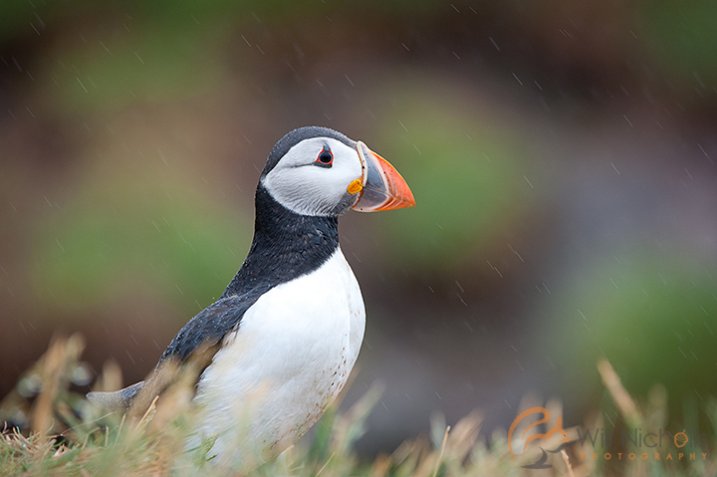
PuffinInRain

Nature photography helps to raise the profile of our planet and the environment. It allows people to experience things they may not see themselves, and therefore encourages them to care about its preservation. You can, in a small way, help to raise awareness of the natural world and work to promote its conservation.

googletag.cmd.push(function() {
tablet_slots.push( googletag.defineSlot( “/1005424/_dPSv4_tab-all-article-bottom_(300×250)”, [300, 250], “pb-ad-78623” ).addService( googletag.pubads() ) ); } );

googletag.cmd.push(function() {
mobile_slots.push( googletag.defineSlot( “/1005424/_dPSv4_mob-all-article-bottom_(300×250)”, [300, 250], “pb-ad-78158” ).addService( googletag.pubads() ) ); } );

The post 6 Reasons to Become a Nature Photographer by Will Nicholls appeared first on Digital Photography School.


Digital Photography School
 
Comments Off on 6 Reasons to Become a Nature Photographer

Posted in Photography


Stop Giving Away Your Authority – You ARE a Photographer

08 May

I recently started coaching my eldest son’s flag football team. Being a Mom, as opposed to a Dad, this was a rare situation. As the league’s only “Lady Coach”, I was not taken very seriously by anyone, including myself. I stepped up because no other parent volunteered, but once everyone saw that a woman was going to be coaching these young boys to fifth grade flag football success, Dads came out of the woodwork. Some to kindly assist me because ten 11 year old boys is a lot no matter who you are; yet others insisted on their services, because what could I possibly know about football and a bunch of boys? Certainly not enough to coach a youth sports team to uncertain victory.

lynseymattingly6

My turning point came at our weekly game last Sunday. Down more than a couple points in a season that has yet to provide a win, one of the kinder dads came up to me to suggest a play for the offense. When I didn’t understand he said, “Do you want me to draw it out for you?” and I said, “No. I want you to just run it with them.”

Another dad would have taken over and done exactly that. This Dad didn’t. Instead of letting me give away my role—the one that I had rightly came by and earned, he went and found my clipboard from my very well-prepped coaches bag and drew it out for me to take to the field. I would love to tell you that it worked and it was the winning touchdown, but it didn’t, and it wasn’t. Instead, I got an extremely valuable life lesson out of it: It’s one thing to have someone—ANYONE try to take away your earned authority, but it’s an entirely other thing to hand it to them on a silver platter.

lynseymattingly11

As I reflected on this, I realized how often I do this with photography. The way I dread shoots, you would think that I was being called on to singlehandedly perform heart surgery on the President, with my only (actual) medical training being retrieving splinters and applying Band-Aids. The way I take feedback on my images, it would be easy to assume I had zero confidence in myself. The way I’ve dismissed my own skills, you would begin to question if I had any.

You know that moment when your portrait clients show-up, dressed all perfect and looking adoringly at you, ready for whatever direction you give them? My first instinct is ALWAYS to run – away – fast. From these people who think I know what I am doing and want to give me money to do it.

lynseymattingly13

In actuality, I am a good photographer. I, more often than not, grant my client’s every wish and provide them with more than a questionable response to the always asked, “Do you think you got anything good?”

Truthfully, I am actually quite confident in many things—overly confident in some I bet. It’s when I am considered to be an expert that I lose my footing. It’s when I feel pressure to do something specific and challenging that I want to quit. It’s when there is an expectation from another than I mentally run through my getaway options.

lynseymattingly5

For most of us, it’s uncomfortable to be considered an expert at anything. Especially if what you have to back it up is basically just other scenarios where it worked out in your favor. I am around kids all the time; I work with them, I volunteer for them, I actually parent five of them. I’m pretty comfortable talking to and instructing a younger age group on just about anything – including a sport that is considered the most important American game by beer-drinking middle-aged men everywhere.

Why would I give away my power and not allow myself to be respected as the expert I am? For the same reasons I worry before every shoot, certain that I’ve finally reached the moment where my luck has run out and I, in fact, will not get anything good this time. And there will be the President of the United States, laying on the operating table while I stand over his open chest cavity with shaking tweezers and a flashlight.

lynseymattingly2

Just like I had never played flag football before a few months ago, I did not go to a formal photography school. In fact, I didn’t even study photography. I studied people and art, but the only true darkroom I have ever been in was when I wandered into my Grandfather’s in the basement once before, being knocked over by the chemical smell and never making that mistake again. I didn’t take pictures for my high school yearbook. I’ve never worked for a college newspaper. I don’t carry my camera with me everywhere (it’s heavy and really gets in the way). All of that said and when someone asks me what I do for a living, I say, “I’m a photographer.” (Cue the excited statements about the glamour and the questions about celebrities.)

lynseymattingly4

I got here differently than you did. You got here differently than every other photographer you know. Probably the only thing we all have in common is occasionally (or maybe more often) doubting ourselves, and disliking aspects of our job—just like most everyone else on the planet. We are so quick to move negative thoughts aside because: how lucky are we? That has to be our first, last, and only thought, right? That we do something so fun. So glamorous. So creative. So special. And should we ever change our minds or fall flat on our face, there is a line of people a mile long behind us, happy to trample over our humbled bodies to get to the front of The Photographer Line.

lynseymattingly8

In that moment on the football field when I wasn’t allowed to give my expertise and authority away to someone else, I vowed to make some changes in other parts of my life as well. Well not in that exact moment, but later that day when I was icing my entire body because walking back and forth, stiffly because you’re terrified someone will get something hurt – pride or otherwise – is more of a workout than you would assume.

I decided I’m not going to sugarcoat photography as easy, and more than that, I’m not going to dismiss myself anymore. Photography isn’t just some random skill I picked up at a party somewhere, like opening a champagne bottle with a knife. Photography is hard. It’s exhausting and full of pressure, and sometimes…….I don’t like it at all. The need to stay relevant and at the top of my game is more tiring than pacing 50 yards over and over again in the hot sun. The idea that sometimes people don’t like my work, don’t know I tried my best, don’t realize how hard I have worked to get here, or really want me to perform Photoshop plastic surgery is often frustrating and sad. The nervousness I feel before any shoot is enough energy to power my camera without batteries, if I could figure out how to convert it.

But I’m really good at it, and so are you.

lynseymattingly7

And, it turns out, that you all feel the same. Or at least some of you do. I know that because when I posted this on my photography Facebook page this morning: I don’t like editing or emailing or scheduling. I hate the pressure to make sure I “got something good” at every shoot and I hate being out in the hot sun or the bitter cold when I’m shooting. I get nervous meeting new people and I dread trying to get to know them and be on their good side in a matter of minutes. – Within an hour, it was liked by many and commented on in appreciation for “being honest” and showing how much mental and emotional work photography often is.

lynseymattingly1

I’ve been doing this for 10 years and I’ve seen a lot of portrait photographers start their own businesses. Some are still around, and some quickly faded. In the past, I have viewed them as competition, but the truth is that they aren’t. Not only is there enough business for all of us, but the more choice a client has, the more business is created and generated. I’m not the portrait photographer for everyone. You aren’t either.

But you are an expert. You possess an ability that few have and a vision all your own. Your skill level may be at the beginning stages, or it may be very advanced. You get to choose to be nervous before shoots. You get to despise pieces of your job as a photographer. But quit giving away your power. Stop being so humble that your expertise is up for grabs. Don’t reduce your authority on a subject you’ve been marinating in for however long.

Be confident in your piece of the photographer pie, no matter how small that piece is.

lynseymattingly12

You’re going to fail at some point. Brilliantly, brilliantly fail. You’re going to show up without your memory cards, or you’re going to shoot absolute garbage, or you’re going to ask someone to pose in a way that puts them in the emergency room (it’s my greatest fear). But just like there are 10 boys that don’t know any better than to think that I can led them to a certain flag football victory, there is a handful of people in this world that think of you first as an expert in photography – and that’s something you should never, ever, give away.

googletag.cmd.push(function() {
tablet_slots.push( googletag.defineSlot( “/1005424/_dPSv4_tab-all-article-bottom_(300×250)”, [300, 250], “pb-ad-78623” ).addService( googletag.pubads() ) ); } );

googletag.cmd.push(function() {
mobile_slots.push( googletag.defineSlot( “/1005424/_dPSv4_mob-all-article-bottom_(300×250)”, [300, 250], “pb-ad-78158” ).addService( googletag.pubads() ) ); } );

The post Stop Giving Away Your Authority – You ARE a Photographer by Lynsey Mattingly appeared first on Digital Photography School.


Digital Photography School

 
Comments Off on Stop Giving Away Your Authority – You ARE a Photographer

Posted in Photography


Remembering Rebecca Jackrel: Wildlife Photographer and Friend

06 May
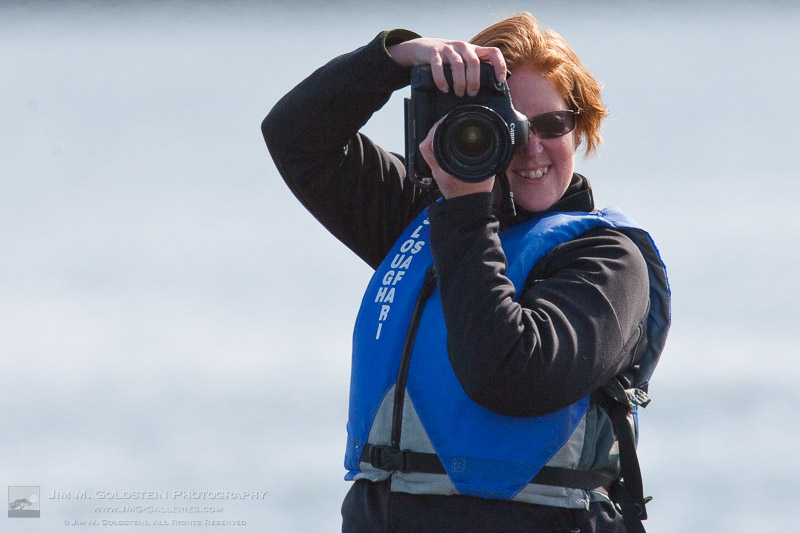
Rebecca Jackrel
Rebecca Jackrel

Rebecca Jackrel Having Fun Behind the Camera

It is with pain in my heart and tears in my eyes that I write this memoriam of my friend Rebecca Jackrel who recently lost her battle with cancer this week. Rebecca was a driven and dedicated wildlife photographer who prided herself in recent years raising awareness to the plight of the Ethiopian Wolf via the Ethiopian Wolf Project with Will Burrard-Lucas . Quite the world traveler her trips always centered around conservation wildlife photography of subjects spanning the Albatrosses of Midway, Polar Bears of Churchill and Svalbard, Spirit Bears of Vancouver Island, Manatees of Florida, Sea Otters of California or marine mammals & sea life along the California coast.

To say Rebecca loved animals would be an understatement as her respect and love of animals was at the core of her being. She worked as veterinary technician before catching the photography bug and regularly volunteered with her husband at the Marine Mammal Center in Sausalito, California. She shared her home with a variety of furry creatures including dogs, cats and even a lost hamster that literally walked into their house. There is little she would not do for an animal, wild or domestic, in need of care and/or protection.

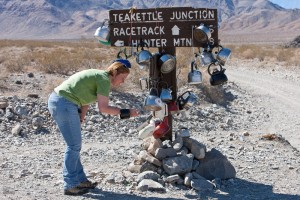
Rebecca at Tea Kettle Junction, Death Valley National Park

Rebecca at Tea Kettle Junction, Death Valley NP

I first met Rebecca at the Photochrome camera club in San Francisco back around 2004/5. She knew of me from my writing and images shared online and was in the cutest way smitten and shy in approaching me. Initially I thought I might have a stalker on my hands, but she quickly passed the non-stalker test and quickly became a good friend. It was at this time I got a glimpse of her generosity as she invited me to join her photographing the Wave in Arizona. In the years to follow she was incredibly generous in sharing her gear and most meaningful to me her support & heart felt believe in me.  Very selfishly I mourn the passing of Rebecca because she was the rarest of friends who had a heartfelt interest in my work and believe in my artistic & professional development. Her support meant the world to me. I will forever treasure the time we spent together in the field and running workshops to photograph Sea Otters in Monterey and landscapes in Death Valley.

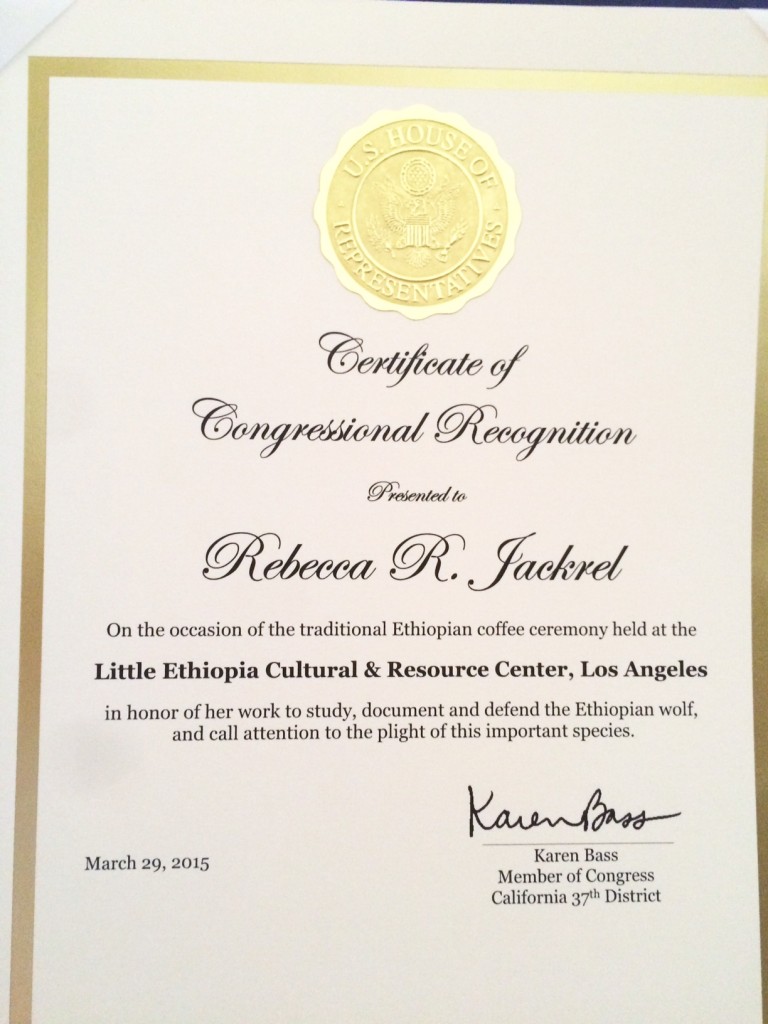
While Rebecca was never one to toot her own horn I will share her most recent and prized accomplishment she shared with me before she passed… it was her Certificate of Congressional Recognition for her work to study, document and defend the Ethiopian wolf.

Rebecca you will forever be in my heart. I will miss you more than words can describe.

You can view Rebecca Jackrel photography on her Photoshelter site.

rj_congressional_cert_recognition

Copyright Jim M. Goldstein, All Rights Reserved

Remembering Rebecca Jackrel: Wildlife Photographer and Friend

The post Remembering Rebecca Jackrel: Wildlife Photographer and Friend appeared first on JMG-Galleries – Landscape, Nature & Travel Photography.


Related Stories

  • My Favorite Features in Adobe Lightroom 6 (CC)
  • My Favorite Features in Adobe Lightroom 6 (CC) – Enclosure
  • 6 Steps to Save Your Ass With Lightroom Catalog Changes
Feed Ads by FeedBlitz
powered by ad choices


JMG-Galleries

 
Comments Off on Remembering Rebecca Jackrel: Wildlife Photographer and Friend

Posted in Equipment


5 Reasons a Pro Photographer Sometimes Regrets That Decision

04 May

Following your dream is not always easy. Actually, it’s never easy.

To be frank, I think the only way you can achieve a dream goal is to leave yourself no other choice. You can’t say, for instance, “I’ll try this for a while and see how it goes.” because you’ll always find a reason (often a pretty good one) to give up and do something else. You have to be fully committed. That makes it easier decision-wise, because you literally leave yourself no other choice but to keep going forward. But the process itself is still very hard.

dps4

So, that’s what I did and now I take pictures for a living. I also write for magazines and for newspapers. Sometimes, I sell my images by themselves, but my articles I always sell with my photos. I’ve been doing it for a long time now, and I can’t imagine any other way to make a living. But that doesn’t mean it hasn’t been a struggle. Sometimes, when everything seems to be going against me, I have regrets about choosing photography for a career. Here they are, in no particular order.

#1. Low Pay

Photographers work hard, whether they shoot weddings, war zones or wallabies. But the pay is generally not great, which is just a polite way of saying it sucks. There are exceptions, of course, but they are, well, exceptions. So you work hard and are good at what you do, but you don’t make a lot of money. Your friends earn a lot more than you do, which is fine, but after a while it gives a numerical significance to how much you’ve sacrificed to be a photographer.


Of course it’s possible to make a lot of money at photography, as Peter Lik will tell you, but if making money is a priority in your life, you’re far better off choosing a different career.

Now, I know what you’re thinking. You’ve heard that before, and it’s not going to be a problem, you’re ready to live frugally. You say that now, but will you feel the same way in ten years?

dps5

#2. Inspiration

While it’s definitely true that you should try to work at something you love, it has its consequences. The most obvious is that what you love becomes work. I have friends who shoot images just because they enjoy it and sometimes I think, “hmm, they seem to be having more fun at this than I am!”

The truth is, taking pictures with the aim of selling them is different, most of the time, from taking pictures for the pure joy if it. A lot of people confuse the two things.

It’s not that I love it any less, I don’t think, but sometimes it’s hard to keep up with the enthusiasm I see in amateur photographers. As much as I enjoy taking pictures — hey, I’m the one who decided to make a living out of it — I also like doing other things as well. I guess this is a way of saying that when you do the thing that you love for a living, you choose something else for a hobby.

#3. Work Never Ends

One of the great things about being a self-employed entrepreneur of sorts, is that if Monday the weather is great and a friend calls up and suggests a long lunch on a patio somewhere, at that moment you get to say, “Sure, sounds great!” Or perhaps, if you’re more disciplined than I am, you say, “Maybe next time, I really have to get some work done.” But the point is, you have the option. Freedom is pretty great.

dps2

Of course, it comes at a cost, because depending on how you look at it, you’re never truly free. You can draw the line between work and play wherever you like, yes, but that’s both a good thing and a bad thing. Because you’re never not working. I sometimes envy my friends who have regular Monday-to-Friday jobs because when I see them on the weekend, they’re truly off work. Not me.

Also, vacations? Pretty much never. I go to a lot of great places, don’t get me wrong, but mostly on my own. I know this sounds like the stuff of dreams, but believe me, it’s still work. You go on an assignment somewhere and tell your friends you went to such-and-such destination, and all they think is “Ah, vacation.” But being in a vacation spot and actually being on vacation are two very different things. I get it, because vacations are awesome – I wish I could take one.

#4. Loss of Creative Input

Depending on the kind of photography you do, it can be hard to maintain a personal vision, or any creative input at all, really. I was once at the studio of a friend of mine, a commercial photographer who pulls in many big-time clients. I wasn’t involved in the shoot in any way, he just invited me over so I hung out and watched, scarfing down the free sushi when nobody was looking.

The shoot was of a young couple who had found their dream home. It was going to be a full-page advertisement in magazines and newspapers. The art director was there, and he knew exactly what he wanted. He had a clipping of a photo taken by somebody else, gave it to my friend and essentially said, “Copy this. This is what we want exactly.”

dps3

This is an extreme example, but the point is, if you want to make money taking pictures, you shoot what other people want. At the very least, you shoot what other people want but in your style, and that’s the best-case scenario.

That’s why a lot of photographers take lower-paying jobs that allow them more creative control. If not, there are times when you’re just a robot putting the camera where other people want it and pushing the button when they say so. Unless, that is, you’re a superstar commercial photographer, but if that’s the case, you’ve already paid your dues, I’m sure.

I don’t usually have an art director over my shoulder telling me what to do, but I still submit my images to photo editors and designers, and they get to choose which ones get used, not me.

#5. The Myth of Being Your Own Boss

Some people who have regular jobs, whatever those are, tell me, “You are so lucky, you’re your own boss.”

dps1

Well I suppose I am, in a way, my own boss. But that depends on how you look at it. From my perspective, I have it a lot worse because I don’t have just one boss, I have many. Every one of my clients is my boss.

I’ve been lucky in finding many great people to work with (for?) but I’ve had my share of nightmare clients, as well. Some of those people pay quite well, and although I’d sorely like to tell them to do something to themselves which is unprintable here, well, you know how it goes. Sometimes I have the courage to fire a well-paying client, and sometimes I don’t. But if you think that being a freelancer allows you to escape the unpleasantness of having to deal with certain bosses, think again.

Thinking about turning pro? Here’s another good read on the topic from a different pro photographer’s perspective: 6 Things to Consider Before Becoming a Professional Photographer

Mike Randolph has been a professional writer and photographer for more than 20 years. His photos have appeared in National Geographic publications as well as hundreds of others. For photo tips, techniques and gear talk, check out his travel photography blog.

googletag.cmd.push(function() {
tablet_slots.push( googletag.defineSlot( “/1005424/_dPSv4_tab-all-article-bottom_(300×250)”, [300, 250], “pb-ad-78623” ).addService( googletag.pubads() ) ); } );

googletag.cmd.push(function() {
mobile_slots.push( googletag.defineSlot( “/1005424/_dPSv4_mob-all-article-bottom_(300×250)”, [300, 250], “pb-ad-78158” ).addService( googletag.pubads() ) ); } );

The post 5 Reasons a Pro Photographer Sometimes Regrets That Decision by Mike Randolph appeared first on Digital Photography School.


Digital Photography School
 
Comments Off on 5 Reasons a Pro Photographer Sometimes Regrets That Decision

Posted in Photography