RSS
 

Posts Tagged ‘Photographer’

Take a peek at some of the contenders for Wildlife Photographer of the Year 2016

03 Sep

First Wildlife Photographer of the Year 2016 images

Splitting the catch. Audun Rikardsen / Wildlife Photographer of the Year

A 40 minute, 104°F wait for a hornbill to toss a termite. Hours in cold water waiting for a crowd of giant cuttlefish to strike the right pose. If there’s a lesson to be learned from this year’s Wildlife Photographer of the Year finalists, it’s the importance of patience in wildlife photography.

Now in its 51st year, the Natural History Museum’s Wildlife Photographer of the Year competition attracts entries from all over the world. Winning images will go on display at the London museum starting October 21st, but you can get an early preview of some of the finalists here. They’ve been selected from nearly 50,000 entries coming in from 95 countries. If the early results are any indication, we’re in for a treat when all of the winners are revealed.

Wildlife Photographer of the Year is developed and produced by the Natural History Museum, London.

First Wildlife Photographer of the Year 2016 images

Splitting the catch. Audun Rikardsen / Wildlife Photographer of the Year

Sometimes it’s the fishing boats that look for the killer whales and humpbacks, hoping to locate the shoals of herring that migrate to these Arctic Norwegian waters. But in recent winters, the whales have also started to follow the boats.

Here a large male killer whale feeds on herring that have been squeezed out of the boat’s closing fishing net. He has learnt the sound that this type of boat makes when it retrieves its gear and homed in on it. The relationship would seem to be a win-win one, but not always. Whales sometimes try to steal the fish, causing damage to the gear, and they can also become entangled in the nets, sometimes fatally, especially in the case of humpbacks. The search for solutions is under-way, including better systems for releasing any whales that get trapped.

Having grown up in a small coastal fishing community in northern Norway, Audun has always been fascinated by the relationship between humans and wildlife. And for several years, he has been trying to document the interactions between whales and fishermen. A specially designed, homemade underwater camera housing allows him take split?level pictures in low light. But he needs to get close to a whale, though not close enough to disturb it or be dragged under a boat’s side propeller. So having the fishermen’s permission to snorkel by their boats has been as important as being tolerated by the whales.

Canon EOS 5D Mark III + 11– 24mm f4 lens at 11mm + 1.2 Lee filter; 1/200 sec at f6.3; ISO 640; custom-made housing.

First Wildlife Photographer of the Year 2016 images

Termite tossing. Willem Kruger / Wildlife Photographer of the Year

Termite after termite after termite – using the tip of its massive beak-like forceps to pick them up, the hornbill would flick them in the air and then swallow them. Foraging beside a track in South Africa’s semi-arid Kgalagadi Transfrontier Park, the southern yellow-billed hornbill was so deeply absorbed in termite snacking that it gradually worked its way to within 6 metres (19 feet) of where Willem sat watching from his vehicle.

Though widespread, this southern African hornbill can be shy, and as it feeds on the ground – mainly on termites, beetles, grasshoppers and caterpillars – it can be difficult for a photographer to get a clear shot among the scrub. The bird feeds this way because its tongue isn’t long enough to pick up insects as, say, a woodpecker might, and though its huge bill restricts its field of vision, it can still see the bill’s tip and so can pick up insects with precision. What Willem was after, though, was the hornbill’s precision toss, which he caught, after a 40-minute, 40°C (104°F) wait.

Nikon D3S + 600mm f4 lens; 1/5000 at f4; ISO 800; Kirk WM-2 window mount + Benro GH-2 Gimbal tripod head.

First Wildlife Photographer of the Year 2016 images

Golden relic. Dhyey Shah / Wildlife Photographer of the Year

With fewer than 2,500 mature adults left in the wild, in fragmented pockets of forest in northeastern India (Assam) and Bhutan, Gee’s golden langurs are endangered. Living high in the trees, they are also difficult to observe. But, on the tiny man-made island of Umananda, in Assam’s Brahmaputra River, you are guaranteed to see one.

Site of a temple dedicated to the Hindu god Shiva, the island is equally famous for its introduced golden langurs. Within moments of stepping off the boat, Dhyey spotted the golden coat of a langur high up in a tree. The monkey briefly made eye contact and then slipped away. Today, there are just six left on the island, and, with much of the vegetation having been cleared, the leaf-eating monkeys are forced to depend mainly on junk food from visitors.

Canon EOS 500D + 55–250mm f5.6 lens; 1/250 sec at f5.6; ISO 1250.

First Wildlife Photographer of the Year 2016 images

Nosy neighbour. Sam Hobson / Wildlife Photographer of the Year

Sam knew exactly who to expect when he set his camera on the wall one summer’s evening in a suburban street in Bristol, the UK’s famous fox city. He wanted to capture the inquisitive nature of the urban red fox in a way that would pique the curiosity of its human neighbours about the wildlife around them.

This was the culmination of weeks of scouting for the ideal location – a quiet, well?lit neighbourhood, where the foxes were used to people (several residents fed them regularly) – and the right fox. For several hours every night, Sam sat in one fox family’s territory, gradually gaining their trust until they ignored his presence. One of the cubs was always investigating new things – his weeping left eye the result of a scratch from a cat he got too close to. ‘I discovered a wall that he liked to sit on in the early evening,’ says Sam. ‘He would poke his head over for a quick look before hopping up.’ Setting his focus very close to the lens, Sam stood back and waited. He was rewarded when the youngster peeked over and, apart from a flick of his ear, stayed motionless for long enough to create this intimate portrait.

Nikon D800 + 17–35mm f2.8 lens at 17mm; 1/6 sec at f4.5; ISO 800; Nikon SB-700 + SB-800 flashes; PocketWizard Plus III remote release; Manfrotto tripod.

First Wildlife Photographer of the Year 2016 images

The disappearing fish. Iago Leonardo / Wildlife Photographer of the Year

In the open ocean, there’s nowhere to hide, but the lookdown fish – a name it probably gets from the steep profile of its head, with mouth set low and large eyes high – is a master of camouflage.

Recent research suggests that it uses special platelets in its skin cells to reflect polarized light (light moving in a single plane), making itself almost invisible to predators and potential prey. The platelets scatter polarized light depending on the angle of the sun and the fish, doing a better job than simply reflecting it like a mirror. This clever camouflage works particularly well when viewed from positions of likely attack or pursuit.

What is not yet clear is whether the fish can increase its camouflage by moving the platelets or its body for maximum effect in the ocean’s fluctuating light. The lookdowns’ disappearing act impressed Iago, who was free-diving with special permission around Contoy Island, near Cancun, Mexico. Using only natural light, he framed them against a shoal of grey grunt to highlight the contrast between them.

Canon EOS 5D + 20mm f2.8 lens; 1/320 sec at f11; ISO 400; Ikelite housing.

First Wildlife Photographer of the Year 2016 images

Blast furnace. Alexandre Hec / Wildlife Photographer of the Year

When the lava flow from Kilauea on Hawaii’s Big Island periodically enters the ocean, the sight is spectacular, but on this occasion Alexandre was in for a special treat.

Kilauea (meaning ‘spewing’ or ‘much spreading’) is one of the world’s most active volcanoes, in constant eruption since 1983. As red-hot lava at more than 1,000°C (1,832?F) flows into the sea, vast plumes of steam hiss up, condensing to produce salty, acidic mist or rain. Alexandre witnessed the action and returned in an inflatable the following evening to find that a new crater had formed close to the shore.

Capturing the furious action in a rough sea was no easy task. From 100 metres (328 feet) away, he was blasted with heat and noise – ‘like a jet taking off’. In a moment of visibility, his perseverance paid off, with a dramatic image of glowing lava being tossed some 30 metres (98 feet) into the air against the night sky.

Nikon D300 + 70–200mm f2.8 lens at 70mm; 1/350 sec at f4; ISO 800.

First Wildlife Photographer of the Year 2016 images

Playing pangolin. Lance van de Vyver / Wildlife Photographer of the Year

Lance had tracked the pride for several hours before they stopped to rest by a waterhole, but their attention was not on drinking. The lions (in South Africa’s Tswalu Kalahari Private Game Reserve) had discovered a Temminck’s ground pangolin. This nocturnal, ant-eating mammal is armour-plated with scales made of fused hair, and it curls up into an almost impregnable ball when threatened.

Pangolins usually escape unscathed from big cats (though not from humans, whose exploitation of them for the traditional medicine trade is causing their severe decline). But these lions just wouldn’t give up. ‘They rolled it around like a soccer ball,’ says Lance. ‘Every time they lost interest, the pangolin uncurled and tried to retreat, attracting their attention again.’

Spotting a young lion holding the pangolin ball on a termite mound close to the vehicle, Lance focused in on the lion’s claws and the pangolin’s scratched scales, choosing black and white to help simplify the composition. It was 14 hours before the pride finally moved off to hunt. The pangolin did not appear to be injured, but it died shortly after, probably not just from the stress of capture but also from being out in the heat all day.

Canon EOS 5DS R + 500mm f4 lens; 1/1600 sec at f4; ISO 1600.

First Wildlife Photographer of the Year 2016 images

Thistle-plucker. Isaac Aylward / Wildlife Photographer of the Year

Try keeping a flying linnet in sight while scrambling down rocky embankments holding a telephoto lens. Isaac did, for 20 minutes. He was determined to keep pace with the linnet that he spotted while hiking in Bulgaria’s Rila Mountains, finally catching up with the tiny bird when it settled to feed on a thistle flowerhead.

From the florets that were ripening, it pulled out the little seed parachutes one by one, deftly nipped off the seeds and discarded the feathery down. Isaac composed this alpine-meadow tableau with the sea of soft purple knapweed behind, accentuating the clashing red of the linnet’s plumage.

Canon EOS 1200D + 75–300mm f5.6 lens; 1/640 sec at f5.6; ISO 400.

First Wildlife Photographer of the Year 2016 images

Collective courtship. Scott Portelli / Wildlife Photographer of the Year

Thousands of giant cuttlefish gather each winter in the shallow waters of South Australia’s Upper Spencer Gulf for their once-in-a-lifetime spawning. Males compete for territories that have the best crevices for egg?laying and then attract females with mesmerizing displays of changing skin colour, texture and pattern.

Rivalry among the world’s largest cuttlefish – up to a metre (3.3 feet) long – is fierce, as males outnumber females by up to eleven to one. A successful, usually large, male grabs the smaller female with his tentacles, turns her to face him (as here) and uses a specialized tentacle to insert sperm sacs into an opening near her mouth. He then guards her until she lays the eggs. The preoccupied cuttlefish (the male on the right) completely ignored Scott, allowing him to get close.

A line of suitors was poised in the background, waiting for a chance to mate with the female (sometimes smaller males camouflage themselves as females to sneak past the male). Scott’s hours in the cold water were finally rewarded when the onlookers momentarily faced the same way, and he framed the ideal composition.

Canon EOS 5D Mark III + 15mm f2.8 lens; 1/200 sec at f18; ISO 320; Seacam housing; two Ikelite DS161 strobes.

First Wildlife Photographer of the Year 2016 images

Swarming under the stars. Imre Potyo? / Wildlife Photographer of the Year

Imre was captivated by the chaotic swarming of mayflies on Hungary’s River Rába and dreamt of photographing the spectacle beneath a starlit sky. For a few days each year (at the end of July or beginning of August), vast numbers of the adult insects emerge from the Danube tributary, where they developed as larvae. On this occasion, the insects emerged just after sunset.

At first, they stayed close to the water, but once they had mated, the females gained altitude. They filled the air with millions of silken wings, smothering Imre and his equipment in their race upstream to lay their eggs on the water’s surface. Then they died, exhausted, after just a few hours. This ‘compensatory flight’ – sometimes as far as several kilometres upstream – is crucial to make up for the subsequent downstream drift of the eggs and nymphs, and luckily for Imre, it was happening under a clear sky.

To capture both the mayflies and the stars, he created an in-camera double exposure, adjusting the settings as the exposure happened. A flashlight added the finishing touch, tracing the movement of the females on their frantic mission.

Nikon D90 + Sigma 17–70mm f2.8–4.5 lens at 17mm; double exposure 1.3 sec at f14 and 30 sec at f3.2; ISO 800; in?camera flash; flashlight; Manfrotto tripod + Uniqball head.

Articles: Digital Photography Review (dpreview.com)

 
Comments Off on Take a peek at some of the contenders for Wildlife Photographer of the Year 2016

Posted in Uncategorized


Thieves needed only ten seconds to swipe photographer Brett Costello’s gear in Rio

05 Aug
News Corp. photographer Brett Costello

Another instance of robbery during the Rio Olympics has been reported, this time involving News Corp photographer Brett Costello and his bag of photography gear. The incident took place at a coffee shop in Ipanema, according to Costello’s statement to The Courier Mail, where a woman distracted him while her accomplice grabbed Costello’s gear bag. The thieves are said to have fled in a vehicle.

Speaking about the theft, Costello said:

I was ordering the coffee and was with my gear and then all of a sudden a woman asked me a question, so I turned briefly, probably for 10-seconds. I felt something was not quite right and my bag with all my gear was gone. She was speaking to me for about 10 seconds, not long at all. I was in shock. No one saw a thing, I couldn’t believe it, I was later told there was a getaway car outside. They work in numbers and they’re good at what they do unfortunately. The police weren’t overly surprised, there was a camera in the cafe but I don’t think that’s going to help.

Several robberies and thefts at the Rio Olympics have been reported. On August 1, for example, Australian athletes had some of their items stolen during a building evacuation. Most recently, reports claim a mugger attempted to rob a Russian diplomat at gun point.

Via: The Courier Mail

Articles: Digital Photography Review (dpreview.com)

 
Comments Off on Thieves needed only ten seconds to swipe photographer Brett Costello’s gear in Rio

Posted in Uncategorized


Dazzling images from the Astronomy Photographer of the Year 2016 shortlist

30 Jul

Astronomy Photographer of the Year 2016 shortlist

Flash Point © Brad Goldpaint (USA)

The Perseid Meteor Shower shoots across the sky in the early hours of August 13, 2015, appearing to cascade from Mount Shasta in California, USA. The composite image features roughly 65 meteors captured by the photographer between 12:30am and 4:30am.

The Royal Museums Greenwich has announced the shortlist for its eighth annual Insight Astronomy Photographer of the Year competition. More than 4500 entries were received from over 80 countries; winners will be announced on September 15, with winning images going into a free exhibition at the Royal Observatory. One overall winner will walk away with £10,000, and runners-up will take home £500 each. 

Here are just a handful of the more than 130 images that made the shortlist – head to the Royal Museums Greenwich site to learn more about the competition.

Astronomy Photographer of the Year 2016 shortlist

Seven Magic Points © Rune Engebø (Norway)

The rusty red swirls of the circular, iron sculpture Seven Magic Points in Brattebergan, Norway mirror the rippling aurora above.

Astronomy Photographer of the Year 2016 shortlist

Frozen Giant © Nicholas Roemmelt (Germany)

The celestial curve of the Milky Way joins with the light of a stargazer’s headlamp to form a monumental arch over the Cimon della Pella in the heart of the Dolomites mountain range in northeastern Italy.

Astronomy Photographer of the Year 2016 shortlist

M8: Lagoon Nebula © Ivan Eder (Hungary)

New stars are formed in the undulating clouds of M8, also commonly referred to as the Lagoon Nebula, situated some 5,000 light years from our planet.

Astronomy Photographer of the Year 2016 shortlist

Parallel Mountains © Sean Goebel (USA)

The shadow of Manua Kea, the highest peak in the state of Hawaii, is projected by the rising sun over the volcano, Hualalai, whilst the Full Moon soars above them, higher again.

Astronomy Photographer of the Year 2016 shortlist

Northern Lights over Jokulsarlon, Iceland © Giles Rocholl (UK)

A couple takes in the awe-inspiring sight of the Northern Lights streaking across the night sky over the lagoon at Jokulsarlon, Iceland on Valentine’s night of 2016.

Astronomy Photographer of the Year 2016 shortlist

Just Missed the Bullseye © Scott Carnie-Bronca (Australia)

The International Space Station (ISS) appears to pierce a path across the radiant, concentric star trails seemingly spinning over the silhouettes of the trees in Harrogate, South Australia.

Astronomy Photographer of the Year 2016 shortlist

Painted Hills © Nicholas Roemmelt (Germany)

With very little light pollution, the glimmering stars of the Milky Way bathe the colourful layers of the Painted Hills of Oregon in a natural glow.

Astronomy Photographer of the Year 2016 shortlist

Antarctic Space Station © Richard Inman (UK)

A view of the Halley 6 Research Station situated on the Brunt Ice Shelf, Antarctica, which is believed to be the closest thing you can get to living in space without leaving Earth, making it perfect to be used for research by the European Space Agency. As the Sun’s light dissipates into the horizon, the aurora can be seen swirling overhead.

Articles: Digital Photography Review (dpreview.com)

 
Comments Off on Dazzling images from the Astronomy Photographer of the Year 2016 shortlist

Posted in Uncategorized


Interview: Celebrity photographer Jeremy Cowart speaks to us about The Purpose Hotel

20 Jul

Imagine staying at a hotel where everything in the rooms – and the nightly rate of the room itself – benefited someone in need. That’s the idea that lodged in commercial and editorial photographer Jeremy Cowart’s imagination, and which has since evolved into ‘The Purpose Hotel’.

With a Kickstarter campaign launching this week, Cowart hopes to open the first Purpose Hotel in Nashville within three years. So why would a successful photographer switch from taking pictures of some of the world’s biggest celebrities, to get into the hotel business?

We spoke to Jeremy recently about his work, and his plans for The Purpose Hotel.


What is the Purpose Hotel?

It’s going to be a hotel where everything in the building is connected to a cause, or a non-profit. So everything you’re interacting with is helping someone, somewhere in the world. Our tagline is ‘Change the World in Your Sleep’.

The Purpose Hotel will be a for-profit hotel, so in that regard it’s a normal hotel business, we just have a very serious cause at the core of our mission, and that cause is to help as many organizations as possible.

There are a million hotels out there, and obviously some are trying to think more along the lines of giving something back, but I’m not aware of any hotel that’s doing it at the level that we’re aiming for.

What inspired you to create the concept of the Purpose Hotel?

I was on a photo shoot four years ago, and I was staying at the Standard, a hotel in LA. And the room number was designed like a name tag – it said something like ‘Hello, my name is Room 121’. And for whatever reason that inspired me, and I took it a different direction, and wondered what if that room number was a story that you felt connected to? And what if that story was a child’s face, and what if by staying in that room you were sponsoring that child?

So it started with that simple idea, and then as I was looking around that hotel room I started thinking, well, I know there are non-profits that make soaps, and shampoo… what if the TV showed inspiring documentaries from filmmakers all around the world… what if the Internet fee went to fight human trafficking… what if room service was connected to Food for the Hungry?

I just had this lightbulb moment – what if everything was helping something? And it grew from there. 

Instead of going out and buying soaps and shampoo from whoever, or artwork just to fill the hotel, we’re going to go and source those from companies that are already supporting non-profits.

$ (document).ready(function() { SampleGalleryV2({“containerId”:”embeddedSampleGallery_8161897269″,”galleryId”:”8161897269″,”isEmbeddedWidget”:true,”standalone”:false,”selectedImageIndex”:0,”startInCommentsView”:false,”isMobile”:false}) });

Is photography core to the concept of the Purpose Hotel?

In a way, yes. It’ll obviously still be a hotel, but as a photographer and an artist I want there to be an amazing display of both, in the hotel. I can’t wait to personally curate those galleries because I have so many friends and peers in the industry whose work I really want on the walls of the hotel.

My dream is for the whole hotel to be a living, breathing art gallery, where we sell the artists’ work, and that money goes to them. I want to help artists make a living through the hotel, and I hope that we can also give a percentage of sales to organizations that do art therapy. So that kids around the world can process their past, their history, through art therapy. I got to do that in Uganda and it was amazing.

At this point, would you say you’ve made a transition of sorts, from making a living purely from photography, to more of a philanthropic way of life?

Sure, it could be called philanthropy, it could be called being an entrepreneur. But at the end of the day I think of myself as an idea chaser. When we have those whispers of ideas, a lot of people don’t pursue them because they think they’re impossible or they think they can’t, but I love the challenge of chasing those ideas no matter how big they are.

I’m passionate about the intersection where creativity and helping people meet. If I can help the community and do it in a really interesting, creative way, I’m passionate about that.

Was there a single experience, or trip that lead you to be more interested in philanthropy?

It was a sort of building, escalating thing. From my first trip to Africa in 2005, followed up by many more trips, doing projects overseas. I’m the founder of Help Portrait, which is a non-profit where we have photographers all over the world giving portraits to people in need. So yeah – I’ve found so much fulfillment from all of those projects. 

Do you see yourself potentially making a living out of projects like this, or will you always be a commercial photographer as well?

Good question, and I’m not sure about the answer. I’ll always be a visual artist first. I think that will continue to morph into different forms – I’ll always have a camera in my hands, I’ll always shoot, but I hope that there are humanitarian projects and personal projects in my future.

What has your photographic career taught you?

Every photographer wants to build a name for themselves, and wants to be famous and all that. But I’ve learned that it’s a lot less fulfilling than you think it is. It’s not that great, it’s not going to change your life. I like to say that greatness should be used to serve a greater purpose. So how do you use greatness to do something even bigger than yourself? That’s a lesson I’ve learned, and I’m continuing to do things that are bigger than me, and which aren’t about me.

Articles: Digital Photography Review (dpreview.com)

 
Comments Off on Interview: Celebrity photographer Jeremy Cowart speaks to us about The Purpose Hotel

Posted in Uncategorized


DPReview is partnering with USA Landscape Photographer of the Year 2016

16 Jul

$ (document).ready(function() { SampleGalleryV2({“containerId”:”embeddedSampleGallery_3908548057″,”galleryId”:”3908548057″,”isEmbeddedWidget”:true,”standalone”:false,”selectedImageIndex”:0,”startInCommentsView”:false,”isMobile”:false}) });

USA Landscape Photographer of the Year was founded in 2013 by Charlie Waite, one of the world’s most respected landscape photographers, and this year, the competition is bigger than ever. With a top prize of $ 15,000, the contest spans five main categories, ‘Environmental Value’, ‘My USA’, ‘Black & White’, ‘Classic View’, and ‘Urban’. 

In addition to these five categories, DPReview is partnering with the competition to create a new award – ‘Life in the Landscape’, which will be judged by DPReview’s editors and writers. An additional special award, ‘Wild Landscape’ is sponsored by Future Publishing.

The competition is divided into two main classes –  the USA Landscape Photographer of the Year Award and the Young USA Landscape Photographer of the Year Award. To enter Young USA Landscape Photographer of the Year, you must be 18 or under on the closing date of September 15, 2016. There are 7 categories within each of the two classes and up to 20 images may be entered across some or all of these categories, and photographers can enter the same image in more than one category and / or special award.

To enter a single image costs $ 10, while $ 30 allows you to enter up to 5 images, and $ 45 allows you to enter up to 20 images. Entrants for the Young USA Photographer of the Year Award pay a flat fee of $ 10 for up to 20 images.

For more information about the USA Landscape Photographer of the Year Award, visit www.usapoty.com.

Articles: Digital Photography Review (dpreview.com)

 
Comments Off on DPReview is partnering with USA Landscape Photographer of the Year 2016

Posted in Uncategorized


Photographer captures the ruin of Fukushima’s exclusion zone

14 Jul

Inside the Fukushima exclusion zone

An abandoned supermarket in Fukushima. Photo by Keow Wee Loong

Much of the area around Japan’s Fukushima Daiichi Nuclear Power Station has been closed to the public following the disaster that struck the region over five years ago. The earthquake and subsequent tsunami of March 11, 2011 caused a meltdown at the plant, and some 170,000 people were evacuated immediately from the Prefecture. The area closest to the plant has remained closed since then as the lingering radiation contamination continues to pose a health risk, but one curious photographer would not be deterred.

Keow Wee Loong, a Malaysian photographer currently based in Thailand, snuck into the zone with his fianceé to document the current state of Fukushima’s abandoned towns – and what was left behind. From a supermarket picked over by wild animals, forgotten laundry at a laundromat and a wall calendar forever frozen on March 2011, his photos show the eerie remains of daily life brought to an abrupt halt.

You can see more of his Fukushima photos and his photography on his Facebook page.

Inside the Fukushima exclusion zone

Structure collapse resulting from the magnitude 9.0 earthquake. Photo by Keow Wee Loong

Inside the Fukushima exclusion zone

Abandoned video rental store. Photo by Keow Wee Loong

Inside the Fukushima exclusion zone

CDs and videos still on the shelves. Photo by Keow Wee Loong

Inside the Fukushima exclusion zone

Merchandise litters the floor of an abandoned bookstore. Photo by Keow Wee Loong

Inside the Fukushima exclusion zone

Overgrown parking lot of an abandoned convenience store. Photo by Keow Wee Loong

Inside the Fukushima exclusion zone

Residents left laundry and 100 yen coins behind in this Fukushima laundromat. Photo by Keow Wee Loong

Inside the Fukushima exclusion zone

A calendar page showing the month of the disaster. Photo by Keow Wee Loong

Inside the Fukushima exclusion zone

A mall in the town of Tomioka. Photo by Keow Wee Loong

Inside the Fukushima exclusion zone

An abandoned supermarket that has likely been visited by wild animals in the area. Photo by Keow Wee Loong

Articles: Digital Photography Review (dpreview.com)

 
Comments Off on Photographer captures the ruin of Fukushima’s exclusion zone

Posted in Uncategorized


3 Habits Every Outdoor Photographer Should Develop to Avoid Missing Shots

14 Jul

Have you ever been out to photograph a gorgeous sunset, just to realize that you can’t, because your batteries are dead? Perhaps you’ve come home and imported your images, and noticed that all of them are unusable due to hundreds of dust spots?

Don’t worry. Most of us have experienced the exact same things. Luckily, there are certain habits you can develop to avoid ever missing a shot again. None of them are time consuming, so there’s really no excuse not to implement them into your workflow.

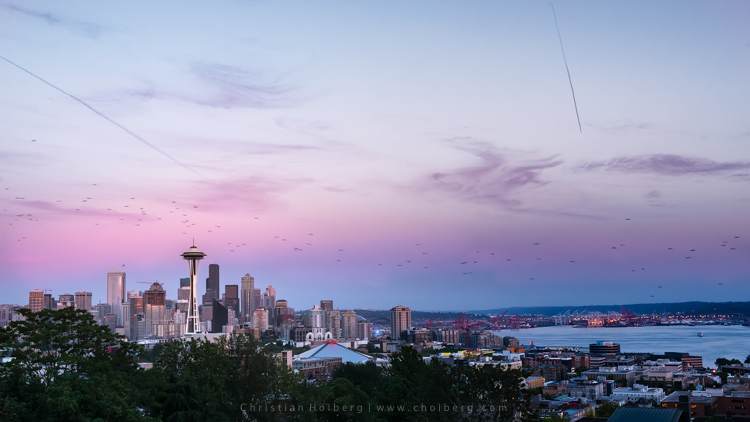
Kerry-Park-Sunset

Habit #1 – Charge your batteries

It might sound obvious that you should charge your batteries but you would be surprised how often I meet people that are out in the field without any battery power. In fact, I’m guessing you’ve experienced this yourself (don’t worry, so have I, and most other photographers too).

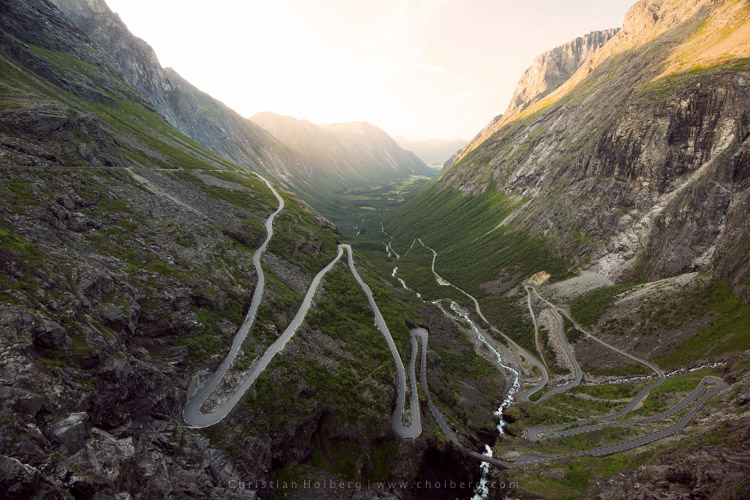
About a year ago I decided to take a seven hour drive to Åndalsnes in Norway, known for its spectacular landscape, in particular the iconic Trollstigen road. I had been there a few times before, but the weather was never ideal, so I wanted to go back and capture at least one good image. When I arrived at the scenic road and walked out to the viewpoint I managed to take a handful of pictures before my battery died. Weird, I thought, but no problem, I still have two spare batteries. Turned out both of them where empty too. I guess you can imagine my frustration when I realized that this entire trip was ruined because I had forgotten to charge my batteries.

trollstigen-sunset-glow

I managed to capture one decent image before my batteries died

I made it a habit after that incident to always charge my batteries after I come home from a trip, or evening out photographing. I set my batteries to charging even before I import my images, because I know if I don’t do it right away I may forget.

Habit #2 – Clean your equipment

Cleaning your camera gear is extremely important (especially for outdoor photographers) not only to lengthen the life of your equipment but also to improve image quality. I always get a bit upset when I view a beautiful image that is broken due to hundreds of small (or a few huge) dust spots. This is so unnecessarily, and easy to get rid of, so why let others believe you’re not as talented as you actually are.

Honestly, you don’t need more than a cheap microfiber cloth to remove dust and dirt from your lens or filters. Even though that is enough in most cases (and something that should always be in your camera bag), I do recommend purchasing a liquid lens cleaner too, as this helps get rid of all smudges and especially salty spots.

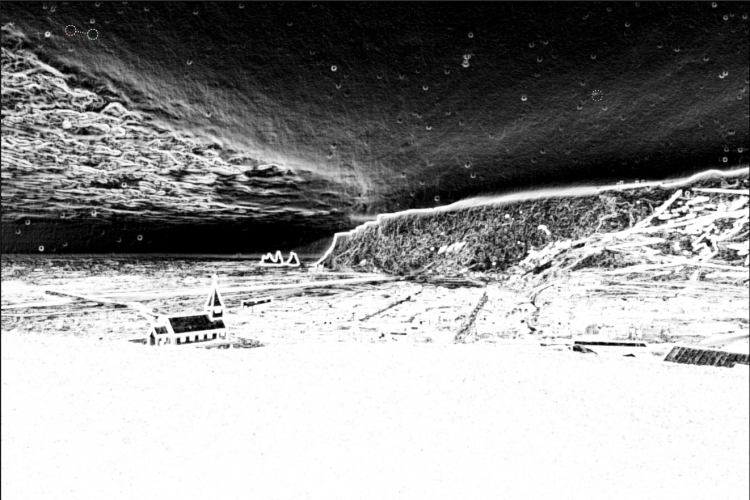
After bad weather on Iceland my lens was filled with dus spots

After bad weather on Iceland my lens was filled with dust spots, as you can see here in Lightroom.

I’ve made it a habit to clean my equipment after each photo trip that lasts more than a day. If I’m out photographing seascapes or in windy/rainy conditions, I usually spend an extra minute afterwards getting rid of the worst. Making this a habit will help save you a lot of time in post-production using tools such as Lightroom’s Spot Removal.

If you’re getting serious with your photography, and perhaps you have even began selling a print or two, it’s even more important to get rid of those nasty spots. Just imagine selling a large print, then seeing that those small spots suddenly look large and take away the attention of the image. Don’t make that mistake!

Habit #3 – Don’t leave before it’s over

My final habit is perhaps one of my most important advice for any outdoor photographer.

Don’t leave before it’s over!

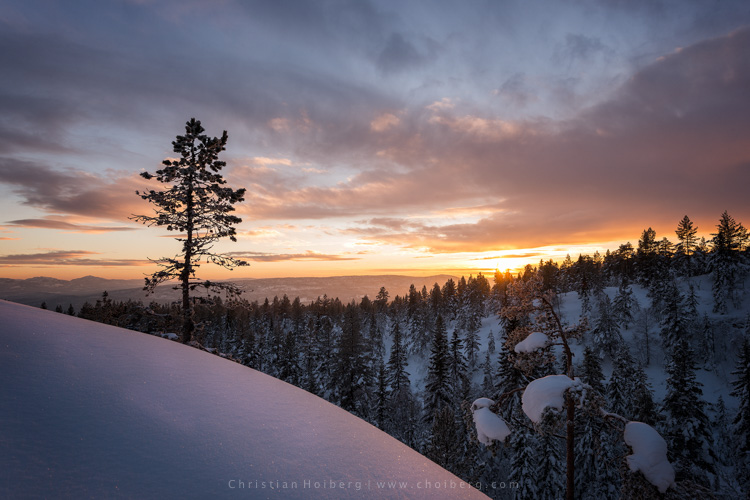
An unexpected sunset this winter in Norway

An unexpected sunset this winter in Norway

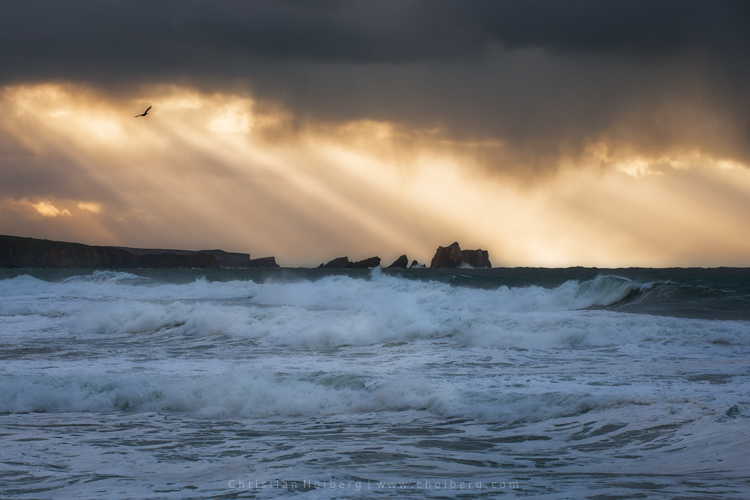
This is a habit I had to learn the hard way. It happened many times when I was an amateur photographer that I decided a sunrise or sunset wouldn’t turn into anything good, because the weather looked a bit shabby. Instead of staying at the location longer, I preferred to go home and hope for better conditions next time. What happened as I was driving back home? The sky turned red for just a few minutes.

Even though the conditions look a little dull it doesn’t mean that you won’t have a few minutes of good light. Alright, in most cases it doesn’t turn into something spectacular, but the times it does you will wish you had stayed for that 10-20 minutes extra.

So, remember this the next time you’re considering leaving early: it’s not over before it’s over. Stay a little bit longer, and perhaps you will be treated with great light that results in a portfolio worthy image. It’s worth it!

Bird flying through a stormy sunset at Liencres, Cantabria.

Bird flying through a stormy sunset at Liencres, Cantabria.

Are you guilty of missing these 3 habits? Have you developed any other habits, either in the field or when you’re back home? Let us know by leaving a comment below!

This week we are doing a series of articles to help you do nature photography. This is the first – watch for more coming soon! 

googletag.cmd.push(function() {
tablet_slots.push( googletag.defineSlot( “/1005424/_dPSv4_tab-all-article-bottom_(300×250)”, [300, 250], “pb-ad-78623” ).addService( googletag.pubads() ) ); } );

googletag.cmd.push(function() {
mobile_slots.push( googletag.defineSlot( “/1005424/_dPSv4_mob-all-article-bottom_(300×250)”, [300, 250], “pb-ad-78158” ).addService( googletag.pubads() ) ); } );

The post 3 Habits Every Outdoor Photographer Should Develop to Avoid Missing Shots by Christian Hoiberg appeared first on Digital Photography School.


Digital Photography School

 
Comments Off on 3 Habits Every Outdoor Photographer Should Develop to Avoid Missing Shots

Posted in Photography


Photographer captures kayakers with help from drone-mounted Speedlites

12 Jul

Australian adventure photographer and Canon Master Krystle Wright is the subject of a new video from Canon in which she details photographing kayakers with the EOS-1D X Mark II. Wright captures the kayakers dropping down a 60ft waterfall in near darkness with help from a drone rigged with two 600-EX Speedlites.

‘With the way the world is these days, there’s so many images being produced,’ she explains, ‘you really have to push hard to create something that is unique.’ We’d say the unique approach definitely paid off with some memorable shots.

Articles: Digital Photography Review (dpreview.com)

 
Comments Off on Photographer captures kayakers with help from drone-mounted Speedlites

Posted in Uncategorized


White House photographer Pete Souza reveals what’s in his bag

02 Jul
 ‘The Situation Room’, photo by Pete Souza. President Barack Obama and Vice President Joe Biden, along with members of the national security team, receive an update on the mission against Osama bin Laden in the Situation Room of the White House, May 1, 2011. 

There’s no photographer in the world with a job quite like Pete Souza’s. As Official White House photographer, Souza has to be ready to move at a moment’s notice. Familiarity with and trust in his gear is essential. So what’s in his photo bag? Surprisingly little, which actually makes a lot of sense.

Souza uses two Canon EOS 5D Mark III bodies. Introduced in 2012, it’s a full-frame 22MP DSLR that earned a gold award for its excellent image quality and versatility when we reviewed it.

Popular Science recently got a look at Souza’s kit and found two Canon 5D Mark III bodies and a trio of L-series lenses: a 135mm F2, 35mm F1.4 and a 24-70mm F2.8 II. Souza also keeps it simple when he isn’t shooting visiting dignitaries and state dinners: he uses a Fujifilm X100S in his downtime. 

You can keep up with Souza and the POTUS on Flickr and Instagram. 

Articles: Digital Photography Review (dpreview.com)

 
Comments Off on White House photographer Pete Souza reveals what’s in his bag

Posted in Uncategorized


Wildfire picture wins £3000 international Environmental Photographer of the Year Award

30 Jun

$ (document).ready(function() { SampleGalleryV2({“containerId”:”embeddedSampleGallery_1827965088″,”galleryId”:”1827965088″,”isEmbeddedWidget”:true,”standalone”:false,”selectedImageIndex”:0,”startInCommentsView”:false,”isMobile”:false}) });

The Chartered Institution of Water and Environmental Management (CIWEM) has announced the winners of its Environmental Photographer of the Year awards and given out £6000 (approx. $ 8000) in prizes as well as a job. The winner of the £3000 overall award is Swedish photographer Sara Lindstrom for a picture of a forest fire taken in Alberta, Canada.

Luke Massey took the £1000 Young Environmental Photographer of the Year award for pictures of a peregrine on a balcony in Chicago, and the Environmental Film of the Year, and £500, went to Sergiu Jiduc for a film called ‘The Karkoram Anomaly Project, Pakistan’ about dramatic climatic conditions that effect the Balti people in Pakistan.

SL Kumar Shanth from India won the Atkins Built Environment award that includes a year-long position of Photographer in Residence with design and engineering firm Atkins, while the Changing Climate award and £500 went to Sandra Hoyn and the People, Nature and Economy Award and £1000 went to Pedram Yazdani.

The winning images will be included in a 60-picture exhibition that will be held at the Royal Geographic Society in London from 29th June to 19 August 2016. The exhibition will then tour to Grizedale Forest, supported by Forestry Commission England, from 3 September 2016 until 1 January 2017. For more information on the exhibition and the awards visit the Environmental Photographer of the Year website.

Articles: Digital Photography Review (dpreview.com)

 
Comments Off on Wildfire picture wins £3000 international Environmental Photographer of the Year Award

Posted in Uncategorized