RSS
 

Posts Tagged ‘Photographer’

Picture of school boy in uniform wins Swiss photographer £15,000 Taylor Wessing prize

17 Nov

$ (document).ready(function() { SampleGalleryV2({“containerId”:”embeddedSampleGallery_4662939106″,”galleryId”:”4662939106″,”isEmbeddedWidget”:true,”standalone”:false,”selectedImageIndex”:0,”startInCommentsView”:false,”isMobile”:false}) });

London’s National Portrait Gallery has announced the winner of its annual Taylor Wessing Photographic Portrait Prize, with Swiss photographer Claudio Rasano scooping the top award of £15,000. The winning image, of a school boy from South Africa, was part of a series studying how people can remain individuals while wearing the same uniforms. Rasano has featured in the short list for the prize in two previous years, but this is the first time he has won.

Second prize went to Joni Sternback for a tintype portrait of a pair of surfers which won him £3000, while the £2000 third prize went to Kovi Konowiecki for a picture of a pair of Jewish girls. Both photographers are from America.

The competition also provides an additional £5000 prize for a photographer under the age of 35, which was won by the UK’s Josh Redman. His John Kobal New Work Award grants him a commission to photograph someone from the UK film industry for the gallery’s collection.

The winning images, along with over fifty other entries, can be seen at the National Portrait Gallery in London until the 26th February. Entrance is £6. For more information visit the National Portrait Gallery website.

Press release

CLAUDIO RASANO WINS TAYLOR WESSING PHOTOGRAPHIC PORTRAIT PRIZE 2016 FOR HIS PHOTOGRAPH OF A JOHANNESBURG SCHOOLBOY

Claudio Rasano won the Taylor Wessing Photographic Portrait Prize 2016 for his portrait of a Johannesburg schoolboy, the National Portrait Gallery has announced. The prestigious £15,000 award was presented to the Swiss-Italian photographer at an awards ceremony last night (Tuesday, 15 November 2016).

The winning portrait, part of Rasano’s series Similar Uniforms: We Refuse to Compare, was taken in February 2016, in Johannesburg, South Africa and focuses on issues of preserving individuality in the context of school uniforms. The photograph was shot in daylight, outdoors and in front of a plain white paper background. The sitter for this particular inkjet print is eighteen-year-old Katlehong Matsenen.

Rasano explains: “Children themselves have been known to rebel against uniforms, especially as they approach the awkward age characterised by the need to fit in and the desire to stand out, all at the same time. Some experts too have spoken against school uniforms on the grounds that they suppress individuality and diversity.”

Claudio Rasano was born in 1970 in Basel, Switzerland. His work has been included in numerous international exhibitions and previously featured in the Taylor Wessing Photographic Portrait Prize in 2011 and 2013. Rasano’s awards include the Shortlist for the Athens Photo Festival, 2016; Bieler Fototage 2015; Leica Oskar Branack Prize 2015 and a finalist in the Photography Masters Cup 2015.

Second prize has been awarded to Joni Sternbach’s large-format tintype portrait of surfers Thea Adler and Maxwell Schultz and third prize has gone to Kovi Konowiecki for his photographs Shimi Beitar Illit and Tilly and Itty Beitar Illit part of a series of inkjet prints that portray Orthodox Jews from around the world. The John Kobal New Work Award, worth £5,000, was won by Josh Redman for his portrait, Frances.

The winning portraits will be on display as part of the Taylor Wessing Photographic Portrait Prize 2016 exhibition from 17 November 2016 to 26 February 2017. The annual exhibition is one of the most prestigious photography awards in the world and showcases new work that has been submitted by some of the most exciting contemporary photographers. Since the international competition began in 1993, it has remained a hugely important platform for portrait photographers and offers an unparalleled opportunity for celebrated professionals, emerging artists and amateurs alike.

The competition judges had no knowledge of the identity of the entrants, and the diversity of styles in the exhibition reflects the international mix of entries as well as photographers’ individual and varied approaches to the genre of portraiture. For the second time, photographers were encouraged to submit works as a series in addition to stand-alone portraits, and there was no minimum size requirement for prints. This year, for the first time, the rules also allowed photographers to submit photographs on different supports to the competition – to encourage the demonstration of a range of different photographic processes.

The prize-winning photographs and those selected for inclusion in the exhibition were chosen from 4303 submissions entered by 1842 photographers from 61 countries.

Dr Nicholas Cullinan, Director, National Portrait Gallery, says ‘My congratulations to Claudio Rasano for his winning portrait of schoolboy Katlehong Matsenen taken in Johannesburg earlier this year. The quality and diversity of both this year’s shortlist and exhibition are a testament to the engaging work being produced by international photographers. Each and every photographer who entered has contributed their part to the debate and evolution of contemporary portrait photography.’

Tim Eyles, Managing Partner, Taylor Wessing LLP, says: ‘One of the great joys and honours of sponsoring the Taylor Wessing Photographic Portrait Prize for the past nine years- and being part of the judging panel- is having the rare opportunity to catch an intimate glimpse into the lives of people from around the world. Each winning portrait tells a different, unique story and builds a genuine connection between the viewer, the subject and the photographer. I hope that you will share our enjoyment of the photographs in this year’s exhibition, and join me in congratulating the photographers whose portraits are featured.’

American artist Joni Sternbach was born in the Bronx, New York and is a Visiting Artist at Cooper Union School of Art, faculty member at the International Centre of Photography and The Penumbra Foundation in New York, where she teaches wet plate collodion. Sternbach uses early photographic processes to create contemporary landscapes and environmental portraits, centring on man’s relationship to water. Her series Surfland, features large-format tintype portraits of surfers. Her prize-winning portrait was taken in February 2016 at Davenport Landing, Santa Cruz, California, USA. Sternbach says: ‘For me, this photograph represents many of the challenging aspects of creating a portrait. I was in an entirely new location and faced with people I’d never met before. In this spectacular environment, I aimed to create a dynamic complexity within the picture that was both unique to that person and also understandable to others.’

American artist Kovi Konowiecki was born and raised in Long Beach, California. After pursuing a professional career in football, Konowiecki is in the final stages of an MA in photography at the University of the Arts, London. His work lies between documentary and fine art, often focusing on portraiture and telling stories that also reveal his identity, and his experiences of growing up in Long Beach. Shimi Beitar Illit and Tilly and Itty Beitar Illit are part of a series of inkjet prints that portray Orthodox Jews from around the world. The colours and floral background create a painting-like quality, highlighting the mysticism of the subjects and their association with a history that many may find unfamiliar.

Konowiecki explains: ‘When I set out to photograph the faces of Orthodox Jews around the world, it was an attempt to both strengthen my ties to my family’s history and shed light on the traditions of a people that seem strange to modern society. The project started by contacting members of the Jewish community from where I grew up, and evolved into travels across the world to capture Orthodox Jews who, although they live thousands of miles apart, are bound together by history, tradition and a set of values that serve as the cornerstone of the lives of many who live in today’s society.’

£5,000 John Kobal New Work Award: Josh Redman for Frances

The £5,000 John Kobal New Work Award has been awarded to Josh Redman for his photograph Frances, from an on-going series of pared down studio portraits. Redman says, ‘This was Frances’s first serious photo shoot, and it’s an honour to have been part of her initiation into modelling at age 83. During the 3-hour sitting we chatted over pastries about her late husband, the War, her lifelong job as a typist and her daughter Tineka.’ Born in the UK in 1984, Redman was a sculptor and potter until 2012 when he decided to sell his kiln, buy a camera and move to London. Since then he has worked as a freelance photographer, winning the AOP Assistant Award in 2014 and has been commissioned by Adidas, SKY TV and The British Museum amongst others.

The John Kobal New Work Award is given to a photographer under thirty-five whose work has been selected for the Taylor Wessing Photographic Portrait Prize exhibition. The winner receives a cash prize of £5,000 to include undertaking a commission to photograph a sitter connected with the UK film industry for the Gallery’s Collection.

The competition was judged from original prints by Dr Nicholas Cullinan, Director, National Portrait Gallery; Dr Phillip Prodger, Head of Photographs, National Portrait Gallery; Carole Sandrin, Curator, Musée de l’Elysée, Lausanne; Christiane Monarchi, Editor Photomonitor; Nadav Kander, Photographer and Tim Eyles, Managing Partner, Taylor Wessing LLP.

The exhibition also features an In Focus display of previously unseen prints from a new body of work by the award-winning Spanish photographer, Cristina de Middel. The photographs, making their international debut in the exhibition, are part of the series ‘Gentleman’s Club’, taken of prostitutes’ clients in brothels in Rio de Janeiro, Brazil. By recruiting her sitters through a newspaper advert, she inverted the normal roles of the business by placing herself in a position of power. Sitters were asked about their experience, personal history and motivations. In Focus is an annual showcase for new work by an internationally-renowned photographer, which is exhibited alongside the images selected for the Taylor Wessing Photographic Portrait Prize 2016. De Middel is the second In Focus artist, selected by the Gallery’s curators, following last year’s inaugural display which featured the work of Pieter Hugo.

TAYLOR WESSING PHOTOGRAPHIC PORTRAIT PRIZE 2016
17 November 2016 – 26 February 2017
Tickets with donation: Full price £6, concessions £5 / Tickets without donation: Full price £5, concessions £4 (Free for Members and Patrons) Supported by Taylor Wessing npg.org.uk/photoprize #photoprize

PUBLICATION
A fully illustrated paperback catalogue including all photographs from this year’s exhibition features an interview with the In Focus photographer Cristina de Middel and interviews with the prize-winners by Richard McClure. RRP £15 with a special price of £9.99 when purchased directly from the National Portrait Gallery shops.

Prizes: First prize is £15,000, second prize is £3,000, and third prize is £2,000. The winner of the John Kobal New Work Award receives £5,000.

Tour: The exhibition will tour to Sunderland Museum and Winter Gardens from 18 March – 4 June 2017 and The Beaney House of Art and Knowledge, Canterbury from 8 July – 29 October 2017.

Articles: Digital Photography Review (dpreview.com)

 
Comments Off on Picture of school boy in uniform wins Swiss photographer £15,000 Taylor Wessing prize

Posted in Uncategorized


Announcing the winners of USA Landscape Photographer of the Year 2016

01 Nov

USA Landscape Photographer of the Year 2016 Winners

Sunrise light illuminates Mount Rainier as it rises above low clouds, seen from high above Tipsoo Lake, Washington. Adult Overall Winner 2016. Photo by Alex Noriega

Nikon D600, 35mm, ISO 100, F11, shutter speed unknown

We’re pleased to announce the winners of the 2016 USA Landscape Photographer of the Year Awards! From thousands of entries, Oregon-based Alex Noriega’s photo of a misty Mount Rainier at sunrise was selected as the overall winner. Youth winners were also selected for the comptetitions categories, with Hawaii’s Raiatea Arcuri taking the overall Youth award for a stunning image of water flowing over coastal lava tubes.

We’re also excited to co-present a Special Award category, Life in Landscape. You can see the winner of that category and all of the other winning images by flipping through the slides above. For more information about the contest, visit their website. 

Press release:

The winners are announced
1st November 2016

A visually stunning and dramatic view of Mount Rainier has won the top prize in this year’s search for USA Landscape Photographer of the Year’s winning entry. Portland based photographer, Alex Noriega becomes the third person to win the overall title and the $ 15,000 prize. His picture of Mount Rainier as it rises above low clouds, seen from high above Tipsoo Lake was chosen, by the judges, from the thousands of entries received from over 40 countries across the globe, all celebrating the beauty and free spirit of the American landscape.

Charlie Waite, one of Britain’s leading landscape photographers and founder of the Awards spoke about this year’s competition:

“Apart from the pleasure I enjoy from my own landscape photography, there can be few experiences that come near the huge enjoyment and admiration that I have had from looking at photographs submitted to the USA Landscape Photographer of the Year.

I have been truly overwhelmed by the high quality, considered and finely crafted images that we have seen from so many talented photographers who have contributed for the third USA Landscape Photographer of the Year 2016.

From the start of the contest, the standard of landscape photography has been as high as it ever has been. The wonderful images that I have seen are testament to not only every photographer’s passion but for the obvious joy they receive from their creativity and indeed from fully engaging with some of the greatest landscapes on the planet.”

The Young Landscape Photographer of the Year title has been awarded to Raiatea Arcuri, who captured coastal lava tubes along the Kona coast on the Island of Hawaii. Raiatea said of his image “What makes the Big Island special is the presence of lava tubes around the island. Some of these lava tubes at the coast will make amazing water motion as the waves push water in and out. It can be quite an epic experience capturing it. The water can easily surge up to your waist level and quickly recede back into the tube, creating a nice waterfall.”

For the first time this year, the Awards are being held in association with DPReview and Amazon. Life in the Landscape, The Digital Photography Review Special Award was offered for the photograph judged to best convey how people interact with the American landscape. Michael Shainblum’s Endless which saw Michael endure extreme heat as it was about 105 degrees fahrenheit, certainly met the requirements for this Award and captures a truly magical moment.

Congratulations also goes to the winner of this year’s other Special Award. Wild Landscape, The Future Publishing Award was won by Terrence Bond for his photograph The Real Duck Dynasty which was taken on the Clarence Canon Wildlife Refuge, Annada, Mo on the migratory highway, on the west side of the Mississippi River.

2016 Results:

Adult Winner – Alex Noriega – Sunrise light illuminates Mount Rainier
Winner – Classic View – James Menzies – Main Strike, Grand Canyon National Park
Runner Up – Classic View – Long Nguyen – Lost, Boardman Farm, Oregon
Winner – Black and White – Terry Koyama – Waimea Bay Beast, Hawaii
Runner Up – Black and White – Michael Ryan – Waimea Bay Beast, California
Winner – My USA – Az Jackson – A lone figure of a man on Brooklyn Bridge, New York Runner Up – My USA – Michael Shainblum – Thunder Mountain, Eastern Sierra Mountains Winner – Urban – Souvik Dutta – Caged, Orlando, Florida
Runner Up – Urban – Jennifer Vahlbruch – 75 Stages of Life, Miami, Florida
Winner – Environmental Value – Terry Koyama – Mammatus Makers, Kansas
Runner Up – Environmental Value – Yoshiki Nakamura – Sunset flight in Fir Island, Mt Vernon
Winner – DPReview Special Award – Michael Shainblum – Endless, Fonts Point, Anza Borrego Desert
Runner Up – DPReview Special Award – Sapna Reddy – Escape the Ordinary, Mt Tamalpais, Marin County
Winner – Future Publishing Special Award – Terrence Bond – The real Duck Dynasty, Missouri
Runner Up – Future Publishing Special Award – Ashish Varma – Autumn fog over Grand Tetons, Wyoming

Youth Winner – Raiatea Arcuri – Coastal lava tubes in Kona, Hawaii
Winner – Classic View – Mark Rivera – Lamar Valley, Autumn Foliage, Yellowstone National Park, Wyoming
Winner – Black and White – John Morris – Sunset Light Show, California
Winner – My USA – Raiatea Arcuri – Plume Cloud from the active Halemaumau Crater, Hawaii
Winner – Urban – Kyle Wolfe – The Golden Gate Bridge as seen from Fort Point, San Francisco, California
Winner – Environmental Value – Mark Basarab – Fiery Sunset Yosemite National Park, California
Winner – DPReview Special Award – Mark Basarab – Point Reyes Slanted Tree, California Winner – Future Publishing Special Award – Kyle Wolfe – Navajo Sandstone of Antelope Canyon, Arizona

Contact: info@usalpoty.com for images to accompany this release or to organize interviews with Awards founder, Charlie Waite, and/or Award winners.

Please note that all images and/or logos supplied by or on behalf of USA Landscape Photographer of the Year remain the copyright of their respective photographers. They may only be used for press/promotional purposes in direct connection with the USA Landscape Photographer of the Year Awards and must be credited.

More information: www.usalpoty.com

USA Landscape Photographer of the Year 2016 Winners

Coastal lava tubes in Kona, HI cause the water to flow in and out creating beautiful water motion. Youth Winner 2016. Photo by Raiatea Arcuri 

Sony A6000, ISO 100, 0.4 sec, F11, 12mm (Rokinon 12mm)

USA Landscape Photographer of the Year 2016 Winners

Waimea Bay Beast, Oahu, Hawaii. B&W Winner. Photo by Terry Koyama

Canon 5D Mark III with Canon EF200-400mm F4L lens 1/640 sec, F5.6, ISO 800

USA Landscape Photographer of the Year 2016 Winners

Sunset Light Show. B&W Winner Youth. Photo by John Morris

Nikon D800, 1/250th, F9, ISO 160

USA Landscape Photographer of the Year 2016 Winners

Main Strike. Grand Canyon National Park. Classic Winner. Photo by James Menzies

Canon EOS 5D Mark III. ISO 320, F10, focal length 26mm on a 17-40mm Wide lens. Bolt occurred during 19.9 second exposure

USA Landscape Photographer of the Year 2016 Winners

Lamar Valley, Autumn Foliage, Yellowstone National Park, Wyoming. Classic Winner Youth. Photo by Mark Rivera

Nikon D750, Nikkor 300mm lens, F6.7 for 1/640 second, ISO 250

USA Landscape Photographer of the Year 2016 Winners

“Endless” This image is a self portrait taken at Fonts Point in the Anza Borrego Desert. DPReview Special Award. Photo by Michael Shainblum

Canon EOS 6D, Rokinon 14mm F2.8 25sec F2.8 ISO 3200

USA Landscape Photographer of the Year 2016 Winners

Point Reyes Slanted Tree, California. DPReview Special Award Youth. Photo by Mark Basarab

Canon Rebel T3i 1/1000sec F3.5 ISO 800

USA Landscape Photographer of the Year 2016 Winners

Mammatus Makers, Kansas. Environmental Value. Photo by Terry Koyama

Sony a7R II with Sony Vario-Tessar T* FE 16-35mm F4 ZA OSS 1/4sec, F8.0, ISO 100

USA Landscape Photographer of the Year 2016 Winners

Fiery Sunset Yosemite National Park, California. Environmental Value Youth Winner. Photo by Mark Basarab

Panasonic Lumix G5 1/400sec F3.5 ISO 160

USA Landscape Photographer of the Year 2016 Winners

The real Duck Dynasty. Future Publishing Special Award Winner. Photo by Terrence Bond

Canon EOS 1D Mark IV, Canon EF 600mm F4L IS, 7.5 MB, JPEG, ISO 125 840mm, F7.1 1/400 sec

USA Landscape Photographer of the Year 2016 Winners

A mysterious lone figure with an umbrella walking from the arches of the Brooklyn Bridge in New York City. My USA Winner. Photo by Az Jackson

Canon 5D Mark II – ISO: 800, F5.6, 1/40 sec. – Focal Length: 24mm

USA Landscape Photographer of the Year 2016 Winners

An interesting plume cloud from the active Halemaumau Crater with steam pluming from the vents below in Kilauea Iki Crater in Volcanoes National Park. My USA Youth Winner. Photo by Raiatea Arcuri

Sony A7S, ISO 500, 20 sec, F2.8, 24mm (Rokinon 24mm)

USA Landscape Photographer of the Year 2016 Winners

Caged (Orlando). Urban Winner. Photo by Souvik Dutta

Canon EOS 70D 1/1328 sec, F8, ISO 200, Focal Length 10mm (16 mm – 35 mm equivalent)

USA Landscape Photographer of the Year 2016 Winners

The Golden Gate Bridge as seen from Fort Point in San Francisco. The eye is led into this circular composition by the careful placement of a rustic metal chain. Urban Winner Youth. Photo by Kyle Wolfe 

Sony A7, Sony 28mm F2, B+W 10 stop ND filter Manual exposure, F22, 30 seconds, ISO 64, 28mm

Articles: Digital Photography Review (dpreview.com)

 
Comments Off on Announcing the winners of USA Landscape Photographer of the Year 2016

Posted in Uncategorized


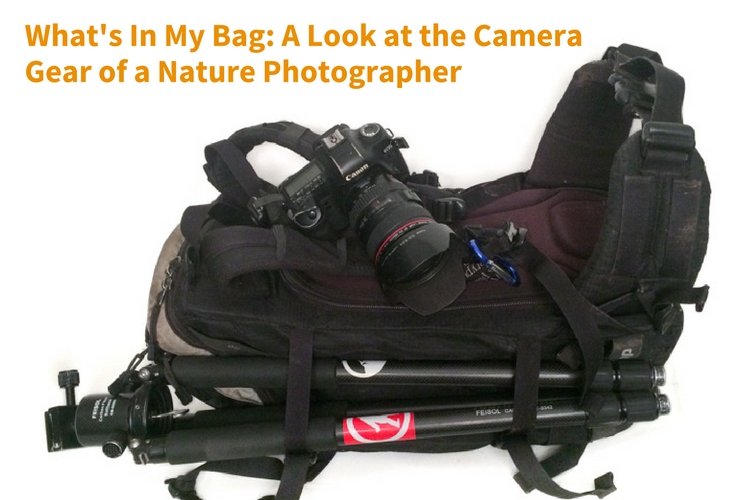
What’s In My Bag: A Look at the Camera Gear of a Nature Photographer

27 Oct

Being a landscape or nature photographer is like enjoying ice cream and having unlimited choice in the ice cream shop. There are so many different kinds of images to make, and different ways of making them in the outdoors, that having a wide variety of gear to choose from is important. This article will take you on a little journey through what’s in my bag. From my own camera gear to the different tools that I use to help me photograph the scenes in nature that capture my attention, and turn ordinary life into extraordinary art.

whats-in-my-bag-a-look-at-the-camera-gear-of-a-nature-photographer

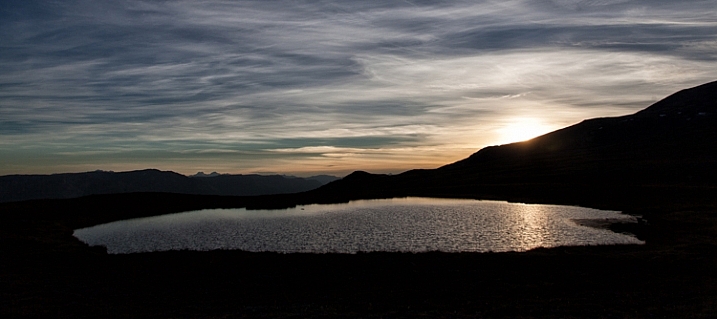
sunset reflected in water

Hudson Bay Mountain Sunset

The Backpack

camera-bag-gear-02

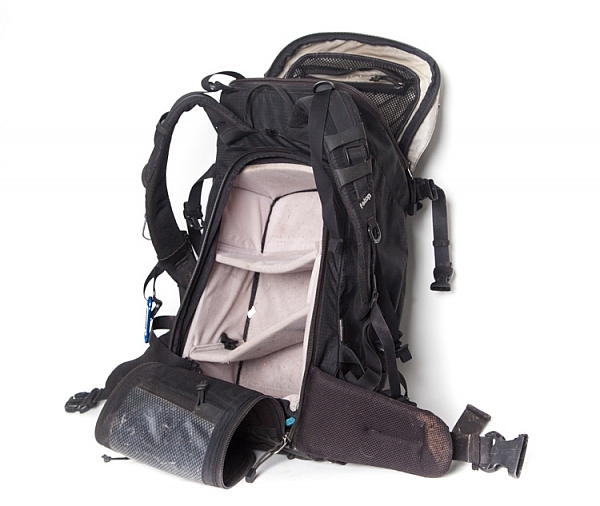
The biggest piece of gear I use is the Tilopa backpack from f-stop. It’s a rugged 50L pack that’s well suited for a wide variety of outdoor scenarios. There are all manner of straps and zippered compartments both outside and inside the pack that are useful for attaching and storing both large and small pieces of equipment. There are three things however that have proven to be especially valuable to me:

  1. Rear Panel Access – instead of just having access to the inside from the top, the Tilopa has a zippered section that allows you access to the bag when you lay it on the ground. This is helpful when you have gear at the bottom of the pack and you don’t want to excavate everything on top of it to get access (as you’d have to do when going in from the top as is typical in a lot of other backpacks).
  2. Internal control unit (ICU) – ICU’s come in different sizes and shapes and allow you to organize and protect your camera equipment. My Tilopa allows for a large ICU with space at the top of the pack for a jacket or food depending on my needs. The backpack also has attachment points that you can use to secure your ICU to the inside of the pack. One really nice feature is that the ICU itself can be zippered shut and removed or carried. If you fly a lot and find that your pack is overweight, you can remove the ICU with your valuable gear and take it with you on the plane while checking the rest of the bag.
  3. Padded Hip Belt – to carry some of the weight on my hips.

Backup Camera Bodies

camera-bag-gear-03

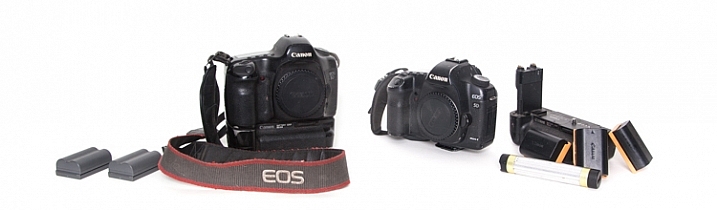
The first digital SLR I owned was the Canon 5D. It was such a huge step up, both in price and quality from its predecessor (a film Canon Rebel). I remember being amazed at how much more of the scene I saw when looking through the viewfinder (thanks to the full-frame sensor). In 2007 I purchased an additional body (Canon 5D Mark II), which meant that I now had a backup. Having two cameras available for use provides a nice sense of security, knowing if one has issues, there won’t be any loss of productivity. The main differences between the two bodies that I appreciate are the live view, greater dynamic range, and higher resolution screen that the 5D MK II provides.

Extra Batteries – Charging Devices

Having spare batteries is especially important when I am out shooting for extended periods of time, or I am photographing winter scenes. I also appreciate having grips for each of my camera bodies that gives me the option of going out with two batteries at a time.

Another situation where a longer battery life is appreciated is when I shoot time-lapse sequences. I can shoot several thousand images at a time and it’s nice to know that I can leave the camera firing away with ample power, and not have to continually come back and check to make sure the battery hasn’t died.

Not only do I have backup camera batteries, but I also had a portable battery charger (Goal Zero Switch 8) for my phone. I say HAD because I used it so much it’s worn out. I am planning on purchasing an upgraded power charger soon. This device can be charged at home by plugging it into a USB port, and then used in the field to recharge a phone (or other devices such as headlamps).

Image Storage

camera-bag-gear-04

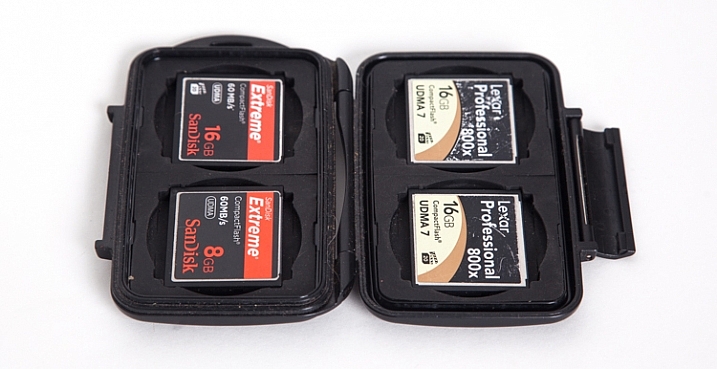
Apart from the Compact Flash (CF) cards in the cameras, I also carry a small (older model) Pelican case with room for 4 CF cards. The majority of my cards are 16GB, but I also carry a 2GB one as an emergency backup in a small pocket in my backpack.

Apart from the flexibility that having multiple cards provides, I sincerely believe in redundancy. You never know when a card might fail, and so to be ready on the occasion that one does, it’s nice to know you can keep shooting. Most of the time I don’t fill the 16GB cards to capacity when I’m out for the day on a photo-adventure. There are occasions however when I’m on a commercial job where having multiple cards is an absolute must.

Lenses

camera-bag-gear-05

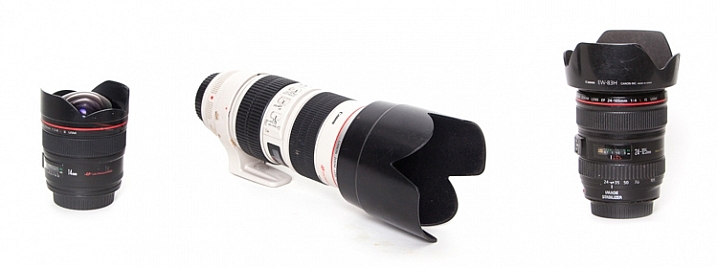
The three lenses I have are all Canon L-series glass.

  • 14mm, f/2.8: This wide-angle prime lens is really useful for capturing wide open vistas. It also comes in handy when you find yourself in tight quarters and don’t have a lot of physical depth between you and your subject. The trick when you’re really close though, is to make sure your main subject is near the center of the frame. Because of the nature of this almost fish-eye lens, objects near the corners of the frame have exaggerated perspectives. It’s almost as if they are unnaturally stretched. (Price it out on Amazon or at B&H)
  • Canon 24-105mm, f/4: This is the lens that I have on my camera the most, primarily because it has the greatest degree of flexibility when it comes to focal length.
  • 70-200mm, f/2.8: Every once and while I go out with the goal of focusing on more detailed aspects of nature, rather than a wide-angle view of a scene. The added focal length as compared to the 24-105mm lens helps me to do that. The large aperture can also provide a nicely blurred background when the need arises.

Tripod

camera-bag-gear-06

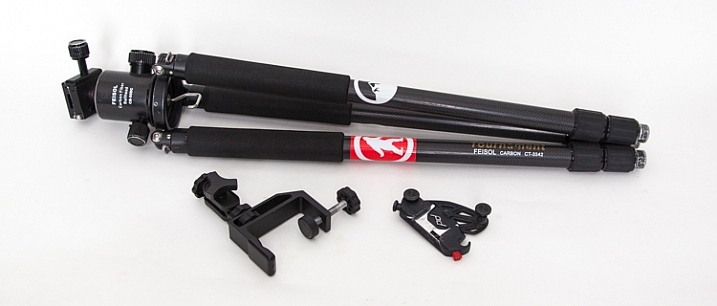
My current tripod is the carbon-fibre Feisol CT-3342 with a Feisol CB-50DC ball head. This allows for flexibility when composing your image and also has the capability to rotate when the camera is locked in place (there are degree markings to help when specific movements are required, for example when doing panoramas). There is a tiny removable hook (which you can hang things from) that screws in underneath the head which is useful when it’s windy and you need that extra measure of stability.

The tripod has 3-section adjustable legs that extend or contract with the simple twist of a rubber ring. One of my favourite features (as I do a lot of winter photography), is the screw-in metal spikes that attach to the bottom of the tripod legs. These come in handy when I’m out on ice, or other slippery situations, to keep the tripod secure during each exposure the camera makes.

I also have a small tripod clamp that comes in handy in situations where using a tripod simply isn’t possible.

A relatively new purchase has been the Capture Pro from Peak Design. This is a device that I attach to the shoulder strap of my backpack and then click my camera (with the appropriate shoe) into it. So the camera is always close at hand when I go out on my adventures. It means every time I want to make a photograph, I can just reach down and release the camera from the clip instead of stopping and getting the camera out of the backpack.

Shutter Release Mechanisms

camera-bag-gear-07

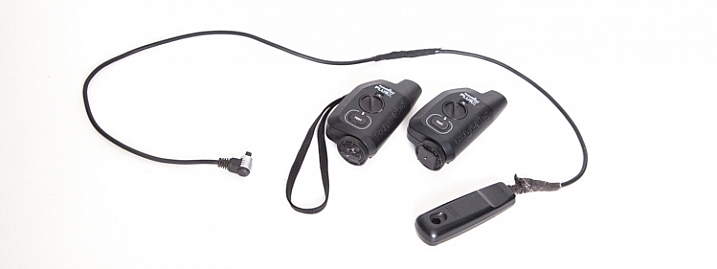
There are two different ways that the shutter on the camera can be activated. First of all, a wired shutter release can be plugged into the side of the camera.

You can accomplish hands-free shutter release wirelessly as well. The Pocket Wizard PlusX transceivers are the ones that I use. One gets attached on your camera’s hot-shoe and plugged into the appropriate port on the side of the camera. Then as long as that device and the second one you can hold in your hand (or even on another camera) are both set to the same channel, when the remote device is triggered, the transceiver on the hot-shoe will fire the camera.

Why remote triggering? It’s very useful in low-light situations where a sharp image is required and hand-holding the camera is not possible. It’s also absolutely essential when doing long exposures.

Promote Control

camera-bag-gear-08

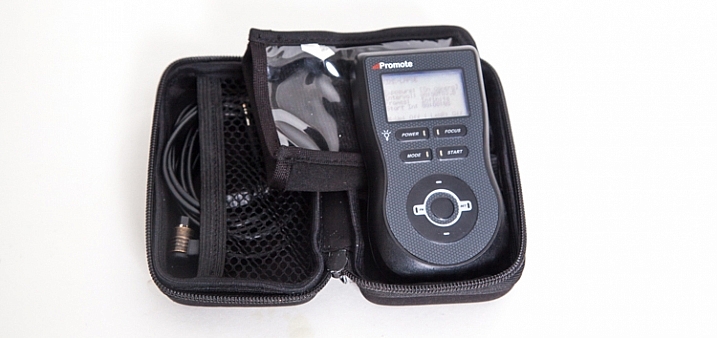
This remote control device can be used for a number of different things, including bulb-ramping and focus stacking. However the most commons things I use it for are my time-lapse sequences and HDR bracketing.

LEE Big Stopper

camera-bag-gear-09

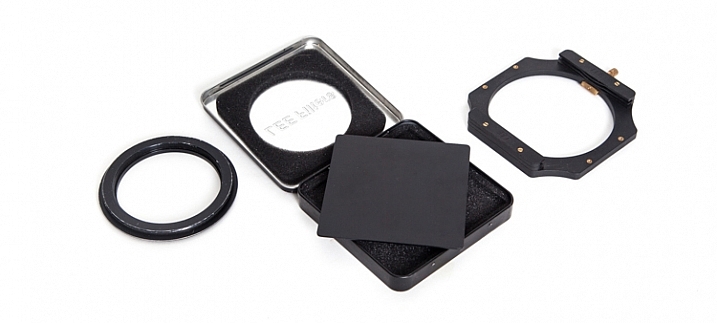
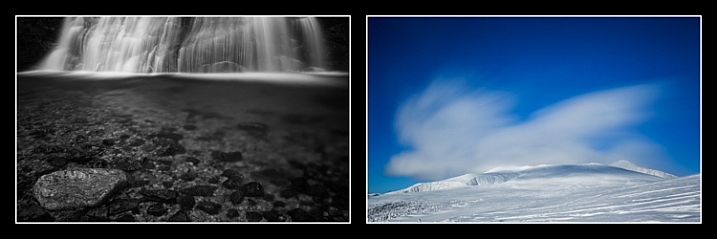
Essentially this is a piece of glass that allows me to make long exposures beyond the normal capabilities of my camera. Practically, it’s a 10-stop neutral density filter that allows me to make a long exposure of a waterfall and turn raging water into silky smoothness. I also use it to capture the motion of clouds in the sky. There is the 4″x4″ piece of glass that slides into a holder, which itself attaches to the camera via a ring that screws into the end of the lens.

Waterfall: 30 seconds, f/4, 12:36pm
Clouds: 30 seconds, f/14, 12:03pm

Other Equipment

There are a few other pieces of equipment that find their way into my pack every once and a while:

camera-bag-gear-10

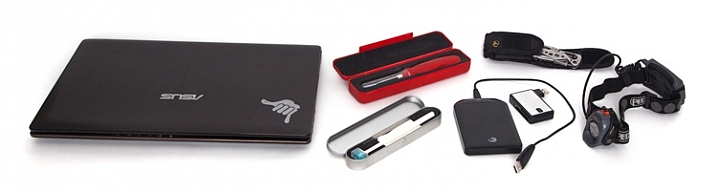
  • Tools for cleaning the camera sensor: I have an older version of the Visible Dust Arctic Butterfly as well as a sensor gel stick.
  • A laptop CF card reader adapter for extended trips where I’m away from my office and need image storage and editing capability.
  • An external hard drive for image backup.
  • Camera battery charging devices
  • Phone for safety
  • Lens cloth
  • Leatherman multi-tool device
  • Headlamp

Final Thoughts on Camera Gear

There you go, a fully-loaded backpack that weighs 35 pounds (15.9 kg). Thankfully not everything comes with me all the time, my back would definitely have something to say about that. With the years I’ve been doing photography, picking and choosing the tools that best suit the goals I have on any given day is what helps me turn ordinary life into extraordinary art.

What tools do you use? Please share in the comments below.

googletag.cmd.push(function() {
tablet_slots.push( googletag.defineSlot( “/1005424/_dPSv4_tab-all-article-bottom_(300×250)”, [300, 250], “pb-ad-78623” ).addService( googletag.pubads() ) ); } );

googletag.cmd.push(function() {
mobile_slots.push( googletag.defineSlot( “/1005424/_dPSv4_mob-all-article-bottom_(300×250)”, [300, 250], “pb-ad-78158” ).addService( googletag.pubads() ) ); } );

The post What’s In My Bag: A Look at the Camera Gear of a Nature Photographer by Curtis Cunningham appeared first on Digital Photography School.


Digital Photography School

 
Comments Off on What’s In My Bag: A Look at the Camera Gear of a Nature Photographer

Posted in Photography


Starling vortex wins £10,000 Landscape Photographer of the Year prize

25 Oct

2016 Take a View Landscape Photographer of the Year winners

Landscape Photographer of the Year 2016 Matthew Cattell – Starling Vortex, Brighton, East Sussex, England

The winners of the 2016 Take a View Landscape Photographer of the Year competition have been announced, with a shot of a flock of starlings flying in front of Brighton Pier taking the top prize. The competition, which accepts entries from around the world of pictures taken in the UK, is in its tenth year, and is run by landscape photographer Charlie Waite.

There are ten main categories for manipulated and un-manipulated images taken by adults and by those 17 years and under, as well as additional competitions for supported by sponsors – such as railway company Network Rail’s Line in The Landscape, Adobe and the Visit Britain tourist service. The top prize is £10,000 and category winners receive £1000 or £500 for the youth prizes.

Commended and runner up photographers get their images published in the Landscape Photographer of the Year book, and an exhibition of selected images runs at London’s Waterloo station for 12 weeks from 21st November.

For more information and to see more of the winning images visit the Take A View website. You can also read our interview with Charlie Waite.

2016 Take a View Landscape Photographer of the Year winners

Adult Classic view – Winner Dougie Cunningham – Shelter from the Storm, Loch Stack, Sutherland, Scotland

2016 Take a View Landscape Photographer of the Year winners

Adult Classic view – Highly commended Scott Robertson – Binnein Beag through Steall, Scottish Highlands

2016 Take a View Landscape Photographer of the Year winners

Adult Classic view – Runner-up Scott Robertson – Stob Dearg, Buachaille Etive Mor, Glencoe, Scotland

2016 Take a View Landscape Photographer of the Year winners

Network Rail ‘Lines in the Landscape’ Award – Winner Francis Taylor – Sunshine breaks through, Ribblehead Viaduct, North Yorkshire, England

2016 Take a View Landscape Photographer of the Year winners

The Sunday Times Magazine Award – Winner Rachael Talibart – Maelstrom, Storm Imogen, Newhaven, East Sussex, England

2016 Take a View Landscape Photographer of the Year winners

Adult Living the view – Winner Martin Birks – Chrome Hill, Peak District, Derbyshire, England

2016 Take a View Landscape Photographer of the Year winners

The GREAT Britain #OMGB Award – Winner Mark Gilligan – Finding Gold, Wast Water, Cumbria, England

2016 Take a View Landscape Photographer of the Year winners

The Adobe Prize – Winner Damian Ward – Caister-on-Sea, Norfolk, England

2016 Take a View Landscape Photographer of the Year winners

Adult Your view – Winner Tony Higginson – Shifting sands, Silverdale, Lancashire, England

2016 Take a View Landscape Photographer of the Year winners

Adult Your view – Runner-up Daniel Pecena – A82, Glen Coe, Highland, Scotland

2016 Take a View Landscape Photographer of the Year winners

Young Landscape Photographer of the Year 2016 Hannah Faith Jackson – Mirror Bar, Glasgow, Scotland

2016 Take a View Landscape Photographer of the Year winners

Youth Living the view – Winner Rowan Ashworth – Sunset Explorer, Hushinish, Isle of Harris, Scotland

Articles: Digital Photography Review (dpreview.com)

 
Comments Off on Starling vortex wins £10,000 Landscape Photographer of the Year prize

Posted in Uncategorized


Wildlife Photographer of the Year 2016 winners announced

23 Oct

Wildlife Photographer of the Year 2016 winners announced

Entwined lives. Tim Laman, USA, Winner, Wildlife Photographer of the Year 2016

When we heard that the winners of the 2016 Wildlife Photographer of the Year competition had been announced, we were all ears. The shortlisted images released not long ago were incredibly striking, so we were eager to see which ones took the top prizes. The photo above by Tim Laman is the grand title winner, captured with a GoPro HERO4 Black, is a classic case of having your camera in the right spot at the right time. Keep reading to learn more about how his image was created and see other winning images from this year’s competition. 

Wildlife Photographer of the Year is developed and produced by the Natural History Museum, London.

Wildlife Photographer of the Year 2016 winners announced

Entwined lives. Tim Laman, USA / Wildlife Photographer of the Year
Winner, Wildlife Photographer of the Year 2016

GoPro HERO4 Black; 1/30 sec at f2.8; ISO 231

A young male orangutan makes the 30-metre (100-foot) climb up the thickest root of the strangler fig that has entwined itself around a tree emerging high above the canopy. The backdrop is the rich rainforest of the Gunung Palung National Park, in West Kalimantan, one of the few protected orangutan strongholds in Indonesian Borneo. The orangutan has returned to feast on the crop of figs. He has a mental map of the likely fruiting trees in his huge range, and he has already feasted here.

Tim knew he would return and, more important, that there was no way to reach the top – no route through the canopy – other than up the tree. But he had to do three days of climbing up and down himself, by rope, to place in position several GoPro cameras that he could trigger remotely to give him a chance of not only a wide?angle view of the forest below but also a view of the orangutan’s face from above. This shot was the one he had long visualized, looking down on the orangutan within its forest home. 

Wildlife Photographer of the Year 2016 winners announced

The moon and the crow. Gideon Knight, UK / Wildlife Photographer of the Year
Winner, Young Wildlife Photographer of the Year 2016

Canon EOS 7D Mark I + 400mm f5.6 lens; 1/250 sec at f6.3; ISO 500

A crow in a tree in a park: a common enough scene. It was one that Gideon had seen many times near his home in London’s Valentines Park, which he visits regularly to take photographs. But as the blue light of dusk crept in and the full moon rose, the scene transformed. The spindly twigs of the sycamore tree silhouetted against the sky ‘made it feel almost supernatural, like something out of a fairy tale,’ says Gideon. Positioning himself on a slope opposite, he tried to capture the perfect composition. But the crow kept moving along the branch and turning its head away, and so getting a silhouette of it with the moon in the frame meant Gideon had to keep moving, too. Then, just as the light was about to fade beyond the point that photography was possible, his wish came true, and an ordinary London scene turned into something magical. 

Wildlife Photographer of the Year 2016 winners announced

Eviction attempt, Ganesh H Shankar, India / Wildlife Photographer of the Year
Winner, Birds

Nikon D810 + 200mm f2 lens; 1/500 sec at f5; ISO 400; Gitzo 5540LS tripod + Sachtler 0707 FSB-8 fluid head

These Indian rose-ringed parakeets were not happy. They had returned to their roosting and nesting hole high up in a tree in India’s Keoladeo National Park (also known as Bharatpur Bird Sanctuary) to find that a Bengal monitor lizard had taken up residence. The birds immediately set about trying to evict the squatter. They bit the monitor lizard’s tail, hanging on for a couple of seconds at a time, until it retreated into the hole. They would then harass it when it tried to come out to bask. This went on for two days. But the action only lasted a couple of seconds at a time and was fast-moving. The branch was also high up, and Ganesh had to shoot against the light. Eventually the parakeets gave up and left, presumably to try to find another place to rear their young.

These Indian birds are highly adaptable, and escaped captive parakeets have founded populations in many countries. In Europe, where they are known as ring-necked parakeets, they are accused of competing for nest holes with some native species, such as nuthatches, and even bats, but in turn, other birds such as starlings are quite capable of evicting the parakeets from their nest holes.

Wildlife Photographer of the Year 2016 winners announced

Wind composition, Valter Binotto, Italy / Wildlife Photographer of the Year
Winner, Plants and Fungi

Nikon D4 + 200mm f4 lens; 1/80 sec at f10; ISO 200; remote shutter release; Gitzo tripod + Benro head; reflector

With every gust of wind, showers of pollen were released, lit up by the winter sunshine. The hazel tree was near Valter’s home in northern Italy, and to create the dark background, he positioned himself to backlight the flowers. Hazel has both male and female flowers on the same tree, though the pollen must be transferred between trees for fertilization.

Each catkin comprises an average of 240 male flowers, while the female flower is a small bud-like structure with a red-tufted stigma. The pollen-producing catkins open early in the year, before the leaves are out, and release huge amounts of pollen to be carried away by the wind. And now recent research suggests that bees may also play a role. The catkins are an important source of pollen for early bees and have a bee?friendly structure, while the red colour of the female flowers may entice insects to land on them.

‘The hardest part was capturing the female flowers motionless while the catkins were moving,’ explains Valter. ‘I searched for flowers on a short branch that was more stable.’ Using a long exposure to capture the pollen’s flight and a reflector to highlight the catkins, he took many pictures before the wind finally delivered the composition he had in mind. 

Wildlife Photographer of the Year 2016 winners announced

Nayan Khanolkar, India / Wildlife Photographer of the Year
Winner, Urban

Nikon D7000 + 18–105mm f3.5–5.6 lens at 21mm; 1/20 sec at f7.1; three Nikon flashes; Trailmaster infrared triggers; custom-made housing

At night, in the Aarey Milk Colony in a suburb of Mumbai bordering Sanjay Gandhi National Park, leopards slip ghost-like through the maze of alleys, looking for food (especially stray dogs). The Warli people living in the area respect the big cats. Despite close encounters and occasional attacks (a particular spate coinciding with the relocation of leopards from other areas into the park), the cats are an accepted part of their lives and their culture, seen in the traditional paintings that decorate the walls of their homes. The leopard is not only the most versatile of the world’s big cats but possibly the most persecuted. With growing human-leopard conflicts elsewhere grabbing the headlines, Nayan was determined to use his pictures to show how things can be different with tolerance and planning.

Once he had convinced the Warli people of his plan, they supplied him with valuable information, as well as keeping an eye on his equipment. Positioning his flashes to mimic the alley’s usual lighting and his camera so that a passing cat would not dominate the frame, he finally – after four months – got the shot he wanted. With a fleeting look of enquiry in the direction of the camera click, a leopard went about its business alongside people’s homes. Nayan hopes that those living in Mumbai’s new high-rise developments now impinging on the park will learn from the Warli how to co?exist with the original inhabitants of the land.

Wildlife Photographer of the Year 2016 winners announced

Playing pangolin, Lance van de Vyver, New Zealand/South Africa / Wildlife Photographer of the Year
Finalist, Black & White

Canon EOS 5DS R + 500mm f4 lens; 1/1600 sec at f4; ISO 1600

Lance had tracked the pride for several hours before they stopped to rest by a waterhole, but their attention was not on drinking. The lions (in South Africa’s Tswalu Kalahari Private Game Reserve) had discovered a Temminck’s ground pangolin. This nocturnal, ant-eating mammal is armour-plated with scales made of fused hair, and it curls up into an almost impregnable ball when threatened. Pangolins usually escape unscathed from big cats (though not from humans, whose exploitation of them for the traditional medicine trade is causing their severe decline).

But these lions just wouldn’t give up. ‘They rolled it around like a soccer ball,’ says Lance. ‘Every time they lost interest, the pangolin uncurled and tried to retreat, attracting their attention again.’ Spotting a young lion holding the pangolin ball on a termite mound close to the vehicle, Lance focused in on the lion’s claws and the pangolin’s scratched scales, choosing black and white to help simplify the composition. It was14 hours before the pride finally moved off to hunt. The pangolin did not appear to be injured, but it died shortly after, probably not just from the stress of capture but also from being out in the heat all day. 

Wildlife Photographer of the Year 2016 winners announced

Snapper party, Tony Wu, USA / Wildlife Photographer of the Year
Winner, Underwater

Canon EOS 5D Mark III + 15mm f2.8 lens; 1/200 sec at f9; ISO 640; Zillion housing; Pro One optical dome port

For several days each month (in tandem with the full moon), thousands of two?spot red snappers gather to spawn around Palau in the western Pacific Ocean. The action is intense as the fish fill the water with sperm and eggs, and predators arrive to take advantage of the bounty. Having read about the drama, Tony couldn’t understand why there were so few photos of it – until he hit the water there for the first time, in 2012. The currents were unrelenting – ideal for eggs to be swept swiftly away but a struggle for him to keep up with the fast?moving fish. Also, the light was low, and the water was clouded with sperm and eggs. That first attempt failed, but he has returned every year to try to capture the event.

Noticing that the spawning ran ‘like a chain reaction up and down the mass of fish’, his success finally came when he positioned himself so that the action came to him. Rewarded with a grandstand view, he was intrigued to see that the fish rapidly changed colour during mating from their standard red to a multitude of hues and patterns. Even their characteristic two white spots, close to the dorsal fin on their back, seemed to fade and reappear. On this occasion, with perfect anticipation, he managed to capture a dynamic arc of spawning fish amid clouds of eggs in the oblique morning light. Still obsessed by the dynamics and magnitude of this natural wonder, he will be returning to Palau next April to witness once again the spectacular snapper party. 

Wildlife Photographer of the Year 2016 winners announced

The aftermath, Simon Stafford, UK / Wildlife Photographer of the Year
Winner, Mammals

Nikon D810 + 800mm f5.6 lens; 1/500 sec at f5.6; ISO 400; beanbag

Eerie silence and a mound of lifeless bodies: the contrast with the mayhem of the previous day couldn’t have been starker. And the stench was already dreadful. The day before, thousands of wildebeest on migration through Kenya’s Maasai Mara National Reserve had massed at the Mara River, nervous of the crossing ahead and of the huge Nile crocodiles lying in wait. Once one made the leap, they all surged forward and the river became a maelstrom of flailing hooves and crocodiles. In their frantic efforts to get out, they carved gullies in the riverbank, and in over an hour, as the gullies became deeper and deeper, more and more wildebeest slipped back down and died under the hooves of the ones coming out of the river.

Simon returned at first light, knowing that scavengers would gather at the site of the carnage. ‘It was a sinister scene,’ he says. ‘There must have been 50 or more carcasses, piled two or three deep.’ Spotted hyenas were already feeding, and hippos and crocodiles had gathered in the river below. As Simon watched from the other side of the wide river, one hyena left the feast and stood, as if standing sentry, at the river’s edge watching the gathering of crocodiles in the water below.

Wildlife Photographer of the Year 2016 winners announced

Wild West stand-off, Charlie Hamilton James, UK / Wildlife Photographer of the Year
Finalist, Mammals

Nikon D7100 + 10–24mm lens at 24mm; 1/2500 sec at f5.6; ISO 1600; Trailmaster TM550 passive infrared monitor

A grizzly bear charges at ravens trying to grab a piece of the feast. The bison is a road-kill that rangers have moved to a spot they use for carrion to avoid contact between predators and tourists. The location is Grand Teton National Park, part of the Greater Yellowstone ecosystem in the western US, where grizzlies still roam. ‘Approaching a bear’s lunch is a dangerous thing to do,’ says Charlie. So there were strict protocols for getting out of his vehicle every time he went to check his camera trap. Over nearly five months, he had thousands of images of ravens and vultures, but only a few of wolves or bears, and none were up to the high standards he set himself, until this one.

‘The moment I saw it, I was so excited. It had taken nearly five months to get a decent image out of the set-up. It’s rare that I like my images, but I really like this one – though I still get annoyed that the top raven is positioned right over the Grand Teton mountain.’ The Yellowstone grizzly population has been protected since the 1970s, but now that numbers are recovering, it is proposed that the population is removed from the federal list of protected species, allowing hunting outside the two parks. This has raised concerns not only about the grizzlies’ fate but also about the knock-on effect on the ecology.

Wildlife Photographer of the Year 2016 winners announced

The pangolin pit, Paul Hilton, UK/Australia / Wildlife Photographer of the Year
Winner, The Wildlife Photojournalist Award: Single image

Canon EOS 5D Mark III + 16–35mm f2.8 lens at 21mm; 1/800 sec at f8; Manfrotto tripod

Nothing prepared Paul for what he saw: some 4,000 defrosting pangolins (5 tons) from one of the largest seizures of the animals on record. They were destined for China and Vietnam for the exotic?meat trade or for traditional medicine (their scales are thought, wrongly, to treat a variety of ailments). Pangolins have become the world’s most trafficked animals, with all eight species targeted. This illegal trade, along with habitat loss and local hunting, means that the four Asian species are now endangered or critically endangered, and Africa’s four species are heading that way.

These Asian victims, mostly Sunda pangolins, were part of a huge seizure – a joint operation between Indonesia’s police and the World Conservation Society – found hidden in a shipping container behind a façade of frozen fish, ready for export from the major port of Belawan in Sumatra. Also seized were 96 live pangolins (destined to be force-fed to increase their size), along with 100 kilos (220 pounds) of pangolin scales (formed from keratin, the same substance in fingernails and rhino horn) worth some $ 1.8 million on the black market, and 24 bear paws. All had come from northern Sumatra. The dead pangolins were driven to a specially dug pit and then incinerated. The live ones were taken north and released in the rainforest. ‘Wildlife crime is big business,’ says Paul. ‘It will stop only when the demand stops.’

Articles: Digital Photography Review (dpreview.com)

 
Comments Off on Wildlife Photographer of the Year 2016 winners announced

Posted in Uncategorized


How Using a Manual Focus Lens Can Make You a Better Photographer

19 Sep

Back in the days of all manual, focusing your lens was a  skill that every photographer had master. Focusing used to be that thing that made your camera an extension of your hand, therefore a direct extension of your photographer’s eye. That whole agenda came to an end in the early 1990s with the arrival of autofocus systems that were able to actually focus faster than us humans.

That is another key frame along the medium’s timeline. Where new technology started a chain reaction that changed the face of photography forever. Until the appearance of mirrorless cameras that is.

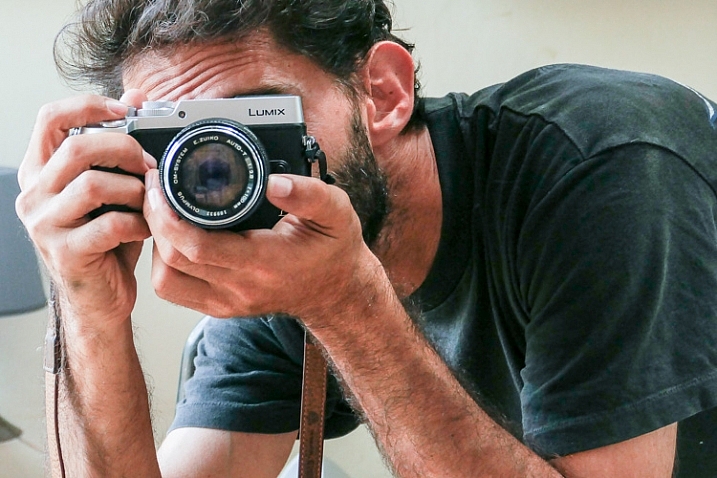
Manual Focus Ouria Tadmor

A photographer looking to purchase a new lens for their mirrorless camera in 2016 might find that there are many manual focus lenses made nowadays alongside the autofocus ones. That means one thing: the market has said the word, manual focus is not dead.

Feed your spirit with the following thoughts to learn how manual focusing can make you a better photographer.

Doing versus supervising

And old carpenter once said, “If you want something done right the first time, do it yourself.” That was always reiterated when a new machine came to the industry to perform a task better, faster, and more efficient than a trained man could ever do.

Instead of being a skilled craftsman, now all you need to know is how to make sure that the machine is doing its job, that’s the truth about an autofocus camera. It is one thing for your brain to rotate the focusing ring with your left hand and stop rotating at the correct focus, and a whole different thing to wait for the green light or beep confirming focus has been achieved. 

Manual Focus Ouria Tadmor

Sometimes you might choose to use only one central focusing point, lock it on your subject and then recompose your frame. That way you are still doing some of the work yourself, but you do it by pressing a button rather turning a ring with your left hand.

Pressing a button (or half-pressing the shutter, in most cases) is a very different connection between your hand and the machine than turning a ring with your left hand. Allowing your hand to learn the feel of the lens. Letting your hand know when and where to turn the dial and where to stop. It takes a greater effort of your brain, but only until your muscles learn it and bypass the need to think about the action. Then it frees your brain to think about the picture. In autofocus mode, your brain always has to check on the machine, make sure that focus is where you want it. That takes brain power every time. Brain power that could have been used to be more creative.

The need for speed

Manual Focus Ouria Tadmor

It’s true, the autofocus machine is indeed faster at turning the lens to the right distance than any human hand will ever be. But then it needs to wait for the brain to approve it before the shutter is pressed all the way and the photo is taken. So it is actually you that slows down the machine.

There are ways to overcome the speed limit of manual focus. For example, one way is to pre-focus on the distance your subject will be positioned at the moment of exposure. This is a technique that was very popular among sports photographers in the days before predictive dynamic autofocus. It required a fair amount of planning and knowing the nature of your subject. A property that let to visualization of the final image even in sports photography.

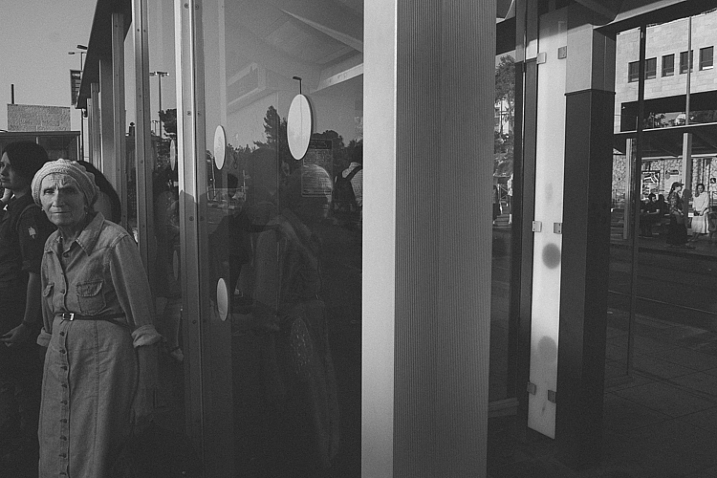
Another way, more popular among street photographers is called Zone Focus. You approximate the distance of your subject and make sure that they are within the depth of field by setting the focus and aperture correctly. It is a fast and simple technique that will force you to plan your frames. Thus forcing you to be more sensitive to your surroundings than a photographer who responds to a moment by half-pressing the shutter and then pressing it all the way. A street photographer trained in zone focusing does not have to pay attention to focus at all because they adjust their focus and aperture with every change in the scene without even thinking about it.

Manual Focus Ouria Tadmor

Move slow, think fast

When photographing a portrait with a fast telephoto lens you want to have the subject’s nearest eye in focus. There are many ways to achieve that with autofocus cameras. Some of the modern mirrorless cameras will lock on the near eye and stay focused on it for you as long as it’s there.

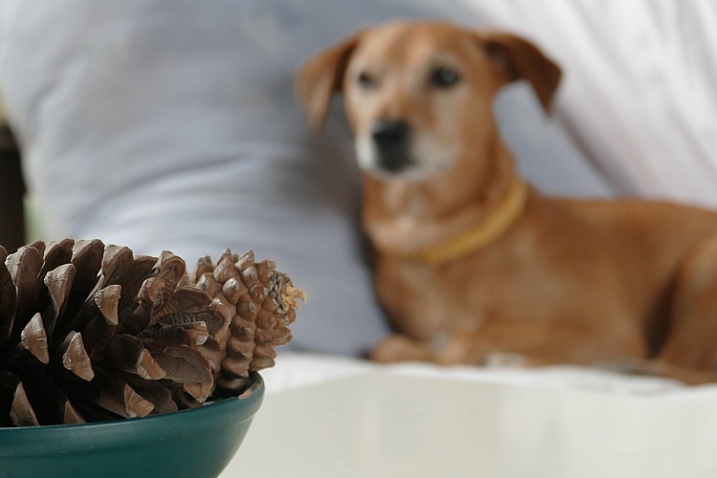
What a manual focus lens does for you is exactly the opposite. It is almost impossible to keep the near eye in focus with a portrait lens at a wide open aperture. The shallow depth of field means you will have to pay attention to your subject’s smallest moves such as breathing. By doing so it will focus your attention on the subject and you will start noticing facial features that would have been left behind at the photographing speed of autofocus lenses.

Manual_Focus_OT

Zen and manual focus

Use manual focus to put control of your photography back in your hands. It will slow you down and make you think more. For many of the greatest photographers throughout history, the process was as important as the final picture. When you let yourself indulge the process your photographs will benefit.

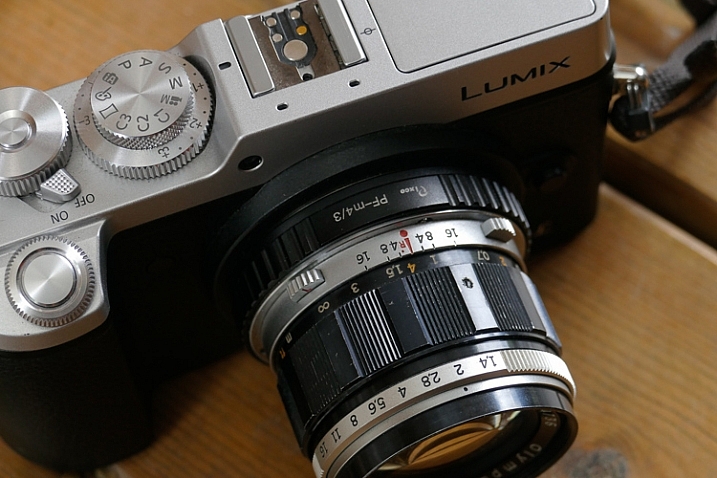
It is a totally different experience to manual focus using a lens that was created for autofocus than one that was made to be focused by a human. Invest in yourself and buy a vintage affordable lens that fits on your camera then go out shoot with only that lens. This way you will be able to feel what it is like to really do manual focus photography.

googletag.cmd.push(function() {
tablet_slots.push( googletag.defineSlot( “/1005424/_dPSv4_tab-all-article-bottom_(300×250)”, [300, 250], “pb-ad-78623” ).addService( googletag.pubads() ) ); } );

googletag.cmd.push(function() {
mobile_slots.push( googletag.defineSlot( “/1005424/_dPSv4_mob-all-article-bottom_(300×250)”, [300, 250], “pb-ad-78158” ).addService( googletag.pubads() ) ); } );

The post How Using a Manual Focus Lens Can Make You a Better Photographer by Ouria Tadmor appeared first on Digital Photography School.


Digital Photography School

 
Comments Off on How Using a Manual Focus Lens Can Make You a Better Photographer

Posted in Photography


Spectacular editors’ picks from early 2016 National Geographic Nature Photographer of the Year entries

11 Sep

Editors’ picks: National Geographic Nature Photographer of the Year 2016 

Photo by Nancy Elwood/2016 National Geographic Nature Photographer of the Year
The Eye Of A Gator 

National Geographic’s 2016 Nature Photographer of the Year competition is underway, and like many of the subjects depicted in entries, the competition is looking mighty fierce. National Geographic’s editors have highlighted some standout early entries, but there’s still time to enter – the competition closes November 4.

You can see a few of the incredible entries here – head to the competition website for more.

Editors’ picks: National Geographic Nature Photographer of the Year 2016

Photo and caption by Nancy Elwood/2016 National Geographic Nature Photographer of the Year

The Eye Of A Gator

As I was sitting on the bank of the wetlands, watching a pair of anhingas prepare their nest, when one flew right down in front of me to fish. I quickly focused on her and out of the water came a wonderful fish brunch.

Editors’ picks: National Geographic Nature Photographer of the Year 2016

Photo and Caption by Christopher Markisz/2016 National Geographic Nature Photographer of the Year

Moonlightning

Lightning strikes lower Manhattan as a summer storm approaches a moonlit New York City skyline.

Editors’ picks: National Geographic Nature Photographer of the Year 2016

Photo and Caption by Kym Illman/2016 National Geographic Nature Photographer of the Year

Curious Lions

Using a wide-angle lens (16mm) on our remote-controlled camera buggy results in the background being smaller in shot and appearing further away. We fire the camera shutter using the same remote-control transmitter that we use to drive the buggy, allowing us a range of a couple of hundred meters although we rarely sit more than fifty metres away from camera.

Editors’ picks: National Geographic Nature Photographer of the Year 2016

Photo and Caption by Takashi/2016 National Geographic Nature Photographer of the Year

UFO formation

A baby cloud had born at dawn. The baby cloud had grown bigger and bigger than before. When it came the time of the morning glow, It had grown to many huge lenticular clouds. It looked like UFO formation.

Editors’ picks: National Geographic Nature Photographer of the Year 2016

Photo and Caption by Flamine Alary/2016 National Geographic Nature Photographer of the Year

Mist and Wind

Early this morning we were on our way for hiking at the Bruce Peninsula National Park. The sun was rising, it was misty, eerie and we did not see very far away when suddenly these wind turbines appeared out of the mist. It was quite spectacular.

Editors’ picks: National Geographic Nature Photographer of the Year 2016

Photo and Caption by Lidija Kamansky/2016 National Geographic Nature Photographer of the Year

Daybreak at Monument Valley

A storm was rolling in from the west and the few of us gathered for sunrise were watching and hoping that day would break before the rains came. The moment the sun peeked above the horizon, we were hit with incredible winds and sideways driving rain. My husband jumped behind me to block the blowing sand and to try to shelter me from the wind. I kept shooting as the skies lit up, while gripping the tripod to keep it steady. This image is the result of those efforts from this memorable sunrise!

Editors’ picks: National Geographic Nature Photographer of the Year 2016

Photo and Caption by Jassen T. /2016 National Geographic Nature Photographer of the Year

Fossil Fuel Galore

“A quarter century ago, scientists warned that if we kept burning fossil fuel at current rates weíd melt the Arctic. The fossil fuel industry (and most everyone else in power) ignored those warnings, and what do you know: The Arctic is melting, to the extent that people now are planning to race yachts through the Northwest Passage, which until very recently required an icebreaker to navigate.” New York Times, May 12, 2015. Midway-Sunset is currently the largest oil field in California. Aerial.

Editors’ picks: National Geographic Nature Photographer of the Year 2016

Photo and Caption by Li Liu/2016 National Geographic Nature Photographer of the Year

Beauty Beyond Disaster

The Soberanes Fire, located south of Carmel and Point Lobos, started Friday morning 07/22/2016. By Saturday night, the fire covered the entire mountain. The sky was illuminated by the golden glow of the forest fire. I hiked down towards a cliff by the beach. Because the wind was blowing south and slightly east, the sky to the southwest was clear. I witnessed the most spectacular sight I have ever seen, the Milky Way glowed above the raging wildfire. Beauty rose beyond disaster.

Editors’ picks: National Geographic Nature Photographer of the Year 2016

Photo and Caption by Kyon. J/2016 National Geographic Nature Photographer of the Year

Through

It was amazing to capture China’s beautiful mountains in such magnificent morning rays coming through.

Editors’ picks: National Geographic Nature Photographer of the Year 2016

Photo and Caption by Kim Aikawa/2016 National Geographic Nature Photographer of the Year

Swamp Raccoon

While looking for alligators at a swamp in Louisiana, this beautiful little creature wanders out of the murky waters right into the morning light, pausing just long enough to capture.

Editors’ picks: National Geographic Nature Photographer of the Year 2016

Photo and Caption by T. King/2016 National Geographic Nature Photographer of the Year

Jellyfish

Jellyfish

Editors’ picks: National Geographic Nature Photographer of the Year 2016

Photo and Caption by Hugh McCrystal/2016 National Geographic Nature Photographer of the Year

Wildebeest Migration

This is a photo of Wildebeest during migration in the Serengeti.

Editors’ picks: National Geographic Nature Photographer of the Year 2016

Photo and Caption by QIAN WANG/2016 National Geographic Nature Photographer of the Year

Let’s picnic

Yellowstone National Park, west thumb geyser basin, a perfect spot for picnic, and I mean not for human.

Editors’ picks: National Geographic Nature Photographer of the Year 2016

Photo and Caption by Aaron Baggenstos/2016 National Geographic Nature Photographer of the Year

Bear Hug

Brown Bears, Katmai National Park, Alaska

Editors’ picks: National Geographic Nature Photographer of the Year 2016

Photo and Caption by Yh Lee/2016 National Geographic Nature Photographer of the Year

Bull Race

Pacu Jawi, or bull race, is held in Indonesia where bulls are coupled, with the jockey standing on the plow harnesses attached to each bull, running a short distance of about 100 feet. Whichever pair runs the fastest in a straight fashion fetches the highest price (as they are deemed the best workhorse in plowing the paddy fields for harvesting).


Which images are your favorites? Let us know in the comments.

Articles: Digital Photography Review (dpreview.com)

 
Comments Off on Spectacular editors’ picks from early 2016 National Geographic Nature Photographer of the Year entries

Posted in Uncategorized


One week left to enter the USA Landscape Photographer of the Year Competition!

11 Sep

$ (document).ready(function() { SampleGalleryV2({“containerId”:”embeddedSampleGallery_3908548057″,”galleryId”:”3908548057″,”isEmbeddedWidget”:true,”standalone”:false,”selectedImageIndex”:0,”startInCommentsView”:false,”isMobile”:false}) });

There’s just a week left to enter the 2016 USA Landscape Photographer of the Year Competition! 

The USA Landscape Photographer of the Year Competition was founded in 2013 by Charlie Waite, one of the world’s most respected landscape photographers, and this year, the competition is bigger than ever. With a top prize of $ 15,000, the contest spans five main categories, ‘Environmental Value’, ‘My USA’, ‘Black & White’, ‘Classic View’, and ‘Urban’.

In addition to these five categories, DPReview is partnering with the competition to create a new award – ‘Life in the Landscape’, which will be judged by DPReview’s editors and writers. An additional special award, ‘Wild Landscape’ is sponsored by Future Publishing.

The competition is divided into two main classes – the USA Landscape Photographer of the Year Award and the Young USA Landscape Photographer of the Year Award. To enter Young USA Landscape Photographer of the Year, you must be 18 or under on the closing date of September 15, 2016. There are 7 categories within each of the two classes and up to 20 images may be entered across some or all of these categories, and photographers can enter the same image in more than one category and / or special award.

To enter a single image costs $ 10, while $ 30 allows you to enter up to 5 images, and $ 45 allows you to enter up to 20 images. Entrants for the Young USA Photographer of the Year Award pay a flat fee of $ 10 for up to 20 images.

The deadline for entry is September 15th. 

Enter the competition

Articles: Digital Photography Review (dpreview.com)

 
Comments Off on One week left to enter the USA Landscape Photographer of the Year Competition!

Posted in Uncategorized


Get Outside Your Photography Comfort Zone to Learn and Grow as a Photographer

06 Sep

As photographers, we usually start out photographing everything and anything. All subjects are game as we explore our new found passion. When we grow and get more serious about our craft, we often try to find our unique place in the industry. Our niche, our comfort zone, where we can specialize and make a name for ourselves.

This is a good thing! A photographer that has a unique niche is more memorable than a photographer that covers every subject. It’s better to be the dog portrait guy, or the black and white waterfall girl, than to be forgettable.

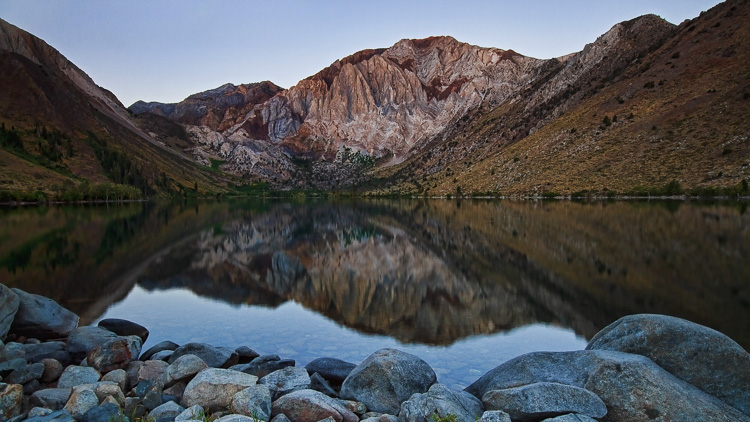
Convict Lake California by Anne McKinnell

One of my favourite things to photograph: water scenes at twilight.

But just because you’ve specialized in a particular area of photography doesn’t mean you can’t continue to explore your craft. There is much to be learned from photographing other things, and applying any lessons learned to your niche. In fact, there is much you can learn from photographing things that you specifically don’t like to shoot.

Get out of your photography comfort zone

So I challenge you to come up with a short list of things you don’t like to photograph, and then give them a try. Remember, you don’t have to be good at it. Don’t worry about trying to create a masterpiece. You’re not going to show these photos to anyone. But, by getting outside of your comfort zone and giving yourself the permission to play, you’re bound to learn something along the way.

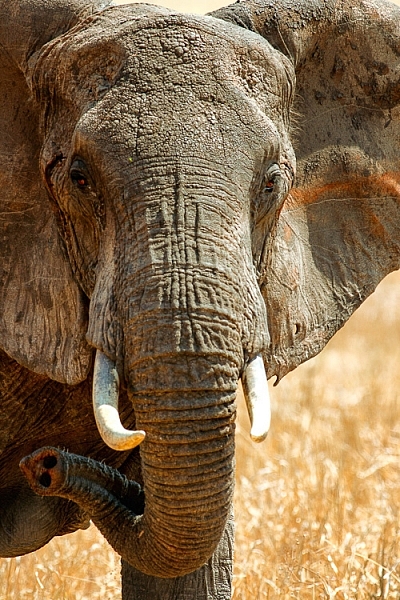
Elephant in Tarangire National Park, Tanzania by Anne McKinnell

Applying lessons learned about shadow and light in portrait photography to wildlife photography.

Afraid of portraits? Photograph one

For example, when I did this exercise, the thing on the top of my list was portraits. I’ve always been somewhat terrified of doing portraits! Also on my list was sports, cars, and architecture.

It was serendipitous when a friend of mine asked me to photograph her newborn. As the terror swept through me, I remembered my list and realized I should take the opportunity. Of course I advised her to hire a real newborn photographer since I had no experience in this area. But I still tried, and I made some images that were pretty good. But more importantly, I learned some things that I could apply to the areas of photography I was more interested in, like landscapes and wildlife.

Working inside was new to me and since I didn’t own any lights, I worked with natural light from the window. As I positioned my subjects around the room, I noticed how the light fell on their faces, and learned to pay very close attention to the direction of the light. I also noticed how important it was not to have any distracting things in the background, which also applies to many other areas of photography.

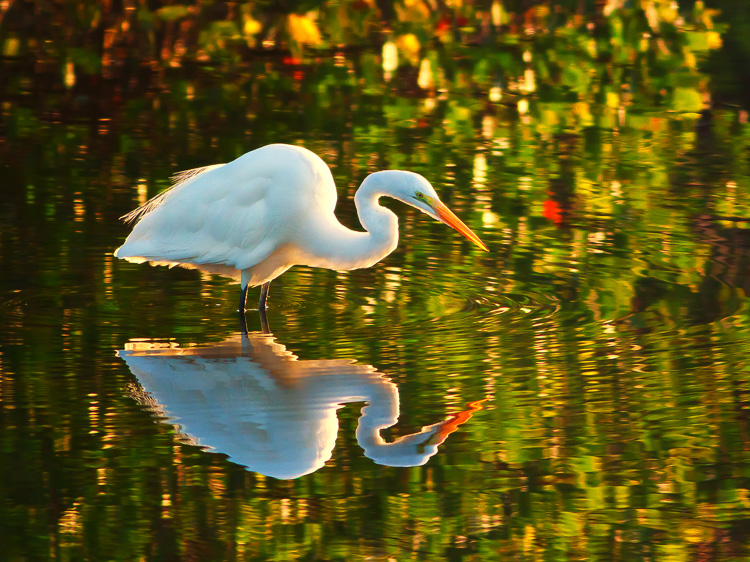
Great White Egret by Anne McKinnell

Using rim lighting and non-distracting backgrounds (learned doing portraits) in wildlife photography.

Try sports photography

The second thing on my list of things I wasn’t interested in photographing was sports. So I headed up to the local university where there is always something happening on a weekend, and found a rugby game to photograph.

I learned something very important that day. You see, I don’t know a thing about rugby, and it quickly became obvious that I couldn’t capture a special moment, because I had no idea when it was going to happen. I had to sit and watch, and try to figure out how the game worked, and only then did I have a chance.

I didn’t make any good images that day, but I sure learned a lesson that I apply to wildlife photography all the time. I sit and watch, and learn the behaviour of the animals before I try to photograph them. That way I can anticipate what is going to happen, and come away with a photograph that captures a special moment in time.

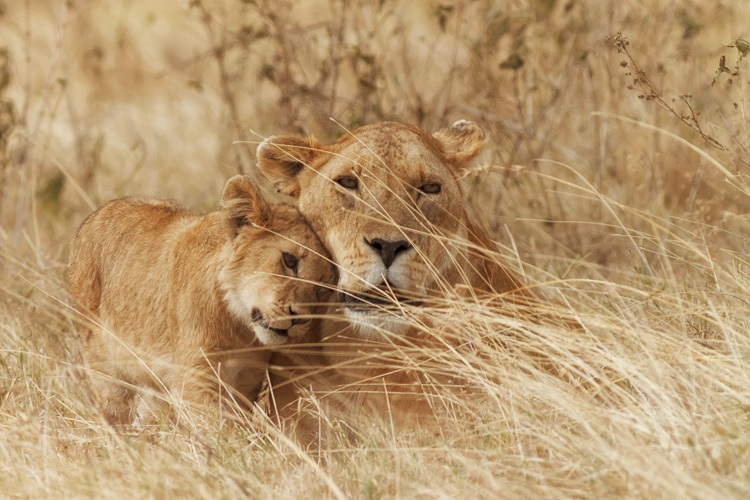
Lion and cub at Ngorongoro Crater, Tanzania by Anne McKinnell

Anticipating the special moments in wildlife photography.

How about architecture photography?

Another thing on my list at the time I did this exercise was architecture, but after playing with it for awhile I discovered a new passion. Now I love photographing architecture. One thing I learned is that most architectural subjects are inherently symmetrical, and while the rule of thirds works, symmetrical compositions work really well too. Now I apply this principle to other subjects that are inherently symmetrical as well.

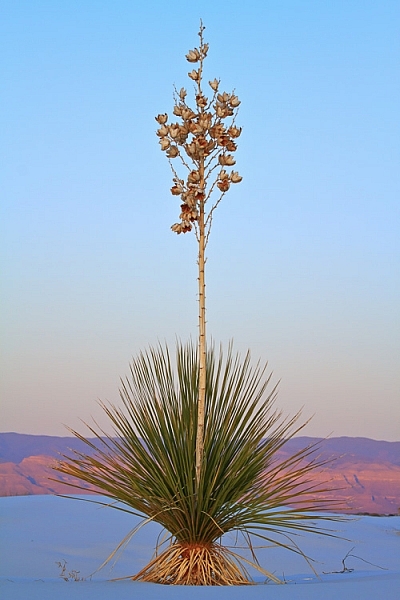
Yucca at White Sands National Monument, New Mexico by Anne McKinnell

Using a symmetrical composition in landscape photography.

Challenge yourself! Give yourself time to play! Remember that this is an exercise just for you, to help you explore your craft and grow as a photographer.

Exploring subjects is just one way to accelerate your photography learning curve. (It’s a great way of finding your niche too!) For more ways to speed up the learning curve, check out my eBook “8 Ways to Accelerate Your Photography.”

googletag.cmd.push(function() {
tablet_slots.push( googletag.defineSlot( “/1005424/_dPSv4_tab-all-article-bottom_(300×250)”, [300, 250], “pb-ad-78623” ).addService( googletag.pubads() ) ); } );

googletag.cmd.push(function() {
mobile_slots.push( googletag.defineSlot( “/1005424/_dPSv4_mob-all-article-bottom_(300×250)”, [300, 250], “pb-ad-78158” ).addService( googletag.pubads() ) ); } );

The post Get Outside Your Photography Comfort Zone to Learn and Grow as a Photographer by Anne McKinnell appeared first on Digital Photography School.


Digital Photography School

 
Comments Off on Get Outside Your Photography Comfort Zone to Learn and Grow as a Photographer

Posted in Photography


Looking up: Sixteen-year-old John Kraus is a rocket launch photographer

03 Sep

John Kraus rocket launch photography

SpaceX’s Falcon 9 rocket launches cargo and science to the ISS, and the first stage of the rocket comes back and lands at Cape Canaveral Air Force Station in July of 2016. Photo by John Kraus

Growing up in Satellite Beach, Florida, John Kraus has been watching launches for as long as he can remember. He’s now a photojournalist who covers rocket launches for AmericaSpace.com. Oh, and he’s just sixteen years old. Feel old yet? Keep reading to see more of his images and find out more about him.

You can follow John on Instagram and see more of his photos on his website.

John Kraus rocket launch photography

United Launch Alliance’s Delta IV Heavy rocket launches a classified mission, NROL-37, for the National Reconnaissance Office in June 2016. Photo by John Kraus

How did you get started in photography, and what do you shoot with now?

I decided to start photography randomly in January of 2015. I figured it could be a fun hobby to pick up and learn about. I use a Nikon D7100, but my closeup images of launches are captured with a D3300.

John Kraus rocket launch photography

ULA’s Atlas V rocket launches Morelos-3 in their 100th launch in October 2015. Photo by John Kraus

How did you start working as a photojournalist at such a young age?

Since I always watched launches, once I bought my camera, I started photographing them. After almost a year of experience, I was lucky enough to be credentialed under AmericaSpace.com as a media member.

John Kraus rocket launch photography

SpaceX’s Falcon 9 launches Thaicom 8 satellite in May 2016. Photo by John Kraus

How have you continued to learn as a photographer?

I’ve learned a lot from my photo a day challenge that I’m doing this year. I’m taking a photo every day of the year. That’s it. Take a photo, upload it to Instagram by midnight. So far, I haven’t missed a day. It’s given me a way to be creative daily. Some photos aren’t so good, some are great. It’s a learning experience!

John Kraus rocket launch photography

Even in a light polluted city on Florida’s Space Coast, with proper editing I was able to bring out detail in the Milky Way. Also shown is a Perseid meteor and the Andromeda galaxy. August 2016. Photo by John Kraus

Do you hope to pursue a career in photography?

I plan to keep shooting, whether it’s professionally or as a hobbyist. I’m not sure yet!

John Kraus rocket launch photography

United Launch Alliance’s Atlas V rocket launches a classified mission, NROL-61, for the National Reconnaissance Office in July 2016. Photo by John Kraus

What have been some of the most memorable launches you’ve photographed?

Both SpaceX landings have been amazing to see. I was able to capture long exposure photographs of each launch. The recent United Launch Alliance Delta IV Heavy launch in June was spectacular, and very loud.

Articles: Digital Photography Review (dpreview.com)

 
Comments Off on Looking up: Sixteen-year-old John Kraus is a rocket launch photographer

Posted in Uncategorized