RSS
 

Posts Tagged ‘Perfect’

How to Capture Perfect Selfie: 10 Tips for Amateurs and PROs

27 Sep

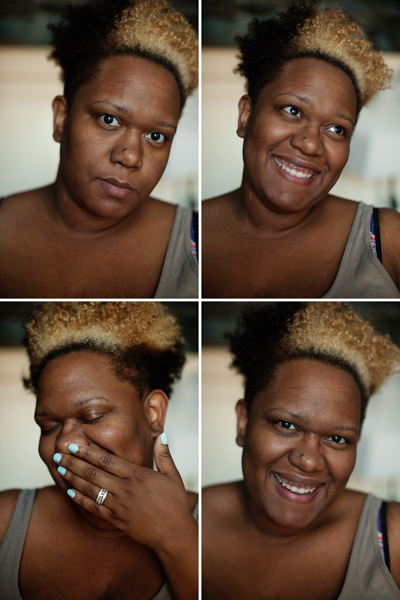
There is no wrong way to capture a selfie. The selfie is a way of self-expression and the artistic choices vary as much as faces themselves. “Selfie” was named Oxford Dictionaries Word of the year for 2013, and it’s defined as a photo taken of oneself and shared on social media. Taking selfies is a fun way to show your Continue Reading

The post How to Capture Perfect Selfie: 10 Tips for Amateurs and PROs appeared first on Photodoto.


Photodoto

 
Comments Off on How to Capture Perfect Selfie: 10 Tips for Amateurs and PROs

Posted in Photography


Capturing Unenthusiastic Teens: Forget the Perfect Pose and Get Photos You Truly Love

03 Sep

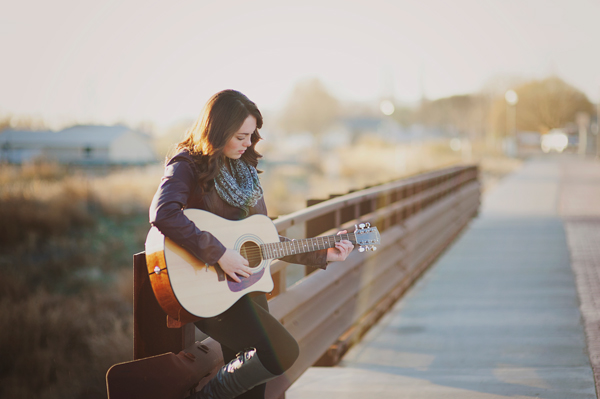
guitar

I wrote an article recently sharing some tips for Capturing Busy Little Ones, and had a request for a similar article for photographing teens. Since I love photographing teens (who doesn’t??), I’m thrilled to share some tips. These aren’t tips for photographing the aspiring model teens. Those teens are usually pretty easy to photograph, they will pose for you until the cows come home, and love every minute of it. No, I’m going to let you in on some ideas for photographing those teens that aren’t so enthusiastic about being there.

Sometimes they’re super shy, and they just feel uncomfortable with the attention on them. Sometimes they are self-conscious, and think that they aren’t photogenic, so they feel awkward. Sometimes mom made them get pictures taken, and they’d rather be shoveling manure than sitting there with you and a camera. Whatever their hang-up is, these tips will help you capture them in the truest way possible, and get through it with your sanity intact. You might even get through it with a new teenage friend!

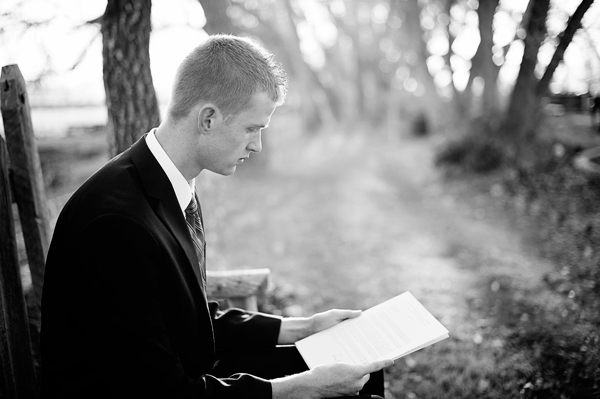
read

Get to Know Them

Here’s a newsflash: teenagers are people too. They have real feelings and ideas, and sometimes very strong opinions about what they like, and what they don’t like (if you have a teenager of your own, you didn’t need me to tell you that). Spend some time feeling them out, and finding what makes them tick. Watch for cues to let you know what they are going to be down with, and what they might roll their eyes at.

For example, you might notice that they avoid eye contact, and act very uncomfortable when you talk to them a lot. In that case, you may want to do more photos where they are looking at something in their hands, or looking away from you, and ask for eye contact only briefly. Maybe you might notice that the photo shoot was all mom’s idea, and the teen is not at all happy about it. You could diffuse the situation by addressing it directly. “Hey, it’s a bummer to get pictures taken, huh? Moms are so annoying sometimes.”  Ask them questions about their life. Pay attention to more than just the words they say; their body language will give you cues about their personality too.

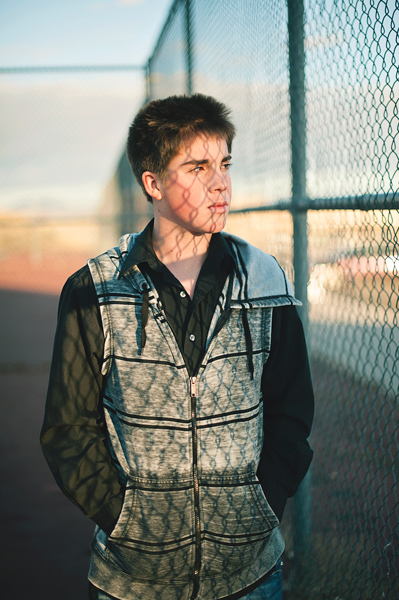
fence

Don’t Force a Smile

Some kids just don’t like to smile, or they might be angry that they are getting their picture taken in the first place. Repeated requests to “smile” will only make things worse, and at best, get you a fake cheesy smile. Your goal during your session with an unenthusiastic teen, is to gain their trust. Let them know that you are on the same team, and that you aren’t there to torture them. Assure them, through your actions, that you aren’t going to try to make them into something they’re not. The easiest way to do this, if you haven’t picked up on enough cues, is just to ask them.

I might say, “Sometimes people really love jumping pictures. Is that something you would do, or is totally not your style?” They’ll usually let you know exactly how they feel about it, in words or expression, and you can quickly move on if it’s not their thing. Sometimes those that resist the smile the most may actually give you a real, genuine, smile towards the end of the session when you’re best buddies, and they trust you.

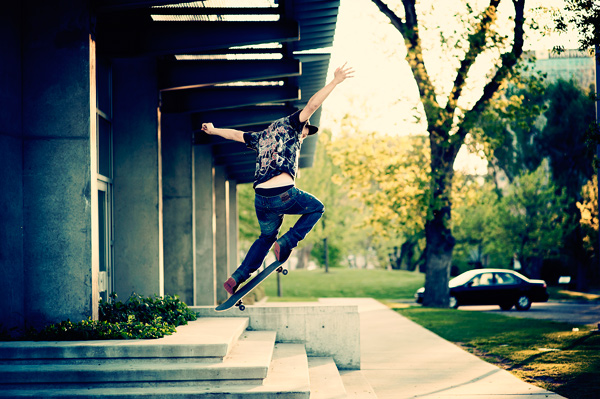
skateboard

Photograph Their Passion

Before your session together, encourage your teen subjects to bring things that are important to them. It’s fun for both of you to capture those “action” shots of things that they truly love to do. This also gives you opportunity to give them genuine praise, and puts them at ease. Help them think outside the box. If they are a writer, maybe they’d want to bring a few favorite journals to “write” in, as you photograph them. If they love to run, capture some action running shots, and then a few with them holding their track shoes, or a race medal.

Giving them something to do really helps the shy ones. If they play a musical instrument, you could take some photos of them holding it, but don’t forget those action shots too. Ask them to play something for you, or show you some tricks on their skateboard. If they’re hesitant to actually perform, remind them that the camera won’t capture mistakes, and you’re an expert at making people look really good. That might be enough to loosen them up, and let their passion show.

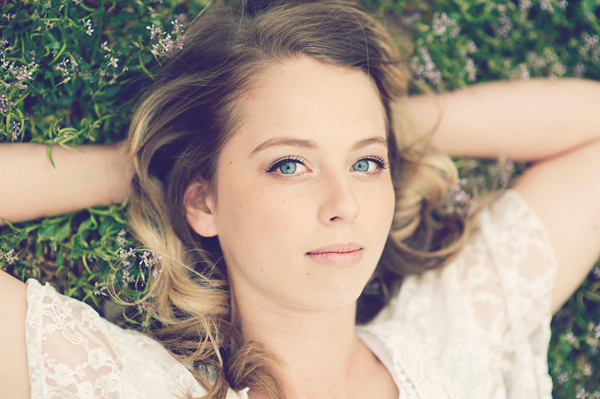
grass

Do the Unexpected

Most teens will expect you to ask them to smile and look at the camera. They’ll expect you to ask them to “sit there”, “stand here”, “look at me”. Sometimes just shaking things up a little will help them loosen up. You could ask them to lie down in the grass, or climb on a big rock. Maybe a silly expression, or twirling in a field, will shake it up a bit. DO be careful that you watch for cues from your subject before you ask them to do crazy things. Remember to ask them first, like I mentioned before. Some teens will do whatever you tell them to, but they will become increasingly uncomfortable if they aren’t feeling like themselves. Also, sometimes it helps to explain to them WHY you are asking them to do an unexpected thing. You could say, “The sky does amazing things with your beautiful blue eyes when you look up into it. Would you be okay lying down in the grass so we could give that photo a try?”

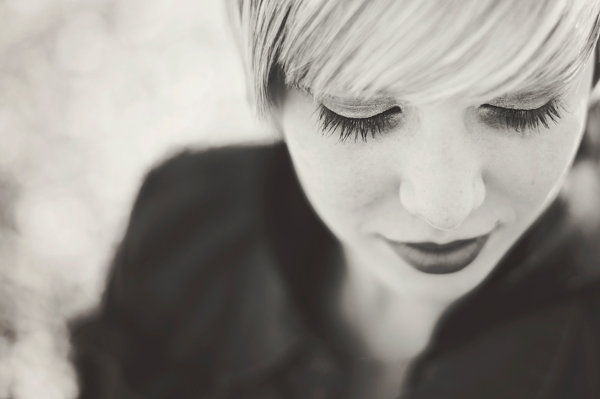
eyelashes

Capture Something Different

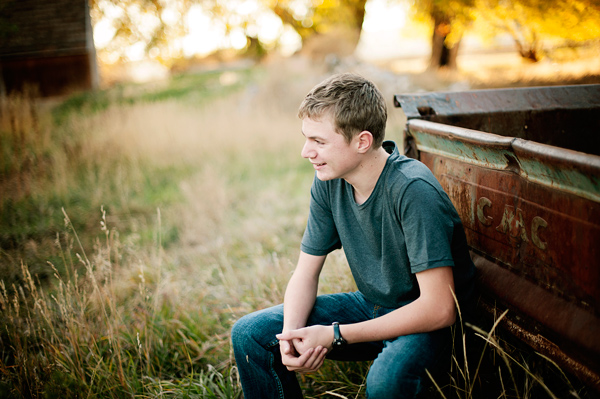
Teens like to be unique. They like to have photos that their peers think are “cool”. You might be tempted to just snap the basic head shots when you have a teenager that isn’t super easy to photograph, just to get it over with. Instead of going into safe mode, use this opportunity to capture something unique. There are lots of details that you can capture without them needing to look at you and smile. Eyelashes sweeping the cheek, hands clasped at the knees while sitting down, profile looking at a distance, details of a guitar with their face blurred in the distance, a close-up of their favorite quote in a book as they read it; those details can tell more of the story of who they are, and sometimes give them a moment to relax. If I’m not taking a photo with their face in it, I’ll tell them that they don’t even have to worry about their expression right then, because it won’t be in the picture. Sometimes they breathe a visible sigh of relief when I tell them that.

truck

Be Yourself

Teens know when you’re being fake. Don’t change your personality to try to be more like them, or to attempt to be “cool”. They’ll trust you more if your compliments are genuine. Look at them when you compliment them, don’t give a routine “you look great” while fiddling with your camera. If you’re a jokester, throw those zingers out. If you are quiet and thoughtful, let that thoughtfulness shine through. You won’t connect with every single person, but you will show your reluctant teen that you are sincere, and that means a lot to them.  Don’t treat them like little kids. They need to know that you recognize them as the almost-adults that they are. If you show them respect, they will usually show you respect right back.

Whether you are photographing a teen who loves to pose and smile, or a teen who is less than enthusiastic about the whole thing, you are lucky. What a privilege to photograph a person at a time of experiencing such beauty, daily transformation, and figuring out the world! Now, go have some fun with your camera and a great teenager. I’d love to see your teen photos in the comments if you’d like to share!

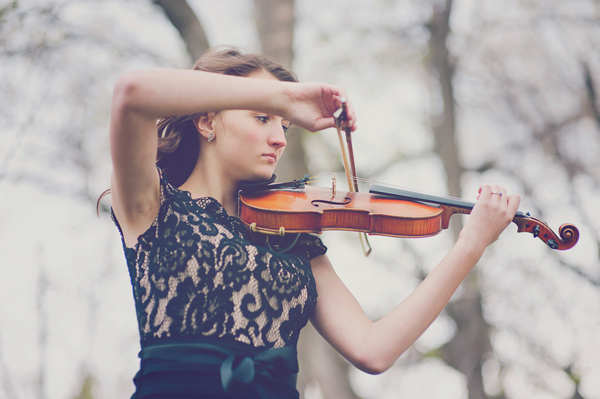
violin

The post Capturing Unenthusiastic Teens: Forget the Perfect Pose and Get Photos You Truly Love by Melinda Smith appeared first on Digital Photography School.


Digital Photography School

 
Comments Off on Capturing Unenthusiastic Teens: Forget the Perfect Pose and Get Photos You Truly Love

Posted in Photography


8 Tips for Photographing the Perfect Headshot – for Yourself

18 Aug

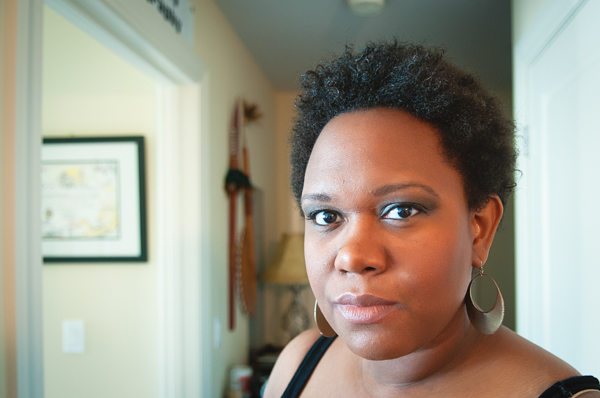
Having an awesome headshot is a great way to express yourself to your potential clients. You want your headshot to show a bit of your personality or something else special about you. The great thing about being a photographer is that you can create your own headshot. This article will give you some tips to create a headshot that’s perfect for you!

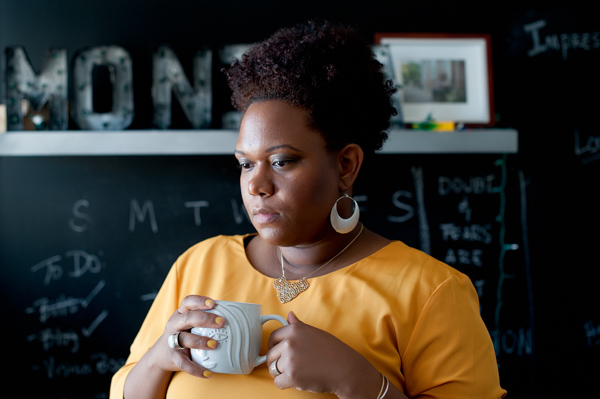
MonicaDayDPS 01

You want to approach creating your own headshot like you would approach any shoot. You need to make sure you have great lighting and great focus.

I created this headshot on my own. You can do this too. Here are my top tips for photographing the perfect headshot for yourself:

Tip #1 – Look great

Just because you’re your own photographer doesn’t mean you shouldn’t take this shoot seriously. Prepare for your headshot by making sure your hair is fabulous and that your makeup is done.

Tip #2 – Have great lighting

Whether you’re using available light or studio lighting, make sure you light your space well. If using available light, look for the light first. Find the best light in your home and make it work. Go outside if you need to. If you have strobes, flashes, or other light sources then make sure you’re set up with the most flattering light for your face.

MonicaDayDPS 02

Tip #3 – Shoot with a higher f-stop number

Getting sharp focus will be the most difficult part of photographing yourself. Instead of shooting at f/2.8 try shooting with a smaller aperture say, at f/11. This will give you a greater plane of focus to work with, and a greater chance of having sharp focus on you.

Tip #4 – Practice your posing

As a photographer, part of your job is to guide your subjects into the most flattering positions. Now it’s time to learn how to pose yourself. Get in front of the mirror and find the position that works best.

MonicaDayDPS 03

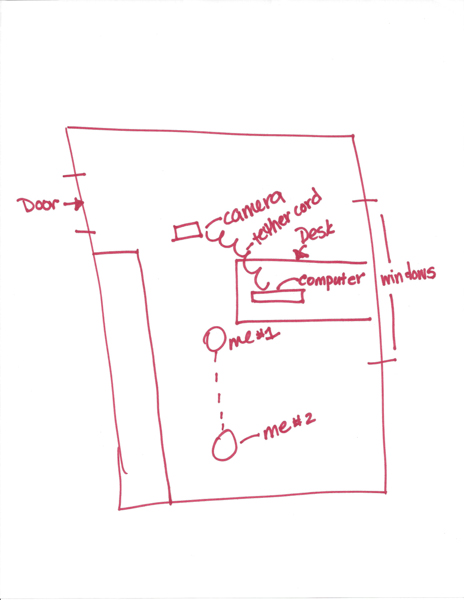
Tip #5 – Shoot tethered

Shooting tethered is great for self portraits. This allows you to easily see what your camera is picking up without moving from your spot. Make sure your screen can be easily seen from where you’re standing. Here’s a diagram of my setup.

MonicaDayDPS 04

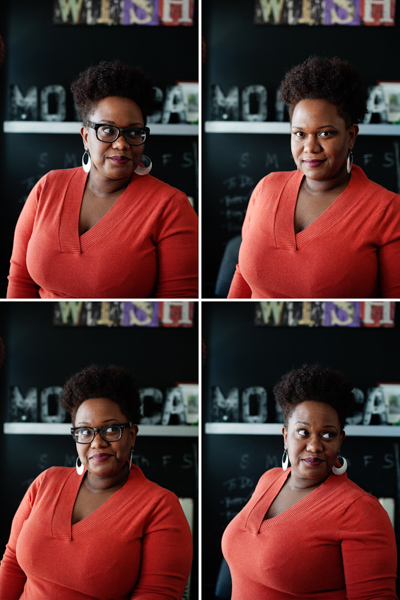
Tip #6 – Bracket your poses

Just like when bracketing for exposure, slightly alter your angles in a series of three to four shots at a time. If you’re shooting tethered, you can easily see what needs to be changed.

MonicaDayDPS 05

Tip #7 – Make it interesting

You’re a photographer so that means you know how to get creative. Make your headshot a representation of your personality. Include your hobbies, your favorite place, things you like to do or even your name. Your headshot is an extension of your brand. Make it great.

MonicaDayDPS 06

Tip #8 – Edit it

Make sure you edit your photo. Don’t forget this important step. Treat this photo like any other shoot. Take it from a snapshot to a professional photograph by adding your special touch.

Remember, shooting your own headshot gives you complete control over your shoot while saving you a few bucks in the process. Don’t worry about making a mistake. You can take as many shots as you need to get the perfect photograph.

The post 8 Tips for Photographing the Perfect Headshot – for Yourself by Monica Day appeared first on Digital Photography School.


Digital Photography School

 
Comments Off on 8 Tips for Photographing the Perfect Headshot – for Yourself

Posted in Photography


Capturing Busy Little Ones: Forget the Perfect Pose and Get Photos You Truly Love

29 Jul

PHOTO 1

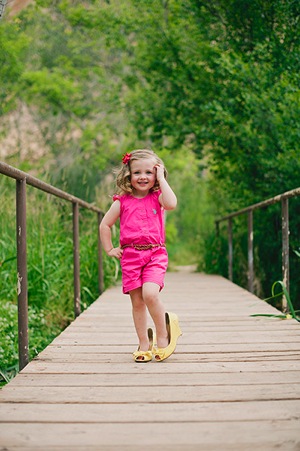
If you have ever tried to get a three year old to sit still for longer than a nanosecond you know what a challenge it can be to get that “perfect” photo. Well, I’m going to be real here, who wants that perfect photo anyway? Okay, I know you may, but maybe I can convince you to let that go. My favorite photos are always the true ones; the ones that make you smile when you look at them, or maybe even cry a tear or two. Sure, it’s nice to get that beautiful portrait, but which photo is going to help you truly remember the fiery three year old who gave you model-in-the-making poses one minute, and wiped her muddy hands on her white shirt the next?

The first thing you have to do, if you want this experience to be fun for both you and the little one, is to let go of expectations. If you have a certain Pinterest pose in mind, and are determined not to be happy until you’ve forced your little tot into it, you’re both going to be miserable. Sure, use those ideas as a starting point, but then go with what is happening in the moment. You’ll be surprised where your wee subject might take you, and you might like the results much better than what you had in mind in the first place.

PHOTO 2 PHOTO 3

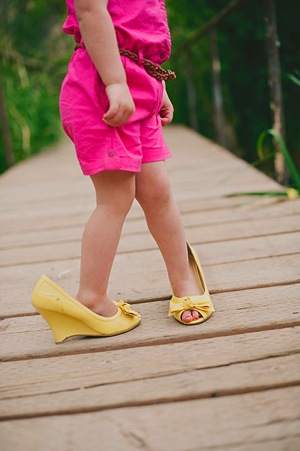
Make sure your cute little one knows that you are on the same team. Most kids have no problem being obstinate, just for fun. If she senses that you really want something from her, she may quickly decide that she wants the exact opposite. I try to take the child by the hand often, even if it’s the first time we’ve met (they usually love this) and let them feel that they are part of where we are going, and what we are doing. If she decides that she wants to put on the pretty dress shoes next, then that’s what we capture next.

PHOTO 4

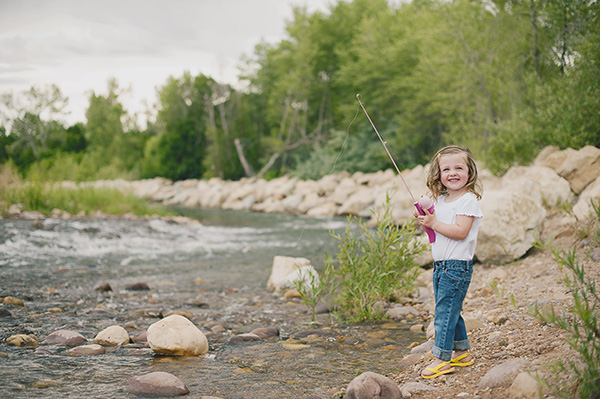
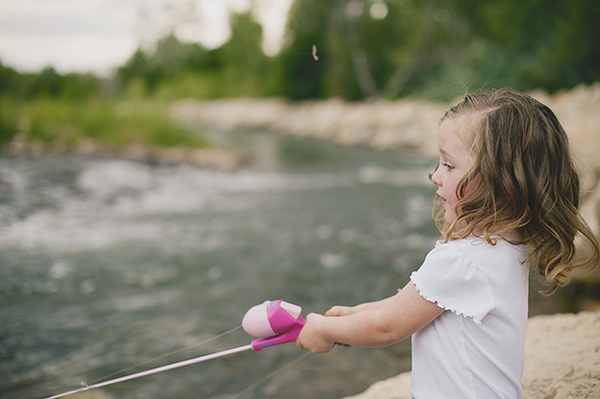
Bring something for her to do. I prefer not to use props generally, but a few well-chosen, meaningful props can work wonders. This keeps her attention, plus you have the added benefit of capturing those hobbies that she is into at the moment. Let her share her passion with you. Instead of trying to pose her just so, and telling her how to hold the fishing pole, and where to look – ask her to show you “how she fishes with daddy”. Let her be the expert, and you just have your camera ready. Favorite dress-up clothes can bring out the model in lots of kids. Chairs or boxes to climb on, sit on, stand on, and peek through, can be great fun.

PHOTO 5

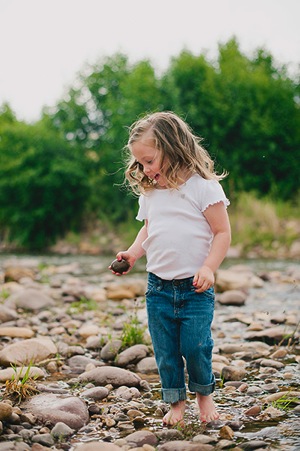
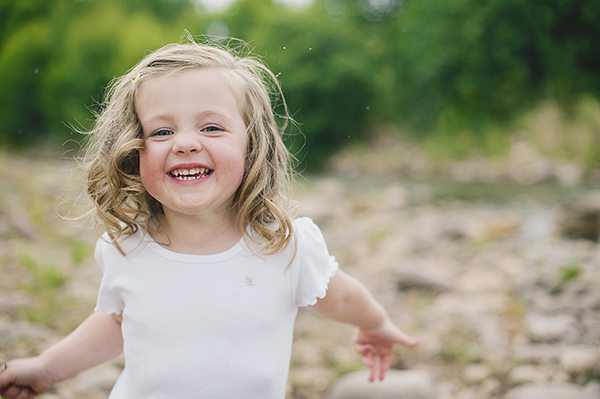
Try not to give too much direction or commands. Kids start to tune you out pretty quickly if all they hear are orders barked at them: “Sit here, look there, smile, smile, smile!!!”. When I can tell that my little subject is about done, I’ll just let her totally do her thing, and have my camera ready for when the moment is right. If she wants to take her shoes off and splash in the water, throwing rocks, I see a perfect opportunity to capture her in her element. This is where you might get the most genuine joy shining through.

PHOTO 6

When your mini-model is done – you are done. Quit before the meltdown, before she decides that this is the worst form of torture an adult ever created. If you didn’t get everything you hoped to get, don’t sweat it. Sometimes when I look through the photos later, I find gems that I didn’t even remember capturing. You may be pleasantly surprised by how many great images you were able to get, even with truly “busy” little tots. You’re not going to get much worth keeping if you try to force more photos. When little ones are done, they are DONE. Try to keep your photo sessions short, even if you have an agreeable little model. I usually spend less than half an hour shooting if they are under five years old.

PHOTO 7

So, next time you are lucky enough to have an adorable, energetic, little one in front of your camera, remember to relax, breathe, and have some fun. You’ll find that those real photos will be your favorites in the end, and you won’t even miss that perfectly posed portrait with every hair in place.

PHOTO 8

For more tips on photographing kids check out these:

  • Photography Hunting: Play the Waiting Game Photographing Kids
  • Cut the Cheese: 5 Tips for Photographing Kids
  • CLICK! How to Take Gorgeous Photos of Your Kids – a dPS ebook
  • How to Photograph Shy Children

The post Capturing Busy Little Ones: Forget the Perfect Pose and Get Photos You Truly Love by Melinda Smith appeared first on Digital Photography School.


Digital Photography School

 
Comments Off on Capturing Busy Little Ones: Forget the Perfect Pose and Get Photos You Truly Love

Posted in Photography


Find the Perfect Photography Location Using Google Maps

25 May

No matter if you’re planning your next photo road trip or you’re scouring the city streets looking for the perfect viewpoint, Google Maps and Google Earth are the most valuable tools to add to your arsenal for finding the perfect photography location.

Planning to Shoot

I usually travel for work, or with family, so I don’t have the luxury of as much time as I might want to search for the perfect vantage point in person. Nor to scout an area to compare locations that I want to dedicate to the one sunset that I’ll have time to shoot. Google Maps to the rescue!

While planning a trip from home, you have much more time to explore the area in a virtual capacity instead of being out there with boots on the ground. Nothing can compare with actually being there, but the tools available to you are getting better every day and the ability to nearly frame your shot is a realistic time saver. Time to turn the volume on your pre-visualization up to 11.

If I’m planning a trip or have an idea for a shot, I’ll start with Google Maps and zero in on the area that I want to shoot. You probably already do this, too, but let’s just take it a step further. Click the icon in the lower left corner labeled “Earth” to start the Google Earth browser plugin. This has replaced the satellite or aerial view for much of the world’s map, but instead of only offering a flat, two dimensional view of the map directly overhead, you can now tilt the map and see an approximation of topography, texture, and elevation.

Default Earth View

Normal mouse controls on the map let you pan in all directions, and zoom in or out with the mouse wheel. In order to adjust to a view that will help you get a better idea of the terrain, hold down the shift key, click and drag upward. That will rotate your point of view (POV) so that you now have an aerial view looking toward the horizon instead of straight down. Dragging left or right while holding shift will rotate your point of view instead of panning.

Rotated Earth View

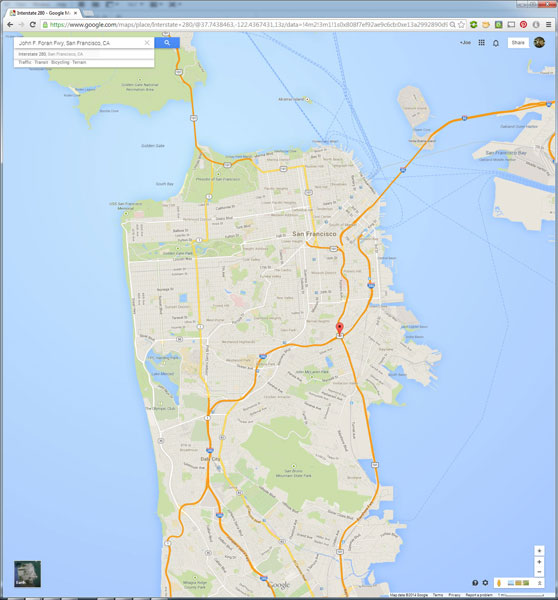
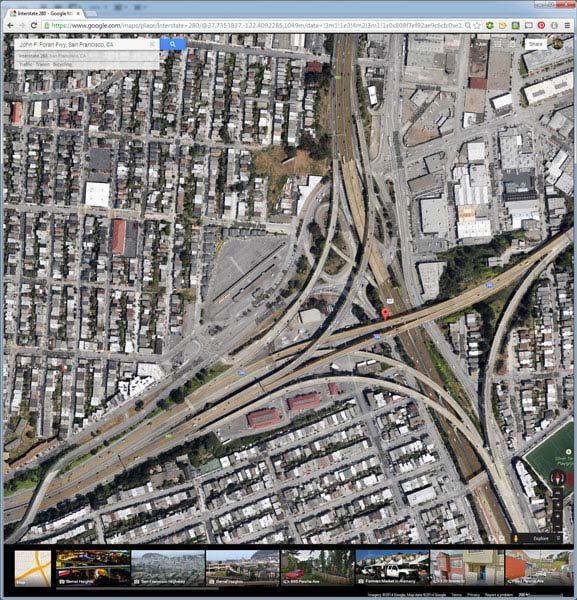
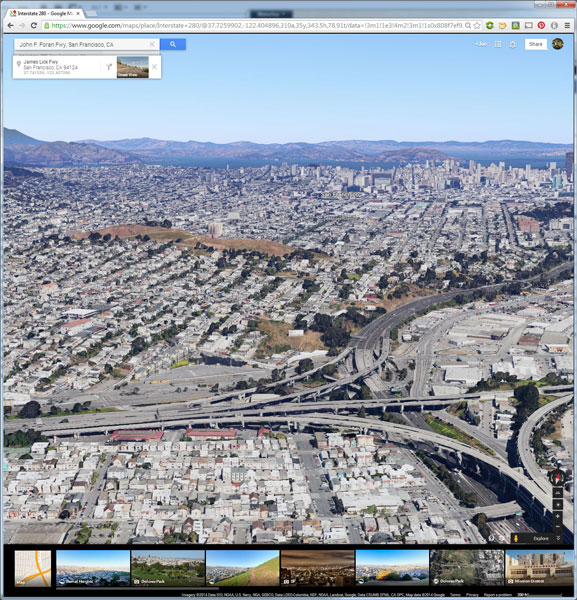
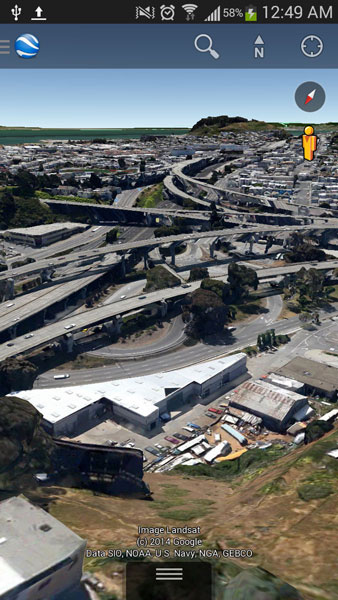
But, you don’t have to be tied down to your desk to do this. Just two weeks ago, I was out with a friend exploring San Francisco and searching for a specific vantage point of the 101/280 freeway interchange. We knew the general area that we wanted to shoot from, but with so many streets winding around, using Google Earth on my mobile phone helped to eliminate some of the trial and error of driving around without a clue how to find what we wanted.

101 280 Framing the Shot Mobile

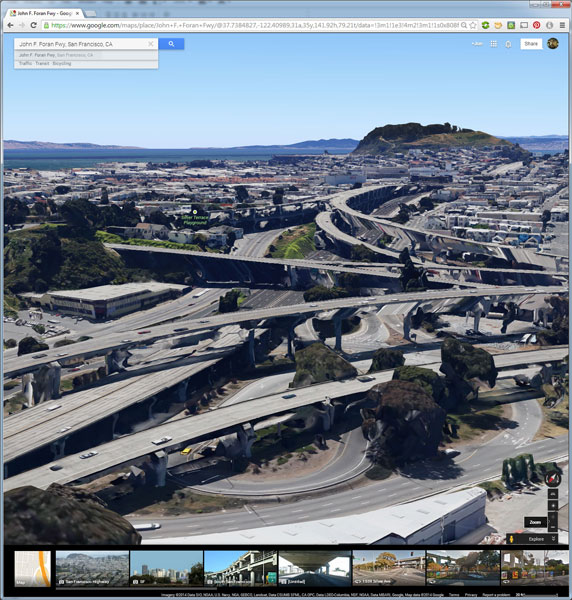
101 280 Framing the Shot

Desktop interface Google Earth view looking south

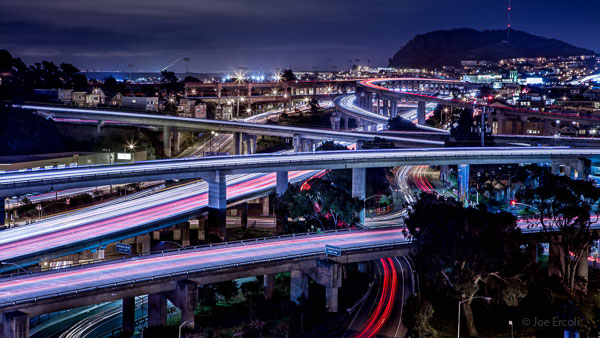
Joe Ercoli Land of Confusion 600

Finished image from location scouted using Google Maps/Earth

The example images from this article show the area that we shot in, including a screenshot taken from the mobile interface, and the completed image. Of course the view that you can get from the map interface is never as good as what you’ll see in person, but it’s an excellent way to help you hit the ground running when you get on-site with your camera in hand.

NOTE: The camera is facing South in the final composition, not North as in the initial Google Earth Point of View.

Have you used Google Maps to find any cool locations? What other tips or tricks have you tried? Please share in the comments below.

The post Find the Perfect Photography Location Using Google Maps by Joe Ercoli appeared first on Digital Photography School.


Digital Photography School

 
Comments Off on Find the Perfect Photography Location Using Google Maps

Posted in Photography


onOne Software’s Perfect Effects 8 available for free

06 May

Screen_Shot_2014-05-05_at_11.18.07_AM.png

onOne Software is offering its Perfect Effects 8 Premium Edition plugin for free for a limited time. It gives you hundreds of creative presets, fully customizable filters and ability to combine effects. Perfect Effects 8 works as a standalone application (Windows or Mac) or integrates with Adobe Lightroom, Aperture and Photoshop. Go to the onOne Software site to get this fully licensed version – worth $ 99.95 – for free. Learn more

News: Digital Photography Review (dpreview.com)

 
Comments Off on onOne Software’s Perfect Effects 8 available for free

Posted in Uncategorized


How to Plan the Perfect Portrait Shoot

22 Apr

Natural lIght portrait

In my last article I gave you five reasons to use natural light for portraiture. The next step in creating the perfect portrait shoot is planning. The more details you figure out in advance, the more likely you are to come away from the shoot with some beautiful portraits to make you proud.

Generating ideas

The creative side of portrait photography is something that some photographers seem to find easy, and others really challenging. One approach to generating ideas is to look at the work of others and let their portraits inspire you.

You’re probably familiar with the main photo sharing sites already (Flickr, 500px and 1x) and there’s no doubt that you will find plenty of inspiration if you take the time to search them. To help you out I’m going to give you a short list of portrait photographers and websites to look at. The work you will see here will open your eyes to the possibilities within the world of portrait photography.

For high quality black and white portraits take a look at the work of Betina la Plante, Eduardo Izq and Phil Sharpe (Phil has a lot of colour portraits in his portfolio too).

For beautiful colour portraits view the portfolios of Cristina Hoch, Alex Benetel, Alessio Albi, Emily Soto, Ling Li, Anna Karnutsch and Sarah Ann Wright. You can gain greater insight into how some of these photographers work by checking out my interviews with portrait photographers.

Other websites where you can see more work by portrait photographers are Faded & Blurred (leans towards the fine art and documentary side) and The D Photo (leans towards the creative side).

Creating mood boards

If you’ve had a good look through some of those links you’re probably feeling a little confused. That’s no surprise, I selected the photographers because they represent a wide variety of styles and techniques. So, how do you make sense of it all?

My favourite technique is to create a mood board with Pinterest. A mood board is a place where you gather photos that you like in order to communicate the feel or mood that you want to create. You’re not copying the photos you’ve added to your mood board, but using them for inspiration and to communicate to potential models what you’d like to achieve.

Creating mood boards is easy with Pinterest. You can make as many as you like, pin photos and move photos between different boards. Here is one of mine as an example, containing black and white portraits of men or this one on the dPS board – Portrait Inspiration.

Mood boards are also a good way to get a handle on what sort of portraiture appeals to you. When I look at my mood board of black and white portraits of men, it tells me that I like dark, moody portraits taken with natural light. As you look at your own mood boards you will see patterns emerge as to what style of portrait appeals to you. Use this feedback to inspire your portrait shoots.

Finding locations

Finding locations depends on where you live and the style of portrait photography you’d like to pursue. You may shoot in a studio and that makes the decision easy. Others may prefer to shoot outside, utilizing local beauty spots and other interesting locations. Here are some things to consider:

Are you looking for an urban environment or a rural one? If your mood boards contain photos taken in natural environments like forests or fields, then that is the sort of location you should look for. Going back to my mood board of black and white portraits, I can see that I have mostly chosen ones taken in gritty urban environments. I need a similar location to create portraits consistent with the feel of the images in this mood board.

Natural lIght portrait

The background in this photo was a bush, giving it a rural feel. Can you imagine how different this portrait would be if it had something like a concrete wall as a background? The atmosphere would be completely different.

How public or private is the location? You may prefer quiet places without many people around where you can concentrate on your portrait shoot.

Choose a lens

What lens will you be using? This is important when choosing a location. If you use a wide-angle lens, you will be including a great deal of the location in the photo. If you use a telephoto lens, you may only utilize a small part of the location, and that may be out of focus if you shoot at a wide aperture. Telephoto lenses give you more freedom when selecting locations because they can transform a small area such as a fence or wall into a beautiful background.

Natural lIght portrait

The portrait on the left was taken with a wide-angle zoom (focal length 26mm) and the one on the right with a short telephoto lens (85mm). Can you see how the focal length affects the background? Wide-angle lenses include more of the background, therefore you need a location suitable to this approach. Telephoto lenses include much less, and can turn mundane locations into interesting backgrounds.

Read my article How to Choose the Perfect Portrait Lens for more information on this topic.

What will the light be like at your location when you are there? Think about what time of day you will be shooting, and where the light will be coming from. The weather is a major factor, the nature of a location and its suitability for portrait photographer depends on both the weather conditions and time of day.

Natural lIght portrait

This portrait was taken at the end of the day as the sun was setting, casting a beautiful soft light with a red glow over the scene.

Build a dossier of locations

With these things in mind build up a mental dossier of locations close to where you live that you can use for portrait shoots. Keep your eyes open when you are out and about and you will find yourself seeing the potential of locations in a new way.

Natural lIght portrait

I took this portrait in a children’s playground. Every day places like this can become interesting locations. Take note whenever you find somewhere new that could one day be used for a portrait shoot.

Finding models

The final step is finding models to work with. By now you should have a fairly good idea of what type of portraits you’d like to create, and where you’d like to take them. Now you need a model to make that happen.

You may be lucky enough to have friends or family members who would make good models. If have to search a little harder, a good place to start is Model Mayhem. There are other websites where models and photographers can connect, but Model Mayhem is my favourite because it lets you search by location. You can centre the search around the city or town you live in, and save time wading through profiles of models from other parts of the country.

The good thing about websites like Model Mayhem is that its members are people genuinely interested in modelling. You will find that the models who come up in your search range from inexperienced to professional. You may feel most comfortable looking for somebody whose experience matches yours. For example, if you are new to portrait photography then you may feel a little intimidated by an experienced model, and prefer to approach somebody who is also starting out.

Bear in mind that if you have the budget, one advantage of using professional models is that you will benefit from their experience and expertise with posing. Inexperienced models will expect you to direct them. Depending on the style you are pursuing, you may learn quicker and create better portraits with a professional.

There are downsides to websites like Model Mayhem. Some of the models you approach won’t respond and others won’t like your style of photography. Some might let you down at the last minute. But on the whole, my experience has been positive, and I’ve found some of my best models here.

Here are a couple of other ideas that photographers I know have used successfully for finding models. One put up a sign at her local university (where she was also a student) and found models that way. Another friend of mine had some business cards made and approached people in the street to ask them if they would like to model for him. Not all responded, but he found a few good models that way.

By the way, if you’re a model based near Wellington in New Zealand, then feel free to get in touch. Contact details on my website (link below).

Perhaps the readers can share some of their experiences about searching for models. I would like to hear your stories, both the positive experiences and the negative.

Putting it all together

Hopefully these ideas have given you a head start in planning the perfect model shoot. What are your experiences with creating portraits? What advice would you give other photographers? Let us know in the comments.
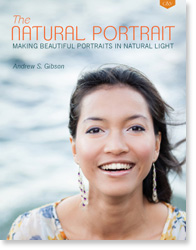

The Natural Portrait photography ebookThe Natural Portrait

My ebook The Natural Portrait teaches you how to take beautiful portraits in natural light. This 240 page ebook, published by Craft & Vision, takes you through the entire process of natural light portrait photography through from finding a model, deciding where to shoot, working with natural light and post-processing your images. Click the link to learn more or buy.

The post How to Plan the Perfect Portrait Shoot by Andrew S. Gibson appeared first on Digital Photography School.


Digital Photography School
 
Comments Off on How to Plan the Perfect Portrait Shoot

Posted in Photography


How to Choose the Perfect Portrait Lens

30 Jan

Portrait taken with 85mm lens

A question we often get asked at Digital Photography School is which lenses are best for portraits. It’s a tricky question because the answer is subjective. It depends on your budget, personal style of photography and the make of camera. It is further complicated by the relationship between sensor size and focal length.

Let’s start by exploring some of the things you need to think about when choosing the perfect portrait lens.

1. What about the lenses you already own?

It may be that you already own a lens that you haven’t thought of using to take portraits, but could actually do the job quite well. Do you have a 50mm prime? Or maybe a 100mm macro lens? A 70-300mm zoom? All of these are capable of being great portrait lenses.

Even if your only lens is a kit lens, you may still be surprised by how well it performs (within its limitations). You can read more about that in my article Why Your Kit Lens is Better Than You Think.

Getting to Know Your Lenses will also help.

2. Do you need a zoom lens or a prime?

Prime lenses are great for portrait photography. One advantage is that they have a wider maximum aperture than a zoom lens covering the same focal length. This is useful for creating images with shallow depth-of-field (a common technique in portraits). It is also handy in low light, as it lets you take photos with faster shutter speeds or lower ISO than you could with a zoom with a smaller maximum aperture.

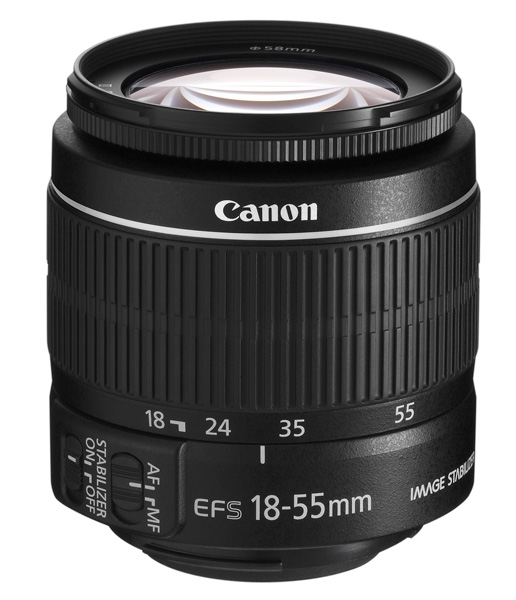
Canon EF-S 18-55mm lens

Another benefit is image quality. Prime lenses tend to have less elements than zooms, and the result is that image quality is better, and they produce sharper images with more contrast and less lens flare. If you’re on a budget (see next point) then an inexpensive prime will give you better results than an inexpensive zoom.

3. What’s your budget?

This is an important consideration because, as with most things, good quality lenses cost more. The best example of this is Canon’s 50mm lens range. There are four models, ranging from around $ 110 to $ 1600 in price. That’s a big difference, and your budget determines which model makes it to your shopping list.

More expensive lenses usually produce sharper images with less flare. The construction quality is better, they may be weatherproofed and have better or quieter autofocus mechanisms. The difference in image quality is usually greater between expensive and cheap zoom lenses than it is between expensive and inexpensive prime lenses.

The other trade-off (besides cost) for better quality built lenses, is extra weight. Top of the line lenses are usually made of metal and are heavier than the less expensive plastic lenses.

Bear in mind that good camera lenses should last decades, and sometimes spending more up front is beneficial in the long run. In the words of Sir Henry Royce (of Rolls-Royce):

The quality is remembered long after the price is forgotten”.

4. What focal lengths do you require?

The answer to this question depends on the size of your camera’s sensor (our article Crop Factor Explained tells you why). Rather than discuss specific focal lengths it’s easier to split lenses up into four categories. Once you’ve figured out what category of lens you’re interested in, and whether you would prefer a prime lens or a zoom, you can investigate which models are available for your camera.

Wide-angle lenses

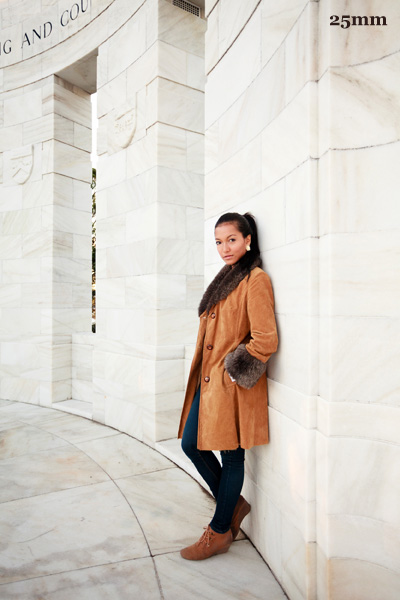
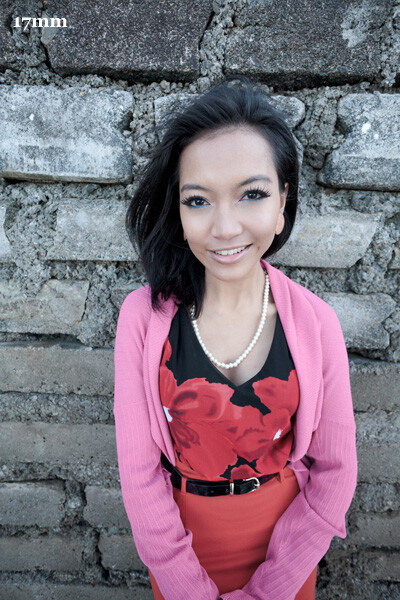
Wide-angle lenses are good for environmental portraits – those where you keep your distance a little from the subject and include their surroundings. They are generally not as good for close-up portraits as they distort your subject. Here are some examples:

Portrait taken with 25mm lens Portrait taken with 17mm lens

Normal lenses

A normal lens is one with a focal length equivalent to around 50mm on a full-frame camera (that’s around 35mm on an APS-C camera, or 25mm on a Micro four-thirds camera). You may have read that these lenses give a similar perspective to that of the human eye. It’s a debatable point, but there’s no doubt they are interesting for portraits, occupying the middle ground between wide-angle and short telephoto lenses. They can be used for close-up portraits, although not completely without distortion (see image left, below)

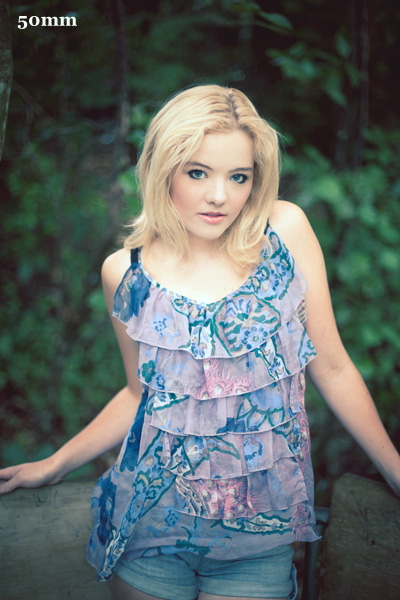
Portrait taken with 50mm lens

A “normal” 50mm lens portrait

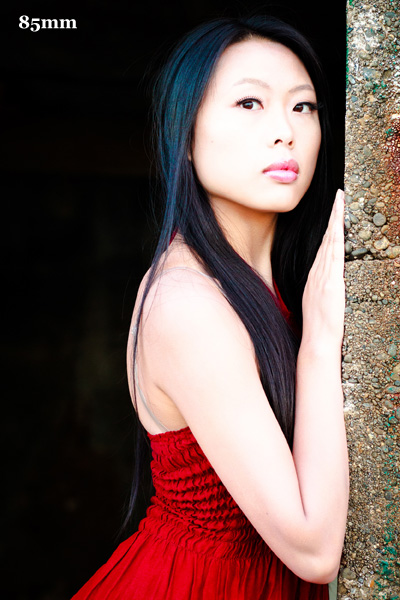
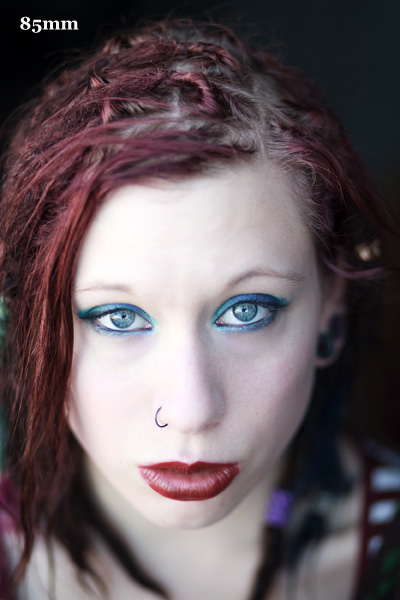
Portrait taken with 85mm lens

A short telephoto 85mm lens

Short telephoto lenses

These lenses are often called portrait lenses because they are an ideal focal length for taking flattering photos of people. You can move in close and take images without distortion, or step back and include the entire figure without moving so far away that it becomes difficult to communicate with your model. If your short telephoto is a prime lens, you get the additional benefit of wide apertures. Best of all these lenses, especially primes, tend to be reasonably priced.

My favourite lens for portraits is an 85mm prime lens (you can read more about it in my article How a Humble 85mm Lens Became My Favourite). (see image right, above)

If you have an APS-C camera then a 50mm prime lens is effectively a short telephoto. Yes, I’ve written about 50mm lenses too – let me point you towards Nifty Fifties – Why I Love 50mm Prime Lenses and Why a 50mm Lens is your new best friend.

Telephoto lenses

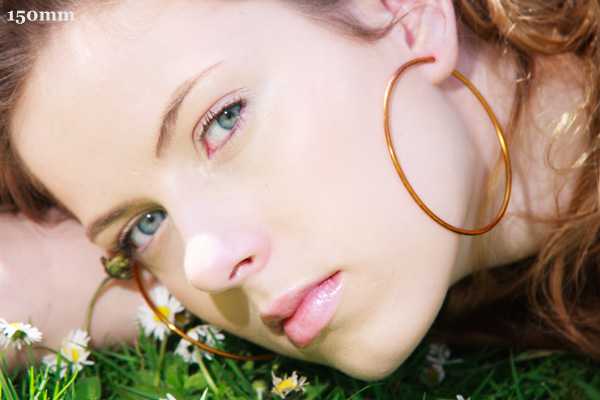
Telephoto lenses are often used by professional fashion and portrait photographers for the compressed perspective and their ability to isolate the model from the background. The downside of telephoto lenses is that they tend to be more expensive than shorter focal lengths, especially if you’d like one with a wide maximum aperture. They are definitely heavier as well. Having said that, there are plenty of relatively inexpensive lenses, especially zooms, in the 100mm-200mm range.

Portrait taken with 150mm lens

Selecting a focal length

If you’re unsure which focal lengths appeal to you, try this exercise. Go onto Flickr or 500px and do a search for portraits. Mark any you like as favourites. When you have marked at least twenty, go and have a look at them together. Examine them carefully and think about why you liked each one. Are there any common themes? Which focal lengths are used the most? Are the photographers using wide apertures for shallow depth-of-field? Are they predominantly black and white or colour? Is the photographer using natural light or flash? Are they predominantly close-ups or environmental portraits? The answers to these questions may help you decide which lenses to shortlist. Read more: 5 Easy Steps to Choose the Perfect Prime Lens for You

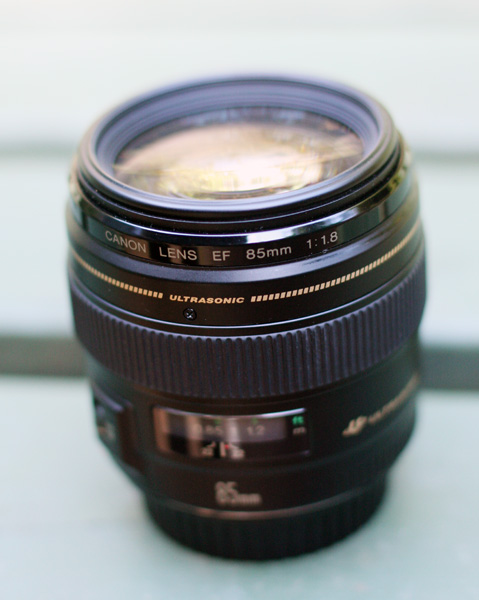
Canon EF 85mm f1.8 lens

My thoughts

I’m going to be specific and tell you exactly which lenses I use. My favourite lens for portraits is my Canon EF 85mm f/1.8 prime lens. I use it for approximately 80% of the portraits I take. I also use my Canon EF 40mm f2.8 pancake lens (it’s a moderate wide-angle) on my full-frame camera and, occasionally, a Canon EF 50mm f1.4 or EF 17-40mm f/4L zoom. The next lens on my list is a 24mm prime, and when I buy one I’ll no longer use the 17-40mm zoom for portraits. I favour primes over zooms because of image quality and the wider maximum apertures.

Your thoughts

Now it’s time to share your personal experiences. Which lenses have you purchased for taking portraits, and how did they work out?


Understanding Lenses

Understanding Lenses: Part II ebook coverI’ve written two ebooks for Canon EOS users about camera lenses. Click on the links to learn more about each one:

  • Understanding Lenses: Part I – A Guide to Canon Wide-angle and Kit Lenses
  • Understanding Lenses: Part II – A Guide to Canon Normal and Telephoto Lenses

The post How to Choose the Perfect Portrait Lens by Andrew S. Gibson appeared first on Digital Photography School.


Digital Photography School
 
Comments Off on How to Choose the Perfect Portrait Lens

Posted in Photography


5 Easy Steps to Choose the Perfect Prime Lens for You

10 Jan

“But how will I zoom in and out?”,  I blinked my eyes in disbelief.

“You’ve got feet, don’t you?”

85mm-canon-lens

My first encounter with the concept of fixed or prime camera lenses was when they were explained to me (a baby photographer) when I met with a local wedding photographer whose work I was (and still am) crushing on. I was so surprised to hear that there were lenses that (gulp) didn’t zoom. ‘What’s the point of that?’ I wondered. Why pay more for less?

Clearly, I had lots of catching up to do!

There are many merits to utilizing prime lenses in your photography. One is that you may find you can achieve mind blowing sharpness and quality with a lens that isn’t 10 lenses in one. I like to say that the 50mm prime lens doesn’t have to try to be anything other than 50mm. It only needs to focus on (pun intended) being the best 50mm it can be. Of course, there are many fantastically sharp and capable zoom lenses out there, but you will find that you’re not only paying for quality, but versatility. Prime lenses aren’t very versatile, but what they lack in versatility, they can make up for in quality which may leave you asking, “what zoom?”

How to choose

So with so many to choose from, how do you choose the perfect prime lens for you? You can be like me and buy-to-try a whopping 14 lenses in 5 years, to the tune of $ 10,250, (true story) or you can try these great 5 steps:

  1. Choose one of your existing zoom lenses
  2. Set it on a focal length and leave it there
  3. Shoot for a week or so only on that setting. Experience what it’s like to use your feet instead of your zoom. Photograph your typical subjects, ones you photograph the majority of the time, and see how that focal length feels.
  4. Repeat the exercise at different focal lengths.
  5. Assess your experience shooting at different lengths. The setting at which you felt most comfortable will be a great indication of where to start when purchasing the perfect prime lens for you.

50mm-canon-lens

Bonus tip!

If you use multiple lenses (or even just a few), there’s a super cool way to use Lightroom to see all the images taken with a particular lens. First, make sure you’re in the library module. On the left (under the smaller preview image) click ‘all photos’. Then on the top bar, click ‘metadata’. You’ll then see many sorting options depending on what photos you want to see. In the middle is the box which shows every lens you’ve used for all the images in your catalog (if you don’t see that use the pull down menu to select “lens”. How cool is that?! Then you can sort by focal length and see which one(s) you use most often.

50mm-canon-lens

My Final Choice

As I mentioned before, I’ve experimented with many different zoom and prime lenses. As for primes, I’ve owned the following Canon lenses: 50mm f/1.8, 50mm f/1.4, 50mm f/1.2, 85mm f/1.8, and 24mm f/2.8. After all that, the only one that remains in my collection is the 50mm f/1.2. I personally love quite tight portrait shots so although I think the quality was fantastic, the 24mm was too wide. The 85mm had phenominal sharpness and quality, but I sold it to help pay for the 50mm. I find the 50mm great on my full frame camera for wideish family shots but also tight-enough portraits. The f/1.2 means it’s my best lens for ultra low light and the sharpness is a little mind blowing. For me, it’s the perfect prime lens.

Now, there are many lenses from which to choose and that’s where you fine people come in! If you’re a prime lens aficionado or even just a fan of a particular lens, get involved below and tell us what prime lenses you have experience with, and which are your favourites!

The post 5 Easy Steps to Choose the Perfect Prime Lens for You by Elizabeth Halford appeared first on Digital Photography School.


Digital Photography School
 
Comments Off on 5 Easy Steps to Choose the Perfect Prime Lens for You

Posted in Photography


Infographic Feature: Capturing Perfect Wedding Photos

06 Jan

There are many wedding photographers (or people who merely think they can shoot weddings), but there are also many who could brush up on their skills. That’s putting it lightly. We believe that wedding photography is basically a category onto itself because of the high degree of skill and specificity required to pull off shooting any wedding successfully. We’ve covered Continue Reading

The post Infographic Feature: Capturing Perfect Wedding Photos appeared first on Photodoto.


Photodoto

 
Comments Off on Infographic Feature: Capturing Perfect Wedding Photos

Posted in Photography