RSS
 

Posts Tagged ‘Part’

DPReview Gear of the Year Part 3: Olympus OM-D E-M1

29 Nov

e-m1-shot2.jpg

A lot of equipment passes through our Seattle and London offices, everything from high-end cameras to inexpensive accessories. A lot of it gets reviewed, but we can’t cover everything. In this series of short articles, DPReview staff will be highlighting their personal standout products of the year. In part 3, Andy Westlake talks about his personal favorite – the Olympus OM-D E-M1.

News: Digital Photography Review (dpreview.com)

 
Comments Off on DPReview Gear of the Year Part 3: Olympus OM-D E-M1

Posted in Uncategorized


Photojojo’s Holiday Gift Guide 2013, Part 1!

26 Nov

We’ve searched high and low and eye-level too to find six amazing new photo gifts for our friends and fam this holiday season.

Scroll along to see new phonography gear, limited edition Polaroid cameras and more.

Plus, a Sale on some old favorites!

null

These Photojojo Special Edition SX-70s have been restored to perfection by our friends and Polaroid experts at Mint. This limited run features a Photojojo exclusive colorway. So snatch them up quick for the Polaroid enthusiast in your life.

In the Shop for $ 400

null

Meet the all new version of our uber popular best-selling cell lens series! We added a mind (and image) bending Super Fisheye Lens and a glare stoppin’ color poppin’ Polarizing Lens.

Starting at $ 15


The Bolt Charger is a high-capacity backup battery for your phone, that’s also a wall charger. The perfect accessory for anyone who’s preferred method of battery depletion is snapping pix of all they see.

In the Shop for $ 60


The perfectly pocketable Phone-o-Chrome slide is an IRL filter that looks just like an old slide. Move its rainbow gradient in front of your lens to add a pop of color to any scene. Pick one up for your most colorful friend.

Starting at $ 15


Everything you need to take better photos with your phone. A lens, a light, a class at Photojojo University and a cool pouch to carry them all. 60 bux worth of gear for a mere 40 smackeroos. Great for phoneography whizzes and newbs alike.

In the Shop for $ 40


The Handleband holds your phone safe and snug on your bike’s handlebars. Take a traffic timelapse, film your commute, then use your maps app for directions! Just the thing for that special bike ridin’ photo lover in your life.

In the Shop for $ 20

Some of our faves, just got favier.
Hurry up! These deals are only around for one day.

  • The Instax Mini 8 Instant Cam

    $ 85

    $ 80 ? TODAY ONLY

  • Any Bag Camera Bag Insert

    $ 59

    $ 45 ? TODAY ONLY

  • iPhone 10-12x Telephoto Lens

    $ 35

    $ 30 ? TODAY ONLY

  • The Plaid Camera Satchel

    $ 70

    $ 60 ? TODAY ONLY

  • Seat Belt Camera Straps

    $ 25

    $ 20 ? TODAY ONLY

  • Canon and Nikon Lens Bracelets

    $ 25

    $ 15 ? TODAY ONLY


© Aaron for Photojojo, 2013. |
Permalink |
No comment |
Add to
del.icio.us

Post tags:


Photojojo

 
Comments Off on Photojojo’s Holiday Gift Guide 2013, Part 1!

Posted in Equipment


DPReview Gear of the Year Part 2: Panasonic Lumix DMC-GM1

20 Nov

gm1.jpg

A lot of equipment passes through our Seattle and London offices, everything from high-end cameras to inexpensive accessories. A lot of it gets reviewed, but we can’t cover everything. In this series of short articles, DPReview staff will be highlighting their personal standout products of the year. In part 2, Allison Johnson comments on her personal favorite – the Panasonic Lumix GM1.

News: Digital Photography Review (dpreview.com)

 
Comments Off on DPReview Gear of the Year Part 2: Panasonic Lumix DMC-GM1

Posted in Uncategorized


DPReview Gear of the Year Part 1: Fujifilm X100S

12 Nov

X100S_beauty_news.jpg

A lot of equipment passes through our Seattle and London offices, everything from high-end cameras to inexpensive accessories. A lot of it gets reviewed, but we can’t cover everything. In this series of short articles, DPReview staff will be highlighting their personal standout products of the year. In part 1, editor Barnaby Britton takes us through his personal favorite – the Fujifilm X100S.

News: Digital Photography Review (dpreview.com)

 
Comments Off on DPReview Gear of the Year Part 1: Fujifilm X100S

Posted in Uncategorized


The Hardest Part: What Happens Before Clicking The Shutter

11 Nov

It’s late afternoon and I’m headed to a location that should have interesting subject material to photograph. Did I leave enough time to get there? Is the weather going to cooperate? Is the light going to be right? Will I even make it in time to set up before the light hits? More importantly and most unnerving in the back of my mind the biggest question hits, “Will I even be able to find something worthy of photographing?” This important question isn’t about physically finding something, it has to do with mentally being able to see something worthy of photographing and showing to others.

The hardest part of photography happens before the shutter even clicks. It’s easy to fret over logistical concerns, but my biggest source of anxiety is not being able to mentally picture a photo worth taking and showing. Consider this stage fright for an audience of one, the twilight zone of a photographer’s universe.

Over time I’ve tackled insecurities about technical concerns, but without fail this one powerful question always creeps into my mind on every shoot. The “art of seeing” is about experience, practice, breaking habits, but most importantly clarity of mind. Whether out in the field or in a studio it is the same, idle time fuels doubtful thoughts. As soon as I step foot into the environment I am photographing this anxiety inducing question is quickly drowned out.  Why? Because what I photograph and “see” is a reflection of my passion. What I love to photograph I know inside and out. Even if I didn’t have a camera in hand my natural curiosity and mind’s eye would fill my brain with ideas when immersed in an environment I love. The best trick I learned when in an environment I may not love, but need to get the shot is to extrapolate ideas and techniques I’ve applied in “loved” environments in new environments.

Whether you’re new to photography or if you’re a seasoned professional I am 100% certain you’ve had this doubtful question creep into your mind. While it goes unspoken because we’re either too proud or insecure, we’re all in the same boat and subject to the same self doubt. Just be sure if fuels you, rather than consumes you.

Recommended & Related Reading

  • One of Photography’s Great Paradoxes
  • Pro Tip: Always Check the Views Behind You
  • Nature, Creativity and Seeing Plus
  • Two Quotes of Note On The Topic of “Art of Seeing”
Bonus Quote of Inspiration

Clarity of mind means clarity of passion, too; this is why a great and clear mind loves ardently and sees distinctly what it loves.

Blaise Pascal

French mathematician, physicist (1623 – 1662)


Copyright Jim M. Goldstein, All Rights Reserved

The Hardest Part: What Happens Before Clicking The Shutter

The post The Hardest Part: What Happens Before Clicking The Shutter appeared first on JMG-Galleries – Landscape, Nature & Travel Photography.


Related Stories

  • The Hardest Part: What Happens Before Clicking The Shutter – Enclosure
  • The Ancients – Bristlecone Pine Forest, California – Enclosure
  • The Ancients – Bristlecone Pine Forest, California
Feed Ads by FeedBlitz
powered by ad choices


JMG-Galleries

 
Comments Off on The Hardest Part: What Happens Before Clicking The Shutter

Posted in Equipment


How To Photograph The Night Sky Part 2: The Stars

11 Nov

Well, I certainly hope you all enjoyed part 1 and have managed to take some stunning photographs of our Milky Way! Photographing stars offers the exact same concept as shooting the Milky Way, but with this, there are a lot of different principles that come into play. The Foreground Stars on their own are rather dull and don’t really make Continue Reading

The post How To Photograph The Night Sky Part 2: The Stars appeared first on Photodoto.


Photodoto

 
Comments Off on How To Photograph The Night Sky Part 2: The Stars

Posted in Photography


How to Photograph the Night Sky, Part 1: The Milky Way

06 Nov

Taking pictures of the heavens can be tricky. Not only do you need a fast camera, but you also need a clear night sky. This can be a tough situation to achieve, as not only are you up against the weather, but you also have light pollution and a number of other factors that can all contribute to making your Continue Reading

The post How to Photograph the Night Sky, Part 1: The Milky Way appeared first on Photodoto.


Photodoto

 
Comments Off on How to Photograph the Night Sky, Part 1: The Milky Way

Posted in Photography


31 August, 2013 – Vision and Creativity – Part Five

31 Aug

Today Alain Briot continues his current series of essays with Vision and Creativity, Part Five.


"Having been to Antarctica with Michael and Kevin, I would say after having traveled the world and shot nearly my entire life as an exhibiting photographer,  it was one of my highlights in my life and I talk about it, all the time.  The images and experience of seeing something visionary and nearly extinct from the world, to see and experience the wildlife and scenery that does not fear humans is amazing.  The images I shot there won me two Smithsonian awards and nearly 18 other international awards". – Tim Wolcott

 Find Out More Now
These Expeditions Will Sell Out Quickly. They Always Do


The Luminous Landscape – What’s New

 
Comments Off on 31 August, 2013 – Vision and Creativity – Part Five

Posted in News


So You’re Going to Shoot A Wedding: Part 3 of 3 [editing, etc.]

28 Aug

It’s done.  You survived it.  It was the longest day of your photography career, you’re exhausted, and all you can think about is how right I was (it’s cool—I get that a lot).  But…….You. Did. It.  And chances are you didn’t get locked in a bathroom,  or miss the kiss, or have a complete equipment failure, or faint face-first into the cake.  You shot a wedding.  What’s next?
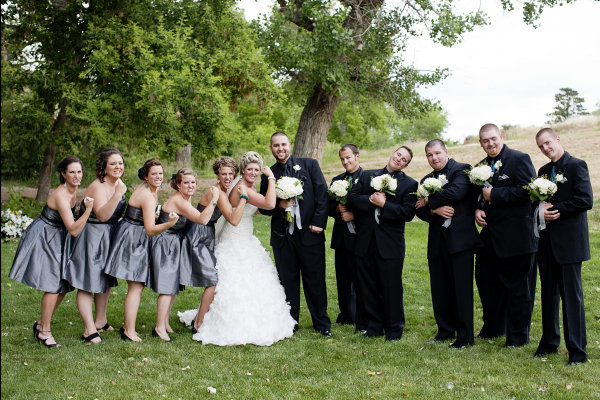
IMG_0651b

Back-up everything.  Possibly several times

As no-brainer as this is, when I shoot portraits, I’m not a diligent about it as I should be.  I’m more of a “cross my fingers/hope for the best/fly by the seat of my pants” kind of gal in most areas of my life.  But a wedding is different.  Good luck explaining to a new bride that your laptop played a vanishing act with the images and you need her to re-do the whole wedding for photographic purposes.  It’s my greatest fear.  My greatest fear used to be a complete equipment failure at a wedding, but then I had that happen a few weeks ago and somehow survived it, so I’ve graduated my fear list a bit.  As soon as I get home from a wedding, no matter that I can barely see straight, I upload everything to my computer, and then back-up everything to an external drive or disc.  Additionally I don’t erase my memory cards until I need them again and I have cloud storage.  Because I’m neurotic like that.  Weddings are often thousands of images and this takes both time and space.  Having both of those things is yet another factor in the expense of wedding photography (see: never shoot a wedding for free).  In most other areas of my life, I am totally okay with just hoping for the best and surrounding it with good thoughts.  But this isn’t one of them.
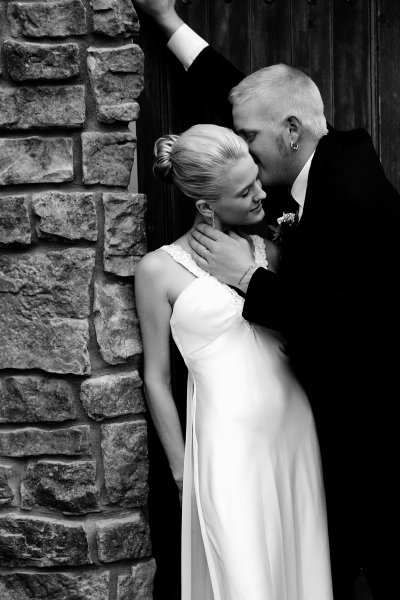
IMG_0594b

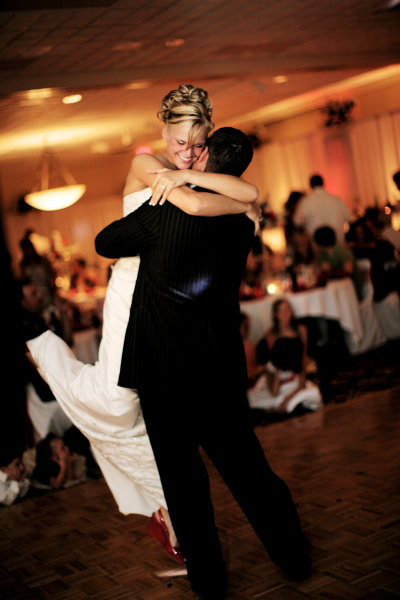
Give a sneak peek

These images are going to take you a long time to go through, edit, and deliver.  Unless you have some sort of crazy amazing one day editing process, which if you do, I’m going to need you to email that to me immediately.  While everyone is anxious to see pictures, no one is more anxious than a still-glowing bride.  Give them a little taste and buy yourself some time to ice your camera-strap-indented neck and regain clear vision.  Social media is a fabulous option for this if it’s available to you.  That way everyone can see them and fawn over how great the images are, giving you a little boost of confidence and the newly minted couple a little attention—both of which work in your favor for the long editing road ahead.  (Oh friend, it’s a long road.)
IMG_4988b

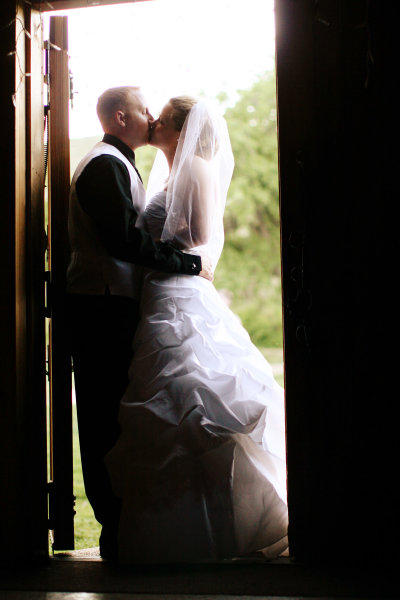
Decide if you are interested in doing this again

Every wedding I have ever shot has led to at least one referral.  In general, I don’t photograph weddings.  Yet, there I am, every summer, finding myself wanting to pass out from heatstroke with a 10 pound black box in front of my face.  Why?  Because I’m a sucker.  I suppose I could tell you that it’s because I love weddings and true love and all that, but the truth is: I’m a sucker.  Throw a few compliments at me and I’ll do about anything that doesn’t involve roller coasters.  I hate roller coasters.  (I also hate those rides where you spin on something that’s spinning.  I’d like to have a long talk with the guy who thought that was a good idea for your internal organs.)  Even if you didn’t hand out a single business card……even if you don’t have a single business card…..they will find you.  Unless you were a miserable human being to be around (I don’t judge—I’ve been there), you will get a call about another wedding.  Decide right now if this is something you ever want to do again so you can handle that call that will come later.  There is nothing wrong with saying no, thank you.  It might not be your cup of tea.  Or quad carmel latte (I’m becoming a really expensive coffee date lately).  There is also nothing wrong with having loved it.  The point is that you need to decide quickly because there is literally a barista of sorts waiting on your order and she has a whole line of impatient people behind you and a smoke break coming up.
IMG_0231b

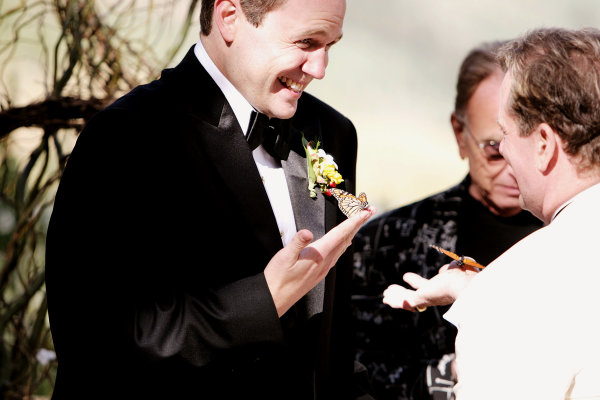
Don’t overdo it

The last wedding I shot came in at just shy of two thousand images.  There were 26 guests, and that’s including the dog ring bearer.  I shot for less than 4 hours.  I’m an over-shooter.  I know this.  In my defense: WHAT IF I MISS SOMETHING???  For this said wedding I have no less than 40 images of “the kiss”.  Truth?  They all look the same.  Don’t get me wrong—it was an amazing kiss.  Record books, in fact.  But, those 40 images I shot in probably 30 seconds of time all look pretty much the same.  Yet I want them to see every one!!!  What if they love one that’s slightly different than another??  What if the clouds moved just a bit and it makes for the best of forty?  I don’t know.  What I do know is that to the average person, all 40 of those images look exactly the same.  Pick one, edit it to loveliness, and move on.  No one knows you have forty of them.  And likely, no one cares.
IMG_3669b

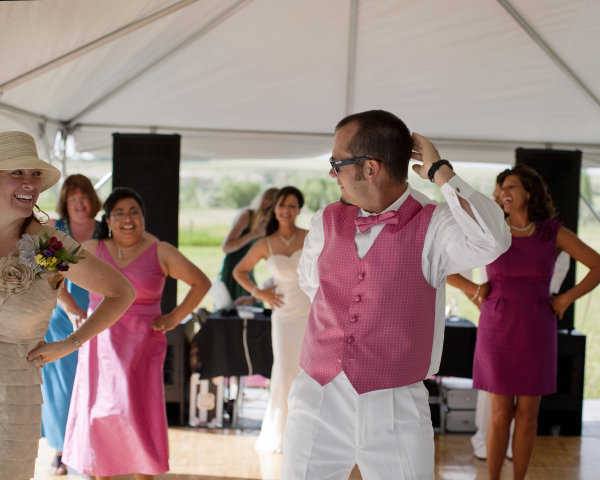
Deliver the images with deserved fanfare

I personally don’t do any printing; if you book a session or a wedding with me, your flat fee includes my time, the finished (edited) high resolution images on a disc, and a full printing and usage release.  This is how I have been doing it for years and I find that not having to mess with an 8×10 print of this one or a 5×7 of that one or marking-up my printing costs to cover everything is a much easier way of doing things.  And easy works best for me because I am a terrible insomniac (see numerous references to coffee above) and when I get overwhelmed with work (which is often), I go lock myself in my closet and cry a little.  However, just handing over a disc feels like a near let-down when I’ve been editing for weeks and, as previously mentioned, spent an extremely long and tiring day just shooting the images.  I like a little fanfair, and because wedding photography is such an investment, I think my clients should get a little ribbon and bow.  Or maybe a horn section.  Depends on what I have access to at the time.  I like to put together a “highlight” slideshow of 50 or so of the images that the couple can send to their friends and family to watch online.  Additionally, I usually put together a little gift of sorts to give along with the disc—maybe a large print that I put in a readymade frame or for a smaller wedding, I might print off 4×6 prints of each image and put these in a pretty box so theycan make awedding album easily.  It honestly just depends on the couple and what I charged.  My goal here is only to hand them over something more lovely than a cold silver flat circle.
lynsey_peterson22

Wedding photography was never my goal, nor do I consider myself a wedding photographer.  I have never advertised or marketed for it, though I have shot about 70 of them in the last decade.  It’s tough—I’m not set-up to be a wedding photographer, both from an equipment and time perspective, yet I find myself doing several a year even still.  All joking aside, I don’t EVER take on a wedding just for the money or just out of wanting to do something wonderful for a loved one.  Every wedding I have ever shot I only ended up there because I truly felt that I was the best person for the job.  Many times I was right (this isn’t a time to be humble), but a couple times I was wrong and it makes for a painfully long event day and editing process.
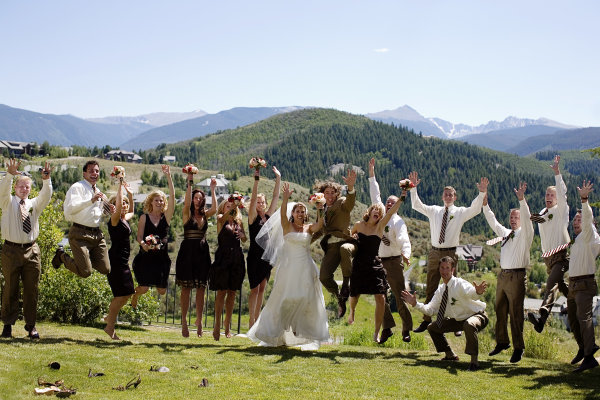
IMG_7294b

The reason wedding photography is met with such passion by veterans and hobbyist alike is because it’s a big deal; there are no re-dos, no second chances.  It’s a type of photography that is all it’s own.  So only shoot the weddings where you feel confident that you and the couple feel similar about the end vision.  Only shoot the weddings where you genuinely like the couple; if you wouldn’t want to have a beer with them, you’re not going to want to spend a 10 hour day with them.  Only shoot the weddings that will give you more than a paycheck, whether that be experience, a day of fun, or that good feeling of doing something wonderful for someone else and knowing you did a good job.  It doesn’t matter if you believe in true love or soul mates, it doesn’t matter if you feel like weddings are too over-the-top and unnecessary, it doesn’t matter if one of the biggest highlights was the free piece of cake (I’m a big fan of cake), what matters is that you went in there knowing that you were the person for the job, that you stayed there feeling like you were doing a great job, and you left there happy to have done it.
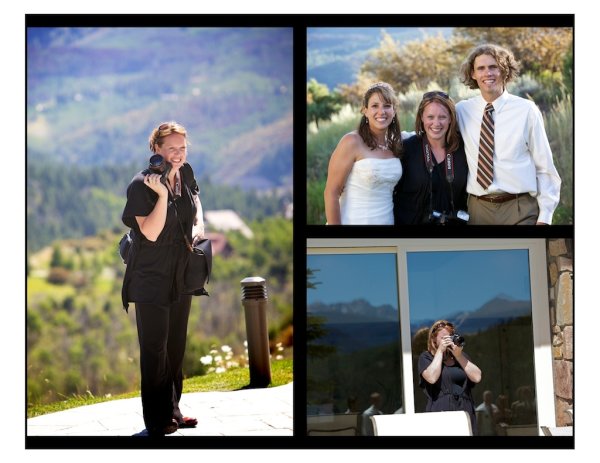
me at jillandty

Tired and glad for it to be over, but happy to have done it.

Post originally from: Digital Photography Tips.

Check out our more Photography Tips at Photography Tips for Beginners, Portrait Photography Tips and Wedding Photography Tips.

So You’re Going to Shoot A Wedding: Part 3 of 3 [editing, etc.]


Digital Photography School

 
Comments Off on So You’re Going to Shoot A Wedding: Part 3 of 3 [editing, etc.]

Posted in Photography


Is that a Workshop, Tour or Seminar [Part III]

16 Aug

In part I and part II of this series we learned the photo workshop is typically one where the instructor concentrates on delivering an intense teaching/learning experience at a location conducive to enhancing that goal.  In comparison is the photo tour where the delivery is all about exotic or exciting locations with a photo tour leader putting you in the right place at the right time, and might provide minimal formal instruction.

Located somewhere between the tour and workshop is the photo seminar. More often than not the seminar combines the best attributes of the workshop and tour by providing numerous lecturers and presentations, from internationally recognized keynote speakers who augment acclaimed local and national professionals in various photography disciplines.

In 1994, I attended a 60-minute presentation where a digital artist explained that a new software called Adobe Photoshop would revolutionize the photography industry. My notes from that lecture said “alpha mask – change sky.”  I later learned how to do alpha masks and discovered that I need not sit and look out a window while it was raining. Nineteen years later there is little argument that Photoshop has changed our industry, and “masks” are one of the foundation tools every digital photographer must eventually learn.

In 1994, I attended a 60-minute presentation where a digital artist explained that a new software called Adobe Photoshop would revolutionize the photography industry. My notes from that lecture said “alpha mask – change sky.” I later learned how to do alpha masks and discovered that I need not sit and look out a window while it was raining. Nineteen years later there is little argument that Photoshop has changed our industry, and “masks” are one of the foundation tools every digital photographer must eventually learn.

The seminar is also sometimes referred to as a conference, but the crux of the event remains very much constant: numerous presenters under one roof presenting a variety of topics by experts in their field over several days at one venue.

Seminars are offered by both private enterprise as well as professional and amateur photography associations who also may open their doors to non-members.  In Canada the two most recognized national association conventions are hosted in different cities each year by the members of Professional Photographers of Canada (PPOC) and Canadian Association for Photographic Art (CAPA).  You can do a web search in your country of residence for professional associations such as Professional Photographers of America (PPA) or your national amateur chapter of Fedération Internationale de l’Art Photographique (FIAP).

Seminars are typically chock-a-block full of presenters offering a variety of topics and many also offer a slate of add-on field trips. It is not uncommon with the larger conventions to have 25, or more, presenters on a four day program which is augmented with a keynote presentation each evening.  Intensity is the key word with seminars.

A close cousin to the seminar is the non-degree granting photo school. The concept is very similar, the delivery is quite different.  Whereas in the seminar scenario participants are introduced to a variety of instructors, concepts and theories, the school typically places a classroom of students with one instructor for the entire time period.  Additionally, the school tends to be more about a mixture of theory and practical application, whereas the seminar tends to deliver concepts and ideas for individual exploration at a later time.

Each approach has their advantages and disadvantages. If you are seeking exposure to a variety of concepts and motivation the seminar might be the best approach. By comparison, if you are seeking to spend a lot of one-on-one time learning a particular technique or skill set the school might be the better choice.  Be aware, however, if you “hook-up” with a presenter in the seminar situation who has poor instructional technique you can find some solace that the next lecturer, an hour or so later, might be better.  In the school environment, however, if you have a poor instructor you will be less than satisfied over the duration of several days, a week, or even longer.  Be diligent and do your homework well; there are many great photographers who simply are not good at sharing their knowledge, skills or information for a variety of reasons.  As suggested in the opening of this series, there are instructors and then there are teachers – not all are truly teachers.

In summation we can generally draw to following conclusions:

Workshop:  Typically intense training with one instructor that includes field and formal classroom instruction with measureable outcomes. The location is secondary but supportive of the curriculum.

Photo Tour:  Location(s) is the key ingredient and instruction is minimal if at all. The tour leader is typically a well known photographer who should also be familiar with the locations and scope of the tour, be it cultural, wildlife, etc.

Seminar:  Typically a broad array of concepts, discussion and disciplines with a variety of presenters. It is about being introduced to new theories, approaches and motivation. They are typically shorter in duration with minimal practical application.

Post originally from: Digital Photography Tips.

Check out our more Photography Tips at Photography Tips for Beginners, Portrait Photography Tips and Wedding Photography Tips.

Is that a Workshop, Tour or Seminar [Part III]


Digital Photography School

 
Comments Off on Is that a Workshop, Tour or Seminar [Part III]

Posted in Photography