RSS
 

Posts Tagged ‘Next’

Epson’s 4K home projectors to go on sale next month

10 Aug

Printer and projector manufacturer Epson is set to begin sales of three 4K UHD digital projectors that feature HDR and 3D support, as well as extremely long lamp life. The EH-TW7300, EH-TW9300 and EH-TW9300W are designed for the home cinema market and come with a new high resolution 16-element lens. Each of the projectors uses Epson’s 3LCD-panel technology and boasts white and colored light output of 2,300 lumens in the case of the TW7300 and up to 2,500 lumens for the TW9300 and TW9300W. The TW-9300 and TW-9300W also offer a contrast ratio of 1,000,000:1 (the TW-7300 has a ratio of 160,000:1), while the TW-9300W is Wi-Fi enabled and can receive 4K, HDS and standard definition content wirelessly from host devices.

Epson claims that the bulbs in these projectors have a lifespan that allows users to watch a movie every day for seven years (based on that movie being 1 hour and 45 minutes long) with the bulb in Eco mode, and the projectors can remember up to ten lens positions to make viewing different image formats easier.

The projectors have been announced at different times in different regions but will go on sale in September at £2199, £2999/$ 2999 and £3299/$ 3299. In the USA the TW-9300 and TW-9300W will be called 5040UB and 5040Ube.

For more information visit the Epson website.

Press release:

Enhancing the immersive, big-screen movie experience, Epson adds 4K enhancement, HDR and UHD Blu-ray support to three new home cinema projectors

Usability is also improved with lens position memory and motorised optics

Passionate film enthusiasts can get exceptional image quality at home with the latest state-of-the-art projectors from Epson. For the ultimate home cinema experience, the EH-TW7300, EH-TW9300, EH-TW9300W have been designed to offer 4K enhancement, UHD Blu-ray and high dynamic range support, motorised optics and lens position memory.

These HDR compatible home cinema projectors combine the latest imaging technologies to bring movies to life with extra detail. They feature 4K enhancement to bring a new level of finesse to the texture and resolution of the projected image, whether they’re displaying native 4K content or digitally upscaling Full HD 1080p content. The projectors are also designed to support the most advanced content, including HDR and 4K UHD Blu-ray discs. This gives users the optimal visual experience with more depth, detail and natural yet intense colours. In fact, their expansive colour gamut displays the entire sRGB and DCI colour spaces.

All three projectors deliver incredible definition, clarity and the deepest blacks due to an exceptionally high contrast ratio of up to 1,000,000:1 (EH-TW9300/ EH-TW9300W) and a new 16-piece glass lens. Colours are also rich and vivid thanks to Epson’s 3LCD panels that emit an equally high White and Colour Light Output of 2,300 lumens (EH-TW7300) or 2,500 lumens (EH-TW9300/ EH-TW9300W). In addition, frame interpolation and detail enhancement help to create sharp, smooth and flowing images.

Keeping maintenance to a minimum, these projectors’ incredibly long lamp life means the user can watch a film every day on the big screen for the next seven years1. Installation is also simple and precise thanks to motorised optics, including a powered 2.1x optical zoom, powered focus and a new powered lens shift of ±96.3% vertical and ±47.1% horizontal. It’s quick and easy to switch between different aspect ratios, as the projectors are capable of storing up to ten different lens memory positions, enabling viewers to watch films as the director intended.

With the EH-TW9300W 4K WirelessHD projector, it’s effortless to stream content to a projector from a smartphone, games console, Blu-ray player and more. The 4K WiHD transmitter makes it possible to view high-quality 4K content over WiHD, also providing flexibility when positioning the projector.

Charlotte Hone, Product Manager, Epson UK, says: “We want customers to achieve the very best cinematic experience at home, so we’re really excited to be introducing the EH-TW7300, EH-TW9300 and EH-TW9300W. The latest technologies integrated in these models, such as 4K enhancement and UHD Blu-ray and HDR support, mark a significant improvement in image quality and will really enhance the user’s overall experience. But what’s great is that they’re also easy to use, with motorised optics and lens position memory making everything from installation to every day use simple and hassle-free.”
The EH-TW7300, EH-TW9300, EH-TW9300W are available from September 2016, priced at £2,199, £2,999 and £3,299 respectively.
Articles: Digital Photography Review (dpreview.com)

 
Comments Off on Epson’s 4K home projectors to go on sale next month

Posted in Uncategorized


DEAL: How to Take Your Landscape Photography to the Next Level

12 Jul

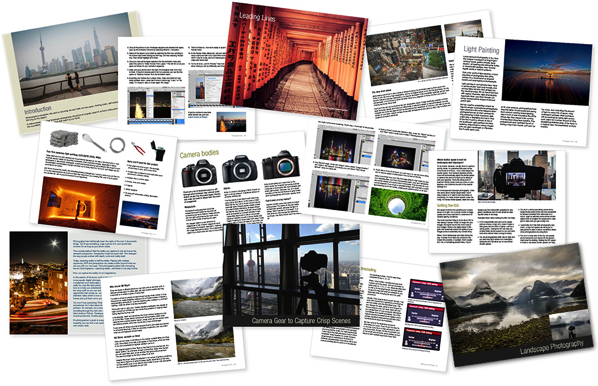
It’s Day 6 of our 7 Day Mid Year Sale, and for the next 24 hours you can grab a copy of The Complete Photography Tutorial Ebook by Richard Schneider at 61% off.

NewImage

Richard’s guide normally sells for US$ 99. But he’s made it available to the dPS community for just US$ 39, today only.

At over 250 pages, this may be the most in-depth ebook on how to capture amazing photography anywhere whether it be countryside landscapes or cityscapes!

It also comes with bonus Lightroom Presets to help you make your photos pop.

Richard has worked as a photography educator for over 10 years, as well as a pro landscape photographer.

He wrote The Complete Photography Tutorial Ebook to help people learn the core concepts of photography quickly and avoid the same mistakes he made.

Now you can learn everything you need to get started and capture your own stunning photos.

Grab your copy today for just US$ 39 – 61% off.

But remember this offer only lasts for 24 hours.

googletag.cmd.push(function() {
tablet_slots.push( googletag.defineSlot( “/1005424/_dPSv4_tab-all-article-bottom_(300×250)”, [300, 250], “pb-ad-78623” ).addService( googletag.pubads() ) ); } );

googletag.cmd.push(function() {
mobile_slots.push( googletag.defineSlot( “/1005424/_dPSv4_mob-all-article-bottom_(300×250)”, [300, 250], “pb-ad-78158” ).addService( googletag.pubads() ) ); } );

The post DEAL: How to Take Your Landscape Photography to the Next Level by Darren Rowse appeared first on Digital Photography School.


Digital Photography School

 
Comments Off on DEAL: How to Take Your Landscape Photography to the Next Level

Posted in Photography


23 Quick Tips for Street Photography or Your Next Photo Walk

26 Jun

The guys over at the Cooperative for Photography (COOPH) have some good quick tips from Thomas Leuthard for you. If you are planning on doing some street photography this summer, joining a photo walk, or even doing travel photography – apply this tips to those genres and have some fun. Let’s see the tips:

My faves are:

  • #2 control your camera remotely: I never even thought of that but will work great with my Fuji X-T1
  • #10 get down low: another thing cameras like the Fuji X-T1 do well with a tilting screen.
  • #13 shoot water as a slow shutter speed: this is starting to sound like an ad for the Fuji X-T1, but I love the fact my camera is weather resistant (WR) and I’ve stood in the rain, and taken a direct hit from an ocean wave and it withstands it and keeps going! Read more on this camera here.
  • #17 shadows make great photos: see How to Use Shadow and Contrast to Create Dramatic Images for more on that

Thomas Leuthard, “Street photography is like fishing, catching the fish is more exciting than eating it.”

Which of those quick tips did you like best?

googletag.cmd.push(function() {
tablet_slots.push( googletag.defineSlot( “/1005424/_dPSv4_tab-all-article-bottom_(300×250)”, [300, 250], “pb-ad-78623” ).addService( googletag.pubads() ) ); } );

googletag.cmd.push(function() {
mobile_slots.push( googletag.defineSlot( “/1005424/_dPSv4_mob-all-article-bottom_(300×250)”, [300, 250], “pb-ad-78158” ).addService( googletag.pubads() ) ); } );

The post 23 Quick Tips for Street Photography or Your Next Photo Walk by Darlene Hildebrandt appeared first on Digital Photography School.


Digital Photography School

 
Comments Off on 23 Quick Tips for Street Photography or Your Next Photo Walk

Posted in Photography


20×24 Studio will stop producing Polaroid 20 x 24 film next year

25 Jun
20 x 24 camera designed and built by Tracy Storer, Operator of Polaroid 20×24 Studio West

The Polaroid 20 x 24 is facing extinction as the last company producing the large-format instant film, 20×24 Studio, has announced plans to stop production at the end of 2017. 

The studio and its owner John Reuter originally purchased an original Polaroid 20 x 24 camera from Polaroid after it declared bankruptcy in 2008, as well as hundreds of cases of existing film for it. The company sought to keep the format alive by producing its own iteration of the cameras and film, but a lack of demand and other issues have forced it to abandon that dream.

In a statement posted on 20×24 Studio’s website, Mr. Reuter said:

“Our hope now is that we can work on some great projects with many of our legacy clients as well as new artists who have yet to experience the ultimate in instant analog image making. Our original business plan was for five years with the inventory purchased and for a variety of reasons we have not worked through the material. Instant film will not last forever and despite storing the film stock in cold storage and mixing the chemical reagent only as needed the studio projects that they can maintain the quality for two more years.”

Elaborating on this to the New York Times, Mr. Reuter said it would take a massive ‘multimillions’ investment to continue producing the film, something that isn’t feasible for the company given the relative lack of demand. As it stands, the camera itself costs $ 1750 to rent per day and each film exposure costs $ 125. Mr. Reuter anticipates the existing stock being used up by the time 20×24 Studio closes its doors next year.

Take a look below at the 20×24 camera in action as Douglas Doubler photographs ballet dancer Rachelle di Stasio. 

Via: New York Times

Articles: Digital Photography Review (dpreview.com)

 
Comments Off on 20×24 Studio will stop producing Polaroid 20 x 24 film next year

Posted in Uncategorized


8 Things to Consider Before You Buy Your Next Lens

19 Jun
How to buy a camera lens

Prime lenses are best for creating portraits like this one, taken with the aperture set to f/1.2 to blur the background.

Are you thinking of buying a new lens for your camera? Stop, and read this article first.

One of the hardest things to achieve when buying new camera gear is clarity. Why do you need a new lens, how much should you spend, and where does it fit into the big picture of your gear acquisition? Once you are clear on these points, it makes the process of deciding which lens (or lenses) to buy next much easier.

Let’s look at eight things to consider before you buy that new lens:

1. Budget – how much do you have to spend?

Everybody’s budget is different, and the amount of money you have to spend determines which lenses come into consideration. But, no matter what your budget, hold that figure in mind while you read this article. You may see things in a different light afterward.

My approach is to own as few, good quality lenses as possible. In other words – don’t over buy. Keep the big picture in mind. What lenses would you eventually like to own for your camera? How does your next purchase fit into this plan? Ideally, you should have a good idea of which lenses you need, and then you can plan accordingly.

This type of thinking can lead to a big shift in what lenses you decide to buy. For example, a few years ago I became frustrated with the size and weight of my Canon system. I was also thinking ahead to some travel plans I had coming up, and realized it was important to keep my kit as lightweight as possible (hand luggage allowances are very low and strictly enforced in New Zealand airports). That led to the decision to switch to the Fujifilm X-Series system. I now have the lightweight kit required for traveling.

2. APS-C or Full-frame?

Most manufacturers offer both APS-C and full-frame cameras in their ranges. But this makes buying lenses even more confusing.

Let’s say you own an APS-C camera. But at the back of your mind you think you might one day buy a full-frame body. That raises the question – do you buy a lens that works on APS-C bodies only (the advantage being that it is probably smaller and lighter than a lens that would fit a full-frame camera) or one that fits a full-frame body as well (which will probably be larger and more expensive)?

Tricky question to answer, isn’t it? And that’s not even taking into account the difference that sensor makes to the lens’s angle of view.

Ideally, you should decide when you buy your first camera body whether it should be APS-C or full-frame, then stick to the same sensor size in the future. It greatly simplifies the lens buying process, and eliminates a lot of confusion.

How to buy a camera lens

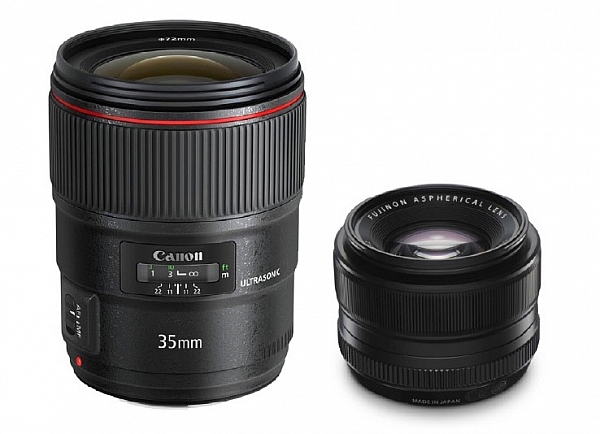
What do these two lenses have in common? They are both 35mm f/1.4 lenses. The Canon one (left) is much bigger than the Fujifilm lens (right) because it is made to fit a full-frame camera. This is a good example of how sensor size, affects lens size.

3. Don’t fall into the focal length trap

The focal length trap is the belief that you need zoom lenses that cover every conceivable focal length. For example, if you start off with an 18-55mm kit lens, then buy a telephoto zoom, you might feel that you need one that starts from 55mm so that you don’t miss out on any focal lengths in between.

This simply is not true. The next point explains the way you should be thinking about lenses.

4. What subjects are you going to photograph?

Continuing with the 18-55mm kit lens example, you may find yourself considering the following second lenses: a 50mm prime as a portrait lens (giving you the benefit of high quality imaging and wide apertures), or a macro lens for taking close-up photos of insects and flowers, or wide-angle zoom for landscape photography, or a super-telephoto for wildlife and sports photography.

The key point here is that lens choice is related to subject. The subject always comes first. Once you know what you are going to photograph, you can choose the best lens (or lenses) for the job. Focal length is a secondary consideration.

In other words, don’t buy a lens because you think you should own it, buy it because you actually need it.

How to buy a camera lens

5. Should you buy a zoom or a prime lens?

The benefit of zoom lenses is convenience. If you are a wedding photographer it is much easier to zoom from a wide-angle to a telephoto when you need to, than it is to change lenses. If you are a landscape photographer it is easier to use a wide-angle zoom to frame the scene precisely, than it is to change prime lenses (or it may not be possible to stand where you need to get the shot).

The benefits of prime lenses are image quality and wider apertures. Compare an 18-55mm kit lens (typical maximum aperture f/5.6) with a 50mm prime with maximum aperture of f/1.4. There’s a four stop difference 16 times more light) between f/1.4 and f5.6, which helps you take photos with blurred backgrounds, and also to shoot in low light conditions, without raising the ISO too much. That’s why a 50mm prime is a better portrait lens than the 18-55mm kit lens (taking us back to the point about lens choice being driven by subject, not focal length).

Some photographers prefer primes, others zooms – thinking about your priorities will help you decide which is best for you.

For example, if you are a landscape photographer who always shoots at f/8, f/11, or f/16 then the wider apertures that prime lenses have are of little use to you, and a zoom may be a better choice.

How to buy a camera lens

Action photos require a telephoto lens and a camera with a good autofocus system capable of tracking moving subjects. A zoom will help you frame the subject accurately.
6. Don’t forget about weight and size

Think about the weight and size of your lenses carefully. After all, you are the one who is going to be carrying them around.

But there is another thing you should also think about when it comes to size, and that is filters. You can save a lot of money on filters by buying smaller lenses. If you’re curious to see how much, do a search for circular polarizing filters and compare the prices of the same filter in 58mm and 77mm sizes. If you need to buy a lot of filters (landscape photographers take note) then you can potentially save hundreds of dollars by buying a smaller (the diameter of the lens or filter size is also smaller) lens.

How to buy a camera lens

Wide-angle zooms are ideal for landscape photos and will help you take photos like this. Bear in mind that smaller lenses also require smaller (and less expensive) filters.

7. Build quality, weather proofing and autofocus

Most manufacturers have inexpensive, middle range, and expensive or high end lenses. Inexpensive lenses may seem like a bargain at the time, but they won’t be built as well as more expensive ones, and they may also have inferior (i.e. slower and noisier) autofocus motors.

At the other end of the scale expensive lenses tend to be built well, use good quality autofocus lenses (i.e. faster and quicker) and may also be weatherproofed (important if you take photos in bad weather or dusty conditions).

Bear these points in mind when considering a lens. Don’t forget to ask how well the lens is built, whether it is weatherproofed, and the speed and quality of the autofocus motor.

How to buy a camera lens

Wide-angle lenses are also helpful for taking photos indoors, where you may not have space to move back to use a longer focal length.

8. Brand name or third party?

You can often save money by buying a third-party lens for your camera, but in my opinion it is best to buy a lens made by your camera’s manufacturer whenever possible. Unless you have a specific reason to buy a third-party lens (usually because the type of lens you need isn’t made by your camera’s manufacturer) then stick with OEM (Original Equipment Manufacturer) lenses. They hold their value better, and autofocus performance is usually superior.

Editor’s note: for a good discussion on that topic, head to: Brand Name Versus Third-Party Photography Gear: Which is better?

How to buy a camera lens

If street and candid photography is your thing, then consider buying smaller lenses to help you take photos like this, without being noticed.

9. Image Stabilization*

An Image Stabilizer is a motor inside the lens, that moves the elements in a way that compensates for the movement created by camera shake. It is given different names by different manufacturers (Nikon, for example, calls it Vibration Reduction). It helps you take photos in low light, using lower ISO settings or smaller apertures, than would otherwise be possible. Lenses with Image Stabilization cost more than their non-stabilized counterparts, so think carefully about whether or not you need it, before paying the extra money.
* Some manufacturers, like Sony and Pentax, build Image Stabilization into the camera body, not the lenses.

Hopefully these points will help you decide which lens to buy next for your camera. If you have any questions about lenses let us know in the comments and I will do my best to answer.


Mastering Lenses

If you want to know more about buying and using lenses then please check out my ebook Mastering Lenses: A Photographer’s Guide to Creating Beautiful Photos With Any Lens.

googletag.cmd.push(function() {
tablet_slots.push( googletag.defineSlot( “/1005424/_dPSv4_tab-all-article-bottom_(300×250)”, [300, 250], “pb-ad-78623” ).addService( googletag.pubads() ) ); } );

googletag.cmd.push(function() {
mobile_slots.push( googletag.defineSlot( “/1005424/_dPSv4_mob-all-article-bottom_(300×250)”, [300, 250], “pb-ad-78158” ).addService( googletag.pubads() ) ); } );

The post 8 Things to Consider Before You Buy Your Next Lens by Andrew S. Gibson appeared first on Digital Photography School.


Digital Photography School

 
Comments Off on 8 Things to Consider Before You Buy Your Next Lens

Posted in Photography


Hasselblad to announce ‘game changer’ next week

18 Jun

Hasselblad is on the verge of announcing a new camera that it claims will be a ‘game changer in the world of photography.’ Details are vague but the teaser image, showing a low viewfinder hump supports the rumors of a high-end mirrorless model aimed at the enthusiast and semi-pro camera market.

The camera will be the first expansion of the Swedish company’s product line since it abandoned its much-ridiculed attempt to sell ‘luxury’ versions of Sony-derived models. In an interview with DPReview earlier this year, CEO Perry Oosting suggested the company had learned from the experience and would offer products that build on, and are more consistent with, the brand’s heritage as it sought to expand into different markets. 

The launch will be broadcast live June 22nd at 5:00AM (PST) via the company’s YouTube channel. 

Articles: Digital Photography Review (dpreview.com)

 
Comments Off on Hasselblad to announce ‘game changer’ next week

Posted in Uncategorized


25 Stunning Images that Show Next to Nothing – Minimalism

04 Jun

Just like the TV show Seinfeld that was a show about nothing, putting next to nothing in your images can produce some good results.

min·i·mal·ism – a style or technique (as in music, literature, or design) that is characterized by extreme spareness and simplicity

Sometimes in an image less is more, and many beginners try to put too much into their images which makes them busy and unfocused. Look at these images that use minimalism well:

Patrick Marioné - Thanks For > 2M

By Patrick Marioné – thanks for > 2M

Darwin Bell

By darwin Bell

Iñaki Bolumburu

By Iñaki Bolumburu

Kai C. Schwarzer

By Kai C. Schwarzer

Susanne Nilsson

By Susanne Nilsson

Maf04

By maf04

Craig Sunter

By Craig Sunter

LadyDragonflyCC - >;

By LadyDragonflyCC – >;<

Kai C. Schwarzer

By Kai C. Schwarzer

Daniel Sjöström

By Daniel Sjöström

Jeff Wallace

By Jeff Wallace

Takashi .M

By Takashi .M

Kai C. Schwarzer

By Kai C. Schwarzer

Stewart Ayrey

By Stewart Ayrey

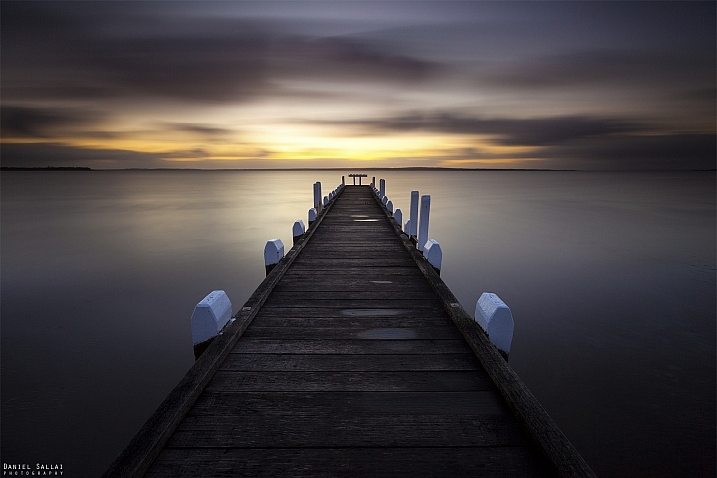
Daniel Sallai

By Daniel Sallai

Michael Taggart Photography

By Michael Taggart Photography

Jonathan Kos-Read

By Jonathan Kos-Read

Marilylle Soveran

By Marilylle Soveran

Soumyadeep Paul

By Soumyadeep Paul

Danipuntocom

By Danipuntocom

Georgie Pauwels

By Georgie Pauwels

Howard Ignatius

By Howard Ignatius

Md. Al Amin

By Md. Al Amin

Steve Corey

By Steve Corey

Kristina Alexanderson

By Kristina Alexanderson

googletag.cmd.push(function() {
tablet_slots.push( googletag.defineSlot( “/1005424/_dPSv4_tab-all-article-bottom_(300×250)”, [300, 250], “pb-ad-78623” ).addService( googletag.pubads() ) ); } );

googletag.cmd.push(function() {
mobile_slots.push( googletag.defineSlot( “/1005424/_dPSv4_mob-all-article-bottom_(300×250)”, [300, 250], “pb-ad-78158” ).addService( googletag.pubads() ) ); } );

The post 25 Stunning Images that Show Next to Nothing – Minimalism by Darlene Hildebrandt appeared first on Digital Photography School.


Digital Photography School

 
Comments Off on 25 Stunning Images that Show Next to Nothing – Minimalism

Posted in Photography


Game Changers: How to Take Your Photography to the Next Level

05 Feb

The other day, one of the students I was mentoring asked me a really interesting question, “How do I take my photography to the next level?” The conversation that followed was the inspiration for this article.

Photograph subjects and experiences that you love, in a way that is unique to you

Air 39

“The artist sees what others only catch a glimpse of.” – Leonardo da Vinci

When you photograph the things you love, you will always be excited and inspired. If you are excited and inspired by something, you are naturally going to want to spend more time doing it. The more time you spend doing something, the better you become at it.

I spent the first half of my career focusing on fashion photography, because I thought that was what I should be doing. I was okay as a fashion shooter, but to be 100 percent honest, I never really got the whole fashion world, and it didn’t consume me like it does the best fashion photographers in the world. The photographers who excel in this genre live and breathe fashion; some of them are fashion.

It wasn’t until I started to focus more on portraits, and travel lifestyle photography, that I really fell head over heels in love with photography. I’d finally found my “thing”! I could happily shoot portraits or travel lifestyle images all day long. I felt energized, and on a high after each shoot. I was always exhausted after shooting fashion.

Are you photographing the things you really love? Is this work making you feel excited and energized, or depleted and flat?

The way we see and experience life is something that is unique to each of us. If you want to take your photography to the next level, focus on photographing the things that matter to you, in your own world, and in a way that is unique to you. This is the one thing that will set you apart from all the other photographers.

Passion, not perfection

Contender final 1

If passion and perfection had an arm wrestle, passion would win every time. Why? Because the thing that makes photography great, is the way it makes us feel. If there is no passion in an image, and it doesn’t inspire a reaction, then it’s just a snapshot.

If you want to take your work to the next level, show your passion for your work.

Given a choice to shoot a photo that was technically brilliant, sharp, correctly exposed, and perfectly composed, yet void of emotion – or an image that was a bit rough around the edges, slightly soft, grainy, with a few blown highlights but captured the feeling – I would choose the latter every time.

Don’t just focus on what something looks like, focus on how it feels.

Technique, not gear

Gear 05

Michael Schumacher is the best F1 driver in history. If he were to challenge me to a race, and I drove a Ferrari and he drove a 1981 Toyota Corolla, he would still win. Why?

Schumacher is a master, who has spent years driving. He knows how to drive fast, and take corners at high speed, without rolling the car. He would probably lap me three times before I’d even had a chance to get out of third gear. In the wrong hands, the best gear in the world is useless, if you don’t know how to drive it.

So many photographers get hung up on the notion that having the right gear will make them better photographers. While it’s true that the right gear will give you a better quality image, it’s not going to guarantee that you will be a better photographer.

Instead of worrying about the gear, focus on the technique. It’s what you do every day that makes you great; not what you use every day. Dedicating as few as thirty minutes a day to your photography, every day, will do more to improve your skills and develop your style than owning all the high end gear in the world.

Learn to peel potatoes before you cook a soufflé

Last supper

Fat Tony & Co/Nine Network Australia

During the first few years that I was building my photography business, I had a night job working as a cook in an Italian restaurant. When you train to become a cook, you must master a task before you are allowed to move on to the next one. The first task each apprentice cook must master is peeling potatoes. Then they move on to the salads, entrees, pasta, steaks, and seafood. The last thing I was taught to cook was one of the most technically difficult dishes, the soufflé.

The photographer who attempts a complicated studio shoot right after buying his or her first camera, is like the apprentice cook who walks into a kitchen and insists on cooking a soufflé on their first day.

Taking a stepped approach to learning, will take your photography to the next level much faster than trying to learn it all at once. Many photographers will try complicated shooting or lighting styles, then become frustrated because their images are not working out the way they had hoped.

Master peeling potatoes first. It’s definitely a game changer!

FOG11FS 166

Ask for help

Putting their work out there, is something that many photographers struggle with. Yet, seeking and implementing constructive criticism is one of the fastest ways to take your photography up a few notches.

The fear of ridicule or criticism prevents some from sharing their work. This is really sad, because many of the fears people may have are imagined. FEAR is an acronym for False Evidence Appearing Real, it’s our mind trying to keep us small. When you create beautiful art, and you don’t share it with the world, you deny so many people the opportunity to experience beauty.

If you are ever in doubt, take Mother Nature as an example of best practices for artists. Every day she puts her work out there – sunset, sunrise, storms, sunshine, and rainbows. Some are absolutely spectacular. Other times, her art can be mediocre, yet she puts her work out there every day for us to enjoy.

Other ways you can ask for help:

  • Join a photography group
  • Find a mentor
  • Attend a workshop where your work can be critiqued by an expert whose work you respect

Confidence

Ecove Hyde15 2977

“Whether you think you can, or you think you can’t–you’re right.” Henry Ford

You can read books, take courses, and listen to podcasts until the cows come home. But if you don’t have self-confidence, it will be very difficult to take your work to the next level.

Confidence is knowing that you’ve done the hard work and put in the hours, and can now turn up and nail the shot.

Many photographers and artists really struggle with confidence. It may be due to old programming from a lifetime of being told they weren’t good enough, of having the people they spend the most time with not offering enough support, or a hundred other reasons, all of which undermine a person’s self-esteem.

Look for ways to improve your self-confidence. Spend more time with people who value and respect what you do. Find ways you can get rid of destructive self-talk.

The good news is that self-confidence can be trained, just like a muscle in the gym. Gaining self-confidence and self-belief is, by far, a major game changer. It will help take your photography to the next level.

Do you have a strategy that I might have missed? What techniques have you used to take your work to the next level? I’d love to hear your thoughts.

All images: Copyright Gina Milicia


fastflash_bookIf you want to learn more about using flash for creating portraits, pick up Gina’s brand new dPS ebook: Fast Flash for Portrait Perfection. Now on sale for an introductory price for a limited time only.

googletag.cmd.push(function() {
tablet_slots.push( googletag.defineSlot( “/1005424/_dPSv4_tab-all-article-bottom_(300×250)”, [300, 250], “pb-ad-78623” ).addService( googletag.pubads() ) ); } );

googletag.cmd.push(function() {
mobile_slots.push( googletag.defineSlot( “/1005424/_dPSv4_mob-all-article-bottom_(300×250)”, [300, 250], “pb-ad-78158” ).addService( googletag.pubads() ) ); } );

The post Game Changers: How to Take Your Photography to the Next Level by Gina Milicia appeared first on Digital Photography School.


Digital Photography School

 
Comments Off on Game Changers: How to Take Your Photography to the Next Level

Posted in Photography


Phottix announces next generation of Odin TTL flash controllers

02 Feb

$ (document).ready(function() { SampleGalleryV2({“containerId”:”embeddedSampleGallery_1596139815″,”galleryId”:”1596139815″,”isEmbeddedWidget”:true,”selectedImageIndex”:0,”startInCommentsView”:false,”isMobile”:false}) });

Flash and accessory manufacturer Phottix has released details of the second generation of Odin flash controllers that will go on sale mid-February. The Odin II units, which allow wireless TTL control of hotshoe and portable studio flash units, will add two extra control groups and 28 additional channels to the radio trigger’s reach, and will make the user interface easier to handle. 

The Odin system, which is compatible with Nikon, Canon and Sony cameras can be used with the company’s battery-powered Indra 500 and 300 portable studio flash heads, as well as the company’s Mitros hotshoe flash units. The new models also add an AF assist lamp, 10 new custom functions and digital ID for channels 5 to 32 to ensure the correct units are communicating. 

The Odin system is divided into transmitters and receivers, and Phottix’s own flash units have the receivers built-in. Photographers using Canon, Nikon or Sony branded flash units can use their hotshoe flash units with an Odin receiver to take advantage of the better range and connection of radio transmission over the line-of-sight systems camera brands tend to produce. Radio also works better when shooting outside in bright conditions.

The company says that new firmware will be released for the Mitros and Indra flash units to make them compatible with the new features. 

The Canon and Nikon models will be available first, with those for Sony cameras arriving in late April. The transmitters will cost £160, while receivers will be £125.

For more information visit the Phottix website.

Press release: 

Introducing the Phottix Odin II TTL Flash Trigger

Phottix adds cutting edge functionality and features to its flagship trigger

Eagerly anticipated by thousands of Odin customers, the Odin II is the result of requests from Professional Photographers demanding more from their TTL flash systems.  Phottix is delivering on its promises to provide the very best system available today. 

Unrivalled Control and Streamlined User Interface

The Odin II allows more control than ever before.  The controls are logical, simple to use, and allow extremely fast adjustments.

With five groups, A, B, C, D and E, the dedicated quick access buttons allow changes to be made by simply turning the new thumb wheel which is perfectly placed below the improved large LCD screen to adjust the compensation.  The backlit LCD panel shows the settings at a glance.  Now you can control five channels or groups of lights at the touch of a button, in TTL Mode or in a combination of full manual mode and TTL – the choice is yours.  When switching a group off, its display line disappears from the screen, showing just the groups remaining active.

Backward Compatibility

The Odin II system is compatible with the original Odin system, Phottix Mitros+ Speedlights, the award-winning Indra360 and Indra500 TTL Studio lights, Strato and Strato II receivers, and Atlas II in receiver mode.  Using channels 1 to 4 you can work with the kit you already own with the Phottix Odin II.

More Channels and Digital ID

To take advantage of the Phottix Odin II, a total of 32 channels can be used, channels 5 to 32 use the full functionality of the Odin II receiver, including a user-set digital ID for the ultimate in secure triggering.  Users can remotely control Speedlight zoom settings, providing the perfect coverage from a wide angle to a spot light.  When shooting with the Phottix Indra360/500 series, the Odin II transmitter also offers remote modelling light control and full light ratio controls.

High Speed Sync and Overdrive Sync

High Speed Sync with TTL flashes and Overdrive Sync with manual enable flash photography at up to 1/8000 second for creative photographers.  The newly added AF assist light makes autofocus a breeze in dimly lit locations.  An additional ten custom functions allow users to customise the Odin II, including switching on/off the audible beep, screen brightness, an AF Illuminator function and the ODS system control functionality, as well as a full factory reset should you need it.

Firmware Updates

Firmware upgrades for the Phottix Mitros+ and Phottix Indra360/500 will soon be available to take advantage of the new features of the Odin II – these will be announced shortly via the Phottix Journal and on the Phottix.com website.

Major Features 

  • 5 groups A, B, C, D and E
  • 32 channels with user-set Digital ID on channels 5 to 32
  • Group buttons and thumbwheel control for fast operation
  • TTL Power Control +/- 3EV
  • Manual Power Control 1/1 to 1/128th
  • High Speed Sync – up to 1/8000s on compatible cameras
  • Second Curtain Sync (Nikon and Sony only)
  • AF Assist Light
  • Flash zoom control
  • Modelling Light Control with Indra500/360
  • 2.4 GHz, Range up to 100 metres
  • Compatible with Indra500/360 TTL, Mitros+, Odin, Strato, Strato II and Atlas II
  • Always up to date via the latest Firmware.

Odin II for Nikon and Canon will be available from all Platinum Dealers week commencing 15th of February 2016, the Sony Odin II is expected to arrive in late April.

Articles: Digital Photography Review (dpreview.com)

 
Comments Off on Phottix announces next generation of Odin TTL flash controllers

Posted in Uncategorized


Manfrotto introduces next generation of on-camera LED panels

19 Jan
Left: CROMA2, Right: MICROPRO2

Italian accessory manufacturer Manfrotto has introduced three improved LED panels that are designed to be used by professional and serious enthusiasts in the hot shoes of their cameras. The new panels, which are powered by Litepanels, are the CROMA2, MICROPRO2 and the SPECTRA2. Each of the new models features surface-mounted LEDs, with new lenses that improve the intensity of illumination in the light path thus delivering better efficiency and less fall-off. The company also says the new technology benefits the accuracy of color rendition. 

The CROMA2 and MICROPRO2 panels are very similar, except that the CROMA2 offers variable color temperature so that it can work in both tungsten and daylight situations – as well as those in between. Using a mixture of daylight and tungsten LEDs, the dominance of colors can be controlled via a continuous dial between 3100K to 5600K. The CROMA2 has a maximum output of 900lux, while the MICROPRO2 can manage 940lux. 

The SPECTRA2

The SPECTRA2 is a smaller panel with a maximum output of 650lux, and is daylight only. A dimmer switch allows its power to be reduced to 50%. 

There is a range of diffusers and colored filters available for each of the panels, and they all run from 6 AA type cells, an AC adapter or an L-Type Li-ion battery. They all have a ball and socket tripod head included, and the larger panels come with AC adapters and a bracket for an L-Type battery. For the SPECTRA2 these are optional extras.

The SPECTRA2 costs $ 219.99/£154.95, the MICROPRO2 $ 349.99/£259.95 and the CROMA2 is $ 418.99/£329.95. 

For more information visit the Manfrotto website.


Press release: 

Manfrotto, world leader in the photography, imaging equipment and accessories industry, announces the new generation compact LED lights for professional and advanced hobbyist videographers and photographers. 

CROMA2, MICROPRO2 and SPECTRA2 offer the latest LED technology available (SMT – Surface Mount Technology) in a portable size, which guarantees images with perfect color rendition and improved optical efficiency.

These on-camera LED panels, powered by Litepanels, are part of the new ready to use Manfrotto LED lights. 

CROMA2 AND MICROPRO2: COMPACT NEW LED TECHNOLOGY

A new range with the same design, the SMT LED panels embed innovative lenses, which have been specifically created for high efficiency and CRI (Colour Rendering Index).

The intensity of the LED devices can be controlled by the user – CROMA2 up to 900lux and MICROPRO2 up to 940lux. The colour temperature in CROMA2 can be regulated from 3100K to 5600K, which makes this device the perfect versatile LED panel to match the existing ambient lighting. MICROPRO2 is Daylight 5600K and permits the colour correction thanks to the diffuser and gel filter included in the pack.

CROMA2 and MICROPRO2 operate on six AA standard batteries, from mains through the included AC adaptor or on L-Type Li-ion batteries through the included battery adaptor.

Compact and powerful, thanks to the included ball head they can be used for both on camera as well as off camera use.

SPECTRA2: MINI BUT POWERFUL

The most compact LED Panel in the professional range – high efficiency in the palm of your hand. SPECTRA2 features the state-of-the-art LED SMT technology, which guarantees images with perfect colour rendition and flicker-free functionality.

SPECTRA2 is perfect for on camera use with the included new ball-head, as well as for off camera use.

The LED device is dimmable, capable of emitting 650lux, and provides a further increase in the light output thanks to the boost mode (+50%). The colour temperature of the LED Panel is Daylight 5600K but it can be changed thanks to diffusers and filter gels.

SPECTRA2 can operate on six AA standard batteries and offers, as optional, AC or L-Type Li-ion batteries adaptors.

These new powerful and compact Manfrotto LED lights guarantee best performance with a high quality light. CROMA2, MICROPRO2 and SPECTRA2 represent the top range of on-camera units.

Articles: Digital Photography Review (dpreview.com)

 
Comments Off on Manfrotto introduces next generation of on-camera LED panels

Posted in Uncategorized