RSS
 

Posts Tagged ‘mirrorless’

Manfrotto Advanced & Street lineup expanded with bags for mirrorless cameras

13 Oct

Manfrotto has launched five new bags in its Advanced and Street Collections, each of them designed for use with mirrorless cameras, lenses and other items. Referring to them as the company’s new Advanced & Street selection, Manfrotto says these bags are aimed at amateur and ‘advanced hobbyist’ photographers in need of Compact System Cameras (CSC) bags. The bags are, according to Manfrotto, a mixture of lightweight, durable and stylish.

The new lineup is composed of the Advanced Compact 1 and Street CSC backpacks, the Street CSC Messenger, Advanced Compact 1 Shoulder Bag and Street CSC Shoulder Bag. The two backpacks are designed to accommodate a mirrorless camera or compact DSLR, as well as up to three lenses, a 12.9-inch iPad Pro, and accessories. The Street CSC Messenger is similar, though it can only accommodate the smaller 9.7-inch iPad Pro, while the two shoulder bags can accommodate either camera type, as well as two lenses and ‘personal items.’

The Advanced Compact 1 shoulder bag is priced at £39.95 and the backpack at £79.95. The Street CSC shoulder bag is £39.95, the messenger bag is £59.95, and the backpack is £79.95.

Articles: Digital Photography Review (dpreview.com)

 
Comments Off on Manfrotto Advanced & Street lineup expanded with bags for mirrorless cameras

Posted in Uncategorized


DSLR or Mirrorless Cameras Which is Right for You?

10 Oct

Have you considered switching to a mirrorless camera system from your DSLR? Or are you upgrading fro a point and shoot and want to know which system is the right choice for you? This video from Phil Steele may help you understand the differences and make a decision that’s sound.

If you found that helpful you can learn more from Phil over on his website Steele Training.

Soe Lin

By Soe Lin

You can also see more info on mirrorless cameras and the differences between them and SLRs in these dPS articles:

  • 3 Reasons Why Mirrorless Cameras are Better than Digital SLRs for Focusing
  • Does the Camera Matter? SLR versus Mirrorless versus Smartphone
  • 8 Factors to Look at Before You Choose a New DSLR or Mirrorless Camera
  • The 19 Most Popular Compact System and Mirrorless Cameras with Our Readers
  • 5 Lessons Learned Switching from DSLR to Mirrorless for Travel Photography
  • How the Switch from DSLR to Mirrorless Changed How I Edit Photos
  • 10 Reasons Why a Pro is Using a Mirrorless Camera for Personal and Paid Jobs

You can also vote and see the results of our poll on mirrorless cameras here.

googletag.cmd.push(function() {
tablet_slots.push( googletag.defineSlot( “/1005424/_dPSv4_tab-all-article-bottom_(300×250)”, [300, 250], “pb-ad-78623” ).addService( googletag.pubads() ) ); } );

googletag.cmd.push(function() {
mobile_slots.push( googletag.defineSlot( “/1005424/_dPSv4_mob-all-article-bottom_(300×250)”, [300, 250], “pb-ad-78158” ).addService( googletag.pubads() ) ); } );

The post DSLR or Mirrorless Cameras Which is Right for You? by Darlene Hildebrandt appeared first on Digital Photography School.


Digital Photography School

 
Comments Off on DSLR or Mirrorless Cameras Which is Right for You?

Posted in Photography


Three’s company: Lensbaby launches Trio 28 for mirrorless cameras

06 Oct

Lensbaby has announced the Trio 28, a unique creative lens designed specifically for mirrorless camera users. The Trio 28 is three lenses in one, offering the creative effects of Lensbaby’s Twist, Velvet and Sweet optics in one compact lens. A simple rotation of the lens lets you switch between the three effects, and the 28mm focal length makes it a useful all-around lens for mirrorless photographers. We are interested in how the fixed F3.5 aperture will work since aperture is a key part of controlling the creative effect in Lensbaby’s other lenses and optics, but we are excited to try it out!

The Trio 28 is available for pre-order starting on October 26, 2016. It is priced at $ 279.95 and is available in Sony E, Micro 4/3, and Fuji X mounts.


Press release:

Lensbaby Launches One-of-a-Kind Lens for Mirrorless Camera Shooters

Convenience meets creativity with unique, compact 3-in-1 lens design

Portland, OR – October 5, 2016 – Lensbaby — makers of award-winning creative effects lenses, optics and accessories — announces the launch of their most versatile lens yet, Trio 28. Designed specifically for mirrorless camera users, Trio 28 features three selective focus optics in one compact lens and will be available for purchase on October 26, 2016.

By simply rotating a dial to switch between Lensbaby’s most popular optical effects – Twist, Velvet or Sweet – the Trio 28 empowers photographers to shape their vision in the moment through the limitless creative options offered by the lens:

  • Twist gives you a large sharp central area of focus surrounding by twisty, swirling bokeh
  • Velvet has a sharp yet dreamy central area of focus with delicate glow from edge-to-edge
  • Sweet creates a sharp central sweet spot of focus surrounded by gradually increasing blur

“Trio 28 offers a revolutionary shooting experience for mirrorless shooters,” said Lensbaby Co-Founder and CEO Craig Strong. “This is the first lens we’ve designed specifically with the mirrorless camera’s small form factor in mind. With mirrorless camera sales continuing to grow, this was a natural next step for Lensbaby.”

“Our goal is to help photographers discover their unique visual voice through the creative freedom our lenses offer,” Strong continued. “With a variety of selective focus effects in a compact lens designed for the small form factor of mirrorless cameras, Trio 28 goes above and beyond, helping us reach this goal. We can’t wait to see what photographers create with it.”

The wide 28mm focal length, as well as the small and compact form to match the size of mirrorless cameras, makes the Trio 28 an ideal lens for on-the-go adventure and will help photographers uniquely capture the soul of street scenes, landscapes, environmental portraits and more.

Trio 28 Specs:

  • Focal Length: 28mm
  • Aperture: fixed f/3.5
  • 3 Optics for 3 effects – Twist, Velvet, Sweet
  • Minimum focus distance: 8”
  • Maximum focusing distance: Infinity
  • Focus Type: Manual
  • Size/Weight: 4.9oz, 2.75” x2.75” x2”
  • Twist Optic: 4 multi-coated elements in 3 groups
  • Velvet Optic: 3 multi-coated elements in 2 groups
  • Sweet Optic: 3 multi-coated elements in 3 groups
  • 46mm front threads
  • When shooting on full frame cameras, Twist will produce a subtle vignette

The Trio 28 is designed for the following mirrorless cameras: Sony E, Micro 4/3 and FujiX. It retails for $ 279.95 and will be available for purchase at Lensbaby.com and other Lensbaby-authorized retailers on October 26, 2016.

For more information please contact Keri Friedman at keri@lensbaby.com or Ally Hopper with Groundswell PR at ally@groundswellpr.com.

About Lensbaby

For over a decade, photographers have relied on Portland, Oregon-based Lensbaby to help them break free of routine, tinker, and open themselves up to unexpected results—dancing, playing and delighting in what’s possible with a creative lens and their imagination.

Lensbaby makes award-winning creative effects lenses, optics and accessories that follow this philosophy, including the Velvet 56, a versatile portrait and macro lens; their unique Optic Swap System, which lets photographers swap their optic and tilt their lens for limitless effects; and mobile lenses that transform everyday smartphone photography. Lensbaby products are sold and distributed worldwide. For more information, visit www.lensbaby.com

Lensbaby Trio 28 specifications

Articles: Digital Photography Review (dpreview.com)

 
Comments Off on Three’s company: Lensbaby launches Trio 28 for mirrorless cameras

Posted in Uncategorized


Photokina 2016: Talking medium format mirrorless with Fujifilm

23 Sep

Toshihisa Iida, Fujifilm’s General Manager of the Sales and Marketing Group talks us through the new GFX medium format mirrorless camera, who it’s for and why it features a Bayer sensor.

We’ll be publishing details of a more in-depth interview conducted without the camera running, next week.

Articles: Digital Photography Review (dpreview.com)

 
Comments Off on Photokina 2016: Talking medium format mirrorless with Fujifilm

Posted in Uncategorized


Opinion: The EOS M5 is Canon’s best ever mirrorless camera, and a big disappointment

18 Sep
Canon’s EOS M5 is a small, lightweight but powerful APS-C format mirrorless camera, which uses the same sensor and on-sensor phase-detection autofocus system as the EOS 80D.

By Barnaby Britton, Editor – DPReview.com

What a long, strange trip it’s been. Eight years have passed since Panasonic unveiled the Lumix DMC-G1, the world’s first DSLR-style mirrorless camera, and for much of the intervening time, Canon has appeared content to let its competitors lead the charge away from traditional DSLRs. In that time, mirrorless cameras have gotten faster, their sensors have gotten bigger and the introduction of 4K video has created a new class of genuine ‘hybrid’ products that have carved out a distinct technical niche compared to their DSLR forebears. 

Then-Chief Executive Masaya Maeda of Canon – pictured at the Photokina tradeshow in Germany, in September 2014. Mr Maeda has since been promoted to President and Chief Operating Officer at Canon Inc. 

In 2014, Canon’s then-Chief Executive Masaya Maeda promised us a serious mirrorless offering ‘in the very near future’, but until now, the closest Canon has come to delivering on this promise was the EOS M3. Canon has never seemed to know how to market the EOS M series*, and insisted at launch that the M3 would not be available in the USA even as Maeda claimed he was telling the his global divisions to “sell it!” Six months later, they finally decided that perhaps they should.

Now, a year after the EOS M3 belatedly entered the US market, we have the EOS M5 – the ‘4’ having being skipped over, possibly in deference to a rather inconsistently applied Japanese superstition. The EOS M5 is a fine product, and one that I think arguably represents Canon’s most sure-footed move in the non-professional space for years. But it is also a massive disappointment.

All Dual Pixel, all the time

Let’s start with the positives. The EOS M5 basically takes the still and video imaging pipeline from the EOS 80D, and puts all of that hardware into a smaller, lighter body with full-time live view. The 80D’s sensor is good – it’s not market leading, but it’s better in some respects than the sensors used in the 70D and 7D II – and despite the equal pixel count, better also than the 24MP sensor that found its way into the EOS M3.

I called out ‘full-time live view’ as a positive because perversely, one of the highlights of the EOS 80D’s handling experience is its behavior in live view mode, when on-sensor Dual Pixel autofocus comes into play. With the EOS M5, it’s all Dual Pixel, all the time, but without having to hold the camera out at arm’s length. All of this, plus the full-time touch-screen adds up to a really, really nice handling experience.

A schematic of Canon’s Dual Pixel CMOS AF sensor structure. The top layer illustrates the light-gathering micro-lenses and conventional Bayer-type color filter array. The lower layer shows how each pixel is split into two photo-diodes, left and right, which are colored blue and red respectively.

So why is the M5 such a letdown? Because this is the camera that Canon should have released at least two years ago, when Dual Pixel AF was first introduced in the EOS 7D II, and when the company still had a chance to really ring the changes in the mirrorless market.

We know that Dual Pixel autofocus is a serious differentiator, and if you’ve been paying attention to our coverage of Canon’s various high-end DSLRs for the past couple of years, you do too. And the M5’s touch interface is lovely. But unless they’ve held and used the EOS M5 (and with more chance of finding a Lapras** on the streets of your town than a dedicated brick and mortar camera store, a lot of people’s first experience of holding a new camera is taking it out of the box), DPAF isn’t the kind of function that’s necessarily going to grab the attention of a potential buyer. Like – say – 4K video might. Or a super high frame-rate mode, or slow-motion movie capture. 

This is the camera that Canon should have released two years ago

The EOS M5’s spec sheet suddenly becomes a lot more impressive if you comb through your memories of the APS-C market segment for the past couple of years, and mentally delete all of the entries under ‘Sony’***

Of course as we all know, specs aren’t the whole story. Luckily for Canon, handling and performance go a long way. The M5 probably shoots fast enough and well enough for most photographers, its 1080p video probably looks basically fine,**** and it’s very nice to use. Although recent Sony cameras have been loaded with an almost unbelievable amount of technology, shooting with one, whether it be an Alpha or a Cyber-shot can sometimes feel unpleasantly like playing chess against a supermarket self-checkout machine*****. Canon at least knows how to make cameras pleasant and uncomplicated to use, while many Sonys still feel like they were designed by the same user interface team responsible for this. If you don’t remember Sony’s late-to-market iPod competitor, don’t feel bad – nobody else does either.

In fact, despite its comparatively pedestrian feature set, given the choice, I’d take an EOS M5 out with me over a Sony Alpha any day of the week. But I really believe that this shouldn’t be an either / or thing.

I don’t think that photographers should be required to choose between a sensible, well-designed but feature-limited camera or a cutting edge, highly advanced but annoyingly fiddly one. For videographers who started out on EOS DSLRs this is a particularly irksome choice.

The Samsung NX1 was ahead of its time when it was released in late 2014, and even now, its spec sheet is remarkably competitive. One of our favorite cameras of the past decade, the NX1 was quietly killed off by Samsung, along with the rest of the NX lineup, late last year. 

Behind my nagging feeling of anticlimax with the M5 is a principle, which is this: Companies that take risks, and deliver new technology to as many people as possible should be given credit. And companies that do not should be held to account. Take the Samsung NX1 – an APS-C format camera so far ahead of its time that even now it has arguably yet to be bettered. In short, it was a vastly more capable camera than it probably needed to be. As such, the NX1 (which benefitted from an aggressive and effective series of firmware updates) encapsulated the best qualities of the company that made it, just as its premature discontinuation, along with the rest of the NX line, could be said to reflect the worst.

Companies that take risks, and deliver new technology to the market should be given credit

The EOS M5 is undoubtedly Canon’s best mirrorless camera yet, and at least in terms of core stills photography it should prove competitive against cameras like the Sony a6300. But as a former Canon user and a long-time Canon watcher, I can’t help feeling let down.

The Canon T90 from 1986 (left) and 1992’s EOS 5 (A2E in the USA). Both incredibly innovative, game-changing SLRs in different ways. And both released a very long time ago.

Canon, after all, is the company that first put a microprocessor into an SLR. It cemented autofocus as a professional feature, not a gimmick, and later created the first multi-point AF systems. Canon introduced optically stabilized SLR lenses, too. It was Canon that gave us the first large-format CMOS imaging sensor, the first sub-$ 1000 DSLR, and the first practical full-frame digital camera******. Hell, arguably the first practical digital cameraCanon is the company that created the still-gorgeous T90. And Eye-Control autofocus, for heavens’ sake, which – granted – didn’t always work, but still feels like science fiction******* even today.

How many of those innovations date from within the past ten years? Not one.

Before you jump to the comments section and start flaming me, I’m not saying that Canon has stopped doing cool things. That’s a common refrain of habitual Canon brand-bashers on DPReview, and one that I don’t agree with. Apart from anything else, it’s perfectly logical that in a maturing market, paradigm shifts will occur with less frequency. And let’s be fair here – Canon can, and does, innovate. If you take a look at Canon’s camera and lens lineup from PowerShot to Cinema EOS, it’s clear that the company is capable of formidable technical achievement.

For all that, many of Canon’s biggest contributions to the consumer digital imaging market in recent years have taken the form of iterative refinement, not wholesale reinvention. And in my personal opinion, this is a shame. Because reinvention used to be what Canon did better than anyone else.


* It’s a Pokemon thing. Ask your kids, assuming you can locate them. 

** Early press briefings on the EOS M were memorable for the unwavering insistence on the part of Canon’s PR team that the M was being marketed primarily to women and smartphone camera upgraders.

*** I write this in the full knowledge that there are some of you who do exactly that.

**** We shot an entire video with the EOS 80D earlier this year. It’s fine.

***** Try it. The machine will persist in maintaining that you didn’t make your last move, when you definitely did, and after going back and forth a few times making you pick up your piece and put it down again it summons a teenager to assist you. 

****** No, I’m not counting either the Kodak DCS-14n or Contax N Digital.

******* Eye Control AF was introduced in the EOS 5, in 1992, almost a quarter of a century ago. I like to think that if Canon had persisted with development we could be shooting with mind-controlled cameras by now. 

Articles: Digital Photography Review (dpreview.com)

 
Comments Off on Opinion: The EOS M5 is Canon’s best ever mirrorless camera, and a big disappointment

Posted in Uncategorized


Tokina launches FiRIN mirrorless lens series with 20mm F2.0 FE MF

18 Sep

Tokina has today introduced a new prime lens that is specifically designed for Sony E-mount mirrorless full-frame cameras. The 20mm F2.0 FE MF is the first lens in the new FiRIN mirroless lens series and combines a fast aperture with a wide angle of view and manual focus.

“This is an exciting first step into the mirrorless market for Tokina,” says Kenko Tokina USA President, Yasu Suga. “The all-new design delivers a sharp edge-to-edge image and greatly reduces exposure fall-off for a crisp, clear image. The lens is manual focus with manual aperture control but transmits distance and aperture information to the lens allowing the camera to utilize the 5-axis Image Stabilization, Manual Focus Assist, and other features that require electronic lens communication. I am happy to report that our engineers in Japan are hard at work designing more lenses for the FiRIN mirrorless series; the future is bright.”

The lens comes with a wide focus ring for easy manual focusing and the aperture ring can be “clicked” for stills photography and “de-clicked” for smoother operation when shooting video. Electronic contacts allow for communication with the camera. The lens will officially be unveiled at the Photokina trade show in Cologne, Germany, next week. We expect more information on pricing and availability to be released then as well.


Press release:

NEW TOKINA FíRIN 20mm F2 FE MF

HUNTINGTON BEACH, Calif., Sept. 13, 2016 /PRNewswire/ — Tokina USA introduces the fast aperture, full-frame 20mm F/2.0 FE MF prime camera lens. This lens marks the initial offering of FiRIN, a new mirrorless lens series. This new lens series from Tokina is designed for a photography market that is rapidly adopting mirrorless camera systems as a standard. The FiRIN 20mm f/2.0 lens is a bright, wide-angle lens that is compatible with Sony E-Mount cameras.

“This is an exciting first step into the mirrorless market for Tokina,” says Kenko Tokina USA President, Yasu Suga. “The all-new design delivers a sharp edge-to-edge image and greatly reduces exposure fall-off for a crisp, clear image. The lens is manual focus with manual aperture control but transmits distance and aperture information to the lens allowing the camera to utilize the 5-axis Image Stabilization, Manual Focus Assist, and other features that require electronic lens communication. I am happy to report that our engineers in Japan are hard at work designing more lenses for the FiRIN mirrorless series; the future is bright.”

The FiRIN 20mm f/2.0 features a wide focus ring for smooth manual control, an aperture ring that can be “clicked” and “de-clicked” on demand for cinema and photo use, and electronic contacts for maximum communication with the camera. The lens will be unveiled at Photokina 2016 in Cologne, Germany. The Kenko Tokina booth is located in Hall 5.2, stand C020.

Tokina 20mm F2 FE MF specifications

Principal specifications
Lens type Prime lens
Max Format size 35mm FF
Focal length 20 mm
Image stabilization No
Lens mount Sony FE
Aperture
Maximum aperture F2
Minimum aperture F22
Aperture ring Yes
Number of diaphragm blades 9
Optics
Elements 13
Groups 11
Special elements / coatings Multi-layer coatings
Focus
Minimum focus 0.28 m (11.02)
Maximum magnification 0.1×
Autofocus No
Full time manual Yes
Focus method Internal
Distance scale Yes
DoF scale Yes
Physical
Weight 490 g (1.08 lb)
Diameter 62 mm (2.44)
Length 69 mm (2.72)
Sealing No
Colour Black
Filter thread 62.0 mm
Hood supplied Yes
Tripod collar No

Articles: Digital Photography Review (dpreview.com)

 
Comments Off on Tokina launches FiRIN mirrorless lens series with 20mm F2.0 FE MF

Posted in Uncategorized


Modern Mirrorless: Canon EOS M5 First Impressions Review

15 Sep

The Canon EOS M5 is the most enthusiast-friendly EOS M yet. It’s a 24MP mirrorless camera built around a Dual Pixel APS-C sensor, giving it depth-aware focus across most of the frame. On top of this it adds a built-in electronic viewfinder, a good number of external controls and a well implemented touchscreen.

This level of direct control puts it in competition with Sony’s a6000 and a6300, and Panasonic’s GX85 (GX80) and GX8 enthusiast models. All of these cameras aim to offer stills and video capabilities in relatively small bodies but with a reasonable level of direct external control.

Key Specifications

  • 24MP Dual Pixel APS-C CMOS Sensor
  • 2.36M-dot OLED electronic viewfinder
  • 1.62M-dot tilting rear touchscreen
  • Electronic video stabilization combines with in-lens IS to give 5-axis IS
  • 7 fps continuous shooting (9 fps with focus and exposure locked)
  • Wi-Fi with always-connected Bluetooth

In fact it’s the implementation of this touchscreen that we’re most impressed with. Much like the system developed by Panasonic, the M5 not only lets you use the rear touchscreen to position focus, it also allows its use as a touchpad to move the focus point, when you’re shooting through the viewfinder. This, combined with decisive autofocus, should be really significant for both stills and video shooting.

The camera has four dials in total: two main dials on the top of the camera, a dedicated exposure compensation dial and a fourth dial encircling the four-way controller on the back of the camera. This is a much higher level of direct control than offered on the simpler EOS M-series models offered previously, suggesting Canon expects the user to take more hands-on control of the shooting experience.

Three of the four control dials on the M5 are on the top plate, giving users easy access to exposure parameters.

While the lack of 4K video capability is a disappointment, the ability to use the touchscreen to re-position the focus point with a high level of confidence that the camera will smoothly glide the focus to the right point is highly desirable. We maintain that, for many applications, easily-shot, good quality 1080 is just as valuable as poorly shot 4K, so we’re not too put off by this development.

The touchscreen-plus-Dual-Pixel-AF combination is also useful for stills shooting – you can not only use the touchscreen to drag the focus point around the screen but also use it to select between available faces if shooting or recording in face detection mode.

The other significant benefit of the M5 finally receiving Canon’s Dual Pixel AF system is that it should now be able to focus adapted EF and EF-S lenses effectively but without being limited to the small central focus area offered when using comparable Rebel / EOS x-hundredD DSLR models.

Compared with its peers

The enthusiast photographer has a good number of choices, when looking for a reasonably sized mirrorless camera with a good degree of direct controls. Sony offers the a6000 and a6300, depending on how much you need 4K video and how demanding your AF needs are. Meanwhile, Panasonic offers both the GX85 and GX8, with the more expensive model offering higher resolution and a better viewfinder. All four of these models are extremely capable, with ease-of-use being the Canon’s most obvious response to their broadly higher video specifications.

  Canon EOS M5 Sony a6300 Panasonic GX8
MSRP $ 1099 with 15-45mm lens $ 1149 with 16-50mm lens $ 1199 body only
Pixel count 24MP 24MP 20MP
Focus method ‘Dual Pixel’ on-sensor PDAF On-sensor PDAF Contrast detection*
EVF 2.36M dots 2.36M dots 2.36M dots
 Dials Two on top plate
Exposure Comp
Four-way/dial
Top plate
Four-way/dial
Two on top plate
Exposure Comp
Continuous shooting 9 fps
(7 with live view and C-AF)
11 fps
(8 with live view)
8 fps
(5.5 with live view)
Video specifications 1080/60p 4K/30p
1080/120p
4K/30p
1080/60p
Peaking/Zebra Yes/No Yes/Yes  Yes/Yes
Touch focus in video Yes No  Yes
Battery life
Screen/EVF
295/295 shots
(410 in Eco mode)
400/350 shots 330/310 shots

* When using own-brand lenses the GX8 adds distance prediction based on the out-of-focus characteristics of the lens (A system Panasonic calls ‘Depth From Defocus’).

Articles: Digital Photography Review (dpreview.com)

 
Comments Off on Modern Mirrorless: Canon EOS M5 First Impressions Review

Posted in Uncategorized


Cooke Optics to offer miniS4/I lens range in mounts for DSLR and mirrorless cameras

06 Sep

UK lens manufacturer Cooke Optics has announced that it is to produce a much wider range of mounts for its compact miniS4/i family of lenses to allow access for DSLR and mirrorless camera owners. From October the lenses will be available in mounts for Canon EF, Nikon F, Sony E and Micro Four Thirds systems, as well as the normal PL mount for movie cameras. In addition the company will offer the new mounts on their own for existing miniS4/i lens owners who will be able to switch the fittings themselves.

The Cooke miniS4/i series is designed to offer movie makers a smaller, lighter alternative to the company’s S4/i lenses through the use of a T2.8 maximum aperture instead of the T2 opening of the S4/i range. There are ten prime lenses in the series ranging from 18mm to 135mm, and each is capable of covering a Super 35mm frame.

Although the miniS4/i series is considered to be a cost-effective alternative to the company’s larger lenses, a set of all ten costs around $ 69,500 while the individual lenses are priced at about $ 7300 each. The price of the individual mounts has yet to be announced.

For more information see the Cooke Optics website.

Press release

Cooke Optics introduces multiple mounts for miniS4/i lens range

Users of Canon EF, Nikon F, Sony E and micro 4/3 cameras now have access to the Cooke Look

Leicester, UK- Cooke Optics, the multi-award winning manufacturer of precision lenses for film and television, is pleased to announce that it is introducing multiple mounts for its acclaimed miniS4/i lenses, enabling more cameras and productions to benefit from the ‘Cooke Look®’. The new mounts, including Canon EF, Nikon F, Sony E and micro 4/3, will be available to view at IBC 2016 on Stand 12.D10 and will ship from October 2016.

A single mount will fit every focal length lens in the miniS4/i series. For existing miniS4/i lenses, users can simply unbolt the PL mount that comes as standard, bolt on the replacement mount, and shim as required. The mounts can be used on any miniS4/i lens, regardless of delivery date. For new miniS4/i deliveries, starting from October 2016, the lenses will be available with the mount of choice from the factory. The mounts are designed for the MIRRORless cameras.

Les Zellan, Chairman and Owner, Cooke Optics, said, “The miniS4/i lenses are steadily gaining popularity for many genres of production, since they have all the coveted attributes of Cooke prime lenses in a smaller, lighter and more affordable form. With the introduction of these interchangeable mounts, we can now bring the Cooke Look to many more cameras and productions, giving even more choice to directors of photography.”

miniS4/i lenses were recently used to shoot the popular UK TV drama Midsomer Murders and the Spanish feature film El Pregon.

Cooke will also show the new 35-140mm Anamorphic/i zoom lens at IBC 2016, alongside a variety of Anamorphic/i, 5/i, S4/i and miniS4/i lenses.

Articles: Digital Photography Review (dpreview.com)

 
Comments Off on Cooke Optics to offer miniS4/I lens range in mounts for DSLR and mirrorless cameras

Posted in Uncategorized


Sony a6300 Mirrorless Camera – Thoughts and Field Test

29 Jun

Sony has spent recent years charging full steam ahead into the full-frame mirrorless camera market. But they have also managed to satisfy the desires of APS-C shooters, mainly through their widely-popular a6000 mid-range mirrorless camera. In March 2016, just two years after the debut of the a6000, Sony released the a6300 with improved features, that still retain many of the characteristics of the older model.

To be clear, Sony doesn’t intend for the a6300 to be a replacement for the a6000, meaning the older camera is still in production and can be purchased at a very attractive price point (around $ 549.00 for the body only).
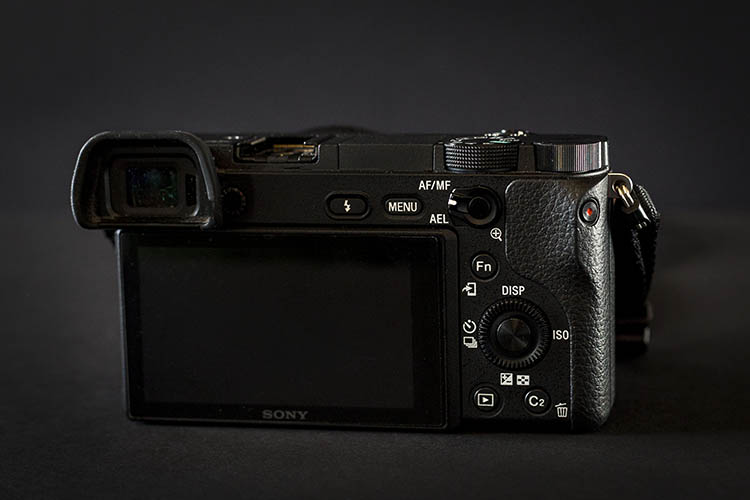
Sony a6300 Mirrorless Camera

My Camera Background

Before diving into this review, I want to clarify my digital camera experiences to make my perspective more apparent. The Sony a6300 is the very first mirrorless camera I’ve owned, besides my very brief experiment with the a6000 for comparison purposes. Until recently, I’ve shot almost exclusively with Canon DSLRs, namely the 5D Mark III and 6D. As a result, many of the a6300’s features such as its pop-out LCD screen and electronic viewfinder might seem like standard features to other mirrorless shooters, but for a Canon DSLR user like myself, these are newfound novelties that turned my world upside down. With that being said, let’s move on to the a6300’s specs.

Key Features of the Sony a6300
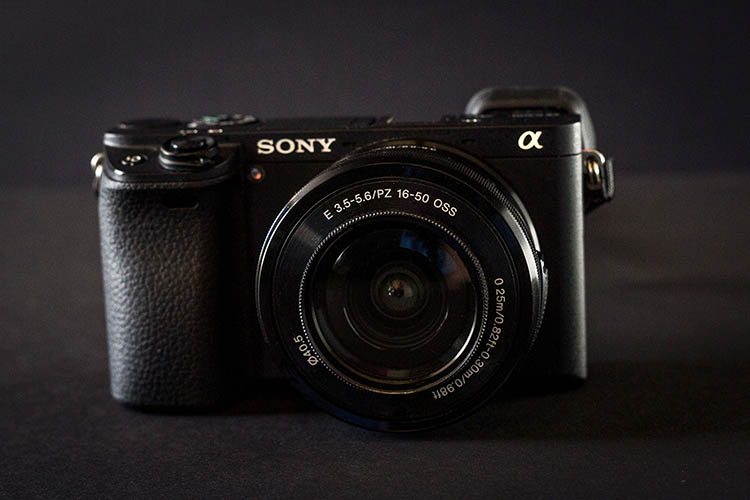
Sony a6300 Mirrorless Camera

The main improvement with the Sony a6300 is a newly developed sensor with a pixel count of 24MP (same as the a6000) that is packed with a whopping 425 phase-detection AF points, which is significantly higher than the a6000’s 179 AF points. According to Sony, the a6300 has the greatest number of phase-detection points to date, on an interchangeable-lens camera ,and makes the a6300 the camera with the world’s fastest autofocus.

Video is another aspect that Sony upgraded on the a6300, with the inclusion of 4k video recording capabilities, the addition of a mic socket, and the ability to record time code. Besides the autofocus and video systems, the a6300 sees an OLED 2.36M-dot viewfinder, an improvement from the a6000’s OLED 1.44M-dot viewfinder. Battery life is also slightly improved at 400 shots versus 360 shots.

Physically, the a6300 is only 2 ounces heavier than its predecessor, although it feels much more solid with its weather-sealed magnesium alloy build, that was lacking on the a6000. An AEL button with an AF/MF switch has also been conveniently added to the back of the camera, which sports and action shooters should find handy. Other than these few additions, the Sony a6300 doesn’t look or feel much different than the a6000.

Overall, these added features of the a6300 clearly appeal to shooters looking to focus on action, sports, and video.

Sony a6300 Mirrorless Camera

Sample action shot with a Sony 16-50mm f/3.5-5.6 kit lens.

Pros of the a6300

While discussing the pros and cons of the a6300, it should be noted that many of the same features are also available on the a6000.

Extremely compact

As a DSLR shooter, the a6300’s compact size was particularly appealing. While testing the Sony a6300, I used both the kit 16-50mm f/3.5-5.6 retractable zoom lens, and the Sony 20mm f/2.0 pancake lens, and was amazed that both were incredibly lightweight and basically the same size. There is of course, the trade-off of both lenses being made of plastic and not feeling as robust as say a Fujifilm lens, but they both perform very well and weigh close to nothing. Pairing either lens with the a6300 makes for a very compact, low-profile camera system that is perfect for travel.

Sony a6300 Mirrorless Camera

An informal food photo taken at a restaurant table moments before consumption. Shot with a Sony 20mm f/2.8.

Silent Shutter

While many DSLRs offer a Silent Shutter that is still quite noisy, the a6300’s silent shutter feature makes the camera so quiet you wouldn’t even know a photo was being taken. It’s a great feature for undercover or candid photography moments when you truly want no sound associated with taking a photo. With that said, non-silent shooting on the a63000 produces a very crisp shutter snap, especially when firing away at the camera’s highest shutter speed of 11 frames per second.

Panoramic shooting feature that actually works (most of the time)

After consistently trying, and failing, to take advantage of panoramic shooting on a variety of devices from point and shoots to cell phone cameras, I was beginning to think that on-the-go panoramic shooting was a myth, until I tried it with the a6300. Unlike other devices, the a6300 will shoot and stitch together a near-perfect horizontal or vertical panorama even when your manual panning isn’t spot on. There were a few times when the camera insisted that I wasn’t panning straight enough to make a clear pano shot, but most of the time even my wobbly panning techniques were good enough for the a6300 to make sense of.

Sony a6300 Mirrorless Camera

Sample panorama shot with a Sony 16-50mm f/3.5-5.6 kit lens.

Focus Modes + Face Recognition

Easily two of the best features of the a6300 are the Face Registration and Eye AF (autofocus) features, which do pretty much what their names imply. Activating Face Registration allows you to program the a6300 to recognize and prioritize up to eight faces. This feature is incredibly handy when shooting a crowd of people, and the a6300’s accuracy of picking out the correct face is astounding. Eye AF works very similarly, but without the need to register (program them in) the eyes. Simply enable Eye AF on the a6300 and the camera will automatically search for your subject’s eyes and track them using continuous autofocus. This feature is so spot-on that the a6300 will even lock onto artistic renderings of eyes, such as a painted portrait.

Sony a6300 Mirrorless Camera

Sample portrait shot with a Sony 20mm f/2.8 lens.

Quick Wi-Fi connection

Like most newer digital cameras today, the a6300 has Wi-Fi and NFC, to connect with smartphones and tablets for remote camera shooting, and wireless image transfer via Sony’s PlayMemories Mobile app. Setting up Wi-Fi on the camera is very quick and intuitive, and Sony’s accompanying app also includes an array of other options that can further enhance your shooting experience, such as time-lapse and multiple exposure apps, among many others.

Built-in flexible flash
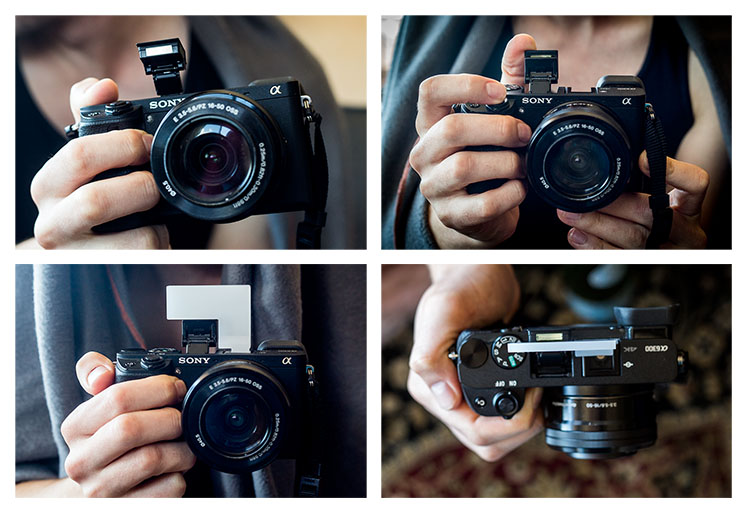
Sony a6300 flash

Thankfully, Sony kept one of the a6000’s best features on the a6300: a built-in pop-up flash. Extremely compact and flexible, the little flash can bend 45 degrees to tilt upwards, allowing for bouncing the flash off the ceiling.  Next to the pop-up flash is a hot shoe mount that can fire Canon or Nikon Speedlight flashes when used with an adapter.

One accessory that can help fully utilize the pop-up flash are plastic bounce cards which attach to the a6300 via the hot-shoe mount, and hold the flash in an upright position.

Sony a6300 Mirrorless Camera

Sample night shot with a Sony 20mm f/2.8 lens.

Sony Lens Options

Currently, there are over 70 Sony lenses that you can purchase to go along with your new a6300 body. Options range from compact, low-priced primes and larger, higher-priced zoom lenses. Cheaper prime options include the 16mm f/2.8, 20mm f/2.8, 28mm f/2, 30mm f/3.5 macro, 35mm f/1.8, and 50mm f/1.8, all ranging in price from $ 249.99-$ 449.99. Wide-range zoom lenses, without a fixed f-stop, are also somewhat affordable, such as the 18-200mm f/3.5-6.3 ($ 749.99) or the 24-240mm f/3.5-6.3 ($ 998.99)

Sony 18-200mm f/3.5-6.3 ($ 749.99)

However, Sony’s higher-quality lenses are much higher in price, which may be difficult to swallow if you’re converting from a DSLR kit. Larger, high-quality Sony primes such as the 24mm f/2 and 35mm f/1.4, prices are upwards of $ 1,200.00 and more. The same is true for Sony’s versions of traditional DSLR lenses such as the 16-35mm f/2.8 ($ 2,248.99), 24-70mm f/2.8 ($ 2,098.00), and 70-200mm f/2.8 ($ 2,999.99). If you’re a DSLR shooter with an array of lenses, you can always invest in a converter to use your DSLR lenses with your Sony camera body, but at the expense of slower autofocus.

When you purchase either the Sony a6000 or a6300, you have the option of buying it body-only, or with a 16-55mm f/3.5-5.6 E-mount retractable zoom kit lens, which is valued at approximately $ 260.99 if purchased separately. For its size, range, and overall performance, the kit lens, plus a Sony prime lens, aren’t a bad starter combination, especially if you’re looking to keep your gear compact and lightweight, and aren’t quite ready to invest in higher-priced Sony E-mount lenses yet.

ISO Performance

Sony opted to improve the a6300’s high-ISO performance by including a native ISO range of 100-25,600 with the possibility of extending that ISO to 51,200. While the ability to shoot at higher ISO is great in theory, I found that ISO 6400 was the highest I could comfortably push the a6300 in darker environments, without sacrificing too much image quality. Even my RAW photos shot at ISO 6400 were a little too grainy for my taste, no matter how much noise-reduction I did in post-processing.

Sony a6300 high ISO2

Cons of the a6300

Sony’s bloated camera menu

A common complaint among Sony shooters, that I have to agree with, is that the camera menu is very difficult to navigate. It truly seems like Sony outfitted the a6300 with so many features, and tried to stuff them all into a menu, that it can take weeks for new Sony shooters to get used to using the camera.

This could be easily solved if Sony allowed users to customize the menu a bit more, so that frequently-used features can be quickly accessed. As it stands, Sony only allows assigning custom functions to the camera’s physical buttons, and there aren’t nearly enough of those.

With that being said, the trick to making sense of Sony’s menus is to customize as much of the camera’s settings as possible. Presently, I’ve customized the buttons and settings on the a6300 set to shoot almost identically to the way I shoot with my Canon 5D Mark III, making it easier to switch from one system to another.

Sony a6300 Mirrorless Camera

Sample action shot with a Sony 16-50mm f/3.5-5.6 kit lens.

LCD screen sometimes blanks out

When it comes to the a6300’s LCD screen, I was grateful for its pop-out rotating feature, something that has been sorely lacking on Canon DSLRs. Some other reviewers complained about the a6300 lacking a touch screen LCD, but again, this is something I’ve never had on a camera, so the fact that it’s missing doesn’t bother me.

One feature of the a6300’s LCD that was troublesome, was its occasional blackouts, which usually occurred right after rotating the screen. Oftentimes, the only way to get the LCD working again was to turn the camera off and on. With that said, using the electronic viewfinder (EVF) always worked without fail, even when the LCD blanked out.

Over to you

Do you already shoot with the Sony a6300, or are you considering making the move? What do you love about it, or what hesitations remain? Let me know your thoughts in the comments below.

googletag.cmd.push(function() {
tablet_slots.push( googletag.defineSlot( “/1005424/_dPSv4_tab-all-article-bottom_(300×250)”, [300, 250], “pb-ad-78623” ).addService( googletag.pubads() ) ); } );

googletag.cmd.push(function() {
mobile_slots.push( googletag.defineSlot( “/1005424/_dPSv4_mob-all-article-bottom_(300×250)”, [300, 250], “pb-ad-78158” ).addService( googletag.pubads() ) ); } );

The post Sony a6300 Mirrorless Camera – Thoughts and Field Test by Suzi Pratt appeared first on Digital Photography School.


Digital Photography School

 
Comments Off on Sony a6300 Mirrorless Camera – Thoughts and Field Test

Posted in Photography


Mirrorless is ‘probably’ the future: an interview with Hasselblad Product Manager Ove Bengtson

27 Jun

It is quite extraordinary for Hasselblad to produce a mirrorless camera like the X1D for a number of reasons. Firstly is the obvious: it has predominantly produced cameras with very large mirrors since its first consumer camera in 1948 – the 1600F. Second, mirrorless cameras with touch screens and electronic view finders are very modern, and we may not all think of Hasselblad as a manufacturer of entirely up-to-date electronic products.

In the X1D we are looking at a medium-format sensor in a body that can hide behind a standard high-enthusiast 35mm-style DSLR. Okay, so plenty of people will point out that it isn’t ‘full frame’ 645 (the smallest of the 120 film formats), but it’s very similar to 127 film which was considered medium format by the ISO organization. More to the point, it’s much bigger than the ‘full frame’ 35mm format and is essentially the same size as the sensors used in Leica’s S series, the Pentax 645Z, Phase One IQ3 50MP and Hasselblad’s own H6D-50c.

I guess this kind of breakthrough is one we’d expect to come from what we might consider a high-tech company, not a business that has traditionally created a relatively low volume of very high-priced and principally mechanical professional tools.

Of course Hasselblad marked a technological turn around when it introduced the H6D with its new electronic platform, but this new X series camera takes what the H6D did a few steps further. Shortly after the announcement of the X1D in Gothenburg I got some time with Hasselblad product manager Ove Bengtson to discuss some of the technical challenges that had to be overcome to create the X1D and to find out some more detail about how the product will work when it comes to market.

‘…designing a mirrorless system is relatively easy compared to our usual H cameras’

‘The X1D took only between 18 and 20 months to develop from the final concept to where we are today,’ says Ove Bengtson. ‘As it uses the same 50-million-pixel Sony IMX161 sensor, the same electronic platform and same processor as the H6D-50c most of the work was already done – designing a mirrorless system is relatively easy compared to our usual H cameras as there are no moving parts. We started discussing the idea in November 2013 but were still talking about it a year later before we decided to go ahead. The work that we had already done in the development of the H6D saved us a lot of time in research for the X1D.’

As mirrorless cameras are so much easier to make and offer so much more flexibility I wonder if mirrorless is the future for Hasselblad. ‘Yes, it probably is, but not for a while. Mirrorless systems can be smaller and lighter, and because they have no internal movement they are more durable and they create less vibration so there is less to disturb image quality. Electronic viewfinders will need to get better though and the AF systems will need to improve to catch up with phase detection systems.’ 

‘We really do want phase detection but we’ll have to wait for the sensor manufacturer.’

‘It is a great benefit to be able to have AF points all over the screen, as in our H system we are really restricted to the centre of the frame, but phase detection wasn’t even an option for the X1D. We discussed having phase detection AF points built into the sensor, but Sony was already too far down the road with the sensor development at that stage. We really do want phase detection but we’ll have to wait for the sensor manufacturer.

So, while mirrorless has many advantages over mirrored systems there are still just as many reasons to use the H system. The H system has better AF in low light, and a lot of photographers prefer an optical viewfinder. The H system is also modular so you can change the backs and use a waistlevel viewfinder – not to mention a choice of 12 lenses including technical lenses – so it is still a very different experience.’

To allow X1D users access to the existing range of H system lenses Hasselblad will introduce what it describes as a ‘simple adapter’, but in the announcement there wasn’t much more detail than that. ‘Yes, this adapter will allow autofocus to operate with most of the H lenses, but they weren’t designed to work with contrast detection systems. Consequently users will need to update the firmware in their lenses to allow them to work properly. Not all lenses have firmware that can be upgraded as early H lenses in 2002 were fixed, but all more recent lenses will be able to be used.’

‘It is still early days for this camera but when it comes to market it will have touch AF…’

The cameras on display at the announcement event had touch screen controls for working the menus and for making feature selections, but they didn’t allow touch AF controls. ‘It is still early days for this camera but when it comes to market it will have touch AF and the AF points will be spread across the screen. You will press the AF/MF button and an AF point display will appear on the screen and then you can select the point you want to use.’

The X1D’s touch-driven interface. The menu screens and displays are controlled via a series of swiping motions, much as we are used to in smartphones.

Ove said that the company hadn’t directly considered allowing the rear screen to be used as a touch pad while the EVF is in use, but that it would probably be a question of firmware and that they would consider it. ‘The touch experience for the user has been a major consideration for us, and we want the touch sensitivity to be the best there is. Users will all have smart phones and we couldn’t allow the screen of the X1D to present an experience that isn’t as good as people will be used to.’

We also talked about the company’s integration of the Nikon flash system and what the reasons were for not developing a system of their own. ‘We don’t want to have to develop our own flash system, as we’d prefer to concentrate our resources on making cameras and lenses. Any system needs a range of flash units as customers want a choice, so it makes much more sense to work with an existing system that already has that range and choice. When we only had the V system we partnered with Sunpak, and in more recent years we worked with Metz, but Metz discontinued the gun as they didn’t sell enough. Nikon agreed to work with us and we are very happy that they offer excellent flash units that will work well with our X1D.’

‘We have to produce the best that we can and allowing reduced quality just isn’t an option’

The XCD lenses that Hasselblad has developed to go with the X1D use leaf shutters and offer a top shutter speed of 1/2000sec. Leaf shutter systems allow much faster flash synchronization than focal plane shutter systems and, as is the case with the H6D, the X1D can work with full power flash at that shortest shutter opening. ‘In this camera and in the H6D we use a dual shutter system to achieve the top 1/2000sec flash sync speed,’ explains Ove.

‘The new XCD lenses are designed and built to the same specification standards that we use for the H series lenses. We have to produce the best that we can and allowing reduced quality just isn’t an option. In fact these have a short back focus which makes it easier to design them to really excellent standards. The lenses are designed by us and manufactured by Nittoh who have made many great lenses in the past, including the lenses for the X-Pan. These XCD lenses have no crosstalk and the angle of the light as it approaches the sensor is well within the limits. You’ll notice that the exit pupil of the wide angle particularly is set well inside the barrel.’

‘Right now… we have no zooms on the roadmap’

‘To start with we will concentrate on fixed focal length lenses as we can make these small in line with the compact concept of the camera. I expect there will be some demand for zooms but we will wait and see what that demand is and then respond to it. Right now though, we have no zooms on the roadmap. Personally I think they will have to be too big, and I want us to concentrate on the best performance and the highest resolution possible.’

Speaking to Ove and other technicians at the event it is obvious that Hasselblad has built this system around the specific physical dimensions of the 43.8×32.9mm sensor. If there will be a 100MP version of the X camera it will not be one using the current Sony offering that measures 53.4x40mm. ‘The camera isn’t designed to take a larger sensor,’ I was told, ‘and the XCD lenses don’t have the covering circle to work with it. We designed the camera to be small and portable, and a part of that equation is the size of the sensor. If we work with a larger sensor it means we need a bigger body and bigger lenses, and that would defeat the principles of what the X1D is about.’

No one would be drawn on how many lenses the company expects to have in the XDC range in five years’ time, but it is clear there will be more and that they will start coming shortly. The 30mm will be formally announced at Photokina and I think it reasonable to assume there will be hints of other focal lengths at the time, even if the announcements aren’t formal.

The X1D really does mark quite a departure for Hasselblad and a step towards a larger market (though still some way from the mass market) that will allow the company to broaden its user base. The step too though is as much about demonstrating it is a modern company now that can make modern products. It has also drawn an unmistakable line under that period of its life when it rebadged and allowed other brands to have too much of a hand in its manufacturing.

Things are looking up; Hasselblad seems to be back on track, innovating once more and in many ways getting ahead of the game. The X1D is certainly the coolest, most flexible, portable and accessible digital medium format almost on the market.

Articles: Digital Photography Review (dpreview.com)

 
Comments Off on Mirrorless is ‘probably’ the future: an interview with Hasselblad Product Manager Ove Bengtson

Posted in Uncategorized