RSS
 

Posts Tagged ‘mirrorless’

Medium-format mirrorless: Hasselblad unveils X1D

22 Jun

$ (document).ready(function() { SampleGalleryV2({“containerId”:”embeddedSampleGallery_7396048523″,”galleryId”:”7396048523″,”isEmbeddedWidget”:true,”standalone”:false,”selectedImageIndex”:0,”startInCommentsView”:false,”isMobile”:false}) });

Hasselblad is making good on its promise to launch something big. Today it introduces the X1D, a medium-format mirrorless camera with a 50MP CMOS sensor. With dust and weather-sealing the X1D isn’t afraid to step outside of the studio, and offers a 100-25600 ISO range and is capable of 1080/30p HD video. Its hot shoe is compatible with Nikon Speedlights and the camera can sync with flashes at its maximum shutter speed: 1/2000 sec.

Not surprisingly, the X1D uses a new lens mount, accepting XCD lenses. Two have been announced at launch: a 45mm F3.5 and a 90mm F4.5, with more to follow ‘shortly’ including a 30mm around Photokina. An H lens adapter will also be offered to extend support to Hasselblad’s existing H lens system.

The X1D offers a 3″ 920k-dot touch screen and a built-in XGA electronic viewfinder. Wi-Fi and GPS are built-in, and the camera includes dual SD card slots. The X1D and its battery weigh in at 725g, which Hasselblad points out is half the weight of your typical medium-format camera.

The Hasselblad X1D will be priced at $ 8995/£5990/€7900 body-only. A kit with 45mm F3.5 lens will cost $ 11,290, and bundled with both lenses the X1D will cost $ 13,985. The XCD 45mm F3.5 will cost $ 2,295 separately; the XCD 90mm F4.5 will cost $ 2695. Hasselblad plans to offer demos of the system in July, with delivery to customers in August.


Press release:

Hasselblad announces groundbreaking X1D
The world’s first compact mirrorless digital medium format camera

Hasselblad is proud to introduce the groundbreaking X1D – weighing less than half that of a conventional digital medium format camera, the mirrorless 50MP camera is a game changer in the world of photography.

Inspired by the brand’s iconic design heritage, the camera is ergonomic and compact, offering a handling experience unlike any other. Handmade in Sweden, the X1D combines Scandinavian sensibility with beautiful performance.

Like the iconic V System, the X1D seamlessly combines portability with excellent optical quality for which the brand is renowned. Hasselblad has ingeniously introduced mirrorless technology to digital medium format for the first time ever, creating a precision performance camera that can sit in the palm of your hand. The 50MP CMOS sensor captures the finest details with true natural colours.

Commenting on the announcement Perry Oosting, Hasselblad CEO noted: “The X1D marks a pivotal point in Hasselblad’s rich 75-year history. This camera makes medium format photography available to a new generation of Hasselblad users, while pushing the existing limits of photography to new heights.”

A completely new family of dedicated autofocus lenses has been developed to support optical quality and portability, offering a wide range of shutter speeds and full flash synchronisation up to 1/2000th second.

Weighing just 725g and including HD video, Wi-Fi and built-in GPS, the X1D is a trusted partner and ideal travel companion. The robust exterior is dust and weather proof, providing durability to take with you wherever you go.

The X1D has been created with passionate photographers in mind, opening up Hasselblad to a new generation of creatives. Ideal for those who want to create the highest quality medium format images with a straightforward and easy to use camera that can fit in the palm of your hand.

The Hasselblad X1D is priced at 7,900 EUR / 8,995 USD / 5,990 GBP
Prices stated are exclusive of VAT

Hasselblad X1D specifications

Price
MSRP $ 8995/£5990/€7900
Body type
Body type Rangefinder-style mirrorless
Sensor
Max resolution 8272 x 6200
Image ratio w:h 4:3
Effective pixels 51 megapixels
Sensor photo detectors 53 megapixels
Sensor size Medium format (44 x 33 mm)
Sensor type CMOS
Color space sRGB, AdobeRGB
Color filter array Primary color filter
Image
Custom white balance Yes
Image stabilization No
Uncompressed format RAW + TIFF
File format
  • JPEG (Exif v2.3)
  • Raw (3FR format)
  • TIFF
Optics & Focus
Autofocus
  • Contrast Detect (sensor)
  • Multi-area
  • Center
  • Selective single-point
  • Tracking
  • Single
  • Continuous
  • Touch
  • Face Detection
  • Live View
Manual focus Yes
Focal length multiplier 0.8×
Screen / viewfinder
Articulated LCD Fixed
Screen size 3
Screen dots 920,000
Touch screen Yes
Screen type TFT LCD
Live view Yes
Viewfinder type Electronic
Viewfinder coverage 100%
Viewfinder resolution 2,360,000
Photography features
Minimum shutter speed 60 sec
Maximum shutter speed 1/2000 sec
Exposure modes
  • Program
  • Aperture priority
  • Shutter priority
  • Manual
Built-in flash No
External flash Yes (Nikon compatible)
Flash X sync speed 1/2000 sec
Continuous drive 2.3 fps
Self-timer Yes
Metering modes
  • Multi
  • Center-weighted
  • Spot
Videography features
Resolutions 1920 x 1080 (30p, 25p)
Format H.264
Microphone Stereo
Speaker Mono
Storage
Storage types Dual SD/SDHC/SDXC slots
Connectivity
USB USB 3.0 (5 GBit/sec)
HDMI Yes (mini-HDMI)
Microphone port Yes
Headphone port Yes
Wireless Built-In
Wireless notes 802.11b/g/n/ac
Physical
Environmentally sealed Yes
Battery Battery Pack
Battery description 3200 mAh li-ion battery
Weight (inc. batteries) 725 g (1.60 lb / 25.57 oz)
Dimensions 150 x 98 x 71 mm (5.92 x 3.86 x 2.81)
Other features
Orientation sensor Yes
GPS BuiltIn

Articles: Digital Photography Review (dpreview.com)

 
Comments Off on Medium-format mirrorless: Hasselblad unveils X1D

Posted in Uncategorized


Review: Fujifilm X-Pro2 Mirrorless Camera

15 Jun

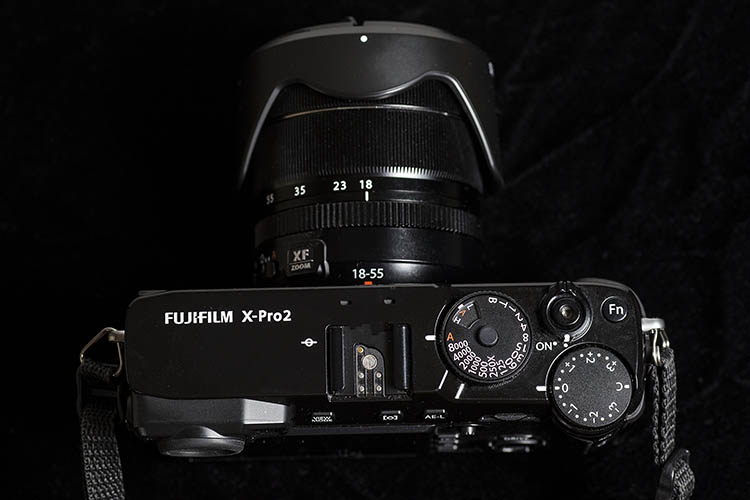
Ever since Fujifilm unveiled their debut consumer camera in late 2010, the fixed-lens x100, the brand has become a favorite for professionals, and enthusiasts who seek an advanced digital camera experience, that still retains much of the look and quality of the classic film era.

Fujifilm’s very first mirrorless interchangeable-lens camera, the X-Pro1, was released in March 2012 to much praise from critics and users, and was recently replaced with its successor, the X-Pro2. Given the four year gap between camera models, there are many upgrades and improvements in the new X-Pro2, all achieved without adding significant weight or bulk to the camera. Prices are clearly a big differentiator at this point, with the older X-Pro1 going for as little as $ 799, and the X-Pro2 currently set at $ 1,699. But pricetag aside, just how many more features are packed into the X-Pro2, and is it worth it?

Fujifilm X-Pro2 Review

What’s in the Box

The Fuji X-Pro2 can be purchased body-only for $ 1,699; this basic kit comes with the following accessories in the box:

  • NP-W126 Li-Ion Battery Pack
  • BC-W126 Battery Charger
  • Body Cap
  • Shoulder Strap
  • Strap Clip
  • Clip Attaching Tool
  • Protective Cover

Recommended Accessories

While the X-Pro2 has a slightly better battery life than its predecessor, it’s still on the low side. As a result, it doesn’t hurt to have a spare NP-W126 Li-Ion Battery, or two, on you for longer shoots. Since the X-Pro2 has dual SD card slots, having one or two memory cards is also handy, although in testing I never fully maxed out a single 32GB SD card.

In terms of lenses, this X-Pro2 was tested specifically with the Fujifilm 35mm f/2 WR, a beautiful prime lens that equates to about 56mm on a crop sensor, and the Fujifilm 18-55mm f/2.8-4, a compact mid-range zoom that’s about 28-88mm on a crop sensor. Both lenses are relatively affordable ($ 399 and $ 699 respectively) and together made for a solid, compact, travel photography kit. Lens preference will, of course, depend on your shooting style, and Fujifilm has many other lens choices available.

Fujifilm X-Pro2 Review

Technical Specs

Sensor and Image Capture

First, let’s review the X-Pro2’s specs, which are vastly improved over its predecessor.

  • The X-Pro2 has an upgraded 24.3MP CMOS III APS-C sensor, giving it a significantly higher pixel count compared to the X-Pro1’s 16.3MP CMOS I sensor.
  • The processor is also the new X Processor Pro.
  • Native ISO range has also increased from 200-12800 (or 100-51200 in expanded mode).
  • Continuous shooting on the X-Pro2 is also slightly faster at 8fps, up from 6fps on the X-Pro1, and a continuous high buffer of up to 83 JPEG frames compared to 21 frames on the X-Pro1.
  • Metering is still 256 zone TTL, but besides Multi, Spot, and Average metering, the X-Pro2 adds Center-Weighted metering, which was absent on the X-Pro1.
Fujifilm X-Pro2 Review

Sample image shot at sunset. No tripod or extra lens filters.

Perhaps one of the biggest feature additions on the X-Pro2 is a shutter that allows for both mechanical and electronic capture; the latter allows for more flexibility. The mechanical shutter speed has increased to as high as 1/8000th, compared to 1/4000th on the X-Pro1. The X-Pro2 also enables the use of an electronic shutter speed with an even wider range of one second to 1/32,000. The X-Pro2 also includes Face and Eye Detection, meaning it will seek out faces and eyes when shooting. This is a very handy feature for photographing people, and it proved to be highly accurate during test shots.

Viewfinder and LCD

While both viewfinder and LCD sizes really didn’t change much in terms of physical size, both received a bump in resolution, and an updated User Interface in the X-Pro2. The viewfinder also finally allows for diopter adjustment, and the electronic viewfinder (EVF) has a wicked fast refresh rate of 85 frames per second. Still absent is a pop-out LCD screen.

Fujifilm X-Pro2 Review

Sample image. Shot handheld without a tripod.

Autofocus

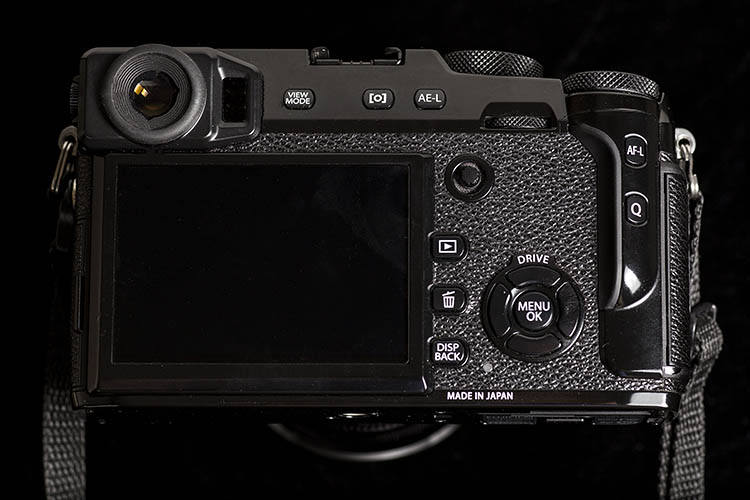
The X-Pro2 has made some pretty giant leaps in the realm of autofocus. This camera now has 273 autofocus points, which is quite a bit more than 49 on X-Pro1. It also includes single, zone, wide/tracking autofocus modes, all of which were lacking on the X-Pro1. Finally, the X-Pro2 adds a physical feature that Canon DSLR users will find familiar: a mini joystick button which Fujifilm calls the focus lever. Besides acting as a button, the focus lever enables quick selection for all 273 autofocus points, and also helps you navigate through the menu.

Body and Handling

When it comes to the X-Pro2’s build, it is still comprised of a sleek, half matte black body, with a distinctly retro look. However, the build material is now magnesium-alloy versus aluminum for the X-Pro1. Despite using lighter material, the X-Pro2 is still slightly heavier than its predecessor, weighing in at 495 grams (17.5 oz.) versus 453 grams (16 oz.). In terms of dimensions, the X-Pro2 is a tiny bit wider and deeper, but it still looks about the same size as the X-Pro1.

The battery life on the X-Pro2 has been slightly improved, up to 380 frames, versus 300 frames on the X-Pro1. That’s still on the low side, so carrying a spare battery or two certainly won’t hurt. Camera startup time is a hair faster at 0.4 seconds, compared to 0.5 seconds. Also, the X-Pro2 now has dual SD card slots, which will certainly help with the increased size 24.3MP files. A built-in flash is still not included, but flash sync speed is now at 1/250 of a second, up from 1/180.

WiFi has been added to the X-Pro2 allowing for geotagging, wireless image transfer, and remote camera control. Finally, the X-Pro2 comes with improved weather sealing with 61 points of dust, water, and cold resistance. This doesn’t make the X-Pro2 waterproof, but it does allow for shooting in more diverse conditions.

Fujifilm X-Pro2 Review

Sample image shot with the Fujifilm 35mm f/2, handheld without a tripod.

Is It Worth It?

This is a difficult question to answer, given the plethora of vastly different digital camera options available today. Whether you go for the X-Pro2 or not, will really come down to your personal preferences and budget.

Personally, I loved the image quality of the X-Pro2, as well as its retro buttons and controls. With that said, the retro controls are unique to Fujifilm digital cameras, and can take some getting used to if you’ve been using a point and shoot, DSLR, or another brand of mirrorless camera. It’s also worth noting that while the X-Pro2 is definitely not as bulky and heavy as a professional DSLR, it’s not as compact and lightweight as other mirrorless cameras such as the Sony a6300, which has very similar technical specs, packed into a much smaller body.

Fujifilm X-Pro2 Review

Sample image shot outdoors, handheld with no extra filters.

Overall Thoughts

With higher shutter speeds of 1/8,000 or even 1/32,000 using the electronic viewfinder, higher ISO ranges, vastly improved autofocus, and enhanced weather sealing, the X-Pro2 has officially become a serious contender for professional photographers. If you’re looking to invest in a Fujifilm mirrorless interchangeable camera, it’s hard to go wrong with the X-Pro2. While deals can certainly be had with the older X-Pro1 model, the significant upgrades in the X-Pro2 make it a worthy investment if you have the money to spare.

googletag.cmd.push(function() {
tablet_slots.push( googletag.defineSlot( “/1005424/_dPSv4_tab-all-article-bottom_(300×250)”, [300, 250], “pb-ad-78623” ).addService( googletag.pubads() ) ); } );

googletag.cmd.push(function() {
mobile_slots.push( googletag.defineSlot( “/1005424/_dPSv4_mob-all-article-bottom_(300×250)”, [300, 250], “pb-ad-78158” ).addService( googletag.pubads() ) ); } );

The post Review: Fujifilm X-Pro2 Mirrorless Camera by Suzi Pratt appeared first on Digital Photography School.


Digital Photography School

 
Comments Off on Review: Fujifilm X-Pro2 Mirrorless Camera

Posted in Photography


Leica releases audio and S-lens adapters for SL mirrorless

06 Jun

$ (document).ready(function() { SampleGalleryV2({“containerId”:”embeddedSampleGallery_2220794024″,”galleryId”:”2220794024″,”isEmbeddedWidget”:true,”standalone”:false,”selectedImageIndex”:0,”startInCommentsView”:false,”isMobile”:false}) });

Leica has announced the availability of a pair of adapters for its SL full frame mirrorless camera that will allow users to fit lenses from the S medium format system and to use microphones and headphones when shooting video. The Leica S-Adapter L opens the camera to 16 lenses from the S system including the company’s collection of leaf-shutter lens. While this doesn’t add any focal lengths that aren’t available via the existing SL zooms it will allow access to wider apertures for some and will also save existing S users having to buy extra lenses.

The new audio adapter uses the camera’s USB port and provides a pair of 3.5mm jack sockets for connecting a microphone and audio monitors for those shooting video with the SL.

The Leica S-Adapter L is available now and will be priced at £950, while the audio adapter AA-SCL4 will be on sale at the end of the month for £120. US pricing has yet to be announced.

For more information visit the Leica website.

Press release

Leica announces availability of Leica S-Adapter L and forthcoming release of Audio Adapter for the Leica SL

– Leica S-Adapter L enables S-lenses to be used with the Leica SL
– Leica AA-SCL4 Audio Adapter available end of June

Leica Camera has today announced that the Leica S-Adapter L for the Leica SL mirrorless camera system is now available. This adapter further extends the range of lenses that can be used with the Leica SL to include those of the Leica S medium format camera system.

The S-Adapter L allows the use of 16 Leica S-Lenses with focal lengths from 24 to 180mm (including six central shutter lenses), in addition to the system’s own lenses, the Vario-Elmarit–SL 24-90mm f/2.8-4 ASPH. and the Leica APO-Vario-Elmarit-SL 90-280mm f/2.8-4. The exceptionally fast S-Lenses are the result of more than 100 years of experience and expertise in optical design and precision engineering. Combining traditional Leica quality with cutting edge technology, they achieve uncompromising imaging quality in virtually all photographic situations, in the studio and on location.

Furthermore, the outstanding compatibility of the Leica SL-System grants photographers access to almost every Leica lens ever made. For example, Leica T lenses can be mounted on the Leica SL without an adapter, the M-Adapter T (already available) enables the use of almost all Leica M-Lenses with the Leica SL, while the R-Adapter L (available Q3/2016) will provide access to an entire range of Leica R-System lenses.

Leica AA-SCL4 Audio Adapter

Another new addition to the range of accessories and equipment for the Leica SL camera system is the AA-SCL4 Audio Adapter, which is scheduled to be available at the end of June 2016.

Pricing and availability

The Leica S-Adapter L is available now from Leica stores and authorised Leica dealers in the UK at a suggested retail price of £950 including VAT. The AA-SCL4 Audio Adapter, available at the end of June 2016, will have an SRP of £120 including VAT.

Additional information can be found at uk.leica-camera.com

Articles: Digital Photography Review (dpreview.com)

 
Comments Off on Leica releases audio and S-lens adapters for SL mirrorless

Posted in Uncategorized


Does the Camera Matter? SLR versus Mirrorless versus Smartphone

05 Jun

Camera comparisons

When our wonderful editor Darlene asked me to write an article comparing camera types my first thought was to show you a series of photos just like the following, and ask you to guess which ones were taken, with which cameras. It’s a fun idea, so let’s do it.

This is the list of cameras.

1. Olympus D345 (5 megapixel compact, purchased 2006)
2. EOS Digital Rebel XT (8 megapixels APS-C dSLR, purchased 2006)
3. EOS 40D (10 megapixel APS-C dSLR, purchased 2007)
4. EOS 5D Mark II (21 megapixel full-frame dSLR, purchased 2010)
5. iPhone 5
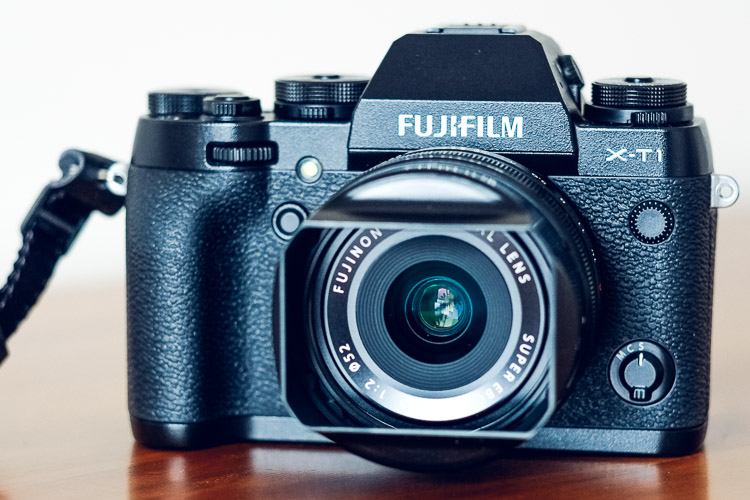
6. Fujifilm X-T1 (16 megapixel APS-C mirrorless, purchased 2014)

Here are the photos:

camera-comparisons-2

camera-comparisons-3

camera-comparisons-4

camera-comparisons-5

camera-comparisons-6

Camera comparisons

How did you do? Here are the answers.

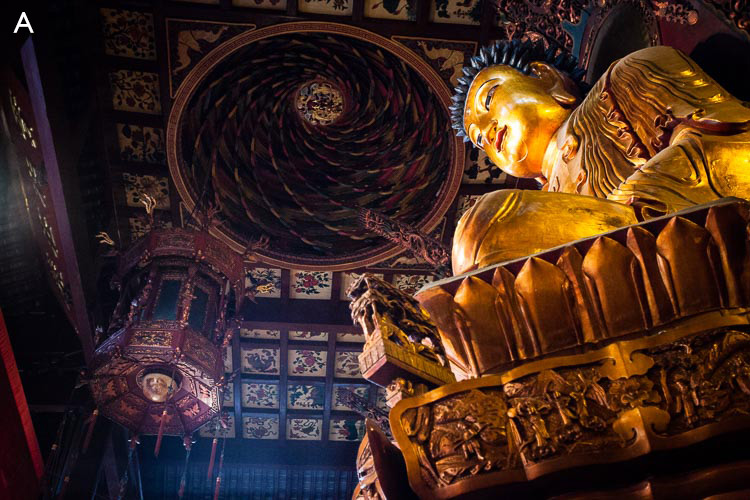
A. EOS 5D Mark II
B. Olympus D345
C. Fujifilm X-T1
D. EOS 40D
E. EOS Digital Rebel XT
F. iPhone 5

Now, this isn’t a fair comparison, for several reasons. One is that these photos are reproduced here at 750 pixels wide. You really need to see them uncropped to appreciate the difference in quality and size (for example, the photo taken with the 5D Mark II is four times the size of the one taken with the Olympus D345).

Also, these photos don’t tell you much about the dynamic range capability of each camera, or how well they perform at high ISO settings. The Olympus D345 doesn’t even have a high ISO setting – all photos are taken at a fixed ISO of 50 (something I didn’t realize until after I bought it).

Then there’s the variable of lens choice, which also affects image quality, plus post-processing (clarity and sharpness adjustments in particular can make a big difference to the apparent sharpness of an image).

All this exercise does, is tell you that if all you want to do is post photos online, then just about any camera will suffice. John Lennon is quoted (probably apocryphally) as saying:

“When I went to school, they asked me what I wanted to be when I grew up. I wrote down ‘happy’. They told me I didn’t understand the assignment, and I told them they didn’t understand life.”

To paraphrase, anybody who asks what camera you took a photo with probably doesn’t understand photography. Okay, that’s a bit harsh, but it’s a question that misses the point. Nobody who matters cares what camera you you used to take the photo.

If you submit a photo to a magazine, a photography competition, or a gallery, unless there’s a specific reason they need to know (good luck sending a photo taken with a Canon camera to Nikon Photo magazine) they don’t care.

All that matters is the strength of the photo – did you capture an interesting subject? Is the composition strong? Is the lighting beautiful? Does your photo move people, inspire emotion? None of this has anything to do with the camera, and everything to do with the photographer.

So, why do we have this endless discussion about cameras? Well, for most of us photography is a hobby and discussing gear and lenses is all part of the fun.

But sometimes the discussion is more purposeful. Cameras are tools, and good photographers learn to either adapt to the tool at hand, or choose the best one for the job. The question is not what camera is best, but which camera is best for you, and the purpose you have in mind. Discussions about what cameras are best for what subject can go on a long time!

So, bearing in mind I’ve been asked to write about SLRs vs mirrorless cameras vs smartphone cameras, let’s take a look at which each of these tools does.

The Digital SLR

SLR cameras replaced rangefinders sometime in the 1960’s, as the camera style of choice for most photographers. The main advantages of SLRs is that, unlike rangefinders, the viewfinder shows you exactly what the lens sees (or 95% or so, of it anyway).

Until about six years ago the digital SLR was the undisputed king of 35mm and crop sensor camera designs. You get an optical viewfinder that shows you what the lens sees, no matter which lens you use on the camera, and fast and reasonably accurate autofocus in an ergonomic body. Sizes range from small (such as the EOS 100D/Rebel SL1) to massive (the Nikon D5) and the specifications range from entry level, to high-performance professional.

Where digital SLRs excel (high-end ones at least) is with autofocus tracking of moving objects. That, plus the wide range of available super-telephoto lenses, makes them the camera of choice for most professional sport and nature photographers.

Camera comparisons

Digital SLRs are good for capturing photos of fast moving subjects like this knight on horseback.

The Smartphone

Apple more or less invented the modern smartphone with its first iPhone back in 2007. Since then smartphones and their cameras have improved immensely. The appeal of the smartphone camera is fairly obvious – most people carry their phone just about everywhere.

An antidote to the large, heavy SLR, smartphones bring a degree of freedom that photographers hadn’t experienced before. When I asked a friend once how she was going with her EOS 40D (she bought one about the same time as me) she replied that she was “sick of lugging that thing about” and just used her iPhone now.

Throw in apps like Instagram and Snapseed, and the ability to share photos instantly, and you can see why smartphone cameras are popular. If you’ve seen Apple’s iPhone posters you’ll also know they are capable of creating insanely good images in the right hands.

The Mirrorless Camera

The mirrorless camera fills the gap between smartphone and digital SLR that was previously occupied by high end compacts. The best mirrorless cameras have the lens choice, image quality, and functionality of professional digital SLRs in a lighter, cheaper, and smaller body. The biggest difference between the two, in terms of performance, is accurate autofocus tracking of moving subjects, and the gap is getting smaller (whether it will ever be reduced to zero is something we will see in the future).

Mirrorless cameras appeal to photographers who want high performance cameras in a small body. They are great for street and travel photographers.

Camera comparisons

Mirrorless cameras are great for street and travel photography, helping you take photos like this.

So, here’s my answer to the question “Does the camera matter?” No it doesn’t. Most people don’t care what camera you took a photo with. You may be curious – for example, if you see someone creating beautiful landscape photos, it’s natural to wonder if buying the same camera and lens will help you do so as well (the answer is that it may help, but it probably won’t – you’d be better off asking how they mastered their craft and how hard they work to get their images). But ultimately, nobody cares. They only care about the photo.

Should you care what camera you use? Yes, you should, because it is your job as photographer to make sure your tools are up to the job at hand. You need a camera that suits you and your way of working, that fits into your budget, and has all the features you need for the types of photography you do.

Agree? Disagree? Let us know in the comments!

If you’d like to learn more about the basics of photography, then please check out my ebook Mastering Photography: A Beginner’s Guide to Using Digital Cameras.


Editor’s Note: This is one of a series of articles this week that are Open for Discussion. We want to get the conversation going, hear your voice and opinions, and talk about some possibly controversial topics in photography.

Give us your thoughts below, and watch for more discussion topics each day this week.

See all the recent discussion topics here:

  • 7 Commonly Accepted Photography Beliefs Debunked
  • Is HDR dead? Some dPS Writer’s Thoughts on this Controversial Topic
  • How to Find your Personal Photographic Style
  • Why You May be Failing to Reach Your Potential as a Photographer
  • To Process or Not To Process? Let’s Discuss
  • How much do you process your images? – a dPS POLL

googletag.cmd.push(function() {
tablet_slots.push( googletag.defineSlot( “/1005424/_dPSv4_tab-all-article-bottom_(300×250)”, [300, 250], “pb-ad-78623” ).addService( googletag.pubads() ) ); } );

googletag.cmd.push(function() {
mobile_slots.push( googletag.defineSlot( “/1005424/_dPSv4_mob-all-article-bottom_(300×250)”, [300, 250], “pb-ad-78158” ).addService( googletag.pubads() ) ); } );

The post Does the Camera Matter? SLR versus Mirrorless versus Smartphone by Andrew S. Gibson appeared first on Digital Photography School.


Digital Photography School

 
Comments Off on Does the Camera Matter? SLR versus Mirrorless versus Smartphone

Posted in Photography


3 Reasons Why Mirrorless Cameras are Better than Digital SLRs for Focusing

30 Mar

Mirrorless cameras and focusing

A lot has been written about the drawbacks of autofocus performance from mirrorless cameras. Most of this focuses on the tracking of moving subjects – an area where the phase detection autofocus found in digital SLRs is still superior (although the gap is closing).

But when it comes to focusing on still subjects, the mirrorless camera is a better tool. Surprised? If you’ve never used a mirrorless camera, you may be. Let’s take a look at the reasons why.

1. Phase detection versus contrast detect autofocus

Mirrorless cameras have a different autofocus system than digital SLRs.

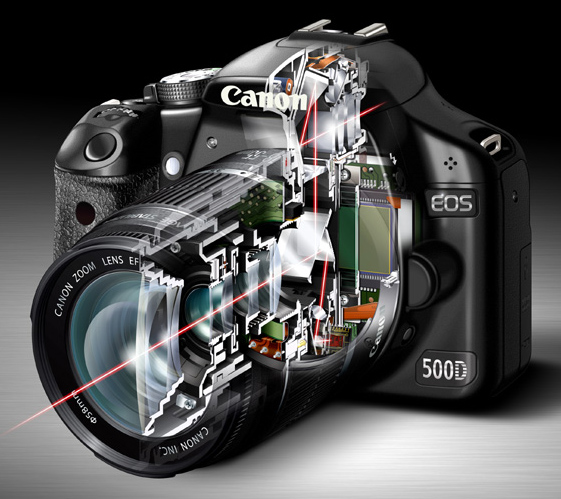
In a digital SLR most of the light coming through the lens is reflected up by the mirror, into the pentaprism and through the viewfinder. A small part is deflected downwards to a dedicated autofocus sensor. It uses a system called phase detection autofocus to calculate the camera to subject distance, and tell the lens where to focus.

Mirrorless cameras and focusing

The red lines in this diagram show the path that light takes through an SLR camera with the mirror in the down position. Most of the light is reflected into the pentaprism and the viewfinder. Part of it is reflected downwards towards the autofocus sensor.

The advantage of phase detection autofocus is that it’s fast (generally speaking – but it also depends on which camera you have) and very good at tracking moving subjects. It’s the best system anyone has managed to come up with for an SLR camera.

However, phase detection autofocus has a significant weakness – lack of accuracy.

There are two main reasons for this. The first is that most digital SLRs have a combination of cross-type and single line autofocus points. Cross-type autofocus points are the most accurate, and should always be used when focus is critical (for example, when using a prime lens at its widest aperture), otherwise the camera may not focus where it is supposed to. Your camera’s manual will tell you which of its AF points are cross-type.

Whenever you use a non cross-type autofocus point, you cannot rely on the camera to focus accurately. This is fine when using small apertures, which give you plenty of margin for error, but not when focus and accuracy is critical.

The second reason is to do with camera and lens calibration. Even when you use a cross-type autofocus point your camera may not focus exactly where it is supposed to. For accurate focus, every part of your camera setup – from the autofocus sensor, to lens and autofocus motors that tell the lens where to focus – must be working in perfect harmony. It only takes a small degree of misalignment to throw the accuracy of the system out.

Most of the time you won’t notice, because there is sufficient depth-of-field to make the focusing inaccuracies irrelevant. But if you use a wide aperture, especially with a telephoto lens, then depth-of-field is measured in millimetres, and accurate focus is essential.

For example, if you are taking a portrait then it is conventional to focus on the model’s eyes. If you miss focus, and her eyes are soft, then people will notice and the portrait will lose its impact.

Mirrorless cameras and focusing

I made this portrait with an EOS 5D Mark II and 85mm lens set to f1.8. With this camera it is necessary to measure and calibrate the autofocus system to ensure accurate focus at wide apertures.

Most mid-range and high-end digital SLRs have a feature that allows you to measure and compensate for inaccurate focusing. Manufacturers have different names for this – Canon and Sony use the term Autofocus micro-adjustment, Nikon calls it Autofocus fine tune, Pentax uses the term Autofocus adjustment and Olympus Autofocus focus adjust. It’s bit of a long winded process – you have to test your lenses by focusing on a ruler, or a purpose made scale, to see if the focus is accurate, and make adjustments if it isn’t.

You can also get your camera and lenses calibrated at a service centre. This is the only way to calibrate an SLR camera that doesn’t have the above feature built-in.

That was bit of a long explanation, but crucial if you are to understand why phase detection autofocus is not as accurate as it should be.

How are mirrorless cameras different?

So, how do mirrorless cameras differ? As they don’t have a mirror, there is no way of deflecting light to a dedicated autofocus sensor. The solution is to take a reading from the sensor. The camera looks at the point on the sensor which is meant to be in focus, and adjusts the lens until maximum contrast is achieved. This is called contrast detect autofocus.

This system is slower, because the camera has to move the lens first one way, then the other, to find the sharpest point. But, it is much more accurate (for still subjects).

With a mirrorless camera autofocus micro-adjustment is redundant. You don’t need it, and you will never have to measure or calibrate the camera’s autofocus system. It also doesn’t matter which autofocus point you use, as they all work equally well. That is why, for still subjects, autofocus in mirrorless cameras is superior to that of digital SLRs.

Mirrorless cameras and focusing

I made this portrait with a 56mm lens at f/1.2 with my Fujifilm X-T1 mirrorless camera. With this camera it is easy to focus on the model’s eye. There is no need to calibrate the camera’s autofocus system.

2. Manual focusing

Mirrorless cameras are also a better tool for utilizing manual focus lenses.

Modern digital SLRs are not designed to be helpful with manual focus lenses. The split prism focusing screens of the past are gone, and assistance is limited to a light that comes in the viewfinder when the subject underneath the selected AF point comes into focus.

Mirrorless cameras are different. They have a tool called focus peaking, which is specifically designed to help you manually focus a lens. The camera highlights the parts of the scene that are in focus, so that you can see which areas are sharp. You can also magnify the image at the touch of the button, making it even easier to see whether the subject is sharply focused.

This feature works best when using lenses at wide apertures. Both tools take advantage of the camera’s electronic viewfinder, a feature that most digital SLRs don’t have.

Mirrorless cameras and focusing

This mock up shows how focus peaking works. I made the portrait with a Helios 58mm manual focus lens at its widest aperture setting of f/2. The red lines indicate how focus peaking shows you what is in focus.

3. Hyperfocal distance

Fujifilm cameras have another tool that will be of interest to landscape photographers as it helps you instantly find the hyperfocal distance without referring to tables or smartphone apps.

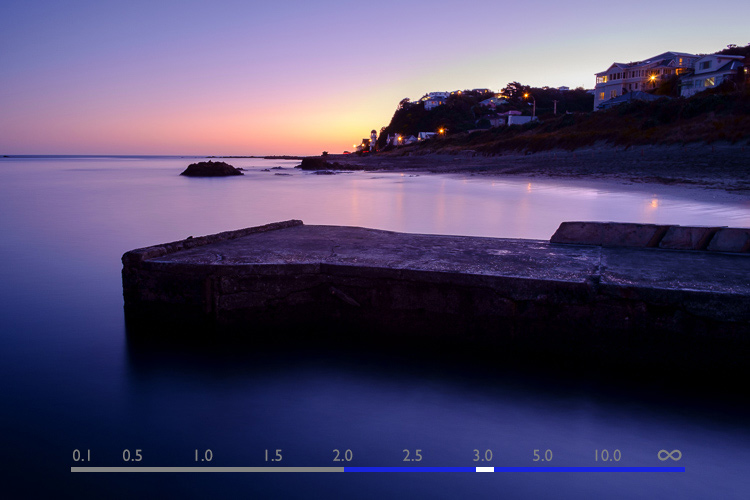
The viewfinder has a depth-of-field scale that shows you the point you are focused on and the area in focus on either side, according to the selected aperture. If you move the focusing ring until the depth-of-field scale touches the infinity mark at one end, you have found the hyperfocal distance point. It’s quick and easy.

To be honest, I don’t know if this feature is available in any brand of mirrorless camera other than Fujifilm. I’d be grateful if Sony/Olympus/Panasonic, etc., owners would let us know.

Mirrorless cameras and focusing

This diagram shows how the depth-of-field scale works. The bar shows the point the lens is focused on (white), and how much of the scene is in focus (blue). The lens is focused on the hyperfocal point in this made-up example.

Since buying my first Fujifilm camera a little over 18 months ago, I’ve been pleasantly surprised by what a great tool mirrorless cameras are for photography. They are much better than my old digital SLR for focusing on still subjects, or for using manual focus lenses.

The difference is so great that I predict that one day most photographers will use mirrorless cameras, and digital SLRs will be a niche item built for photographing sports and wildlife.

But what do you think? Please share your thoughts, or ask any questions about focusing, in the comments below.


Mastering Lenses

If you want to know more about lenses and autofocus check out my ebook Mastering Lenses: A Photographer’s Guide to Creating Beautiful Photos With Any Lens.

googletag.cmd.push(function() {
tablet_slots.push( googletag.defineSlot( “/1005424/_dPSv4_tab-all-article-bottom_(300×250)”, [300, 250], “pb-ad-78623” ).addService( googletag.pubads() ) ); } );

googletag.cmd.push(function() {
mobile_slots.push( googletag.defineSlot( “/1005424/_dPSv4_mob-all-article-bottom_(300×250)”, [300, 250], “pb-ad-78158” ).addService( googletag.pubads() ) ); } );

The post 3 Reasons Why Mirrorless Cameras are Better than Digital SLRs for Focusing by Andrew S. Gibson appeared first on Digital Photography School.


Digital Photography School

 
Comments Off on 3 Reasons Why Mirrorless Cameras are Better than Digital SLRs for Focusing

Posted in Photography


Tether Tools’ Case Relay provides continuous power for many DSLR and mirrorless cameras

26 Feb

$ (document).ready(function() { SampleGalleryV2({“containerId”:”embeddedSampleGallery_2699575917″,”galleryId”:”2699575917″,”isEmbeddedWidget”:true,”standalone”:false,”selectedImageIndex”:0,”startInCommentsView”:false,”isMobile”:false}) });

The Case Relay Camera Power System from Tether Tools offers ‘infinite camera power’ for most DSLR and mirrorless cameras from Canon, Nikon, Sony and Panasonic. The system works via a DC coupler that plugs into both the camera’s battery port and the Case Relay. The Relay plugs into either a 5V USB external battery or a wall outlet.

Tether Tools says Case Relay, which includes a secondary 1200mAh battery, is a solution for time-lapse photography and other tasks that require uninterrupted, long-lasting power. External battery packs can be swapped without interrupting power, as the Relay’s battery will continue to power the camera while the external source is unplugged. 

The Relay Camera Coupler is available from $ 29.99 to $ 34.99, depending on camera, and the Case Relay is available now for $ 99.99. Tether Tools also offers an external 5V USB battery for $ 49.99 USD. Many Nikon and Canon DSLRs are compatible, as well as mirrorless models from Fujifilm, Sony, Olympus and Panasonic. For a full list of compatible cameras check tethertools.com/relay.

Via: PetaPixel

Articles: Digital Photography Review (dpreview.com)

 
Comments Off on Tether Tools’ Case Relay provides continuous power for many DSLR and mirrorless cameras

Posted in Uncategorized


Sigma announces sd Quattro and sd Quattro H Foveon mirrorless cameras

24 Feb

$ (document).ready(function() { SampleGalleryV2({“containerId”:”embeddedSampleGallery_6087587295″,”galleryId”:”6087587295″,”isEmbeddedWidget”:true,”standalone”:false,”selectedImageIndex”:0,”startInCommentsView”:false,”isMobile”:false}) });

Sigma has announced two mirrorless ILCs: the Sigma sd Quattro and the sd Quattro H. Both cameras use the company’s full-depth SA lens mount as used in its SLRs, and are built around APS-C and APS-H sized sensors, respectively. The cameras share a body design with a built-in viewfinder that, while unusual, appears more ergonomically conventional than the recent DP Quattro series of large-sensor compacts.

Both cameras feature on-sensor phase detection as part of a hybrid AF system, which should mean they work effectively with existing SA-mount lenses. The down-side is that it reduces the range of lenses that could be added via adapter.

Both cameras use the latest, ‘Quattro’ version of Sigma’s Foveon technology, which measures different color information based on how deeply into the sensor it is able to penetrate. The Quattro design features full resolution at the top (predominantly blue-sensing) layer but then 1/4 of that resolution for the two deeper layers used to interpret information about red and green color components.

The APS-H sensor features 25.5MP in its top layer, which the company considers equivalent to the capture of a 51 megapixel sensor using the conventional Bayer design. This 26.6 x 17.9mm sensor is around 30% larger than the more common APS-C size, but it’s currently unclear what proportion of Sigma’s ‘DC’ lenses designed for APS-C offer a large enough image circle for use with the camera.

The APS-C version uses a phase-detection capable variant of the sensor used in the existing DP Quattros, offering 19.6MP on its top layer. Sigma says this should offer a level of detail comparable with a 39MP Bayer chip. (Foveon explained the logic of these claims when we spoke to them a few years ago).

The cameras feature two rear screens, one of which displays the camera’s current settings. They also feature USB 3.0 interfaces. A vertical/battery grip will be available.


Press Release:

Sigma Announces Two New Mirrorless Cameras: Sigma sd Quattro and sd Quattro H

Interchangeable lens APS-C and APS-H Foveon Quattro sensors in state-of-the-art camera systems

KANAGAWA, JAPAN — February 23, 2016 — Sigma Corporation of America, a leading camera, DSLR lens, flash and accessories manufacturer, today announced the new high-performance, compact Sigma sd Quattro and Sigma sd Quattro H mirrorless camera systems with Foveon Quattro sensors. The Sigma sd Quattro features an APS-C sized sensor and the Sigma sd Quattro H touting a larger APS-H sized sensor for even greater image quality. Thanks to the mirrorless aspect of the cameras, both the sd Quattro and sd Quattro H are designed to take full advantage of all Sigma Global Vision lenses.

“With the introduction of these two new cameras, Sigma continues its rich history of innovation. The Foveon sensor is renowned for its imaging characteristics, and the mirrorless interchangeable format offers photographers the full line of Sigma Global Vision lenses to help realize their creative visions,” stated Mark Amir-Hamzeh, President of Sigma Corporation of America. “The sharpness of detail and nuanced color tone captured by the Foveon sensors is a key component of Sigma Global Vision. The sd Quattro, and the sd Quattro H, with the newly announced Foveon Quattro APS-H sensor, will be greatly appreciated by photographers who demand the utmost in imaging purity, with the added benefit of portability for both in-studio and on-location photography.”

Both the sd Quattro and sd Quattro H feature similar design aspects with a compact form consistent with the dp Quattro line, making them highly portable and utilizing the Foveon Quattro sensor for exceptional imaging quality and fast processing. A magnesium alloy body makes the sd Quattro and sd Quattro H durable and rugged, while a dust- and splash-proof design makes it ideal for photographers facing harsh conditions. In addition to the new body design, both cameras boast a list of useful advancements. These include a two-mode Autofocus detection that combines Phase Detection for focus speed and Contrast Detection for focus accuracy. The focus settings have also been enhanced with such modes as Movement Prediction, Face Detection, Free Movement, Focus Peaking and a variety of others. The new 2.3 megapixel viewfinder displays close to 100% of the field of view and when placed in “Auto” will toggle between the viewfinder when the user has the camera to their eye and then to the LCD when the user lowers the camera. A new “Super-Fine Detail” mode brings out the full potential of the Quattro sensor by capturing seven different exposures with one shot and merging them for exceptional dynamic range (images can be extracted individually as well). Meanwhile an updated algorithm for the Auto White Balance allows for greater accuracy, even with multiple light sources.

While the sd Quattro and sd Quattro H are similar in physical design details, they stand apart when their Foveon sensors are compared. The sd Quattro utilizes the same sensor found in the dp Quattro line and produces image quality comparable to that of a 39 megapixel Bayer-pattern sensor on resolution testing. The stacked silicon Foveon Direct Imaging sensor captures all detail information on the top 19.6 megapixel layer along with all color information for the Blue channel, while the two five-megapixel layers below capture Red and Green color information, all without the need for a low pass filter. Merged together they create incredible image quality that is comparable to medium format files. The sd Quattro H boasts a larger APS-H sensor (26.6×17.9mm) than the sd Quattro and can produce images equivalent to that of a 51-megapixel Bayer-pattern sensor camera on resolution testing. The sensor structure is similar to that of the sd Quattro but uses a 25.5 megapixels on the top layer of the sensor that captures the detail information. Both cameras use the latest Dual TRUE III image processor and take full advantage of the Art, Contemporary and Sport line Global Vision lenses that are made for high megapixel cameras. Like all Sigma Cameras, RAW (X3F) data can processed via Sigma Photo Pro, which offers editing options, including Monochrome mode to take advantage of the incredible monochrome images the Foveon sensor captures.

Sigma sd Quattro specifications

Articles: Digital Photography Review (dpreview.com)

 
Comments Off on Sigma announces sd Quattro and sd Quattro H Foveon mirrorless cameras

Posted in Uncategorized


Fujifilm announces its flagship 24 megapixel X-Pro2 mirrorless camera

17 Jan

$ (document).ready(function() { SampleGalleryV2({“targetContainerClass”:”sampleGalleryImageViewerContainer”,”galleryId”:”2153749715″,”isEmbeddedWidget”:true,”selectedImageIndex”:0,”startInCommentsView”:false,”isMobile”:false}) });

Fujifilm has released the long-awaited followup to its flagship X-Pro1 mirrorless camera, aptly named the X-Pro2. While similar in design to its predecessor, virtually everything else about the X-Pro2 is new.

First is an all-new 24.3 megapixel X-Trans CMOS III sensor, making the X-Pro2 the highest resolution Fujifilm camera yet. It can capture images at sensitivities as high as ISO 51200 and also supports compressed Raw (a first for the X-series). The camera’s focal plane shutter tops out at 1/8000 sec (with an x-sync speed of 1/250 sec), with the electronic shutter offering speeds up to 1/32000 sec.

Another big leap is in terms of autofocus. The X-Pro2 has a Hybrid AF system with 273 total points, of which 77 are phase-detect and cover 40% of the frame. Fujifilm claims the X-Pro2 offers the fastest AF of any of its X-series models, though it’s worth keeping in mind that performance will vary based on lens – many lenses in the line, particularly primes, tend to have slower focus motors that can significantly affect continuous AF performance. 

While the X-Pro1 was already a sturdy camera, its successor is even more durable. Its magnesium alloy body has 61 points which are sealed against dust and moisture. It offers direct control for shutter speed, ISO and exposure compensation via dials on the top plate. The X-Pro2 is Fujifilm’s first camera with dual memory card slots, both of which take SD cards. The first slot is compatible with ultra-high speed UHS-II media.

Fujifilm has also updated the X-Pro1’s hybrid viewfinder, bringing it more in line with what’s found on the X100T. It can still be both an optical or electronic viewfinder, with the resolution of the EVF panel being bumped to 2.36 million dots. X-Pro1 users have always been able to overlay shooting data and bright lines onto the optical view, but now there’s a ‘tab’ at the lower-right which can display a projected LCD display showing a magnified view of the focus point, peaking, or a digital split prism. In addition to the hybrid viewfinder, the X-Pro2 also has a 3″ LCD with 1.62 million dots.

Some other new features of note include a monochrome Acros film simulation mode ‘for smooth tones’, a grain effect, interval shooting, 1080/60p video and, of course, Wi-Fi support.

The X-Pro2 will be available next month at a price of $ 1699.95.

FUJIFILM ANNOUNCES NEW FLAGSHIP X-PRO2 MIRRORLESS CAMERA

Weather-resistant X-Pro2 features the world’s first Advanced Hybrid Multi Viewfinder, new 24MP X-Trans CMOS III sensor, and creative monochrome ACROS film simulation

Valhalla, N.Y., January 14, 2016 FUJIFILM North America Corporation, a leader in premium mirrorless cameras, today announced the FUJIFILM X-Pro2, the new flagship range-finder style camera in the award-winning X-Series line. As the new pinnacle of X-Series photography, the X-Pro2 gives professional photographers an innovative Advanced Hybrid Multi Viewfinder capable of instantly switching between optical and electronic finders, a new 24.3MP X-Trans CMOS III sensor for truly remarkable image resolution, and a new X-Processor Pro that delivers dramatically improved response times for unmatched performance.

By combining these features with the ultra-high image quality of FUJINON X-Mount lenses and the world-renowned color reproduction technology refined over more than 80 years as a photographic film leader, the FUJIFILM X-Pro2 delivers the best ever results from an X-Series camera.

Advanced performance for professionals
The FUJIFILM X-Pro2 has the world’s first Hybrid Multi Viewfinder that allows photographers to take advantage of both an optical finder for a direct view of the subject as well as an electronic viewfinder to preview settings. The ability to instantly switch between these two types of viewfinders was first installed on the FUJIFILM X100 in 2011, but the latest version found on the X-Pro2 is the most advanced. It now features a Multi-Magnification function that automatically switches viewfinder magnification according to the lens in use and an Electronic Rangefinder that simultaneously displays the electronic viewfinder on top of the optical viewfinder.

Working together, the newly developed 24.3MP X-Trans CMOS III sensor and the high-performance X-Processor Pro image engine deliver pictures with a perceived resolution far greater than the actual number of pixels used. Moreover, the X-Pro2 now boasts 4x the processing speed of conventional image processing engines, which in turn gives users increased response times, even with the increased resolution. The powerful X-Processor Pro dramatically improves a wide range of response times, including a start-up time of just 0.4 seconds, the shortest shooting interval of 0.25 seconds, a shutter time lag of 0.05 seconds, and autofocus speeds as fast as 0.06 seconds. And with the option to use compressed RAW files, the X-Pro2’s performance and functionality now exceed the needs of professional photographers, including faster live view and even higher definition movies.

Cutting-edge autofocus system
The FUJIFILM X-Pro2 uses a new autofocus (AF) system that gives users an expanded number of selectable focusing points with 273 AF points. 77 of these are phase detection – for greater functionality and faster autofocus. With the X-Pro2, approximately 40% of the imaging area is now covered by fast, precise phase detection AF pixels, which means focusing speeds when photographing moving subjects have improved dramatically. By combining the processing capabilities of the new X-Processor Pro with a contrast AF readout speed that is 2x faster than before, the X-Pro2 delivers the fastest AF performance ever in an X-Series camera.

Weather-resistant for challenging shooting environments
The FUJIFILM X-Pro2 has a robust, weather-resistant body to meet the needs of professional photographers in tough shooting environments. The camera’s chassis is made from four pieces of magnesium alloy and is sealed with more than 61 points, making it dust-proof, splash-proof and capable of operating in temperatures as low as 14°F. In addition, it has dual SD card slots, for more reliable image storage and less card changing while on location.

Improved layout and new user interface design
The new FUJIFILM X-Pro2 embodies the true craftsmanship that the X-Series is known for around the world. The shutter speed dial, exposure compensation dial and finder switching lever are all milled from aluminum for a premium look and comfortable feel. The ISO sensitivity dial is now built-in to the shutter speed dial so camera settings can be confirmed at a glance without having to turn the power on. And the command dial position has been added to the exposure compensation dial. Selecting this function switches exposure compensation operation to the front command dial and expands the range to ±5EV.

The FUJIFILM X-Pro2 features Command dials on both the front and rear of the camera. And by adding a push function, they are easier to use, and still retain dust and water resistance. There are six function buttons to allow easier access to regularly used functions, and a new Focus Lever enables users to quickly select a focusing point, speeding up operation.

Photographers will find a new, easy-to-use graphical user interface design in the FUJIFILM X-Pro2 with fresh categories added to the tabs on the menu screen, allowing faster access to the item required. Users can register a maximum of 16 frequently used items in the new My Menu feature, and when combined with the 16 items from the Q Menu, a total of 32 shortcuts can be created.

The viewfinder display in the FUJIFILM X-Pro2 now offers a greater level of customization so it can further match the individual needs of the photographer. The X-Pro2 gives users a Bright Frame Simulation function in the optical viewfinder mode so the angle of view of each focal length can be confirmed without having to replace the lens, so the user can change lenses more accurately.

FUJIFILM X-Pro2 key features:

  • World’s first Advanced Hybrid Multi Viewfinder with 2.36 million dots and maximum speed of 85 frames per second
    • Diopter correction mechanism with an eye point of 16mm and a telephoto bright frame with enlarged focal length of 140mm
  • 24.3MP APS-C X-Trans CMOS III Sensor
    • Fast AF of up to 0.08 seconds
    • Phase detection AF and motion predictive AF for continuous shooting up to 8 frames per second
    • Start-up time of 0.4 seconds
    • Shutter time lag of 0.05 seconds
    • Shooting interval of 0.25 seconds
    • Focal plane shutter top speed of 1/8000 second
    • Flash sync speed up to 1/250 second
  • Dust and water-resistant body with more than 61 points of weather sealing and freeze resistance to 14°F
  • High-precision 3” rear display with 1.62 million dots
  • Dual memory card slots (Slot1 compatible with UHS-II standards)
  • New monochrome  ACROS film simulation for smooth tones, deep blacks and rich textures
  • New Grain Effect mode for images reminiscent of old film photos, especially when printed
  • Maximum ISO performance up to 12800 sensitivity; Extended ISO ISO100, 25600, 51200
  • Improved electric charge transfer rate for ultra-fast readout speeds
  • Interval timer for shooting time-lapse sequences of one second to 24 hours, up to 999 frames
  • Free FUJIFILM Camera Remote application and Wireless Communication function allows users to remotely shoot images from smartphones and tablets via WiFi
  • Photos can be sent to the INSTAX Share Printer using the free INSTAX Share App (iOS and Android) SHARE Smartphone Printer
  • Full HD video 1080p at 60fps; bit rate of 36Mbps for clear capture of delicate movements; frame rates of 60 fps, 50fps, 30fps, 25fps and 24fps, supporting worldwide motion picture formats
  • Advanced creative filters
  • Optional accessories:
    • Hand Grip MHG-Xpro2 – improves grip and retains access to battery and SD card, and compatible with an Arca Swiss plate
    • Leather Case BLC-XPRO2 – genuine leather bottom case elegantly shows off the X-Pro2’s classic design while protecting the camera body with battery access

The FUJIFILM X-Pro2 (body only) will be available in February 2016 for USD $ 1,699.95 and CAD $ 1,899.99.


Fujifilm X-Pro2 specifications

Price
MSRP $ 1699/£1349 (body only)
Body type
Body type Rangefinder-style mirrorless
Body material Magnesium alloy
Sensor
Max resolution 6000 x 4000
Other resolutions 3:2 (4240 x 2832, 3008 x 2000), 16:9 (6000 x 3376, 4240 x 2384, 3008 x 1688), 1:1 (4000 x 4000, 2832 x 2832, 2000 x 2000)
Image ratio w:h 1:1, 3:2, 16:9
Effective pixels 24 megapixels
Sensor size APS-C (23.6 x 15.6 mm)
Sensor type CMOS
Processor EXR Processor III
Color space sRGB, Adobe RGB
Color filter array X-Trans
Image
ISO Auto, 200-12800 (expandable to 100-51200)
Boosted ISO (minimum) 100
Boosted ISO (maximum) 51200
White balance presets 7
Custom white balance Yes (3 slots)
Image stabilization No
Uncompressed format RAW
JPEG quality levels Fine, normal
File format
  • JPEG (Exif v2.3)
  • Raw (14-bit RAF, lossless compressed or uncompressed)
Optics & Focus
Autofocus
  • Contrast Detect (sensor)
  • Phase Detect
  • Multi-area
  • Center
  • Selective single-point
  • Tracking
  • Single
  • Continuous
  • Face Detection
  • Live View
Autofocus assist lamp Yes
Manual focus Yes
Number of focus points 273
Lens mount Fujifilm X
Focal length multiplier 1.5×
Screen / viewfinder
Articulated LCD Fixed
Screen size 3
Screen dots 1,620,000
Touch screen No
Screen type TFT LCD
Live view Yes
Viewfinder type Electronic and Optical (tunnel)
Viewfinder coverage 92%
Viewfinder magnification 0.6×
Viewfinder resolution 2,360,000
Photography features
Minimum shutter speed 30 sec
Maximum shutter speed 1/8000 sec
Maximum shutter speed (electronic) 1/32000 sec
Exposure modes
  • Program AE
  • Shutter priority
  • Aperture priority
Built-in flash No
External flash Yes (via hot shoe or flash sync port)
Flash modes Auto, forced flash, slow synchro, suppressed flash, rear-curtain synchro, commander)
Flash X sync speed 1/250 sec
Drive modes
  • Single
  • Continuous (hi/low)
  • Self-timer
  • Interval
Continuous drive 8.0 fps
Self-timer Yes (2 or 10 secs)
Metering modes
  • Multi
  • Center-weighted
  • Spot
Exposure compensation ±5 (at 1/3 EV steps)
AE Bracketing ±2 (at 1/3 EV, 1/2 EV, 2/3 EV, 1 EV, 2 EV steps)
WB Bracketing Yes
Videography features
Resolutions 1920 x 1080 (60p, 50p, 30p, 25p, 24p), 1280 x 720 (60p, 50p, 30p, 25,p, 24p)
Format MPEG-4, H.264
Microphone Stereo
Speaker Mono
Storage
Storage types SD/SDHC/SDXC (Dual slots, UHS-II support in slot 1)
Connectivity
USB USB 2.0 (480 Mbit/sec)
HDMI Yes (micro-HDMI)
Microphone port Yes
Headphone port No
Wireless Built-In
Wireless notes 802.11b/g/n
Remote control Yes (Wired or via smartphone)
Physical
Environmentally sealed Yes (water and dust resistent)
Battery Battery Pack
Battery description NP-W126 lithium-ion battery & charger
Battery Life (CIPA) 350
Weight (inc. batteries) 495 g (1.09 lb / 17.46 oz)
Dimensions 141 x 83 x 56 mm (5.55 x 3.27 x 2.2)
Other features
Orientation sensor Yes
Timelapse recording Yes
GPS None

Articles: Digital Photography Review (dpreview.com)

 
Comments Off on Fujifilm announces its flagship 24 megapixel X-Pro2 mirrorless camera

Posted in Uncategorized


HandeVision announces five lenses for its Iberit family – full frame lenses for mirrorless cameras

10 Dec

German/Chinese optics brand HandeVision is set to introduce five new lenses next year that are designed for full-frame mirrorless cameras. Each with a maximum aperture of F2.4, the focal lengths the company is planning to release in its Iberit series will be 24mm, 35mm, 50mm, 75mm and 90mm. 

The company says it has concentrated on making the lenses small and lightweight to suit small and light cameras, but has used brass, aluminum and stainless steel in the construction of the barrels and mounts. 

The lenses, which look more than a little like Leica M lenses, are all manual focus and offer aperture rings with markings for F2.4-16. Although they have a 44mm imaging circle that covers a full frame sensor, the lenses will be released with mounts for APS-C cameras, such as the Sony NEX and Fuji X system. These lenses will offer electronic aperture control. The 35mm, 50mm and 75mm lenses have six-blade apertures, while the iris in the 90mm uses 10. There is no specification as yet for the 24mm lens.

The first set of lenses will be made for Leica M, Sony E and Fuji X cameras, though the company doesn’t specify what other mounts will be available eventually. A Micro Four Thirds mount Ibelux 40mm F0.85 lens already exists, but there is no mention of whether MFT mount versions of these new models will be introduced at any point.

January 2016 is given as the launch date for the 35mm, 50mm and 75mm lenses, and the 24mm and 90mm lenses will be available ‘later in the year.’ Prices are a bit vague at the moment, but HandeVision says the lenses will cost between $ 480 and $ 660 depending on the model. 

HandeVision is a brand created through cooperation between German lens manufacturer IB/E Optics and the Chinese company Shanghai Transvision Photographic Equipment Co – the company behind the Kipon brand. 

For more information visit the HandeVision website. 

Focal Length   35mm  50mm  75mm  90mm
 Angle of View  63.4  46.8  32.2  27
 Aperture  2.4-16 2.4-16  2.4-16  2.4-16
 Close Focus (M/NEX,FX)  0.7/0.35m  0.7/0.6m  0.7/0.6m 0.7m 
 Iris Blades  6  6  6  10

 Length 
(M/NEX, FX)

 35/45mm  55/65mm  35/75mm  69/79mm
 Diameter  58mm  58mm  58mm  58mm
 Filter Thread  M49x0.75  M49x0.75  M49x0.75  M49x0.75
 Weight (M/NEX, FX)  NA  250/310g  270/330g  NA
 Elements/Groups  6/6  6/6  5/5  4/4

Articles: Digital Photography Review (dpreview.com)

 
Comments Off on HandeVision announces five lenses for its Iberit family – full frame lenses for mirrorless cameras

Posted in Uncategorized


Primer: Why would I buy a mirrorless camera?

08 Dec

It seems like just yesterday that we were trying to come up with a sensible name for mirrorless cameras but 2016 will mark the eighth anniversary of the first Mirrorless Interchangeable Lens Camera. In that time they’ve gone from being an interesting new development to an credible alternative to APS-C and full-frame DSLRs.

Mirrorless cameras are interchangeable lens cameras that don’t have the mirror and optical viewfinder that define a DSLR. In most other respects, they’re extremely similar: with only a few exceptions, most mirrorless cameras these days are built around the same sized sensors as DSLRs, increasingly have similar lenses available, and can offer the same image quality.

Other than the presence of a through-the-lens optical viewfinder, the only other significant difference is that DSLRs have a separate, dedicated autofocus module, whereas mirrorless cameras use their main imaging sensor for focus. Beyond that, there’s not a whole lot of difference between the two: mirrorless and DSLR cameras are available for a variety of needs and budgets and there isn’t a major manufacturer that doesn’t have some mirrorless cameras in its lineup.

What are the advantages?

Size

As mirrorless cameras have matured they’ve also diversified, making it harder to generalise about their strengths and weaknesses. It remains true though that mirrorless cameras are generally smaller than their DSLR peers. Taking the mirror out means that the lens can be mounted closer to the sensor, helping to reduce the size of the system. Furthermore, without the need to be backwards-compatible with film-era systems, the lenses tend to be designed to match the size of the sensor, meaning many of these are smaller, too. Just as in the DSLR world though, more expensive, faster lenses – especially those designed for Sony’s full-frame Alpha a7-series – are still pretty big and bulky.

Autofocus

Another advantage is autofocus. Once considered a weakness of mirrorless, hybrid autofocus systems (using a variant of the phase-detection method used in DSLRs to determine how far away a subject is) have essentially closed the gap between DSLR and mirrorless focus performance for all but the most demanding applications. Not all mirrorless models offer hybrid AF though, so it’s worth doing a little research if you need a camera with good continuous autofocus.

The Sony a6000 is much smaller than a DSLR but offers impressive autofocus tracking performance

In fact, because all mirrorless cameras assess focus from their imaging sensor rather than a separate module, they are able to be more accurate and consistent, especially when focusing wide-aperture lenses. Combined with awareness of the scene that allows cameras to track and maintain focus on a subject’s eye, it’s increasingly the case that autofocus is one of mirrorless’s strengths.

Video

Mirrorless cameras already use their sensors’ continuous output to constantly preview the scene, so it’s not a big leap (or change in behavior) for them to capture this output as movie footage.

The most obvious advantage of mirrorless cameras is that there isn’t a mirror blocking the sensor. This means that unlike a DSLR, you don’t have to completely change the way that the camera works in order to shoot video: you can continue to use the same means of previewing and shooting when you switch from stills to video. As a result, it’s mirrorless cameras that have led the charge towards offering better and better video and the clever photographic tricks that can stem from it.

System

Many mirrorless systems are now mature enough to include a broad range of lenses, such as Fujifilm’s X-mount lineup, pictured here.

Because all mirrorless systems are less than eight years old, their systems aren’t as fully developed as legacy DSLR systems. The flip-side of this novelty is that most of the lens designs are relatively new and are well optimised for use on the latest high-resolution models. It’s worth checking that the lenses you might want are available for the system you’re considering, but you may find that there are more modern, more interesting or more affordable lenses available for some mirrorless systems than are available for the big DSLR brands.

What are the disadvantages?

The disadvantages of mirrorless are decreasing with every new generation of camera and only a few of the remaining drawbacks are directly related to the lack of a mirror. The relative novelty of mirrorless mean that manufacturers are still finding their feet, so there’s less consistency of performance and behaviour across brands: ergonomics and user interface are still the subject of experimentation and not every company has worked out how to design lenses that autofocus quickly.

Furthermore, the need to constantly power the sensor and screen while shooting, combined with attempts to capitalize on the size benefits of mirrorless mean that battery life is much more limited on most mirrorless cameras – sometimes to a restrictive degree. We’d strongly recommend you read our reviews or roundups to find out about these details before making a purchase.

Most mirrorless cameras allow SLR lenses to be mounted using adapters. The Sony a7R II is the first that can autofocus other brands’ DSLR lenses successfully.

Finally, of course, there’s the absence of an optical viewfinder. While electronic viewfinders are constantly improving, aren’t limited by the size of the image format and can more accurately preview the image you’re going to get, most contemporary cameras’ live view feeds still lag behind the action when continuous shooting. On top of that, some people simply prefer the ‘part-of-the-scene’ feeling that an optical finder gives. These factor, as much as the vast number of photographers already invested in DSLR systems, pretty much guarantees that mirrorless cameras won’t totally replace the DSLR in the near future.

Just as mirrorless cameras have started to compete in areas the DSLRs have traditionally dominated, we’ve also seen DSLR makers beginning to respond to that challenge, with mirrorless-style on-sensor phase detection being added to offer a faster live view experience and better autofocus during video. As such, it’s getting to the point that personal preference for one particular feature or one specific lens might sway your decision more than the presence or absence of a mirror in the camera. Whichever you choose, advances in technology and a broader range of choices can only be a good thing.

© 2015 www.dpreview.com

Articles: Digital Photography Review (dpreview.com)

 
Comments Off on Primer: Why would I buy a mirrorless camera?

Posted in Uncategorized