RSS
 

Posts Tagged ‘mirrorless’

CP+ 2017: HandeVision shows off prime lenses for mirrorless and Leica M

01 Mar

CP+ 2017: HandeVision shows off prime lenses for mirrorless and Leica M

Originally announced in late 2015, German-Chinese company HandeVision’s collection of Leica-inspired, full-frame ‘Iberit’ prime lenses is on display at this year’s CP+ tradeshow in Yokohama, Japan.

HandeVision is a brand created through cooperation between German lens manufacturer IB/E Optics and the Chinese company Shanghai Transvision Photographic Equipment Co – the company behind the Kipon brand. Reportedly, the brand name came about because the first three letters – ‘Han’ signify ‘China’ in Mandarin, while the following two letters ‘De’ represent the first two letters of ‘Deutschland’.

All of the Iberit series are available in Leica M, Leica T, Sony E and Fujifilm X mount, and the Iberit 50mm F2.4 will cost ¥82,000 (~$ 730).

CP+ 2017: HandeVision shows off prime lenses for mirrorless and Leica M

Here’s the Iberit 75mm F2.4, in a matte gray finish. At ¥79,800 (~$ 712) this is a relatively affordable prime lens for mirrorless manual-focus fans, and covers an effective focal length of 112mm on APS-C formats.

CP+ 2017: HandeVision shows off prime lenses for mirrorless and Leica M

Shown here in a chrome finish, the Iberit 24mm F2.4 is the most recent addition to the lineup. This compact wideangle prime and will be available for ¥92,000 (~820).

CP+ 2017: HandeVision shows off prime lenses for mirrorless and Leica M

Here’s the most compact lens in the Iberit lineup, the 35mm F2.4. Like all of the other Iberit lenses, the¥88,900 (~$ 790) 35mm is made in China, from anodized aluminum, brass and stainless steel.

CP+ 2017: HandeVision shows off prime lenses for mirrorless and Leica M

The Ibelux 40mm F0.85 is a different beast altogether, The world’s fastest commercially-produced lens, the Ibelux is available in Sony E, Canon EF and M43 mounts, and weighs in at a hefty 2.6 pounds (1.2kg). As you can see, it looks more like a short telephoto prime than a 40mm. Costing around $ 2000, the Ibelux might be of some interest to filmmakers, but we’d think twice before buying it for stills shooting. 

Articles: Digital Photography Review (dpreview.com)

 
Comments Off on CP+ 2017: HandeVision shows off prime lenses for mirrorless and Leica M

Posted in Uncategorized


Canon debuts EOS M6 mirrorless with optional EVF

15 Feb

$ (document).ready(function() { SampleGalleryV2({“containerId”:”embeddedSampleGallery_7398586422″,”galleryId”:”7398586422″,”isEmbeddedWidget”:true,”standalone”:false,”selectedImageIndex”:0,”startInCommentsView”:false,”isMobile”:false}) });

Canon’s newest mirrorless camera, the EOS M6, is a replacement for the entry-level EOS M3 and slides in directly under the enthusiast M5 (confused yet?).

It shares essentially all of the M5’s internal components, including the 24MP APS-C sensor with Dual Pixel CMOS AF, Digic 7 processor and 3″ touchscreen. It’s also capable of 1080/60p video capture and has Wi-Fi, NFC and Bluetooth.

Differentiating factors between are limited to the built-in EVF on the M5 and the flip-up selfie screen on the M6. The M6 gains an additional top plate control dial compared to the M3, which should improve handling.

Canon also announced an optional EVF (the EVF-DC2) for use with the M6. This 2.36M-dot EVF is smaller and lighter than the EVF-DC1 used by the M3, but do note that it does not tilt upward.

The Canon EOS M6 will go on sale in April 2017 in both black and silver. It will sell for $ 780 body-only, with the EF-M 15-45mm F3.5-6.3 IS STM for $ 900 or with the EF-M 18-150mm F3.5-6.3 IS STM for $ 1280. The EVF-DC2 is priced at $ 250 and also comes in black and silver.

Press release

NEW CANON EOS M6 DIGITAL CAMERA ADDS POWERFUL PERFORMANCE TO EOS M SERIES

EOS M6 Camera Fuses Outstanding Image Quality, Dual Pixel CMOS AF and Improved Manual Control in a Small and Lightweight Digital Camera Body

MELVILLE, N.Y., February 14, 2017 – Designed with the advanced enthusiast photographer in mind, Canon U.S.A., Inc., a leader in digital imaging solutions, today announced the latest addition to its EOS M series – the Canon EOS M6 Interchangeable Lens Digital Camera; and a high performance External Electronic View Finder – the EVF-DC2, with approximately 2.36 million dots. For photographers who demand premium performance, the new EOS M6 Camera features the company’s 24.2 Megapixel APS-C CMOS image sensor able to capture sharp, high-resolution images even in low-light situations, its most advanced image processor, DIGIC 7, and super-fast Dual Pixel CMOS AF speed, enabling photographers to capture clear, sharp, high-resolution images and Full HD videos.

“The new Canon EOS M6 Camera and optional EVF-DC2 are ideal for expert and advanced amateur photographers looking for an easy, take-anywhere camera as well as a great choice for passionate image creators wanting to step-up to produce high-quality images and videos that are easily shareable,” said Yuichi Ishizuka, president and COO, Canon U.S.A., Inc. “It is with great passion that Canon continues to deliver variety to image makers across all skill levels and professional needs.”

Advanced photographers will find everything they need at their fingertips, with intuitive DSLR-like dials and control, as well as access to the entire lineup of Canon EF, EF-S and EF-M interchangeable lenses1, all in a compact, camera body to take with them wherever they go. Additional advanced EOS camera technologies built into the EOS M6 camera include:

  • Fast & Accurate Dual Pixel CMOS AF with Phase-detection
  • 24.2 Megapixel CMOS (APS-C) Sensor
  • High-speed Continuous Shooting at up to 7.0 frames per second (fps) (up to 9.0 fps with AF Lock)
  • DIGIC 7 Image Processor, ISO 100–25600
  • Full HD 60p
  • Combination IS with five-axis Image Stabilization*
  • Built-in Wi-Fi®2, NFC3 and Bluetooth®4 technology
  • Intuitive Touch Screen, 3.0-inch Tilt-type LCD
  • Control & Customize with Five Functional Dials
  • Compatible with EF1, EF-S1 and EF-M Lenses & select EOS System Accessories

The Canon EOS M6 features an in-camera five-axis digital image stabilization to help reduce camera shake when shooting videos. When shooting with a compatible lens featuring IS the EOS M6 will leverage both the optical IS in the lens as well as the in-camera digital IS through a Combination IS system, to help deliver tremendously smooth videos.

Usability has been improved from the previous model with separate controls on top of the camera body for mode and exposure compensation plus the controller wheel on the back to cycle through menus and additional in-camera features professional photographers are used to accessing. The three-inch touch screen tilts approximately 180 degrees up and 45 degrees down for easy use when surfing the menus, composing an image, viewing images and videos or even taking a selfie.

The new Canon EOS M6 Camera is scheduled to be available in both black and silver models through authorized Canon dealers or through the Canon Online store at http://shop.usa.canon.com/ in April 2017, for an estimated retail price of $ 779.99 for the body only**. It will also be sold as part of body-and-lens kits with EF-M 15-45mm/F3.5-6.3 IS STM zoom kit lens with an estimated retail price of $ 899.99**, and with the EF-M 18-150mm f/3.5-6.3 IS STM lens for an estimated retail price of $ 1,279.99**, scheduled to be available April 2017. For more information please visit, usa.canon.com/eosm6.

Optional Electronic View Finder EVF-DC2

The optional Electronic View Finder EVF-DC2 is both smaller and lighter than the previous model and provides high-performance viewing with approximately 2.36 million dots. Connectivity is very important to today’s photographers and the EOS M6 delivers built-in Wi-Fi®, NFC and Bluetooth® capability that can maintain a smooth constant connection with compatible smartphones or tablets when using the Canon Camera Connect App2,3,4.

CS100 Firmware Update

The new EOS M6 is compatible with the Canon Connect Station CS100, a go-to-photo and video hub that allows family and friends a way to quickly and easily store, manage view and share unforgettable memorable moments wirelessly5. Canon is also announcing today a firmware update to the Canon Connect Station CS100 and mobile application. The firmware update includes the following improvements:

  • Compatibility for select Canon and non-Canon cameras, with a wider range of supported file formats6
  • Support for video playback of computer-edited movies7
  • Improved smartphone connectivity and compatibility

For more information about the Canon Connect Station firmware update, please visit usa.canon.com/cs100mobile.

To learn more about the EOS M6 visit usa.canon.com/eosm6.

† Based on weekly patent counts issued by United States Patent and Trademark Office.

All referenced product names, and other marks, are trademarks of their respective owners.

*Maximum image stabilization is achieved when using either the EF-M 18–150mm f/3.5–6.3 IS STM or the EF-M 15–45mm f/3.5–6.3 IS STM.

**Availability, prices and specifications subject to change without notice. Actual prices are set be individual dealers and may vary.

1Optional Mount Adapter EF-EOS M required to use EF and EF-S lenses.

2 Compatible with iOS® versions 8.0/8.1/8.2/8.3/8.4/9.0/9.1/9.2/9.3/10.0, Android™ smartphone and tablet versions 4.1/4.2/4.3/4.4/5.0/5.1/6.0/7.0. Data charges may apply with the download of the free Canon Camera Connect app. This app helps enable you to upload images to social media services. Please note that image files may contain personally identifiable information that may implicate privacy laws. Canon disclaims and has no responsibility for your use of such images. Canon does not obtain, collect or use such images or any information included in such images through this app.

3 Compatible with Android™ smartphone and tablet versions 4.0/4.1/4.2/4.3/4.4/5.0/5.1/6.0/7.0.

4 When applications are active. Switch from Bluetooth® to Wi-Fi® connectivity when viewing the images on the camera via the compatible smartphone.

5Compatible with iOS® versions 8.4x/9.2.x, Android™ Smartphone and tablet versions 4.4.x, 5.0.x/5.1.x, 6.0.x. Data charges may apply with the download of the free Canon Connect Station app. The application is available in the apple app store or google play store.

6Support for playback of all images on this device cannot be guaranteed.

7JPEG and RAW (CR2) still images, and MOV/MP4 and AVCHD movies are supported.

Canon EOS M6 specifications

Price
MSRP $ 779 (body only), $ 899 (w/15-45mm lens), $ 1279 (w/18-150mm lens)
Body type
Body type Rangefinder-style mirrorless
Body material Metal
Sensor
Max resolution 6000 x 4000
Other resolutions 3:2 (6000 x 3368, 3984 x 2656, 2976 x 1984, 2400 x 1600), 16:9 (6000 x 3368, 3984 x 2240, 2976 x 1680, 2400 x 1344), 4:3 (5328 x 4000, 3552 x 2664, 2656 x 1992, 2112 x 1600), 1:1 (4000 x 4000, 2656 x 2656, 1984 x 1984, 1600 x 1600)
Image ratio w:h 1:1, 4:3, 3:2, 16:9
Effective pixels 24 megapixels
Sensor photo detectors 26 megapixels
Sensor size APS-C (22.3 x 14.9 mm)
Sensor type CMOS
Processor Digic 7
Color space sRGB, Adobe RGB
Color filter array Primary color filter
Image
ISO Auto, 100-25600
White balance presets 6
Custom white balance Yes
Image stabilization No
Image stabilization notes 5-axis for video only
Uncompressed format RAW
JPEG quality levels Fine, standard
File format
  • JPEG (Exif v2.3)
  • Raw (Canon CR2, 14-bit)
Optics & Focus
Autofocus
  • Contrast Detect (sensor)
  • Phase Detect
  • Multi-area
  • Center
  • Selective single-point
  • Tracking
  • Single
  • Continuous
  • Touch
  • Face Detection
  • Live View
Autofocus assist lamp Yes
Manual focus Yes
Number of focus points 49
Lens mount Canon EF-M
Focal length multiplier 1.6×
Screen / viewfinder
Articulated LCD Tilting
Screen size 3
Screen dots 1,040,000
Touch screen Yes
Screen type TFT LCD
Live view Yes
Viewfinder type Electronic (optional)
Photography features
Minimum shutter speed 30 sec
Maximum shutter speed 1/4000 sec
Exposure modes
  • Program
  • Shutter priority
  • Aperture priority
  • Manual
Built-in flash Yes
Flash range 5.00 m (at ISO 100)
External flash Yes
Flash X sync speed 1/200 sec
Drive modes
  • Single
  • Continuous
  • Self-timer
  • Remote control
Continuous drive 9.0 fps
Self-timer Yes (2 or 10 secs, custom, remote)
Metering modes
  • Multi
  • Center-weighted
  • Spot
  • Partial
Exposure compensation ±3 (at 1/3 EV steps)
AE Bracketing ±2 (3 frames at 1/3 EV steps)
WB Bracketing No
Videography features
Format MPEG-4, H.264
Modes
  • 1920 x 1080 @ 60p / 35 Mbps, MP4, H.264, AAC
  • 1920 x 1080 @ 30p / 24 Mbps, MP4, H.264, AAC
  • 1920 x 1080 @ 24p / 24 Mbps, MP4, H.264, AAC
  • 1280 x 720 @ 60p / 16 Mbps, MP4, H.264, AAC
Microphone Stereo
Speaker Mono
Storage
Storage types SD/SDHC/SDXC card
Connectivity
USB USB 2.0 (480 Mbit/sec)
HDMI Yes (micro-HDMI)
Microphone port Yes
Headphone port No
Wireless Built-In
Wireless notes 802.11/b/g/n with Bluetooth and NFC
Remote control Yes (Wired, wireless, or smartphone)
Physical
Environmentally sealed No
Battery Battery Pack
Battery description LP-E17 lithium-ion battery & charger
Battery Life (CIPA) 295
Weight (inc. batteries) 343 g (0.76 lb / 12.10 oz)
Dimensions 112 x 68 x 45 mm (4.41 x 2.68 x 1.77)
Other features
Orientation sensor Yes
GPS None

Articles: Digital Photography Review (dpreview.com)

 
Comments Off on Canon debuts EOS M6 mirrorless with optional EVF

Posted in Uncategorized


ONA releases new style bags and accessories for mirrorless users

31 Jan

$ (document).ready(function() { SampleGalleryV2({“containerId”:”embeddedSampleGallery_1926634051″,”galleryId”:”1926634051″,”isEmbeddedWidget”:true,”standalone”:false,”selectedImageIndex”:0,”startInCommentsView”:false,”isMobile”:false}) });

Premium camera bag brand ONA has announced a set of new small bags and a wrist strap that are aimed at compact system camera users. The Bond Street is an upright bag designed to hold a single body and a couple of lenses, or three or four lenses while the camera is in use or on a strap. The bag has a large flap-over cover which is secured with a locking clasp, while the padded interior comes with a single adjustable divider. ONA offers the Bond Street in black or ‘antique cognac’ leather, or in a ‘smoke’ grey waxed canvas.

A second bag, called the Beacon, is shaped more like a tripod case, but features a pair of zip-up compartments for lenses, accessories or small cameras. Three dividers allow the bag to be converted from a single compartment to four, so a small tripod can be accommodated or four CSC-style lenses. The case has a carry handle as well as a removable shoulder strap, and is made from black ballistic nylon with leather trim.

The company is also to begin sales of a leather wrist strap called Kyoto, which it says is strong enough to support cameras up to 6lbs – though it has been tested to 10lbs. The underside of the strap, which ONA says is made from the same leather as is used for its bags, is suede-lined for comfort. The Kyoto comes in black, ‘dark truffle, and ‘antique cognac’.

The Bond Street bag is set to cost $ 219, while the Beacon will be $ 149. The Kyoto wrist strap will be priced at $ 49. All will be available from January 31st.

For more information see the ONA website.

Press information

The Leather Bond Street
Camera Bag and Insert
Suggested Retail: $ 219

Handcrafted with full-grain leather and antique brass hardware, the Leather Bond Street is our most compact bag—for your camera, everyday essentials, or both. Designed specifically for mirrorless and instant cameras, the Bond Street adapts the style and function of our popular Bowery bag into a smaller silhouette that comfortably holds a camera and 1-2 lenses. The Bond Street features a closed-cell foam padded interior, a removable padded divider, and a zip pocket on back perfectly sized to fit your smartphone, batteries or other small goods. Like the Bowery, the Bond Street can also be stowed as an insert in a larger bag by detaching the strap.

Exterior Dimensions: 9”Hx7.5”Wx4.5”D I Weight: 1.7 lbs Colors: Antique Cognac (ONA5-064LBR), Black (ONA5-064LBL). Also available in Waxed Canvas: Smoke (ONA5-064GR)

The Kyoto
Leather Camera Wrist Strap
Suggested Retail: $ 49

The Kyoto camera wrist strap is handcrafted from full-grain premium leather left over from the material used to make ONA’s premium camera bags. Designed for the photographer who needs their camera at-hand without wanting a traditional strap, the Kyoto wrist strap is lined with suede, reinforced for strength, and padded for comfort. A steel key ring clasp and a leather scratch guard allow for compatibility with most cameras; the strap is intended for camera kits up to 6lbs and has been stress-tested to 10lbs.

Colors: Antique Cognac (ONA062LBR), Black (ONA062LBL), Dark Truffle (ONAO62LBL)

The Beacon
Lens Case
Suggested Retail; $ 149

The Beacon lens case is a first-of-its-kind, combining the silhouette of a vintage lens case with the function, style and flexibility of ONA’s camera bags. The Beacon is designed to protect up to four lenses and small accessories, utilizing a close-cell foam interior and customizable padded dividers. For the photographer or creative who needs more flexibility, the Beacon can also hold select camera bodies, 360 and action cameras and small tripods. Highly durable and water-resistant, the Beacon is handcrafted from premium 1050D ballistic nylon and features full-grain leather accents and solid brass hardware. It features two large zippered openings, a small accessories pouch and a removable strap to protect your lenses in a suitcase or attached to a larger bag.
Exterior Dimensions: 4″Wx18″Lx6″H (with handle) I Weight: 1.7 lbs
Colors: Black Nylon (ONA5-058NYL)

Articles: Digital Photography Review (dpreview.com)

 
Comments Off on ONA releases new style bags and accessories for mirrorless users

Posted in Uncategorized


Charge your devices with a USB station shaped like a Sony mirrorless camera

18 Jan

$ (document).ready(function() { SampleGalleryV2({“containerId”:”embeddedSampleGallery_6412910342″,”galleryId”:”6412910342″,”isEmbeddedWidget”:true,”standalone”:false,”selectedImageIndex”:0,”startInCommentsView”:false,”isMobile”:false}) });

If you’ve searched high and low for the perfect USB charging station but come up empty handed, Fotodiox might have your number. It’s offering the Mirage Trio USB Charging Station, which is fashioned to look like a Sony a7-series mirrorless camera for no discernible reason. It offers charging for an Apple or Android phone, a USB port for another device and a compartment for an Apple Watch magnetic charging cable. 

Here’s the kicker – the replica lens sold with the station can be removed and swapped out for any E-mount lens of your choice. And as Fotodiox points out, you can simply add an adapter (see what they did there?) to attach a beloved vintage lens so you can gaze upon it as you wait for your GoPro to charge. 

Head to Fotodiox’s site to pick one up for $ 75.

Articles: Digital Photography Review (dpreview.com)

 
Comments Off on Charge your devices with a USB station shaped like a Sony mirrorless camera

Posted in Uncategorized


Throwback Thursday: the Panasonic GH1 – mirrorless video arrives

12 Jan

Last week at CES Panasonic officially unveiled its newest flagship model, the DC-GH5, a video/stills hybrid camera that looks to be an indie filmmaker’s dream. To see just how far we’ve come, for this week’s TBT we decided to take a look back at where it all began: the Panasonic DMC-GH1.

The GH1 was announced way back in March, 2009, a few months after Panasonic’s first mirrorless camera, the G1. The G1 delivered on the promise of a mirrorless ILC system, but despite all its advances it lacked support for video. Fast forward a few months and Panasonic gave us the GH1 – essentially a G1 with video features added.

It’s hard to remember now, but back then there weren’t many ILCs that captured video. The best known was the Canon 5D Mark II, which was famous for its full-frame depth of field and low light capabilities. Although it was based around a smaller Four Thirds sensor, GH1 quickly became a favorite of the video crowd thanks to its compact size, excellent video specs, and (relatively) good codec.

The camera shot 1080/24p as well as 720/60p video. (1080/24p video was actually encapsulated in a 1080/60i wrapper.) 1080/24p was a magic number for video enthusiasts and indie filmmakers, and thanks to the camera’s multi-aspect sensor it was possible to capture a lens’s full angle of view when shooting video in 16:9 format.

Although the camera’s 1080p footage was competitive with other cameras from the era, I can tell you from first-hand experience that it tended to fall apart quickly if the image was too complex or involved a lot of motion, thanks to the 24 Mbps AVCHD codec. On the other hand, 720p footage generally held up much better, and that’s actually how I ended up shooting the camera most of the time.

720/30p video shot on the Panasonic GH1. Yep… we used bagpipers for our video test. Crank up the volume for your neighbors.

Of course, one advantage we had back then was that most people weren’t actually viewing content on HDTVs or at 1080 resolution online, so it was a reasonable tradeoff. Heck, I even did a bit of commercial work for a client using the GH1’s 720p footage, and they loved it.

When it came to stills, the GH1’s 12MP photos held up well against APS-C cameras of the time, such as the Canon EOS 500D (Rebel T1i). On the other hand, its performance left a little to be desired: from power on to taking a photo took 1.3 seconds. The camera could manage a respectable 3.3 fps of continuous Raw shooting… up to a total of 4 frames before the buffer filled up.

Perhaps what I really loved most about the GH1, and part of the reason it got so much traction in the market, was the virtually universal lens mount of the Micro Four Thirds system. This was particularly important to videographers and filmmakers as it allowed us to utilize virtually any glass we could lay our hands on with the system, a fact I took full advantage of by attaching all my old Nikkor primes to the camera with adapters. Crazy times, I tell you.

With a launch price of $ 1499 (including the 14-140mm F4.0-5.8 kit lens) the GH1 seemed expensive at the time. In that context, the $ 1999 price for the GH5, which can run rings around the GH1 in its sleep, doesn’t seem too far out of line.

I have a GH1 sitting on my desk as I write this. I may have to charge up the battery and do a shootout against the GH5 as soon as we get it back in.

For a blast from the past, read our full review of the Panasonic GH1

Articles: Digital Photography Review (dpreview.com)

 
Comments Off on Throwback Thursday: the Panasonic GH1 – mirrorless video arrives

Posted in Uncategorized


Modern Mirrorless: Canon EOS M5 Review

21 Dec

Introduction

The Canon EOS M5 is the most enthusiast-friendly EOS M yet. It’s a 24MP mirrorless camera built around a Dual Pixel APS-C sensor, giving it depth-aware focus across most of the frame. On top of this it adds a built-in electronic viewfinder, a good number of external controls (including twin control dials) and a well implemented touchscreen.

This level of direct control puts it comfortably ahead of Sony’s a6000 and a6300, and more on par with Panasonic’s GX85 (GX80 in some markets) and GX8 enthusiast models. All of these cameras aim to offer stills and video capabilities in relatively small bodies but with a reasonable level of direct external control.

Key Specifications

  • 24MP Dual Pixel APS-C CMOS Sensor
  • 2.36M-dot OLED electronic viewfinder
  • 1.62M-dot tilting rear touchscreen
  • Electronic video stabilization combines with in-lens IS to give 5-axis IS
  • 7 fps continuous shooting (9 fps with focus and exposure locked)
  • Wi-Fi with always-connected Bluetooth

The Canon EOS M5 is a very approachable camera, despite all those buttons and dials. In fact, it’s the implementation of this touchscreen that, in general, we’re most impressed with. Much like the system developed by Panasonic, the M5 not only lets you use the rear touchscreen to position focus, it also allows its use as a touchpad to move the focus point when you’re shooting through the viewfinder. This, combined with decisive autofocus, has proven to be significant for both stills and video shooting. 

The camera has four dials in total: two main dials on the top of the camera, a dedicated exposure compensation dial and a fourth dial encircling the four-way controller on the back of the camera. This is a much higher level of direct control than offered on the simpler EOS M-series models offered previously, suggesting Canon expects the user to take more hands-on control of the shooting experience.

Three of the four control dials on the M5 are on the top plate, giving users easy access to exposure parameters.

While the lack of 4K video capability is a disappointment, the ability to use the touchscreen to re-position the focus point with a high level of confidence that the camera will smoothly glide the focus to the right point is highly desirable.

The touchscreen-plus-Dual-Pixel-AF combination is also useful for stills shooting – you can not only use the touchscreen to drag the focus point around the screen but also use it to select between available faces if shooting or recording in face detection mode.

The other significant benefit of the M5 finally receiving Canon’s Dual Pixel AF system is that it is now able to focus adapted EF and EF-S lenses very effectively – overall performance isn’t quite the same as an 80D in Live View mode, but it’s leaps and bounds ahead of any previous M camera. You’re also no longer limited to the small central focus area offered when using comparable Rebel / EOS x-hundredD DSLR models, and focusing is almost DSLR-quick and decisive.

Compared with its peers

The enthusiast photographer has a good number of choices when looking for a reasonably sized mirrorless camera with a good degree of direct controls. Sony offers the a6000 and a6300 (the higher-specced a6500 comes in at a significant premium over the EOS M5), depending on how much you need 4K video and how demanding your AF needs are. Meanwhile, Panasonic offers both the GX85 and GX8, with the more expensive model offering higher resolution and a better viewfinder. Olympus’s E-M5 Mark II offers a broadly similar feature set and form factor. All of these models are extremely capable, with ease-of-use being the Canon’s most obvious response to their broadly higher video specifications.

  Canon EOS M5 Sony a6300 Panasonic GX8
MSRP $ 1099 with 15-45mm lens $ 1149 with 16-50mm lens $ 1199 body only
Pixel count 24MP 24MP 20MP
Focus method ‘Dual Pixel’ on-sensor PDAF On-sensor PDAF Contrast detection*
EVF 2.36M dots 2.36M dots 2.36M dots
 Dials Two on top plate
Exposure Comp
Four-way/dial
Top plate
Four-way/dial
Two on top plate
Exposure Comp
Continuous shooting 9 fps
(7 with live view and C-AF)
11 fps
(8 with live view)
8 fps
(5.5 with live view)
Video specifications 1080/60p 4K/30p
1080/120p
4K/30p
1080/60p
Peaking/Zebra Yes/No Yes/Yes  Yes/Yes
Touch focus in video Yes No  Yes
Battery life
Screen/EVF
295/295 shots 400/350 shots 330/310 shots

* When using Panasonic-branded lenses the GX8 adds distance prediction based on the out-of-focus characteristics of the lens (A system the company calls ‘Depth From Defocus’).

So, is the EOS M5 the mirrorless tour de force we’ve been expecting from Canon? It’s no secret that we found it to be an incredibly promising camera, even if it is a bit late to the party. To find out just how compelling an option the M5 is, let’s press on.

Articles: Digital Photography Review (dpreview.com)

 
Comments Off on Modern Mirrorless: Canon EOS M5 Review

Posted in Uncategorized


New kid on the block: The YI M1 Mirrorless ILC

29 Nov

Key Specifications

  • 20MP Four Thirds sensor
  • 3″ 1.04M-dot touchscreen LCD
  • 81 Point Contrast Detect AF system rated to -4EV
  • Touch to focus and one touch image capture
  • 5 fps continuous shooting
  • 4K/30P video recording capability
  • Built in Wi-Fi and Bluetooth LE

YI is a China-based company that has already made its mark in the action cam market, earning a recommendation in our recent roundup. But it clearly has ambitions beyond this and has announced its entry into the consumer-level compact ILC market.

We were lucky enough to get our hands on the YI M1, the company’s first ever mirrorless camera. YI has attempted to capitalize on an already well-established camera mount, but decided to put a new spin on it in the form of an almost entirely touchscreen-based user interface.

YI tells us its name refers to ‘young innovators,’ so its no surprise its target demographic is a group that is looking to move on from their smart phone based camera, but perhaps isn’t ready or interested in, taking the plunge into the realm of a traditional DSLR or mirrorless platform.

 The YI M1 features an all-metal lens mount and a 20MP CMOS sensor.

The YI M1 is built around a Sony-designed 20MP Four Thirds CMOS sensor that boasts Raw capability in the form of DNG output files and the ability to shoot 4K/30P video. As with its action cameras, YI publicly lists where its key components come from and the Sony IMX269 instantly suggests good things about the camera’s potential.

The big news is the all-touchscreen interface (the body only has two physical buttons), which aims to give a simple, more smartphone-like user experience. However, the company doesn’t treat these users as undemanding, just because they don’t want a conventional camera.

The camera comes with either the 12-40mm zoom, the 42.5mm prime or a kit that features both the prime and the zoom, a camera strap, USB charging brick and a Micro-USB cable. While the camera sports a hot shoe for an external flash, the current kit doesn’t have a flash included.

Lenses

The two lens choices that come in the kit were a bit of surprise for us, and in a very good way. It’s not too often that a camera company decides to include a prime lens and a zoom in an ILC starter kit, but that’s just what YI has done. There’s a macro-capable 42.5mm F1.8 prime as well as a more conventional 12-40mm F3.5-5.6 zoom in the box, both equipped with image stabilization, since the body itself does not offer any.

The 42.5mm F1.8 prime lens can be seen on the left and the 12-40mm F3.5-5.6 can be seen on the right. The focus ring on the 42.5mm prime doesn’t actually move – it’s just for show although the camera does allow for ‘manual focus’ via the touchscreen.

The lenses are constructed of a mostly plastic body and are extremely lightweight. I definitely wouldn’t suggest getting them wet, as they don’t appear to have any sort of weather-sealing. The lens mounts are made of a plastic composite material.

Oddly, the 42.5mm prime doesn’t offer true manual focus – the ‘focus ring’ is purely cosmetic. You are able to adjust the focus with an up and down arrow via the touchscreen interface. In any case offering a prime lens, particularly a portrait-friendly 85mm equivalent one, is a really nice touch and is sure to please folks moving from a fixed-lens smartphone to an ILC platform. 

Being that this camera is on the MFT platform, YI claims that it will be compatible with more than 50 other lens options. We’ve tried several Panasonic and Olympus MFT lenses and they all seem to work great, so that’s very promising. 

The YI M1 offers five JPEG shooting modes: a high contrast black and white mode, a standard black and white mode, portrait, vivid, and lastly a standard shooting mode. Unfortunately you currently aren’t able to shoot Raw + JPEG, so you will have to decide which format you would like to shoot in before heading out with the camera.

Autofocus

In terms of autofocus the YI M1 has an 81-point contrast detect AF system with touch to focus and touch shutter. It also offers face detection and both AF-S and AF-C shooting modes. It’s also important to note that the AF also lacks any sort of subject tracking outside of face detection. 

Autofocus is possible during video capture; AF-C is automatically enabled while shooting video. Unfortunately, the YI lacks a dedicated AF control switch, which makes switching AF shooting modes a bit difficult. Novices coming to the YI may find they’ll need to pay more attention to their autofocus point placement than they did with their smartphone. 

Video

The M1 has several video shooting modes- the highlight of which is its ability to shoot in 4K/30P. It also offers 2K/30P, Full HD 1080 and 720 at 60, 30 and 24P. Autofocus is available while shooting video in the form of single point AF-C, but if you’re using the 12-40mm F3.5-5.6 zoom lens you will also have the ability to use manual focus with focus peaking, which can definitely come in handy because the autofocus is fairly slow to lock focus while in video mode. 

Pricing and Availability

The YI M1 is available in three different kits. It will cost $ 499 USD for the kit with the standard zoom lens (12-40mm F3.5-5.6) and $ 599 USD for the kit that comes with the 42.5mm F1.8 prime. If you wish to purchase the camera and both the zoom and the prime lens it will set you back $ 699 USD. It will be offered in two colors; Ice Silver and Storm Black.

Articles: Digital Photography Review (dpreview.com)

 
Comments Off on New kid on the block: The YI M1 Mirrorless ILC

Posted in Uncategorized


Godox launches mini radio flash unit for Sony mirrorless cameras

23 Nov

Flash and accessory manufacturer Godox has announced a new small flash unit that it says is designed to go with the Sony mirrorless range of cameras. The Godox TT350S features 2.4GHz radio control and TTL exposure metering, and offers a guide number of 36m@ISO 100. The company says that the unit is compatible with the Sony a7R II, a7R, as well as the a58 and a77ll SLT cameras. Some RX models are also able to pair with the unit.

The radio controlled system allows the TT350S to work alongside other Godox radio flash units and studio heads, and the flash can operate as a master or slave in multiple-head set-ups. Three groups are programmed into the control system along with 16 channels, while the maximum working range is said to be 30m. High speed sync is provided via an HSS mode that can work with shutter speeds of up to 1/8000 sec, and the unit can be switched from TTL to manual operation to make use of 22 output levels from 1/128th power. An automatically zooming head covers focal lengths of 24-105mm, and a hinge allows the head to tilt but not to swivel.

The TT350S is powered by two AA batteries which the company claims should be good for 210 full power bursts. There is no official pricing yet, but one UK ebay seller is offering pre-orders for £73 and says delivery is expected early January.

For more information about the TT350S visit the Godox website.

Articles: Digital Photography Review (dpreview.com)

 
Comments Off on Godox launches mini radio flash unit for Sony mirrorless cameras

Posted in Uncategorized


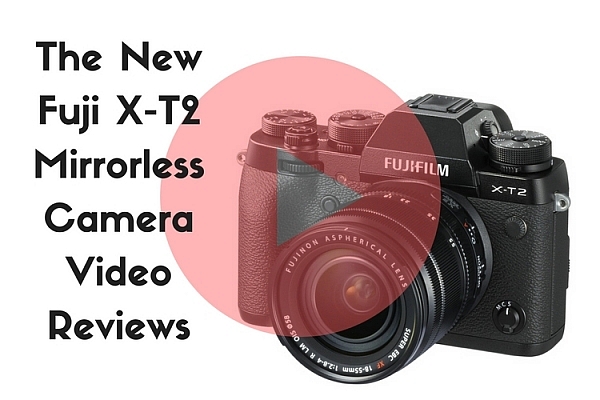
Overview and Hands-On Reviews of the New Fuji X-T2 Mirrorless Camera

15 Nov

The newest Fuji camera on the market is the Fuji X-T2 mirrorless camera. It’s been available for a couple months now so there are a few reviews and tests out there already. I personally own and use the X-T1, so I am very interested to hear about its successor. Let’s see what a few sources have to say about the X-T2.

the-new-fuji-x-t2-mirrorless-camera

Check prices on the Fuji X-T2 on Amazon.com or B&H Photo. 

Tony and Chelsea Northrup thoughts

Tony and Chelsea tested out the X-T1 so they have a good comparison between it and the new Fuji X-T2 and talk about what’s new and improved in this video. They also mention a few things they would have liked to see added that weren’t.

Photography Concentrate – Lauren’s thoughts

Fuji loaned them an X-T2 to try out for a couple weeks. This is what Lauren thought of it overall. Some of the things she mentions as being “issues” I personally don’t have any problem with such as:

  • The aperture ring on the lens (I like it!)
  • That the camera gets quite warm on hot days. I have noticed that with the X-T1 also.
  • Play button in an odd place (no biggie you can program custom buttons)
  • Using the Smartphone app that you can’t see the RAW images. How I get around this with my X-T1 is that I process a few select images into JPG on the camera then pull them to my phone or iPad to play with in Snapseed. I haven’t found it an issue.

But overall she gives it a pretty good thumbs up and says she’s considering switching from Canon to use this camera for all her profession work. So that’s a pretty good endorsement.

The Camera Store guys

In this next video, the guys from the Camera Store give the Fuji X-T2 a good field test in New York City. They test both still and video which some of the other reviews don’t cover. Also mentioned in this video is the new Fuji speedlight which can handle high-speed sync.

The highly improve autofocus on the Fuji X-T2 is mentioned and that it’s a bit tricky to set up. There’s a link to the Fuji Guys channel where they’ll help you configure it if you decide to pick up this camera or already have.

Things I’m excited about:

Since I have the predecessor the X-T1, these are a few of the features that I’ve seen (and I’ve had a chance to handle the camera give it a really quick go) which I’m really excited about as improvements over the old design. They include:

  • YAY, you can open the battery compartment now without having to remove the tripod insert!! This is my biggest pet peeve of the X-T1.
  • The dial on top lock and unlock and they move a lot smoother now. Mine on the X-T1 stick and something both the top and bottom ones move together. I know I can send it back to get those fixed but I don’t want to be without the camera for several weeks so I put up with it.
  • Improved autofocus options and faster autofocus. From what I’ve seen the X-T2 is WAY better than the first generation X-T1. According to The Camera Store guys it actually rivals the Sony a6300 for fastest focus on the market currently. Impressive!!
  • Two memory card slots. I like the idea of shooting RAW on one and JPGS using the nice Fuji film profiles on the other.

Check prices on the Fuji X-T2 on Amazon.com or B&H Photo. 

Have you already ordered yours? Are you considering it? Have you had a chance to test drive one? I want to know. Tell me your thoughts in the comments below.

googletag.cmd.push(function() {
tablet_slots.push( googletag.defineSlot( “/1005424/_dPSv4_tab-all-article-bottom_(300×250)”, [300, 250], “pb-ad-78623” ).addService( googletag.pubads() ) ); } );

googletag.cmd.push(function() {
mobile_slots.push( googletag.defineSlot( “/1005424/_dPSv4_mob-all-article-bottom_(300×250)”, [300, 250], “pb-ad-78158” ).addService( googletag.pubads() ) ); } );

The post Overview and Hands-On Reviews of the New Fuji X-T2 Mirrorless Camera by Darlene Hildebrandt appeared first on Digital Photography School.


Digital Photography School

 
Comments Off on Overview and Hands-On Reviews of the New Fuji X-T2 Mirrorless Camera

Posted in Photography


The Leica TL is an upgraded Leica T mirrorless camera

09 Nov

Leica has today unveiled the Leica TL, which is an updated version of the Leica T that was launched in 2014. The new model’s design has pretty much remained untouched but there is now a new Titanium color option with anodized finish that also comes with chamfered edges.

Images are still captured on a 16MP APS-C sensor but Leica says it has improved autofocus performance, especially when shooting in continuous AF-C mode. The camera also features a 3.7″ touchscreen, 5 fps continuous shooting, an ISO range of 100 to 12500, DNG Raw file format and 1080p video. There is also a built-in pop-up flash and the TL has the ability to connect to a mobile Android or iOS app via Wi-Fi. This allows for viewing of the live view image on the mobile device and remote control of some camera functions.

In addition the internal memory has been increased form 16 to 32GB, of course the TL also takes SD memory cards. The Leica TL system currently offers 6 lenses, 3 primes and 3 zoom lenses, and TL users can now also make use of legacy Leica R-lenses via the R-Adapter L. The Leica TL will be available in November for $ 1,695. 

Official Leica sample images

$ (document).ready(function() { SampleGalleryV2({“containerId”:”embeddedSampleGallery_8370596342″,”galleryId”:”8370596342″,”isEmbeddedWidget”:true,”standalone”:false,”selectedImageIndex”:0,”startInCommentsView”:false,”isMobile”:false}) });

Leica presents the TL-System:

The new camera system impresses with perfected features, unique design, precise, high-performance lenses and a range of functional accessories and technical equipment.

Wetzlar, 8 November 2016. Building on the Leica T camera system, which has been continually advanced in terms speed, ease of handling and flexibility since its launch in 2014, the Leica TL embraces all the perfected features and leads the innovative camera concept into a new generation with even more innovations and new aspects of its design. One of these innovations is the doubling of the size of its internal buffer memory to 32 GB. Other new features are improved autofocus, especially in AF-C mode, and optimised compatibility with lenses from other Leica camera systems. For instance, the Leica TL now supports SL-Lenses with OIS and allows the use of Leica R-System lenses in combination with the R-Adapter L. A new Leica TL app with revised functions offers additional options for sharing pictures by email or on social networks and is now available for the first time for Android as well as iOS devices.

The Leica TL will in available in three colour options from the date of launch: the silver and black versions are identical in design and construction, while the titanium-coloured option is distinguished by a bevelled edge (chamfer) to the top and bottom plates. Functional camera accessories, such as the new high-quality protectors in Nappa leather, which can stay on the camera when changing the battery, and colour-coordinated carrying straps in stone-grey, black, red and cemento, round off the TL system portfolio.

In combination with its high-performance image processor, the large, APS-C-format, CMOS image sensor of the Leica TL guarantees exceptional imaging quality and delivers brilliant pictures with outstanding contrast, finest detail resolution and natural colour rendition – even in unfavourable lighting conditions.

The comprehensive portfolio of lenses for the Leica TL offers an ideal range of focal lengths for all situations and types of photography. The TL-System currently comprises six lenses – three prime lenses and three zooms – that meet the needs of every photographic situation. The two fast prime lenses, the Leica Summicron-TL 23 mm f/2 ASPH. and the Summilux-TL 35 mm f/1.4 ASPH., are classic focal lengths for reportage photography, and the APOMacro-Elmarit-TL 60 mm f/2.8 ASPH. complements them ideally as a lens for finely detailed close-up photography. The three compact zoom lenses, the Leica Super-VarioElmar-TL 11–23 mm f/3.5–4.5 ASPH., Vario-Elmar-TL 18–56 mm f/3.5–5.6 ASPH. and APO-Vario-Elmar-TL 55–135 mm f/3.5–4.5 ASPH., cover an entire range of focal lengths equivalent to 17 to 200 mm in 35 mm format and deliver outstanding images with rich contrast from corner to corner of the frame.

All Leica TL-Lenses impress with exceptional imaging performance at all distances from their close focusing limits to infinity and deliver pictures with the inimitable ‘Leica look’ and unique bokeh. Developed by optical design specialists in Wetzlar, they offer the exceptional imaging performance for which Leica lenses are famed. The combination of optical and precision engineering expertise and the use of finest materials in their construction ensures their constant quality and reliability in use.

Thanks to the L-Bayonet mount shared by the Leica TL and SL cameras, SL-Lenses can also be used without an adapter on the Leica TL. With this, Leica once again carries forward its fundamental principles of cross-system compatibility and sustainability, which is now also reflected in a uniform product designation. Appropriate adapters are also available for using Leica M and R lenses on the camera.

The particular trademark of the Leica TL is the unusual design of its extremely compact body. Each camera body is precisely machined from a single block of aluminium in the Leica factory. The use of premium materials and their processing in an elaborate manufacturing process are unique in the history of camera construction and lend the Leica TL-Camera an unmistakeable look, feel and solidity.

The handling concept of the Leica TL is clearly structured, intuitive to use and concentrates only on relevant functions. The ‘control centre’ of this concept is its clearly laid out, 3.7- inch touchscreen display. It is generously dimensioned and generates a bright and clear image that allows precise and reliable assessment during subject composition and in playback mode. Numerous functions in capture and playback mode can be controlled simply by touching the screen. The only other controls are four ergonomically positioned haptic control elements that are intuitive in their operation. This ensures that camera users can concentrate fully on composing their pictures – without any unnecessary distractions. The freely configurable MyCamera menu of the Leica TL offers even greater flexibility, even in spontaneous snapshot situations. This means that the photographer always has fast access to the most frequently used features and personalised presets.

Thanks to its integrated WiFi module and the function for setting up its own mobile hotspot, the Leica TL can conveniently transfer stills and videos by WLAN to smartphones, tablets, laptops or desktop PCs from almost anywhere and allows users to share their pictures and films by email, on Facebook or in other social networks. A free Leica TL app for iOS and Android devices is available with the release of the camera. A particularly practical feature of the app is the remote function. This lets users connect a smartphone or tablet to the camera by WLAN as an electronic viewfinder for the Leica TL and offers remote control of shutter speed and aperture settings – for example for shots with the self-timer or from unusual angles.

Articles: Digital Photography Review (dpreview.com)

 
Comments Off on The Leica TL is an upgraded Leica T mirrorless camera

Posted in Uncategorized