RSS
 

Posts Tagged ‘Master’

Lessons you can learn from master photographers – Minor White, Ansel Adams, and Syl Arena

09 Jun

The reason I have put pen to paper (fingers to keys) is to share with you some simple tips and knowledge that can be gained from taking a look at some notable photographers. Some would even argue that these people are among some of the most creative and artistically idolized craftsmen who have ever captured light with a box. If you’re just starting out on your photographic journey these tips from some of the masters will hopefully help you along.

Minor White
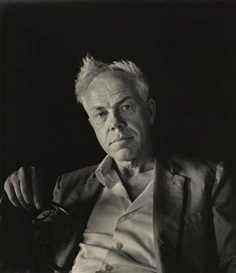
Minor White by Imogen Cunningham

Portrait of Minor White by Imogen Cunningham

Born during the summer of 1908 in Minneapolis, Minor White held jobs as a waiter, bartender, and even worked in military intelligence during World War II. He was a very spiritual man and his beliefs spilled over into his photography. Co-founder of Aperture magazine along with Ansel Adams and other notable photographers, Minor was also an early advocate of the Zone System pioneered by Adams and Fred Archer. An early practitioner of infrared photography, White ventured into an array of subject matter but his work with the small, and often overlooked scenes and objects, such as frost on glass and dilapidated structures remain some of his most acclaimed.

Lessons you can learn from Minor White:

Make photographs all the time, even if you don’t have a camera.

Minor said that he was “always mentally photographing everything as practice”. This is solid wisdom for any photographer of any skill level. Unfortunately, the realities of most of our lives limit the time we get to spend with a camera in hand. The good news is that our artistic mind is never absent. Think about which exposure would blur that passing train just right. What aperture would give me enough depth of field to put that entire table into focus? You’ll be more prepared next time when you have your camera handy.

Don’t overlook small objects and details.

Some of Minors’ most celebrated works were of seemingly mundane or otherwise less than notable subjects. Be on the lookout for details and textures of things that you see every day. This is especially useful if you have an interest in abstract photos.

Drops of rain on my back door glass. Easily overlooked.
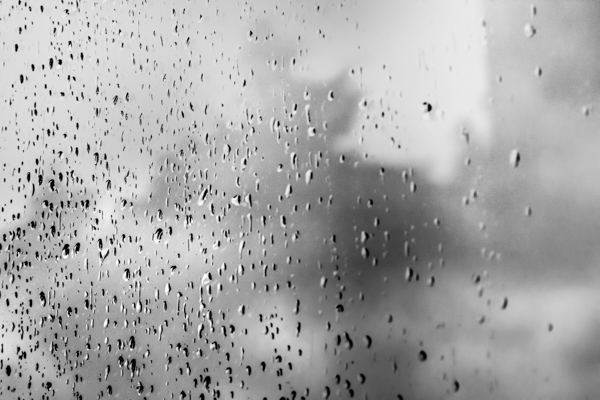
Rain on glass small

Simple occurrences made more interesting with a little creative thinking.
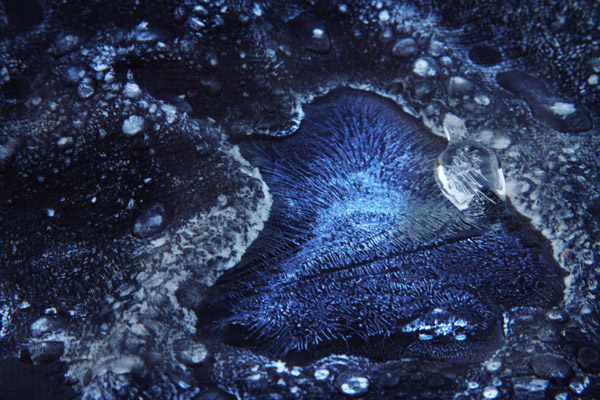
Ice on Firepit small 1

The early morning blue hour made this frost and ice on the cover of my fire pit look otherworldly.

Ansel Adams
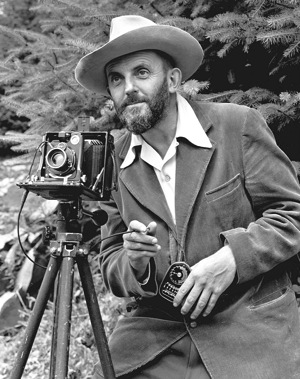
Ansel Adams self portrait

The portrait of Ansel Adams taken by J. Malcolm Greany around 1947

Chances are, you have heard at least something about Ansel Adams, even if that something is that he was a famous early photographer. It’s true, he is considered by more than a few to be one of the best photographers of the twentieth century. There have been volumes filled with the ins and outs of this photographic master. Born on February 20th, 1908 into a well established family in San Francisco, Ansel Adams discovery of photography was unplanned. Ansel was a gifted piano player. An exceptional piano player in fact, so exceptional that he was set to become a professional concert pianist until he decided to commit himself fully to photography. Honestly, the next sections could be titled “What can Ansel Adams NOT teach you?”. The man was such a force in the early days of modern photography that it almost seems unfair to point out only a few practices that will help you improve your own work. However, I have managed to list some basic tips from Ansel Adams that you can put into action in order to make you a better photographer right now.

Lessons you can learn from Ansel Adams:

Slow down

I’m sure you’ve heard this before and possibly have read about the importance of slowing down and making your photographs with more deliberate intentions. Our crushingly convenient modern era of virtually unlimited and relatively low cost film (i.e. digital photography) has lent itself to making us potentially sloppy in our shooting. We sometimes press the shutter button entirely too often in order to get a suitable image for processing. I will shamefully raise my hand and admit that I too am guilty of this spray and pray method of shooting, more so in my earlier photography days right after I made the leap from analog to digital.

I did myself a favor, that I also encourage you to do for yourself, and decided to take things more seriously. Ansel would consider all aspects of his composition: from the elevation and tilt of his camera, the perspective of his lenses, the cast of shadows, even the future effects of the wind on the clouds. There will be times when you are racing against a sunset or you will be trying to catch some specific or fleeting moment and at those times you must shoot quickly and intuitively. Usually, however, we rush for no perceivable reason and often overlook or forget small changes that can make or break an image. So the next time the muse slaps you across the face to make an image, calm yourself down and work the problem. Think about what it is you are trying to do. Put yourself into the correct mindset to make better images and you might find, strangely enough, that your images become better also.

Teach yourself to see the finished product before you make the exposure.

The act of seeing or visualizing is another subject that has been touted by the photographic community many times. Visualization is one of those things that really can’t be brought about by technical instruction in the traditional sense; meaning there are no classes on visualization. Ansel Adams himself remarked that visualization cannot be taught, it is be learned. Think about that concept.

It’s undeniably true that some people learn faster than others when it comes to visualizing finished prints. However, it is equally true that no one started out being able to see in their mind’s eye the final result of a photo. Like most things, it takes practice, as well as patience, and more than a healthy helping of sheer determination. When you begin to see the print before it is made, then really all that stands between you and your vision is the selection of techniques which, similarly, require just as much determination and commitment to master.

Use a tripod

To reiterate, please, use a tripod whenever and wherever possible. A tripod is one of the single most important tools you can use to increase the focal clarity and sharpness of a photograph. Minimizing camera shake and vibration is key to making crisp images, period.
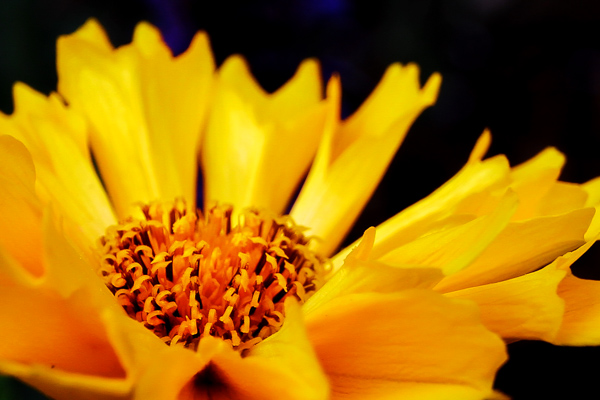
Colorflowersmall

By using a tripod I eliminated the need to worry about vertical camera movement in the macro shot above. Ansel tells us that the ideal tripod is “a cubic yard of solid concrete with a 1/4″ X #20 bolt head sticking out of the top”. If you don’t have a huge block of cement lying around to attach your beloved camera to, then the next best thing is to obtain a quality tripod and use it.

Having some way to keep your camera absolutely still is essential when working with long exposures like the image below.
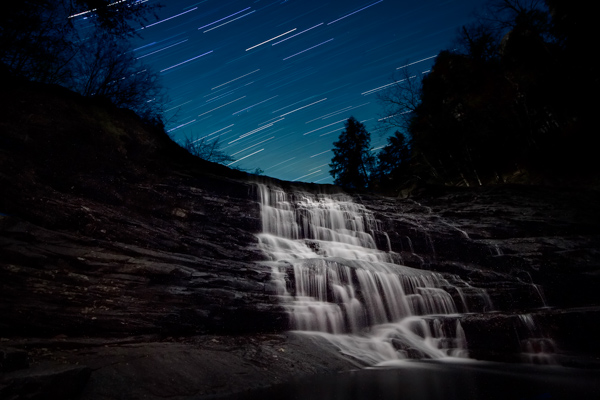
Cane Creek Cascades Star Trail Color3

Exposure time: approximately forty seven minutes. This long exposure time would not have been possible without the use of a tripod.

Using a tripod (correctly) also forces you to, again, slow down and think about the photograph you are intending to make. dPS has a superb article on tripod employment that can be found here.

Syl Arena
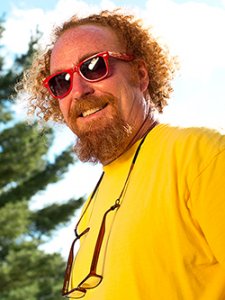
Syl Arena

Photo by Vera Franceschi

Syl Arena, is a uniquely humble and genuine person, author, teacher, lecturer, and a speedlite Jedi. He is a magician of sorts when it comes to creating and moulding light. Syl currently resides on the west coast around San Luis Obispo, California. His biography is brief and barely mentions any notable achievements of which there are many. The lessons I learned from him actually lean more towards the philosophical than the technical. That being said, you will find this section contains no real insight from Mr. Arena concerning artificial light manipulation or photographic technique in general. For that I would highly suggest you check out his blog or his new Q&A site for loads of information.

My first introduction to Syl was through the gift of one of his books (thanks Mr. Veneman), “LIDLIPS: Lessons I didn’t learn in photo school“. In that book, this highly educated, highly skilled, highly successful, highly haired photographer simply and truthfully listed page by page the things he was never taught. They ranged from personal revelations on the photographic process to small background stories of some of his location shoots. He mentioned nothing about technique or gear really, just lessons from his life as a picture maker, unpretentious and sincere.

Lessons you can learn from Syl Arena:

Don’t be afraid.

Your limited gear, your perceived skill level, your lack of obvious subject matter, your lack of confidence, fear of trying something new; don’t be afraid of any of these things, or anything else for that matter. You will never have the all of the best gear so don’t let it worry you. Instead, learn to make the best use of what gear you have. You will never learn all there is to know about making photographs so learn what you can, where you can. Feeling like you’ll never get an image just right? You are your own worst critic, so don’t hide your work from the world.

Be inspired, not intimidated.

This is one of the hardest things to overcome, especially if you are just beginning to learn about photography. It’s easy to feel envious or even jealous of other photographers work. This can sometimes lead to convincing yourself that your work has no merit. Chances are, that image you’re envying and ogling over is a product of hard work, patience, diligence, determination, perseverance, and many other great words that the thesaurus can produce.

Viewing other artists work is one of the best ways to grow your own creativity.

Take the work as seriously as you want, but not yourself.

As you grow and learn as a photographer, remember that we all started out understanding absolutely nothing about photography; so keep that in mind the next time someone asks you a question about one of your photographs in a less than learned way. Most likely, you have learned something from someone who was nice enough to teach you. Please pay it forward.

Have you learned any lessons from other master photographers? Who is your mentor? Please share in the comments below.

The post Lessons you can learn from master photographers – Minor White, Ansel Adams, and Syl Arena by Adam Welch appeared first on Digital Photography School.

Digital Photography School

 
Comments Off on Lessons you can learn from master photographers – Minor White, Ansel Adams, and Syl Arena

Posted in Photography


Master Easily Taking Candid Photos of Your Friends

21 May

Taking photos of your friends is an accessible way to improve your picture-taking skills. But it can be difficult to do this well and get good photographs, improve your skills, and not offend your friends. It seems simple, of course… you and every person with a smartphone these days are taking photos of your lunches like it’s the top of Continue Reading

The post Master Easily Taking Candid Photos of Your Friends appeared first on Photodoto.


Photodoto

 
Comments Off on Master Easily Taking Candid Photos of Your Friends

Posted in Photography


6 Main Studio Lighting Methods to Master for Your Portraits

16 May

Understanding light is a concept that makes a good photographer, and an even greater skill to master is knowing how to recreate different light effects in the studio . Using lighting accessories like off-camera flashes or strobes, and studying how to trigger them from a different position than on top of the camera, will give an overall different aesthetic to Continue Reading

The post 6 Main Studio Lighting Methods to Master for Your Portraits appeared first on Photodoto.


Photodoto

 
Comments Off on 6 Main Studio Lighting Methods to Master for Your Portraits

Posted in Photography


SmugMug Films: Master of illusions

23 Apr

Screen_Shot_2014-04-22_at_11.26.48_AM.png

We’ve been following SmugMug Films’ ongoing behind-the-lens series and have found the clips to be an interesting look at people who follow their passions in photography. The latest installment features Joel Grimes. He’s been a commercial advertising photographer for more than 30 years and is most known for his composite portraits. Grimes considers himself more than a photographer – an artist and illusionist, creating images that are larger than life. See video and read Q&A

News: Digital Photography Review (dpreview.com)

 
Comments Off on SmugMug Films: Master of illusions

Posted in Uncategorized


Masters of Photography: Bruce Davidson, Master of the Subway

03 Mar
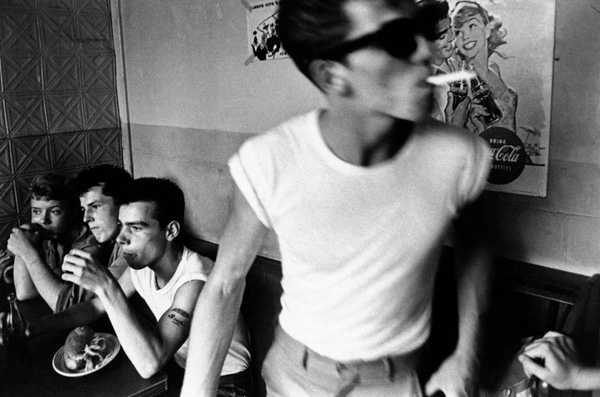
Coney Island, NY. 1959. From Brooklyn Gang.

Coney Island, NY. 1959. From Brooklyn Gang – Bruce Davidson/Magnum

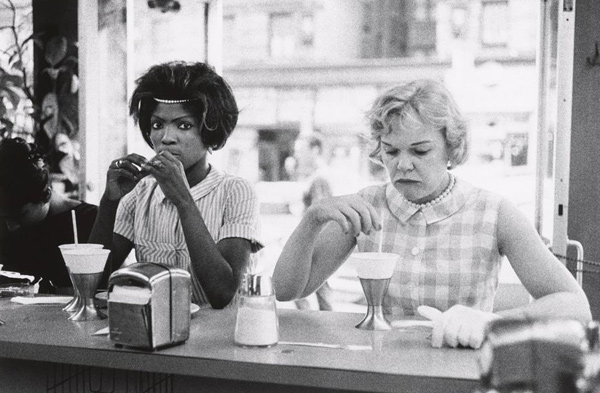
We can all learn a great deal by studying the work of photographer, Bruce Davidson. Born near Chicago in 1933, Davidson has extensively photographed for over 50 years, including subjects such as the Civil Rights Movement in the early ’60s, circus performers, a Brooklyn gang, Spanish Harlem, and a five year project on New York’s subway system in the gritty days of the ‘80s. A few of his main influences were Robert Frank, W. Eugene Smith, and Henri Cartier-Bresson. Davidson joined the Magnum photo agency in 1958.

Besides Davidson’s intimate photographic style, which you need to view a few of his projects in their entirety to get a feel for, there are a few very important lessons that he can teach you about your own work.

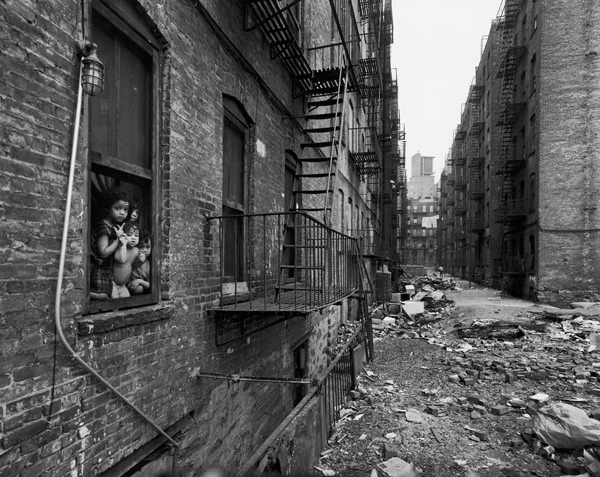
Much of Davidson’s work was focused on series and projects. One of his most important works is East 100th Street, where he captured life within a single block in East Harlem in the late ’60s. While many photographers may have tried to capture East Harlem in its entirety, Davidson honed in. He got familiar with a smaller area with a lot of life, and told broad stories by narrowing the subject matter. By focusing on a small part of a large area, he was able to become much more familiar and intimate with his subjects.

East 100th Street, Spanish Harlem, 1966.

East 100th Street, Spanish Harlem, 1966 – Bruce Davidson/Magnum

Davidson also spent time following a Brooklyn gang of youths called the Jokers in 1959, and he created a series of civil rights work when he following a group of freedom riders in the south (in 1961) through dangerous situations.

Besides his technical ability, one of Davidson’s main strengths was figuring out where the interesting stories were and putting himself where the action was. Then, he got close and familiar to his subjects. That idea might make you nervous, but based on some of his writings you can see that he was nervous at points as well. However, he did not let that stop him from doing it. He got close with his subjects and this closeness is shown within his images. It is one of the most important aspects of why his photographs are so successful.

New York City, 1962.

New York City, 1962 – Bruce Davidson/Magnum

While this intimacy was very important in his work, Davidson did not seem to think of himself as a documentary photographer, stating, “Documentary photography suggests you just stand back, that you’re not in the picture, you’re just recording. I am in the picture, believe me. I am in the picture but I am not the picture.”

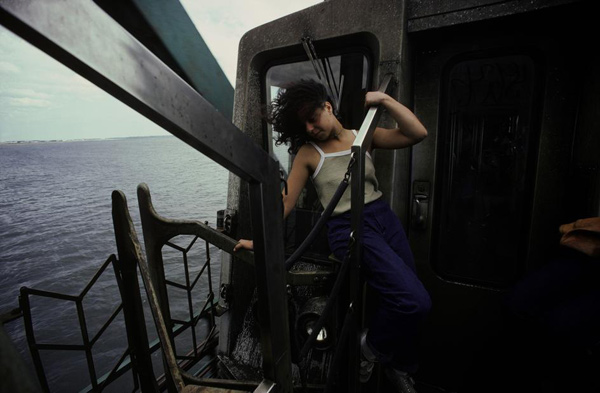
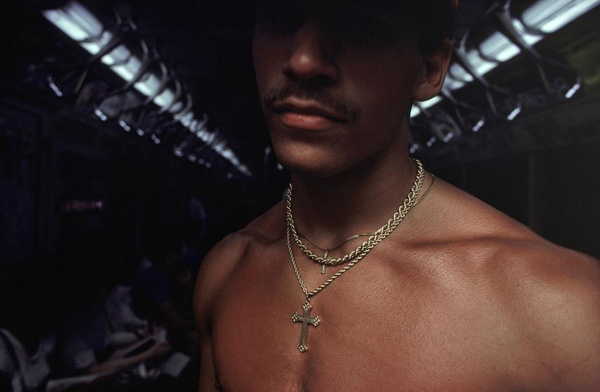
Starting in 1980, Davidson began an extensive five year project documenting the New York Subway system. The subway project is what hits closest to home for me, and it is inspiring to read about. When you visit New York City it is interesting to compare his photographs to the modern day look of the subway system. It helps to see your own work through this perspective. How would he do his project today? The subway system looks so much different, so how can I also capture it in an interesting way?

NYC Subway, 1980.

NYC Subway, 1980 – Bruce Davidson/Magnum

When talking about prolific photographers, it is easy to think that we cannot repeat their success. They seem bolder and more fearless. However, when you read Davidson’s quotes about the project, he does not sound much different than any of us would probably feel. He was just self aware enough and able to push through it. It is inspiring to say the least.

“As I went down the subway stairs, through the turnstile, and onto the darkened station platform, a sinking sense of fear gripped me. I grew alert, and looked around to see who might be standing by, waiting to attack. The subway was dangerous at any time of the day or night, and everyone who rode it knew this and was on guard at all times; a day didn’t go by without the newspapers reporting yet another hideous subway crime. Passengers on the platform looked at me, with my expensive camera around my neck, in a way that made me feel like a tourist—or a deranged person.

It was hard for me to approach even a little old lady. There’s a barrier between people riding the subway—eyes are averted, a wall is set up. To break through this painful tension I had to act quickly, on impulse, for if I hesitated, my subject might get off at the next station and be lost forever. I dealt with this in several ways. Often I would just approach the person: “Excuse me. I’m doing a book on the subway and would like to take a photograph of you. I’ll send you a print.” If they hesitated, I would pull out my portfolio and show them my subway work; if they said no, it was no forever. Sometimes, I’d take the picture, then apologize, explaining that the mood was so stunning I couldn’t break it, and hoped they didn’t mind. There were times I would take the picture without saying anything at all. But even with this last approach, my flash made my presence known. When it went off, everyone in the car knew that an event was taking place—the spotlight was on someone. It also announced to any potential thieves that there was a camera around. Well aware of that, I often changed cars or trains after taking pictures.”

Read more from Davidson on this project: Train of Though: On the ‘Subway’ Photographs. Now it’s time to explore Davidson’s work and think about a photographic project that you can do in your own area.

Subway.

NYC Subway, 1980.

NYC Subway, 1980 – Bruce Davidson/Magnum

Brooklyn Gang.

Brooklyn Gang, 1959.

Brooklyn Gang, 1959 – Bruce Davidson/Magnum

East 100th Street.

East 100th Street, Spanish Harlem, 1966.

East 100th Street, Spanish Harlem, 1966 – Bruce Davidson/Magnum

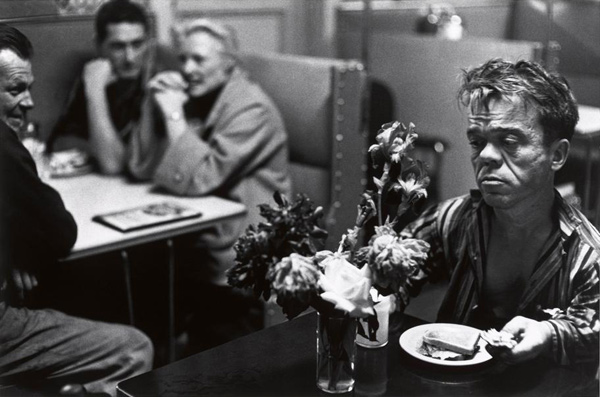
Circus

The Dwarf, Circus, Palisades, NJ. 1958

The Dwarf, Circus, Palisades, NJ. 1958 – Bruce Davidson/Magnum

Times of Change: Civil Rights. 1961-65.

Birmingham, Alabama, 1963 by Bruce Davidson

Birmingham, Alabama, 1963 by Bruce Davidson/Magnum

The post Masters of Photography: Bruce Davidson, Master of the Subway by James Maher appeared first on Digital Photography School.

Digital Photography School

 
Comments Off on Masters of Photography: Bruce Davidson, Master of the Subway

Posted in Photography


8 Types of Pictures so Amazing That All Photographers Should Master Them

17 Jan

What is your next step in photography? If you feel you are retaking the same picture over and over, a good idea is to take a break and look the other way. In photography, this is easy: We can change memory cards, try a different lens and shoot something new! Most importantly, cover your basics. Go over all the controls Continue Reading

The post 8 Types of Pictures so Amazing That All Photographers Should Master Them appeared first on Photodoto.


Photodoto

 
Comments Off on 8 Types of Pictures so Amazing That All Photographers Should Master Them

Posted in Photography


Winter Photography Tips and Ideas to Make You Master the Season

08 Jan

Winter is an amazing time of the year, especially if you live in a region that produces tons of snow. Don’t hibernate even if there is no snow outside since winter is the best season for outdoor photography. Cold weather is not an excuse for sitting at home. Warm, comfortable clothes and special, cropped gloves could help you easily overcome Continue Reading

The post Winter Photography Tips and Ideas to Make You Master the Season appeared first on Photodoto.


Photodoto

 
Comments Off on Winter Photography Tips and Ideas to Make You Master the Season

Posted in Photography


All You Have to Know to Master the Basics of White Balance

04 Jan

As an amateur photographer, you can go a long, long time without knowing what white balance is or why knowing how to adjust it even matters. I had my first DSLR (my current DSLR is a Canon EOS 450D) for five years before white balance entered my photography glossary, and it took another few months until it felt necessary—or at Continue Reading

The post All You Have to Know to Master the Basics of White Balance appeared first on Photodoto.


Photodoto

 
Comments Off on All You Have to Know to Master the Basics of White Balance

Posted in Photography


The Master Henri Cartier-Bresson – the Decisive Moment

08 Dec

Henri Cartier-Bresson (1908-2004) was a French photographer who is widely considered the father of photojournalism. He phrase the “Decisive Moment” is one that many photographers know well. If you are not familiar with his name or this phrase – it’s time to learn!

Father of photojournalism

bressonSomething I recommend in my classes is to learn about the history of photography. Who are the greats that came before us? How did this craft we know today come to be? There is much to be learned from the masters of yesterday. I want to start introducing them to you and couldn’t think of a better place to start (especially seeing this week’s challenge is street photography) than with Henri Cartier-Bresson.

Well known for his candid street photography, Cartier-Bresson was, in many ways, progressive before his time. One of the first to use a 35mm camera, a war prisoner and escapee, his first published book was title “The Decisive Moment ( Images à la Sauvette  in his native French – if you can find a copy in print grab it!)

I’m going to let you do your own resource into the man, his life and his images but I’ll start you off with this video interview with him, from 1973.

Some books by Cartier-Bresson

Post originally from: Digital Photography Tips.

Check out our more Photography Tips at Photography Tips for Beginners, Portrait Photography Tips and Wedding Photography Tips.

The Master Henri Cartier-Bresson – the Decisive Moment

The post The Master Henri Cartier-Bresson – the Decisive Moment by Darlene Hildebrandt appeared first on Digital Photography School.

Digital Photography School

 
Comments Off on The Master Henri Cartier-Bresson – the Decisive Moment

Posted in Photography


21 November, 2013 – Video Interview with Master Printer and Scientist Ctein

21 Nov

Our newest video was done by Michael with Ctein – master printer, scientist and writer. The conversation covers Ctein’s journey from Film and Dye-Transfer printing to Digital Cameras and Inkjet Printers.

Topics of discussion include the mastering of quarter-tones in inkjet printing, the current state of cameras and inkjet printers in 2013, a look at the future of both cameras & printers, and a close look at some of Ctein’s recent prints.

The duration of the video is 60 minutes, and the cost is just $ 10 from our new store. The video is free to all current and new subscribers.


The Luminous Landscape – What’s New

 
Comments Off on 21 November, 2013 – Video Interview with Master Printer and Scientist Ctein

Posted in News