RSS
 

Posts Tagged ‘makes’

3D-Printed Muscle Straight Out of ‘Westworld’ Makes Robots More Realistic

21 Sep

[ By SA Rogers in Conceptual & Futuristic & Technology. ]

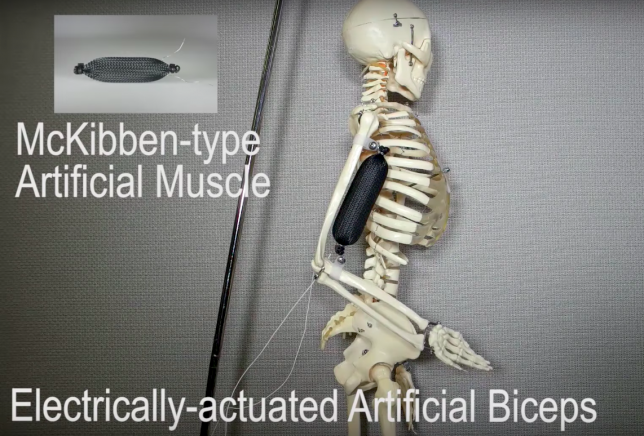
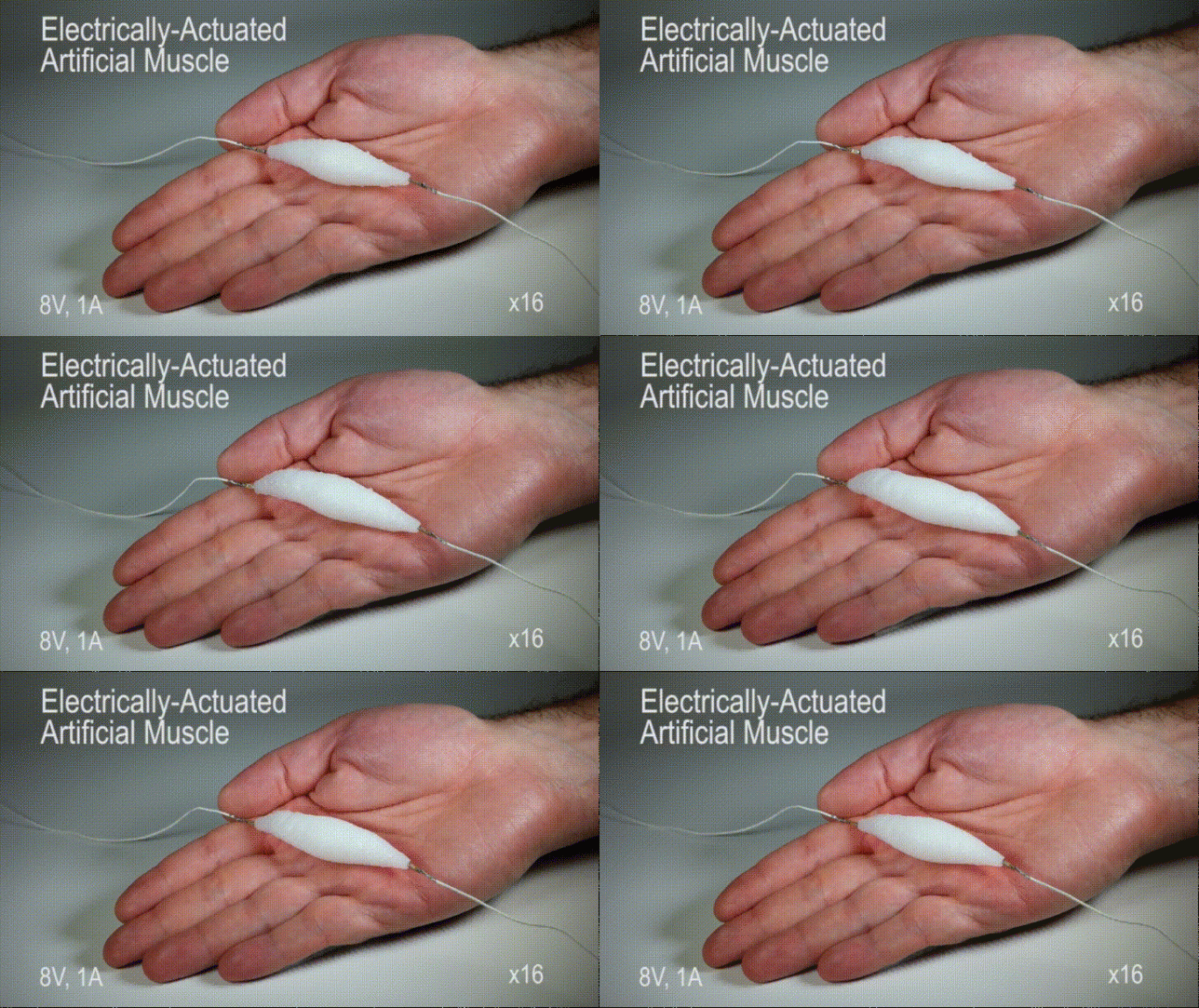
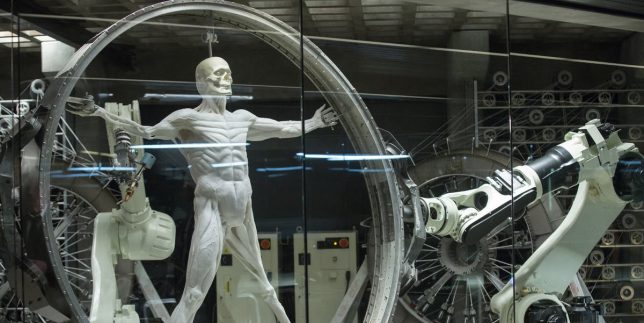
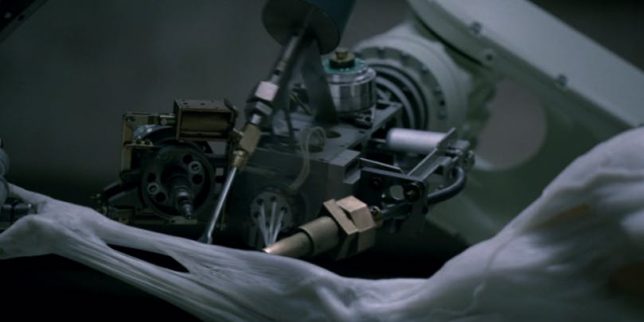
If you watched HBO’s ‘Westworld’ earlier this year, you probably remember the scenes where the nascent humanoid robots were strung up on circular frames like Leonardo da Vinci’s ‘Vitruvian Man,’ with machines printing white muscle fibers onto their skeletons. While the process of constructing androids doesn’t quite resemble this sci-fi vision just yet, it’s surprisingly close, especially with a new breakthrough in synthetic muscle tissue announced by researchers at Columbia Engineering. Their tests show a bundle of white muscle held in the palm of a researcher’s hand, moving and expanding in response to low power sent through a thin resistive wire.

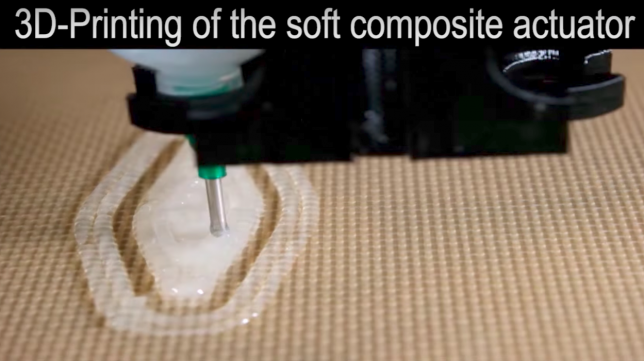
This self-contained ’soft actuator’ is three times as strong as natural muscle, so yes, it’s true: Skynet is going to kill us all. The creators took inspiration from living organisms, using a silicone rubber matrix with ethanol distributed through micro-bubbles to simulate muscle tissue. It’s capable of expanding up to 900% when electrically heated to 80 degrees celsius, and can perform all sorts of motion tasks when controlled by computers.

“We’ve been making great strides toward making robots minds, but robot bodies are still primitive,” says Hod Lipson, Professor of Mechanical Engineering at Columbia and leader of the project. “This is a big piece of the puzzle, and, like biology, the new actuator can be shaped and reshaped a thousand ways. We’ve overcome one of the final barriers to making lifelike robots.”

“Our soft functional material may serve as robust soft muscle, possibly revolutionizing the way that soft robotic solutions are engineered today,” adds Aslan Miriyev, a postdoctoral researcher in the Creative Machines lab and lead author of the study ‘Soft Material for Soft Actuators,’ published by Nature Communications. “It can push, pull, bend, twist and lift weight. It’s the closest artificial material equivalent we have to a natural muscle.”

Share on Facebook


[ By SA Rogers in Conceptual & Futuristic & Technology. ]

[ WebUrbanist | Archives | Galleries | Privacy | TOS ]


WebUrbanist

 
Comments Off on 3D-Printed Muscle Straight Out of ‘Westworld’ Makes Robots More Realistic

Posted in Creativity


CamFi Matrix Time software makes it easy to shoot the ‘bullet time effect’

15 Jul

China-based camera trigger company CamFi has announced the launch of CamFi Matrix Time, a software application that is free for all of the company’s users. As the name suggests, the software is designed to produce the ‘bullet time effect’ made famous by The Matrix, doing so without the high cost typically associated with this effect.

CamFi makes wireless digital camera controllers, and its new Matrix Time software works in conjunction with those controllers. With the software, users can set up a multi-camera arrangement to shoot one after the other with less than a 1/100th-second delay. The images captured by each camera are then automatically grouped and compiled into a video featuring this special effect.

The company explains that its Matrix Time product can easily set all of the cameras in the multi-camera setup to the same shutter speed and aperture; a live view from the cameras in the software, meanwhile, enables operators to arrange the angle of each camera before shooting. All in all, it seems like a very simple and straightforward way to capture a complex special effect.

Of course, there is a catch… actually two. First, while the Matrix Time software is free, each CamFi Wireless Camera Controller costs $ 130 USD / $ 185 CAD / £110. And second, for now, CamFi Matrix Time is only available for the Windows operating system.

Articles: Digital Photography Review (dpreview.com)

 
Comments Off on CamFi Matrix Time software makes it easy to shoot the ‘bullet time effect’

Posted in Uncategorized


The Apprehension Engine: Machine Makes Disturbing Horror Movie Music

11 Jul

[ By SA Rogers in Design & Products & Packaging. ]

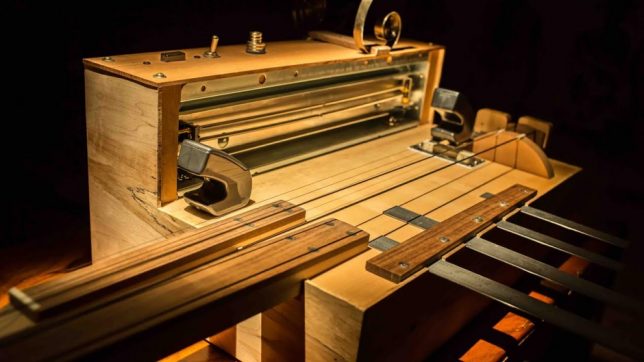
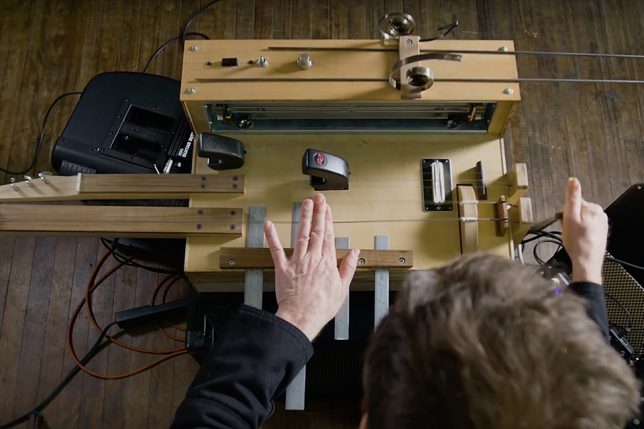
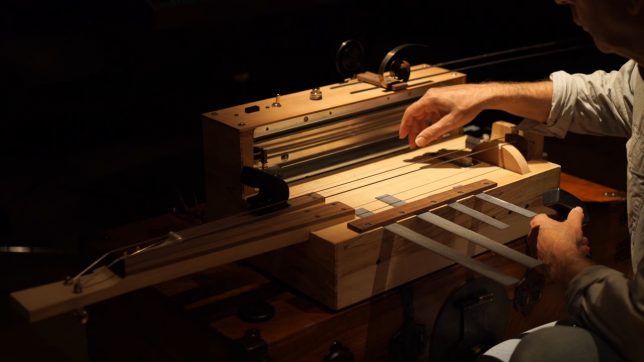
Is this the most terrifying musical instrument ever made? If you just take a quick glance at it, you’ll likely say no – it’s an unassuming (albeit rather strange) jumble of strings, rods, reverbs and metal rulers attached to a boxy wooden base. But just you wait until composer Mark Coven, whose work includes the stunning score for the 2016 horror film The Witch, sits down at it and starts to play. The sounds that emerge from the ‘Apprehension Engine’ are designed to give you the creeps, and they’re quite effective.

Korven, who has scored a number of feature films over the years, was sick of using the same old digital samples to get the signature scraping, creaking, squealing and rumbling sounds that help provide a hair-raising atmosphere. The world of creating analog sound effects in audio post-production is pretty fascinating, and foley artists use all sorts of weird objects to create many of the sounds you hear in an average movie or TV show.

But Korven wanted something very specific, all together in a single instrument, so he turned to his friend Tony Duggan-Smith, a guitar maker, to help him craft it. In this video, Korven demonstrates to Great Big Story how the Apprehension Engine works as he plucks, wiggles, flicks, thumps and runs a bow across the various objects connected to the instrument.

Share on Facebook


[ By SA Rogers in Design & Products & Packaging. ]

[ WebUrbanist | Archives | Galleries | Privacy | TOS ]


WebUrbanist

 
Comments Off on The Apprehension Engine: Machine Makes Disturbing Horror Movie Music

Posted in Creativity


What makes a great photo: Wise words from a veteran photographer

09 Jul

What makes a ‘great’ photo? The question keeps professionals and weekend warriors alike busy arguing, practicing and learning. In this video, one photography veteran shares his insights into that question, born of decades immersed in the world of photography.

The video is, first and foremost, a tribute created by photographer Jesse James Allen for and about his mentor Charlie Howse.

“This is a tribute my mentor, who in 2007 showed me how to create an image before the shutter was ever pressed,” writes Allen in the video’s description. “His time and teachings greatly influenced my career.”

But throughout the video the same theme comes up over and over again: what makes a ‘great’ photograph?

Howse touches on several different aspects of ‘great’ photography. He starts with the personal impact of an image—a photograph that’s indelibly tied to what you were feeling and thinking at the moment you pressed the shutter—before moving on to a common debate topic: technology vs art.

“For far too long, I thought that in order to have a great image, it has to be technically a great image,” says Howse. “And I’m coming to realize that the technical aspect of an image is less important than the artistic or the compositional aspect of an image, or the interestingness of the subject matter.”

More important by far than the best gear, says Howse, is knowing how to ‘make an image’ rather than simply ‘take a picture.’ How to pose. How to compose. How to connect.

What we’ve written above just barely scratches the surface of the full video. Howse goes on to talk about the difference between a snapshot and a portrait, about why he chooses to shoot large format, and about the next generation of photographers and what they should focus on.

Maybe it’s too much to hope that a five minute video can shape the way you look at the world and capture a photograph. Then again… what do you have to lose? Click play up top and let us know what you think of Howse’s advice in the comments.

Articles: Digital Photography Review (dpreview.com)

 
Comments Off on What makes a great photo: Wise words from a veteran photographer

Posted in Uncategorized


Blue Earth Alliance: Collaboration is key for photography that makes a difference

14 Apr

Blue Earth Alliance: Collaboration is key for photography that makes a difference

Natalie Fobes on assignment in Russia for National Geographic. Fobes is an award-winning photographer who founded the nonprofit Blue Earth Alliance in order to work with photographers to share their stories.

“You don’t have to travel overseas to make a difference with your photography. Your world starts outside your front door,” says Natalie Fobes, a Seattle-based photographer with a resume many photographers dream of. Assignments for major magazines including National Geographic, dozens of awards as well as being a finalist for a Pulitzer, a photography instructor with courses on Lynda.com, and now a successful wedding and commercial photography business in Seattle, Washington where she lives with her family.

It all might sound a little intimidating, but spend just a few minutes in conversation with Fobes and you’ll come to understand not only her passion for the power of photography, but how much she wants to help other photographers succeed.

Almost 22 years ago Fobes formed the non-profit Blue Earth Alliance, along with fellow photographer Phil Borges and attorney Malcolm Edwards, who provided legal guidance. The philosophy behind Blue Earth Alliance is simple – photography and filmmaking can lead to positive change.

DPReview had the opportunity to talk with Fobes about Blue Earth Alliance, the impact of photography and the mission of Blue Earth Alliance.

Blue Earth Alliance: Collaboration is key for photography that makes a difference

The opportunity to share her photographs and the difficulty in finding funding lead Fobes to collaborate and begin Blue Earth Alliance. Photo by Natalie Fobes.

Blue Earth Alliance was formed almost 22 years ago to help photographers. Why did you feel it was needed?

I had just had a book published, had spent 10 years traveling the Pacific Rim and was doing well and I was approached to put together a traveling exhibit. It was expensive to put on the exhibit and hard to find sponsors. I was told if I had been a 501(c)(3) sponsors could help, and I learned other photographers were having similar problems. We saw the media landscape was changing and it was going to get harder to do long documentary projects.

I think the underlying philosophy of Blue Earth Alliance is we feel an individual can make a difference in this world. There are so many things that need attention:  the environment, disappearing cultures, social issues or a local situation. These are all things that matter in our lives, no matter if you live in a small town or in New York City or Seattle. By raising awareness of these issues, you can make a difference; you can make a change. It’s a very high level look, but I think that no matter who you are — whether you’re a professional photographer or advanced amateur — you recognize the power of photography.

Blue Earth Alliance: Collaboration is key for photography that makes a difference

Photojournalist Tom Reese spotlights the devastation of toxic waste in his project, “Choosing Hope: Reclaiming The Duwamish River.” Photo by Tom Reese.

Can you explain how Blue Earth Alliance works with photographers who become sponsored?

First, I need to be very clear:  Blue Earth does not provide direct funding or grants. That is a common misconception about Blue Earth. The biggest service Blue Earth provides is fiscal sponsorship. This is a huge asset to individual photographers and filmmakers since when we accept a project for sponsorship we extend our 501(c)(3) status to it. The photographer/filmmaker can then apply for grants from organizations and foundations that only donate to a 501(c)(3). After 21 years, we have a great reputation with funders for sponsoring worthwhile projects. Blue Earth provides a vetted seal of approval for donors.

Sometimes photographers and filmmakers just need encouragement for their projects. More than one photographer has mentioned that when Blue Earth selected their project for sponsorship, it encouraged and inspired them to continue their work.

Blue Earth Alliance: Collaboration is key for photography that makes a difference

Daniel Beltra’s project has documented conservation around the planet. He has shot on all seven continents, many of his photographs are shot from the air. Photo by Daniel Beltra.

Blue Earth Alliance has sponsored more than 134 photography and filmmaking projects over the last two decades. Can you reflect on a few that have had an impact?

We have had had many, but a couple that stand out. These projects can start the conversation, even raise the visibility of some of these issues. One was a really long term project by the late Gary Braasch. He came on board in the late 90’s, early 2000 and was talking about global warming before it became popular. It was important work in that it elevated the conversation because of his photography and his dedication.

Another is Subhankar Banerjee and his story about the Arctic National Wildlife Refuge and how important it was to keep that area pristine. He had worked at Boeing and had no professional photography experience. He came to us and wanted to do this project and applied for sponsorship.

He spent a couple of years in the Arctic and showed how beautiful it was even when some senators were calling it a frozen wasteland. The Preserve is one of the last pristine areas of that particular environment and there was a lot of discussion about oil, a lot of senators wanted to open it out to oil exploration. He also contracted with a number of museums including the Smithsonian to exhibit his work from this project. In one of the Senate debates about drilling in the refuge Senator Boxer held up his book.

Blue Earth Alliance: Collaboration is key for photography that makes a difference

Katherine Jack’s project with Blue Earth Alliance is documenting life in the Palawan Sea, in the Philippines and how changes to our marine ecosystem is affecting the life of the Palawan residents.

What are the steps a photographer would need to take to get support from Blue Earth Alliance? What are the criteria that makes a project worthwhile?

Blue Earth accepts project proposals twice a year: January 20 and July 20. The submission requirements can be found on our website. In a proposal we look for a clear description of the project, a unique viewpoint or topic and clarity around how the project fits within the Blue Earth mission. Having a project with a 501c3 status does not mean that money magically appears. Finding funding can be difficult, and it takes time to thoughtfully research funders and write grants.

When we review our project proposals one of the first things I look at their budget to see if they know what they are doing financially.

We have a responsibility to make sure funds are used as they should be. One of the first things I look for is are the photographers paying themselves, through a stipend. We are too important not to pay ourselves.

Blue Earth wants our project photographer/filmmakers to succeed, and we scrutinize all proposals in order in ensure that likelihood.

Blue Earth Alliance: Collaboration is key for photography that makes a difference

Greg Constantine’s decade-long project, Nowhere People, focuses on the plight of people forced from their homes, without citizenship and looks at the challenges of their daily lives and their future. Photo by Greg Constantine.

What advice do you have to photographers who are looking for a way to use their photography to make a difference?

Photographers and filmmakers should try to form coalitions with other like-minded people and organizations. I believe in the strength of an individual. But I believe in the power that comes when individuals come together for a common goal.

Photographers and filmmakers also need to realize that one grant will seldom fund their entire project. They should apply for many: large, small and in-between. For my first long-term project I used my savings, a grant and assignments to fund it.

It’s imperative to create a coalition of funders. Funders like to see support from other organizations when considering an application. They see it as a third-party endorsement of the photographer/filmmaker and the project. It’s true that success leads to success.

Photographers and filmmakers often forget, or are afraid of, including friends and family in their fundraising efforts. People are often more likely to give a donation to someone they know. Crowd-sourcing websites make fundraising campaigns much easier than in the past.

If a photographer doesn’t believe they can make a difference then they won’t.

Blue Earth Alliance: Collaboration is key for photography that makes a difference

Natalie Fobe’s captured the extensive damage of the Exxon Valdez oil spill in Prince William Sound while on a three month assignment for National Geographic. Photo by Natalie Fobes.

Your photography has included extensive work around the Pacific Salmon, wildlife and landscapes. What are you most proud of?

I think probably the work that may have had the most impact on society was the Exxon Valdez oil spill in. That was also the hardest story I photographed because of the difficulty of the working conditions and getting access. And the chaos, the chaos of the spill and the emotional impact of the destruction of the environment. The horrible pain that the animals and birds suffered and the people too.

This happened in a beautiful pristine area that was home and sustenance for the native Alaskans but also the commercial fishermen and townspeople who lived there.

Blue Earth Alliance: Collaboration is key for photography that makes a difference

Annie Musselman’s first project with Blue Earth Alliance focused on the delicate balance of human impact on wild animals. Her project Wolf Haven documents animals in sanctuaries. Photo by Annie Musselman.

What does the future hold for Blue Earth Alliance?

We are an organization with a passionate and dedicated board that donates thousands of hours each year to our mission.

We hold an annual conference “Collaborations for Cause.” This will be held in May 5-6, 2017, in Seattle. The goal of Collaborations for Cause is to put non-profits, educators, communications professionals and visual storytellers in the same room for education, inspiration and networking. Presentations and interviews of our past speakers can be viewed at photowings.org.

Our conference supports our mission to form a coalition of non-profits and visual storytellers. We hope that our photographers’ projects educate the public about important issues. Simply: we want our projects to change the world for the better.

Blue Earth Alliance: Collaboration is key for photography that makes a difference

Photographer Tim Matsui’s project focused on human trafficking and lead to the film, ‘Leaving the Life’ as well as working with King County Government in Washington State to create policy around human trafficking. Photo by Tim Matsui.

DPReview also spoke with Tim Matsui, a photographer who has worked on two projects in conjunction with Blue Earth Alliance. He explains how the organization helped him to make a difference with his photography.

I first went to Blue Earth because I was ‘just a photographer’ and unable to apply to many foundation grants or other funding opportunities. I was doing grassroots fundraisers, silent auctions, even burger-beer events with local businesses willing to support my work with their proceeds. Old school.

Leaving the Life is my second project with Blue Earth. My first one, over a decade ago, used documentary multimedia—when slide projectors and dissolve units were still a thing—to create dialog about the lasting effects of sexual violence on individuals and communities.

Being accepted at that time was not only validating of the social justice work I felt compelled to do, but it opened the door to foundation grants and private donations; something I knew very little about.

The learning curve was steep, but I was no longer ‘just a photographer.’ I was in the company of others who were much more accomplished than myself. I had access to their knowledge and this helped me understand how I could increase the impact and reach of my work.

Years later, when I realized Leaving the Life and The Long Night could create impact, I reapplied to Blue Earth. This allowed me to receive a grant from The Fledgling Fund. That grant lead to the policy work I’ve done with King County government.

In fact, it was a screening of The Long Night at Collaborations for Cause where I met a King County employee who became instrumental in my work with King County. Without her, I doubt that two-year journey would have come to fruition.

Blue Earth continues to support my work as I’m now looking for investors for a follow up film to The Long Night— these are people who see their return on investment not as financial renumeration, but policy change. And through Blue Earth I’ve had the opportunity to share what I’ve learned about using film to support social and policy change. Blue Earth is grassroots, created and run by photojournalists, and helping stories have impact is woven into the fabric of the organization. That matters to me.


Blue Earth Alliance’s Collaborations for Cause takes place May 5th and 6th in Seattle. You can find the speaker schedule and registration information online at blueearth.org.

Articles: Digital Photography Review (dpreview.com)
 
Comments Off on Blue Earth Alliance: Collaboration is key for photography that makes a difference

Posted in Uncategorized


5 Ways Patience Makes You a Better Photographer

09 Mar

It’s interesting that on websites like Digital Photography School you will find lots of articles on gear and photographic techniques, but far fewer on the mindset of the successful photographer. I’ve always believed that the key to understanding why people are successful lies in the way they think. For example, if you want to build a business that turns over a million dollars a year, then you would learn a great deal from talking with people who have already achieved that.

It’s the same with photography. One of the mindset skills that is important to cultivate is patience. It’s surprisingly difficult to do. Much has been written about our western culture of instant gratification and shortening attention spans. Many people are naturally impatient – it is natural to want results now rather than wait.

5 Ways Patience Makes You a Better Photographer

With all this in mind, let’s look at some of the ways that patience can make you a better photographer.

1. Patience gives you time to explore the scene

It’s so often tempting to find an interesting scene, take a few photos, then move on to look for something else.

But what if you waited? Maybe the right person needs to enter the frame to complete the composition. Perhaps you have to wait until somebody finishes what they are doing and moves out of the way. Maybe you just need to work the scene more, trying different angles and focal lengths and taking the time to look beyond the obvious.

Patience will help you do that.

For example, I had to sit and observe the scene below and wait for the right person to enter the frame. He finally did – and I got this photo.

5 Ways Patience Makes You a Better Photographer

2. Patience helps you build rapport with a model

Patience is a great characteristic to have in all dealings with people, but it’s especially helpful when photographing people. It takes time to gain somebody’s trust, to get to know them, and for them to open up and give you expressions that reveal character and emotion. It requires an emotional investment on your part, and it greatly helps if you are genuinely curious and interested in your model. An interesting conversation, a discovery of common experience or interest often leads to better, more revealing portraits.

You’ll get even better results if you work repeatedly with the same model. That requires the patience to build a friendship and working relationship, and the understanding that you might only start making your best portraits on the third or fourth shoot, not right away.

This is one of my favorite photos of this model, and it came on our third shoot. I would never have made it without the patience to build our working relationship.

5 Ways Patience Makes You a Better Photographer

3. Patience helps immensely with long exposure photography

Long exposure photography is different from other types of landscape photography in that the shutter may be open for as much as five or six minutes. This is a long time to wait, and it can be difficult to know what to do.

I like to use that time purposefully, when I can, by exploring different compositions and angles of view with my iPhone (whose camera has nearly the same angle of view as my Fuji 18mm lens). This way I am working on my next photo while the camera is exposing the frame.

If I am not thinking about other photos then I like to relax, breathe in the air, and contemplate the scene. It’s a chance to chill out and enjoy the view, rather than rush from one viewpoint to another.

5 Ways Patience Makes You a Better Photographer

4. Patience helps you find the best light

You’ll find the best light for most types of landscape, travel, and architectural photography at the beginning and end of the day, when the sun is low in the sky and golden light rakes across the scene. This is called the golden hour and it’s when most scenes look the most beautiful.

When you find an interesting place it takes patience to wait until the sun is lower in the sky, or discipline to wait and return when the light is better. The reward when you do so is beautiful light and more powerful images.

The light changes with the seasons as well as the time of day, and it takes patience to return to a scene at different times of year to explore it in different lighting conditions. I used to live near the beach where I took the photos below. Patience helped me build a series of images shot in different seasons and different types of light.

5 Ways Patience Makes You a Better Photographer

5 Ways Patience Makes You a Better Photographer

5 Ways Patience Makes You a Better Photographer

5. Patience helps you build a body of work over time

One of the easiest ways to improve your photography is to assign yourself projects that you can tackle over time. Projects are interesting because they focus your attention on a theme that you can explore in depth. This takes time, patience and sometimes determination. There may be times when things don’t go your way, when creativity doesn’t flow, or when people let you down. Patience helps you push through these negative events and go on to complete your project.

This photo was taken as part of a long-term project photographing circus performers.

5 Ways Patience Makes You a Better Photographer

Learn how I created this shot here: How to Create Beautiful Light Painting Images With an Illuminated Hoop

The long-term view

One thing that all these ideas have in common is taking the long-term view. It’s all about considering what you’d like to achieve in photography over the next few years and how you are going to do so.

If, for example, you decide that you would like to spend more time taking photos of people, then there is some hard work in front of you in terms of finding interesting models and arranging shoots. Patience is required, but so is the ability to look into the future and think about your photography related goals, and the body of work you are building. Thinking ahead like this helps you act purposefully and constructively. Good luck!


If you enjoyed this article and would like to learn more about the creative side of photography then please check out my ebook Mastering Photography.

The post 5 Ways Patience Makes You a Better Photographer by Andrew S. Gibson appeared first on Digital Photography School.


Digital Photography School

 
Comments Off on 5 Ways Patience Makes You a Better Photographer

Posted in Photography


Blackmagic Web Presenter makes it easy to use any camera for live webcasting

12 Feb

Have you ever wanted to use your DSLR, mirrorless, or other high quality camera for live video streaming on platforms like Facebook Live, Skype, or Periscope? If so, you’ve probably discovered how challenging it can be to get some of these programs to work with something other than a webcam or smartphone camera.

 
This week, Blackmagic Design announced what appears to be a great solution to this problem. The Blackmagic Web Presenter is a device that captures video from any camera and relays it to your computer, making the video appear as though it originates from a webcam. Blackmagic claims that it should work with Mac, Windows, Linux, and even Chromebook computers automatically without installing any drivers.
The Web Presenter supports video output from cameras up to Ultra HD resolution. The device scales output signal down to 720p for web streaming using Teranex conversions, which should result in very high quality scaling. It supports both HDMI 2.0 and 12G-SDI connections, and also includes XLR and component audio-in.
 
If you’ve longed to use your favorite DSLR or mirrorless camera instead of a mediocre webcam or smartphone for live webcasts, the Web Presenter looks like it could be a great option.
 
The Blackmagic Design Web Presenter is available now for $ 495.
 
Press release:

Blackmagic Design Announces New Blackmagic Web Presenter

Now it’s possible to make any SDI and HDMI video source appear as a USB webcam for high quality streaming on the internet.

Fremont, California – February 6, 2017 – Blackmagic Design today announced the new Blackmagic Web Presenter, which allows customers to use their professional SDI and HDMI video sources with streaming software and services such as YouTube Live, Facebook Live, and more.

Featuring 12G-SDI and HDMI connections, Blackmagic Web Presenter will down convert any SD, HD and Ultra HD sources and make them look like a 720p USB webcam. As all streaming software works with webcams, Blackmagic Web Presenter also makes it easy to work with any streaming software, but with dramatically higher quality. Streaming in 720p ensures customers get the quality of HD and a 16:9 aspect ratio, but with very low data rates so uplinking streams to the internet is easy from any computer.

Blackmagic Web Presenter can also live switch programs using its built in 2 input production switcher when the optional Teranex Mini Smart Panel is installed, making it a full live production solution for location broadcast.
Blackmagic Web Presenter is available now for US$ 495 from Blackmagic Design resellers worldwide.

Blackmagic Web Presenter is the fastest and easiest way to get high quality video directly on the web for a new generation of web broadcasting. It replaces expensive and hard to set up dedicated streaming encoders and lets customers or broadcasters use professional cameras to stream high quality video through their favorite software and websites. Because Blackmagic Web Presenter looks like a simple webcam, any webcam compatible software will be able to capture this USB video and audio from any broadcast quality source without the need for additional drivers.

Blackmagic Web Presenter is designed for both the high end broadcaster as well as a new generation of web broadcasters. Traditional broadcasters can use Blackmagic Web Presenter to get content online quickly to a global audience from any location. AV professionals can create high quality live streams of seminars and conferences, educators can stream school performances and recitals to family members around the world, and gamers can share their gameplay with massive online communities of players.
Blackmagic Web Presenter also completely revolutionizes online webinars because customers can use it as a full featured, professional live production switcher simply by adding the optional Teranex Mini Smart Panel. That means they can create webinars using multiple sources so the finished program looks better and is far more dynamic than ever before.
Blackmagic Web Presenter features Teranex conversions that provide high quality image scaling for incredible looking web video. Incoming SD, HD and Ultra HD sources are automatically converted to 720p and output via USB to the computer for streaming on the internet. Converting sources to 720p is ideal for streaming because it delivers HD resolution and incredible quality at the lowest possible data rate. If the streaming software detects a slow internet connection, it can command Blackmagic Web Presenter to reduce the frame rate to 20, 15, 10 or even 5 frames per second.
Customers using Blackmagic Web Presenter don’t need to install any additional drivers because it is a standard UVC and UAC compatible USB video device. That means Mac, Windows, Linux and even Chromebook computers will automatically recognize Blackmagic Web Presenter as a standard webcam. This allows customers to use professional cameras to get far superior video quality, while maintaining compatibility with all of their existing software because the computer sees it as a simple webcam. Blackmagic Web Presenter works with software such as Open Broadcaster and XSplit Broadcaster, as well as popular sites like YouTube Live, Facebook Live, Skype, Twitch.TV, Periscope and more.
 
When used with the optional Teranex Mini Smart Panel, Blackmagic Web Presenter can be used as a broadcast quality, 2 input live production switcher. The panel adds push button controls, an LCD screen and spin knob for quickly cutting between sources. Blackmagic Web Presenter features re-synchronization on the HDMI input, so cutting between sources is always smooth and glitch free. For example, customers can connect an SDI camera and an HDMI laptop, and then use the front panel to switch between them while broadcasting live on the internet, complete with smooth, professional looking dissolves.

Blackmagic Web Presenter features 12G-SDI and HDMI 2.0 connections for working with all formats up to 2160p60, loop out to send the input signals back out to other devices such as a projector, and a program output to send full resolution SDI to a recorder or monitor. It also has XLR and RCA HiFi inputs for connecting microphones and other audio devices, along with a built in 90V – 240V AC power supply so customers don’t have to carry around extra power bricks or cables.

Blackmagic Web Presenter is portable enough to take anywhere so customers can broadcast wherever there’s an internet connection. The compact 1/3 rack unit size is perfect for equipment racks and can be placed alongside other equipment such as Teranex Mini Converters, HyperDeck Studio recorders and even ATEM Television Studio HD.
“Blackmagic Web Presenter lets customers create incredible looking online broadcasts using their professional SDI equipment and HDMI sources such as cameras, laptops and gaming consoles,” said Grant Petty, CEO, Blackmagic Design. “The exciting part about it is that there are no drivers, it just works with all of the most popular webcam software and sites such as Open Broadcaster, XSplit Broadcaster, YouTube Live, Twitch.TV, Facebook Live and more. Plus, it can be turned into a full featured live production switcher simply by adding a Teranex Mini Smart Panel. Blackmagic Web Presenter is revolutionary because it makes global broadcasting available to anyone, which has been our dream for a long, long time!”
Blackmagic Web Presenter Key Features

  • Converts any SDI or HDMI source to USB webcam video in 720p HD format.
  • No drivers required, works with popular streaming software such as Open Broadcaster, XSplit Broadcaster, YouTube Live, Facebook Live, Periscope, Twitch.TV and more.
  • Supports all SD, HD and Ultra HD input sources up to 2160p60.
  • 12G-SDI input with 12G-SDI loop output.
  • 12G-SDI program output, ideal for recording masters when doing live switching.
  • HDMI 2.0 input with independent HDMI loop output.
  • HDMI video input re-sync for live switching.
  • XLR balanced mic/line level audio input.
  • Consumer HiFi connections for 2 channels of audio input.
  • Teranex quality down converter.
  • Built in 2 input switcher when used with optional Teranex Mini Smart Panel.
  • Desktop design or can be rack mounted using the Teranex Mini Rack Shelf.

Availability and Price

Blackmagic Web Presenter is available now for US$ 495 from Blackmagic Design resellers worldwide.
 

Articles: Digital Photography Review (dpreview.com)
 
Comments Off on Blackmagic Web Presenter makes it easy to use any camera for live webcasting

Posted in Uncategorized


Fujifilm Instax Mini 8 teardown reveals what makes the camera tick

02 Feb

The folks at All About Circuits have published a teardown of the Fujifilm Instax Mini 8 camera, revealing a glimpse at the components found within. Disassembly is simple, and mostly involves removing a series of screws, after which point DIYers are presented with ‘a surprising amount of circuitry.’

Within the camera, All About Circuits discovered a micro-controller, DC buck converter, and a pulse transformer, as well as a xenon flash tube, a light emitter and sensor, and a couple of transformers. This was a surprise to the publication’s Mark Hughes, who said, ‘I expected to find a flash charging and firing circuit similar to the type found in a disposable camera.’

We can forgive All About Circuits for calling the camera the ‘Insta- X Mini 8,’ because we love peering into the inner workings of cameras we wouldn’t have the nerve to dissect ourselves. Details about the hardware are available in the full teardown here.

Via: All About Circuits

Articles: Digital Photography Review (dpreview.com)
 
Comments Off on Fujifilm Instax Mini 8 teardown reveals what makes the camera tick

Posted in Uncategorized


Google’s new PhotoScan app makes digitizing prints super easy

16 Nov

There are plenty of existing methods for digitizing printed photos, and most of them fall on a spectrum between ‘arduous with good results’ and ‘quick with terrible results.’ Google’s new PhotoScan app aims to aims to bridge the gap with a method that’s easy and produces good results by employing computational photography. 

The free app, available now for Android and iOS, requires the user to place their photo on a flat surface. After snapping a reference frame, the app directs the user to move their phone around the image to capture more data and, critically, move around the glare that the photo is almost certainly reflecting.

After you’ve made a successful pass, the app will work its magic and spit out a digitized, glare-free rendition of your photo. Images can be saved to your phone’s camera roll and to the cloud. In less than a minute, you’ve got a shareable digital photo that’s way better than the quick-and-dirty version.

Decent scans of instant photos with minimal effort? Sign me up. I scanned these Instax prints with Google’s PhotoScan app and they are gloriously glare-free.

The app analyzes your photo and identifies reference points so it can merge multiple versions of the same image, and compares pixel-level details to judge which image is free of glare. It’s based on technology Google and MIT have been developing to help remove unwanted reflections and obstructions from photos.

The app automatically crops, straightens and rotates your photo, but you can rotate and adjust the corners after capture if needed. My first few tries show surprisingly good results, with glare nearly totally removed in each image. The app uses your phone’s flash to provide illumination, but even so, using better available light produced the nicest results. The results look good enough for social sharing, but if it’s high resolution, high quality digital conversions you’re after, you’ll probably still need to go about it the hard way.

For more information you can watch Google’s Nat and Lo interview researchers about how it all works.

Articles: Digital Photography Review (dpreview.com)
 
Comments Off on Google’s new PhotoScan app makes digitizing prints super easy

Posted in Uncategorized


GeoOrbital Wheel: Tron-Inspired Add-On Makes Any Bike Electric

06 Oct

[ By SA Rogers in Technology & Vehicles & Mods. ]

geoorbital-wheel-2

Make any bicycle an electric bike in 60 seconds simply by replacing the front wheel with ‘GeoOrbital,’ a gadget made by a team of engineers from SpaceX and Ford. Available in two sizes to fit 95% of all adult sized bicycles, the GeoOrbital is the simplest electric conversion kit yet, letting you keep that comfy bike you love while adding speed and power for faster commuting. Just snap off the front wheel of any bike, install the electric wheel in its place and you’re good to go.

Creator Michael Burtov says he got the idea while watching the science fiction film Tron. The glowing rims of the motorcycles in that movie are empty inside, representing what Burtov saw as a whole lot of wasted space. What could be put there instead? As it turns out, his answer is a futuristic spin on the orbital wheel, with an aerospace-grade aluminum unibody, a brushless DC motor, a Li-ion battery and a flat-proof tire.

geoorbital-wheel-1

geoorbital-wheel-5

No tools are needed to install it, and everything you need to power your bike is included in the wheel. That means when you go to lock up your bike, you can take the GeoOrbital with you for security and peace of mind. It’s been tested on hundreds of bikes in all different styles, even vintage models from the ‘60s and ‘70s, and is available in 26-inch or 700C (28 and 29-inch) sizes. It takes 3-4 hours to recharge, features built-in regenerative braking and reaches up to 20 miles per hour without pedaling. When pedaling, you can hit 30mph on the 26-inch and an incredible 50mph on the 700C.

geoorbital-wheel-3

geoorbital-wheel-4

The only part of the GeoOrbital that isn’t built into the wheel is the thumb-activated throttle, which you clip onto your handlebar. Boost yourself up hills or accelerate past clogged traffic when you want the power, or turn it off and pedal when you don’t. The wheel charges via USB, and when you’re riding, you can use the outlet to charge a phone or power a speaker.

geoorbital-wheel-6

After a wildly successful Kickstarter, the GeoOrbital is now available for pre-order to the public for $ 799.99, $ 150 off the retail price, with expected delivery in February 2017.

Share on Facebook


[ By SA Rogers in Technology & Vehicles & Mods. ]

[ WebUrbanist | Archives | Galleries | Privacy | TOS ]


WebUrbanist

 
Comments Off on GeoOrbital Wheel: Tron-Inspired Add-On Makes Any Bike Electric

Posted in Creativity