RSS
 

Posts Tagged ‘Macro’

Macro Photography on a Budget: An introduction to Close-up Filters

21 Jun

close-up-filters-flower

Have you ever seen some stunning pictures of insects, where you can clearly see each individual element of their compound eyes, or looked through your Instagram feed marveling at photos of flowers where you can see the tiniest detail on each individual petal? If so, welcome to the wonderful world of macro photography, one in which the little things in life are not only celebrated, but magnified to glorious proportions, and even the most mundane objects around us can take on beautiful otherworldly qualities when examined under near-microscopic detail.

This particular type of photography is not only stunningly beautiful but often prohibitively expensive, at least for the casual hobbyist. A good macro lens can easily set you back several hundred dollars, and that’s not counting the accessories like a good tripod, a ring flash, and other gear that is liable to turn this past-time into a debt-inducing money pit. Thankfully there are several good alternatives like extension tubes and lens-reversing rings to aid you in your quest for beautiful macro photography, but my personal favorite is one of the cheapest options available: close-up filters.

close-up-filters-anthers

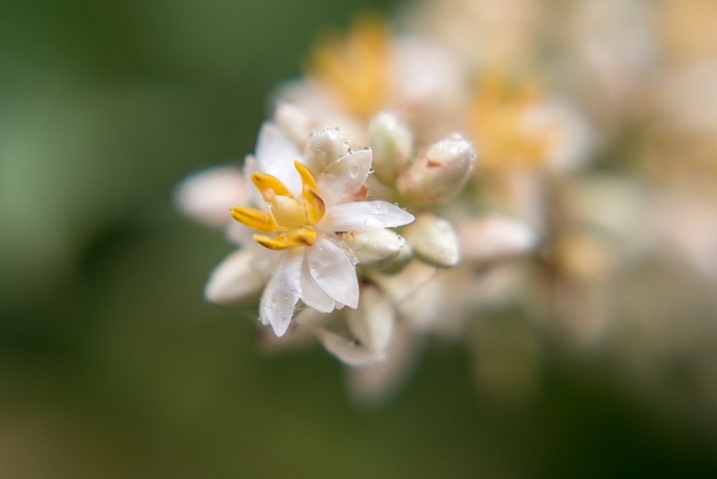
This image, and all the other macro-style shots in this article, were not taken with an expensive macro lens but with a $ 35 set of close-up filters I screwed on to my 50mm lens.

A true macro lens is designed to create true 1:1 (life-size) replications of very small things on the image sensor of your camera. If you have a coin that is 2cm diameter, a high quality macro lens will be able to take a photograph of that coin wherein it is literally the same size on your camera’s image sensor. Taking these types of photographs requires a host of light-bending optical gymnastics on the part of your lens. In the process there are almost always tradeoffs in image sharpness and overall light-gathering ability, which is why macro lenses cost so much money, because they contain special glass elements to minimize any optical imperfections.

Close-up filters rely on a very simple, very old, idea to make it possible for any normal camera lens to focus on objects that are, as their name implies, very close to your lens. All lenses have a minimum focusing distance, which is as close as you can get to an object and still have it be in focus. A +2 filter will make it possible for a lens with a minimum focusing distance of 1 meter to now focus on something .3 meters away. A +10 filter would decrease the minimum focusing distance to .09 meters. The math is slightly complicated, but suffice it to say the higher the number on your filter, the closer your lens will be able to focus.
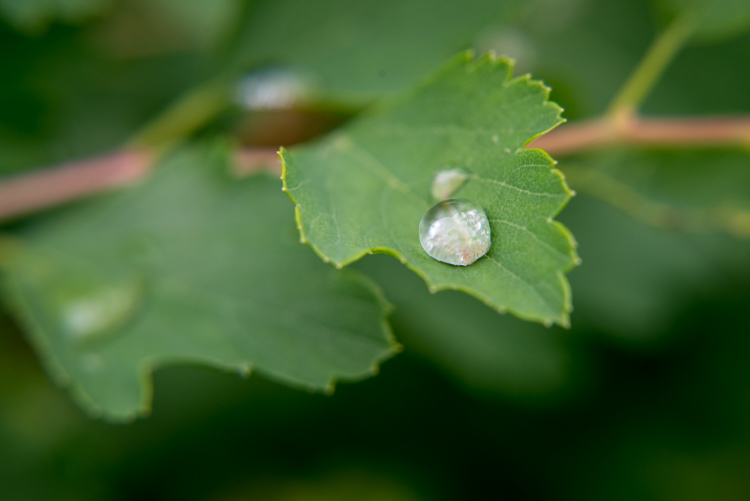
close-up-filters-leaf-droplet

Close-up filters are also very inexpensive and you can often find a set with three or four filters for under $ 40 that will work with your lens.

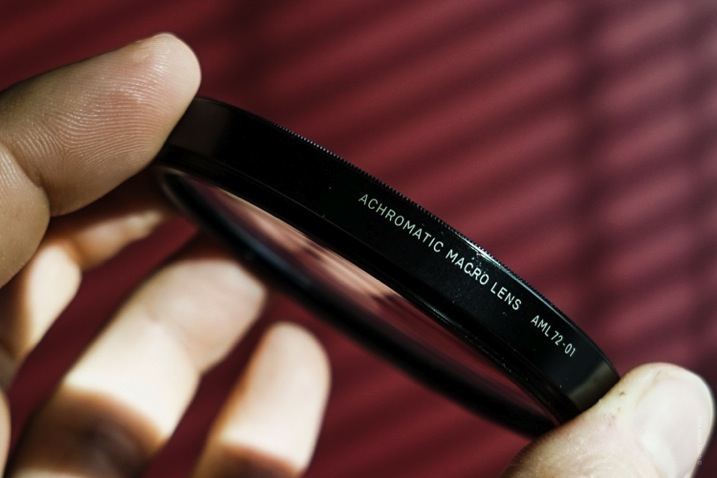
A close-up view of close-up filters

So what is a close-up filter? Simply put, it’s basically a magnifying glass that you screw onto the front of your camera lens. Just like their investigative counterparts wielded by famous fictional detectives through the ages, close-up filters rely on a single curved piece of glass that bends light in such a way as to enlarge whatever you are viewing. Don’t let the nomenclature confuse you; nothing is being filtered, but light is being altered before it enters your camera lens, in the same way that a magnifying glass alters light to make objects appear bigger.
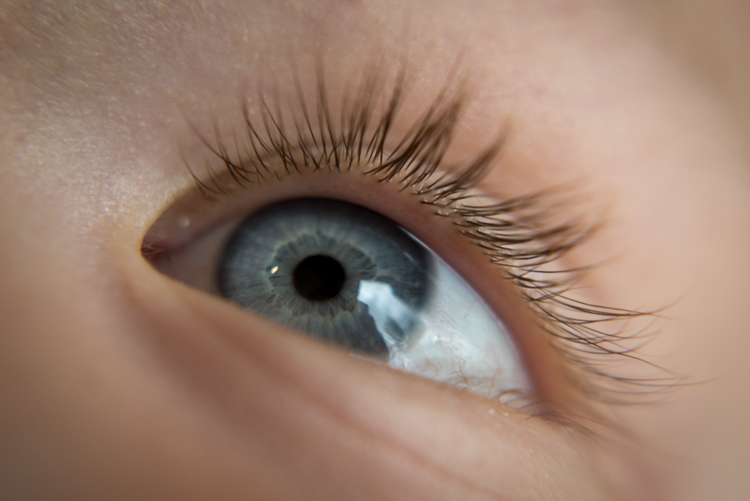
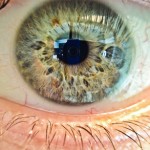
close-up-filters-eye

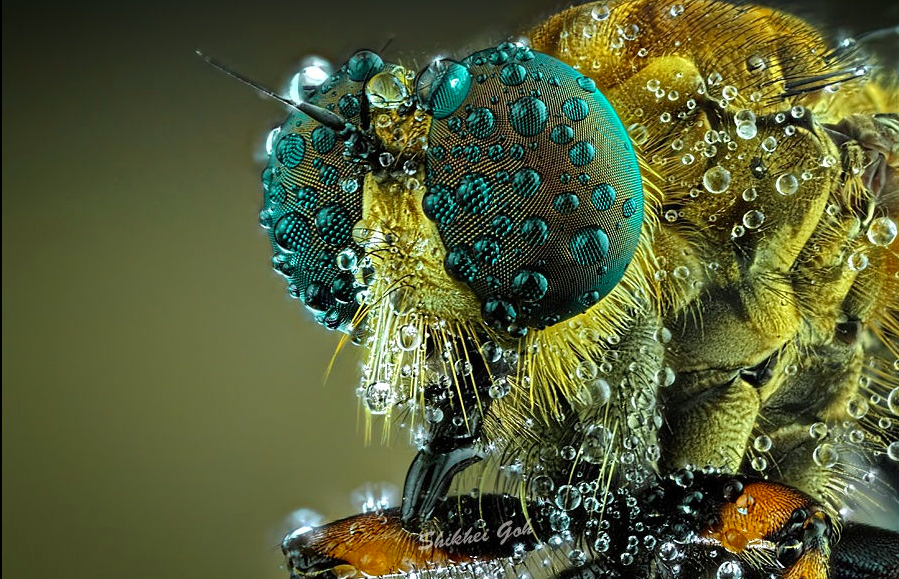
The set of filters required to take a photo like this costs about the same as a movie and a large popcorn.

Limitations

Using close-up filters is a great way to get started with macro-style photography, but they have some very important limitations that you need to be aware of to start. First of all, they only do one thing, which is shorten the minimum focusing distance of your lens. You can’t use them for normal photography, since all you will see when you attach one to your lens is either a big blob of blur, unless you focus on something very close to your camera. It’s the same phenomenon that happens when you hold a magnifying glass at arm’s length instead of right next to your face, and it severely limits the usefulness of close-up filters.

True macro lenses work for a variety of photographic situations, and due to their high-quality construction are generally much sharper than non-macro lenses, which make options like the Canon 100m f/2.8 or Nikon 105mm f/2.8 so highly praised. Screwing an inexpensive close-up filter on the front of your camera might let you get fun shots of flowers, but it will in no way equal the astounding optical properties of a true macro lens.
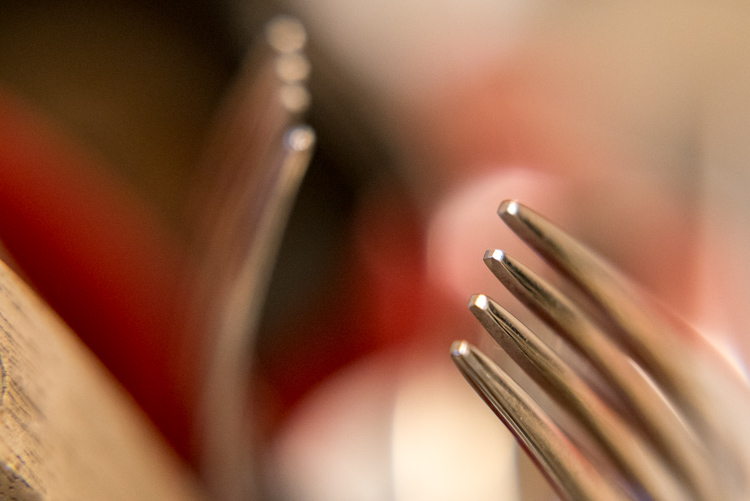
Even something as mundane as forks sitting in a dish rack can turn into a work of art when viewed up close.

Even something as mundane as forks sitting in a dish rack, can turn into a work of art when viewed up close.

Another downside of close-up filters is that the images you create with them are not at all the same as what you can get from dedicated macro gear. Photos are generally much softer, will usually exhibit unpleasing artifacts like chromatic aberration, and don’t allow you to have the same pleasing background blur that you would get without the filters attached. Finally, while macro lenses will let you focus on objects that are very close as well as far far away, close-up filters will only let you focus on subjects that are right next to your lens. All these limitations might sound important, but they’re really not that big of a deal. Once you learn to work around them you can get some stunning images from your camera using close-up filters.
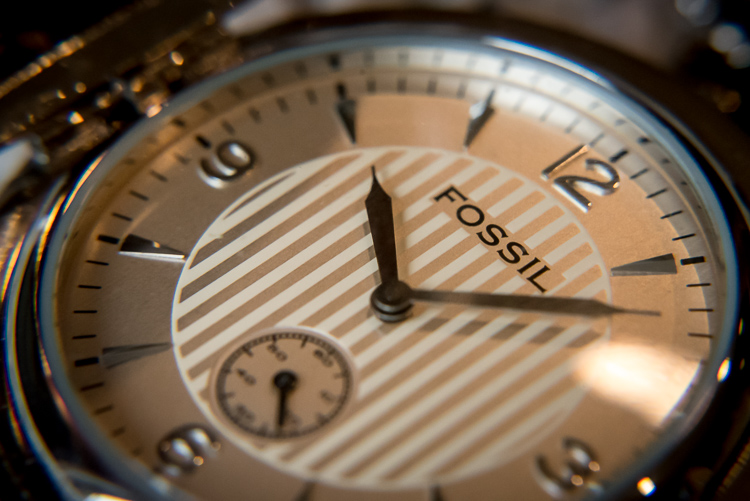
Close-up filters are nowhere near as sharp and optically brilliant as a true macro lens, but they can still produce some pretty good results.

Close-up filters are nowhere near as sharp and optically brilliant as a true macro lens, but they can still produce some pretty decent results.

Advantages of close-up filters for macro photography

After spending so much time pointing out the flaws with close-up filters you may wondering why you would want to even bother with them in the first place. As I mentioned earlier they are an incredibly inexpensive way to dip your toe into the waters of macro photography, and the results you can get from such a simple piece of glass will likely be far beyond what you ever thought possible shooting with your normal gear. The photo below of a yellow lily was taken with a standard 50mm lens and a +10 close-up filter, which is a fairly standard, inexpensive option. It’s not at all uncommon to find sets that include +1, +2, +4, and +10 filters all in one package that costs $ 40 or less.
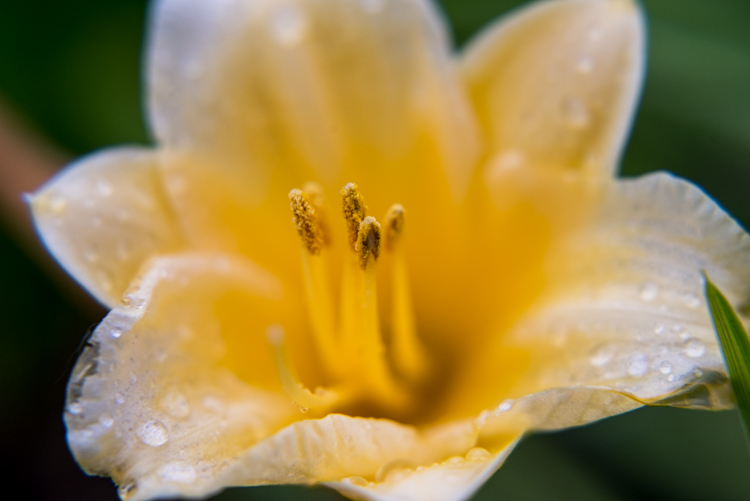
An un-cropped image taken with +10 and +2 filters attached to a 50mm lens. Note the severe blue fringing on the edge of the petals, which is the result of using filters instead of a true macro lens.

An un-cropped image taken with +10 and +2 filters attached to a 50mm lens. Note the severe blue fringing on the edge of the petals, which is the result of using filters instead of a true macro lens.

After I shot that picture I took the filters off my lens and took another photo of the same flower as close as my lens would allow. As you can see there is a dramatic difference between the two images and even though the top picture is not as sharp as an image taken with a dedicated macro lens, the results are perfectly fine for someone just looking to dabble in this type of photography, without spending much money.

The exact same flower. Without the filters, this was as close as my lens would focus.

The exact same flower. Without the filters, this was as close as my 50mm  lens would focus.

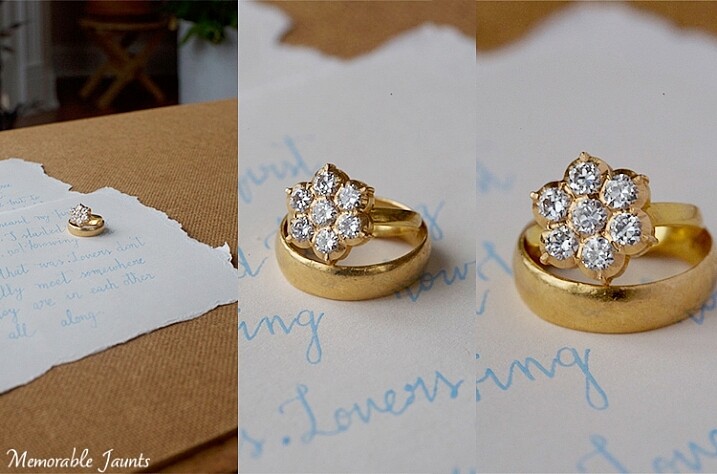
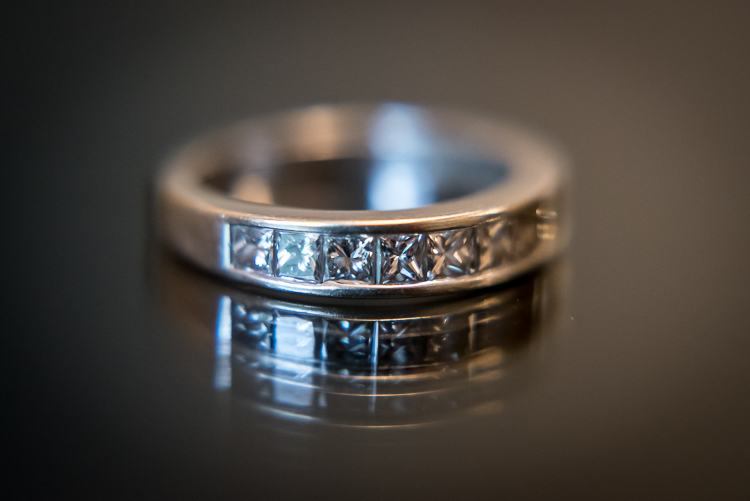
Another fun feature of filters is that most of them can be stacked on top of each other, to get even greater magnification. To make the jewelry images below I used three filters on my 50mm lens: a +10, +4, and +2 all screwed into each other, and attached to the lens itself. I set the ring down on an iPad that was turned off to get a little bit of reflection, and while the result is not something I would use in a catalog or on a billboard, it’s more than enough to suffice for my needs.
close-up-filters-ring

It might look fancy, but the gear required to take this photo was pretty basic and inexpensive.

Unlike other faux-macro solutions, like reversing rings or some of the cheaper extension tubes, close-up filters still allow you to use autofocus. Even so, you might get best results if you focus manually or use focus bracketing to make sure you get just the right shot. Finally, one of my favorite aspects of close-up filters is how small and portable they are. I like to keep a +10 and +4 in my camera bag and if I find myself in a situation that would be good for some macro shots it’s fast and easy to screw one on, take a few shots, and put it back in my bag.

Are pictures taken with close-up filters as sharp and detailed as one would require for them to be printed in a magazine? No, not by a long shot. For truly brilliant close-up photos you need the right gear like a macro lens, but hopefully you can see why close-up filters, despite their limitations, do a decent job of getting you halfway there.

This insect is about the size of a quarter but it appears exquisitely detailed and larger than life when photographed with a close-up filter.

This insect is about the size of a quarter, but it appears exquisitely detailed and larger than life when photographed with a close-up filter.

Choosing the right close-up filters

Since close-up filters do not involve a lot of complicated technology and contain no moving parts, it’s hard to go wrong when looking for a set to buy. However there are a few considerations that you need to keep in mind.

First, look for a set of filters that fit your lens. Check the thread size of your lens by looking for the  symbol for the Greek letter phi  and the numbers immediately before or after it will be the size you need (look inside the back of your lens cap). Common sizes are 52, 55, or 58mm, but depending on your individual lens it could be quite different so make sure to find the size that fits your lens before you buy any filters.

Next it’s a good idea to get filters that are made from metal and glass, not plastic. Filters with a higher build quality are easier to screw on and off, less likely to get scratched, and may even include special anti-reflective coatings. You can sometimes find brand name options made by the big manufacturers like Canon and Nikon, but I get plenty of good results with third-party filters from companies like Hoya or Polaroid, and the results are just fine and they cost a fraction of the price as their officially-branded counterparts.
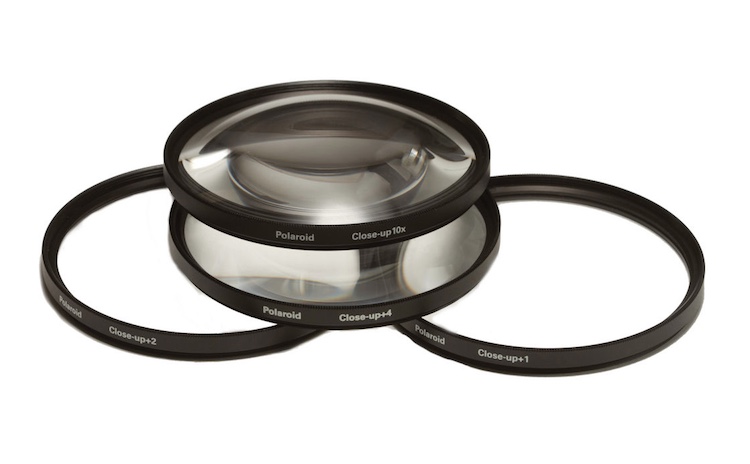
A set of close-up filters filters like this will help you get macro-style images without breaking the bank.

A set of close-up filters filters like this will help you get macro-style images without breaking the bank.

I hope this article has helped you learn a bit more about this inexpensive but quite practical solution for taking macro-style shots. Do you have any experience shooting with close-up filters? Are you the kind of photographer who prefers to shoot with actual macro lenses? I’d be interested in hearing your thoughts in the comments below, and please feel free to share your favorite macro photos.

googletag.cmd.push(function() {
tablet_slots.push( googletag.defineSlot( “/1005424/_dPSv4_tab-all-article-bottom_(300×250)”, [300, 250], “pb-ad-78623” ).addService( googletag.pubads() ) ); } );

googletag.cmd.push(function() {
mobile_slots.push( googletag.defineSlot( “/1005424/_dPSv4_mob-all-article-bottom_(300×250)”, [300, 250], “pb-ad-78158” ).addService( googletag.pubads() ) ); } );

The post Macro Photography on a Budget: An introduction to Close-up Filters by Simon Ringsmuth appeared first on Digital Photography School.

Digital Photography School

 
Comments Off on Macro Photography on a Budget: An introduction to Close-up Filters

Posted in Photography


Bright idea: Canon debuts EF-M 28mm F3.5 Macro with built-in LEDs

11 May

$ (document).ready(function() { SampleGalleryV2({“containerId”:”embeddedSampleGallery_7401393305″,”galleryId”:”7401393305″,”isEmbeddedWidget”:true,”standalone”:false,”selectedImageIndex”:0,”startInCommentsView”:false,”isMobile”:false}) });

Canon is introducing the first macro lens for its EF-M mount. The EF-M 28mm F3.5 Macro IS STM provides two user-controllable built-in LED macro lights and offers true 1:1 reproduction along with a 1.2x super macro mode.

The EF-M 28mm is just the fifth lens for its EOS M system and will provide a 45mm equiv. angle of view on the mirrorless crop-frame bodies. It uses an STM motor and offers a hybrid image stabilization for a claimed 3.5 stop compensation. Shipping in June, it will cost $ 299.99.


Press release:

ACCESSORIZE THIS SPRING WITH THE CANON SPEEDLITE 600EX II-RT FLASH AND CANON EF-M 28MM f/3.5 MACRO IS STM LENS WITH BUILT-IN MACRO LITES AND IMAGE STABILIZER

MELVILLE, N.Y., May 11, 2016 –Spring is all about having the right look and Canon U.S.A., Inc., a leader in digital imaging solutions, is giving photographers of all levels two new options that can improve their creativity and versatility; the Canon Speedlite 600EX II-RT flash and the Canon EF-M 28mm f/3.5 Macro IS STM lens. 

Photographers looking to take rapid-fire flash images will appreciate the improved recycling time in the new Canon Speedlite-600EX II-RT flash. Those looking to explore the world of macro photography will appreciate the stylish compact look of the new Canon EF-M 28mm f/3.5 Macro IS STM lens, the first EF-M Macro Lens for the Canon EOS M Camera System, which features Image Stabilization and a pair of built-in miniature Macro Lites to enhance image quality during close-up photography. 

The Canon Speedlite 600EX II-RT flash Offers Improved Recycling Time and More

The Speedlite 600EX II-RT flash is compatible with most EOS cameras. It replaces Canon’s top-of-the-line Speedlite 600EX-RT, and improves recycling time by approximately 1.1 to 1.5 times* during continuous flash shooting when using AA batteries and up to 2 times* when adding the new optional Compact Battery Pack CP-E4N.  

Additional Speedlite 600EX II-RT flash features include: 

  • Zoom flash head covers wide focal length range of 20–200mm; maximum guide number is 197 ft./60m at ISO 100, making Speedlite 600EX II-RT flash the most powerful flash unit in the EOS system.
  •  Wireless flash shooting support is available for both radio and optical transmission with compatible Canon Speedlites, offering users greater functional range when using flash.
  • Multiple flash system support allows control of up to five groups of compatible Canon Speedlites. 
  • Dust- and water-resistant body for reliable operation in harsh environments.
  • Flash-readiness indicator on the display panel, simplified button and dial operation and variable manual flash output.
  • New, specially designed accessories supplied include a built-in bounce adapter, plus SCF-E3 hard-type color filter sets, and a soft case. The new Compact Battery Pack CP-E4N is available as an optional accessory for faster recycling time and more flashes per charge.
  • Illuminated dot matrix LCD panel for enhanced display information, including flash mode and usable distance ranges plus C.Fn (Custom Function) and P.Fn (Personal Function) settings.

First Macro Lens in the Canon EF-M lens series

Photographers looking for a compact, lightweight macro lens should look no further than the Canon EF-M 28mm f/3.5 Macro IS STM lens, the first Canon Macro Lens specifically designed for the EOS M Camera System.

The new lens features a pair of built-in miniature Macro Lite electronic flash units that illuminate close-up subjects as needed, helping to freeze movement, enhance color accuracy and provide a better sense of depth and dimension. Two curved flash units surround the front element of the lens, with the ability to illuminate both simultaneously, or one at a time. Users are also able to adjust the brightness of the Macro Lites between “bright” and “dim” settings.  

The standard focusing range of the Canon EF-M 28mm f/3.5 Macro IS STM lens extends from infinity to life-size (1 time). Additionally, a Super Macro Mode allows shooting at even higher magnifications up to 1.2 times. This feature allows you to capture smaller details that really make your subjects stand out against the background. 

Additional features of the Canon EF-M 28mm f/3.5 Macro IS STM lens include: 

  • Hybrid IS, the same feature as found on Canon EF 100mm f/2.8L Macro IS USM Lens, helps reduce camera shake for enjoyable handheld photography.
  • Stepping motor (lead screw-type STM) helps provide smooth and quiet focusing operation when taking photos, and near-silence when shooting videos.
  • One UD lens and two aspherical lenses** help deliver outstanding image quality at all distance settings by reducing chromatic and spherical aberrations.
  • Angle of view similar to a 45mm standard lens (35mm equivalent) provides flexible image capture of various subjects and scenes at macro distances and beyond.
  • Tapered lens top shape makes it easy to capture high-quality images at close range without casting shadows.

The Canon Speedlite 600EX II-RT electronic flash unit is scheduled to be available through authorized Canon dealers in June 2016 for an estimated retail price of $ 579.991. Canon’s EF-M 28mm f/3.5 Macro IS STM lens is scheduled to be available through authorized Canon dealers in June for an estimated retail price of $ 299.991.

1 Availability, pricing and specifications are subject to change without notice.  Actual prices are set by individual dealers and may vary.

* Based on Canon’s standards. As compared to the Speedlite 600EX-RT.

** Among autofocus lenses for interchangeable lens cameras. As of May 11, 2016, based on Canon’s research.

Canon EF-M 28mm F3.5 Macro IS STM specifications

Principal specifications
Lens type Prime lens
Max Format size APS-C / DX
Image stabilisation Yes (3.5 stops)
Lens mount Canon EF-M
Aperture
Aperture ring No
Optics
Elements 11
Groups 10
Special elements / coatings One UD and two aspherical elements
Focus
Minimum focus 0.09 m (3.54)
Maximum magnification 1.2×
Autofocus Yes
Motor type Stepper motor
Full time manual Yes
Focus method Extending front
Distance scale No
DoF scale No
Physical
Weight 130 g (0.29 lb)
Diameter 61 mm (2.4)
Length 46 mm (1.79)
Sealing No
Colour Graphite
Hood supplied Yes
Hood product code ES-22

Articles: Digital Photography Review (dpreview.com)

 
Comments Off on Bright idea: Canon debuts EF-M 28mm F3.5 Macro with built-in LEDs

Posted in Uncategorized


A New View: 65+ Illuminating Larger-Than-Life Macro Images

02 May

[ By Steph in Art & Photography & Video. ]

Screen Shot 2016-05-01 at 3.04.12 PM

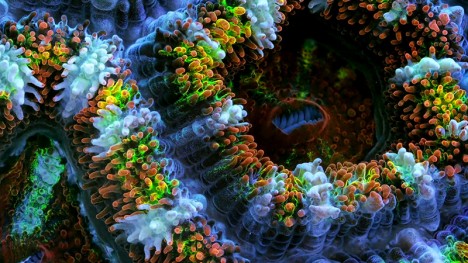
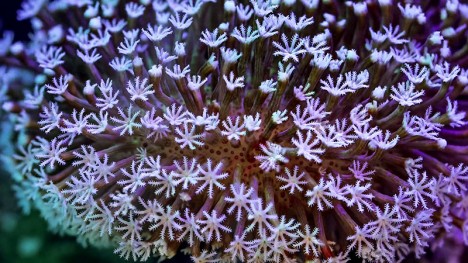
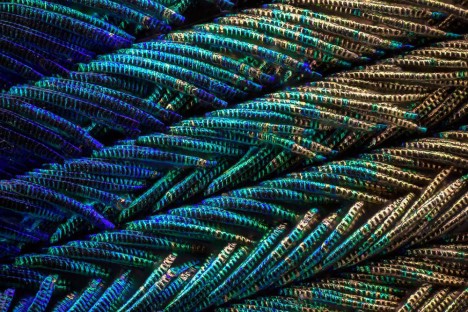
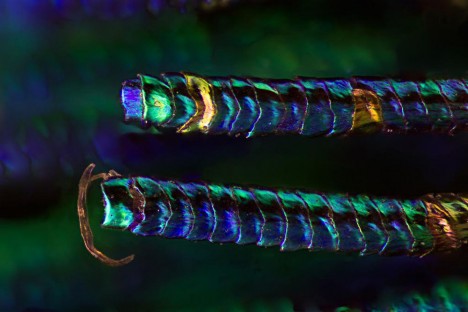
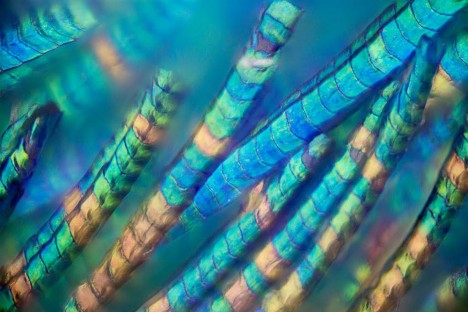
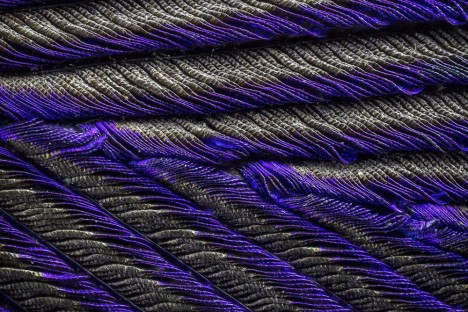
Few of us would ever get a glimpse of the tiniest rope-like iridescent quills on a peacock’s feather, the scales on a moth’s wing, dew droplets on a spider’s eyes or the planetary patterns on a bubble of soap if not for the macro photographers who carefully document details too small for the naked eye to see. It’s almost as if we’ve shrunk small enough to stare an arachnid in the face, or put ourselves in danger of being trapped by a carnivorous plant.

Spiders by Jimmy Kong
macro spider 1

macro spider 2

macro spider 3

macro spider 4

Six to eight spider eyes stare back at you, reflecting the image of a camera lens, the human holding it, and sometimes a light. Photographer Jimmy Kong captures images of all sorts of creatures, but his spiders seem to have so much personality, watching curiously as he gets close enough to spot the tiny hairs on their legs.

Butterfly and Moth Wings by Linden Gledhill
macro butterfly wings 1

macro butterfly wings 2

macro butterfly wings 3

macro butterfly wings 4

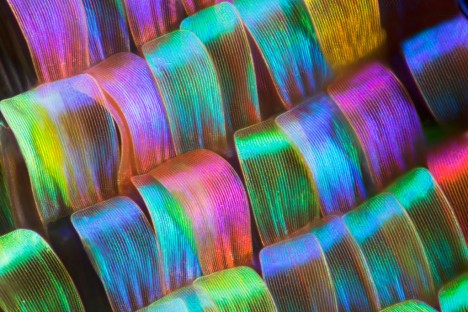
Tiny overlapping scales reminiscent of flower petals reveal the smallest details of their shapes and vivid colors in a series of macro butterfly and moth wings by Linden Gledhill, a biochemist by training.

Coral & Other Sea Life by Daniel Stoupin
macro coral 1

macro coral 2

macro coral 3

150,000 shots went into this video documenting the secret lives of ‘slow’ marine animals like coral and sponges, their movements being too small to be seen without a time lapse. Says Bioquest Studios, “Why so many? Because macro photography involves shallow depth of field. To extend it, we used focus tacking and deconvolution algorithms. Each frame of the video is actually a stack that consists of 3-12 shots. just the intro and last scene are regular real-time footage.”

Peacock Feathers by Waldo Nell
macro peacock 1

macro peacock 2

macro peacock 3

macro peacock 4

Go closer and closer and closer to a peacock feather, and the level of detail and color variation only gets more intense, with the smallest parts revealing themselves to be tiny ropes. Photographer Waldo Nell used an Olympus BX 53 microscope to take hundreds of individual shots, combining them to get the images seen here to get the depth of field that is typically lost in this kind of photography.

Carnivorous Plants by Joni Niemelä
macro carnivorous 1

macro carnivorous 2

macro carnivorous 3

macro carnivorous 4

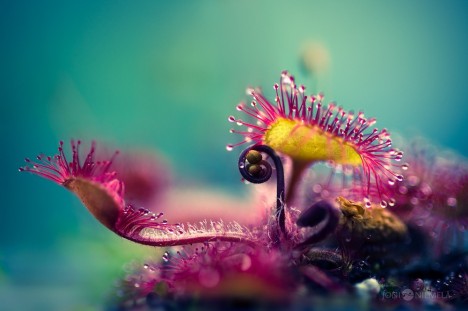
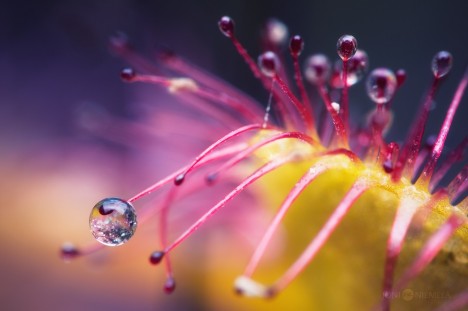
The sticky insect-baiting appendages of carnivorous plants get a good inspection in all their alien beauty in this series by Joni Niemelä. Each photo offers a different view of the Drosera plant, commonly known as the ‘sundew.’

Next Page – Click Below to Read More:
A New View 65 Illuminating Larger Than Life Macro Images

Share on Facebook


[ By Steph in Art & Photography & Video. ]

[ WebUrbanist | Archives | Galleries | Privacy | TOS ]


WebUrbanist

 
Comments Off on A New View: 65+ Illuminating Larger-Than-Life Macro Images

Posted in Creativity


Tamron SP 90mm F2.8 DI Macro VC USD real-world sample gallery

19 Apr

Tamron’s venerable 90mm F2.8 Macro is re-born. This iteration, announced in February of this year, offers stabilization, 1:1 magnification and focusing as close as 13.9cm/5.5in. And as far as full-frame primes go, it’s on the less-expensive side at $ 650. Spring is definitely springing in Seattle, and an abundance of tulips (we’re really not kidding, there are tons of them) provided a great starting point for our real-world Tamron 90mm F2.8 sample gallery. 

Articles: Digital Photography Review (dpreview.com)

 
Comments Off on Tamron SP 90mm F2.8 DI Macro VC USD real-world sample gallery

Posted in Uncategorized


From another planet: Venus LAOWA 15mm F4 Wide Angle Macro quick review

13 Mar

Venus LAOWA 15mm F4 Wide Angle Macro lens
£325 / $ 499 | www.venuslens.net

Chinese company Venus Optics (Anhui ChangGeng Optical Technology Company Ltd.) is a new lens and camera accessory manufacturer started by a group of macro photography enthusiasts who design and create their own macro photography lenses. They began with the Venus 60mm 2:1 macro (which enables twice life-size reproduction), and have followed this up with the LAOWA 15mm 1:1 wide macro of this review. In addition to these lenses, they also offer a twin head macro flash unit, which we think looks quite a bit like an alien on top of a camera.

Features and specifications

The LAOWA 15mm lens is one of the widest full-frame lenses to offer a full 1:1 magnification ratio (meaning that the object in focus is projected at actual-size onto the film or sensor). Admittedly, this magnification only occurs when the object is 0.2 inches (4.7mm) from the rather large front element of this lens, but that’s the trade off between a wide angle of view and the desire for ‘true’ macro abilities.

In addition to the headline feature, this entirely manual lens (manual focus; manual aperture; no communication to the camera body) also includes a shift mechanism to physically move the optics up or down along the lens mount. This shift provides perspective correction for converging lines, as well as a way to create seamless panoramas (though the shift direction is fixed to the frame’s vertical axis).

Focal length  15mm
Max. aperture  F4
Min. aperture  F32
Angle of view 110° (135 frame) / 85° (APS-C)
Shift distances + / – 6mm
Aperture blades 14
Min. focus (1:1) 4.7mm
Filter thread 77mm
Dimensions 83.8 x 64.7mm / 3.3 x 2.5in
Weight 410g / 14.5oz
Available mounts

Nikon F / Canon EF / Pentax K /
Sony A, E, FE / Fuji X / m43

The lens is designed around 12 elements in 9 groups, with three High Refractive elements, and one Extra-low Dispersion lens.

Multi-layer coatings minimize flare and ghosting, while the overall optical design strikes a balance between close focus abilities and wide angles.

Of note is the 77mm filter thread around the non-protruding front element. This allows for easy filter use without requiring the more expensive square filter systems (although for ND grads, those are recommended). Given the wide angle of view, slim filters are still required.

The body surrounding the glass elements is made from aluminum and brass, with engraved aperture and distance scales that are necessary for the all-manual operation.

The aperture ring is ‘clickless’ and located toward the front of the lens, while the focus ring near the back has a relatively short throw for a macro lens (90° of rotation).

The lens comes with a shifting lens mount, allowing for perspective correction by adjusting the center of the image circle on the film or sensor. The range of adjustment is 6mm from the center, either up or down.

The small lever to engage the shift mechanism is just behind the focus ring, at the rear of the lens. There are no scales or gears to finely control the amount of shift.

Shooting experience

1:1 macro at F11. The flare comes from the combination of back-lighting and inability to use the hood at such close working distances.

The LAOWA 15mm is an entirely manual lens, but still easy enough to adjust and work with. This was aided somewhat by testing a K-mount lens on a Pentax APS-C camera body and a Sony a7 II (w/ Novoflex adapter), both of which provide image stabilization (from a manually entered focal length), stop-down metering, and focus confirmation/peaking, despite the low-tech, ‘slab of brass’ lens mount.

When ordering this lens in Micro Four Thirds, Sony E, or Fuji X mount, the folks at Venus bundle an appropriate adapter with either a Nikon F or Canon EF mount lens. (For single-system Sony shooters, there is the option of a native FE mount, without adapter.) However, as our friends at Lensrentals point out, testing a wide-angle lens with an adapter (regardless of manufacturer) can introduce issues, so much of the more technical analysis in this article is based on experience of using this lens on a native Pentax (APS-C) body. 

Ergonomics

The absence of autofocus is not much of a detriment when using this lens for wide-angle macro photography, since adjusting the subject distance while looking at the LCD or viewfinder is typically a much faster way to focus at these minute working distances. Stop-down metering and looking through a dim viewfinder or noisy LCD at smaller apertures (due to the lack of automatic aperture control), on the other hand, is a bit harder to adapt to.

The focus throw is somewhat short for a macro lens, requiring only a bit more than 90 degrees of rotation to go from the closest focal distance (and 1:1 macro) to infinity. Further, the helical is biased toward the macro and close-focus end, so there is only a tiny amount of travel between 2 meters and infinity. This took some getting used to, and initially resulted in enough mis-focused shots to warrant bracketing.

The biggest ergonomic difficulty was getting used to using an aperture ring positioned in front of the focus ring. Adding to the confusion is the fact that both rings are ‘clickless’ and identically sized. Of course, the lack of hard stops on the aperture ring, along with the wide angle and availability in many different lens mounts, combine to make this an interesting option for video work, but that’s beyond the scope of this article.

Macro

The image quality of this unique lens is excellent at closer focus distances, and shows the commitment of the macro photographers at Venus Optics for getting very close and very wide. There is a high degree of sharpness in the center of the frame, even at wider apertures, and the inevitable distortion and falloff along the edges doesn’t interfere at closer focus distances. Being very well corrected for aberrations is another plus as a macro lens.

However, this lens is differentiated by its 1:1 macro focusing, which, unfortunately, comes with some inconveniences. To keep the price of the lens reasonable, the LAOWA relies on manual focus and a manual aperture without linkage (resulting in the dim viewfinder when stopped down, as mentioned above), while the wide angle optical design means a minuscule 4.7mm working distance (for true 1:1) coupled with a rather large front filter ring and hood.

The petal-shaped hood prevents many subjects from reaching the tiny minimum focus distance for 1:1 macros, and furthermore blocks out light that becomes necessary for macros with acceptable depth-of-focus (narrow aperture). After a few experiments with macro flash rigs, resulting in images that looked like ‘flash party photos’ due to the lack of beam spread across the very wide angle of view, natural light (and a tripod for static subjects) was the order of the day. Thomas Shahan, of course, could probably overcome this with aplomb.

Shift ability

Unshifted Shifted +6mm

The addition of a shifting lens mount is a great bonus for a wide angle lens like the LAOWA 15mm, however the optical characteristics of the lens tend to make this function most useful on APS-C or smaller format sensors. In images shot with a full frame body (the Sony a7 II w/ Novoflex adapter), the vignetting and distortion at the edge of the image circle eclipsed the value of shifting the lens (although it is unknown how much of this is due to it being an adapted lens).

One troublesome aspect of the lens shift is that it lacks the gearing and markings for fine control of the shift found on most other perspective control lenses. Press the shift release button and almost immediately the lens slides up (or down) to the maximum shift amount. There is a detent in the middle to reset the lens to an unshifted position, but getting a small or precise amount of shift requires patience and a steady hand.

15mm wide angle

Toronto skyline, as seen from the islands offshore. On the full-frame Sony, the 15mm shows significant degradation at the edges, as evident in the lights on the right side.

When using this lens as a ‘normal’ ultra-wide angle, the results are something of a mixed bag. At close focus distances, the center is quite sharp (where most macro subjects tend to be) at all apertures, while at infinity the corner details appear smeared until the lens is stopped down significantly. Some night shots on the full-frame Sony, and attempts at astrophotography with the Pentax O-GPS Astrotracer, both show significant degradation of the lights at the edges. These examples are perhaps not quite as comprehensive as LensRentals’ OLAF system, but still illustrative. Check out the full resolution images in the gallery below.

Many macro lenses are designed to have a ‘flat field’ for the in-focus region. The LAOWA 15mm is not one of those lenses. Similar to other wide angle lenses, the field of focus curves radically, yet does not flatten out as focus is shifted toward infinity. Add in some edge distortion, and the resultant lack of corner sharpness at infinity is perhaps the biggest issue with the image quality from this lens on full-frame cameras. It requires some acceptance of the ‘dual nature’ of the lens (macro and ultra-wide) to work within this limit. Oddly enough, shifting the lens provides some relief for at least two of the corners, due to the curved field being off-center.

Distortion

Very few ultra wide angle lenses are free from distortion, and this 15mm is no exception. In most shots with the APS-C Pentax, curved lines were minimal (see the shift photos above) and could be corrected in processing if desired.

However, on the full-frame Sony, the barrel distortion along the edges reached a point where it was almost un-correctable. The image to the left shows doors that have very straight edges, but look organically curved in the (uncorrected) photo.

Chromatic aberrations

One area where the LAOWA 15mm is quite competitive is in the control of chromatic aberrations. While there definitely is some lateral CA, particularly visible at high contrast edges in the corners, it is fairly well controlled when stopped down, and quite consistent. A few clicks in most modern Raw processing software removes these distractions very easily. In addition, longitudinal CA (color fringing in the out of focus areas) is almost non-existent, which is excellent for a macro lens, even though many other wide angle lenses tend to be similarly devoid of this aberration.

(Note: none of the images in this article, or the samples, have had software lens corrections applied; whether for distortion, vignetting, chromatic aberrations, or fringing.)

Bokeh

Close focus at F4 Close focus at F16

It’s a bit unusual to discuss the bokeh of an ultra-wide lens: considering the typical design for this kind of lens provides such wide depth-of-field, there is frequently little out of focus anyhow. However, the close focus and macro abilities of the LAOWA 15mm give quite a lot of room for shifting the focal plane, so bokeh is not only visible, it can be an integral part of the image.

With a 16-bladed aperture, the blur discs produced by this lens appear round at all stops, with a slight ‘onion-ring’ artifact when examined closely. More importantly, the falloff in the blur is smooth and gradual, as one would expect from a macro lens. This combines to make the exaggerated field curvature less bothersome at closer focal distances and wider apertures, and becomes another one of the strengths of this lens.

Summing up

The Venus LAOWA 15mm F4 Macro is an unusual lens, both in its pedigree (or lack thereof) and its unique features. With a relatively reasonable price and availability in many different lens mounts, there is now an ultra-wide option for anyone who likes to get really close to their subjects. The lack of autofocus and auto-aperture prevents this from being a ‘snapshot’ lens, and may make it frustrating to use on camera systems that do not support low-tech lenses very well.

There are some compromises in the optical design of this multipurpose lens, including wide field distortion, and some edge softness at infinity. However, wide-angle macro enthusiasts will definitely enjoy this lens, while anyone with patience and a desire to explore the options it provides will similarly find the Venus LAOWA 15mm to be a fun and rewarding addition to their system.

Things we like:

  • Very close focus (1:1 macro)
  • Sharp in the center, even wide open
  • Well built and smooth focusing
  • Shift option is useful for APS-C
  • Nice bokeh for a wide angle

Things we don’t like:

  • Extremely short macro working distance
  • No mechanical aperture linkage (K and F mounts)
  • Significant distortion on full-frame
  • Edges smeared at infinity with wider apertures

Real-world samples

$ (document).ready(function() { SampleGalleryGridV2({“galleryId”:”8066630650″}) })

Venus LAOWA 15mm F4 Wide Angle Macro samples

47 images • Posted on Oct 27, 2015 • View album
Sample photoSample photoSample photoSample photoSample photoSample photoSample photoSample photoSample photoSample photoSample photoSample photoSample photoSample photoSample photoSample photoSample photoSample photoSample photoSample photoSample photoSample photoSample photoSample photoSample photoSample photoSample photoSample photoSample photoSample photoSample photoSample photoSample photoSample photoSample photoSample photoSample photoSample photoSample photoSample photoSample photoSample photoSample photoSample photoSample photoSample photoSample photo

Articles: Digital Photography Review (dpreview.com)

 
Comments Off on From another planet: Venus LAOWA 15mm F4 Wide Angle Macro quick review

Posted in Uncategorized


Quick Overview of How to do Macro Photography

09 Feb

In the photography domain, macro photography is defined as the art of magnification of subjects. It is a very interesting form of photography, which seems to have an application in almost every genre.

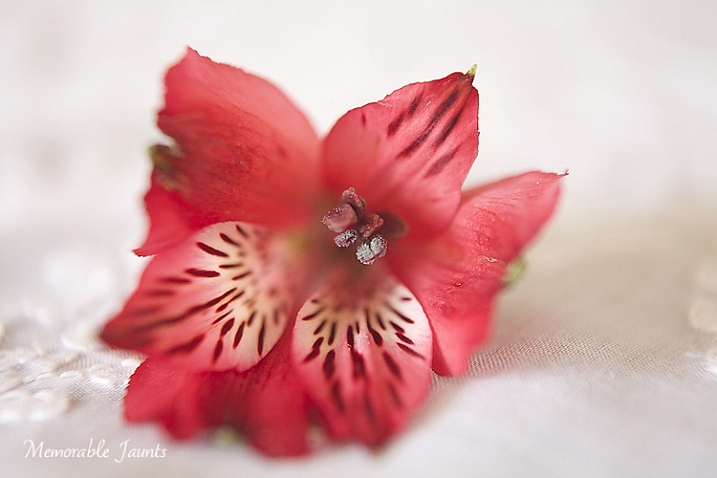
Memorable Jaunts Macro Photography Article for DPS 05

For wedding photographers, it’s a great way to highlight wedding details like rings, the invitation suite, certain aspects of the bridal bouquets, and boutonnières. For nature photographers, it is a great way to get up close and personal with many interesting subjects like bugs, insects, and small animals. For food photographers, a macro lens is one of the ultimate tools to highlight their craft because it’s such a great way to emphasize textures, patterns, and details. Even portrait photographers are known to favor the long focal length macro lens, as it gives them the flexibility of getting close details of their subjects, without invading a client’s personal space, especially when dealing with camera-shy children and adults.

Gear choice

There are several options in the marketplace in terms of gear choices for the macro photographer. Extension tubes, macro (or close-up) filters, as well as specific macro lenses are available for every budget. Based on the macro lens used, you can achieve magnification anywhere from around half to four or five times life-size, of the object being photographed.

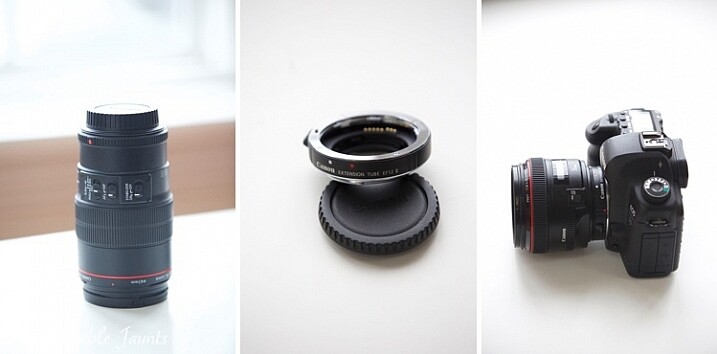
Memorable Jaunts Macro Photography Article for DPS

Left image: 100mm f/2.8L IS Macro Lens
Middle: Canon 12mm Extension Tube
Right: Canon 5D MkII with 50mm lens and extension tube attached

  1. Speciality Lens – Macro lenses come in various focal lengths. Short macros are typically lenses in the 30-50mm range. Standard macro lenses are in the 60-105mm focal length range, and tele-macro lenses are in the 150mm-200mm range. These macro lenses tend to perform better than extension tubes and macro filters, since they are build specifically for close-up photography. They work great at short focal lengths as well as longer ones. The main disadvantage with these lenses tends to be the price point. Most of the dedicated macro lenses are upwards of $ 500 (or more) and that can be a limiting factor for someone just getting into macro photography.
  2. Extension tubes are hollow tubes that fit between your lens and your camera mount. They don’t have any glass elements within them, they simply move the actual lens further from the camera, and the front element of the lens closer to the subject, thus offering a certain amount of magnification to the subject. Extension tubes tend to be less expensive than traditional macro lenses and can be mounted on any lens. But they tend to work best with shorter focal lengths. The main disadvantage with extension tubes is that your lens looses the ability to focus on distant objects, since it works only on close-up magnifications. There is also some light loss, which can be compensated by increasing the ISO or by using a slower shutter speed. The camera sensor is also exposed to dust, and the external elements, every time you remove or add the extension tube to the front of your lens.
  3. Macro filters are similar to other types of filters that attach to the front of your lens. They come in different sizes, and different magnification ratios, so if you want to use them on various lenses, then you will need to invest in a variety of filters. They tend to be relatively inexpensive, and can be stacked one on top of one another, in order to get a variety of magnification factors for your subjects. Macro filters also tend to lose light, especially when used as a multiple stack. Hence these cannot be used very effectively with wide apertures. They work best when apertures are stopped down (higher f-stop number).

My initial choice for macro photography was the Canon extension tube EF12 II. As a wedding photographer, I wanted something small and inexpensive for photographing details and ring shots. Since then I have migrated to the Canon 100mm f/2.8 L-series macro lens, and find myself reaching for this beautiful lens more often than not. I have used it for portraits, food photos, as well as still life details.

Technical tips

The key thing to note in macro photography, is that depth of field (DOF) depends primarily on two factors: aperture value and magnification. For any given aperture value, the higher the magnification ratio, the smaller the DOF will be, hence the DOF tends to be very shallow for macro photography (higher f-stop).

Memorable Jaunts Macro Photography Article for DPS 04

Both images were shot at f6.3 – the one on the left is using the 50mm with extension tube, right image is with 100mm macro lens

Memorable Jaunts Macro Photography Article for DPS 02

The left image is a pull back using a 50mm lens
Middle is using the 50mm + extension tube
Right is using the 100mm macro lens (all other settings are fairly standard across all three images)

From an application perspective, focus on the main point of the subject that you want to target. If your camera supports live view, use it to zoom-in and ensure that the image is sharp. Set the aperture around f/11 (feel free to experiment to find the optimal setting for your lens, filter, extension tube combination). If you want a greater depth of field (more of the subject is in focus) use a smaller aperture like f/16 or f/22.

Another thing to note is that when photographing objects that tend to move suddenly, like bugs and insects, a higher shutter speed is advantageous to stop motion and freeze the subject. As a rule of thumb try not to drop below 1/400th or 1/500th shutter speed.

Memorable Jaunts Macro Photography Article for DPS 07

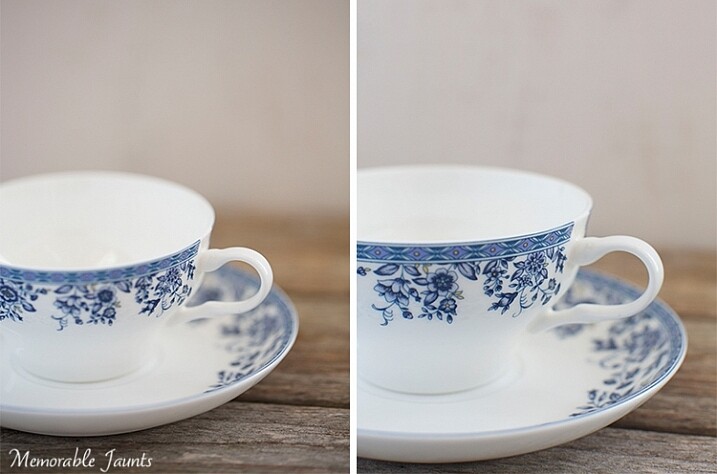
One of the most popular uses of macro lenses is in food photography. Left image using 50mm with extension tube, right image using 100mm macro lens. Both have shallow depth of field because I wanted to blur out the food in the background.

Mirror lock-up

Most DSLR cameras have a mirror inside, which allows you see the image in the viewfinder. The mirror flips out of the way when you press the shutter button, and this action itself can introduce camera shake, and cause your image to be blurry. You can reduce the chances of blurry images by turning “ON” the mirror lockup function (look for it in your camera’s manual). On most cameras that means you will press the shutter button once and it will flip up the mirror, pressing it again takes the exposure. If you have a mirrorless camera then this does not apply to you.

Diffraction

In Photography, diffraction is the bending of light as it passes by the small sharp edged blades, which form the aperture opening. The light gets squeezed together, or blends together. Diffraction is worse with smaller aperture settings like f/16 to f/22. This causes the image to be less sharp, especially at the edges, even more so in macro photography when you are often shooting at smaller apertures. You can avoid diffraction by not dropping below f/16, or by using selective focus over multiple images, and stacking (focus stacking) them together in post-production to get an overall sharp image.

Practical Applications

Contrary to popular belief, macro photography is not restrictive to images of bugs, leaves, flowers and food. They can be an effective tool to highlight any form of detail, texture and pattern. Specific macro lenses also double up as great portrait lenses, extending their use beyond just macro photography.

Memorable Jaunts Macro Photography Article for DPS 06

Memorable Jaunts Macro Photography Article for DPS 03

Left image is pull back of the ring
Middle is with 50mm + extension tube
Right is 100mm macro. F-stop was around f/9 and shutter speed was around 1/50 (I was loosing light very fast and had my ISO up to 2500).

So the next time you want a little boost of creativity, use macro photography to get a fresh, up close perspective on things!

googletag.cmd.push(function() {
tablet_slots.push( googletag.defineSlot( “/1005424/_dPSv4_tab-all-article-bottom_(300×250)”, [300, 250], “pb-ad-78623” ).addService( googletag.pubads() ) ); } );

googletag.cmd.push(function() {
mobile_slots.push( googletag.defineSlot( “/1005424/_dPSv4_mob-all-article-bottom_(300×250)”, [300, 250], “pb-ad-78158” ).addService( googletag.pubads() ) ); } );

The post Quick Overview of How to do Macro Photography by Karthika Gupta appeared first on Digital Photography School.


Digital Photography School

 
Comments Off on Quick Overview of How to do Macro Photography

Posted in Photography


Writer’s Favorite Lens – Canon 50mm f/2.5 Compact Macro

20 Dec

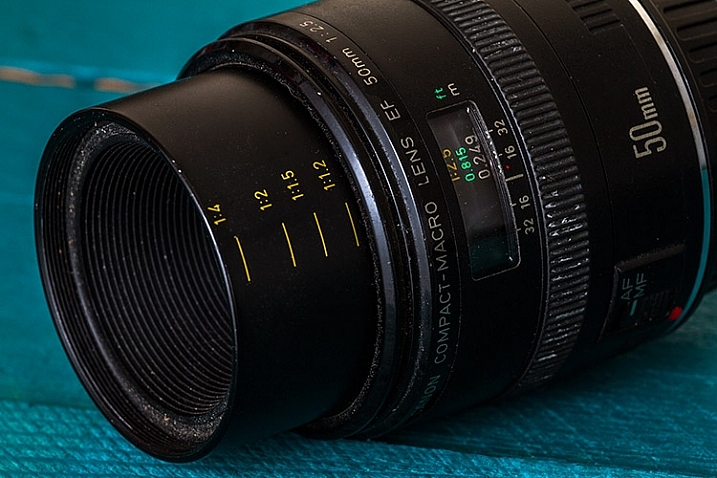
Canon 50mm f/2.5 Compact Macro

Sometimes, picking a favorite is hard. If you ask me to choose a favorite song or movie, it just can’t be done. Lenses; however, are different beasts. Ask most photographers what their favorite lens is, and you’ll probably get little hesitation before they start gushing and waxing lyrical.

At least that’s how I am, and when it comes to picking my favorite, all you have to do is ask which lens is probably on my camera body right now. That is almost always the Canon 50mm f/2.5 Compact Macro.

This lens is a gem that offers great quality in terms of sharpness, ease of use, durability and versatility, and even though I’ve acquired some fairly serious glass since I bought it 12 years ago, it’s still my go-to lens.

Making the choice

Regarding lens choice, one of the most common things new photographers are told is to start with a 50mm f/1.8, often referred to as “thrifty fifties”. The logic here is more or less irrefutable. These lenses are cheap, reliable, versatile, and their large aperture makes them much faster than anything else in that price range. Their versatility makes them perfect for portraits and most other subjects outside of the extremes such as landscapes, which favor wide-angle lenses, and sports, which favor telephoto lenses.

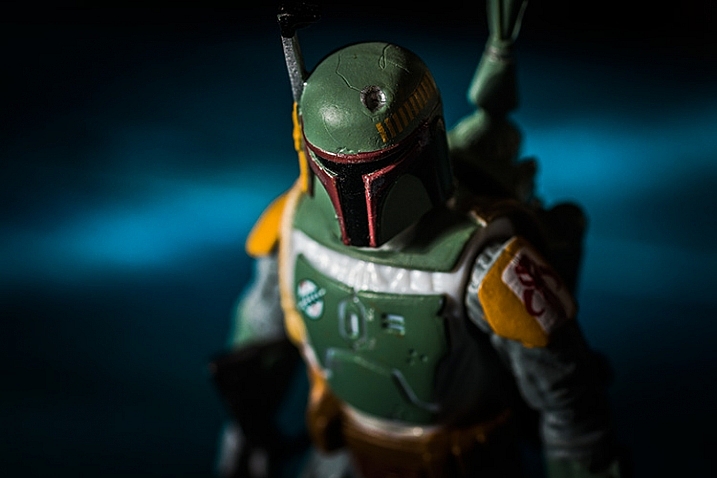
Boba

When I was starting out, I spent a lot of time photographing things like food, flowers, toys, and other small things with fine details. I had little interest in other types of photography, and no interest in portraiture.
As such, the biggest limitation I got from my kit lenses was the focusing distance. I was forever trying to get closer to my subjects using the long end of kit lenses, and falling short every time.

When it was time to consider upgrading that first lens, research made it clear that neither the thrifty fifty nor the 85mm f/1.8 would do much good towards those aims. On the other hand, a dedicated 100mm macro lens was far out of my price range. Because of all this, I put off upgrading my kit lenses for a long time.

It was only by chance that I eventually found the 50mm Compact Macro while browsing through Canon lenses on a retailer’s site. To be honest, there wasn’t a lot of research involved. I saw the lens, the price, and the focusing distance of nine inches, and I bought it within the week.

Pros and cons

The Canon 50mm Compact Macro is the workhorse of my camera bag and it’s certainly been put through its paces over the past decade. For my purposes, there are no flaws; however, it does have a few qualities that may make it unsuitable for some photographers.

Pro – Build quality

It can’t be helped that the first thing you notice about this lens is the build quality. This is particularly true if your previous experiences are with kit lenses. The solid metal casing makes it feel sturdy and the extra weight feels great in your hand.

It may be worth mentioning that when I did get to use a 50mm f/1.8 a few years ago, I thought that I was being handed a Holga lens. This isn’t in any way an attempt the demean the 50mm f/1.8, but rather as an illustration of how far apart these lenses are in terms of build quality.

Pro – Durability

favourite-lens-canon-50mm-macro-2081

Durability may fall under build quality, but experience makes me feel it’s worth mentioning separately.

This lens has been dropped on concrete, cobble stone, and Tarmac, and it has been in the ocean. It has been in ash storms, torrential rain, hail storms, and there was one terrifying incident where it was left to stew in a half litre puddle of shower gel for a few hours. Despite all of this, this lens has not once shown any performance issues.

Pro – Sharpness

As should be expected from a lens created for the purpose of macro photography, the Canon 50mm f/2.5 Compact Macro cannot be faulted in terms of sharpness. While I’m unable to compare it to the other 50mm offerings from Canon, I can compare it with the excellent 85mm f/1.8 and 70-200 f/4 L IS USM. The differences are almost indistinguishable.

Pro – Large aperture

The compact Macro may have a smaller aperture than Canon’s other 50mm lenses, but it is still a fast lens and works well in all but the dimmest of settings.

In terms of background blur, if you take into account that depth of field is also affected by the distance of the camera from the subject (the closer you are, the shallower the depth of field) you can see that you will achieve a comparable amount of blur to the faster lenses.

Pro – Focusing

Whether it’s in auto focus or manual focus, it’s really hard to find fault with this lens. In normal situations, the auto-focus is fast and accurate. The large aperture of f/2.5 allows for a bright image in the viewfinder, making manual focus easy and quick.

Pro – Focus distance

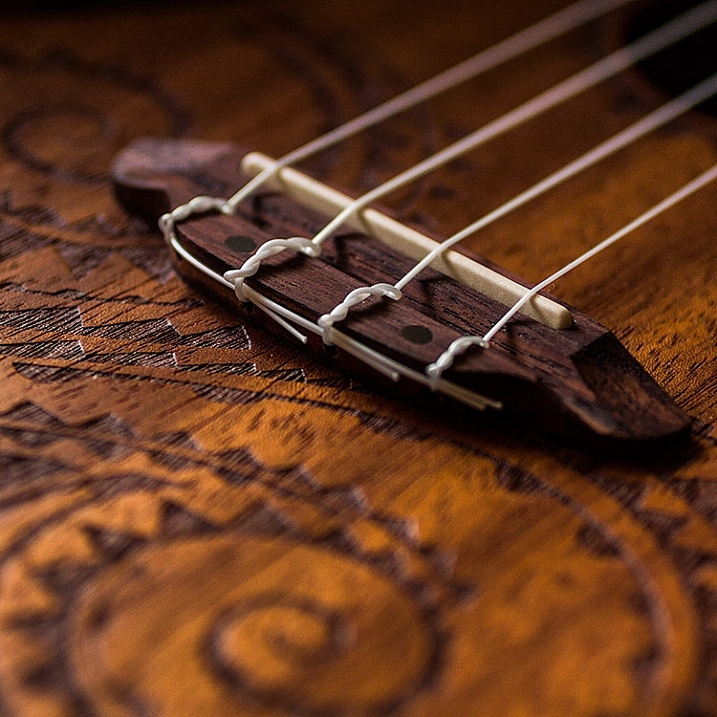
Uke

With a focusing distance of just nine inches (23cm), you can get extremely close to your subjects. Yes, this may be the sole reason for this lens’ existence, but the versatility this adds is wonderful. For example, you are able to take a close-up of someone’s eye, then move a few steps back and take a normal 50mm portrait seconds later.

Cons

As mentioned, it wasn’t easy to come up with any negative aspects of this lens. There are; however, a few considerations that could mean this may not fit your specific photographic needs.

Con – Weight

At 9.88 ounces (280 grams), the Compact Macro weighs more than twice as much as Canon’s 50mm f/1.8 lens (4.6 ounces/ 130g). If you’re trying to keep your kit bag as light as possible, and the macro functionality isn’t that important, then you may want to consider the alternatives.

Con – Price

While I will attest that this lens offers tremendous value for the money, at $ 299 it is a big jump in price from the 50mm f/1.8 at $ 125. If you’re just starting out, and do not yet know what subjects you’re interested in, or whether or not you will stick with photography for long, it may be worth considering a more wallet friendly option.

Editor’s note: at the time of this article the 50mm f/2.5 Compact Macro lens is listed on Canon’s site as Out of Stock. You may be able to find it used on Amazon.com or go for the even higher priced 60mm f/2.8 Macro at $ 419 USD.

Con – Light

There is a slight downside to the lens’ closest focusing distance. When you’re standing that close to your subject, you and the camera effectively block any light coming from the front. Often, this is easily countered with side lighting techniques, or by using a dedicated macro ring flash, but it can be tricky to overcome at other times.

Con – Magnification

What may be considered as a deal breaker for a lot of photographers is that the 50mm f/2.5 Compact Macro is not a true macro lens. With a magnification ratio of 1:2, it only creates images at half life-size. This can be rectified with a converter that allows for 1:1 magnification.

favourite-lens-canon-50mm-macro-5347

In the end

I know I’ve been gushing quite a bit, but my experiences with this lens have been outstanding, despite the heavy use and torture I put it through. If you’re in a position where you’re deciding to buy a 50mm, and you like the idea of getting really close your subjects, do consider the Canon 50mm f/2.5 Compact Macro. It really is a treat.

googletag.cmd.push(function() {
tablet_slots.push( googletag.defineSlot( “/1005424/_dPSv4_tab-all-article-bottom_(300×250)”, [300, 250], “pb-ad-78623” ).addService( googletag.pubads() ) ); } );

googletag.cmd.push(function() {
mobile_slots.push( googletag.defineSlot( “/1005424/_dPSv4_mob-all-article-bottom_(300×250)”, [300, 250], “pb-ad-78158” ).addService( googletag.pubads() ) ); } );

The post Writer’s Favorite Lens – Canon 50mm f/2.5 Compact Macro by John McIntire appeared first on Digital Photography School.


Digital Photography School

 
Comments Off on Writer’s Favorite Lens – Canon 50mm f/2.5 Compact Macro

Posted in Photography


Sigma 18-300mm F3.5-6.3 DC Macro Lens Review

18 Dec

It seems that in the world of photography today the demand for lighter, and more versatile, gear is at an all time high. The average photographer (if there is such a thing) wants to be able to cover a huge variety of subjects, and carry as few lenses as possible. Shooting quick and light has become the goal of many. In addition, even the hobbyist photographer has become more knowledgeable and more discerning about what cameras and lenses they choose to use. This has lead to an increased demand for all-in-one lenses that are built to higher performance standards than we’ve saw since, well, ever.

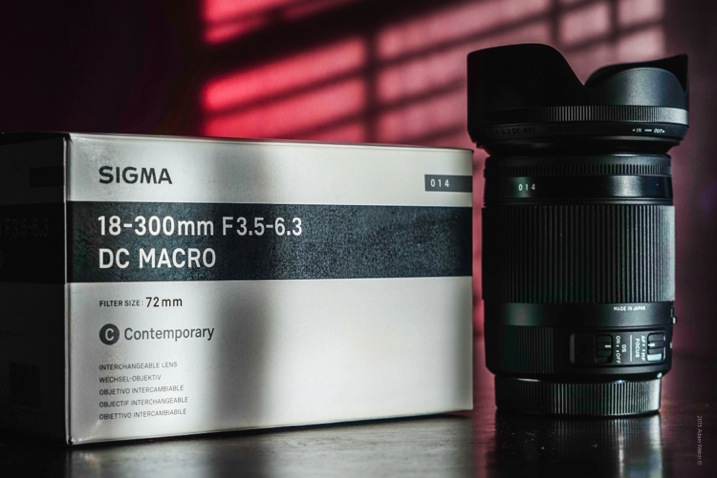
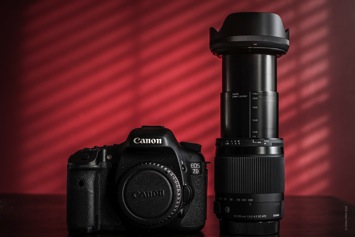
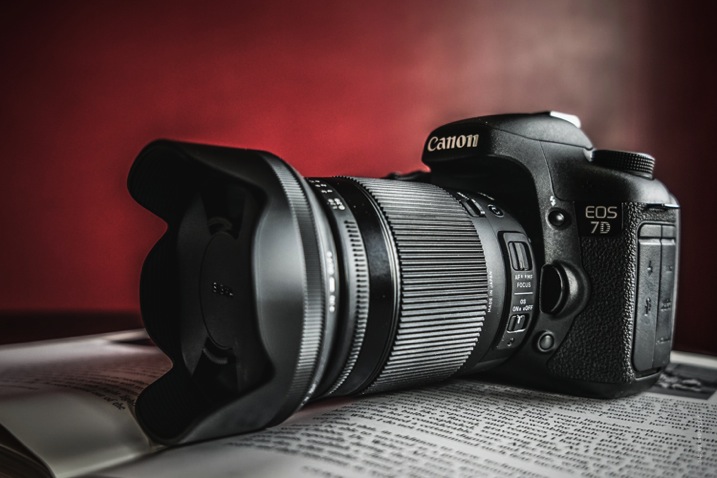
Enter the Sigma 18-300mm F3.5-6.3 DC Macro OS HSM C Lens

Lens 1

Now, take a mental breath after reading that title and then we’ll continue. Don’t let the name for this lens (which I will shorten to Sigma 18-300mm) trouble you, because we’ll talk more about all those letters and their meanings soon. Sigma has attempted to squeeze a lot of features, versatility, and performance into a lens that won’t break the bank. Let’s see if the good folks over at Sigma have succeeded.

The lengthy title for the Sigma 18-300mm is simply a road map so that you know exactly what the lens brings to the table.

  • The DC of course means that it is intended for digital camera bodies.
  • OS designates the lens is equipped with image stabilization technology.
  • HSM relays that the lens sports a hypersonic motor drive autofocusing mechanism.
  • The macro designation means that it has a relatively close minimum focusing distance and is capable of producing macro images (1.0x or 1.1x magnification).
  • Lastly, C stands for indicated this lens is part of Sigma’s Contemporary series. This lens is designed to be mounted only to APS-c(cropped) sensor cameras.

Down to business…

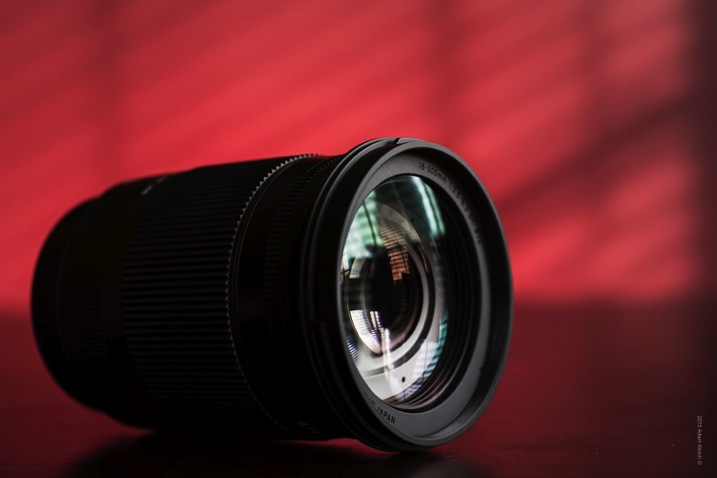
Lens 4

Build Quality and Function

The lens arrived well packaged from Sigma. The optics were all clean and free of smudges and dust. First handling of the lens proved to be immediately impressive.

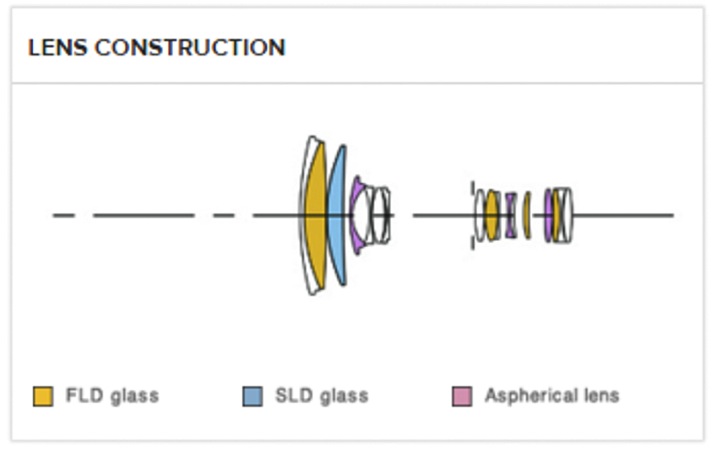
Lens Elements

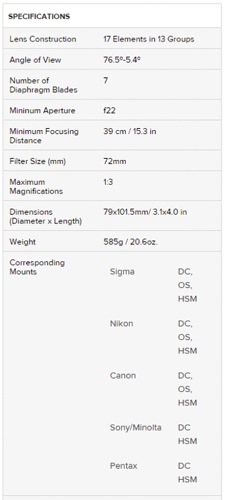
Specs

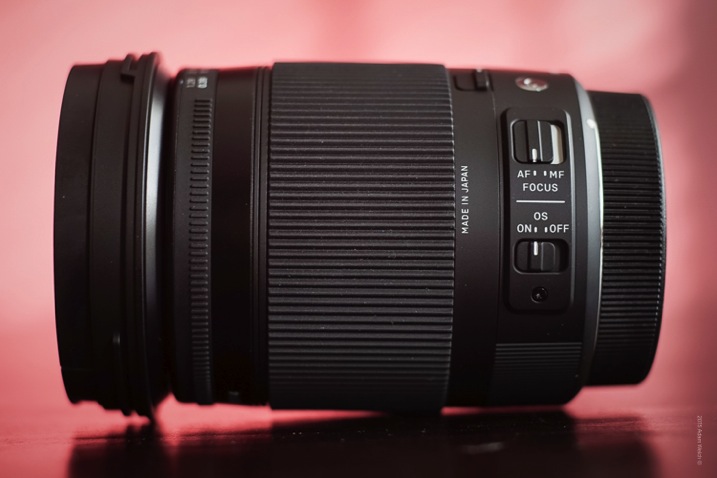
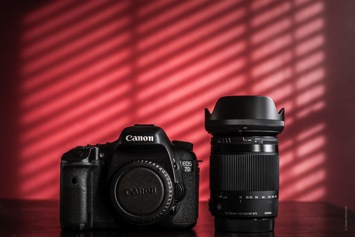
The lens felt very solid but in no way overly heavy. Both the focus and zoom rings are rubberized, and provide a suitable grip for cold or damp fingers. Everything is exceptionally tight and smooth. Some telephoto lenses of this type arrive a little too tight and require some use before the zoom ring operates easily, but the Sigma 18-300mm was just right out of the box. Autofocusing performed very well and was quite fast using my Canon 7D, but the image stabilization was not the best. It became virtually unnoticeable at longer focal lengths, so it remained off for the majority of the test images.

The overall body of the lens is finished with a very understated yet attractive matte black appearance, in case you love form as much as function. Included in the box is quality petal-type lens hood, which fits the lens perfectly and mounts in reverse for storage. Sigma also placed a small rubberized ring at the base of the hood which really helps in the on/off application. It’s a small detail but worth mentioning.

Speaking of details: The effort (or lack thereof) a manufacturer puts towards the little things is of great importance. Here are a few small points that stand out about the Sigma 18-300mm.

  • Zoom-Lock: The zoom-lock switch is a great feature for any zoom lens in my opinion, by preventing gravity from gradually extending the lens while carrying your camera on a strap.
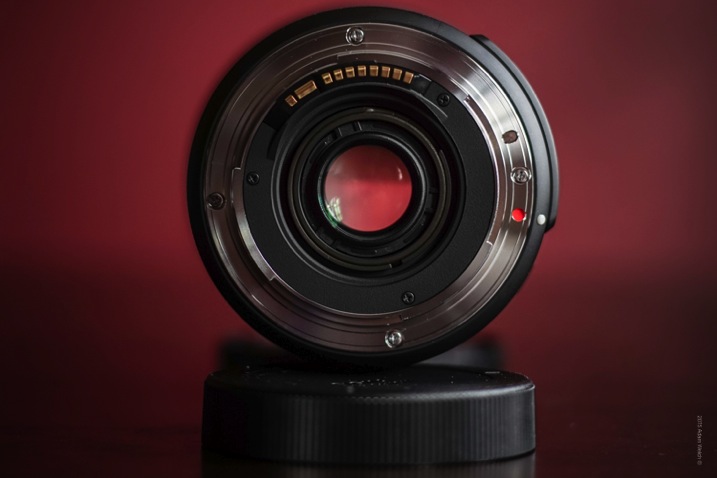
  • Raised mounting indicators: Attaching your lens to your camera can be difficult in low light or if you’re in a hurry. Sigma has chosen to use a small white bead embedded into the lens body instead of merely paint. It makes lining up the lens much easier, and is longer lasting.
  • Lens Hood Indicators: In addition to the rubberized ring, the lens hood also has mounting markings to help mount the hood on the go or in low light.

Lens 3

Lens 9 Lens 10

Lens 8

Lens 12

Image Quality

Sharpness and Distortion

Test images showed that sharpness is acceptable/good across all apertures for a lens in this range, and likewise with contrast. Each of these images were shot at 18mm, at apertures ranging from f/3.5 to f/22. Maximum sharpness seemed to be achieved between f/8 and f/16.

F3 5

Shot at f/3.5

F5 6

Shot at f/5.6

F8

Shot at f/8

F16

Shot at f/16

F22

Shot at f/22

There is some moderate softening at the corners, and minor vignetting at 18mm, but it’s not overly distracting. Very minimal, if any, distortion was encountered even at the shortest focal length.

Wide

This is a scene shot at the shortest focal length of 18mm and at f/6.3.

For comparison, here are two images shot from the previous vantage point, after zooming to 300mm (shot at f/6.3).

300mm 1

300mm 2

Color

Color rendition is very good with the Sigma 18-300mm. Colors came through true to life, and quite crisp across all focal lengths. However, it had a significant amount of chromatic aberration which was quite apparent, and worsened towards the edges of the frame. Fortunately, it was easily removed with one click using Lightroom, so all is not lost.

Macro Use

After-all, this lens bears the designation of a macro lens so let’s talk a little about how it truly performs as such. Dedicated macro lenses produce images with a magnification factor of around 1.0 or 1.1x (meaning the subject is life size on the camera sensor). The Sigma 18-300mm has a maximum magnification factor of 1.3x. Though it may not be considered a true macro lens, it performs astonishing well for a lens with such a large focal range.

Macro

Sigma lists the minimum focusing distance at around 15.3 inches (39cm), but in my tests focus was achieved even closer. You can really get up close and personal using this lens. In addition, there is an optional macro adapter (great build also) available for this lens which will further enhance its macro capabilities.

Macro Adapter

Extras

An interesting accessory available for this, and most Sigma glass, is a USB dock which can be used for tweaking the parameters of your particular lens. This could be of some use to the sports and wildlife crowd. Here is a description of the docking station provided by Sigma.

“The Sigma USB dock works in conjunction with Sigma Optimization Pro software in order to connect a photographer’s lens to their personal computer to update firmware, calibrate the lens and other customizations such as the focus parameter. For the Sports category, changes can be made to: Autofocus speed, focus limiters, manual focus override and optical stabilization functionality. Updating the firmware can be done via the internet. Sigma Photo Pro is available for Mac and PC computers.”

Summary

Overall, the Sigma 18-300mm lens does a fantastic job of combining high telephoto zoom capabilities with macro functionality. While not perfect, it performs well in many ways.

Here’s what you’ll probably like:

  • Great focal range for a multitude of shooting situations.
  • Low optical distortion.
  • Surprisingly acceptable macro performance.
  • Build quality is absolutely fantastic.
  • Attention to detail and usability is superb.
  • Good sharpness for a lens in this price range.
  • Fast autofocus.
  • Silky smooth operation of zoom and focusing rings.
  • Available USB Calibration Dock.

Lens 14

Here’s what you may not like:

  • Moderate but resolvable chromatic aberration.
  • Image stabilization performance is questionable.

The Sigma 18-300mm F3.5-6.3 DC Macro OS HSM C is a more than capable lens option for those where are seeking to combine the local focal range of a telephoto lens, with the close-up capabilities of a macro.

Does this lens offer the best of both worlds? No.

Does this lens bring you a little bit of both, while offering great image quality at an affordable price? Yes.

Sigma has produced a very capable lens option which will delight those who maintain realistic performance expectations from their gear. It is an impressive lens at a budget price. Give it a try!

Have you tried this lens or any other all-in-one? What are your thoughts?

googletag.cmd.push(function() {
tablet_slots.push( googletag.defineSlot( “/1005424/_dPSv4_tab-all-article-bottom_(300×250)”, [300, 250], “pb-ad-78623” ).addService( googletag.pubads() ) ); } );

googletag.cmd.push(function() {
mobile_slots.push( googletag.defineSlot( “/1005424/_dPSv4_mob-all-article-bottom_(300×250)”, [300, 250], “pb-ad-78158” ).addService( googletag.pubads() ) ); } );

The post Sigma 18-300mm F3.5-6.3 DC Macro Lens Review by Adam Welch appeared first on Digital Photography School.

Digital Photography School

 
Comments Off on Sigma 18-300mm F3.5-6.3 DC Macro Lens Review

Posted in Photography


Macro stick-on lens brings close-up capability to smartphones

04 Nov

Most smartphone cameras seriously struggle when it comes to macro photography. A number of accessory macro attachment lenses are available, but many of them are device-specific and bulky enough to discourage carrying every day. Now the makers of the 150x Micro Phone Lens microscope attachment have come up with an ultra-portable and very affordable solution compatible with virtually all smartphone cameras – a stick-on macro lens. Read more

Articles: Digital Photography Review (dpreview.com)

 
Comments Off on Macro stick-on lens brings close-up capability to smartphones

Posted in Uncategorized


Long and short of it: Tamron 16-300mm F3.5-6.3 Di II VC PZD Macro review

15 Sep

Tamron’s 16-300mm F3.5-6.3 takes the superzoom concept it made famous a few steps forward. It offers a significant increase in telephoto range, and also goes wider to bring real wide-angle capability to the superzoom category for the first time. It’s also earned a ‘Macro’ designation with its close focusing ability. Is it truly a super zoom? Take a look at our analysis. Read more 

Articles: Digital Photography Review (dpreview.com)

 
Comments Off on Long and short of it: Tamron 16-300mm F3.5-6.3 Di II VC PZD Macro review

Posted in Uncategorized