RSS
 

Posts Tagged ‘Macro’

The Cheapest and Easiest Lightbox Macro Photography

18 Oct

Have you ever done macro photography? If you have, there is little doubt that your first experiences with it were magnificent. What a cool aspect of photography! If you haven’t, give it a go and experience the world up close and super personal. Some photographers go crazy about it and although I have taken my fair share of macro photos, and have even purchased a dedicated lens for macro photography, I don’t want to spend wads of cash on a photographic style that is not my main niche. That doesn’t mean I don’t strive for the best photos I can get, it just means I need to be a little more creative.
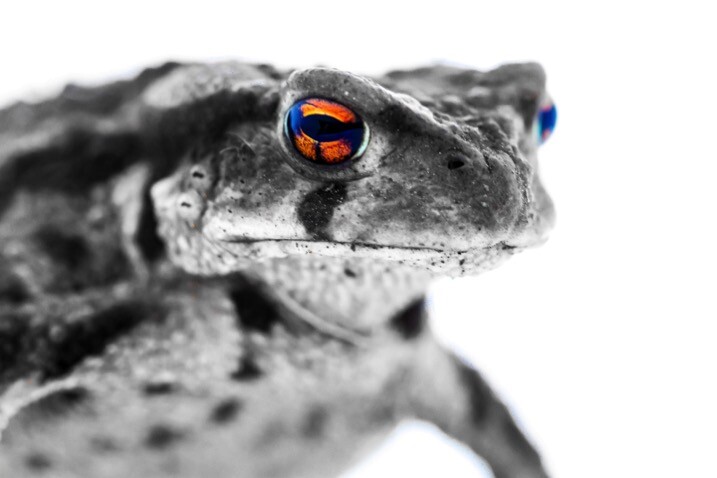
Lightbox macro photography 001 toad

A toad I stumbled upon on a mountain trail.

There are so many gadgets and gizmos that you can buy to help modify light such as flashes, soft boxes, reflectors, etc. Attachments like slide rails can also help you image stack in post-processing. However, I use macro photography simply as a change of pace and to help me keep honing my skills. So, I would like to share a very simple trick that I use that you can to without having to spend a penny. So what is it? Well, let’s first look at an important concept about macro photography so you will get the best results when you are experimenting based on this tutorial.

Lightbox macro photography 002 fuzzy

Depth of field

The first tip and technique that we need to think about before I reveal my simple method, is depth of field (DoF). Generally, in macro photography, you will be really close to your subject, especially if you use a designated macro lens. If you use a telephoto lens with an extension tube, you may not be as close but due to the focal length you will still have a very narrow depth of field.

So to keep in true macro fashion your best option to increase your depth of field is to increase the f-stop. Thus you will need plenty of light. For my trick, the sun is all you will need. No need to spend any money. If you want to brush up on all the parameters that go into depth of field then please check out this articles: Depth of Field and the Importance Distance to Subject Plays.

The trick is – a white paper bag

So what is the trick? Well, it is a large white paper bag. The best ones I’ve found are the shopping bags that you get from mid-range clothing stores which are made of fairly thin white paper. Yep, that is it, a white paper bag and you have your own lightbox or white box.

Jeffrey Beall

By Jeffrey Beall


A smaller sack would work too, but obviously, that limits the size of what can be placed inside. Fold your bag up and out the door you go to find, critters, animals, flowers and fauna, or beach treasures.

The white paper is translucent so light will permeate the bag and create a white-box, also known as a lightbox. If you shoot when there is strong sunlight, there will be enough light to give you shadows. And because the light source (the paper bag) is so close to the subject the shadows are extra soft and very pleasing. Thus, you can create fantastic results with something you may already have in your cupboard or closet.

Lightbox macro photography 003 spider

Working with small critters

The second tip is about the bugs, butterflies or animals that you choose to place in your bag. The anxiety of a living creature is most likely going to be high after you capture them and stick them into a foreign environment. For the sake of the creature, let it calm down. Place it in your paper bag, close it and let the creature calm down for a minute or two.

This will also give you time to get your camera in the proper shooting mode and adjust the settings. From a photography standpoint, giving your subject time to become calm will allow it to slow down or even become still. Thus you will have a good opportunity to get crisp, clear and clean shots. Remember to kindly capture and release any living thing back into their habitat.

Lightbox macro photography 004 green

Use exposure compensation

The third tip is another technical one and is about exposure compensation. The bag is white so you need to increase your exposure compensation by a minimum of a plus half a stop to get the best results so that the white bag will appear white.

Remember your camera does not have a brain and will automatically adjust your exposure to 18% grey. The goal is to achieve a nice clean white background, so you need to increase your exposure compensation. If you’re in manual mode make sure that you have adjusted your settings to overexpose your photo (plus side). Even if you completely overexpose parts of the white bag, as long as your subject is properly exposed you will be okay.

The goal is a white background with subtle shadows from the subject. If you need to refresh your understanding of exposure compensation you can check out the following: How to Use Exposure Compensation to Take Control of Your Exposure.

Lightbox macro photography 005 overhead

Other uses for the bag

This cheap and easy lightbox can be used for all kinds of subjects. Even for product photography if you are in a pinch. It works best in strong, full sun, so the light can penetrate the paper and let you keep your ISO settings low.


Lightbox macro photography 06

Lightbox macro photography 08

Lightbox macro photography 07

Lightbox macro photography 02

The only subjects that this method really doesn’t work for are white subjects (e.g. sun bleached seashells).

Your turn

Now you have few excuses but to get out into the field and get some cool new photos. Please share your white bag photos below along with your comments or question.

googletag.cmd.push(function() {
tablet_slots.push( googletag.defineSlot( “/1005424/_dPSv4_tab-all-article-bottom_(300×250)”, [300, 250], “pb-ad-78623” ).addService( googletag.pubads() ) ); } );

googletag.cmd.push(function() {
mobile_slots.push( googletag.defineSlot( “/1005424/_dPSv4_mob-all-article-bottom_(300×250)”, [300, 250], “pb-ad-78158” ).addService( googletag.pubads() ) ); } );

The post The Cheapest and Easiest Lightbox Macro Photography by Branson Quenzer appeared first on Digital Photography School.



Digital Photography School

 
Comments Off on The Cheapest and Easiest Lightbox Macro Photography

Posted in Photography


Voigtlander shows off three new lenses including 65mm F2 Macro for E-mount

06 Oct

$ (document).ready(function() { SampleGalleryV2({“containerId”:”embeddedSampleGallery_9965740614″,”galleryId”:”9965740614″,”isEmbeddedWidget”:true,”standalone”:false,”selectedImageIndex”:0,”startInCommentsView”:false,”isMobile”:false}) });

Lens manufacturer Voigtlander is set to introduce three unusual lenses this autumn and has posted pictures and specifications on its website, but isn’t letting on when they will arrive.

The most interesting, visually at least, is a VM 50mm F3.5 Heliar designed for M-mount bodies. It uses an almost symmetrical configuration of five elements in three groups and forms a conical shape reminiscent of the Tessar 50mm lenses of the Carl Zeiss Jena Werra cameras. The lens will have a minimum aperture of F22 and will use a 10-bladed iris that promises nice circular out-of-focus highlights. Remarkably, the aperture ring will be without click stops.

A more popular lens will be the 65mm F2 Macro Apo-Lanthar for the Sony E-mount system. This will have a closest focusing distance of 0.31m and will be able to transmit EXIF data to the camera as well as trigger manual focus assistance such as automatic magnification and peaking. It will have 10 elements in 8 groups and will offer apertures down to F22. The company has yet to decide whether the aperture ring will feature click stops, but again the iris will use 10 blades.

The third lens on display is a SL ll – S 58mm F1.4 Nokton designed for Nikon AI-S bodies. This new version of the company’s existing SL ll – N lens appears to be optically unchanged but it offers a more retro barrel design that echoes Nikon’s own manual focus lenses, and it has the addition of a meter coupling prong that will allow it to be used with much older bodies.

The company has not given any information on pricing or delivery dates, but you can read more specification on the Voigtlander website.

Articles: Digital Photography Review (dpreview.com)

 
Comments Off on Voigtlander shows off three new lenses including 65mm F2 Macro for E-mount

Posted in Uncategorized


Behind the Scenes of Marvellous Macro Insect Imagery

19 Sep

This project by British photographer Levon Bliss and the Oxford University Museum of Natural History is a breathtaking. Levon spends weeks taking thousands of images of a single insect and then edits them together into incredibly high resolution images of these tiny creatures.

See more of Levon’s work on the Microsculpture site.

Learn About Macro Photography

While not on the scale of Levon’s project above we’ve compiled some Macro tutorials for those of you inspired to begin to explore this space.

  • Everything You Need to Know about Macro Photography
  • Getting Started Guide to Macro or Close-Up Photography
  • Macro Photography for Beginners (also see Part 2)
  • Tips for Depth of Field Control in Macro Photography
  • Macro Photography on a Budget: An introduction to Close-up Filters
  • It’s a Bug’s Life – 27 Super Macro Photography Images

googletag.cmd.push(function() {
tablet_slots.push( googletag.defineSlot( “/1005424/_dPSv4_tab-all-article-bottom_(300×250)”, [300, 250], “pb-ad-78623” ).addService( googletag.pubads() ) ); } );

googletag.cmd.push(function() {
mobile_slots.push( googletag.defineSlot( “/1005424/_dPSv4_mob-all-article-bottom_(300×250)”, [300, 250], “pb-ad-78158” ).addService( googletag.pubads() ) ); } );

The post Behind the Scenes of Marvellous Macro Insect Imagery by Darren Rowse appeared first on Digital Photography School.


Digital Photography School

 
Comments Off on Behind the Scenes of Marvellous Macro Insect Imagery

Posted in Photography


Leica adds 60mm F2.8 macro to TL lens lineup

02 Sep

Leica has announced a 60mm F2.8 macro lens for its TL-mount cameras, which is just the T (Typ 701) at this point.

The company was very short on details about the APO-Macro-Elmarit-TL 60mm F2.8 ASPH, aside from saying that it will have a 1:1 reproduction ratio and will arrive this Fall in black or silver. When mounted on the APS-C ‘T’, the lens will be equivalent to 90mm.

This will be the sixth lens for the TL mount.

Press release:

Leica Announces Newest Addition to the T Lens Portfolio: the Leica APO-Macro-Elmarit-TL 60mm

All future lenses for the Leica T camera system will be marketed under a new name: “TL”

September 1, 2016 – Beginning today, a new prime lens is available for the Leica T camera system – the Leica APO-Macro-Elmarit-TL 60 mm f/2.8 ASPH. Considered to be the reference lens in the APS-C segment, this lens delivers macro exposures with a reproduction ratio of 1:1 and impresses with best imaging performance.

Like the Leica Summilux-TL 35 mm f/1.4 ASPH., the Leica APO-Macro-Elmarit-TL 60 mm f/2.8 ASPH. is available in both black and silver.

With this new addition, the lens portfolio of the Leica T camera system now offers a total of six lenses – including three prime lenses and three zoom lenses – that together offer a range of focal lengths for every photographic situation. The two fast prime lenses, the Leica Summicron-TL 23 mm f/2 ASPH. and the Summilux-TL 35 mm f/1.4 ASPH, are classic focal lengths for reportage photography. The APO-Macro-Elmarit-TL 60 mm f/2.8 ASPH. complements them ideally as a lens for finely detailed close-up photography. Finally, the three compact zoom lenses, the Leica Super-Vario-Elmar-TL 11–23 mm f/3.5–4.5 ASPH., Vario-Elmar-TL 18–56 mm f/3.5–5.6 ASPH., and APO-Vario-Elmar-TL 55–135 mm f/3.5–4.5 ASPH., cover an entire range of focal lengths equivalent to 17 to 200 mm in 35 mm format and deliver outstanding images with rich contrast from corner to corner of the frame.

As the Leica T and the new Leica SL share the same L bayonet mount, the name ‘TL’ will be implemented for all new Leica T lenses moving forward. Thanks to the flexibility offered by the TL-Lenses for a wide range of applications on cameras with the L-Bayonet, Leica once again showcases the company’s fundamental principle of system-compatibility and sustainability and offers users access to an even wider portfolio of Leica products

All Leica TL-Lenses impress with outstanding imaging performance at lengths that range from infinity to their closest focusing distance and deliver images with the unique Leica look and bokeh. Designed by the optical engineering specialists in Wetzlar, the lenses all offer the exceptional imaging performance for which Leica lenses are renowned. The combination of optical and technical expertise and the use of only the finest materials guarantee consistent quality and reliability in every situation.

Articles: Digital Photography Review (dpreview.com)

 
Comments Off on Leica adds 60mm F2.8 macro to TL lens lineup

Posted in Uncategorized


Sony introduces FE 50mm F2.8 Macro with 1:1 reproduction

30 Aug

$ (document).ready(function() { SampleGalleryV2({“containerId”:”embeddedSampleGallery_2105353860″,”galleryId”:”2105353860″,”isEmbeddedWidget”:true,”standalone”:false,”selectedImageIndex”:0,”startInCommentsView”:false,”isMobile”:false}) });

Sony has announced the FE 50mm F2.8 Macro, a full-frame lens with true 1:1 macro magnification. It provides a minimum focus distance of 16cm/6.3in and is resistant to dust and moisture. Its design includes 8 elements in 7 groups and a rounded 7-blade aperture.

The Sony FE 50mm F2.8 Macro will sell for $ 500 when it goes on sale in September.

Press release:

Sony Releases Full-Frame FE 50mm F2.8 Macro Lens

A lightweight and compact standard 50mm F2.8 macro prime lens that offers versatile shooting experience

SAN DIEGO, Aug. 30, 2016 – Sony Electronics, a worldwide leader in digital imaging and the world’s largest image sensor manufacturer, has today introduced a new full-frame lens for their E-mount camera system, the FE 50mm F2.8 Macro lens (model SEL50M28).

Ideal for everyday photography, this 50mm macro lens features an F2.8 maximum aperture that offers outstanding image quality and bokeh, while its 1:1 macro capability allows the photographer to get sharp close-up shots of their subject. Additionally, its comprehensive range of controls including focus-mode switch, focus-range limiter and focus-hold button ensure an effortless shooting experience for a wide range of users.

The lens offers a 6.3 inch minimum focusing distance and a wider field of view for capturing more background, compared to longer focal-length macro lenses. Weighing in at a mere 8.4 oz., it’s extremely lightweight and portable, making it easy to carry around.

The new FE 50mm F2.8 Macro lens features an ED (Extra-low Dispersion) glass to effectively compensate for axial chromatic aberration at close focus, allowing it to create consistently sharp and high quality images. The optical and mechanical construction of the lens has less glare and ghosting, even without a lens hood. The lens is also dust and moisture resistant.

Pricing and Availability

The new FE 50mm F2.8 Macro lens will be available in September for about $ 500 US and $ 650 CA, respectively. It will be sold at a variety of Sony authorized dealers throughout North America.

Sony FE 50mm F2.8 Macro specifications

Principal specifications
Lens type Prime lens
Max Format size 35mm FF
Focal length 50 mm
Image stabilization No
Lens mount Sony FE
Aperture
Maximum aperture F2.8
Minimum aperture F16
Aperture ring No
Number of diaphragm blades 7
Optics
Elements 8
Groups 8
Special elements / coatings Extra-low Dispersion glass
Focus
Minimum focus 0.16 m (6.3)
Maximum magnification 1×
Autofocus Yes
Full time manual No
Focus method Extending front
Distance scale Yes
DoF scale No
Focus distance limiter Yes
Physical
Weight 236 g (0.52 lb)
Diameter 71 mm (2.8)
Length 71 mm (2.8)
Sealing Yes
Colour Black
Filter thread 55.0 mm
Hood supplied No
Tripod collar No

Articles: Digital Photography Review (dpreview.com)

 
Comments Off on Sony introduces FE 50mm F2.8 Macro with 1:1 reproduction

Posted in Uncategorized


Tips for Abstract Macro Photography – Using Texture and Light

21 Aug

Macro photography opens up a whole new world to those who are willing to get up close. There is no shortage of subject matter to photograph, but in this article we’ll look at the abstract world of texture and light.

Rusted paintwork of a Dodge Campervan

Rusted paintwork of a Dodge Campervan

The beauty about these subjects is that they can be shot anywhere; in your backyard, on your street, or in any part of your city. Textures are everywhere. They are really easy to find, and working with the light properly will help you to highlight the grittiness and tactile effect of textures. Ideally, a macro lens would be perfect to use for this type of photography, but a good 50mm or 85mm can work too. A macro lens gives you the bonus of being able to focus really close, normal lenses may not be able to get as close as you want.

My view is that even if you don’t have a macro lens, give this a try anyway, a new tiny world of wonder awaits you!

What is Abstract Macro Photography?

Abstract photography, in general, is about representing a subject in a non-literal way. The focus of abstract photography is more about colour, shape, and texture, as opposed to the literal representation of the subject. Abstract macro photography, takes this to the next level by enabling you to get even closer to your subject, and therefore also able to be more abstract in a sense. In this article, we are concerned with texture and showing that in our images.

The same guidelines around composition apply, you can use the rule of thirds, curves, and lines, to draw the viewer into your image. The difference is that the subject may not be immediately recognizable, your centre of interest might be a colour, or the curve of a flower. So for abstract macro photography, you will need to think a little differently.

Cracked paint on a car bumper

Cracked paint on a car bumper

What will I need to do abstract macro photography?

A macro lens will work best. A 50mm or 85mm lens will work pretty well too, you may not be able to get as close to your subject though, so be aware of that (or you can try close-up filters). You will need a tripod too, or some sort of support for your camera, as shooting macro images handheld is really difficult and can be frustrating.

What can I photograph?

Textures are all around you. Think of the rusted lamppost at the corner of your street, the peeling paint on the wall of the shed, or even the cracked paint on the bumper of a car. They are everywhere.

You need to spend time looking at all the surfaces around you, then take some test shots to see if they work. The key thing to be aware of when shooting textures is how the light is affecting the scene. Macro photography is like a micro landscape image. It has a foreground, middle-ground and background. There are colours, shapes, and of course textures in the image.

When you look at the texture, take some time to study where the light is coming from, and how it is affecting the image. Try a few different angles to see what works best in the scene. Using side light (i.e. light some from the left or the right) will accentuate the texture in your image. Side light will give your image a three dimensional quality, so try and get some directional light on your scene if possible.

Reflections from a security gate

Reflections from a security gate

Find your texture, and use this as a workflow

  • Work on building your composition – is there a particular part of the texture you want to emphasize, try and get some side light if possible?
  • Use manual focus to bring even a small part of your image into sharp focus, this sharp area will be the natural focal point for your viewer.
  • As an abstract image, you don’t need a subject as such, but the texture and the colours will be the reason for the image, so make sure the subject matter is interesting.
  • Check the histogram to make sure that you are exposing your scene correctly.
  • Capture the shot.
  • Try shooting the same subject from different angles, and maybe even with a different centre of interest.
  • Take as many images as possible, from different angles, with different focal points.

The beauty about this type of photography is that you have an infinite number of subjects. It is really easy to get going once you start looking around you, at what there is to photograph.

The beauty of cracked window putty

The beauty of cracked window putty

Have you tried abstract macro photography before? If not give it a go and share some of your images in the comments below. See if we can guess what you photographed.

googletag.cmd.push(function() {
tablet_slots.push( googletag.defineSlot( “/1005424/_dPSv4_tab-all-article-bottom_(300×250)”, [300, 250], “pb-ad-78623” ).addService( googletag.pubads() ) ); } );

googletag.cmd.push(function() {
mobile_slots.push( googletag.defineSlot( “/1005424/_dPSv4_mob-all-article-bottom_(300×250)”, [300, 250], “pb-ad-78158” ).addService( googletag.pubads() ) ); } );

The post Tips for Abstract Macro Photography – Using Texture and Light by Barry J Brady appeared first on Digital Photography School.


Digital Photography School

 
Comments Off on Tips for Abstract Macro Photography – Using Texture and Light

Posted in Photography


Tamron announces SP 90mm F2.8 Di Macro and TAP-in console for Sony A-mount

20 Aug

Japanese optical manufacturer Tamron has announced it is to launch its exiting 90mm macro lens in a Sony A-mount, and that Sony users will now be able to update and customise some of their Tamron lenses using the company’s TAP-in lens console. The Sony version of the SP 90mm f/2.8 Di Macro 1:1 USD will be the same as the versions produced for Canon and Nikon users, but will not feature Tamron’s Vibration Correction system as Sony cameras have their own in-body stabilization.

The TAP-in console allows customers to tune focus, update firmware and customize features such as focus limiters and full-time manual focus in those lenses that offer them. The console is compatible with the latest batch of Tamron fixed focal length lenses, including the 85mm f/1.8 which the company has yet to launch in Sony mount.

The SP 90mm f/2.8 Di Macro 1:1 USD and the TAP-in console will be available from 25th August. Although the press release doesn’t mention prices, the console for Canon and Nikon users currently sells for $ 60/£55 and the lens for $ 749/£579.

For more information visit the Tamron website.

Press release:

Tamron announces the launch of the SP 90mm F/2.8 Di MACRO 1:1 USD (Model F017) for Sony mount

August 18, 2016, Saitama, Japan – Tamron Co., Ltd. (President & CEO: Shiro Ajisaka), a leading manufacturer of optics for diverse applications, announces the launch of the SP 90mm F/2.8 Di MACRO 1:1 USD (Model F017) for Sony mount.

Model F017
MACRO 1:1 USD (Model F017) for Sony mount*
Date of Launch: August 25, 2016

*The Sony mount model does not include VC (Vibration Compensation), since the bodies of Sony DSLR cameras include built-in image stabilization functionality. The name of the Sony mount model is “SP 90mm F/2.8 Di MACRO 1:1 USD” without the VC designation

Product Highlights

Built upon the outstanding optical performance of the legendary Tamron 90mm Macro

Inheriting the optical design of the previous 90mm Macro lens (Model F004), the new Model F017 delivers the same excellent resolving power and remarkably soft background blur effects (bokeh). The advanced construction includes one LD (Low Dispersion) glass element that maximally limits the dispersion properties of light and two XLD (eXtra Low Dispersion) glass elements that correct dispersion properties to an even greater extent. The special elements optimally compensate for on-axis and lateral chromatic aberrations from macro shooting range to infinity. Furthermore, the design ensures the best imaging performance at any range by adopting the Floating System which shifts the location of a group of elements to the best possible position as the focusing group travels relative to shooting distances. From 1:1, life-size close-ups to the most distant horizon, this new 90mm Macro lens achieves outstanding image quality.

Optimized for spectacular background blur effects (bokeh)

Earlier models of Tamron’s 90mm macro lens received high acclaim for their spectacular blur effects, and the new 90mm macro builds upon this legacy. To continue this commitment, thorough optical simulations were conducted. Careful examinations were performed to minimize any blurring with a doubled image appearing for a single line because that phenomenon has a considerably negative impact on background image quality. As a result, the lens achieves both sharp, vivid images and spectacular background blur effects. This combination is highly prized by portrait photographers.

Moisture-Proof and Dust-Resistant Construction

Areas of possible ingress surrounding switches and the boundary between the focus ring and the lens barrel are protected by special seals. These provide stronger protection against the intrusion of dirt, dust and moisture compared to the Moisture-Resistant Construction used previously. This additional protection assures even more wide-ranging opportunities for using this lens.

A durable Fluorine Coating on the front element repels water and fingerprints

The water and oil repellant coating applied to the front element surface allows instant removal of dirt or smudges with ease. The coating also provides a reasonable level of durability, and will sustain its effectiveness for years. The Fluorine Coating technology that Tamron developed for use in industrial optics applications was first used on the SP 15-30mm which was introduced in 2014.

USD actuator maximized for macro photography is fast, accurate and quiet

The control software program for the USD (Ultrasonic Silent Drive) actuator has been revised to provide substantially improved focusing speed and accuracy when using AF. The USD quickly addresses any out-of-focus condition caused by back-and-forth camera movement (which commonly occurs during macro photography) ensuring better results when shooting at close range.

Advanced coating technology reduces flare and ghosting

Two advanced coating technologies, both providing outstanding anti-reflection performance, are applied to critical element surfaces for maximum light transmission. eBAND (Extended Bandwidth & Angular-Dependency) Coating boasts outstanding anti-reflection performance across nearly the entire range of visible rays, and BBAR (Broad-Band Anti-Reflection) Coating utilizes traditional multi-layered, anti-reflection technology. This combination virtually eliminates extraneous reflections and substantially reduces ghosting and flare which enables the lens to achieve flawless, crystal clear images.

Use of circular aperture to achieve beautiful, rounded blur effects (bokeh)

When shooting a scene that includes a point-source of light in the subject background, marvelously tuned blur (bokeh) can be obtained without generating undesirable polygonal shapes of aperture patterns thanks to the circular aperture. The 9-blade diaphragm retains a nearly perfect circular opening even when stopped down by two stops.

Focusing options perfectly suited to a macro lens

The new 90mm macro has a focus limiter that makes it possible to shorten the time for accurately focusing on a subject when the working range is known. The lens also features an Internal Focusing system, so the overall length of the lens never changes, not even when focusing. As a result, the user is assured of a comfortable working distance of at least 139mm (5.5 in) from the front of the lens. In addition, the lens is equipped with a Full-time Manual Focus override mechanism which makes it possible to flexibly choose focal points. Even with the AF driving system in action, it is possible to instantaneously override it to make manual fine focusing adjustments without switching the AF-MF mode back and forth.

Compatibility with TAMRON TAP-in Console™

Always as new as tomorrow: You can update firmware, customize autofocus positions and adjust the mechanical setup and preferences of the 90mm lens by simply attaching it to the TAMRON TAP-in Console and connecting it via USB to a personal computer. (The TAP-in Console is an optional accessory.)


TAMRON TAP-in Console™ (Model TAP-01)
Sony mount model launched

Tamron Co., Ltd. (President & CEO: Shiro Ajisaka; Headquarters: Saitama City), a leading manufacturer of optics for diverse applications, announces the launch of the TAMRON TAP-in Console (Model TAP-01), a lens accessory that enables firmware updating and customized setups for selected Tamron lenses, for Sony cameras (Sony A mount model).

For the first time, customers can update firmware in selected Tamron lenses and customize various lens functions to meet their needs simply by attaching a TAMRON TAP-in Console and running the TAMRON TAP-in Utility software on their PC or Mac.

Previously, firmware updates could be performed only at a TAMRON Customer Service Center. Using the new accessory and an internet connection, customers can access a dedicated website and update firmware themselves anytime, anywhere. In addition, selected lenses can be customized by changing various settings (described below) to match the customer’s preferences based on how they like to use the lens, making it even more versatile and user-friendly.

Custom Options

With a TAMRON TAP-in Console, customers can do the following things.

  • Update firmware
  • Update the firmware of compatible lenses
  • Update the firmware of the TAP-in Console itself
  • Customize functions of selected lenses
  • Focus adjustment
  • Focus distance limiter customization (only for lenses that have the Focus Limiter feature)
  • Full-time Manual Focus override customization (only for lenses that have the Full-time Manual Focus feature)
  • Save customized data files

Because Tamron lenses compatible with Sony cameras are not equipped with the VC (Vibration Compensation) system, the Customize function for VC adjustment, which is available for the Nikon and Canon mount models, is not available for the new Sony mount model.

TAMRON TAP-in Utility Software
 
Customers download the free TAMRON TAP-in Utility and install it on their Mac or PC. Updating firmware and customizing various lens functions is as easy as connecting the TAP-in Console with a USB cable and making selections. An internet connection is required for firmware updates.

Updating Firmware
Customers can update firmware of selected Tamron lenses using this utility software. Additionally, the firmware in the TAP-in Console unit can be updated as needed. Using an internet connection and the utility software, users can access a dedicated website and easily confirm that the lens attached to the TAP-in Console—and the Console itself—have the most up-to-date firmware. If a newer version is available, updating is quick and secure.

Customization of Selected Tamron Lenses
Various lens functions can be customized, depending on the lens model and built-in features.

(1) Focus adjustment
Focus can be adjusted in three distance regions: close, intermediate, and far ranges. For zoom lenses with variable focal length ranges, adjustments can be made for up to eight segments, which means that focus adjustment for a combined total of up to 24 regions is possible. Fixed-focal length lenses have only one segment, so customization for the three distance regions is possible. The conditions and range of possible adjustments may differ according to the lens model.

(2) Focus distance limiter customization
For lenses equipped with a Focus Limiter switch, it is possible to adjust the autofocus drive range by setting the near and far limits according to user preferences. If the Focus Limiter switch has three positions, setting the middle position is also possible. Only lens models equipped with the Focus Limiter function can be adjusted. The conditions and range of possible adjustments may differ according to the lens model.

(3) Full-time Manual Focus override customization
For any lens with a Full-time Manual Focus override system, you can set the mode to ON or OFF. In addition, you can optimize the sensitivity of the focus ring to your preference relative to its angular rotation anywhere between High and Low, when setting the manual focus mode menu button to ON.

Compatible Tamron Lenses (As of August 2016)

  • SP 85mm F/1.8 Di VC USD (Model F016) for Sony: To be launched soon
  • SP 90mm F/2.8 Di MACRO 1:1 VC USD (Model F017) for Sony: To be launched on August 25, 2016
  • SP 45mm F/1.8 Di VC USD (Model F013) for Sony
  • SP 35mm F/1.8 Di VC USD (Model F012) for Sony

Articles: Digital Photography Review (dpreview.com)

 
Comments Off on Tamron announces SP 90mm F2.8 Di Macro and TAP-in console for Sony A-mount

Posted in Uncategorized


Canon EF-M 28mm F3.5 Macro real-world samples

25 Jul

‘Get closer’ is photo advice that the Canon EF-M 28mm F3.5 takes to heart. It can achieve focus as close as 9.4cm/3.7in, and brings a couple of built-in LEDs to the party to brighten things up. It’s not perfect, but it’s priced attractively and if you’re a Canon EOS M shooter then we think this little lens is a great way to experiment with macro photography. Read more of our impressions on using it and take a look at a full gallery of samples.

Articles: Digital Photography Review (dpreview.com)

 
Comments Off on Canon EF-M 28mm F3.5 Macro real-world samples

Posted in Uncategorized


Getting up close: Canon EF-M 28mm macro hands-on review

24 Jul

Hands-on review: Canon EF-M 28mm Macro

This is the Canon EF-M 28mm F3.5 Macro IS STM. It is a compact, light weight, close-focusing lens designed exclusively for Canon’s EOS M lineup. It’s image-stabilized and uses a quiet stepping motor mechanism for autofocus. It’s priced at $ 299.

Hands-on review: Canon EF-M 28mm Macro

The lens comes with a removable cover for the front

$ 299 places it below a majority of macro primes for cost. However, the Nikon Micro?Nikkor 40mm F2.8 does still beat it out in price by around $ 50, and is 2/3-stop brighter.

All the trump cards held by the Micro-Nikkor fold when other features of the EF-M 28mm Macro are brought in to consideration, though. First, even though it is a wider FOV lens, its nearest focus distance is 3.7″, nearly 3″ closer than the Micro-Nikkor. Even taking the slightly longer field of view of the Micro-Nikkor in to account, the Canon is able to achieve a 1.2x magnification in “Super Macro” mode over the Nikkor’s 1x magnification.

When working at such diminutive focus distances, there’s an inherent issue that many experienced macro photographers have learned to work around. The camera, lens, and sometimes even photographer start blocking light from the itty bitty subject. To get around this, macro photographers will use specialized lights, typically ring lights mounted to the filter thread. 

Canon has gone the extra mile (inch?) and included a pair of LED lights (hidden under their cover in this shot) mounted on the left and right hand side of the front of the lens, diffused by a clear white ring, eliminating the additional requirement of a macro light kit for those extreme close-ups.

Hands-on review: Canon EF-M 28mm Macro

3.7″ is quite an extreme working distance, and this means a maximum reproduction ratio of 1.2x in ‘Super Macro’ mode. Image stabilization is included and is effective for shooting in a wide range of scenarios, although for the extreme close-ups it’s better left switched off and replaced with a tripod.

A subject at minimum focus distance illuminated by the two LED’s together receives about 8.9 EV illumination in normal macro and 9.1 EV in super macro mode when measured with an incident light meter. The lights have two levels of brightness, and are switched on via a button on the lens barrel. Both come on with a single press, and a press and hold switches to one light only. Sadly, there’s no ability to have just one LED on at full brightness and the other dimmed. They’re either both on at the same power level, or illuminated independently.

The lightweight construction and STM focus motor also help this lens focus reasonably quickly, especially when compared to the painfully slow-focusing macro lenses of yore. It isn’t as fast as some of the quickest we’ve seen, but does very well, especially considering how close its MFD is.

Hands-on review: Canon EF-M 28mm Macro

By itself, this lens weighs 130 grams, making it so light Canon boasts about the 28mm F3.5 being the ‘world’s lightest autofocus macro lens for an ILC system.’ When mounted to the EOS M3 the total weight is a featherweight 492 grams, exemplifying the lightness and convenience benefit of mirrorless systems compared to DSLRs. By comparison, a Nikon D5500 body weighs 420 grams. Add another 235 grams for the 40mm Micro lens, then another 200+ for an LED macro light kit, and the total comes out to 855 grams, or nearly double the weight of the Canon kit.

This diminutive size means weight can also be saved when making a tripod selection, as long as it is sturdy enough for work that is incredibly sensitive to vibrations.

Less weight means less fatigue and more reasons to bring the camera on location.

It resolves well…

This graph shows the maximum resolution (as a percent of Nyquist) attained by our copy of the lens at various apertures. It uses MTF-10 criteria, which is a measure of the finest detail that can be resolved with at least 10% contrast. If that sounds complicated, just keep in mind this figure is well correlated to total resolution, though isn’t as great a representation of perceived sharpness, which correlates more with MTF-50 measurements (more on that on the next slide).

Our results here show that center resolution peaks at 80% the linear resolution that can be theoretically attained, at F5.6 – a decent result. If this were resolved across the frame, you’d get about a 16MP image from this 24MP sensor. Of course it’s not, but corners aren’t too far behind, at 67% by F6.3. Not bad when you consider the higher resolving power demands placed on the lens by the smaller APS-C sensor… but what about perceived sharpness?

… and is fairly sharp

The MTF-50 result – better correlated with perceived sharpness – tells a slightly different story, indicating only around 875 line pairs per picture height resolved, which translates to ~4.6MP, or 19% of the total sensor resolution. It’s not a terrible result, but does indicate that while the lens resolves a lot of detail, it doesn’t quite maintain as much contrast as a higher performing lens might. This is no surprise, given the lens’ size, weight, and price.

While performance isn’t state of the art in terms of macro lenses (the Sony FE 90mm F2.8 deserves a shout out here), it does a good job throughout the aperture range, with good field uniformity, and fair ability to resolve fine detail, particularly when you factor in the disadvantages of the smaller APS-C sensor (which places high demands on lens’ resolving power). It doesn’t have L-series levels of contrast and perceived sharpness – but we wouldn’t expect it to.

See our gallery for a set of infinity shots to see how this tiny macro resolves real-world detail on a flat plane.

How well does it work with EOS M3?

The EOS M3’s articulating touch screen is great for close-up work when using this lens. It takes a lot of strain out of working low when one doesn’t need to peer through a viewfinder or crouch low to see the screen. Magnifying the image for focus checking also works brilliantly on the M3. There’s no pixel binning or frame rate drops in 100% magnification mode, which helps the touch-enabled panning function to operate quickly and smoothly, helping ensure the narrow focus plane is placed exactly where you want it.

It’s creative

Even club soda can make an interesting photo when shooting this close

Or rather, it can be used creatively. 1.2x magnification means that objects are 1.2 times their actual size on the sensor plane. This means objects, details or textures can completely fill the frame, creating wonderful abstract shots that aren’t usually possible without a fair bit of kit. Combine this ability with a set up that is easily carried around and opportunities for interesting shots begin to pop up everywhere, as it offers a whole new view on the seemingly mundane.

It isn’t perfect…

This image was taken with just the built-in LED lights for illumination, and was cropped and brightened in post.

Well, for $ 300, expecting absolute perfection is unrealistic, especially in the photo world. 

First, it isn’t the sharpest lens out there. It’s pretty good, but in the macro world there are better options. That said, none of them have those lovely lights and will probably cost more.

The lights and image stabilization aren’t powerful enough to make this a hand-holdable macro, so don’t make the mistake of expecting that. The handheld spider shot above illustrates the pitfalls of lighting exclusively with the on board LEDs.  

First, the light cast by the LEDs isn’t particularly intense. It’s bright enough to light subjects at minimum focus distance outdoors, but only when its overcast. Any direct sunlight will overpower the light and will make the lens’ shadow very obvious. By itself, the light needs to be combined with a tripod, and should be thought of as a way to avoid the complications of a ring light system (batteries, cables, etc) instead of an all-purpose fill light.

Second, when working with a high reproduction ratio, depth of field is inherently incredibly shallow. The LED lights aren’t bright enough to allow for stopping down for deep depth of field while shooting handheld in dim ambient light. 

…but is still very usable

Using a narrow aperture can achieve deep depth of field when close focusing, but diffraction will decrease sharpness, as can be seen in this shot at F18.

It is important to remember that shallow depth of field is a challenge with all macro lenses. One way to get around that issue is by focus stacking. There are many software solutions to focus stacking, and Olympus has even gone as far as to include it as an automatic function in some of its cameras. One can only hope Canon does eventually as well.

The only other gripe is with the lights and their configuration. It would be nice to be able to rotate the lights 90 degrees for a sort of “clamshell” lighting instead of being stuck with the “copystand” lighting constantly, or to be able to have them configured either way regardless of wether the camera is being used in portrait or landscape orientation. 

As a standard lens, it performs fine in normal working distances, but vignetting is strong wide-open, making the EF-M 22 F2 a better general use prime lens if you don’t need the macro performance. 

Hands-on review: Canon EF-M 28mm Macro

This image used a combination of the built-in lights and a back lit semi-transparent surface

For beginners looking to shoot macro, the EF-M 28mm F3.5 Macro is a great place to start. Its close focus abilities mean it has a wide range of macro use cases, and the built-in LEDs mean one doesn’t have to budget for a set of lights when just getting started. It’s a great starting point for learning the challenges and pitfalls of macro photography, and will produce great results when applying those lessons.

Articles: Digital Photography Review (dpreview.com)

 
Comments Off on Getting up close: Canon EF-M 28mm macro hands-on review

Posted in Uncategorized


Macro Maven: An Interview with Ithalu Dominguez

30 Jun

Whenever we scroll up on an Instagram from @itha_mar, we *marvel* at her amazing knack for snapping super close-up macros, of Mother Nature’s handy work.

She’s no professional with a fancy bunch of gear, and specially trained bugs that stay extra still.

Ithalu shoots mostly with her phone. A phone! Just like that one you’ve got right there.

So, we caught up with her to find out all her secrets (in hopes of mastering bug-ography ourselves).

(…)
Read the rest of Macro Maven: An Interview with Ithalu Dominguez (745 words)


© laurel for Photojojo, 2016. |
Permalink |
No comment |
Add to
del.icio.us

Post tags:


Photojojo

 
Comments Off on Macro Maven: An Interview with Ithalu Dominguez

Posted in Equipment