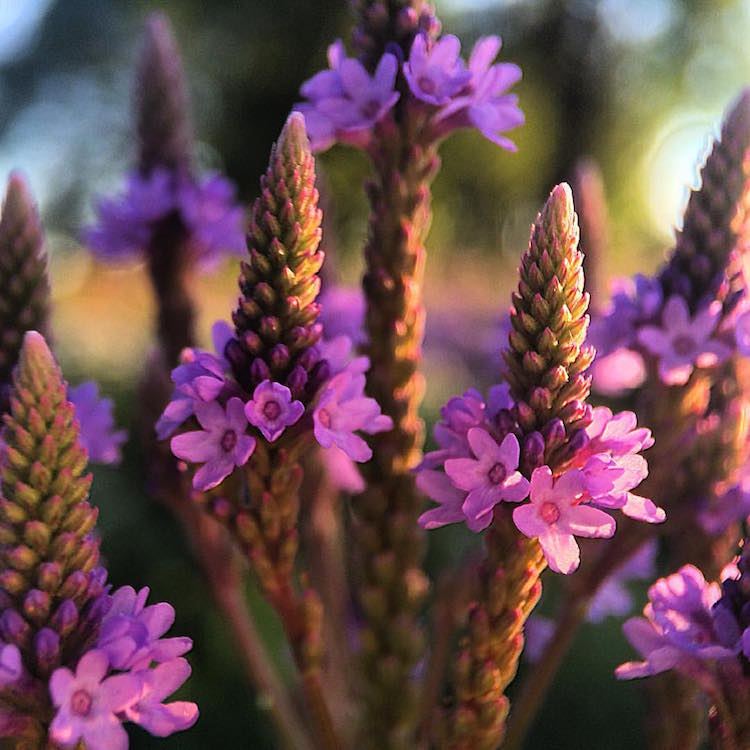
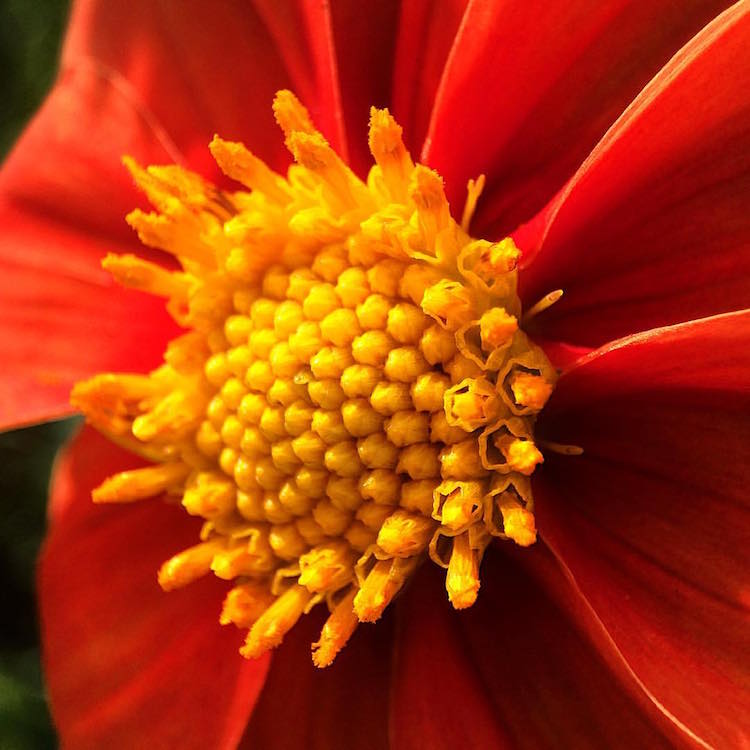
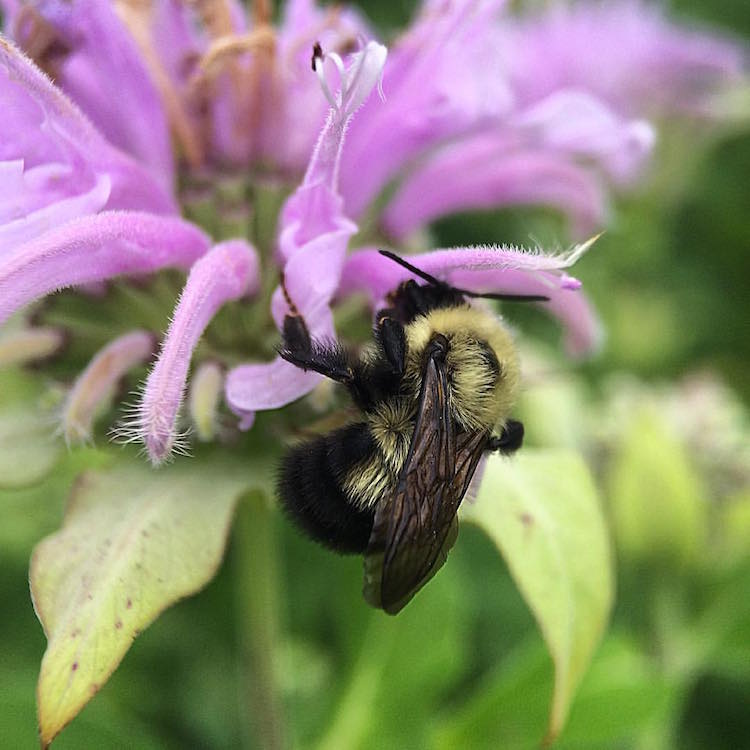
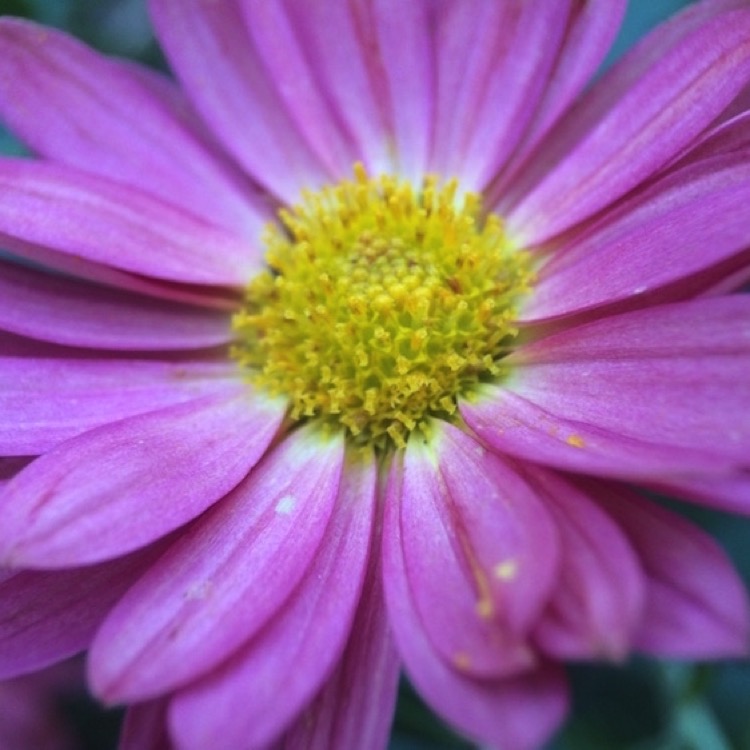
RSS
 

Posts Tagged ‘Macro’

Ricoh announces WG-50 rugged compact with 5x zoom, built-in macro lights

25 May

Ricoh has introduced a new rugged compact camera – the WG-50 – which replaces the WG-30. The WG-50 offers a 28-140mm equiv. F3.5-5.5 lens. The WG-50 uses a 16MP BSI-CMOS sensor and is capable of recording Full HD video at 30 fps. It is waterproof for two hours at a depth of 14m/45ft, and can cope with being dropped from a height of 1.6m/5ft, will operate at temperatures as low as -10°C/+14F and can withstand 100kg/220lbs of force.

As with Ricoh’s other recent rugged cameras, the WG-50 has an array of six LEDs around the lens that can be used to assist macro shooting, selfies and when using the 2MP digital microscope mode.

The camera will go on sale at the end of June in a choice of orange or black, and will cost $ 279/£249. For more information see the Ricoh website.

Press release

RICOH COMPANY, LTD and RICOH IMAGING COMPANY, LTD. announced the launch of the RICOH WG-50 digital compact camera.

This new model features a compact, lightweight body design, delivering exceptional waterproof and shockproof performance.

Developed as a standard-class waterproof digital compact camera, the RICOH WG-50 provides dependable performance and outstanding operability in demanding outdoor conditions. The WG-50 is waterproof to a depth of 14 metres, shockproof against falls from a height of 1.6 metres, and freeze-proof to temperatures as low as -10°C. It also provides a range of features to facilitate all types of still-image and movie shooting, including approximately 16.0 effective megapixels and Full HD (1920 x 1080 pixels) movie recording capability. It also comes equipped with an outdoor friendly LCD screen on the brightness can be instantly adjusted to the lighting levels in a particular shooting situation.

The RICOH WG-50 features a range of optional camera-mounting accessories allowing the user to fix the camera securely on a bicycle or watercraft. Using the camera’s creative shooting functions, such as interval shooting and Full HD movie recording, the user can capture unique images seen from a very different angle or viewpoint.

RRP £249.99
Availability: End June 2017
Colours: Orange or Black

Main Features

1. Heavy-duty construction allowing underwater shooting down to 14 metres, for up to two hours of continuous operation (equivalent to IPX 8 or JIS Class 8). The RICOH WG-50 is also shockproof against falls from a height of 1.6 metres,* dustproof (equivalent to IPX 6 or JIS Class 6), freeze-proof to temperatures as low as -10°C, and crushproof against weights up to 100kgf (kilogram force). ** Thanks to this heavy-duty construction, the camera performs superbly and dependably even in difficult and demanding outdoor conditions.
* Measured under RICOH IMAGING-original testing standards — from a height of 1.6 metres, onto a surface of 5cm-thick plywood — conforming to Method 516.5-Shock of the MIL-Standard 810F
** Measured under RICOH IMAGING-original testing standards

2. Exceptional image quality
The WG-50 comes equipped with a back illuminated CMOS image sensor, which delivers excellent high-sensitivity and low-noise characteristics and high-speed readout of image data signals. Coupled with a high-performance imaging engine, this image sensor delivers a top sensitivity of ISO 6400 and super-high-resolution images with approximately 16.0 effective megapixels. This model also provides advanced image processing functions, made possible by the latest super-resolution technology, to assure sharp, clear, high-resolution images. It also offers such innovative features as Hand-held Night Snap mode, which automatically captures several images of the same night-time scene from which it produces a single, blur-free composite image. Some advanced features have also been added to this model to facilitate and upgrade scenic photography. For example, white-balance optimisation in the Landscape shooting mode reproduces brilliant greens of trees.

3. 5X optical zoom lens with a 28mm wide-angle coverage
The WG-50 features a high-performance, five-times optical zoom lens with a focal-length coverage from 5mm to 25mm (equivalent to approx. 28mm to 140mm in the 35mm format) to accommodate a wide range of scenes and subjects, including sweeping landscapes. It also provides other convenient shooting functions, such as a macro mode to capture dramatic close-up images from a minimum focusing distance of a mere one centimetre; an Intelligent Zoom function to extend the zoom range to approximately 36 times (equivalent to 1008mm in the 35mm format) without compromising image quality and ideal for superior telephoto photography; and an interval shooting mode, which comes in handy for fixed-point observation.

4. Underwater shooting mode
Specifically designed for underwater photography, the Underwater and Underwater Movie shooting modes are programmed to optimise colour and contrast, based on the data of images actually captured under the water. These modes deliver sharp, true-to-life images by enhancing shades of red which are lost in underwater photography, while effectively compensating for the loss of contrast caused by the diffusion of light in water. During Underwater mode, the Flash Off + Flash On option, allows the user to consecutively capture two images — with a single shutter release — one without flash and another with flash.

5. Six Macro Lights to assist close-up shooting, and a Self-Portrait Assist mode
Ideally positioned around the circumference of the lens barrel for macro shooting, six LED Macro Lights allow the WG-50 to provide bright, uniform illumination on a subject when the Digital Microscope mode is selected.*** Using these Macro Lights, the user can clearly see a magnified view of the microscopic world on the camera’s LCD screen, normally undetectable by the naked eye, to effortlessly capture eye-catching, close-up images. In order to minimize camera shake and subject shake, the Instant Illumination Enhance function allows for the use of a higher shutter speed by automatically raising the discharge level of the Macro Lights at the moment of shutter release. The Macro Lights also provide other useful functions, such as a Self-Portrait Assist mode, which uses the blink of an LED lamp to check if the subject’s face has been safely captured within the picture frame, and the LED Lighting mode, which uses the Macro Lights as a lighting device in the dark.
*** When this mode is selected, the image size is fixed at 2.0 megapixels (at 16:9 proportions).

6. Full HD movie recording for extended shooting of high-quality movies
The WG-50 provides Full HD movie recording employing the H.264 recording format. Users can capture high-quality, extended movie clips (1920 x 1080 pixels, 16:9 proportions) at a frame rate of 30 frames per second. To add some creative touches to movie recording, it also features a high-speed camera function**** for slow-motion playback of captured movie clips, and an interval movie function. A micro-HDMI terminal (Type D) is also provided on the camera body for simultaneous output of Full HD movie clips and sound to external audio-visual devices.
**** When this function is selected, the recorded size is fixed at 1280 x 720 pixels.

7. Triple anti-shake protection to prevent blurred images in all applications
(1) Pixel Track SR mechanism
When recording still images, this advanced shake-reduction mechanism effectively compensates for camera shake by digitally processing affected images.

(2) Digital SR mode
When the camera detects low-lighting conditions in still-image shooting, this mode automatically raises the sensitivity up to as high as ISO 6400, making it possible to use a higher shutter speed and effectively minimise the adverse effect of camera shake and subject shake when dealing with poor lighting conditions.

(3) Movie SR mode
During movie recording, this mode effectively compensates for the misalignment of images caused by camera shake through the use of exclusive software to produce beautiful, blur-free movie clips.

8. 2.7 inch LCD screen with Outdoor View Setting mode
The WG-50 comes equipped 2.7 inch LCD screen with horizontally extended 16:9 proportions and approximately 230,000 dots. The screen’s AR (Anti-Reflection) coating minimises annoying glare and reflections to deliver a sharp, clear on-screen image even in sunshine during outdoor shooting. It also comes equipped with such convenient features as the Outdoor View Setting mode, which easily sets the optimal screen brightness level for a given lighting situation.

9. Other features

  • A range of WG-series mount accessories (optional) for a range of shooting situations
  • Two remote control receptors (one in front and another in the back) to widen signal coverage
  • Macro stand (included) to maintain a minimum focusing distance of one centimetre to the subject during extended observation and shooting of macro images
  • High-speed Face Detection function to capture as many as 32 faces in focus in approximately 0.03 seconds (minimum); Smile Capture function to automatically release the shutter when the subject’s smile is detected
  • Outdoor friendly Style Watch function to display the time on the LCD monitor, using an extended push of the OK button when the camera’s power is turned off
  • Delay-free, push-button start of the playback mode, using an extended push of the playback button
  • Auto Picture mode to automatically select the most appropriate shooting mode from 16 different scene modes
  • A choice of 12 digital filters
  • Pet detection function to automatically detect the face of a cat or dog

Ricoh WG-50 specifications

Price
MSRP $ 279/£249
Body type
Body type Compact
Body material Composite
Sensor
Max resolution 4608 x 3456
Image ratio w:h 1:1, 4:3, 16:9
Effective pixels 16 megapixels
Sensor photo detectors 17 megapixels
Sensor size 1/2.3" (6.17 x 4.55 mm)
Sensor type BSI-CMOS
Color space sRGB
Color filter array Primary color filter
Image
ISO Auto, 125-6400
White balance presets 6
Custom white balance Yes
Image stabilization Digital only
Uncompressed format No
JPEG quality levels Fine, normal, basic
File format
  • JPEG (Exif v2.3)
Optics & Focus
Focal length (equiv.) 28–140 mm
Optical zoom 5×
Maximum aperture F3.5–5.5
Autofocus
  • Contrast Detect (sensor)
  • Multi-area
  • Center
  • Tracking
  • Single
  • Continuous
  • Face Detection
  • Live View
Autofocus assist lamp Yes
Digital zoom Yes (7.2X)
Manual focus Yes
Normal focus range 50 cm (19.69)
Macro focus range 1 cm (0.39)
Number of focus points 9
Screen / viewfinder
Articulated LCD Fixed
Screen size 2.7
Screen dots 230,000
Touch screen No
Screen type TFT LCD
Live view Yes
Viewfinder type None
Photography features
Minimum shutter speed 4 sec
Maximum shutter speed 1/4000 sec
Exposure modes
  • Auto
  • Program
Scene modes
  • HDR
  • Handheld Night Snap
  • Movie
  • High Speed Movie
  • Digital Microscope
  • Landscape
  • Flower
  • Portrait
  • Underwater
  • Underwater Movie
  • Interval Shot
  • Interval Movie
  • Surf & Snow
  • Kids
  • Pet
  • Sport
  • Night Scene
  • Night Scene Portrait
  • Fireworks
  • Food
  • Digital SR
  • Report
  • Green
Built-in flash Yes
Flash range 5.50 m (at Auto ISO)
External flash No
Flash modes On, off
Drive modes
  • Single
  • Self-timer
  • Continuous
  • Burst
  • Remote control
  • Auto Bracketing
Continuous drive 8.0 fps
Self-timer Yes (2 or 10 secs, remote)
Metering modes
  • Multi
  • Center-weighted
  • Spot
Exposure compensation ±2 (at 1/3 EV steps)
AE Bracketing ±2 (3 frames at 1/3 EV steps)
Videography features
Format MPEG-4, H.264
Modes
  • 1920 x 1080 @ 30p, MOV, H.264, Linear PCM
  • 1280 x 720 @ 120p, MOV, H.264, Linear PCM
  • 1280 x 720 @ 60p, MOV, H.264, Linear PCM
  • 1280 x 720 @ 30p, MOV, H.264, Linear PCM
Microphone Stereo
Speaker Mono
Storage
Storage types SD/SDHC/SDXC card
Connectivity
USB USB 2.0 (480 Mbit/sec)
HDMI Yes (micro-HDMI)
Microphone port No
Headphone port No
Remote control Yes (Wireless)
Physical
Environmentally sealed Yes
Battery Battery Pack
Battery description D-LI92 lithium-ion battery & charger
Battery Life (CIPA) 300
Weight (inc. batteries) 193 g (0.43 lb / 6.81 oz)
Dimensions 123 x 62 x 30 mm (4.84 x 2.44 x 1.18)
Other features
Orientation sensor Yes
Timelapse recording Yes
GPS None

Articles: Digital Photography Review (dpreview.com)

 
Comments Off on Ricoh announces WG-50 rugged compact with 5x zoom, built-in macro lights

Posted in Uncategorized


Fujifilm GF 120mm F4 Macro sample gallery

18 Apr

The Fujifilm GF 120mm F4 Macro R LM OIS WR is one of three lenses currently available for the company’s medium format camera system (See our Fujifilm GFX 50S review). Stabilized and weather-sealed, it is intended for a wide range of uses including close-up work, portraiture or simply as a short tele for walking around. It offers a 95mm equiv. field-of-view and features a maximum magnification of 1:2.

Articles: Digital Photography Review (dpreview.com)

 
Comments Off on Fujifilm GF 120mm F4 Macro sample gallery

Posted in Uncategorized


Canon introduces EF-S 35mm F2.8 macro lens with built-in ring light

06 Apr

$ (document).ready(function() { SampleGalleryV2({“containerId”:”embeddedSampleGallery_8064378539″,”galleryId”:”8064378539″,”isEmbeddedWidget”:true,”standalone”:false,”selectedImageIndex”:0,”startInCommentsView”:false,”isMobile”:false}) });

Canon has introduced a compact 35mm F2.8 IS STM macro lens for crop-sensor DSLRs. Similar to the EF-M 28mm F3.5 Macro lens introduced a year ago, the 35mm F2.8 has a built-in LED ring light. 

The lens, which is equivalent to 56mm when mounted on crop body, has a minimum focus distance of just 3 cm (1.2 in.). It uses Canon’s ‘Hybrid’ IS system, with up to four stops of shake reduction. Canon says that the lead-screw-type STM motor allows for quiet AF operation, which is ideal for video capture. The lens has seven rounded aperture blades as well as a glass-molded aspherical element.

The EF-S 35mm F2.8 IS STM lens will ship this June with an MSRP of $ 349.

Press Release

UP CLOSE AND PERSONAL: CANON ANNOUNCES NEW EF-S 35MM F/2.8 MACRO IS STM LENS TO HELP EXPLORE THE BEAUTY OF MACRO PHOTOGRAPHY

New Compact and Lightweight EF-S Macro Lens Opens Up a World of Photographic Possibilities and Helps Capture Close Subjects with Incredible Detail

MELVILLE, N.Y., April 6, 2017 – Compact and lightweight, the new Canon EF-S 35mm f/2.8 Macro IS STM, announced today by Canon U.S.A., Inc., a leader in digital imaging solutions, is the widest-angle Macro offering in Canon’s popular EF-S lens series. The new lens is designed to help both entry-level and advanced amateur DSLR photographers discover the incredible possibilities of macro photography. Capable of capturing close-up subjects with incredible detail, Canon’s new EF-S macro lens is also the first in the series to feature built-in Macro Lites that allow users to control lighting with ease.

“Macro lenses are an amazing way to explore the worlds that exist all around us, and the new Canon EF-S 35mm f/2.8 Macro IS STM lens is the ideal starting point for amateur photographers eager to capture incredible, up-close details on the go,” said Yuichi Ishizuka, president and COO, Canon U.S.A., Inc. “Whether capturing a delectable dessert or the subtleties of a backyard flower, users will be challenged to find new colors and shapes that turn everyday moments into art.”

The new Canon EF-S 35mm f/2.8 Macro IS STM captures stunning images and is a terrific companion lens for entry-level users eager to expand beyond their existing Canon EOS DSLR kit lens. Capable of shooting as close as 30mm from the end of the lens to the subject, aspiring photographers can get up close to a fruit or flower for an entirely new perspective, while capturing high-quality images with beautiful background blur. Additional technologies built into the new Canon EF-S 35mm f/2.8 Macro IS STM lens include:

  • Popular 35mm focal length (56mm equivalent) and wide f/2.8 aperture
  • Hybrid IS system offers up to four stops* of shake correction
  • Smooth Movie Servo AF with Lead Screw-type STM ensures quiet AF operation
  • Full-time Manual Focus

In a first for the EF-S lens series, the new Canon EF-S 35mm lens sports built-in Macro Lites that allow photographers to carefully arrange macro lighting without using special equipment. With built-in LED lights on each side of the lens, users can create compelling shadows on either side of a subject or adjust intensity to give images a sense of dimension. Once the scene is set, the lens uses superb rendering performance to capture high contrast, sharp images.

While specialized for high magnification photography, the Canon EF-S 35mm f/2.8 Macro IS STM is still a versatile option for day-to-day use, easily capable of capturing portraits, landscapes or snapshots. As the latest addition to the lineup of EF-S lenses, Canon continues its commitment to providing a wide-range of affordable lens options for photographers of all levels.

The Canon EF-S 35mm f/2.8 Macro IS STM lens is scheduled to be available in June 2017 for an estimated retail price of $ 349.99.

Canon EF-S 35mm F2.8 Macro IS STM specifications

Principal specifications
Lens type Prime lens
Max Format size APS-C / DX
Focal length 35 mm
Image stabilization Yes (4 stops)
Lens mount Canon EF-S
Aperture
Maximum aperture F2.8
Aperture ring No
Number of diaphragm blades 7
Optics
Elements 10
Groups 6
Special elements / coatings Glass-molded aspheric element
Focus
Minimum focus 0.03 m (1.18)
Maximum magnification 1×
Autofocus Yes
Motor type Stepper motor
Full time manual Yes
Focus method Internal
Distance scale No
DoF scale No
Focus distance limiter No
Physical
Weight 190 g (0.42 lb)
Diameter 69 mm (2.72)
Length 56 mm (2.2)
Sealing No
Colour Black
Filter thread 49.0 mm
Hood supplied Yes
Tripod collar No

Articles: Digital Photography Review (dpreview.com)

 
Comments Off on Canon introduces EF-S 35mm F2.8 macro lens with built-in ring light

Posted in Uncategorized


Hasselblad to introduce 120mm macro for the X1D with three more lenses to follow

01 Mar

Medium-format camera manufacturer Hasselblad has announced that it will introduce four new lenses over the next twelve months for its X1D mirrorless model. The new lenses will be a 22mm wideangle, a 65mm moderate wide, a 120mm macro and the system’s first zoom – a 35-75mm.

The first lens to arrive will be the XCD 120mm F3.5 macro that will have a maximum image scale of 1:2 and a closest focus distance of 0.43m from the camera sensor. The focal length on the X1D sensor will deliver the angle of view we’d expect from a lens of just longer than 90mm on a 135 format system. As you’d expect, the lens has an integrated shutter and will be able to achieve synchronisation with flash at shutter speeds of up to 1/2000sec. The lens uses 10 elements in 7 groups and an internal floating focusing mechanism. It will weigh 970g and will measure 150mmx81mm.

Hasselblad says the flat field reproduction makes the lens ideal for accurate macro work, but that the moderate telephoto focal length will also suit portrait photographers. The autofocusing system is effective throughout the entire distance range, and the smallest aperture available will be F32.

While the 120mm macro is due to arrive in June there is no date yet for the release of the other lenses, but the company expects to make them available within the next twelve months. No technical data has been provided other than their focal lengths. Pricing will also be released closer to the availability dates. For more information on the Hasselblad XCD lens range visit the Hasselblad website.

 Hasselblad XCD lenses  Approx equiv focal length
 Existing lenses  
 45mm F3.5  35mm 
 90mm F3.2  70mm
 30mm F3.5  24mm
 New lenses  
 22mm 18mm
 65mm  50mm
 120mm F3.5 Macro  95mm
 35-75mm  28-60mm

Press Release

Hasselblad announces four new XCD lenses for the X1D

Combining Compact Format with the Highest Optical Quality

Following the hugely successful launch of the ground-breaking X1D in 2016, Hasselblad is delighted to introduce four new XCD lenses. The XCD 120mm Macro lens is the first to complement the existing XCD lens family, and will be available at the end of June 2017.

The exceptionally high performing 120mm F3.5 lens brings together the compact format of the XCD range with the maximum optical quality across the frame with a flat image field. Providing a new versatility to the X1D user, the lens is suitable for both close-up work up to a 1:2 image scale, and also as a mid-range telephoto lens for portrait or other photography requiring a longer focal length. Auto or manual focusing goes from infinity to 1:2 without the need for extension tubes.

Like the other XCD lenses, XCD 120mm Macro lens has an integral central shutter offering a wide range of shutter speeds and full flash synchronisation up to 1/2000th second.

Hasselblad Product Manager, Ove Bengtson commented: “The XCD 120mm Macro lens complements the existing XCD dedicated autofocus lenses which were developed to support optical quality and portability. This is the first addition to the X1D range of lenses in 2017 and we are excited to launch more lenses later in the year.”

Over the next 12 months, Hasselblad will also launch the XCD 35-75mm Zoom*, XCD 65mm*, and XCD 22mm Wide Angle* lenses. By the beginning of 2018, the X1D will have access to seven dedicated XCD lenses and all twelve HC/HCD lenses using the XH lens adapter.

XCD 3,5/120mm Macro Technical Specification 

  • 3.5/120 mm Macro
  • Focal length: 120 mm
  • Max aperture: F3.5
  • Min Aperture: F32
  • Image scale: 1:2
  • Angle of view: (diag/hor/ver): 26°/21°/16°
  • Integral central shutter
  • Full flash synchronisation up to 1/2000 sec
  • Size: diam 81 mm, length 150 mm
  • Filter diameter – 77mm
  • Weight: 970 g

Specification subject to change without notice.

Articles: Digital Photography Review (dpreview.com)

 
Comments Off on Hasselblad to introduce 120mm macro for the X1D with three more lenses to follow

Posted in Uncategorized


New 20mm F2 4.5x macro lens released by Mitakon

20 Dec

$ (document).ready(function() { SampleGalleryV2({“containerId”:”embeddedSampleGallery_8795135265″,”galleryId”:”8795135265″,”isEmbeddedWidget”:true,”standalone”:false,”selectedImageIndex”:0,”startInCommentsView”:false,”isMobile”:false}) });

Chinese optical manufacturer Mitakon has announced a macro lens with a maximum magnification ratio of 4.5:1. The Zhongyi Mitakon 20mm F2 4.5x Super Macro offers the opportunity to fill the frame of a 35mm-sized camera with objects four and a half times smaller than the camera’s sensor and can focus as close as 20cm, according to the company’s specification sheet.

The lens is manual focus, has apertures from F2 to F16, and uses a 3-bladed iris. The construction is of six elements in four groups with a metal barrel and a total length of only 60mm. The lens can’t be used for normal infinity focusing and the lowest magnification factor is 4x, so it is solely for macro use.

$ (document).ready(function() { SampleGalleryV2({“containerId”:”embeddedSampleGallery_4872648991″,”galleryId”:”4872648991″,”isEmbeddedWidget”:true,”standalone”:false,”selectedImageIndex”:0,”startInCommentsView”:false,”isMobile”:false}) });

Mitakon says the lens is available in mounts for Canon EF, Nikon F, Sony FE, Sony A, Pentax K, Sony E, Fujifilm X and Micro Four Thirds cameras, and costs $ 199. For more information visit the Mitakon website.

Press release

ZY Optics releases the Zhongyi Mitakon 20mm f/2 4.5X Super Macro Lens for high magnification shots

Zhongyi Optics (ZY Optics) has released a new compact Super Macro Lens for full frame cameras, the Zhongyi Mitakon 20mm f/2 4.5x Super Macro Lens and it features a high reproduction ratio up to 4.5:1.

Zhongyi Mitakon 20mm f/2 4.5X Super Macro Lens is very compact in its class which allows photographers to capture extremely fine details or patterns with ease. The lens is capable of creating unbelievable macro images ranging from 4x to 4.5x magnification. Users no longer need to DIY or use any extension tubes to reach high magnification shooting. It incorporates a 6pcs of elements in 4 groups structure which delivers impressive resolution from corners to corners. Weighing merely 0.5 lbs (230g) and 6cm long, it is a perfect companion for wildlife and outdoor shooting. The wide angle of view and close focusing distance allows you to compose creative images with more information included into the frame. Greater magnification (up to 13:1) can also be achieved by stacking extension tubes or bellows. The high magnification is also extremely useful for scientific purposes.

The enclosure of the lens is made of metal to strengthen its durability. Canon EF, Nikon F, Sony FE, Sony Alpha, Pentax K, Sony E, Micro Four Thirds, Fuji X mounts are available.

Pricing & Availability

Zhongyi Mitakon 20mm f/2 4.5X Super Macro Lens is now available to ship and purchase at ZY Optics authorized resellers and at our official website (http://www.zyoptics.net/). The Recommended Retail price is USD 199.

Articles: Digital Photography Review (dpreview.com)

 
Comments Off on New 20mm F2 4.5x macro lens released by Mitakon

Posted in Uncategorized


Sony FE 50mm F2.8 Macro Sample Gallery

16 Dec

$ (document).ready(function() { SampleGalleryV2({“containerId”:”embeddedSampleGallery_4532720281″,”galleryId”:”4532720281″,”isEmbeddedWidget”:true,”standalone”:false,”selectedImageIndex”:0,”startInCommentsView”:false,”isMobile”:false}) });

The Sony FE 50mm F2.8 Macro offers 1:1 magnification for a relatively minimal investment. We took it to our local conservatory and around the neighborhood to see how well it performs when getting extremely close to our subject. Click any of the images above to open them in our gallery viewer.

Articles: Digital Photography Review (dpreview.com)

 
Comments Off on Sony FE 50mm F2.8 Macro Sample Gallery

Posted in Uncategorized


Gear of the Year: Tamron 90mm F2.8 Di VC USD Macro F017

06 Dec

Regular readers of the site have seen more photos from this lens than they might realize.

The new Tamron 90mm arrived on our doorstep at some point in the early spring. I admit at first I wasn’t very excited, it just seemed like a run-of-the-mill ‘check that box’ lens for Tamron to round out their SP lineup. I also wasn’t excited because its EF mount meant getting out a beast: the Canon EOS 5DS R.

I took it along for my first trip to the Skagit Valley Tulip festival. Part of me was excited for this as-close-to-Holland-as-you-can-get-in-the-USA experience, but I wasn’t very happy about the fact that I was going to be doing tripod work.

In public.

With families around.

I’m a bit of a grump.

This isn’t to say I don’t see the value in using a tripod. Believe me, I do. However, most units readily available to me aren’t exactly easy to use when it comes to getting way down low to flower level. Most of them stood slightly taller than a tulip when at their shortest, and the tripods with the ability to turn the center column sideways to get low don’t work well with geared heads (my preference).

So, I was going in to battle with damaged morale, cumbersome equipment and a bit of apathy towards the entire scenario.

My opinions shifted as the day progressed.

Turns out, I really like 1:1 macro lenses, and the latest Tamron 90mm was the first to really help me realize that. Image stabilization, which isn’t new for this type of lens, was a huge assist for handheld shooting, especially with a camera that loves to highlight when you get it wrong.

Autofocus also worked better than I’m used to with macro lenses. The lens’ AF motor is quite quick, even at the closer focal lengths. Moving from minimum focus distance to infinity happens quick enough that it isn’t the end of the world if the lens suddenly decides to do a full hunt – although I rarely encountered that problem with the 5DS R. In fact, I took quite a few shots through the OVF and they came out perfectly sharp, which isn’t always the case when using the 5DS R.

Okay, so I shot tulips with it, who cares?

Sometimes in our articles you’ll see what we call ‘beauty’ shots of cameras headlining pages of our reviews. These images are typically shot outside somewhere pretty around the office, done by various members of the team.

After my positive experience shooting the Tulip Festival with the Tamron 90mm Macro, I started grabbing the lens and the 5DS R any time I went outdoors for product photography. From then on until we had to return the lens, I ended up bringing it with me any time I went to take beauty shots.

The focal length and focus capabilities are great for photographing all cameras, and the VC system means I can stop down for greater depth of field while still shooting handheld. It made the task quick and easy, allowing me to experiment and be creative.

So when I say you’ve seen more images from the Tamron 90mm than you might think, it’s because they’ve been hero images, or ‘beauty’ shots as they’re affectionately called in the office, for our reviews. Professional results, moderate price tag. That is what we’ve seen a few times now in Tamron’s SP series, and the 90 is no exception.

To see our beauty shots without any retouching check out our sample gallery.

$ (document).ready(function() { SampleGalleryV2({“containerId”:”embeddedSampleGallery_5004187909″,”galleryId”:”5004187909″,”isEmbeddedWidget”:true,”standalone”:false,”selectedImageIndex”:0,”startInCommentsView”:false,”isMobile”:false}) });
Articles: Digital Photography Review (dpreview.com)

 
Comments Off on Gear of the Year: Tamron 90mm F2.8 Di VC USD Macro F017

Posted in Uncategorized


Olympus STF-8 Macro Flash is first weatherproof model of its kind

08 Nov

Olympus has announced what it says is the first ever macro twin flash with a weatherproof construction: the new STF-8 Macro Flash. This model is, according to Olympus, both splashproof and dustproof with construction that can withstand temperatures as low as -10°C / 14°F. Features include a guide number of 8.5 when both heads fire and of 6 when one head fires, as well as full TTL auto-sync, removable heads, customizable positioning, and manual output control down to 1/128.

The new Macro Flash is compatible with the following lenses:

  • M.ZUIKO Digital ED 30mm F3.5 Macro
  • M.ZUIKO Digital ED 60mm F2.8 Macro
  • M.ZUIKO Digital ED 12-40mm F2.8 Pro

Says Olympus, users can also attach third-party step-up and step-down rings to use other lenses. The STF-8 is available to preorder from some retailers now, including B&H Photo, for $ 479 / $ 600 CAD. Shipping will start in January 2017. 

Source: Olympus

Articles: Digital Photography Review (dpreview.com)

 
Comments Off on Olympus STF-8 Macro Flash is first weatherproof model of its kind

Posted in Uncategorized


Tips for Doing Macro Underwater Photography

04 Nov

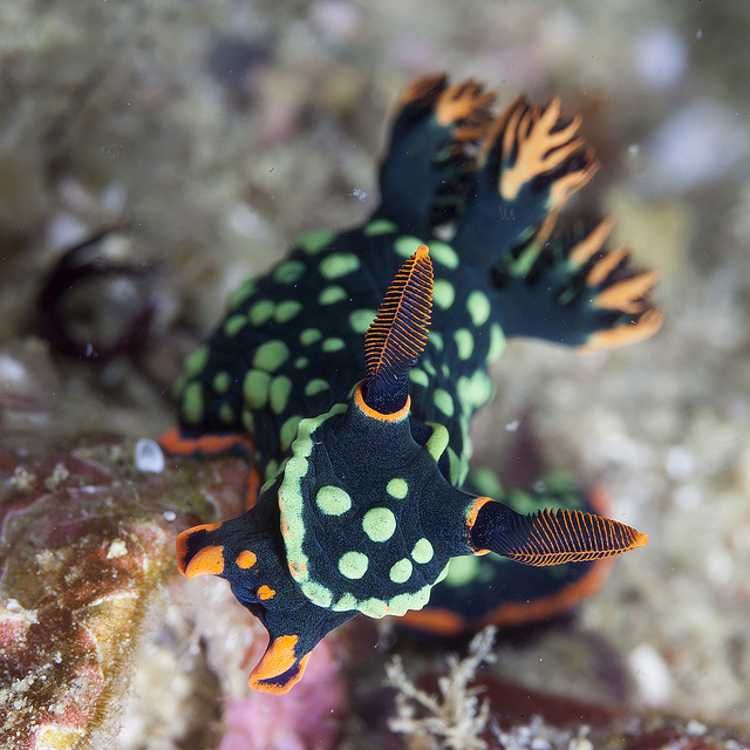
Look at the photograph below. What an unreal, alien animal! It could be right out of one of the many upcoming Star Wars sequels. You just don’t see creatures like that in your everyday life. It’s a sea slug (to be scientifically precise: Nembrotha Kubayana) which I photographed 20 meters underwater on a reef in the Philippines. The head of the slug is only about a centimeter across, so the image is quite a close-up (macro photograph).

Nudibranch1

If it doesn’t sound easy to dive 20, 30 or more meters below the ocean’s surface to take a picture of a slug the size of your pinky – it isn’t. But with the right gear, with the proper knowledge and experience using that gear, and with skills to find those small animals you can do it too. So let’s talk about each of these points one at a time.

The Gear

Naturally, you will need an underwater camera. There are a number of great choices these days. Compact cameras have greatly improved in recent years, and you can get a pretty good deal on a camera plus the fitting underwater housing. Many camera manufacturers make acrylic housings for their own compact camera models, which tend to be a lot cheaper than third party models. To have any chance of taking good macro shots, you need a strobe or a video light as well.

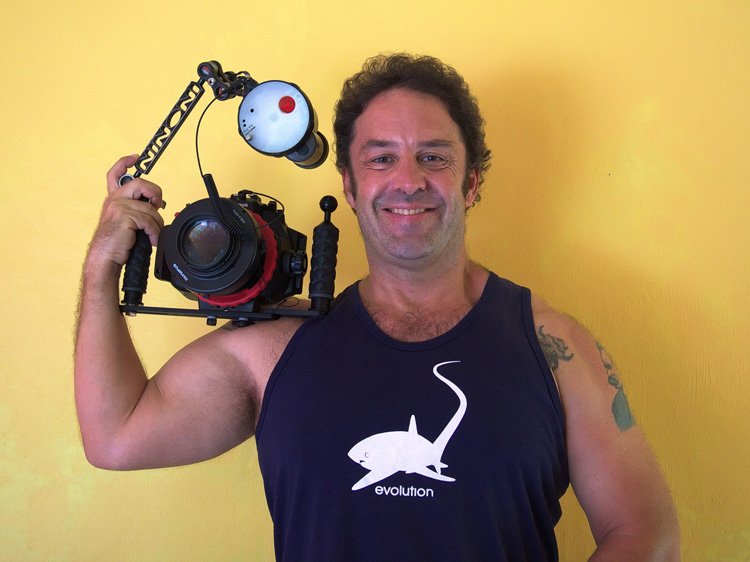
underwater-macro-setup

Me with my underwater camera setup. Note the diopter (magnifying lens) attached to the front of the lens port. The strobe is relatively close to the port and aimed slightly forward. The closer the subject, the closer the strobe can be to the port. The farther away the subject is, the further the strobe has to be to avoid backscatter.

If you have a lot of money or if you are obsessed with underwater photography (like myself) you can get yourself a DSLR, and put it in an underwater housing. I have been using a Canon 5DII in a Hugyfot (machined aluminum) housing, with two Inon z-240 strobes for several years now. Camera choice is an interesting and complex issue, but I want to concentrate on the gear you need specifically for underwater macro photography.

Macro lens

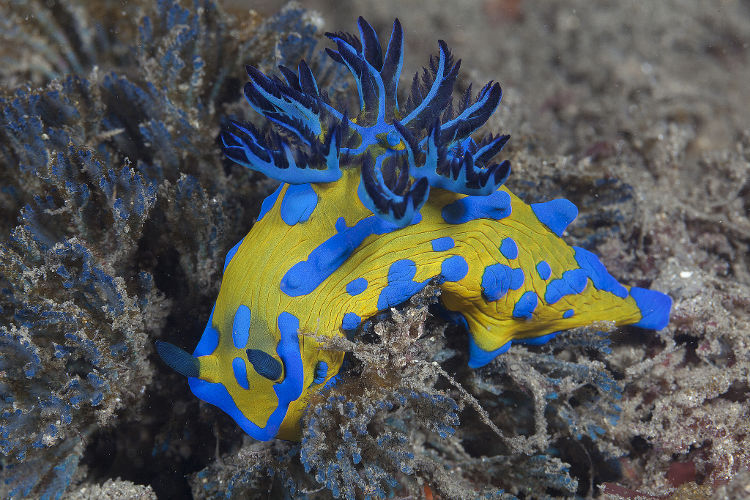
Tambja

Another sea slug, from Botany Bay, Australia.

Modern macro lenses are technological miracles. If you are using a DSLR or a mirrorless camera, you can switch lenses. So you need to mount one that is capable of focusing close up, with significant magnifying power. I routinely use the Canon 100mm f/2.8 macro lens(price it on Amazon or B&H Photo), which can focus at 35 centimeters. That distance is measured from the sensor plane, hence I can place the subject only a few centimeters in front of the housing’s lens port. The sharpness this lens achieves when capturing minute animals is simply amazing. Nikon’s 105mm macro (price it on Amazon or at B&H Photo) is a legendary lens as well, and for cameras with cropped sensors (mirrorless cameras and entry to mid-level SLRs) 60mm macro lenses do a great job.

Other options

A small, but clever piece of gear I have been using with quite some success, is an extension tube. It’s simply a spacer inserted between the macro lens and the camera body. The extension tube eliminates the ability of the lens to focus to infinity (not used in macro photography anyway) and adds another 20% of magnification. The fact that no additional lens elements are introduced is a good thing for image quality.

Diopters (also called close-up filters) are also highly recommended. A diopter is simply a magnifying glass which is placed on the front of the camera’s lens. This is not ideal in terms of the optics, and distortions towards the edges are possible. With diopters, it makes sense to invest in a quality product to minimize such distortions. However, the amount of magnification achieved with a good diopter is absolutely mind-boggling. It can turn your underwater camera setup into a field microscope.

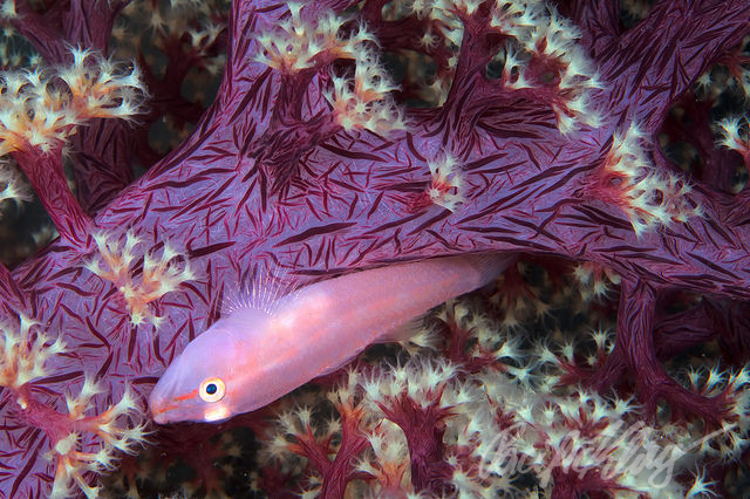
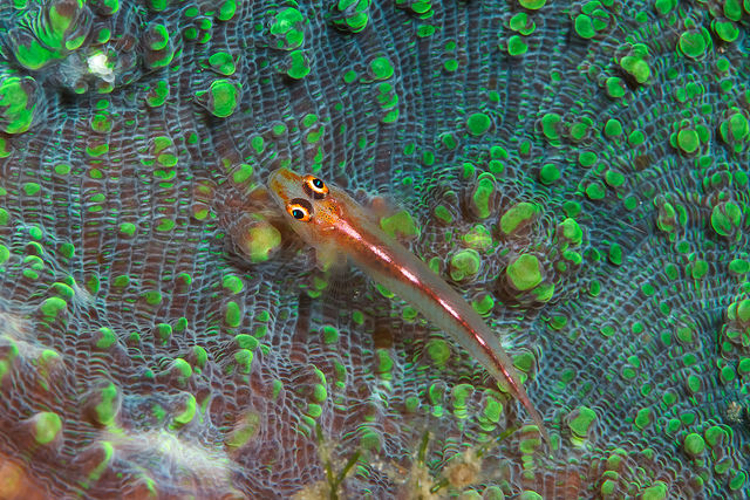
Goby2

Another goby, very well camouflaged on a soft coral.

You can get both dry diopters which are attached to the actual lens, and wet diopters which are attached to the lens port on the outside of the housing. Wet diopters exist for DSLR and compact camera underwater setups. The convenient thing about the wet ones is that you can take them off underwater, and shoot larger animals again.

Tip: Make sure you store your wet diopter in a safe place when it’s not mounted.

Request: If you see a wet diopter for a 10cm diameter macro port, with a gray plastic mount somewhere on the west coast of Cebu, please return it to me.

How to use your macro gear

I’d like to stress two things when it comes to the proper camera technique for macro underwater photography – camera settings and strobe placement.

Almost all the light for your underwater photographs will come from your artificial light source anyway, so the shutter speed is usually not important. It needs to be equal or slower than the maximum speed your camera can synchronize with the strobes. That kind of information will be in the user manual for your camera since it differs between camera models. Otherwise, a shutter speed as fast as possible is beneficial for sharp images.

Goby1

A small goby on a piece of hard coral, with the entire image in sharp focus. Canon 5DII, Canon USM 100mm f2.8 lens, at f/22.

Aperture considerations

A small aperture helps to keep the whole scene in your image sharp. Macro lenses naturally have a shallower depth of field due to the distance to subject being much smaller. So to photograph a tiny goby and all of the pretty coral it perches on, with all of it in focus, I use an aperture anywhere from f/22 to f/32 (that’s the smallest my Canon 100mm f2.8 macro can do).

There is also the option of using a wider aperture to achieve a Japanese-style effect in your images. Such a photographic style is indeed popular with Japanese underwater photographers these days. It is somewhat reminiscent of the late medieval Japanese painting style where the artists would just hint at a few twigs to depict a tree. How wide you can go depends on your lens, the distance to the subject and its orientation. The aperture of f/4.2 used in the picture below is as wide open as I can go. Whenever I can, I set my camera to approximately correct values before the dive so that I don’t have to find my way around in the menus while already underwater with a cool fish showing up in photographic range.

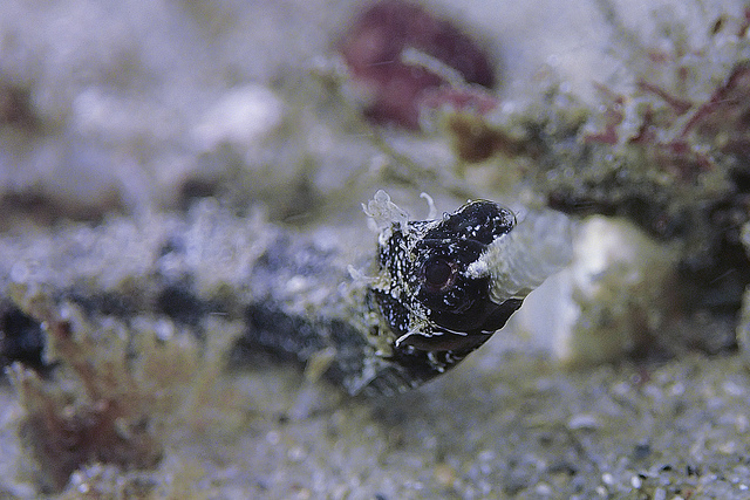
Stick

Only the face of this stick pipefish from Sydney in Australia is in focus. This Japanese style shot gives the image a dreamy atmosphere. Olympus TG-1, at f/4.2.

Lighting

You will need to use artificial light for most of your macro shots. Light-hungry macro lenses will not make good images with sunlight in many situations on land, and underwater, with so much sunlight absorbed by the water above you, they do even worse. The internal flash of most cameras is not strong enough and it’s in a less-than-ideal position just above the lens.

Avoid back-scatter

The external strobes you use should be mounted on some kind of adjustable or bendable arm. Keep them positioned moderately close to your lens, and a bit behind it. In underwater photography, you are always aiming to avoid back-scatter. Your strobe will light up the suspended particles in the stretch of water between your lens and the sea slug, and this will make your image look as if taken in a snow storm. There is nothing quite as annoying in underwater photography than a well composed, well lit shot, with a lot of back-scatter ruining it. You can take care of back-scatter in post-processing to some degree in some shots, but it’s a pain and better avoided, to begin with. Back-scatter is to underwater photography what blisters are to hiking.

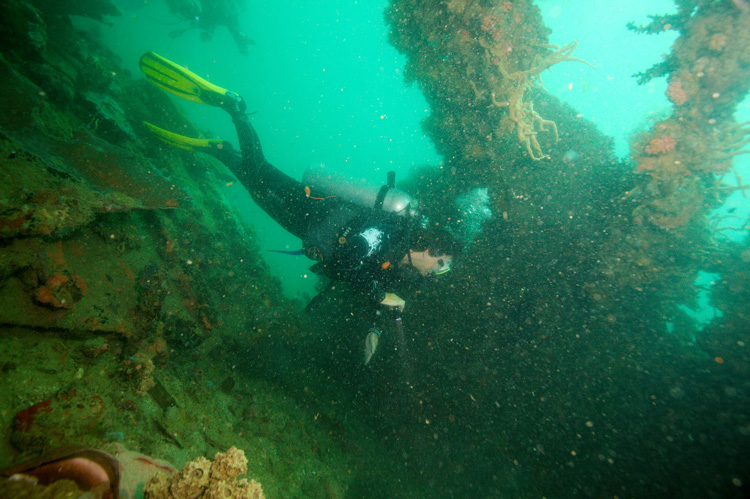
A diver on a shipwreck in the Philippines. These are harsh conditions for underwater photography. I had my strobes turned outwards, and placed away from the camera, but not enough. The illuminated particles (the backscatter) stand out especially in front of the darker part of the wreck.

A diver on a shipwreck in the Philippines. These are harsh conditions for underwater photography. I had my strobes turned outwards, and placed away from the camera, but not enough. The illuminated particles (the back-scatter) stand out especially in front of the darker part of the wreck.

When shooting wide-angle underwater, you need to place your strobes far away from your lens and slightly outward-oriented to avoid illuminating any particles in front of the lens’s wide field of view. This minimizes the amount of light reaching the space between your lens and the subject.

Positioning your strobes

In underwater macro photography, the situation is not quite as difficult. Still, the further away you are from the subject (the distance may vary between the subject almost touching the front of the lens port to no more than 30cm) the more you need to move your strobes away from the lens. When I am really close, I try to mimic a ring-flash with my two underwater strobes. In case you haven’t seen one, a ring-flash is a circular light source which is mounted on the front of a macro lens. Such a strobe is often used in land-based macro photography. It provides very even illumination. Putting one of my underwater strobes close to each side of my camera’s lens port gives me a similar type of direct, smooth illumination.

How to find good underwater macro subjects

Photo legend Jim Richardson is quoted as saying that, “If you want to be a better photographer, stand in front of more interesting stuff.”. Underwater, that’s not quite true. You need to hover in the water in front of more interesting stuff, or at least lay in the sand in front of more interesting stuff, but that doesn’t look quite as stylish. And you should definitely not lay on corals in front of more interesting stuff because you may break them and it will evoke the rightful anger of a lot of other divers!

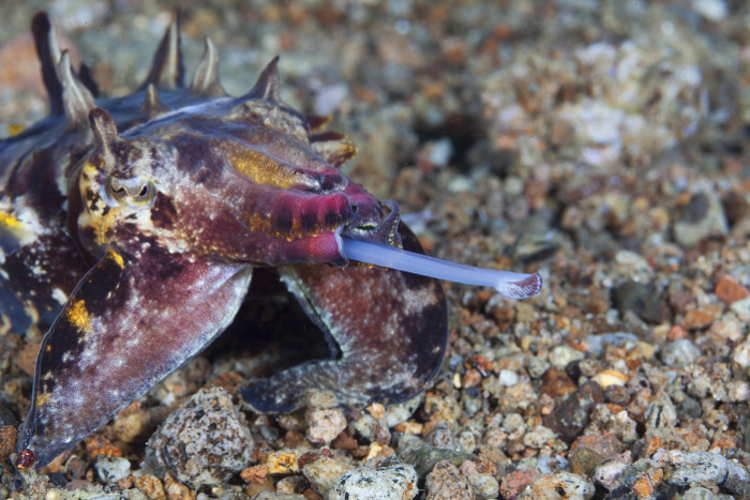
Hunter

A flamboyant cuttlefish hunting in the Philippines. This animal is about 5cm long.

Good buoyancy will have other advantages besides not breaking corals (thank you again for not doing that). If you are stable in the water, you will be able to position yourself in a proper position in front of the animal you’d like to shoot. You will also not stir up silt or sand from the bottom, which would then cloud the image you are about to capture and cause the aforementioned dreaded back-scatter.

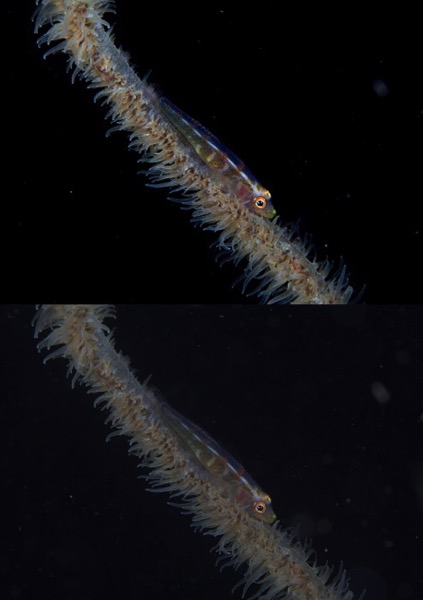
Whipcoralgoby

Whip coral goby, Moalboal, Philippines.

Back-scatter happens, to the best of us, including myself (above).

In the bottom image (before) we see way too much backscatter. I did two things. First I corrected the exposure of the image, cutting off the darkest part. This eliminated some of the unsightly dots. The remaining white dots I removed with the healing brush in my image processing program. The resulting image on top is vastly improved by these two post-processing manipulations.

Don’t spook your subjects

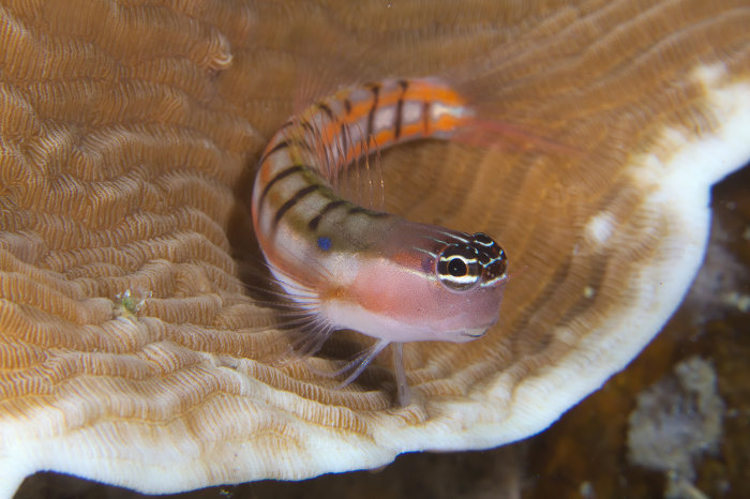
A neutrally buoyant, controlled, and calm approach towards your photo subjects will also reduce the chance of spooking them. There is a lot to be said for good buoyancy when photographing underwater. If you are not quite there yet with your positional control while diving, try photographing less easily spooked animals like slugs and sea urchins, and save the shrimp (very nervous) or the blennies (very fast) for the future once you have improved your buoyancy.

Blenny

A blenny. Not easy to catch!

Hunting subjects

What you have to figure out next is where to find those psychedelic slugs and the fish straight out of Salvador Dali’s sketchbook. If you are on a diving vacation in some foreign tropical land, just follow your guide, and pay good attention to what he points at. The guys and gals guiding every day, year in and out, in the same location, usually know their reefs really well and are proud to show off the unusual animals on it. It also helps to have a quick chat with your dive guide beforehand and to tell him that you are out to find interesting macro subjects.

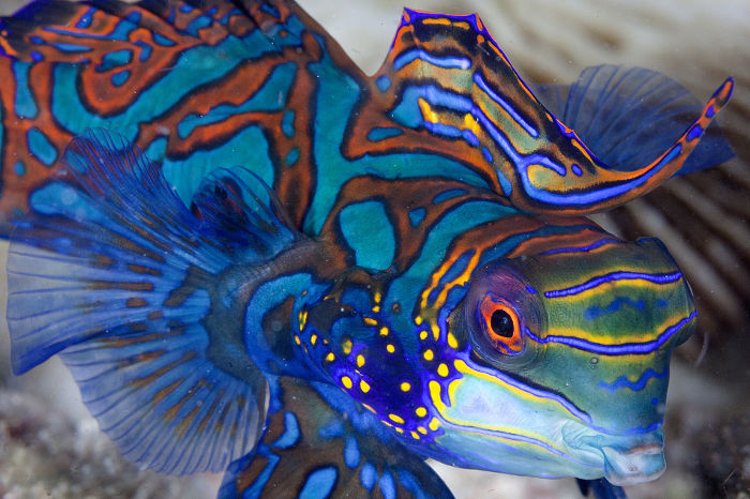
If you are diving on your own, things will move a bit slower. You will have to become that expert guide yourself. Study the reef when you are diving and study marine life books and web resources on land to figure out what to look for, where, and when. Certain animals will only be active at night, or at sunset (like the famous mandarin fish shown below). Some crabs will only live on one species of soft coral, and some shrimps will only live on the skin of certain sea cucumbers. If you don’t know where to look for them, it’ll be near impossible to find them. It’s a curious psychological effect that you will find such animals over and over again after you have spotted them once for the first time.

Mandarin

A mandarin fish! So pretty!

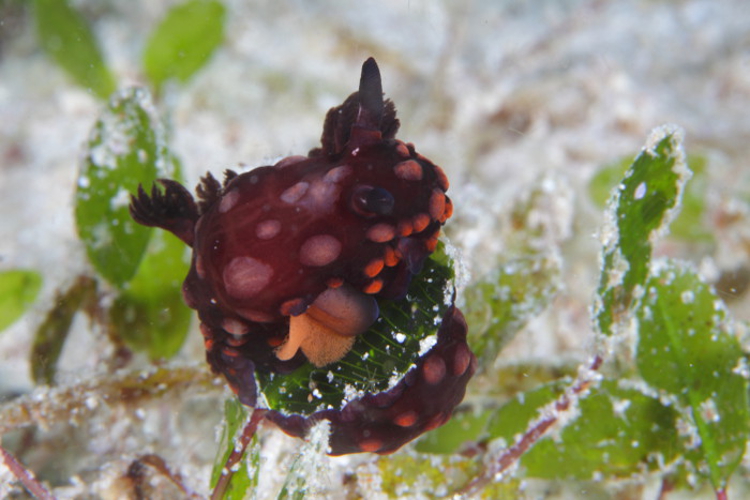
Nudibranch2

Sea slug laying its eggs (these slugs called nudibranchs are hermaphrodites, functioning as males and females at the same time). It was magic moments of animal behavior like these that got me addicted to macro photography underwater.

Conclusion

To become a skilled macro underwater photographer you need patience. Go for a dive, take some shots, come back, look at them, and think about them. Rinse (your camera gear, and yourself) and repeat. Take your time to inspect your work, and to reflect on what you could do differently next time. I recommend that you consider the points above during each and every iteration and the following questions:

Did I bring the right gear? Did I use it properly? Did I do a good job in finding that fascinating new sea slug?

Please put your comments and questions below, and do please share your underwater photos there too. We’d love to see them.

googletag.cmd.push(function() {
tablet_slots.push( googletag.defineSlot( “/1005424/_dPSv4_tab-all-article-bottom_(300×250)”, [300, 250], “pb-ad-78623” ).addService( googletag.pubads() ) ); } );

googletag.cmd.push(function() {
mobile_slots.push( googletag.defineSlot( “/1005424/_dPSv4_mob-all-article-bottom_(300×250)”, [300, 250], “pb-ad-78158” ).addService( googletag.pubads() ) ); } );

The post Tips for Doing Macro Underwater Photography by Dr. Klaus M. Stiefel appeared first on Digital Photography School.


Digital Photography School

 
Comments Off on Tips for Doing Macro Underwater Photography

Posted in Photography


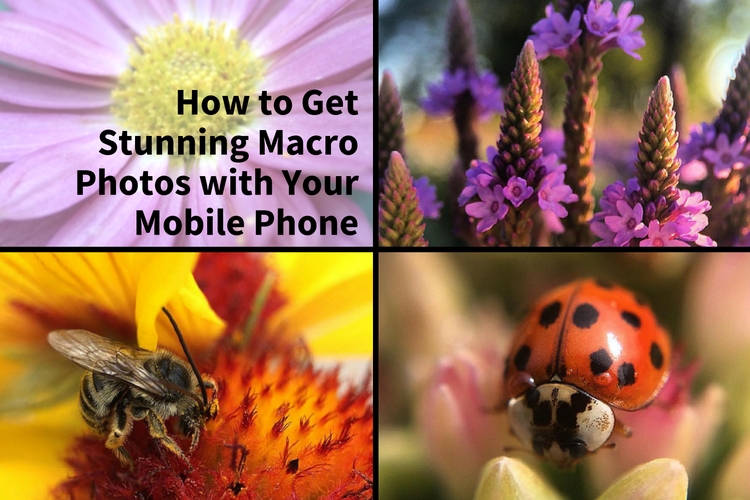
How to Get Stunning Macro Photos with Your Mobile Phone

01 Nov

If you’ve ever scrolled through Instagram or Flickr and seen an incredible close-up photograph of a flower, insect, or even jewelry, you may have wondered how you can get similar photos, especially if you don’t have a camera. Thankfully, you don’t have to buy a DSLR or expensive macro lens to get these kinds of shots. All you need is a mobile phone, a simple accessory, and a bit of curiosity. In this article, I’ll go through some tips to help you get stunning macro photos using your mobile phone.

how-to-get-stunning-macro-photos-with-your-mobile-phone

Busy

Lenses

While some phones have a macro mode, the best way to get amazing macro photos with your phone is to invest in an inexpensive lens (or set of lenses) that work specifically with your device. I have an iPhone 5s and initially purchased the Olloclip 4-in-1 set that includes lenses for wide-angle, fisheye, macro 10x, and macro 15x.

I quickly discovered the 10x was my personal favorite since it best suited most of my subjects. So I also got the Olloclip Macro 3-in-1 that has lenses for 7x, 14x, and 21x, as well as a couple special hoods that diffuse the lighting and make getting a good shot a bit easier. Over time, I’ve discovered that the 7x lens is my go-to for nearly all of my macro photos since it can capture a large enough area while still getting lots of detail. You can experiment and use any of these magnifications to get the types of shots you are not able to take with your phone camera alone.

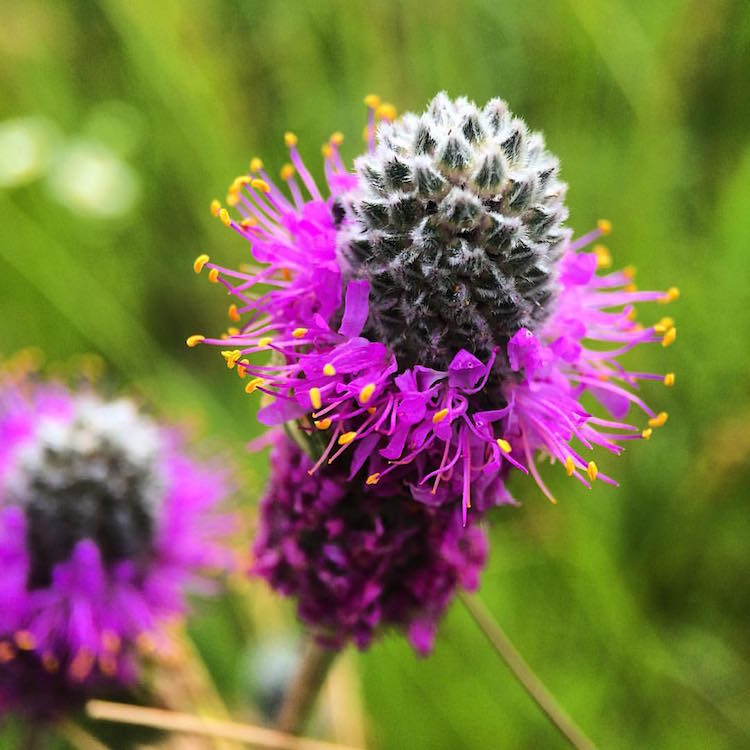
Prairie

Options

There are definitely other brands and magnifications available, but make sure that the lens you buy fits with your phone and won’t get in the way of taking photos. Note that most lenses slip over your phone so you cannot typically use them with a phone case. Olloclip has special cases with openings at the camera area for easy access, or you can go without a case.

You never know when you might come across something that will make for a good macro photo. Initially, I suggest taking your lenses with you (they fit in a pocket), especially when you go outside so that you can experiment with different subjects. A garden or another area with flowers or insects is a great place to try out your new lens. Or if it’s winter, use your lens as an excuse to buy a bouquet of flowers.

Garden

Lighting

As with all photography, lighting is critically important for taking good macro pictures. Daylight is probably the best and easiest to work with, but bright sunlight can make for tricky shadows. With macro photography, sometimes you can simply move your subject to decrease shadows by gently bending a flower stem or turning a leaf toward you.

Fullsun

You can also use your body to block bright sunlight or put a hand over your subject to reduce glare. You can play around with sunrise and sunset, and catch lighting in the background of your images. With macro lenses, the light will often turn into a lovely addition to your photos in the form of bokeh, or out-of-focus areas that make your pictures appear to glow.

Bokeh

Note: you can also add light. Read: How to Create Gorgeous Flower Images using a Flashlight and a Reflector

Focus and framing

With macro photos, there are endless ways to frame your subject, but you will be limited in the depth of field or the area of the photo that will remain in focus. You want the subject to remain (mostly) in focus, depending on your magnification. The larger the magnification, the smaller the area of exact focus in your pictures. This can lead to surprisingly beautiful photos which you might not expect to get from just your mobile phone.

Sunset

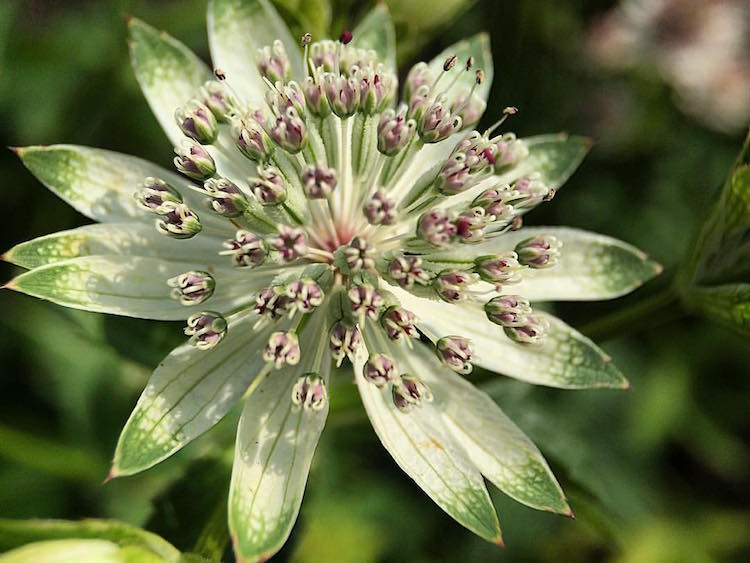
Sometimes your intended subject will be too large to fully capture, even with the smaller magnification (like the 7x lens), so you may have to focus on only a part of the subject like the center of the flower, or a few petals. This is the fun part of macro photography! You can shoot the subject from directly above, from the side, or even from below. Experiment with different angles for the same subject.

Center

Other notes

When taking macro photos, any movement is your enemy. Even slight movement while shooting will result in blurriness. You will need to remain very still, and do everything you can to keep your subject from moving. A tripod for your phone can help but isn’t necessary. Just find a position that’s comfortable, stay as still as possible, and steady your phone with two hands.

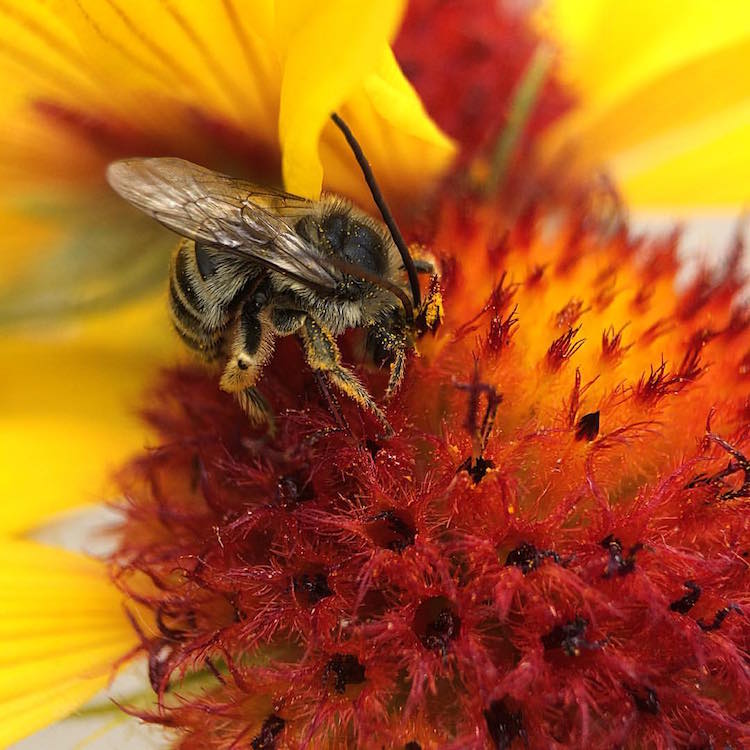
Sometimes, like on a breezy day, it’s impossible to keep your subject in one place. You can sometimes hold your subject still (as with a flower), but other times you can’t, as with shooting insect photos. One helpful tip for these situations is to use the burst mode on your phone’s camera which takes many shots in rapid succession. On an iPhone, you can hold down the camera button on the side of the phone or on-screen to shoot multiple photos very quickly. Android phones usually have a way to do this, too. If you don’t have built-in burst most, just take many photos while staying as still as possible. This is how I get most of my insect photos, patience and taking many shots. It’s easy to weed out the blurry photos later.

Beebalm

Editing – especially for Instagram users

Since many people who use their mobile phones for photography also use Instagram to share them, here are a couple extra tips for Instagram users.

1. You don’t need to use Instagram’s filters to make great photos.

Adjusting color or warmth slightly can make your photos look more like real life. In the image below, the only adjustment has been to crop the image.

Original

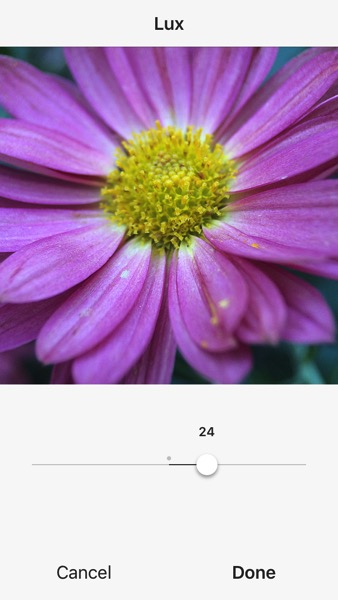
2. Turn up the Lux

This is the little light/dark option at the top of the screen when you are on the Filter or Edit pages in the Instagram app. Using this editing trick (try moving it to the right to 50 or even 100), you increase the intensity of your images. This makes the photo a little less washed out, which can help if you’re taking photos on a very bright day. In the image below, this is turned up slightly and adds more depth to the petals.

Lux

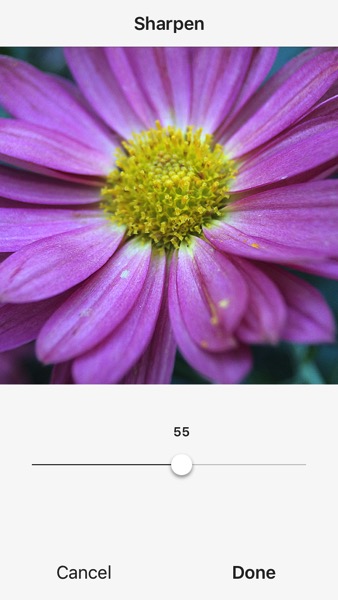
3. Sharpen your macro photos

Using Instagram’s own built-in sharpen edit, you can bring a bit more detail out of your macro photos. In the image below, this has been adjusted and brings out the detail in the center of the photo.

Sharpen

Conclusion – your turn

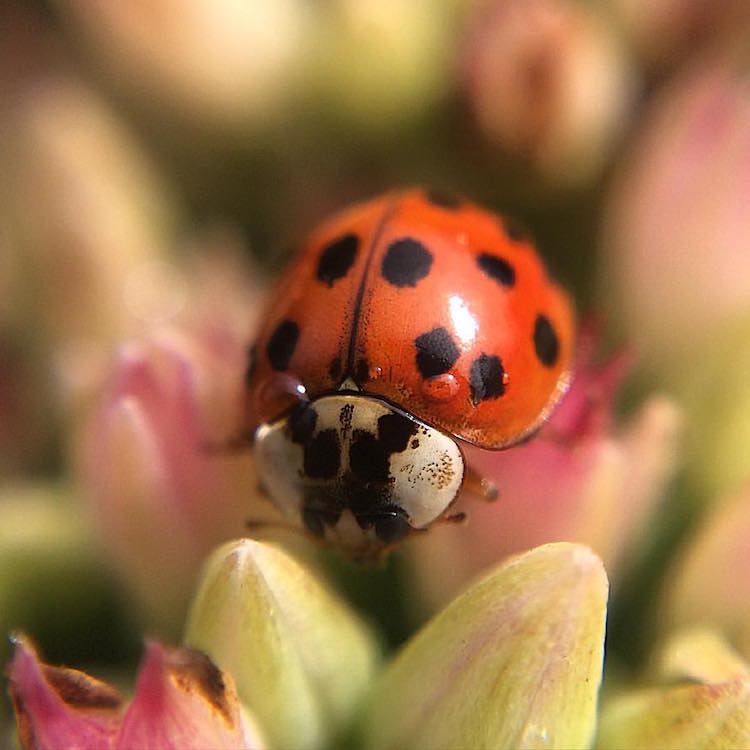
Do you have any tips for getting good macro shots with a mobile phone, or with other gear that doesn’t cost a lot of money? Leave your thoughts in the comments below, and feel free to share your own macro shots, too. I’d love to see your photos.

Ladybug

googletag.cmd.push(function() {
tablet_slots.push( googletag.defineSlot( “/1005424/_dPSv4_tab-all-article-bottom_(300×250)”, [300, 250], “pb-ad-78623” ).addService( googletag.pubads() ) ); } );

googletag.cmd.push(function() {
mobile_slots.push( googletag.defineSlot( “/1005424/_dPSv4_mob-all-article-bottom_(300×250)”, [300, 250], “pb-ad-78158” ).addService( googletag.pubads() ) ); } );

The post How to Get Stunning Macro Photos with Your Mobile Phone by Beth Ringsmuth Stolpman appeared first on Digital Photography School.


Digital Photography School

 
Comments Off on How to Get Stunning Macro Photos with Your Mobile Phone

Posted in Photography