RSS
 

Posts Tagged ‘Long’

8 Reasons to Love Long Exposure Photography

06 May

Long exposure photography is not a new type of photography, but it is one that is gaining in popularity. Many photographers are buying Neutral Density filters (ND Filters – more on them below) to capture their own long exposures. It is quite an addictive form of photography. Over the last couple of years I have added many different ND filters to my kit. I use Formatt Hitech filters, though there are other brands that have them as well. Here are some reasons why I love this type of photography.
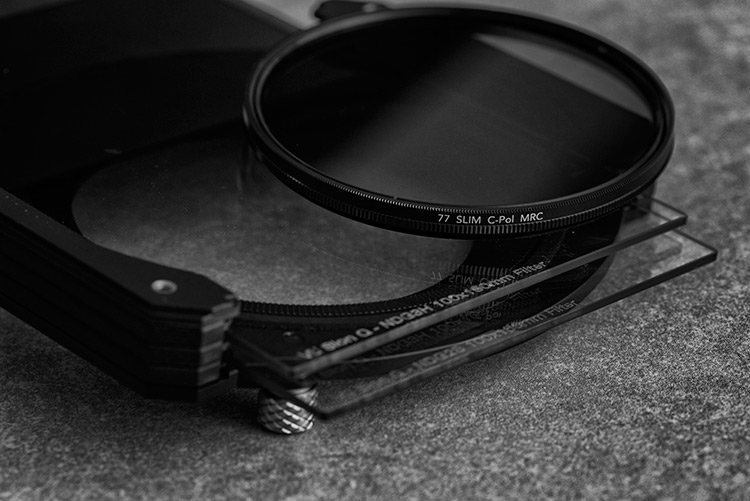
Drop-in and screw-in filters

Note: Neutral Density filters or ND Filters are designed to restrict the amount of light that enters the lens and camera. They can either screw onto the end of the lens or you can buy brackets that will fit square ones. They came in different densities, and how dark they are is referred to by how many stops of light they block. The most common ND filter is the 10 stop which many brands make. The neutral refers to them having no colour, supposedly. They are meant to have no colour and cause no colour cast in your images, though the more stops the filter has, often the more likely you are to get some colour cast. Cheap ND filters always have a colour cast, usually magenta. If you want to get serious about doing long exposure photography, then purchasing good quality filters from the start is something you will never regret.

1 – Get a smooth look to water, or show how the water moves

One of the more popular ways of using long exposures is to smooth out water to make it look still or frozen. This can be done with the ocean, rivers, and lakes. It can make the water in a scene less distracting because the water doesn’t have any movement in it. The image is then more about the sky, the rocks or whatever else is there.
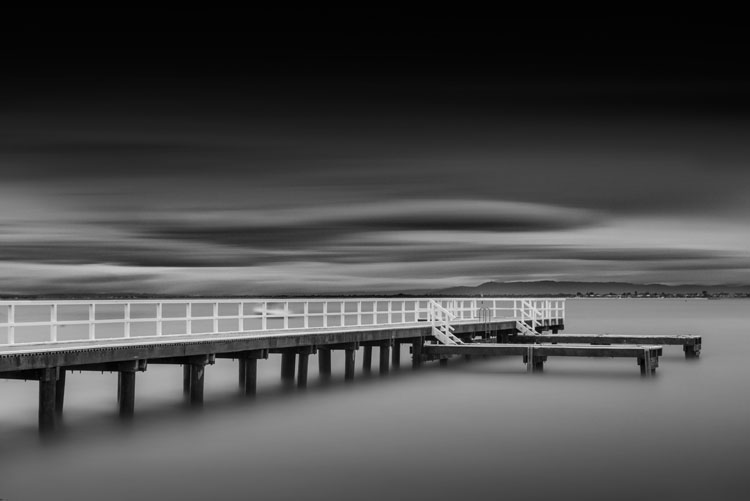
LeanneCole-7reasons2lovelongexposures-daveysbag

A pier at Davey’s Bay, the long exposure has blurred the clouds and smoothed the water – 5 minute exposure.

Another alternative is to do long exposures of around a second, so you can see the movement of the water. As the tides come in and out on the beach, you can see where it has been, it almost looks like a slow motion capture. It’s a wonderful effect and we are seeing it a lot more. Though water moving on the beach isn’t the only way to use it, water falling over rocks can be just as engaging.

Waterfalls are another type of long exposure that people love. Though many waterfalls are down in canyons, you still need a ND filter to get that smooth marshmallow effect with the water as it flows down. Though, you don’t often need a multi-stop one like you would for the previous water examples.
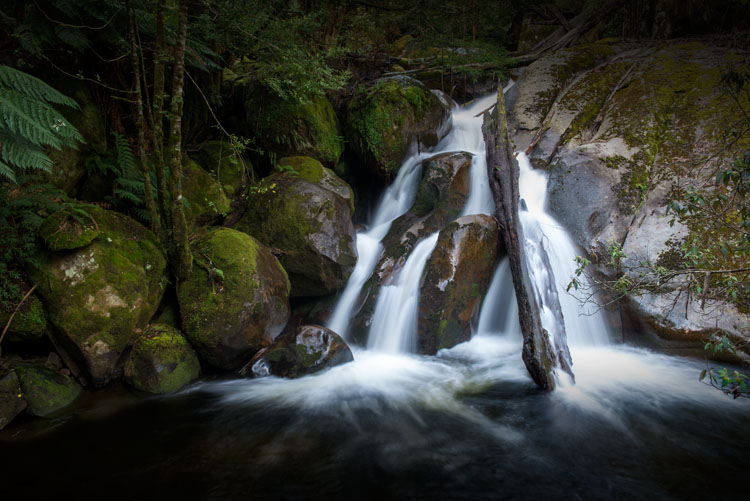
LeanneCole-7reasons2lovelongexposures-taggertycascades

Adding a few seconds (1.33 seconds) to an image of a waterfall gives it a lovely marshmallow effect. You can also see the movement of the water.

2 – Get blurred clouds

Architecture is a very popular subject for long exposures because you can blur the clouds. It gives the image a different look, and it almost seems like your subject is lost in time. With blurring the clouds, it also makes the building(s) you are photographing your main focus point, and gets rid of any distractions.
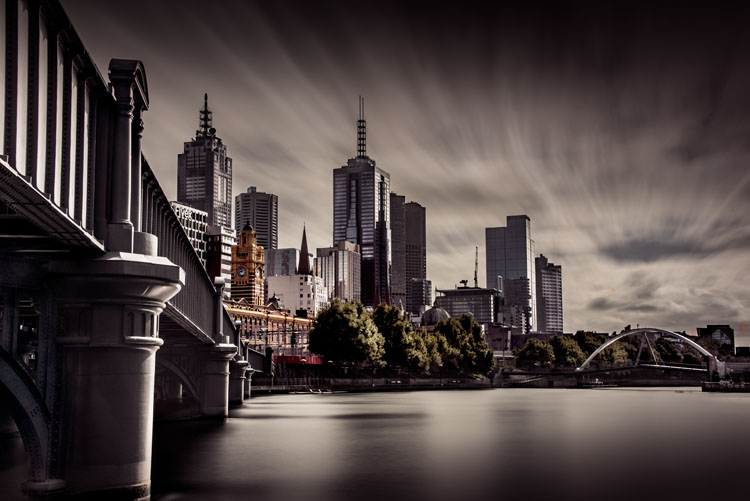
LeanneCole-7reasons2lovelongexposures-melbourne

Melbourne from across the river. The long exposure (4 minutes for this shot) gives the view a different feel to what we normally get.

3 – You can clear spaces of people and traffic

If you love photographing areas in towns and cities, but one of the challenges of that type of photography is that people are always around, long exposures using filters will help you clear those distractions. Exposures of several minutes can almost clear a scene of people, though it depends on the density of them. A scene where there are only a few people walking around can come out with the appearance of being empty with a long exposure. However, where there are many people you will find that they just blur, though this can be a great effect as well.
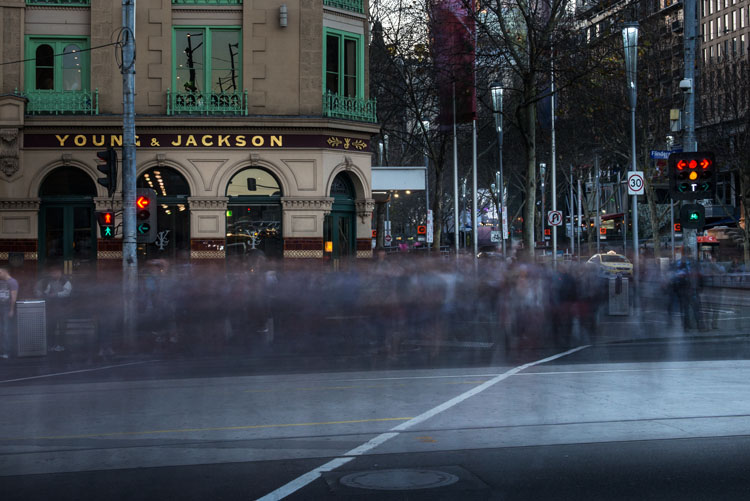
LeanneCole-7reasons2lovelongexposures-youngandjacksonscorner

Photographing a busy intersection with a ND filter makes people look like ghosts – 30 second exposure.

4 – There is a quietness about the work

Once people are introduced into a scene that you are photographing, it brings with it noise, as in how people see the images. They can be noisy, and whether people looking at the images realize it or not, they hear what they would hear if they were actually there. Vehicles can have a similar effect.
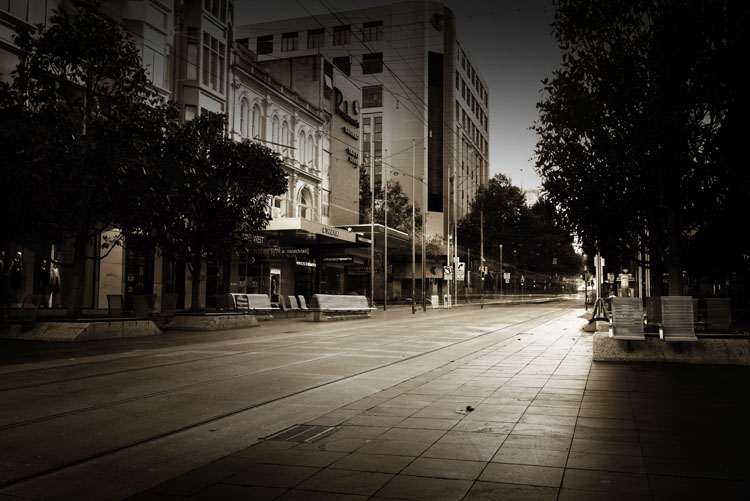
LeanneCole-7reasons2lovelongexposures-bourkestmall

Bourke Street Mall at peak hour, a 10 minute exposure has removed the people and given it an empty feeling.

If you do a long exposure of the same thing, that noise is gone. Often when you see a long exposure image it has a quietness to it. Fill a room with images done this way and put people in it, they will feel as though they have to be quiet.

5 – Take photos of a common subject and give it a completely different feel

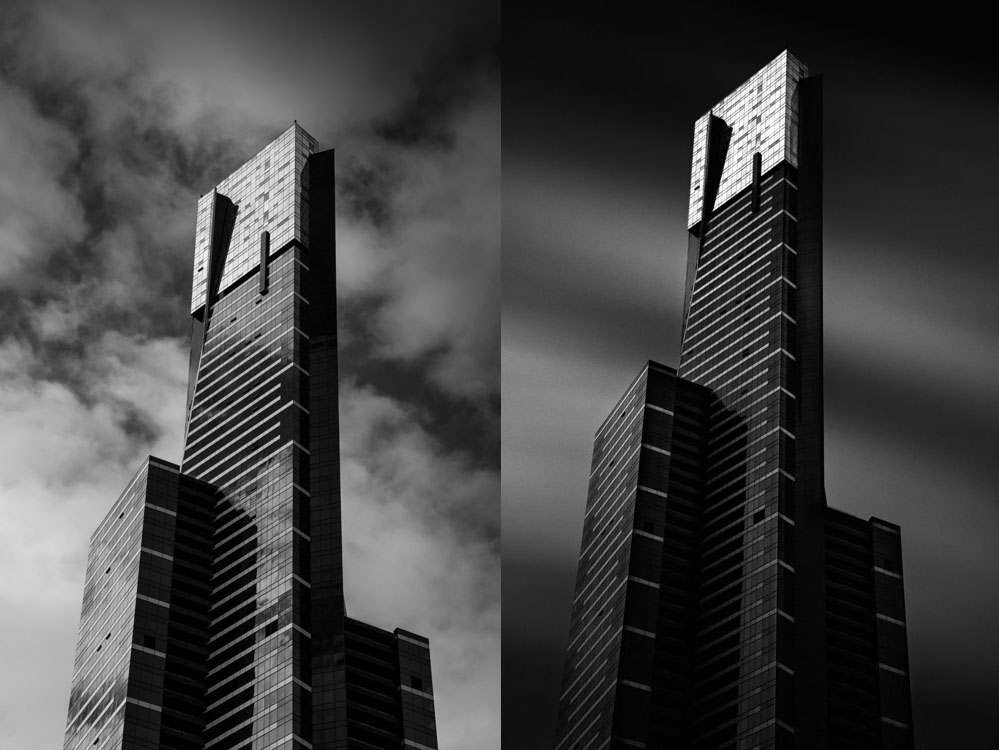
In every city around the world there are iconic places and scenes that everyone is trying to photograph differently than others. If you have some ND filters and your tripod, you can create an image that not many others get. Especially when travelling, not many people have filters with them. You would have an opportunity to get something quite different to the thousands of other photos that are taken in those places. Of course it is a given that they are places where you can set up a tripod.
LeanneCole-7reasons2lovelongexposures-eurekatower

Eureka Tower is a very photographed building in Melbourne, the image on the right is similar to what most people get, but by adding a ND filter you give a well photographed building a different look. Left image: 1/200th – Right image: 6 minutes.

6 – Give a landscape a sense of time, or time passing

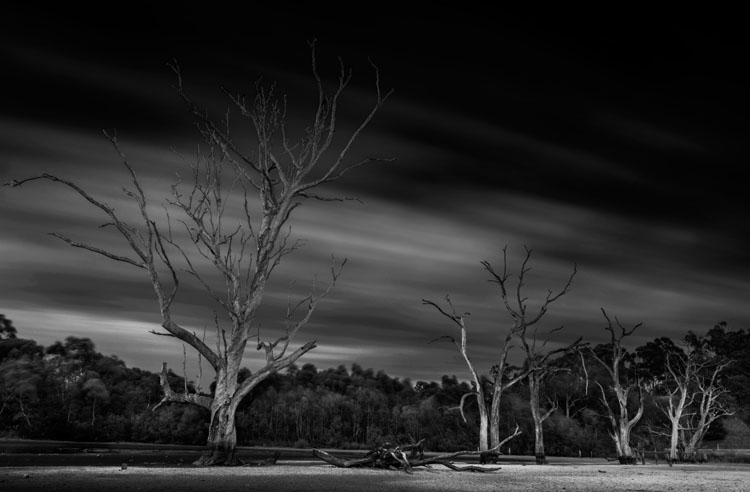
When you have images of clouds being blurred as they go over the top of a building or a landscape, it seems like you have captured time. Many people feel like they are looking at time passing. The long exposure is taken over a period of time, so it makes sense that you would get that feeling when you look at those images.
LeanneCole-7reasons2lovelongexposures-banyuleflats

Dead trees in a dried out swamp, and the moving clouds give the impression they have been there for an eternity – 3 minute exposure.

7 – Images have a surreal look and give you a different perspective

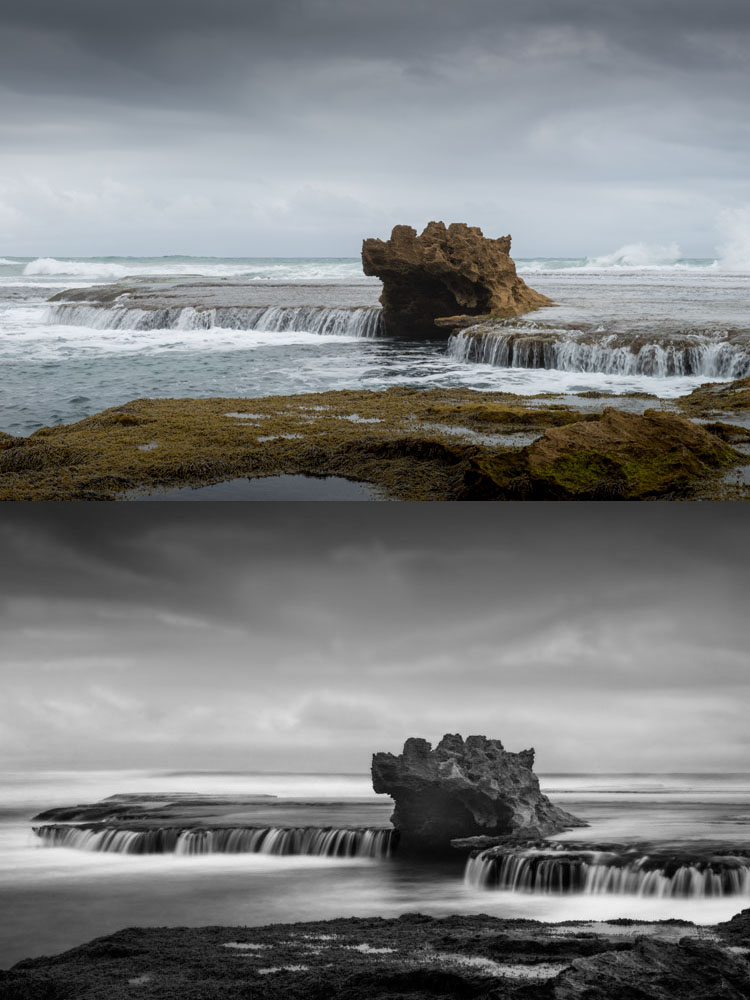
One of the great aspects of long exposure photography is that you can set up your camera, your tripod, and slot in your neutral density filter, but you won’t know what you will get until the image is taken. It will give you an image that is nothing like what you can see with your eyes. When you get the images onto your computer it is always a surprise to see exactly what you have captured.
LeanneCole-7reasons2lovelongexposures-dragonshead

The same image, one take without the ND Filter and the second one with it. It gives the scene a completely different feel. Top image: 1/50th – Bottom image: 13 seconds.

8 – Night Photography is great for the same reasons

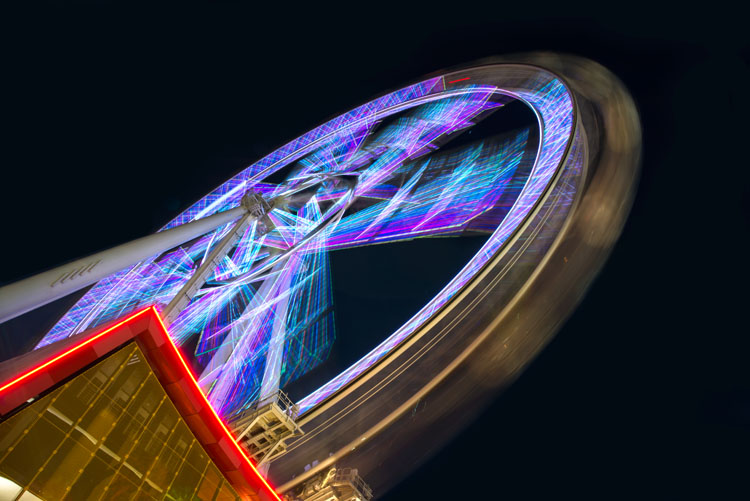
Night photography gives you an opportunity to take photos and not have to worry about filters. You can expose for however long you need. If it;s a windy evening and there are clouds in the sky, you will get movement in your images. If you are taking photos across a water way, then the water will be smooth, and you will get reflections of the lights if there are some on the other side. For all the reasons stated for long exposures, night photos have the same effect.
LeanneCole-7reasons2lovelongexposures-melbournestar

A night long exposure makes the Melbourne Star blurred and you can see how it moves – 2 minute exposure.

These are the reasons why I think long exposure photography is wonderful. If you are curious and want to try doing these then I am sure you will become addicted like many others. If you already do them, you might have your own reasons and perhaps you would like to share with us what they are in the comments below as well as your long exposure images.

googletag.cmd.push(function() {
tablet_slots.push( googletag.defineSlot( “/1005424/_dPSv4_tab-all-article-bottom_(300×250)”, [300, 250], “pb-ad-78623” ).addService( googletag.pubads() ) ); } );

googletag.cmd.push(function() {
mobile_slots.push( googletag.defineSlot( “/1005424/_dPSv4_mob-all-article-bottom_(300×250)”, [300, 250], “pb-ad-78158” ).addService( googletag.pubads() ) ); } );

The post 8 Reasons to Love Long Exposure Photography by Leanne Cole appeared first on Digital Photography School.


Digital Photography School

 
Comments Off on 8 Reasons to Love Long Exposure Photography

Posted in Photography


2016 Roundup: Enthusiast Long Zoom Cameras

03 May

While most of new 1″ sensor enthusiast cameras have been on the shorter end of the focal length spectrum, there are now quite a few long zoom models, as well. Whether you want something pocketable or want to shoot for the moon (pun intended), you’ll find it in this group.

There are plenty of other long zoom compacts out there, some offering focal ranges reaching 2000mm though they almost always use much smaller 1/2.3″ sensors (the Olympus Stylus 1s is one exception). The cameras in this roundup eclipse those models, especially when it comes to image quality and control over depth-of-field.

The models we’re looking at in this article include:

  • Canon PowerShot G3 X
  • Panasonic Lumix DMC-FZ1000
  • Panasonic Lumix DMC-ZS100/TZ100
  • Sony Cyber-shot DSC-RX10
  • Sony Cyber-shot DSC-RX10 II
  • Sony Cyber-shot DSC-RX10 III (coming soon)

The cameras that have the shortest zoom are arguably the most robust, feature-wise: the Sony Cyber-shot RX10 twins. (The RX10 Mark III, which will cover soon, has a significantly longer lens.) The Panasonic Lumix DMC-ZS100/TZ100 is likely the best travel zoom ever, offering a good balance of size and zoom power, while the Canon PowerShot G3 X and Panasonic Lumix DMC-FZ1000 swing for the fences in terms of zoom power.

To further help you pick the right camera in this class, we’ve created the chart below, which breaks down the equivalent aperture for each camera, as you work your way through the zoom range. Our article here explains the concept of equivalence, but at a high level all you need to know is that the lower the line is on the graph below, the blurrier the backgrounds you’ll be able to get and typically, though not always, the better the overall low-light performance.

This graph plots equivalent focal length against equivalent aperture – with both axes taking sensor size into account so that they can be compared on a common basis. Equivalent focal lengths offer the same field-of-view and equivalent apertures give the same depth-of-field and similar total light capture. For more information, click here.

With its constant aperture (F2.8) lens, the Sony Cyber-shot RX10 I/II capture more total light and offers more control over depth-of-field compared to its peers, by 1 or 2 stops. The trade-off is that its focal length caps out at 200mm equiv. The Canon PowerShot G3 X has the longest lens, but it reaches its maximum aperture (F5.6) at around 200mm equiv., putting it 1 stop behind the Panasonic Lumix FZ1000, which tops out at F4.

And with that out of the way, let’s get right into exploring the enthusiast long zoom cameras!

Articles: Digital Photography Review (dpreview.com)

 
Comments Off on 2016 Roundup: Enthusiast Long Zoom Cameras

Posted in Uncategorized


8 Steps to Great Long Exposure Landscape Photography

21 Mar

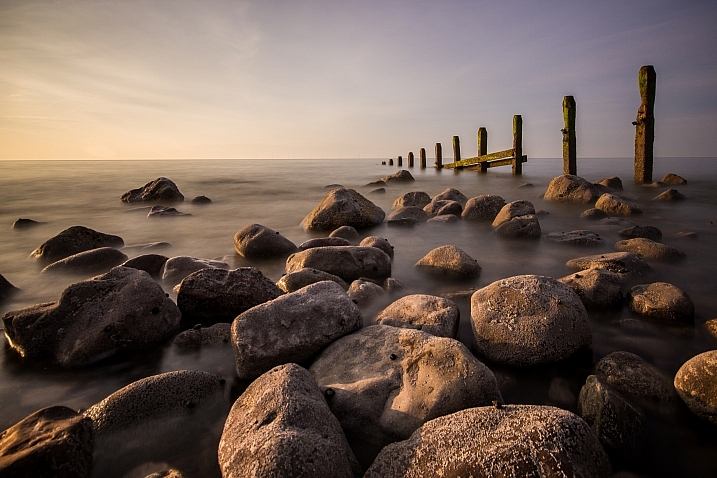
longexposure_landscape2

In this article I will outline eight steps, that will help visualize what you’ll need to capture beautiful, well-planned, and unique images that you’ll be happy with.

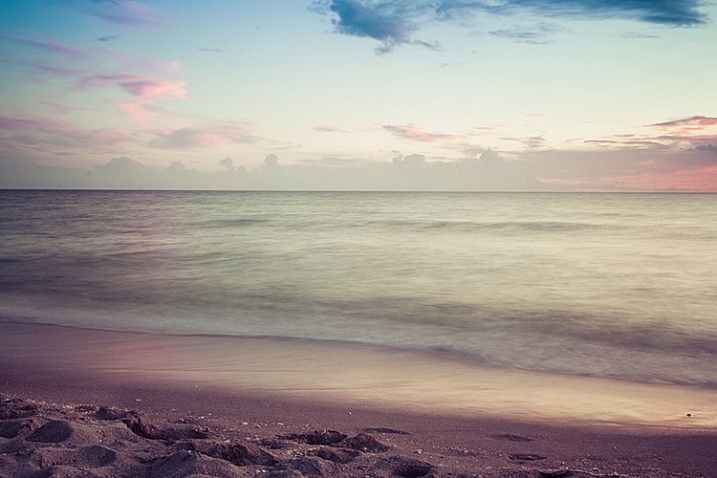
Long exposures are the true artworks of photography; a normally static and bland scene can become a dynamic masterpiece when the shutter is left open, and the capturing of movement occurs. Surf on a beach becomes a swirling, cloud-like mass, and grasses flowing in the wind become a single, beautiful entity. This is a situation where what you see, and what you end up with, are usually two very different things, and the results are often breathtaking.

But capturing that beauty can be challenging. So what do you need to focus on to make a long-exposure landscape shot work? Let’s explore that a bit more.

David McAughtry

By David McAughtry

1. Choose your location wisely

Before you even shoot your landscape, you’ll need to decide what type of shot you’ll tackle, and what environment you’d like to shoot in – whether it be a grassy plain, a seascape, or a busy highway.

Long exposure photography is about capturing, and translating movement within a frame. Spend some time deciding what you’re trying to capture, and what movement you want to accentuate. Rolling waves? Swaying grass? Flowing clouds?

Take a moment to envision what your scene will look like, and what parts of it will be stationary, and which parts will be fluid.

Aaron

By Aaron

2. Be patient and wait for the right time

Long exposures, at their very basic premise, require one of two things to work properly. Either very dim light situations such as the golden hour time periods, very early, or very late in the day – OR modifiers added to the camera to diminish the light that is coming in through the lens.

The reason you need one of these is because leaving the shutter open for longer periods of time, monopolizes one corner of the exposure triangle. When a normal amount of light strikes the camera’s sensor for an extended period of time, you’re guaranteed an overexposure. Therefore, you’ll need to change one of the variables to reduce that amount of light.

longexposure_landscape

The solution? Plan your shoot for very early in the morning, and very late in the evening. The darker it is outside, the longer you’ll be able to leave your shutter open, and therefore the more motion you’ll be able to capture in your image.

If you’re unable to shoot at those times, you’ll need to invest in a neutral density filter, preferably one with the ability to reduce the amount of light coming in to your lens by 10 stops, or more. These filters also add an extra layer of uniqueness to your images, because they allow you to shoot these long exposures at times of the day you normally don’t expect to see them.

3. Select the perfect lens

Of course, there are no hard and fast rules about which lens you’ll need to use, but traditionally, landscapes are captured with wide-angle lenses, to broaden the view and translate a sense of expansiveness.

Can you capture a landscape with a standard 50mm lens? Of course you can! But to maximize the open feel of a scene, consider using something wider. Keep in mind that the more you capture within the frame, the more movement it will contain.

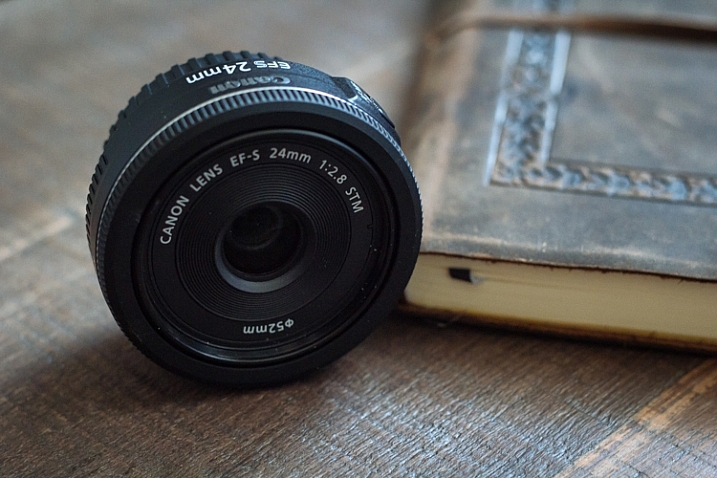
070515_

I personally use a 24mm f/2.8 pancake lens for most of my landscape shots. While it’s not as wide as what some people use, I find it gives me a good middle ground, with a wide focal length, and very little of the distortion traditionally associated with super-wide glass.

4. Bring the proper equipment

While we’re speaking about the planning phase of your shoot, it’s a perfect time to consider what gear you’ll need to pull off a long exposure landscape. As it happens, it’s the same equipment you’d need for any other long exposure shot.

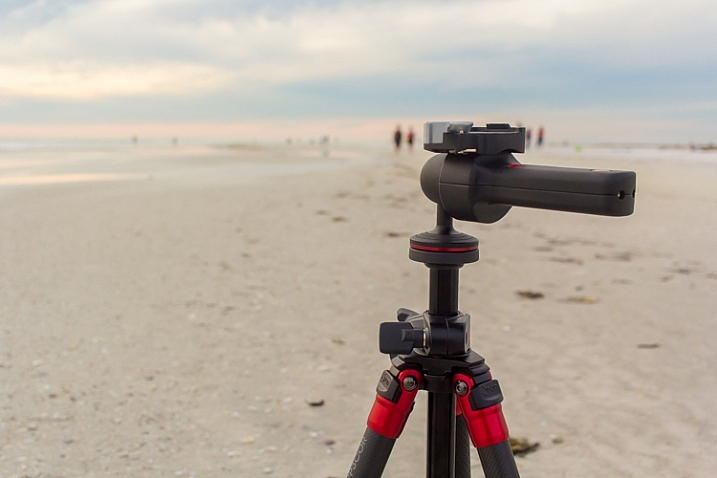
A tripod is a invaluable piece of gear for any landscape photographer, and for a long exposure, it’s an absolute requirement. Exposures of several seconds, which are required to produce movement within the image, need a stable base for the camera. The slightest amount of movement can cause blurriness, and that is amplified with longer and longer shutter times. Invest in a good, sturdy tripod, and ensure nothing will blow or bump into the unit while in operation.

013016_

Another essential accessory for this situation is a remote shutter release. There’s really no excuse for any landscape photographer to not have one, as they can be found for your camera model for $ 10, or so. These releases connect to your camera, and allow you to activate the shutter without ever touching the camera body itself. This keeps the vibration during the shutter click to an absolute minimum.

5. Use the correct camera settings

Since you’re using longer exposure times to pull off this type of shot, you’ll need to make adjustments to other parts of the exposure triangle. Generally, this means you need to stop your aperture down as far as you can, while maintaining sharpness, and reducing your ISO to the lowest setting. These two settings will allow you to bump your exposure time up, to long enough to capture movement in your image.

Fortunately this also gives you some bonus advantages; a lower ISO (such as 100), will keep the noise and artifacts in your shot to a minimum, giving you the best possible image quality. In addition, lenses tend to be sharper in the middle aperture ranges. Using apertures such as f/8, f/11 or f/16 will give you a nice, deep depth of field throughout the picture, while also taking a sharper, clearer photo than what you’d generally get with an extreme aperture of f/22 (due to diffraction).

022916_

As always, shoot in RAW. This will capture as much data as possible, and allow you to make non-destructive edits to the file later. Shooting in RAW format also negates the need to fiddle with white balance while shooting, since that can be adjusted in post-production.

If you do set white balance at the time of the shot, it’s usually a good idea to select the Daylight preset, or a custom white balance setting of your own, that counterbalances the extreme warmth encountered at sunset, and vice-versa for a shot at sunrise, which is a cooler time of the day, color temperature-wise.

6. Focus on your composition

Ekaitz Arbigano

By Ekaitz Arbigano

When you have your equipment and settings where they need to be, it’s time to take a moment to compose your shot. What are you capturing? The movement of a body of water like the surf from the ocean? Adjust your composition to allow for more of the water to be in the composition, instead of the sky. Are you trying to focus on the movement of clouds across the sky? Then give that part of the scene more attention within your frame to accentuate it.

7. Envision and anticipate movement

Shooting a moving scene, and attempting to capture that movement involve a bit of foresight, not unlike a marksman leading his target, by visualizing where the target will be when the shot gets there.

longexposure_landscape3

How far will the clouds move in the duration of the exposure? In which direction? Plotting this out before you click the shutter will improve your final image.

For example, capturing the ebb and flow of surf pounding a beach, requires knowing where the surf-line will end, and begin to recede back into the ocean, to properly compose it. Watching the movement of the subject you’re shooting, will help anticipate where it will appear in the final image. It’s always pays to plan ahead!

8. Enhance beauty in post-production

Finally, (and yes, this can be a touchy subject), learn to excel with the post-production process. A long-exposure image will already by eye-catching just by its inherent properties, but it’s important to take time during editing to enhance the beauty you’ve already captured in camera.

This shot initially had a cooler white balance, due to being shot in the morning, as opposed to during sunset.

This shot initially had a cooler white balance, due to being shot in the morning, as opposed to during sunset.

Since you’ll be shooting early or late in the day, tones will most likely already be dramatic, but may require some light boosting of the colors, or dodging and burning in Photoshop to add a bit more.

Since you shot at a low ISO to begin with, you likely won’t have to deal with noise reduction. After your exposure and tones have been taken care of, a little sharpening is all that stands between you and the final image.

Aaron

By Aaron

So that’s it folks, the eight steps to get you started on the path to taking great long exposure landscape shots. What other tricks of the trade do you use to get the perfect capture? Sound off in the comments below, and as usual, let your voice be heard.

This week on dPS we are featuring articles on special effects. Check out the others that have already been published here:

  • How to Photograph the Full Band of the Milky Way
  • Fire Spinning with Steel Wool – A Special Effects Tutorial
  • Special Effect – How to Create Multiple Flash Exposures in a Single Frame
  • Stacking Light Trails for Night Photography Special Effects
  • 26 Unique Special Effects Photos to Spark Your Creativity
  • Weekly Photography Challenge – Special Effects
  • Tips for Shooting Through Objects to Create a Special Effect
  • How to Add Vintage Frame Overlays Using Alien Skin Exposure X

googletag.cmd.push(function() {
tablet_slots.push( googletag.defineSlot( “/1005424/_dPSv4_tab-all-article-bottom_(300×250)”, [300, 250], “pb-ad-78623” ).addService( googletag.pubads() ) ); } );

googletag.cmd.push(function() {
mobile_slots.push( googletag.defineSlot( “/1005424/_dPSv4_mob-all-article-bottom_(300×250)”, [300, 250], “pb-ad-78158” ).addService( googletag.pubads() ) ); } );

The post 8 Steps to Great Long Exposure Landscape Photography by Tim Gilbreath appeared first on Digital Photography School.

Digital Photography School

 
Comments Off on 8 Steps to Great Long Exposure Landscape Photography

Posted in Photography


Getting Started with Long Exposure in Fashion Photography

03 Mar

Editor’s note: Once you try to use long exposure in fashion photography, you’re likely to do it again and again. Not only can it bring outstanding results in terms of originality of your images, but it’s also a great way to add a funny bone to your portrait sessions and thus, get more natural, sincere model looks. In this post, Continue Reading

The post Getting Started with Long Exposure in Fashion Photography appeared first on Photodoto.


Photodoto

 
Comments Off on Getting Started with Long Exposure in Fashion Photography

Posted in Photography


The long, difficult road to Pentax full-frame

19 Feb

Pentax’s road to full-frame has been long, winding and not without a few wrong turns. But it could all have been so different. 

Way back in 2000, when the 21st Century was just beginning to find its feet and photography journalists were starting to get used to putting a ‘D’ into ‘SLR’, Pentax announced that it was making a full-frame (D)SLR. Had it shipped, that camera – which was developed out of the company’s then-flagship film model the MZ-S – would have predated anything from Canon, Nikon, Kodak or (unthinkable at the time) Sony. And Contax, too, but the less said about that, the better. 

Ambitious, powerful, innovative and ultimately doomed, the original Pentax full-frame DSLR was in some ways the Spruce Goose of cameras, but tragically it never even achieved the short, thrilling first and final flight of Howard Hughes’ most famous creation. 

The progenitor. The original, unnamed Pentax full-frame DSLR, which was to be based around a 6MP Phillips CCD sensor, and was originally intended to ship in spring 2001. Officially, the camera (which has become known as the MZ-D) was canceled due to concerns over cost, but it’s likely that the poor performance of the sensor (which made it into the very poorly received Contax N1) played a part.

Instead, like Hughes himself the camera withdrew from public view amid a swirl of rumors. Whispers around the glass case at PMA in 2001 hinted at problems with the troubled 6MP Phillips CCD sensor (later confirmed in the woeful Contax N1). The camera would be too costly to produce, became the official line. The brash confidence behind its announcement at Photokina the previous autumn faded into memory. Meanwhile, Pentax’s projected ship date of spring 2001 came and went, and other full-frame cameras stole the headlines. A nurse was called for, the screens were drawn, and they remained drawn for almost 15 years. 

And we never even knew its name.

Over time, people forgot about the Pentax full-frame DSLR. Pentax representatives (and later, representatives from Hoya and Ricoh) didn’t seem to like talking about it, when they admitted to remembering it at all. A whole generation of tech journalists emerged whose only experience of full-frame photography with a Pentax camera was that one roll of film they tried to put through that old K1000 they found in a junk shop that time. 

And Pentax moved on. 

In 2003, Pentax created the *ist D, its first APS-C DSLR and in 2005, the company announced that it was leapfrogging full-frame altogether in favor of developing a medium-format DSLR. A couple of years later and with no shipping MF camera in sight, the company was acquired by Hoya. Shortly after the takeover we heard that actually, medium format digital was no longer a priority, but two years after that, in 2010, the 645D – with updated specs in the five years since its development was first announced – was officially unveiled.

In 2011, a full ten years after the original Pentax full-frame DSLR should have shipped, the company was bought again, this time by Ricoh. 

The original 645 model, the 645D, saw Pentax branching out into the medium format digital market. The 645Z, which succeeded the original 645D, has proven very popular. 

And all the while, through the course of two buyouts, Pentax was doing what it did best – creating a string of capable, solid, workman-like DSLRs and compact cameras that attracted a small and loyal customer base but which didn’t do much to bother the fortunes of the bigger players in the camera market. The company’s one and (so far) only large-sensor mirrorless camera, the K-01, was not a success, but the medium format 645D did well and was followed by the excellent 645Z. It seemed for a while that with some solid differentiators in the APS-C and medium format spaces, Pentax didn’t really need to create a full-frame camera.

But now, almost 16 years after that fated Photokina announcement, that’s exactly what Pentax (or rather Ricoh) has done. 

‘So why now, and who is the K-1 for?’

So why now? Ricoh claims that the timing is very deliberate. The company seems to recognize that after the late-2000s its chances of making a meaningful dent in the full-frame market were very slim. After leaving the full-frame space to its competitors for more than a decade, it made more sense for Ricoh to attack the much less competitive medium format digital market, and position the Pentax brand as a serious but affordable player in a marketplace that for years has been dominated by stupendously expensive systems from Hasselblad, Phase One and others. 

Meanwhile, although Ricoh / Pentax never managed to wrest a particularly big share of the APS-C market from its competitors, cameras like the K-3 II quietly introduced a host of impressively innovative features. These days we take image stabilization for granted, but Pentax deserves credit for iterating on the basic principle of in-body stabilization over several generations of DSLRs, ultimately leading to the various imaginative and effective sensor-shift features that grace the K-3/II and, now, the new K-1. 

The K-1 becomes the first conventional DSLR to offer a stabilized full-frame sensor. But as well as image stabilization, the K-1’s sensor can also be shifted by minute degrees for higher color resolution capture, AA filter simulation, and star tracking. 

So after all this time, who is the K-1 for? In conversations with DPReview, Ricoh representatives have never tried to deny the fact that after 15 years of inactivity in the full-frame space, a lot of their customers (especially semi-professional and professional photographers) have defected to Canon, Nikon and Sony. But some of these professionals have rediscovered Pentax – and others have discovered it for the first time – thanks to the 645D and 645Z. 

When I spoke to Kazunobu Saiki, general manager of Ricoh’s Marketing and Communication department last year in Japan, he told me that the company’s forthcoming full-frame DSLR was aimed at ‘our existing customers’. I.e. those new 645D/Z fans and a whole generation of DSLR photographers (especially in Asia) who love Pentax cameras for their features, pricing, and custom color options. Plus of course the ultra loyalists around the world who have stuck with the Pentax brand over the years and refused to switch systems in the hope that one day, a camera like the K-1 would eventually be produced. I know they’re out there. They send me emails. 

‘The K-1 is primarily a camera for Pentax fans, and there’s nothing wrong with that at all.’

At this point in time, Mr Saiki’s strategy makes perfect sense. The K-1 is primarily a camera for Pentax fans, and there’s nothing wrong with that at all. It seems highly unlikely that anyone who’s been happily using a full-frame camera from another manufacturer for the past few years will suddenly throw it all away and buy a K-1. The K-1 looks like a pretty good camera, and $ 1800 is a pretty good price, but it’s still a considerable chunk of change, and that’s not including lenses. 

And lenses, it seems to me, is where Ricoh has a real battle on its hands, not only in terms of attracting potential system switchers but (probably more importantly) also catering to its existing user base.

It has been 13 years since the last full-frame Pentax camera, and understandably, neither Pentax nor third-parties have had much incentive to release full-frame K-mount lenses in the intervening time.

The existing audience of digital Pentax users may very well have a collection of autofocus lenses for their DSLRs, but most are designed for the APS-C format (and many contain the notoriously troublesome SDM focus motor). They’ve got modern coatings, they’ll fit on the K-1, and some will offer almost a full-frame imaging circle. But like training wheels on a bicycle, I suspect that most self-respecting photographers will be keen to stop using them as soon as possible in favor of a more authentic, grownup experience. Why rumble along at 15MP when you could be enjoying 36?

I suspect that a lot of former Pentax users still have one of these in a closet somewhere – the 50mm F2 was bundled with mid-range Pentax SLRs in the 70s and 80s, and still gives ok-ish, more-or-less-acceptable performance on digital cameras. As long as you don’t look too closely, especially at the edges.

Before you leave an angry comment, I know there are plenty of better manual focus lenses in Pentax’s historical lineup (we just happened to have this one lying around the office), and the K-1 will work with pretty much all of them. 

But what about the legacy manual focus lenses? Ah yes. With decades of compatible K-mount lenses, Pentax users are very well-served. In theory. I have a collection of 70s and 80s-vintage Pentax primes, and I can’t wait to try them out on the K-1. Unfortunately, while putting old glass on high-resolution cameras is a lot of fun, it does tend to show up the defects in that glass pretty glaringly. There are some excellent lenses in Pentax’s historical lineup, but there is a very real risk that a zoom or even a prime that always delivered lovely 6×4 inch prints on film might not quite live up to customer expectations when paired with a 36MP sensor. 

And unfortunately for the proud new K-1 owner, Pentax K-mount lenses are their only option. Like Nikon F, the Pentax K mount is old, and cursed with a particularly long flange-back distance. What this boils down to its that lenses from other mounts cannot be adapted to work on the K-1 (not without the addition of extra corrective elements, at any rate). So unlike the Sony a7R II, for instance, which will accept pretty much any lens you can think of, made by anyone, ever, with the correct adapter, that’s just not possible with the K-1. 

‘Once you’ve bought a couple of lenses to go with your new K-1, that fairly reasonably $ 1800 has turned into a much, much bigger investment.’

Which for a quality-focused enthusiast K-1 owner arguably leaves only one genuinely safe option. Buy a set of new Pentax full-frame zoom lenses. The new 15-30mm and 24-70mm seem to perform well (they should do, since they’re most likely based on proven Tamron lenses with the stabilization mechanics removed and some proprietary coatings) and we enjoyed using the 70-200mm when we shot with the K-1 recently. But once you’ve bought a couple of lenses to go with your new K-1, that fairly reasonably $ 1800 has turned into a much, much bigger investment.

All that being said, I want the K-1 to succeed, and I think it deserves to. It’s truly innovative, bold, and represents a brave move by Ricoh (and one that I suspect was motivated by a certain amount of justifiable pride on the part of the engineers). To an extent, my investment in the K-1 is emotional. My first proper camera was a Pentax MX, and along the way I’ve owned various other Pentax cameras (including for a few brief, glorious weeks, an LX) all of which I have enjoyed. I was genuinely excited when Ricoh told us, some time ago now, that a full-frame Pentax DSLR was once more being prepared for launch. Hopefully this time it will get a little higher off the ground – and hey – at least this time it has a name. 

Articles: Digital Photography Review (dpreview.com)

 
Comments Off on The long, difficult road to Pentax full-frame

Posted in Uncategorized


Long Term Angle Parking: 12 Cool Cadillac Ranch Copies

01 Feb

[ By Steve in Art & Installation & Sound. ]

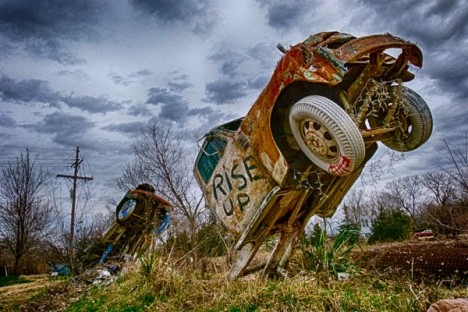
cadillac_ranch_5a
The legendary Cadillac Ranch can’t be beat but it CAN be copied! These 12 tinny tributes to Amarillo’s angled auto art shift flattery into high gear.

cadillac_ranch_5b

cadillac_ranch_5c

Cadillacs may be iconic symbols of those Fabulous Fifties but by the time the Space Age was in full flight, pop culture had ditched finned land barges in favor of “lowly” but well-loved VW Beetles. A half-century later, classic Bugs are a rare sight on America’s roads though you’ll find plenty at the Slug Bug Ranch in Conway, Texas! Kudos to Flickr users Jenny McG (thedefiningmoment), Kent Kanouse (Snap Man) and The Atomic Kid 1959 for bringing out the best in the Bug Ranch’s buried but be-dazzled Beetles!

Truckhenge, Boathenge, Bushenge…

cadillac_ranch_6c

cadillac_ranch_6a

Lumping Ron Lessman’s varied automotive artworks into a “truckhenge” is rather all-inclusive – the Shawnee County, Kansas denizen has deployed a host of land and water craft in several distinct henges.

cadillac_ranch_6b

cadillac_ranch_6d

According to The Vagabond Glovers’ Meanderings, “Shawnee County health and zoning officials got after him to clean up his yard, and when they told him to pick up his trucks, he decided to take their orders literally, and pick them up, then plant them back down in the ground the way he saw it done in Texas at Cadillac Ranch.” That’s tellin’ ’em, Ron!

Small Wonders

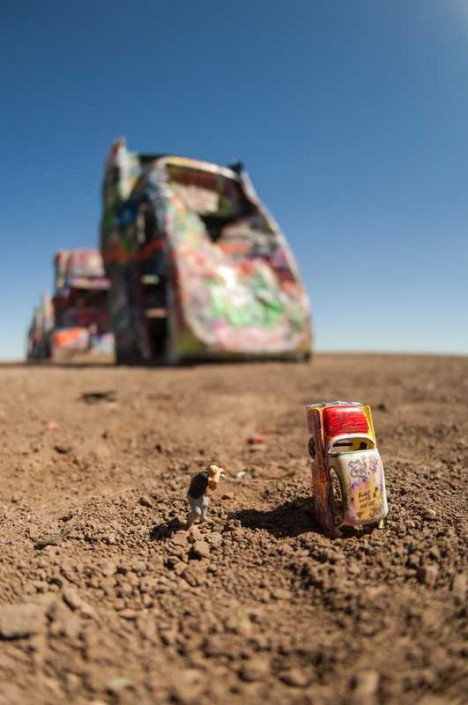
cadillac_ranches_1a

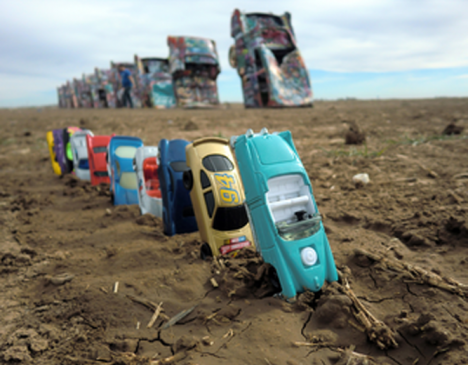
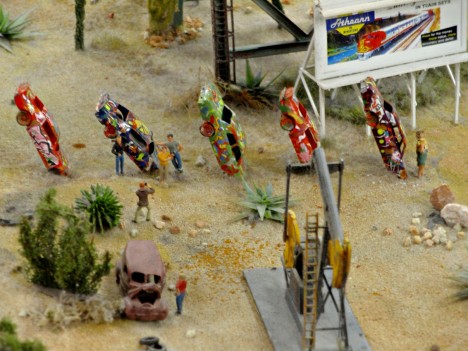
Old and busted: car smashups. New hotness: Toy Mashups, which just happens to be where photographers Josh Cornish and Kyle Hillery snapped the above installation and its inspiration in May of 2012. Unlike the original Cadillac Ranch created by art collective Ant Farm (Chip Lord, Hudson Marquez and Doug Michels) and eclectic landowner Stanley Marsh 3 back in 1974, no backhoes were required to set the miniatures in place. Well, maybe a teeny tiny toy backhoe.

cadillac_ranch_1b

cadillac_ranch_1c

Nice that both Miniatur Wunderland (c/o Knitrageous) in Hamburg, Germany and Un Petit Monde saw fit to apply graffiti to their scaled-down Cadillac Ranch tributes. It’s doubtful visitors to these installations will be allowed to personalize them, though.

Lying Solo

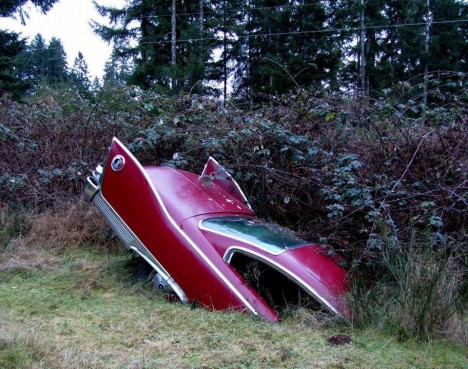
cadillac_ranch_3

Wow, Christine has really let herself go! Actually this is/was a 1960 Plymouth Fury while King’s krazed killer kar was a ’58 model. We’re not certain whether the vehicle’s owner had Cadillac Ranch in mind when he tilted this seemingly sharp Oldie But Goodie into its diagonal semi-grave but the finned beauty sure could use some company.

Next Page – Click Below to Read More:
Long Term Angle Parking 12 Cool Cadillac Ranch Copies

Share on Facebook


[ By Steve in Art & Installation & Sound. ]

[ WebUrbanist | Archives | Galleries | Privacy | TOS ]


WebUrbanist

 
Comments Off on Long Term Angle Parking: 12 Cool Cadillac Ranch Copies

Posted in Creativity


The Long Night: Tim Matsui on creating social change through stories

26 Jan

Award-winning and Emmy-nominated visual journalist and filmmaker Tim Matsui used to view stories as a means of having experiences. Now, he sees them as a means of creating change, engaging audiences and helping them see that they can make a difference. In this PIX 2015 video, Matsui speaks on The Long Night, his documentary on human trafficking, and how he leveraged grassroots distribution to effect social change.

Matsui’s insistence on grassroots distribution stems from the difficulty he found in getting sponsorships to fund creation of the project and get the final film in front of audiences. ‘This is a difficult subject,’ Matsui says. ‘Brands don’t want to touch it. It’s a little too dark. This pisses me off.’

After exhausting his grant money, leveraging his own savings and going into debt just to get the filming done, Matsui explored every avenue he could find to take his film to his audience. He explored social media, Kickstarter, mainstream media like TIME Lightbox and the Huffington Post, and GATHR, a crowdsourcing platform for bringing small productions into mainstream movie theaters.

To be successful in creating change, ‘don’t make them come to you,’ he says about his audiences. ‘Go to them.’

Articles: Digital Photography Review (dpreview.com)

 
Comments Off on The Long Night: Tim Matsui on creating social change through stories

Posted in Uncategorized


6 Mistakes to Avoid in Long Exposure Photography

13 Jan

Do you want to get better at creating long exposure photos? Long exposure photography is famous for tranquil and serene landscape shots, but when engaging in this type of photography there are many pitfalls that can ruin your shots. Below you will find a list of 6 common mistakes and how to avoid them. Shaken and Blurred Photos Even though Continue Reading

The post 6 Mistakes to Avoid in Long Exposure Photography appeared first on Photodoto.


Photodoto

 
Comments Off on 6 Mistakes to Avoid in Long Exposure Photography

Posted in Photography


So Long, Suckers: 11 Closed & Abandoned Candy Stores

28 Dec

[ By Steve in Abandoned Places & Architecture. ]

abandoned-candy-store-9a
When it comes to abandoned candy stores like these 11 examples, sweet has turned to sour quicker than toothache sufferers turn to their dentists.

abandoned-candy-store-9b

Whipsawed by the varying vicissitudes of a changing retail culture, macroeconomic trends and good old urban blight, traditional Mom & Pop candy stores are circling the drain and nobody’s standing by with a plug. Flickr user Bartosz Brzezinski (JohnnyGotHisGun) captured the sour state of one such example – the long-abandoned K&M Candy Store in Detroit’s McDougall-Hunt neighborhood – on December 30th of 2013.

ReSCue Me

abandoned-candy-store-10a

Remember the days when stores thought they’d last forever and thus spent lavishly on brand-specific frontages? Maybe Flickr user JJ’s (My Blue Dragon) shot of the abandoned Russell Stover Candies (“RSC”) store on Linwood Blvd in Kansas City, MO will jog some memories – if not a few fillings. Ironically, the KC Royal Blue & White tiled facade has held up remarkably well, which is much more than we can say about the store itself.

Store-gasm

abandoned-candy-store-5a

abandoned-candy-store-5b

Contrary to any and all expectations, LA Greens Candy Store is neither green nor is it located in Los Angeles – 5477 Chene St. in Detroit, MI is where the abandoned store can be found. It also doesn’t sell candy anymore. The windowless and unoccupied (at least, not officially) building was snapped by Flickr users Gary Tucker and Modesto Speed (ClevelandSGS) on July 24th, 2013 and March 17th, 2002 respectively.

Candy, Tickets and… Things

abandoned-candy-store-3a

Methings the 100th St Candy Store in the heart of Manhattan’s East Harlem shoulda maybe stuck to its core competence… that being Candy. Kudos to Flicker user Jake Silby for snapping this shot of the abandoned store’s all-inclusive sign on November 28th, 2011.

Next Page – Click Below to Read More:
So Long Suckers 11 Closed Abandoned Candy Stores

Share on Facebook


[ By Steve in Abandoned Places & Architecture. ]

[ WebUrbanist | Archives | Galleries | Privacy | TOS ]


WebUrbanist

 
Comments Off on So Long, Suckers: 11 Closed & Abandoned Candy Stores

Posted in Creativity


2015 Roundup: Long Zoom Compacts

06 Nov

The Long Zoom Compact category is probably the most diverse of any in our 2015 roundups. Within it are three separate sub-classes of camera, all of which offer 8x optical zoom or greater (up to a whopping 83x). Find out which we recommend. Read more

Articles: Digital Photography Review (dpreview.com)

 
Comments Off on 2015 Roundup: Long Zoom Compacts

Posted in Uncategorized