RSS
 

Posts Tagged ‘lightroom’

How to Get Your Lightroom Catalogue Perfectly Organized

14 Jan

Did you know that ‘getting organized’ is one of the top ten New Year’s resolutions? It’s true! So let’s roll up our sleeves and get to tidying up your lightroom editing process. Lightroom, after all, is an archive of your work, a database of your creative content. Having a streamlined system will allow you to minimize your editing and post-processing Continue Reading

The post How to Get Your Lightroom Catalogue Perfectly Organized appeared first on Photodoto.


Photodoto

 
Comments Off on How to Get Your Lightroom Catalogue Perfectly Organized

Posted in Photography


Editing a River Landscape Photograph in Adobe Lightroom

31 Dec

Doing an edit of a photograph I took, trying out different things eeing what I can come up with. We use graduated filters, Black and White, Saturation, Luminance, Distortion correction and more. www.photoix.co.uk Follow me on Twitter for the latest news and updates! http
Video Rating: 4 / 5

Testing video with nikon J1 and lens nikkor VR 10-30. Video 1280×720 60p
Video Rating: 4 / 5


Martin Evening explains the Lightroom catalog

29 Dec

Collectionsview.jpg

Adobe Photoshop Lightroom, like other database-powered image managers requires you to first import images into a catalog before you can modify them in any way. This requirement is a continual source of confusion for new users. In this article, photographer and Lightroom expert Martin Evening explains the core functionality of Lightroom’s catalogue and demonstrates its advantages over more conventional image browsing software.

News: Digital Photography Review (dpreview.com)

 
Comments Off on Martin Evening explains the Lightroom catalog

Posted in Uncategorized


How to Process Landscape Photos in Lightroom 4

24 Dec

Lightroom is a powerful editor with a huge set of tools, though we usually need a limited set for specific photo types. So I’d like to go through editing of a landscape photo to see what cool things Lightroom 4 offers us. Let’s see what we can do on the example of one of my photos I took in the Continue Reading

The post How to Process Landscape Photos in Lightroom 4 appeared first on Photodoto.


Photodoto

 
Comments Off on How to Process Landscape Photos in Lightroom 4

Posted in Photography


Enhancing Blue Skies in Lightroom

24 Dec

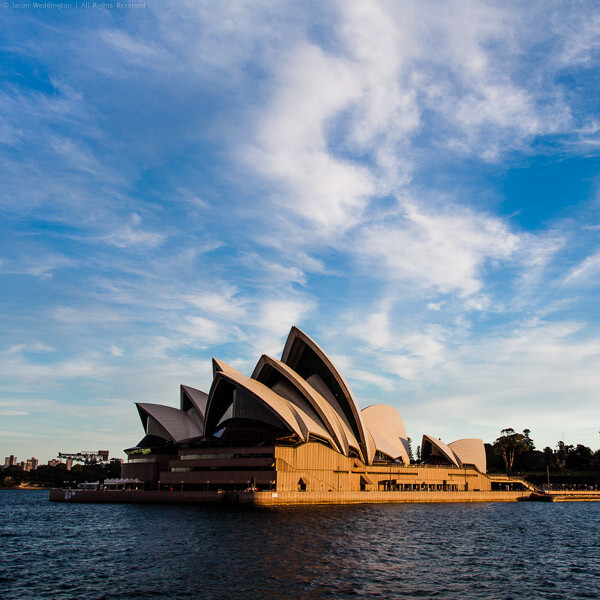
The Color control in Lightroom is a powerful tool for selective color adjustments. This tool allows photographers to adjust the hue, saturation, and luminance of individual color tones. One application of this functionality is enhancing blue skies:

Sydney Opera House

Photo of the famous Sydney Opera House with blue sky enhanced in Lightroom

How to Enhance a Blue Sky

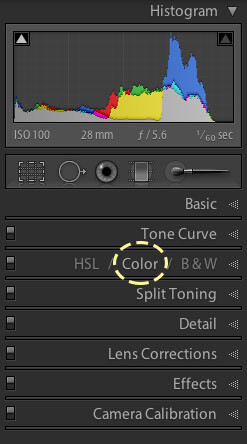
In Lightroom 4, the Color control allows separate control of red, orange, yellow, green, aqua, blue, purple, and magenta:

Lightroom 4 Color Controls

Lightroom 4 Color Controls

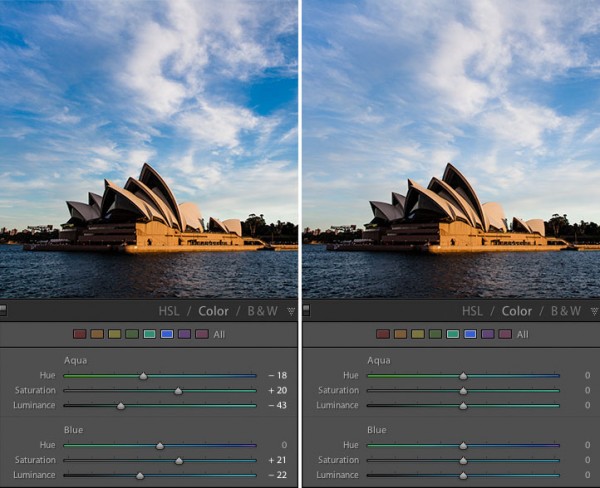
A quick way to emphasize a blue sky is to lower the luminosity and increase the saturation of the blues and aquas in the image:

Enhancing a blue sky in Lightroom

With and without color adjustments

For this image, here are the settings I used:

Aqua

  • Hue: -18
  • Saturation: +20
  • Luminance: -43

Blue

  • Hue: 0
  • Saturation: +21
  • Luminance: -22

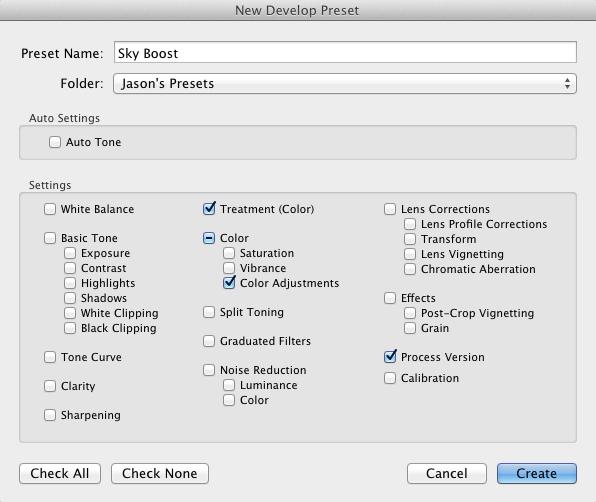
Make a Develop Preset

For extra credit, save these settings as a develop preset so that you can quickly apply them later. Note that settings that work to bring out the sky in one photo won’t be perfect for all photos, but this should give you a good starting point.

Here are the settings you need to capture for a sky enhancing preset:

Creating a Lightroom Develop Preset

Settings for a sky-enhancing Lr preset

For more detailed information on creating Lightroom Develop Presets, check out this post: 5 Tips for a Faster Lightroom Workflow.

I hope this technique proves useful next time you have a sky that needs just a little more oomph. I’d like you hear your thoughts on this article, please comment below or feel free to connect with me through Facebook or Google+. I’ll do my best to answer questions and reply to comments.

Post originally from: Digital Photography Tips.

Check out our more Photography Tips at Photography Tips for Beginners, Portrait Photography Tips and Wedding Photography Tips.

Enhancing Blue Skies in Lightroom


Digital Photography School

 
Comments Off on Enhancing Blue Skies in Lightroom

Posted in Photography


Correcting For Under Exposure and Boosting Dynamic Range with an Environmental Portrait in Lightroom 4

17 Dec

Introduction

This tutorial is a demonstration of the SLR Lounge Lightroom 4 Preset System. With over 200 presets, the LR4 Preset System has been critically acclaimed as the most powerful and intuitive preset system available for Lightroom 4. DPS users can get 10% off by using the DPS10 coupon code upon checkout. Click the link above to learn more/purchase.

Overview

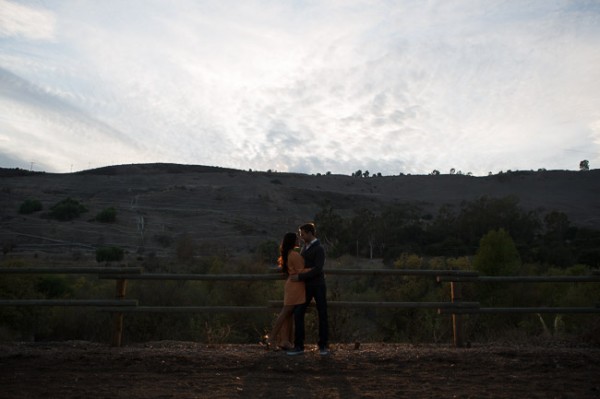
Often times when shooting environmental portraits we “expose to the right”, meaning we are pushing our highlights to the right of the histogram without blowing out too much of our highlights, or clipping too much of our shadows. Depending on the type of scene, this can lead to what looks like an underexposed image directly out of the camera since we are trying to preserve the majority of our highlight detail. However, since most of the range in the highlights and shadows are still retained, we can bring it out through post production. In this step-by-step tutorial, we will demonstrate how to not only correct the exposure in this type of portrait, but also how to increase its dynamic range.

Lightroom 4 Preset System Mixology

This effect can be achieved quickly in under a minute with the SLR Lounge Lightroom 4 Preset System, If you don’t own the preset system, please skip to Step 1 to learn how to do it manually.

1. MY MIXOLOGY > 25 HDR Strong
2. BASE ADJUSTMENTS > 23 Light Soften Skin (Detail)
3. BASE ADJUSTMENTS > 34 Medium Boost (Contrast)
4. BASE ADJUSTMENTS > 62 Light Noise Reduction (Noise Reduction)
5. Add +.30 Exposure
6. 13 Nature | Color Adjustment Brush
7. 12 Sky | Cloud | Ocean Adjustment Brush

The Original Image
Step 1. Applying our Basic Adjustments

What we usually recommend when working in Lightroom is to work your way down the Develop Module Panels starting from the Basic Adjustment Panel.

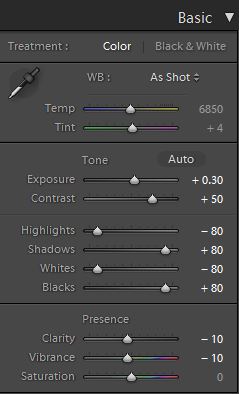
Because the image is underexposed, one of the first steps that we need to do is to correct the exposure by adding +0.30 stop to Exposure. In order to increase the dynamic range, we are also going to bring down the Highlights and Whites by -80 and lift up the Shadows and Blacks by +80. When applying this technique to your own photos, you may be better off dialing in your Highlights, Whites, Shadows and Blacks and then adjusting the Exposure as necessary.

At the same time, when we increase the dynamic range, the contrast flattens out, so we do need to add Contrast to compensate.

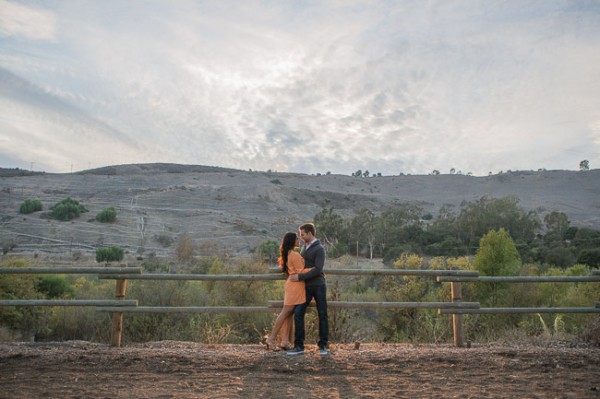
Because we are working with a portrait, we want to have nice, smooth skin tone that is not overly saturated, so let’s decrease Clarity and Vibrance by -10. Your Basic Panel adjustment and image should look like the following:
02 Basic Adjustments

Step 2. Adding Additional Contrast via Curves

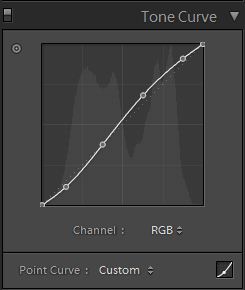
The image can still use some more contrast, so let’s add a subtle contrast-boosting “S” curve.
03 Tone Curve

Step 3. Sharpening and Noise Reduction

With the SLR Lounge Preset System, we typically apply the following Sharpening setting to our image:
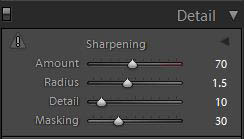
Detail

We are also going to add Noise Reduction because we to smooth out any noise that is introduced from the dynamic range boost. We use this setting for Noise Reduction:
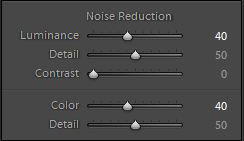
Noise-Reduction

Here is how your image should look like after applying all of these adjustments.
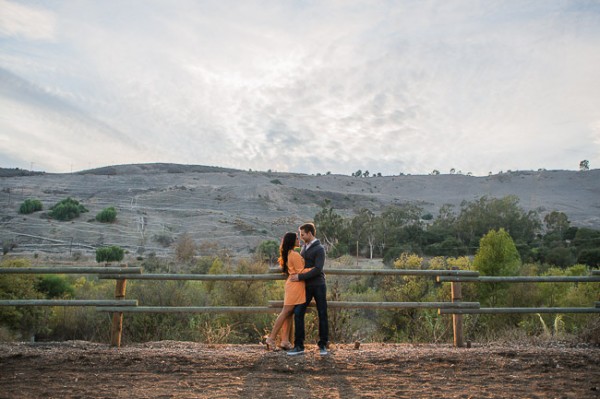
04 Detail

Step 4. Using Adjustment Brushes for Sky and Landscape

Even though we boosted the dynamic range of this image, the sky is still overblown. The LR4 Preset brush we use for the sky is called “Sky | Cloud | Ocean.” This brush lowers the exposure, highlights, and shadows, and increases contrast, clarity, and saturation in the sky. Here is our settings for this brush.
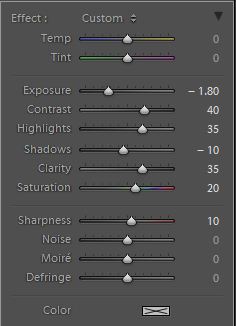
Sky Cloud Ocean Brush

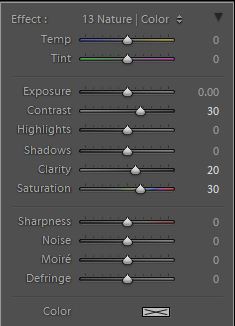
Finally, we want to add more midtone contrast and saturation to the foliage in order to make them pop. Here is how the settings look like for the “Nature | Color” LR4 Preset Brush that we applied to the landscape. This also increases contrast, clarity, and saturation.
Nature Color Brush

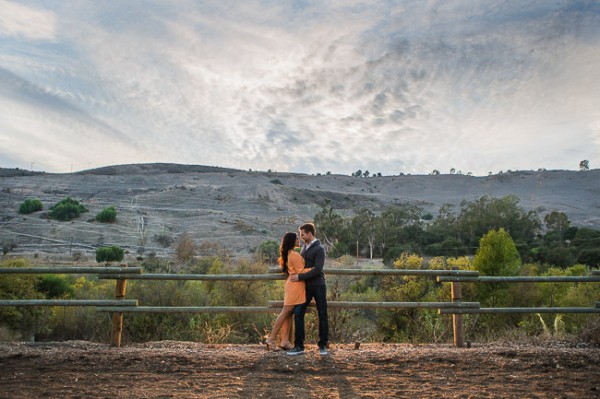
Now that all our adjustments have been applied, let’s take a look at the before and after images to compare the original underexposed image against the final image.

ORIGINAL

HIGH DYNAMIC RANGE PORTRAIT
05 Finished

The Lightroom 4 Preset System

The SLR Lounge Lightroom 4 Preset System is designed to enable users to achieve virtually any look and effect within 3-5 simple clicks. From basic color correction, vintage fades, black & white effects, tilt-shift effects, faux HDR, retouching, detail enhancing, and so much more. The sky is the limit with what has been dubbed the most powerful and intuitive preset system available. Click the link above to learn more/purchase.

Post originally from: Digital Photography Tips.

Check out our more Photography Tips at Photography Tips for Beginners, Portrait Photography Tips and Wedding Photography Tips.

Correcting For Under Exposure and Boosting Dynamic Range with an Environmental Portrait in Lightroom 4


Digital Photography School

 
Comments Off on Correcting For Under Exposure and Boosting Dynamic Range with an Environmental Portrait in Lightroom 4

Posted in Photography


Sunset Editing – Lightroom 3 Edit Tutorial. Basic beginner lesson. Easy simple trick

14 Dec

photographyequipment.yolasite.com (Budget Equipment) razzi.me www.facebook.com twitter.com


Adobe releases Lightroom 4.3 and Adobe Camera Raw 7.3

13 Dec

shared:AdobeLogo.png

Adobe has released Photoshop Lightroom 4.3 and Adobe Camera Raw 7.3. These are final versions of updates that were originally posted as ‘release candidates’ on the Adobe Labs site, and are available for immediate download. The latest versions provide RAW support for 13 additional cameras, including the Canon EOS 6D, Nikon D5200 and Sony DSC-RX1. The Mac version of Lightroom features a Develop module that supports Apple’s HiDPI mode, that makes the interface easier to read on the ‘Retina’ panels used on recent Macs. 

News: Digital Photography Review (dpreview.com)

 
Comments Off on Adobe releases Lightroom 4.3 and Adobe Camera Raw 7.3

Posted in Uncategorized


An Introduction to Lightroom Smart Collections

03 Dec

Lightroom smart collections opener

Lightroom has two types of collections: regular Collections and Smart Collections. Smart Collections are live and they are created as a result of filtering your photos according to rules that you write. You cannot add an image to a Smart Collection by dragging and dropping it into the collection. You can’t remove an image from a Smart Collection just because you don’t want it in there – it can only be removed if it fails to meet the criteria you set up for the collection.

Smart collections are a handy way to create collections and to manage your photos and here I’ll show you how to make use of them.

Shipped Smart Collections

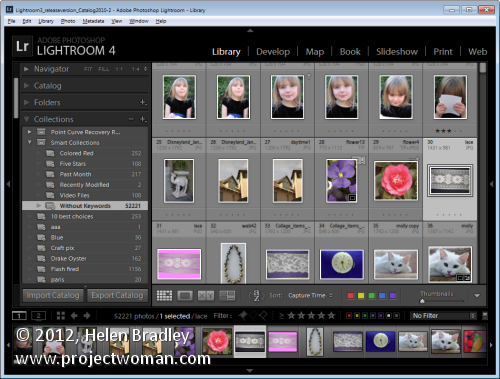
There are a few Smart Collections which ship with Lightroom. To find these, click the Collections panel in Lightroom and click on the Smart Collection Set. Click the Smart collection called Without Keywords. As its name suggests, this collection shows you all the images in your Lightroom catalog that do not have keywords associated with them.

If you’re like me you’ll want to close this one pretty quickly – it can be scary to see just how many images aren’t keyworded!

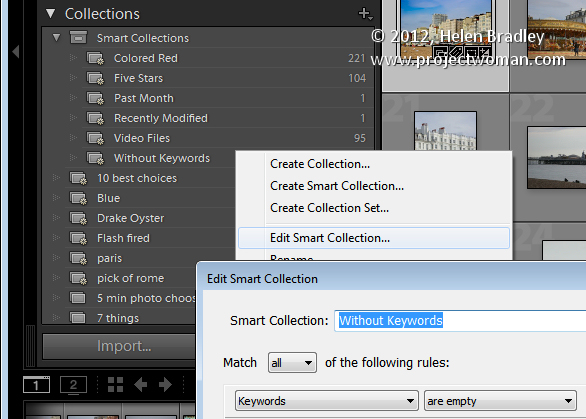
You can learn more about this collection by right clicking its name and choose Edit Smart Collection. You’ll see that the Smart Collection is configured to contain all those images for which the Keywords property is empty.

Lightroom smart collections 1

There are other collections which are shipped with Lightroom including Recently Modified which is a collection of images that have been edited recently.

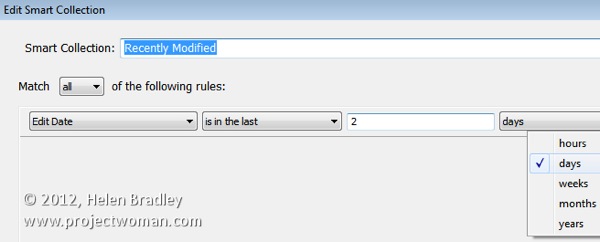
You can, if desired, change the Recently Modified Smart Collection to span a different number of days. Click this collection , right click and choose Edit Smart Collection. You can see that the collection criteria is set to be Edit Date > Is in the last

When you do so, Lightroom checks the images in your catalog to determine which images meet this criteria and it displays these in this Smart Collection.

Lightroom smart collections 2

Make your own Smart Collections

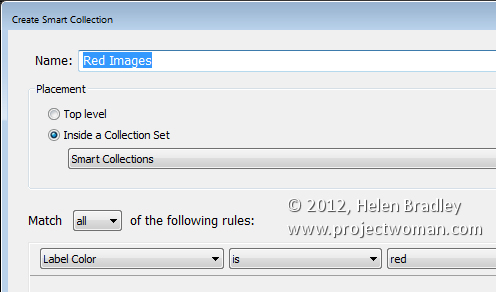
In addition to those shipped with Lightroom you can create your own Smart Collections. For example, if you color your images red meaning a certain thing you can create a Smart Collection that contains all the images which are colored red.

To do this, click to open the Collections panel, click the plus symbol and choose Create Smart Collection. Type a name for it such as Red Images, click Inside a Collection Set and choose to add it to the Smart Collections set. From the options below select Label color is red.

Click Create to create the collection – it will contain all images in your collection which have the red label color associated with them.

Lightroom smart collections 3

Remove an Image from a Smart Collection

The only way you can remove an image from a Smart Collection is to configure it so it no longer meets the criteria for the Smart Collection. For example an image will no longer appear in the Without Keywords collection if you add a keyword to it.

You can remove an image from the Red Images collection if you remove or change its color label. When it no longer has the red color label associated with it, it will no longer appear in the collection.

Similarly, if you apply the red color label to an image in Lightroom it will be automatically added to the Red Images Smart Collection.

One of the benefits of Smart Collections is that they’re continually updated by Lightroom. So Lightroom ensures that all the images which match the criteria you use to define the Smart Collection are in that collection.

How Smart Collections Differ from Regular Collections

Smart Collections behave differently to Regular Collections in a few key ways. One difference is that you cannot arrange images in a Smart Collection into your own custom order.

The collection order can only be set to one of the Lightroom default Sort Order options; Capture Time, Edit Order, Edit Time, Edit Count, Rating, Pick, Label Text, Label Color, File Name, File Extension, File Type and Aspect Ratio. Regular collections, on the other hand, can be sorted into User Order which is useful for slideshows and web pages for example.

You also cannot set a Smart Collection as the Target Collection because you cannot add images to a Smart Collection manually. It can only be added if it matches the criteria which describes that collection.

Over to you… Do you use Smart Collections in Lightroom and, if so, how do you use them? Do you use the shipped collections or make your own?

Post originally from: Digital Photography Tips.

Check out our more Photography Tips at Photography Tips for Beginners, Portrait Photography Tips and Wedding Photography Tips.

An Introduction to Lightroom Smart Collections


Digital Photography School
 
Comments Off on An Introduction to Lightroom Smart Collections

Posted in Photography


Using Image Watermarks In Lightroom

30 Nov

Custom lightroom image watermark opener1

The Watermarking feature in Lightroom was significantly overhauled in Lightroom 3. As a result you can now add sophisticated watermarks to your images on export either to disk or via the Print and other modules.

Not only can you add a text watermark to an image but you can also add an image watermark – and that’s what this post is all about – making and using images as watermarks in Lightroom 3 and Lightroom 4.

Create the Image

To use an image watermark in Lightroom you will need an image and for that you’ll need an image editor. You can use anything that can create .png images – Photoshop and Photoshop Elements are obvious contenders but basically any photo editor or painting program will do.

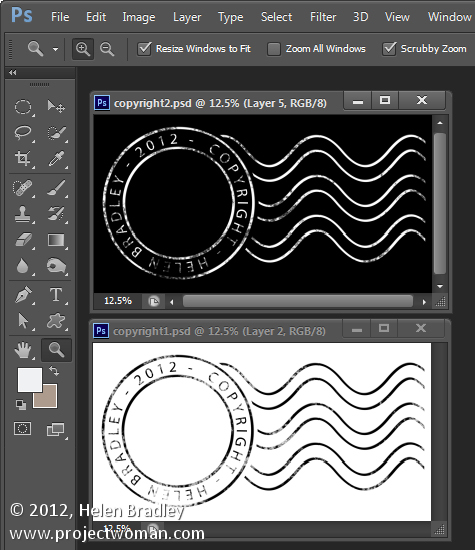
Unlike text watermarks you can’t set the color of an image watermark in the Watermark dialog so you need to get it right before you begin. For that reason I create two – one black and one white – which cover most situations.

Custom lightroom image watermark 1

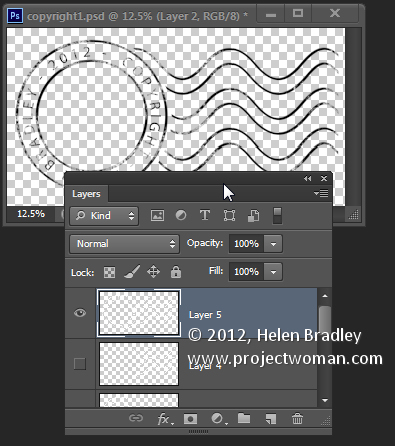
I do this in Photoshop working on a transparent layer – the reason is that I want this transparency to appear in the watermark when it is placed over the image. So, even if I use a fill layer behind the watermark so I can see the design as I work, I’ll hide this before saving the image.

Custom lightroom image watermark 2

When saving the image I’ll save it as a .png format file – this flattens the image to a single layer but retains transparency – something that the .jpg format does not.

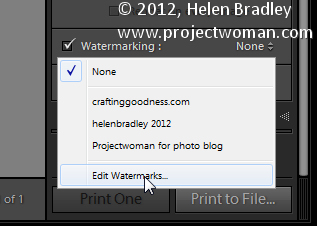
To create the image as a watermark open a module that has Watermarking such as the Print module. Click it to enable it and then choose Edit Watermarks from the dropdown list.

Custom lightroom image watermark 3

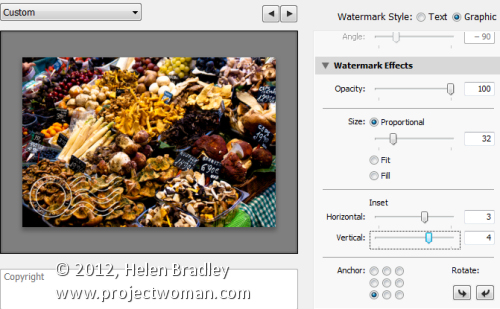
Click Graphic in the top right corner to select that as the Watermark Style. When prompted select the image to use. This image is dark so I chose the white version of the copyright watermark image.

If you cannot see the image, scroll down to the Watermark Effects area and adjust the Size so you can see the image. Set the desired size and placement using the Size, Anchor and Inset settings. Typically you will use the bottom left anchor point (or the bottom right) and move the image a little in from the edge of the photo.

Custom lightroom image watermark 4

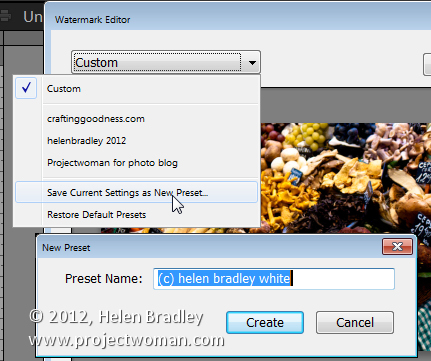
Once you have the position and size correct you can save this as a Watermark you can use anytime in future by clicking the Custom dropdown list and choose Save Current Settings as New Preset and type a name for the preset.

Custom lightroom image watermark 5

In future you can select and use this watermark in any of the panels in Lightroom that support Watermarking such as the slideshow module here:

Custom lightroom image watermark 6

Post originally from: Digital Photography Tips.

Check out our more Photography Tips at Photography Tips for Beginners, Portrait Photography Tips and Wedding Photography Tips.

Using Image Watermarks In Lightroom


Digital Photography School
 
Comments Off on Using Image Watermarks In Lightroom

Posted in Photography