RSS
 

Posts Tagged ‘lighting’

How to Use Hard Lighting to Create a Dramatic Portrait

15 Dec

When was the last time you did not primarily light your scene using a large soft source, such as a soft box or umbrella? Large soft sources easily create a beautiful, wrap-around quality of light. Just pop one up and you have instant “good” light.
before-after-lightroom-adjustments-01.jpg

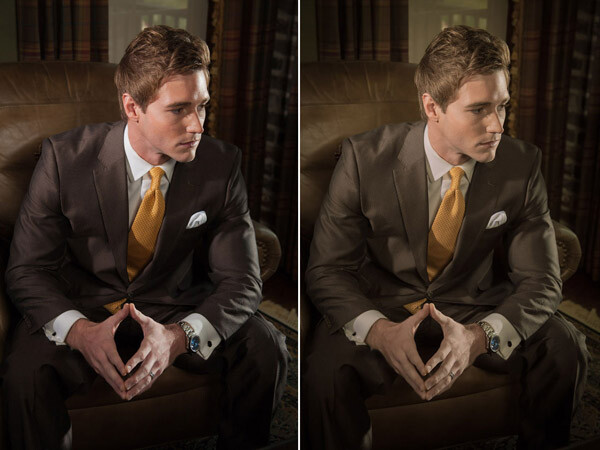
Final image: before and after in Lightroom

Though soft light is beautiful and has its place, it represents only one part of the artist’s palette. In this article we are going to dissect the lighting setup for a men’s fashion shoot, and look at how using hard light can add dramatic impact to your photographs.

I think two-time Academy Award-winning cinematographer Haskell Wexler said it best when it came to using hard light:

“Everybody should still work in hard light as well. Not to do it and to say that it has to be all soft light is like throwing away part of the artist’s palette. I think the more variety you can have, the better it will look. To be able to light well in hard light makes the soft lighting a piece of cake, because soft light is very forgiving. Soft light, uncontrolled, is still acceptable photographically. It is really hard for soft light to look bad, but it is really not hard for hard light to look bad.”

The feel the magazine wanted was a dramatic, high-contrast look. One of the problems with soft light is that it can be hard to control and can easily kill the contrast of your scene – especially in small spaces. The location for our shoot just so happened to be one of those small spaces, so I decided that reflectors and honeycomb grids were the best tools for the job.
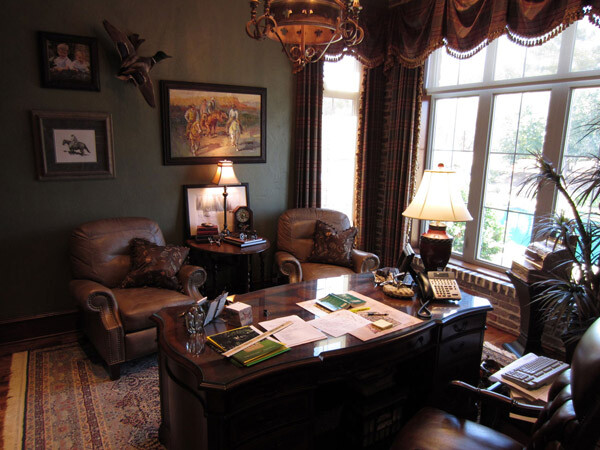
Location picture

The shoot was held at a local area builder’s office. The office provided the perfect backdrop for the shoot, but did not offer a lot of room for equipment.

In the pre-planning phase, I chose to use a simple three light setup which included a key light, a fill light and kicker. I had room on camera left to place the main key light, but did not have much room for a kicker opposite camera right; however, there was a window.

As luck had it, the office window overlooked a back patio that had electrical outlets, so I did not have to rely on a battery pack or generator. The only problem was that the patio was a lower in elevation than the office window, so I had to extend my 13′ light stand up to its near maximum height.

To secure the stand, I fastened several 10 pound ankle weights to the legs. Ankle weights are a great and inexpensive alternative to sandbags. The set I use cost about $ 20 at Walmart, and came with Velcro straps for easy attachment to light stands or boom arms.

Since the strobe was outside the window and placed a distance from the model, I attached a radio slave and set it to full power. (The strobe was rated at 600ws)

Back in the office, I took a meter reading using a light meter with the dome retracted and pointed towards the light. The meter gave me a reading of f/5.6 at ISO 100. I decided the reading would be a good base to build my lighting ratios, so I set my camera to f/5.6 at ISO 100. As far as the shutter speed, I set my camera to 1/160th of a second because I did not want to capture a lot of ambient light. When using strobes, the shutter speed only controls the brightness of the ambient light.

This first light would act as the kicker light, in the scene.
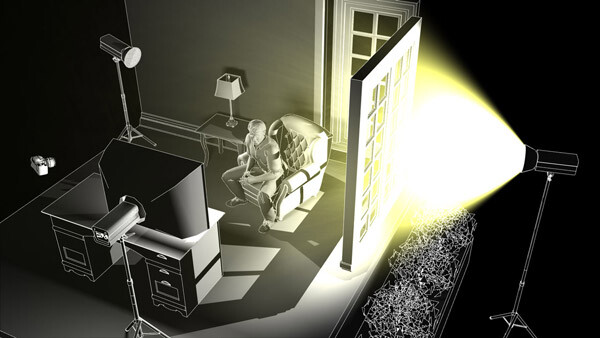
Kicker light placement

Position of the kicker light

Kicker test shot

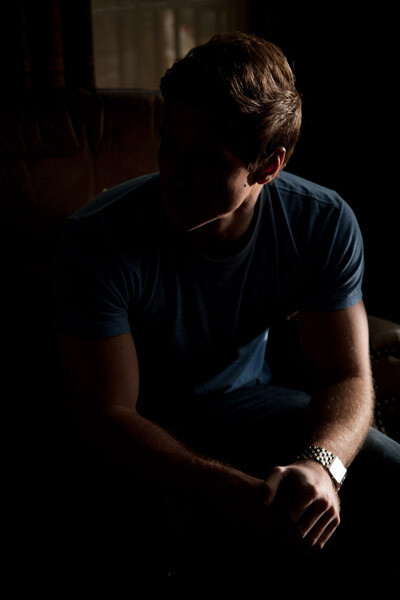
Test shot of the model with just the kicker light

When lighting with hard lights, you will often find the need to bring up the shadows, since they can easily go black. A large soft light source, placed close to the camera, is great for filling in shadow areas, because it resembles directionless ambient light.

The fill light in our scene was fitted with a medium soft box and placed behind and slightly to the right of the camera.
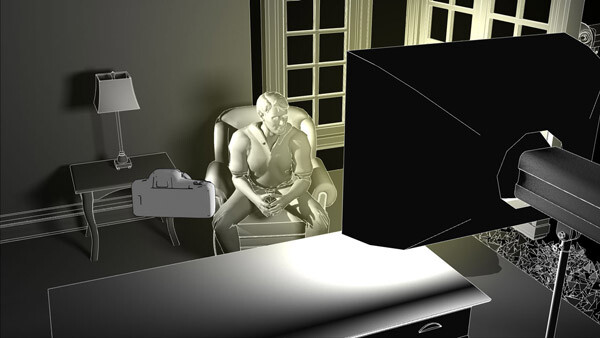
Fill light placement

Position of the fill light

Since most of the elements in the scene were dark brown, including the suit the model was going to wear, I could not set my fill light much lower than my base exposure of f/5.6. If I had set it lower the elements in the shadow areas would quickly go black. I set the fill light to 1 1/3 stop lower than my base exposure, which read f/3.5 on my light meter.
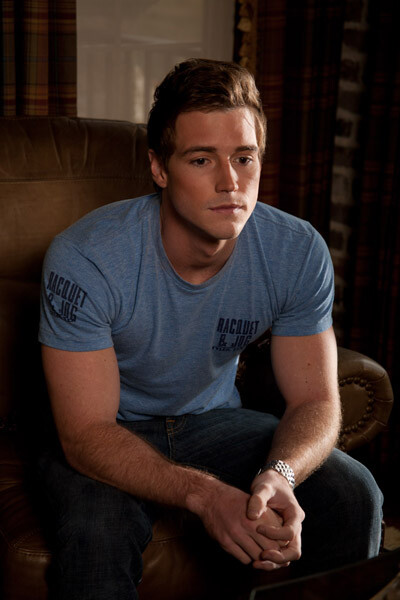
Kicker and fill test shot

Test shot of the model with both the fill and kicker lights.

The last light I set up was the key (main) light. I placed this light in an open doorway, towards camera left and slightly above the model. I wanted to keep the light on the model and off the walls, so I fitted the light with a 20 degree grid to control the spill.
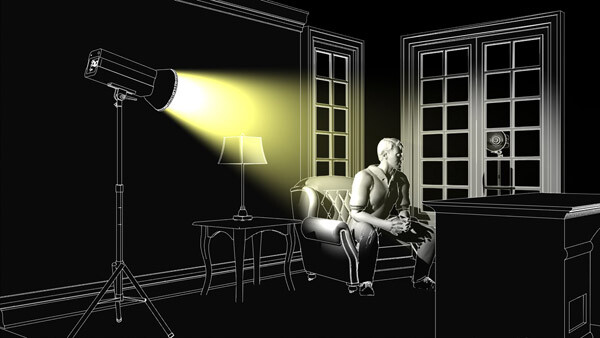
Key light placement

Position of the key light.

Since most of the scene was dark brown, I decided to have the key light one stop over my camera’s base exposure of f/5.6. I adjusted the light until it read f/8 on my light meter.
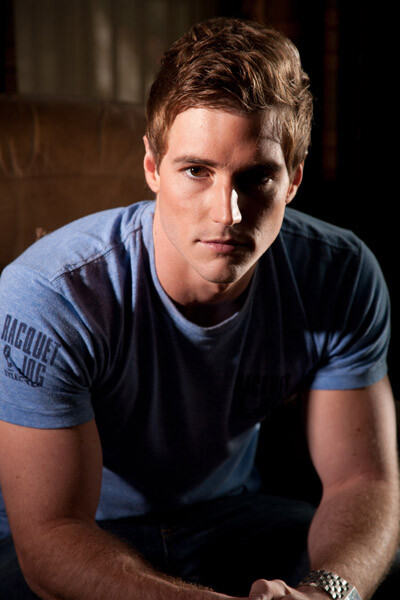
Kicker and key test shot

Test shot of model with the key light and kicker, no fill. Notice how the shadows go completely black without the fill light.

You may have noticed that the key light on the left side of the model’s face does not appear as bright as the window kicker light on the right side of his face, despite it being one stop brighter (left: f/8 vs right: f/5.6) This is because the kicker is placed more behind the subject, while the key light is placed more towards the side. You might have heard the photography term “the angle of reflection equals the angle of incidence”? This is basically that principle in action. Since the kicker light is slightly behind the model, the angle at which the light is being reflected off the skin is causing the highlight to appear brighter.
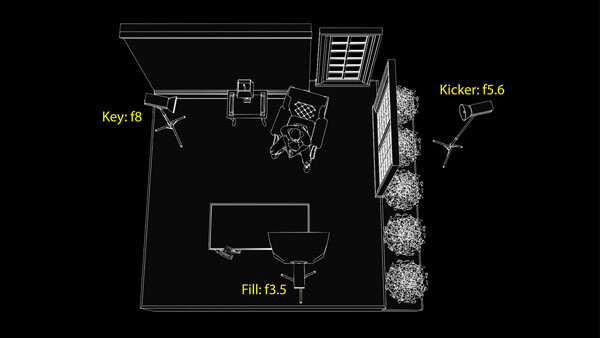
Key fill kicker diagram

Positions and settings for key, fill and kicker lights. Notice the camera positioning at the bottom left of the desk.

Before after lightroom adjustments 01

Shot with all three lights set and in place. Before and after adjustments in Lightroom.

Once the lighting was in place, the model was dressed and the shoot began.

A nice benefit of the positioning of the key and kicker lights was that they pulled double-duty, switching roles whenever the model turned his head. A nice short lighting pattern was created, whichever direction he faced. You can see this in the variations above and below.

Before after lightroom adjustments 02

Shot with all three lights set and in place. Before and after adjustments in Lightroom.

In closing, I would encourage you to think of creative ways to use and experiment with hard lighting in your photographs. Hard lighting is not just limited to men. The photo below was lit in the same fashion as the photo of the male model. A word of caution, though. Hard light is unforgiving when it comes to wrinkles and blemishes, so you will have to be very careful with your light positioning when your are lighting women.
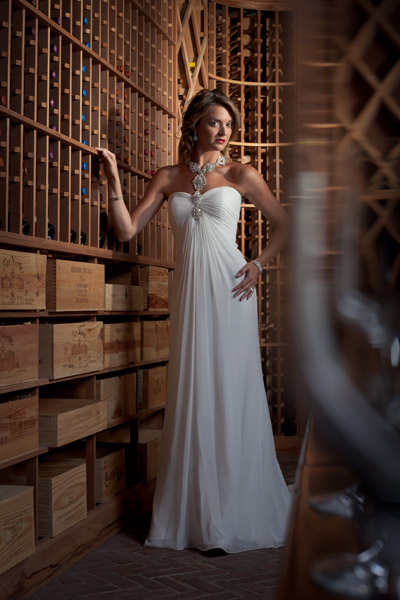
Hollywood glam 7056 Edit

googletag.cmd.push(function() {
tablet_slots.push( googletag.defineSlot( “/1005424/_dPSv4_tab-all-article-bottom_(300×250)”, [300, 250], “pb-ad-78623” ).addService( googletag.pubads() ) ); } );

googletag.cmd.push(function() {
mobile_slots.push( googletag.defineSlot( “/1005424/_dPSv4_mob-all-article-bottom_(300×250)”, [300, 250], “pb-ad-78158” ).addService( googletag.pubads() ) ); } );

The post How to Use Hard Lighting to Create a Dramatic Portrait by Joel Dryer appeared first on Digital Photography School.

Digital Photography School

 
Comments Off on How to Use Hard Lighting to Create a Dramatic Portrait

Posted in Photography


On Assignment: Lighting Like Leo

21 Nov

Of all of the wonderful things that have happened since I began writing Strobist eight years ago, certainly the best is the steady parade of creative people I have met as a result. And few are more talented (or insan motivated) than London-based photographer Drew Gardner.

We grew up in the same era, both working for newspapers in our respective cities. We left the papers and graduated to second careers. Drew moved onto a mix of editorial, commercial and art photography. And I, well, sometimes I'm not sure how exactly to describe what it is that I do.

So it was with equal parts curiosity and abject fear that I accepted his offer to come to London to be the lighting advisor for what would be the culmination of his Descendants photo series.

Read more »
Strobist

 
Comments Off on On Assignment: Lighting Like Leo

Posted in Photography


Lighting equipment manufacturer Metz files for insolvency

21 Nov

German television and photographic equipment maker Metz has filed for insolvency according to German media. Metz is known for producing high-end lighting equipment including flash units, studio flashes, and video lights. Approximately 600 jobs will be affected by the company’s financial situation. Read more

Articles: Digital Photography Review (dpreview.com)

 
Comments Off on Lighting equipment manufacturer Metz files for insolvency

Posted in Uncategorized


Split, Broad & Short Lighting Techniques

17 Sep

Image from Alana Tyler Slutsky's Surrealia series featured on Fashion Photography Blog (FashionPhotographyBlog.com)SPLIT, BROAD AND SHORT TECHNIQUES

Hey FashionPhotographyBlog.com readers! Welcome back.

Today we’ll cover the other three basic techniques for lighting – split, short and broad lighting.  If you missed yesterdays’ basic techniques of Paramount, Loop and Rembrandt lighting, you can find them here.

Let’s jump right in!

LIGHTING TECHNIQUES

Split Lighting: Slight lighting literally divides the subject’s face in half.  It’s also known as side lighting.  Because of the nature of this type of lighting, it’s great slimming light.  Keep in mind that in lighting from the side, it will show any texture (and imperfections).  Aka- this is not ideally the light to be used on a very zitty person.

Split/side lighting is exactly as it sounds – Place the key light at your subjects side.  It will illuminate half of their face and leave the other half in shadow.

If you don’t want as extreme a shadow as pictured above, use a bounce fill or fill light to bring in detail on the shadow side.

Split lighting diagram featured on Fashion Photography Blog (FashionPhotographyBlog.com)

Split Lighting Diagram

These next two lights are not exactly a lighting pattern, but terms that deal with the subject and the lights orientation to the camera.  The two lighting scenarios below deal with the subject being 3/4 to the camera.

Broad Lighting: Broad lighting will create a “broad” or “wide” face.  This is because the part of the face that is lit (the part of the face that is facing the camera) is wider than the section of the face that is in shadow.  Don’t use this type of light on heavier people, it will make them look bigger than they are.  It’s ideal for thin people.

To achieve this, place the light opposite the direction of your subject’s face.  For example, If the subject is looking to the left of the camera, place the light to the right of the camera.

Broad lighting example featured on Fashion Photography Blog (FashionPhotographyBlog.com)

Broad lighting diagram featured on Fashion Photography Blog (FashionPhotographyBlog.com)

Short Lighting: Short lighting will create a narrower looking face.  This is because the part of the face that is in shadow (the part of the face that is facing the camera) is wider than the section of the face that is lit.  This type of light is great for heavier people!  It creates a thinning effect which makes it really flattering lighting.

To achieve this, place the light in the same the direction of your subject’s face. For example, If the subject is looking to the left of the camera, place the light to the left of the camera.

Short lighting example featured on Fashion Photography Blog (FashionPhotographyBlog.com)
Short lighting diagram featured on Fashion Photography Blog (FashionPhotographyBlog.com)
Lighting type guide featured on Fashion Photography Blog (FashionPhotographyBlog.com)

If you want to know more about Kickers, Rim, Hair, and Background lights, check our post on Types of Light.

As always, if you have any questions, feel free to shoot me an email.

– Alana


IMAGE SOURCE:

Feature image & image 1: photography by Alana Tyler Slutsky from her Surrealia series. To view the rest of the photos from this series visit her website.

Image 2-8: Alana Tyler Slutsky


Fashion Photography Blog

 
Comments Off on Split, Broad & Short Lighting Techniques

Posted in Uncategorized


Paramount, Loop & Rembrandt Lighting

16 Sep

Image from Alana Tyler Slutsky's Surrealia series featured on Fashion Photography Blog (FashionPhotographyBlog.com)PARAMOUNT, LOOP & REMBRANDT LIGHTING

Hello FashionPhotographyBlog.com readers!

So.. I suppose this time around we’ll get into the long awaited Light – Part III posts.  (If you haven’t read Light – Part I or Light – Part II, check them out!)  Part III will cover basic lighting techniques ever photographer should know.  Today we’ll cover three of the six big, basic lighting techniques.

Before we can get to the meat of it.. First, the boring technical part:

Light is metered in f/stops.  F/stops in light are opposite of how you’re used to thinking of them as they relate to aperture.  (This will be confusing for a minute, just bear with me.)  In a camera, f/1.4 lets a lot of light in, f/22 is a relatively small aperture which doesn’t allow much light to pass.  In lighting, the larger the nbumber, the brighter the output of light.  A light reading f/11 is extremely bright compared to f/4.  How does this make sense?  Instead of thinking of them independently, think of how light meter readings and aperture work together.  If a light is extremely bright, your aperture should be stopped down to avoid over exposure.  While f/11 is a bright light, it’s a smaller aperture opening, making the image properly exposed.

Now on to the fun part!

LIGHTING TECHNIQUES

The order in which these techniques are listed easily transition into each other.  If you want to learn different lighting styles, give them a try!  Follow the order of the list and it will be easy to move between them.

Butterfly Lighting: Butterfly lighting is commonly called “Paramount lighting.”  The reason for this being that Paramount Pictures (yes, the movie company) used this as their signature lighting style when it came to shooting their leading ladies.  The name “butterfly light” is derived from the shadow that falls under the nose which resembles a butterfly.

True Paramount lighting example featured on Fashion Photography Blog (FashionPhotographyBlog.com)

True 'Paramount' lighting

To achieve this type of lighting, place the light high and directly in front of the face.  (Because the light is directly in line with the face, it works best when putting your light on a boom.)  Butterfly light is typically a more feminine lighting and when used properly, it will accentuate high cheekbones.  *Be cautious of subjects with hallow or deep eye sockets – when the light is placed high, if your subject has deep eye sockets there will be no light in their eyes.*

Paramount lighting example featured on Fashion Photography Blog (FashionPhotographyBlog.com)

Take notice – if the light is high enough, it will cast a shadow under the eye from the eyelashes. (It's exaggerated in this image with the extreme fake lashes)

Butterfly lighting diagram as featured on Fashion Photography Blog (FashionPhotographyBlog.com)

Butterfly Lighting Diagram

Loop Lighting: To achieve, place your key light slightly to the side of the subject so the shadow under the nose becomes a small loop. Butterfly lighting can easily be transformed into loop lighting by lowering the light and slightly moving it over. This type of light works best with average, oval-shaped faces.  *The loop shadow will never merge with the shadow on a cheek. This creates a new lighting technique called “Rembrandt Lighting.”*

Loop lighting example featured on Fashion Photography Blog (FashionPhotographyBlog.com)

Notice that the nose shadow never touches the cheek shadow

Loop lighting diagram as featured on Fashion Photography Blog (FashionPhotographyBlog.com)

Loop Lighting Diagram

Rembrandt Lighting: Rembrandt lighting gets it’s name from the lighting in Dutch painter Rembrandt van Rjin’s paintings, who used skylights and high-up windows to illuminate his subjects.  This became a very common light pattern in his paintings.  This lighting technique is known for creating a triangle of light on the subjects cheek.

Rembrandt self portrait as featured on Fashion Photography Blog (FashionPhotographyBlog.com)

Rembrandt's Self-Portrait

To create a small triangle of highlight on the shadowy cheek, place the key light farther to the side of the subject than it is in the loop lighting scenario.  The light is going to almost be coming off a bit to the side of the subject and slightly above eye level (however, this depends on how their head is placed.)  You may have to play around and move the light closer to the subject in order to get a nice, strong Rembrandt light.  This is a highly flattering lighting technique that can be used on almost anyone!

Rembrandt lighting example as featured on Fashion Photography Blog (FashionPhotographyBlog.com)

Rembrandt lighting!

Rembrandt lighting diagram as featured on Fashion Photography Blog (FashionPhotographyBlog.com)

Rembrandt Lighting Diagram

Check in tomorrow for the other three basic lighting techniques – split, broad and short lighting.

Alana


IMAGE SOURCE:

Feature image & image 1: photography by Alana Tyler Slutsky from her Surrealia series. To view the rest of the photos from this series visit her website.

Image 2-9: Alana Tyler Slutsky


Fashion Photography Blog

 
Comments Off on Paramount, Loop & Rembrandt Lighting

Posted in Uncategorized


Lighting Tutorial: Types Of Light Modifiers

31 Aug

Image from Alana Tyler Slutsky's Surrealia series featured on Fashion Photography Blog (FashionPhotographyBlog.com)LIGHT MODIFIERS


Hello FashionPhotographyBlog.com readers! The past couple of days we’ve discussed different types of light sources, lights and meters. Now the fun stuff: Light Modifiers! (Please, try to contain your excitement.)

Light Modifiers are anything that can be used to alter and shape the output of light.  There are three ways to modify light: block, bounce and diffuse.  Light modifiers don’t have to be store bought- technically, a modifier is anything that alters the light.  It can be a piece of tinfoil from your kitchen or some fabric thrown over a flash to diffuse the light.

BOUNCING LIGHT


Reflectors The most commonly known types of reflectors are bounce reflectors. These are typically white, silver or gold.  With these, you literally bounce the light off of the reflector and back onto your subject.  Be careful not to bounce light at a funny, unflattering angle.  Different colors create different effects.  A silver reflector will create a cooler color of light while a gold reflector will “warm up” the light bounced back onto your subject.

Reflector Bouncing Light Example As Seen on Fashion Photography Blog (FashionPhotographyBlog.com)

Gold Reflector Image As Seen on Fashion Photography Blog (FashionPhotographyBlog.com)

Gold Vs Silver Reflector Example As Seen on Fashion Photography Blog (FashionPhotographyBlog.com)

Gold vs. Silver Reflector

BLOCKING LIGHT


Rather than using a reflector to bounce light into an image, you can hold up a black card or board, this will take light away. It works the same way as a reflector, but instead of bouncing light onto your subject, it will cut down on light reflected back to the subject.  Black absorbs light, thus resulting in less light on the subject when a black bounce board is held up to it.

Black velvet is the best fabric you can use if you want to not reflect light.  Want a pitch black background?  Get a giant piece of black velvet!

Cinefoil is great for manipulating light.  It works in conjunction with the light modifiers we’ve previously discussed.  Cinefoil is like really thick black aluminum foil which can tolerate high heats.  It can be clipped directly onto a light source and used to control where the light falls.

Rosco Cinefoil Roll Image As Seen on Fashion Photography Blog (FashionPhotographyBlog.com)

Roll of Rosco Cinefoil

Turning A Softbox Into A Striplight Using Cinefoil As Seen On Fashion Photography Blog (FashionPhotographyBlog.com)

Using Cinefoil to turn a Softbox into a Striplight

DIFFUSING LIGHT


By placing material in between a light source and the subject, you’re diffusing it.  By placing some form of diffusion material in front of a light, you take away it’s specular qualities.  The light will now be softer with gradual transitions between light and shadow (see Light, Part I – The Science of it All for more on diffused and specular light).

You can buy diffusion material at a store, which can get pricey, or you can look around your house for diffusion materials.  As long as light passes through the material it can act as diffusion.  Shower curtains, tissue paper, lightweight fabrics and sometimes sheets act as great diffusers.

Often times, the inside of a reflector will be made of diffusion material.  By taking the reflective covering off you now have a diffuser!

Light Reflectors & Diffusers Example Image As Seen on Fashion Photography Blog (FashionPhotographyBlog.com)

Scrims are fantastic when trying to diffuse light on location.  A scrim is essentially a large piece of diffusion material stretched over a frame.  You’ll typically need some sort of stand system or an assistant to hold it up while you shoot.

Scrim Being Used On Annie Leibovitz's Set As Seen on Fashion Photography Blog (FashionPhotographyBlog.com)

Scrim in use on Annie Leibovitz's set

These next modifiers are technically defined as Light Shaping Tools because they’re placed on the light to modify it’s output.  These are not all the modifiers out there, but a summary of the most common types.

There are several different types of light modifiers on the market, they include but are not limited to:

Umbrellas create a large diffused light.  The light hits the umbrella and bounces back to the subject.  It can be hard to control.  There are two common types of umbrellas: reflective (which come in silver, white or sometimes gold) and shoot through.  Umbrellas are typically held onto a light by sliding the rod through the reflector which holds it in place.

Light Umbrella Image As Seen on Fashion Photography Blog (FashionPhotographyBlog.com)

On light Reflectors are not to be confused with bounce reflectors.  All strobe lights come with a device called a Reflector.  The purpose of the reflector is to guide the light.  If you use a flash unit bare bulb (no source of modifier on it) the light goes everywhere.  A reflector is used to direct the spread of light into one direction.  They create a specular (hard) light source.

Profoto Zoom Reflector Image As Seen on Fashion Photography Blog (FashionPhotographyBlog.com)

Profoto "Zoom Reflector”

Soft Boxes directly diffuse light and create soft shadows.  They are black on the exterior and lined with silver reflective material.  A white diffusion material goes over the front which creates soft diffused light.  A good softbox won’t “leak” any light to the outside world.  They’re held onto the light source with something called a Speed Ring.  All speed rings are specific to their light manufacturer (not all lights use the same speed ring).  Softboxes are collapsable and are put together by inserting metal rods into the speed ring, which holds it in place.   There are many types of softboxes, and they come in all different sizes, but they essentially all do the same thing.

The most common soft boxes are either square or rectangular.

Profoto 2x3 Softbox Image As Seen on Fashion Photography Blog (FashionPhotographyBlog.com)

Profoto 2'x3' Softbox

Striplight or Stripbank is a thin softbox.  Think of it as taking a full softbox and cutting it in half.

Profoto 1x4 Striplight Image As Seen on Fashion Photography Blog (FashionPhotographyBlog.com)

Profoto 1'x4' Striplight

Octaboxes or Octabanks are octangular softboxes.

Profoto 36 Inch Ocotobox Image As Seen on Fashion Photography Blog (FashionPhotographyBlog.com)

Profoto 36' Octabox

Image from Alana Tyler Slutsky featured on Fashion Photography Blog (FashionPhotographyBlog.com)

Lit with a large Octabank to the right of the camera

Beauty Dishes are another form of a reflector.  They bounce onto a circular piece of metal which reflects the light back into a large bowl like reflector and then onto the subject.  Beauty dishes come in white or silver.  A sock (form of diffusion material) can be placed over the front to diffuse the light.  They create a contrasting light. Beauty dishes are a personal favorite of mine!

Profoto Softlight Reflector In White Image As Seen on Fashion Photography Blog (FashionPhotographyBlog.com)

Profoto Softlight Reflector in white

Image from Alana Tyler Slutsky featured on Fashion Photography Blog (FashionPhotographyBlog.com)

Taken with Beauty Dish to camera right and Background light with grid

Grids (Honeycombs) are put on a light and act like a spotlight.  Grids direct light from a wide beam to a certain spot.  Generally grids are placed in reflector, but you can also get a grid for your beauty dish or soft box.  Grids come in different degrees which determine how condensed the light becomes.

Profoto 10" Honeycomb Grid Image As Seen on Fashion Photography Blog (FashionPhotographyBlog.com)

Profoto 10° honeycomb grid

White Softlight Reflector Example As Seen on Fashion Photography Blog (FashionPhotographyBlog.com)

Image from Alana Tyler Slutsky featured on Fashion Photography Blog (FashionPhotographyBlog.com)

Shot with 20° grid

Snoots turn a larger light source into a narrower light, similar to a spotlight by controlling and condensing the cone of light.

Profoto Snoot Image As Seen on Fashion Photography Blog (FashionPhotographyBlog.com)

Profoto Snoot

Image from Alana Tyler Slutsky featured on Fashion Photography Blog (FashionPhotographyBlog.com)

A Snoot was the only light source here, camera right

Barndoors control the direction of a light.  They either clip onto the light or a reflector and each of the four doors can be moved independently. Careful, they get hot!

Profoto Barn Doors For Zoom Reflector Image As Seen on Fashion Photography Blog (FashionPhotographyBlog.com)

Profoto Barndoors for Zoom Reflector

That pretty much sums up the basics of lights and light modifiers.  Keep your eyes open for the next week’s lighting tutorial, where we’ll dive into some standard lighting techniques.

Be sure to check out Zack Arias blog for an EXCELLENT comparison of light modifiers and their effect on a model.

If there is anything at all you don’t understand or are curious about, feel free to email me at alana@alanatylerslutsky.com.

– A


IMAGE SOURCE:

Feature image & image 1: photography by Alana Tyler Slutsky from her Surrealia series. To view the rest of the photos from this series visit her website.

Image 2: alasmedia.wikispaces.com

Image 3, 5-13, 15, 17, 18, 20 & 22: Alana Tyler Slutsky

Image 4: bhphotovideo.com

Image 14, 16, 19 & 21: Alana Tyler Slutsky Photography


Fashion Photography Blog

 
Comments Off on Lighting Tutorial: Types Of Light Modifiers

Posted in Uncategorized


Lighting Tutorial: Types Of Lights & Meters

29 Aug

Image from Alana Tyler Slutsky's Surrealia series as seen on Fashion Photography Blog (FashionPhotographyBlog.comTYPES OF LIGHTS + METERS

Hey FashionPhotographyBlog.com readers! Welcome back.

Now that you know different sources of lights that can be used, today we’ll cover the ways in which they can be set up.

TYPES OF LIGHTS

Key” light is the main light source and generally the brightest.


Fill” is used to brighten shadows and does bit create a secondary shadow and is generally a diffused source.  (Avoid a secondary shadow at all costs! This is the sign of an amateur photographer.)


Background” lights are used to illuminate the background and aid in separating the subject.  They can provide a sense of depth.


Hair” light is typically overhead and slightly behind a subject.  It’s a separation light which only hits the top of the head.


Hair Lighting Example As Seen On Fashion Photography Blog (FashionPhotographyBlog.com

Kickers” are lights that help separate the subject from the background.  Kickers are also known as “Accent,” “Rim” and “Edge” lights.


Kickers Lighting Example As Seen On Fashion Photography Blog (FashionPhotographyBlog.com

No Kicker vs. Kicker – This is a more obvious example. Kickers can be use more subtlety.

Rim” lights are pretty self explanatory.  They hit the rim of the subject to serve as a separator from the background.

Rim Lighting Example As Seen On Fashion Photography Blog (FashionPhotographyBlog.com

Rim Lighting

TYPES OF METERS

Reflective Meters are the types of meters build right into your camera.  How do they work?  Reflective meters measure the light that is reflected back into them.  These types of meters take an average reading of the scene and meter for “middle grey.”  Be aware of this when using the meter built into your camera (or a reflective meter) to meter a scene!

Experiment: Using a reflective meter, take a photograph of a black card, take a photograph of a white card and take a photograph of a grey card.  You’ll notice that all the images essentially come out grey- the black will be over exposed and the white will be under exposed.

The following information and pictures are from Scantips.com

Image of Three Cards As Seen On Fashion Photography Blog (FashionPhotographyBlog.com

Three cards, f/8, 1/1250 second Nearly exactly Sunny 16

Black Card Image As Seen On Fashion Photography Blog (FashionPhotographyBlog.com

Black card, f/8 1/200 second (result is not black) Result is 2.3 stops overexposed, from first one.

White Card Image As Seen On Fashion Photography Blog (FashionPhotographyBlog.com

White card, f/8 1/5000 second (result is not white) Result is two stops underexposed, from first one.

Grey Card Image As Seen On Fashion Photography Blog (FashionPhotographyBlog.com

18% gray card, f/8 1/800 second Result is 1/3 stop over first one.

Incident Meters are the type professionals typically use.  They’re handheld meters which are held at the subject (not at the camera, like reflective meters) and measure the amount of light that falls on to the subject.  These are much more accurate than reflective meters and are easiest to use in studio.


Sekonic L-358 Incident Meter Image As Seen On Fashion Photography Blog (FashionPhotographyBlog.com

The Sekonic L-358 is one of the most commonly used incident meters.

They also come with an attachment to use it as a reflective meter.

Hang tight for tomorrow where we’ll cover different types of lighting modifiers.

See ya tomorrow-
Alana


IMAGE SOURCE:

Feature image & image 1: photography by Alana Tyler Slutsky from her Surrealia series. To view the rest of the photos from this series visit her website.

Image 3: StackExchange.com

Image 2, 4 & 9: Alana Tyler Slutsky

Image 5-8: Scantips.com


Fashion Photography Blog

 
Comments Off on Lighting Tutorial: Types Of Lights & Meters

Posted in Uncategorized


Lighting Tutorial: Types Of Light Sources

28 Aug

Image from Alana Tyler Slutsky's Surrealia series as featured on Fashion Photography Blog (FashionPhotographyBlog.com)

LIGHT SOURCES

Good morning FashionPhotographyBlog.com readers!

Today we’ll continue on with our introduction to lighting.  If you are just tuning in, you can find the first topics we covered here:

Part 1.1 – The Science of Light

Part 1.2 – The Inverse Square Law + Color Temperature Explained

Part 1.3 – Applying Lighting to Real World Situations

This time around, we’ll discuss types of lights and pick back up tomorrow with meters and light modifiers.  I promise it’s not as technical (or as boring) as Part I.  So let jump on in…

TYPES OF LIGHT SOURCES (The Most Common)

Continuous Lighting also referred to as “Hot Lights,” which is generic term when referring to several types of continuous lighting.  Often, continuous lighting is called by the name of its bulb.

Photofloods are incandescent/tungsten bulbs not much different from your standard household bulb (just A LOT more powerful!)

Photofloods as seen on Fashion Photography Blog (FashionPhotographyBlog.com)

HMI (Halide Metal Oxide) are very small, very expensive bulbs.  They’re daylight balanced in color.  HMI’s are the most commonly used light in the film industry, with many using Arri spotlight systems.

Halide Metal Oxide (HMI) Lights as seen on Fashion Photography Blog (FashionPhotographyBlog.com)

Quartz-Halogen lights are great for the average photographer!  They’re affordable, long lasting and reliable.  However, they get HOT, so be careful!  One of the most popular and dependable Quartz-Halogen lights used is the Lowel Omni.

Quartz Halogen Lights as seen on Fashion Photography Blog (FashionPhotographyBlog.com)

Strobe Lights also known as Flash come in many forms as well.  All are daylight balanced.

Speed Lights are the most commonly known type of flash (aside from built-in on-camera flash.  They can be adjusted for the amount of light they output and (for the most part) work seamlessly with DSLR’s.

Speed Lights as seen on Fashion Photography Blog (FashionPhotographyBlog.com)

Monoblocks/Monolights are strobe lights that are most often found in studio.  They are much more powerful than a speed light but not as convenient for location work.  Monopacks are self-contained flash units that combine power and light all in one casing.

Monolights are much less expensive than pack lights (we’ll get to those in a minute).  A great starter monolight kit I would recommend to amateur photographers would be Alienbees.  They’re affordable, reliable and Paul C. Buff is a fantastic company with outstanding customer service! (No, they didn’t pay me to write this.)

Calumet Travelite as seen on Fashion Photography Blog (FashionPhotographyBlog.com)

Calumet Travelite

Alienbee Light as seen on Fashion Photography Blog (FashionPhotographyBlog.com)

Alienbee

Pack Systems are the most common type of strobe light among professional photographers.  These can be extremely costly. Because of this, most pros rent their lights from an equipment rental house.  Pack and head lighting systems consist of a “pack” aka a generator (the power) and heads (the light).  The heads plug into the pack and the pack is used to adjust the lighting.  They can be daunting at first but they’re easy to understand once you’re properly taught!  (We’ll learn how to operate pack lighting in another post.)  Common manufacturers of pack lighting systems are Profoto (my personal favorite), Broncolor, Bowens, Elinchrom, Speedotron and Dynalite.  Despite manufacturer, they all pretty much work the same way.

Profoto Acute 2R System Power Pack as seen on Fashion Photography Blog (FashionPhotographyBlog.com)

Profoto Acute 2R Pack System (power pack and 2 heads)

Profoto D4 Power Pack as seen on Fashion Photography Blog (FashionPhotographyBlog.com)

Controls for a more advanced professional power pack (Profoto D4)

Catch us tomorrow when we discuss meters & light modifiers.

As always, if you have any questions, feel free to shoot over an email to alana@alanatylerslutsky.com!

– Alana


IMAGE SOURCE:

Feature image & image 1: photography by Alana Tyler Slutsky from her Surrealia series. To view the rest of the photos from this series visit her website.

Image 2-9: Alana Tyler Slutsky


Fashion Photography Blog

 
Comments Off on Lighting Tutorial: Types Of Light Sources

Posted in Uncategorized


Drone lighting could be coming soon to your studio

17 Jul

A flying flash rig that tracks the position of both photographer and subject to maintain consistent lighting angles has been developed by researchers from Massachusetts Institute of Technology and Cornell University. In a project designed to test co-ordination between aerial robots and ground-based targets, researchers programmed a flash-carrying drone to light people in the studio as the subjects and the photographer changed positions. Read more

Articles: Digital Photography Review (dpreview.com)

 
Comments Off on Drone lighting could be coming soon to your studio

Posted in Uncategorized


How To Apply Lighting In The Real World

08 Jul

Image from Alana Tyler Slutsky's Surrealia series featured on Fashion Photography Blog (FashionPhotographyBlog.com)

LIGHT: REAL WORLD APPLICATIONS


Hey FashionPhotographyBlog.com readers! So, you have sucked it up and battled your way through the past two days learning about the science behind lighting as well as the Inverse Square Law and color temperature.  You’re probably sitting there thinking “GREAT. HOW DOES ALL THIS MUMBO JUMBO HELP ME IN THE REAL WORLD?”  I’m glad you asked.

Additive Primaries (RGB)/Subtractive Primaries (CMY)

Knowledge of these actually become very helpful in post-production.  Is your image looking a little red?  Throw in a tiny bit of it’s compliment (cyan) in the areas that are too red and it will balance out the colors, making the image more neutral.

Qualities of Light


Direction & Contrast

Want a very contrasty image? Don’t place the light directly in front of your subject, it will create a “flat” image (low contrast lighting).  Want a more dramatic image?  Try placing the light more to the side, this will create a higher ratio between the light/shadow relationship – aka the image will have more contrast.

Shot With Dramatic Lighting High Contrast
Dramatic Lighting (High Contrast)

Source

Shot With Flat Lighting Low Contrast
Flat Lighting (Low Contrast)

Source

Diffused & Specular

How do you want to light your image? What is the image for? What is your subject? If you’re going to be taking head shots for an actor, you’re going to want to use a more diffused light source to compliment their features. Using a specular light source for a head shot wouldn’t end with a very pretty result. There would be ugly harsh shadows which would distract the viewer.

Inverse Square Law

I know this one is confusing. Know this: the Inverse Square Law has to deal with fall off of light. Need a black background but you only have a white wall? The farther you get from the wall, the more your light source will fall of, creating a darker and darker background as you move your light and your model farther from the wall. Granted, depending on how big/bright your light source is, you may have to move far away from the wall in order to get your background completely black.

Color Temperature

Want your image to have a blue color cast but you’re shooting in daylight? Set your white balance to “Tungsten.” Since tungsten light is orange in color, your camera knows to add more blue to the image to balance the colors. If you’re already shooting with a blue light source (Daylight/Daylight balanced Flash) and set your white balance to “Tungsten,” you camera is going to over compensate and the result will be a cooler, blue image.

Play around with white balances and color temperatures! You can get some cool results.

Shot With Daylight White Balance Setting
Originally shot with white balance set to “Daylight”

Shot With Tungsten White Balance Setting
White balance changed to “Tungsten” to give the image a blue color cast

Made it through? Good! I know it was a bit rough but it’s over now. I promise next post on light will be the information that everyone wants to know – how to shape and modify it! Thanks for sticking it through and hopefully you learned something.

As always, if you have any questions, feel free to shoot over an email! alana@alanatylerslutsky.com

– Alana

IMAGE SOURCE:

Feature image & image 1: photography by Alana Tyler Slutsky from her Surrealia series. To view the rest of the photos from this series visit her website.

Image 2: Adorama

Image 3: DPS

Image 4 & 5: Alana Tyler Slutsky


Fashion Photography Blog

 
Comments Off on How To Apply Lighting In The Real World

Posted in Uncategorized