RSS
 

Posts Tagged ‘Light’

Lighting Tutorial: Types Of Light Modifiers

31 Aug

Image from Alana Tyler Slutsky's Surrealia series featured on Fashion Photography Blog (FashionPhotographyBlog.com)LIGHT MODIFIERS


Hello FashionPhotographyBlog.com readers! The past couple of days we’ve discussed different types of light sources, lights and meters. Now the fun stuff: Light Modifiers! (Please, try to contain your excitement.)

Light Modifiers are anything that can be used to alter and shape the output of light.  There are three ways to modify light: block, bounce and diffuse.  Light modifiers don’t have to be store bought- technically, a modifier is anything that alters the light.  It can be a piece of tinfoil from your kitchen or some fabric thrown over a flash to diffuse the light.

BOUNCING LIGHT


Reflectors The most commonly known types of reflectors are bounce reflectors. These are typically white, silver or gold.  With these, you literally bounce the light off of the reflector and back onto your subject.  Be careful not to bounce light at a funny, unflattering angle.  Different colors create different effects.  A silver reflector will create a cooler color of light while a gold reflector will “warm up” the light bounced back onto your subject.

Reflector Bouncing Light Example As Seen on Fashion Photography Blog (FashionPhotographyBlog.com)

Gold Reflector Image As Seen on Fashion Photography Blog (FashionPhotographyBlog.com)

Gold Vs Silver Reflector Example As Seen on Fashion Photography Blog (FashionPhotographyBlog.com)

Gold vs. Silver Reflector

BLOCKING LIGHT


Rather than using a reflector to bounce light into an image, you can hold up a black card or board, this will take light away. It works the same way as a reflector, but instead of bouncing light onto your subject, it will cut down on light reflected back to the subject.  Black absorbs light, thus resulting in less light on the subject when a black bounce board is held up to it.

Black velvet is the best fabric you can use if you want to not reflect light.  Want a pitch black background?  Get a giant piece of black velvet!

Cinefoil is great for manipulating light.  It works in conjunction with the light modifiers we’ve previously discussed.  Cinefoil is like really thick black aluminum foil which can tolerate high heats.  It can be clipped directly onto a light source and used to control where the light falls.

Rosco Cinefoil Roll Image As Seen on Fashion Photography Blog (FashionPhotographyBlog.com)

Roll of Rosco Cinefoil

Turning A Softbox Into A Striplight Using Cinefoil As Seen On Fashion Photography Blog (FashionPhotographyBlog.com)

Using Cinefoil to turn a Softbox into a Striplight

DIFFUSING LIGHT


By placing material in between a light source and the subject, you’re diffusing it.  By placing some form of diffusion material in front of a light, you take away it’s specular qualities.  The light will now be softer with gradual transitions between light and shadow (see Light, Part I – The Science of it All for more on diffused and specular light).

You can buy diffusion material at a store, which can get pricey, or you can look around your house for diffusion materials.  As long as light passes through the material it can act as diffusion.  Shower curtains, tissue paper, lightweight fabrics and sometimes sheets act as great diffusers.

Often times, the inside of a reflector will be made of diffusion material.  By taking the reflective covering off you now have a diffuser!

Light Reflectors & Diffusers Example Image As Seen on Fashion Photography Blog (FashionPhotographyBlog.com)

Scrims are fantastic when trying to diffuse light on location.  A scrim is essentially a large piece of diffusion material stretched over a frame.  You’ll typically need some sort of stand system or an assistant to hold it up while you shoot.

Scrim Being Used On Annie Leibovitz's Set As Seen on Fashion Photography Blog (FashionPhotographyBlog.com)

Scrim in use on Annie Leibovitz's set

These next modifiers are technically defined as Light Shaping Tools because they’re placed on the light to modify it’s output.  These are not all the modifiers out there, but a summary of the most common types.

There are several different types of light modifiers on the market, they include but are not limited to:

Umbrellas create a large diffused light.  The light hits the umbrella and bounces back to the subject.  It can be hard to control.  There are two common types of umbrellas: reflective (which come in silver, white or sometimes gold) and shoot through.  Umbrellas are typically held onto a light by sliding the rod through the reflector which holds it in place.

Light Umbrella Image As Seen on Fashion Photography Blog (FashionPhotographyBlog.com)

On light Reflectors are not to be confused with bounce reflectors.  All strobe lights come with a device called a Reflector.  The purpose of the reflector is to guide the light.  If you use a flash unit bare bulb (no source of modifier on it) the light goes everywhere.  A reflector is used to direct the spread of light into one direction.  They create a specular (hard) light source.

Profoto Zoom Reflector Image As Seen on Fashion Photography Blog (FashionPhotographyBlog.com)

Profoto "Zoom Reflector”

Soft Boxes directly diffuse light and create soft shadows.  They are black on the exterior and lined with silver reflective material.  A white diffusion material goes over the front which creates soft diffused light.  A good softbox won’t “leak” any light to the outside world.  They’re held onto the light source with something called a Speed Ring.  All speed rings are specific to their light manufacturer (not all lights use the same speed ring).  Softboxes are collapsable and are put together by inserting metal rods into the speed ring, which holds it in place.   There are many types of softboxes, and they come in all different sizes, but they essentially all do the same thing.

The most common soft boxes are either square or rectangular.

Profoto 2x3 Softbox Image As Seen on Fashion Photography Blog (FashionPhotographyBlog.com)

Profoto 2'x3' Softbox

Striplight or Stripbank is a thin softbox.  Think of it as taking a full softbox and cutting it in half.

Profoto 1x4 Striplight Image As Seen on Fashion Photography Blog (FashionPhotographyBlog.com)

Profoto 1'x4' Striplight

Octaboxes or Octabanks are octangular softboxes.

Profoto 36 Inch Ocotobox Image As Seen on Fashion Photography Blog (FashionPhotographyBlog.com)

Profoto 36' Octabox

Image from Alana Tyler Slutsky featured on Fashion Photography Blog (FashionPhotographyBlog.com)

Lit with a large Octabank to the right of the camera

Beauty Dishes are another form of a reflector.  They bounce onto a circular piece of metal which reflects the light back into a large bowl like reflector and then onto the subject.  Beauty dishes come in white or silver.  A sock (form of diffusion material) can be placed over the front to diffuse the light.  They create a contrasting light. Beauty dishes are a personal favorite of mine!

Profoto Softlight Reflector In White Image As Seen on Fashion Photography Blog (FashionPhotographyBlog.com)

Profoto Softlight Reflector in white

Image from Alana Tyler Slutsky featured on Fashion Photography Blog (FashionPhotographyBlog.com)

Taken with Beauty Dish to camera right and Background light with grid

Grids (Honeycombs) are put on a light and act like a spotlight.  Grids direct light from a wide beam to a certain spot.  Generally grids are placed in reflector, but you can also get a grid for your beauty dish or soft box.  Grids come in different degrees which determine how condensed the light becomes.

Profoto 10" Honeycomb Grid Image As Seen on Fashion Photography Blog (FashionPhotographyBlog.com)

Profoto 10° honeycomb grid

White Softlight Reflector Example As Seen on Fashion Photography Blog (FashionPhotographyBlog.com)

Image from Alana Tyler Slutsky featured on Fashion Photography Blog (FashionPhotographyBlog.com)

Shot with 20° grid

Snoots turn a larger light source into a narrower light, similar to a spotlight by controlling and condensing the cone of light.

Profoto Snoot Image As Seen on Fashion Photography Blog (FashionPhotographyBlog.com)

Profoto Snoot

Image from Alana Tyler Slutsky featured on Fashion Photography Blog (FashionPhotographyBlog.com)

A Snoot was the only light source here, camera right

Barndoors control the direction of a light.  They either clip onto the light or a reflector and each of the four doors can be moved independently. Careful, they get hot!

Profoto Barn Doors For Zoom Reflector Image As Seen on Fashion Photography Blog (FashionPhotographyBlog.com)

Profoto Barndoors for Zoom Reflector

That pretty much sums up the basics of lights and light modifiers.  Keep your eyes open for the next week’s lighting tutorial, where we’ll dive into some standard lighting techniques.

Be sure to check out Zack Arias blog for an EXCELLENT comparison of light modifiers and their effect on a model.

If there is anything at all you don’t understand or are curious about, feel free to email me at alana@alanatylerslutsky.com.

– A


IMAGE SOURCE:

Feature image & image 1: photography by Alana Tyler Slutsky from her Surrealia series. To view the rest of the photos from this series visit her website.

Image 2: alasmedia.wikispaces.com

Image 3, 5-13, 15, 17, 18, 20 & 22: Alana Tyler Slutsky

Image 4: bhphotovideo.com

Image 14, 16, 19 & 21: Alana Tyler Slutsky Photography


Fashion Photography Blog
 
Comments Off on Lighting Tutorial: Types Of Light Modifiers

Posted in Uncategorized


Cyclonic Pictures: Long Exposures Spin Art from Light & Air

29 Aug

[ By WebUrbanist in Art & Photography & Video. ]
air light stick art

The shots seem impossibly composed, consisting of light that arcs and twists like a tornado in the night skies, but the process of creating them is much simpler than you might first imagine.

air art distance thrown

aerial cyclone light art

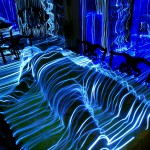
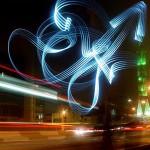
Martin Kimbell twirls, tosses and hurls LED sticks then uses long-exposure techniques to capture the twisting, turning and arcing patterns that result from each throw.

air timelapse spinning photos

air tornado light art

Some of the loops look like natural phenomena, swirling dust, stormy cyclones or campfire smoke, for instance, except spun from bright and colorful lights instead of organic materials. Others trajectories are simpler and captured in black-and-white instead.

art art black white

night light aerial art

air art up down

Inspired by Stu Jenks  and other light artists, Kimbell is a “freelance photographer based in Nottingham, England, specialising in light painting and action sports photography.” You can see more of his photography beyond this type on Flickr as well, and be sure to check out Diliz who crafts figures from sparklers in a much different style.
Share on Facebook


[ By WebUrbanist in Art & Photography & Video. ]
[ WebUrbanist | Archives | Galleries | Privacy | TOS ]


WebUrbanist

 
Comments Off on Cyclonic Pictures: Long Exposures Spin Art from Light & Air

Posted in Creativity


Lighting Tutorial: Types Of Light Sources

28 Aug

Image from Alana Tyler Slutsky's Surrealia series as featured on Fashion Photography Blog (FashionPhotographyBlog.com)
LIGHT SOURCES

Good morning FashionPhotographyBlog.com readers!

Today we’ll continue on with our introduction to lighting.  If you are just tuning in, you can find the first topics we covered here:

Part 1.1 – The Science of Light

Part 1.2 – The Inverse Square Law + Color Temperature Explained

Part 1.3 – Applying Lighting to Real World Situations

This time around, we’ll discuss types of lights and pick back up tomorrow with meters and light modifiers.  I promise it’s not as technical (or as boring) as Part I.  So let jump on in…

TYPES OF LIGHT SOURCES (The Most Common)

Continuous Lighting also referred to as “Hot Lights,” which is generic term when referring to several types of continuous lighting.  Often, continuous lighting is called by the name of its bulb.

Photofloods are incandescent/tungsten bulbs not much different from your standard household bulb (just A LOT more powerful!)

Photofloods as seen on Fashion Photography Blog (FashionPhotographyBlog.com)

HMI (Halide Metal Oxide) are very small, very expensive bulbs.  They’re daylight balanced in color.  HMI’s are the most commonly used light in the film industry, with many using Arri spotlight systems.

Halide Metal Oxide (HMI) Lights as seen on Fashion Photography Blog (FashionPhotographyBlog.com)

Quartz-Halogen lights are great for the average photographer!  They’re affordable, long lasting and reliable.  However, they get HOT, so be careful!  One of the most popular and dependable Quartz-Halogen lights used is the Lowel Omni.

Quartz Halogen Lights as seen on Fashion Photography Blog (FashionPhotographyBlog.com)

Strobe Lights also known as Flash come in many forms as well.  All are daylight balanced.

Speed Lights are the most commonly known type of flash (aside from built-in on-camera flash.  They can be adjusted for the amount of light they output and (for the most part) work seamlessly with DSLR’s.

Speed Lights as seen on Fashion Photography Blog (FashionPhotographyBlog.com)

Monoblocks/Monolights are strobe lights that are most often found in studio.  They are much more powerful than a speed light but not as convenient for location work.  Monopacks are self-contained flash units that combine power and light all in one casing.

Monolights are much less expensive than pack lights (we’ll get to those in a minute).  A great starter monolight kit I would recommend to amateur photographers would be Alienbees.  They’re affordable, reliable and Paul C. Buff is a fantastic company with outstanding customer service! (No, they didn’t pay me to write this.)

Calumet Travelite as seen on Fashion Photography Blog (FashionPhotographyBlog.com)

Calumet Travelite

Alienbee Light as seen on Fashion Photography Blog (FashionPhotographyBlog.com)

Alienbee

Pack Systems are the most common type of strobe light among professional photographers.  These can be extremely costly. Because of this, most pros rent their lights from an equipment rental house.  Pack and head lighting systems consist of a “pack” aka a generator (the power) and heads (the light).  The heads plug into the pack and the pack is used to adjust the lighting.  They can be daunting at first but they’re easy to understand once you’re properly taught!  (We’ll learn how to operate pack lighting in another post.)  Common manufacturers of pack lighting systems are Profoto (my personal favorite), Broncolor, Bowens, Elinchrom, Speedotron and Dynalite.  Despite manufacturer, they all pretty much work the same way.

Profoto Acute 2R System Power Pack as seen on Fashion Photography Blog (FashionPhotographyBlog.com)

Profoto Acute 2R Pack System (power pack and 2 heads)

Profoto D4 Power Pack as seen on Fashion Photography Blog (FashionPhotographyBlog.com)

Controls for a more advanced professional power pack (Profoto D4)

Catch us tomorrow when we discuss meters & light modifiers.

As always, if you have any questions, feel free to shoot over an email to alana@alanatylerslutsky.com!

– Alana


IMAGE SOURCE:

Feature image & image 1: photography by Alana Tyler Slutsky from her Surrealia series. To view the rest of the photos from this series visit her website.

Image 2-9: Alana Tyler Slutsky


Fashion Photography Blog

 
Comments Off on Lighting Tutorial: Types Of Light Sources

Posted in Uncategorized


Three Types of Light: Diffused, Backlight and Reflected – What are They and When to use Them

26 Aug

Light: it is the main component for every image that you will take. It does however come in many different forms, producing very different results. Some of these types of light are diffused, backlit and reflected. There will be times when each of these types of light is more readily available than another, or even in some cases multiple types of light at once. Some people create their full photographic style by using a certain type more, or less, exclusively in their work. But, knowing how to first spot the different light forms will allow you to take full of advantage of every scenario and add depth, variety and a sense of individuality to your images.

Figure 3

Diffused Light

Diffused light that which is not harsh and direct, it has been softened in some way. A great example is when you are outside and the sun is shining, with no clouds in the sky. The light is harsh and you will notice that there will be a lot shadows falling on or around your subject. But, if clouds are in the sky and they block out some of that harsh sunlight, the light then becomes diffused.

You can use diffused lighting to your advantage in a great way. If you are shooting portraits on an overcast (diffused) day, you are pretty much shooting with nature’s own softbox. You will be able to work with your subject easier, and have different angles to shoot from, because you won’t be limited by the harsh lines and shadows that undiffused light can create. Overcast (diffused) lighting is preferred by many photographers, as it is a flat and even light. If it were a particularly sunny and bright day, shooting in the shade would also offer you some diffused lighting.

Figure 1

This particular image shows the use of diffused lighting, using the shade of the building to soften the light, while also reflecting light shades back to the subject.
Figure 2

Backlight

Backlighting is where you are illuminating your subject from the back, as opposed to from the front, or the side. Working with backlight you can silhouette your subject, or give them a glow. To Silhouette your subject, you would meter for the sky and to create a glow around your subject, you would meter for the subject itself. You need to place your subject in front of your preferred light source and allow that light to illuminate your subject. If you are using the sun as your light source, different times of the day will give you different types of backlighting. The lower the sun falls, the softer the light will feel. You may find that sometimes you will have to move yourself into a position where your camera can autofocus or switch to full manual, as the light can be so strong that your focusing point struggles to find what it is you want to focus on.

Figure 4

Reflected Light

Reflected light can be found everywhere, on most surfaces. Reflected light is literally the light that is reflected from a particular surface or material. If you were to shoot a portrait next to a white building, the light hitting the building would be reflected on to your subject, creating a soft light. If you were in the middle of the red Moroccan Atlas Mountains and you were to shoot a portrait, there would be a softer red reflection coming onto your subject from the ground. Or, if you were doing a portrait session outside and you wanted to bounce some additional light into your subject’s face, you could use an actual reflector. They normally come in two colours; one side gold, and one side white.

Reflected light tends to be quite soft and takes on the colour of the surface/material that it is being bounced off.

Figure 5

The reflector was being used with the gold side to reflect a warm glow onto the subject’s face.

Figure 6

  • How To: Silhouette Photography / Self Portraits
  • Tips for Photographing in Different Weather Conditions
  • Let’s Talk About Light – 3 Types of Lighting Conditions and how to Use Them
  • Choosing the Right Color Reflector for Your Photography

The post Three Types of Light: Diffused, Backlight and Reflected – What are They and When to use Them by Natasha Cadman appeared first on Digital Photography School.


Digital Photography School

 
Comments Off on Three Types of Light: Diffused, Backlight and Reflected – What are They and When to use Them

Posted in Photography


Portfolio: Martin Kimbell’s ‘Light Paintings’

25 Aug

UK-based photographer Martin Kimbell doesn’t put his camera down when the sun goes in. His series of ‘light paintings’ add a surreal twist to long-exposure night pictures. In his images, tunnels, spirals and discs of light create sculptural forms in the landscape. We spoke to him about his work, and how he creates it. Click through to view his images and read our Q&A. 

Articles: Digital Photography Review (dpreview.com)

 
Comments Off on Portfolio: Martin Kimbell’s ‘Light Paintings’

Posted in Uncategorized


Manfrotto introduces Pro Light series of photo and video bags

12 Aug

Manfrotto has announced a new line of backpacks and accessories, the Pro Light series. The new line includes backpacks designed for both still photographers and videographers, holsters and rain covers, all designed with an emphasis on portability and versatility. The five styles of backpacks for still photographers offer side access for another route to your gear and are priced from $ 220 – $ 310 USD/£199.95 – £249.95 GBP. Read more

Articles: Digital Photography Review (dpreview.com)

 
Comments Off on Manfrotto introduces Pro Light series of photo and video bags

Posted in Uncategorized


Exposing sharks in a positive light

10 Aug

George Probst has been fascinated with sharks his whole life, but it wasn’t until he found himself newly single with some extra money in savings that his dream of diving with and photographing sharks became a reality. He hopes his photos will inspire others to see sharks in a light unlike their typical portrayal in movies and pop culture. Find out about his process and see his work. See gallery

Articles: Digital Photography Review (dpreview.com)

 
Comments Off on Exposing sharks in a positive light

Posted in Uncategorized


Wi-Fi Visualized: Signals Translated to Ghostly Light Orbs

06 Aug

[ By Steph in Art & Installation & Sound. ]

Wifi Spirit Photography 1

Translated into glowing orbs of light with a rainbow of colors representing signal strength, these visualizations of wi-fi signals are like Victorian spirit photography for the modern age. Luis Hernan of Newcastle University makes the invisible not only visible but also vaguely eerie with his project, Digital Ethereal.

WiFi Spirit Photography 2

WiFi Spirit Photography 6

Hernan developed a homemade gadget called a Kirlian Device that, appropriately enough, looks like a piece of ghost hunting equipment. The instrument “scans continuously for wireless networks, and transforms the signal strength to colour LEDs.”

WiFi Spirit Photography 3

WiFi Spirit Photography 4

The effect is captured in a series of long-exposure photographs akin to light painting, the results a mass of swirling colored light showing the movement of the signals across a space.

WiFi Spirit Photography 5

WiFi Spirit Photography 7

In another segment of the Digital Ethereal project, a gallery demonstration of a ‘chandelier’ running on the accompanying Kirlian Device Android App, which “explores the interaction of visitors with Hertzian Space.” Visitors interact with the electromagnetic waves around dangling cell phones, producing different lighting effects on the screens.

Share on Facebook


[ By Steph in Art & Installation & Sound. ]

[ WebUrbanist | Archives | Galleries | Privacy | TOS ]


WebUrbanist

 
Comments Off on Wi-Fi Visualized: Signals Translated to Ghostly Light Orbs

Posted in Creativity


Pelican Imaging releases light field photos from its mobile imaging array

29 Jul

Pelican Imaging has released a set of re-focusable pictures taken with its light field camera for smartphones. Instead of placing an array of microlenses between the sensor and the main lens, Pelican uses an array of main lenses – each with a sensor behind it. Pelican’s offering is more suitable for smartphones, and their sample images allow for re-focusing, changing DOF, and shifting perspective. Click through for more details and links to the images.

Articles: Digital Photography Review (dpreview.com)

 
Comments Off on Pelican Imaging releases light field photos from its mobile imaging array

Posted in Uncategorized


How to do Great Portraits with One Light

25 Jul

When you first start experimenting with lighting it’s easy to become overwhelmed. Never has the old expression K.I.S.S. (keep it simple stupid) been more appropriate. The most important step is to master what you can achieve with one light source before you start adding others.

1b

Besides, what you CAN achieve with only one light source, used correctly, is quite remarkable.

For this article I have delved into my back catalogue and sourced images that were shot with a single speedlight off-camera. I hate carrying tons of equipment and even now, for 80% of my commercial work, I will try to use one light source only when possible.

2

Shot with a Canon 600EX-RT Speedlite bounced into a 40” white Profoto umbrella

In the below business portrait a diffused umbrella gives us nice catch lights in the subject’s eyes, while allowing for rapid fall away to bring out the shadows. The portrait is shot against a pop-up Westcott black background. A diffused umbrella is a great low-cost investment that massively improves the quality of light from your speedlight, and is easily set up and transported.

3

Lit with a Canon RT600 Speedlite into a Phottix Para-Pro diffused umbrella

To create the image below I had to expose for the blue sky and then pump as much light into the subject as possible – this is a speedlight at the limit of its capability – the umbrella helps to increase the size and evenness of the light spread. The image was shot at 24mm so the umbrella is as close to the subject as possible without being in the frame.

4

Lit with a Sony HVL-F58 speedlight bounced into a 40” white Profoto umbrella

It is entirely possible to create professional results without spending a fortune – this cropped cutaway headshot used a Sony SM58 speedlight with an Orbis ring-flash modifier handheld over the top of the speedlight. For this modifier to be effective you really need to be quite close into your subject, as the flash output is significantly reduced by the modifier. Used properly though it can create some great results.

5

Lit with a Sony HVL-F58 speed light and an Orbis Ring Flash modifier

6

Another example of a portrait shot with the same modifier, lit with a Sony HVL-F58 speed light and an Orbis Ring Flash.

Notes for doing one light portraits:

  • When you are shooting single light setups, you need to remember to keep it simple
  • You can create some great shadows with a single light source
  • Watch out for hotspots created by undiffused light
  • Try blend your added light with the ambient light
  • Using large modifiers can help to spread your light more evenly
  • Move your subjects, not the light, to fine tune your images
  • Experiment by changing your position to the light source
  • Work with the distances, subject to light source, to change the hardness and softness of the light

Below is an example of blending the ambient light with artificial light. The speedlight in this instance is to camera right on a light stand about six feet from the model, and slightly in front of her. Shot at full power with no modifier it is hitting the model and the tree. While by no means perfect the image does work as the over exposure on the tree gives a little separation.

7b

Lit with a Sony HVL-F58 with no modifier

We can see the same model here closer to sunset; shot with a speedlight fitted with an orange gel, bounced into a 30” silver umbrella to emphasize and enhance the already warm available light.

8

Lit with a Sony HVL-F58 speedlight, gelled, bounced into a 30” Profoto silver umbrella

Reflectors can also be used to great effect with a single light source, especially when mixing the ambient reflected light with flash fired directly into the reflector will give your images that extra pop. In the portrait below, the natural light and sun were not enough to light the model. A half-power flash from a speedlight helped to improve the overall lighting of the image, and really make the catch lights in the sunglasses stand out.

9

Lit with a California Sun Bounce gold/silver and a Sony HVL-F58 speed light

Sometimes ambient light is almost enough. In the below portrait 95% of the light is coming from a window camera left. A thin white blind diffused the light beautifully and evenly but didn’t give the catch lights in the eyes. To fix this I used a diffused umbrella with a speedlight on ¼ power, slightly to camera right. Because of the low power setting the artificial light doesn’t really change the ambient light but does give the eyes that needed brightness to make the image.

10

Lit with natural window light a Sony HVL-F58 and a Phottix para pro diffused umbrella

In conclusion

Everything you see here was lit with a single speedlight, and reasonably priced, easily set up modifiers.

Modifiers used – Silver and white umbrellas, a diffused umbrella and an Orbis Ring Flash all of which can be purchased for a few hundred dollars.

Have you done any portraits using only one light? Do you have any additional tips or questions? Please share or ask in the comments below.

For more portrait help try these:

  • Using Off-camera Flash to Fix Lighting Problems for Outdoor Portraits
  • Tips for Great Beach Sunset Portraits
  • 6 Portrait Lighting Patterns Every Photographer Should Know
  • Portrait – Lighting the Shot, a dPS ebook

The post How to do Great Portraits with One Light by Leo Edwards appeared first on Digital Photography School.


Digital Photography School

 
Comments Off on How to do Great Portraits with One Light

Posted in Photography