RSS
 

Posts Tagged ‘Light’

How to Use Angle of Light in People Photography for Added Punch

12 Sep

This may be something that you have already heard from landscape photographers. It is very important to be aware of the angle of the light (where does the light come from) to be able to get the best of a scene, and the best exposure for your image. Also, when using a polarizing filter, it is more effective when used at a 90 degrees angle to the sun for better blue sky results.

Angle of light – people photography

But when it comes to people photography I couldn’t find a lot mentioning the angle of light online. So here is what I think about it.

Keep the light behind you

When photographing people, it is also very important to be aware of the direction of the light. As I mention when teaching about composition, you should try, as much as possible, to keep the light behind you (or avoid facing the light). If the light remains behind you, the general exposure has more chance of being better, avoiding under and over exposed elements in the image.

JB 4997

Keeping the light behind you ensures a better general exposure through the whole image. Hoi An, Vietnam.

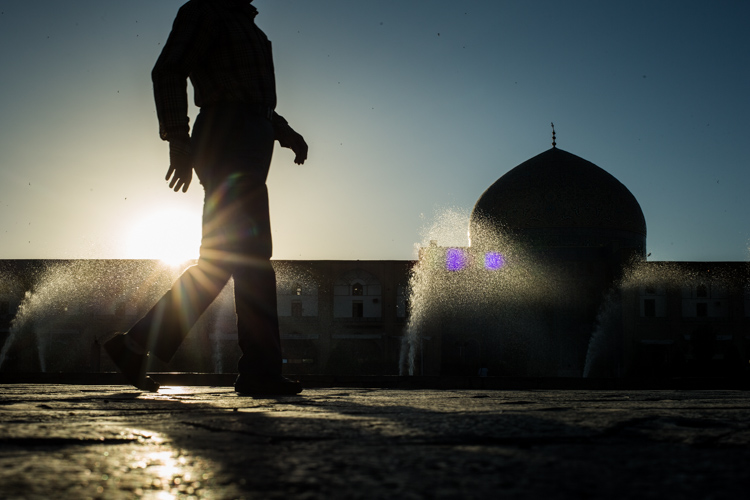
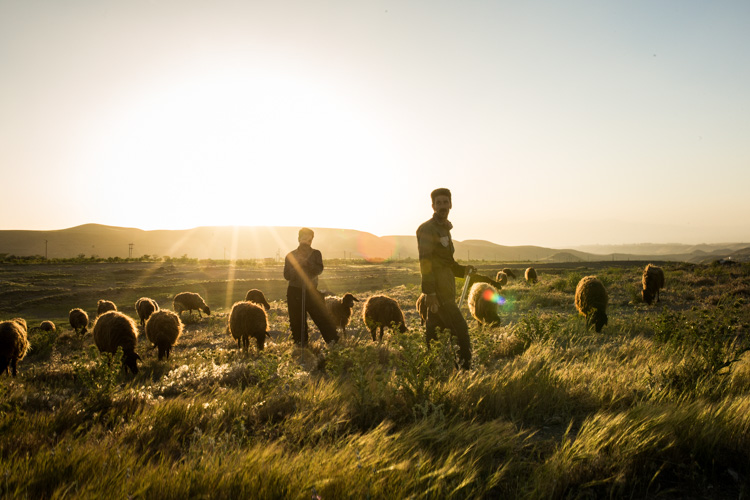
When facing the light, there are two options when it comes to people photography. You can either create a silhouette of your subjects while exposing for the brighter background. Or you can try to find a middle exposure, thus avoiding over exposing your background too much and keeping some details on the subject. This last method works very well in the early morning and late afternoon.

JB 8191
A silhouette created by directly facing the light. Isfahan, Iran.

The third option would be to expose for your subject and completely overexposing your background. I personally do not believe it looks that good though.

JB 6890

Finding a middle exposure between background and subject while facing the light works very well in the early morning and late afternoon. Kandovan, Iran.

Side light is magic

But when you put the light at a 90-degree angle, there is something magic that happens. When the light is softer and more colorful (at sunrise and sunset) it is possible to come up with some type of semi-silhouetted images. The part of your subject exposed to the light will be exposed correctly. The other part will be much darker (still preserving some details). That is going to create a more contrasty image, with a little more punch.

If you take an image which is slightly overexposed, there are no blacks in it and the histogram is slightly shifting to the right. As soon as the exposure goes down, some darker pixels will appear and add contrast to the image, making it instantly more powerful.

This is what a 90 degrees light will do to your subject: shadowing part of it and adding contrast and power to the image.

JB 4802

The light being on the right side, the back of this man is underexposed (in shadow), thus creating more contrast in the image. Hoi An, Vietnam.

For close-up portraits, the angle of the light has some superb effects on skin tones. Mostly when the tones are darker and more keen to reflect the light, this angle will enhance these tones. Because, as mentioned above, a part of your subject (the part which is not directly into the light) will be darker, the brighter parts will be enhanced.

Let’s compare

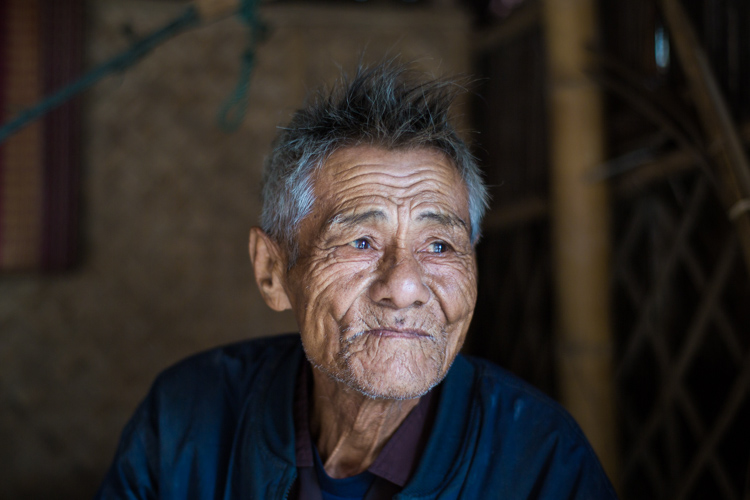
Here are two images of the same man, taken two minutes apart from each other. As you can see in the first one, the light is more even throughout the picture.

JB 2969

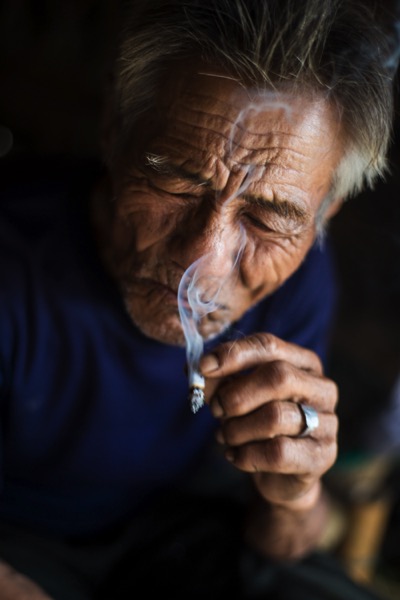
In this second image, there are some much darker areas on the left, adding contrast and punch to the image. The details on the skin tones are also much more interesting.

JB 4933

I hope that gives you some ideas for using the direction or angle of light to add punch to your people photography. Know where the light is coming from and make a conscious choice how to use it to your advantage.

Please share your people photos in the comments below.

googletag.cmd.push(function() {
tablet_slots.push( googletag.defineSlot( “/1005424/_dPSv4_tab-all-article-bottom_(300×250)”, [300, 250], “pb-ad-78623” ).addService( googletag.pubads() ) ); } );

googletag.cmd.push(function() {
mobile_slots.push( googletag.defineSlot( “/1005424/_dPSv4_mob-all-article-bottom_(300×250)”, [300, 250], “pb-ad-78158” ).addService( googletag.pubads() ) ); } );

The post How to Use Angle of Light in People Photography for Added Punch by Etienne Bossot appeared first on Digital Photography School.


Digital Photography School

 
Comments Off on How to Use Angle of Light in People Photography for Added Punch

Posted in Photography


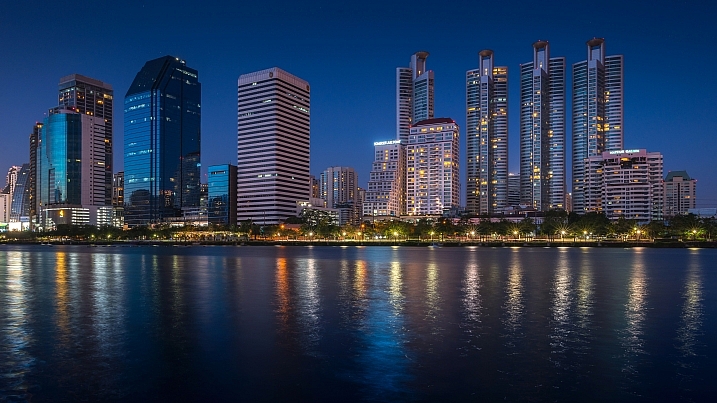
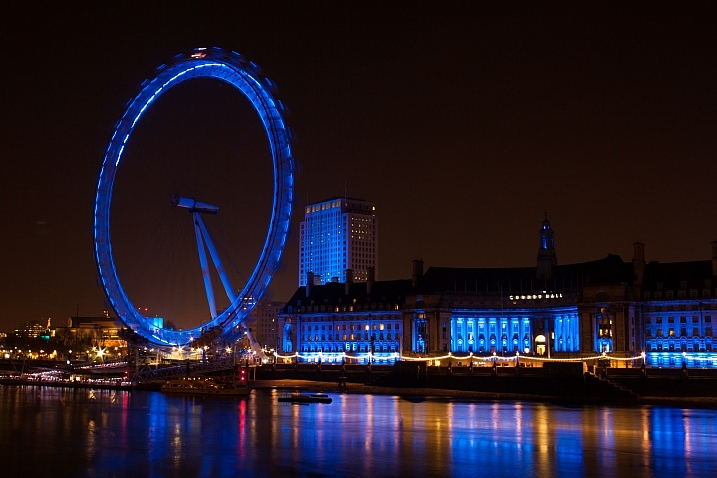
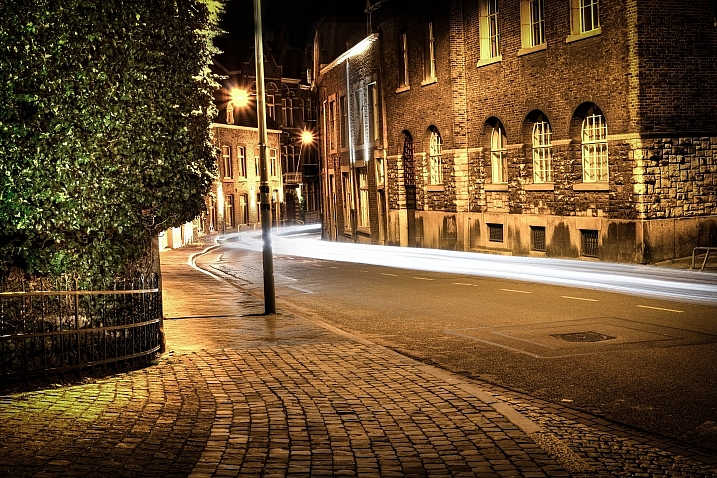
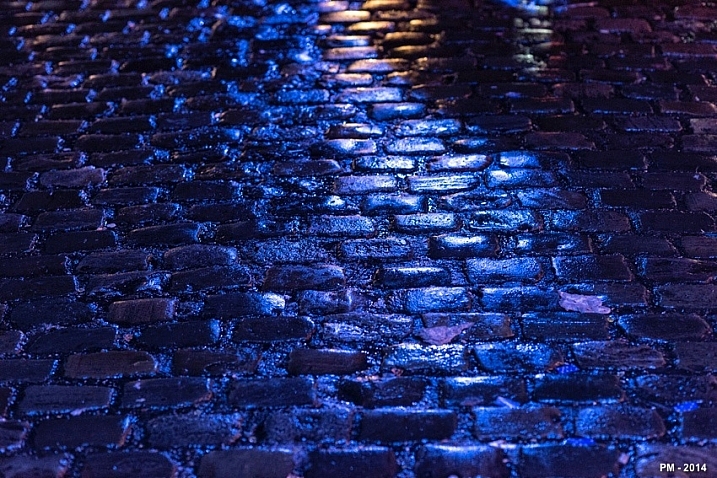
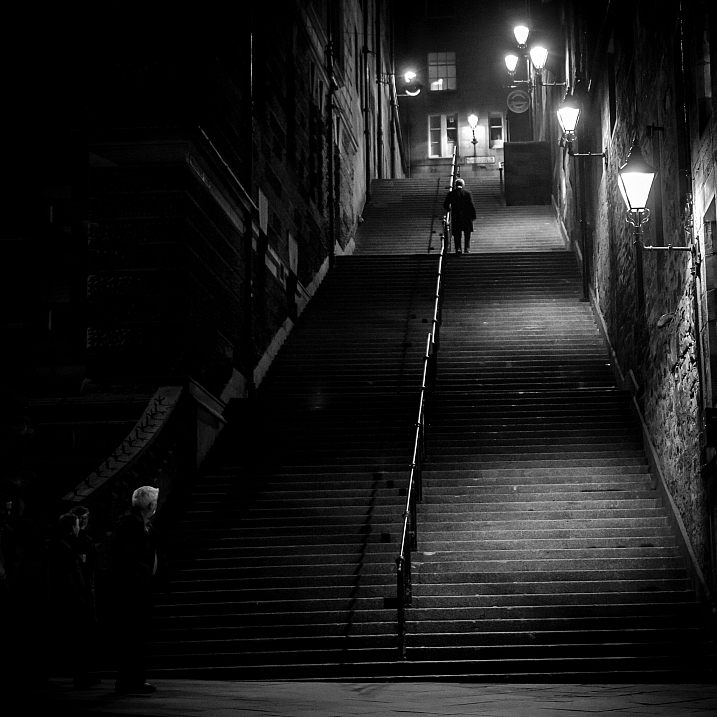
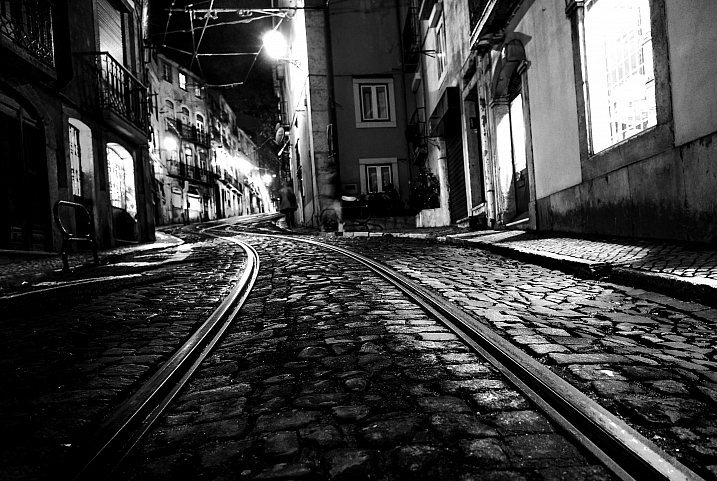
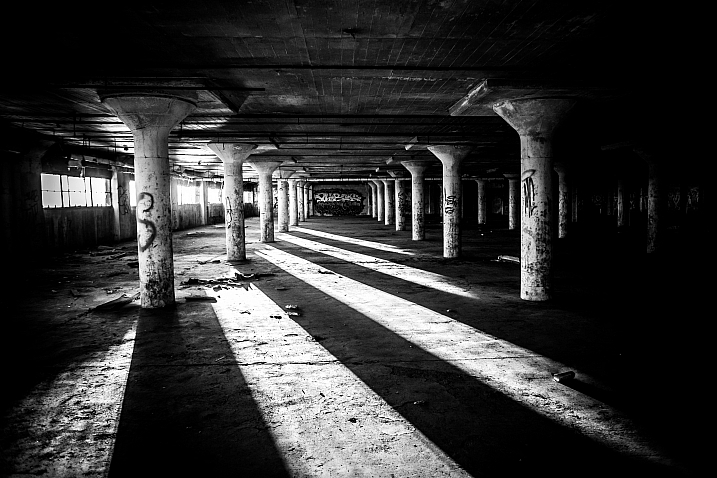
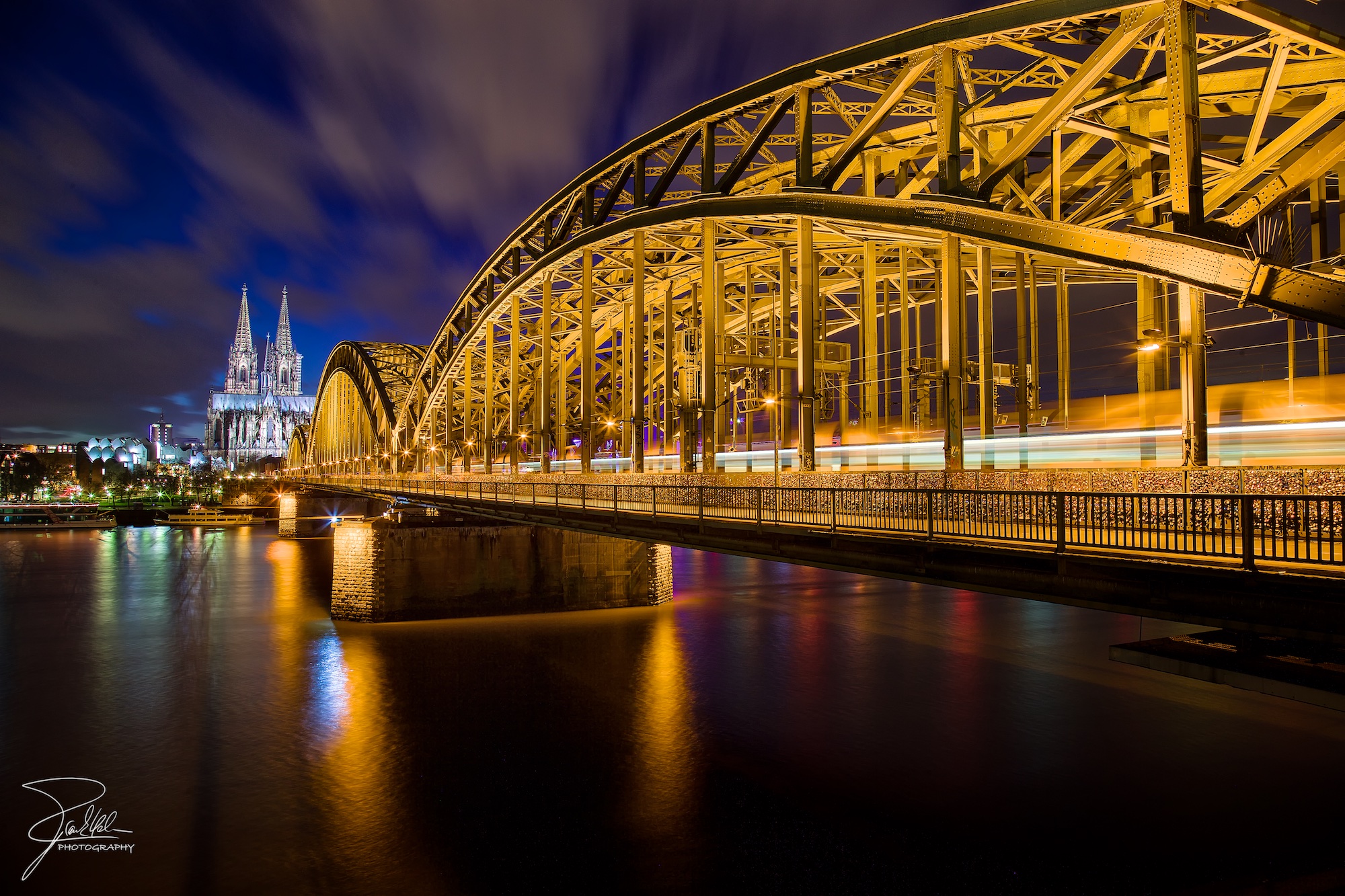
Darkness and Light – 21 Images of the City at Night

09 Sep

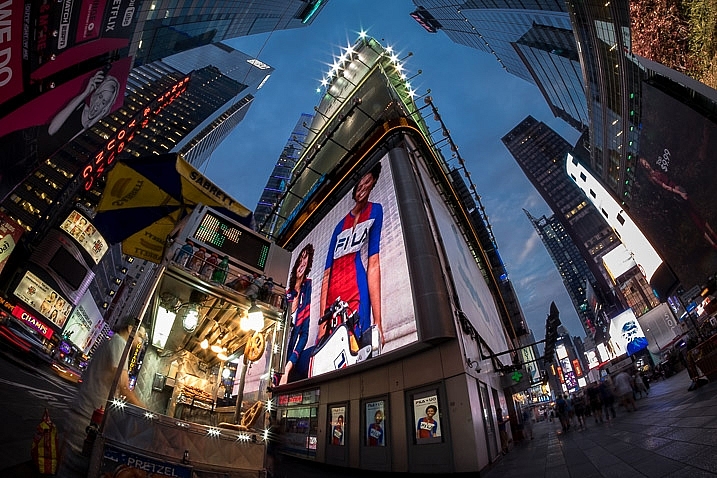
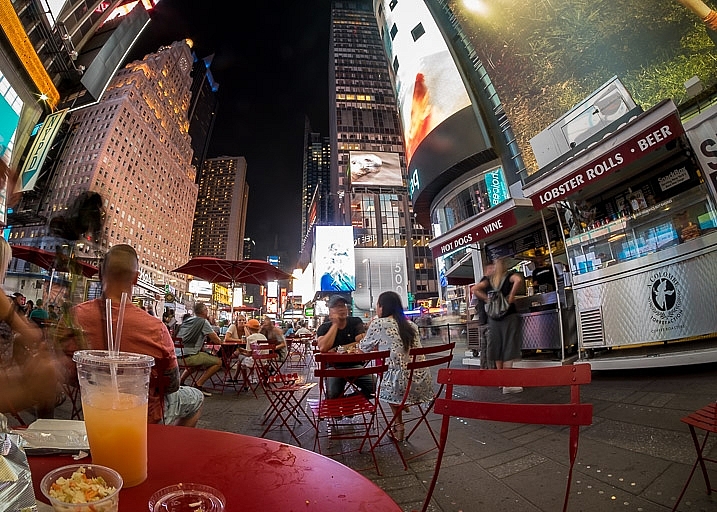
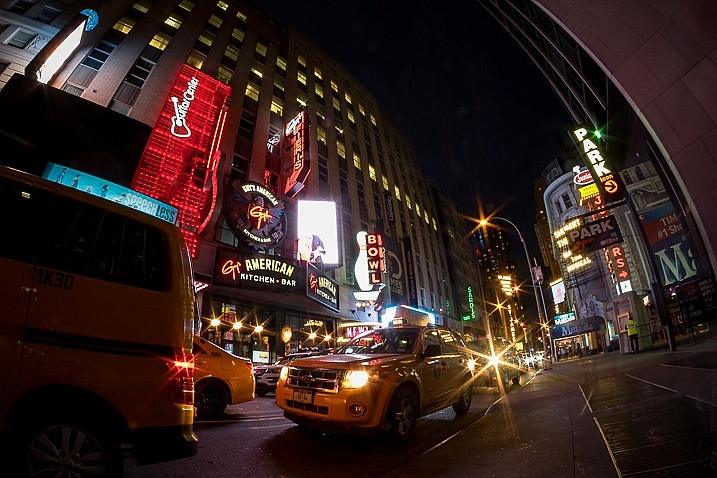
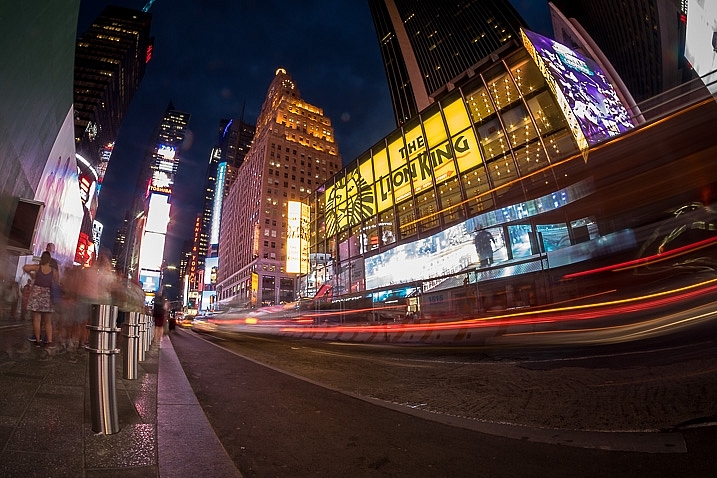
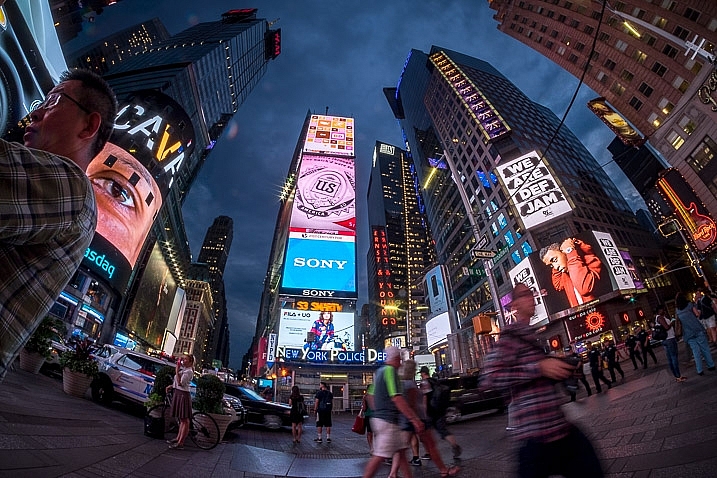
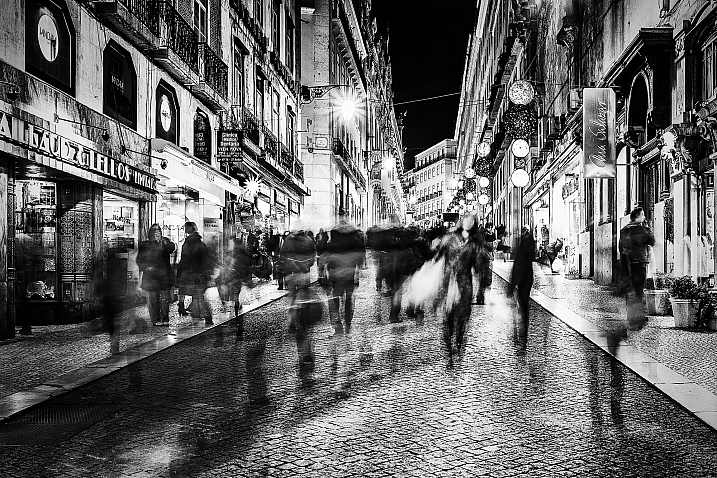
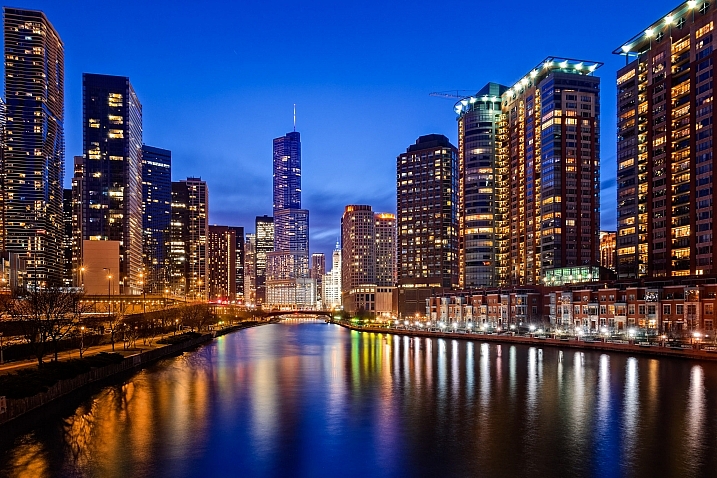
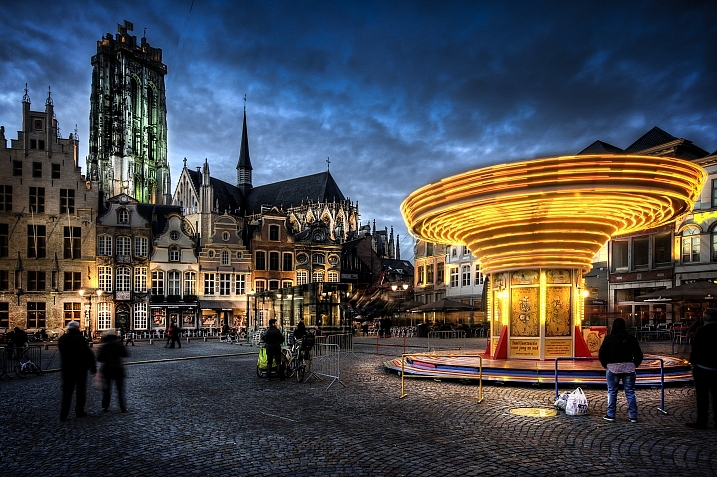
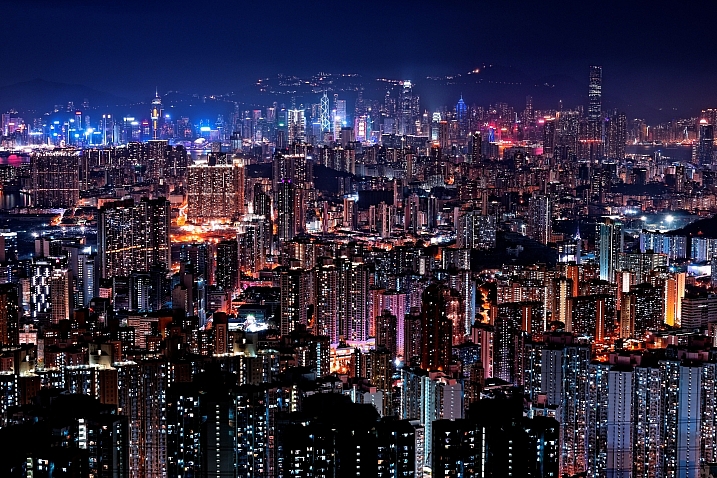
Recently I spent a few days in the marvellous city of New York. It’s a great place for all kinds of photography, but I love doing night shooting there. So this week I thought I’d share some of my shots from my NYC trip and some other people’s night photography work in a city.

My NYC night shots

Shot in and around Times Square.

night-dps717px-06

night-dps717px-05

night-dps717px-04

night-dps717px-03

night-dps717px-02

Some other night photography shots

Nattawut In-yoo

By Nattawut In-yoo

Derek Bruff

By Derek Bruff

Mike Boening Photography

By Mike Boening Photography

Viisoreanu Florin Gabriel

By Viisoreanu Florin Gabriel

Patrick Marioné - Thanks For > 2M

By Patrick Marioné – thanks for > 2M

Sonder3

By sonder3

Leonhe2

By leonhe2

Thomas Hawk

By Thomas Hawk

Frank Kehren

By Frank Kehren

Damon Jah

By damon jah

Michael Muraz

By Michael Muraz

Luc Mercelis

By Luc Mercelis

David Yu

By David Yu

Tommy@chau

By tommy@chau

Mac Qin

By Mac Qin

Darlene Hildebrandt

By Darlene Hildebrandt

googletag.cmd.push(function() {
tablet_slots.push( googletag.defineSlot( “/1005424/_dPSv4_tab-all-article-bottom_(300×250)”, [300, 250], “pb-ad-78623” ).addService( googletag.pubads() ) ); } );

googletag.cmd.push(function() {
mobile_slots.push( googletag.defineSlot( “/1005424/_dPSv4_mob-all-article-bottom_(300×250)”, [300, 250], “pb-ad-78158” ).addService( googletag.pubads() ) ); } );

The post Darkness and Light – 21 Images of the City at Night by Darlene Hildebrandt appeared first on Digital Photography School.


Digital Photography School

 
Comments Off on Darkness and Light – 21 Images of the City at Night

Posted in Photography


Polaroid LED photo studio color box light offers portable, low-heat lighting

03 Sep

A new Polaroid-branded LED photo studio color box light has been introduced: a 907g / 2lb lightweight offering with an attachable handgrip, remote control and quiet operation easy-press buttons. Information including the color temperature, brightness and mode, as well as battery life, are displayed on an integrated LCD.

The new color box light is designed to be highly portable with support for both handheld and tripod usage; it can also be connected to other photo boxes for larger projects. According to Polaroid, the light features 600 LEDs and can achieve up to a 93% efficiency. 

The Polaroid LED photo studio color box light is available from Amazon now for $ 120.

Articles: Digital Photography Review (dpreview.com)

 
Comments Off on Polaroid LED photo studio color box light offers portable, low-heat lighting

Posted in Uncategorized


Tips for Abstract Macro Photography – Using Texture and Light

21 Aug

Macro photography opens up a whole new world to those who are willing to get up close. There is no shortage of subject matter to photograph, but in this article we’ll look at the abstract world of texture and light.

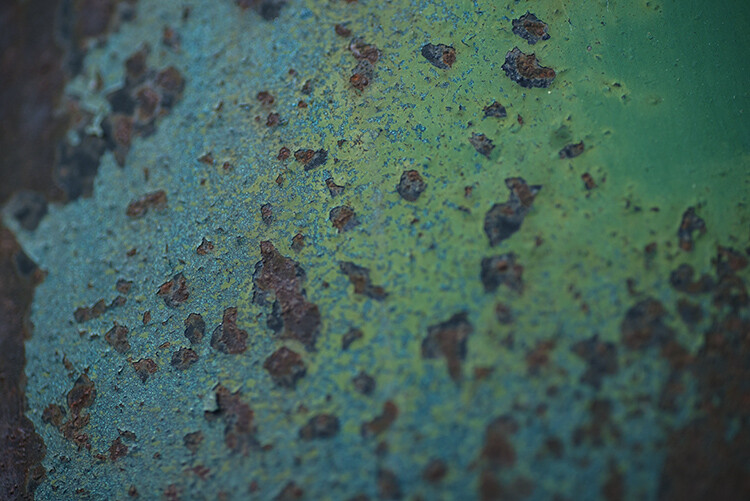
Rusted paintwork of a Dodge Campervan

Rusted paintwork of a Dodge Campervan

The beauty about these subjects is that they can be shot anywhere; in your backyard, on your street, or in any part of your city. Textures are everywhere. They are really easy to find, and working with the light properly will help you to highlight the grittiness and tactile effect of textures. Ideally, a macro lens would be perfect to use for this type of photography, but a good 50mm or 85mm can work too. A macro lens gives you the bonus of being able to focus really close, normal lenses may not be able to get as close as you want.

My view is that even if you don’t have a macro lens, give this a try anyway, a new tiny world of wonder awaits you!

What is Abstract Macro Photography?

Abstract photography, in general, is about representing a subject in a non-literal way. The focus of abstract photography is more about colour, shape, and texture, as opposed to the literal representation of the subject. Abstract macro photography, takes this to the next level by enabling you to get even closer to your subject, and therefore also able to be more abstract in a sense. In this article, we are concerned with texture and showing that in our images.

The same guidelines around composition apply, you can use the rule of thirds, curves, and lines, to draw the viewer into your image. The difference is that the subject may not be immediately recognizable, your centre of interest might be a colour, or the curve of a flower. So for abstract macro photography, you will need to think a little differently.

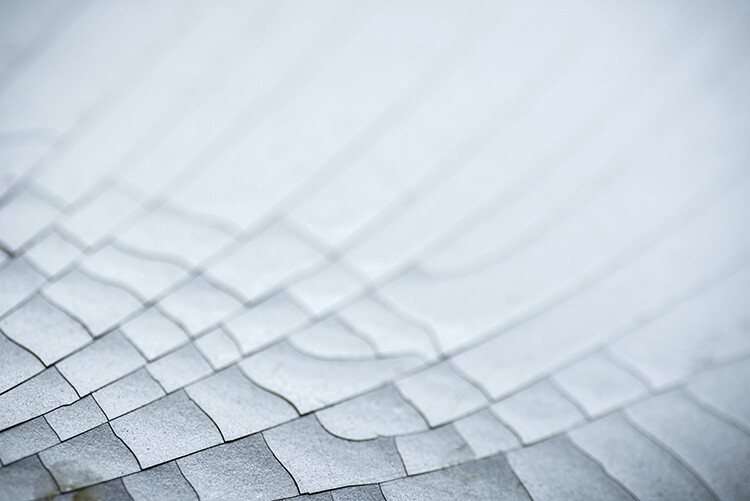
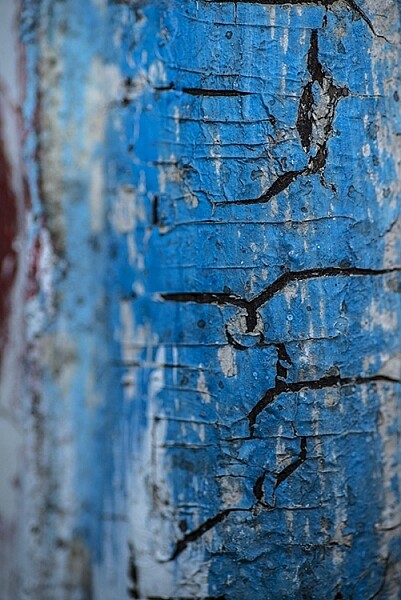
Cracked paint on a car bumper

Cracked paint on a car bumper

What will I need to do abstract macro photography?

A macro lens will work best. A 50mm or 85mm lens will work pretty well too, you may not be able to get as close to your subject though, so be aware of that (or you can try close-up filters). You will need a tripod too, or some sort of support for your camera, as shooting macro images handheld is really difficult and can be frustrating.

What can I photograph?

Textures are all around you. Think of the rusted lamppost at the corner of your street, the peeling paint on the wall of the shed, or even the cracked paint on the bumper of a car. They are everywhere.

You need to spend time looking at all the surfaces around you, then take some test shots to see if they work. The key thing to be aware of when shooting textures is how the light is affecting the scene. Macro photography is like a micro landscape image. It has a foreground, middle-ground and background. There are colours, shapes, and of course textures in the image.

When you look at the texture, take some time to study where the light is coming from, and how it is affecting the image. Try a few different angles to see what works best in the scene. Using side light (i.e. light some from the left or the right) will accentuate the texture in your image. Side light will give your image a three dimensional quality, so try and get some directional light on your scene if possible.

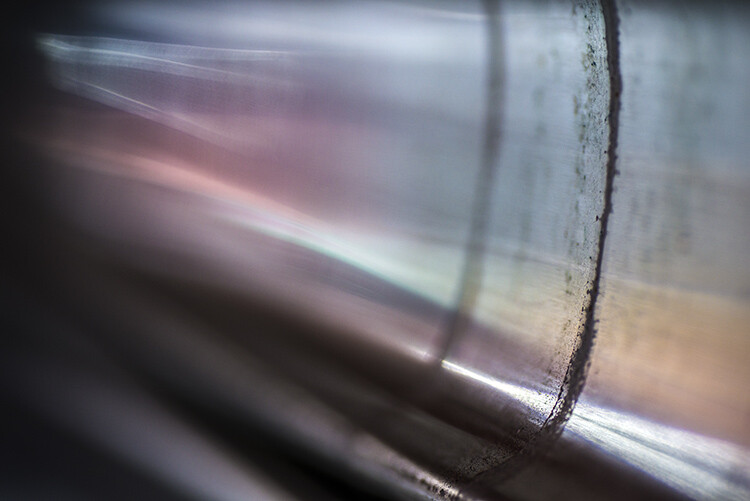
Reflections from a security gate

Reflections from a security gate

Find your texture, and use this as a workflow

  • Work on building your composition – is there a particular part of the texture you want to emphasize, try and get some side light if possible?
  • Use manual focus to bring even a small part of your image into sharp focus, this sharp area will be the natural focal point for your viewer.
  • As an abstract image, you don’t need a subject as such, but the texture and the colours will be the reason for the image, so make sure the subject matter is interesting.
  • Check the histogram to make sure that you are exposing your scene correctly.
  • Capture the shot.
  • Try shooting the same subject from different angles, and maybe even with a different centre of interest.
  • Take as many images as possible, from different angles, with different focal points.

The beauty about this type of photography is that you have an infinite number of subjects. It is really easy to get going once you start looking around you, at what there is to photograph.

The beauty of cracked window putty

The beauty of cracked window putty

Have you tried abstract macro photography before? If not give it a go and share some of your images in the comments below. See if we can guess what you photographed.

googletag.cmd.push(function() {
tablet_slots.push( googletag.defineSlot( “/1005424/_dPSv4_tab-all-article-bottom_(300×250)”, [300, 250], “pb-ad-78623” ).addService( googletag.pubads() ) ); } );

googletag.cmd.push(function() {
mobile_slots.push( googletag.defineSlot( “/1005424/_dPSv4_mob-all-article-bottom_(300×250)”, [300, 250], “pb-ad-78158” ).addService( googletag.pubads() ) ); } );

The post Tips for Abstract Macro Photography – Using Texture and Light by Barry J Brady appeared first on Digital Photography School.


Digital Photography School

 
Comments Off on Tips for Abstract Macro Photography – Using Texture and Light

Posted in Photography


Prismatic Graffiti: Bending Light into a Spectrum of Wall Murals

20 Aug

[ By WebUrbanist in Art & Installation & Sound. ]

light art making

These intricately choreographed dances of light and color are at once static but ephemeral, lasting longer than conventional light graffiti but nonetheless made of impermanent light.

light wall art

light art graffiti

Stephen Knapp is a sculptor and muralist who has worked in metal and glass, but his latest array of light paintings turn the latter toward a new and more indirect purpose.

light in gallery museum

light art glass detail

His pieces are not sketched, programmed or otherwise visualized in advanced, but emerge as he begins cutting, polishing, shaping and places pieces of glass on the wall. Unlike many light graffiti artists, the work does not rely on a photographer capturing a fleeting moment, but can be put up on museum walls indefinitely.

light art prisms

light reflected art mural

“The fun of what I do with light, is that there is nothing in our visual memory that prepares us for what I’m doing,” says Knapp. “The fact that what I create can just be done with light, that there is no paint on these panels, is absolutely astounding to people. What I am trying to do most of all here is challenge any traditional notion of perception. What is it? Is it real? Is it not real? Does it matter?”

His work has been featured in galleries around the world from Boise to Naples and a solo exhibition is currently on display at the Pensacola Museum of Art.

Share on Facebook


[ By WebUrbanist in Art & Installation & Sound. ]

[ WebUrbanist | Archives | Galleries | Privacy | TOS ]


WebUrbanist

 
Comments Off on Prismatic Graffiti: Bending Light into a Spectrum of Wall Murals

Posted in Creativity


Light Art Comes to Life: Dancing Animated Gifs by Lucea Spinelli

20 Aug

[ By SA Rogers in Art & Photography & Video. ]

light art 10

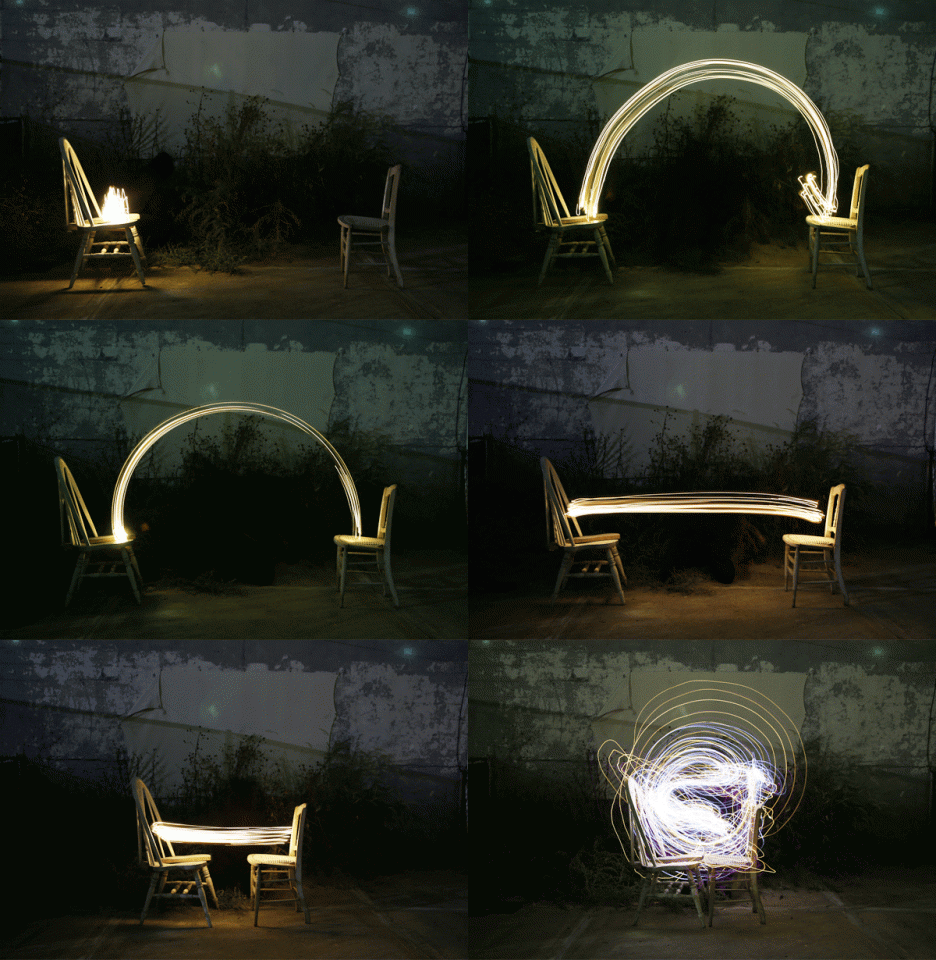
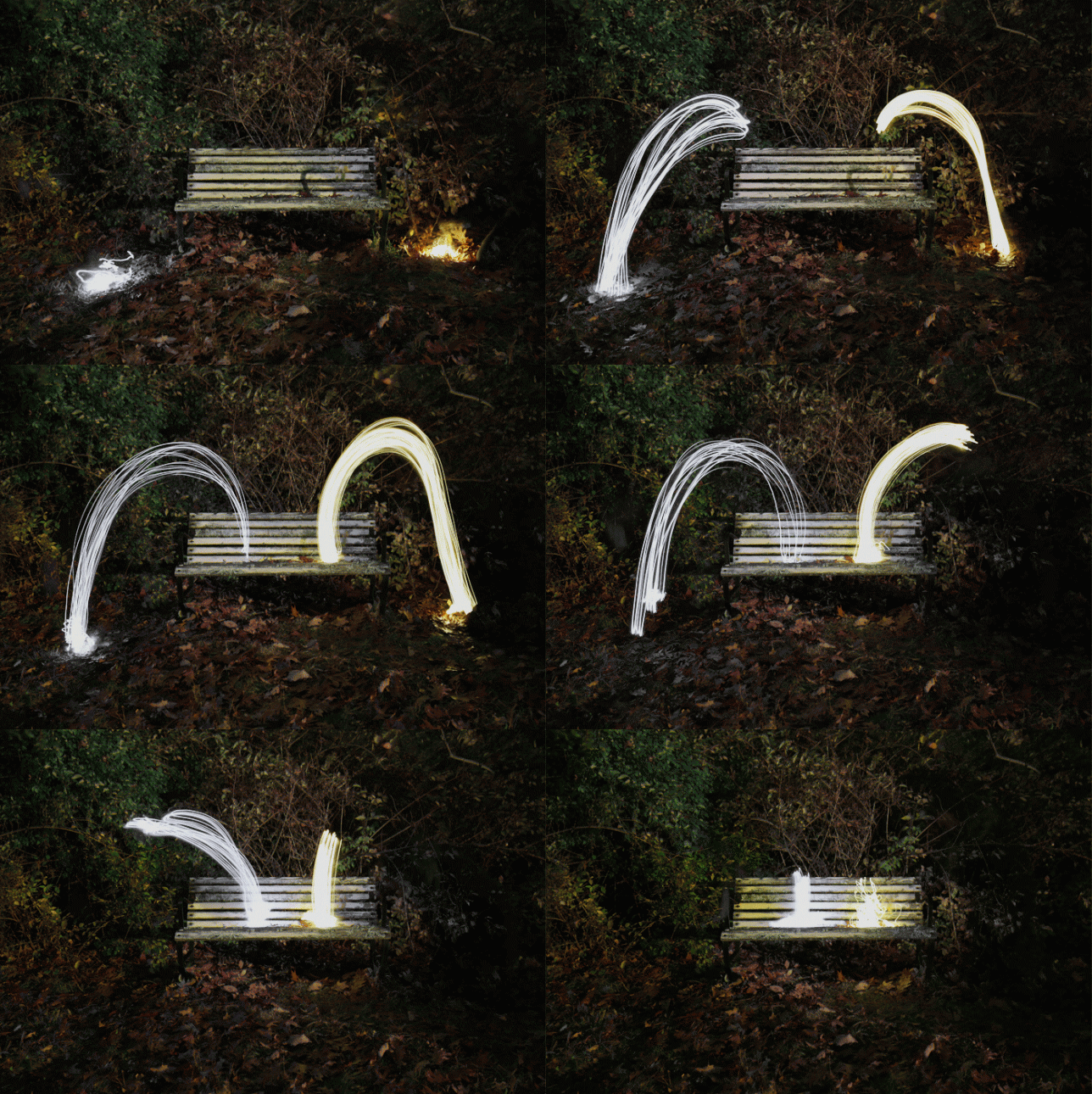
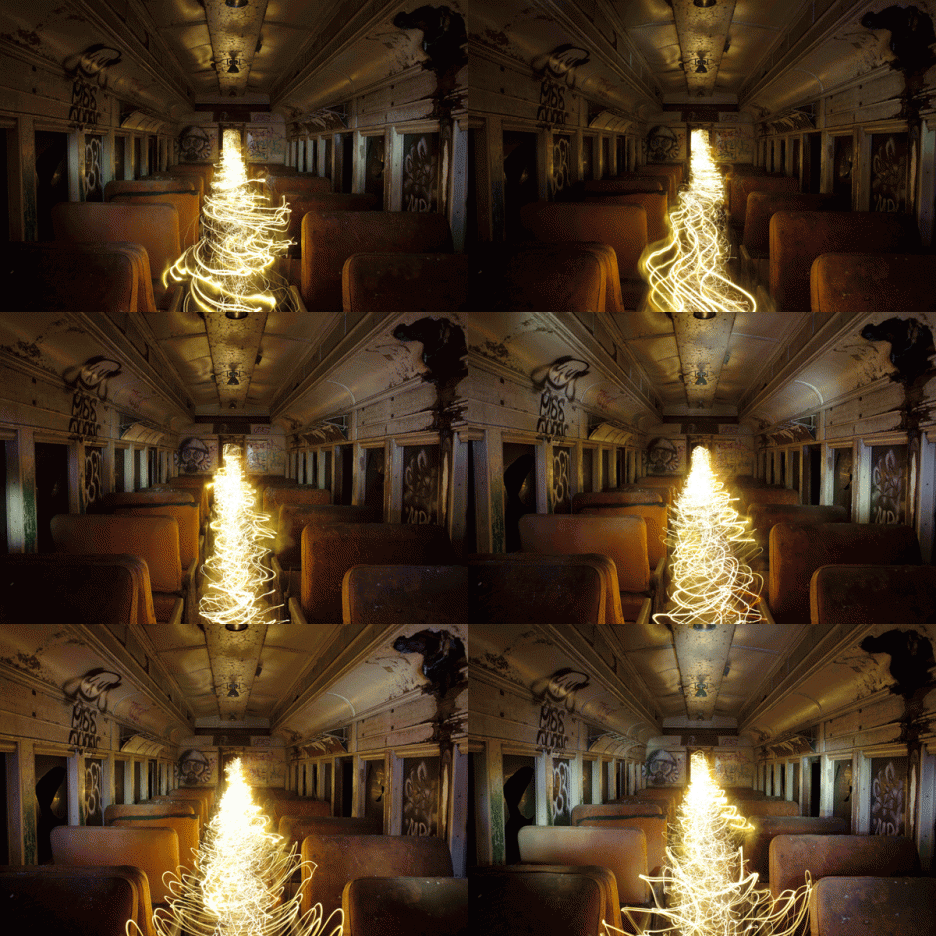
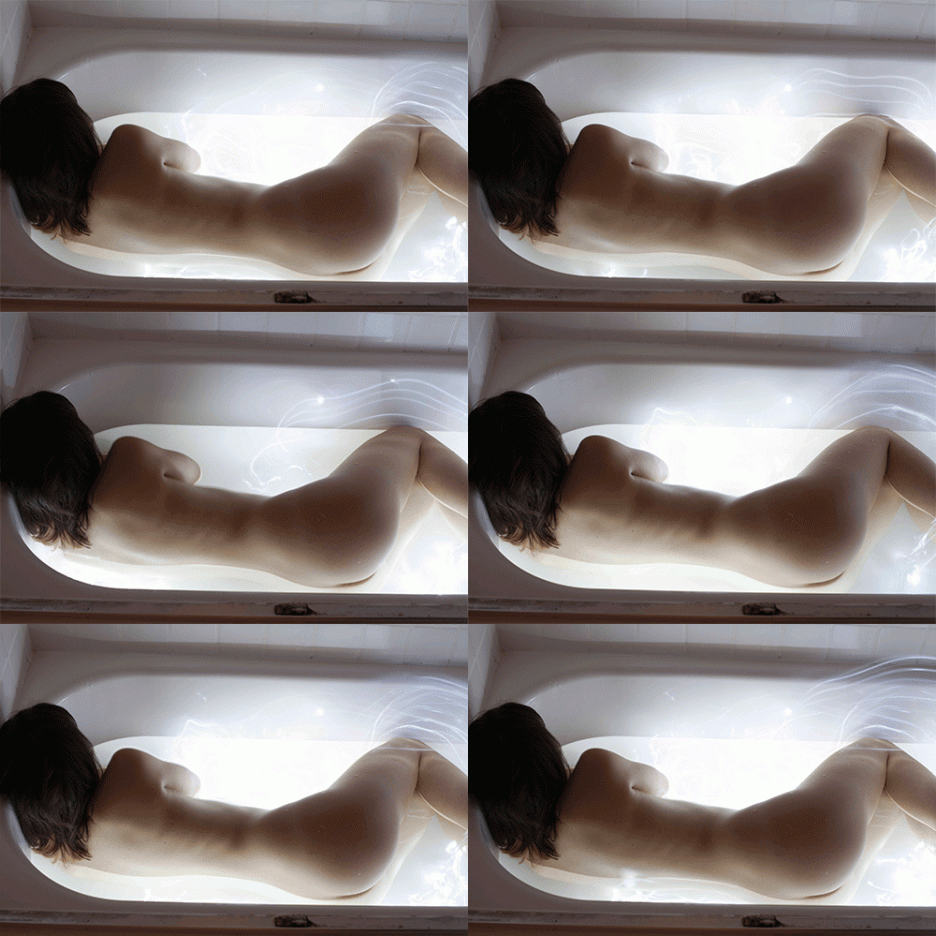
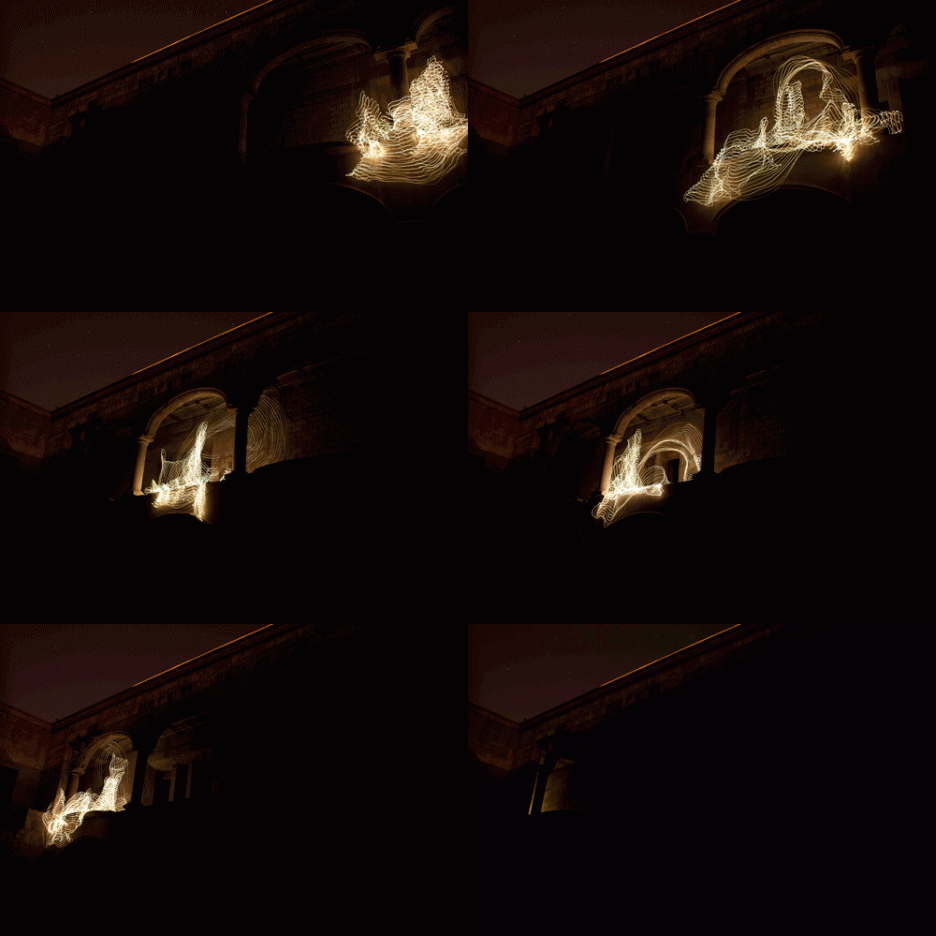
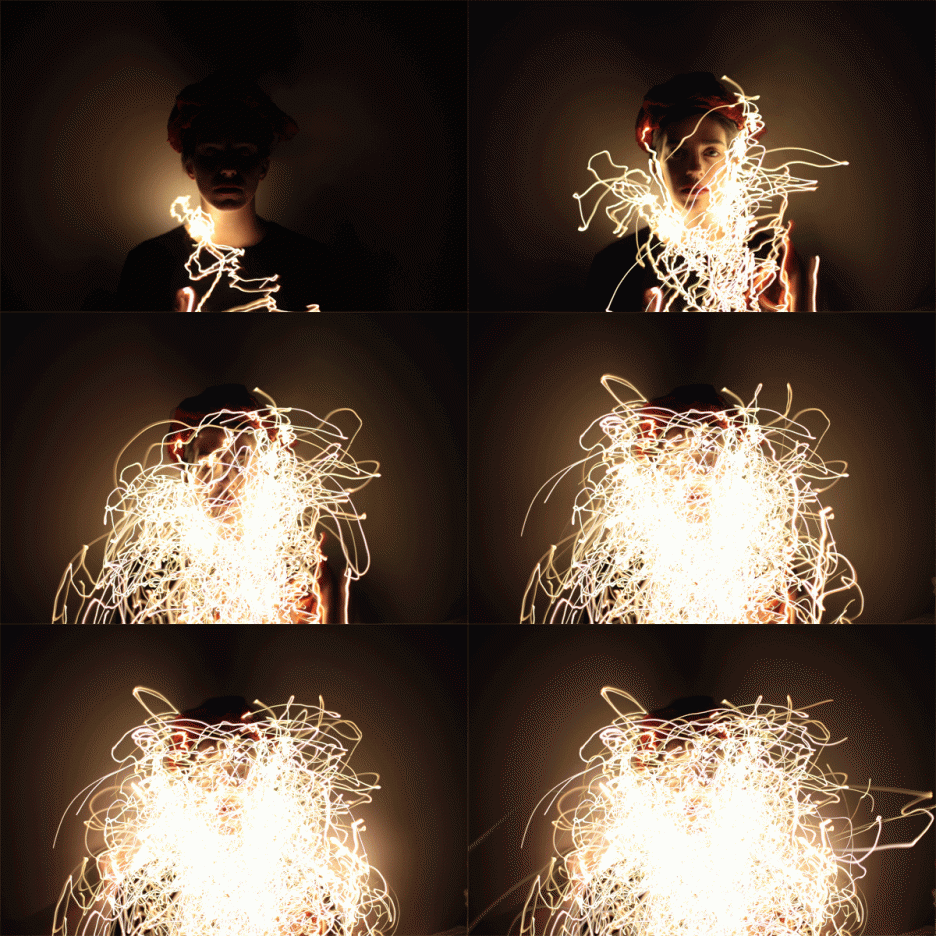
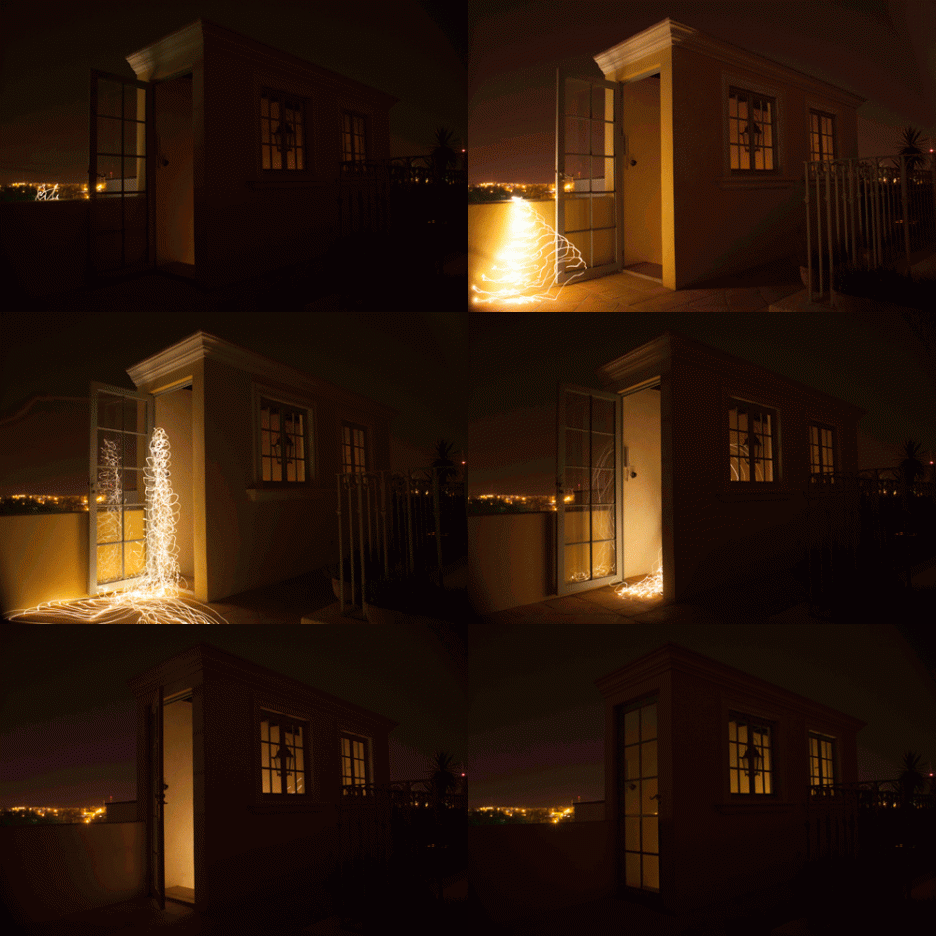
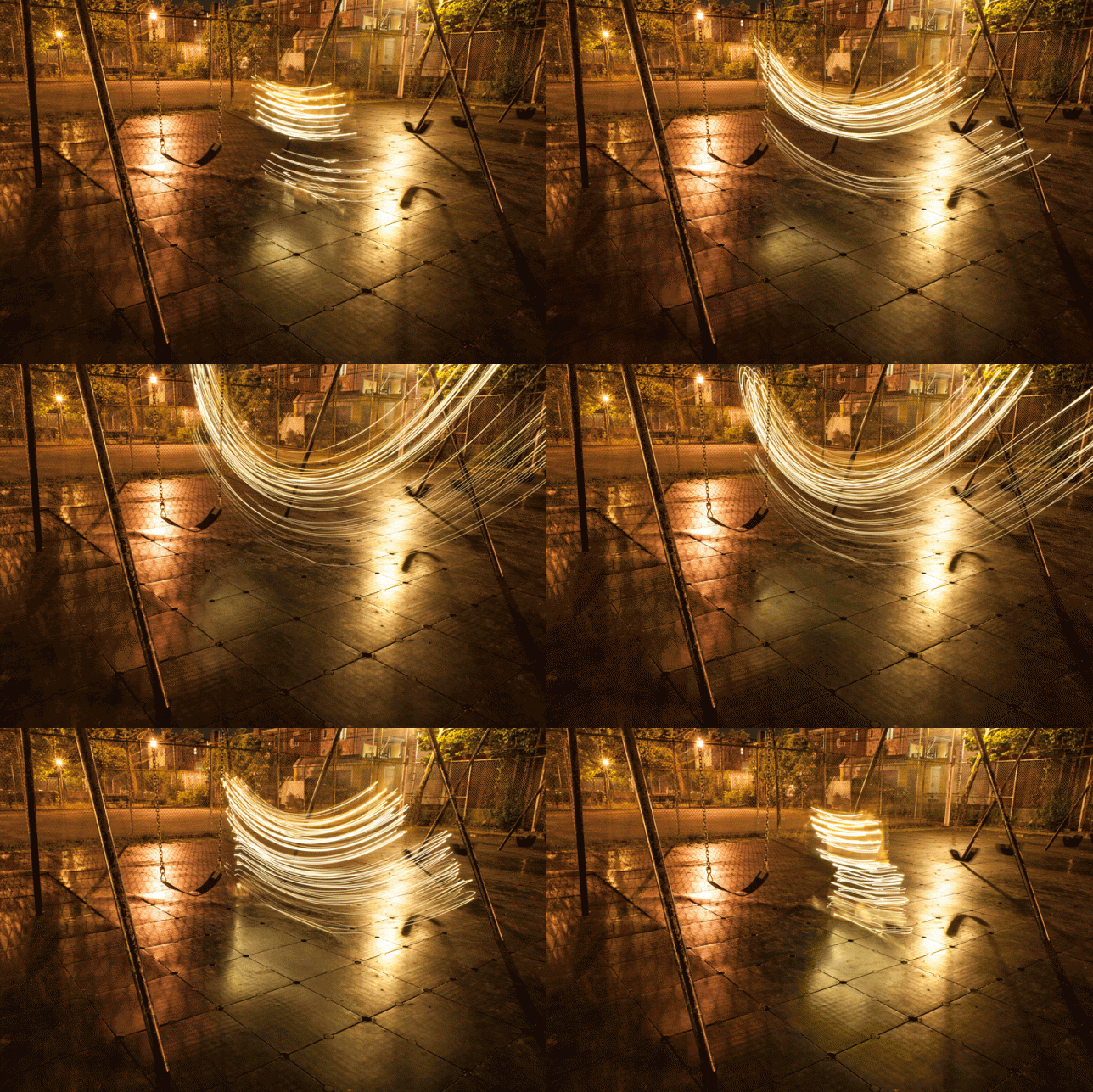
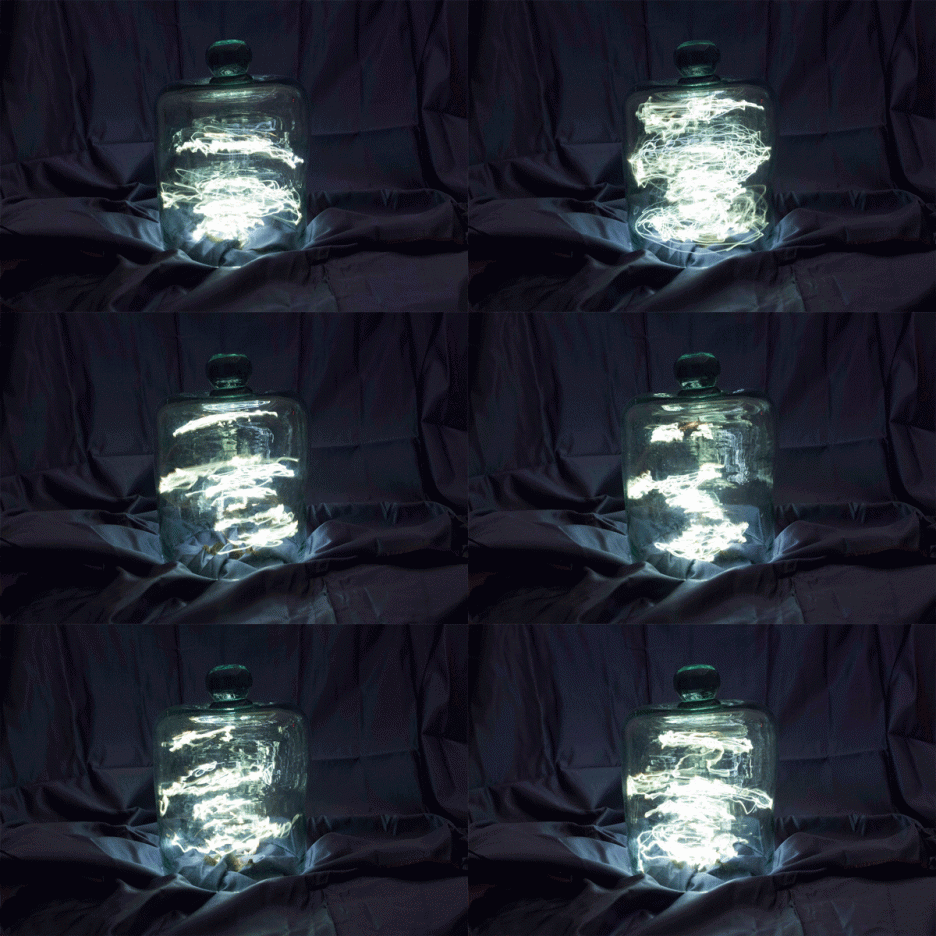
Beams of light dance, jump, squiggle, scatter and interact with each other as if they’ve taken on a life of their own in a series of animated light art gifs by New York City-based photographer Lucea Spinelli. Abandoned school buses, public park benches, playgrounds, glass jars and human bodies become the settings for surreal, almost ghostly scenes calling to mind the common superstition of supernatural beings affecting electricity.

dancing light art 2

dancing light art 1

dancing light art 7

In fact, all that seems to be missing from some of these animations is a proton pack from Ghostbusters, as the clusters of light created by Spinelli take on the movements of autonomous beings. Spinelli takes still shots of moving light using long exposure methods and then strings them together to create these animated sequences.

dancing light art 3

dancing light art 5

“In her project phötosgraphé, Lucea Spinelli creates long exposure photographs that afford us a view into the unknown,” reads the statement on the artist’s website. “For the duration of the open shutter the lens becomes a canvas upon which Lucea paints with light. The illuminated forms she creates interact with spaces and objects in a wa that evoke the unseen – such as spirit, dreams and metaphor – within the everyday.”

dancing light art 6

light art 8

light art 9

“Often staying in the dark for long hours and relying on muscle memory alone, the process reflects ritual as a necessary part of interacting and evoking the unseen aspects of our reality. Thus by using a medium is commonly used to mimic reality, to suspend it, Lucea invites us to push beyond the bounds of visual perception to explore other ways of knowing. Finally, by stringing sequences of these long exposure photographs together into an animated gif, the light forms are literally brought to life as they dance across the forever looping frame.”

Share on Facebook


[ By SA Rogers in Art & Photography & Video. ]

[ WebUrbanist | Archives | Galleries | Privacy | TOS ]


WebUrbanist

 
Comments Off on Light Art Comes to Life: Dancing Animated Gifs by Lucea Spinelli

Posted in Creativity


How to Shoot Real Estate Photography Using Natural Light

14 Aug

There’s something about the way sunlight illuminates a room. The light pours over surfaces, metal fixtures gleam, wood detail shines, and the edges of furniture upholstery glows. Natural shadows produced by different objects convey a sense of depth. A naturally-lit image gives you a feel for what it would be like to see the space in person.
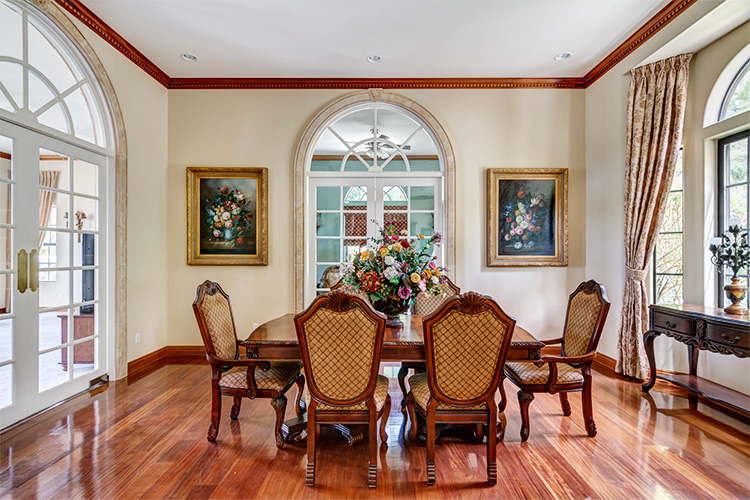
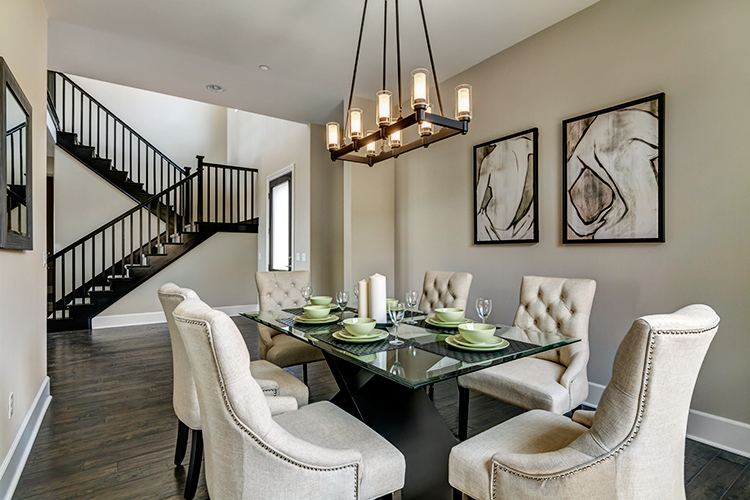
1 dining

The following will give you a basic understanding of equipment needs, how to manage contrast and mixed lighting in a room, and HDR shooting techniques to get you started doing real estate photography using natural light.

Equipment

Shooting with natural light has the benefit of a short equipment list. A camera, tripod, and wide angle lens is all you need.

  • Camera: A DSLR with auto-bracketing will increase your shooting speed and ease.
  • Tripod: Your tripod should be sturdy enough that your camera will stay put if you need to manually adjust camera settings, while shooting a series of bracketed images.
  • Wide Angle Lens (with lens hood): For cropped sensor cameras, the Tokina 11-16mm is a fantastic choice for real estate photography. The Canon 10-22mm is also a great option. You’ll be able to handle just about any real estate shooting situation with either of these aspherical lenses. For full frame cameras you’ll want a lens in the 16-35mm range. A lens hood is necessary to prevent lens flare.
  • Not required, but definitely a bonus: Circular Polarizer. In addition to deepening blue skies, a circular polarizer can be very helpful in reducing glare on windows, foliage and pool surfaces.

Sunlight on the exterior

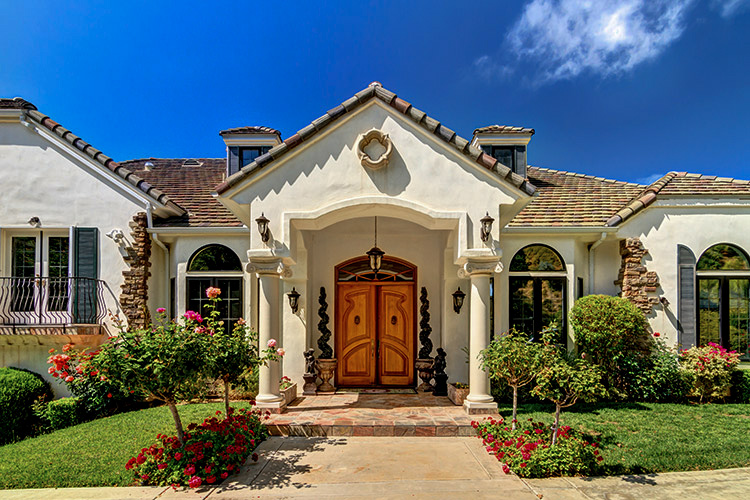
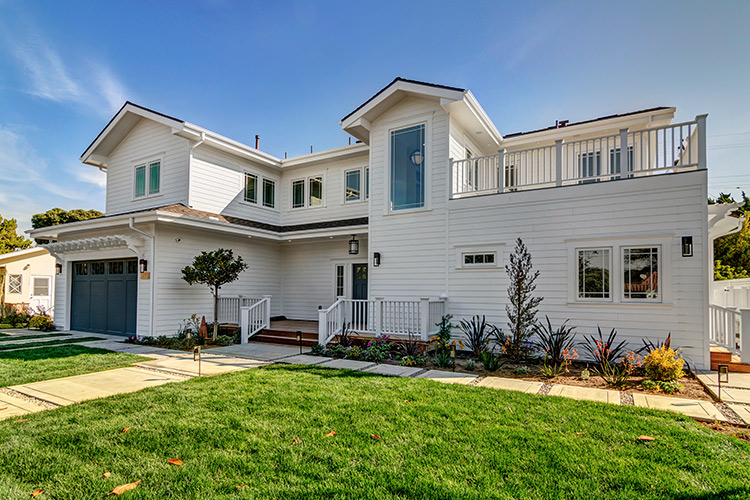
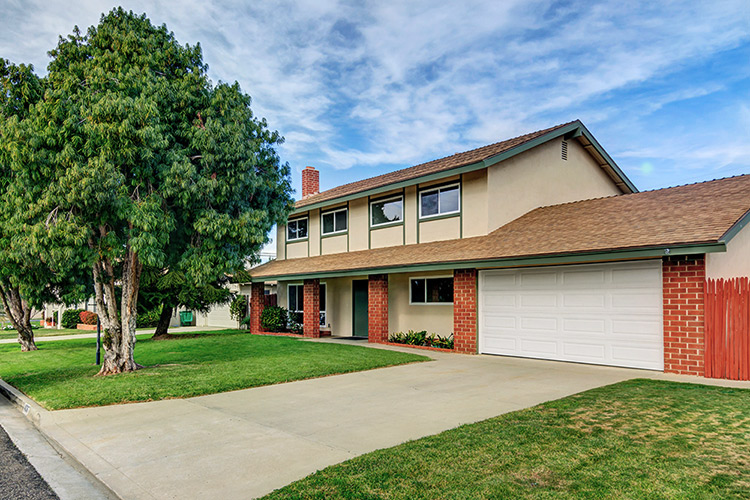
A sunny day is the best canvas for your exterior shots. Try to schedule your shoot during a time of day when the sun will be shining on the front of the house. Ask your client (or check Google Maps) to see which direction the house faces. You want capture the front exterior in its best light, as it’s almost always used as the featured image for the property’s listing.
2 exterior sun darlene

If it’s not possible to shoot the exterior in sunlight, don’t fret. Shooting HDR (explained later on) will help perk up a shady exterior.
851 Cabrillo Ave 05 Exterior print

4036 Baldwin Lane 01 ExteriorFront

Camera position within a room

There’s usually one ideal spot in a room, to position your camera to showcase the best angle. A room’s best angle usually shows:

  1. As much of the room as possible.
  2. The most aesthetically pleasing furniture and/or architectural elements.

For the natural light photographer, finding that spot depends on two things: available space, and window brightness.

Most importantly, you need to pick a space you can physically occupy. For smaller houses and rooms, quite often your only choice is the doorway, as it is likely to be the only spot where you can fit behind the tripod, and still squeeze enough of the room into your shot. Capturing three walls in your shot will give the viewer a better idea of the size and space of the room.

Rooms large enough to offer more than one shooting location often have windows lacking shades or blinds. Pick a spot in which extremely bright windows are angled more than 45 degrees away from center of your lens’ field of view. Doing so will help you avoid a high-contrast shooting situations and potential lens flare, which will in turn reduce your time spent in post-production.
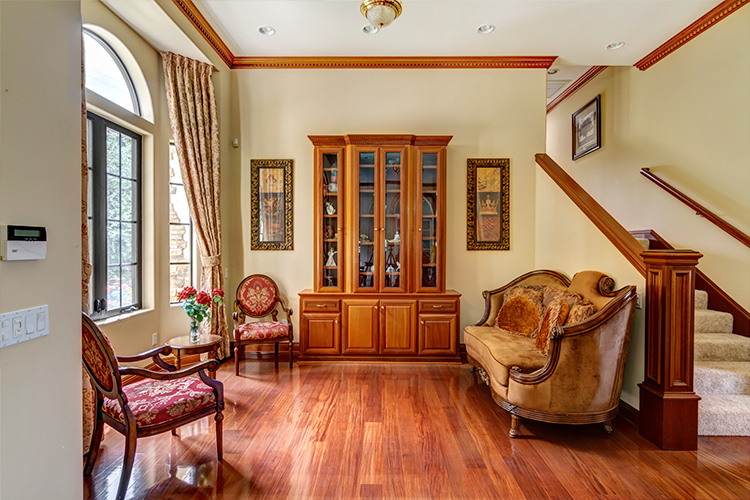
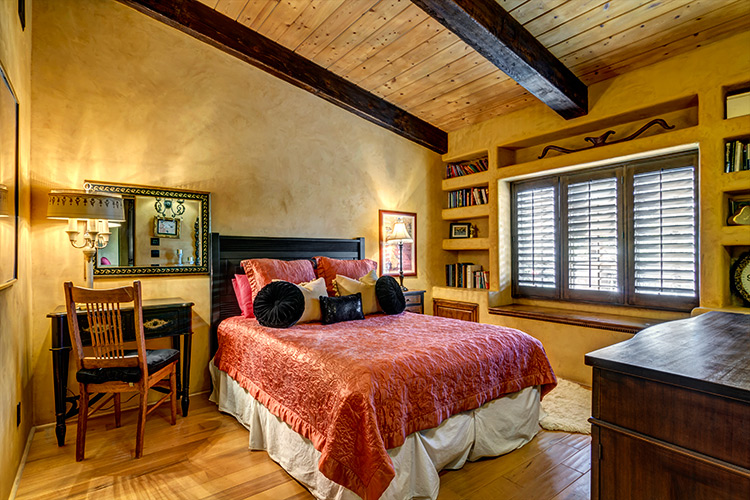
4 side light

The shooting location for this image placed the bright window at a 90-degree angle to the lens, minimizing contrast, as well as producing a pleasantly side-lit scene. An out of frame kitchen window, provided supplemental light from the right.
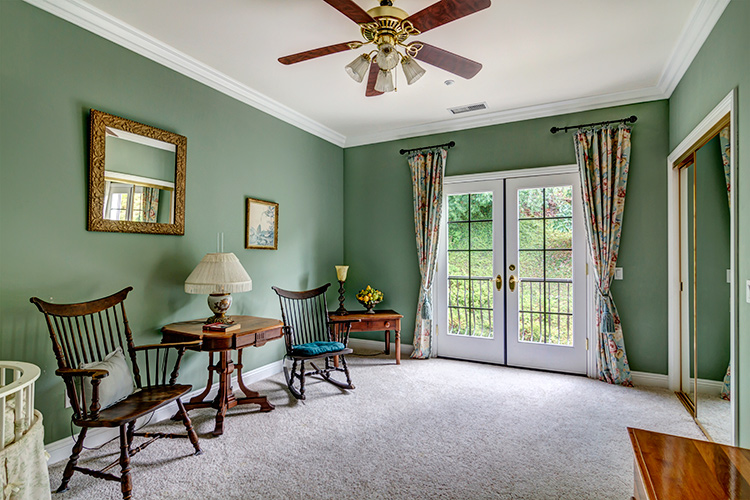
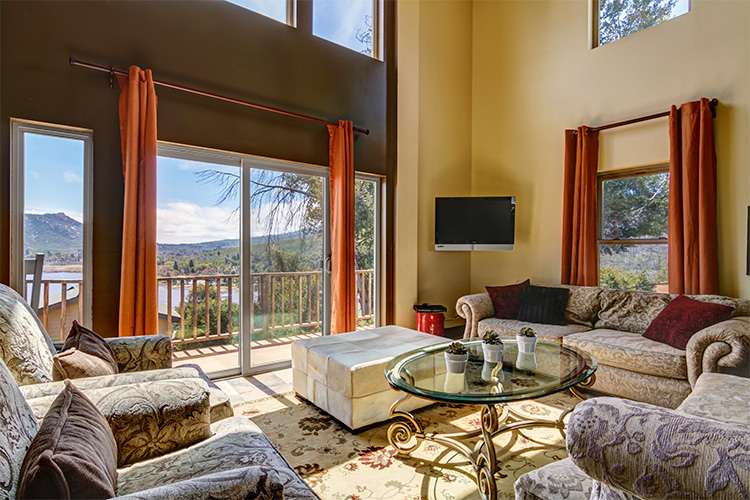
5 low contrast window

This room’s patio doors looked directly onto a foliage-covered hillside, resulting in a reduced contrast between interior and exterior, and less work required in post-production.

Working with windows

The windows in smaller rooms, such as bedrooms and bathrooms (in which your shooting position is limited) usually have blinds or shades. If the windows are bright, consider closing them at least partially, to reduce contrast between the interior and exterior – especially if the view outside is not an additional selling point for the house. This cuts down on the overall contrast of the scene, while still illuminating the room. It also prevents direct light from hitting your lens, minimizing flare and ghosting.
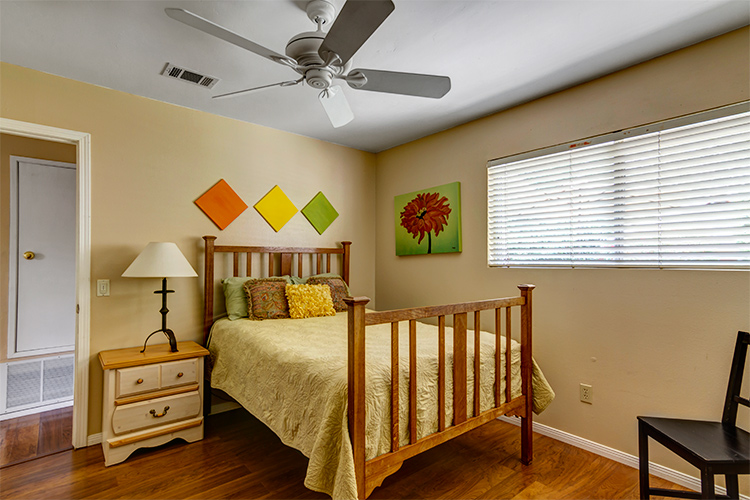
6 bed shades

Blinds are angled at 45 degree to cut down on scene contrast.
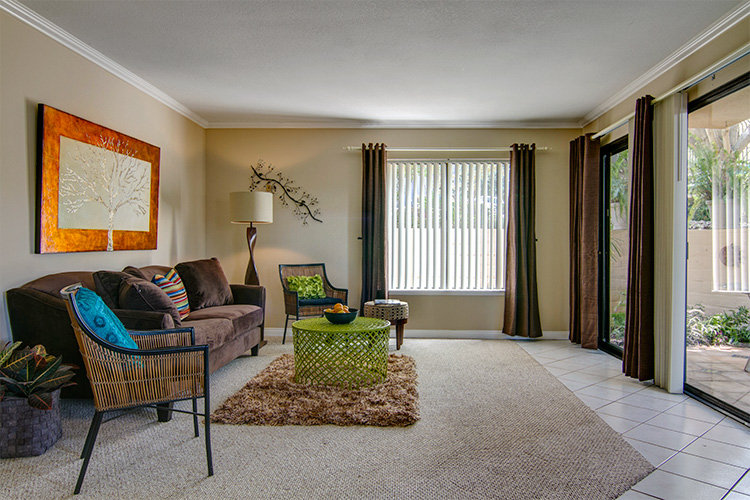
7 living partial

Blinds on the brightest window are partially closed, whereas the patio door blinds were left open.

Shooting HDR

Natural light can create beautiful images, but they do require some extra work in post-production. Rarely can a single exposure handle the range of contrast produced by an interior space with windows. HDR techniques will help remedy shadowy corners and bright windows, properly exposing all parts of the space.
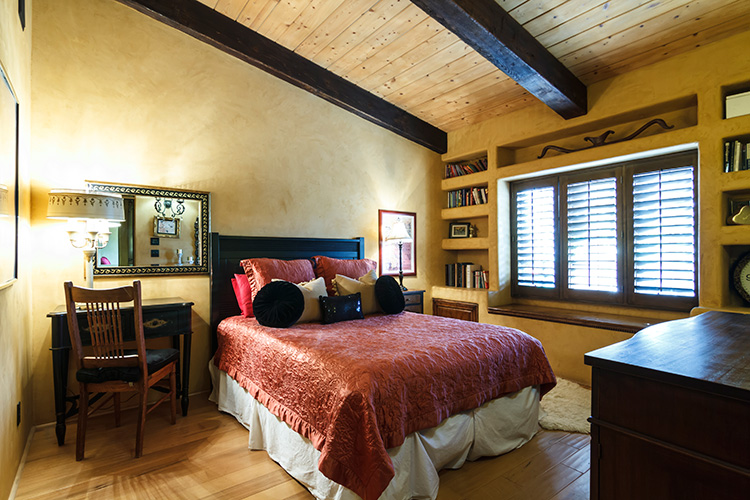
8 bed no hdr

From a single exposure.

9 bed hdr

HDR composite created with nice bracketed images.

To create an HDR image, you’ll need to shoot a series of bracketed images. Tiny rooms without any windows, such as washrooms and closets, usually require three images bracketed by 1-1.5 stops. In most rooms 5-7 images will do the trick. High-contrast spaces containing bright interior lighting and/or windows, may require nine bracketed images. For rooms with exterior views, sometimes HDR programs have difficulty rendering the contrast, no matter how many bracketed images you shoot, and the composite starts to look unnatural.

In general, it’s difficult to achieve a natural look within an image that contains a room with a view. For finer control over this interior/exterior blending process, consider shooting an image to expose for the view out the window, then using Photoshop to mask the view into the HDR composite image of the room.
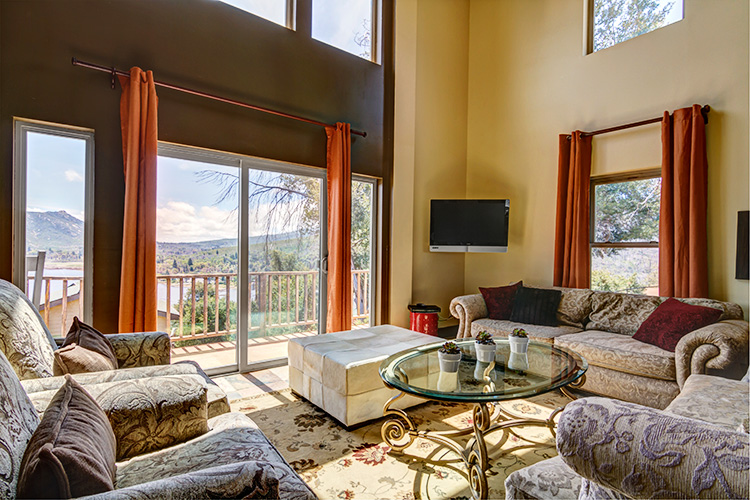
10 view hdr

HDR composite image.

11 view hdr+extra image
HDR composite with an additional image exposed for the view masked into the windows with Photoshop (above). Even though the change is subtle, the potentially distracting overexposed window scene is now closer to proper levels, making it easier for the viewer’s eye to move from the interior to exterior, and back again.

Mixed lighting inside

One of the difficulties of working with natural light, is dealing with mixed lighting situations. If enough light is coming in through the windows, you can choose to leave interior lights off, resulting in a single daylight color temperature throughout the image. Leaving interior lights off works especially well when window light is sufficiently illuminating the room, the light fixtures themselves aren’t in the frame, and the palette of the room is mostly white.
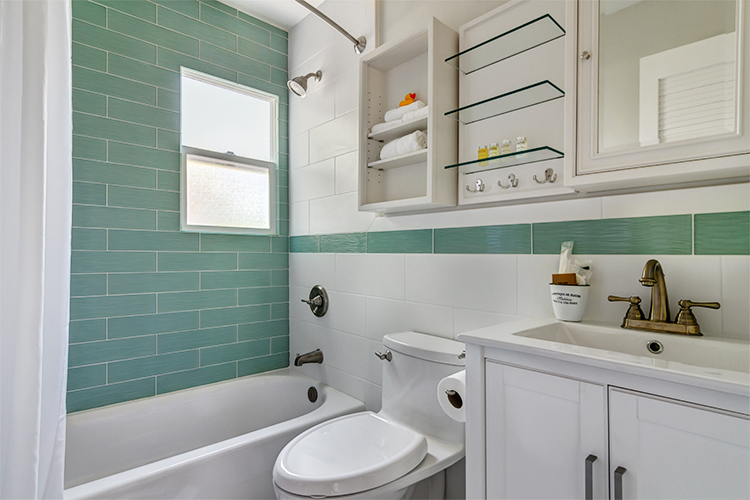
12 bath sunlight only

Lights off in this bathroom resulted in a fresh and clean look.
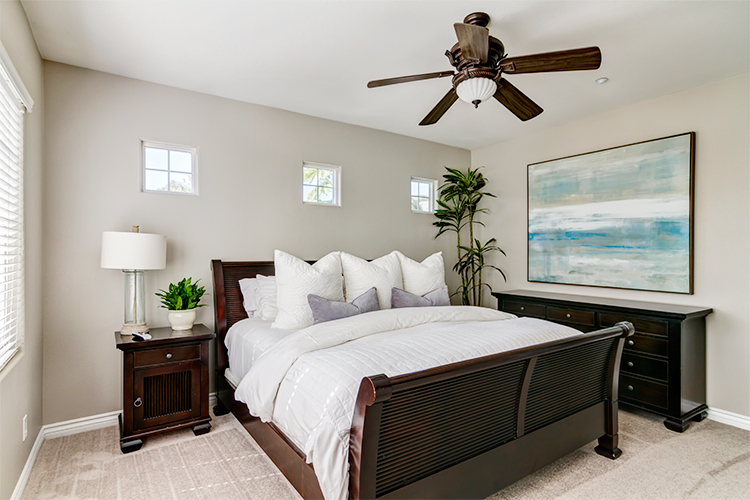
13 bed sunlight only

The window light was so abundant in this bedroom that turning the interior lights on could have arguably made the scene look unnatural.
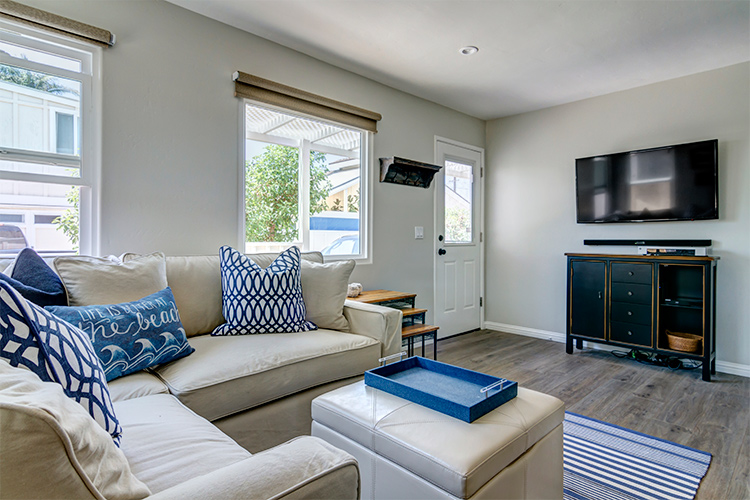
14 living sunlight only

The interior lights were kept off to avoid mixing tungsten with daylight for this shot. Turning them on wouldn’t have added much illumination, as the sunlight was quite bright on its own.

If the room isn’t bathed in sunlight, or contains light fixtures like pendants or chandeliers that should be on display, make sure to turn them on. You’ll end up with multiple color casts that will require correction later, but there’s a point at which simplifying the lighting just to speed up post-production, starts to undermine the ambiance of the room.
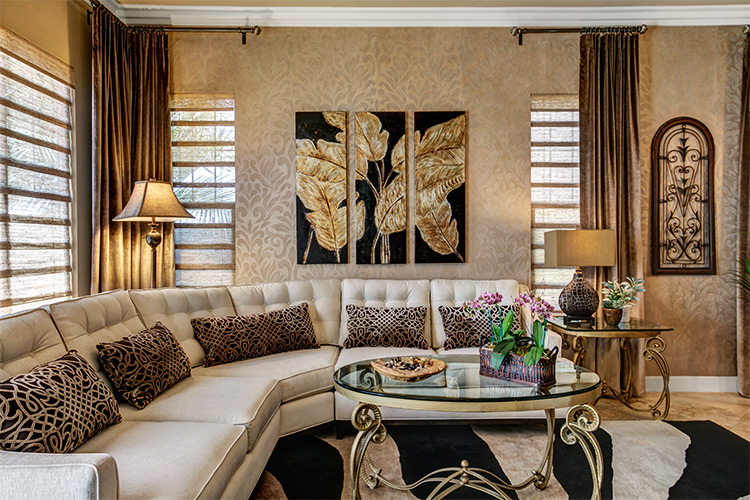
15 living mixed

Mixed lighting in the living room above, and the bedroom below, required a significant amount of color correction in production, but resulted in more inviting and warmer looking spaces.
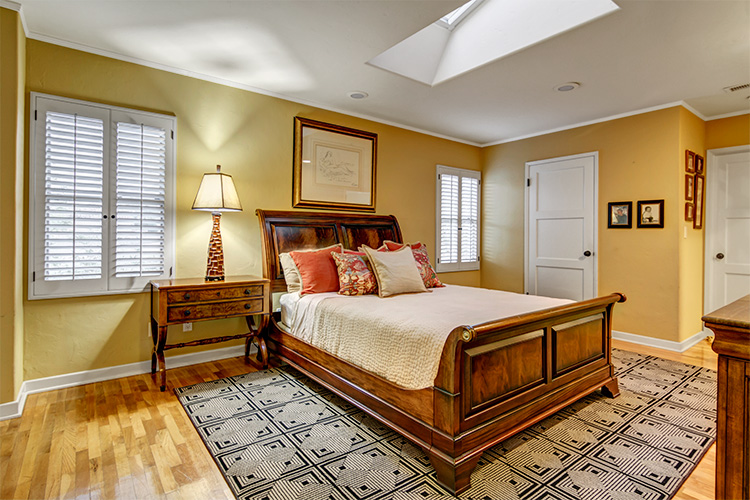
16 bedroom mixed

You can reduce your color correcting time by masking in the lights, the same way you would the view outside a window. Shoot the room with the lights off, then with the lights on. Create two HDR composites of each lighting situation, then mask in the illuminated lights. This works well with fixtures that don’t provide much illumination but should be seen turned on.
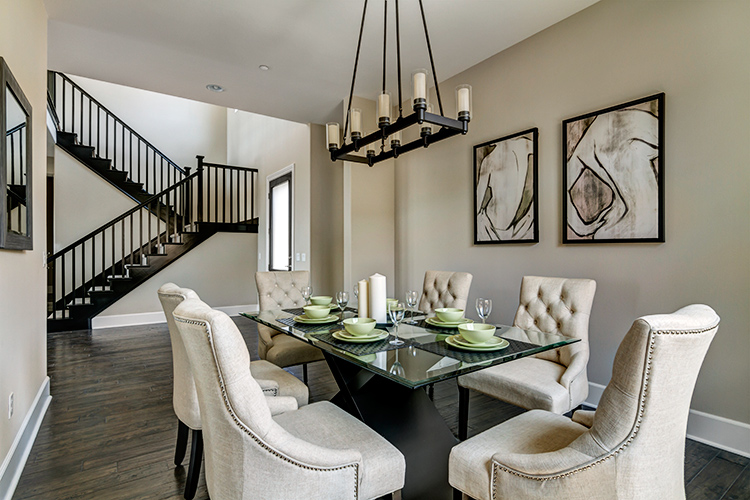
17 dining chandelier off

HDR composite with chandelier off.

18 dining chandelier on

HDR composite with the illuminated chandelier masked in with Photoshop.

Conclusion

Shooting real estate with only sunlight and interior lighting lends a beautiful, natural aesthetic to your images. When setting out, remember:

  • A wide angle lens is a must-have, along with camera and tripod.
  • Shoot the exterior bathed in sunlight, if possible.
  • Avoid shooting directly into extremely bright windows.
  • Adjust shades and blinds to control contrast within a room.
  • Decide how to deal with mixed lighting, and shoot different variations to give yourself plenty of options in post-production later.

Please post your questions and share your real estate photos in the comments below.

googletag.cmd.push(function() {
tablet_slots.push( googletag.defineSlot( “/1005424/_dPSv4_tab-all-article-bottom_(300×250)”, [300, 250], “pb-ad-78623” ).addService( googletag.pubads() ) ); } );

googletag.cmd.push(function() {
mobile_slots.push( googletag.defineSlot( “/1005424/_dPSv4_mob-all-article-bottom_(300×250)”, [300, 250], “pb-ad-78158” ).addService( googletag.pubads() ) ); } );

The post How to Shoot Real Estate Photography Using Natural Light by Lauren Schroeder appeared first on Digital Photography School.


Digital Photography School
 
Comments Off on How to Shoot Real Estate Photography Using Natural Light

Posted in Photography


Lighting 102: Apparent Light Size

02 Aug

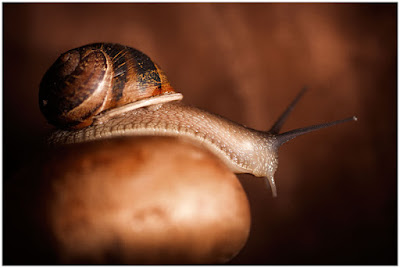
This is Gary. Gary is a snail. And he's beautifully lit by my friend Sara Lando. While babysitting Gary for a friend, Sara decided to actually build a miniature set and then photograph the snail in the style of Irving Penn. Because this is what creative people do in their spare time.

And pray tell, what beautifully soft light source is she using to subtly caress Gary and reveal his form?

Oh look, it's a bare speedlight:Read more »
Strobist

 
Comments Off on Lighting 102: Apparent Light Size

Posted in Photography


Lighting 102: Understanding Soft Light

02 Aug

So what is it that actually makes a light soft? And why is it a function of both size and distance?

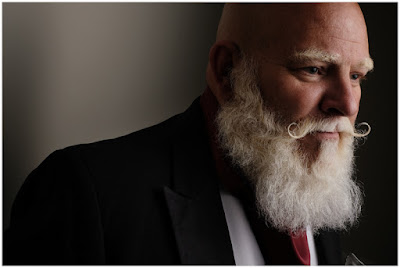
In the portrait above, Dean is being bathed in soft umbrella light from camera right. But let's zoom in a little closer and place some waypoints on his forehead…Read more »
Strobist

 
Comments Off on Lighting 102: Understanding Soft Light

Posted in Photography


Aputure Amaran AL-M9 is a pocket-sized adjustable LED fill light

20 Jul

Still photography and video accessory purveyor Aputure has unveiled the Amaran AL-M9, an affordable pocket-sized LED panel. It uses 9 SMD TLCI 99 bulbs, an integrated rechargeable Li-ion battery, offers 9-step brightness adjustment and 120-degree light beam angle, and is a lightweight at 140g. Aputure bills the Amaran AL-M9 as a multi-purpose light for macro photography and ‘run and gun video,’ among other uses.

Aputure says the Amaran AL-M9 is the size of a credit card with an 11mm thickness, and offers 350 lux at a distance of 0.5m. The light can be attached to a standard 1/4-20” mount, and includes a pair of magnetic diffusion filters.

The Amaran AL-M9 is available for pre-order from Amazon for $ 45 with a launch date of August 6. Shipping is currently estimated to happen between August 17 and 26, however.

Via: PetaPixel

Articles: Digital Photography Review (dpreview.com)

 
Comments Off on Aputure Amaran AL-M9 is a pocket-sized adjustable LED fill light

Posted in Uncategorized