RSS
 

Posts Tagged ‘Lenses’

Zeiss launches Loxia full frame lenses for Sony E-mount

03 Sep

German optical manufacturer Zeiss has announced a new range of lenses called Loxia, designed for full frame cameras using the Sony E mount – essentially the Sony Alpha 7 series at the moment. The Loxia 2/35 and Loxia 2/50 are based on the company’s existing 35mm f/2 Biogon and 50mm f/2 Planar lenses from the ZM range. Read more

Articles: Digital Photography Review (dpreview.com)

 
Comments Off on Zeiss launches Loxia full frame lenses for Sony E-mount

Posted in Uncategorized


Canon confirms price drop on select EF lenses

03 Sep

Canon US has confirmed several price drops across its range of lenses, including several L-series models. According to Canon the price reductions are in honor of reaching a milestone – the production of 100 million EF lenses. Price drops range from a modest $ 40 up to $ 1000 off the original retail price, depending on the lens. Read more 

Articles: Digital Photography Review (dpreview.com)

 
Comments Off on Canon confirms price drop on select EF lenses

Posted in Uncategorized


Which Three Lenses do You Need for Photography?

28 Aug
Camera lenses

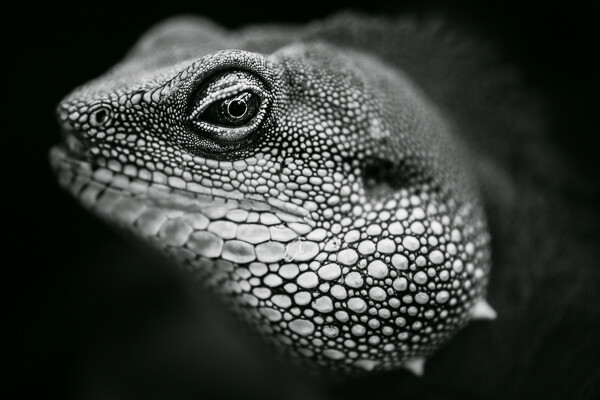
I used an 85mm lens fitted with a 500D close-up lens to create this photo of a Chinese Water Dragon.

Two things occurred to me When I read Phillip VanNostrand’s article The Only Three Lenses You Need for Travel Photography. One, is that his choice of lenses would not be my choice. Two, is that you cannot recommend three lenses for every photographer to use, as everybody’s requirements are different.

Imagine if you went to a showroom to buy a new car and the salesperson said “Sir, the only car for you is a Ford Focus”. Fine, if that’s the car you happen to want. But how annoying would it be if the salesperson insisted that you should buy a Ford Focus if it didn’t fit your needs?

A professional would establish your requirements first by asking you questions. How many miles do you drive a year? How many people does the car need to transport? Do you need lots of storage space? How important is fuel economy? Safety? What is your budget? And so on. When the answers to are known, the salesperson can make a recommendation.

It’s the same for lenses. My needs are different from yours because we are different people with different priorities and requirements.

Please don’t take this as a criticism of Phillip’s article (which is a great read, and the comments are fascinating). I learned this lesson when I wrote my article Buyers’ Guide – Prime Lenses vs Zoom Lenses in which I came down in favour of primes (my personal preference). Some readers quite correctly pointed out that the convenience of zooms makes them invaluable in certain situations. I realized that I was imposing my preferences on other people.

The three lenses I couldn’t do without

So here’s my question. If you could only own three lenses, which ones would they be? That’s right, three lenses to cover you for all the types of photography that you do. And, taking it further, if you could only own one lens, which one would you choose?

It’s a hypothetical question for most, as we are free to buy as many lenses as we like. But there is a semi-serious point behind it. Creativity works best within constraints, and limiting your lens collection to three is certainly a constraint. Also, it is possible to put together a good selection of three lenses that cover you for most situations on a limited budget – there is no need to spend many thousands of dollars on expensive glass if you can’t afford, or don’t want to.

Before you give your answer, have a think about your requirements, because they will drive your choice of lenses. These are my requirements:

  • My lenses must be light and relatively small. I don’t want to carry around a large, heavy bag full of gear.
  • My lenses must be good value for money. I don’t have a budget as such but when I buy a lens I need to know that I will use it a lot, it will last for decades and that I won’t have buyer’s remorse.
  • The autofocus must be reasonably quick and quiet.

To get the debate started, here’s my choice of three lenses, in order of preference. Bear in mind that I’m a Canon user so that naturally influences my choice of lens, and that I use a full-frame camera.

85mm f/1.8 lens

This is my favourite lens. I use the 85mm f/1.8 for portraits, close-up photos and landscapes that benefit from selective framing and compression. It’s light, relatively inexpensive and the image quality is excellent. The only weakness of this lens is that the minimum focusing distance is 85cm (2.8 feet), so it is not so good for close-up photography. I get around that by attaching a 500D close-up lens (this is technically a lens, although I think of it as a filter and I’m not including it in my choice of three) which gives me excellent quality for close-up images as long as I stop down to f/2.8 or smaller.

Camera lenses

The 85mm f/1.8 lens is ideal for portraits, especially those taken in low light, like this one.

Camera lenses

The 500D close-up lens that I use with my 85mm lens for close-up photography.

40mm f/2.8 pancake lens

While I love the quality and versatility of 50mm prime lenses, they are too middle of the road in terms of focal length for me to include one in my choice of three. Instead, I’m selecting the Canon 40mm f/2.8 pancake lens. I love this lens because it is extremely small and has high image quality. On my full-frame camera the focal length sits on the borderline between wide-angle and normal focal lengths, and turns out to be a surprisingly useful focal length. I use this lens a lot and I love it.

Camera lenses

The 40mm lens is ideal for scenic photos like this.

Camera lenses

The 40mm lens is also idea for photos where the composition demands a gentle wide-angle, in this case for the converging verticals effect created by shooting from a low viewpoint.

24mm f/2.8 IS lens

This is the newest addition to my lens collection and while I’m still getting to know it, the 24mm f/2.8 become one of my favourites. There’s something special about the 24mm focal length – it’s ideal for landscapes and scenic photos without being too wide. The maximum aperture of f/2.8 is a little limiting (I like to experiment with wide apertures for creative effect) but I can live with it as the lens is much lighter, cheaper and smaller than the Canon 24mm f/1.4L lens.

Another thing I like about it is the Image Stabilizer (IS). Theoretically with this engaged I can handhold the camera at shutter speeds down to around 1/2 second and still get sharp images. Yet anything moving within the frame will record as a blur – lots of creative potential there.

Camera lenses

The 24mm lens is great for environmental portraiture, where you want to show you subject and include a dramatic background.

If I had to chose just one of these lenses, what a difficult decision! If I could only ever have one lens, and it had to be one of these three, I think I would go for the 85mm f/1.8. Otherwise I would go for something like the Canon 24-105mm f/4L lens. It’s bigger and heavier than my primes but it covers a very useful set of focal lengths.

Your choice

Now it’s your turn. If you could only own three camera lenses, which ones would they be? If you could only own one lens, which would you choose?  Please let us know why. What are your personal requirements? It should make for an interesting discussion.


Understanding Lenses ebook bundle

Understanding Lenses ebooks

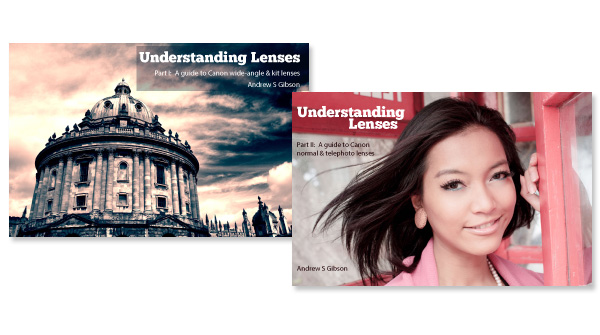
My ebooks Understanding Lenses Part I and Understanding Lenses Part II will help Canon EOS owners decide what lenses to buy for their cameras. They are both filled with lots of tips to getting the most out of your Canon lenses. Click the links to learn more.


The post Which Three Lenses do You Need for Photography? by Andrew S. Gibson appeared first on Digital Photography School.


Digital Photography School

 
Comments Off on Which Three Lenses do You Need for Photography?

Posted in Photography


Samyang announces 50mm f/1.4 UCM still and 50mm T1.5AS UMC video lenses

27 Aug

Korean lens brand Samyang has announced that it will use the Photokina show next month to introduce a new 50mm f/1.4 lens for stills photographers and the same lens designed for videographers using DSLR and mirrorless cameras. Both the Samyang 50mm f/1.4 AS UMC and 50mm T1.5 AS UMC are designed to cover a full frame sensor and will each come in 10 mounts. Read more

Articles: Digital Photography Review (dpreview.com)

 
Comments Off on Samyang announces 50mm f/1.4 UCM still and 50mm T1.5AS UMC video lenses

Posted in Uncategorized


The Only Three Lenses You Need for Travel Photography

29 Jul

The only three lenses you need for travel photography anywhere in the world are a fisheye lens, a 50mm, and a 135mm (or similar telephoto).

You can agree and finish this article right here, or you can read on to see exactly why I would choose only these three lenses to take with me anywhere in the world.
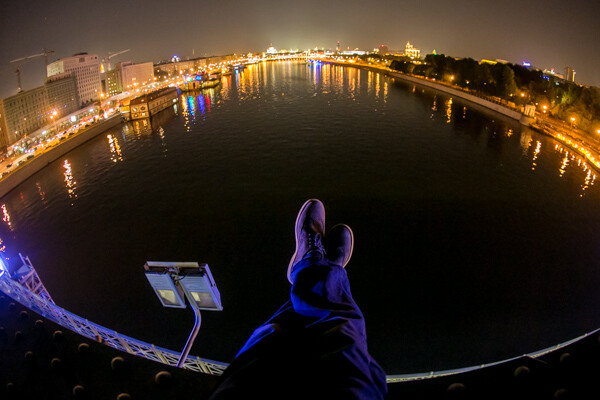
Canon fisheye 15mm 2.8

Night shot from atop a bridge in Moscow, using the Canon fisheye 15mm f/2.8

Before I say anything else, the fisheye I have in mind has an aperture of f/2.8, the 50mm has an aperture of f/1.4, and the 135 has an aperture of f/2.0. Popular, cheaper variations on these lenses would be the 24mm f/2.8, 50mm f/1.8, and the 100mm f/2.8 Macro. I’d also like to address what I imagine a popular response to this article might be: “What about the 24-105mm?” This lens is weak for a couple of reasons. The maximum aperture on this lens is f/4, which ends up being very limiting if you are trying to travel light (and going without an off camera flash).  Also, prime lenses are always superior in quality to zoom lenses. There are less moving parts and the image quality is cleaner. If you think having just one lens to cover a greater range is easier, just remember what you gain in convenience (by having one lens) you lose in quality, weight, and ability to “see” in the dark.

Each of these lenses are used for very specific reasons. Just as we wear different shoes for different purposes throughout our week, such as; sneakers for exercise, dress shoes for work, and slippers around the house – we use different lenses to convey different feelings, emotions, and to use as different tools to capture our experiences. Some lenses really are better than others for certain things. For example, portraits are best taken with lenses between 85mm and 135mm. The distortion to the face/ears is minimized and the truest proportions are found in this range.

On the other hand, you wouldn’t normally reach for a lens like this when shooting a landscape scene (there are always exceptions to every rule, and it’s fun to see what happens when you break the general guidelines). Great lenses for landscapes tend to be a bit wider, somewhere between 15mm and 50mm. I recently took only these three lenses with me on the Trans Siberian Railway from Russia through Mongolia into China. Here are MY reasons for bringing the 15mm Fisheye, 50mm f/1.4, and the Canon 135mm f/2.0 with me on this trip of a lifetime.

The Canon Fisheye 15mm f/2.8
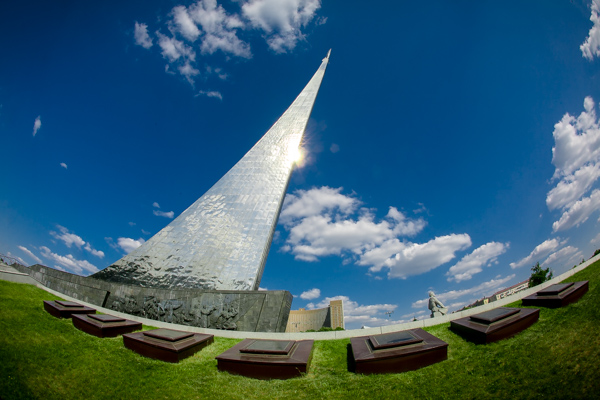
canon fisheye 15mm

From Moscow, Russia

The Canon 15mm lens is my antidote to boring building pictures. When traveling abroad (or around your own town/city/village), interesting buildings are inevitably photographed. Oh, that old bridge with locks attached to it? Better take a picture. Oh, look at that old cathedral in the Kremlin, better take a picture. If it’s there, it must be important. Well, you can add your photo to 1.5 million other photographs right there on Flickr or Google images that look exactly like the one you just took.

What will you do to differentiate yourself? How can you take a picture that will make someone pause for more than half a second?  Ad companies are excited when someone spends 4-8 seconds looking at a photo. Can you get someone to look at one photo for that long? What would it take? For me, I decided I would never take boring, straight photos of buildings ever again. I’d either edit them in unusual ways (like creating an HDR image, or process it in very contrasted black and white), at unusual times of day, or I would attempt to photograph it differently than every other tourist before me.

canon fisheye 15mm

The subways in Moscow, Russia

Canon fisheye 15mm 2.8

Selfies are easy with the fisheye lens. That bag on my shoulder could hold my camera, three lenses, my laptop, batteries, some magazines and a book.

Shooting with a fisheye lens can be really fun, actually. Hold your camera up to your eye with a fisheye lens on, move the camera upwards and watch the horizon bend down sharply at the sides, creating a “globe” feel to your image. Tilt the camera down and watch the earth curve up like a big “U”. Buildings become warped and distorted in unusual ways, like a piece of Gaudi’s architecture. Stand in the middle of the street and point the camera straight upwards and watch the buildings on the side loom over you, like in a Dr. Seuss book.

canon fisheye 15mm

My bunkmates on the Trans Siberian Railway

Fisheye lenses can capture an entire room, cabin of a train, or a bathroom easily. They make selfies on your DSLR incredibly easy. You can take incredible photos of the stars at night. And best of all, they are great for doing the Camera Toss. (I suppose I should recommend NOT trying this ever, anywhere). Fisheye lenses add an element of fun and whimsy to travel photos, which I find otherwise a bit boring and predictable. It’s also an incredibly light and compact lens to travel with, which is why I always bring it along on my trips now.
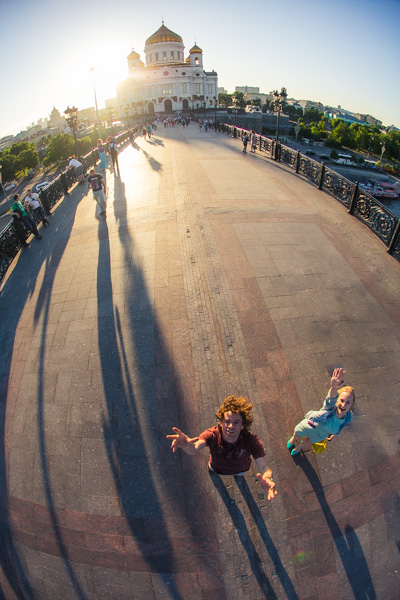
canon fisheye 15mm

My camera toss, where I throw my camera with a fisheye lens high up into the air to capture a scene like this

The 50mm f/1.4

The 50mm lens is a standard, go-to, all-around lens. And while the Fisheye lens brings a lot of whimsy and fun to my travel pictures, some scenes just don’t call for that. I’ve heard it said that the 50mm is the closest representation to what we see naturally with our eyes. This lens is my best choice of the three options for Canon 50mm lenses. For only about $ 300, this lens has fantastic optics and a powerful aperture. It’s made of real glass lenses unlike the cheaper, lower quality 50mm f/1.8. And it focuses fast, unlike the much more expensive 50mm f/1.2, which happens to be twice as heavy.

Canon 50mm 1.4

A garden scene in Moscow, Russia taken with the 50mm f/1.4. Such lovely bokeh!

This is a great, inconspicuous lens on a camera body because it doesn’t stick out too much like a 70-200mm would, and the quality is just superb, as I’ve already said. It is extremely lightweight, and you could honestly walk around the entire day with just this lens. What I associate most with the 50mm f/1.4 lens is street photography. I love to take that lens and get lost down side streets and alleyways. I like to take photos of strangers on the street with this lens. The focal length is just right, so it feels as though the viewer is standing there by him or herself. It captures just enough of a scene to convey what is there.

Canon 50mm 1.4

A retired math teacher from Texas on the Trans Siberian Railway

The 50mm f/1.4 is also a great lens for portraits (though I prefer the 135mm f/2.0). It produces lovely bokeh. It forces you to get up close to your subject, making the portrait more intimate. You can’t hide behind a telephoto like the 135mm or a 70-200mm. You are an arm’s distance away, and being that close sometimes shows up on the subject’s face in interesting ways.

low light with the Canon 50mm 1.4

My Mongolian host preparing milk tea in the yurt.

The last thing that I think the 50mm f/1.4 does best, is capture images in low light situations. Trying to capture dinner in a restaurant at night using candlelight only? Totally possible. That light reflecting across the river at night? 50mm does it best! Sleeping in yurts for four nights in a row? Getting that delicious yurt light from the top of the tent is easy with the 50mm.

Canon 50mm 1.4

Taken in the back alleys of Beijing, China with my 50mm lens, my favorite street photography lens.

Fun fact: of my top 200 images from the trip, 112 of them were taken with the 50mm.

The 135mm f/2.0

The granddaddy of all these lenses, the 135mm f/2.0 has a special POW feel to it. Because it is a telephoto, it pulls the background in for a nice compact feel to the images. It is a great portrait lens as it completely obliterates the background in a sea of dreamy bokeh. And one special fact about the Canon 135mm f/2.0: it has the ability to focus at a distance of 1 meter (3 feet), which makes it almost like a macro lens.
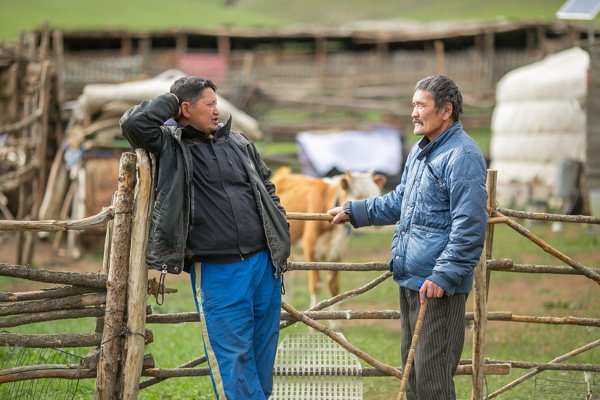
Canon 135mm 2.0

My host on the left, after we road horseback from one village to the next, in Mongolia. Taken with the 135mm f/2.0

This lens is fun for me because it has similar properties to the 70-200mm, but it weighs nearly half as much, which will save your back and shoulders after a long day of walking around. This is a fun lens to spy on people from afar, if you are afraid of the straight-on street style encounters you get with the 50mm. This is actually a really interesting lens to do landscapes with if you have enough room. Look at this side-by-side comparison of basically the two same scenes, and look what the 135mm does to the mountains and landscape in the background. It really pulls them towards you, the viewer and truly implies the scope of the scene.

Fisheye versus 135mm

The same view from the fisheye and the 135mm. Notice the mountain with the bright spot in the background of the fisheye; it’s almost non-existent. With the telephoto the mountain becomes a major player in the photo.

Canon 135mm 2.0

Taken on my way to the oldest and deepest freshwater lake in the world. Lake Baikal, in Siberia, Russia.

canon 135mm 2.0

In the Kremlin, Moscow, Russia. This is one instance where I enjoy breaking the rules and using a telephoto lens to capture an idea of a building, rather than the whole thing with a 50mm or Fisheye lens.

I hope these images and words have inspired you. It’s really fun to limit yourself to prime lenses and feel how they work (and don’t work) in various situations. Being that close to just a few lenses over a month of travel really allows you to get to know the equipment well. So now let’s see some travel photos you’ve taken with prime lenses!

The post The Only Three Lenses You Need for Travel Photography by Phillip VanNostrand appeared first on Digital Photography School.


Digital Photography School
 
Comments Off on The Only Three Lenses You Need for Travel Photography

Posted in Photography


UPDATED: Sony’s curved sensors may allow for simpler lenses and better images

08 Jul

UPDATE: Sony has released an image taken with its curved sensor, and provided more details on what we might expect from its curved sensor technology. We’ve updated our previous story with this image and details. Read more

related news: Digital Photography Review (dpreview.com)

 
Comments Off on UPDATED: Sony’s curved sensors may allow for simpler lenses and better images

Posted in Uncategorized


Photography Tutorial: Intro Into Lenses

28 Jun

Camera Lens Image
INTRO TO PHOTO: PART 3 – LENSES


Last day of Intro to Photo! Last time we talked about how to set up your exposure. Today, we are going to discussing the ins and outs of lenses.  Here comes the easy stuff!


Lenses


Lenses can be either zoom or prime.  Zoom lenses allow you to vary focal lengths (based on what is built into the lens) and – as the name says – zoom in and out of the frame.  Prime lenses are fixed.  This means that it has one focal length.  In order to “zoom in or out” with a prime lens, you must physically move closer or farther from the subject.  Prime lenses typically have a larger maximum aperture, making them “faster” than zoom lenses.


Lenses that have larger apertures are described as fast lenses because they have the ability to collect light faster.  However, lenses with smaller apertures have a greater depth of field.


Camera Lens Chart

Lenses fall into a few different categories:


A wide-angle lens widens the angle of view thus bringing more into focus.  A wide angle can also have a flattening effect.


– Super wide angle lenses are typically anything under 20mm

– Wide-angle lenses are from 21-35mm


A “normal” is a lens that most accurately portrays what a human eye will see.  With a 35mm camera, this is typically a 50mm lens.  Normal lenses fall into the category of standard lenses.


– Standard lenses range from 35-70mm


telephoto lens reduces the distance between objects in the photo, bringing the subject “closer” to the photographer.


– Medium telephoto lenses are considered portrait lenses. These range around 80-135mm

– Telephoto lenses are between 135-300mm

– Super telephoto lenses are anything over 300mm


Focal length is the distance in millimeters between the lens and the sensor when the camera is focused on a subject at infinity.  Lenses that are classified as “long” lenses have a larger focal length- these are telephoto lenses.


Each lens has its place. Standard lenses are great all around lenses but excel when used for documentary and street work.  Wide angle lenses are great for landscape and architecture whereas telephoto lenses work well with portraiture, sports and wildlife photography.


Be careful when selecting a portrait lens.  Different focal lengths can distort the face in different ways.  Wide angles tend to flatten out the face in an unattractive manner.  The optimal portrait lens depends on what camera you’re using (and if there is a crop factor) but you’re typically safe using a lens between 85-135mm long.  135mm lenses (or about that) are optimal when shooting head shots.


Focal Length Examples

How focal length distorts the face


Megapixels


People are far too concerned with megapixels when it comes to buying a new camera. Let me put this very clearly… MEGAPIXEL COUNT DOESN’T ALWAYS MATTER!  The only time megapixel count really matters is when you’re going to be shooting something which has to be blown up large scale, such as a billboard.


Don’t drive yourself crazy over it!  In the end, it really doesn’t matter that much.


Crop Factor


Most digital camera sensors are smaller than film.  An image created with a 35mm body but smaller sensor will end up cropping a bit of the image out, as compared to what would have been captured with a full sized 35mm film frame.  Hence the term “crop factor.”  This determines how much of the image is cropped out as compared to a “full frame” sensor (a digital sensor the same size as 35mm film).


Be conscious of your gear.  If your camera has a crop factor, it effects how you view the world through your lens.  Because the focal length is effected, a crop sensor zooms in a bit with every lens.  A 50mm lens is closer to a 70mm or 85mm lens.  Each camera model has a different crop factor.  Be sure to look if your camera has a crop factor and what it is.


To determine actual focal length, take the crop factor and multiply it by your lens’ focal length to determine the focal length you’re actually viewing.  (I.e. – If you’re using a 50mm lens on a camera with a crop factor of x1.6, you’re actually shooting at a focal length of 80mm.)


Ken Rockwell Image Taken With A Full-Frame Sensor

Taken with a full-frame sensor


Ken Rockwell Image Taken With A Camera With A x1.6 Crop Factor

Taken with a camera that has a x1.6 crop factor


Last but not least, just a few tips:


– Don’t trust LCD backs for exposure! Always meter when possible.  LCD’s don’t accurately depict the information recorded by your camera’s sensor.  Something that looks perfectly exposed according to your LCD can actually be an entire stop under or over exposed.  The only way to trust what you see on the back of your camera is to learn how to read histograms.

– Check out this article on how to read histograms: How to Use Histograms by Ken Rockwell

– It helps to turn on the “over exposure indicator.”  This feature will cause the whites on your LCD screen to blink when they’re blown out.  (When they contain no detail and are essentially just blobs of pure white.)

– And last but not least.. As boring and nerdy and tedious as it is.. READ YOUR CAMERA MANUAL!


If you’re just tuning in to today, be sure to check out Part 1 – Cameras and Part 2 – Exposure.


I know there was a lot thrown out over the past few days – hopefully you made it through okay!  If you have any questions, feel free to shoot me an email at alana@alanatylerslutsky.com.


Happy shooting!

Alana


PHOTO SOURCE:

Feature Image & Photo 1: www.timeslive.co.za

Photo 2, 3, 4, 5: Alana Tyler Slutsky


Fashion Photography Blog

 
Comments Off on Photography Tutorial: Intro Into Lenses

Posted in Uncategorized


Sony’s Curved Sensors May Allow for Simpler Lenses and Better Images

18 Jun

sony-curved-sensor.jpg

The sensors inside digital cameras are – generally – flat. But curved sensors promise greater sensitivity, better image quality, and provide scope for simpler lenses. Recently, Sony showed off some examples of curved image sensors, including (tantalizingly) a full-frame chip. Device manager Kazuichiro Itonaga claims: “The team has made somewhere in the vicinity of 100 full-size sensors with their bending machine. We are ready.” Read on to learn more about this exciting new tech, how it imitates the human eye, and how it may find it’s way into consumer products.

News: Digital Photography Review (dpreview.com)

 
Comments Off on Sony’s Curved Sensors May Allow for Simpler Lenses and Better Images

Posted in Uncategorized


The Contest Winners of the Tamron Lenses Are…

29 May
SP 17 50MM F

Tamron SP-17-50MM F/2.8 Di II VC

18270VCPZD

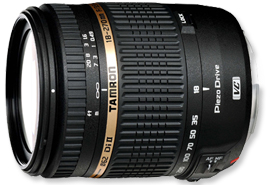
Tamron 18-270 Di II VC PZD

70300VC

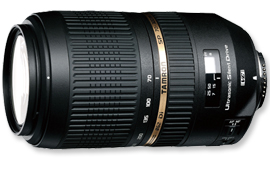
Tamron SP 70-300 Di VC USD

A HUGE Thank You to everyone who entered our recent competition to win one of three lenses from our friends at Tamron.

The response was absolutely AMAZING with over 1,300 entries! In fact, it was so great that we here at Digital Photography School decided to add a new category of winners – Honorable Mentions – and provide each Honoree with a dPS eBook of their choice. But now, on to the winners.

Here are the 3 winners of the competition:

  • Caleb Ward wins the Tamron SP-17-50MM F/2.8 Di II VC
  • EthanKPhotography wins the Tamron 18-270 Di II VC PZD
  • Patrick Kulwicki wins the Tamron SP 70-300 Di VC USD

A note to each of our winners:

Caleb, we value your service and do hope that you can and will change the lives of those in need.

Ethan, keep up the great work, and we also hope that you will become a professional photographer.

Patrick, hopefully, this is the beginning of much good luck.

Honorable Mentions:
Bartosz Szkatula, Juli Vz, Igor Danajlovski, Dylan Balagtas, Todd Carpenter, Joseph MacDonald, Randi Willett, Aniqe, Henry Greyner, Jennie Hallock, Bram Smits, Ioan Stoev, Aly Wonderland, Michelle F and Dana.

On a side note: Alison Hopkins, we hope you’ll take this little mention as a sign and follow your dreams.

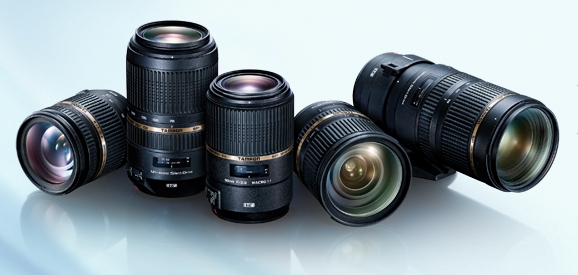
Tamron Lenses for Post Graphic  Cropped

We were all thrilled with the entries – you tugged at our heartstring, made us laugh, made us smile, but most importantly, you made us keep wanting to do more of what we are doing; providing you quality information and guidance to become a better photographer. We were so pleased to see that you came from every part of the world, young adults to grandparents, and everyone in between. Thank you all for your entries.

Now, for those of you that didn’t win, Tamron has invited ALL dPS readers to download their new eBook series! You can find those HERE.

For all of you residing in the USA, when you do purchase your next select Tamron Lens, please make sure to take advantage of the Tamron Rebate. Find additional information HERE.

*Current offers end June 30, 2014. US RESIDENTS ONLY.

Winners will be emailed with details of how to collect their prize. Please make sure to look for our email. Thanks you again for all the wonderful submissions and to Tamron for sponsoring this competition.

Tamron logo

The post The Contest Winners of the Tamron Lenses Are… by Darlene Hildebrandt appeared first on Digital Photography School.


Digital Photography School

 
Comments Off on The Contest Winners of the Tamron Lenses Are…

Posted in Photography


DxOMark recommends best lenses for the Nikon D800E

22 May

DxOMark-logo-520.jpg

The Nikon D800E, with its 36MP sensor and ‘cancelled’ anti-aliasing filter, is the highest resolution full-frame SLR on the market. Our friends and collaborators over at DxOMark have been looking into how various lenses score on it, and have now finished testing over 100 different optics from Nikon, Samyang, Sigma, Tamron, Tokina and Zeiss. They’ve picked out the highest-scoring in several categories, and published the results in a multi-part article. Click through to find out more

News: Digital Photography Review (dpreview.com)

 
Comments Off on DxOMark recommends best lenses for the Nikon D800E

Posted in Uncategorized