RSS
 

Posts Tagged ‘Lenses’

Lenstag helps photographers find stolen lenses and images

21 May

Screen_Shot_2014-05-20_at_2.47.12_PM.png

The website Lenstag bills itself as a tool for helping photographers find lost or stolen gear, but now it’s branching out to help people find images used without permission, too. Lenstag maintains a database of a user’s lens, camera body and accessory serial numbers and then trolls the web looking for photos posted with those registration numbers in the EXIF data of a photo. Learn more

News: Digital Photography Review (dpreview.com)

 
Comments Off on Lenstag helps photographers find stolen lenses and images

Posted in Uncategorized


Canon announces 16-35mm F4L and 10-18mm F4.5-5.6 lenses

13 May

20140513_hiRes_efs1018mm_3q.png

Canon has officially announced a pair of new lenses. The first is an EF 16-35mm F4L IS USM lens, which is a cheaper version of the existing F2.8L model. For cameras that support EF-S lenses, there’s also a new 10-18mm F4.5-5.6 IS STM model, which is equivalent to 16-29mm on APS-C bodies. The two lenses will be available next month for $ 1199 and $ 299, respectively.

News: Digital Photography Review (dpreview.com)

 
Comments Off on Canon announces 16-35mm F4L and 10-18mm F4.5-5.6 lenses

Posted in Uncategorized


Rumors hint at pair of new Canon lenses

13 May

canon_EF16-35F4L.png

Rumors have been flying around the Internet in the last week about a pair of new Canon lenses. The first rumored lens is an EF 16-35mm F4L IS USM model, which could be a cheaper version of the existing F2.8 lens, or a replacement for the 17-40 F4L. The other speculated lens is an EF-S 10-18mm F4.5-5.6 IS STM which, according to the rumor mill, should be fairly inexpensive. The word on the street is that these lenses will be announced soon, so we’ll keep our fingers on the keyboard just in case.

News: Digital Photography Review (dpreview.com)

 
Comments Off on Rumors hint at pair of new Canon lenses

Posted in Uncategorized


Win One of Three Lenses From Tamron!

04 May

Over the last few years here at dPS, we’ve run very some very popular competitions with our partners to give away, to lucky dPS readers, some of their great photographic products.

We are lucky enough to be able to do it again this week!

Tamron Lenses for Post Graphic - Cropped

For this competition, Tamron is giving away THREE prizes!

These three unique prizes are designed to help every level of photographer create BETTER pictures. Tamron is the world’s most awarded photographic lens line. Each will be won by a different dPS reader. Here’s what you could win:

  • Tamron SP 17-50 f/2.8 Di II VC – worth $ 599
  • Tamron 18-270 f/3.5-6.3 Di II VC PZD – worth $ 449
  • Tamron SP 70-300 f/4-5.6 Di VC USD – Worth $ 449
SP 17 50MM FTamron SP-17-50MM f/2.8 Di II VC 18270VCPZDTamron 18-270 f/3.5-6.3 Di II VC PZD 70300VCTamron SP 70-300 f/4-5.6 Di VC USD

Learn a little more about Tamron here.

How to Win

To win this competition you’ll need to:

  • Visit the above lens information pages and learn more about each lens and its core use
  • Leave a comment below and tell us why you’d like to win and HOW you would you utilize each lens. Please note: there is a limit of 1 entry per person
  • Do this in the next 14 days and on May 19, 2014, the team at Tamron will choose the best 3 answers and we will announce the winners in the following days

Deadline to enter is May 17, 2014, Midnight PDT (PST). Comments left after deadline will not be considered.

Tamron Pic  Blow

By ‘best’ – we’re looking for people who have an understanding of the lenses and how they will best suit your needs. So you’ll need to check out the product pages to put yourself in the best position to win.

There’s no need to write essay length comments to win – but we’re looking to hear what you like about the lens and how it would help your development as a photographer.

This competition is open to everyone around the world no matter where you live – but there is only one entry per person. To enter – simply leave your comment below.

Tamron logo

About Tamron

Disclaimer: Tamron is a paid partner of dPS.

The post Win One of Three Lenses From Tamron! by Darlene Hildebrandt appeared first on Digital Photography School.


Digital Photography School

 
Comments Off on Win One of Three Lenses From Tamron!

Posted in Photography


Leica T lenses: Correcting some distortions

03 May

leica-front.jpg

During pre-launch briefings for the T, Leica was very keen to stress the optical quality of the new lenses. Most interestingly, we were told they relied on optical corrections, rather than software to project the best possible image onto the sensor. So with this in mind, when processing some images from the Leica T, we were surprised by a notification that Adobe Camera Raw gave us. See our results

News: Digital Photography Review (dpreview.com)

 
Comments Off on Leica T lenses: Correcting some distortions

Posted in Uncategorized


Leica T and lenses herald arrival of mirrorless T-system

25 Apr

Leica-T_silver_front.png

Leica has announced the T-System, a mirrorless interchangeable lens camera system with autofocus. The first camera in the system, the Leica T, features a 16MP APS-C sensor. Two lenses – an 18-56mm F3.5-5.6 and a 23mm F2 prime have been announced alongside the camera, with the promise of an 11-23mm F3.5-4.5 wide-angle zoom and 55-135mm F3.5-4.5 telezoom to follow. The camera is milled from a solid billet of aluminum and features a touchscreen that the company says uses a user-friendly operating concept. An optional electronic viewfinder provides an alternative to the 3.7″ LCD.

News: Digital Photography Review (dpreview.com)

 
Comments Off on Leica T and lenses herald arrival of mirrorless T-system

Posted in Uncategorized


A Buyer’s Guide to Canon Normal and Telephoto Lenses

03 Mar
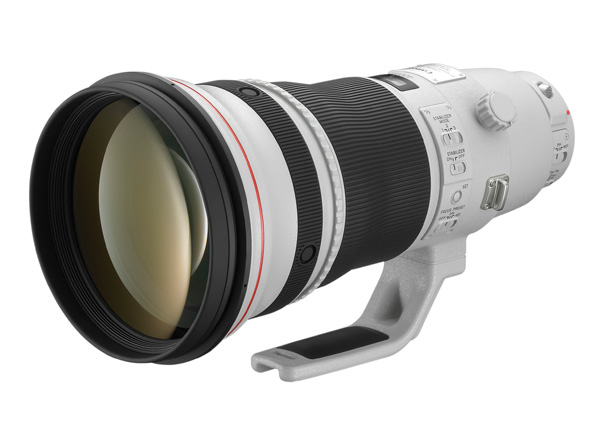
Canon 400mm lens

Canon EF 400mm f2.8L IS II USM lens

Andrew S. Gibson is the author of Understanding Lenses Part II: A Guide to Canon Normal & Telephoto Lenses, on 40% now at Snapndeals for a limited time only.

With so many lenses to choose from, it’s little wonder that photographers become confused about which option is the best. In this article I’m going to take a look at some of Canon’s best or most interesting normal and telephoto lenses, to give you a head start when it comes to understanding just what Canon offers in this part of their lens range.

But first, let’s take a quick look at the state of Canon’s lens line-up. I have no inside knowledge about which lenses Canon may introduce this year, but I do see a couple of emerging trends.

Trends in Lenses

The first is that Canon is not afraid to take an old lens and update it with a newer version. Good recent examples are the new EF 24mm and 28mm f/2.8 IS USM lenses. Both replaced older versions and included an Image Stabilizer (IS) which the previous models didn’t have.

The second trend is that newer lenses tend to be more expensive than the ones they replace. This is reasonable, as the newer lenses are better quality. If a new lens comes out and it seems expensive, you can be patient and wait a year or so for the price to drop if you don’t need it urgently. The two wide-angle lenses mentioned above have dropped in price by over 30% since their release.

That does mean it is possible that Canon will replace some of their aging normal and telephoto lenses in the near future. If you’re thinking about buying one and are worried about this, it’s up to you to decide how badly you need the current version. While the rumour websites like to speculate about forthcoming lenses, and are sometimes accurate, you never really know what will happen as Canon keep the details of new releases under wraps until the official day of release.

A good example of this is the EF 50mm f/1.4 lens. Some rumours sites are saying this is due for an update. But if this is true, and how far in the future it will happen, no-one really knows. Plus the replacement is likely to be more expensive than the current 50mm f/1.4 lens (but it may have IS). In the end, it’s up to you, but my advice is don’t spend too long waiting for new lenses – you could be waiting a long time.

Canon EF 200-400mm f/4L IS USM – the beast!
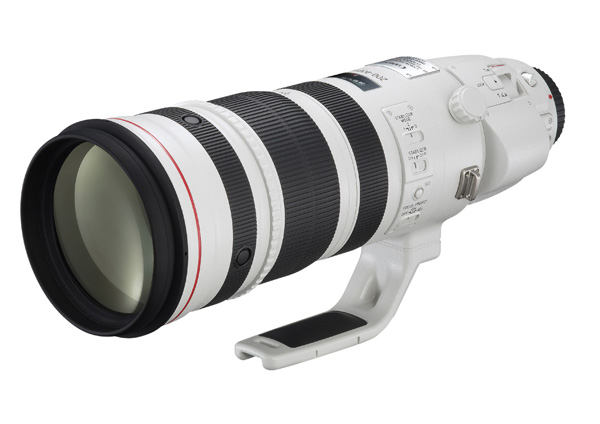
Canon 200-400mm zoom

Canon EF 200-400mm f/4L IS USM Extender 1.4x– only about $ 12,000 USD!

Let’s start off with this beast. It’s fun to speculate who would buy such an expensive lens. A professional sports photographer? Agencies like Getty or Reuters? This L series, super telephoto zoom, comes with a built in 1.4x extender (the only Canon lens to do so), a four stop Image Stabilizer, and a fixed f/4 aperture throughout the zoom range. It weighs over three and half kilos (7.9 pounds), but is not Canon’s heaviest lens. That honour belongs to the Canon EF 800mm f/5.6L IS USM lens (below), which weighs four and half kilos (9.9 pounds) and is another option for those of you with $ 13,000 to spend on new glass.
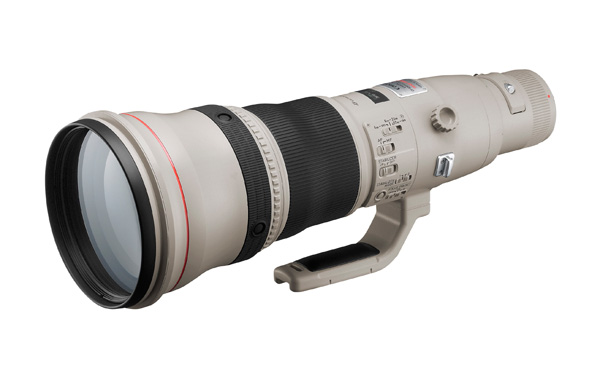
Canon 800mm lens

Canon EF 800mm f/5.6L IS USM Super Telephoto Lens for Canon Digital SLR Cameras

Canon 40mm f/2.8 STM
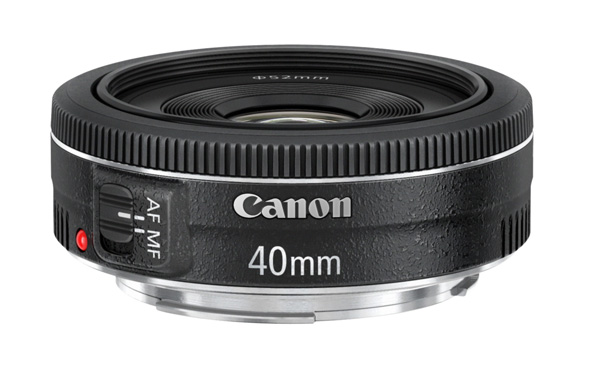
Canon 40mm pancake lens

Canon EF 40mm f/2.8 STM Lens

At the other end of the scale is one of Canon’s lightest, smallest and least expensive lenses. This 40mm pancake lens delivers excellent image quality, and excellent value for money. However it doesn’t have IS or a distance scale on the lens, features which may be important to some people.

How does this lens give such excellent quality for such a low price? It contains just six optical elements that measure little more than a centimetre across (0.4″). They are cheaper to manufacture than the larger elements found in Canon’s other lenses, and the result is a lower price.

This focal length is a short telephoto on an APS-C camera or a normal lens on a full-frame camera.

Canon 50mm f1.4 USM
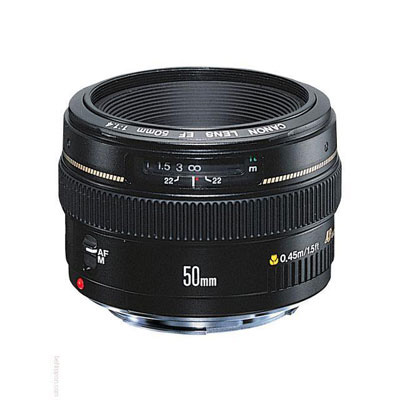
Canon 50mm f1.4 lens

EF 50mm f/1.4 USM

Canon users aren’t lacking for choice when it comes to 50mm lenses. Canon makes four models, including the 50mm f/1.8, the 50mm f/1.2L and 50mm f/2.5 macro. But my favourite is the EF 50mm f/1.4 USM. It’s a third of the price of the more expensive L series 50mm lens, but has better autofocus and smoother bokeh than the f/1.8.

50mm lenses make great portrait lenses on APS-C cameras and deliver value for money in terms of image quality and versatility. You can use a 50mm lens with extension tubes or close-up lenses for close-up photography, or with a reversing ring on a longer lens for macro photography.

Read more about 50mm lens in my article Nifty Fifties – Why I Love 50mm Prime Lenses.

Canon 85mm f/1.8 USM
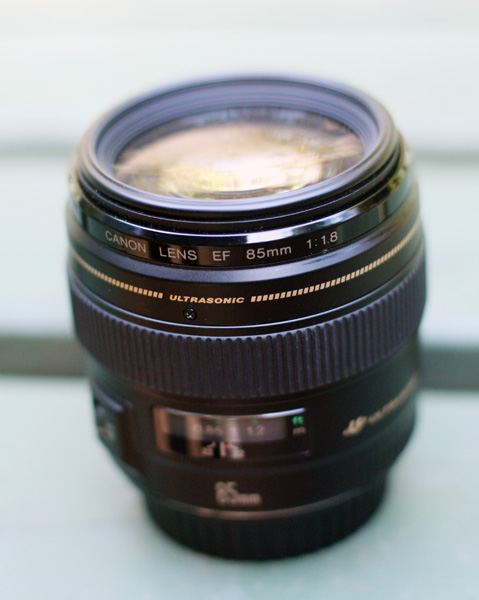
Canon 85mm lens

Another of my favourite lenses is the 85mm f/1.8. It’s an ideal portrait lens for owners of full-frame cameras. It’s also great for close-up photography with the addition of a 500D close-up lens. It’s a shame it doesn’t have IS, but that would push the price up. If you have deep pockets you can also consider the EF 85mm f/1.2L II USM lens, but bear in mind the wide f/1.2 aperture means it has a large front element (to let in the more light) and that makes the lens heavier and slower to autofocus.

Read more about this lens in my article How a Humble 85mm Lens Became My Favourite.

Canon 70-200mm zooms
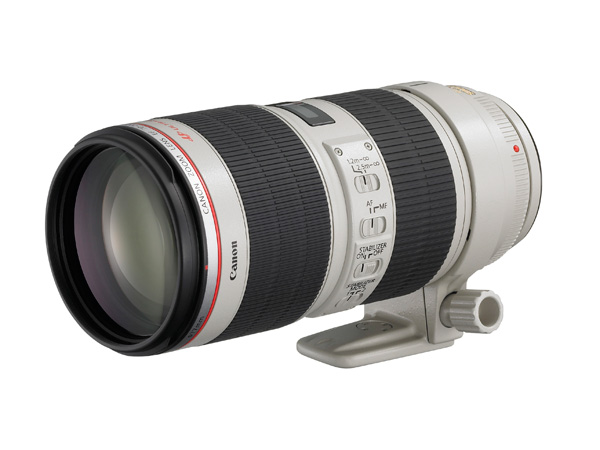
Canon 70-200mm zoom lens

EF 70-200mm f2.8L IS II USM

Canon has four 70-200mm zoom L series lenses. Two of these have maximum f/4 apertures and cost less. The other two have maximum f/2.8 apertures. For each aperture setting there is both a non-IS and an IS model. This gives you plenty of choice, for what is a very versatile focal length. The EF 70-200mm f/4L USM lens is Canon’s cheapest L series lens and a great option for anyone wanting to experience L series quality on a low budget. The EF 70-200mm f2.8L IS II USM (above) is the most expensive and comes with a collar so you can mount it on a tripod.

Canon 70-300mm f/4-5.6L IS USM
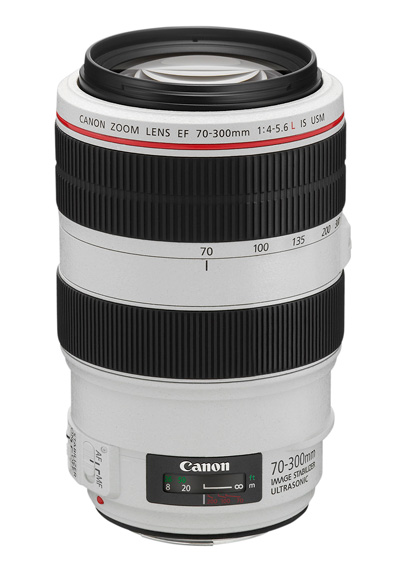
Canon 70-300mm zoom lens

Canon EF 70-300mm f/4-5.6L IS USM UD Telephoto Zoom Lens for Canon EOS SLR Cameras

If 200mm isn’t long enough for you then Canon’s trio of 70-300mm zooms may appeal. The only drawback of these lenses is the variable aperture, but it’s hard to avoid this along such a long focal length range. The EF 70-300mm f/4-5.6L IS USM is the most recent model, but also the most expensive. The EF 70-300mm f4/-5.6 IS USM lens is the least expensive and ideal for those on a tight budget.

The EF 70-300mm f/4-5.6 DO IS USM lens is an interesting alternative. DO stands for Diffractive Optics. The construction of the lens elements in DO lenses means they are smaller and lighter than their non-DO equivalents, making this a good option for photographers concerned with size and weight. In every other respect DO lenses are equivalent to L series lenses. Will Canon make more DO lenses in the future? I hope so, because they are a great idea. The only other DO lens in Canon’s range is the EF 400mm f/4 DO IS USM.

Hopefully that has given you a good overview of some of Canon’s more notable normal and telephoto lenses. It’s impossible to include every model, let alone those made by other manufacturers, but that’s where you come in. What normal or telephoto lenses have you purchased? How have they performed and what would you recommend? Let us know in the comments.


Understanding Lenses Part II: A Guide to Canon Normal & Telephoto Lenses

Understanding Lenses ebookMy ebook Understanding Lenses Part II will teach you how to get the most out of Canon’s normal and telephoto lenses. It contains a buying guide, takes a deep look at aperture and bokeh, and shows you how to focus accurately with telephoto lenses. It’s offered for a special price now on 40% off at Snapndeals for a limited time only.

The post A Buyer’s Guide to Canon Normal and Telephoto Lenses by Andrew S. Gibson appeared first on Digital Photography School.


Digital Photography School

 
Comments Off on A Buyer’s Guide to Canon Normal and Telephoto Lenses

Posted in Photography


How to Simplify and Improve Composition with Normal or Long Lenses

28 Feb

Telephoto lenses and composition

Andrew S. Gibson is the author of Understanding Lenses Part II: A Guide to Canon Normal & Telephoto Lenses, special deal on now 40% off at Snapndeals for a limited time only.

Wide-Angle Lenses

A potential issue with wide-angle lenses is that you try to include too much information in the frame. It takes real skill to create a strong composition with lenses that have a wide field-of-view. It is easier with normal and telephoto lenses, because you can utilise their narrow field-of-view to compose strong yet simple images with little in the background to distract the viewer.

Let’s take a look at how that works:

Field-of-view diagram

Angle of view from a wide-angle lens (left) and long lens (right)

This diagram shows the difference in field-of-view between a wide-angle lens (left) and a telephoto lens (right). You can think of a wide-angle lens as a lens of inclusion: it enables you to fit a lot of the scene in a photo. You can get close to the subject and still fit in a lot of the background.

The telephoto lens is a lens of exclusion. You don’t get so close to your subject and there is less in the background.

Here are a couple of examples:

Portrait taken with wide angle lens

I took this portrait using a wide-angle lens (24mm on a full-frame camera). I was able to get fairly close to the model and still include a lot of the background.

Portrait taken with telephoto lens

This portrait was taken using a short telephoto lens (85mm on a full-frame camera). I was able to get in close and exclude most of the background. The effect is emphasized by placing the model against a dark background.

This effect seems to kick in at around 50mm on a full-frame camera (the equivalents are 35mm on an APS-C camera, and 25mm with the micro-four thirds format). Here’s a photo taken with a 50mm lens on a full-frame camera to illustrate:

Photo taken with a normal lens

This means that you can use this technique to simplify composition even if the only lens you have is a kit lens. Just set it to the longest focal length and move in closer to your subject.

There are other ways to simplify composition – you can’t rely just on focal length:

  1. Pay attention to the background. Does it contain bright highlights or anything else that pulls attention away from the subject?
  2. Are the colours in your photo harmonious? If the colours don’t work well together this can also weaken the composition.
  3. Experiment with depth-of-field. Using a wide aperture helps simplify composition by throwing the background out of focus. This works best with prime lenses as they have wider apertures than most zooms.
  4. Move in as close as you can to the subject. One of my favourite techniques is to use a close-up lens (it’s called a lens but looks like a filter and screws to the front of your lenses the same way) to reduce the minimum focusing distance of my 85mm lens and get in really close. Another benefit is that depth-of-field becomes narrower in close up photography, helping create images with beautiful bokeh.

Here’s an example taken with an 85mm lens fitted with a Canon 500D close-up lens:

Photo taken with 85mm lens plus close-up lens

What are your thoughts? Do you use normal or telephoto lenses to simplify composition the same way? What are your favourite focal lengths? Let us know in the comments.


Understanding Lenses Part II: A Guide to Canon Normal & Telephoto Lenses

Understanding Lenses ebookMy ebook Understanding Lenses Part II will teach you how to get the most out of Canon’s normal and telephoto lenses. It contains a buying guide, takes a deep look at aperture and bokeh, and shows you how to focus accurately with telephoto lenses. It’s now 40% off at Snapndeals for a limited time only.

The post How to Simplify and Improve Composition with Normal or Long Lenses by Andrew S. Gibson appeared first on Digital Photography School.


Digital Photography School

 
Comments Off on How to Simplify and Improve Composition with Normal or Long Lenses

Posted in Photography


Kowa to make three manual focus lenses for Micro Four Thirds

17 Feb

kowa2.png

Japanese optical company Kowa – best known for its spotting scopes and binoculars – has revealed that it plans to make three lenses for Micro Four Thirds cameras. The Kowa Prominar 8.5mm F2.8 MFT, 12mm F1.8 MFT and 25mm F1.8 MFT will all feature manual focus and aperture control, and use low-dispersion XD glass and aspheric elements to minimise distortion and aberrations. They’re due to be released in summer 2014.

News: Digital Photography Review (dpreview.com)

 
Comments Off on Kowa to make three manual focus lenses for Micro Four Thirds

Posted in Uncategorized


Buyers Guide – Prime Lenses vs Zoom Lenses

16 Feb
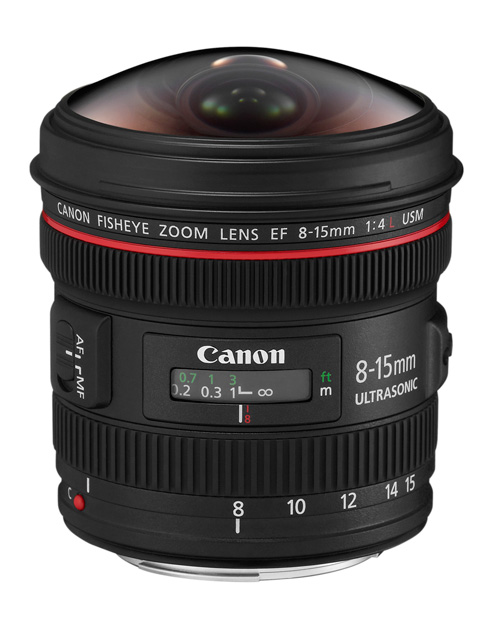
Canon 8-15mm fisheye lens

Canon’s 8-15mm f4L fisheye is an unusual lens, the only fisheye zoom that I know of. Most fisheye lenses are primes.

Following on from my article A Concise Guide to Choosing a New Lens I thought it would be interesting to go a little deeper into the question of whether to buy a prime lens or a zoom.

First, the definitions:

Prime lenses have a fixed focal length. There is no zoom ring and no way to magnify the subject other than moving closer. There are two settings to adjust: aperture (often handled by the camera) and focusing distance.

Zoom lenses have a variable focal length. There are three settings to adjust: aperture, focusing distance and focal length.

Both primes and zooms have benefits. I’m not going to try and persuade you one way or the other. Rather, the goal is to explore the benefits of both to help you decide which is the best for you.

Benefits of prime lenses

Image quality

Generally speaking, prime lenses have better image quality. It is easier to make a lens with good optical performance at a single focal length than it is to make one that performs well through the entire range of a zoom lens. This is especially true with wide-angle lenses where zooms tend to suffer from barrel distortion at the shortest focal lengths. With longer focal lengths (ie. 50mm plus), there is less difference in the performance between zooms and primes.

Barrel distortion

This photo shows the barrel distortion of an 18-135mm zoom lens set to 18mm. The curved lines in the frame should be straight.

Size and weight

Prime lenses tend to be smaller and lighter than zooms covering the same focal length range. This isn’t true all the time, high end primes are bigger because they have wider maximum apertures, which need larger lens elements to let the light in. Anyone who has used Canon’s 85mm f/1.2L prime lens knows what I mean – it’s a monster.

Don’t forget that the size and weight advantage is quickly lost if you end up buying two or more primes to cover the same focal range as a zoom. But if your aim is to use your camera with a single, lightweight lens then primes are the way to go.

An advantage of smaller lenses is that they are less obtrusive for portrait and street photography. It’s interesting how lens size affects the dynamics of a portrait shoot. In my experience models, even experienced ones, are much more relaxed in front of the camera when I use a smaller lens.

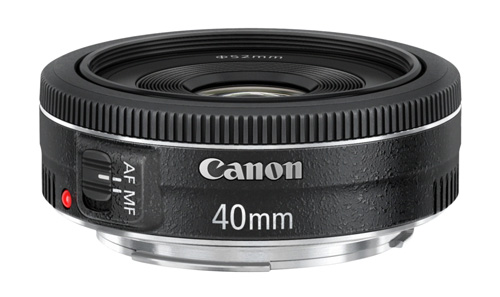
The Canon 40mm f2.8 pancake is about as small and light as you can get. Pancake lenses are the ultimate in unobtrusive lenses.

The Canon 40mm f/2.8 pancake lens is about as small and light as you can get. Pancake lenses are the ultimate in unobtrusive lenses.

Wide maximum apertures

The wider maximum apertures of prime lenses are useful for taking photos in low light or for creating beautiful bokeh. They also let more light into the lens, giving you a brighter image on cameras with optical viewfinders. However, if you have a camera with good high ISO performance you may not be so bothered about the advantages of using primes in low light.

Portrait

You can only take portraits like this one that have very little depth of field with prime lenses. Shot at f/1.8 with an 85mm lens.

Value for money

Prime lenses often give really good value for money, especially at the lower end of the price range. Most manufacturers have inexpensive prime lenses in their range that give superb image quality, much better than you would get from a zoom lens costing the same.

Benefits of zoom lenses

There was a time when the quality of zoom lenses was so poor that most photographers didn’t use them. Thankfully, things have changed and they have become more popular as the quality has improved. These are the main benefits of zoom lenses:

Convenience

The main benefit of zooms is the convenience arising from covering a range of focal lengths in one lens. This can save you time (swapping lenses) and money (being cheaper to buy one zoom than two or more primes). Zooms are useful as walkabout lenses, or if you are working in dusty or damp conditions where you don’t really want to take the lens off the camera.

With so many benefits, are there any disadvantages? Unfortunately the answer is yes. Here are some things to bear in mind:

The trade-offs for convenience are image quality and size. Zooms tend to be bigger than primes, and if you want one that has good image quality throughout the entire focal length range then you will need to spend some money. One tip is to go for lenses that cover a shorter focal length range, such as a 24-70mm rather than 18-200mm.

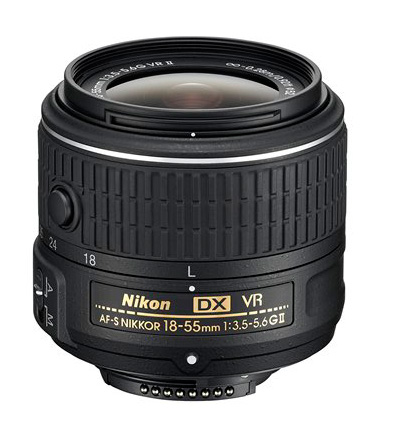
Nikon kit lens

A kit lens with variable maximum aperture. Avoid these types of zooms if you can.

Another thing to watch out for on cheaper zoom lenses is variable aperture. An example: an 18-55mm f/3.5-5.6 kit lens has a maximum aperture of f/3.5 at the 18mm end but only f/5.6 at 55mm. This makes it harder to work in manual mode (what if you have the aperture set to f/4 at 18mm and then zoom in to 55mm?) and is a general hassle all-round. Pay a bit more and get a fixed aperture zoom.

Saves you having to move

While some people will tell you that a benefit of prime lenses is that they make you zoom with your feet (ie. move closer to or further from the subject to change the composition) there are times when this isn’t possible. You may be at a sporting event, and unable to get any closer to the athletes involved. Or you may be standing near the edge of a cliff taking a landscape photo, unable to move further forward because you would fall off. Zoom lenses are invaluable in situations such as these.

Landscape photo

I took this photo standing near the edge of a cliff. I couldn’t move any further forwards, but was able to frame the image precisely using a 17-40mm zoom lens.

Your view

Now it’s your turn. What lenses do you prefer to use – zooms or primes? Have you bought any lenses recently and why did you decide to buy them? I’m looking forward to reading what you have to say.


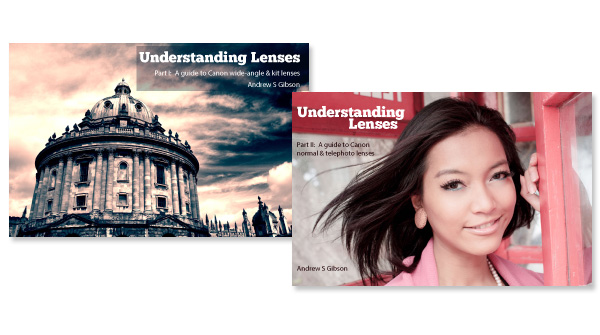
Understanding Lenses ebook bundle

Understanding Lenses ebooks

My ebooks Understanding Lenses Part I and Understanding Lenses Part II will help Canon EOS owners decide what lenses to buy for their cameras. They are both filled with lots of tips to getting the most out of your Canon lenses. Click the links to learn more.

The post Buyers Guide – Prime Lenses vs Zoom Lenses by Andrew S. Gibson appeared first on Digital Photography School.


Digital Photography School

 
Comments Off on Buyers Guide – Prime Lenses vs Zoom Lenses

Posted in Photography