RSS
 

Posts Tagged ‘Lenses’

SLR Magic’s Anamorphot-Cine 1.33x lenses now shipping with revised specification

25 Feb

Lens manufacturer SLR Magic has announced ‘significant’ changes to the optical and mechanical specification of its Anamorphot-Cine 1.33x anamorphic lenses, which it says are now available. The lens set was first shown at IBC (the International Broadcasting Convention) at the end of last year, but the company says the latest versions have crucial differences – although they don’t say exactly what those differences are. SLR Magic says that the lenses can now be calibrated by lens technicians outside of Hong Kong. 

The PL-mount anamorphics can be adapted to fit Canon EF, Sony E, Nikon F and Micro Four Thirds cameras, and will come in 35mm T2.4, 50mm T2.8 and 70mm T4 focal lengths. The 35mm lens covers Super 35mm, while the 50mm and 70mm are good for full frame cameras. The lenses are designed to stretch the 16:9 frame by 1.33x to create a 2.35:1 widescreen aspect ratio so that filmmakers don’t need to crop off the top and bottom of their 4:3 footage. 

Currently prices are only available in Hong Kong dollars, so the US prices shown are straight conversions using today’s exchange rate. 

  • SLR Magic ANAMORPHOT-CINE 35mm T2.4  HK$ 46,680/US$ 6008
  • SLR Magic ANAMORPHOT-CINE 50mm T2.8  HK$ 50,550/US$ 6506
  • SLR Magic ANAMORPHOT-CINE 70mm T4     HK$ 50,550/US$ 6506

A demonstration of the lenses’ capabilities with the Panasonic GH4 and Sony a7S can be seen in the short film ‘Feel’ above. For more information about the company visit the SLR Magic website. 


Press release:

Hong Kong, China (Feb 22th, 2016) – SLR Magic is proud to announce the SLR Magic ANAMORPHOT-CINE 1.33x PL lens set for filmmakers which could be adapted to EF/F/mFT/E-mount via adapter. The production version has changed significantly in both optical and mechanical specification compared to the lenses shown at IBC 2015. For absolute precision, the lenses could now be calibrated by a lens technician from abroad rather than having both the camera and lenses to be calibrated in Hong Kong.

Please enjoy our short film, “FEEL”, taken by our volunteers with the new 1.33x SLR Magic Anamorphot-CINE lenses power driven by the Movcam Wireless Focus System on the Panasonic GH4 and Sony A7s recorded with the Atomos Ninja Assasin 4K recorder/monitor.

The lenses are immediately available for order in Hong Kong

Lens Type: Anamorphic lens
Squeeze factor: 1.33x
Objective front filter thread: ?82
Mount: Titanium PL compatible with optional SLR Magic EF/F/mFT/E-mount
Titanium adapter.
Lens Coating: Multi Coated
Close Focus: 3’6
Weight (oz./g): 38.1/1,080
Length (cm): 13.5
Diameter (cm): 10
Image Circle: S35 for 35mm T2.4 (5.5K on DRAGON), FF for 50mm T2.8 (8K on WEAPON), and 70mm T4 (8K on WEAPON)

These lenses are available for order now. Above prices are for local pick up only.  For shipment overseas, please contact us by email to get local reseller prices.

Selected lenses would be on demo at the BVE Expo in London, UK from October

23-25 in the Atomos booth K30. For a demo, participants may email support@slrmagic.com in advance.

Articles: Digital Photography Review (dpreview.com)

 
Comments Off on SLR Magic’s Anamorphot-Cine 1.33x lenses now shipping with revised specification

Posted in Uncategorized


Sigma Mount Converter MC-11 adapts Sigma lenses to E-mount cameras, supports autofocus

23 Feb

$ (document).ready(function() { SampleGalleryV2({“containerId”:”embeddedSampleGallery_5668726877″,”galleryId”:”5668726877″,”isEmbeddedWidget”:true,”standalone”:false,”selectedImageIndex”:0,”startInCommentsView”:false,”isMobile”:false}) });

Sigma has announced an adapter for Sony E-mount cameras, making it possible to use Sigma’s most recent lenses in Canon and Sigma mount on full-frame or APS-C E-mount bodies. The MC-11 adapter is able to use phase detection AF with adapted lenses, and makes use of both camera and lens stabilization when present. An LED display on the side of the mount provides compatibility information of attached lenses. The adapter also communicates EXIF data to the camera body, and retains profiles of compatible lenses – those included in Sigma’s Global Vision line – to optimize AF performance. 

Sigma has not announced pricing or availability at this time.

Press release:

New Sigma Global Vision Lens Mount Converter Expands High-Performance Lens Options for Sony Cameras

Brings Sigma’s Global Vision Lenses to the Sony E-Mount Camera Family

KANAGAWA, JAPAN — February 23, 2016 – Sigma Corporation of America, a leading DSLR lens, camera, flash and accessories manufacturer, today announced the release of its new high-performance Sigma Global Vision lens converter – the Mount Converter MC 11 – for Sony E-mount, full frame and APS-C sensor cameras. With the new MC-11, Sony camera users will be able to utilize 19 Global Vision lenses in Sigma Canon Mount (EOS) and Sigma Mount (SA).

“There are many challenges to designing high-quality mount converter and topping the list is aptly handling phase detection AF in newer cameras and this is where the Sigma MC-11 is groundbreaking in its support for the Sony E-mount systems,” states Mark Amir-Hamzeh, president of Sigma Corporation of America. “The new Sigma MC-11 mitigates complications with a purpose-built lens control data system engineered for maintaining superior AF functionality. So the growing number of Sony E-mount camera users who have been asking for more lens options, now have access to a large pool of lenses that fully embody Sigma’s signature quality and performance.” 

The Sigma MC-11’s sleek LED display lets Sony users know if the attached Sigma lens is compatible and whether or not the MC-11 needs to be updated for that specific lens. Its internal control data system keeps detailed information on each compatible Sigma lens, automatically optimizing performance of AF drive, aperture control and other critical lens functions. The MC-11’s internal control data system also maintains continuity with key camera functions that control brightness and correct transverse chromatic aberration, distortion, and more. The complete compatibility with both Sigma lens OS and Sony in-camera OS ensures correction of camera shake and other stability issues and when used with in-camera stabilization, MC-11 allows angle shake correction in the lens. The integrated flocking helps prevent internal reflections and reduction in lens performance. In addition, the MC-11 retains important EXIF data ensuring users can analyze every detail of their lens setting. 

The Sigma MC-11 converter can be updated with the latest compatible lens information from a workstation or laptop using the Sigma Optimization Pro software and Sigma USB Dock (sold separately).

For more information on the Sigma MC-11 converter please visit www.sigmaphoto.com/mount-converter-mc-11

Articles: Digital Photography Review (dpreview.com)

 
Comments Off on Sigma Mount Converter MC-11 adapts Sigma lenses to E-mount cameras, supports autofocus

Posted in Uncategorized


5 Must-Have Lenses for Wedding Photographers and Why

16 Feb

Have you ever wondered which lenses are in a wedding photographer’s bag? There is a plethora of choice when it comes to lenses, and lens companies come up with new products all the time. Many photographers are attracted to these bright and shiny things and end up with a mammoth collection of lenses, many of which hardly see the light of day. If you have to pare back to the absolute necessities, and are allowed five lenses in your wedding photography bag, these are the ones that I would recommend. I have been a professional wedding photographer for seven years now, and deciding on these five took some time, and serious consideration over the course of my career.

They are:

  1. The 70-200mm f/2.8
  2. The 24-70mm f/2.8
  3. The 85mm prime
  4. The 35mm prime
  5. A macro lens (105mm or 60mm for Nikon, 100mm or 60mm for Canon)

Let’s look at each individually to see why.

5-must-have-lenses-wedding-photographer_0001

#1 – 70-200mm f/2.8

It’s big, bulky and heavy but I wouldn’t do a wedding without this lens. The 70-200 f/2.8 is my workhorse when it comes to weddings. It is a versatile lens that gives you amazing sharpness at all focal lengths. The bokeh is beautiful, especially at 200mm, even with a stopped down aperture due to the compression caused by the long focal length.

This lens makes a wedding photographer invisible. You don’t have to be so close to people’s faces; you can capture candid expressions and serendipitous moments from a fair distance away. This lens is especially useful during the ceremony, where you would rather be far away and out of sight, or hidden behind a wall or door. It allows you to capture the exchange of rings, vows, and kiss discreetly.

5-must-have-lenses-wedding-photographer

If you require a longer zoom while being at the same fair distance, you can choose to photograph in DX mode (if you shoot full frame and your camera offers this option) on your camera, and the lens will give you 1.5x distance more, making 200mm into a neat 300mm zoom. If you do this, make sure that you have enough pixels for the crop, in case you feel the need to straighten or change your composition in post-processing.

For example, of you are shooting with a 12MP camera such as the old Nikon D700 on FX mode, when you convert to DX mode the camera becomes a 5MP camera, which is below the minimum amount of pixels you can have – 6MP – to be able to enlarge prints to a decent size. If you have to crop in post-processing, this will not give you enough pixels to be able to safely do so without compromising print output sizes.

5-must-have-lenses-wedding-photographer

However, if you are photographing with a Nikon D810 in DX mode, your image goes from 36MP to 15.3MP but still leaves you enough wiggle room for minimal, and sensible cropping if necessary. If you use this functionality, don’t forget that when photographing in DX mode on a full frame camera, or when using a DX lens, the camera only uses the center of the sensor. So if you forget to compose accordingly in camera, you will get a nasty surprise after you have taken the image: cut off heads and limbs, and badly cropped compositions are some examples. When using DX lenses, the rest of the unused sensor area is blacked out but when using FX lenses in DX mode, this is not the default and you would still see the entire full-frame sensor if you don’t change your settings.
5-must-have-lenses-wedding-photographer

The 70-200mm is an excellent focal length for flattering portraits. When photographing at 200mm, I typically stop down to around f/4 or f/5.6 at a shutter speed of 1/200-1/400th, and the sharpness of the image is stunning against a creamy bokeh background. This lens also has a built-in lens collar you can use to steady it when hand holding, or attaching it to a tripod stand. Without a tripod, you can steady yourself as much as possible by leaning against something immovable like a wall, or on a stable surface such as a table, or keeping your arms pinned against something sturdy to reduce camera shake, especially when using this lens for portrait work at the longer end of the focal length.

5-must-have-lenses-wedding-photographer

5-must-have-lenses-wedding-photographer_0033

You can now get a f/4 version of this zoom lens (for Nikon, Canon has always had one) at a vastly cheaper price compared to the f/2.8. I personally do not have the f/4 version but if you’re on a budget, and you don’t mind not having the option to photograph at a wider aperture, then I see no reason why you should not get the f/4. It is lighter and smaller, understandably so because it has less glass elements compared to its more expensive counterpart, and may not only suit the budget better, but also lessens the bulk you have to carry at a wedding.


5-must-have-lenses-wedding-photographer

5-must-have-lenses-wedding-photographer

#2 – 24-70mm f/2.8

The 24-70mm f/2.8 offers the focal length versatility needed when you are photographing on the go, which is what wedding photographers need for most of the day. You can use this lens to capture wider location scenes, candid photos of people, guests arriving, people milling and chatting while waiting for the ceremony to start or during the wedding breakfast, some decorations and details, the first dance, and the leaving photos, to cite just a few.


5-must-have-lenses-wedding-photographer

5-must-have-lenses-wedding-photographer

I use this lens for photos that do not require close portrait work, although it can definitely be used as one. The 50-70mm range will yield pleasing results, like the image directly below. However, my preference is to use prime lenses for portraits. The 24-70mm lens sees a whole lot of action during the wedding day, and is definitely my other workhorse for capturing people, wider shots, and behind-the-scenes.


5-must-have-lenses-wedding-photographer

5-must-have-lenses-wedding-photographer

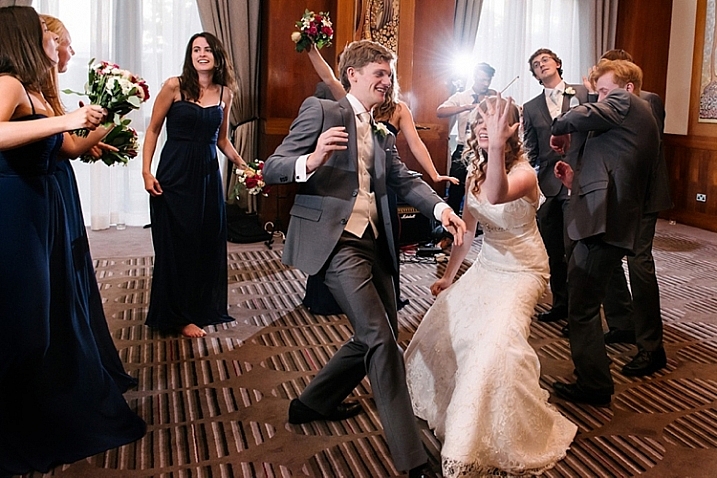
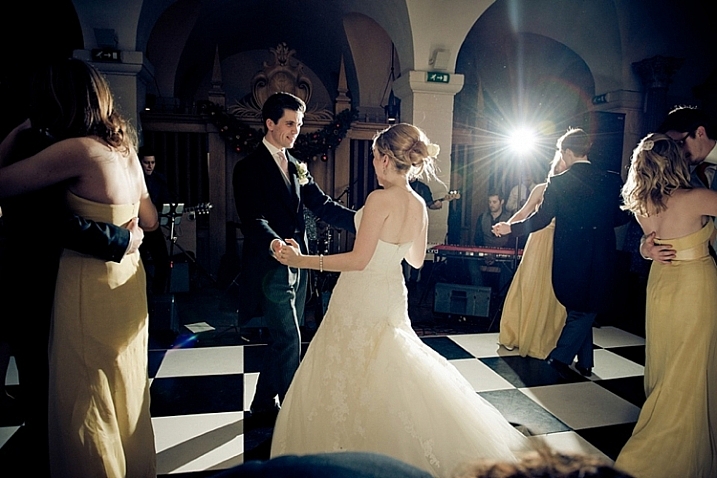
Many photographers include a much wider lens for location photographs such as the 14-24mm f/2.8. While I would love to add this lens to my arsenal, this is not an absolute necessity, in my opinion. With the 24-70mm, you can photograph location scenes wide enough – but should you need to capture a wider scene, you could photograph a few images and stitch them together in Photoshop as a panorama. This is easy enough to do by making sure the exposure setting for the series of shots are the same, and you stand on a fixed point, inching your way across the panorama. You can do the same for a photograph of all the guests too. These would be the only times I would need an ultra wide angle lens for a wedding, hence I cannot just yet justify adding it to the list of must-haves.
5-must-have-lenses-wedding-photographer

5-must-have-lenses-wedding-photographer

#3 – 85mm prime

This is my all-time favorite lens, and the one I use for portraits of the bride and groom, bridesmaids and groomsmen, individual guests or small groups, and the list goes on. As a fixed lens, this requires more work on your part – you have to zoom in and out with your feet. But, the extra effort is worth it – the portraits are cleaner, the backgrounds are creamier, and it is a fabulous lens in very low light conditions.

5-must-have-lenses-wedding-photographer

The best thing I love about this lens is that it is tack sharp from the sweet spot on. Accurate, light sensitive, great results on skin, this is my go-to lens, and it never leaves my bag. Being a prime lens, the 85mm is fast, small, and extremely reliable.

5-must-have-lenses-wedding-photographer

I have photographed an entire wedding of a relative (as a guest) using only this lens. I was asked on the day if I could cover the wedding and I agreed, with only the D700 and 85mm combination in hand, which I carry with me most times for personal snapshots, and photos of my family. The photos from that wedding are published in one of the UK’s top wedding blogs: proof that you can photograph a wedding with what you have, given that you know your gear well enough.

5-must-have-lenses-wedding-photographer

The 85mm for Nikon comes in either an f/1.8 ($ 479 USD) or f/1.4 version ($ 1595 USD), with a huge price difference between the two, due to the glass elements and optics (Canon also has an f/1.2 available, it’s $ 1999 USD). However, many photographers are divided between which lens is better. I have the f/1.8, and it has always performed marvellously for me. The f/1.4 has been on my lens list forever, and while I could buy it as the 85mm is on my necessity list, I have held off given that I have never felt the need to upgrade.

5-must-have-lenses-wedding-photographer

#4 – 35mm

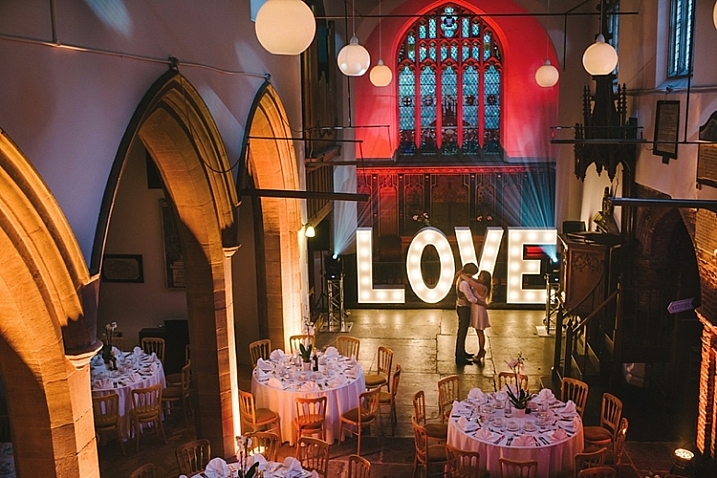
One of my early serious lens investments was this amazing 35mm f/1.4. If there is a lens I can always rely on, it’s this one. This is an ultra versatile lens that you can use to photograph the bride getting ready – the time when wedding photographers are usually under pressure to capture everything from location, the myriad of accessories, details, candid shots, the dress, the natural interactions between the bride and her loved ones, and group portraits – in a very short amount of time and more often than not, in small spaces like cramped hotel rooms. It is also perfect for photographing wider scenes, and you get images without the exaggerated distortions that you get with the 24mm.


5-must-have-lenses-wedding-photographer

5-must-have-lenses-wedding-photographer

This lens is super fast and sharp, and has yet to fail me. With this lens you can get close, with 0.3m (11.7″) minimum focusing distance – very handy when you are in in a crowded space. As if that weren’t enough, this lens opens up to f/1.4 which can let you photograph in extremely low light, especially if you are so pressed for time and space to use off-camera flashes. Even though the 35mm focal length is already covered by the 24-70mm, the difference between f/1.4 and f/2.8, in its ability to allow more light in (two more stops of 4x the light), cannot be underestimated.

5-must-have-lenses-wedding-photographer

5-must-have-lenses-wedding-photographer

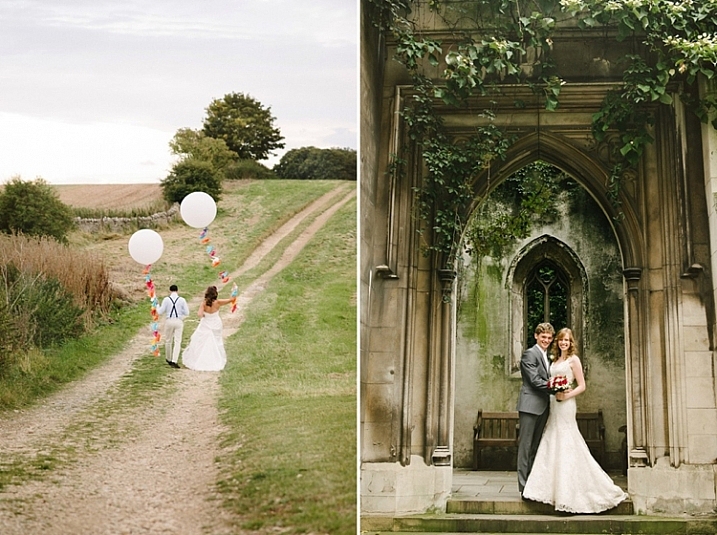
The 35mm also comes in f/1.8, a DX lens you can purchase inexpensively (under $ 200). You may wonder why the astronomical difference in price compared to the professional f/1.4 counterpart. First of all, you cannot use the DX lens on a full frame camera without losing pixels, and without the 35mm focal lens becoming a 52.5mm, which can be very limiting in tight spaces. Secondly, the 35mm view is close enough to what the eye naturally sees which people say is around 40mm in loose terms, and I like that view. As a wedding photographer, it allows you to capture images that gives the viewer the impression that they could have been there, seeing the same view themselves. This is an important element in any wedding photography, specifically that with a documentary style, in my opinion.
5-must-have-lenses-wedding-photographer

If you ever get to physically hold each lens in your hands at the same time, the enormous price difference won’t even be in question. The f/1.4 is considerably heavier, and much bigger than the pocket-sized f/1.8. But, don’t be fooled by appearances. The f/1.8 is also an outstanding lens with exceptional performance in its own right, and for crop sensor cameras may be more than sufficient, and is most definitely easy on the budget.

5-must-have-lenses-wedding-photographer

5-must-have-lenses-wedding-photographer

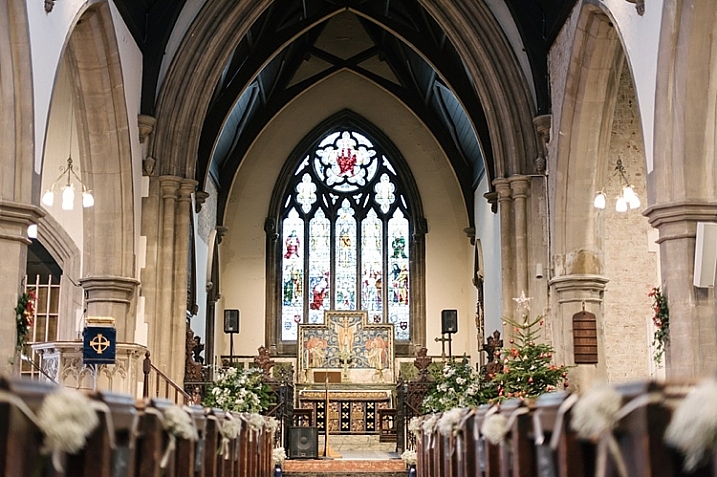
If you already have the 50mm and your budget is constrained, then the 50mm could replace 35mm on this list. It is also an incredible lens. Although the 50mm doesn’t give you as much room to maneuver in smaller spaces as the 35mm, the bokeh on the 50mm is stunning and it’s impressively sharp too, which is one of the top benefits of prime lenses. Like the 35mm, the 50mm is also available in f/1.8, f/1.4, and for Canon f/1.2.  The price difference is meagre between the f/1.8 and the f/1.4, then it jumps up to a whopping figure with the f/1.2.

5-must-have-lenses-wedding-photographer

5-must-have-lenses-wedding-photographer

#5 – 105mm (100mm) or 60mm macro lens

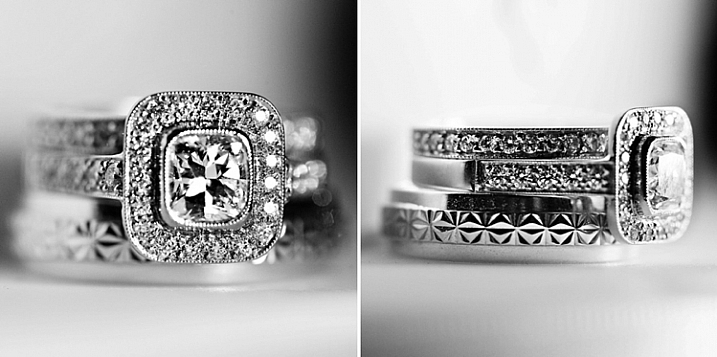
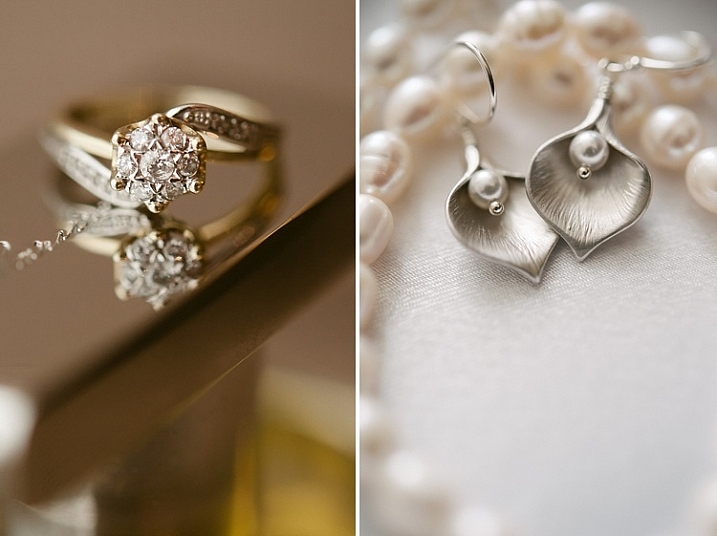
A macro lens is a must for you as wedding photographer, if you want to capture amazing images of rings in close detail. You can also use this lens for photographing jewellery and other accessories when the bride is getting ready. If the bride’s dress is adorned with jewels, the macro lens would also be ideal to photograph the details. In addition, macro lenses are also great to use for portraits if you do not require an aperture wider than f/2.8. This makes it a versatile lens to carry around, especially the 60mm which looks and feels minuscule compared to the 105mm (100mm for Canon). Both lenses can also stop down to f/32, which is handy, especially when photographing location landscapes in extremely bright sunlight.

5-must-have-lenses-wedding-photographer

5-must-have-lenses-wedding-photographer

Some photographers use the 105mm as a close substitute for the 70-200mm, if the latter is just too out of reach.  You can use the 105mm in DX mode which gives you 157.5mm, long enough to enable you to still be very inconspicuous at a wedding. It is also smaller and lighter, and opens up to f/2.8, as well as doubles up as a macro lens.

5-must-have-lenses-wedding-photographer

5-must-have-lenses-wedding-photographer

Do you have other must-have lenses in your wedding camera bag? Please share them here below.

googletag.cmd.push(function() {
tablet_slots.push( googletag.defineSlot( “/1005424/_dPSv4_tab-all-article-bottom_(300×250)”, [300, 250], “pb-ad-78623” ).addService( googletag.pubads() ) ); } );

googletag.cmd.push(function() {
mobile_slots.push( googletag.defineSlot( “/1005424/_dPSv4_mob-all-article-bottom_(300×250)”, [300, 250], “pb-ad-78158” ).addService( googletag.pubads() ) ); } );

The post 5 Must-Have Lenses for Wedding Photographers and Why by Lily Sawyer appeared first on Digital Photography School.


Digital Photography School

 
Comments Off on 5 Must-Have Lenses for Wedding Photographers and Why

Posted in Photography


Techart brings AF to Leica M lenses on Sony’s a7 II and a7R II

12 Feb

$ (document).ready(function() { SampleGalleryV2({“containerId”:”embeddedSampleGallery_6307530870″,”galleryId”:”6307530870″,”isEmbeddedWidget”:true,”standalone”:false,”selectedImageIndex”:0,”startInCommentsView”:false,”isMobile”:false}) });

Chinese company Techart has produced an adapter that works with the phase detection AF system of Sony’s a7 II and a7R II cameras to create an autofocus effect for Leica M mount lenses. The adapter ring sits between the body and the lens and uses a motor to drive the entire lens back and forth until sharp focus is found. The company claims focus is usually acquired within a second, and that the depth of the adapter can actually increase the close-focusing range of some focal lengths, allowing users to get closer their subjects.

Focal lengths of 50mm and wider need to be set to their infinity position while mounted on the adapter, and focus is found as the adapter pushes and pulls the lens closer and further away from the sensor. The sensor lets the adapter know when the subject is sharp, and the hunting stops. Lenses with longer focal lengths may need the user to do some of the work with the focusing ring on the lens, and then the adapter will finish the job.

The process only works with Sony’s a7 cameras that support phase detection systems, and the company says the adapter does not work for video. Single shot and continuous AF modes are available however, and the system can deal with lenses that weight up to 700g / 1.5lb. A smartphone app that connects with the adapter allows users to store information about up to 10 different lenses, which the adapter can then communicate back to the camera, so its 5-axis image stabilization system can be utilized.

$ (document).ready(function() { SampleGalleryV2({“containerId”:”embeddedSampleGallery_1213732129″,”galleryId”:”1213732129″,”isEmbeddedWidget”:true,”standalone”:false,”selectedImageIndex”:0,”startInCommentsView”:false,”isMobile”:false}) });

Techart says that, with add-on adapters, the device can work with other lens mounts that have long flange depth, such as the Leica R, and Contax/Yashica systems. The Techart PRO Autofocus Leica M Adapter for Sony E camera will cost $ 349. For more information and more sample images visit the Techart Pro website.


Press release:

Techart unveils the World’s First Autofocus Adapter for Manual Focus Lens, the Techart PRO AF Leica M lens adapter for Sony E mount cameras

Techart, the Chinese adapter manufacturer who has previously launched the first Contax G autofocus adapter for Sony E cameras, has unveiled the world’s first Autofocus adapter for Manual Lenses named ‘Techart PRO’. The Techart PRO adapter is able to drive the manual Leica M lenses to reach focus by using the focusing system in Sony A7II and Sony A7RII, giving an unprecedented new user experience for all Leica M lenses owners.

Techart PRO has adopted the z-shift technology where the Leica M bayonet is able to extend and retract. The distance between the lens and the camera sensor is hereby changed in order to reach the focus. The mechanism is quite similar to Contax AX system where the flange distance is changed for autofocusing. Techart PRO has electronic contacts to communicate with the Sony A7II and Sony A7RII and uses its PDAF
system to measure focus. The built-in motor will then drive the bayonet forward by a maximum of 4.5mm and reach the focus point for shooting.

Techart PRO is super light and powerful. The adaptor weighs only 133g and is able to drive a lens system as heavy as 700g. Apart from pairing up with the Leica M lenses, users can also further adapt lenses with longer flange distance (e.g. Leica R, CY, PK, MD, etc) with add-on adapters and enjoy the autofocusing experience with other manual lenses. Techart PRO supports both AF-S and AF-C modes and it can also serve as a close focusing adapter which can reduce the minimal focusing distance of the lenses.

A complimentary mobile app will be available for users to save 10 sets of lens data to the adapter and perform firmware upgrade via bluetooth.

Techart PRO is an evolutional product which can give users a completely new experience with their manual lenses. The fast and precise focusing allows users to take quick and sharp photos with their favourite manual lenses. More product information and testing videos can now be found via our official website.
(http://www.techartpro.com/)

Pricing and Availability
The Techart PRO Autofocus Leica M Adapter for Sony E cameras is currently available for pre-order at our official website (http://www.techartpro.com). The recommended retail price is USD 349/pc. Free shipping will be provided during the promotion period. Delivery will commence from March onwards and will be shipped from our US/UK/Hong Kong warehouse. 1-year warranty is included.

Articles: Digital Photography Review (dpreview.com)

 
Comments Off on Techart brings AF to Leica M lenses on Sony’s a7 II and a7R II

Posted in Uncategorized


How tough can it be? LensRentals looks at why it’s so hard to make lenses

11 Feb
Just check it and fix it, it can’t be that hard. Can it?

Why can’t you just make them better? It sounds like a reasonable question until you start unpacking exactly what it entails. This is exactly what Roger Cicala and company do in the latest LensRentals blog post. As usual with Cicala’s posts, the closer he looks, the more complicated the question becomes. So why can’t everyone just (repeatably and affordably) make lenses, you know… better?

With his usual critical (and somewhat wry) eye, Cicala looks at the importance and challenges of quality assurance (the processes to ensure you build things to standard) as well as quality control (checking that you’ve done so). This includes a look at the impacts of design tolerances, manufacturing tolerances, repeatability and the need to make products affordably-enough that people will be willing to buy them. And just what can you do with the ones that aren’t quite right?

It’s a long article but if you’ve ever wondered why they don’t just check and fix every lens as the last step of the production line, or you’ve found yourself using the phrase ‘you get what you pay for’ and you’d like to understand why it’s often true, it’s well worth a read.

And, if you get a chance to read it all, we’d love to know whether you end up more impressed by Leica’s ability to make expensive, mechanically simple, manual focus single-focal-length lenses really well or by the ability of the big brands to build collapsable, image stabilized kit zooms for next-to-nothing and have them work at all. Let us know in the comments.

Articles: Digital Photography Review (dpreview.com)

 
Comments Off on How tough can it be? LensRentals looks at why it’s so hard to make lenses

Posted in Uncategorized


‘We want to make lenses that can be used forever’: Sony engineer discusses G Master lenses

10 Feb

‘We want to make lenses that can be used forever,’ says a senior engineer behind Sony’s new G master lenses. At the launch of the ‘G Master’ range of high end lenses, we spoke to Motoyuki Ohtake, Distinguished Engineer in Sony’s Lens Design Department about the process and the philosophy behind the latest lenses.

The development process series involved re-thinking several parts of the design and manufacturing process, he says.

Motoyuji Ohtake, Distinguished Engineer, Opto Design Department, Core Technology Division, Digital Imaging Business Group at Sony.

To understand how the lenses came about, he explained the usual process of lens development. ‘Sometimes we propose a new lens but often it comes from the product planning department [the marketing department that assesses potential requirements and demands]. We then make a series of rough designs, some are big, with high optical performance, others are more compact but maybe not so optically strong. We discuss which design to proceed with, based on what we think is the optimal balance or cost, performance and size to make the perfect product.’

After deciding which of the initial designs to pursue, there’s a great deal of collaboration between teams, he explains: ‘we work with the mechanical team, the lens motor team, the lens control team, the lens element team and maybe the equipment team who will have to prepare the manufacturing process.’ Each of these team feeds its expertise into the design. ‘Maybe the optical team proposes a new lens design and the motor team tells us which motor is best. Or warn us if the focus will be too slow. They feed back about the mechanical aspects,’ he says.

The G Master series required many of these teams to re-think their parts of the process, from design to manufacture.

Re-thinking basic assumptions

‘For the G Master lenses we decided we would assess the spatial frequency at 50 lines per mm,’ says Ohtake: ‘Usually lens makers, including ourselves, evaluate lenses at 10 and 30 lpmm (or 10, 20 and 40 for Carl Zeiss-branded optics).’

‘At the start of the process we all agreed we should change the spacial frequency [to a more challenging target],’ he says: ’but which is best to get good performance? We could design for 100 lpmm but the lens would become very bulky and long – which might not be a very practical lens. A balance of the size and the optical performance was very important.’

The target of 50 lpmm wasn’t dictated by the company’s 40MP camera or 4K video, he says. ’All our FE lenses were designed for at least 40MP. Because we have an image sensor team within Sony, we get to see the sensor roadmap, so we’ve been designing for this all along with FE. With the G Master we’d like to make lenses that can be used forever.’

A focus on bokeh

But it’s not just the more stringent frequency assessment that was developed for the G Master lenses, Ohtake explains: ‘We had to discuss what good bokeh means. We have some designers from Minolta who understand that the spirit of the ‘G’ lenses was good bokeh in the background but we had no way to evaluate that.

‘We looked at what is considered good bokeh and how it affects not just the background rendering but also the transition from perfectly sharp to out-of-focus regions. We developed a way to evaluate bokeh and were able to make a simulation. This meant we didn’t have to build a lens to see how it performed, we could now computer model it before taking a design too far.’

This is a significant change, Sony says, as it means bokeh can be one of the primary design considerations, rather than being something that can only be adjusted later in the process, once the main aspects of the design have been settled upon.

Another piece of the puzzle – shape and smoothness

This analysis of the factors that affect bokeh showed that both the precision of the lens molding and the smoothness of the lens surface could have an effect.

‘Traditionally it was very hard to achieve both: current technology gives a roughness on the scale of 20-30nm on the aspheric surface. Improving this usually involved polishing, which can then lead to the lens element being slightly unevenly shaped.’

‘We developed a new way of making the lens element and a new molding process, including a new machine. Now we can get roughness down to around 10nm and get a more accurate shape to the aspherical surface.’

AF technologies

Ohtake wouldn’t budge when we asked which his favorite lens was, but immediately reached for the 85mm F1.4 when we took this group shot.

The first three G Master lenses use three different AF motor technologies between them – emphasizing Ohtake’s point that different technologies work better in different contexts.

The 24-70mm F2.8 uses a Direct Drive SSM system (piezoelectric element). This is very fast, very quiet and very precise. We used a linear motor for the 24-70mm F4 but this lens has a heavier focus element, so direct drive was a better choice.

The focus element in the 85mm F1.4 was even heavier, however. ‘For the 85mm we use a ring type focus motor. This is very good for heavy lens elements and our lens software team developed a good algorithm so that it works well with contrast-detection autofocus’ (a traditional weakness for ring-type designs).

Finally, the 70-200mm uses a combination of a linear actuator and a ring-type focus motor. ‘The focus group had become too heavy so we separated the two focusing lenses. One is very heavy, so we used a ring type motor for that one, then used a linear motor for the other. The ring type is used to quickly achieve approximate focus and the linear motor is used for the high precision aspect.’

Still correct to optically correct

Discussing the idea that bokeh and sharpness have previously been in conflict, we asked Ohtake about other trade-offs. We’ve been told that the ability to correct lateral chromatic aberration in software makes lens design easier, since you don’t have to correct it optically, which can quickly complicate the lens design and detract from other parameters.

Not for G Master lenses, he explains. ‘Light doesn’t separate nicely into red, green and blue’ (the color channels that most cameras capture, and which can be adjusted, relative to one another, to correct lateral CA). It’s a continuum with each wavelength being displaced slightly differently. ‘To get the really high contrast we wanted in G Master, we had to suppress it in the lens.’

The future of APS-C

We also asked Ohtake about Sony’s APS-C lenses for E-mount. His team likes designing APS-C lenses, he says: ‘The focus elements are light, so it’s easier to design. We have all these focus motor technologies in-house and we’d like to try them in APS-C lenses if that’s what the Product Planning team says is required.’

Articles: Digital Photography Review (dpreview.com)

 
Comments Off on ‘We want to make lenses that can be used forever’: Sony engineer discusses G Master lenses

Posted in Uncategorized


SLR Magic announces anamorphic lenses for filmmakers

10 Feb

SLR Magic, a company known for making affordable optics and accessories for filmmakers, has announced a new set of anamorphic cinema lenses that can be adapted to a variety of lens mounts. The PL mount ANAMORPHOT-CINE line of lenses includes the 35mm T2.4, the 50mm T2.8 and the 70mm T4, all of which can be adapted for Canon EF, Nikon F, Micro Four Thirds and Sony E-mount.

Anamorphic lenses are frequently used by filmmakers to capture wide-screen aspect ratios commonly associated with a more cinematic look. This is accomplished by squeezing the image horizontally onto the sensor or film to capture a wider horizontal angle of view. The image is later ‘de-squeezed’ either in post processing or by a special lens attached to a projector. 

Digital filmmakers sometimes mimic the anamorphic effect by cropping off the top and the bottom of the frame in post processing to create a wider aspect ratio, however this effectively results in throwing away much of the data captured by the sensor. Additionally, anamorphic lenses are directly responsible for some of the looks often associated with cinematic productions, such as horizontal lens flare and elongated bokeh. The ANAMORPHOT-CINE lenses have a 1.33x squeeze factor, making it possible to create a 2.35:1 image from a 16:9 sensor.

The ANAMORPHOT-CINE lenses also provide an alternative to anamorphic adapters that are often used to create an anamorphic image using a standard lens.

The new lenses will be available for demo at the BVE Expo in London from February 23-25. Pricing is yet to be announced.

Press release:

NEW: The SLR Magic Anamorphot-CINE 1.33x PL lens set

Hong Kong, China (Feb 9th, 2016) – SLR Magic is proud to announce the SLR Magic ANAMORPHOT-CINE 1.33x PL lens set for filmmakers which could be adapted to EF/F/mFT/E-mount via adapter.

As a commitment to the film industry, SLR Magic developed the SLR Magic ANAMORPHOT-CINE lenses to deliver the classic contrast, distortion, chromatic, color aberration, and flare characteristics of vintage anamorphic lenses, but with the convenience of a matched lens set without the hassle of aligning and matching lenses to the already popular SLR Magic Rangefinder with Anamorphot adapter combination.

To achieve the much loved scope aspect ratio, which gives a very pleasant, epic effect, filmmakers must crop off the top and bottom of standard 16:9 footage when using spherical lenses with modern digital cameras. As a result, 25% or more sensor/negative information is discarded.

This 1.33x anamorphic lens help filmmakers to maximize their image quality by preventing this loss of vertical resolution. The unique 1.33x squeeze factor uses the entire 16:9 sensor/negative area to achieve the desired 2.35:1 aspect ratio. The SLR Magic ANAMORPHOT-CINE 1.33x does this by compressing a 33% wider field of view to fit the width of the 16:9 sensor/negative without compressing image height. 

The SLR Magic ANAMORPHOT-CINE 1.33x create a unique “artifact” such as horizontal lens flare, commonly referred to as anamorphic streaks, and may create slightly elongated bokeh. Over the history of cinema, these same stylish effects have contributed to the cinematic “look” of epic motion picture photography. Characteristics that shape this anamorphic “look” come from “front-mounted” anamorphic designs such as the SLR Magic Anamorphot while “rear-mounted” anamorphic designs have more suppressed anamorphic characteristics.

Lenses would be on demo at the BVE Expo in London, UK from February 23-25 in the Atomos booth K30

Technical Data:

  • SLR Magic ANAMORPHOT-CINE 35mm T2.4
  • SLR Magic ANAMORPHOT-CINE 50mm T2.8
  • SLR Magic ANAMORPHOT-CINE 70mm T4
  • Lens Type: Anamorphic lens
  • Squeeze factor: 1.33x
  • Objective front filter thread: ?82
  • Mount: Titanium PL compatible with optional SLR Magic EF/F/mFT/E-mount
  • Titanium adapter.
  • Lens Coating: Multi Coated
  • Close Focus: 3’6
  • Weight (oz./g): 38.8/1,100
  • Length (cm): 13.5
  • Diameter (cm): 10
  • Image Circle: S35 for 35mm T2.4, FF for 50mm T2.8 and 70mm T4

Articles: Digital Photography Review (dpreview.com)

 
Comments Off on SLR Magic announces anamorphic lenses for filmmakers

Posted in Uncategorized


Samyang adds 14mm and 35mm lenses to Xeen cinema system

06 Feb
The 14mm T3.1 Samyang Xeen lens

Korean lens manufacturer Samyang has added two new wide angle lenses to its Xeen series of full-frame video lenses. The new focal lengths are 14mm and 35mm, and while the 35mm conforms to the family-standard maximum aperture of T1.5 the 14mm opens only to T3.1. The Xeen system now contains a total of five lenses as these two join the existing 24mm, 50mm and 85mm.

All the lenses are manual focus only, and feature focus and aperture gear rings in identical positions so that they can be switched quickly in and out of the same rig. Filter rings also match, and users have a choice of metric or imperial focus scales. The lenses come with interchangeable mounts, and adapters are available for Canon EF, Nikon F, Sony E, PL and Micro Four Thirds bodies.

The 35mm T1.5 Samyang Xeen lens

Samyang is proud of the way its lenses render out-of-focus highlights, and the new 35mm complements the existing lenses with its 11-blade diaphragm. The wider lens uses a 9-bladed iris.

The lenses should be on sale by March at a cost of £1599.

For more information visit the Samyang Xeen website. 


Press Release:

Two more XEEN Lenses announced by Samyang to complete a Perfect Five-Lens-Set

SEOUL, February 5th, 2016 –Global optics brand, Samyang Optics, has announced the release of 2 new lenses: XEEN 14mm T3.1 and 35mm T1.5. These two lenses, along with the existing 24mm T1.5, 50mm T1.5 and 85mm T1.5 lenses, create a perfect balanced five-lens-set for filming video and cinema with the outstanding image quality from resolving power for 4K+ production.

XEEN is a specialized brand in professional video-cine lens launched by Samyang Optics in 2015. The XEEN lenses are designed with Samyang Optics’ know-how and have outstanding optical performance for 4K+ with the X-Coating Technology, ensuring maximum image quality to create a cinematic look.

The 24mm x 36mm negative size allows XEEN to not only work with full frame cameras, but also with Super 35, APS-C and APS-H cameras. The lenses are available in five different mounts – PL, EF, F, E, and MFT and two different focus scales – metric and imperial units. Also, the aluminum metal housing is known for its reliability in various shooting conditions.

Most of the XEEN lenses come in a bright T1.5 aperture. The lenses deliver high quality footage with clear contrast and impressive colours, even under less-than-optimal lighting conditions. The large aperture also creates a pleasing bokeh effect for a cinematic look.

“Thanks to the rise of multi-channel networks, the demands for video creation is internationally surging and the expectation of video quality is also increasing,” stated a XEEN official. He continued, “to satisfy the international needs, we have completed the first five lenses which deliver a high-quality cinematic image.” As an answer to the future product plan, he carefully disclosed that two more XEEN lenses will be announced in the second half of the year.

Created to deliver infinite possibilities, XEEN14mm and 35mm lenses will be globally available in early March. The recommended retail price of each lens is £1599.00 inc VAT.

More detailed product information is available on the official website (http://www.xeenglobal.com) and Facebook (http://www.facebook.com/xeenglobal) or Samyang Lens Global Facebook (http://www.facebook.com/samyanglensglobal).

Articles: Digital Photography Review (dpreview.com)

 
Comments Off on Samyang adds 14mm and 35mm lenses to Xeen cinema system

Posted in Uncategorized


‘We want to make lenses that can be used forever’: Sony engineer discusses G Master lenses

05 Feb

‘We want to make lenses that can be used forever,’ says a senior engineer behind Sony’s new G master lenses. At the launch of the ‘G Master’ range of high end lenses, we spoke to Motoyuki Ohtake, Distinguished Engineer in Sony’s Lens Design Department about the process and the philosophy behind the latest lenses.

The development process series involved re-thinking several parts of the design and manufacturing process, he says.

Motoyuji Ohtake, Distinguished Engineer, Opto Design Department, Core Technology Division, Digital Imaging Business Group at Sony.

To understand how the lenses came about, he explained the usual process of lens development. ‘Sometimes we propose a new lens but often it comes from the product planning department [the marketing department that assesses potential requirements and demands]. We then make a series of rough designs, some are big, with high optical performance, others are more compact but maybe not so optically strong. We discuss which design to proceed with, based on what we think is the optimal balance or cost, performance and size to make the perfect product.’

After deciding which of the initial designs to pursue, there’s a great deal of collaboration between teams, he explains: ‘we work with the mechanical team, the lens motor team, the lens control team, the lens element team and maybe the equipment team who will have to prepare the manufacturing process.’ Each of these team feeds its expertise into the design. ‘Maybe the optical team proposes a new lens design and the motor team tells us which motor is best. Or warn us if the focus will be too slow. They feed back about the mechanical aspects,’ he says.

The G Master series required many of these teams to re-think their parts of the process, from design to manufacture.

Re-thinking basic assumptions

‘For the G Master lenses we decided we would assess the spatial frequency at 50 lines per mm,’ says Ohtake: ‘Usually lens makers, including ourselves, evaluate lenses at 10 and 30 lpmm (or 10, 20 and 40 for Carl Zeiss-branded optics).’

‘At the start of the process we all agreed we should change the spacial frequency [to a more challenging target],’ he says: ’but which is best to get good performance? We could design for 100 lpmm but the lens would become very bulky and long – which might not be a very practical lens. A balance of the size and the optical performance was very important.’

The target of 50 lpmm wasn’t dictated by the company’s 40MP camera or 4K video, he says. ’All our FE lenses were designed for at least 40MP. Because we have an image sensor team within Sony, we get to see the sensor roadmap, so we’ve been designing for this all along with FE. With the G Master we’d like to make lenses that can be used forever.’

A focus on bokeh

But it’s not just the more stringent frequency assessment that was developed for the G Master lenses, Ohtake explains: ‘We had to discuss what good bokeh means. We have some designers from Minolta who understand that the spirit of the ‘G’ lenses was good bokeh in the background but we had no way to evaluate that.

‘We looked at what is considered good bokeh and how it affects not just the background rendering but also the transition from perfectly sharp to out-of-focus regions. We developed a way to evaluate bokeh and were able to make a simulation. This meant we didn’t have to build a lens to see how it performed, we could now computer model it before taking a design too far.’

This is a significant change, Sony says, as it means bokeh can be one of the primary design considerations, rather than being something that can only be adjusted later in the process, once the main aspects of the design have been settled upon.

Another piece of the puzzle – shape and smoothness

This analysis of the factors that affect bokeh showed that both the precision of the lens molding and the smoothness of the lens surface could have an effect.

‘Traditionally it was very hard to achieve both: current technology gives a roughness on the scale of 20-30nm on the aspheric surface. Improving this usually involved polishing, which can then lead to the lens element being slightly unevenly shaped.’

‘We developed a new way of making the lens element and a new molding process, including a new machine. Now we can get roughness down to around 10nm and get a more accurate shape to the aspherical surface.’

AF technologies

Ohtake wouldn’t budge when we asked which his favorite lens was, but immediately reached for the 85mm F1.4 when we took this group shot.

The first three G Master lenses use three different AF motor technologies between them – emphasizing Ohtake’s point that different technologies work better in different contexts.

The 24-70mm F2.8 uses a Direct Drive SSM system (piezoelectric element). This is very fast, very quiet and very precise. We used a linear motor for the 24-70mm F4 but this lens has a heavier focus element, so direct drive was a better choice.

The focus element in the 85mm F1.4 was even heavier, however. ‘For the 85mm we use a ring type focus motor. This is very good for heavy lens elements and our lens software team developed a good algorithm so that it works well with contrast-detection autofocus’ (a traditional weakness for ring-type designs).

Finally, the 70-200mm uses a combination of a linear actuator and a ring-type focus motor. ‘The focus group had become too heavy so we separated the two focusing lenses. One is very heavy, so we used a ring type motor for that one, then used a linear motor for the other. The ring type is used to quickly achieve approximate focus and the linear motor is used for the high precision aspect.’

Still correct to optically correct

Discussing the idea that bokeh and sharpness have previously been in conflict, we asked Ohtake about other trade-offs. We’ve been told that the ability to correct lateral chromatic aberration in software makes lens design easier, since you don’t have to correct it optically, which can quickly complicate the lens design and detract from other parameters.

Not for G Master lenses, he explains. ‘Light doesn’t separate nicely into red, green and blue’ (the color channels that most cameras capture, and which can be adjusted, relative to one another, to correct lateral CA). It’s a continuum with each wavelength being displaced slightly differently. ‘To get the really high contrast we wanted in G Master, we had to suppress it in the lens.’

The future of APS-C

We also asked Ohtake about Sony’s APS-C lenses for E-mount. His team likes designing APS-C lenses, he says: ‘The focus elements are light, so it’s easier to design. We have all these focus motor technologies in-house and we’d like to try them in APS-C lenses if that’s what the Product Planning team says is required.’

Articles: Digital Photography Review (dpreview.com)

 
Comments Off on ‘We want to make lenses that can be used forever’: Sony engineer discusses G Master lenses

Posted in Uncategorized


Hands on with Sony’s a6300 and G Master lenses

04 Feb

Hands on with Sony’s a6300 and GM lenses

At a press event in New York City, Sony unveiled a new mirrorless camera and three new lenses – but not just any mirrorless camera, and not just any lenses. The Sony a6300 is the much-anticipated followup to the very successful a6000. And for its full-frame range, Sony introduced a new lens class: G Master. The company has placed the FE 70-200mm F2.8 GM OSS, FE 85mm F1.4 GM and FE 24-70mm F2.8 GM in a category unto themselves, with an emphasis on resolving power and bokeh. We spent some brief moments with all of the new hardware – take a look.

Sony a6300

Front and center of this morning’s announcements is the a6300. Boasting a newly designed 24MP APS-C CMOS sensor, the camera’s most impressive feature is arguably its 425 phase-detect AF points with ‘Advanced 4D Focus.’

The a6300’s 4K video tech is impressive too. The camera reads the equivalent of 6K’s worth of data from its sensor and downsizes it to 4K/UHD – without pixel binning – which promises a big boost in video quality.

Sony a6300

Sony stuck with a familiar design when shaping the a6300, including these top plate mode and command dials, which will look very familiar to a6000 users. 

Sony a6300

It may look like its predecessor on the outside, but the a6300 uses a sturdier magnesium-alloy construction, with weather-sealing.

Sony a6300

The rear panel looks much the same as the a6000 as well, except for the addition of a switch toggling between AEL and AF/MF. The tilting 3″ 921k-dot LCD is still present, and still not a touchscreen, but the viewfinder has been significantly upgraded to a 2.36 million-dot OLED panel.

Sony a6300

A pop-up flash is another welcome carryover from the a6000. With a little pressure, the flash can be tilted backward at a slight angle for a bounce effect.

Sony a6300

The Sony a6300 is expected to ship in March, and will sell for $ 1000 body-only or $ 1150 paired with a 16-50mm F3.5-5.6 power zoom kit lens (not the more expensive 16-70mm F4 seen here).

Sony a6300

Autofocus speed was a strength of the a6000, and the a6300 brings the next evolution of that system with some lofty claims including focus acquisition in as little as 0.05 sec. The a6300 also boasts a minimal blackout period between shots, and can manage to supply a live view feed at up to 8fps – a major breakthrough for mirrorless cameras. 

Sony FE 24-70mm F2.8 GM

The first of Sony’s three ultra premium ‘G Master’ lenses is the FE 24-70mm F2.8 GM. The focus (no pun intended) of the GM lenses is resolution and bokeh, courtesy of high quality glass and a new XA (extreme aspherical) lens element. All three lenses are weather-sealed.

The 24-70 has 18 elements in 13 groups which include the aforementioned XA element, as well as ED and Super ED elements. A Nano AR coating reduces flare and ghosting. The lens also features nine circular aperture blades.

Sony FE 24-70mm F2.8 GM

The minimum focus distance on the 24-70 is 0.38m/15in. with a max magnification of 0.24x. The lens uses 82mm filters. Control-wise the lens has switches for focus mode and zoom lock as well as a stop focus button.

The 24-70mm F2.8 GM will be available in March for $ 2200.

Sony FE 85mm F1.4 GM

Next is the long-awaited fast 85mm prime. This constant F1.4 lens has a whopping 11 circular aperture blades – the most of any Sony lens yet – as well as XD and three ED elements.

The lens’ Super Sonic wave Motor uses a pair of position sensors to ensure accurate focus.

Sony FE 85mm F1.4 GM

As you can see, the 85mm F1.4 GM has a manual aperture dial (with switchable click-stops), AF/MF switch, and focus hold button. 

You’ll be able to pick up this monster of a lens in March for $ 1800.

Sony FE 70-200mm F2.8 GM OSS

The 70-200mm F2.8 steps into Sony’s FE line as the first fast constant aperture tele-zoom, looking the part of a sports shooter’s lens. Sadly, working samples were not available for press to use at the launch event, and its price is still TBD.

Sony FE 70-200mm F2.8 GM OSS

What we do know is that it will have 23 elements in 18 groups, which includes one XD, four ED and two Super ED elements. Like the 85mm lens, the 70-200 has 11 circular aperture blades. It uses two focus motors to optimize speed and accuracy. The front elements have a ring-type SSM while the rear parts use a double linear motor. The minimum focus distance is just 0.96m/38in.

Controls are as you’d expect from a high-end tele-zoom. There are switches for AF/MF, focus distance limit, image stabilization, and IS mode. There are two IS modes: standard (mode 1) and panning (mode 2). The lens also has a zoom lock and buttons for holding focus.

Articles: Digital Photography Review (dpreview.com)

 
Comments Off on Hands on with Sony’s a6300 and G Master lenses

Posted in Uncategorized