RSS
 

Posts Tagged ‘Lenses’

Sony releases three premium ‘G Master’ lenses for FE-mount

03 Feb

$ (document).ready(function() { SampleGalleryV2({“containerId”:”embeddedSampleGallery_6678742178″,”galleryId”:”6678742178″,”isEmbeddedWidget”:true,”selectedImageIndex”:0,”startInCommentsView”:false,”isMobile”:false}) });

Sony has created a new lineup of lenses for its full-frame cameras known as G Master (GM). These are the company’s high-end lenses that sit above its ‘G-series’ lenses and, as you might imagine, command a premium price. The first three GM lenses include FE 24-70mm F2.8, FE 85mm F1.4 and FE 70-200mm F2.8 OSS.

In addition to the lenses, Sony also released a pair of teleconverters (1.4x and 2.0x) for use with the new 70-200mm F2.8 lens.

At the press conference announcing the new lenses the company placed enormous emphasis on the importance of high resolution and high quality bokeh. Says Senior Technology Manager Mark Weir: “Being a leader in image sensor technologies, we have a unique insight into where sensor and camera technology is going, and we put this insight into our lens design.”

Sony mentioned they’re now designing G Master lenses to a 50 lines per mm standard, a step up from the 10 and 30 lines/mm MTF traces we’re used to seeing. Regarding bokeh, Sony explained that the lifelike nature of an image in either still or video is determined by the nature of the transition from in-focus to out-of-focus areas, and that an abrupt shift between the sharp region and the background can look artificial. Their research shows that this often comes down to a lack of precision in the preparation of the lens elements, and less than optimal positioning the optical cavity. Sony indicated that G Master lenses can be shaped to within 1/100th of a micron of their design spec to address this problem. 11 aperture blades on the new 85mm and 70-200mm lenses also indicate a serious commitment to smooth out-of-focus areas.

Additionally, each G Master lens employs a different drive mechanism for optimal AF performance. The 24-70mm uses a Direct Drive Supersonic motor (SSM), which we’ve previously noted to confer incredibly fast, accurate, and silent AF to the FE 35mm F1.4 lens. Sony boasts this focus motor to offer 0.01mm precision of focus group placement. The 85mm F1.4 uses a ring drive. The 70-200 sports a dual implementation: two focus groups at either end of the lens are drive by different actuators. A ring drive SSM drives the front AF group while dual linear motors drive a floating rear group. The result is fast continuous autofocus and silent AF for video, as well as in impressive minimum focus distance of <1m.

Sony also emphasized their development of advanced simulation techniques that make it possible to control things like bokeh right from the design stage. Previously, it was difficult to judge the effects of optical design without first building the lens – simulation technologies now help Sony see the effects of iterations on the optical design.

The first G Master lenses will be available in March, with the 24-70mm listing for $ 2200 and the 85mm listing for $ 1800 in the U.S. The 70-200mm will follow in May, with pricing yet to be determined.

Press release:

Sony Launches New G Master Brand of Interchangeable Lenses

Three new models including 24-70mm F2.8 Zoom, 85mm F1.4 Prime and 70-200mm F2.8 Zoom deliver unrivaled imaging experiences 

NEW YORK, Feb. 3, 2016 – Sony Electronics, a worldwide leader in digital imaging and the world’s largest image sensor manufacturer, has today introduced their flagship G Master™ brand of interchangeable lenses.           

Sony’s new brand includes three new E-mount full frame lenses including a 24-70mm constant F2.8 standard zoom, an 85mm F1.4 prime and a 70-200mm constant F2.8 telephoto zoom.   Representing the ultimate blend of high resolution and beautiful bokeh, the new lenses feature Sony’s innovative optical element technology, design and calibration.  This allows them to produce still image and video content with a level of detail and expression that has never before been possible. 

“The new G Master brand represents the finest and most impressive group of lenses that Sony has ever brought to market,” said Neal Manowitz, Vice President of Digital Imaging at Sony Electronics.  “With our knowledge of what the future will bring for digital imaging, we have designed these lenses and can ensure that the G Master brand will inspire and ‘wow’ photographers and videographers for years to come.”

New FE24-70mm F2.8 GM Standard Zoom Lens

Featuring some of the most advanced lens technologies in market today, the new FE 24-70mm F2.8 GM (model SEL2470GM) is the ultimate choice for those seeking the highest possible optical performance for portrait, travel and event photography or even simple everyday shooting1

The new lens is built with three aspherical elements including a newly developed, extremely precise XA (extreme aspherical) element that reduces aberration and delivers the ultimate resolution throughout the entire zoom range and aperture range, as well as from corner to corner of all image files. Additionally, an ED (Extra-low-Dispersion) glass element and Super ED glass element keep chromatic aberration to a minimum while maximizing resolution and bokeh without any unnatural coloration. 

The lens features a 9-bladed aperture that maintains a near circular shape at all settings and is coated with Sony’s original Nano AR coating to suppress reflections and ensure spectacular contrast and clarity.    

The new FE24-70mm F2.8 GM lens has a direct drive SSM (Super Sonic Wave Motor) focusing system that works with incredible efficiency thanks to a new set of algorithms that positions the lens elements quickly and accurately. The motor is smooth and quiet, making it an ideal choice for shooting both still images as well as movies.

To maximize usability, the lens is dust and moisture resistant and features a compact, streamlined design that includes AF/MF switch as well as focus hold, zoom lock and hood release buttons.

Two new matching filters for the FE24-70mm F2.8 GM lens have also been introduced, including the VF-82MP MC protector and VF-82CPAM Circular PL filter..

New FE 85mm F1.4 GM Telephoto Prime Lens

Designed as the ultimate portrait lens, the long-awaited new FE 85mm F1.4 GM telephoto prime lens (model SEL85F14GM) strikes a perfect balance between resolution and bokeh in a compact package.

The lens features a new XA (extreme aspherical) element as well as three ED glass elements that work together to ensure that the in-focus areas are captured in extremely high resolution while the surrounding out-of-focus areas dissolve smoothly into a beautiful soft backdrop. It has a circular aperture with 11 blades – the most ever used in an ? lens – that ensures bokeh is smooth and visually appealing.  Externally, the new model has Sony’s original Nano AR Coating, which is of particular importance in a portrait lens as it reduces flare and ghosting, even with backlit subjects or similarly challenging lighting conditions.

For accurate autofocusing, the FE 85mm F1.4 GM lens includes a ring drive SSM motor system that provides ample power and speed to drive the lens’ large, heavy focus group. It’s also equipped with two position sensors to support flawless focus control of the large, heavy lens elements.   

This new professional portrait lens is dust and moisture resistant and also has an aperture ring with on/off switchable click stops that can be adjusted based on whether a user is shooting still images or movies.  It also has an AF / MF switch and a focus hold button.2

New FE 70-200mm F2.8 GM OSS Telephoto Zoom

Covering the frequently used 70-200mm focal range, the new FE 70-200mm F2.8 GM OSS telephoto zoom lens (model SEL70200GM) offers extremely high rendering, AF performance and image stabilization, making it a versatile choice for shooting wildlife, sports, weddings and a variety of other events and locations1.

The new flagship telephoto zoom model delivers extraordinary sharpness and clarity throughout the entirety of its zoom range thanks to its three advanced lens elements including XA, Super ED and ED glass components, as well as its Nano AR coating. 

The new FE 70-200mm F2.8 GM OSS lens features a floating focusing system – implemented in an ? zoom lens for the first time – that contributes to an impressive minimum focusing distance of merely 0.96m and ensures AF performance is optimized during both still and video shooting. The lens includes a SSM (Super Sonic Motor) plus dual linear motors that work together to move large lens elements quickly – a task that requires a high level of drive control and ensures focus accuracy. The new model also has built in Optical SteadyShot™ image stabilization for capturing sharp, blur-free subjects at all focal lengths and a rotating tripod mount that allows the camera to be quickly removed from a connected tripod as needed. 

The new 70-200mm telephoto zoom lens is dust and moisture resistant with an additional fluorine coating added to the front lens.  It also has a focus hold button as well as a focal range limiter. 

Sony has also announced new compact 1.4x and 2x Teleconverters  – models SEL14TC and SEL20TC respectively – that offer even greater reach while maintaining the overall streamlined design and feel of the 70-200mm lens.3   

Pricing and Availability

The new FE 24-70mm F2.8 GM Standard Zoom and 85mm F1.4 GM Telephoto prime lenses will be available in March for about $ 2,200 and $ 1,800, respectively.  In Canada, they will be sold for $ 2,900 CA and $ 2,400 CA, respectively. 

The new 70-200mm F2.8 GM Telephoto Zoom Lens and its compatible 1.4x and 2x Teleconverters will be available in May.  Pricing is not yet available for these models. 

The new G Master Series of interchangeable lenses will be sold at a variety of Sony authorized dealers throughout North America.  

1.      A software update may be required to provide compatibility of lenses with some cameras. See the Sony support site www.esupport.sony.com for additional details.

2.      Limitations apply to AF operation when shooting movies with certain camera bodies. A software update may be required to provide AF compatibility of FE 85mm F1.4 GM with some cameras during movie shooting. See the Sony support site for lens/body compatibility details.

3.      SEL70200GM is only compatible lens at the time of announcement

Sony 24-70mm F2.8 GM & 70-200 F2.8 GM OSS specifications

  Sony FE 24-70mm F2.8 GM Sony FE 70-200mm F2.8 GM OSS
Principal specifications
Lens type Zoom lens
Max Format size 35mm FF
Focal length 24–70 mm 70–200 mm
Image stabilisation No Yes
Lens mount Sony FE
Aperture
Maximum aperture F2.8
Minimum aperture F22.0
Aperture ring No
Number of diaphragm blades 9 11
Optics
Elements 18 32
Groups 13 18
Special elements / coatings One extreme aspherical, one super ED, one ED element + Nano AR coating One double-side aspherical and one extreme aspherical element + Nano AR coating
Focus
Minimum focus 0.38 m (14.96) 0.96 m (37.8)
Maximum magnification 0.24× 0.25×
Autofocus Yes
Motor type Piezoelectric Ring-type ultrasonic
Full time manual Yes
Focus method Internal
Distance scale No
DoF scale No
Focus distance limiter Yes
Physical
Weight 886 g (1.95 lb) 1480 g (3.26 lb)
Diameter 88 mm (3.45) 88 mm (3.46)
Length 136 mm (5.35) 200 mm (7.87)
Sealing Yes
Colour Black Gray
Zoom method Rotary (extending)
Power zoom No
Zoom lock Yes
Filter thread 82.0 mm 77.0 mm
Hood supplied Yes
Hood product code ALC-SH141 ALC-SH145
Tripod collar No Yes

Sony 85mm F1.8 GM specifications

Principal specifications
Lens type Prime lens
Max Format size 35mm FF
Focal length 85 mm
Image stabilisation No
Lens mount Sony FE
Aperture
Aperture ring Yes
Number of diaphragm blades 11
Optics
Elements 11
Groups 8
Special elements / coatings Extreme Aspherical, Super ED, ED elements + Nano AR coating
Focus
Minimum focus 0.80 m (31.5)
Maximum magnification 0.12×
Autofocus Yes
Motor type Ring-type ultrasonic
Full time manual Yes
Focus method Internal
Distance scale No
DoF scale No
Focus distance limiter No
Physical
Weight 820 g (1.81 lb)
Diameter 90 mm (3.52)
Length 108 mm (4.23)
Sealing Yes
Colour Black
Filter thread 77.0 mm
Hood supplied Yes
Hood product code ALC-SH142

Articles: Digital Photography Review (dpreview.com)

 
Comments Off on Sony releases three premium ‘G Master’ lenses for FE-mount

Posted in Uncategorized


Nikon Japan announces price increases of up to 18% for lenses and flash units

29 Jan

Nikon has released details of price increases it will implement in the Japanese market from the beginning of March this year. The changes will affect a total of 73 of its DX and FX lenses, as well as three teleconverters. In addition, 21 lenses for the Nikon 1 system will be included, the FT1 mount adapter and six Speedlite flash units along with the systems associated wireless remotes. Newer lenses, such as the recently announced AF-P 18-55mm F3.5-5.6G/VR, the 200-500mm F5.6E ED VR, the 24-70mm F2.8E ED VR and the 24mm F1.8G ED are not included in the list. 

The degree of increase varies across the board, but some products, such as the SB-300 flashgun, will face a price hike of close to 18%. Others though will be increased by less than 5%. 

The company cites pressures from increasing costs of raw materials for the price rises, and claims that it has done all it can to absorb the additional costs itself.

As the information was intended only for the Japanese market there is no mention of the rises coming into force in other regions. We’ll update this story with more details as and when we receive them.  

For more information see the notice posted on the Nikon Japan website. 

Articles: Digital Photography Review (dpreview.com)

 
Comments Off on Nikon Japan announces price increases of up to 18% for lenses and flash units

Posted in Uncategorized


Nikon D5300 and D5500 firmware 1.01 adds support for AF-P DX 18-55mm F3.5-56 lenses

28 Jan

Nikon has released firmware version 1.01 for its D5300 and D5500 cameras. Both updates add support for the AF-P DX NIKKOR 18–55mm F3.5–5.6G VR and AF-P DX NIKKOR 18–55mm F3.5–5.6G lenses, Nikon’s first DX lenses to offer stepping motors, as well as an a5 Manual focus ring in AF mode option for the D5500. Both updates also bring several bug fixes correcting issues affecting each model, such as camera freezing.

Nikon D5300 Firmware version 1.01:

  • AF-P DX NIKKOR 18–55mm f/3.5–5.6G VR and AF-P DX NIKKOR 18–55mm f/3.5–5.6G lenses are now supported. Vibration reduction can be enabled or disabled using the new Optical VR option in the photo SHOOTING MENU, which is displayed when an AF-P DX NIKKOR 18–55mm f/3.5–5.6G VR lens is attached.
  • The following issues have been addressed:
  • Choosing negative values for Exposure compensation in the RETOUCH MENU > NEF (RAW) processing display did not have the desired effect.
  • Continued scrolling of the menus for some languages would cause the camera to freeze.

Nikon D5500 Firmware version 1.01:

  • AF-P DX NIKKOR 18–55mm f/3.5–5.6G VR and AF-P DX NIKKOR 18–55mm f/3.5–5.6G lenses are now supported. Vibration reduction can be enabled or disabled using the new Optical VR option in the photo SHOOTING MENU, which is displayed when an AF-P DX NIKKOR 18–55mm f/3.5–5.6G VR lens is attached. The CUSTOM SETTING MENU now contains an a5 Manual focus ring in AF mode option that can be enabled or disabled when an AF-P DX NIKKOR 18–55mm f/3.5–5.6G VR or AF-P DX NIKKOR 18–55mm f/3.5–5.6G is attached.
  • The following issues have been addressed:
  • Noise would occur at four-second intervals in audio output to external recorders connected via HDMI in movie live view.
  • Choosing negative values for Exposure compensation in the RETOUCH MENU >  NEF (RAW) processing display did not have the desired effect.
  • Selecting ON for Exposure smoothing during interval timer photography would result in all shots after the first being overexposed.

The Nikon D5300 firmware update and D550 firmware update are both available from Nikon’s website.

Articles: Digital Photography Review (dpreview.com)

 
Comments Off on Nikon D5300 and D5500 firmware 1.01 adds support for AF-P DX 18-55mm F3.5-56 lenses

Posted in Uncategorized


Tips for Using Legacy Lenses and Shooting in Full Manual

19 Jan

Shooting Manually

Full manual. Two words. Ten letters. Yet those words can be some of the most discouraging for new photographers to ingest. There has long been a perceived over complication concerning shooting in Manual Mode. Personally, I always leave my camera set to manual. Granted, I dont shoot many fast-paced sporting events that require speedy autofocus, or many situations where there is constantly fluctuating light. Still, the idea of controlling the aperture, shutter speed, ISO, and focus, all independently of your camera’s computer, unsettles even experienced photographers at times. Happily though, not only is there a swelling community of photographerss who are embracing the somewhat challenging, but highly organic and rewarding, benefits of shooting manually…but also upping the ante by adapting completely analog legacy lenses for use with their cameras.

image

In this article, you will learn how to enjoy what might be considered a devolved methodology of making photographs using legacy lenses, and shooting in full manual mode. Full manual lenses, are generally built to exacting quality standards, but are relatively low-priced, which makes them great for beginners, and those shooting on a budget. Furthermore, adapters are available for virtually all mirrorless and digital SLR camera systems, so that you can start making great photographs using these low-tech lenses. Let’s jump right in.

What are Legacy Lenses?

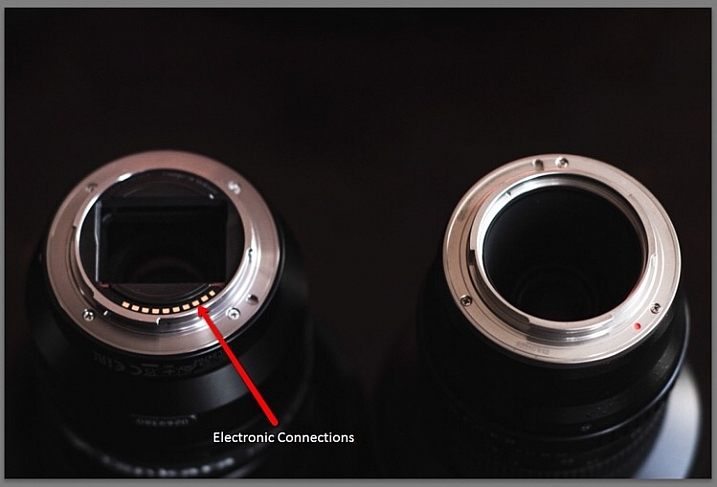
Lenses that were geared for use with older film camera (35mm or medium/large format) systems are called legacy lenses. Glass of this type are non-motor driven, and operate autonomously of your camera. This means that the focus and aperture selection are all accomplished inside of the lens, which is controlled by you. There is no electronic communication between the lens and the camera. You must use the lens’s aperture, and focusing ring, to produce the desired depth of field and focus. Legacy lenses are generally made of metal, making them relatively heavy, but heartily constructed.

Which lenses are fully manual?

Full manual lenses does certainly not include all legacy lenses. Many manufacturers still make completely manual lenses, engineered specifically for the digital camera market. A lens is designated as being fully manual when there is no control being provided by the camera. However, there are quite a few fully manual lenses which have incorporated focus indicator chips into their design. While remaining fully manual, these types of lenses will communicate with your camera when focus has been achieved.

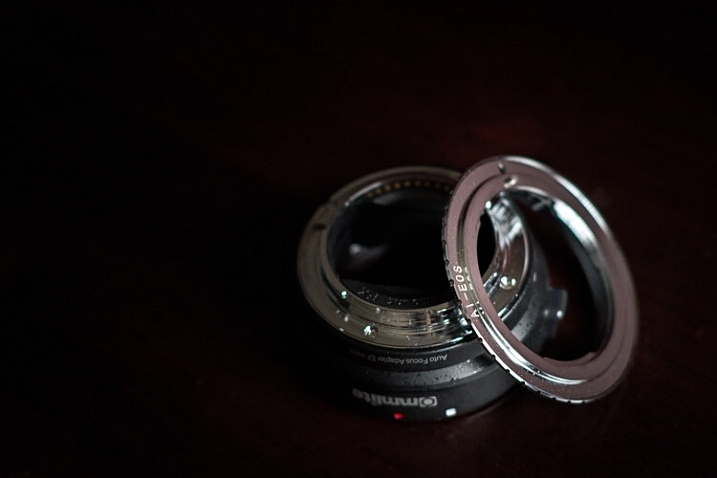
image

Adapting lenses to your camera

In a previous article on dPS we discussed how easy it really is to use legacy lenses (and other non-native glass) with your digital camera. The same holds true. All that is needed to enable the use of fully manual legacy lenses to be used with your modern digital camera body is a simple adapter.

image

These adapters vary in capability from simple adapter rings, to advanced electronic contraptions, with focus indicator chips of their own. Keep in mind though, there are a few things to consider before adapting any non-native lens to your camera. More on that shortly.

Using your camera in full manual mode with manual lenses

image

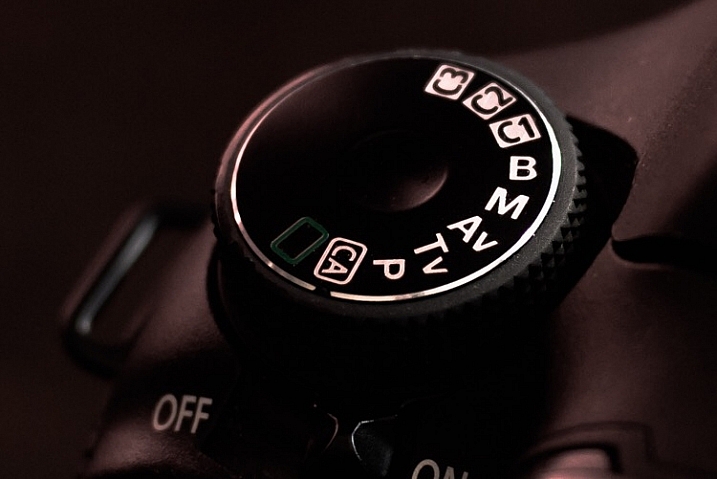
You’ve found an elegant legacy lens and located the appropriate adapter for your particular camera system. You’re excited and ready begin shooting completely manually, so now what? Well, take a breath and exhale a well deserved sigh of relief, because all of that was the hard part. Now all that’s left are a few quick steps. The first of those steps is to switch your camera into Manual Mode. This is almost always done by moving your selector wheel to M for manual mode. This will give you, the courageous photographer, complete control over all aspects of the shot. If you are using a completely manual lens, or a legacy lens, everything except the shutter speed will now be manipulated using the lens. The aperture will be controlled using the aperture selector ring, and so too will be the focusing.

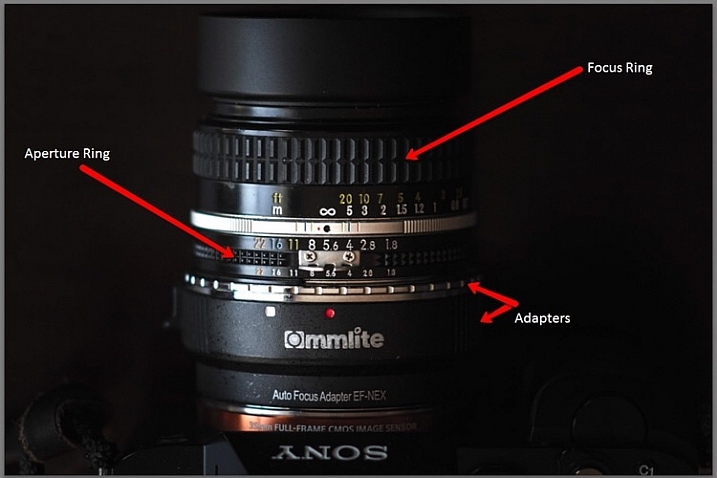
This is a breakdown of the essential features found on an adapted, full manual legacy lens (in this case a Nikkor 50mm f/1.8).

image

Here are a few tips for using your camera in full manual mode, in conjunction with a fully manual or legacy lens:

Focus Peaking Function

Some cameras now incorporate a technology called focus peaking which visually outlines the edges of the most in-focus area of a scene,, before the shutter is ever released. The technology detects the area of the most contrast between pixels, thus determining what region is most in focus. Though not perfect, this a great option to aid with manual focusing.

Focus Magnifier

Not all camera bodies come equipped with the focus peaking feature, but most modern digital cameras are capable of focus magnification. This lets you digitally magnify the scene, and inspect areas for proper focus. I use focus magnification in all of my landscape work. It is a great way to achieve pin point focus on the areas where precision is a necessity. (Note: this is usually available in LiveView mode).

Shoot RAW

Yes, the old shoot RAW lecture again. Even though focus correction can’t be achieved, even in RAW format files, it will however give you much more room to work on contrast and clarity. This will sometimes help to salvage an image that may otherwise be culled.

Things to consider before using legacy lenses

Along with all the benefits of shooting manually with legacy and full manual lenses, there are also some things to remember before, and during shooting times.

Complete Autonomy of the Camera

There is of course no electronic communication between the lens and the camera, unless you have chosen an adapter or lens equipped with focus indicator technology. So there will be no way to use your shutter priority or aperture priority modes.

Physical Considerations

Some lenses will obstruct the mirror function of digital SLRs. This is one of those things that carries a little bit of buyer beware baggage. Make absolutely sure that the lens you are adapting to your camera does not physically occlude the operation of the mirror, this will damage your camera, possibly beyond repair. This becomes less of an issue with mirrorless camera systems.

Crop Factor

The crop factor of any lens is dependant on the size of the image sensor (or film) being used. Always be mindful of the interactions between your lens, and whatever size sensor you are using, be it full frame of APS-C (cropped). Most legacy lenses were intended for use with 35mm film. This will play a major role in your practical focal length, when shopping for lenses of the prime variety.

image

Fully manual and legacy lenses have a firm grasp on today’s digital world. Though viewed as antiquated by some, the essential elements of this type of photography can produce exceptional images. Shooting in Manual Mode gives you ultimate generalship over your work, and allows you to take every aspect of photo making into your own hands. Not only is the use of legacy and manual lenses a cost efficient way to make photographs, but it is also a reflection of a time when the buck stopped with the photographer, not the camera.

Newer isn’t always better. And even though manual shooting might not be the most effective course in some situations, there is no reason why it should be discounted in today’s modern era. Full manual shooting allows you to use lenses of extremely high quality to fully realize your creative vision, in ways you may not have otherwise been able to accommodate. Take your photography back to the future, and go beyond the realm of the automatic.

Do you have a favorite manual setup that you use regularly? Share it in the comments below!

googletag.cmd.push(function() {
tablet_slots.push( googletag.defineSlot( “/1005424/_dPSv4_tab-all-article-bottom_(300×250)”, [300, 250], “pb-ad-78623” ).addService( googletag.pubads() ) ); } );

googletag.cmd.push(function() {
mobile_slots.push( googletag.defineSlot( “/1005424/_dPSv4_mob-all-article-bottom_(300×250)”, [300, 250], “pb-ad-78158” ).addService( googletag.pubads() ) ); } );

The post Tips for Using Legacy Lenses and Shooting in Full Manual by Adam Welch appeared first on Digital Photography School.


Digital Photography School

 
Comments Off on Tips for Using Legacy Lenses and Shooting in Full Manual

Posted in Photography


Leica updates wide-angle M lenses with new optical and design features

15 Jan
Left to right, and not to scale, Leica Elmarit-M 28mm F2.8 ASPH, Leica Summicron-M 28mm F2 ASPH and Leica Summicron-M 35mm F2 ASPH

German camera brand Leica has introduced upgraded versions of three of its wide-angle M lenses that offer improvements to both build and performance, according to the company. The trio of reportage favorites are the Leica Summicron-M 35mm F2 ASPH, the Leica Summicron-M 28mm F2 ASPH and the Leica Elmarit-M 28mm F2.8 ASPH. Each is a direct replacement for the current equivalent model. 

All three of the lenses will be fitted with metal lens hoods and a ring to cover the hood mount when the hoods aren’t in use, and metal lens caps will replace the current plastic units.

The company hasn’t been absolutely clear about the optical changes that it has made, making general statements about sharpness improving across the frame. The 35mm Summicron though now has 11 aperture blades, while the previous versions of the lens had only seven, eight or ten blades. 

The company also comments that both 28mm lenses have significantly improved curvilinear distortion controls that provide better drawing, as well as flatter field projection for increased resolution in the corners of the frame.

The new Leica M lenses are scheduled to be available as follows:

  • Leica Elmarit-M 28mm F2.8 ASPH. (black) – end January 2016, price £1,650
  • Leica Summicron-M 28mm F2 ASPH. (black) – end January 2016, price £2,975
  • Leica Summicron-M 35mm F2 ASPH. – beginning of February 2016, black version price £2,250, silver anodised version price £2,350

For more information see the Leica website. 


Press release: 

Leica introduces new generation of classic Leica M lenses with improved performance

  • Leica Summicron-M 35mm F2 ASPH.
  • Leica Summicron-M 28mm F2 ASPH.
  • Leica Elmarit-M 28mm F2.8 ASPH.

Leica Camera has introduced next-generation models of three of its classic M lenses: the Leica M Summicron-M 35 mm F2 ASPH., Leica Summicron-M 28 mm F2 ASPH. and Leica Elmarit-M 28 mm F2.8 ASPH., each delivering enhanced image performance and quality, thanks to their new optical design.

Additional improvements to the lenses include a more robust construction, now featuring a full metal rectangular lens hood with thread mount, and a threaded protection ring for the front of the lens when the hood is not attached. The lens cap is now also made of metal.

As with all Leica products, this classic trio of reportage lenses offers both optical and technical excellence. Made in Germany, the combination of state-of-the-art technology, the highest quality materials and meticulous manual construction ensures consistent quality, resulting in reliable products with outstanding durability.

The new generation Summicron-M 28 mm F2 ASPH. and Elmarit-M 28 mm F2.8 ASPH. lenses are scheduled to be available from the end of January. The Summicron-M 35 mm F2 ASPH. is scheduled to be available from February in black and, for the first time, also in a silver anodised finish.

The impressive Summicron-M 35 mm F2 ASPH. fast, classic prime lens delivers superior image performance and a unique bokeh. Despite its high speed and exceptional image quality, its dimensions are astoundingly compact. Furthermore, with its eleven blade iris, this new generation lens creates a circular aperture, lending out of focus areas an extremely smooth look and feel. Images are pin-sharp with rich contrast, and almost completely free from distortion with superb bokeh at all apertures and distances – and even when shooting wide open.

High performance and speed are also distinct characteristics of the Summicron-M 28 mm F2 ASPH. wide-angle lens. Its outstanding speed makes it particularly versatile and produces brilliant imaging results, even in difficult lighting conditions. At its maximum aperture, the Summicron-M 28 mm F2 ASPH. delivers rich contrast, differentiated reproduction of even the finest structures, a soft and smooth bokeh, and extremely high resolution. Improvements within the optical design in this new generation lens have made it possible to achieve superior image performance across the entire image field. The significant reduction of image field curvature guarantees better resolution of details from corner to corner within every picture.

The Elmarit-M 28 mm F2.8 ASPH. is the most compact lens in the entire portfolio of Leica M lenses. Thanks to its small size and light weight, this lens is a particular favourite with street and reportage photographers. Compared to the previous model, this new generation lens offers significantly reduced image field curvature, which brings considerably improved image performance with high resolution and brilliant resolution of details. The Elmarit-M 28 mm F2.8 ASPH. is practically distortion-free from infinity to its closest focusing distance of 0.7 metres, and provides an exceptionally clear view through the Leica M viewfinder.

Articles: Digital Photography Review (dpreview.com)

 
Comments Off on Leica updates wide-angle M lenses with new optical and design features

Posted in Uncategorized


Zeiss optics included in latest ExoLens accessory lenses for the iPhone

07 Jan

Smartphone accessory lens manufacturer ExoLens is to introduce three new lenses that use optics and designs from Zeiss. The lenses will be a zoom macro adapter as well as wideangle and telephoto convertors that will screw into a frame that fits around the phone. The macro lens will allow focusing from as a close as 30mm, and will convert the effective focal length of the iPhone lens to a 40-80mm zoom in full frame terms. The wide angle adapter will offer 0.6x magnification to make the iPhone lens act as an18mm would, while the telephoto adapter has a 2x magnification that delivers the appearance of a 58mm lens. 

Both converters allow focusing to infinity, from 50cm (the wideangle) and 36mm (the telephoto), while the zoom macro lens has a focusing range that’s restricted to 30-78mm. 

Zeiss says that the Mutar-design converters have been calculated to suppress chromatic aberrations, especially fringing, and aspheric lenses have been used to ensure accurate drawing by reducing curvilinear distortions. Contrast is said to be maintained and T* coatings are used on all glass/air surfaces to keep flare under control. The wideangle converter uses four elements in four groups, while the telephoto version uses five elements in three groups. 

The company has labelled the macro zoom lens a Vario-Proxar for its ability to vary the focal length of the camera lens and its ability to close-focus. Zeiss says it is the only continuous zoom accessory for smartphones, and that it maintains coverage of the entire sensor while zooming takes place. The magnification is such that objects as small as three centimetres can fill the frame, and the lens comes with a semi-transparent diffuser hood that simultaneously improves the quality of the light while providing a guide to the closest focus distance. 

The metal frame that the lenses screw in to features a tripod socket as well as an accessory shoe for lights etc. 

No prices have been announced yet, but Zeiss and ExoLens say the accessories will be available before the middle of 2016. Initially they will be made for iPhone 6/6s and 6 Plus and 6s Plus. 

For more information visit the Zeiss and ExoLens websites. 


Press release:

ExoLens

ZEISS and Fellowes Brands Launch Mobile Phone Accessory Photography Lenses

Fellowes Brands, manufacturers of premium mobile photography accessories and ZEISS, international optics enterprise, present three new high-performance accessory lenses for mobile phones at the 2016 Consumer Electronics Show in Las Vegas

ZEISS, one of the world’s leading companies in the fields of optics and optoelectronics, and the Fellowes’ ExoLens™ brand, an American innovator in mobile photography accessories, announce their collaboration in the design and development of accessory lenses for mobile phones. The companies will present the first jointly developed accessory lenses at the Fellowes booth (no. 31016) during the Consumer Electronics Show in Las Vegas from 6-9 January 2016.

The first three lenses – wide-angle, telephoto and macro – are scheduled to be launched in late Q2 2016. The wide-angle and telephoto lenses offer excellent image performance with outstanding edge-to-edge contrast. The macro lens features a zoom function – unique for accessory lenses of this type – for flexible image composition. The new lenses can be used on the Apple® iPhone®1) with customized mounting brackets.

Partnership between ZEISS and ExoLens™

The collaboration between ZEISS and ExoLens™ represents an important step in the development of accessory lenses for mobile phones. ZEISS has been powering optical innovation in photography since 1890. With current products such as the professional camera lenses of the ZEISS Otus SLR lens family or the ZEISS Batis autofocus lenses featuring an innovative OLED display for mirrorless full-frame system cameras, the optics company continues to evolve and set new milestones in photography. ExoLens™ is a pioneer in the new and expanding space of mobile photography. The joint goal of ZEISS and ExoLens™ is to bring never before seen quality and versatility to this rapidly growing market. 

“We are thrilled to announce our new relationship with ZEISS, who has been setting standards in optics for almost 170 years,” says John E. Fellowes, Chief Executive Officer of Fellowes. “Following the launch of our new ExoLens™ mobile phone photography line last year, our partnership with ZEISS will enable unique and innovative consumer lens solutions. ExoLens™ with optics by ZEISS will redefine quality in the mobile photography space, providing professional-grade results for end users.”

“The impact of an image is decisively influenced by the lens and its technical properties,” says Dr. Winfried Scherle, Executive Vice President of Carl Zeiss AG and Head of the ZEISS Consumer Optics business group. “The collaboration with ExoLens™ gives us the opportunity to tap into new target groups and provide ambitious mobile phone photographers with high-quality tools to support their creativity.”

ExoLens™ with optics by ZEISS

The new lenses are characterized by their leading-edge design featuring smooth surfaces made of black anodized aluminum with white labeling. This is a systematic continuation of the distinctive, innovative product design that typifies current families of ZEISS camera lenses. The modern design offers excellent optic properties and the lenses meet even the highest aesthetic standards,” Scherle says. “The lenses of ExoLens™ with optics by ZEISS are the best currently available on the market,” he adds. “We have achieved the best possible technical balance between a small size, light weight and high image quality.”

All lenses incorporate the proven T*® antireflective coating from ZEISS, which minimizes reflections at the glass-to-air surfaces and improves the transmission of light.

The lenses are attached to the device-specific ExoLens™ machined aluminum bracket using a screw thread. The ExoLens™ bracket features a standard tripod mount (1/4”-20) as well as a cold shoe for mounting accessories. At launch, ExoLens™ with optics by ZEISS will be available for Apple® iPhone® 6/6s and Apple® iPhone® 6 Plus/6s Plus, with the goal of adding more devices in the future.

ExoLens™ wide angle and telephoto lenses with optics by ZEISS

The jointly developed lenses turn the integrated mobile phone lens into either a wide-angle or telephoto lens. The optical design used for both lenses bears the name MutarTM. This stands for an afocal system and is therefore different from traditional interchangeable lenses for system cameras. The lens has no focal length, i.e. the focus is set at infinity. This enables photography of objects from infinity to the close-up range, the limits of which are defined only by the technical properties of the mobile phone camera. This makes this optical design suitable for both landscape and detailed photography. Distortion would impair the composition as straight lines which are not imaged through the image center would be reproduced as curved lines. This adverse effect has been offset by the use of aspheric lenses in the optical design. Both lenses therefore offer image excellence and outstanding contrast rendition right to the edges. Chromatic aberrations are also corrected. Bright-dark transitions in the image, and highlights in particular, are largely free from colored artifacts. Protection against dust and water spray makes the wide-angle or telephoto lens perfect for the challenges of outdoor use. 

Dramatic perspectives, exceptional angles or portraits in which the main subject is to be clearly isolated from the background are the specialties of the two lenses by ExoLens™ with optics by ZEISS.

ExoLens™ macro lens with optics by ZEISS

The macro lens complements the wide-angle and telephoto lenses and enables currently unparalleled close-up photography with a mobile phone camera. The optical design of the macro lens bears the name Vario-ProxarTM. “Vario” stands for the variability of the focal length (zoom), and Proxar for proximity. Like the wide-angle and telephoto lenses, the macro lens offers edge-to-edge image excellence and no discernible distortion or chromatic aberration. It is currently also the only accessory lens for mobile phones to offer a continuous zoom function, permitting the full-frame capture of objects with diameters of between three and twelve centimeters. An optionally attachable and semi-transparent diffusor serves as a spacer, allowing light to shine evenly on the object to be photographed and enabling convenient focusing, even with a short object distance and shallow depth of field.

Articles: Digital Photography Review (dpreview.com)
 
Comments Off on Zeiss optics included in latest ExoLens accessory lenses for the iPhone

Posted in Uncategorized


Nikon brings stepping motors to its DSLRs with two 18-55mm AF-P lenses

05 Jan

Nikon is bringing stepping motors to its DSLR lens lineup for the first time with a pair of ‘AF-P’ lenses, both of which are collapsable 18-55mm zooms (one with vibration reduction, the other without). Nikon says that its stepping motor lenses are both faster and quieter than their predecessors, making them quite appealing for video recording. These lenses have two aspherical elements as well as a Super Integrated Coating, with the VR model reducing shake by 4 stops (using the CIPA standard).

These aren’t the company’s first lenses to use this type of AF motor – they can be found on most, if not all, of the lenses for the Nikon 1 system.

Nikon has not disclosed pricing or availability information for either lens.


Press release:

AF-P DX NIKKOR 18-55mm f/3.5-5.6G VR / AF-P DX NIKKOR 18-55mm f/3.5-5.6G

Fast and quiet AF with adoption of a stepping motor
Compact and lightweight normal zoom lenses covering the 18-55mm range of focal lengths with a maximum aperture of f/3.5-5.6

TOKYO – Nikon Corporation is pleased to announce the release of the AF-P DX NIKKOR 18-55mm f/3.5-5.6G VR and AF-P DX NIKKOR 18-55mm f/3.5-5.6G, two normal zoom lenses compatible with Nikon DX-format digital SLR cameras.

The AF-P DX NIKKOR 18-55mm f/3.5-5.6G VR and AF-P DX NIKKOR 18-55mm f/3.5-5.6G are 3.1x normal zoom lenses covering the 18-55mm range of focal lengths (effective angles of view equivalent to those of a lens with 27-82.5mm focal lengths in FX and 35mm [135] formats). They are the first “AF-P” lenses for Nikon digital SLR cameras, utilizing stepping motors to drive AF for fast and quiet autofocusing. In addition, they have a compact and lightweight design for which retractable barrels were adopted for excellent portability, and the use of two aspherical lens elements has resulted in superior optical performance with which various types of aberration, including distortion and spherical aberration, are effectively suppressed. The AF-P DX NIKKOR 18-55mm f/3.5-5.6G VR is also equipped with a vibration reduction (VR) mechanism offering camera shake compensation equivalent to a 4.0-stop* (with testing in accordance with CIPA standards) increase in shutter speed.

The combination of superior AF performance and excellent agility afforded by these lenses makes them perfect for those ready to try their hand at full-scale photography with a digital SLR camera.

AF-P DX NIKKOR 18-55mm f/3.5-5.6G VR and AF-P DX NIKKOR 18-55mm f/3.5-5.6G Primary Features

  • “AF-P” lenses that achieve fast and quiet AF with adoption of a stepping motor for AF drive operation
  • Compact and lightweight 3.1x 18-55mm (effective angles of view equivalent to those of a lens with 27-82.5mm focal lengths in 35mm [135] format) normal zoom lenses utilizing a retractable barrel and compatible with the Nikon DX format
  • Adoption of aspherical lens elements (2) achieves superior optical performance with which various types of aberration are effectively suppressed
  • Equipped with a vibration reduction (VR) mechanism offering camera shake compensation equivalent to a 4.0-stop* (with testing in accordance with CIPA standards) increase in shutter speed (AF-P DX NIKKOR 18-55mm f/3.5-5.6G VR)

*At the maximum telephoto position when a digital SLR camera equipped with an APS-C size image sensor is used.


Nikon AF-P DX NIKKOR 18-55mm f/3.5-5.6G VR / AF-P DX NIKKOR 18-55mm f/3.5-5.6G specifications

  Nikon AF-P DX NIKKOR 18-55mm F3.5-5.6G VR Nikon AF-P DX NIKKOR 18-55mm F3.5-5.6G
Principal specifications
Lens type Zoom lens
Max Format size APS-C / DX
Focal length 18–55 mm
Image stabilisation Yes (4 stops) No
Lens mount Nikon F (DX)
Aperture
Maximum aperture F3.5 – F5.6
Minimum aperture F22.0 – F38.0
Aperture ring No
Number of diaphragm blades 7
Optics
Elements 12
Groups 9
Special elements / coatings Two aspherical elements + super integrated coating
Focus
Minimum focus 0.25 m (9.84)
Maximum magnification 0.38×
Autofocus Yes
Motor type Stepper motor
Full time manual Yes
Focus method Internal
Distance scale No
DoF scale No
Physical
Weight 205 g (0.45 lb) 195 g (0.43 lb)
Diameter 65 mm (2.54)
Length 63 mm (2.46)
Materials Composite
Sealing No
Colour Black
Zoom method Rotary (extending)
Power zoom No
Zoom lock No
Filter thread 55.0 mm
Hood supplied No
Hood product code HB-N106
Tripod collar No

Articles: Digital Photography Review (dpreview.com)
 
Comments Off on Nikon brings stepping motors to its DSLRs with two 18-55mm AF-P lenses

Posted in Uncategorized


Kipon to launch reducer to mount medium format lenses on full frame cameras

18 Dec

Chinese lens manufacturer Kipon has announced that next year it will make available a reducing adapter that’s designed to allow medium format lenses to fit on full frame cameras. The adapter will have a magnification factor of 0.7x which it says will both widen the effective focal length of the lens in use and widen its effective aperture. 

The first adapter will be designed to mount Hasselblad lenses on Sony E-mount cameras, but the company says it is working on other mounts for a wider range of both lenses and host cameras. 

The lenses in the adapter channel the light from the exit element to create a tighter covering circle. This means light that would otherwise fall outside the sensor area is directed to land on it to be recorded.

When a 50mm Hasselblad lens is mounted on a current Hasselblad digital body it produces a similar image area to a 35mm lens on a full-frame camera. That calculation though is a factor of the sensor size of the Hasselblad camera, and the same lens would not deliver that apparent angle of view were it mounted on a full frame camera or in front of the 6x6cm film frames Hasselblad lenses were designed to be used with. 

The 0.7x magnification of the Kipon adapter has the effect of canceling out the crop factor, turning that 50mm Hasselblad lens back into a 35mm-equivalent on a full-frame camera.

The adapter will have to be very good quality to make the most of the resolution of Hasselblad lenses, otherwise the exercise will be a bit pointless. It is expected to retail for $ 415 when it becomes available in February.

For more information visit the Kipon website. 

Articles: Digital Photography Review (dpreview.com)
 
Comments Off on Kipon to launch reducer to mount medium format lenses on full frame cameras

Posted in Uncategorized


Contest: Win one of Two Tamron Lenses

17 Dec

Win a Tamron 16-300mm Di II VC PZD Macro All-In-One Zoom Lens OR a Tamron 18-200MM F/3.5-6.3 Di II VC All-In-One Zoom Lens!

16300VCPZD-Tamron-16-300mm.jpg 16300VCPZD-Tamron-16-300mm.jpg

Over the last few years here at dPS, we’ve run very some very popular competitions with our partners to give away to lucky dPS readers some of their great photographic products.

We are lucky enough to be able to do it again this week. For this competition, Tamron is giving away TWO lenses.

Win one of two Tamron lenses

These two unique prizes are designed to help every level of photographer create BETTER pictures. Tamron is the world’s most awarded photographic lens line. Each prize will be won by a different dPS reader. Here’s what you could win:

16300VCPZD Tamron 16 300mm

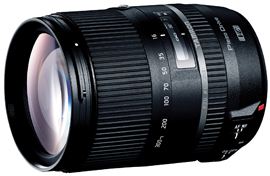
Tamron 16-300mm Di II VC PZD Macro

Grand Prize

Our Grand Prize Winner will receive a 16-300mm Macro All-In-One Zoom Lens.

Tamron 16-300mm Di II VC PZD Macro – Value $ 629. For Canon, Nikon or Sony small-sensor cameras.

Tamron 16-300mm Di II VC PZD Macro

Runner Up Prize

18200 B018 Tamron 18 200mm

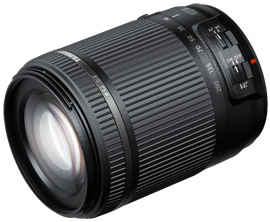
Tamron 18-200mm Di II VC

The Runner Up will receive an 18-200mm Di II VC All-In-One Zoom Lens.

Tamron 18-200mm Di II VC – Value $ 249. For Canon, Nikon or Sony small-sensor cameras.

Tamron 18-200mm Di II VC

Learn a little more about Tamron here: Tamron.com

How to win:

To win this competition you’ll need to:

  • Visit the above lens information pages and learn more about the lens and its core use.
  • Leave a comment below and tell us why you’d like to win and HOW you would you utilize the lens. Please note: there is a limit of ONE entry per person.
  • Deadline to enter is January 7th, 2016 11:59 p.m. PST (UTC-8). Comments left after deadline will not be considered. Do this in the next 21 days, and on January 14, 2016, the team at dPS will choose the best two answers and we will announce the winners in the following days.

By “best” – we’re looking for you to show an understanding of the lenses and how they will best suit your needs. So you’ll need to check out the product pages to put yourself in the best position to win. There’s no need to write essay length comments to win – but we’re looking to hear what you like about the lens and how it would help your development as a photographer.

This contest is open to everyone, no matter where you live – but there is only one entry per person. To enter – simply leave your comment below.

Canon Beach ken hubbard resized

Photo by Ken Hubbad

Tamron logo

About Tamron

Disclaimer: Tamron is a paid partner of dPS.

googletag.cmd.push(function() {
tablet_slots.push( googletag.defineSlot( “/1005424/_dPSv4_tab-all-article-bottom_(300×250)”, [300, 250], “pb-ad-78623” ).addService( googletag.pubads() ) ); } );

googletag.cmd.push(function() {
mobile_slots.push( googletag.defineSlot( “/1005424/_dPSv4_mob-all-article-bottom_(300×250)”, [300, 250], “pb-ad-78158” ).addService( googletag.pubads() ) ); } );

The post Contest: Win one of Two Tamron Lenses by Darlene Hildebrandt appeared first on Digital Photography School.


Digital Photography School

 
Comments Off on Contest: Win one of Two Tamron Lenses

Posted in Photography


Panasonic updates five Lumix G lenses with Dual IS support

15 Dec

Panasonic has released firmware updates for five Lumix G lenses, adding support for the maker’s Dual IS technology. The feature was introduced in the Lumix DMC-GX8 camera; with this update, a total of eleven lenses are compatible with that model’s Dual IS system, including the Leica DG Macro-Elmarit 24mm F2.8 Macro and collapsible Lumix G Vario 12-32mm F3.5-5.6.

Panasonic’s Dual I.S system uses both the GX8’s body I.S and lens I.S together for improved image stabilization, ‘achieving a more powerful handshake correction,’ according to Panasonic. The new firmware is available for the following five lenses:

  • Panasonic Leica DG Macro-Elmarit 45mm F2.8 Macro ASPH Mega OIS (H-ES045) Ver.1.0?Ver.1.1
  • Panasonic Lumix G Vario 45-150mm F4.0-5.6 ASPH Mega OIS (H-FS45150) Ver.1.1?Ver.1.2
  • Panasonic Lumix G Vario HD 12-32mm F3.5-5.6 Mega OIS (H-FS12032) Ver.1.0?Ver.1.1
  • Panasonic Lumix G Vario 35-100mm F4.0-5.6 ASPH Mega OIS (H-FS35100) Ver.1.0?Ver.1.1
  • Panasonic Lumix G X Vario PZ 14-42mm F3.5-5.6 ASPH Power OIS (H-HS043) Ver.1.0?Ver.1.1

The updated firmware is available for download from Panasonic’s website.

Articles: Digital Photography Review (dpreview.com)
 
Comments Off on Panasonic updates five Lumix G lenses with Dual IS support

Posted in Uncategorized