Fujifilm has announced firmware updates for a number of X-series and FinePix cameras. Full details of the firmware updates were announced on the company’s blog, and the new firmware versions are now available for download from the global Fujifilm site. Included in this round of updates are the X-T1, X-Pro 1, X-E1, X-E2, X-M1, X-A1, XQ1, FinePix S1, FinePix XP70 and FinePix XP200. Read more
Tag: Lens
-
Tamron lens profiles added to Adobe Camera Raw
Tamron has announced the addition of profiles for two of its lenses to Adobe Camera Raw. The Tamron SP 150-600mm F/5-6.3 Di VC USD for Nikon mount and the 16-300mm F/3.5-6.3 Di II VC PZD Macro for both Canon and Nikon mount have been profiled for use with Adobe’s tools for lens aberration correction for users of Adobe Photoshop CC, Adobe Photoshop CS6, Adobe Camera Raw and Lightroom 5.
-
Apple files patent application for artificial muscle camera lens actuator

After filing one last month, Apple has applied for another camera-related patent. The document an artificial muscle structure being used to replace traditional motors to control focus and aperture in a camera module. The design is interesting because it can carry relatively large and heavy optics and consumes very little power. Read more
-
Panasonic announces Lumix DMC-FZ1000 with 1″ sensor and fast lens

Panasonic has announced its Lumix DMC-FZ1000 superzoom camera, which features a 1″-type CMOS sensor and F2.8-4.0, 25-400mm equivalent lens. The sensor is not only the same size as on Sony’s Cyber-shot DSC-RX10 – it’s also the same resolution (20.1MP). The FZ1000 features both a fully articulating LCD as well as a high resolution OLED viewfinder. The FZ1000 is also capable of recording 4K video at a bit rate of 100Mbps, from which 8MP stills can be grabbed. The camera will be priced at $ 899 / £749.99.
-
Lens Review Canon 300mm f4 Lens for Sports Photography
Recently I went to a Little League baseball game and shot with my Canon 5D Mark III and my newly purchased, 300mm f/4 L IS. It was the first time shooting sports with my new camera, so I was eager to see how the body would perform as well as the lens.
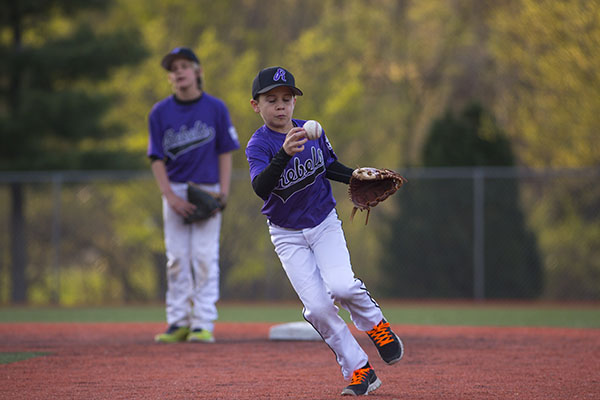
The 300mm is touted as one of Canon’s best sports lenses, so I was counting on it to deliver some quality images. The 5D Mark III, while not specifically a sports camera, is often considered a viable option by sports photographers because of its new autofocus system. I was eager to try it out, and see if I could handle shooting sports on a full-frame camera.
But this post is about the 300mm, not the 5D Mark III. So let’s get to the good stuff – review Canon 300mm f4 lens.
300mm f/4L IS – weight and handling
When I first purchased the 300mm f/4L IS, I was surprised by how small and light it was. Bigger than my 70-200 f/4, yes – by a large margin. But it wasn’t a beast like I was expecting. If you’re familiar with the 70-200 f/2.8 IS, the 300mm is similar to that lens in size and weight. But it’s certainly not overwhelming, like the 300mm f/2.8. It’s actually comfortably hand-holdable.

I brought my monopod to the game, thinking I would use it with the 300mm, but I never needed it. I handheld the 300mm comfortably the whole game, and I’m not super strong. I was pleasantly surprised by how easy it was to handle the lens. It fits perfectly in my camera bag’s long-lens compartment, and I can carry it over my shoulder when I’m walking around. During the game, I ended up sitting on the ground (I explain why here), holding the camera and lens up to my eye, for most of the game.
 Tip: If your arms get tired from holding your camera up so much, a monopod will be your best friend.
The feel of this lens is like all Canon L-series lenses – solid. It’s all metal construction, and feels substantial in your hand. It features a built-in lens hood that you can expand and twist to lock. The lens hood doesn’t come off – when you’re not using it, unscrew and slide it back onto the lens.
Summary: Pleasantly surprised by the 300mm’s relatively light weight and easy handling.
Reach
300mm turned out to be the perfect focal length for the game I was shooting. As I mentioned above, reach was not a problem. I had anticipated wanting more reach than my full-frame sensor offered, so I brought along a Canon Rebel T3i too, but didn’t use it. For youth sports, 300mm was perfect. Of course, it depends on the sport you’re shooting – if you’re at a big soccer field, maybe you’d want to use 300mm on a crop sensor camera, while you might want a 70-200 if you’re doing something close like basketball. Could I have gotten lots of great shots with the 300mm on a crop sensor camera at this game? Of course. But many of the players were perfectly framed with 300mm on the full-frame.

Now, if you have a crop sensor (APS-C) camera, I would still recommend the 300mm f/4L IS, but it depends greatly on your sport. If you’re not sure, I might start out with a cheaper 70-300 zoom lens and see what focal lengths you use most. If you find yourself always using the long end of the zoom, then that’s a pretty good indication that the 300mm f/4L might be a great choice for you.
At my game, I think 300mm on crop (480mm) would have been a bit long, but I could have always shot the farther action. If I had been using a crop sensor, a 70-200mm would probably have worked better. But the bokeh at 300mm f/4 was so nice compared to my 70-200 f/4, I don’t know if I could have gone back. The reach, power, and feel of the 300mm felt so far ahead of my 70-200 f/4L. I felt like a beast using it all night.
Summary: 300mm on full-frame was perfect for closer subjects. It also definitely works if you have a crop sensor. Think about the sport you’re shooting and how far away you’ll be from the action.

Autofocus
The 300mm f/4L IS is an L-series lens, so it should come as no surprise that the autofocus is fast and snappy. The lens has USM, which stands for Ultra Sonic Motor – Canon’s fast autofocus motor. The USM autofocus on the 300mm is excellent, quiet and instant. Tracking is fast and it keeps up with the action.
The fast autofocus at 300mm is sort of a luxury to me. I have a bad habit of setting up for a specific shot (like the pitcher throwing the ball), getting the shot, then putting my camera down to look for the next shot. When a play happens, my instinct is to put my camera down and watch (bad, I know). But during the game, when I realized this was happening, I made a point to try to shoot spontaneously during plays. There was one play where I put my camera down but then saw a shot about to appear. Thanks to the fast autofocus, I simply framed the shot, focused, and snapped the photo in a few moments. I came out with this shot:

Summary: I love the fast autofocus on the 300mm f/4. It responds to my every command, instantly.
Image Stabilization
I don’t have much to say on Image Stabilization (IS). I used it throughout the game, but I don’t think it was necessary. I was using a fast enough shutter speed to freeze the action. There’s really no need for IS when shooting action, because IS only helps with camera shake from your hands. You still need a fast shutter speed to freeze action, which means camera shake isn’t a problem at that point either.
Summary: Next time I’ll leave IS off. It’s not a necessary feature for sports shooters.

Final Thoughts
Honestly, the 5D Mark III and 300mm f/4L IS was an amazing combination for shooting sports. The camera was nice and the lens performed flawlessly. It made sports photography a lot easier for me than previously, when I shot with the 70-200 f/4.
Overall, I highly recommend the 300mm f/4L IS as a sports lens. It’s the perfect focal length for medium to far distances. The autofocus is snappy and reliable, and the lens is easy to handhold. If you need a new telephoto lens for sports photography, I can wholeheartedly recommend the Canon 300mm f/4L IS.
The post Lens Review Canon 300mm f4 Lens for Sports Photography by James Trent appeared first on Digital Photography School.
-
Canon 8-15mm Fisheye Lens

Michael and I (Kevin) have spent the last few days photographing together in Buffalo, NY. We met up with Mark Maio and a workshop he was holding photographing Silo City. This is a huge complex of abandoned Grain Silos that at the beginning of the 20th century played a huge part of distributing grain from the Midwest to other areas around the country. Needless to say it was a great time shooting old, huge, abandoned and decaying buildings. We got our fill of urban decay landscapes, with a number of good keepers. You’ll see these on the home page in coming weeks from both Michael and me.
Michael and I will be working together over the next few days along with Chris on a number of different and exciting projects for LuLa, Rockhopper and the Endowment. We’re very excited about everything we are working on.
Alain Briot’s monthly article is featured today The Canon EF 8-15, f1.4 USM Fisheye Lens. Not only is it a review of this lens but also how the lens plays a big part in Alain’s photography.
-
Lens Review Tamron 24-70 mm f/2.8 Di VC USD
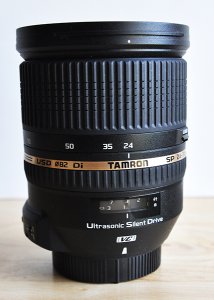
The Tamron 24-70mm f/2.8 Di VC USD is a great lens choice for both professionals and enthusiasts.
I won’t make you wait until the end of the review for the verdict– this lens absolutely rocks. Plain and simple. Despite what I consider to be a huge and unfortunate misconception among many professional photographers, there are some truly amazing, high-quality lenses being designed and produced by companies other than Nikon and Canon. Dismissing them as being somehow inferior simply because their logos don’t match up with those on the camera would be a big mistake. The Tamron SP 24-70mm f/2.8 Di VC USD is just such a lens. I recently had the opportunity to put it through its paces, and this is where the test drive took me.
The Specs
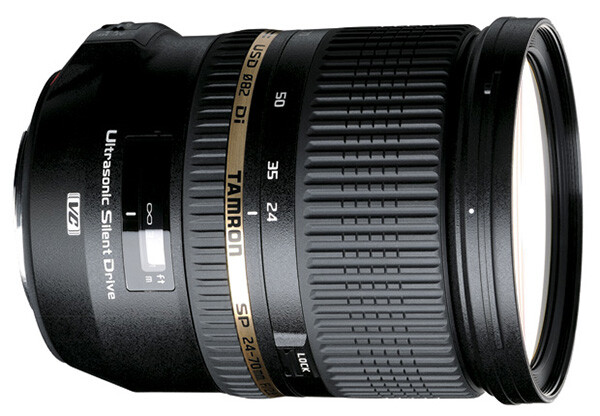
Let me start with deciphering the alphabet soup. Designed for digital (Di), this lens includes Tamron’s proprietary Vibration Compensation (VC) for less camera shake and smoother image stabilization, as well as its Ultra Silent Drive (USD) motor, ensuring fast, virtually silent auto focusing. This Super Performance series (SP) lens includes 17 elements in 12 groups, which vastly reduces chromatic aberration.
- Focal Length: 24-70mm
- Maximum Aperture: f/2.8
- Lens Construction: 17 elements in 12 groups
- Minimum Focal Distance: 0.38m (15.0 inches)
- Maximum Magnification Ratio: 1.5 on APS-C sensor cameras
- Filter Size: ø82mm (3.2 inches)
- Length: 108.5mm (4.3 inches)
- Extended Length: 116.9mm (4.6 inches)
- Diameter: ø88.2mm (3.5 inches)
- Weight: 825g (29.1 oz)
- Diaphragm Blades: 9 (rounded diaphragm)
- Standard Accessories: Lens Hood
- Cost: $ 1,224 (USD), compared with $ 1,887 (Nikon) and $ 2,299 (Canon L Series)
- Compatible Mounts: Nikon, Canon, Sony (NOTE: The Sony version of this lens does not include the vibration compensation feature, since Sony DSLR bodies already have this functionality).
First Impressions
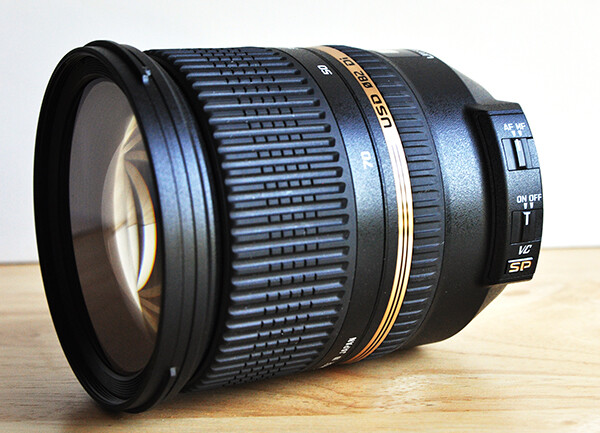
In some ways, I was sold on this lens before I even put it on a camera. Taking it out of the box for the first time, I was immediately impressed with the feel of it. It’s obvious that this lens was both designed and constructed with high-quality materials and great attention to detail. A common complaint among photographers about “off-brand lenses” (a term I hate, by the way), is that they just don’t have the same feel or build quality as lenses coming from Nikon or Canon. I’ve used several Tamron lenses over the years (the 28-75mm f/2.8 being among my favorites), and I can tell you that you’d be hard-pressed to find any flaws in the construction and build of this lens. As a matter of fact, this is Tamron’s first lens to include extra seals for moisture-resistant construction.
Lens Creep
Lens creep is a fairly common problem with zoom lenses of lower quality. If you have ever zoomed a lens all the way out, only to have it slowly slide back down on you when trying to shoot at a sharp, upward angle, you know what I’m talking about. The opposite can also happen, where a poorly crafted zoom can start sliding out all on its own when pointed at a downward angle. While lens creep usually manifests itself more readily with longer, heavier zooms, it can be an issue on shorter lenses also. I experienced no lens creep at all on this lens, regardless of where I was along the zoom range.
Focus
As noted in the specs above, this lens is equipped with Tamron’s Ultra Silent Drive (USD) motor, which is supposed to help ensure fast, virtually silent autofocus. This is particularly useful for wedding and event photographers who are trying to be as unobtrusive as possible. One of the things that helps me hide in plain sight is quiet autofocus. One word of caution is worth mentioning. While the USD is virtually silent on the outside of the camera, it is possible that additional noise might be picked up when shooting video.
Autofocus was fast, accurate, and, as mentioned, quiet. There might have been a slight bit of focus lag in extremely low light situations, but I would expect that from just about any lens in dark conditions. My only complaint regarding the manual focus on this lens is the size of the rubber focus ring. I think it’s a little too small, even for average hands. Add my big Chewbacca hands into the mix, and manual focus ends up taking a little more concentration that it should actually need. As far as the actual manual focus mechanics, however, I have no complaints at all. There was no lag whatsoever on the ring, making it smooth, accurate and responsive.
Chromatic Aberration
Forgive me for a minute or two while I geek out on the science end of things. Chromatic aberration is a type of distortion in which the lens fails to focus on all colors to the same convergence point. It is also a type of distortion which appears more frequently in lower quality lenses. It occurs because different lenses have different refractive indices for different wavelengths of light. Before your eyes glass over too much, let me just say that chromatic aberration becomes visible as fringes of color along boundaries separating light and dark parts of the image (i.e., contrast). As a general rule, chromatic aberration is mainly an issue at the combination of a lens’ shortest focal length and its widest aperture. This particular lens was designed specifically to minimize chromatic aberration and those efforts appear to be successful. While the laws of physics make it practically impossible to completely eliminate chromatic aberration, this lens exhibited it so slightly that I actually had trouble finding it. To that end, I’d say that any chromatic aberration actually created by this lens is inconsequential.
As long as we’re on the subject, let me offer one additional point regarding chromatic aberration that has nothing to do with this review. Colored fringes (often purple) around image highlights can be due to lens flare and have nothing at all to do with chromatic aberration.
Sharpness, Vignetting and Distortion
I found this lens to be very sharp in the center at all focal lengths and apertures. While stopping down a lens (moving to a smaller aperture) can sometimes result in an increase in sharpness and resolution, there was virtually no change in this lens between 24mm and 35mm. It wasn’t until I got between 50mm and 70mm that I think I might have noticed a very slight improvement by stopping down, but it was too slight to be of any real concern to me.
On a full frame Nikon D800, the corners are slightly less sharp than the center–a fairly common issue in lenses of this focal length. Having said that, however, corner image quality improves at all focal lengths as the lens is stopped down. I found the optimum aperture for the corners to be around f/8. Taking both center and corner sharpness into account, I’d put the “sweet spot” for this lens to be around f/5.6, but don’t let this keep you from capturing great “wide open” shots at f/2.8. The big surprise for me came when I compared corner sharpness on the Tamron with a Nikkor 24-70 f/2.8 and found corner sharpness on the Tamron to be better than the Nikkor.
While there is some visible distortion at the wider end of the lens, it does drop off quite quickly as you zoom in from 24mm. This is of most concern when shooting portraits. Making sure that faces are not distorted is an obviously valid concern, and is easily addressed by zooming the lens all the way in to 70mm.
Putting it to the Real Test
It’s easy to get passionate about lenses, regardless of brand name. It’s also easy, however, to get lost in the details. Look hard enough and you’ll find issues relating to chromatic aberration, sharpness, vignetting, and distortion in any, and every, lens you try. As pointed out earlier, we’re dealing with the laws of physics. That’s why the ultimate test of any lens has to be how it performs in everyday shooting conditions.
The first thing I want to know about any lens is what it’s going to do for me. Like many photographers, I make a living capturing a wide variety of subject matter. Since most of us don’t have unlimited gear budgets, the best purchases are those that are going to fill more than just one function. This is one of those lenses that does a great job, regardless of whether I am shooting portraits, food, or architecture. The fact that it does a great job as an all-around, everyday lens for personal photography is a bonus for the professional and a necessity for the enthusiast.
First came outdoor portraits. This first image was taken in the shade with no direct sunlight. There was a single off-camera strobe in a softbox to the left of the camera, approximately three feet from the subject. I was impressed with the speed of the autofocus, as well as how this lens captured the fine details. As noted, the wrong focal length can sometimes distort a subject. Zooming a 24-70mm all the way in to 70mm, like I did here can prevent that.

1/125, f/8, ISO 200, 70mm, off-camera flash.
I was in the middle of a cookbook shoot when this lens arrived, and I was curious to see how it would do in an all natural light scenario. When we shoot food in the studio, we generally use a single natural light source (big window) to backlight or sidelight the dish, along with a bounce card for fill. Shooting from the shadow side of the food can sometimes pose a challenge for auto-focus, but this lens had no problems at all, even when I selected a focus point in the darkest part of the frame.

1/80, f/5.6, ISO 400, 70mm, natural light.
But let’s take low light a step further. Really low light. In the images below, the photo on the right was taken with only ambient light in order to show how the autofocus performs in very low light situations. For purposes of the test, I placed my focal point on the subject’s left eye- the one in shadow. The photo on the left was taken at the same settings, with a single speedlight in a softbox to the left of the camera. The autofocus obviously had to work a little harder than it might have in broad daylight, but not so much that it became a problem on the shoot.

1/60, f/5.6, ISO 640, 70mm, off-camera flash.
If you read my article on How to Shoot Flowers, you know I spend a lot of time capturing flowers and their delicate details. Obviously, I was excited to see how the lens would perform with flowers. Other than the crop, this image is straight out of the camera. The edges and textures are all very sharp. While not specifically a macro lens, it’s nice to know it can still capture fine details with precision.

1/500, f/2.8, iSO 100, ambient light.
While attending Photoshop World in Atlanta last month, I stopped by the Westcott expo booth, where models and lights were set up for the Westcott Shootout Contest. Since studio lights were already set for optimal conditions, it seemed like a great opportunity to test the lens for indoor portraits. Other than the black and white conversion, this image is straight out of the camera. The lens performed really well while trying to capture the glam look of 1940s Hollywood.

1/200, f/5.6, ISO 1600, 70mm, constant LED studio lighting.
The lens had performed extremely well with portraits, food, and flowers, so I decided to see how it would do on an architectural interior shoot before I had to box it up and send it back. I was thrilled with how it captured the color and contrast.
1/160, f/10, 28mm, ISO 200, ambient light.
Wrap-Up and Recommendations
Like I said at the very beginning — this lens rocks. It performed flawlessly in a variety of lighting and shooting situations. While I didn’t have time to take it out on a landscape shoot, there was absolutely nothing about my experience with this lens to indicate that nature and landscape results would have been any different. An excellent lens for either full-frame or APS-C sensor cameras, if you’re looking for a really great lens that can handle just about any assignment, the Tamron 24-70 f/2.8 should be at or near the top of your list of choices. The only down side to this lens was returning it to Tamron when I was done.
The post Lens Review Tamron 24-70 mm f/2.8 Di VC USD by Jeff Guyer appeared first on Digital Photography School.
-
Weekly Photography Challenge – Lens Flare
Earlier I shared a set of images using lens flare as an element of the photograph. In most cases you want to avoid the sun hitting the lens, but sometimes it can be used to your benefit to create an image with warmth and depth.
So now is your chance.
The weekly challenge this week is lens flare!
Need some help? Here are a few articles to give you some lens flare tips:
- How to use Lens Flare to Your Advantage
- 5 Tips for Achieving Artistic Lens Flare: How To
- Using Sun Flares and Starbursts to Create Stunning Images
Here are a few more lens flare images to get you started:

By Sean Molin

By Brian Wolfe

By Frank Wuestefeld

By Seth Rader

By János Csongor Kerekes
The post Weekly Photography Challenge – Lens Flare by Darlene Hildebrandt appeared first on Digital Photography School.
-
30 Lens Flare Images to Inspire You
Well summer is almost here finally (if you live in the northern hemisphere like me)!
So I thought some sunny images using lens flare for effect would help inspire you to get out and shoot something. So please enjoy these lens flare images I have hand picked just for you.

Brooklyn Bridge Sunset by Philipp Klinger on 500px

Juno by Petr Brodík on 500px

City Sunset by Ina Gat on 500px

Kids days by Sidney Bovy on 500px

Sea beams by Scott Morgan on 500px

Astri cont' by Thomas Crawford on 500px

Smeared by Abhishek Vanamali on 500px

All bark and some glitter. by Daniel Poon on 500px

Light by Rich Kolasa on 500px

Let there be light!! by kathy towe on 500px

New Day by Chaluntorn Preeyasombat on 500px

Parasol by Tula Top on 500px
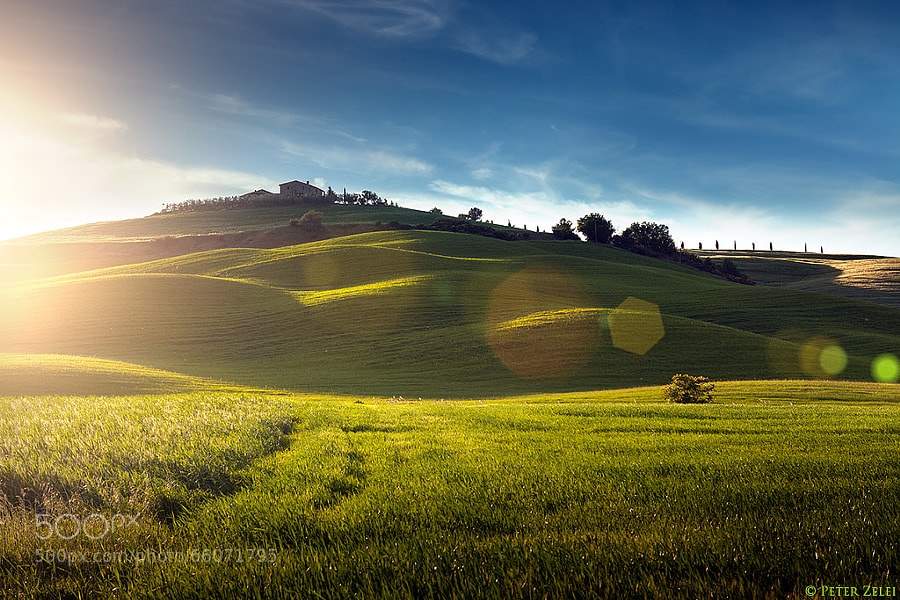
Sunset in Tuscany by Peter Zelei on 500px

The Magic Of The Redwoods by Steve Belovarich on 500px

Enjoying the Sunset at Hanalei Bay by Ian Frazier on 500px

Sunset Field by Stitch Jones on 500px

Flaring Midnight by fegari . on 500px

Mesa Arch Sunrise 4 – Canyonlands National Park – Moab Utah by Brian Harig on 500px

*spring by Nadine Lotze on 500px

Yellow Monster by Jack Were on 500px

Charlotte's Web by Malena Fryar on 500px

Lavender Bees by Nicole S. Young on 500px

One Day in Autumn. by Sabrina Rohwer on 500px

Carpatian cow by ????????? ????? on 500px

Heather by Josh Lyon on 500px

Man of the Mohawk! by Nathaniel Dodson on 500px

Brownie by Ryan Logan on 500px

Pencils by Felipe Nobre on 500px

Sun Shine by Abdullah Rhwanjy on 500px

classic car on country road by Steve Shepherd on 500px
The post 30 Lens Flare Images to Inspire You by Darlene Hildebrandt appeared first on Digital Photography School.
-
Phase One introduces 40-80mm Schneider leaf shutter lens

Phase One has announced a new leaf shutter lens for its 645 camera platform. The new Schneider Kreuznach 40-80mm LS f/4.0-5.6 joins the existing Schneider Kreuznach 75-150mm f/4.0-5.6 leaf shutter zoom lens, and allows for flash synchronization up to 1/1000sec. Supposedly on a par with prime lenses in terms of critical image quality, the new lens is available now for $ 8990 / €6990. Click through for the press release