RSS
 

Posts Tagged ‘Lens’

No Telephoto Lens No Problem – Tips on Shooting for the Crop

22 May

shoot-for-the-crop

Maybe your photos are better than you think. Perhaps all you need to transform your images into keepers is to simply cut out the dead wood and get ruthless with the crop tool. While I’m not against getting your shot perfect ‘in camera’, I do believe that cropping like a boss during post-production can turn a ‘meh’ shot into a ‘whoa’ shot just by carefully placing those marching ants in Adobe Camera Raw and hitting ‘crop’.

Why limit yourself to a mediocre image when there’s a little hidden gem inside your average shot, waiting to be teased out like a gleaming pearl?

Get closer after the fact

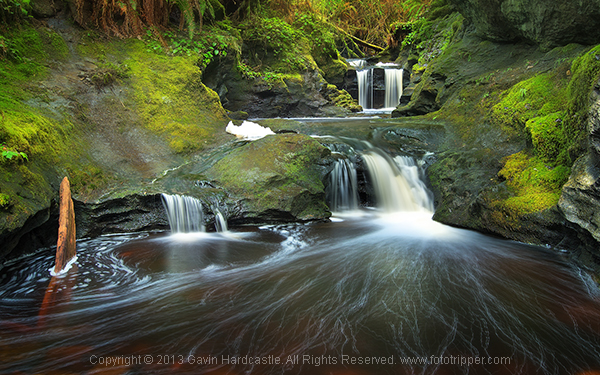
Here’s an example of a cropped shot with the full frame shot below it. During the shoot I was happy with the original composition (below), but after studying the shot at home I decided that the scene needed to be more intimate, so in I went with the scissors of brutality.

Vancouver Island Waterfall Landscape Image Crop - Gavin Hardcastle

Cropped version

How to Shoot for the Crop

Full image uncropped

Tell the story

When your image has an obvious story, it’s often wise to cut out any non-essential space to ignite a more immediate reaction in your audience. By discarding all distractions, you’ll direct their attention to what matters most. With the image below, I wanted to portray the resilience of nature under the menacing specter of toxic pollution. I knew I had the shot but the story had much more impact after I’d cropped out all of the wasted space in my image. Ideally I would have used a longer lens to achieve the same result but all I was carrying at the time was a 24-105mm and there was no way I was going to let that stop me. Shoot, crop, done, breakfast.

'Held To Ransom' by Gavin Hardcastle

held-to-ransom-full-gavin-hardcastle

Use your megapixels

You’ve doubtless heard grumpy old fossils whine on about why big megapixels are pointless unless you’re printing wall sized prints. I’m here to tell you that’s a load of old codswallop. Try cropping out a small section of a 16 megapixel image and let me know good it looks at the full size of your computer screen. Lacking in resolution, hmm? Well I guess it depends on the size of your crop, but chances are things are starting to look a little crusty if you’re not packing some heat in the megapixel department. Size, as they say, does matter.

Here’s another example of using my megapixels to get closer to my subject. As you can see from the full frame image below the crop, I made no attempt at composing a foreground because I knew I’d be cropping out everything but my main subject – the magic tree of Fairy Lake on Vancouver Island. You can even see a hideous vignette in the full frame shot caused by the polarizer rig. Crop, done, lunch.

gavin-hardcastle-fairy-lake-port-renfrew-vancouver-island-crop

gavin-hardcastle-fairy-lake-port-renfrew-vancouver-island-full

If you can’t afford a big telephoto lens but have a good quality wide-angle lens and a decent megapixel count, it’s still worth taking that shot of the bird on the other side of the lake. You can crop it later and possibly come away with a keeper. Sometimes it’s not even the cost of long lenses that puts people off using them, it’s the chiropractors bills that come from dragging them around. That being said, a top notch telephoto lens creates a specific look and for serious wildlife shooters it’s a must-have lens. This isn’t an anti-telephoto article so don’t be leaving angry comments.

A second chance at composition

When you’re familiar with a location and you’ve shot there many times before, it’s easy to plan your compositions long in advance. But what if it’s your first time and you’re shooting under pressure? Sometimes you get lucky, but sometimes you won’t spot the perfect composition until you review your images back at home on a full size computer screen.  That’s when cropping will give you that second chance at getting the perfect shot.

Butchart Gardens Vancouve Island Gavin Hardcastle

Teach yourself composition

I’m always telling my students that you can learn a huge amount about composition simply by reviewing and editing your images. Try and find two or more new compositions that are hiding in plain site right there in your existing images. This simple process teaches you a lot about balance, symmetry, framing, leading lines and whatever other compositional elements are right there in your images. Spend enough time doing this and you’ll become a better photographer when you’re out shooting. When cropping, you can start by asking yourself a few essential questions:

  • What is the main subject of my image?
  • What parts of the image do I love?
  • What parts of the image do I not like?
  • How can I focus the viewers attention?
  • What can I exclude?

By answering these five simple questions you’ll quickly identify the strongest parts of your image and transform them from stale, forgotten megabytes, into beautiful memories you can share with the world. I hope you found this article helpful and please, get cropping and then share your best cropped images with me, I’d love to see your results.

grand-canyon-crop

The post No Telephoto Lens No Problem – Tips on Shooting for the Crop by Gavin Hardcastle appeared first on Digital Photography School.


Digital Photography School

 
Comments Off on No Telephoto Lens No Problem – Tips on Shooting for the Crop

Posted in Photography


Parrot launches drone with 14MP camera and 180-degree fisheye lens

13 May

bebop_drone1.jpg

Parrot, the maker of the popular AR Drone 2.0, has launched a new model, the AR Drone 3.0. It also flies under the name Bebop. The Bebop is essentially a flying camera with four rotors. The camera comes with an F2.2 fisheye lens with a 180-degree field of view and a 14MP sensor. Learn more

News: Digital Photography Review (dpreview.com)

 
Comments Off on Parrot launches drone with 14MP camera and 180-degree fisheye lens

Posted in Uncategorized


Vivo Xshot Android phone launches with ultrafast F1.8 lens

10 May

vivoxshot.jpg

We’ve seen almost all smartphone manufacturers put an emphasis on camera performance with their latest models. Now Chinese manufacturer Vivo is upping the ante with the Xshot. The new model is a high-end Android phone with a 13MP Sony camera module that features an F1.8 lens, the fastest we’ve seen on a smartphone in recent history. Learn more

News: Digital Photography Review (dpreview.com)

 
Comments Off on Vivo Xshot Android phone launches with ultrafast F1.8 lens

Posted in Uncategorized


Lens Review Tamron SP 150-600mm f/5-6.3 Di VC USD

30 Apr


Tamron SP 150-600mm

Tamron SP 150-600mm f/5-6.3 Di VC USD was tested in April 2014.  The version of the lens tested is for the Canon DSLR mounts and it is compatible with both crop and full frame sensor bodies. The lens is also compatible with Nikon and Sony bodies.

On a Canon crop factor camera body the lens provides a field of view equivalence of 240-960mm. The lens has fast, silent focusing, Vibration Compensation and eBAND (Extended Bandwidth and Angular-Dependency) lens coating in addition to the conventional BBAR (Broad-Band Anti-Reflection) coating. These coatings are designed to reduce flare and ghosting, and to increase contrast. The lens has a moisture-sealed construction, and has 20 lens elements in 13 groups including three low dispersion (LD) elements and an iris diaphragm with nine rounded aperture blades.

What is in the box

The lens, a large lens hood, a removable tripod mount collar and a large fold out guide  or manual.

Specifications of the lens tested

  • Focal Length (full frame): 150-600mm
  • Aperture Maximum: f/5.0-6.3 Minimum: f/32.0-40.0
  • Camera Mount Type: Canon EF Format
  • Compatibility: 35mm Film / Full-Frame Digital Sensor, Canon (APS-C), Canon (APS-H)
  • Angle of view: 16° 25′ – 4° 8′
  • Minimum focus distance 8.86 ft (2.7 m)
  • Maximum reproduction ratio: 1:5
  • Lens elements/groups 20/13
  • Diaphragm blades: 9
  • Filter thread front: 95 mm
  • Dimensions (DxL): 4.16 x 10.15 in (105.6 x 257.8 mm)
  • Weight: 4.30 lb. (1.95 kg)

Handling and Features

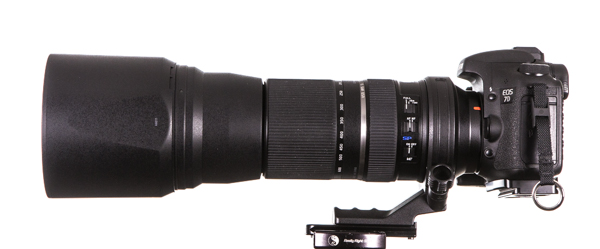
This is a fairly large lens compared to the Canon 100-400 f/4-5.6 push-pull L series lens, and weighs 4.3 pounds as compared to the Canon 100-400 at 3.2 pounds. Tamron have used high quality plastics for the lens barrel in order to keep the weight down. Had this lens been made as an all metal construction, it would be much heavier and would not be as well balanced.
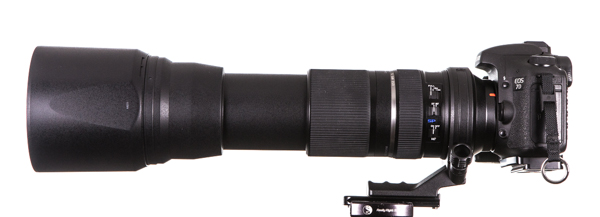
Tamron SP 150-600mm extend to 600 mm

The lens extend to 600 mm

The lens was tested using a Canon 5D Mk III and a Canon 7D. I found the lens reasonably well balanced while hand holding. It does get to be a bit of a strain during extended shooting so a tripod with a smaller gimbal style tripod head is advisable.
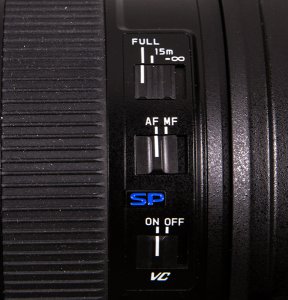
Switches on the Lens Barrel

Switches on the Lens Barrel

The lens is equipped with tripod mount, footed lens collar. An Arca Swiss style long lens plate was mounted for all tripod based testing.

The lens has three switches; each is a two position switch which is flush mounted on the lens barrel. The switches have a positive click and an audible feedback when operated. The switches are for: Autofocus/Manual focus, Vibration Compensation on or off, and focus limit. A lens lock at 150mm is also provided.

Lens Zoom Creep

The lens barrel tends to zoom creep over an extended period of time when positioned at an acute angle downward .  There is also some zoom creep when pointed directly upward.  The greater the angle the greater the creep. Extending an index finger to grip the lens barrel just beyond the zoom ring prevents any creep when the lens is handheld. Tamron has provided a lens barrel lock that will keep the lens locked in the 150 mm focal length position.  This is good during transport but Tamron should have considered making the lens lockable at all the major focal length positions.

Focusing

The autofocus is fast and fairly accurate. The lens uses a USD (Ultrasonic Silent Drive) focusing motor. The lens barrel has a two-stage focus limiter switch with a full and a 15 meter (49.2 feet) to infinity limited range. This is a very nice feature that prevents the lens from hunting through the whole focus range particularly when the subject is beyond 15 meters.

Manual focusing is reasonable as the focus ring is damped and very smooth. The position of the manual focusing ring could be improved as the lens collar comes in the way. For hand held operation it is preferable to rotate the collar 180 degrees or remove it entirely. Manual focus adjustments can be made in Auto or Manual focus modes as Full Time Manual is fully supported. The minimum focus distance is 8.9 feet/2.7 meters provides a magnification of 1:5. A focus window provides distances in meters and feet from the minimum focusing distance to infinity.

The front filter tread is 95mm and the front element does not rotate while focusing. This is a welcome feature, particularly for polarizing and split/graduated ND filter use.

TESTS
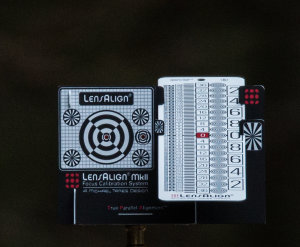
Micro Focus Calibration Tool

Micro Focus Calibration Tool

I set up the lens to test auto focus accuracy. Using a LensAlign Mk II micro focus adjustments were made at 150mm and 600mm. At 150mm no adjustment was needed while at 600mm a -5 was needed to correct for some back focusing.

The Ultrasonic Silent Drive (USM) motor in the lens is very quiet when focusing and the speed is comparable to the Canon 100-400mm f/4.05.6 IS L lens. At 600mm the lens first retracts to the closest focus distance before extending to the focus on the distant subject. Overall it does not affect the focus speed, as this phenomenon is controlled by the camera body. This issue was prevalent using both camera bodies.

Manual Focus

As mentioned earlier the manual focus ring is in an awkward position for my liking. The total rotation is 120 degrees and very manageable at shorter focal lengths but is not as well tuned at focal lengths greater than 450mm, and focus appears to have a slight lateral shift.

Once focus is established on a subject, varying the focal length does not maintain focus. Refocusing is required for any change in focal length.

Autofocus

The lens was tested using the most accurate center focus point on the Canon 5D MarkIII as well as the focus assist group.

With both bodies the “One Shot” (AF-S on Nikon) and “AI Servo” (AF-A on Nikon) focus methods performed well from focal lengths of 150mm to 400mm. At 500mm through 600mm the lens did not track well in AI Servo mode due to the high magnification, but was fine in One Shot (AF-S) mode. The lens was erratic, and if it dropped focus lock on the subject it rarely recovered to lock on again. Re-focusing was the only way to track a moving subject again. The loss of tracking is more apparent for subjects that are approaching the lens and less problematic for subjects moving left to right, or vice versa.

Vibration Compensation

Overall performance of image stabilization was very good. At focal lengths of 150 through 500 the lens maintains stability 2 to 3 stops below the hand held shutter speed guideline of 1/focal length as the minimum shutter speed. Hand holding at ISO 200 while looking through the viewfinder, one notices an image shift when the VC (IS) motors kick in.

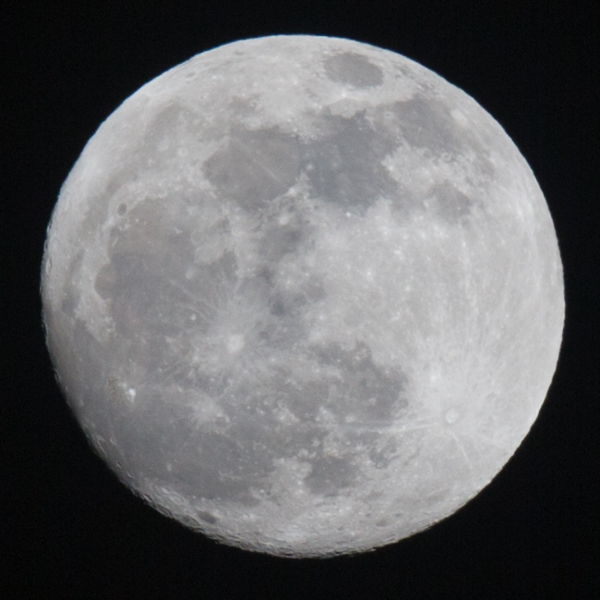
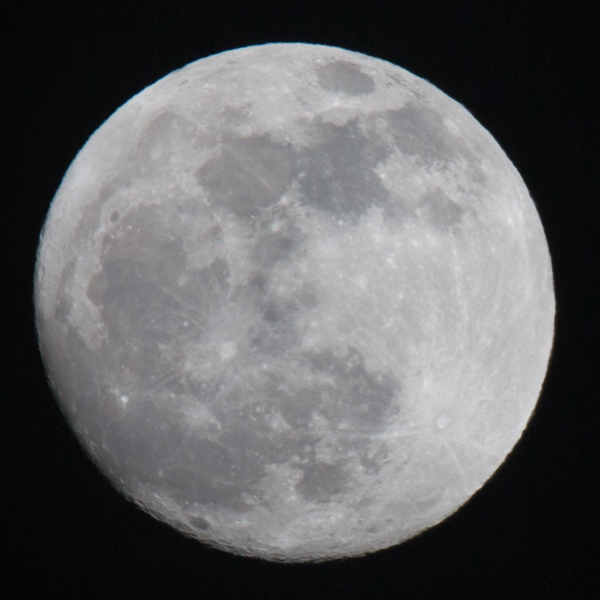
Here are some images of the full moon (cropped and sized to the same frame size) Settings used were: ISO 250, f/6.3, at 1/400th of a second, at focal lengths of 600mm, 500mm, 400mm and 300mm. The VC (IS) functions very well and is a pleasure to use.
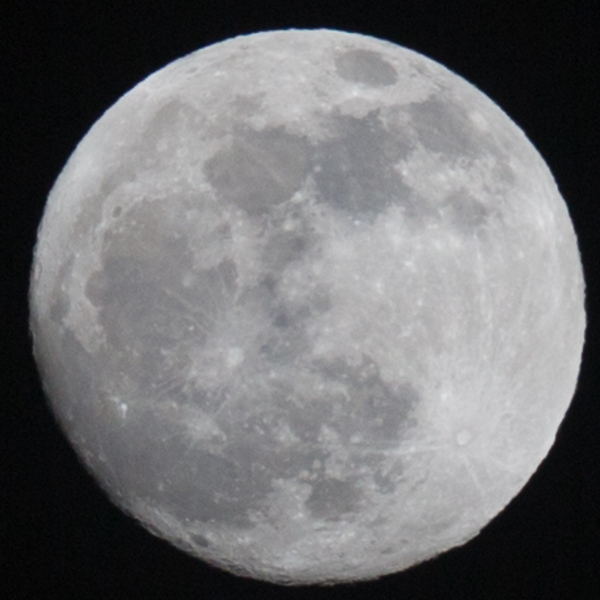
Focal length 300 mm

Focal length 300mm

Focal length 400 mm

Focal length 400mm

Focal length 500 mm - some chromatic aberration is visible

Focal length 500mm – some chromatic aberration is visible
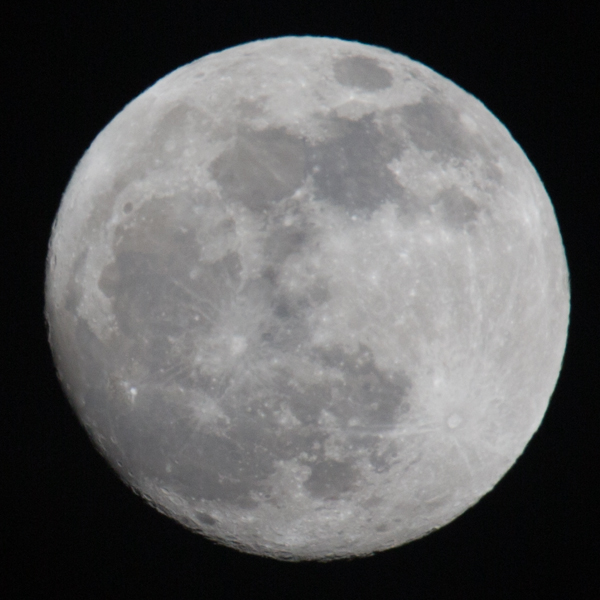
Focal length 600 mm - some chromatic aberration is visible

Focal length 600mm – some chromatic aberration is visible and there is a slight drop in sharpness

Test Results

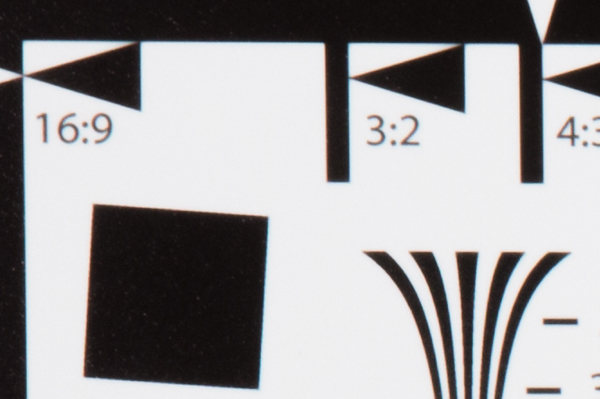
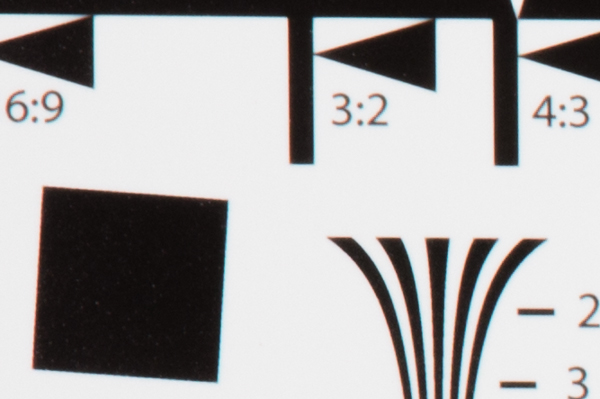
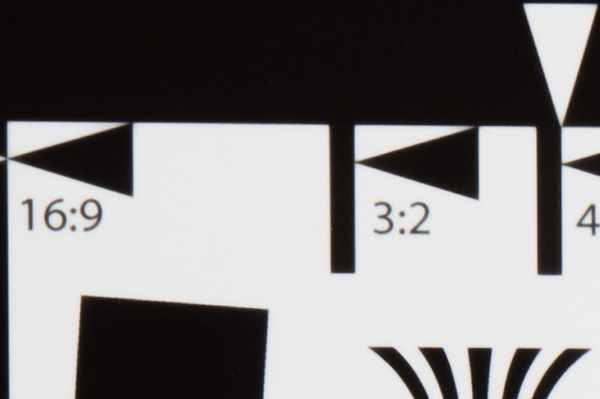
All controlled environment testing was done in the studio with constant lights and and a test chart as shown below.
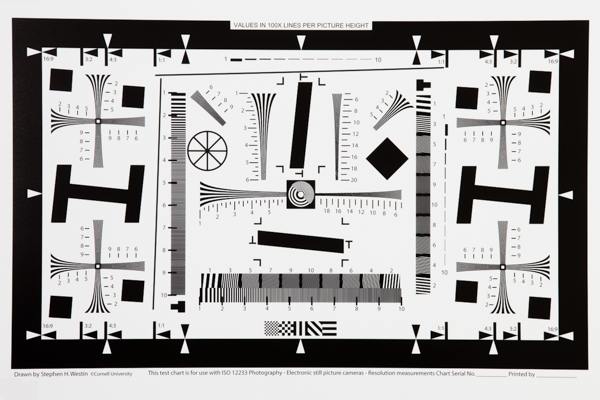
lens sharpness chart

The Sweet Spots

f/8.0 from 150-250mm:  at 300mm there is a loss of sharpness both in the center, as well as on the edges. At 400-600mm the center is sharp with some fall off toward the edges.

During tests, f/11 was found as a good aperture from 300-600mm. At 600 mm the edge fall off is pronounced, but that is also a factor of chromatic aberration. At the widest aperture in the 150-300mm range the lens has better overall sharpness from 200-300mm than at 150-200mm.

Aperture settings of f/8 through f/11 provide the best performance across the frame on a full frame sensor. f/5.6 through f/6.3 are good in the center. On a crop factor camera like the 7D the edge sharpness is acceptable in the f/6.3 to f/8.0 range at focal lengths of 300mm and higher while f/5.6 to f/6.3 is acceptable at focal lengths 300mm and below.

Pincushion Distortion

There is a slight amount of pincushion distortion through the entire focal length range of this lens. This distortion however, is minimal and very easily corrected using lens correction in Adobe Camera Raw or in Lightroom.

Edge Exposure Fall Off

Only visual testing was conducted for this test. The lens handles light fall off very well. It is most noticeable at f/22 but does not pose a problem at f/20. On the 7D body the frames captured at f/22 were acceptable with no cropping applied. f/20 is a very safe aperture for maximum “Depth of Field” and minimum edge fall off.

Chromatic Aberration

There is fringing at apertures of f/16 through f/22 at focal lengths of 400-600mm. Progressively getting pronounced as the focal length increases, it should be noted that though there is chromatic aberration it is not bad compared to other lenses in this class and could be considered low.
Chromatic aberration at 300 mm

Chromatic aberration at 300mm

Chromatic aberration at 400 mm

Chromatic aberration at 400mm

Chromatic aberration at 500 mm

Chromatic aberration at 500mm

Chromatic aberration at 400 mm

Chromatic aberration at 600mm

Pros and Cons

Pros

  • Great value for the price point
  • Very good build quality
  • Well damped focusing
  • Center sharpness throughout the range
  • Very quiet operation
  • Very good Vibration Compensation (Image Stabilization)
  • Low distortion and chromatic aberration

Cons

  • Position and rotational direction of focusing ring
  • Image shifting when VC (IS) engages
  • Edge sharpness fall-off at 600mm on a full frame body
  • Focus speed decreased at longer focal lengths

Conclusion

You might conclude from this list of cons, and some of the criticism, that the Tamron 150-600mm is not exceptional, but that would be very wrong. There are very few perfect lenses and the issues should be taken under consideration based on their significance for type of photographer who will use this lens, and the type of photography they do with it. This lens is a great performer, and the price point just can’t be beat. Used properly, and keeping its small limitations in mind, this lens will deliver excellent images and is a highly recommendable lens. It is an ideal hand holdable lens for nature and sports photographers.

Sample Images
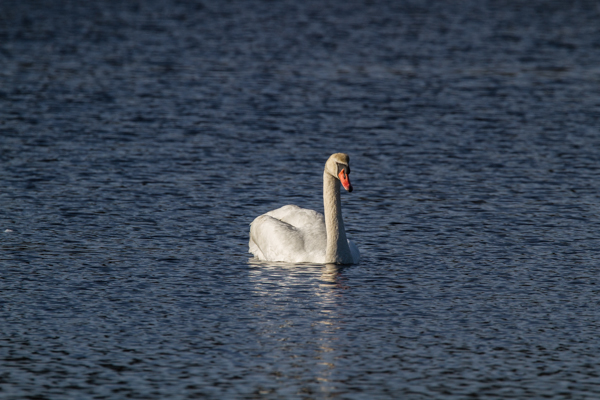
Canon 7D, Tripod, ISO 250, f/9, 1/640 sec. As shot.

Canon 7D on tripod, at 600mm, ISO 250, f/9, 1/640th. As shot.
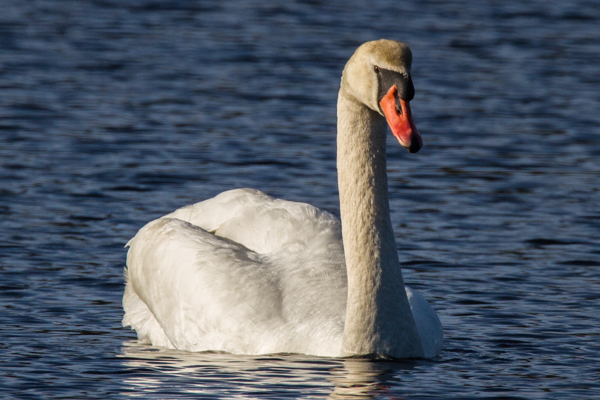
Image as above cropped to fill frame.

Image above, cropped to fill the frame.
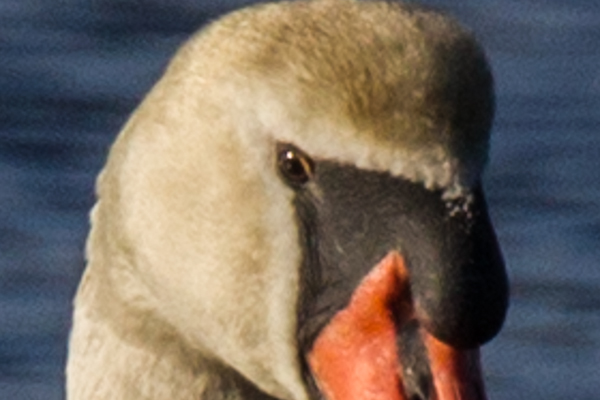
Same image cropped to show head detail - crop size 280 x 187 pixels then zoomed to 600 pixels (Greater than 2X magnification)

Same image cropped to show head detail – crop size 280 x 187 pixels then zoomed to 600 pixels (Greater than 200% magnification)

_MG_8911-5

Canon 7D, at 500mm, hand held, ISO 2000, f/6.3, 1/125th

_MG_8801-2

Canon 7D, at 450mm, hand held, ISO 250, f/6.3, 1/1000th

_MG_8808-3

Canon 7D, at 600mm, on tripod, ISO 250, f/6.3, 1/200th
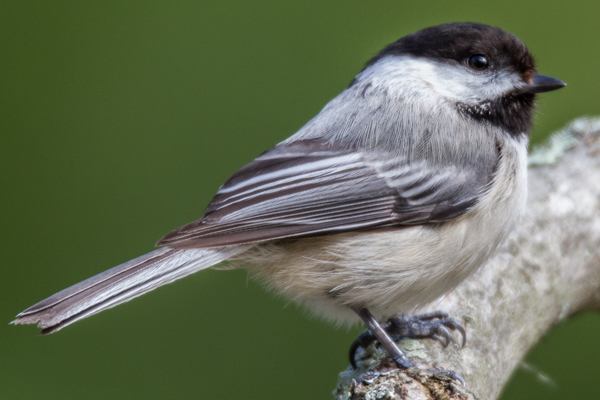
Image as above cropped to fill frame.

Image above, cropped to fill the frame.

Canon 7D, at 600 mm, hand held, ISO 250, f/6.3, 1/800 sec.

Canon 7D, at 600mm, hand held, ISO 250, f/6.3, 1/800th

A recent press release from Tamron announced  – TAMRON WINS TIPA AWARD 2014 FOR SP 150-600MM F/5-6.3 DI VC USD (MODEL A011) “BEST EXPERT DSLR LENS” These awards are presented each year by the Technical Image Press Association (TIPA) to top photo and imaging products.

The post Lens Review Tamron SP 150-600mm f/5-6.3 Di VC USD by Shiv Verma appeared first on Digital Photography School.


Digital Photography School

 
Comments Off on Lens Review Tamron SP 150-600mm f/5-6.3 Di VC USD

Posted in Photography


Lensbaby adds Android option for its selective focus lens

24 Apr

kickstarter.jpg

When Lensbaby launched the  Kickstarter project for its ‘Sweet Spot’ selective focus lens at the beginning of April it was initially iPhone only. Now the company has added a pledge level for Android users, too. For $ 50 you can pre-order the Sweet Spot lens and the Android application for your device. Delivery is expected in October. Learn more

News: Digital Photography Review (dpreview.com)

 
Comments Off on Lensbaby adds Android option for its selective focus lens

Posted in Uncategorized


Never lose your lens cap again with HACkxTACK

16 Apr

hacktack1.jpg

We all know the situation just too well. You’re out shooting with your DSLR or mirrorless camera when you decide to swap lenses and have no idea where you’ve put the lens cap for the lens that’s mounted on your camera body. Usually it’s in the very last place you look for it. In the worst case scenario you never find it at all. Two Canadian designers have a solution to this problem. Learn more

News: Digital Photography Review (dpreview.com)

 
Comments Off on Never lose your lens cap again with HACkxTACK

Posted in Uncategorized


Sony releases update for QX10 and QX100 lens modules

16 Apr

bothsonys-rocks.jpg

Sony has released a firmware update for its QX10 and QX100 camera modules that bring a couple of improvements. The shutter button can now be used to pre-focus with a half-press which allows you to focus and recompose with the QX modules just like you would do with any digital camera. Learn more

News: Digital Photography Review (dpreview.com)

 
Comments Off on Sony releases update for QX10 and QX100 lens modules

Posted in Uncategorized


Google applies for contact lens camera patent

16 Apr

googlecontact3.png

If you are the kind of person who gets uncomfortable at the thought of somebody recording you on Google Glass, the search company’s latest patent application will probably make you feel even more uneasy. In January Google announced its smart contact lens project and now has filed a patent application for a micro camera module to go with the smart lenses. Learn more

News: Digital Photography Review (dpreview.com)

 
Comments Off on Google applies for contact lens camera patent

Posted in Uncategorized


Lensbaby releases 5.8mm F3.5 circular fisheye lens

12 Apr

20131209_CFE_standing_up_0121-Cropped.jpg

Lensbaby, maker of popular selective focus lenses, has announced a 5.8mm F3.5 circular fisheye lens for Canon and Nikon mounts. With a 185° angle of view, the lens produces a full-circle fisheye image when used with APS-C-sized sensor cameras. The lens also allows you to focus as close as 1/4-inch. Lensbaby is taking pre-orders now. The circular fisheye will sell for $ 299.95. Learn more

News: Digital Photography Review (dpreview.com)

 
Comments Off on Lensbaby releases 5.8mm F3.5 circular fisheye lens

Posted in Uncategorized


Nikon debuts lighter 18-300mm F3.5-6.3 to DX lens lineup

10 Apr

AFS_DX_18_300_3.5_6.3G.png

Nikon has unveiled the AF-S DX NIKKOR 18-300mm F/3.5-6.3 ED VR (27-450mm equivalent). It doesn’t replace the company’s existing 18-300mm lens – rather it’s 1/3-stop slower at the long end and 30% lighter, weighing 19.4 ounces. The new 18-300mm has Nikon’s Vibration Reduction system, which can reduce shake by up to 4 stops. Built with three Extra-low Dispersion (ED) glass elements and Nikon’s Silent Wave Motor for quieter focusing, the 18-300mm F3.5-6.3 will be available in May for $ 899.95.

News: Digital Photography Review (dpreview.com)

 
Comments Off on Nikon debuts lighter 18-300mm F3.5-6.3 to DX lens lineup

Posted in Uncategorized