With the introduction of the Lumix DMC-GX8 and its new Dual IS mode, Panasonic promised firmware updates for most of its lenses to make them compatible. Included in this round are the Lumix G Vario 14-42mm F3.5-5.6 II, Nocticron 42.5mm F1.2, and Macro 30mm F2.8 among others. Read more
Tag: Lens
-
Updated Tamron 18-200mm F3.5-6.3 lens gains stabilization, sheds weight
Tamron has updated its 18-200mm all-in-one lens. The 18-200mm F3.5-6.3 Di II VC introduces image stabilization and is the lightest lens in its high-zoom class. Designed for Canon, Nikon, and Sony APS-C camera bodies, it covers a 28-310mm equivalent range. Read more
-
Lens Rentals Canada closes its doors
Lens Rentals Canada is closing permanently, according to a statement issued by owner Craig Blair on Monday. He cites logistical issues and personal reasons, saying numerous problems with the business ‘didn’t make it a fun endeavor’. Read more
-
Canon EF-S 24mm f/2.8 Pancake Lens Review
In November of 2014, Canon introduced us to its newest member of their low-cost prime lens family, the EF-S 24mm f/2.8 STM pancake lens. Canon gave us the 40mm version in 2012, and hoped to up the stakes by adding a wide-angle version this past year.
Sitting at the extreme end of what can be considered wide-angle, the EF-S 24mm (full-frame equivalent of 38mm on an APS-C sensor) does so in the form of a small, light, and inexpensive prime lens that is easily accessible to all Canon enthusiasts.
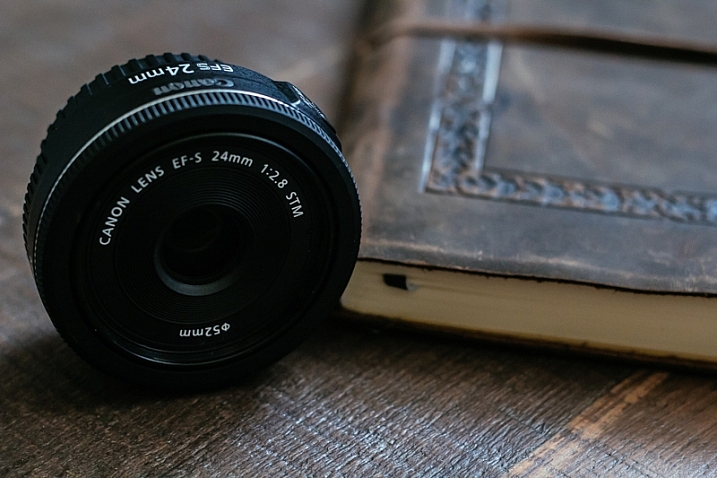
The first features that will strike you about the 24mm are its inconspicuous qualities; the lens is incredibly thin at only 2.75 inches, and weighing under five ounces. Street shooters wanting a wider angle of view will be pleased at how reserved the profile of this glass is, as it makes even a large camera body appear smaller, and less noticeable.
In addition to being visually unobtrusive, the STM (stepping motor) feature of this lens allows for faster, and much quieter autofocusing, compared to the USM (ultrasonic) motor system used on many other lenses. Manual focus is available in full, and Canon maintains this lens is capable of a minimum focusing distance of six inches.

Aperture f/4.0, Shutter speed 1/800, ISO 200
For filter users, the lens uses a standard 52mm fitting, and will accept all filters of that size. Also keep in mind that as this lens is part of Canon’s EF-S line, it cannot be used on full-frame systems, such as the Canon 6D, and will only fit APS-C (crop sensor) cameras.

Aperture f/4.5, Shutter speed 1/400, ISO 250
As far as my personal experiences with the lens, they were generally very positive, despite my preconceived worries about image quality that were bolstered by rather mixed pre-release reviews. I was pleasantly surprised to find that the 24mm pancake performed admirably well in this area, giving me very sharp and accurate photos throughout the full range of aperture stops.

Aperture f/8, Shutter speed 1/640, ISO 250
The shot above showcases the clarity of the 24mm pancake. The beachgoers far to the back of the frame are sharp, details are well-defined, and I was still able to create a soft blur on the sand directly in front of the camera.

Aperture f/3.2, Shutter speed 1/2000, ISO 200
The image above highlights how well the 24mm pancake handles blurring and bokeh at wider apertures, especially for a wide-angle lens. I usually take this shot with my 50mm f/1.8, but I wanted to see what the 24mm could do. The foreground blurring, sun glare, and porch details were all handled in a pleasant manner.

Aperture f/8, Shutter speed 1/200, ISO 100
Textures are captured very accurately with this lens, as you can see with the water in the picture above. Ripples and the smoothness of the surface translate well also, and great tonal range helps define the lake from front to back.
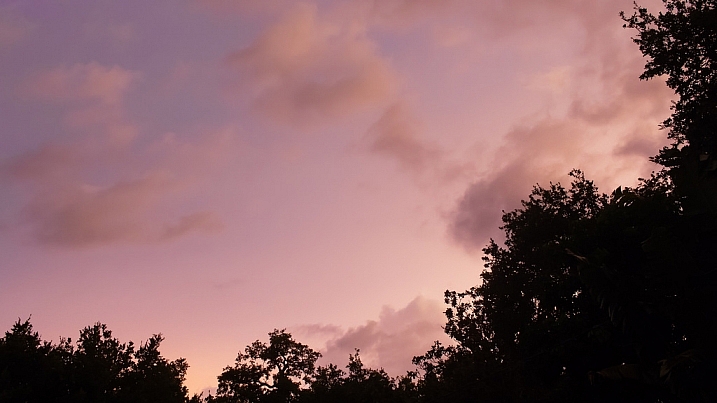
Aperture f/8, Shutter speed 1/50, ISO 1250
Colors are deep and accurate, as shown in the photo above. Other than sharpness, noise reduction, and a bit of contrast adjustment, this image is as it appears right from the camera. I didn’t have to go crazy with the noise reduction, and had a great looking image even with sensitivity set at ISO 1250.
Obviously, being a wide-angle affair, this lens doesn’t produce bokeh or blurring as easily or smoothly as my 50mm f/1.8. This isn’t an issue as I’m usually doing landscape shots using a smaller aperture.
This little jewel is available (at the time of this writing) for $ 149.00. I’d highly recommend giving this lens a try, especially if you’re in the need of a backup at this focal length, or even an affordable wide-angle starter lens.
Have you shot with the 24mm f/2.8 STM? What did you think? Share your experiences with us below!
googletag.cmd.push(function() {
tablet_slots.push( googletag.defineSlot( “/1005424/_dPSv4_tab-all-article-bottom_(300×250)”, [300, 250], “pb-ad-78623” ).addService( googletag.pubads() ) ); } );googletag.cmd.push(function() {
mobile_slots.push( googletag.defineSlot( “/1005424/_dPSv4_mob-all-article-bottom_(300×250)”, [300, 250], “pb-ad-78158” ).addService( googletag.pubads() ) ); } );The post Canon EF-S 24mm f/2.8 Pancake Lens Review by Tim Gilbreath appeared first on Digital Photography School.
-
What’s in a name? Zeiss provides details on lens partnerships and production
Lens maker Zeiss has written a blog post about its relationships with other manufacturers – specifically its partnership with Sony. The post sheds some light on exactly what that little blue logo on your lens can mean. The blog post itself appears to have been written by the marketing department, but reading between the lines gives us a better idea of how its relationship with Sony works. Read more
-
Lens Comparison 24-70mm f/2.8 – Canon Versus Tamron
If you’re looking to upgrade from your kit lens the 24-70 f/2.8 lens is a common choice. It’s got a good range zoom and wide largest aperture of f/2.8 for the entire range. But which one to choose? Brand name or third party?
In this video Matthew Gore does a really comprehensive lens comparison between the brand name Canon brand name version, and the Tamron third party one. He takes a look at focusing and how much noise each produce, sharpness at different focal lengths and apertures and chromatic aberration.
There is a significant price difference, as he mentioned. Take a look at both:
- Canon EF 24-70mm f/2.8L II USM Standard Zoom Lens – $ 1899 USD
- Tamron SP 24-70mm Di VC USD – $ 1299 USD
Also available are:
- A Nikon version – the Nikon 24-70mm f/2.8G ED AF-S Nikkor – $ 1887 USD
- A Sigma version which can be purchased for many different camera bodies (as can the Tamron) – $ 385 USD (make sure you read some reviews on this lens if you decide you want to go for this option)
- Sony 24 -70mm f/2.8 Carl Zeiss Vario Sonnar T Zoom Lens – $ 1998 USD
At $ 600 more (almost 50% higher) is it worth it to you? See which he recommends in the video and which he would purchase and why.
Do you own one of these lenses? Which one and why did you select it? Please share your thoughts in the comments on whether you feel the third party lenses measure up to brand name ones.
googletag.cmd.push(function() {
tablet_slots.push( googletag.defineSlot( “/1005424/_dPSv4_tab-all-article-bottom_(300×250)”, [300, 250], “pb-ad-78623” ).addService( googletag.pubads() ) ); } );googletag.cmd.push(function() {
mobile_slots.push( googletag.defineSlot( “/1005424/_dPSv4_mob-all-article-bottom_(300×250)”, [300, 250], “pb-ad-78158” ).addService( googletag.pubads() ) ); } );The post Lens Comparison 24-70mm f/2.8 – Canon Versus Tamron by Darlene Hildebrandt appeared first on Digital Photography School.
-
Moment announces 10x macro lens for iPhone
Mobile accessory maker Moment has added a new lens to its lineup. The Moment Macro lens offers a 25mm focal length and 10x magnification, using a multi-element design and ED-glass for improved image quality. Read more
-
Writer’s Favorite Lens: Olympus Zuiko 12-40mm f/2.8
One of the primary reasons I built my mirrorless kit with Olympus gear, was their wide array of high quality lenses. From fast primes to convenient zooms, they have all of the important focal lengths covered. It wasn’t until I picked up the Olympus Zuiko 12-40mm f/2.8 however that I really experienced the true potential of this micro four thirds system. Since purchasing the lens a few months ago, it has rarely left my camera body. Not only are the optics incredible, but it features many surprising benefits. Here are some of the main reasons it has become my favorite lens.

Image Quality
The Olympus 12-40mm has an effective focal length of 24-80mm making it extremely versatile. This fits my needs well, as I shoot a wide variety of subjects. With a constant aperture of f/2.8, it’s possible to shoot wide open throughout the entire range. Unlike other kit lenses, there is no need to stop down for optimal performance. Results are stellar wide open, with no noticeable chromatic aberration or diffraction. This makes it a workhorse for low light work, whether indoors or out.

From corner to corner, the 12-40mm is the sharpest lens I’ve ever owned. That makes it invaluable for landscape and travel work, particularly when great depth of field and critical focus is desired. I have done side by side comparisons with DSLRs and pro lenses, and to my eye, the Olympus lens is sharper. Granted, these were not scientific tests, but for me, a real world study is perhaps more valuable than any static chart. While many zoom lenses compromise clarity for convenience, this lens has the rare combination of both.

Size and Cost
When compared with the equivalent offering for DSLRs, a number of additional benefits are revealed. For example, the Canon 24-70mm f/2.8 weighs 28.40 ounces (805 g), more than twice as much as the Olympus at 13.47 ounces (382 g). After a long day of hiking and traveling, with gear on by back, this makes a big difference. With the lighter kit, I’m ready to go further, and faster. It’s also small enough to keep with me everyday, greatly reducing any missed opportunities. In addition to the weight savings, it’s also quite reasonably priced. The Canon and Nikon version of this focal length averages $ 1899 while this Olympus model can be purchased for around $ 899.

Macro Surprise
Perhaps the most unexpected benefit is the ability to shoot extreme close-ups. In fact, I recently sold my 100mm Canon macro lens as this satisfies my macro needs. With a minimum focusing distance of 20 centimetres (7.9 inches), it is ideal for flowers, plant life, and butterflies. Having this type of capability in a single lens makes it possible to do more while traveling lighter.

Shift into Manual Focus
Manual focus is activated by gently pulling the lens barrel down. With no buttons to find or push, this can be done without taking your eye from the viewfinder. Coupled with focus peaking, it has never been easier to achieve sharp focus manually. I particularly enjoy this feature when doing creative multiple exposures. This involves auto focus for the first shot, followed by a shift to manual focus to purposely create an out of focus second frame.

Built for Adventure
When paired with a weatherproof body, the lens completes a rugged combo that can withstand heavy rain, snow, dust, and even freezing conditions. I was able to test the weatherproof capabilities of the system during an airshow at the beach. As rain fell from the stormy sky several DSLR users frantically packed away their gear and headed for cover. Meanwhile, I continued to shoot the action and captured some unique shots with ominous dark clouds. Sure I could purchase and use a rain cover which are reasonably effective. They are clumsy enough however, to negatively affect my shooting technique.

Nice Bokeh
Despite what some critics have reported, it is quite possible to achieve shallow depth of field with a micro 4/3 system. Admittedly, the background won’t be as out of focus as an equivalent lens on a full frame camera, but it absolutely gets the job done. With this particular lens at f/2.8 I’ve found the bokeh to be very pleasing. In fact, I have no problems reaching for this lens should shallow depth of field be necessary.

Fast to Focus
Perhaps there’s no worse feeling than struggling to find focus as the magic light fades. Unlike many zooms, this lens does not hunt for focus. Whether you are using a camera with contrast or phase detection, it locks onto the subject, and fast. Not only does this benefit outdoor work, but also those indoor situations when the light levels are very low.

No Compromises
I’ve used a great deal of lenses throughout my career, many of which were stellar. Still, this lens really shines not only for its optical quality, but its versatile focal range. You can use it for just about anything, making it the first lens you’ll grab for most situations. Typically a lens with this many features would come at the price of other compromises, but this in not the case with the 12-40mm. Olympus has done a stellar job in creating what I find to be the perfect lens for micro 4/3 users.
googletag.cmd.push(function() {
tablet_slots.push( googletag.defineSlot( “/1005424/_dPSv4_tab-all-article-bottom_(300×250)”, [300, 250], “pb-ad-78623” ).addService( googletag.pubads() ) ); } );googletag.cmd.push(function() {
mobile_slots.push( googletag.defineSlot( “/1005424/_dPSv4_mob-all-article-bottom_(300×250)”, [300, 250], “pb-ad-78158” ).addService( googletag.pubads() ) ); } );The post Writer’s Favorite Lens: Olympus Zuiko 12-40mm f/2.8 by Chris Corradino appeared first on Digital Photography School.
-
Meyer Optik to bring back soap-bubble-bokeh Trioplan lens via Kickstarter
Following a successful Kickstar campaign, German optical manufacturer Meyer Optik is set to reintroduce a lens from 1916 that was famous for its unique ‘soap-bubble’ bokeh. The company hoped to raise $ 50,000 to fund production of a new Trioplan 100mm F2.8 lens, but at the time of writing pledges have reached $ 124,000 with the best part of a month still to go. Read more